How to Reverse Aging With Peptide Bioregulators | Dr. Bill Lawrence
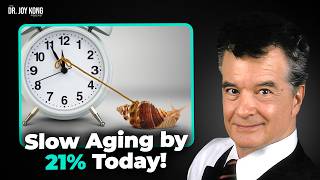
Dr. Bill Lawrence discusses peptide bioregulators, short-chain molecules developed in Soviet research that claim to activate telomerase and repair DNA. The protocol rotates 21 to 22 bioregulators in 10-day monthly pulses, with reported results including telomere lengthening and reductions in epigenetic age in Russian and US cohorts.
Chapters
What I'm talking about here is the value of time. And that is time is really probably the most important thing that we have. In other words, how much time do we have available in this lifetime? How healthy are we? How much of that time is going to be in a health situation versus in an unhealthy situation? Steve Jobs had made statements that how precious time is. And Thomas Edison long ago always liked this quote from, from him where he says, the only capital that's important, basically, is our health. Hello.
Welcome Back to the Dr. Joy Kong podcast. This is where I share with you some of the latest breakthroughs in biotechnology and medicine. So I can help you live your best possible life. Live young, and live long. Today, I'm super excited to bring Dr. Bill Lawrence onto this podcast because he is a hero. He's a pioneering researcher and with a fascinating background. The first time I heard Dr. Lawrence speak was on Natalie Nidham's show. Just incredible story. And he's doing something that's really exciting when it comes to reverse aging and really making a difference in. In our longevity trajectory. So, Dr. Lawrence, thank you so much for being here.
It's a pleasure.
Yes, yes. And you look fantastic. You look fabulous. So I'm going to spill the bag. I mean, the beans that you are actually 78 years of age, but you look just amazing. Your physique and your posture just look wonderful. So I don't know how much of it has to do with the bioregulators that you've been taking yourself. And I don't know if there's anything else you're doing, but definitely I can tell that you exercise.
I'm doing everything I can to be biologically young, and that's primarily with the bioregulators, but also to be fit. You know, I do all sorts of exercise, kinds of things. I do Pilates, I do yoga, I work out, etc. Etc. I'm just doing the best I can to stay healthy.
Yeah. And set a good example for everybody, showing what's possible. And this is the, I think our, you know, the way that we look at aging and what's possible for our body and how we look has come to a whole new level. And it's very, very exciting time in medicine. Do you agree?
Absolutely. Yes, absolutely.
Yeah. So let me introduce you a little bit to my audience. So Dr. Lawrence is a biogerontologist, so he actually brings a unique blend of qualifications to his research. He has a law degree, and this provides a unique legal research perspective to his work. He also has a Master's in psychology and that offers insights into human behavior and cognition. He, he also has a PhD in nutritional science and that equips him with a deep understanding of the biological processes of aging. So this multidisciplinary approach allows him to view aging from various angles, enhancing his ability to develop comprehensive solutions. Over three decades he has applied his approach to focus on human longevity research and interventions for for optimal life and health span. Dr. Lawrence is affiliated with St. Petersburg Institute of Bioregulation and Gerontology in Russia. He's administrator of two groundbreaking Russian and American longevity clinical studies, Telomerase activation and DNA methylation, Epigenetic age modification. So like we mentioned, Dr. Lawrence is 78 years old and his research has profoundly slowed his own aging process, enhancing his potential longevity and health span as well as that of 150 clinical study participants. And I'm actually one of the participants. So very exciting. And most of the participants are physicians. His average telomere length or cellular age is equivalent to that of a 23 year old. His epigenetic age, measured by Horvath epigenetic clock is 10 years less than his chronological age, resulting in a 50% reduction of all cause mortality risk. Compared to his same age peers. His annual biological rate of aging is 79%. That's 21% slower than his chronologically young yearly aging. And so that's a personal testament to the power of his research. So today he's actually going to present some data and evidence proving that the primary cause of aging is the degradation of the cellular DNA repair system. And then he will confirm that. Peptide bioregulators, a groundbreaking development by Professor Vladimir Cavinson of the St. Petersburg Institute is the intervention that restores the DNA repair system via cellular reprogramming, tissue rejuvenation and organ regeneration. I'm so excited to be able to have this discussion. I think it's a treat for everybody to, to, to hear the expertise from Dr. Lawrence. So Dr. Lawrence, I know you actually have a personal story of how you got into this research. Could you share a little bit of why you were so interested in this and I think you traveled to Russia to, to seek answers.
Certainly. I guess it started with my father's death, my genealogy. I was born into a church that does a lot of genealogy, the Mormon Church. And I knew that the men in my family line did not unfortunately live a long period of time. They all died of basically the same disease. All of them died of heart disease primarily. And they died in their mid-50s and the early 60s. Uncles, grandparents, and so forth. Very few of them made it even to 60. And my father had his first heart attack at age 57, fatal at 64. And there was only one man in my family line going back literally 100 years, where we had both birth and death data and so forth. That one man made it to 70. And there's a kind of a little side story. He was a minister, a preacher and so forth. And he used to quote from a section of the Bible, I think it's in Psalms, saying that basically people will live three score in 10 years. That's 70 years. It was interesting because three months after he turned 70, he came down with cancer and he died very quickly. And I guess the kind of, the. The moral of that is don't put into your brain things that you don't want to be percolating. Anyway, long and short of this, I knew the family history. I saw my father's death at that time. I had been working as a tax attorney for a while and then had gone out of that field because I bored about every 10 years with what I'm doing. And so I had gone into a couple of other careers. I was working at that time as an entrepreneurial. I was building stuff, building medical buildings, shopping centers, cable systems for a city. I think I had 16 retail stores. Just a whole bunch of stuff.
Wow.
And with my father's death, I realized, you know, should I be continuing to just try and amass a lot of money and leave that to my children, or should I try and add years to my life? And so at that point, it was sell everything, go back to school, get the PhD. And I've been in this field of health and particularly longevity for almost, well, more than 25 years at this point. And I discovered that I don't get at all bored trying to avoid an early death.
So that's a very worthy endeavor. And I assume the science keeps evolving. That's probably what keeps engaging you.
You know, it's interesting. Every single day I learned something new. And I've been at this, as I say, for 25 years. There is not a day that goes by that I don't learn multiple things. I read clinical studies all day long, talk to people who are brighter than I, listen to YouTube interviews, which is wonderful to be able to listen to people from all. You know, I can listen to no Mel Nobel Prize recipients in the field of science just by turning on computer.
So, yeah, yeah. So 25 years ago, what did you start with? Did you find out about peptides already? Like, what, when, when did peptides enter into your field of vision?
That came about 10 years or so ago.
Okay.
What I started doing after, because I had the, the law degree and the research background and so forth. And then I, when I got the PhD, I was consulting for doctors and various medical clinics, basically diving into the real versus the reported pharmaceutical drug study results because, as you know, there's a certain amount of misrepresentation, I guess you could call it, in terms of what they tell the doctors, you know, the pharmaceutical industry. There are issues with, you know, absolute benefits versus relative benefits and so forth. Forth. So I started doing consulting work for doctors and clinics and probably did that for five or six years. And then I got very, very interested in longevity. Got interested in things like the misrepresentations about, for instance, cholesterol, you know, a lot of things that were going on with the pharmaceutical industry that were not really science based at that point. And then about 10 years ago, I came across a study. What was helpful was that when Google Translator became available, I could read clinical studies and I was doing this. Actually, the other thing I was doing was putting together protocols by using Google Translator to search around the world. When a medical situation came up that a doctor or a clinic had not, you know, didn't have a lot of information or background with, hadn't been discussed in medical school and so forth, then they would give me the assignment to see what's out there in the world. Because unfortunately in the American medical system they tend to kind of, and this is true of other countries as well, they tend to look at what's happening in their own country and exclude what's happening elsewhere. And so I was able to bring in information, you know, from literally other countries, you know, and give what I would say suggested protocols to the physicians for them to take a look at and see if there were things that other countries were doing that might be helpful. And I ran across then one of Cavinson's studies, a longevity study that was dramatic, where he was able to reduce mortality by amazing numbers. I mean, 60 to 80% over 10 and 12 years. And he was using these peptide bioregulators. And the interesting thing was he was only using two of them at that time. And now we have 21 of them. And so did he use, he used the thymus and the pineal gland because those are the first two that had been developed.
Okay.
And so when I saw that, I went to Russia. I mean, I sent an email asking if I could show up.
That's decisive.
Yeah. And they were gracious. I showed up, knocked on the door, basically. I mean, I'd sent an email first. And they were happy to see someone from another country, particularly America, because there's so very little, even today, of course, so very little interaction scientifically between Russia and the United States. And that's really unfortunate because there are brilliant people in the United States, scientists and physicians, brilliant doctors and scientists in Russia. They should be exchanging information, and yet they kind of ignore each other. And so Cavinson graciously invited me in. We got along just fine. And he basically started teaching me what they were doing. And I've been with them, affiliated with them, for 10 years now.
Okay, so how did you decide to bring that to America? Like how? Like, what was your way of doing that?
My interest was in longevity. At this point, Professor Cavinson was more in using the bioregulators to cure various diseases. They have, in addition to the institute itself, which is a research facility, they have a medical clinic as part of that as well. And they treat Russians, and they were treating also foreigners that were coming in for treatments, particularly in retinal issues and so forth. They're far, far more advanced in that area than the US is. So I said to him, you know, you've. And he's published a lot of articles, articles in clinical studies, I think over. Over 700 at this point during his lifetime. I said, the problem is that you're known all over Europe and elsewhere, but no one knows anything about what you're doing, Cavenson and the clinic and so forth in America or other places, Britain. So why don't we. And you have all these clinical studies, why don't we duplicate and what I call confirming studies. Why don't we do an American, Russian study in America? And it'll be with regard to longevity, reducing mortality and longevity. And we'll have the advantage that instead of just those two peptides that you used in the 90s and published in early 2000s, I will have access to all the new peptides that he had developed, which were 21 different peptides. And he agreed. And so seven years ago, we started the telomere study. And then about just before COVID four years ago, we added the epigenetic study. We added the epigenetic study even though Cavinson had done some epigenetic work. We added that because the commercial labs first became available just before COVID in terms of being able to test people. Otherwise it was very expensive to go through a university and try and get epigenetic testing.
So that's how it came testing epigenetics, but more importantly for the laypeople. The biological age.
Yes, exactly. In other words, we could do assessments of biological age on a commercially reasonable basis in terms of cost and so forth. And so now we have, you know, I don't know, 100 plus people. Some of. Some of them are just on maintenance program because we achieve the goals. As we get into the slides, I'll talk about what the goals are and how we establish them and so forth. But that's the background.
What happened with the Russians? Like, how did they discover these peptides? And somehow Americans had no idea about.
Okay, when we get into the slides, I have a couple that discuss that, but it basically. Yeah, we'll get to that in the slides, let's say.
Okay, all right. Yeah, maybe let's just get started with the slides.
This is some of the early information that I saw where Cavinson had published this article, the mechanisms of peptide regulation of aging. And the words, of course, that caught my attention were peptides and aging. And he was the director of the institute and so forth. And that's how this whole thing sort of got started.
So gerontology for people who don't know what that word means, is it the study of aging?
Yes, yes, exactly. Longevity. What I'm talking about here is the value of time. And that is time is really probably the most important thing that we have. In other words, how much time do we have available in this lifetime? How healthy are we? How much of that time is going to be in a health situation situation versus, you know, in an unhealthy situation? And so both Steve Jobs had made, you know, statements that how precious time is. And Thomas Edison long ago always liked this quote from him where he says, the only capital that's important basically is our health. That is so true because I was doing a lot of estate planning as a tax attorney. I would be working with people, you know, because it was a trust work and so forth, had a lot of money and they didn't have a lot of time left, though, or they were rather unhealthy, as is unfortunately typical for Americans in their 70s and 80s. Not very many of them are very healthy at that point. And so time is critical. And as an attorney and also as a scientist, I only believe what I can test, what is, what has evidence behind it for, you know, law and so forth, or data for scientists. If people don't have, you know, other scientists that I work with, if they don't have the data to back up what they're saying I basically don't pay much of attention. And so I used to go to a lot of medical conferences, a 4m mountain, Las Vegas and so forth. And what I found was that most of the speakers were just getting up and talking about, you know, antidotally, you know, what their experience has been, which of course has some value to it. But very few of them actually had evidence or data to back up up the things that they were explaining and so forth. So for me, there has to be evidence and data, otherwise it pretty much doesn't exist. So what we did was we decided we would set up a clinical study. As I mentioned earlier, Professor Cavinson had done a lot of work in the longevity area with a couple of peptides that were available early on, and we'll get to that history. So we set up this clinical study in 2017. It's designed to do cellular reprogrammin and epigenetic rejuvenation. And there's a lot of people that throw around the terms cellular reprogramming, but I see very little of it that is real or that has any evidence or data behind it. Okay, a lot of claims, but not so much reality. So our program is scientifically proven, as we'll show with the slides and the published clinical studies. We're using American labs, American participants, and American administrator. And what we are doing is we're actually doing what we call organ regeneration. And that is we're taking livers and hearts and brains and so forth and regenerating them into a much healthier state with these peptides. The result of that is a significant mortality reduction. And I'm going to show proof that we have been able to do that. Cavenson has that. And I don't like the term biological age reversal, Joy, but because it's a kind of a buzzword that everybody uses, I sometimes will say what we're doing and I'll show the proof is that we can reverse people's biological age. And the reason I don't really like that term is that biological age is so complex. So to be more accurate, what we can do is reverse certain aspects of it that we can measure. And in totality, yes, we're probably reducing people's biological age, but it's so big and so complex that we're only hitting a couple of areas, but those are important areas, and that's telomeres and epigenetics. So we have the telomerase activation study, and then we have the separate DNA methylation or epigenetic study, and the Pictures I have here. Someone sent me the one that shows a man pulling the clock back. He said, that's what I, Bill Lawrence, have been trying to do for such a long time, slow down the process, which is a good thing to do. And then I got the idea, but I'm also adding time. Instead of a 12 hour, I'm using this clock. I've got a 16 hour clock. In other words, if I can slow down but also add additional time. And so I have every expectation, yes, I'm 78 and very healthy. Unless I have an accident, I expect to be alive at 110. And it's not just me. It is possible, I think we're on the threshold, Joy, that if people do the right things and it's beyond peptides, it's all the other things that you and I know about and so forth, it is very reasonable that people can be healthy at 100 and 110. And we're going to come to that concept a little bit later in my slides. The hallmarks of aging as to, you know, why do humans age and so forth. And there are used to be about nine or so. Now there's about 14 different theories, what we call the biological hallmarks of aging. I think that a couple of them are more important than the others. That is telomeres and we'll get into what that is. The DNA and gene expression is the part of the epigenetic stuff that we're going to talk about. Those are by far, I think the very important ones. And there are other scientists who think that the aging hallmarks. This is Jan Hojamaker, brilliant scientist. His quotes are aging hallmarks are secondary consequences. And I agree with him. The other things that we saw on the hallmarks, I think are various consequences. And what he talks about here in this slide is something that we, Cavinson and I agree with. It's accumulating DNA damage is the driver behind aging. And so what we do with these peptides is we actually go at the cellular level and we repair that system. There's an actual system, that DNA repair system that keeps the. When we have cell replication that keeps those cells replicating correctly as we age, or as I should say, as time goes by, that system kind of breaks down as most systems do. What the peptides will do is go in and restore that mechanism. Just another clinical study. There's many of them. This is a different scientist. He's talking about that reduced DNA repair accelerates the aging process by approximately six fold. In other words, if you have a system that's supposed to be doing the maintenance. And that maintenance program deteriorates over time. Then the system is going to wear out or break down. So what we're doing with the peptides is we're repairing not only organs, but we're repairing within a cell, the DNA repair system itself. Nobel Prize winner. This man is brilliant. Ramas Kirshan has written a book recently that I really suggest people read. Or if they're interested in longevity. It's called why We Die. As I say, he received the Nobel Prize. And what he's saying here is as we age, the cell's quality control, that's the DNA repair system and recycling machinery deteriorates, leading not only to neurodegenerative, but also many other diseases. So what we're saying with these couple of slides is that the reason that we age is primarily because the machinery, the DNA repair system, is breaking down over time. And this is a slide that shows that at the center of pretty much all diseases, not just aging, but cancer, neurodegenerative diseases, frailty, renal disease, cardiovascular disease is a lot of it is due to this DNA damage, deterioration. Because young people whose DNA system works perfectly. When we have cell replication, when that cell system is working as it should. That's why we don't have people, young people on the whole, with cancer, diabetes, unless they're born with type 1. In other words, when you're young, the repair system is working like it's supposed to. As we age, it starts to break down. So one of the jobs of the peptides is to go in and repair that system. So, Professor Cavinson, this is where we start talking about how all this came about. He was a young doctor in the Soviet Union, military and famous, as I say, in Europe. He is the author of 700 Scientists Scientific publications at this point, which is enormous for any kind of a scientist. He's well known in Europe. He's been the head of various international associations in Europe for many, many years. This is a quote from him. Peptide bioregulators regenerate organs impaired by aging, disease and trauma. And he talks here about that they are a proven biological reprogramming technology. This is why I say sometimes when I hear other speakers talking about cellular reprogramming, I want say, show me the proof. This is what Professor Cavinson claims. And I'm going to show you the proof in a few moments. Cavinson believes that in the next 10 or 15 years. He has stated here that peptide pharmaceuticals will become the most crucial development in the world. And we're already seeing that start serving to roll out. I know that. Joy, you're familiar with the synthetic peptides, as I call them? Yeah, BPC and so forth and so forth. They are wonderful. They are so effective. They act quickly and so forth. They don't have any untoward side effects and so forth. And peptide bioregulators are in that same family. The difference is that they're a longer term protocol than the synthetics. But this is what Cavinson was talking about. This happens to be a picture of Cavinson with President Putin where Cavinson was receiving Russia's highest civilian award for his 40 years of service to the Russian people in science and medicine.
And I've heard that, of course we know Putin looks quite great for his age and that he personally is utilizing these peptide peptides and regular bioregulators.
Yeah, it's not appropriate for me to confirm. I can say, yeah, I can say I've never seen Putin in the institute, but I have seen his personal doctor there frequently carrying boxes of something out of the institute.
So, yeah, I think a smart man would utilize, you know, the best that's that the, his country and team has come up with. So for sure, yes.
So some quick history. What happened was that the Soviet Union submarine corps, they were sending, this is back in the late 60s, early 70s, they were sending out, you know, submarines and, you know, personnel and so forth on three, four, six month assignments. And they were finding, coming back back that there would be all sorts of medical issues that these young people, young men would have, particularly thymus, what we would call thymus degeneration and so forth. The biggest problem was they were sitting for three or four or five months at a time next to a crude nuclear reactor with very crude protection because these submarines had been built in the late 50s and 60s and so forth. And so the Soviet Union military said to a bunch of young doctors and scientists, including cats, you need to figure out what we can do to rehabilitate. We can't have these submarine people coming back with all of these medical problems. And the Soviet Union was also involved in what they call their cosmonaut or astronaut program. And they weren't certain what would happen with the cosmonauts when they came in from space journeys and so forth. And so they threw a huge amount, I mean literally according to Cavan, cent would be many billions of dollars in today's money into the research of what they could do to restore basically organ functionality and so forth. And quickly, in a moment, I'll Talk about the development. But they also then started using these, the peptides that they developed for the Olympic teams, the Russian Olympic team.
Beautiful gymnasts.
Yes.
Picture with Dr. Gavinson. Yeah. For people who are listening.
Yes. They used the peptides for Olympics mostly for maintenance, repair, recovery from, you know, competition and training and so forth. And what they did with the quick history was, you know, scientists, except for maybe Einstein, do not wake up in the morning, you know, with a huge, great, wonderful idea, okay? Only Einstein, I think, would fit that category. What you do is you build on work that was done before you. We call it standing on the. On the shoulders of those scientists and doctors. Doctors and so forth. And the peptide concept goes back to Pavlov, Ivan Pavlov, back in the early 1900s. People know him for his work with the, the animals, the. The dogs and so forth. In terms of digestive system, gastric by, you know, systems and so forth and so forth. What he really did was he discovered that food would break down into peptides. Okay? If you broke it far enough. Now, the difference between peptides and proteins arbitrarily, the world of science has said that if you have a string of amino acids and they are 50 or more amino acids, we're going to call it a protein. And that's what people think of when they have their chicken and their beef and so forth and so forth. Those are proteins, okay? But what Pavlov was able to determine is that there were much smaller units called amino acids, and that if you have very small chains of these, just two or three amino acids, he called them in Russian, a peptide. So a peptide is simply a small protein, smaller chain of them. Okay? So when Cavinson was given the orders to come up with something, he used a lot of the work that Pavlov did for recovery by figuring out that if he could take peptides from animals and put them into a human being, that there could be a regenerative process that would go on at that time and what also is kind of ignored today. And I think I have a slide that talks about it. For thousands of years, our medicine came either from plants or from animals. Long before we had the pharmaceutical industry, doctors or physicians of, you know, hundreds of years ago. And this talks, this slide here talks about in the early Muslim period, the 10th century, that they had a number of medicines, medicines that derived from plants and animals. And so Cavinson basically said, you know, if we can take from an animal and process various organs into small peptide chains and put those into human beings, that based on history and so forth. It becomes medicine at that point. And we have today, even as you would know, joy armor, you know, is, is a natural thyroid intervention or medicine at this point, that comes from typically young pigs. Okay. And so they basically took that concept and they started then a program where they were taking young calves that were actually raised in Denmark. And at the 12 month of their life, they would take and harvest the organs and take the individual organs and what we call fractionate them into amino acid powders. So they would take the heart of a 12 month old calf, the brain of a 12 month calf, the liver, the kidney and so forth. And they would harvest those individually, process them into amino acid powders such that you could have very short chains of amino acids that would pass through the digestive system of a human being intact. And the interesting thing is that they're organ specific. So when you take, say, the organs from, say the liver of a young calf and you process it in this manner and you put it into a human being either by injection or orally, it goes to the liver. When you take the brain peptide substance, it goes to the human brain. In other words, it's organ specific.
Yeah. You know, this is so interesting because it totally reminded me of how when I was growing up in China, of course, Chinese medicine, there is something that they talk about how if you eat certain organs and then that can help your organ, you know, the same organ. And some people would think that, oh, that's superstition, that's old medicine that, you know, that's had no scientific background. And just fascinating that now we realize just how much treasure is in that organ you're trying to repair.
Yeah, I mean, the, the Chinese have an amazing, amazing history, I mean, over a thousand years of that. Unfortunately, until recently in the world of science, medicine has kind of been ignored Here in the west, that's starting to change a little bit now. And I think a lot of that has to do with Google translator. So this is, this slide here basically shows what happens when you just take an animal's organ and process it and just have the organ meet, is that very little of it actually can survive going through the digestive system, some of it. But when you break it down further from protein down to a couple of amino acids, all of that passes through membranes intact and it becomes what we call a docking process. And what I'm showing here is the short chain peptide, just two or three or four amino acids long, it comes into the human process. And if it's a liver peptide, it heads for the liver and it docks onto the DNA. And that's what we're showing. I know people that the podcast can't see it, but this is showing that the peptide will then dock into the DNA of that liver level.
Where is the DNA?
It's in a liver cell.
Okay, so how did these peptide come in contact with that DNA in liver cell?
Because. Yeah, because they pass through all cellular membranes, including the blood brain barrier. If it's a brain peptide, they will pass through those membranes and kind of like a salmon, you know, that goes back to its original spawning. They know to go. In this case, if it's a liver peptide, they know to go to the liver cells and they can then penetrate and they dock along to. They literally lodge onto. Or cleave on to is the word that you use. Cleave onto the DNA. I mean, they're that small. We're talking about two. Two amino acids.
Well, that's remarkable because we think of peptides as these inert. Well, you know, like they are chemical structure. Right. How do they know? How do they sense where to go? Do we have an idea of how that happens?
No, we really don't. We don't know why the liver taken from a, you know, the liver, peptides taken from the liver of a young calf, why it is able to dock just with the liver in a human being. I don't know that. We don't know the process as to why that is. It would have something to do with receptors on the DNA and receptors on the small amino acids. They attract each other at some point. And I don't know exactly why, and I'm not sure that we know the answer as to why they do, but we do know that they do. Okay, so today there's 21 of these peptide bioregulators, and we're going to talk about in a few moments. They regulate gene expression epigenetically. I'm going to show some slides that prove that they activate the telomerase enzyme and lengthen telomeres. And they are gene they.
To interrupt you. Just so people understand, bioregulators are a subset of peptides that we utilize.
Bioregulators are. Yeah. Are a type of peptides. Yes, you could say it that way. Yes. They are different than the synthetic peptides that are out there in the world today. And you read about them a lot at this point. The difference is that the bioregulators are sourced from an animal. The synthetic peptides are basically chemicals that are put together. Both of them very effective, but they serve different reasons. The Synthetics are primarily about treating a disease situation. The bioregulators are all about starting at the cellular level, are all about organ regeneration.
But technically you can synthesize bioregulate, right?
Yes, you can.
Very short, very easy to make.
Then, yes, you can. And Cavinson actually synthesized about seven of the bioregulators, but he only did that with seven. So, yes, you can synthesize them. So these are a list of all of the 21. We actually have 22 now because we've added one recently. Here are the 22 peptides that we have. So we have peptides for the brain, the bladder, the adrenal gland, the muscle, the prostate, the retina, the testes, for the blood vessels, for the eyes, thymus, ovaries, et cetera. And in the clinical studies that I administer, we use all of these over a period of time. We create protocols for 12 months at a time, and we rotate people through all of these different. Peptides.
Peptides, right. So every month I get sent maybe between three to five of them and to. To take for ten days only.
Yes. What we do is, I would say the average person is probably on maybe four or five. Joy, you're on a little bit less than the average because some of your biomarkers were so very good. I won't reveal it yet till we get to the telomere section. But what we do, or what I do is we do testing, and we'll get into this in a moment. We do testing for telomeres. We do testing for epigenetics or DNA maintenance or methylation. I get those lab results, and those are lab tests that give us some sense of what a person's biological age is. And as I said earlier, it's so much more complex than that. But for assessing biological age, those two tests are the best that we have at the moment. And there is stuff that's coming along, you know, that's going to refine that further. But I also don't ignore. I'm not a doctor, so I don't treat, but I don't ignore medical issues or health issues that people have as well. And so, for instance, we. We get their tests, their telomere tests, and we get the epigenetic test results. But let's say that they're having some kidney issues or they have a family history of. Of this disease of, say, Alzheimer's and stuff so forth for several generations. We don't ignore that because we have peptides that can address those things. So we're not treating it per se. But we're supporting organs that are related to various medical issues that they have. And out of that, then I create a protocol for the next 12 months. And it's more typically, it's about five or six different peptides for most people. Now, some people with a lot of issues, or because their telomere tests or their epigenetic tests, you know, are off the charts, you know, in terms of they have accelerated loss. Then they have. We have people that are taking eight or nine different peptides a month. At the end of 12 months, around. Actually around month 13 or 14. We retest everybody. We check with them in terms of medical conditions and so forth. And the nice thing is the majority of people in the clinical study are doctors like yourself. And so I don't have to be concerned about crossing the line and practicing medicine. Medicine. And then I do a different protocol. I update the protocol for the next 12 months, and we go through about three or four cycles of this for three to four years. And by that time, and we'll get to the goals in a few moments, by that time, we've gotten people very close to what I set as the biological age goals for these people. So the slide that we're looking at here introduces the idea of biological age reversal.
Mm.
And we start with telomeres. Telomeres are the end caps on our chromosomes, and they mostly have to do with cell replication. They allow cell replication, and every time there's a cell replication, you lose a little bit of that end cap. In fact, Bill Andrews, a scientist, talks about it here. He says every time our cells divide, our telomeres get a little shorter, and every time they shorten, our cells age. And that is a generalization that's basically true. So the other side of that is if you can slow down the telomere loss, or the holy grail is if you can lengthen telomeres so not just slow them down, but if you can restore telomeres, you will end up with more cell replication over your lifetime. More cell replication is linked to a longer life and also to a healthier life.
Life.
And these are other people. This is Elizabeth Blackburn, and I apologize for reading some of these, but since you have a podcast audience, I'd like them to at least have some of the understanding of this. Elizabeth Blackburn received the Nobel with two other scientists in 2009. She talks about that telomerase, which is the enzyme that drives telomeres and so so forth, it slows the rate at which telomeres degrade. And so if we can restore that enzyme, which is what one of the couple of the peptides do, then we can slow that process, the shortening process, and in fact, reverse it. And down below, Michael Fossil, M.D. scientist, he's probably one of the US's real experts. He's written the only medical textbook that's used in medical schools on telomeres. And Dr. Fossil says that telomerase activation is the single most promising approach to reversing the effects of aging. With enormous respect, I disagree with him. It is a very important aspect of it, but the epigenetics is as important, if not more important. So they're both very important. And we know that telomerase is a primary indicator of the aging process, mortality, and chronic disease. And we know from a huge number of clinical studies and so forth, that people with short telomeres are much more vulnerable to every disease that human beings have to deal with. Macular degeneration, cancer, diabetes, central nervous system, and so forth. People with shorter telomeres are much more susceptible to all of those diseases. And it was interesting with COVID 19, those people who had the shortest telomeres were more vulnerable to Covid than those that had longer telomeres.
That's interesting.
So this is the study that caught my attention some 10 years or so ago, where Professor Cavinson and some other scientists basically indicated that the pineal gland, epitalon, induces telomerase activity. And at that time, I knew enough about telomeres that I knew that they were important in terms of cell replication, longevity, vulnerability, and so forth. And this is the. This one caught my attention. This is why I went to Russia, was that he was indicating here, with a clinical study proven that they could actually slow and then reverse the loss of telomeres with a peptide.
Some people call it appetite. Epitalon.
Either way. Yeah, epitalin, epidilon. And at the time that I put this slide Together, we had 124 participants in the clinical studies at that point. These are just a listing of some of the primary peptides that we use. And Joy, as you indicated, unlike pharmaceutical drugs, where you typically are on a drug maybe short time for an acute problem, but for people with chronic issues, they tend to be on those drugs for a long, long period of time, maybe lifetime at times. Unlike that with the peptides, you're only on these for maybe 10 days each month. The normal dosage, as you know, Joy, is two capsules a day for 10 days, and then you're off for 20 days. The reason for that is that the goal with these peptides is basically cellular regeneration or reprogramming, ending up in organ regeneration. And what Cavinson learned was that you don't want to have a situation where the organ, let's say the heart, is dependent on this input of these capsules and peptides forever. What you do is you use them for a certain time and then you cycle, or what he calls pulsing them so that the organ functions on its own. Ultimately, after a couple of years, you don't have to use the peptides at all. You've regenerated that organ sufficiently.
That sounds beautiful.
So we're looking now at telomere testing, lab tests from Spectracell. It is possible with what we call PCR technology to be able to actually measure the length of the telomeres on the end of the chromosome, which is kind of a measure. Amazing that we can do that. And it was as a result of a scientist back in the 90s, Kerry Mullis, who developed the whole PCR technology, We can now measure the person's telomeres. And so in this case, we're looking at an individual who was at age 71. This is his baseline test. He had really good telomeres. On his first test, his telomere age was equivalent to a 50 year old. In other words, we take the measurements, compare that to the population, and we can determine what we call a telomere equivalency or an age equivalency. And so this fellow, Mr. Adams, at age 71 had the telomeres of a 50 year old. My advice to him at that time was, you don't really need to be in the study. You've got great telomeres. He said, no, I think I want to see what we can do further. And so about a year and a half or so later, we, after putting him on the program, program, we retested him and we brought his telomere age down to 29.
That's awesome. I'm sure he was very happy.
This is interesting. This is a lady who came in, one of the earliest people in the clinical study, 2021, she was 77. Her telomeres were equivalent to a 76 year old. And that's pretty common. Most Americans have telomeres two or three years older than their chronological age, but hers was just equal to it. It was 76. She was 72 years later on the program. Her telomeres were lengthened and she had the telomeres equivalent to a 29 year old at this point.
Wow. And did she feel differently?
You know, the problem, Joy, is That when I ask people that, they all say yes, but I don't know if it's the peptides or if it's, I have a better diet now or I'm working out more. It's hard to say that it's such a subjective thing. But, you know, as a scientist, as an attorney, I can look at the labs and say, I know it's working. Yeah, we've got the proof here. But I would say everybody says they're, they're feeling better. Yeah. And the other thing too is that the doctors in the program who have lab tests for themselves and they also then start using the peptides for a lot of their client or their patients, let's say they have kidney problems. What, what they'll do is they'll send me some information about a patient, you know, ST3, kidney disease and so forth, and I'll prepare a little protocol for the doctor and then the doctor will send me the labs over a period of time. And I see with liver, kidney and various other things, I see significant benefits. Significant. We have one doctor who was able to take a patient off of dialysis after about a year and a half on the peptides. And that is, as you know, almost unheard of. So this is Tor Bright. Tor Bright is a Olympic gold and silver winner four or five years ago, I guess, maybe longer than that. I forget in the snow, Winter Olympics and so forth. She was a skateboarder, as I recall, and her Olympic doctor, I guess they do extensive testing on these people. And her Olympic doctor did a telomere test on her, which kind of amazed me, but now I understand the why of it. At her chronological age of 32, she had the telomeres of a 56 year old. And what we now know, based on a lot on the work of Elizabeth Blackburn at UC San Francisco, is that the number one thing that drives telomere loss is stress. More than any other factor, it's stress. And of course, the Olympic athletes are under a huge amount of stress. Tora has been competing or had started skiing, I think, when she said she was about 5 years of age, had been competing most of her life. So her doctor referred her to a Park City physician who knew about the things that I was doing, and so he referred her to me. And we took these baseline tests that the Olympic doctor we used as our baseline, put her on a program about 18 months later. Her telomeres were equivalent to a 31 year old. And what we have here is the Spectra cell test showing that her telomeres have Lengthened significantly.
Yeah. And I heard that it's not uncommon for Olympic AC athletes that they, even though they can look young and vibrant and the best physical shape, but when you actually test their biological age, it's significantly compromised.
It is very common and it's the stress that drives it. Elizabeth Blackburn has done a huge amount of study and published studies and so forth on stress. And what they figured out was that people who have a high stress level life have shorter telomeres across the board. You know, athlete or not, they just have shorter telomeres that someone that has less stress. And then they further refined that a couple of years ago and with questionnaires and so forth, what they figured out was that it isn't so much the sheer stress that is the key factor, it's how people respond to the stress. And so with questionnaires they were able to ascertain, you know, does this person get depressed and frustrated and so forth, or does this person to kind of roll along and deal with the stress and so forth. And those people who the stress really impacts are the ones that ended up with the shorter telomeres. Those people that roll along through it have pretty much normal telomeres. Yeah. They even took it further with pregnant mothers and so forth. They ascertained that if a mother had a high stress pregnancy she didn't want to have, there was a divorce or there wasn't a father in the picture, economic problems, death of a loved one like a parent and so forth, financial issues, et cetera. The newborn was born with shorter telomeres than an average newborn who did not have that kind of a pregnancy experience where the mother was happy and there were no big losses and so forth. Because a normal infant is born with between 10 and 12,000 what we call kilobytes, that's a measurement. Those in a stress, stressful pregnancy were about a thousand to fifteen hundred kilobytes less at birth than those that didn't have to go through that kind of a pregnancy. So that's how powerful stress is.
Yeah. I can imagine kids born in the war zone, how that's kind of setting them up for difficulties, more difficulties in life.
Yeah, absolutely. Yeah. And this is just a spreadsheet of many, many pages of these that simply show how we track the people's baseline over here in sort of the purple color, their Basel numbers. Then secondary testing a year or two or so later is the yellow. And then over here in the green, it's the total results. What's interesting about this, as you can see with this one page Joy, we have people that had huge increases in the telomerase length or you know, telomere length. The first person on here picked up 31 years over a period of what, 68 months I guess, or 58 months, I can't it call quite see it. But on the other hand, if you drop down, here's a person that only gained three years over 14 months. Down a little bit further, here's the person that only gained six years, or I should say reduce their telomere age by 6 years being on the program for 11 years. So there was a significant disparity in terms of what the outcomes were. And a lot of this has to do with that stress factor because I knew, at least initially, I knew a lot of these people that came in early to the program. Also we use different lengths or different quantity of peptides. So we had a low, a medium and a high dosage protocol for people. We let them determine themselves which they wanted to be on so that people weren't on the same dosage. And there is some correlation with that as well. So if we look down here where the dosage protocol for this three person only picked up three years, their protocol was the low and they selected that themselves based on the economics of it because they were paying for the peptides in the protocol. Also how many capsules they would have to. Some people just don't like swallowing capsules. So this person selected a low and only gained three years. On the other hand, the person just above them also selected a low but picked up 19 years or reduced their telomere age by 19 years. So a lot of it has to do with stress, a lot of it has to do with probably with lifestyle, et cetera, as well as dosages. And this is, this is just a bar chart that we're looking at here that shows the disparity between the people. But you know, as you can see, most of the people, you know, receive significant telomere lengthening at this point. A few, everybody received some benefit, just some more than others. And the, the results, oh, this is my results by the way, here in 2014 we, I have here before peptides and then after peptides. So in 2014, I didn't know anything about peptides at that point. And my chronological age at 68 with my telomere test at Spectracell, my telomeres were equivalent to a 75 year old. So I was basically at this point seven years accelerated telomere loss or telomere aging at this point. This is very typical of American males to be five to seven years older than their chronological. And I had been in that entrepreneurial period, lots and lots of stress and so forth. So two years later I started the peptides just about six months before this test, October of 2015, I was 70, but my telomeres had gone down to or had lengthened and they were equivalent to a 68 year old. So I had picked up some benefit in the last year or so of the retesting. Then two years later I was 72. My telomeres were equivalent to a 44 year old at that point, significant telomere lengthening. Then in 2019 I was 73, my telomeres were equivalent to a 35 year old. And we were talking joy earlier about the accuracy and the validity of testing and so forth. I look at the age equivalency, but what I really key in on is the telomere, what we call kilobyte telomere length down here at the bottom. So as a validation of all of this, you can see that in 2014 the length of my telomeres was 6.38 kilobytes or KB. Then they lengthen a bit to 6.54, then they lengthened in 2018 to 7.70 and 2019 to 8.15. So these are actual measurements. And while we have some issues, issues about, you know, the biological testing, the fact that this was a significant consecutive increase in telomere length measurements validates for me the concept of telomere testing. And then more recently, I think it was the end of 2023, I was 76, I'm now just recently 78. My telomere age was 2023. My telomere length is 8.65 kilobytes.
Yeah. Congratulations. It looks fabulous.
Thank you. Thank you. So for the people in the clinical study, the average telomere lengthening was 20, basically almost 22 years. Over a three year period of time, the number came out 21.62. So that means that basically, basically the average person here achieved 22 years of telomere activation, telomere lengthening and in a sense at least as to telomeres, a biological reversal of 22 years for at least based on telomere analysis. So we then have this other study called the epigenetic methylation study. We started it just before COVID For those that can't see this. This explains sort of what epigenetics is all about. It's things like what impact on our biological profile, does things like diet, stress, Exercise, sleep, climate, lifestyle, food, nutraceuticals have on the impact on our genes. The very simple way of determining that is there are genes that are identified with longevity. And at times genes are turned on or turned off. In other words, they're active or in inactive. And they've been able to identify genes that are relevant for longevity and for the aging process. And so they can actually go in and determine which genes are turned on and off related to that longevity. And they can measure that and give us a report. And so we now have the ability to test the epigenetic profile of a person in terms of their biological Same thing that I showed earlier. This is this docking of the pancreas. In this case, it's the pancreas peptide. So David Sinclair, well known Harvard scientist, basically was making a statement here for those that can't actually see this. What he's saying here is that cellular programming is the key, as he calls it, the next frontier in aging research. And that's what we're doing with these peptides, is we're reprogramming at the cell. He then goes on and he says one day it might be possible to reprogram cells via pills. Well, that day has come because that's what we're doing with the peptides, okay? And what we use, we call these aging clocks. In other words, we can use clocks that have been developed to determine a person's biological age based on the epigenetics and so forth. And the most famous one is a Dr. Horvath at UCLA, which is my alma alma mater for the law school. He and his team, about 60 scientists, worked for years to come up with what we call an epigenetic clock. In other words, an analysis of biological age based on epigenetics. In other words, based on DNA methylation genes turned on and off. And what he found was that higher biological age, regardless of chronological biological age consistently predicted an earlier death. In other words, you're much more vulnerable if you're aging faster biologically. It makes sense that you're probably going to have a shorter life. You're probably also going to have more exposure to various diseases. And what their team figured out, and again in the podcast, people can't see the chart here, what he figured out is that for every one year increase in epigenetic age above the chronological age, that you have a 6% increased risk of developing cancer within three years. The point of all this is that if you're biologically aging faster than you're chronological, you're going to be at increased risk for a lot of problems and so forth.
And then there's a risk of increased risk. 17% increased risk of death from cancer in five years.
Yeah, yes, exactly, yeah. So what that boils down to what his studies came up with. If you're aging eight or more years faster than your calendar age, you have twice the typical risk of aging than if you were aging seven years slower. And if you're aging seven years slower, you have half the risk of death. So twice the risk if you're aging faster by eight years, 50% less if you're aging seven years slower. And so we use this to, to build this mortality risk assessment. So this is a graph for those who can't see it. It's not as lineal as this makes it appear. But as you go up in terms of the number of years above your chronological age, you increase your mortality risk. And so if we look at the here a person who is six years older, they have a 75% increase mortality mortality risk. Okay. And again, it's not this linear, but that's the concept. On the other hand, for, yeah, for decreased mortality risk over on this chart, for instance, this person, if they are four years less than their chronological age, they have a decreased mortality risk of 28%. And so we use these to basically make an assessment of their of person's increased or decreased mortality risk.
They were looking at mortality. What about morbidity?
We're going to actually, we're going to come to morbidity with a separate slide that the Russians did a clinical study. Again, these are the peptides that I showed earlier, the 22 different peptides that we used in this study. And this is how we report, this is the MY DNA age report, Joy, that you were familiar with, that you'd had several years ago, the MY DNA age one. And so the way this works is over here in the Black September 2019, this individual was 55 DNA age wise versus 53 calendar age, in other words, was two years older DNA wise or epigenetically than their chronological. That according to Dr. Horvis calculations and studies represents a 25% increase in all causes mortality. Okay. Two years later, February of 2021, after being on the peptide program, they were now 55 years of age. But DNA wise they were 51. So they were four years less than their chronological age. So we went with this person from two years older to four years younger. Okay. At that point this person has a 28% decreased all cause mortality risk. So we had, for this individual we have a Increase at Basel of 25% risk to a decrease at 28% about two years later. This is another one, a more dramatic one. At baseline, this person was seven years older biologically, which represents about an 80% increase risk according to Dr. Horva. And two years later, after being on the peptide program, he was 16 years younger biologically. So baseline he was 69 years of age at base baseline compared to his 63 year old chronological. And at two years later he was 48 epigenetically. And the final one in this, I included this one because this is the same lady Connie who in the telomeres who started off with baseline telomeres. Excellent. But they got even better with the peptide program. And the same thing happened here, here in that her at, let me see, at age 77, she had a baseline epigenetic age of basically 69. Okay. Two years into the program, she improved it even further. Actually about a year later, we were able to reduce her epigenetic age from 69 to basically 64 and and half in a year's period of time. And then as you and I were talking about earlier, the testing, of course over time improves, they add different biomarkers that they can test and so forth. And that's what happened here with True Diagnostic. True Diagnostic, instead of just giving us one number for an epigenetic age, they were able to break it down and they gave us, in this case, their giving us the epigenetic age of this person's immune system. And if you recall on your report that we talked about, your immune age was significantly less than your chronological age. Well, similar situation here. This person chronologically was 76 and their extrinsic age was 62, 14 years less than their chronological. And then True Diagnostic has been able to add a pace of aging assessment. In other words, is a person aging faster or slower than their chronological. So chronological you're going to age one year each year. So the question is, can we measure and determine if a person is aging faster than that biologically or slower than that biologically? And in this case, this person at 0.79, this happens to be me, is aging 21% slower than their chronological annual aging. Okay, and this is just a graph showing this is a different individual. The person's pace of aging before the peptide program was accelerated at 0.12 faster, 12% faster than their chronological every year. And after a couple of years in the the program, we were able to reverse that down to 0.90 or 10% slower than the chronological. So the peptides can not only lengthen telomeres, can not only do cellular reprogramming, but can actually slow down the person's pace of aging.
Yeah, that's a nice visual of the clock reversal. Slowing down the clock. Yeah.
Yeah. So this is. You know, it's unfortunate your podcast people won't be able to sort of see this, but this is just a t. Typical chart of a before and after for a participant in the epigenetic clinical study. This happens to be Lance over a period of about a year and a half. So Lance's chronological age was 50, basically, at baseline, and he was really almost 52 in 20. 24. 50.80. So a period about a year and a half. Here, here. His intrinsic or overall DNA methylation age. At his baseline, he was nine years older than his calendar age or chronological age. Okay. His immune system, the extrinsic immune system, was 10 years less, which is a pretty good start baseline for him. His pace of aging, though, was 1.12. In other words, 12% faster. So he's got. He's older by nine years. Epigenetically, he's aging faster by 12%. Okay. Year and a half later on the clinical study, peptides and so forth, his intrinsic dropped down to only three years older. So he shaved off six years at that point, in about a year and a half, his immune age now became 18 years. So even though he started 10 years less here, he improved it further, down to 18 years. Most significantly, he went from aging 12% faster to 10% slower. And this is a. Now, I consider this a primary biological age biomarker. The pace of a person's aging is very, very primary for me. Again, my results. Now, I had been on the peptides for about four or five years before this epigenetic testing became available, because it really became only about 20. 20, 20, 21 in that time frame. At this point, I was 73. My bio. My epigenetic age was basically 69, 68.2. But I'd been on the peptides at that point for a number of years. Notwithstanding that, two years later, I'm 75. But my biological age, or true age, as this lab calls it, was basically 65. So I was able to improve it another three years.
Yeah. What is the slowest rate of aging that you've seen? Because yours is remarkable. It's 0.79%.
I think I've seen one that is 0.69.
Wow.
Yeah. Just one. I think I'm the second best result, but I believe there's Someone that's slower than I am. So this is just a review of my pace of aging in 2012, 20. You know, I'd been on the peptides for about five years at that point. 92%, you know, very, very good. Our goal in the clinical study is to get people down to at least 93%. So 92% here. Now I'm at 91% here. I'm 22 and 89. And in 20, 24, 79. And so significant slowing down. And again, as we. And I talked about before beforehand, it isn't the exact number that I'm concerned with. It's the trend over a period of time. And what this shows is the peptide bioregulators over a period of four years can slow down a person's pace of aging.
That's interesting. The first two years, the slowing down was very gradual. But then the last two years, it seems like it just accelerated. Do you see that sometimes that it will, you know, slow to take off and that then it takes off. As far as slowing things down, that.
Is very, very common because the peptides accrue over a period of time. The cellular reprogramming, it takes time. Actually, the. We can move people's telomeres in about 12 months, pretty significantly. 12 to, say, 15 months. I see. You know, and we don't test any earlier than that because it's a slow process then. And it starts to. To accelerate. With the DNA methylation and the epigenetics, we don't see much change for about a year to 15 months. And then all of a sudden it accelerates. And it makes sense because what's happening with the peptides epigenetically is it's going in and regenerating at the cellular level, tissues, and then finally the organs. And each one of those will have their different time frame. And that's why we all of a sudden see a jump towards the last two, two years or so. The biggest jump occurs between year two and three.
Wow.
And this is what you and I were talking about earlier. We now can do this. It used to be that we could only have an overall epigenetic, or DNA age as one number. And that is the original. My DNA testing just gave us one number. And then when true diagnostic came along, it could give us the overall and it could break it down into an immune system. And recently, in the last six months or so, we now have the ability to determine the epigenetic age of 11 different organs and systems. And what this chart here shows, this is a lab result it gives us the epigenetic age of different organs. And so in this individual's situation, this person was 6, 63, but his liver age was 59. The age of his brain was 61. But then if we look on the right hand side over here, Joy, he has a number of individual organs that have accelerated epigenetic aging. The muscular skeletal system is aging. It's assessed as about a 70 year old. The inflammation age is 68. The hormone age is 67. The kidney age is 66. So using this very specific breakdown of major organs is very helpful. I can track over a period of time the improvement of the various organs. And when I put together a protocol at the beginning of the program for this person, I'm going to use more of the peptide bio regulators for those organs that have accelerated aging. And so certainly in this case, I'm going to use more of the endocrine peptides for this person with the hormone age of 67, I'll use more of the muscle and cartilage peptides for this person with a muscular skeletal of 70. Very, very helpful in a two year period of time. The summary for the epigenetic age program is the, that we picked up 4.67 in two years. Now people will look at that and say, well, but you got 15 years in the telomeres or you got 20 years in the telomeres and so forth, but you only got 4.67 in two years. It's a different biomedical metric that we're testing because 4.6 year improvement, if we look at it in terms of mortality reduction, it's a 56% reduction in mortality at this point. That is unhealthy. Heard of? I don't know of anything else out there that in two years with science behind it that can come in with, you know, UCLA Horvitz and so forth and say we've reduced your mortality risk by 56% in two years. I'm not aware of anything that can come anywhere near there that has any proof behind it. Okay, mortality reduction. This is Professor Cavenson's work. These are long term studies, published studies and so forth. In this one, there's 266 people. Their duration of this study was six to eight years where it says two to six years of peptide administration. The people were not on these peptides the whole time. Some of them were on for two years, some of them were on for six years out of the eight years. And I've prepared a graph that shows this to make it easier to understand. So what we have here is a, this was done in 19, late 1990s. The reports came out in about 2003. So we have a control group. This is what we call elderly people, or the Russians called elderly people, age 60 to 74. Okay. The control group here in the middle, what we call polyvitams, were the non petrol peptide people. The administration of the pineal gland peptide is in this box here. And at that time they only had a couple of peptides. In the late 1990s, they used only one peptide. In this study, it was the pineal gland peptide. If we drop down to the 12 year block down here for people age 60 to 74, the mortality rate in the course of 12 years for the control group was 44%. Okay. For that part of the world, Russia and Ukraine and so forth, lifestyle, etc. That would be kind of normal. That would be a faster mortality rate here than in the U.S. but look at what happened with using one peptide, 22% mortality rate using one single peptide over a period of time of 12 years, they dropped the mortality rate in half with one peptide. We have 22 peptides today. And if we take, if we take the older group down here where it says old people, the, the Russians are not the most diplomatic, but unfortunately I, that's the group I'm in now, the old people. But what they did was they added a second peptide. They, they added the famous peptide. So if we go to the, the control, 82% of these people died over the course of six years. Okay. Again for that part of the world and so forth. 82%. When they added a second peptide, the thymus peptide, it dropped the mortality rate to 33%.
Wow, that's.
Yeah. I know of nothing in the world other than these peptides that can reduce mortality from 82% to 33.3% powerful.
Yeah. This is why I, I tell everybody actually who come to my clinic who's over the age of 6, 35, I said take, if you take nothing else, take epitalon, you know, take this thing that we know that can rejuvenate your cardiovascular system and reduce all age related pathologies and, and mortality. So this is better than any health insurance. Anything else that you can do?
Yes. And you're starting them at the right point, at 35. Actually it used to be, you know, we would talk about, well, you know, come back and see us when you're 60. And then I realized, no, what we have to do is create the foundation when they're young so that they will gracefully and slowly age have fewer medical problems and so forth. And so we act. We don't, we don't. It's not a hard and fast rule, but we, we generally don't admit people less than 35, or at least I tell them, you know, you can make the decision yourself, But I think 35 is a great starting point.
Okay. Great minds think alike.
Yes. Okay. These are just charts that show that the results and so forth. You asked about morbidity. You know, in our clinical studies, we're not having. We're not doing morbidity studies. We can. Because that would be a massive amount of work, very expensive to track everybody and so forth. But Cavinson did morbidity studies, so his study was done using Gazprom people. Gazprom is their oil and gas, the Russian oil and gas company and so forth. They had in the main group 11,000 employees working up in Siberia and other, you know, know, really environmentally challenging places. The control group, the people on the peptides. I'm sorry, the people on the total employees, 3,000 in the control group. Everybody else was in the peptide group. The results were over a period of 12 months that there was a reduction by 2.7 times in acute respiratory disease. In other words, these are workers who were coming down with respiratory diseases, but they, if they were on the patients peptides, they had a 2.7 times reduction, which is just amazing. And total morbidity from all causes was 2.3 times less in the peptide group. Wow.
This is within one year, right, that they were seeing this kind of.
Yeah, 12. 12 months. Yeah, 12 months additional period. Remarkable observation. Yeah. And so for an employer and for the employees drawing wages and so forth and, you know, productive employees, this is remarkable. To be able to reduce morbidity to that extent. Yeah. Without getting all the detail and so forth. What Cavinson was able to figure out, improve with, you know, hundreds of clinical studies and so forth, is that a person should be able to add 35 to 40 years of healthy life to. In Russia, their typical longevity was 75 to 80 years between men and women. His studies show 35 to 40 years. And in Russian they call it the biological reserve of human life. In other words, that biological reserve can be tapped with the peptides to be able to extend a person's life to another 35 to 40 years over the baseline that they have.
And I hope those 35 to 40 years are actually healthy lives.
Oh, yes, absolutely. Organ regeneration. We're going to quickly go through this. We're going to use retina before and after as a proof for the restoration of organs. And so what we're looking at here is people with these different retinal issues, the before and the after. These are typical eye scans that you would be familiar with as well. This is a diabetic retinopathy. Where we see over here, and I know your podcasters can't see it, but where we're looking at over here is a lot of black, a lot of red, and a lot of of yellow, indicating impaired eyesight. Over at this before after about two years later on the peptide program, a massive increase in the green over here. And if you look at the scotoma numbers, you can see, you know, the absolute measurements, you know, from 52 down to 7, 20 down to 3.
I just want to say comment. This is absolutely remarkable because we know how difficult I eyes are when it comes to healing anything related to the eyes, which can be very challenging. So to have this kind of a drastic improvement is really, really remarkable. And are they using what kind of peptides or bioregulators were given to these people?
They use three, basically three different ones. They use the vision peptide, we call it the vision peptide, for the retinal, they use the R arterial peptide for blood flow, and they use the brain peptide. Those three are used in these programs. Unfortunately, as you know, there is very little that can be done in the United States by the physicians to. They can maybe slow down the progression of some of these diseases, but there's very limited things that they can do for recovery purposes. And on the other hand, the Russians have been leaders in retinal issues for a long time. They have an entire clinic as part of the institute and part of the medical clinic just devoted to retinal issues. And people come in literally from all over the world for the, for the treatments. They'll start them off with injections because they're faster acting, and then they'll put them on the peptide bioregulators for the longer term program. So if we look at macular degeneration, the black, the yellow, that little bit of red and so forth in the middle, you know, this person has, you know, significant eye issues at this point because they can't see straight ahead. And so these are the people that are kind of looking out of the peripheral. Significant increase in the green and a significant reduction in the black and red. Again, you can see it with the scotoman numbers from 30 down to 8. And then if we come over here to RP retinitis pigmentosa, the same kind of thing, seeing a Lot of black over here and over here, significantly less black. I have two teenage boys. They came to me literally just about the same time that I was discovering these peptides had come back from Russia and their parents were people that I knew. The two boys were. RP is a hereditary disease, and the two boys, both were diagnosed within a year of each other. They were, I think, think 13 and 16 when they came over to me, you know, of course I explained, you know, their optometrist had the scans and so forth on them and they had diagnosed with rp. And I said, I'm not a doctor. You know, these peptides are new to me at this point. This is 10 years ago. But the nice thing is with the peptides, for them and for anyone else, is you can't hurt you a person with them because they're natural extracts from an animal. There are no adverse effects with whatsoever. I said, you know, I'm not your doctor. Here, here's some literature. Go talk to your doctor, you know, ophthalmologist, and see what he or she thinks. They came back and basically reported what I knew it was going to be. And that is, the doctor said, I don't think about these, but it looks like you can't be hurt with them. So it's up to you. Six months into the program, their night vision improved, which is one of the earlier things that can improve. A year later, we with their retest, because they retested every year, no regression whatsoever at that point had not improved, but there was no regression. It was the same exact study. But then over the period of a couple of years, they could see improvement on the labs, and it was interesting. Ten years later, they have vision that is highly functional. There is no deterioration that occurred at all in that 10 years. They're both driving cars. They both, they both have a family at this point. They have jobs and so forth. Because as you know, with rp, what happens is, as they. They tell me, is that it's like looking through a straw and then eventually, over time, the straw just closes. Well, they're out there driving their cars 10 years later. The interesting thing, Joy, is. Yeah, the interesting thing with the, the, the situation is the ophthalmologist has never said a word about the peptides.
That's what I was going to ask you. I mean, if he had nothing to offer. I know, and to see this, I will be jumping all over it. I would, I would make a career shift. I would just, you know, really try to figure out what's going on, why I did not have the tools. And what are these tools? So it's a. What a shame. And that's what we see over and over again in conventional medicine, is that doctors are so locked in, in this blindfolded bubble and then they can't, they can't get themselves out.
Yeah, yeah. The most that the doctor is, you know, I haven't talked to the doctor. I hear from the boys, you know, because I'm in contact with them. He basically says, well, just keep on doing what you're doing.
Oh, my God. Where's intellectual curiosity?
Yeah, yeah, I know. Coming to the end of this. Peptides are wonderful. They are novel, they can lengthen telomeres. They can basically trans change a person's DNA methylation epigenetically. Okay. All of that is great, unprecedented. And as far as I know, there is nothing else out there that can do those two things with any proof behind it. There's lots of people making claims about cellular reprogramming and so forth. And I still go to, you know, to some of the medical meetings. I watch a lot of YouTubes and so forth, but there's very little proof out there. But here's the proof. But now, saying that the peptides are not the total end of this thing, okay? What I call the longevity bridge. The key is to use the peptides to be as healthy as you can as well as everything else that you can do, you know, diet and exercise and synthetic peptides and, you know, nutraceuticals. You do all of that. But because the concept I have is that there's going to be such a significant technological discoveries and benefits in health and medicine over the next 10 years that if you can stay healthy today, we will be able to take adventure advantage of all those things that are coming along. And some of them are already coming along. And you're very well familiar with all the stem cell stuff. I know that's all a specialty for you. That's, that's actually happening now. DNA repair is starting to happen, telomerase is already happening and so forth. But the key is you got to stay healthy in order to get to the end of the bridge, as I call it, in order to take advantage of that and the things that are happening. Oh, by the way, how this is happening is that the billionaires are bankrolling, as you know, this stuff because, you know, they've made, made a lot of money, but they also want to live a long time. Okay, if you remember back to my earlier slide where I said it's all about Time they've come to realize that while they have billions of dollars, they have less and less time. So they're bankrolling. And I heard recently that there are now some 700 foundations and etc. In existence that are focusing on health and long longevity. And what they're working with, and you're going to be familiar with all of these is quantum computers, artificial intelligence, which is really now here. Crispr, you know, is sort of getting worked on and so forth. Stem cells, as you know, is, is a reality now. Replacement organs, we have some. It's. We're going to go to robotics and so forth, 3D printing, microbots. All of that is sort of on the drawing board or actually in place in a preliminary kind of a building basis. And these are the companies, you know, that are throwing billions of dollars into all of this technology. But we got to stay healthy. And the peptide bioregulators play the role of keeping us healthy, regenerating in order for us to take advantage of all of this.
We'll tie you over with the bioregulators.
Yes, exactly.
And according to your bridge, I was just thinking, you know, if you go past 2030, your lifespan is likely around 120. If you go past 2050, if we can tie you over then, then your lifespan is 150 to 200. Which means, Dr. Lawrence, we could be having another podcast in a hundred years talking about what just happened.
And I have no, no doubt you're going to look as young and beautiful as you look. Thank you. So Cavan and I, this is the, the current aging expectations, unfortunately, that most people have. Okay. We don't buy that. We think that the aging expectations. Well, it should be just what we see up here, okay. That somewhere along about mid, at the middle of life, instead of deteriorating, that we get re. Basically we can do all this reprogramming and take advantage of all this stuff and we can end up, you know, being fit again. Yeah. The thing that you mentioned about the 35 year old, somewhere in here, in the middle is where people could start with this.
Yeah. So people who don't see this slide, it's such a hopeful slide because we see the aging process from a little kid and all the way to, you know, a full fledged and prime adults. And then you start to stoop, scoop and, and bend over and look, start to be, you know, decrepit looking. But then you're showing that we can reverse that. All of a sudden you can straighten out your spine, you can walk with stride and, and with vigor. That's what we're looking at, the kind of possibility we're facing.
Yeah, absolutely. Anyway, so that's the whole story of the peptide programs and why I'm doing what I'm doing. And.
And, yeah, it's amazing. Thank you for the pioneering work you're doing. Yeah. This is just fascinating. It's interesting. How come Americans did not look into this? Why did the Russians do it? And there were 20 years ahead of us. I mean, where's. We have soldiers, right. Submarine soldiers, People who are, you know, our military, you know, very expensive. Expensive to have a force that's, you know, each. I think each soldier is worth millions of dollars. Why haven't we done it?
It's a very complicated answer. It has to do, unfortunately, a lot with money. The pharmaceutical industry is not particularly, you know, it sounds like I'm really down on the pharmaceutical industry. Some of it's valid, but, you know, they do some really good things as well. But extending people's healthy lives is not financially in their interest, but particularly. I mean, that's the reality. And I'm not saying they sit around and say, oh, we can't do, you know, do this. Their focus is on. On creating medical interventions that are effective and safe for people. So they're not going to invest, you know, huge amounts of money in longevity. They're not going to invest a lot of money in health. Their, their protocols are basically to fix diseases and so forth. So we're seeing this whole new concept grow up with the foundations that I pointed out to those people are to invest money. But this is a relatively new thing. Most of those foundations are less than 10 years old. It takes a long time for go from research to a product that's really viable and so forth. So a lot of it's about the money, but I would say 10 years from now, the focus will be so much on longevity that we will have all sorts of products, you know, as I showed in those slides and so forth. So we're in the middle, I think, of a transition is what we are. And of course, the whole field of alternative medicine is relatively new. Ten years ago, 12 years ago, I went to my first A4M meeting and there were, I think, 200 physicians there.
Really?
Yeah. And I haven't been in a year or two, but the last one I went to, there were 5,000.
Yeah, yeah, it's humongous.
Yeah, it's huge now. And of course, there's lots of other conferences with alternative integrative doctors and so forth over. So it's A field that's growing, and there are, as you know, almost every day, you hear about a new nutraceutical or a new. New drug that has some promise for, you know, health and longevity. So it's just getting started.
Yeah. Yeah. So for people who want to start to capitalize on these advances, such as the bioregulators, where do they go? I mean, not everybody can enroll in your study.
They need to come see you and the other 100 doctors that are in the clinical studies.
Yeah, yeah, yeah. So thank you so much for. For your knowledge and for your dedication and. And congratulations for, you know, what you've done for your own health. You are proving, you know, that we can change history. Right. We don't have to stay with what we were given. We can actually make huge improvements and shifts. So, yeah, you're definitely an inspiration for everybody that. Yeah. I. I hope your families are very proud of you.
Well, thank. Thank you, Joy, and thank you for the. The taking the time to sort of understand this and. And record it and so forth.
So, yeah, it's been such a pleasure, and I look forward to seeing what my results are in a few years.
Yes. Yeah, no, not. Not in a few years. We're going to get. We're going to. As I said, we're going to send you some test kits and find out within the next six weeks where you stand.
Okay. All right.
Okay.
Sounds good. Thank you so much, Dr. Lawrence.
You bet. It was a pleasure.
Yes. You take care.










