How to Unlock Your Body’s Healing Potential With Stem Cell Therapy | Dr. Joy Kong & Shaahin Cheyene
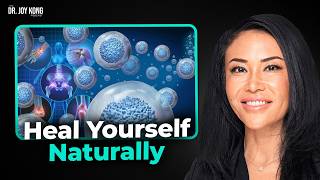
A recorded interview with Dr. Joy Kong about regenerative medicine and stem cell therapy. Dr. Kong recounts personal experiences that motivated her practice (her mother's remission after Chinese medicine), contrasts regenerative approaches with conventional disease-oriented medicine, explains what stem cells and exosomes are, lists common cell sources (bone marrow, adipose tissue, umbilical cord/placenta/amniotic fluid, dental pulp, menstrual blood), outlines clinical uses (musculoskeletal injuries, autoimmune disease, neurologic conditions), describes typical administration (IV, local injections, ozone pre-treatment, adjunct lasers/nutrients), discusses safety considerations (native vs expanded cells, rare allergic reactions, cryopreservative concerns), and provides contact resources (joykongmd.com and YouTube channel “Joy Kong MD”).
Chapters
Never hire a fat personal trainer, never hire a broke financial advisor. And similarly, I want my doctors to be healthy. And we're looking at you, and I'm like, man, this woman is healthy. Like, we look at you, your skin's good, you look healthy, you look fit. But most doctors are not that. Can you tell us a little bit about how those experiences shaped your resolve to pursue regenerative medicine and what that means, even?
Yeah, well, there's so many things. First of all, I think I grew up in an environment that respects the complexity of the body. I think anybody who's grown up in a very traditional environment, whether or not your Indian family or maybe from the Middle east or, you know, or Chinese, you know, eastern Asia, that there's this traditional form of medicine that respect the holistic system approach of the body, and then there's the Chinese approach. So one thing that stood out when I was growing up was my experience with my mom's illness. When she was 43 and I was only 13, my brother was only 6, she was diagnosed with multiple myeloma, and everybody thought she would be dead within a couple years. And she was in a hospital, the best tumor hospital in Beijing, all of China. She was there for six months, got six rounds of chemotherapy, lost all her hair with blackened veins. She fainted multiple times. And most of the people who were on the same ward, she said, they. They walked in and they left on a stretcher, dead. So after six months, she said, enough. I'm done. Get me out of here. So all she did was going to a Chinese medicine doctor who specialized in immune system and got a concoction of all these herbs and probably animal parts and all these things that my dad was brewing every morning and every night. That's all she did besides doing aerobics. So she was sitting at home, these two things. Within six months, she was in complete remission and went back to work and lived another 32 years. So this is from somebody. I thought for sure I was losing my mom within a couple years to my mom, you know, living a beautiful life. And so much so that it's so shocking that her cancer doctor from that hospital came to our home, asking my mom, what did you take? Please give us the formula so we can use that on our cancer ward. So that's one thing that definitely helped shape how I view different forms of medicine.
Wow. And I really appreciate that about you. It's funny, you know, I talked to my wife. She's here in the studio today, and I tell her all the time, like, Never hire a fat personal trainer, Never hire a broke financial advisor.
Right.
And similarly, I want my doctors to be healthy. And we're looking at you and I'm like, man, this woman is healthy. Like we look at you, your skin's good, you look healthy, you look fit. But most doctors are not that. Why is that?
Because they did not have the tools. I went to ucla. I was telling you, I lived in Culver City. We probably had about half an hour of education on nutrition. And of course we knew nothing about supplements. We don't know anything about how to make sure our body is functioning on optimally.
Wait, wait, wait. How long did you go to medical school for?
It was four years.
Four years of medical school. And you had how much nutritional information?
Maybe half an hour.
Half an hour and four years?
Yeah. These are the vitamins and these are the minerals. Yeah, it's a very. It. It's. Maybe things are better. I went to medical school in 1999, so that's 25 years ago. I'm hoping things are better, but from what I hear, it's probably not that much better. Because why? Because our medical system is still disease oriented. What we were trained to do is to wait for people to get sick. Right. As doctors, you don't do anything. They're fine, they don't need you. You wait until they're sick. Once they're sick, oh, now we come alive. Now I can run tests and now I can send you to get imaging. Now I feel empowered to tell you what's wrong with you. And a whole purpose diagnosis is, is to find a particular disease to put you in. Right. Once I connect your suffering with a particular condition, that condition is linked to all these medications. So every medications, when they were applying for approval from the fda, they were applying for a particular condition. So it's all condition oriented. That's why we need to put you in a category. Once we give you a condition, the name of the condition, now we can match, you know, it's like a matching process that we can match medication, a drug to you. So that's the entire education. How can we diagnose a person, give them that name, which will connect them to a drug? So that's what we were empowered to do, but not to actually prevent people from getting sick in the first place. We had no idea of how to do that.
That's so interesting. I mean, Nathan and I shared the same doctor for a while, and one of the most interesting things I found is that they were more interested in treating the numbers on, on my test results than treating me as a person. So they would go, oh, these are your cholesterol numbers. Here's the. The drugs that we can get. You get those numbers down. And I would say, I feel good. Like, you know, I don't have any of these other issues. Why do I want to get the numbers down? They're like, well, that's. That's what we understand. So let's get back to China, actually, interestingly enough. So I know for you it took a lot of determination. And she talks about this, by the way, in her book entitled Tiger of Beijing. Really interesting read. So it takes courage. We. I immigrated from Iran. My family immigrated from Iran to the United States. I'm sure it wasn't easy leaving China. And I note that took a lot of determination. On your end, talk to us a little bit about how you made that decision, what led you to move from China to the United States, and how that same determination helps shape your practice today.
Yes. So it's. There's definitely a bit of bullheadedness that's involved because when I was deciding to actually go for it, to go through the process, which means doing the exam, a TOEFL exam, and then applying for colleges, I was still the first year in college and I was studying architecture. And at the time, as a student trying to come to the United States to study for undergraduate study, if you don't have scholarships, then you probably, you know, you won't be able to be accepted. You know, the American embassy won't let you go, and most Chinese have no money. So my friends were basically, they said, joy, what are you doing? Why are you even considering this? Because it's next to impossible. To them, it's just about impossible. So it would be silly to, to, to want to do that. And I knew it was not 100% impossible. There was definitely. People have done. There are people who have done it. And. And I also heard when there's a. Well, there's a way, and when you decide on something, when you put your attention onto something, the universe will conspire to help you.
So.
And it's almost like a sense of destiny that I needed to be there. So it's the same thing of how I feel about regenerative medicine, that this is the right thing to do. So when is the right thing to do? Coming to America is the right thing to do. For me, as this particular human being coming onto Earth, having an experience, what do I want this experience to be? How do I want to utilize my talents and everything I've been given so I can share with the world. And same thing with regenerative medicine. What do you do with this power that is embedded in, in our body already? It's all there. So science have shown that we can take that power and give it to people and that will bring out all these signals to help the body regenerate. Because a lot of times the illness is loss of signals. So we've lost really the information, the clear information. Sometimes there's so much inflammation, so much toxicity that the signals are lost, the body can't hear it. So how can we get that signal to be loud and clear? So that, and I think that is what, what can elevate the human existence which means less suffering and more joyfulness. Right. So if we have more joyfulness, we have more vibrancy physically, then we have more resources to develop mentally and emotionally and as, as a person. Right. If you just focus on your physical survival then you're not going to have enough energy to actually grow as a human being as far as your consciousness. So any. And that's a whole other subject. But you know, to me there's a chance for me to come in and make this more available to people because it's the right thing to do. And I see that in young doctors that I mentor these days. Some are still confined in the fear based medical system that this is what the FDA says, this is what the medical board says, this is what I've been taught. So I can't stay, you know, I can't veer away from this little bubble. But there are other medical students or young doctors who realize, my goodness, I'm not helping patients enough. They're not getting, really not getting any better. They're all hanging in with all these medications. They're taking a, you know, handful 12, you know, 20 medications. This doesn't feel right. It doesn't feel good. I don't think I'm making a difference. So they don't want to feel that way and they're willing to take a risk so that they feel that they are doing the right thing that actually are helping people. I think it's still the minority unfortunately, because a lot of people, this is why we need to elevate consciousness because a lot of people are so worried about their livelihood and you know, what's just, you know, insurance, malpractice insurance, all these things that they, that's what they're concerned about instead of what's the right thing to do, how can I really help somebody else. So there's a Minority of doctors, I don't know the percentage, 20, 30%, who actually are driven by the desire to do the right thing. And they would do anything to be able to do that. So those are the doctors that I love working with.
I feel like Dr. Warren is one of those, too. Dr. Warren Stout, he's a friend of ours. He's one of the leading ocular surgeons in the country, and he's pioneered a lot of the surgeries around the eyes. And Warren's one of those guys where we always talk about him, where he's just. He's like, you know, he really wants to do the right thing and he'll take his time with the patients and get them to understand. I've got another doctor, Dr. Laurian, who's in Beverly Hills, who's probably the best ENT on the planet. And his thing is, look, I'm not going to rush you, but I'm going to educate you on what's going on, because you're the patient. You're going to be making the best decisions for yourself, and you'll make better decisions if you're informed.
Mm.
But you're right, currently, the healthcare system isn't designed like that. They want to get you in, they want to get you out. And to your very astute observation, they want to match up a condition with a drug, and that's what they've trained them to do. So that's. That's fascinating that you mentioned that. So let's get into a little bit of defining for anybody in our audience who may not know what regenerative medicine is, how do you explain that to. In simple terms, to somebody?
So I think of it almost like, are you looking at the body as a battleground that you are fighting against? So using a drug approach, it's more like, oh, this is something wrong with you. So I'm going to use this to interrupt this process to change things and to kill or to, you know, redirect a lot of times, is antagonistic view of how to deal with the body. Whereas regenerative medicine, you're actually tapping into what the body is capable of doing. So if the body is capable of repairing itself, how can I give some kind of treatment to allow the body to just do its own thing? So basically enhancing the body's capabilities, that. That over time has been lost, because when we were born, we were very capable of regenerating. And as we get older, there's more toxicity, there's more inflammation. Gradually the ability is lost. So then we come in, you know, that's the whole point of anti aging medicine is to dial back the decline that's perpetuating this motion of not being able to receive signals. So then we can use any methods. We can use prp, we can use ozone therapy, we can, you know, use different supplements and stem cells, all that to make the signal loud and clear in the body. So the body is. Or the mechanism of function of the body better, the cellular function. All of a sudden they can just do their own thing. So getting out of the way. So nature's intelligence can come in and perform basically life's miracles.
That's so interesting. So it's an entire practice based around modalities that you can employ and execute in order to let the body heal itself and come back into balance and harmony.
Right.
So it sounds like right in line with eastern wisdom.
That's true.
Like, well, for thousands of years, people in your tradition and our tradition throughout Asia.
Yeah. What's fascinating was eastern system and they didn't know about stem cells, but they may talk about life force. Right. Try to enhance life force. But stem cells is still a western medicine concept which I. This is what western medicine has brought to us. Look, there are all these cells in our body that are capable of creating more life, more specialties for these cells. So how can we tap into these cells? That's why it's accepted in both the eastern medicine, you know, the more holistic approach in medicine and western medicine, because it's science based, but it's very holistic. You know, it's about bringing the regenerative potentials. So the. Yeah, I can't think of anything more holistic than the cells sending out thousands of different kinds of growth factors, cytokines and, you know, neurotransmitters. Basically doing a thousand things all at once for the body. That's what the cells are capable of.
So let's talk about this a little bit. So as far as stem cells go, I want you to explain to us, to somebody who knows nothing about stem cells, what stem cells are. I know you are probably the leading stem cell doctor, certainly in Los Angeles, but probably in the world. I know that people come to you from all over the world to your practice specifically for stem cells. We've heard on Joe Rogan how he's gone to Mexico and gotten stem cells in his knees. Eddie Bravo, another jujitsu practitioner, also big fan of stem cells. I trained Brazilian jiu jitsu. So all the guys there, you know, the high level guys who've had knee injuries, meniscus, tears acl, tears, all are going to get stem cells. Can you explain to somebody who doesn't know what stem cells are, what they are, and how to use them, and what people most commonly come to you for?
Okay, so I want people to think back of who they were when they were in the mother's womb, right? So the first moment, the fertilized egg between your mom and dad, that boom, that created first stem cell. So that from that single cell, we're able to make you, right, this fully fleshed, complex, walking, talking, sentient being, what's going on in that cell? How can one cell create this miracle? So that is the intelligence we're trying to tap into. So what makes a stem cell? The definition is that the cells have a capability for self renewal. So they can make more copies of themselves. Not only make more copies, but they can make copies that are more specialized. Often when the cells divide, when a stem cell divide, divide into a copy of itself, identical copy, another copy that's just a little different, that's gaining function, you know, able to do certain kind of work. So in that, you know, because they are able to do that, they can always maintain a copy of itself while giving out more offspring. So that's really the definition of stem cells. And we used to think that only in the bone marrow, we have stem cells. After the bone marrow transplant, we realized there are stem cells. Now we realized there are stem cells all over the body. But when we say stem cells is not a single kind of cell, is there are probably thousands of different kinds of stem cells. Because from the first fertilized egg, which is full of potential, up to day five to seven after fertilization, that's when you can actually get a cell from this, that the early embryo. And each of those cell is an embryonic stem cell. So those can form an entire human being. So from that all the way down to now, let's say you have, you know, in your liver, there are liver stem cells specifically for regeneration for liver.
What's the stem in stem cells?
For the stem, it just means capabilities really, that the root. Right. The root of something else. So it's able to give out offspring. Okay. And so the stem is the original root. And then when it give. Give out offspring, it can be more specialized.
Okay.
Yeah.
And so where do stem cells come from? Now, if I come to you and I want to get stem cell therapy, or if I go to a clinic somewhere and I want to get stem cell therapy, where does that material come from? Is it grown in a lab?
Yeah, see Initially, the first stem cell treatment really was the bone marrow transplant. That was from the 1960s. That was the only place where stem cells are around. And then we realized, oh, stem cells are everywhere you can get from fat. So in your fat tissue, it's not really the fat, it's the blood vessels that are supplying your fat. All along the blood vessels, there are stem cells, those. There are a lot of mesenchymal stem cells. You can get it from the early birth source. So from the birth, the umbilical cord, the placenta, amniotic fluid. Very few cells, but some cells. And you can get it from dental pulp, menstrual blood. I mean, really, we have stem cells everywhere. So the. When people come to me, we're using a form of therapy that's a little bit more broad. At this point, we're giving people cells, what we call mesenchymal stem cell. That's a majority of the type of cells I give. I give other cell types too. From umbilical cord, which is earlier source, which has been shown to be much more potent than the cells in your own body that we can obtain. And they're also safer because there's less potential for them to trigger. To promote cancer growth.
From baby. From umbilical cords, from healthy life births. And people donate these?
Yes.
Yes. Okay.
So there are companies that specifically work with birthing clinics and hospitals and ask mothers if they want to save the cord for themselves. If they say no, which 90% of them say no, then they're asked if they want to donate. Yeah. So these are heavily screened for all kinds of infectious diseases that's required by any organ transplantation processing and also screened for any chronic illnesses, family history, you know, toxic exposure, et cetera. And also in the product that I use, we do not accept any. Covet vaccinated donors. Yeah. Because of, you know, certain concerns of the genetic changes. And, and. Yeah. So it's not. I think there's, there's enough concern for us not to allow that just to prevent the potential of jeopardizing. Yeah.
Because you don't know what you're doing. Right. Because it's our DNA. And. And there might have been some type of manipulation of it.
The microrna, the, the. Not micro, the mRNA. Yes. They do go everywhere. They get everywhere into the human tissue. So we don't want that to be affecting the recipient.
Right. But babies, newborn babies, I guess it's the mother.
Because the mother. Yeah. We do not accept mothers who have been vaccinated.
So that narrows down quite a Bit, so it must be expensive.
I would imagine that will add to the expense. But they were expensive in the first place, so definitely we're much more selective.
So if you got your own kid's umbilical cord when your kid was born, can you use that to get stem cells for yourself?
Yes, you can. Your kid is about. Well, it's 50% identical to you as far as genetic material, right. It's not identical to you. Ideally, you're saving that for your own kid, not for yourself. So this is. We're using cells that have been donated, right? Tissue that been donated from a stranger that goes to, you know, to the mechanism of action of why these cells work in the first place. So should you use something that's more similar to you or something that's completely from somebody else that you don't know? Because we know the way cells work is by providing clear signals to your body for regeneration and repair. And majority of the cells actually die after they've worked in your body, after they've been activated and they've done their work. Nothing lives forever. They don't either. So because that's how they work, you don't really have to have something that's identical to you or as close as possible because they don't stain your body, they tell your body how to repair. This being proven over and over and over in research studies. Almost like a nauseam. If you start reading research, everyone says, okay, so we proved in this study that the reason this tissue regenerated, let's say, you know, the heart, the heart muscle regenerated. And we realized that none of the new tissue that was formed came from the cells that we put in the body. It all came from the person's own cells. Because your own cells were so stuck before the stem cell treatment, it couldn't provide these copies. And to make more tissue for you, all of a sudden you give stem cells, you bring immune system on board and you're sending the clear signals to break down scar tissue and tell the local stem cells, hey, wake up. Is your time to shine, is your time to actually really help the tissue repair? And that's how it works. So you don't have to have identical cells.
Is that what they're. They're talking about when people talk about zombie cells and that the stem cells can, can regenerate zombie cells? Is that the same thing or is that something a little different?
That's a little different, yeah. The zombie cells are just. Cells are senescent or not working well, they can actually be detrimental so you want your immune system to be able to get rid of it. Once you can get rid of the zombie cells. Now all of a sudden you're freeing up space. Now you can have a new healthy cell to take its place. And that's how you can help the body to rejuvenate to a younger state.
So stem cells, I know, are very controversial, particularly in this country. And oftentimes when I see it, it's met with skepticism from several people. I personally know people in mixed martial arts who. It's been a game changer for them and in all areas of medicine. It's funny, one of my doctor friends tells me, look, stuff doesn't have to be right for you, for, you know, it doesn't. It. It doesn't matter. If they did a clinical trial on 5,000 people, you needed to work on a clinical trial on one person, and that's you. So why are stem cells met with so much skepticism? Why are people so skeptical about them? And how would you respond to the critics?
I think there's a few layers to this. One is that there's some kind of misconception, I think, coming from, especially in this country with the, you know, concern about abortion, the ethical issues about the baby, you know, that someone thinks that life is harmed by harnessing stem cells. When you use embryonic stem cells, that does entail the destruction of an embryo. So in this culture, not in every country, that people think that fertilized egg is life, you know, it's a human life form that, you know, is equivalent to killing or, you know, they think that's.
There's religious organism.
Right. They think that that's organ. So. So George W. Bush banned federal funding for embryonic stem cell research. It's not like he banned embryonic stem cell research. He just said, you're no longer going to get federal funding. But there are still embryos that were destroyed and those cell lines can still be used. But all of a sudden, people equate that with the banning of stem cells. But it was just banning of federal funding for embryonic stem cell research. And there are still all these other types of stem cells. So we're using adult stem cells. Even the umbilical cord stem cells is actually, in the embryological terms, is considered an adult stem cell, even though is from a birth tissue. So embryo, you know, when a baby, you know, you look at the formation of a baby, anything before birth is prenatal, but after birth, at that point it's mature, the organism is mature. So all the cells obtained, they Think of it as an adult stem cell. So these don't have ethical considerations. Right. We're not. No baby's harmed when baby's born. We only accept healthy life births. And the baby's vibrant. The cord is cut, usually all the tissue just tossed in the trash. So now we can actually ask the mother's permission to extract cells from these tissue, or we use somebody's own. Right. If you have your own. You want your bone to be drilled into. You want to take your own cells out and then put it back into your body. That's considered part of medical practice. It's a procedure.
Yeah.
So the controversy, I think, came from that. That's one thing. The other part of the controversy, I think came from certain people who are not very scrupulous, lacking of integrity from people who are in the field.
There's a lot of scammers out there.
Yes. Everything. Right. In everything. So stem cells, because it's such a, you know, fascinating and popular area, a lot of people realize that, oh, I can make a lot of money from this. A lot of people who have a really business orientation, not so much healing orientation. This is a good business for them. And then I see a lot of people cutting corners and doing whatever they can to maximize business profit and making all kinds of claims just to be able to get all these customers. So they're not treating patients, they're treating customers. These people are giving the industry a bad name. So I think the combination. So a lot of people are skeptical.
Yeah.
Because so many people are just making extravagant claims.
Yeah. So how do you. Because, you know, I see all this stuff about different, you know, the million people are trying to sell you stem cells and exosomes therapy and all these things. So how do you know what's good and what's not good? Like, you know, I'm like, well, that one looks pretty, but I don't. I don't really know. Right. So how would. As a. As a, you know, not doctor.
How would I know that? Well, that takes a lot of research. So even as a doctor, you will have the same question. Because the reps from different companies would try to sell you products.
Right.
How do you know what they're telling us? The truth. And their process is actually really good to generate the best products. So that's where I come in, because I've seen so much claims and so many companies doing things that they shouldn't be doing that were against the FDA regulations or simply just not, not, not ethical, you know.
So a lot of these things where they're like, it's 30 million parts per million or whatever.
The.
That really, a lot of that doesn't really mean anything. It's just marketing.
Yeah, it gets very complicated because some companies are still afraid to talk about life cell count because the fda, in his brilliant mind, somehow thinks that if you talk about cells being alive, that means you're really talking about a drug. Okay. This is their logic. If you're talking about the cells being alive, that means you think how the benefit came about is because of the metabolic activity of the cells. So if you're talking about metabolic activity of the cells now, that makes the cell a drug. So just go figure with the logic, right? One day this is all going to change. I think there's going to be more intelligence and science behind certain regulations. But at this point, that scared a lot of people, including companies. So if they talk about lifestyle count, they're afraid that in the FDA's eyes, that means that you are talking about these cells as if they're drugs then. Which means if they think that you're talking about a drug, that means you cannot use it until you go through FDA studies. And that causes millions and millions and dollars and lots of time and energy, which is why a lot of people simply go overseas. So this is not good for Americans. This is not good for the advancement of the field, you know, of the science, when there are certain things you can't do. Granted, when you do cell expansions, like what they do overseas, there are other concerns. When you start to do that, you are changing the characteristics of the cells. So the FDA does want you to do clinical studies to make sure that these cells have not degraded or caused problems. But a lot of these companies who are doing it overseas, almost all the companies who are doing stem cells overseas, they are using expanded cells, so they are growing them in culture. And that's one concern. Yeah. So the bottom line is it takes investigation, which is why I thought, okay, I'm gonna help people navigate. I want to make sure whoever the lab that I'm working with, I go there to visit, I talk with the scientists, I witness all their processes, I get their testing, I make sure that the quality of the product is actually what they claim.
Now, you mentioned exosomes. What are exosomes?
Exosomes are these little packets the cells send out into the, you know, the environment to exert its benefits. So to. To communicate. So it's like a vesicle sivani. People used to think that exosomes are like waste products. And this tells you how wrong science can be. And then we realize, oh, that's how cells communicate. So they will butt off these little pieces of membrane, and enclosed in the membrane are all these cytokines and, you know, all these growth factors. So it sends it off to talk with all the other cells. So some companies will just grow the cells and collect all these vesicles and give it. Give the vesicles to people for healing. Or you can get these vesicles from the tissue, from amniotic fluid, from other tissues. So you can obtain just these tiny, tiny nanoparticles. But they're not cells. They don't have the DNA the cells contain. So they can only do part of the job. They can never do the full. You know, they can't manifest the full capability of the cell, which is the intelligence. Right. The DNA is a blueprint that tells you how to do everything.
Now, I know that you've got one of the top clinics in the country. I know people love you. What are the most common things that people come to see about? Like, what are the top three or top five things that people will come to see you about?
The top one, which is the most common musculoskeletal injuries, right? Joints, osteoarthritis, and, you know, all kinds of, you know, back issues. And so we have a lot of, you know, osteo, you know, just basically musculoskeletal problems. And that's the bread and butter of stem cells. So that's a big one. And then another one is autoimmune conditions. There's so many things that have autoimmune in nature. You know, the most common ones we know, rheumatoid arthritis, lupus, psoriasis, Ms. There's huge number of autoimmune issues on the rise as well, because just the nature of our immune system being out of whack. So stem cells have tremendous evidence when it comes to helping autoimmune conditions. And the other one that's common is brain conditions, because we have nothing really to help the brain at this point besides some supplements maybe help a little bit before traumatic brain injury for Alzheimer', Parkinson's, you know, ALS, we don't have medications. There's nothing. I. I remember 15 years ago, my attending doctor from the VA hospital were saying that within 10 years, we're gonna have. We're gonna have the cure for. For Alzheimer's. It was so confident because the government had directed so much money. But, no, we don't have it. But stem cells actually is one of the. The Best hopes that people have. So. Yeah, because these conditions are so devastating. Autism, you know, another difficult brain condition. Yeah. Stem cells.
What if someone's just fat or ugly or like any of that stuff? Like it. Does it, does it help for that stuff? Because look, I think in this country, I, I am, I am shocked, by the way, at the number of people on Ozempic. Oh, yeah, it, it came out of seemingly from nowhere.
Yeah.
Like a lightning bolt that's striking everybody. And you. We went away. We were in Europe for the summer, as we do. We spend most of our summers in Europe where there's far less obese people. People in general seem healthier, despite the fact that they didn't get the memo on quitting smoking. And we come back to this country and half the people we, we see have all of a sudden dropped half their weight. Can stem cells help with that? Can they help with skin and beauty, obviously, which is a huge category. I know the show is called Business story of the week. We usually interview entrepreneurs, business leaders, people that are aspiring entrepreneurs, but also people that are well established in business. And I've been in health and wellness for a good part of 30, 35 years in those businesses. And I know that in this country specifically, the things that sell are like the one pill solution, the one treatment solution where take this and it'll solve that. And of course, you know, weight loss, obesity and beauty are like the big things here.
Yeah, yeah.
So is there any.
Well, I haven't seen any direct evidence of using stem cells for weight loss and. But I can, you know, just knowing how the cells work, that is hugely anti inflammatory, that it modulates your imbalances, your immune system, even just from those two things. It should help a person to have a more, I guess, more vibrant metabolism because if your inflammation is down, you know, your body, all your cells should function better. And stem cells have been shown to be helpful in type 1 and type 2 diabetes. So in that sense, you know, help with blood sugar metabolism, which we all know, you know, insulin has a lot to do with weight gain and, you know, and the, the continuation of, of the weight gain. So just, even, just looking at those two things, I think will help your system to function better. So if you are eating the right diet instead of eating junk, then your body will respond much better.
So how do you, how do you take stem cells? I know this guy was telling us that what do you, you rub them on yourself. What do you do?
Yeah, I have a, I have a cream. So I put it on with a cream But I've been told you could do it with all different ways, like a injection and breathing it and, I don't know, like, all kinds of things.
Just remember, cells are large. The cells are probably, you know, between 15 to 50 microns in size. They're very large. So if you just put something on the surface of your skin, it's just going to sit on the surface of your skin and. And die.
Right.
So you do need to put it into the body. As soon as you put it inside right now is get nourishment and it can survive. So if you want cells, you have to somehow puncture the skin. You can do subcutaneous injection for skin rejuvenation. You can inject, you know, really anywhere, which is that I. Okay. I don't think anything can rival the incredible benefits of intravenous stem cells.
Intravenous meaning?
Yes.
I come to your lab, you hook me up to an iv.
Yes.
And I got placental stem cells going into my body. Tell us about that process. This is fascinating.
Yeah. So we do a very comprehensive approach to maximize the benefit of the cells. Because cells don't function in a vacuum. You. You need a lot of the right nutrients and you need the blood vessels to allow the cells to travel. Right. The dilation of the vessels. So there are many factors. So we address all those factors in the treatment. But when somebody comes in, first of all, they get a very comprehensive evaluation to really look at do we want to approach just the IV route, Do we need local injections? And then we talk about what can go into it, because we add certain supplements that can give your body the kind of the elements to regenerate. Right. You need amino acids to build new tissue, and you need blood vessels to have dilations. And so the cells can actually get to places where it needs to go. And you need, you know, vitamins and minerals. So the cells can communicate. Right. Can. Can actually work with each other. So all these things are given to a patient to optimize the treatment result. And then when the person comes in, we do an ozone therapy first. So that's using ozone is O3, right. So three. So three oxygen molecules become two ozone molecules. And when we mix that with the blood and then give it back to patient, there are a lot of these ozonites, which are highly immune, modulating these tiny, you know, all these diverse group of molecules that can help the immune system to function better. So with profound benefits. Ozone is not something that just happens in the environment. Our antibodies can produce ozone molecules. So this is something that happens naturally in the human body. So now we're adding that element in. All of a sudden we can super oxygenate the body into the blood.
You're ozonating the blood?
Yes.
Okay, yeah, yeah, I've heard of that, yeah.
And you can elevate the immune funct, you can activate your own antioxidant system, your red blood cells are more flexible, et cetera. So profound benefit. So we do that first and then we give the stem cells and then we give certain vitamins and in the meantime, we use laser technology to help enhance your body's mitochondria function. And also we can direct the cells to certain, certain degree. Let's say you have, you want something for your heart. So I'm not going to inject anything into your heart, but I have a better way, which is to use laser light to focus on your heart. And that can attract more cells in that area. It activates certain adhesion molecules. So the cells, when they travel through, pass through, they can stick in that area better. So there are ways that we can non invasively get cells to places the.
Lasers are presumably inside. They're pointing at the blood or it's.
Just pointing at the organ.
At the organ. So, all right, so I'm going to come into your office, you're going to hook me up to an iv, I'm going to get vitamins and I'm going to get ozone. So you're going to ozonate my blood, which I know is known to me. I've heard of people with autism having incredible results doing that. We have a friend whose kids are autistic, pretty high on, on the spectrum. And that's what she did to make them functional was just ozonating the blood. So I don't know much about it, but it sounds reasonable. So we come in, you do that and then you start introducing the stem cells. But within the equipment that you're using, I would imagine a lot of this is proprietary to you and what you do. But within that equipment there are lasers that you can direct to certain organs in the body.
Yes. To make it more, to attract more cells. You need cells to be there to do more work. But what's important for the IV approach is that a lot of the cells, when they travel throughout your body, they're going to get into contact with your spleen and all your lymphoid organs, you know, throughout your body. And those will produce profound effects. Because your immune system is so crucial in preventing you from getting sick, preventing you from getting old. I mean, the Immune senescence is a real thing. So if your immune system is not up to par, then your body is not going to be able to fight off cancer and to recover from any injuries and problems. So IV stem cells can talk to your immune system and it can activate your immune system. And I think that's one reason why it's so powerful for autoimmune conditions.
So is it like a general health thing? So, like. All right, so in my 20s, like, I could bounce back from anything, right? And I train now with guys that are in their 20s, mixed martial arts. We. We train. And like, I have to train differently because if I get injured, it's gonna be a month out, two months out. These guys, you can throw them on their. On their head, on the neck, whatever, and they can get the same injury, but they're. They bounce back like 20 minutes later.
Yeah, I love it. You just illustrated the principle I've been talking about is that we start to exhaust our stem cell supply as we get old. So just to give you an idea, the mesenchymal stem cells I was talking about, that's everywhere in your body, is the discovery of it. Dr. Kaplan wanted to rename it medicinal signaling cells. They're all over your body. Anywhere you have blood vessels, you have these mesenchymal stem cells. MSCs, in short. And their goal is to give you the signals and coordinate this regeneration. When you were born, every one in 10,000 cells is an MSE. When you become a teenager, it has dropped to one in every 100,000. So 1/10. As far as the cell to these regenerative cells, the ratio when you reach your 40s, it becomes 1 in 400,000. And when you reach your 80s is 1 in 2 million. So you. Your age, you know, compared to somebody that's in their 20s, yeah, you probably have a lot less stem cells. So you don't have the signal. That's that they have, right? Their body is just like, okay, the cells are sending out all these signals and everything is loud and clear and boom, repair has happened. And for you, if you don't have the signal, body's like, what? What, what am I supposed to do? Yeah, so. And then along with other declines, right, you probably have accumulated more toxic material from living and breathing and eating, you know, bat seed oils in restaurants. So. And on top of that, you just don't have as many cells. So lack of cells and also lack of potency of your cells, your cells have gone through everything you've gone through. So if you smoke cigarette, if you you know, had, you know, any pollution and you know, has any detrimental to your health, they are going to be affected. They've gone through your whole life with you. So they lose their potency as you get older and they also lose their ability to detect cancer. Yeah, so MSC is actually from a younger source very effectively can help the cancer to basically kill off the cancer. But the MSCs, when you wait until somebody that's in their 40s, 50s, and then when you put them next to cancer cells, it shows that they help cancer grow because they don't, they've lost certain capabilities of detecting that's a cancer cell. So basically they're losing their range of capabilities. So it's not just reduced number, but it's reduced potency. And on top of that, your body is, you know, it's functioning at a lesser capacity. So less signal and less ability to detect signals. So that's why you don't heal as fast.
So how often would I need to.
Have this therapy for anti aging treatments? The General recommendations? Every three to six months.
Three to six months?
Yeah.
You just come in for two hours?
Yeah, yeah. Less than two hours. So I do it every three months. I've been doing it since I was 45 years old, so I'm 53. I think as a person get older, they could do more frequently if they want. If they're younger, maybe once a year is enough. So I think it really depends. But in general, three to six months is a good number. The reason is that the cells will live in your body for about three months and then all their effects will last for about another three months because they send out these exosomes and et cetera. So the effect will last another six months. If you always want the effects to be happening in your body, then you want to do every six months. You always want cells then probably every three months.
So on the break, a lot of view asking about side effects, and I'd be remiss not to ask you about this, what are potential side effects of stem cell treatment and things people should be concerned about?
I think the side effects, first of all, it's going to depend on what kind of cells you're using. If you're using mesenchymal stem cells and native cells, which means they're not expanded, so they haven't been grown into huge numbers, you're going to have very, very little side effect. Once in a while, someone may react to the cryopreservative that's in the product. That may cause certain, you know, certain people to reject any chemical can, even, even natural foods some people can't tolerate. So anyone is going to have some kind of, well, people are going to have allergies to, to anything they could. So it's possible that someone may have some kind of allergic reaction to something, including a cryopreservative in the product. So those cryopreservative are to prevent the cells from bursting when you freeze them, prevent the crystals from forming. So that could cause certain issues. But that's very, very rare. Extremely rare. And when you have mesenchymal stem cells, those cells have a tendency to calm the immune system. But when you start to expand them and grow them, then they can get stressed and they can secrete inflammatory fact, actually make genetic alterations and start to express surface markers. That's consistent with the donor, which can cause rejection reaction from the recipient. This is one of the major side effects I've seen from stem cells overseas. When people use these expanded cells that Tony Robbins talk about the cytokine storm as if that's something that you should expect. When you get stem cells, that's really a side effect that you shouldn't have if you're using the right source. So the source of the cells is important.
The ones that you use. That's not a thing.
No, we don't expand and so I don't see, I've never seen cytokine storm. I've treated a lot of people and MSCS calms the immune system. So if you're giving a product that doesn't have a lot of MSCs, and let's say you're using umbilical cord blood, then there's a potential for the body to sense something different and for the immune system to be activated and, and reject those cells. But if you have MSCs, mesenchymal stem cells, they tend to calm the system, so there's less of that, that type of rejection. But even, even that said, so let's say you use pure umbilical cord blood products, there's potential for like chest tightness, some kind of slight allergic reaction or slight rejection type of reaction. So chest tightness, sniffling, sneezing, low grade fever, malaise, and they're usually lasting no more than a few days. Although I've heard people using expanded cells getting extreme fatigue for two months. So that, that has been, that's, that has been.
Expanded cells are the ones they use overseas, not the ones that you're. I want to just make it very.
Clear to everyone who's listening. Okay. Yeah.
So it sounds like Fairly mild side effects, if any.
Yeah, actually, I've had patients who are really, you know, very, I guess, scaredy cats. Right. They're afraid of anything. What about this? What about. So, yeah, so they will go online and search and, you know, scout the earth. And I remember this. This one patient came back to me saying, well, I just can't find anything. It seems. It seems very, very safe, because it is very safe. But there are a few possible concerns like the rejection and. But the side effects, I would say, happens extremely rarely. If you put all, everything together, the core blood will have more incidents. Maybe 20% of people will have some kind of reaction. But if you use a lot of MSCs, if somebody reacts to cryopreservative, that's possible. But no more than 1 or 2% of the people may have some kind of issue.
You're my kind of doctor. I like you because I get the feeling that you're more honest than you should be. I feel like you're just on most doctors, like, yeah, you're fine, you're fine. And I feel like you will tell the patient exactly what the thing is, regardless of, you know, any of the. Any of the other issues, which is.
You have to be honest. I mean, that's just, you know, that's the way to live.
So tell us as we're approaching the end of this. I know if you've got a couple questions, you can throw them up too. Tell us about Chara Omni. Chara Omni.
Okay, so that's a skin cream. That's a stem cell skin cream.
Okay.
That I created out of just desperation that I can't find a good product for myself because I know the detrimental effects. Thank you. Detrimental effects of all these. All these ingredients that these companies put in cosmetics, and they can be huge hormone disruptors and, you know, have a lot of unforeseen side effect. And I just wanted something natural, and I just had a hard time finding it.
And these have actual stem cells in them.
They do have stem cells, but the cells are not alive. So I don't want to misrepresent so the stem cells, but the active ingredients, a lot of the active material is alive, but the cell itself have, you know, been purposely basically punctured. So they leaked all their material into the solution. So it's a combination of stem cells, a lot of interesting peptides that have been shown to have proven benefits for skin regeneration, and then a lot of natural herbs and antioxidants and prebiotics. So everything is natural, is 100% natural. Even the preservative is natural. So that's. I just want to put something on my skin that I feel good about that I know is not jeopardizing my health. Not only that, but it's enhancing. It's so gentle that you can use this for microneedling, right? I can put this cream on my face and run microneedling so you can drive more of the product deeper into your skin layer. Because it's so gentle, so mild and but potent at the same time. And we often use it after procedure, like any facial procedure. We put it on the face. Oh yeah, it's fantastic.
It's. It looks amazing. I mean I'm a nerd when it comes to looking at ingredients and I've been doing that for good. Part of I, I'm gonna say like 40 years I've been reading ingredients and it's always amazes me. It shocks me. The ingredients that they put in most commercial cosmetics and people don't read it. People are like, oh, xylophonal phono fate. Yes, I'll take two.
It's too small.
Too small.
You can't even read them too small or they don't know what the bird means.
But I immediately notice all the ingredients in this. They all look like super high quality ingredients you're not using. I mean there's nothing on here that you can't pronounce. Tell us this doctor. I mean I feel like we need to have you back for another episode because I feel like we can go really deep into any one of these topics. I mean she was fascinating. I know from this show a lot of people are going to seek you out. So I want you to be ready for people to wanting to come to your clinic. I know that you've got a waiting list. How do people reach you and how do people learn more about your practice and how can people sign up to come in and, and take part in these amazing treatments that you've pioneered?
Thank you so much. I think the best way there are two ways to really reach me and understand what we do as far as stem cells etc or just holistic health. One is my website, just joykongmd.com so Kong is K O N G, right? Joy Kong md. And that has everything I do under there including the academy I founded where I trained doctors and the stem cell cream and my book. So everything is on there. And then the other great resource is the YouTube channel. So it's just Joy Kong MD. So you can just put my name there and look up Whatever topic you want to look up. I've talked about different aspects about stem cell therapy, you know, including what about other people's DNA in my body? Should I be concerned? And what are the, you know, the stages of healing of stem cell therapy? How many sessions do I need? How often do I need? What's the cost? And, you know, what's, what's your approach in treatment? And what about expanded cells? So different subjects, I go into much greater depth. So that's a really great resource.
Okay, amazing. And are there appointments available at your clinic if people want to come? Like, how far in advance do they need to call you? Can they come stay in a hotel nearby and get the treatment if they're coming from outside?
The thing is that it's only one day of treatment. Right. So it only takes a few hours. Even if you do a lot of injections or if you want to add aesthetic procedures, you know, it may take a little longer, but one day, you know, you can be done. We do have people who fly in the morning and leave, you know, later on in the day. So that happens quite a bit. But yeah, there are hotels nearby, so we, we book out. You know, it's hard to say, but, but we do a, a consultation first. We really spend the time. So it's going to be a doctor talking to somebody, really get an understanding of what kind of conditions they, they have and if it's the right fit. Because we go into, you know, we're not going to just blanket saying, oh, yeah, stem cells is amazing, which is not the right way of practicing medicine. You need to explain to people why, what's your issue and how does stem cell work? Why would stem cells help you? Yeah, it may not help everything. So it's because a lot of things, it's not the right fit, such as genetic diseases. But even genetic diseases, we can't fix the genesis. But if there's downstream tissue damage or immune dysregulation or scar formation, stem cells can be helpful. So we're going to dissect that with you to see what we need to do. And then what's the route of administration? Do we need to inject locally or. So the consultation is very important. But yeah, by the time people come in, you know, we already know exactly what to do. We were all prepped and so it goes pretty fast. Yeah, we probably from time of consultation to the appointment time, probably about a month or two as far as waiting.
All right, yeah, that's reasonable compared to what it takes to see any doctor in La.










