Introducing EBOO | Dr. Yoshi Rahm on THE DR. JOY KONG PODCAST
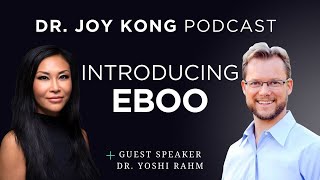
Dr. Yoshi Rahm explains EBOO, a treatment that circulates blood through a filter exposed to oxygen, ozone, and light. He's done 1,500 to 2,000 sessions and says it reduces inflammation, sharpens mental clarity, and improves digestion and energy. Ongoing studies are testing it combined with methylene blue.
Chapters
Doctor Yoshi may be the provider that has done the most of this procedure in this country. What is IBU exactly?
Yeah. So IBU stands for extracorporeal blood oxygenation and ozonation. So you can. A lot of people think of it as like a dialysis. And that's really just because we have blood coming out of one arm, going through this machine, and then coming back into the other arm. It's not dialysis at all. It's get this huge surface area of our blood exposed to the oxygen, ozone mixture, foreign.
Welcome Back to the Dr. Joy Kong podcast. And you know, I'm excited to bring you the best doctors, scientists, thought leaders on this podcast to really illuminate on your knowledge, your understanding of health and wellness. And I just want everybody to live a better life. So today I have the pleasure of interviewing Dr. Yoshi Ram. And Dr. Ram, thank you so, so much for being here.
Thanks for having me. Looking forward to it.
Okay. I think you tend to be called Dr. Yoshi, right? That's.
Let's go with Dr. Yoshi.
Yeah, that's kind of what how patients call you, right?
Yeah.
Yeah. So Dr. Yoshi is actually here based in Southern California in LA County. And he very interestingly grew up in a small town in Northern California and had a very simple upbringing without electricity, TV or phone. And so that gave him an early appreciation for healthy living. But he did have family members that were ill. And that became a driving force for Dr. Yoshi to pursue healing in the form of becoming a family physician. And during his residency at Glendale Adventist Medical center, he received highest distinction, the Resident of the Year award, and also the one presented by both faculty and the staff. And he went on to become an attending physician and then establish his own practice, Oasis Family Medicine in Glendale. And he has been a pioneer in holistic healing approaches. And one thing he's very passionate about, and we're going to focus on a lot today, it's what's called eboo. This particular therapy has gained tremendous popularity. People are beginning to understand the power of this treatment that combines ozone therapy and light therapy. And I'm going to have doctor, Dr. Yoshi to go into details, but Dr. Yoshi has done probably close to 2,000 of these procedures on patients and maybe the provider that has done the most of this procedure in this country. So he's very qualified to speak about this particular treatment and also some other treatments that he's excited about. So, Dr. Yoshi, I can't wait for you to educate everybody on what you do.
Yeah. Happy to share the knowledge and share the wealth. So.
Yeah. So. So before we dive into ibu, I'm so curious. How did you grow up with no electricity in America?
Yeah. Right.
China. It's like, you know, did that happen in America?
Right. Hippie parents is what it boils down to. Grew up, like, small town, an hour outside of a small town in Northern California, no electricity, no running water, literally no nothing. Lived the first few weeks of my life in a teepee. And. Yeah, so I think just I lived that way until I was 11 when we moved into town.
And were you running around with no shoes?
Absolutely. Like grounded sunlight, fresh water, clean food, gardens. Right. The whole. The whole feel. And, yeah, I think that just gave me a strong foundation. Wow.
And who in your family was not? Well, that kind of.
Yeah, my younger brother, who is three years younger than me, he actually had spinal meningitis when he was a baby. And so as a result, he had some of his brain removed and ended up having seizures for the rest of his life, which he passed away when he was 25 from one of those seizures. But just growing up as his older brother and kind of helping to take care of him definitely spurred my interest in especially brain health, neurological health, kind of fast forward. My dad actually passed away from ALS. He passed away in 2015. I became a doctor or started my practice in 2011. So that kind of was a big impetus to pushing me into integrative functional medicine. And we were able to help him for sure enjoy those last few years of his life. Definitely slowed down the progression. Obviously it didn't. We didn't stop it. I kind of wonder if I had today's tools, if we would have been able to halt it potentially, maybe reverse, who knows? But it's kind of a. It's been a good, long learning journey, for sure.
Wow.
Yeah.
But you went into medicine, so you are a. A doctor of osteopaths. Right. So what I understand is the way osteopath education goes is that you learn everything that MD learns, and then you also do some adjustments.
Is that. Yeah, that's a pretty good way of doing it. Yeah. It's basically the MD education and then an additional 200 hours in the musculoskeletal system.
Right.
A lot of DOs will have that ability to do some. Either like cranial sacral therapy or adjustments like common chiropractor would be able to do. But it really. It just comes down to, in general, the average DO probably has a little bit better understanding of the musculoskeletal and neurological system to begin with.
Yeah. So I think both MDs and DOs were pretty much locked into the traditional medical approach of diagnosing and prescribing drugs. So how did you jump out of that model?
Yeah, so I kind of just grown up hippie. I was always exposed to a little bit more holistic, alternative medicine ideals, so I kind of went through medical school, kind of assuming I might go that route, and then explored a couple of conferences my last year of residency. And I was like, okay, I'm gonna, you know, put out my own shingle and go into this. And then my dad got diagnosed with als, literally right when my practice started. And so that was just like my first. Okay, we're gonna. I gotta go beyond what I was taught in medical school, in residence.
Right.
Because they're not getting nothing. There's nothing for ALS on that front, like, zero.
Right. Just watch the decline. That's.
Watch the decline. Put you on a ventilator, that type of thing. Right. But it doesn't actually get to why the ALS is started in the first place, which is kind of the premise of functional medicine, integrative, holistic medicine, depending how you want to call it. And so, yeah, that was just a great way to. And that's the part that I'm thankful for. His diagnosis is it, like, sped up my learning curve a lot more than it probably would have. And.
And like, in what ways do you think you actually were able to slow down his progression and help him?
Yeah, so I started. I would say the biggest things. I mean, so I'm not going to mention all the nutraceuticals I had him on, but I had him on a ton. Right. But then I would say a couple game changers were IV glutathione and IV phosphatidylcholine, because he still lived in Northern California. And so he would come down to Southern California for large chunks of time, months on end, and then kind of go back there for a few months, go back up north for a few months, and we could see when he would come back, when he would come stay with us and go into my office, like, almost every day or at least three times a week for these IVs. His progression, his rate of decline would. I mean, it would just, like, halt. There would be no progression. And then he would go back up north and kind of do his own thing. Not have access to the IVs. He would still be taking the nutraceuticals orally. Right. But he didn't have access to the IVs up there. And he would just, he would absolutely go like that. And he did that. I mean, he was given 12 to 18 months to live. And I think we got him like five years, four and a half years. So by all standard, like he should have passed away. So we were definitely able to extend his life. And he was a, that was a good thing for him. That's probably not always a good thing for people, but he had such a great attitude about it that it was really awesome to be able to do that. And you know, he was like, I'm your guinea pig, you know, what do you got for me? Right.
Make you a better doctor.
Yeah, exactly. And then I'm able to turn around and like give that to all of our patients. Right. And so that's the gift. That's like his gift kind of passed on. Part of his gift passed on through me to the rest of patients in the world.
Wow. Well, we have to thank your dad.
Yeah, big time.
So how did you get into eboo? Did it start with ozone therapy?
Yeah, so I've been working with ozone first just in the form of prolozone, so injections into joints and soft tissues since 2012, which, that was part of my dad's regimen as well. But you know, I, we. Let me back up just a second. So my mother in law actually got diagnosed with idiopathic pulmonary fibrosis, which is a slow scarring of the lung tissue for those of you who are not aware, basically until you get a lung transplant or die. Yeah, there's two medications that now out now that can slow the progression. But typically people from diagnosis until they either get the lung transplant or pass away about somewhere between three and seven years on average. My mother in law was one of 13. She actually had one brother pass away within like two years of his diagnosis and then another sister who also had ipf and she passed away within two or three years of her diagnosis. And then her mother also passed away of ipf. So very strong kind of predisposition to it. And so she got diagnosed, gosh, it's probably been six and a half years ago now. And that was another like aha moment, Right? Like the moment we got this diagnosis. She went from hiking mount to the top of Mount Kilimanjaro and then six months later could like barely walk. Keeping up with her walking buddies. Got the diagnosis and then it was like another aha. Okay, what's the, what's the universe doing here? Right? So again, open up the, the, the, the toolbox and Just was like, what can I offer? And interestingly, stem cells were one of those things that I did on her and did it. Did IV stem cells. And that just totally halted the progression, like 100%. She actually ended up getting a couple percentages better, not all better, but totally halted the progression.
Beautiful.
Now she's on the medication as well. But it's absolutely the stem cells. We have like CT scans to prove it. The unfortunate part is that her pulmonologists at Cedar Sinai don't care what else she's doing. Right. So it's like six years later, after she's had three family members die within two to three years of diagnosis, she's still doing totally status quo. Right. After going down like this for the first six to eight months. Right. So it'd be. It's kind of. It's just a sad critique of standard medicine that they won't open their mind. A lot of them won't open their minds. Right. They want to do good, they're getting.
Better and they don't. They're not interested in finding out how.
Why not ask questions how.
That's really sad.
So fast forward. So that was kind of a long winded explanation. Fast forward to the beginning of the pandemic in that first month of it starting when I think I didn't quite have a better good grasp of what was really going on. I was like, okay, I got to get more, more tools in my toolbox for my mother in law, so. And I kind of heard about this ozone dialysis. I searched around. Nobody could like train me on it though, and show me how to do. So I ended up building my own machine. I thought it would take me like a month. It ended up taking me about six months because it was a lot of. It was like my first mad scientist, real MA Scientist experience. My blood was on the walls, nursing all over. We had. So we ordered so many sets of tubings and. Because there's a lot that goes into the engineering of an EO machine. Finally, again, can you first tell the.
Maybe tell the listeners what is EO exactly?
Yeah. Good. Great, great question. So EO stands for extracorporeal blood oxygenation and ozonation. So you can. A lot of people think of it as like a dialysis. And that's really just because we have blood coming out of one arm, going through this machine and then coming back into the other arm, ideally. But it's not dialysis at all. It's really just how do we get this huge surface area of our blood exposed to the oxygen ozone mixture. And when we say we're giving ozone to someone, it's actually usually only somewhere between 1 and 3% ozone. The other 97 to 99% is actually oxygen. So it's actually oxygen ozone mixture. And so the in EBU extracorporeal. So outside of the body, blood oxygenation and ozonation. So there's this filter that, depending on what filter we're talking about, it's about one and a half to three square meters of filter paper. And our blood is literally running across 1 1/2 to 3 square meters of filter paper that has a bunch of little micro holes in it where oxygen ozone is on one side and it's permeating through those little holes into our blood. And so it's just this like continuous. We do it for about 45 to 60 minutes, typically in someone. And so it's just this continuous low dose of oxygen and ozone being introduced into the blood of a person.
Is there any extra benefit of using the filter? I know the traditional ozone therapy, the oxygen and ozone mixtures mix directly with the blood. Is there a benefit to using a filter?
Yeah, really. The main benefit is just this huge surface area. So where an EBOO session probably gives, depending on the exact setting and what other ozone therapy you're talking about, it gives, it's probably the equivalent of like 10 to 20 MAHs or major autohemotherapy, where a little bit of blood is drawn out, put into a bag, and then some ozone is injected into that bag and then dripped back into the person. Phenomenal therapy, which I'd love to like mention that we're doing an MAH study that people are welcome to join if they're in Southern California. But again, it's like the EBU is about 10 to 20 sessions worth of oxygen and ozone. Right. And so it just tends to be a lot better. It's probably about two to three times more than a 10 pass. For those of you who are maybe familiar with a 10 pass, two to three times more. That's a lot more. Yeah, yeah. And it's given more gently than a 10 pass. So 10 pass is a phenomenal therapy. I have nothing bad to say about 10 pass. It. It truly is a phenomenal therap. But it gives the ozone at a much higher concentration. So it's harsher on the red blood cells, which some people can just have like a Herxheimer's reaction to. And so it can become a. It's kind of like a little too much of a good thing. Oftentimes, which can happen with any therapy. Right. But it's like, where's that balancing act? And so that's, that's part of the beauty of, of EBU is that people tend to tolerate it really, really well.
Okay, but you're actually connecting a person twice. Right. One is a needle that takes the blood out, the other one's a needle that put the blood in. So do you think that, is there an issue for some people not being able to establish this kind of flow? Is that an issue at all?
It can be, but that has more to do with the experience of the nurse than anything. I mean, for someone who really does it, who has horrible veins, this is probably not a good therapy to pursue because you do need kind of moderate to larger gauge needles. But again, that usually has more to do with how, how good the nurse is and sometimes it's an issue. But you know, we've done somewhere between 1500 and 2000 sessions of Eboo at this point, and we've probably turned away maybe like 5 because of that reason. I see less than 10 for sure. So it's not, it's, it does not tend to be a huge issue.
I see. Do all EBOO therapies include light component?
No, not all IBU is created equal. What in life is created equal? But, and we're like the Martin Luther King Jr. Version of you. But yeah, we, we include light in our, in our therapy. And it's, it's light from the uva, uvb, UVC end of the spectrum, which we, is invisible. And then we, our unit also includes the, the full visible light spectrum. So all the way from the reds, oranges, yellow, greens, blues and purples. And then also actually a little bit of near infrared light which is also invisible. It's like this full spectrum. And you know, I, I am not a light expert, so I, I don't even remember what all of the different wavelengths, but it's not, it's much more than like red, orange, yellow, green, blue, purple. Right. It's actually, I think that wavelength wavelength spectrum goes from something like 3, 350, 400 nanometers all the way up to call it 650 ish. So there's like 3 to 400 nanometers different colors, if you will. It's not 6 or 7 or 8 colors, it's 3, 400 colors. And that's just talking about the visible light. And each, each wavelength does something different in your body. And it's like all of those are emitted from the sunlight. Right? We're humans. We've been developing for a long, long time on this planet exposed to sunlight. That sunlight is so important for our health in so many ways. And so if we can just take some of that and take a little sunlight and put it in a box and add it into this EBOO therapy, there seems to be this synergy and there's a lot of overlap of what ozone does from a physiologic manner as well as the light does. But ultimately there is. They work synergistically, they work together, they work to. They seem to actually help minimize negative reactions as well. So people tend to do better. We've noticed once we flipped on the. The light switch because in the beginning we didn't have the light. So it was very interesting. It was only after like a year that we added the light and it was like, aha. And then we added in hydrogen tablets and then we added in bioactive carbon and then we added a pre nutrient IV to the ibu.
So when you said you add the light, is it just the tubing that carries the blood inside runs through the light bulbs?
Yeah. So there's great questions. So the blood goes through the tubing and then there's like this quartz. Glass. Quartz. Quartz section that kind of does this twirly motion inside to get to really rotate all of the red blood cells. So it's not just the red blood cells going through, because kind of like in the ocean. Right. It's only the top of the water that gets the light. And then you go down deep enough and there's like, literally it's pitch black. Right. So it's the same with red blood cells. A lot more darker than water. Right. So you can imagine that without swirling those red blood cells up, the light would only be absorbed by a certain amount of those. So it's a little special tubing that rotates those red blood cells and mixes them up so it gets really nicely lit up and then goes back into the tubing and then goes back into the body.
Yeah. So interesting. 10 to 20 times more than the regular one pass and then still two to three times more. As far as getting. Getting enough of the ozone and oxygen mixture into the blood. Right. That's how many times more that you're talking about.
Yeah.
And I'm wondering the filter, because, you know, some people are watching what's going on with the filter. Sometimes there's like foaming going on. Do you think that means anything? You know what people see that gets collected at the filter?
Yeah. The million dollar Question. It's funny, when we first got into this, like, there's basically nobody in the U.S. there's only like two or three other people in the U.S. doing this. And so it's kind of become a thing. And there was a lot put out there that the filter was collecting a bunch of junk or heavy metals or parasites or toxins. And my take after listening to trying to keep up on all the blogs and everything and sending in some tests ourself and listening to what other doctors may have done, including like cut open the filters and actually send those in for testing, is that there definitely is junk that is collected in that, you know, from the filter. There's a little bit of vacuum suction to it. And so people end up with some liquid and, or foam and that's this. Like we think of it used to think of it as an oil change because we're filtering out a bunch of crap, right? And crap being again, heavy metals, parasites, plastic, toxins, whatever it is, right? You name your toxin and take after a few years of this back and forth discussion is it definitely takes out some of that. But my question and what I don't. Well, my question is how clinically useful is that? Because I don't believe that there's that much being taken out and the blood is just a small portion of our body. And so say, just call it units. Say I have a hundred units of, I don't know, cyanide in me. Like, let's use a nice deadly one, right? Let's say we have a hundred units of cyanide in me. Probably only one or two of those units is going to be in the blood. The rest of that is going to be in the soft tissue. And so if I do a really like the perfect EBOO session and pull out those one or two units of cyanide, well, the moment that's out, one or two more units of cyanide is going to come out of the tissues and go back into the blood. So have I decreased the amount of cyanide in my. In me? Yes, absolutely. Yes. I. E. Yes. My answer is there's junk coming out. Is it clinically relevant? I don't really think so.
Okay, well, thank you for your honest answer, which is a, you know, underestimation, you know, of what can be done with this, this treatment that you're so passionate about. Right. Because a lot of people wish that you're pulling all kinds of gunk and this is, you know, that they, they want to feel that this is a miraculous, you Know, a, a really, a tremendous offer, tremendous hope for a lot of people who think they had. They're very toxic.
Exactly. And that's good kind of it that goes back to like there's ebu, which is an incredible therapy. But I never want to say someone should go from here straight to eboo. That's like never having driven a car and then going straight for the Ferrari. Like we got to do the basics first, we got to do the lifestyle, we got to do some testing, figure out what you're really toxic in. Right. Work on taking that out. And then once you are doing a good, well rounded job of taking care of your health, then we go on to eboo and maybe you're a biohacker or anti aging longevity person who's doing most of those things. None of us are perfect. Right. But if you're doing most of those things, then you can absolutely add on IBU for kind of that extra enhancement. Right. Because we know from studies, from having done two rounds of studies that it lowers inflammation, it lowers blood stickiness, it improves kidney function, it improves like the whole cytokine panel. One of our, the second round of study that we did in 2023, there's like, we checked like 18 or 20 cytokines, different cytokines, some pro inflammatory, some anti inflammatory and it's like the overall profile definitely got better. And so it's like we have the data now to, to show that it does what we thought it did and what we hoped it did.
Okay, so how popular is the treatment and how many providers do you think in the US actually offers this?
Gosh, that's a good question. I feel like, whereas, you know, even three years ago I think I was, we were the only ones. And then another one popped up in Orange County. I feel like there's probably like four or five people in LA area that are doing it now. So I mean it's definitely gaining popularity now. That's la, right? So people are still flying in from all over the country to come do this with us. Those first few years we had a lot of people come in from Florida and Washington, like literally all over the country. Now there's a few places in Florida that do it. So people aren't going to be flying here to do it. Right. They're going to find a closer place to do it. So it's definitely gaining popularity. It's going to continue to gain popularity for sure because it is such a powerful, careful treatment.
So did this treatment start with you? Were you the first one that's actually doing this?
No, it, it, I don't want to take credit. I, I built my own EBOO machine but it was be. You know, so let me back up this. Apparently I didn't have a clue at the time. I was kind of like the naive, naive young doctor or whatever. I had no idea. This has been done in like in Malaysia for decades. Oh, it just has not been done in the United States until four years ago.
Okay.
It was the first time. And there's like one doctor in Florida who was doing it. One up in the Bay Area and just those two as far as I know. And then I was maybe the third person to do it.
Has there been a lot I didn't.
Even know about them?
Has this spread to a lot of different countries by now?
I, you know, I don't know. I'm sure, I mean it's, it's so popular now that I would be shocked if it's not in Europe. Yeah, you know, I'm sure it's in Europe.
So you mentioned that it's very anti inflammatory, it reduces stickiness of blood, help with kidney function. What, what do you think were the most striking benefits you've seen in your patients as far as you know, helping with people suffering from different conditions? Not that you're making claims that this can treat any other conditions, but you've seen people all kinds of conditions and if they tried this therapy. Did you notice anything that's really interesting?
Yeah, I mean so in the, in the studies we actually tracked their. So these were, these were. So we did the blood work where we measured crp, fibrinogen, sed rate, chemistry panel and a CBC for white blood cells, platelets and then the cytokine panels. So we have that objective data but then we also their subjective results throughout the course of the, the study and mental clarity, energy, what we call drive, just like will drive, sleep quality, digestion and pain. I believe those are the six that we, we did that we tracked and interestingly all of them except for pain. So pain, it was like one, it was almost, it was, it was split like 30% actually got worse, 30 stayed the same and then 40% improved. So slightly more improved. That was the only one where it was kind of like a split. But all of those other ones, the mental clarity, the energy, the drive, the sleep quality and then actually digestion which surprised me cause that was the biggest benefit all of them either tracked is no improvement but much more often than no improvement was improvement. And so you know, just speaking from like as objectively as I can about a subjective complaint. Mental clarity, energy drive, sleep quality and digestion, all improved. Right. And for someone who's gone through mold or Lyme, we think of those as being two of the bigger issues, more severe issues that affect probably all five of those. It's like they tend to feel better after doing eboo. And so now we just have some data to not prove it, but suggest it. Right. Because it's small studies, so a thousand, a thousand holes can be poked in our studies, but it's still like, it's still the first of its kind.
Why do you think EBOO has gained so much popularity? What are people looking from it?
I think it just. I mean, I wish it weren't so, but I think people just. They want. They see a Ferrari and they want the Ferrari. I really think that's it right now, having said that, once you go do the Ferrari, you're like, it's nice, right? It works. So it's absolutely. It works like that's what we've seen again, you know, we've had, we have, we've had people fly repeatedly from other states and people. That's all like the ultimate testament, right. People are not going to fly back to a little old family practice office in Glendale, California, repeatedly if something's not working. Right.
Yeah. And what are the range of patients you've seen? Do you. Do you treat very young patients?
That's a good question. I. We haven't done. I have always been reluctant to do what I would say is children. So it's pretty much like adults that we do. And it really has more to do with the parents when treating children. It's more how the parents are if they're super anxious parents, like, it's a. It's a big deal to see the blood, that much blood outside, even though it's actually not that much blood. It's a big deal. You know, it can really trigger this. It can trigger a vasovagal response, which is like, you know, the people who are scared of seeing their own blood that faint, like, even if it's not, even if it doesn't end up being someone fainting, you can feel kind of crappy. Right. And so that's kind of the. The most common side effect, if you will, is kind of like right at the beginning of the therapy. And it's really because that, it's because people are just scared. So their sympathetic system kind of goes on overdrive. And so we just, we have stayed away. It's like we have other IVs that we can do in children where it's just one needle going in and clear colored fluid. Right. Rather than like this big old what looks like a full on dialysis. So we've just stuck to, to adults.
Did you see any chronic conditions that responded really well to this treatment?
Yeah, pretty much any autoimmune condition, I would say. And it's interesting that the study suggested, again, it's a small study, but it's interesting that it suggested that pain wasn't affected because I would say like anecdotally speaking for the people outside of the study, I would say pain, you know, if it's like from rheumatoid arthritis or just chronic osteoarthritis throughout multiple joints or throughout most of the body, like it seems to really help. It helps a lot with mental clarity also. So for those folks with brain fog, that's another huge one. Brain fog will from name the condition. There's so many reasons someone could have brain fog, but it helps tremendously with that. It's like this. Most people report this sense of clarity afterwards.
What about things like Crohn's or colitis also?
Yeah, absolutely, absolutely, absolutely. And that's. I think it's because, you know, ozone affects what's called the NRF2 pathway, which is it really gets at this antioxidant response elements. So what it does is it's like it's this huge oxidation hit to the body which too much oxidation is bad. It rusts things. Right. So too much oxidation is bad, but a little burst of it kind of forces this counter response which is are antioxidant response element system which then enhances our body's ability to make things like glutathione, which is our number one antioxidant. And then that can kind of fight, if you will, or counteract the inflammatory response that is present in Crohn's or ulcerative colitis. So it's like this really neat way. That's what oxygen oxidation therapy really does at the end.
Okay, so autoimmune conditions, what about brain diseases? Neurodegenerative issues?
Yeah, again it helps mental clarity. So and you know, why is like why will there never really be a one pill to fix Alzheimer's? Because it's really like it's the leaky roof with 50 holes in it. Right. There's a whole bunch of different reasons that somebody has dementia or name some other neurocognitive decline. Right. So it's always about like. That's why I say you don't want to just rely on EBOO because you want to be addressing at least the bigger holes or as many of those holes as possible. But, but in light of that oxidation therapy E being what I think of the, as the creme de la creme of oxidation therapy, it's going to do a huge number against inflammation which most chronic diseases, most chronic conditions. There's a huge aspect of it that's just over inflammation or a disregulated immune system. Those are kind of go hand in hand a lot of times. And oxidation therapy done well, fights that or counteracts it. Brings balance. Brings balance to the force.
I see. And how often do you recommend people do this treatment?
In the beginning, if someone's really going through it once a week for two, three weeks. And then I'd so basically just two or three sessions once a week. And then I'd like to see somebody like go every two weeks or every three weeks and then kind of of bump it out further and further. I think like kind of a good biohacking or anti aging or longevity regimen is probably once a quarter, once every six months. Probably once a quarter. Yeah. So it just depends where someone's at.
Are there people that you would recommend not to do this treatment?
It's a good question. We do put a little bit of heparin in it, which just keeps the blood thin so that, that it doesn't clot when it goes outside of the body. Super safe. If anything, it actually helps lower inflammation. So it's a super. We use a super low, low, super low dose, practically a homeopathic dose. So if someone. But having said that, it's, it is a synthetic thing. And so if someone has a heparin allergy, that would be number one pregnancy. I probably wouldn't do it on someone pregnant just because. Too much of a liability. However, I will say my first daughter was born in an oxidative environment. We did ozone therapy on my wife when she was pregnant. So I very strongly believe in it. And she's a kid. You not. She's a super athlete. I swear. It's partially because of the oxidation therapy that she received in utero. Pretty sure of it. I have no way of knowing that.
You were giving your wife the Ebol.
Treatments, not the Eboo. No, this was before Ibu existed in the U.S. yeah, yeah, but so pregnancy just from a medical liability, that's really the only reason. And then there's if someone has a G6PD deficiency, which that's a, a gene that basically it's an oxidation therapy. And so we want. Some people can't handle a super strong oxidation. And so we just want to know that we always first time someone does an Eboo, we do it like a half session, half dose and we test the G6PD so that we know if we can go up to the higher dose this their second time coming back. So we just do that test. That's another one that you want to be aware of. And then there's reports that if someone has untreated hyperthyroidism, that could be an issue that you want to watch out for. I haven't seen that yet. And that's again, that's only if it's untreated because the oxidation therapy can stimulate metabolism which if you're hyperthyroid you're kind of over metabolism. So then we don't want to over metabolism and over metabolize some situation.
Yeah, yeah, def definitely. So but you also are doing some studies on the mah, the major autohemotherapy along. So that's just one pass. Ozone. Right. And you said you were incorporating methylene blue.
Yeah. So can I make a little shameless plug for anybody who wants to join? You can go to oasisfamilymedicine.com and like right across the top banner there's like a little apply here. Now it is paid but it is also subsidized. So it's just like a good deal for most people. But MAH or major autohemotherapy is kind of also known as a one pass. And that's what I alluded to to earlier. You actually have a bag of, of salt water, take out some blood, put it the blood in the bag and then put ozone into the bag, mix it up and you can see the blood turn like bright red. It goes from like more darkish bluish, darkish purple to bright red. And then that drips back down sometimes through the light therapy and then goes back into the body. And what I've seen so far is that also improves inflammation on blood work as well. But in this study it's a six session study. So we're actually doing MAH alone for the first session. Blood work before and after. And then session number two is MAH plus the light therapy. Again, blood work before and after. And then third session we add in a lower dose of methylene blue. Same thing, blood work before and after. Fourth session it's a moderate dose of methylene blue. And then fifth session it's a higher dose of methylene blue. And then we Do a sixth session where we might throw in something else because ideas for the future want to know where to go in the future.
So are they one week apart or how far apart?
One or two sessions a week, so it might last three. So the. It would last three to six weeks, depending if you're doing one or two sessions a week.
But these people, by the end of the study, they feel pretty great.
Yeah. Oh gosh, they're gonna, they're all gonna feel, they're all gonn happy they did the study. I can, you know, very likely. And then I just hope to be able to like glean, you know, how much of it is the ozone versus how much is it ozone plus light. How much of it is ozone plus light plus a little methylene blue, etc. Etc.
So yeah, what have you seen so far?
We just, we just started that study like from the recording of this like two weeks ago. So we're just getting in first round of blood work.
So are you actually injecting the methylene blue into the blood?
Yeah. Yes. Yeah.
Wow.
So it'll be a little bag, a little separate bag of methylene blue that it will drip in.
I see.
And as well. Yeah, yeah.
Great. Well, thanks for playing a scientist.
Yeah, Fun.
Yeah. To hear the results. Yeah, that sounds great. So, but do you use other form of oxidative therapies in your office as well? Like vitamin C hydro, Hydrogen peroxide?
Yep. Yeah, Hydrogen peroxide. High dose vitamin C. Low dose vitamin C is not a oxidation therapy, but high dose vitamin C is considered oxidation therapy. IV curcumin, currently, at least that is also a form of oxidation therapy. I mean you go to PubMed and there's like 5,000 studies on the benefit of curcumin. Right. And so there just, there might be a time and a place to do it intravenously, obviously orally. Every day is probably better in the long run, but we don't always have that convenience and sometimes we need quicker results. Yeah, silver, silver IVs. That's another form of oxidation therapy. So all of them have their little place. Yeah.
Fantastic. So how can people find you? I mean, I know you're in Glendale from our podcast. What's the best place to find you?
Yeah, just go to oasisfamilymedicine.com and we have other providers who are phenomenal as well. And again, anybody who's interested in joining a study, just click that little bar across the top there. Yeah, check it out.
Yeah. I just have to say, so I did receive one treatment from you you know, that was a while ago. It was, was fantastic. You know, you were very knowledgeable. Your staff are really professional, so just a, you know, wonderful experience.
So.
Yeah. Appreciate the great work that you're doing and how many people you've helped.
Yeah. Thank you. It's a, it's a pleasure and it's, it's a learning endeavor and always, always, always aiming to improve things.
Yes. Yeah. As evidenced by this study that you're putting together. It sounds like you're just having fun.
Exactly. I am. It's a lot of work, but I' fun. Kind of like you. You're doing really awesome work too.
That's true. Yeah. If you're passionate about it, then it becomes fun, Right?
Exactly.
If you don't do it, who's going to do it? So why don't we. Let's bring the answers. Yeah. Wonderful. Thank you so much, Dr. Yoshi. You're such a pleasure to interview and just a lovely person. And thank you for being there for all your patients and bringing the cutting edge technology to people and. Yeah. I want to, to follow your success.
Absolutely. And I could say the same about you.
Oh, thank you. Thank you, Dr. Yoshi.










