Is Hydrogen Water LEGIT? | Alex Tarnava and Dr. Joy Kong
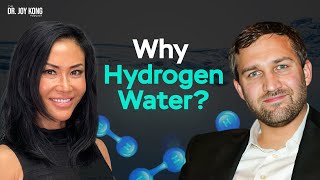
Alex Tarnava and Dr. Joy Kong discuss molecular hydrogen's effects on mitochondria and aging. His tablet technology produces 12 ppm H2 versus 0.1-1 ppm from machines. A six-month trial in people over 70 showed 14% telomere lengthening, doubled Tet2 protein, and 5% lean mass gain.
Questions this video answers
2007 (Nature Medicine paper by Japanese researchers).
Over 2,000 publications across ~180 different models (as stated in the video).
1.6 milligrams per liter (1.6 ppm).
Over 12 ppm (12 mg/L) in half a liter of water (claimed gas chromatography result).
Between 0.1 to at most 1 ppm (per the transcript); bottled/pouch products often arrive at ~0.4–0.5 ppm after shipping.
Chapters
Hey, I'm very excited because we're going to cover a subject that just not enough people know about, which is hydrogen water, molecular hydrogen. So what is it and what can it do for you? And actually extremely popular in Japan.
Medicine by Japanese researchers in 2007 discovered some therapeutic applications of H2. Now, since then, there's been over 2,000 publications showing positive effect in every organ in the mammalian body across 180 different models. So it's very, very prominent, you know, theotropic effects in the body. So now we've started trying to uncover why.
Hello, everybody. Welcome Back to the Dr. Joy Kong podcast where, you know, I bring together some of the prominent scientists, doctors, and, you know, thought leaders to bring to you the newest in science technology to enhance your health, but also, you know, just doing your hands, overall happiness in your life. And today I'm very excited because we're going to cover a subject that just not enough people know about, which is hydrogen water, molecular hydrogen. So what is it and what can it do for you? And actually, extremely popular in Japan. So I brought in the probably the most prominent scientist in this area, Alex Tarvana. And Alex, thank you so much for being here.
Yeah, thanks for having me.
Yeah. So Alice is actually the inventor of the hydrogen tablets. So now it's very popular. You see it in a lot of products, but hydrogen can be incorporated in different forms. And so Alex is not only the inventor of the hydrogen tablet, but also the developer of true longevity and true performance. And he's quite an expert. But today we going to focus on hydrogen water and hydrogen tablets and molecular hydrogen. So, Alex, maybe you can maybe first tell us what is hydrogen, molecular hydrogen, what does it do for people? Why is it important at all?
Sure. So I mean, molecular hydrogen is just like hydrogen atoms bonded. So like H2. Right. So it's the smallest molecule in the universe and it played a very critical role throughout our evolution. We're just starting to uncover this over the last 16, 17 years or so. We believe that it was inert in the body because there's hydrogen in our cells at all times. There's hydrogen in the atmosphere. But a seminal article published in Nature Medicine by Japanese researchers in 2007 discovered some therapeutic applications of H2. Now, since then, there's been over 2,000 publications showing that it has an effect, a positive effect in every organ in the mammalian body across 180 different models. Right. So it's shown very, very prominent, you know, theotropic effects in the body. So now we've started trying to uncover why why is this gas that we thought was completely inert having such profound health benefits? And researchers from different areas have chimed in. Researchers have gone looking into different areas of science to see the roles of hydrogen in other areas. And we're starting to uncover some of the pieces. So, for instance, hydrogen was involved with our mitochondria since before mitochondria even existed. So mitochondria came from something called eukaryotes. And these early eukaryotes, they, they actually expelled hydrogen gas as a waste product. Now, those eukaryotes were formed by a symbiotic relationship between two organelle. One of those organelle consumed hydrogen as a fuel source. So H2 has been with our mitochondria since before our mitochondria even existed. And that is probably why it had such an impact on the mitochondria itself. So one of the main ways hydrogen works is something called the mitohormetic effector. Right? So this is a basically a form of hormesis that targets the mitochondria. Now, hormesis is adaptive stress, like exercise is a form of hormesis. Cold exposure, fasting, these are all forms of hormesis that cause a stress that's manageable, that we get stronger for. So the stress on the mitochondria ends up leading to positive adaptations, which.
Right.
For instance, we've seen over 10,000, like, positive changes in gene expression after hydrogen exposure in different models. So that's one big way that hydrogen works. We also are discovering that we're not producing it like we would have throughout evolution, because the way that we endogenously produce hydrogen gas is by fermentation of non nutritive carbohydrates or fibers. Right. Throughout most of human evolution, we would have been consuming well over a hundred grams of fiber a day. Now the Average person consumes 14 grams of fiber a day. Most unhealthy people consume even less than that. So a lot of metabolically unhealthy people are consuming practically no fiber. And then from there we're discovering that with changes to our microbiome, right, Dysbiosis in our gut, bacteria, a lot of people are producing no hydrogen at all. So for instance, between 60 to 80% metabolically impaired middle age and older people produce no hydrogen. They produce methane instead. And this actually increases as we age. Right. Because as we get older, we've discovered that we produce more and more methane and less and less H2. But conversely, in studies of centenarians, like when they studied centenarians or people over 100 years old. In Japan, the centenarians had higher than average levels of hydrogen in their breath. Right. So there's some really cool things that we're discovering with hydrogen relating to when we become unhealthy as we age and through evolution. And it's showing to do all these prominent things in the body. The mitohormetic effector aspect is just one of it. It's also showing positively impact our microbiome. So it's reversing damage that our microbiome is incurring and correcting the bacteria. It's also driving liver homeostasis, which is really interesting because in the liver aspect, it's looking to need about 10 times the dose as some other factors such as like exercise performance to start seeing a result.
So hydrogen molecule is able to, you're saying is crucial to help repair liver?
Yeah. So it seems to be a main driver of liver homeostasis. And we're only seeing this at super high doses and concentrations of H2. You know, for instance, like the tablets at a couple doses a day can get to the like the lower thresholds of where we start seeing liver repair. We have one clinical trial on the or we have two clinical trials on non alcoholic fatty liver disease. In the one we saw decent effects. We saw a 10% drop in AST. We saw, I think it was a 4% reduction in liver fat and we saw an 11% improvement in insulin sensitivity that was measured by homo analysis. So we're starting to see some good effects on the liver, but we're needing a really high dose to do it.
So would you say over 90% of people are deficient in hydrogen?
It, it's definitely a good amount. Like, and especially we're not getting it. How we evolved to get it in these peaks and valleys, how did we get it before? Well, we would have gotten it through fermentation of fiber. Right. And we would have been consuming so much fiber in a day, but we wouldn't have been consuming fiber like slowly throughout all days. Like how hunter gatherers would have eaten is one day maybe you're eating, you know, meat, and then the next day you're, you found a fruit orchard. And you know, our fruit was so much different back then before horticulture made it like really easy. Right. To consume. Same with vegetables. So we would have been getting these peaks and valleys of H2. And that's actually what we're seeing in in vitro studies or cell culture studies that when we put constant dose of hydrogen and we see the same thing in rodents, if you give like, hydrogen all day, all night. No health changes happen. You know, if you just flow hydrogen or like on like cells all the time, no changes happen. It's these peaks and valleys that elicit the changes. Just like exercise, if you're exercising 24, 7, it's going to have negative consequences, not positive consequences. It's the peak of stress and then the recovery that leads to the positive adaptations also, too. Hydrogen used to be in our water supply. We know that it was higher than the atmosphere. And the oldest water that we found in the planet, deep down beneath the Canadian Shield, estimated about 2 billion years old. It had dissolved hydrogen. Still to this day.
Okay, so the best way to get hydrogen these days will still be from fiber. So you're saying that that's the main source?
Well, if you, if you eat a hundred grams of fiber a day, which probably that puts you in like the.001 percentage of people, then you might not need exogenous hydrogen, but the vast majority of people do not consume anywhere close to that. And there's another factor too, that we haven't found. Upper threshold of one engine stops being effective. Like for instance, in some models in cell cultures, we can go to full saturation of H2 in the cell and continue seeing increases in benefit, right, from like half saturation or three quarter saturation. And that level of H2 in a human body is actually impossible. Right. And then we look in. The reason why high concentration is so important for humans is because even when we compare a human to a mouse or a rat, they consume exponentially more water per body weight per day than we do. So they're able to get in a smaller concentration, a far greater dose than a human can get into their cells. So we definitely can benefit from exogenous H2, even if we're consuming a lot of fiber, at least for certain models.
So it can help improve mitochondria function. Is it?
Yeah. Hydrogen is shown to improve both function and number of mitochondria. So it leads to mitochondrial biogenesis as well. So it'll improve the, the health and the performance of the mitochondria, and it leads to higher density, like more mitochondria.
Huh. Okay. And what other things can it do? The hydrogen.
I mean, hydrogen has shown to have so many roles, and it's. It's hard to know what are down signal effects and what are our, you know, like, first response effects. But hydrogen has shown to regul regulate redox homeostasis, for instance. So it's not an antioxidant, but it Usually acts as an antioxidant. So one thing about high dose antioxidant therapy is we are learning it doesn't work right. In all these longitudinal studies, it's being demonstrated that taking a high dose of antioxidants every day leads to either no benefit or even harm. It increases all cause mortality. It interferes with certain medications such as cancer therapies. Hydrogen actually doesn't ever over activate antioxidant function. It's not a direct antioxidant. It works by regulating the production of our endogenous. So like the antioxidants within our body, like glutathione catalyzed and catalase and superoxide dismutase. So by consuming H2, it first elicits a mild stress, which triggers the NERF2 pathway to produce more antioxidants to counter that stress. A very big factor in this and why a lot of athletes are using it, because athletes won't use antioxidants. Because you take antioxidants in conjunction with exercise, it blunts the hypertrophic gains and you don't want that. Right? So it's blunting the positive effects of the exercise. But with H2, when you take it along with exercise, it's actually potentiating the stress response. So in some really cool research we've done on rodents, it will increase the oxidative stress and the inflammation acutely during exercise and and then rebound them to homeostasis faster. So it's like you exercise harder and recovered quicker. So and that's why like 19 out of 20 times we'll see a strong antioxidant response. But one in 20 we actually see a pro oxidation response. There's actually another really interesting study. I was an author on this study and I want to caution everyone, don't think this is like a cure for cancer. This was just in mice. We haven't studied this in humans yet. But in a mouse model of colorectal cancer, we had a control group, we had a hydrogen group, we had a group with a chemotherapeutic called Fluorosil 5FU, and we had a combination group with hydrogen and fluorosil. Now, both the hydrogen and the fluorosil group worked pretty well. They were about equivalent in mice. They reduced tumor weight and size and they had Collagen content at 24, 25%. As expected, the hydrogen increased antioxidant activity and decreased oxidative stress. As expected, the fluorocell increased oxidative stress and blunted antioxidant activity. Now what was Actually, crazy is a combination group with synergistic. It completely demolished the tumor weight and size and it reduced collagen content down to 6%. Right. So it was incredibly effective. But the hydrogen actually potentiated the stress response of the fluorosil. So within the cancer cells, the oxidative stress went up and the antioxidant activity was blunted significantly more than the fluorosil alone. So the H2 worked as sort of a small smart molecule in conjunction with the drug, potentiate the effects of the drug.
Very cool. So I understand that you have interest in research into how to incorporate molecular hydrogen into pharmaceutical use. So this is.
Yeah, it's a big avenue that I personally been involved in and researching and working with some teams on. I think hydrogen is a delivery method for drugs and other nutraceuticals is the future. We've seen synergy with hydrogen and other therapies throughout the research. Even other forms of hormesis, like cold exposure, exposure, fasting, exercise, we've seen it potentiate the benefit and mitigate the side effects and the risks. So we've seen this over and over again with H2. We've seen hydrogen in rodent research, you know, potentially cancer therapies, you know, and not just the study I mentioned, but other studies. We, we've seen it to mitigate like liver damage from other drugs. So we've seen all sorts of research on hydrogen pointing to its protective effect. But it's doesn't only protect, it potentiates therapeutic actions as well. So I think that's a big area that is going to be researched in the Future is using H2 to deliver other therapies.
So H2 really as a therapeutic agent hasn't been around very long, you said, since 2007. That's only 16 years. So over 2,000 publications. What have they found in all these publications? Where are, what are the, like the crowning jewels?
So the strongest evidence, you know, that we have systematic reviews on, like systematic reviews and meta analysis for the, you know, listeners is when you take a bunch of clinical research and you look at all the data and you rerun the statistics to see if it has worked throughout all the clinical trials. So we've done systematic review and meta analysis on hydrogen for, you know, regulating basically healthy cholesterol levels, you know, for cancer actually. But, you know, we need a lot more research there. And also for having an anti fatigue effect. Right. And this anti fatigue effect has been quite interesting. We've seen that in exercise performance and we've seen that after sleep deprivation Actually a couple of the the clinical trials on the hydrogen tablets. So specifically on hydrogen tablets, we have over 20 clinical trials to date, handful of preclinicals, and we have about that many clinical trials that are currently underway with teams all around the world. And we just had an expert channel that issued 21 structure function claims. Right. So validated claims on maintaining structure and function of the body to FDA and FTC standards. They found that hydrogen had positive impact on metabolism, such as it promotes weight loss. We've shown weight loss in four different clinical trials. Perhaps we understand some of the mechanisms there. Medrogen does. In both our clinical trials and in preclinical, it's shown to regulate ghrelin. So a lot of people know that as the hunger hormone. But ghrelin has some other roles as well. It regulates like insulin response and glucose metabolism. So it's a very important molecule and has neuroprotective effects as well. It also showed to regulate some of the brain chemistry involved in satiety. Right. And we've seen in research that hydrogen improves attention and brain metabolism after sleep deprivation. So it can correct some of those issues because usually when people have a bad sleep, they one, become more sedentary and two, eat worse. Right. So hydrogen seems to have some blunting effects there. So we've shown weight loss, we've shown to regulate, you know, like cholesterol and blood pressure and you know, blood glucose and hemoglobin. Right. Metabolic trials seen brain metabolism improvements both after sleep depth in healthy but overweight individuals and in the elderly. So our, we had a clinical trial six months long, double blind placebo controlled on a 70 plus population. And we found some pretty interesting stuff. It lengthened telomeres by 14%, it improved DNA methylation, it doubled a protein in the blood called Tet2T T2. Now Tet2 is what's linked to young blood. So if you've seen any of the vampire research, they call it where they take the blood of a young mouse and they put it in an old mouse that rejuvenates their skeletal tissue, that's linked to Tet 2. So we doubled that in the blood. We improved brain metabolism and then we had some functional benefits as well. We tended to improve sleep but didn't reach significance. But it was a strong trend on improving sleep outcomes. We did reach significance on lowering pain scores and improving quality of life. And we did reach significance on the senior fitness test. So for instance, at the end of the six month trial, the participants could sit and then stand more times before Becoming tired. And this was an average age of 77. And it was recruited in 2020, in the early stages of the pandemic. So they couldn't even go to the gym. They were at home, and they somehow became more fit. And that's actually an interesting point as well. This is one of our trials where they didn't lose weight, they stayed the same BMI, but they increased lean muscle mass by 5%. Right. So the elderly people somehow put on muscle on the hydrogen group.
That's really tremendous, you know, for the health of these, these seniors.
So we're doing another trial right now. I don't have the results yet, but we're doing a trial in a older population. I think it's 55 plus, looking at unfit aging adults that have never exercised or haven't exercised in years, starting an exercise protocol with or without hydrogen. So I'm excited about the results from that because we've seen pretty phenomenal results in our clinical research and others on hydrogen improving exercise performance and recovery. And we've seen results in older populations. So I'm pretty optimistic about that one.
Yeah, that's fantastic. So I know there are all kinds of products out there trying to get hydrogen into people's bodies. And one, you know, one thing that's really popular is those hydrogen water machines, and they can get pretty expensive. And then, then there are people who are just selling the water itself, right. That's full of hydrogen. So, of course, these have their own limitations and it can be cumbersome. And, you know, are you going to always have the machine next to you? You know what? So I assume.
And the concentration in dose is super low, too.
That's a big fact, really, from the machines.
The machines, like, for instance, the tablets, our gas chromatography results show that in half a liter of water, we're getting over 12 ppm or 12 milligrams a liter. A lot of these machines that some of them cost thousands of dollars to buy, and they'll get between 0.1 to at most 1 per million. So, like, the tablets are getting 12 to 125 times more hydrogen. These machines that cost thousands of dollars are getting. And the thing is, those machines were not designed originally to be hydrogen water machines. They were designed to be alkaline water machines. Right. And then the. The companies producing those machines and the salesmen realized that the alkaline water trend was dying. But the machines were producing small amounts of hydrogen gas, and research on H2 was picking up. That's actually how some of the research In Japan started on H2IS people were seeing some small health benefits from these alkaline water ionizers. But the researchers knew that there was no merit to the water alkalinity. And they started studying what else was in the water and discovered that there was H2 gas and started researching on the H2 gas. So those machines actually started the research. But then now products have emerged like the tablets that are designed specifically to make hydrogen in very high concentrations. And the issue with the pouches, like the, you know, pouches of water, hydrogen saturation at SATP is 1.6 milligrams a liter or ppm. By the time they're bottled, they're usually 1 to 1.2. But most of these pouches are made in Asia, in Japan, Korea, and China. By the time they get in a boat boat and make it to North America, they're usually at 0.4, 0.5 ppm or even less. And they're in 200 milliliter pouches. So you're getting a very, very low concentration and an even lower dose of H2. They're expensive. They're like four bucks each. Actually, Japan took a big hit in Japan. Hydrogen water took a big hit in Japan a few years ago because it, it had grown in popularity so much that it was 11% of the bottle water market in Japan. Right. It was accounting for hundreds of millions a year in sales. Well, the Japanese Department of Consumer affairs tested 19 products off the shelf in Japan and found 17 of them did not have any detectable hydrogen. So they were putting hydrogen water in, like, plastic bottles, and we're just leaking out, you know, escaping within, like, days of being bottled. And it just went run amok. And I know that caused a lot of problems for a lot of the researchers in Japan. They had a hard time getting grants for a few years, but they have rebounded now, you know, like, ensuring that they have better products and, you know, better testing and everything.
But. So some of the trains was what made you develop the tablets, I assume.
Yeah. Now, how I got into it was a long story. I was in a completely different field. I, I innovated on a different technology and I got really sick. And I had been competing in sports at the time, like CrossFit, and, you know, I was training martial arts a few hours a day as well. So at that time, I was like the most fit I'd ever been in my life. In my late 20s, I was training four to six hours a day. And I got hit with what my doctor at the time thought was a mystery virus. They couldn't figure it out. But I developed sudden onset narcolepsy. I'd fall asleep if I sat down for more than a minute. I was sleeping 16 to 18 hours a day. I had central nervous system fatigue. So I went from a 54 inch plyometric box jump to not being able to jump an inch off the ground, but it didn't affect my strength. So my deadlift and my bench press and my squat were all the same. I just couldn't do anything explosive whatsoever. And I was severely anemic despite eating 6 to 8,000 calories a day and a lot of red meat and a lot of green vegetables. Low ferritin, you know, as well, along with the anemia. And I, I, I had crazy levels of inflammation in my body. So my C reactive proteins were like 35 milligrams a deciber.
Oh, wow.
You know, 70 to 100 times abnormal.
Exactly. So.
It could never figure it out. But by the time the bus settled, it was like two months later and I developed osteoarthritis in 11 joints. You know, the worst being my left shoulder, which is now bone on bone with multiple labral tears, and I can barely move it. And I went on a thousand milligrams of naproxen a day and cortisone injections. And I knew that I couldn't just be taking a thousand milligrams of prescription naproxen a day for the rest of my life. It was going to wreak havoc. So I started spending six hours a day I'd been exercising, just scouring research on PubMed, looking for anything that could regulate the inflammatory response. And I found a lot of things, hydrogen being one of them. I bought one of those machines you mentioned for like $4,000. I just went on my merry way. But nine months or so later, I fainted a few times in the gym and I developed multiple ulcers. I wasn't, you know, processing my food properly. I wasn't getting proper nutrition. So I had to abruptly stop the naproxen. And all my joints froze up completely. Like, I couldn't put on a shirt, I couldn't put on socks without, like lying down on the ground. And that made me go back to the drawing board, start reading met again and trying to find anything to help me. And, and I stumbled across newer research on hydrogen, which really pissed me off because it obviously wasn't working for me. But then it just dawned on me. How do I know how much hydrogen I'm getting? So I started buying the full studies for a lot, a lot of you who don't read studies. Most research is behind a paywall if you're not actually institution. So you might have to pay between 30 to 80 bucks to read a full paper. Otherwise you might just get an abbreviated version or an abstract. So I started buying the full studies and reading the materials and methods and realized that literally none of the research used the machine like the one that I bought. A lot of them were using magnesium, right? And they're doing it in a lab setting or they were bubbling pure gas to the water. So I started looking into do it yourself projects and tried some magnesium sticks. They didn't really work like getting lots of magnesium. And then just started playing around and started trying to make tablets so that they'd sink to the bottom and, and react away. Getting my hands on the magnesium was really hard. Like this stuff is. You have to have a proper end use from the U.S. state Department to be able to make it right. It's got a lot of military applications. It's the white and fireworks. It burns at thousands of degrees Celsius. So at first I was getting it from like Eastern Europe and China, but then I was testing the heavy metals and they were high and so ended up going down all the proper routes to get the magnesium clear for my purpose. And I was doing R and D on it and I just had this sober second thought and I'm like, I learned really quickly and I understand the basics of this chemistry, but that's all my specialty. I don't want to win a Darwin award and blow up my house with elemental magnesium and hydrogen gas. So I found my founding partner. He, he's a PhD in organic chemistry. He's from the pharmaceutical industry. I asked him to look over everything I was doing. He told me it was the worst pseudoscience he'd ever heard in his life and gave me a list of reasons why. I responded to all his reasons, you know, with peer reviewed literature and an explanation. It took a few days to get back to me and said, all right, you know, maybe that's something here. Sure, I'll take a look for you. As days went by, I was just sending him a new study every day as he was working on what I was doing. And just serendipitously, I sent him a study on a certain disease model that I didn't realize he was actually the lead chemist working on small molecules to treat with his pharmaceutical company. And he called me for lunch and he said like, listen, I just had to accept the findings of those other papers that I'm a subject matter expert on this. Right now I'm trying to develop molecules for this purpose. And it was a clinical trial, like 60 people. So it wasn't like, you know, just a small like study. And he said unless this is brought, this stuff works, right? Like, are you sure you just want this as a do it yourself product? Or like do you want to develop this properly? And so we went about the next steps. He didn't have much to correct on what I was doing. But to go from making like 10 tablets and mortar and pestle and like hand punching them to be able to make millions at high speed. That took us a year, 15 failed scale up attempts, and over 2,000 iterative adjustments. And since then we have like thousands more iterative adjustments, you know, to get to the tablet we're at today. But the reason the tablet today is so impactful over other technologies on the market is we figured out how to make very small nanobalance, right? So as I mentioned, like the saturation point of hydrogen in water is, well, or is 1.6 milligrams a liter, 1.6 parts per million. With the tablets we're delivering over 12 milligrams a liter of parts per million. So we're getting like eight times the saturation point. The way we're doing this is by delivering this quasi dissolved gas solution. So that's why when you drop the tablet in water, it turns the water kind of like milky white, like skim milk. And this is a similar concept to if you remember during the pandemic when it went from the 6ft social distancing. The 6ft didn't work anymore with omicron because there were small particulates that would stay in the air for hours or days and travel 30, 40ft or more. That's because when you go below 5 microns in size, whether it's a particle in the air, particle in the water, or a gas bubble in water, it doesn't behave the same. It doesn't sink or float, it just moves erratically. And so when we make these bubbles very small, we make them 10-30nm in size and it forms this gas cloud that's neither. That's not dissipating out of the water, it's just forming these eddy currents that's flowing around in the water until they coalesce past five microns, then they dissipate out. So that's how we kind of act. The physics on dissolving hydrogen in water to allow this super high dose, because otherwise, to get the same dose of H2 through water, you need to pressurize that H2 at 130psi and let it hit equilibrium for 8 to 10 hours.
I see. So you really want to drink it when it was the smallest bubbles, but as soon as the tablet is completely dissolved. Correct. Or do you wait until it's fully dissolved?
I mean, some people start sipping it, like, as it's going, we say wait for it to dissolve. But I personally drink it when the tablet rises to the surface and starts breaking apart. So a lot of people get confused, fused, when we say wait for the tablet to fully dissolve, when they wait for all the gas to leave. Now you're only getting 1.6 parts per million instead of 12.4%. So kind of when the tablet rises to the surface and starts breaking apart, that's when you want to drink it and drink it fast.
Hmm, I see. And how often should people drink it? Like, let's say a healthy versus somebody that's quite sick.
Sure. So hydrogen at its core, I like to call it kind of like a master regulator within the cells. It's like a supervisor that goes in and corrects what's going wrong. So the. The more stress your body is under, the more is going wrong, the more work hydrogen needs to do to correct and fix and incrementally drive you back to homeostasis. So if you're in your 20s, you live a healthy life, you're active, but not like an athlete or anything. You could just take it when something stressful happens, like you fly and travel, or you stayed up late and got a bad night's sleep, whether you indulged in, you know, alcohol or recreational substances or not, if you eat a bad meal, if you worked out really hard and you're exhausted, those are the times that a young, healthy person should take H2. But as we age, we're getting dragged down by more and more physiological stress, so we need to take it more and more often. For instance, like in our studies on like, metabolic syndrome and healthy aging. And for people who are like, overweight. Right. And have issues or other people that. That have chronic issues, they tend to. Working with the professors, we tend to give them between, like, two to four tablets a day every day, and then start seeing results after maybe a month or in some models, three months or six months, because there's a lot more stress going on in the body. So it takes a lot longer.
Okay, so two to four, you want to space them out. Not necessarily Two tablets at a time. Is it better just space them out?
It depends on how. How well you can drink water. Like, for instance, this is what I prepare my hydrogen water in. It's one liter, so like 30.
For one tablet?
No, I'll put like, three or four tablets in that.
Right.
Into a liter of water. I'll have that like, once or twice a day with, say, three tablets in. But in our elderly studies, they can only gulp down, like, maybe 250 milliliters of water, you know, like 8 ounces of water. So they might need a tablet three times a day or four times a day to get a liter total. So a tablet won't make the same concentration in every volume of water because it has a set amount of H2 that's created. Right. So the more water you put it in, the lower the concentration. Right. And then if you put it in a small amount of or the concentration goes super high, the dose goes low. So they're designed for between 250-500 ML of water. Ideally 350-500 ML of water. The best amount to put it in is the amount that you can guzzle quickly.
I see. Yeah. Are there any side effects for. I mean, apparently this is tremendous benefit. Anyone had any problems?
We've seen a few in the literature. Out of, like, thousands of people in clinical trials, I think there's like 10 reported side effects, and we're not even sure if they're to do with the hydrogen or what they are. We've gotten a few reports of, like, headaches after the first one or two times of using it. It's plausible, because if it can have impacts on brain metabolism and all these benefits on the brain, that it could maybe give someone a headache short term. But in all the reports, both reported in the literature and anecdotally through consumers, it seems it goes away. The second or third time you drink hydrogen water, they don't get a headache again. So that's an interesting one. Hydrogen does activate and speed up gastric motility, so it may make you go to the washer. For a lot of people, that's a good thing. Yeah, constipation. So it may change your washroom habits at first before regularizing again. So any change is reported as a side effect. So that's been reported a handful of times as a side effect. Even though it's possibly a good thing for a lot of people.
Yeah.
Other than that, contraindications the only one seen. And again, it's a good thing in Some studies on diabetics. Diabetics have had to lower their insulin, but that's positive.
I see. Wow.
You know, if you're on medications, you should likely monitor them with your, your physician because you might end up lowering the dose of your medication.
Yeah. So there's actually a lot of hydrogen tablet products out there now, right? Are they all based on your patent?
Many of them are, but there are some fake products.
Okay.
I've written a lot of blogs about fake products. I discover. It seems like every month I see a new one crop up on the Internet or Amazon. A lot of people, I, I don't know if they know that they're fake or not, but they think that they can just put the same ingredient that they see on the labels of the hydrogen tablet and like list products on the market. And so they won't be elemental magnesium, they'll be like a magnesium salt. So they don't react, they don't make hydrogen. So there's constantly fake products emerging.
Wow. Yeah. So the product I have been using and I, you know, that I trust is drink hrw, I guess stands for drink hydrogen rich water. So that, that was a product that you developed, correct?
Yeah. So actually that brand, I actually founded that brand. So before I started licensing my technology to other companies, I developed a brand and then I got bigger into the licensing and the research side. But I kept up with that brand for a while because no one else was selling it to Canada and I live in Canada. Right. So I was bringing product up to distribute to friends and family that wanted it. But then a few years ago I, I sold the majority of that brand to some investors in a marketing company. But I kept certain like veto rights for them. So they can't launch any products without me signing off on them because I founded it, my name's attached to it. So I don't want like, you know, some cheap garbage that doesn't work going out there into the marketplace based on that.
So yeah. So are there a lot of special technology that's built into the tablets in the drink? Hrw. Do you think there are other tablets that are real and are just as good?
So there are no other tablets? You know, there are other brands that use my technology brand that I license to, but there's no other tablet that can do what my tablet does. Right. That is my patent that I have in basically every major market in the world. So nobody's been able to replicate it. You know, I've seen in China try and replicate the tablets and it didn't Work. It's not intuitive to get it to work is all I can say. That's why it took us to get our first production ready. Tablet took over 2,000 iterative adjustments. And to get to where the tablet is today is over 3,000 adjustments. These are adjustments in formulation and processing in every stage of the manufacturing to get there. So it's not easy to make these things. It's very, very difficult. So in addition to my patents on it, no one else knows how to do it right? So, yeah, that's kind of where we're at.
So this product has been out for how long?
Seven years now.
Seven years. So you must have heard a lot of stories of what happens when people actually drink water from this tablet. Can you share some of the things that possibly even surprised you?
Yeah, sure. I. I mean, I hear a lot of testimonials that I can't really repeat on any podcast because they have to deal with, like, specific indications, you know, that can't really talk about from a regulatory standpoint. But that gives us ideas to do research on. And I share that with, you know, professors and, you know, look at targets like, huh, why is it helping this person in this way? But the ones that we heard most consistently were, like, clarity in the mind and energy when you're feeling run down. Which actually led to some of our research, you know, like, such as, like the two trials that we. We had after sleep deprivation showing more robust improvements in brain metabolism than caffeine. Right. But it's not a stimulant. It's just correcting what's gone wrong from the stress. Another one that we hear all the time is, especially with older, I'd say older men that work hard jobs at construction, we'll hear them say things like, I haven't slept in 30 years, or I haven't dreamed in 30 years. We've been dreaming every night, having dreams. So we, we did a study. It's. It's in press right now. I was involved in the study in a limited aspect, but it was with a team at UCLA and mice, and they looked at a battery of tests on hydrogen and sleep. They planted, you know, the mice's brains with chips to, to monitor their brains and their sleep function and everything. And what was really interesting is when androgen was given to all mice that had no stress, there were no changes. But as soon as any stress was, you know, put on these mice, we saw all these positive adaptations. And that's what we see throughout all the literature. If you put hydrogen on a healthy cell Nothing happens. Now you artificially damage that cell and we see all these changes to start correcting back to home. So that, that is why I say hydrogen is kind of protective and like a master, like supervisor regulator that's turning the dials back to, to healthy function. But with these mice, they'd say reverse their circadian rhythm. Like they'd make them sleep at night instead of during the day. Spice are nocturnal or maybe gently massage them awake in the middle of their sleeping pattern to disrupt their sleep. And the hydrogen group, it was reducing their latency, so they were falling back to sleep faster. It was improving their REM and their non REM sleep. But then what was really cool is it was improving their daytime energy the next day. So the mice given hydrogen were as active as usual after this bad sleep or this switched sleep schedule. Whereas the mice just subjected to the stress were lazy and lethargic and weren't.
Moving around, which is, it made them more resilient.
It made them resilient to the stress, but then it helped them recover too because they had an improvement on their recovery night. So they had a better sleep the first night, more active the next day, and then again reduced latency and improved non REM and REM sleep in the recovery day. So it was a really interesting trial and we've heard that that's one of our most popular testimonials is how it's helping people their sleep and dreaming.
What about in cases of depression, anxiety? Has there been any research in this area?
There has, there, there was one small clinical trial showing that improved mood, you know, mood. And in a model of, you know, anxiety and depression, there's been some rodent studies showing it to mitigate depressive like symptoms. But we, we need more research on this. Similarly, like, there's a study under peer review right now that talks about another brain indication that that has to do with mood and energy. And I don't want to go too deep into it, the, the proc. Like putting it through. It's from a major university in the US but they might get upset if I, I share. Oh all the details of their study. But now we're seeing some other cool things.
I see. Yeah. Just one last question. So is it better to take the hydrogen water before or after an workout?
Before. Right. So if you take it after, it's still going to have the protective effects of the stress that you already had. Right. So it's going to help you recover quicker, but when you take it before your workout, it's also going to have the anti fatigue effects. So you're going to be able to work out longer and harder and. And it's going to further potentiate that stress response in the cell in your body. So to amplify the benefits that you got from the exercise. So it's definitely better to take before. I like taking it, you know, between 10 to 30 minutes before I work out. Wow.
Wonderful. This is amazing. So helpful and so rich in information. I'm sure a lot of people are going to be very excited to try. And so we're actually have a coupon code for people who really want to try this. You know, use Dr. Joy, get on the company's website, put it in show note and thank you for developing the product. I'm taking it now. I'm going to take it even more definitely before my workout. So I'm really excited to learn more from you and thank you so much for the great work that you did and the, you know, the 3, 000 iterations that you had gone through.
Obviously, I love what I do, so that's why.
Yeah, amazing. Thank you so much. And so I hope everybody enjoyed this episode and do like this episode and subscribe to the channel. And I want to thank you, my guest Alex, for being here and educating everybody. So thank you again.
No problem. Thanks for having me.










