Is Stem Cell Therapy Worth It?
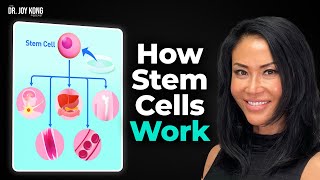
Dr. Joy Kong breaks down how mesenchymal stem cell therapy actually works: anti-inflammatory effects kick in within days, tissue repair takes weeks to months, and genetic changes via exosomes unfold over years. She covers where MSCs come from, safety concerns, and what patients should realistically expect.
Chapters
As we age, we become more and more inflamed. So inflammation is a driving force for disease. The stem cells come along, can calm down a lot of the inflammation. All these different inflammation pathways cascades. The stem cells can stop it and can shift it. Hi, welcome Back to the Dr. Joy Kong podcast. So I'm going to continue my fireside chat with you. One of the questions I get is, what do you expect after you get stem cell treatment? So what can a person expect after receiving a, let's say stem cell infusion or injection? How soon can the person notice benefit? I got a comment on social media. Somebody said, well, I received stem cell treatment and there was a honeymoon effect. Seems like within a few weeks, everything went back to where it was. So did I just waste my money? The answer is no, you did not just waste your money. You did. But health is very complex. So how long the effect lasts always depends on how many things were going on that's pushing you to work the disease process in the first place. So you do not all of a sudden have a problem one day. This problem has been accumulating, gaining momentum, eventually causing what we call a disease or a condition that we can diagnose. But all along the way, probably it can take years for the manifestation to come about. So if you're looking at how the disease come about, which is called pathophysiology, it could be immune dysregulation, it could be toxicity, it could be hormone imbalance, it could be nutritional deficiency, it could be, you know, EMF damage. There are so many factors that's coming into play resulting in a person feeling ill. So when the stem cells come along, what does it do? So first of all, there's a huge anti inflammatory effect. So the stem cells are the original intelligence that helped to create us. We all came from a single fertilized egg. Imagine the miracle that's creating this, right? Walking, talking, thinking, with all the body parts, all the organs that are functioning independently. So. So there's the blueprint with information. So this is about information. When I'm giving people stem cell therapy, let's just cut to the chase. I am giving them clear information, which means intelligence. So I'm actually infusing intelligence back into the body. A lot of times when people get sick, signals are not clear of how to repair. So if you can get people, the original, the young, the untainted signal, all of a sudden the body says, oh, I see, this is what I need to do. Oh, these are the peptides, these are the growth factors. And Neurotransmitters I need to make things happen. So stem cells give you that clear picture. Anti inflammatory effect is a major way the cells function because as we age we become more and more inflamed. So inflammation is a driving force for disease. The stem cells come along, can calm down a lot of the inflammation. All these different inflammation, you know, pathways, cascades, the stem cells can stop it and can shift it. So there's what's called immune modulatory effect. So it's modulating the immune system, helping the immune system to gain more action on the anti inflammatory front and then reduce is action in the over activation of the immune system which can cause sustained inflammation. So you want to reduce the sustained inflammation, which is the reason that you are stuck in the disease process. Right? Pain, swelling, lack of energy, you're inflamed. So if you can calm the inflammation, allow the repair to happen, then you can get over the hump and start a repairing process. This is one reason why stem cell therapy can help you because it can help you get over the hump. I've seen people who have used all different methods and everything helps to, to some degree and which is why I incorporate different factors, different elements into my practice, into my therapies. But the stem cells can give you powerful signals that's unlike everything else we're using. This is why I'm so excited about it, because it's revolutionary. This is first time in human history where I can put intelligence. I call it a smart pharmacy. It's like a little factory, you know, that produces thousands and tens and thousands of drugs depending on what you need put in your body. This smart pharmacy is going to give you exactly what you need, the kind of signals that's going to promote repair. So it can help your immune system rebalance itself and then reduce inflammation and tell your immune system to mount repair. What else can it do? It can break down scar tissue and it can be antimicrobial. So it can help you fight off microbes, including directly secreting antimicrobial peptides. It can improve cardiovascular function and enhance vasculature. So new blood vessel formation. So help you supply blood oxygen, nutrients and remove toxic waste. Right. That's what blood supply is for. Give you nutrients and remove what you don't need. Stem cells can do that very well. So just to give you a little idea, we're talk talking about mostly mesenchymal stem cells. There are also a ton of other stem cells I've talked about. There are hematopoietic, progenitor cells that are in bone marrow and umbilical cord blood. There are mononuclear cells, which are young immune cells. They're also stem cells in their own right. There are fibroblasts, there are endothelial progenitor cells which can form the lining of blood vessels. So there are all these stem cells. But mostly what we're talking about is mesenchymal stem cells, which is the, the most widely used right now and the safest, the most studied at this point. But just know that stem cell science is advancing, so I will keep you updated on what we know. Now, there are all kinds of other more targeted cells that clinical studies have used that are more differentiated. You can induce a stem cell, kind of more primitive cell to be more differentiated, like more toward neurological development. So you can do that, you can inject those cells into the areas that you want them to be. But that's very manipulated and it's still in its development stage. We don't have any FDA approved stem cells in that fashion yet. And then of course it's not going to be available for clinical use because those are considered manipulated, which will make them qualify as a drug. Then you have to go through the FDA drug studies. So we can't just use them widely. But we can't use mesenchymal stem cells right now because they are considered minimally manipulated. So they are not differentiated, they have not gained functions, so they have not changed in any way from where they were extracted. So they could be extracted from bone marrow, from fat, menstrual blood, but from umbilical cord, which is my favorite source. I've talked about why, if you're interested, one of my videos is called are O MSCs created equal? That's a lecture I've given at various conferences. And that gives you the breakdown. About 40 minute presentation gives you the breakdown comparing MSCs from the umbilical cord to fat and bone marrow derived MSCs. So they're vastly different. The reason I'm partial to umbilical cord MSC is because they've been demonstrated to be more potent. They're younger, they are more neuroprotective, and they actually are safer. So there's less tendency or potential for them to exacerbate any existing cancer. So that's just, you know, a background. But coming back to how stem cells work, so we know they can promote blood vessel formation, right? We're talking about mostly MSCs, and they can also protect tissue that don't have to go on programmed cell death. So sometimes when a Person gets injured, you know, crush injury, chemical injury or stroke, the center of the injury, the cells may have died, but a lot of times these dying cells are sending out all these signals, making the neighboring cells go on cell death. So that's not something we want. And the stem cells can rescue them. But the stem cells also have apoptotic properties, so they can trigger program cell death, which means they can tell certain cells, pathological cells, especially cancer cells, telling them to die. So we now know that the cells have all these functions, not to mention that they can give you fresh mitochondria if you use younger stem cells. So they elevate the cellular energy. So now we have kind of, you know, knowledge of how the cells work. Then you can get an idea of how long it's going to take for the cells to help you. Right. Generally the anti inflammatory effect can help people right away. So quick reduction in pain. I had someone who had chronic severe pain and after the IV infusion at my clinic, when she got off the table, pain was 50% gone already. I had another lady who had rheumatoid arthritis. She was a surgical technician and she had not been able to work for months because for a couple months she could not close her fist. Like she, of course she couldn't grab onto things because her hands were so swollen. So in the middle of the IV infusion, so we're so just going on right in the, right in the middle of it, she did this, she made a fist and she started crying. She said, I haven't been able to make a fist for two months. So that's how fast it can happen. So those are the anti inflammatory effect. There's another patient who had advanced dementia and she had not been able to feed herself for a few months because, you know, husband brought her in, was very worried because she would just look at the food and not pick up the knife and fork. She would not feed herself. But the day after the stem cell treatment, she had a plate of food in front of her, you know, because she was hungry and she picked up a knife and fork and it started feeding herself, start eating. And the husband was looking at her in amazement and she was looking up at him, basically said, you know, what's your problem? Like she was like, you know, this is, you know, why are you staring at me? So I think that is the anti inflammatory effect in action. It can happen that fast. Imagine all the neurons, right, all the inflammation in the brain jamming the highway so signals cannot go through. All of a sudden inflammation has calmed down the information the signals can actually get from one cell to another. All of a sudden everything's connecting and she can pick up the knife and fork. So it can happen very fast. Fast, of course, the immune modulating process, right? You're calming the immune system. There can be a long term benefit. And you're also promoting. One thing I forgot to mention, which is the basic, you know, function of the stem cells is to trigger local stem cells to regenerate. So it's not so much about these mesenchymal stem cells differentiating and becoming one of the cells, you know, in the tissue you're trying to heal. It's really that they are there to telling the local tissue stem cells to wake up and to start making new cells and get rid of the damaged tissue. The immune system can take away the damaged cells and then they can make new cells. So you have fresh new tissue that is truly regeneration, right? You're making fresh, new, undamaged cells that are replacing what was damaged. So you're fixing it once and for all. That's what we're after. This is why regenerative medicine is so revolutionary. We're not making you hang on to your old and damaged cells were giving you fresh new ones. So that takes time, right? Rome is not built in a day. You don't go in and thinking that it's going to, you know, be really fast, take away bat cells and start to grow new cells, right? Growth takes a long time and different tissues grow at, at a different rate. So you know, the muscles and, you know, maybe faster cartilage, bone, bone is lot slower. The neurological system, that's the slowest. And so if you're coming in for a neurological condition, the repair often takes months, you know, even six to nine months to notice the full effect. So you need to be patient. Autism, right, takes months. You need to be patient. The neurons take time to regenerate and to, to mount the repair. So the thing is, when you get sick, you didn't just get sick on Tuesday. Even though it feels like I got sick, I got sick yesterday. But it's really that you have been getting sick probably for weeks, if not years, because if you're lacking certain nutrition, you're lacking certain hormones, or if you have toxic buildup, it takes time to get there. So if you, you know, use stem cells to repair, all those factors are still there. If you don't address them right, they are still damages caused by lack of certain nutrients and toxicity. So if you don't pull away at those toxic factors Then your healing is not going to be complete because you know the cells are not going to function at its optimal level. And also once you repair the same factors is going to drag you back. It's like, you know, fighting and you know, trying to swim upstream that all these things are trying to pull you down, trying to, you know, push you back. So you have to address those factors to think that oh, I can just do stem cells and as if this is a magical bullet. It is pretty magical. However, the body is so complex. You do need to look at all these things that's triggering your condition in the first place. Otherwise you repair your tissue and then all these factors come in and will bring you right back. So that's why working with an integrative doctor is important to, that's addressing all these factors, right? You don't want to go to a primary care doctor that only have five minutes with you and they can't look at what's going on in your body. They can't really address how you got sick in the first place. So you need to work with somebody that can dive in to you your health and really tailor maybe detoxification, maybe hormone replacement, maybe nutritional therapy, all these different things. Energy therapy, you know, like red light or pmf, vibrational therapy. There's so many things that you can do these days. Getting rid of parasites. There are a lot of hidden infections. So you want to address all these things. Otherwise the relief is going to be temporary. This is why in my clinic we check people's labs, we evaluate what kind of deficiencies that they may have that's triggering this process. And we use a range of supplements and we use other modalities, you know, energy therapy like a light laser therapy that we use, we use ozone therapy, you know, we use shockwave therapy. There are various modalities that we want to incorporate. Peptides, powerful modality. So that's kind of the my answer of, you know, how long does it take to notice benefit? A few stages. One, the anti inflammatory benefits can happen right away. So it can happen within minutes, hours, days. And the tissue rebuilding stage is going to take longer, it's going to take days to weeks, to months because we're making new cells and new tissue, right? We're, we're making a new you. And then the last stage I haven't talked about, which is the genetic repair and modification stage, which is really exciting because when we give people stem cells, the stem cells secrete exosomes. We sometimes use exosomes by themselves as well or as an Addition as an add on with stem cells. So exosomes are just secretion products from the stem cells, but we can get a lot of it and put it along with stem cells and give you a heightened signal and amount of signal and repair. So the exosomes actually contain all these nucleic acid, so RNA DNA. So there's one type of nucleic acid called microrna. So these little pieces of RNA actually can go into cell nucleus. So if you put in your body, these exosomes can get into your cells and their little pieces of microrna can go into your nucleus and start repairing your DNA. And once the DNA is repaired, the effect of course is much longer lasting. So that kind of benefit can last for years. So that's kind of the general overview of what you can expect from stem cells. You can be patient with it because the effect can be long lasting. I've seen the science and so this is why I'm continuing to do stem cells on myself. So I do IV stem cells on myself every three months for the past eight years and I'm going to continue to do that. Do I notice a big change every time I do it? Nope. Sometimes I don't notice anything because I'm already healthy. But am I aging? Yes. Like all of us, none of us has been able to escape aging. We're all aging and eventually we're all going to die unless we reach the escape velocity that some people are working toward. But throughout the history, since we have come into existence on this earth, we live and we die. So there's an aging process and that process is ongoing. Whether or not I see it, I feel it or not. People often notice that they're aging after some time. They don't see it every day, but one day they look into mirror, they go, oh my God, I've aged. Jesus. So all of a sudden they, they see the age they're at instead of the age they had in their mind. Maybe you know, at 25, all of a sudden when they're, you know, 50, they, they see, oh my God, I'm a 50 year old person. Knowing that that means that aging process is ongoing. And I've seen studies showing how regular stem cell treatments can reverse the aging process, can get your body back to a younger state. So if you're interested, look up my video on the anti aging benefits of stem cells. I give you the studies, I show you exactly what kind of research have been done. And they've shown that regular IV infusion of stem cells can extend the lifespan of rats, mice, by about 30%. Not just lifespan is their health span, how vibrant they are, you know, they are, their local motion, right. Their mobility, their fur, you know, how they look, their spine, how straight the spines are and how fast or how well they can go through the mazes. So these are demonstrations that these animals are functioning at a younger state. And when they dissected their muscles and brain, you know, after sacrifice, they were able to see that all the markers of aging, everything was back to the younger state. So that was very exciting to see. So knowing that, that's why I'm doing it, even though I may not feel a difference, but I know what the cells are capable of, so there is a long term benefit even if you cannot see it. So that's kind of my overcap of what you can expect with stem cells. Probably, you know, a lot of people, what I see in the clinic is reduction in pain, in swelling and in energy level. So improved energy level, improved sleep, improved cognition, mental clarity. I have people with improved cardiac function, improved kidney function that's demonstrated on labs, improved lung function that, you know, I've seen on a regular basis. Of course, for brain, we had a Parkinson's patient who, after second treatment, who was wheelchair bound, he stood up from the chair and walked toward our doctor and, oh, this is caught on camera and hugged the doctor. I mean, that was tremendous. And you know, a patient with Alzheimer's who had not been able to speak for a long time in the middle of the IV infusion, the said thank you to our doctor. So it can happen fast. But then tissue rebuilding is going to take time. Be patient with it, work with the cells, you know, send good energy to your cells and keep doing everything that may be triggering your disease in the first place. And then we can make sure that you are safeguarding your investment. Right? So if you just give a group of cells and you're not doing anything else and, and you're still allowing the same factors at play to push you toward the disease process, then, you know, you may have to get another IV or another stem cell treatment sooner. You know, I don't want to do that. I want people to, to get the most of their investment. So we got to do everything to, to get you to a good place. So maybe you don't need another treatment or you need a treatment much later. Of course, I always think it's a good idea to do regular IV stem cells because of what the research have shown to reduce the, the rate of aging. So that's always something that can be, can be Added, you know, after you are well. So that's kind of my input. I hope you enjoyed this episode. And oh, another thing I want to mention is that I have taught a lot of physicians on how to do stem cell therapy and there's so much to it. Right. What do you do before treatment, after treatment, what are the contraindications? How do you dose the treatment? How do you administer? What's a good route? You know, do we inject directly into a particular area or do we use an IV method? Do we do intranasal method? So I teach those as well. And there's so much evidence from all around the world. I think doctors need to know instead of just, you know, hearing from maybe a rep, from maybe a stem cell company telling you what to use. I think doctors need to understand the signs and the evidence and really be proficient at how to approach each patient, not taking orders from the reps, which I've seen a lot. And it's, it's. I don't, I don't, I don't like it. And I want to work with doctors who want to be the best in the field, who want to give patients the most amount of knowledge and the expertise so that they can give people the best results. So I founded an academy called American Academy of Integrative Cell Therapy. So if people are interested, the website is aai c t.org There are a lot of case studies that are listed on the website. So if you're interested in certain conditions. Oh yeah, I have copd, I have Lyme disease, I have autism. Well, usually parents from autism, you know, have kid with autism or you know, various, a lot of different conditions. So most of these are cases that I've seen. Some are from other doctors I've trained and worked with. So take a look at the different cases. May be very interesting. There's some published articles listed just as an example. There's so much more. There are also doctors can sign on to do training with me. So I really want to be a voice to help our doctors be, you know, really be highly proficient in this exciting field of stem cell therapy. Which is why I actually started certification program with the Academy, American Academy of Integrative Cell Therapy. So the certification program is going to be quarterly and the first one is July 27th to 28th. So it's a two day event. The first day is didactics, the second day is all hands on training. So it's basically a turnkey solution for the doctors to really, you know, just hit the ground running and providing stem cell therapy. So if you're interested, please contact me. People can always reach me on my website, drjoykong.com and put in, you know, inquiry on the contact form. Or you can just go on the Academy website, aaiict.org and sign up for the course. So there's an online course, just Didactics, so just, you know, about six hours of material. The in person training course of course is going to be a lot more in depth and I'm going to teach, you know, people all the pearls that I've accumulated and everything I have, I want to give it to to our doctors so we can all do this together and bring more healing to the world and more wellness. Right? We heal and we thrive. So with that, I thank you for listening. And if you think this episode is going to help somebody, please share it and subscribe to the channel. And I look forward to chatting with you next time.










