Mariel Hemingway Opens Up About Her Family’s Mental Health Struggles
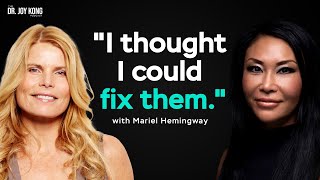
This is a transcript of an April 9, 2024 YouTube podcast episode (Dr. Joy Kong) featuring Mariel Hemingway. Mariel recounts growing up in a famous family affected by mental illness and addiction (references the Emmy‑nominated documentary Running from Crazy and her memoir Out Came the Sun), describes personal struggles with chronic low‑grade depression, and outlines a multi-modal recovery approach emphasizing self‑awareness, nature, movement, diet, morning rituals and biohacking tools (brainwave technology/BrainTap, neurofeedback, red light, Fotona laser, stem cells, ketamine). She also discusses nutrition (cookbook Mariel's Kitchen; vegan for ~20 years then returned to meat/paleo style), skincare routines, and practical tips for starting small (5 minutes breathing, change one meal).
Questions this video answers
Running from Crazy (co‑executive produced; Emmy‑nominated).
Out Came the Sun.
1996; age 39.
62 years old.
About 20 years.
Chapters
There are things that you can do in the world that are pretty basic that will make your mental health better. Even if it doesn't solve it completely, it's going to improve eating well, getting sunlight, learning how to breathe, taking time for silence, connecting in nature. They sound super simplistic, but the truth of the matter is, if we could get back to some of the habits, healthy habits, our mental health would be much improved.
Welcome Back to the Dr. Joy Khan podcast. So today I am so thrilled to have Marielle Hemingway with us.
Oh, it's so great to be here.
Let me introduce you a little bit to my audience. Marielle co executive produced a Emmy nominated documentary, Running from Crazy about the Hemingway family in collaboration with Oprah Winfrey. And, and you also wrote a, wrote quite a few books and one was Out Came the Sun. Isn't that your memoir? That's your memoir, right?
Yes, it's a memoir about. It's kind of about. It's a deeper version of what I did in the documentary. The documentary is kind of focused on my grandfather and my sister who took their lives and kind of the mental health struggles that kind of are woven in throughout the family and then out came the son is really a deeper version of, you know, growing up in the business, growing up in a family, wonderful, creative people, but also mental illness, addiction. You know, there was a lot of drinking, there was, you know, my sisters took drugs and it caused what was already a predisposition for mental illness, especially my older sister. And then of course, middle sister, Margo took her life in 96 when she was only 39 years old. But she had struggled with addiction, with alcoholism and, you know, drug abuse and all the things that go along with the story that we tell ourselves about our family.
Maybe we'll just, we'll just talk a little bit about mental health at this point. I was a psychiatrist. I guess once you're a psychiatrist, you never become not a psychiatrist. So maybe share with us a little bit of a journey of what was it like growing up in a family with so much mental health issue, you know, such an accomplished. Right. Heritage and what was it like?
So, you know, when you grow up in a family that is famous, number one. But also I grew up in a beautiful part of the world. I grew up in Idaho in the mountains, you know, in a ski resort. It was beautiful and I thank God I had the outdoors. It was sort of my solace. Because when you grow up in a family like that is famous but also suffering, you don't know any different. I was A kid I didn't know any different. I didn't know that other families weren't going through the same thing. I thought probably everybody dealt with parents that drank too much, yelling, and, you know, a sister that was periodically running down the street naked in the middle of winter, you know, like, because she was. Had the beginning stages of schizophrenia that nobody really realized at the time what it was, because it was, you know, it was back in the 70s when. Or even the six, the late 60s, early 70s, when things like this weren't talked about. So I grew up in this family that I loved, desperately loved. But I watched my two sisters who were much older than me. My oldest sister is 11 years older than me, and my middle sister was seven years older than me. So by the time I was able to kind of assess the situation in our house, I decided crazily, you know, because I didn't realize any different or that it probably wasn't the best choice for me at age like 7 or 8, that I was going to fix the family. I'd be the person that would be like, I'm going to clean up after them. I'll help them, you know, like, I don't know, I love them so much that I thought, oh, I can do this. And my mother was suffering from cancer. My father had heart disease. I mean, there was so much going on. But, you know, as children, and that's not to say, oh, for me, it was just the family that I was in and the choice and I chose that role. But what was very interesting about that is the fact that because I was so afraid that I would end up like other members of my family, like I would become an alcoholic or I would become a drug addict or something. I was so afraid of that that I became, even very early on, like 10 years old, very obsessed with exercising and food and because I thought, if I can control my body, maybe it's going to control my mind and I won't end up like that. And I think that in some ways I was on the right track, even though I was a little kid, because ultimately it led me to, you know, a meditation practice and I became a yogi, and I opened a yoga studio. And I, you know, and when I raised my kids, it was. I did holistic health. I looked at things from a different perspective because I'd grown up in this crazy. In this chaos, and in a. In a family that I loved. And they were loving, you know, they didn't mean to be a mess, you know, but it led me to where I am today, which is understanding that I didn't need to be in fight or flight, which I was for most of my life, probably till my mid-40s, because I'm, you know, 62 now and I know what I need to do to keep myself in balance. And I've all. And I believed since my mid-40s that I need. Needed to share some of the experiences that I've been through so that other people could make that choice. Now, I don't believe there's a. And you as a psychiatrist know there isn't. But there's not one size fits all when it comes to mental health.
Right.
It's not, oh, well, if you eat this way or if you do these things or you take this drug or whatever, it's not like that. But there are things that you can do in the world that are pretty basic that will make your mental health better. Even if it doesn't solve it completely, it's going to improve eating well, getting sunlight, learning how to breathe, taking time for silence, connecting in nature. You know, these are simple, simple, simplistic things. Looking at sunrises and sunsets, they sound super simplistic, especially in the world we live in today. But the truth of the matter is, if we could get back to some of the habits, healthy habits, our mental health would be much improved. And especially now, we live in this, you know, chaotic world of technology and this, which is great, but it also leaves us feeling empty. So those connections to nature and things and our relationships with our loved ones, they're very, very important. And we have to realize that real connections are with real human beings, one on one, face to face. Connecting in nature, walking out and being in silence. Those are actually really important things and they can help you on your journey to finding whatever your recovery is.
Yeah. Did you actually struggle with any mental health issues yourself?
You did, absolutely. I probably until I met Bobby. You met Bobby at the. At the event. Bobby Williams is my. Is my husband, partner, whatever. And he was kind of the per. The catalyst to make. I did. I did something called brainwave technology, which was you put electrodes on your brain and it reads your brain waves in real time and it can. It actually, you've got earphones on and you hear your. Your brain hears itself in real time and corrects itself. It hears that maybe it's out of balance. It goes, oh, wait, I've got to correct this. And it corrects it. Anyway. I did hundreds, really obsessions. Anyway, when I completed that and Bobby had turned me on to that, I looked at him One day I said, I think I've gone a week feeling happy, a whole week. And he goes, what do you mean? And I was like, I've never known what it was like to just be completely at ease every single day. He's like, that's the way it's supposed to be. And I realized in that moment that I had been depressed most of my life and I just didn't realize it because I was, you know, I was in fight or flight, I was struggling, whatever. It's not, I wasn't in a clinical depression. You know, I didn't need medication, but it was, it was like having a low grade fever at all times, I had low energy, I was just a little bit sad. But I was very disciplined. So, you know, my disciplines got me through.
You, are you to be fine?
Yeah. Right. My survival, yeah.
So I totally relate. I mean, I've dealt with, you know, some mental health struggles as well. I'm going to write about in my second book because my first Tiger Beijing, I just talked about, you know, basically winning the battle of getting to America and surviving a very tough situation. But even if you win in a battle in life, right, you, you, you came out of a very difficult situation and you were in a, you were in a survival mode. But doesn't mean that you're not going to have all these battle scars that later on when life quiets down, you have to deal with. So I totally understand that feeling of not being in complete peace or just some kind of anxiety, right. You don't know where it came from, what it is. Why can't I just feel really good? So I totally agree that. So I think most of us probably are on some kind of a journey on one degree or another in pursuit of that, that beautiful feeling that you have all the time. And then that would be the goal.
Do you believe that? It's, you know, my belief is that we're all already perfect. Like we have, we've got perfect bodies, our brain is working, we're at peace, we're feeling, we have self love. The problem is that we had experiences as children and we were parented in whatever way and no blame, but those experiences become habits that you're trying to survive. Right. As a child, I'm thinking that I've got to fix everyone for whatever reason or there's fighting going on, whatever the challenge that we have as a child. And then you keep repeating those patterns and yet underneath we're still, and Bobby always says we're seven years old, underneath it all, we're just seven, right? From zero to seven is pretty much we patterned our entire lives off these first seven years of our lives. And then we keep repeating the patterns as we get older, but we repeat patterns that we, you know, that were survival technique at, you know, six, seven, five years old. And they don't work when you're 60, they don't work when you're 40. They don't work when you're 35. But we don't know that until we know it right. So we have to kind of dig up the story we have to look at. It's like you wrote in your book. You have to write your story. You have to get it out there. And I always say to people when they're doing kind of trying to get to the crux of their own mental health issues, tell your story. You know, you don't have to write a book like you and I have done. You can tell a friend or find a therapist or find a life coach or find somebody that you feel safe with and tell your story. It's important. And feel. Feel heard. Because I think that's part of one of the hardest things about mental health struggles is not feeling understood or heard. That's what makes it difficult, you know, very lonely.
Yeah.
Yeah.
So you think this brainwave, you think that helped you more than yoga or.
I think it's a combination. You know, I think that at the same time I was eating more balanced, I was grounding more. I mean, there's a lot of other things I had. I have a very. I have a structured routine with my mornings. I believe mornings are so critical, like how you start your day, starting with gratitude, simple things like that. But yes, I do believe that brain wave technology was very instrumental in kind of just breaking loose from the patterning. Another great system that is. It's part of the biohacking world you've probably heard of it is Brain Tap. Have you heard Brain Tap? You know, honestly, it's very powerful if you're consistent. But you got to do these things right. We can't just buy them and hope sitting on your nighttime dresser, you know, like, but. But these things, because they can rewire the brain. I think there's. So there's brain Tap, there's brainwave technology. There's also qnrt, which is. Is. Is extremely powerful, but there's neurofeedback for some people, is very powerful and. And works well. But I think it's a combination of many different things. I think there's never one solution. It's like Brainwave was kind of the thing that made me realize that I was really a mess. Wow. You're in fight or flight.
But.
But it also reminded me that I'm doing pretty well for somebody who was such a mess. You know, like, we're good at surviving, right? You got to this country by, like, grit. You held on and you got here, you know? And I say that not knowing fully your story, but that's kind of what we do until we realize, oh, I don't need to fight anymore. And I see so much joy in you. Joy. I see joy, joy, joy, joy. And that's what it's about. It's coming to that place where you feel that internal self love and you feel that internal joy.
Yeah, yeah. So that's been quite a journey, right, to actually reach that point. So nutrition. I mean, you wrote a book about it. I think that book probably is a way of you sharing how you got.
Healthy living in the inside out, that journey. And then I wrote a book called Healthy Living from the Inside out, which really, I had an ex husband who had cancer. And it was really about, like, you got to change how you're doing things. I mean, you know this so well because you're on both sides, right? You know, the AMA world, you know, the holistic world, you know, the biohacking world. And what I love about what you do, it's like, okay, I'm going to take a little bit of everything from all sides. Because this, you know, recipe needs a lot of different things. It needs Eastern medicine, it needs Western technology. It needs, you know, it needs a lot of things. And that's how we find the great. I think there's recovery for everyone. I think everyone has their best person waiting to be revealed again, like you were when you were a child.
It's true. I think there's miracles to be found. I did go to Dr. Joe Dispenza's retreat in December. I'm going again next week. Yeah. And there's miracles happening. If you can tap into. I think you. If you can deeply connect to the source, whatever, however you interpret that. But that's way more profound than this little shell that we see every day. We are way beyond.
And it's perfect. I mean, you're doing. I mean, Judge Dispenza's work is profound. You know, it's just that. That connection to self and the deep dive, you know, and the courage to deeply dive and do nothing. Right. And just accept, but also inviting something glorious to allowing that to happen to you, allowing that feeling to come in and feel the energy of. There's so much energy. And that's what I love about, you know, kind of what Bobby and I are doing. He's got this amazing machine that pressurizes you at different altitudes, but we've also got frequency that we work with. Because all of these things, we're made up of frequency, we're made up of energy.
We're.
You know, it's like we're all so connected. And that's when you start to have compassion for everyone and everything and even the people that treated you like shit. Like, you just go, I get it. Because we're all interconnected. So I can't feel. I can't be. You know, like, ultimately, me being angry about that is me being angry at myself because I'm connected to all of it. Right.
So what are some of these techniques or strategies you use for self empowerment? Like, what. What did. How do you. How do you encourage people? And what are these? You know.
You know, for me, it's. I don't really even think of it as self empowerment. I think it's self awareness for me. You know, like, empowerment sounds like some. Like I'm trying to, like, climb a mountain or something. No, but self awareness, being conscious of who you are. So my simple techniques. I say to somebody, if they want to change the way they eat, then change your breakfast. Start with one thing, you know, if you want to start a breathing technique or a meditation technique, start with five minutes and just observe your breath going in, inhaling and exhaling for five minutes. Don't put pressure on yourself to, like, I've got to go off to a Joe Dispenza retreat. You know, meditate for a week, eight hours a day. That's probably not your best choice right off the bat. You won't stick with it. So start slow. When you wake up in the morning, think of things that you're grateful for. There's got to be some things, right? I love where I live. I love this bed. You know, I. I love my kids, I love my dog, I love my cat. Whatever. Whatever it is that you can say, gosh, I'm really, thank you, thank you to the universe for supporting me in this way. Look at what's good, not at what's bad. Think of things you want, not what you don't want. Is this what you focus on, really? Is what you receive in life right now? It doesn't mean, like, oh, you know, your norm. Visit Peel. And you only think positively, you know, because we're human. There are negatives that come up. But when you acknowledge them as just something that's come up and it's not something that you need to, that needs to take you down, right. It doesn't need to put you in a deep depression. It doesn't have to send you into the toilet. It's like, realize that life is this wave, right? And you as a scientist know that we're made up of DNA, but it's always moving, right? It's not stagnant. Nothing about us as human beings is stagnant. It's always in motion. So therefore, if it's always in motion, change will always come. So people that are suffering from any kind of mental health issue realize that if you're depressed, eventually that energy will shift. Sometimes you can help it by going for a walk around your block by moving your body. Being physical is one of the keys to finding a good mental health state, right? Not being overly, you know, it's not about being excessive, but it's about being aware. So self awareness is, is just one of the things that I think that you look for in the simplistic things that you do. I watch, I try to watch every sunrise that. Where it's not cloudy, right? And I look at the sunrise and I'm just amazed, like every day that it happens, I'm like, amazing.
Yeah. Well, in another word is being present, right? Being fully present in every moment. Yeah, Yeah. I try to remind myself because I have a tendency to want to do five things all at once.
Yeah.
It's like, okay, I'm definitely not present. Right?
I know it's, you know, I mean, we're human. So am I perfect every day. Do I always wake up and say that I'm thankful forever? No, I forget a ton of times, but most of the time that's my ritual. I go out, I get light in my face. If it's not a sunrise, at least I'm getting the morning light, right? If I make an effort, I work out because I know my body, My body's going to inform my brain and my brain's going to inform my body. These two are connected. And I think one of the biggest things that we don't connect enough is the brain. Body connection. We don't realize that the brain and the body are fully connected. The gut is connected to the brain. So we have to be aware of what we're eating, how we're doing, whether we're moving. And as we get older, we've got to move more. I mean, I see, you know, your post and you're always in the gym. I love that. That's important. Aside from, you know, the aesthetics of it. We want to look good. Of course we do. But it's also your body. We're. Our brains need it. Our brains need for your body to move.
It's true. It's true. It activates, you know, way more than we. We imagine. Yeah. It's enzymes, it's hormones, it's, you know, probably, you know, way more than, you know, electrons. Who knows what kind of frequencies we're activating. Yeah. And sending out into the brain. Yeah. So you. And you love cooking, right? Cause you have a cookbook, too.
I do.
I do.
I did a cookbook called Marielle's Kitchen, and it was based on the fact that everybody would say to me, well, what do you eat? What do you do? And they said, but, you know, healthy eating is so boring, and it doesn't taste good. And I was like, well, not how I do it. Like, I don't want to eat food that tastes like cardboard. You know, whatever. I was vegan for many years. I'm no longer vegan. I was vegan for 20 years. It was, you know, it was a fine choice. It just wasn't the choice for me, ultimately. So I went back to kind of my roots. Like, I grew up in Idaho, and I ate. My dad hunted and fished and, you know, so we ate wild game and all that stuff. So I'm kind of more like. I'm a meat eater, but I eat, you know, it's kind of maybe more paleo rather than keto. I think keto's extreme, but that's extreme for me. Not every, you know, everybody finds their niche. That works for them. Anyway, the cookbook came out of a desire to make, like, food that we were brought up with, like, fried chicken, but make it healthy. How can you do that but make it taste really good? How can you make cookies that don't have sugar in them, but they taste really good? So I created something called a blitzkit. And, you know, I just created some things because I knew that I think everybody can be healthy, and they need to realize that. I think good food is actually better tasting and better than anything else. But I've also lived, you know, I've been very fortunate my whole. Like, I've never eaten fast food, ever. Oh, that's not true. Eaten fast food. Okay. I'm gonna. I went to an In N Out Burger and ate something there. I can't remember what it was.
You're pretty disciplined.
Right. But it's just because I like. I like real food. Bobbi and I talk about it. Just eat real food, Jerf. Just eat real food. You know, it's not about, you know, you should be able to pronounce everything in your food. Right. You should know what those ingredients are, which means you should be shopping on the outskirts of your, you know, of your supermarket, not in the middle, where everything has a. Looks like a list like this of everything that you don't even understand. Right? Yeah.
A long list. Yeah.
They add that.
I know. And. And they can make food taste really good. And that's.
That's the problem.
They taste great, but it's an engineer taste. They. It's a.
Well, and that's the thing. I mean, you know, you think this is very Machiavellian, right. We think of it because they have literally food scientists that sit in a room thinking, what chemical can I put in here to make people addicted to this?
Yeah. Yeah.
I mean, we're not going to get rid of the fast food industry, but we can certainly help people that want to be healthier to make better choices. That's all it's about. Like, I make no judgment. I don't care what anybody eats. But if you want to feel good in your brain, you might want to consider just eating simpler food, not eating processed food. It's just not good for you. It's not good for your brain.
Yeah. So. So in your health journey, has it been a gradual process, kind of layer after layer, feeling better and better over time? Is that. It's a. How you. Okay.
Yeah. I mean, there's not. I think everybody would love to have a magic bullet pill, you know, like, yes, you injected me with stem cells and now I'm perfect. You know, like, it's just. And it doesn't mean that you don't have, like, some really, like, powerful moments, but. And maybe it's just because I'm a slow learner, but it's taken me many years, but I'm so happy now. I feel so healthy. And, you know, even though I'm the age that I'm at, I don't feel that way. I feel you look absolutely amazing.
So.
Well, kind. Yeah.
I was surprised when you told me your age. You know? You know, on the podcast, I was like, really? Wow. Good job.
Thank you.
So all these years of doing the right things apparently, has paid off.
It does make a difference. It does make a difference. And it's not like, without work.
Right.
You know, I'm doing stuff. We've got a red Light. We've got a red light bed in the house. Like I do. Red light.
Yeah. Right.
You have to do your things. But I think that being healthy and being. And you know, making your skin supple and attractive, I think it's a great. And I think it's a great adventure. I don't think of it as drudgery. And you know, I have a daughter who. I have two daughters. One is 36, the other is 34. And my 34 year old, she called. We. We speak every night when I'm going for a walk with the dogs. And, and she was telling me, telling me about her morning ritual of. She has a, she has a red light mask. I'm like, you're 34, you don't even need one. She. And her skin is so beautiful. I mean, she's going to like, I'm curious. I can't wait till she's 60. I want to know what she looks like because her skin is so. And she does a gua sha on her face, you know, and then she does these different exercises. So she's inspired me to intensify my morning ritual because I can't, you know, I don't know.
I got it.
I guess I got to keep up.
That's just reminded me I did gua sha for a while and I think I just completely ignored it for, I don't know, over a year. I still have it right. Sitting right on the couch.
It's all by my sink. And I went, oh, yeah.
I think because the laser treatment you got from the Fotona machine is so powerful and so amazing, I think I just forgot everything else.
Well, it is amazing. I've only done it twice. I did once in November and then I did it probably three or four weeks ago. And it is, I mean, it's truly profound. It is profound, but it does make you a little lazy because you're like, damn, I got results.
That's right. Yeah. You know, you. This is rejuvenation, this lifting. Right? There's lifting, there's plumbing and there's resurfacing. Everything in one is. It's really fun. The skin health. Yeah. Looking, looking more beautiful is also. It's part of. It contributes to mental health.
Santa does. If you don't feel good about the way you look and it doesn't mean you have to be a super mom. It means you should, you know, like, you should look your best self. And that's. That. That is uplifting. It is helpful to your mental health self care. You know, rituals with your face and your body. Those are, they're very important. And as we get older, more important. I don't mean that you don't have a wonderful photonotrema, but you know, those rituals that you do for yourself when you're making your body and you're turning on those things, it's. There's something about that that's nice. But I like also what you're doing with the biohacking thing. It's like you introduce things from the outside, even maybe from technology, but it activates your body's ability to do it itself. Right. Ultimately, that's what we want. Yes. Stem cells. But you want your stem cells to go. To wake up, right. And turn on.
Well, I think of it, I've been visualizing, you know, like really what stem cells are doing so with these very young, healthy stem cells that have not been tainted by your entire, you know, lifetime of worth of living, right. Which is worth of exposure to bad food, you know, alcohol, toxins. So these are cells that still have very clear, very powerful signals that have not been kind of tainted with a. With the, with time, when we're getting older, not only we have less stem cells, but their signals are weaker. So it's like your body can't figure out, like, what, what, like, tell me again, like, what am I supposed to do? So all of a sudden, when you get these fresh young cells, all of a sudden it's crystal clear. It's like a TV going from being pixelated all of a sudden to high def. Your body all of a sudden, oh, I remember now. So this is how I'm supposed to heal. So I think, you know, a lot of different modalities are really powerful, but stem cells is just, is such an incredible, incredible tool because you can do a lot of other things, but sometimes the stem cells give you the fundamental, the last piece that may be missing because these are the original blueprints. Right. Human body should have. And then as you get older, you just start losing them. So anyhow, we often combine stem cells with the fotona, with the laser treatment, and you're going to amplify the result even better. Yeah. And talking about alcoholism is really fascinating. Stem cells, they've tested in animal models, in alcoholic rats, they've seen a drastic reduction. When these alcoholic rats are given these stem cells, the alcohol intake dropped by about 80%. And then they simulated.
They just.
No, they just, they just less desire to. To because they're given access. And then another study is really fun because they were giving the they. They were simulating almost like a rehab situation. So they let. They let the rats drink, drink, drink, and then they cut them off. And then at day four, they either give them stem cells or give them a placebo. And then they. They let them. I think it's 14 days. 14 days without alcohol access. And then all of a sudden, they give them, you know, either water or alcohol, you know, free access to alcohol. The rats that got stem cells have over 80% drop of, you know, of behavior of drinking alcohol. So 80% less alcohol intake, so. I know.
So it's profound. It is profound. That's amazing.
Yeah. I think that we're just beginning to understand the potentials, you know, how this can intersect with. With mental health. And of course, in my clinic, we do ketamine therapy too. And you were talking about, you know, people want shortcuts. I mean, that in a way, it can be a shortcut, because it can be a shortcut.
I've had discussions with some doctors that are doing ketamine, and it's very powerful for somebody who's really, you know, suffers from psychotic episodes or deep depression that they can't pull out of. It can be a tremendous way of just, like, pulling you out.
Yeah, yeah. So I think, of course, always in combination of other treatments, because depression is very complex. There's lots of physical causes, you know, causing brain inflammation, brain disease, and then pounded with psychological blocks, you know, our mal. Adaptive patterns. And then if spiritually you're not clear about why you're here, and you have a huge ego, and that's always tripping you up into, you know, wanting to grab the most out of life, not realizing, you know, the greater purpose, which will bring you a lot more peace. So if you don't address all those factors, I think it's just very easy to slip into depression.
100%.
Yeah.
More.
Yeah. And that's kind of. Kind of have been my journey. I think I. I started addressing my. My spirituality aspect first and then the psychological, and then. And that is. Okay. Okay, what do I need?
I think that's a wonderful kind of focus. First is. I mean, you know, ultimately our connection to something greater than ourselves is such a better thing to focus on. Right. And then all that other stuff can kind of fall into place. If you can get that core, like, belief system. I mean, that's what AA is sort of based on, you know, in that. In that sense is like. But that's the final step. It should really be the first step. Right?
Yeah. Yeah. But all the other factors are still, you know. Yeah, I know everyone have different journeys.
But absolutely, I make no judgment about anybody's journey and how they get there, because it's all valuable. It's all valuable. It's just whatever works for you.
Right? And just keep searching. Because, to be honest, When I was 29 years old and medical school at UCLA, I remember there was a function. There were probably 50 people in the room. I remember walking in the room and I was thinking, I am so unhappy. And I don't. I don't know how I can get out of this. I don't know how I'm ever going to be happy again. So I. At 29, I thought I would never be happy again. I mean, that is. And from that to now, you know, to having just a, you know, tremendous purpose and having done so much to bring healing to other people, having, you know, great people around me, friends and. And, yeah, I mean, I'm not perfectly at peace yet. You know, I hope one day I will get there. But I was surprised. I was at a conference. This other, you know, very accomplished person, you know, entrepreneur, was saying, well, you exud joy, you exude happiness. You know, when I see you, I just see so much joy in you. And I said, really? Oh, my God, that's. That's incredible to hear, you know, from somebody else that they could see that in me. He said, no, I've seen you, you know, like, walking in and out and, you know, talking to people, and I just see so much joy in you. And that's just, you know, going from, you know, somebody that. That was losing hope. So I think there's just tremendous hope and just keep pushing because there are layers and layers and right. There's physical layer, there's psychological layer. Talk to us. A psychologist, you know, get. Get some psychotherapy, peel off the onion, you know, the layers. Because you might have all kinds of cognitive blocks that make you stuck. Because I was stuck at that. I have to be the best. If I'm not the best, then there's no reason for me to be here. I mean, that was really strange that I had to be the best. So I had to talk with a psychologist, and he said.
Yeah, people suffer from that perfectionism. It's. It's a horrible thing. Yeah, I mean, I. I see in one of my daughters who's. Who's a perfectionist, and I thought, gosh, I wonder if I. Was I the one that did that? Or, you know, like, what. But it is. And it is part of your story, and I'm sure you've discovered what that part of your story is. You know, whatever parent or childhood friend or a teacher or something like that, that something made you. You weren't perfect, you weren't good enough, and you shouldn't even be around. I mean, that's. It's an interesting concept because it's so. It's so inaccurate, and yet it's. It's what you believe, probably for so many years, Right?
Yeah. And it's really strange. I mean, it. It's strange how stuck we could be because the. The best of what? I mean, I'm the best I've been myself. I'm. No one can be my being as good, you know?
Yeah.
No one is uniquely me. And I am so. You know, I'm this snowflake, right? So perfectly formed as my own snowflake. And I can contribute to the world. You don't have to, you know. Like what. What. Can't compete for what. Yeah. So. Yeah.
And I. I mean, I. I think of that, too. It's like, nobody knows you better than you. Nobody. That's what I say when people, like, ask how you find your solution. I'm like, well, first of all, you know you better than anyone, so nobody should tell you what to do. You should feel it in you. Now, it doesn't mean you don't get help or you get psychotherapy or whatever it is, right? But you have to listen to you, because you are the orchestrator of your own being, and that's your best guide, is you. I mean, I've followed every guru on planet Earth. I eat every way. I've done every kind of diet and, you know, exercise routine and this and that and the other thing. And then finally I quit reaching out and went and started going in and realizing, oh, wait a second. I'm the one that has the answers for me. It doesn't mean I don't need help, you know, I don't need to go to somebody and talk about it. But ultimately, the final decision lies within every. The individual. The individual snowflake, as you say, Right?
Yeah, yeah, yeah. And even just recently, I'm learning to celebrate myself. I mean, that. That is not a Chinese habit. Nobody told me to celebrate myself when I was growing up. We're only looking at what we can do to be better, you know, who, who, who said anything about celebrating? So it's a whole new concept about celebrating. And then when I start to think back of, you know, different things I did and accomplished and things I overcame, and I was like, damn, that was pretty good. You know, hey, you know, yeah, that one was good. Well, and then it's keep adding up as well, that one, you know, I, I never have thought about those. And I was like, wow, anyone. For anyone who have done that, that's pretty darn good. So, yeah, absolutely.
I mean, culturally, you're going against a cultural system that said no, you know, and that's hard. My hat's off to you because I'm sure that was not an easy journey, right?
Yeah. Well, my hat's off to you because you were, you know, things were stack stacked up against you biologically, right? There's, there's, that's, you know, genetically you're at a disadvantage.
Right. To a certain degree, until you realize that a lot of that can. Is shift because epigenetics means something right now. Our environment is a lot to do with who we become and how we can change. Because I, you know, like, because I always, you know, I've always said to my girls, look, we've got this in us, right? Genetically, we have this stuff, right? And that doesn't mean that that's a sentence. It just means go through your life knowing that that's there. It doesn't mean that you're going to fall into it, but orchestrate your life so that you can be the best you. You can be, you know, so choose a lifestyle that is going to support you to be healthy, you know, mentally.
Yeah. Yeah. Wow. Well, this is a wonderful conversation, a beautiful conversation. Yeah. You know, I hope it's going to inspire other people because I know there's a lot of suffering. I remember when I chose to go into psychiatry, my mom's response, my mom was in China. She was like, oh, good, you're never going to run out of a job because 40% of people are depressed. So that was her response. I said, oh, oh, thanks for statistics. But.
That sounds like telling your male partner, you know, like, they'll give you a statistic, oh, this is good. Get 40. But you're like, thanks. Yeah.
Lots of people need, I think, need to hear stories like this. Of course they will be inspired and just start chipping away at it. You know, once at the time you said, start being present, start enjoying the sun, start enjoying nature and take a walk and go deep in inside, utilize breathing and then change. Change your diet. You know, get mar cookbook. You know, eat some healthy and delicious food. And then cultivate friendship. Cultivate people who are uplifting, you know, those kind of friendship. And little by little, you know, then you're getting closer and closer to that kind of happiness that that's going to be with you all the time.
Absolutely.
Yeah. I agree.
100.
Oh, thank you, Mariel.
It's been so much.
Yeah. What a great conversation. Yeah.
Yeah.
Thank you for inspiring others and for being the example of, you know, much of healing and wellness. Yeah. And keep glowing.
Thank you. You too. Well, thank you. It's always good to be another.
Yeah. Okay. Hope everybody go check out your book. Where can they get your book?
So Amazon. If you go to mariellehemmingway co c o and it's hemingway with 1m m a r I e l h e m I n g w a y.co c o it gives you a link to Amazon. You can get any of my books there. Or. Or you can follow me on Instagram at Marielle Hemingway. Pretty easy.
And then you can see how Marielle lives. All right. Thank you again so much.
Awesome. Thanks.










