Mark McAfee shares why you need to start drinking Raw Milk TODAY!
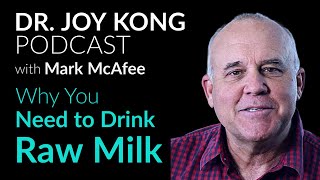
Mark McAfee, founder of Raw Farm, argues that raw milk and fermented raw dairy products nourish the microbiome and reduce allergies and asthma by 35%. He claims pasteurization removes beneficial microbes and enzymes, and discusses which states allow raw milk sales and safety standards.
Chapters
All the microbes in the raw milk are actually very beneficial for us.
Extremely so and intentionally so. Children that drink raw milk have decreased significantly. A 35% decrease in asthma, ear infections, fevers, colds, flu. All those things are associated with the raw milk consumption, not just on the farm, but in the city as well.
Okay. I am so happy that I finally got the distinguished Mark McAfee to come onto my podcast because I have listened to Mark talk about raw milk for a while, you know, from a different, a few different podcasts, and I just thought he was the most dynamic, you know, passionate, articulate person and just a wealth of information and certainly turned me on to raw milk. And that's what. That's the only milk I would drink. And raw kefir and raw cheese and raw cream. And it's just, it's amazing. So I'm going to let him explain why that's so helpful for you and why, why that's, you know, why you should ditch the pasteurized milk. So, Mark, thank you so much for coming onto the podcast.
Well, I am overjoyed and I don't know how I'm going to come up to rise to the description of my personality here, but we're going to try. We're going to give it a sh. I am very, very happy to be with you. And you are obviously a distinguished physician and researcher and you go about healing people in innovative ways. And so I hope to share some things that might be good tools for people to either prevent or augment or facilitate in some way their healing today.
Yes, yes, definitely. You know, I recognize the complexity of our body, of our health, so bringing as many elements as possible and, and which includes, you know, stellar nutrition. And so then you're going to enlighten us about this very important aspect, which is dairy. So before we do that, I want to give a brief overview of, you know, who you are, so the audience have, you know, a better understanding. So I'm just going to introduce Mark, who is a visionary pioneer, CEO and founder of Raw Pharm, which is, was established in 1998. The company is a leading California national brand of truly raw dairy products. Milk butter cream, kefir, truly raw cheddar cheese, which is delicious, and founder and chairman of the Raw Milk Institute, which is a non profit organization and is an internationally recognized speaker and expert with an emphasis on raw milk production standards, gut microbiome, milk genomics, nutritional benefits, food safety, and the medical health benefits of raw unprocessed milk and products. And Mark is deeply involved with raw Milk food safety research and is associated with the International Milk Genomics consortium at UC Davis since 2018. Two peer reviewed research papers now identify the Raw Milk Institute standards, training and testing protocols as causing the raw meat effect. Since 2014 in the USA there has been 357% increase in raw milk consumption with a decrease of 74% of reported illness associated with raw milk. The positive effect has been associated with advances in testing technology and the standards and training developed by rami and its Ph.D. board of directors. So thousands of farmers have received RAMI training on how to produce raw milk for human consumption versus standards for pasteurization. So you know, and then you have, you know, wonderful married life and you being, you know, and I'll let you go into all that interesting fun stuff you want to. So I want to really deliver the information of, you know, all the misconceptions and myths and, and, and science around raw milk. So maybe I'll ask you about, you know, why so many people are scared of raw dairy and raw milk.
Because that's what our culture has educated us to do, to be scared of anything other than pasteurized products. Our medical schools teach that. The schools in general teach that. That's our culture. But I'll start out with A quote from Dr. Bruce German, who's the founder of the International Milk Genomics Consortium, PhD, distinguished PhD at UC Davis. He said, Pasteurization, it's an 18th century solution to an 18th century problem. We can do a lot better.
I love it.
In the 1800s we had a big problem in all the big wasn't so much in the small cities, but Philadelphia, Boston, New York, England, Russia, downtown. You know, pick your big town, Stalingrad or whatever it was in Russia, St. Petersburg had problems when cows were being brought into the city from where they were naturally in the country on the hillsides with clean water and sunshine. And the conditions shifted where the cows no longer had pastures and they were in a bunch of mud. And what was being made in the cities was breweries. And breweries made distillers, grains and distillers mash. And that was slopped to the cows. And there was no chilling of the milk, there was no understanding of the pathogens. Typhoid fever, tuberculosis ran rampant. The people that milked the cows by hand in open buckets, it was so bad that they would put their feet in the warm milk because it was cold in the mornings.
Oh my God.
It was a filthy, disgusting mess. 40% of people died that drank that milk during that 1880s, 70s, 1880s, 1890s period, which is about 130, 140 years ago. Well, the solution was just cook the heck out of it. Just cook it until everything died, and then it would render it safe. And for the most part, that worked pretty good. 40% fewer people died, but still had a lot of water problems where the water quality and sanitation issues weren't up to speed, and people still got sick and died from the water quality issues associated with milk and other foods. So that was the beginning of the whole pasteurization concept before that, for 15,000 years. I mean, you could argue whether it's 12,000 or 15,000 or 20,000, but there's evidence going back to 12 or 13,000 years that mankind around the world thrived when they had a mammalian milk source. Because when there was green grass, sunshine, water, they had a totally whole food available to them, and they didn't have to hunt, fish, or starve or. Or farm or do anything. They had all of it right there. As long as they had sunshine and grass and water, they were good to go. And they would store that milk, and it became cheese. So we've lost the wisdom of the ages here and understanding that if you have the right conditions, raw milk is the first food of life for mammals. That defines us mammals, lactating or, you know, lactation and nursing our young. And for mankind, that means breastfeeding. For other mammals, that means, you know, udders and whatever, they're young. Well, you know, I can imagine the caveman, or whatever it was, you know, 15,000 years ago, starving, having a hell of a time, and noticing that Iraq or that ancient cow nursing its young, going, well, there's milk coming out of that udder, just like my wife over here and my caveman wife. Why can't I just go? And so they domesticated these animals. Reindeer, sheep, horses, camels. It was literally around the world, donkeys, and got milk from them. And that milk was a whole food that carried all kinds of miraculous things that nourished mankind. And there's well established studies on that. But there was a train wreck in the 1800s when these cows were brought into the cities and didn't eat the right things, and the water quality was horrible and everything else. But in 1893, something else very interesting happened. A gentleman by the name of Dr. Coit said, Wait a minute. Why don't we just clean up our act? You can pasteurize all you want. That's fine. But we're going to certify, through the American association of Medical Malicious, the AAMMC dairymen that are going to use hygienic practices, clean the udder, chill the milk, test the milk, much as Raw Milk Institute's doing now today, and for literally 106 years, until 1999. So 1893 to 1999, there was this consortium of effort internationally to produce raw milk in a sanitary method. And that milk was going to the Mayo Clinic. It was healing people. It was fantastic food. There's big journals and all kinds of written research articles about that from the 30s, 40s, 50s, about how fantastic raw milk was for healing people when they were sick or preventing it as well. But in 1999, Altadena in Los Angeles was the last brand to be doing raw milk under the AAMMC standards. And they sold the Dean's foods because the real estate became so valuable in Los Angeles. They sold for millions and millions of dollars and moved their. The Stubies moved up to Oakdale, California. So that's kind of the story of why pasteurization has got a really bad black mark on its record, which was quite stellar for 15,000 years until the 1890s when it hit a real car wreck with sanitation and illness. So.
So then people are still holding on to the idea that it's not safe when it was safe for the time when we were living clean forever.
Yes. And we were, we were literally living with our animals. And so our microbiomes were very much shared. There's so much of the microbiome and genomic biome that we share with the animals we cohabitate with. We. We don't in our minds even have the capacity to envision that microscopically we share so much back and forth at the genomic and cellular DNA level because cells cross communicate. All this research came out of the Human Genome Project where we figured out that, hey, wait a minute. So much of the contribution to our genome, what makes us genetically human, comes from the bacteria and the viruses that actually inhabit our bodies. Not just what mom and dad give us with 23andMe, 23,000 genes, but actually there's millions of genes that come from the bacterial load that we have and the diversity of that load that's shared at the genomic DNA level, back the crosstalk back and forth. And that actually, if you think about it, when I give lectures, I say, you know, mom and dad gave you the hardware, the biome and the bacteria. Your environment gave you the software. So it's really, if you think about that, the old, you know, Steve Jobs concept of cell phones, it doesn't do a lot Unless you have a cell, unless you have software in it. So we may look like what mom and dad does because the hardware was given to us with 23,000 genes, but the software that drives us genomically, which actually runs our immune system, runs metabolism, does all kinds of things, is really brought about by the genomics of the bacteria and viruses and other the microscopic organisms that live in and on us, that actually crosstalk that our bodies rely upon to complete our genome.
So you're saying all the microbes in the raw milk are actually very beneficial for us.
Extremely so and intentionally so, manifestly structurally critical. And when you think about 1930s and 40s and really the wonderful discoveries of antibiotics and saving soldiers lives, and the wonderful passion and emotion of saving someone's life with an injection of an antibiotic penicillin, that was a fantastic. It transcended so much pain and injury and loss of life that we celebrated killing bacteria. But it was indiscriminate and we didn't understand really what we were doing. Now I'm not against antibiotics, I think they're a phenomenal tool, but they have to be reserved and purposefully used because we abuse them. We get antibiotic resistant bacteria, we die from that. MRSA is killing people left and right. We have to be appreciating and understanding what makes us have a strong immune system. And literally it's 80% or more of an immune system is diversity of bacteria that inhabit our gut and the food that feeds it. And that is, that is madness. If you were to say that in a 1980s or 1990s medical school, they would say, no, kill that stuff. It has no purpose. I don't know why it's there, but get rid of it. All it does is cause problems. Now we're starting to evolve a little bit, but say, wait a minute, the human genome very much manifestly needs this diversity of bacteria. We need whole food to feed that bacteria, keep it alive and well. So we don't need an antibody, right? So we can keep our immune systems functioning and not have all these really bad diseases. We're getting, you know, all these autoimmune diseases which are actually defined by the fact that you lost your bandwidth of your genomic data to drive your body, your body's gone, it's gone from normal and balanced. If it ever was into like literally, you know, a peanut in a can just shaking around going crazy. It's trying to find the information and drive itself properly. And it doesn't, it doesn't have it. So it really, what I'M speaking about here is very much coming out of the Human Genome Project, which was the 1990s and early 2000s, which basically said that, wait a minute, we're not alone here. We're not just one person. We are literally. Bacteriosapiens and Bacterio sapiens need to have a diversity of bacteria that we connect with and they need to inhabit us and then we need to feed them. And the feed, the food that feeds them are whole foods. They're not preserved foods. Preserved foods, what do they do? They kill bacteria to extend shelf life. So you need to have good foods that are whole that actually nourish the diversity of good bacteria in the gut. And by the way, the good bacteria will out dominate immensely and mutualistically in your gut competitively to assure that you remain strong and healthy. So that diversity actually sorts itself out. Instead of getting these really bad wicked bacteria that take over, make you sick, you actually have a diversity of bacteria which keep them all in check, with the pathogenic bacteria in the minority or even if they're present at all, always kind of being suppressed by the lactobacilli and coliforms and bifidobacteria and all the wonderful bacteria. There's a whole diversity of Pseudomonas and all kinds of stuff that inhabit our gut that should be there, that run the show. And so we're also missing the mucosal lining in our intestines have been just wickedly destroyed by antibiotics and by preservatives in our food and GMO and all the roundup ready stuff in the environments we have. And that mucosal lining has made us more susceptible to pathogenic injury, which is really quite sad because a normal healthy human being will have a nice thick mucosal lining inside of their intestine, which is not only inoculum, all the beneficial bacteria, but also it's protective. So you don't get a pathogen going in, burying itself into the tissues and causing hemolytic, hemolytic uremic syndrome with Aztec or E. Coli, and that those will go through you or be out competed. Who wouldn't actually have an ability to cause the hemolytic uremic syndrome attacking the actual tissues inside the intestines. So we're actually structurally affected by the fact of what we've been eating and how we've been treating ourselves for the last 50, 60 years. We actually have lost some structures which makes us, makes us immune compromised also. So it's just a deep, broad concept, but to bring it back to our conversation, raw milk is the first fruit of life. It is the product of mother nature's blueprints operating on a generation by generation basis with the pressures of only the good succeeds and the bad dies off. And as a result, only the optimal first food of life would actually be propagated to nourish the young at its most immune compromised time. Just came out of the birth canal, doesn't have much of mom stuff because that stops at the placental barrier. The umbilical cord doesn't share the same blood. Right. So you basically transfer the immune factors through colostrum in the first two to three days after birth. And all the birth canal juices, all that wonderful juice from mom's birth canal, are the first inoculums for the gut. And they're very rich in acidic bifidobacteria and all kinds of wonderful things. And then colostrum, which is packed filled with all kinds of antibodies and serum from the blood. And then that triggers the whole pitocin response, which lactation and letdown of milk, or actually lactation begins where you actually get raw milk in the second or third day. And that is packed filled with prebiotics, all the wonderful oligosaccharide sugars and all those kinds of things that are specialized to nourish the baby and also protect the baby. By the way, oligosaccharides are very interesting sugar. They are not actually a nourishment to the baby, They're a nourishment to specific bacteria which protect the baby. Dr. Bruce German figured that out a few years ago. What's this oligosaccharide bacteria? I mean, sugar. It's not digestible by the baby, but yet it's there in plentiful amounts in raw milk. By the way, what it does is suppresses pathogens and encourages the growth of bifidobacteria, which is so important in terms of protective ecosystem in the gut of a baby through six or eight months. So much science says raw milk is a universal human food that's been around for a long time. And it will build your immune system. It does three things. It nourishes completely, it protects you and it directs stuff. Direction comes in the microrna. What do you think the pharmaceutical companies figured out about micro. Micro MRNA came from milk nourishing. Obviously. It's got everything in there. It's got sugars and proteins and fats and everything. And it is the sole food of life for the first three or four months of a baby.
Does it matter that it came from a cow? Instead of from a human. So how's it going to direct a human life?
It's interesting that I don't know that the direction actually works. I don't know that and they're working on that now. But I do know that it's very interesting that some of the antibodies are transferable. The antibodies, the fats are a fantastic method to transfer all kinds of bioactive elements from the utter, the source of the belt to the gut, down the lower gut. What's the first thing that happens when milk is consumed? Raw milk is consumed when it hits the low ph of the 1-2ph in the stomach. It curdles, it becomes cheese immediately it becomes a coagulated big old clump which is protective of the killing action of the acids. So that's how that you transition through the stomach to get into the lower gut where it can actually take up and participate in the microbiome in the gut.
So you're saying a lot of enzymes will not be destroyed because of this curdling effect?
Exactly, you get the curdling effect. That's how you make cheese. You add acid to milk and you acidify. You can use vinegar if you want. So it's very interesting how mother nature has protected the elements that are bioactive in milk to transition the upper gut, which is low ph, which is kind of a kill step for the body. If you think about it really, that that transition that trans transitions through the upper gut down to the lower gut, which has very low ph or to be higher ph and then lower ph, it actually becomes part of the lower gut microbiome which is the seed of the immune system. So it's really interesting the genius of how these wonderful bioactive elements, including alkaline phosphatase, which is destroyed in pasteurization, can transition the upper gut to go to the lower gut and actually work as a anti inflammatory compound in the immune system. And there's all kinds of other things, lactobarod oxidase and lysozymes and bacteria, all kinds of bacteria. Some die, some don't, but they're protected in this clump of cheese that your body makes when it gets to the low ph in the stomach.
So are there research showing what it actually does to the body? You know, you know, what are, are we enriching the microbiome? Is that in actually enhancing health outcomes?
So what kind of research in Europe, most of these. In the United States we have a lot of breast milk research. And the breast milk research is basically for infants and young children. Totally makes sense, right? We don't have a lot of adult humans breaking female human raw milk. Although that is trending, which is kind of a weird thing. But nonetheless, I'm just saying that the, the European studies are based on children. 50, 52,000 children studied in the parcel study, the Gabriela study. There's some other studies that were done like 52 of. There's a huge amount of studies. They are PubMed, they're all CDC and NIH listed and there's, there's not only the primary research but follow on research. So the first generation research of 2004 and 6 and then follow on 2010, 12, 14 and they all show that children that drink raw milk have decreased significantly, 35% decrease in asthma, very, very serious decrease in ear infections, fevers, colds, flu. All those things are associated with the raw milk consumption. Not just on the farm, but, but in the city as well. They broke that down because the FDA really went after them ferociously, said, oh, you're talking about the farm effect of all the beneficial things about being around animals. They said, well, let's look at that. So they restudied the data that no, this study, this study showed that regardless of we were on the farm or in the city, if you consumed raw milk, you had the same benefit. They've really studied this. The raw whey protein for instance, is very stabilizing of the mast cells which release histamines of course and cause all kinds of inflammatory responses. Well, raw whey proteins are not present in pasteurized milk. They are present in raw milk. That was studied by JP Lyles who was doing kind of a takeoff on the whole French paradox. And he said it's not the wine that was so great, that was kind of an accoutrement, it was the two kilos of cheese and it was raw cheese. Raw cheese and the whey proteins and all these bioactive components found in raw cheese with the wine and the rest of the Mediterranean diet that actually had such a strong anti inflammatory or non inflammatory kind of response to the body. And that was, it's all PubMed published, you know, stopped it.
Yeah, I guess we don't have the French effect because in the US we've really barely ever experienced having raw cheese or raw dairy. You know, that's why the French kept doing it. But not in the US The French.
And even Quebec Canada, that area up there in Canada have been very much rebellious that they're going to keep to their French traditions and have kind of stepped out of the dairy realm and bring in any kind of raw cheese they want, in spite of the Canadian policy against it. So we see blue zone effect of longevity surrounding the raw cheeses and the fruits and the vegetables and the meats fermented, not cured through processing and using preservatives, but rather fermentation processes and salts, good mineral rich salts. All these naturally occurring wonderful things in sunshine and love and communication. Feeling of purpose and community was very important as well. But the blue zone diet is basically kind of an organic Mediterranean diet with these things like the kefir smoothies. The Balkans are part of that range of, of the longevity. The centurion area in the Balkans where people in the World War I were found to live 100 years old, not have diseases or very few was because they had so much raw mater and cheeses and all these wonderful things in their lives.
What do you think pasteurization does besides killing off all these important little bugs?
Yep. Well, here's what pasteurization does. It goes from raw to 165, 170 degrees or maybe 200 degrees back down to a fully boiled at let's say 400 degrees temperature or 300 degree temperature, very, very much cooked for good. It's non allergenic as raw comes, very allergenic as pasteurized and then back to non allergenic again it boiled. And I got that from an interesting slide from the International Genomics consortium who studied the allergenicity of pasteurization. They're finding this curve is horrible because what it does is it puts things into partial death. It doesn't completely sterilize. What it does is it, it denatures 25, there's 2500 different proteins by the way, in raw milk. It denatures many of them, not all of them. It denatures many of the enzymes, but not all of them. And it kills most of the bacteria, but not all of them. So it goes like halfway as they say. It doesn't really get there all the way. We're completely cooking and making into a curd or actually say like a, a pudding or something would, would completely cook it. It doesn't do that. It goes halfway. And it was intended to do that because if you cook it all the way, you don't have milk anymore. So you take it up to a point to get a five log kill, a 100,000 reduction of, of the worst case scenario pathogen level. And in doing that you also kill off all the beneficial bacteria. And what pasteurization actually does is it does what's called lysing it takes a cell and breaks open the cell content and spills out the cell guts all over the place and it's no longer a cell. So it breaks open the cell through heat. When that happens, the cell contents are not recognized by the body as something good.
You're saying there's cells in the milk?
Absolutely, absolutely.
What kind of cells are these?
You'll find epithelial cells, you'll find antibodies, you'll find bacterial cells, plenty of bacterial cells. And when they're pasteurized, they're broken open and the proteins are denatured. They're all tangled up, they're no longer organized. They don't look like Legoland and anything organized, it's all a mess. It's just like tangled mess. And your body reacts to that. And some people more severe than others. And there's a whole mucus response, histamines are released and your body says, wait a minute, get that dead stuff out of here. It's foreign to us and causes an allergic response. And that's not to everybody. Not everybody has that, but there's quite a range of allergens. Allergic responses or just a reaction to get mucus going to get the dead stuff out of the body. Now what's interesting about that is it also makes it hard to digest because remember that not everybody has a lactase persistent gene. And even those that do could really suffer. You could actually stimulate or simulate or propagate lactose intolerance in somebody by giving them a whole lot of antibiotics and even chemotherapy by killing off the gut microflora, which are the, that's what creates lactase. The lactobacillus is what makes lactase and other lactose consuming bacteria make lactase. That's how they do that process in the gut. So, you know, it's hard to digest on the pasteurized side. On the raw side, what you do is you're consuming raw milk and you do it repetitively and maybe even kefir, which has very, very high levels of bacteria because it's like a yogurt. What you're doing is you're repopulating the communities of bacteria that are missing. You're recolonizing the gut so that when raw milk, lactose comes along, the friendly bacteria down there that say, oh, I could digest you, I'm going to make myself some lactase. And no problem, because you recolonize the gut with these beneficial bacteria which do that job for you. But in America, after breastfeeding is done and you've taken your first few rounds of antibiotics, you start getting in trouble and you're not eating a biologically diverse enzyme rich, whole, nutritionally dense food like raw milk that has the bacteria in it. You're eating something that's literally borderline sterile. You know, the pasteurization process eliminates the beneficial bacteria and they're all gone. There's a few heat loving bacteria left, a few cold loving bacteria and they will grow over time, but they're actually quite toxic. You actually drink an old pasteurized dairy products and you'll go, yep, it's terrible. If you drink an old raw dairy product, it's actually quite sweet because it's actually bio fermented. It's become its own ecosystem unto itself. It's trying to become cheese.
Are you saying raw milk doesn't really go bad?
It just evolves?
Drinking evolution. Okay, exactly.
And it will evolve differently in a refrigerator than it would out warm on your counter. If you leave it warm in the counter, it evolves beautifully. There's kind of a sweet aromatic kefir if you will, a natural farmer's cheese. But if you put it in the refrigerator, different kinds of bacteria tend to flourish in the lower temperatures. They're not bad. It's just that it's going to evolve differently.
Which one do you prefer? Which one tastes better?
I love just fresh raw milk. I'm a lover of fresh raw milk and also of properly fermented raw kefir. It's delicious. It's incredibly fulfilling.
Yeah.
And it knocks out the kind of the satiate, it's the satiation where you have enough fat to actually make your gut feel full without really eating a lot of calories. And so you really satiate yourself with raw map kefir. Especially if you use like the raw egg in or maybe a good example of like avocado. Oh, put in berries. Berries are fantastic antioxidants. Blueberries. Make yourself a wonderful little smoothie that has all these things and you start that day off that way. Let me tell you what, you're not hungry till two o' clock in the afternoon and your blood sugars are stable. And so you've got enough fats in there, you've got your wonderful avocados in there, you've got all these great things. Throw some, throw some mushrooms in if you want you all kinds of things. Because the sweetness of the milk and the sweetness of the berries, you can throw a little raw honey if you wanted, makes it just delicious like a milkshake, but is extremely nutrition dense and that's kind of one of the secrets a lot of influencers are doing is that they're making their own specialized raw milk kefir smoothie.
I see. Amazing. And I saw you guys just posted this ice cream recipe, and it's sort of not exactly what I'm doing, but I do use your raw milk, and I mix with the frozen fruits and I add all kinds, you know, mushroom powders and antioxidants. But you guys are adding raw milk. I mean, raw eggs, and then you're stirring it up and vanilla.
So many of the things that practitioners are. Are putting into the mix are not actually enzymatically active because they've been pasteurized. And. And what's interesting about raw milk is it's kind of a. It's. It's. It's a synthetic. It synthesizes things. It. It facilitates the bioactivity because it's alive. So the bacterial action, the enzymatic action, the raw fats, all these kinds of things kind of makes it come alive in the compost in your gut, because nothing's dead. It's all alive. It's bioactive. And so your compost pile gets a whole new lease on life. And these things that have been rendered fairly inert through whatever processing it is to put it in a pill or in a bottle actually have a chance of being bioavailable, because bioavailability is what's really key to absorbing and utilization.
Yeah. So are you saying if somebody has lactose intolerance, if they just keep on drinking a little bit of raw milk and gradually they could become completely tolerant?
I actually don't put lactose intolerance diagnoses on people anymore. I believe it's pasteurization intolerance. Wow. The human condition has no problem with natural foods, including whole natural. Raw milk has never had a problem with that. It has been literally the last hundred years. And the manifest combination of pasteurization, plus antibiotics and. Plus sterilized foods and plus preservatives. Think about the gut microbiome. Think about the communities of bacteria needed to make lactase. If you think about the gut microbiome, it all makes sense. It's very simple. An extremely complex way of thinking, but it's very simple. So I have a friend from. He's a Maasai warrior from Kenya. He drank raw milk directly out of the utter of a cow. If he hadn't done that, he would have died as an infant. He sucked directly on the tea. He didn't have a mom to suckle on, so he sucked on a cow and he Came to America, strong, healthy guy, lion fighter. Went to Stanford University, graduated with Kelsey, Chelsea, Clinton. His name is Camille. And he got a hell of a case of Crohn's disease because he couldn't drink the pasteurized milk. And he went to soy milk, which really ran him off the rails. And he got a case of Crohn's disease by the time he was in early 20s, because he came here at like, 18, 19 years old. And it was interesting how his gut was just completely destroyed by the American food because he was eating junk food. He really didn't have any idea about nutrition. Even though the Maasai have a pretty distinct, nutritionally dense food very close to the earth, he did not have that in his brain at all. And he went down. He went down the Cheetos, you know, Doritos hole. And so he got. Was shot. I got to know him through a movie producer in la. He said, you got to meet this guy. So I met him and talked about raw milk, and he realized what he'd grown up on. I gave him 8 gallons of raw milk a week for free for a year, delivered in our trucks in San Francisco area. And he fully recovered from his Crohn's disease. And he was going to have surgery to have literally feet of his intestines removed and have poop in a plastic bag with an ileostomy. And he recovered that. His quote to me was, I may live in California, but I eat in Kenya. So that was kind of an interesting thing. And I've got plenty of friends that are Asian that have pretty significant lactose intolerance issues. But remember, the Mongolians are Asian and they drink mare's milk like crazy, and it's fermented raw milk. So that's like our keeper. So I am of the belief that there may be a lactase persistent gene, but you know what? Raw milk is for everybody everywhere, because it is a whole food that will recolonize the gut of whoever consumes it. And I have not seen an exception to that. There's even some science studies done at Stanford University showing the HPD the hydrogen breath test curve going like this and going down after two weeks of consuming raw milk. Yes, initially they had a problem, and then it got better until colonization, after two weeks was actually pretty full, and HBT hydrogen was no longer being created because colonization was at least enough to create enough lactase that things are good. So this whole idea, I think it's actually quite inhumane to say you have a problem when the food has the problem.
Wow, what a powerful story. That's incredible. And the implication of what doctors can do to heal their patients. Huge, huge. Because they were cutting people's gut off. Right.
So I have a website called farmersoverpharmacies.com farmersoverpharmacies.com and on that, I think I have 12 videos there. I haven't done a video in a couple years, but I interview people who recovered their gut from very significant. I mean, they were going to have surgery within literally two weeks. And they were like, emotionally and broken down, messing. I don't want my intestines taken from my body. I don't want to poop in a plastic bag. Right. I'm a young, vital person. I have a life to live. I have to. And they literally discovered deep nutrition. And through either a practitioner or a friend or whatever, they found a way to actually do the. A Mediterranean diet with lots of olive oils and stews and broths, bone broths. They're very collagen rich. Lots of raw milk, kefir, never an antibiotic. And they were on their medications at the same time, but then after four or five months, their symptoms went away and they stopped their medications and they were fine. So it's all about the gut microbiome, inflammation in the gut. And what's tragic about this is the medical schools. Not all of them. I'm not going to blame every medical school for this, but most of them I'm aware of say there's no cure. Eat whatever you want and take the medications. And I think that that is a disservice to humanity. I really do.
Yeah, just look at all the hospitals. Everybody that's going through treatments, pretty sick, and they're fed a very inflammatory diet. So that shows you their philosophy.
The most disruptive thing that's happened in the last 15 years or 20 years in medicine that I'm aware of that I think it's really extremely disruptive but constructive. C diff. Patients dying left and right in the icu. C diffuse. Get the seal. And then the doctor saying, wait a minute, we can save a life here. And going to a young nurse who has a fantastic diet and good health and taking her feces and flushing the lower gut of these patients, and 92% of the time, they're okay in two days. It wasn't a drug, it wasn't surgery. It wasn't some fancy thing. It was literally a fecal transplant. What does that say? What does that mean? What is that? Where's that? Where do you put the headspace? I think that is an incredibly revealing discovery of nature's blueprints.
Yeah, yeah.
And how. And how the contents of your intestines can drive the inflammation in your intestines which drives your health and even sepsis. I'm not suggesting you're going to bring somebody back from extreme successes. I'm not going to go there. But the bottom line is people are dying left and right in the ICU with C. Diff, and 92% of the time, that's 9 out of 10 patients walk away. That's incredible.
Yeah. Amazing. I know. I think definitely now everybody, even people who are not very aware about holistic health or good nutrition, they know the word microbiome. So now I can say the word microbiome and not, you know, have people, you know, you know, like deer in the highlight. So. So that's a huge change.
It is, yeah. What an important one. But now we need to have a follow on support of the microbiome. We need to say, how do you take care of your dear, dear friend, your microbiome that makes up 90% of your immune system and 90% of your genomics? How do you take care of that? How do you nourish it? How do you love it? How do you feed it? How do you protect it? That is really where medicine needs to go. Because right now, in 1962, 6% of our GMP was in medical care. Now it's exceeding 20%. So that's telling you the pharmaceutical industry has got Congress by the short hair getting all the money. And we've really taken your medical schools and just gone kill it, cut it out, cure it through some chemical. And we're not going in the right direction very well because 6% to 20%, we're consuming more and more of our. Our gross national chest or gold. Our gold, our value, our wealth into something that's actually illness. So illness care versus wellness or prevention. Care. And you know, prevention is not very exciting because you're not sick yet. But you know what? Who wants to be sick? But we're not teaching in schools to prevent illness through whole nutrition. We may be trying to start to do that, but the food chain is so dominated by the political forces of processors saying, I'm going to have my part of the USDA food pyramid come hell or high water. Instead of what's better for humanity. I think we have to change our social contract with the citizens of our country and say, what's best for you? Not what's best for the pharmaceuticals or doctors or medical schools. No, what's best for people. And that will roll out very nicely into what's best for everybody in the food chain. It'll be a lot better for farmers too, because farmers will be very much the principal place that food comes from. It doesn't necessarily get processed very much.
Yeah. Just when you were talking about preventative medicine, I had a flashback of me back in medical school and I remember thinking, preventative medicine. That sounds so boring.
Exactly.
Whatever, you know, blah, blah, blah. So that, that's how I felt at that time, Right?
Yes.
Because you know, like, like, like what? You're going to do something so people don't get sick? Yeah. You know, that just is definitely not exciting. And, but then, you know, I'm trying to stay healthy and that's when I'm like, I'm going to prevent, I'm going to prevent for myself. And then I realized, oh my God, this is very powerful. So why, you know, I should be doing this for everybody so nobody gets sick. So now really what I'm doing is preventive medicine. Everything I'm doing is trying to be in an anti aging field to prevent aging, which is the biggest risk factor for diseases. So because aging is nothing but decline and, and all the malfunction that we could address along the way, that, that can't be overstated.
And it's just not popular because it doesn't make money, it doesn't create money. And think about it as a doctor. I was a paramedic for 17 years, so I worked with a lot of doctors. I got a lot of pre med behind me. I'm not a doctor though. My wife's got her master's in nursing and so we do a lot of work together. But in medical school you run up a big debt. You run two or three hundred thousand dollars in debt in some places or that more and then you work really long hours and you're exhausted as an intern and a resident and, and it's like, I got to make some damn money here. I was promised a decent quality of life and I'm in debt and I'm not making any money. I'm a slave to some hospital in residency. I'm not making more than a nurse next to me. There's kind of a internal anger saying I was supposed to save humanity and be good. And now it becomes I got to survive myself as a doctor to pay back my bills and make some money. And so you become a churn. You become seven minutes per patient kind of a thing where you're just diagnosing, treating, get them out of your diagnose treat, Bill, you know, instead of looking at a group of people you're responsible for to make sure that the healthiest they can possibly be thinking of that is the goal versus just treat the worst, treat the worst, treat the worst. Bill, Bill, Bill. It's a different mind culture and I'm a big proponent of single payer and socialized medicine in some regards. I think there's some really good things there. And it's so much more efficient if you're not paying profits to the middle, the insurance companies to just scout and deny, deny, deny. And it means so much better to say, wait a minute guys, what's the end goal here? The end goal is to be an efficient country with healthy people that aren't getting sick so we can be more productive and less supportive of that. 30% of people are in hospitals or in convalescent homes or wherever they are always supporting the ill versus preventing that. We can all be more productive for 70 years of our lives and enjoy every bit of it with quality of life towards the end versus body life falling apart at 45 or 50, definitely waking up.
But I still see a lot of people who are stuck in the old ways and they believe in everything the doctor saying. And then they, they do what the doctors say, so. And then they keep on suffering. So it just because that's the wrong direction. You need to take control of your own health. You know, I remember telling somebody, you know this philosophy even when I was in medical school. I thought it was ludicrous, maybe because I came from a Chinese culture. In medical school they said, you as a doctor, you're going to become a doctor. Once you become a doctor, you should never attempt to treat yourself or your family. It's as if I'm going to be so blinded by my love for my family that I can't think straight. I can't do the right things, okay? So I have to give my autonomy up and go to somebody else and tell everything about myself to that person so that person can understand who I am and then give me the right things. I'm never going to be able to spill out everything about myself to that person. There's nobody that knows myself better than myself. And to say that I'm a doctor so I should never write medications for myself and I should never write medications for my patients. That just shows you the philosophy of the whole medical system in this country. It takes your autonomy away. It doesn't give you, it doesn't respect that you have the intelligence to take care of your own body.
Correct.
And that's got to change. And it is changing. But it was. But right away I thought, this is. This is madness. I can't treat myself now because I know too much and I'm just, well.
Give yourself a little credit and give yourself a little grace for yourself because you've come through a process to give you a license to speak. You have the right to practice medicine. That means you have. You've arrived at that PubMed level of, you know, you're clear to go in terms of practicing medicine.
Oh, I knew I had to finish medical school for a good reason.
Yeah. And that is a distinction that's highly honorable and respectable and fantastic. Now it's like, okay, everybody, let's really look at the science. What does the science actually say? What's the microbiome say? What does PubMed say about really what? The leading pioneering stuff going on right now will be very supportive of everything you're saying, but we're not. A great example is I'm not allowed to put any PubMed links on our website at RA Pharma.
That is ludicrous.
That's insane.
Yes.
That's crazy. Because that means that none of our consumers can ever connect good science with practice. They can never put together the math between food is medicine.
Well, just like a lot of rules from the higher ups, it's not even making sense. But then there were people say, well, they're trying to protect. Protect us. So everything they say, then we believe.
Yeah.
I would like these organizations to explain their policy. Like, what could be any plausible reason that this could be even a reasonable stipulation? Like why? Just like, for example, I don't understand why stem cell therapy. The moment you talk about the cells being alive, then you are speaking of the metabolic activity of the cells, and that means the cells become a drug. And then you have to conduct clinical studies. So this is no longer tissue transplant. What? Explain that to me.
I've been Sued by the FDA for putting PubMed, CDC, NIH links to European studies and a lot of them because I was creating a new drug by suggesting that this science applied to our milk and therefore people could get better. Okay, all right, that's FDA cleared, PubMed, NIH, CDC links. Not mine, theirs. Yeah, so I guess I'm a new drug guy.
That's pretty interesting. So we actually are facing the same battles, you know?
Yes, we are.
You with milk and me with stem cells.
You know, it's interesting when you say stem cells because Ramok has stem cells in it and it's like. Well, that's very interesting that Mother Nature would have stem cells in raw milk. First food of life, stem cells. Okay. We know that the digestive tract of a baby is very immature. The PH isn't the same as an adult. And the digestive process, the leaky gut, is very permeable to absorb antibodies that it wouldn't later in life. All kinds of interesting things. But Mother Nature's blueprints are, in my opinion, kind of the, the really good reference point to understand so much more about what we. About health and about well being because of the, the blueprints have, for a million years have evolved telling us this is the way you've got to do it or you've died off if you didn't. And that's why I really hang out with these really smart PhDs at the IMGC, because they talk about this all the time. And it brings so much logic to such an incredibly vast, incomprehensible infinity of, of information. It brings logic to it.
Yeah. Okay. This is such a fun conversation. So before we wrap up, I want to ask you something because. Okay, this is a common suggestion by holistic doctors. They tell patients, if you want to be healthy, you got, you got to avoid gluten and dairy. You've heard that over and over, right? Gluten and dairy. I was like, no, I love cheese. That, that's, that's the, one of the worst sacrifices, you know? So, okay, want you to explain about. So you, you know, obviously you're going to talk about the pasteurization process. So what is the pasteurized milk when, when that gets made into a cheese? So we know about the pasteurized milk. And what about the cheese that came from pasteurized milk?
Well, it's no longer bioactive. The enzymes are denatured. The proteins have been changed. So, yeah, there's casein there, yeah, there's protein there, but it's no longer as. It's not alive. When a, a holistic doctor saying get off gluten and get off dairy, it makes sense. If you think about it. They haven't been trained about raw milk. They're trained about dairy as a pasteurized product, which is highly allergenic. And you're also dealing with patients that have leaky gut. Most of them have leaky gut because the permeability is so high in the intestines because the mucosal lining is missing. And you got all these pyrus patches that are wide open in the intestines and things are being absorbed in the bloodstream. That shouldn't be there. So you have all these gluten sensitivities, all these kinds of weird things. You would not have, generally speaking, if your intestinal lining was intact and your, your junctions were tight and you had a mucosal lining that worked. You had biodiversity and the digestive process functioned. So what they're doing is they're looking at all the patients that are coming to them and seeing leaky gut syndrome and saying don't eat things that get in your bloodstream. And these are the worst of them. Gluten and dairy. Well, we're saying is rebuild the mucosal lining using raw dairy that's by the way, non allergenic. And you will then start to transcend the problems you have into a place where your gut intestinal structure is correct and you'll have these mucosal linings in the biodiversity. And also, you know, there's this prebiotics, which is the food that feeds bacteria. There's probiotics, the bacteria themselves and diversity of them, and then there's postbiotics. And postbiotics are basically the metabolites, the poop of the bacteria. But that stuff is critical to building blocks and it's there for a reason. Other bacteria use it to build things. And your body uses to building really, really, really important. And raw milk has all three of those things. And it just takes time. It took a while to get to where you are. It's going to take a while to get back. And so I would, I would strongly suggest people to say whole foods, whole foods, nothing added. Short ingredient lists, like three things. Love milk. And that's it. You know, just. That's it. You want to have very short. Nothing you can't pronounce, nothing you can't. You have to look up very short and, and really, really things that would rot if you left it. The sun, you know, you need to eat things that the rat would eat. You actually have to eat things that are digestible and whole, nutrient dense.
Do you think raw cheese has additional benefits compared to raw milk?
No. No. The reason I say that is because raw cheese is not all the things found in raw millet. You're missing a lot of the whey. There's curd and there's whey and they're separated. And what you're getting is just the casein, the curd part and the whey proteins are actually lost in the waste stream. And in the old days that whey would be collected and consumed. Either they would be using it for fermenting vegetables. You would take your, your vegetables and soak them in whey protein or that whey was fed to the hogs and then you eat the hogs later. So raw cheese is, is part of raw milk, but it's not the whole. Raw milk has whey proteins, casein proteins and all kinds of other things in there that are all complete and whole in fats, where raw cheese has the fat, some of it has some of the proteins. Yes, it's got the enzymes, yes, it's got some of the bacteria. But the raw whey protein, which is highly beneficial, is mostly gone missing because in the cheese making process it's taken off.
What about kefir? Are you getting all the benefits?
Yes, all the benefits times 50.
Amazing.
Remember, you're not losing anything, nothing being lost and there's no whey protein loss. It's all there, it's all bioavailable. It's semi digested already for you with the PH drop down to the fours from six and a half. So it's acidic, it's semi digested, it's extremely biodiverse, extremely bio intensive. In terms of the bacteria count, you're talking about 10 to 15 million bacteria per milliliter, where raw milk may have 500 to 1,000. So you really have a diversity of bacteria which have had a time to actually relax and eat and ferment over 36 hours at body temperature, let's say 85 degrees room temperature. And as a result, extremely biodiverse, extremely digested already for you. And it's a superfood. It really is. In fact. In fact, if you look at the history of mankind, I would propose that most people drank raw kefir, not raw milk. Because if you collected the milk into a dirty container, let's say a gourd or a container from last week that wasn't washed very well, that would be the inoculum to start getting the bacteria to grow in that warm milk. And there wasn't really good chilling. So the milk sat around on a table, was consumed raw and fresh for a few hours and then by the afternoon of the next morning it was very much turning into like a yogurt or kefir. So raw milk by the farmer, yeah, you probably drank raw milk, but his neighbor or people down the road or something, that was something that was fermented because it was not chilled rapidly and it had the inoculum from the dirty container. So you know, it also has a very long shelf life. You could take kefir and you can drink it you leave it at room temperature for a few days or weeks. If you cool it, it'll last for months. But it's a living food and if you really get bored with it, you put it through cheesecloth and you have farmer's cheese. So the curd can be strained out as farmer's cheese and then the whey protein can be consumed or can be used for fermentation of vegetables. So our great grandparents could have told us all about this, but we forgot about that part.
Yeah. What about a raw cream? Does that have significant nutritional value?
The Butterfat globule carries 60% or more of the bioactive elements found in raw milk. The anti inflammatory compounds found in raw milk are carried on the butterfly.
Oh, wow.
So raw milk has let's say 4% butterfat. We run 4 to 4 and a half percent butterfat through the year, depending on what time of the year. So it's got four and a half percent of the weight of the milk is actually being, it's carrying bioactive elements like alkaline phosphatase and that kind of stuff. Really cool stuff. Cream is 40% butterfat. Wow, you talk about 10x happy. You've got 10x more of the good stuff. That's bioactive, that's anti inflammatory. In fact, you find a lot of people getting a lot of healing from raw cream because of the anti inflammatory components found they actually help a lot with arthritis.
Oh my God, that's amazing. What a delicious way to heal yourself.
Yes. Whipped cream. Whipped cream with your vegetable, with your whipped cream, with some raw honey and maybe some berries. Oh my gosh, that's delicious. Butter is 86% raw fat. Oh, so you talk about 4% to 80%. That's 20x. So incredibly dense in terms of anti inflammatory factors. Children do really, really well because of the butyric acid that's created in the lower gut. But it's actually very, very important for inflammation and so on and so forth. A lot of children on spectrum do really, really well because it's brain food. The fats are super important for the neurons and the swan cells and all that stuff that the insulation, the good cholesterols are missing or lower in some of these children and boy, it goes directly to the brain. It really helps out with inflammation as well as rebuilding the neurons.
Wow. Powerful and delicious.
That's where it's at. That's where it's at. As long as it's good fat. It's a phenomenal. In fact, our ancestors would have really shown the fat dominant part of their diets, along with good proteins and of course, vegetables, everything else. But yeah, fat is really critical. And I think in raw milk, the fat is one of the most critical elements.
That's amazing. Yeah. So maybe tell people where they can get these amazing raw milk products.
Well, joy, it's been a joy because it's been an entire hour and I haven't been bored one second and this has been invigorating as hell. So thank you. But in California you can get go to sprouts and you go to website@rawfarmusa.com we have a locator map to find the closest raw milk to you. And it's all the way from the Mexican border, the Oregon border, east, west, north, south. It's everywhere. We have 600 stores and we are the number one selling brand in those stores. Even though we're more expensive and it costs a lot more for ram up because all the safety and testing and all those things we have to do. But it's a number one selling brand of fluid milk in those, in those stores.
Amazing. Amazing. So do all the states have availability? Okay.
No. In fact, every state has sovereignty to do what they want with raw milk. There are currently 21 states that allow the sale of raw milk in some way. And then the other 30 states or so, it's either illegal or you have to buy a part of a cow or go to the farm and buy the raw milk milk directly from the farmer. But I'm very proud to say that the Raw Milk Institute, which I'm part of, just helped get raw milk legalized in Iowa. And it was completely illegal before. And we worked very, very hard with trained farmers that we trained there to produce safe raw milk. They used our standards in their legislation. So it's very powerful. And we also worked with farmers in Montana to kind of bring them up to speed on how to produce raw milk. Well, this last summer we spent time up there. So remember, there's two intentions. One intended for pasteurization. And you can do whatever you want because it's going to get cooked. You don't really care if it's got a little poop in it. Raw milk intended for people. You have to have a farmer that's ethical. It's going to work hard. It's going to do a great job of cleaning the udder, cleaning all the equipment, make sure it's well maintained, chilling the milk quickly and testing it so you have integrity and knowledge. In fact, it's not filled with a bunch of E. Coli or Something we test for every pathogen every day, and none gets out of our food chain here at our farm or the creamery without a negative certificate of analysis from Food Safety Net in Fresno. So we have our act together when it comes to food safety integrity. And we're pioneers in that nationally and internationally. We've trained farmers in Great Britain, Australia, New Zealand, all across Canada, the United States. We're the world. World leaders in that whole issue, because raw milk is a powerful food, but for those with weakened immune systems, if there's a pathogen present, it can make them sick. We do not want that. And when you do these practices, well, you don't get that. You get very powerfully immune, strong, happy, healthy people.
Yeah. Amazing. Yeah. So just one. I'm just curious. So I assume a lot of the English speaking countries will have similar hang ups about, you know, needing to stick to pasteurized milk. And. And in other countries, I'm not sure if they're. Because a lot of people.
A lot of people. I have a story that will fix. They'll answer this question perfectly. We sell a lot of raw milk at farmers markets in Los Angeles, Santa Monica farmers market, and other farmers markets. And I would go down there quite a bit, especially in the first 10 years, and you would hear a strong accent, a Russian accent, a German accent, some Eastern Europe, and they'd come up and say, I need 10 gallons, please. Thank you. And they have beautiful children, and the moms are sexy, beautiful things. They, you know, they're. They're beautiful and their teeth are gorgeous, and the kids are well behaved and gorgeous. I was like, here you go, ma'. Am. Thank you so much. And then you get another mom that's not looking so great coming in with her ragamuffins behind her, and she goes, you know, I'm not so sure about this raw mouth thing. I said, well, why don't you talk to this Russian gal and you guys straighten it out? Come back to me and talk to me. Because it literally is a indoctrination in our culture, because in Russia, Bulgaria, all the Eastern Bloc, raw milk's been part of their lives forever. It's never been something that's been shunned. It's been something that, that's been embraced in Mexico until the last 20 years. It's been very much embraced as well. South America, the same. But the first world nations have literally been dominated by the commercialization of melt through pasteurization. And that happened literally circa World War II or just before World War II, where you could fix all the Problems with nuclear bombs and DDT and smoking was good for your lungs. That was World War II. Right now we're realizing that there's nuances to this and Mother Nature's blueprints in the biome and smoking is not good for your lungs and moderation and alcohol and all the things we're starting to realize and appreciate that we have to take care of our microbiome in our. The mother within. And so if we abuse her while a shortened life and a miserable life and it's not going to be so good.
Yeah. Well, thank you for your amazing contribution to humanity, you know, to bring back this incredible healing food to. To the world.
I feel really, really privileged with purpose. And I. My grandchildren are thriving because they're all descendants of what we're doing here. Drinking raw milk and doing all the things and eating other whole foods and being well educated. And I'm also extremely proud of you and the work you've done with stem cells and the work you've done and coming from China and going to Berkeley and doing all the things you've done and being a phenomenal leader and inviting me on your show, which is a privilege. Thank you very, very much.
It's been super fun. I just love all the knowledge you're sharing and. Yeah, what a great conversation. So thank you so much. And I'm sure the audience will just really, really find this valuable and. And hopefully start to, you know, enjoy some raw milk products, which is.
I hope so too. The first thing people. The first thing people say on a poll about raw milk is it's delicious. That's the first thing they say.
Yes, Yes. I always have them in my refrigerator. So enjoy and enjoy good health.
Thank you, Dr. Kong.
Thank you.










