New Medicine: Transforming The Future of Health | Dr. Carlos Jorge on The Dr. Joy Kong Podcast
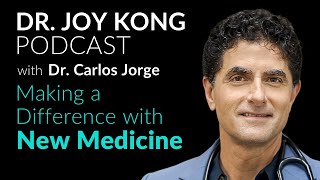
This content was created by Joy Kong, MD. This content was uploaded by Joy Kong, MD. This is a YouTube video titled "New Medicine: Transforming The Future of Health | Dr. Carlos Jorge on The Dr. Joy Kong Podcast" featuring a conversation between Dr. Joy Kong, MD and Dr. Carlos Jorge. The discussion, recorded on December 21, 2023, explores innovative approaches in medicine, focusing on anti-aging, functional medicine, and regenerative therapies. Dr. Jorge shares insights from his practice, Companion Health, and discusses the integration of holistic health strategies, including nutrition, inflammation management, and advanced therapies like exosomes and stem cells.
Chapters
Hormonal balance, gut optimization, cellular detoxification and sugar metabolism, all these are completely ignored by the traditional route.
We have started looking at regenerative therapies like exosomes and stem cells for some of our clients to really start looking at. How do we really, really look to the future of where medicine needs to go, which is how do we really sort of address damage or tissue injury and mitochondrial efficiency as you men at a much earlier pace with some of these newer technologies that are available.
It's wonderful to see that the anti aging medicine or functional medicine is going to lead the way to this new way of doing medicine. Hello everybody. Welcome Back to the Dr. Joy Kong podcast. So here is where I have the pleasure of sharing with you some of the newest ideas and some of the pioneers in the health and wellness industry. Really together we can propel this wave forward that we can stall the aging process, even reverse the aging process, and thus prevent diseases and help people to live longer, live better, just live a more vibrant life. So today I'm inviting another pioneer, Dr. Carlos Jorge. Dr. Jorge, welcome to the show.
Thank you. Good to see you, Joy.
Yeah. So I want to tell you a little bit about Dr. Carlos. So he is a co founder of Companion Health, which is an innovative private membership longevity functional medicine and primary care center in Charlotte, North Carolina. He's also the chief medical officer of HealthCoin Exchange, which is a disruptive technology solutions company that is developing platforms to offer alternative payments, engagements and clinician interactions for consumers. Dr. Jorge is triple board certified in family medicine, functional and regenerative medicine and clinical lipidology. Dr. Jorge is the former medical director of Presbyterian Novant Heart and Wellness and Corporate Medicine, located in Charlotte, North Carolina. He's an active member of various groups and boards including A4M, which is American Academy of Anti Aging Medicine and MMI and various organizations. And he's originally from the Dominican Republic where he attended medical school and gradu graduated cum laude. He completed his residency in 2002 in Northwestern University. So, Dr. Carlos, yeah, I know you are doing some really interesting things in your clinic and you have your own understanding and approaches to the whole anti aging field. So maybe you can share a little bit of what you see as some of the bigger challenges, challenges for the whole anti aging effort. What is dragging us back the the most severely.
Thank you again for having me and I appreciate all your insight. You've been helpful as I've looked at some of the other regenerative therapies. So I appreciate that as well. I mean, I Think the, right off the bat, the biggest challenge we have is, is often just how we define aging, right? So we often talk about our chronological age, which is how many years we've kind of been on the earth, let's say. And then some people talk about biological aging. And that's also getting a lot of attention recently, which is if I'm, let's say 40, do I really reflect that biologically and physiologically, or am I perhaps a decade older? And then there's some newer concepts that I'm sure maybe some folks have heard of, which we talk about also, which, for example, in phlogmaging. Right. So the concept that as we progress through time, we have this sort of low grade chronic inflammation that's also now accelerating our aging process. So I think definitions are part of the kind of the challenge. So we often with our clients talk about those things like this is how old you are. But then we really want to start trying to understand biologically what does that look like. And the other piece too is even psychologically, right? We talk about psychological aging because as we get older and as we increase our longevity, what's happening to the peers, the community around us, Are they keeping up with us or not? And you know, I'll give you a personal story. My grandfather lived to be 99, was very vibrant for a long time, but really by the end of his life did not have a lot of his peers around him. So it's, it's an interesting thing and an interesting dynamic when we talk about aging. And then the other piece in the United States especially, and, and I think people know this, we start talking now about what is our lifespan versus our health span. Right. So how long we are alive versus how long we're alive in really good health. And in the United States that there's a big gap there. So if we live on average till about 73, let's say we spend almost nine years of our life in less than stellar health. And so this also influences aging. And so for us, we really want to have frank carbon conversations with our clients to talk about. And I like how you said it is kind of like, how do we optimize your aging for a really a life that's full of vitality, grace, energy, et cetera. So that's for us, the biggest driver when we talk about aging.
Yeah, that's so interesting. You're talking about this psychological aging, you know, that's not talked about very much. I'm sure that plays a huge part into the physical aging.
It does. And it's interesting because one of the things that we talk about, you know, all of us talk about, especially when we talk about primary care, we know cardiovascular disease and neurodegenerative diseases like Alzheimer's and Parkinson's. These are all things that are associated with aging. As a general rule. That's the common co factor for a lot of these things is as we get older, we tend to potentially have some of these illnesses. One of the things that has been really interesting that I've really just kind of started to get real passionate about is is the concept of loneliness and aging. Right. So the whole idea of psychosocial dynamics that influence aging, so loneliness as a co factor or as a chronic disease, and how that then influences both cardiovascular disease, neurodegenerative diseases, and just accelerates our aging process when we don't have community around us. And so that's also a big factor in why I think psychosocial aging is going to get some more attention, especially over the next, I think, couple years or so.
Yeah, there may be some very interesting studies coming out correlating psychology and, you know, loneliness and aging process that'll be. Be very interested. As you know, I was a psychiatrist for 11 years, so always very interested in the psychological aspect. So how are you approaching things in your clinic? So I know you have this membership model in your clinic. How do you. When people come in, how do you approach this aging and vitality aspect?
Yeah, so we really, you know, not to sound sort of basic, but we try to meet first people where they are. Right. So when folks come into our practice, we usually spend about two hours in that first visit to try to understand, you know, what are they searching for? Are they a health optimizer, a biohacker? Or are they just somebody who's needing some real guidance and has been to several different places and just hasn't gotten, let's say, the. The answers they need or they don't feel they're on that path that. That they really want to be on. And so as we identify those things, you know, we always weave in, well, so what do you see for yourself in the next 5, 10, 20, 30? And I asked that question even of people who are in their 60s. And I've got a couple folks who are in their 70s, like, what does that look like for you over the next 10 to 20 years? You know, because if we take the typical example in the United States, you know, most grandparents cross a threshold where perhaps they can't get on the ground, you know, and to play with their grandkids and those types of things. So a lot of it is about what do they want to accomplish. And you know, I, I Look at like, Dr. Peter Attia, he talks a lot about that, like kind of is centenarian decathlon. And so, you know, we weave some of that in as we're talking to our clients about what they want to accomplish. And then we really sort of identify, you know, we start talking about aging. And I really talk a lot about inflammation and how all the variables that drive inflammation. Right. So the big ones that we know are stress, our connections, our lack of sleep, lack of exercise, what we put into our system, foods, chemicals, etc. All those things that drive inflammation and aging, we really start to identify and start talking about. And then, you know, we really get into the weeds when we start looking at the risk factors for, you know, high level cardiovascular disease. For example, we're doing the advanced cardiovascular panels, trying to identify things earlier for people so that as we identify those things, we can start really reversing and working on, you know, turning that process down, if you will. So a lot of it is focused and I write out things for our clients where the word inflammation takes sort of center stage for a lot of what we do and how that then is driving a lot of the different aging components that we have.
Yeah, the aging theory people talk about, of course, cellular senescence and mitochondria decline and genetic changes. Is your clinic engaging in things like NAD therapy and you other forms of therapies that may be able to help with mitochondria or, or even cellular rejuvenation? Like how, how would you approach. Just ask you a bunch of questions at once.
Yeah, no, that's good. Yeah. So short answer is yes, all of the above. We are engaged in a lot of these things. And so with, you know, as our clients come in, we, we have a roadmap that we're working with. So we want to understand obviously their hormones, we want to understand their basic chemistries, their sugars, et cetera, gut health and how they're, how they're processing everything that they're being exposed to. Like, we want to get the basics and the baselines down. Once we've done that, then we can start saying, okay, how do we now optimize some of the metabolic pathways? Right. So are you methylating correctly? Are you have the necessary cofactors? You mentioned nad, for example. Right. So are there ways to deliver, you know, NAD through capsule are precursors like the NRS and nicotinamide ribose and those types of things? We do NAD drips here in the office for our clients. We do other sort of, you know, other anti inflammatory drips as well, and immune boosting drips to help our clients kind of really start optimizing all these pathways. And then, you know, as you're familiar and with your guidance as well, we have started looking at, you know, regenerative therapies like exosomes and stem cells for some of our clients to really start looking at. How do we really, really look to the future of where medicine needs to go, which is, how do we really sort of address damage or tissue injury and mitochondrial efficiency, as you're mentioning, at a much earlier pace with some of these newer technologies that are available. Interestingly too, we have a subpopulation of some long Covid cases here. And so we've started looking at mitochondrial efficiency and some of that with COVID as well. And how do you boost thyroid function for mitochondrial efficiency? How do you use other supplements that may be out there for mitochondrial efficiency, other inflammatory pathways? We use other molecules like nitric oxide and glutathione and sulforaphane. So we really try to weave in a lot of these, you know, these supplements and other sort of tools that are available to us that most people perhaps just aren't familiar with in the general population.
So how's your success rate when it comes to long Covid?
Well, knock on wood. Right now we're doing, we're doing well. So, but I mean, you know, it's, we have about a dozen folks that we're working with. And so again, the way I approach it is thinking of COVID as something that dysregulated your immune system and the end result is a massive inflammatory response. Right. So what we term at the, you know, when we took our sort of training through the A4M, they talk about a chronic inflammatory response syndrome. And there are multiple triggers for that. Lyme can be one, Epstein Barr mold toxicity, heavy metals, et cetera. And now sort of, I look at it as well as long is Covid perhaps one of these that is going to trigger kind of this chronic inflammatory response. And how do we sort of start working to again, bit by bit, start decreasing these inflammatory pathways through again, we maximize the basic things first, like how are you sleeping? We have younger people who are late. High school, early college. Like how do you get a college student to maximize sleep, let's say, right? It's, it's something that most of us when we were in college kind of didn't do very well. Right. And so it's really looking at all those basic things first stress modulation and cortisol and nutrition and all those things. And then once we've done that, then we start saying, okay, same thing. Let's look at some of these metabolic pathways. We also use some alternative therapies like low dose naltrexone and other things that are available. And then the other interesting thing which I think, you know, again I'd probably pick your brain on at some point more and more is how to utilize things like exosome therapy for long Covid, for example, because of the benefit that exosomes have especially for an inflammatory cascades. So it's something that we're looking at with a couple of our cases right now to see how do we weave that in as part of the therapeutic kind of window for these folks.
I have a protocol I can share with you. It's almost like for most diseases, you know, if you are looking at an anti aging approach that's it's very similar for treat for basically helping with any condition. I think that's the broad range of, you know, this approach to health that's lacking in traditional medicine. This range that you mentioned about hormonal balance, gut optimization, you know, maybe cel cellular detoxification and sugar metabolism, all these are completely ignored by the, I don't know how many specialties we have in medicine, but almost completely ignored by all the traditional route, all the traditional fields. So that, that's a shame and I'm sure that's going to change and it's, it's wonderful to see that the anti aging medicine or functional medicine is going to lead the way to this new way of doing medicine. And, and it just, it's just going to become mainstream. It is funny now. Well actually 20 years ago it was called alternative medicine and it's no longer called that. Right now we just call it holistic medicine, integrated medicine. So it's already changing. One day it's just going to be medicine. This is how we do medicine.
I 100% agree. Like I say the same thing to all our clients and all our staff when we bring folks on like this is how we should be thinking about medicine. This real, a very aggressive, proactive thought process of, you know, no longer driving and treating just disease, disease, disease, but really understanding like how did we get there? And it's, it's, for me it was transformative from a, like where I was, let's say four and a half, five years ago when you know, I was in a different kind of setting of insurance Based kind of cranking medicine. I was just like, this is not a sustainable model of how we're taking care of people.
You said that was only four or five years ago.
Yeah, so I did my board certification in 20, 2016, but I didn't start our new center until about right. Well, right before COVID actually, and happened, you know, Covid, interestingly, you know, it was a tough time obviously, as we all know, but it helped us really sort of formulate how we wanted to approach things. And yeah, really, for me, it just has been a wonderful thing to be involved in again because I was trying to build functional, integrative anti aging processes within a traditional model and it just was very, very difficult to do. And I tried to do that for almost three years.
I see, so you were educated traditionally, like all of us are that have MD or do behind our names. But how did you make this transition? Because everyone has a story, you know, why didn't you stick with like, you know, stick in your lane of you were educated?
Yeah, no, so that's a, it's a good question. I, I would say first and foremost, the journey would be from like our firstborn had what was called cyclic vomiting syndrome. Now 22, very. Doing really well in, in college and, and thriving. But we took, you know, we went to a lot of specialists and spent a lot of time and you know, no one ever talked to us about nutrition. Never one. No one ever talked to us about, hey, it could be food, it could be chemicals in the food, it could be the colorings in the food, it could be preservatives in the food. And it really took, you know, myself and my wife to do some digging and some investigation and we were like, oh my gosh, like every time we travel and we stop here and eat this, within a couple hours there's this massive event of migraines and vomiting and all these other things. So I think once you start peeling back the layers of understanding how everything around us is actually influencing our health, that really started driving me to explore it and start looking at furthering my education in lots of ways. I initially started with a very, I'd say again, traditional approach of looking at lipidology and how do you get more aggressive with cardiovascular disease prevention and those things. And then I just took a functional medicine class. You know, all kidding aside, I needed continuing medical education. I was like running around like, oh, let me just do this class. And it was, it was just an eye opening experience. I was like, oh my gosh, like, why are we not doing this and, and from then on in 2012, I did all the certifications and fellowship work that I think you've done as well, and then did the board exam at that time. So as I tried to sort of build this into a traditional insurance based world, it just was like the insurance world was not interested in helping kind of pay for these things and get the help for these patients and clients. And so I left traditional practice in mid-2019. And honestly, I was on the verge of getting out of medicine. That's how disillusioned I was with the whole process.
That would be a shame after all that.
Well, thank you.
Thank you.
Yeah, I took some, I took about three months off and really, you know, did some deep sort of digging and thinking about things. And so between that time and when Covet started, my wife and I, my wife's my business partner, she's got her mba, has done other businesses. We really then conceptually thought about what we wanted to create. Right. And we had some advice from other colleagues here in Charlotte who basically said, look, you just have to create it outside the traditional model. And once you do that, establish what you want to sort of really focus on, you will get to kind of where you are. And you know, so far it's been a really both kind of satisfying professionally and just a different kind of great experience that we're having. Helping people on a one to one basis in a lot of ways. And you know, our ultimate goal is to be able to take this type of model and replicate it at larger scale. Like, you know, it's just, it's something that can be done. We just have to keep, as you said, I think earlier, it's like the momentum and the change for this has to continue with all of us kind of driving this to the way medicine should be for all of us.
Yeah, it sounds like you, your clinic's doing well. So there must be a tremendous need for this because the insurance is not covering it. So people are willing to pay out of pocket for what you have to offer.
We really care about what we do. You know, we started with two of us. We now have, we now have about 18 people who are part of our clinic. Some are part time, some are full time. All of our part time are all our coaches. And I think we had talked before we, we came on, we build into all of our processes, integrative coaches. And so every client that walks into our office gets a coach that sort of, you know, it's their right hand. And so if we talk about, you know, how do you Improve adding vegetables, how do you reduce your gluten? How do you change dairy to a nut milk? We help all our clients with that. And so not only do we do nutrition, but we also talk to them about stress and meditation and breath work and spirituality. It's all about how do we heal, which allows us to kind of, again, kind of go back to the original how do we reduce stress and improve sleep? Because that's all going to help how we age. Right. So we know that if we work on all those variables, we're going to decrease inflammation, you're going to age better, you're going to feel better, more energy, et cetera. So it's a very comprehensive way that we've approached it.
Yeah, that's fantastic. You must be really happy that you do not leave medicine.
I am. I couldn't see myself working at a bank or something like that. No, that would.
Yeah. And then you got into this interesting field that I don't think, you know, most people have not heard about it called clinical lipidology. So how did you even get into that? And what is it?
Right, so clinical lipidology is basically, it was a group of a lot of cardiologists and especially preventive cardiologists who started looking at cholesterol as sort of a specific line that they wanted to focus on. So back in, gosh, it was probably 2007, 2008, I just got interested in approaching kind of a more preventative way of looking at cardiovascular disease. So how do you identify cardiovascular risk factors at a much earlier stage and then really look at cardiovascular components like especially cholesterol and cholesterol metabolism in a bigger way, in a much more detailed way. So everyone's fairly familiar with the way we do things, right? So your total cholesterol and LDL cholesterol, you know, which is the bad cholesterol, and hdl, which is our good cholesterol. But the reality is, is those are just kind of scratching the surface. And so, you know, what really drove interest for me was this whole world of advanced cholesterol tests that you can do through, you know, Cleveland Clinic and Boston Heart Lab and all these other ones where they really help identify bigger risk markers that we have, both genetic and, you know, other sort of markers for inflammation. And so putting all that together, I guess it goes back to what I. What really keeps me in medicine is I love the puzzle of all of it as well. So understanding how all those little risk factors are driving the. The contribution to potentially more cardiovascular disease. And so that really just Started me down again another path. And I did a certification in lipidology, but I also got a certification in ultrasound technology for being able to do my own like carotid ultrasounds. Like I would do them and do all the measurements and all those things. So really trying to identify early risk factors, better cardiovascular cholesterol markers, inflammatory markers for the, like disease in our arteries. And I point here because our carotid is right here and then also learning, you know, what are easy tests that we can do for our patients and clients to help identify where they are in that, you know, continuum of our artery disease. So doing things like a carotid intima ultrasound, which is just a quick ultrasound of your neck, doing coronary calcium scores, which are a fast CAT scan of the, of the arteries around the heart, all that gives us information. So it just, it was another passion that I've had and I've just kind of continued to have it and, and really immersed it within the functional kind of approach that we do now. Right. So we do talk about medications and all those things with our clients. We know all about the new medicines that are here and available. And yet we really spend a lot of our time with cardiovascular clients talking about the basics, right. The nutrition and maximizing those things, supplements and how to work on those things. So it's just, it's all part of, I think, kind of the drive to do things better by the people that we serve, quite frankly.
So the lipidology, it's about how lipids affect our cardiovascular system. That, that's one aspect. Right. And then what to monitor for. I assume that also include the nutritional aspects of the types of lipids and what we should consume. So I think that's just beginning to people beginning to be aware of the importance of fats and different type of fats and, and, and the prominence of omega 3 and really what that means. Omega 3 versus 6. So can you talk a little bit about that? Because I think people are probably a little, still are a little confused. I think just recently it's becoming. Coming to prominence that the, the, the industrial seed oils that just how horrific it can be for us. And previously nobody was talking about that. So maybe you can touch upon, you know, that first.
Yeah. So from an omega standpoint. So we do in essence measure these in our office. So there's a test that we use which is called the Omega index. It's through the Cleveland Heart Lab, and it gives us a nice breakdown of your three, six and all the different sort of derivatives of it and the concentrations and ratios of those. So, you know, the beauty of a lot of what we can do is that we can really, you know, on a detailed level kind of look at those ratios and understand. So we know that, you know, the more natural wild sources of these oils, the better they're going to be for you. Right. So when we talk about omegas, we really say, look, we want you to try to find products or you know, if you're going to choose to eat, let's say animal products, what are the best source ones? Wild caught salmons. And where do you get that from? So that's one component of kind of that nutritional piece that we want to do from the seed oils. And really kind of looking at the different oils and cooking substances, we really try to orient our clients around, you know, things like avocado and some olive oils. Not always for cooking, always typically for finishing dishes and those types of things. So trying to really work on the exposure of those things. And then we really talked then about sort of the trans fats and some of the other things that in the past we used to have like the margarines and all these other things that were out there. There was really a nice book that just came out that I think people would enjoy reading. It's called Ultra Processed People. It's by, by a physician from Oxford in England and his name is escaping me, but we can certainly find it and get it posted. But he really talks about the whole kind of industry of food and how the oils that are, that have been created over the last, you know, 50, 60 years, palm oils and you know, these other sort of coconut oils, the way they're sort of formulated and what that actually does to the organism, which is us from an inflammatory and disease driving process. So we really do spend time talking about that as well. You know, the, the interesting thing about fats is, look, we need fats, we need proteins, we need carbohydrates. It's just what types, what amounts, what's the quality and you know, when are we consuming these things? It's sort of a very important thing. And so, you know, one thing especially, and as we age is, is protein, right? Because as we age, how we assimilate protein, how we build muscle starts to change. And so we need to have better sources, especially of protein. And then we need to really think about, you know, where are we getting those protein sources. So we work with our clients on that as well. And then we talk about what are the healthy fats, what are not healthy fats. And you know, we, we go through and we give them options for all those things as well. And then carbohydrates. What are the carbohydrates you should have? What are the ones we want to really try to avoid as much as possible? So. And again, it all orients. And I know I keep repeating the word, but it orients around what drives inflammation, is going to drive a faster aging process. And so, you know, that nutritional piece has to be integral to what we're doing.
Yeah. So coming back to the fats, you know, like going to, you know, a market like sprouts that have all these roasted nuts, and then when you look at what they roasted them in, it says canola oil. And, or any packages you know, of some supposed to be healthy snacks. And then they will have sunflower oil. I mean, sounds very neutral, right? It sounds harmless. So what do you think of, you know, when they say sunflower oil or safflower? What, what, what's your response?
We typically tell our clients not to use those and to find other ways of find ones that are not done with those types of oil. Canola, sunflower, the palm oil is another one that we try to really sort of have folks avoid, not only for the inflammatory cascade, but there's a whole other environmental pathway of how we take care of the world we exist in as well, is really important to health. But we try to say, look, we can teach you. So we teach clients how to do things as well. So we have a little mini kitchen in our practice. We tell them, we teach them how to make smoothies. We teach them how to use an instapot to make different things. We can show them how to roast their own sort of nuts at home. If you get raw almonds and those types of things, there are very simple ways of doing some of these things and just finishing with little drizzles of a very high quality olive oil or a high quality avocado oil with some good Himalayan sea salt, and those types of things is the way we would prefer. We have to be realistic. And that's where I said we have to meet folks where they are. I can't take someone who has never eaten an almond, let's say, and say, oh, yeah, you're going to start roasting your own almonds at home. Right. That's, that's. It's not going to happen. But, you know, so it's, it's working to understand where they are in that process. And then how do we support them to get them to the point where maybe in a year they are doing some of these things on their own. And so that's, to me, that's kind of the whole component of, of health. Like how do we get someone to go from never doing something to teaching somebody else about it in a year from now? Let's say. So, yeah, I think to your original question is we try to avoid those things, but we are also realistic about I'd rather you eat the almond than eat, you know, a Snickers bar or something like that that has almonds, let's say. Right. So, you know, it's, it's choosing some of these lesser evil approaches and then from there, building on top of that, one of our big messages for a lot of our clients is we don't want to go super restrictive. We want to talk about how do you add a lot of the healthier things. Right. So how do we add a bunch more vegetables and fiber and healthier fruits for you on top of the things that perhaps you're already doing? And what that does is it starts to crowd out the real negative things that they perhaps are doing. And that's kind of another approach that we take with folks.
I see. And talking about nuts, you know, a lot of people are afraid to eat too many nuts because of the omega 6 content. And the concern. Do you, are you concerned about that?
You know, again, it's a sort of a trade off. I'm less concerned about it. I think if you're going to eat, let's say a quarter cup of nuts versus, you know, a, a bag of chips as a snack, I think this is going to win out as far as the, the nuts are concerned. Right. For the fiber content, the healthier fat content, etc. So I think it's all looking at kind of what the long term effect of all these things are. Do I want to eat something that's been fried in canola oil or palm oil and it's a potato that was grown with pesticides, et cetera, or am I going to eat a quarter cup of nuts that may have a Omega 6 that maybe will drive a little bit of inflammation, but has a lot other benefits that would be healthier in the long run for us? Again, it's that sort of balancing that we have to look at with folks.
Yeah. Yeah. Well said. So, you know, when it comes to your clinic and what it does for people, my mantra is always I want to give people the biggest bang for their buck. So what is the, that's kind of how I want to go through life is, you know, what's the minimum amount of effort we can put in to get the maximum results. So what are some of your favorite therapies or approaches that you think is making the biggest difference for people?
For us, I think, Joy, like we designed our practice purposefully to engage our clients more frequently. Like, I think the toughest thing for me that I was seeing in medicine was you would see somebody for like five to ten minutes and then you give a lot of information, perhaps a lot of therapies and medicines and all this other stuff. And then three, six months go by, maybe a year goes by and you know, there's this sort of disappearance into the void. And I just, it just didn't feel right. And quite frankly, I think our biggest thing that we do that drives a lot of real positive results and why we're getting a lot of momentum and you know, we do no traditional advertising. It's been word of mouth growth for us, which is awesome, is that we engage with our clients very proactively to the point where we're currently building a technology solution within our practice, both for engagement further with our clients, but also with. To be able to track, on a more detailed level, supplements and medications, but in a way that isn't kind of the, hey, what does my electronic, my chart show? But more of kind of a forward leaning, like, you know, customer deliverable, you know, app for them to be really much more engaged with us. Okay. And so we're doing that internally because we want to continue to have like, you know, the engagement with our client that will take them to that next level of success. And really success for me is like, they come out of there and they're like, I feel amazing. Like, I, I didn't think I would feel this in a year. And that's the, you know, selfishly, it feels great to hear that from somebody, I think, you know, and, and we're doing it by really like, we're not, it's not rocket science. We're really just talking to them about where they are, what are the things that we can provide and where do they see themselves. And then we just help kind of build that framework for them and get them to where they need to be, you know, and that's to me, just been super, super rewarding over the last now four years.
Okay. Do you have some interesting success stories that you want to share? Maybe as a traditionally trained doctor that you would feel like a little powerless, but. But now you have new tools and you've seen really interesting results in.
Yeah, I mean, I think if you go to Our website, we have member of the months each month that we do. And, and I think a most recent one that is going to be coming out in December is, I'll just say first letter of her name, but a who basically for the last kind of three and a half years has sort of was kind of, I would say, going through some motions of moving through, you know, I want to eat a little bit better, I want to work on exercise, I want to work on stress. But really just it was taking a little bit longer for her to find, I think, her why of. Of what was going to take her to that next level. And over the last few months, we shifted how we talked about exercise, we shifted how we talked about nutrition. And again, we went to. Let's not talk about like what you're not doing anymore. Let's just talk about how do we add in some of these positive behaviors that, you know you want to have and let's just set some very tiny, small goals and habits that you're going to do. So the first was, you know, there was a gym, a large new gym that was very close to her home. I said, you know, I need you to just go and tour it and see what it looks like. And if you like it, you need to sign up that day. It happens, right? So she forces that, you know, does that. It's now she's paying for this. Now there's a stickiness there that's going to happen. So she's engaging with that. And then nutritionally, we talked about other sort of, how do we add things in. So with her coach, she, you know, learned how to make some things at home that were different for her, substituting vegetables, etc. And so fast forward, we get an email from her. I don't know, it was probably like three weeks ago, three and a half weeks ago, where she said, I just to let you guys know, I went on a hike with my mom a year and a half ago. I thought I was going to die on that hike. I couldn't get up that mountain. She's like, and I just got back from the same hike and I did it twice in this, in the day, like without breaking a sweat. Okay. It's, you know, so for some people, that journey is longer and for some of the clients that we serve, it's a much faster thing. But what it is is like it's being there to support them and just continue to provide the guidance. And so for me, that's been one of the most kind of just, it's so emotionally Sort of stimulating because you, you realize, like, hey, it may take four years, it may take five years, it may take a week for some people. But if you give them that support and you give them the tools that we have available with all the functional integrated pieces that we have, they get there. Okay. And so she's been dealing with a lot of other things, mold toxicity and chronic fatigue and all these other things. But all the while, we've been kind of giving her the guidance and the support to get her to where she needs. And for me, that's truly the most rewarding thing that I think we do.
Wonderful. So any other words of wisdom you want to share with audience? Because I think my audience is a very motivated group of people. Really want longevity, want health, want, you know, want what the best there is to offer in modern medicine, in whatever. We're where, you know, we're coming up with any technology that you're super excited.
About at this point, technology wise. I sometimes just, I'm kind of an old school person with some of the technology pieces. I think the big thing I say to a lot of our clients is, is learn how, how to get things identified earlier. Right. So I think from a cardiovascular disease standpoint, there's a lot of things that people can do. Know what your APOB is. Apo Lipoprotein B is. Know what your genetics are. Know what your carotids look like and your calcium score look like. These are technologies that are not very expensive and they're ready to go if you want to go to the next level. There's things like clearly, which is a CT angiogram that's AI sort of over red, which gives a beautiful detailed analysis of your, you know, of your arteries. That technology is incredible. It's AI driven company called clearly out of California. There's other tests that are now being developed also for early identification of Alzheimer's. Persivity is 1 AD, which is for Alzheimer's disease. There's some other markers that we do already for genetics of Alzheimer's that people can start identifying. But I would also say to kind of all of our clients and your clients is that I think engaging more aggressively with our kind of your providers in your community and asking these questions. I think, you know, it drives physicians like, I think in general, and maybe you would agree, is that I think in general, physicians and providers want to be able to provide everything that we could to, you know, our patients and our clients. I think in the traditional approach, so many people are hindered by that traditional approach that they Just they forgot how to sort of think and conceptually come up with some of these things. So, you know, I think engaging more day to day with our providers is, is a, is something that I, I recommend to all of us. And so our clients get our emails, they get our cell phones, they get, they have, you know, contact with us. And if I don't know something, I have great resources. Like you're a great resource now. And, and we have others like, where we ask questions and we get the answers that our clients need.
Yeah. So definitely find the right provider to help you. And I, I can, I can't. You know, this is, has been a common occurrence. A patient may be dealing with a chronic condition for a long time and wasn't getting much relief. And then they come to, you know, doctors like us, you know, let's say they come to my clinic, got some stem cell therapy, got remarkable results. And when they went back to the clinic to see their previous doctor doctors shocked and surprised. But that's where the story ends. They were asking, well, how did you do it? Tell me more about it. How can I learn about this new technology? Some simply express, you know, just, you know, maybe astonishment or maybe just a little bit, you know, you know, eyebrow lifting and that's, that's the end of the story. So unfortunately, you know, we would love to see more doctors with open mind, but that seemed to be, you know, part of our human makeup. Sometimes people are very comfortable living in the bubble that that work was created and it takes a certain kind of mentality, certain kind of of curiosity and some kind of courage to actually jump out of that. So I would encourage people to really find doctors with, with some curiosity and with some courage.
Yes, yes.
Yeah. So how can people find you? Maybe work with you?
We do have virtual plans. I'm licensed in North Carolina and Florida and, and have clients that do have, fly in from different places. So our website, I mean, if I can, I'll give it to you. It's CompanionHealthNC.com so CompanionHealthNC.com and that's the easiest way just to kind of look at what we do, our services and then from there just. Yeah, happy to have a conversation with anybody that is interested in finding out more.
Yeah. Well, thank you for your curiosity and your courage to step out of the system that you were brought up in and contribute to the world and to not only help your own child, but also bring this to so many people around you. Yeah. So thank you for the work and thank you for being on this podcast and sharing your wisdom.
Thank you, Joy. I appreciate it. And look forward to. Forward to continuing our conversations and your guidance with what we're building for stem cells. So thank you.
Yes. Yes. That's definitely one crucial piece for this new medicine.
Yes.
Okay. Thank you, Dr. Jorge.










