Reclaim Your SEXINESS At Menopause [Symptoms & Women's Health]
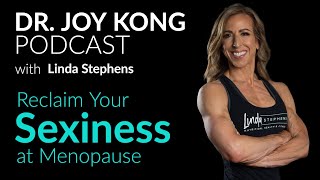
YouTube interview (Dr. Joy Kong with Linda Stevens) about Midlife Mastery: an eight-week program helping women 40–60+ lose weight, build muscle, and regain confidence during midlife and menopause. Topics include nutrition (regular meals, macronutrient balance, plant-forward with occasional clean animal protein), exercise (walking, strength training 3–5x/week), mindset practices (gratitude, small habit changes), hormone awareness and referrals for HRT, and practical lifestyle tips (sleep, hydration, reduced alcohol). Contact via LindaMStephens.com.
Chapters
My goal is to feed you as much as I can and have you still losing weight.
One common theme about weight loss is reducing calorie intake. And that seems to have been the prevailing wisdom.
If you're eating barely anything, your body, your metabolism is going to slow way down because it wants to keep you alive. When they come to me and they're just not healthy because they're just eating a lot of processed foods and drinking a lot of alcohol, just fixing that makes a huge difference. And they already start to feel better. Their skin looks better, they sleep better.
Hi. Welcome to the Dr. Joy Kong Show. This is Dr. Joy Kong. I am your longevity expert. I'm here to help you look great, feel great, and be great for the rest of your life. So, so it's all about the quality of your life. And I brought together thought leaders and longevity experts here to help you live the best days of your life. And today I have a special guest, Linda Stevens. Welcome to the show.
Thank you, Dr. Joy. I'm really excited to be chatting with you. It was great meeting you at a 4M also.
Yes, yes, yes. It was a lot of fun. So I want to introduce Linda a little bit. She holds a master's degree in clinical nutrition and is a certified personal trainer with the National Academy of Sports Medicine. And she also competed as an IFBB figure pro. And Linda has designed an eight week course for midlife women that's called Midlife Mastery. The program encompasses all the physiological changes a woman goes through, including menopause. And she teaches women how to lose weight, build muscle, and be the best shape of their life. And using positive mindset so that they can exude confidence and sexiness every day. I love that. And Linda believes that midlife should be the best time in a woman's life. So, Linda, I am dying to hear what you have to share so you can make more women happy and strong and feel sexy. So maybe you can, you know, tell us a little bit about your journey. Like, how did you even come to this point? Why did you design the program?
So I really quick. In my first life, I like to say I worked on Wall street in New York City. I was an equity sales trader. That's my, my first. What I did when I graduated from college, I was in business finance. So I did all that. It was awesome. In the 90s, everybody was happy and making money. And then I had children in my early 30s. So I stopped going to the city because it was just too much. I wanted to raise my kids, but I always worked out. I Always exercised, I lifted weights. I did it through my pregnancies, made it super easy to have kids and bounce back. And a friend of mine owned a few corporate gyms in Stanford, Connecticut, where I live right outside of Stanford. And she said, you know, why don't you, you love to work out. Why don't you just get your certification and come and teach a couple lunch classes from me? I have, you know, a group of people that like to come in at lunch and do a 45 minute exercise class. So I decided to take her up on it. So I. That's when I got my NASM certification and I just started teaching some classes. And then it just kind of snowballed. People were like, hey, do you do personal training? Would you ever, like, could I come down and do a session? I'm like, yeah. And then it grew from there. But then I realized I was really more interested in the nutrition aspect. Like, when we eat food, what happens if we want to build muscle? How do we do that? What do we need to eat? How do we need to live? And I ended up going back to school in my early 40s to get my master's degree in nutrition. And then same thing. I kept doing personal training, but I was helping some competitors because I met people from competing and help them get on stage. And then other women were coming to me saying, hey, I really would like to lose like 20 pounds, 10 pounds. And it just, it just created a life of its own until I got divorced in 2017. And I realized, okay, I got to make, you know, it's time to make a living and work full time again and do all that. So it just sort of developed into a Linda Stevens fitness. And given that I am currently just turned 54, but I feel like I can speak to this demographic because I am one and I experience all the same things that they do. So. But I know how I live. So I've just made it a program of, hey, if you want to, you know, you can't do things the way we did that in our 20s and 30s, right? Everyone's women will come to me and say, I have all this weight in my midsection, I have all this weight on my legs, my butt, back of my arms are terrible. So it just became a, well, let's change that. Like, let's eat differently, let's move, let's change our mindset, let's do all these different things. And it's just been really rewarding because I've been able to help so many women. I have clients all over The United States, which is pretty cool. So I decided to package it because I can help more people in a group than I can one on one, because it's just one of me. So midlife mastery sort of came about because I was just talking to my business coach one day and I'm like, you know, I should be like a midlife master or something. And he was like, wait, what'd you just say? And that's like, really how we created it. He's like, you know, you can do more with a group, you can touch more women in a group than just one on one. So that's what I'm evolving into now. I have a lot of one on one clients that I work with, but what I want to be able to do is offer it to like 15, 20 or more women at a time.
So what do you see as the biggest challenges that women in this age group face? I guess women over 40, right? That's, that's what you're, you're targeting over 40, under 60 somewhere there.
Yes. So when I get women that come to me in their 40s and have, you know, fair amount of weight to lose, it's always, it's great because they're still young enough. Like, it's still, I mean, you're Young in your 50s too. I don't mean it like that, but I mean, a lot of them haven't gone through menopause. Maybe they're knocking on the door of it. So it's like, you know what, let's, let's get you into a better place, you know, physically and mentally before you sort of start to go into the menopause, you know, cycle, because you'll, you'll be able to handle it better if you get that weight off now, if you get, you know, get yourself in a better place. And then the women that I have that come to me in their 50s, a lot of them are, will say, you know, I've just got all this extra weight and I don't, I don't know what to do. And also because we had that two year pandemic, a lot of women, a lot of people in general, but women, because that's what I'm working with, drink a lot of wine, a lot of alcohol, ate a lot of food. You know, everybody was home, people were just eating. So there's a lot of, there's a lot of people that just need help because it was a rough two plus years of, you know, being locked down and not people just were drinking, like, hey, I guess it's time to have a couple glasses of wine. So. But that doesn't help them because if they're in that menopause, if they're in that area, they're having hot flashes, night sweats, they can't get the weight off. They need to change behavior. So people need help. So it's been rewarding to be able to help them.
So why do you think women face such difficulty with weight loss? I have met plenty of women who say, I barely eat. I eat so much, so little. I should be really skinny. And, you know, nothing I do can help. What do you say to these women?
I get that. I hear that a lot. I barely eat anything. I eat breakfast. I don't eat again till dinner. But the problem is, and I'm sure you're aware of this as a doctor, is that their metabolism is going to adjust. It's going to adapt to what they're doing. So if you're eating barely anything, your body, your metabolism is going to slow way down because it wants to keep you alive. So when I tell people, I'm like, well, that's the problem, is that you're not eating enough. So it's getting them back into a place of, you know, eating a little bit maybe every few hours to just get their metabolism used to taking in food and burning it for fuel and, you know, getting them feeling energized. Usually they feel kind of tired. They're sluggish because their metabolism has slowed down and they just don't have the energy. So when I. They're always nervous because they'll look at what I. What I give them, and they're like, are you sure I'm not going to put weight on? Like, they get very, you know, I hear that all the time. And I'm like, trust me. I'm like, we're going to. We're going to go three days, and we're going to, you know, I'm going to track you for three days. We're going to watch everything. Don't worry. You're not going to put on, you know, £20 overnight. It's not going to happen. And, like, they'll do three days. Three days, and they start to lose weight. A pound, two pounds. By eating more? Yeah, by eating more. My goal is, Joy, is to feed. I told my client this time, like, my goal is to feed you as much as I can and have you still losing weight. Like, that is a great place to be. Because they're always like, when should I. Are you going to, like, cut calories or what are we going to do? And I'm like, you're losing weight on what you're eating. We're not doing anything. This works. This is what we're doing.
One common theme about weight loss is reducing calorie intake, and that seems to have been the prevailing wisdom. So at what point do you think that, okay, we need to cut calories for you, and what point do you think we need to increase the calories?
Usually, like a general, I call them general population clients. They're usually not eating enough. And if they are eating, they're usually eating the wrong things. A lot of them are eating processed foods. They'll have a coffee and bagel for breakfast in the morning, or then they kind of don't eat all day long, or they'll grab a sandwich at the deli, or then they come home at night, they're famished, so they're eating everything in the cabinet while they're making dinner. So usually it's just correcting that behavior and just giving them nice, consistent food every few hours. Good, clean foods, clean proteins, vegetables, carbs, a little bit of fat, and I will cut a little bit. If they start to reach a plateau where they kind of level out a little bit, I might move some things around or take some things out for a few days and then sort of poke their metabolism and it starts to move again. Sometimes I give them a little bit more food, and then that makes them lose a little bit more weight. It's very interesting because everybody's so different. So I have one client that I, you know, she starts to level off a little bit, and I feed her. I give her, like, a steak and some potatoes and vegetables, give her, like, a little extra food. And then she starts the next day, she's down. She's like, how does. How do you do that? I'm like, I'm not doing it. But that's just how she responds. So, you know, I want to get people to a good place where they can lose the weight, keep it off. Their metabolisms, work efficiently. So now if you go out to dinner and have a little something extra or a little piece of dessert, it's not like you're not going to put five pounds on overnight. They're going to metabolize it, but they also have to move. They've got to exercise, so they've got to get some kind of cardiovascular exercise. About 30 minutes a day, five times a week seems to be pretty good. And you got to, you know, you got to lift some weights. It just. It all they all those three components work really well together.
Yeah. What do you think of just walking? I mean, walking. Supposed to be amazing.
Walking is awesome.
Can they just do walking instead of all these cardio?
Yep, you can totally walk. I mean, I always tell my clients, walk like you're late for a meeting so that you're like, you're walking at a pretty good clip. You'll get your heart rate up a little bit. Definitely. I walk every day, actually. I walk usually for about 30 minutes or so every day. So. And it's, it's, you know what else is nice about it? It's therapeutic. You know, I always tell people, don't listen to, don't put in earbuds, don't take your phone, don't talk to somebody. Like, go walk, clear the cobwebs, feel the sunshine, get the fresh air, hear the birds, you know, like use it also as therapy.
Yeah. So you designed a eight week program. And how does this eight week program work?
So it's, I've broken it up into modules and I start with an intro the first week and just talk about all the things that we're going to go over. And I go through midlife eating, I go through midlife supplementation, I go through midlife exercise, strength training, I touch on hormones, like the major ones, and how things change. Estrogen, progesterone, our appetite hormones, and you know, oxytocin, cortisol, I go through all that stuff, insulin and just in very general terms, but so they can really understand how their bodies operate. Like when you eat something, what happens? And then I'll go through mindset and life balance, maybe practicing meditation. And then towards the end, I wrap it all up together so that they walk away with a good comprehensive eating program, exercise program that works for them. You know, maybe some supplements they might want to add in at this point in their lives. And then really understanding how to take time every day to just practice gratitude and you know, just get outside and just, you know, relax, meditate, count your blessings. It sounds so simple, but it really does work when you kind of feel like you're maxed out and then you realize, okay, you know what? I have food, clothing, shelter, I have the basic necessities. I'm good. I can deal with all the BS that's going on.
Yeah. So the hormones, you're trying to get people to understand the basics of hormones, but what if somebody has the midlife estrogen deficiency, progesterone deficiency? What do you suggest to them if.
They'Re having, if they've Done blood work, which I always love when people. I always recommend that just because it's good to know what's going on. And if there's some real serious imbalance or it's a little bit beyond my scope, I definitely will refer them maybe back to their ob gyn or there is a doctor here that's local that does bioidentical hormone replacement therapy. And we have some good practitioners around here that I may say, look, we've tried these things, but maybe you need to have a consultation here with someone that's, you know, has more information on bioidentical hormones or whatever it is if I feel like it's, you know, truly beyond my scope. So.
And how do you. So losing weight is. Is one of the big part. And then I think it's all tied in together. The hormone balance and. And the strength training. Right. So the strength training can help improve the hormone balance and the weight.
Definitely. And as you know, too, I mean, women, a lot of them don't realize this too, is that, you know, we need a certain amount of testosterone too, in our bodies. Not just, you know, estrogen and progesterone and all the other hormones are super important. But, you know, the testosterone is what helps us build our muscle, retain our muscle, you know, our libido. All those things are, you know, just that confidence. But definitely strength training. And, you know, women are always afraid that they don't want to get bulky. And, you know, I hear that a lot, but I always try to assure them that that's really. It won't. Doesn't happen that easy because there are. I've been trying to build muscle for years, so, you know, I mean, it just doesn't. It takes a long time and a lot of work. But I do want them to go in and push themselves and lift a little heavier and just build some strength. It's not a bad thing. Having muscle mass is good because you're always metabolically active. Muscle will constantly be burning calories. Fat just sits there. So if you decide you want to take a rest day and you're watching tv, your muscle's still working, your muscle's active. So it's a good thing to build some muscle and build some shape to your body, too. I believe most women like that. Most women will notice another woman that has a nice set of arms or if you're wearing a sleeveless top. And you do, you probably do too. When you see a woman that you could tell, like, wow, she probably works out because she's got. I can see Some shoulders, I can see some triceps, so. And I think a lot of women admire that, so. And a lot of them don't think that they can do that or get there, but they can. You can make changes. You can definitely make changes. You just have to, you have to do the work.
So do you think you need to take breaks between the strength training? Can you do it every day? Is that a good thing?
I recommend five days a week. If someone has the time to do that. I would normally. If someone doesn't have a lot of time, I like it if they can at least get three days in. So if they could do, you know, Monday, Wednesday, Friday, Tuesday, Thursday, Saturday, however they want to break it up, three days is good, but if they can do five, that's better. And I do like two rest days in there somewhere just because I think your nervous system needs a break and you know, you don't need to do it every day. We don't want to over train either. We can always. What's the expression? Too much of a good thing. So, you know, I think you could do sometimes what I'll recommend is like maybe three strength days and then, you know, maybe four or five days of cardio so they could walk, strength train one day, you know, do some cardio the next day and just kind of layer it too so that they can find the balance. Find the balance. But the cool thing now is a lot of people built home gyms during COVID because they weren't going to the gym. A lot of people are still working from home or do some kind of a hybrid. So they're able to either work out in the morning at home or go to a gym or. So they can. People, I think, have a little bit more time now to exercise too, given that they can still do a combo of home and work.
So what kind of results have you seen in these eight weeks for women?
I've seen really good results. And the thing is, if someone has a lot of weight to lose, sometimes they'll stay on as a client and we'll continue to work together. But it gives them a really good blueprint to walk away with so that they, they know how to eat, how to, if they want to have like a treat meal or a little something extra like they know. I try to teach them how they can add that stuff in periodically. You can't eat, you know, you can't hit the drive through every day. You can't drink a bottle of wine every day. You can't, you know, but maybe on the Weekend, you want to go out to dinner with a husband or friends and you want to enjoy a meal and a glass of wine, like be able to do that stuff. But then know the next morning like you've got to go back to your clean eating and your exercising and that and that lifestyle. So. And I tell them, you know, it's not super sexy. I say my favorite expression is food is fuel. It's not going to be, you know, a. What do I always say? It's not going to be a culinary experience at every meal. So sometimes for me it's grilled chicken, string beans and a little avocado. I eat it and off I go. I just keep moving. So it's just a matter of giving your body food and fuel so you can keep going and then enjoying some of the little special things here and there. But it can't be all the time.
So for menopausal women, this particular population, what kind of diet do you think are particularly suited for them?
I like, you know, I've listened, you know, we were at a 4m a few weeks ago in Miami and listening to all those amazing doctors. You know, some of them are, a lot of them are really into more plant based and then some that I listened to were more of a Mediterranean base and then others, you know, one woman I was listening to, I forget her name, she was a dietitian, but she was, you know, she liked using animal protein also. I have come the way I like to do things. I like to incorporate all the macronutrients so that people learn how to live and eat in the real world. I mean if you could do keto and paleo and there's a lot of different types of diets out there you can do. But I don't feel like they're sustainable. They do work. If you do them right, you can lose weight because you know, people will say, well I know so and so did keto and lost 30 pounds. But then they put some of it back on once they started eating pizza again or whatever. So I want to teach them how to eat protein, carbs and fats at meals and what portions they should be having. So that is really important and everybody's different. I do have vegan clients, but I feel like at this point in a woman's life, I feel like we need a good complement of all the macronutrients. I think some carbs are good. You know, I don't over carb people, but there are some key ones I like to use, you know, oats and sweet Potatoes or, you know, rice, you know, maybe some whole grains, like an Ezekiel bread or things like that. But you know, a little bit because it just keeps you fueled and keeps you feeling happy. So. And good fats and good proteins, good clean, organic. Now that, you know, with the world we live in now we got to use like grass fed beef, organic chicken, things like that. Wild caught fish. It's important, but I think we need to have a little bit of everything. I know that there's a lot of research on balancing hormones through doing more of a plant based diet.
Well, I think the consensus is that plant based is good. And once in a while you eat a little bit of clean animal protein. That's fine. Of course there's a whole camp of encouraging people to eat very high amount of protein.
Yep.
I don't know if that's necessary. That's certainly not supported by, you know, all these long living populations. You know, that wasn't part of what they do.
Right.
So. But you know, science could progress. We'll see, we'll see about long term effects.
How do you, how do you eat? Like what's your. Are you more plant based or.
Yeah, I try to be plant based and at home. Yeah. When I go out to eat, I do once in a while. You know, I love seafood and last night I just had a grass fed steak for the first time. I don't know for how long was.
Your digestion okay with it given that you hadn't had it in a long time or were you okay?
It was okay. I didn't eat a, you know, a whole lot, but. But I think my system was feeling probably a lot happier when I was eating just plant based, you know, my own, you know, stir fries or salads. I think that's. It just feels so clean.
Yeah, I get it. What, so what do you incorporate for proteins?
I use tempeh. So I love tempeh. What I do is that I cut them up into tiny little squares and then I flavored them. I will use all kinds of spices and a little bit, you know, hop, you know, cayenne pepper and I even put some apple cider vinegar. Vinegar. Just. Yeah, maybe amino, you know, the liquid Amino.
Yes. Yep.
Making it very flavorful. I marinate it and then I saute it and I put it on my salad. It feels like I'm eating this very flavor flavored cheese. Really, really, really satisfying. Yeah. So that is a trick I found that's just, just super satisfying.
What, what do you eat for breakfast? I'm always, I'm Just always curious because.
Oh, I don't.
Okay.
I do intermittent fasting.
Okay. So what time do you start eating?
Probably around noon.
Okay. And what time's your last meal?
Usually I try to cut off at 6, and if I'm a little hungry after 6, the then I will probably just eat a piece of fruit or something really light, possibly a green smoothie. Yeah, that's about it.
I think it's always good to just have experiences. When I was competing, I've probably done a keto diet where I was just eating fish and asparagus and fat and that was about it. Probably olive oil, coconut, usually MCT coconut oil, but so. And that clearly worked. But it's not something I really want to do forever. But it'd be interesting to just try it and see because then you can speak to things, you know, you have experience and you can say, hey, okay, I did this and it worked. You know, this may be, you know, I may get someone that comes to me that really just doesn't want to eat animal protein for lots of different reasons. So it's always nice to have the experience of. Okay. I mean, I have a lot of good plant based recipes that I've put together because I do have women that are vegans. I have great plant based protein powders if that's something they want to choose to add in. So it's good to just be able to have that option. And I've learned a lot about it too. I feel like we're always evolving. So I don't claim to know everything, but what I try to do is at least introduce them when they come to me. And they're just not healthy because they're just eating a lot of processed foods and drinking a lot of alcohol. Just fixing that makes a huge difference. And they, they already start to feel better, their skin looks better, they sleep better. You know, it's, you know, I mean, sleep is a huge component too. So a lot of people in this demographic, they don't sleep well for. Because maybe they're drinking before they go to bed to fall asleep, but then they wake up, but then they're hot or they have a partner that snores or the room's too hot. I mean, there's, there's so many components of tweaking things. And then, you know, some people are just an easy fix. They just need a new. They just need a different way to do things, but they just don't know what to do.
So how do you help people to adjust the mindset? Because that's that's not an easy task.
It's really not an easy task. And people are really stressed out for lots of reasons. So I know what I do for myself. I have some different people that I listen to, and I suggest these individuals to my clients to listen to and just take time. Like, whether you're driving in the car, like, listen to the two people. There are, yeah, two people that I really like a lot. One is Joel Osteen. Well, you may know who he is. And the other one is Mel Robbins. Do you know Mel Robbins?
No.
Yeah, Mel's awesome. And she is. She's probably in her 50s, I think, and she's. She's had a TV show. She's, you know, she talks a lot about mindset and gratitude and changing your. Changing your life by the way you think and how you look at things. And her Instagram is great. You should check her out. You'd like her. And she know she's got. Instagram's great because it's just like two minute little clips of her talking about something. But. But everything she says resonates. It'll resonate with me. And every now and then it's something like, wow, that's good. And I'll, you know, I'll share it with my. My women, my followers. But she's wonderful. So it's getting them to, like, listen to people like that and just talking to them about, you know, just being grateful. And I think sometimes we forget. I do it sometimes, you know, you kind of forget sometimes all the things that are good in your life, you know, but it's really easy to focus sometimes on that one thing that either didn't work out or, you know, if you have kids, maybe your kids, that one kid's driving you nuts. And that's all you know, or, you know, whatever it is. If you have a parent that's maybe not healthy and you have to take care of them or just things that happen. I tell them, I'm like, every day you really need to just get 5, 10 minutes by yourself somewhere. Go somewhere where nobody knows where you are and just close your eyes and just relax and just think about how amazing you are and the things you've accomplished in your life. We have to pat ourselves on the back sometimes. When I listen to Joel, sometimes he has this one, one talk that he does where he'll say, you got to keep, you know, to, I guess, to date myself. Your Rolodex. He's like, you got to. Every now and then, you got to pull out your Rolodex and just go through the things, your accomplishments and pat yourself on the back and, and just appreciate that. And it does make a big difference because I try to do it every day. But you know, sometimes I know I'm like, you know, you start thinking about all the things that didn't work out or if something doesn't work out, it's important to just appreciate things that you have. And I think pointing that out to people sometimes makes them realize it because I think we get on this gerbil wheel, sometimes we just keep running in.
Place and people think that happiness is the next stop. When I get the promotion, when I get the girl I want, when I make that much money, when I get that car, that's when I'll be happy. And then invariably when I get it, they're still the same self.
Yeah, exactly.
They haven't worked on the self.
Exactly.
So knowing what you already have and just learn to be really content and be appreciative of right here and then whatever comes that just gravy.
Yeah. I think it sets you up too when you have that gratitude or just that appreciation that you're here, you have your health, your family's healthy or your family's safe, whatever it is. I think when things come at you, I just think it makes you a little bit calmer to be able to really deal with stuff and say, all right, let me just take a deep breath for a minute and then figure out how I'm going to handle this situation or whatever's coming, you know, whatever is facing you. And you know, people have this habit too of when they get stressed, they just want to like run and eat, you know, a lot of chocolate or grab a pizza or go to the drive through. It's always interesting when people get stressed, they go for that comfort food. And it was someone at A4M said that people go to sugar when they're stressed because sugar is comfort, it's sweet, and it makes them feel safe. So I thought that was a very interesting analogy because I never thought about it that way, but I guess it's true.
I think people should replace these temporary satisfactions in the mouth by building human connection. So next time you feel like you need to eat something, maybe call up a friend, you know, go for a walk together, go do something, have, go have a cup of coffee, you know, do something that takes you out of that, that, you know, stressful, you know, mold. So. So yeah, I think probably most people are guilty of it. You know, the tendency to self soothe rather than to reach out and actually build connections.
It's interesting how when you can get someone to start thinking about things differently, you know, it's a lot of work. It's definitely like, some people come in to the program, and they're gung ho, and they're like, yes. And then they just fade away, and I never hear from them again. It's really. I always find that so interesting that, you know, I'm like, hey, what's going on? Or, you know, then they're like, well, I just. I wasn't doing what I was supposed to do, and I just felt embarrassed. I didn't want to come back or I didn't want to. I'm like, no. Like, that's what it's here for, is to make the mistakes so that I can coach you and help you get to where you want to be. Like, nobody just comes in and just hits the ground running, and they're perfect from beginning to end. I'm like, that's what it's all about, is coaching you to get you to think differently and to do things differently. I'm like, we all have to start somewhere. You know, Michael Jordan just didn't wake up, and he's an NBA star. Like, he had to work his way up to what he wanted to do, and he still had doors slammed in his face. But it's just, you got to keep going. You got to pick yourself up. It's okay. It's okay to trip, but learn from it. Like, okay, I shouldn't have had that big Mac when I got stressed out the other day. Next time, I'll do something different. Like, let's try this the next time.
So what have you overcome yourself when it comes to this hurdle of the, you know, metlife.
Challenges I went through? I was 40, 47, 48 when I got divorced. So it was, you know, that was a tough time. Even though it was very amicable, it. It's still a scary, stressful time. And I remember, like, I needed just. I needed something to focus on. So I decided to do a competition, and my coach is like, are you sure you want to do this right now? And I'm like, yes, I do. But. So I just, you know, I dieted for three months so I could compete. And. But that just helped me focus on something else that I could control that I wanted to do. And, you know, it's in raising children and all the things that go with that. I mean, it's always something. And, you know, they're a little bit older now, but, you know, it's different issues that come. That come across. And for me, like, being in. Being able to go to the gym and work out and lift and do stuff has always kept me. I feel like if you have a strong body, you have a strong mind. I feel like they go together. So. And I know when I'm lifting weights or working out, that's just when I feel like I'm the clearest in my head. And I talk to myself and I tell myself I'm strong, and I tell myself I can get through things. Like, for me, that's my church, if you will. You know, I just. I like to go into the gym and just push myself really hard, and it makes me just know that I'm strong and I can get through anything. So. And I try to pass that on. You know, people don't have to lift the way I lift and take it to that degree, but it does. But being in there, I mean, it just makes you feel when, you know, when you feel strong, like, you know the feeling, right? You can just. You feel like you can accomplish anything. Like, I got this. I can do this. Keeps you calm in times of hard times. So I feel like that is. I've had clients that have had ailing parents, and they're like, I just. Every day I got my workout in, and it just helped me deal. And I'm like, yes, exactly.
For women who are dealing with, you know, lots of stress and difficulty losing weight, what's your best advice to them.
Right now if they're feeling stressed and they're having difficulty losing weight? I always try to tell them if they can identify one thing that maybe they could do better. Maybe it's just getting some activity every day. Maybe, like you said, taking a walk. Maybe if you can just try to walk maybe five times this week and just see how you feel and try to relax and decompress when you're doing it. Feel the sun on your face, hear birds chirping, whatever it is, like, pick one thing or maybe someone. Maybe you don't drink enough water every day and you feel kind of dry and you don't feel good, you're having a hard time going to the bathroom in the morning or whatever it is. Try to get all your water in every day for a week. Just pick one thing that you can say, I accomplished that, and give yourself credit for it, and then pick one more thing and just take it in. Baby steps. Sometimes it's overwhelming to change eating, and you got to go to the gym, and I got to do all these Things now, I don't want it to be a burden. Like, I want them to look forward to whatever it is. So for some people, it's just, let's just pick one thing and do it for five days and accomplish that. And then we'll, we'll add to it, and then we'll add to it, and then we'll add to it. So that, that's my goal is just get in touch with yourself a little bit and give yourself credit for, you know, drinking all your water or taking a walk every day.
And why do you say that midlife should be the best time in a woman's life? Because I.
That's a great question. And because I think that, you know, we all do stuff we don't want to do, right. In our 20s and our 30s and maybe even into our early 40s. But I feel like in midlife, when you get to that, like mid, late 40s, 50s and something and over, you know who you are as a woman. Like, you know what you don't want to do, you know, the people you don't want to spend time with and the people you do want to like, you know who you are, you know, and that's why I think it's the best time. Because if you could just get, when people are struggling and if they get the weight off and they feel sexy again and confident, it's a great time because they know who they are. And we don't waste time on stupid stuff that we don't want to waste time on because we realize that life is a gift. So I think that's why it's the best time, because you're just, I feel like you're a complete woman and there are so many great female role models in that 50, 60 something space. I always love to look at Christie Brinkley because I think she looks amazing. I mean, I know she's probably had work done, but she looks 60 something years old. And I'm like, I have no problem aging, but I just feel like at this time in our lives, usually your kids are grown or they're in college. And I feel like it's a time for us to flourish again and maybe start that business you always wanted to start or just, you know, you're young enough and still vibrant enough to do anything you want to do. So. So I think that's why it's cool, right?
Fulfill your potentials.
Yes. Yep.
All the God given talents.
Absolutely. And we're beautiful and strong and accomplished and experienced. So I think it's a great time in a woman's life. It should be the best time in a woman's life.
I think that's wonderful. Wow, that's a great note to end on. So how can people find you to work with you?
The best place, the easiest way to find me is through my website, and it's lindamc. Stevens with a ph. So it's Linda M S T E P H E N S dot com. And then there's a little box they can click and schedule a complimentary call with me if they want to talk about whatever's bugging them. And there's no obligation. I'm always happy to just talk to people. So.
Yeah, that's wonderful. Okay, so any. Any parting words before we end the session?
No, I just want to say thank you so much. It was great meeting you at the conference. It was a lot of fun. And, you know, I want to have. I actually have a podcast also, so I'd like to have you on because I want to talk about anti aging and all your products and how are you going to keep us all looking young in midlife so we can be like Christie Franklin?
Oh, yeah, right, the skin cream. Yes, the Char Omni anti aging cream. Yeah.
Yeah. I definitely want to have a. Have a conversation with you so I can. I can interview you and we can all learn about what that is and how it's going to make us look. I always want to look younger, too, so who doesn't?
Right? You know, we all want to just, you know, we want to have that glow. We want to have this, you know, this vitality that's showing through. So. So that's what, you know, the cream can help, the stem cell therapy can help, and everything else that we're talking about can help. So that's what we're all about. We're here about thriving, utilizing this opportunity we've been given, you know, for this one lifetime. I believe there are many lifetimes, but at least this one lifetime, we want to do our best and live our best. So on that note, if you've been enjoying this podcast, please subscribe and like, and I'll be, you know, inviting amazing guests like Linda and keep sharing tips on how we can live our best lives. So thank you for listening.










