Redefining Age: Dr. Jeffrey Gladden's Innovative Approach to Aging on The Dr. Joy Kong Podcast
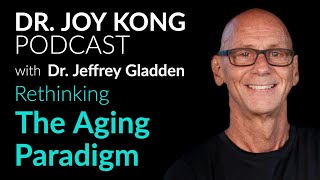
Dr. Jeffrey Gladden, a cardiologist turned longevity doctor, explains why aging isn't one number but many. He measures roughly 60 different biological ages across organs and systems, then uses biomarkers, lifestyle changes, peptides, and stem cells to slow the process down.
Chapters
People think about fitness as you need to do this and this and this, and then you'll be good.
When you're 18, lifting some weights and going for a run gets the job done. But when you're in your 50s, 60s, 70s, 80s, even in your 40s, you know, if you're not training specifically for quickness, we lose fast twitch muscle fibers as we age. So if you're not training those to bring those back online, you lose that.
Hi, everybody. Welcome to the Dr. Joy Kong podcast. Today I'm really excited to have a very special guest, Dr. Jeffrey Glatton. He's a pioneer in the field of longevity medicine, holistic health, and I had great fortune of first meeting his team that was based in Texas. And then now we had a chance to really, I got to find out what he does and the book he wrote and some of the amazing things, things he's involved in. So I want to, wanted to invite him to share his wisdom here so that we, yeah, we all learn from this. So, Dr. Glatton, thank you so much for being on the podcast with me.
Oh, delighted to be here. Yeah, it's great, Joy, thanks for the invitation.
Yeah. So I want to give the audience just a little background about you. So Dr. Glatton actually began his career as an interventional cardiologist in Dallas, Texas, and he had a passion to bring cutting edge cardiology services to people in in outlaying areas. To that end, he built his own heart group and eventually had 10 offices and 12 physicians servicing numerous communities in northern Texas and southeast Oklahoma. He started cardiac catheterization labs, rapid response heart attack programs, heart arrhythmia programs, and congestive heart failure programs for outlaying communities and hospitals. He was also responsible for co founding the heart hospital Baylor, Scott and White in the northern suburbs of Dallas. In addition, he continued to be involved with several medical devices and pharma setups. So what's interesting is that Dr. Gladden, I'm sure will go into depth with about his encounter with his own mortality in his 50s and went through a two year journey to crack the code on himself. This came with a new realization and new questions to drive his new consuming passion. He left his cardiology group and through the years developed Glatton Longevity, which is a clinic and research center for life, energy, health, longevity and performance optimization. Their consuming passion is to help clients turn back the clock and lead their best lives. Now he's releasing his first book, making 100 the new 30. So I can't wait to get into all these subjects. Yeah, Dr. Glatton. So maybe I can start with the question of how were you taking care of your health when you were a cardiologist, since you were supposed to be really taking care of people and optimizing them and so what did you do for yourself?
Yeah, that's a great question. So, you know, I was always an athlete, and I. I played some basketball, played some soccer. I played in college. I played freshman soccer. I wasn't able to continue on the. On the soccer route in college because of the chemistry laboratories cutting into practice time. But. But I've always been athletic and I enjoyed that. And even when I started medical school, I would run in the evenings. Like, I would, you know, get up, go to class, study till about 11 o', clock, and then finish the day by going for a run through the streets of Philadelphia. So I went to medical school at Temple, and I really, I've always, you know, been in good shape. But then, of course, you get the last two years of medical school, there's no time for anything except, you know, the rotations and being on call, et cetera. And then from there you go into an internship and then residency and then fellowship. And so, you know, I kind of followed the path that many people do, which is we end up sacrificing our health for the sake of our professions, building a family, etc, and so really, I had a big wakeup call in my 40s when I went out to go for a run. And I could only run two blocks, right? And when I was playing soccer, of course I could run all day. And so I had to. I had to stop after two blocks, and I was like, oh, my gosh, this has really gotten out of control. So my first, you know, kind of brush with my own mortality, so to speak, or my own physicality and the loss thereof was. Was in my early 40s. So I. I started riding a bike to work. I started taking the stairs, I started doing some runs, and, you know, three months later, I was able to run three miles. I was biking 25 miles on the weekends and things like that. So I was able to get back into, quote, unquote, shape. But the interesting thing is that when I got into my 50s, what worked in my 40s was no longer working. And this is one of the things that the audience needs to understand is that just because you know how to get in shape when you're 18, doesn't mean that's going to work when you're 40. It doesn't mean that what you did in your 40s is going to work in your 50s. And so you have to be constantly adapting to stay where you want to be. And so in my 50s, you know, I started putting on weight. I was getting some brain fog. I would have loss of energy that was really quite dramatic. Very hard to get out of bed. I had all kinds of things going on. And when I would come under a lot of stress, I would become anxious, and then I would feel myself just go over a cliff of depression, right? Like, it's not like you could talk yourself out of it. You would just be depressed. And so I went in and got checked out in my. In my early 50s. And that's when I was told, hey, you know what? Everything checks out for your age. You're just getting older. Why don't you take an antidepressant? So that was an incredibly existential moment for me because now, you know, I'd gotten in shape in my 40s. Now I'm a snowboarder, a mountain biker, you know, still running. I've got kids, you know, we enjoy lots of activities together. And now it's like, oh, my gosh, it's going to be downhill from here. And it's like my dad died with dementia. So it was like, okay. I mean, is this. Is this the path that I'm on now? Is this what's going to happen to me? So I realized at that point that sick care, you know, that I've been trained in, that we were trained in, was really failing me. And so I went out and. And threw myself into age management, functional integrative medicine. And then two and a half years later, I figured out, you know, everything that was going on with me was subclinical hypothyroidism, not picked up in blood tests, only picked up with biometric testing, like a resting metabolic rate or reflex testing. I figured out that I was hormonally depleted, which I didn't know. I also figured out that genetically, I don't make certain neurotransmitters very efficiently by. I don't methylate very well. And this was part of my anxiety, part of my depression. I had some very specific supplement needs that not everybody has. And then when it comes to feeling tired, the thyroid was a piece of it. But I also don't convert inactive thyroid T4, thyroid, it's called, into active thyroid T3 in my brain very efficiently. So until I got on T3 and T4 in combination, you know, I didn't feel great. And. But when I did get on these different things, some testosterone and DHEA and T3 and T4 and the right supplements. All of a sudden it was like, holy cow, I feel great again. I feel fantastic. And I'm like, you know, here I was two and a half years ago looking at a pathway of decline and making peace with aging. And now I feel great. And so I, I, I can't bring myself to practice sick care anymore. I want to do this. This is too help people feel great. So anyway, that was really the, the, the stimulus for, for making the switch. And that's kind of how I got into it.
Wow, that's fascinating. Yeah. I don't think many people talk about how what may work in your 30s and 40s may not work for your 50s.
Yeah, exactly.
People think about fitness as a, you know, set, right, you know, route, you know, that you need to do this and this and this and then you, you'll be good.
Yeah, but it's, it's really, it's nothing. It's anything but that, quite honestly. So, you know, what does it mean to be fit? Right? What does it actually mean to be fit? Well, our definition of it is you're fast, agile, strong, quick, balanced, right. With great cardiovascular endurance and great recovery. And when you're 18, lifting some weights and going for a run gets the job done. But when you're in your 50s, 60s, 70s, 80s, even in your 40s, you know, if you're not training specifically for quickness, we lose fast twitch muscle fibers as we age. So if you're not training those to bring those back online, you lose that, you know, balance gets deteriorated. And really, when you're, when you're exercising, what you're really training is your nervous system. We, we always think about while we're training our muscles, we're building our muscles. Well, guess what? The muscles are nothing without the nervous system. And you know, just look stroke patient, right? They can't move their arm at all. So it's really the nervous system that we're training and it's neuromuscular performance and it's this item called proprioception where you know where you are in space, right. So that if you do fall, you don't get hurt and you don't fall like you normally would. So if you're not doing balance training, dynamic balance training, and neuromuscular reaction time training and all these things that, that your brain has the capacity to benefit from. It has enough neuroplasticity to stay young. But you've got to, you've got to feed it the right stimulus to make it stay young. And again, you don't need that when you're 20, but you do need that as you get older. And if you're not in a program that's basically assessing you to understand where you are in this whole spectrum of things and then prescribing the right exercises for you, if all you're doing is I'm getting on the elliptical and I'm lifting some weights and I do yoga, it. It's just not going to get the job done. It's so much better than sitting on the couch. It's lovely, it's wonderful, but it doesn't make you young, right? And so our whole goal is to live young for a lifetime. That's why 100 is the new 30. And so we want to live young for a lifetime. So I'm, I wake up 27 every day, just, just so you know.
That's fantastic. So, so you wrote the book, you know, making 100 the new 30. What, what makes you feel that we are there, that we, we can actually do that?
Yeah, well, I think we are there. So the full title of the book is 100 is the new 30. How playing the Symphony of Longevity Will Enable Us to Live Young for a Lifetime. And the biggest problem that people have when it comes to longevity is that it's kind of an abstract term to begin with. Nobody really knows what it means. Like, every picture you saw of somebody that's 100 or 110 years old or 120, it's kind of like, I don't know, that's not really what I'm going for. Right? And so, so this idea of longevity, right, is kind of an abstraction. And yet we know what it is to be young, right? We all know what it is to be young. And what we value about ourselves is our youthfulness, right? How we look, how we feel, how we move, what our energy levels are, how we perform, you know, those are the things that we really value. And so it's like, okay, well, why don't we just live young for a lifetime? So then the question becomes, okay, well then how do we get young? How do we, how do we know how old we are? Which is. We have many assessments for this. You're not just one biological age. That's a big misnomer. Okay, well, I had my DNA methylation age tested and it said I'm five years younger. So that must be good. I must be doing good. That's, that's also a big, big, big falsehood. If you don't know all of Your ages, what's your blood vessel age, your heart age, your brain age, your gut age, you know, your, your thyroid age. If you don't know all those ages, your bone age, then you really don't know where to, you know, put your focus, so to speak. So really important to, to understand that in, in our world, this, this living young as opposed to just trying to get old gracefully became really kind of the mantra. And so we have whole strategies to do that. And I think one of the biggest limitations that people have is that they, they, you know, longevity is an abstraction, but they also don't actually understand the aging process itself. What I mean by that is that most of us don't understand the game that we're playing. I just did, I just gave a talk, and I was talking about the 26 billionaires that died in 2022. There were 26 billionaires in the world that died in 2022. And what did they die of? They died of the exact same things everybody else did. Cancer, kidney disease, heart disease, metabolic disease. And there was one suicide, interestingly enough. And they. How much extra time do they get? They have billions of dollars, right? How much extra time do they get? Well, the suicide was 54 years old, so that skews it a little bit. But if you, if you include the 54 year old who died, they got three and a half extra years for all that money. If you take them out, they probably got about six or seven extra years. Okay, so you have billions of dollars, you get six extra years. And what's the quality of those years? Well, they're suffering from the same chronic diseases as everybody else. So what did they actually get? Right? So people are playing a game of accumulation. I need to accumulate money, because that's the game we're playing. That's the metric of how we measures, quote, unquote, success. Okay, well, how, how good is that construct? Right? How good is that construct? How valid is that construct? So here's the, here's the main thing. We also think that aging is linear, right? We think that every year it's another birthday, get a little bit older. I don't look that much different. I don't feel that much different. It's a linear process, but in actual fact, it's exponential process. It accelerates exponentially as we go through time. For example, people age so much more between 70 and 80 than they do between 30 and 40. So much more. And data out of Stanford shows that people age between age 63 and 78 is a massive increase in age in the aging process, there's actually the first big up to youth actually ends at age 26, and there's a big uptick in aging leading up to age 34. So people age a lot between 26 and 34, quite honestly, which is really fascinating. And then they continue to age throughout their 40s and 50s and their upticks at the end of the 50s and over 60, and then it really accelerates, like I said, at age 63. So we have this perception that it's linear. And even though we see people around us that deteriorate quickly right later in life, we have a very hard time imagining that that's going to be us. So we're at a disadvantage. Here's the other thing. If I were to ask you, okay, what are you going to be like 10 years from now? What are you going to be like 15 years from now? It's very, very hard. Or if I ask myself that one, or the audience. Audience ask yourself, what are you going to be like 10 or 15 years from now? It's very hard to imagine that we'll be any different than what we are. It's almost impossible, right? It's impossible. You can't. You're smiling. It's almost impossible. So we're in a game that we can't feel. We don't feel that we're going to be any different in 15 years. We're in a game that we misunderstand. We in a game that we think the goal is to make money, but it's obviously that's not the answer. So we have all these misconceptions of the game that we're actually playing. So that's the first big hurdle, right? That's the first big hurdle, is we don't even know what game we're playing. And so we end up with all of these linear strategies to an exponential problem. So a linear strategy would be, well, I'm going to get healthy, I'm going to. I'm going to eat better, I'm going to get an exercise, I'm going to get a whoop, I'm getting a aura ring, I'm going to sleep better, I'm going to learn how to meditate, cut down my stress, decrease my alcohol, get a. Get working out, and that's going to be the answer. And those are all lovely. They're all great. But it's a linear response to an exponential problem. It only works for so long. Just like the way you trained in your 30s isn't going to really be the right way to Train when you're in her 50s. And so if you don't have an exponential strategy for an exponential problem, you're in trouble. Right. So what we do at Gladden Longevity is to deconstruct the problem. Deconstruct the exponential problem in. In massively deep ways, quite honestly, and then construct an exponential program for the individual to counterbalance where they are so they can get young, stay young, and live young for a lifetime. So that's the idea.
Wow, this is so interesting about the. The varying rates of aging as we. We age. That's a fascinating subject. So how did you find out about this different rates of aging?
Well, he's just reading. You know, it's in the literature, first off. It's all around us. But as you start to look at it and you start to understand what are the hallmarks of aging, Right. Which are sort of two sides. One is that there are phenotypic expressions. A phenotype is. Is kind of a physical expression of something. Right. So genetically speaking, phenotypically, I don't have any hair. Right. So that was genetically passed down to me. So that would be a phenotypic expression. So you have a phenotypic expression of aging. And the hallmarks are phenotypic expressions of aging. But they're also. The drivers, are also related to the actual biological drivers of aging that are driving the aging process. What happens is those processes, right now, we're up to about 16 of them. Those different processes link together in ways where they start to amplify each other. So your body can tolerate some of the aging process, but as it goes along and more of it accumulates, it starts to amplify itself, and the next thing you know, it's accelerating the entire thing in this exponential way. And that's why it's an exponential process.
A very dynamic process.
Very dynamic process. Yes. And so for the audience, you need to understand that you're in a very dynamic game. You're in an exponential game. And if you don't have an exponential strategy, you know, then you'll be. Your. Whatever you're doing will work for four years, five years, eight years. But then it will be swept to the side as this. These drivers of aging, which have not been addressed by your linear strategy, you know, continue to progress.
Yeah. Well, before we go on to the. Maybe some of the exponential strategies, I'm just curious. When you. I assume you test for biological age in your practice, right?
Yes. Many biological ages. Yeah, probably 60 of them. Yeah. There's. Everybody has at least, you know, 60 ages, right. That we can measure directly. Huh.
So I mean, one of the, you can correct me if you don't think that's true, but a lot of people believe in the test true age because as tests for so many methylation markers and have great algorithm, what are your thoughts on that particular test?
It's one biological age. So it's one biological age. And so when you do true age and you get your DNA methylation age, that's great. Okay, fine, but let's, let's, let's look at your brain, let's see what your brain looks like. Let's do imaging of your brain, do EEGs of your brain, do cognitive assessments of your brain. How young is your brain? Right, or how old is your brain? It, it can be divergent significantly from your DNA methylation score, right? How old are your kidneys, how old is your heart, what's your cardiovascular system, what do your blood vessels look like? You can have a great DNA methylation age and still have arteries that are, you know, are going to be a problem. And, and then the other thing is cancer risk, right? So you can have a good DNA methylation age and still be harboring cancer. So if you're not looking at all the different ages, all the different components, if you're just relying on one test, it's like running a business and saying, okay, well, we're going to look at one metric to, to analyze how well the business is doing. We're just going to look at cash in the bank and if we just have cash in the bank, then the business must be doing well. When, when everybody that is involved with the business knows that's, you know, that's one metric. But you've got to know a lot of stuff, right? You've got to know, you know, what's the accounts receivable, what's the inflow, what's the cash flow, what's the, you know, what's going out, what's the payroll, you know, what's the marketing cost, what, what's the revenue every month, you know, you know, what's the bad debt? All. If you don't know all that, you can't really optimize your business. And if you don't know all the mosaic of ages, you can't really optimize your health. You just can't.
Wow, that's a great analogy. So how many ages do you test in your.
About 60.
Wow, that's incredible. So I assume you hand pick different age to test for different patients?
It depends on the questions that people are Asking, right? So we have different programs depending on what questions you're asking. So if somebody's asking, well, how old am I? Right, Then we can work with them for about three months. We'll do quite extensive testing for them to give them a sense of where are you with regards to all these mosaic of ages. Where am I? I think I'm doing pretty good, but I really want to know, you know, this is important to me. I've got a lot to live for. I've got lots of plans and I need to know where I'm at. Okay, good. We can do that. Here's where you're at, here's where your assets lie, here's where your liabilities lie, and here's your path forward if you want to start to address this. Right. So, so that's, that's one program. Another program is I want to live young, right? So that's a six month program. We do all that testing, but then we start coaching you, providing you with different things that you need to take or do and coach you on different exercises and things like that. But now we're actually starting to help you turn back the clock and make a real difference in the areas that need to be addressed. And then we can reassess at six months. And other people. Our biggest program is Live Young for a Lifetime, which is an annual program. People sign up for a year and they do it year after year or can do it year after year. And there we're actually bringing all the technologies to bear, right? We have a lot of technologies we use that are inside of IRB approved trials to be able to do things that you just can't do otherwise, that have real benefit in terms of longevity. So, you know, we're all in on this, right? We leave no stone unturned. And I think one of the big differentiators between us and most practices is that most practices, they have a technology, they get married up to a technology. You know, take stem cells, for example. Stem cells are great, but it's only one technology, right? And so in our world, we have all those technologies, right? And yet we're not married to any of them. We're only married to the questions, right? How do we live young for a lifetime? How do we make 100 to new 30? And so as things come along, we're iterating constantly looking for the next thing, the better thing, substituting things out, swapping things out. And some things, of course, are durable. Stem cells will never go away. Stem cells are beautiful. They're wonderful, right? You're going to need those. But they're not enough either. Because if you're not addressing the underlying drivers of aging, those hallmarks. Right. Then stem cells are just another band aid, so to speak. So they can do a lot of miraculous things, but they can't solve the aging problem. Right. So anyway, it becomes really kind of a comprehensive approach is what we do. And now we're doing things like transcriptomics and proteomics where we're actually looking at how genes are expressed relative to the hallmarks of aging. And now we're actually creating custom built peptides to go in and modulate genetic expression so that we can actually change the course of aging. So I mean, we are all in on this 100% all in. So.
So this is a IRB research program that you guys using these different peptides.
Yeah. And amongst other things, you know, like young plasma, plasma phoresis, rapamycin, certain stem cell products, protocols, things like that. So many, many things are in there.
Yeah, well, stem cells can definitely do something for aging for sure. You know, as the animal studies are showing that regular IV stem cells are extending the animal's lifespan by about 30% and extending their health span. So they do look younger and. But of course it's 30%, so it's not like 100%.
Right. So that's. Right, that's an animal, it's not humans. So animals always get a bigger, bigger percent boost. Right. The mouse, 30% in a mouse is, you know, 5% in a human. So I mean, you know, 90% in a worm is 30% in a mouse, which is then, you know, 5% in A human. So we have to take all these things with a grain of salt.
Yeah. Okay. So lots of different ages of different organs that you're able to give your patient a real nice overall picture of where they're aging.
That's right. Not only can we give them the ages of where they're aging, but using this new protocol that we have, this new life raft index that we have that's looking at DNA expression, we can actually tell them where they're aging. Right. So people age from different around those hallmarks. People age through different patterns. And so we can actually outline where the, what's the primary driver of the aging for this individual. Right. What's the undercurrent? What's creating that river of aging? So we can go straight at that now. And that's super exciting to be able to go to that level. So I don't know of anybody else that's doing that Quite honestly, yeah.
Can you give an example, what do you mean by where they're aging?
Yeah. So, for example, if you're looking at the hallmarks, you may see that they're. I'll throw out some terms and define them. So one of the, One of the big drivers of aging has to do with proteins, right? How proteins are made, how they're transcribed, how they're folded, how they're disposed of. And there's a term called autophagy that's called proteostasis. And there's a term called autophagy, which is basically where. Where cellular components are, are. May not be in the best shape, let's say. And they're basically recycled. They're basically broken down and recycled. Autophagy and increasing autophagy is a big driver of staying youthful. So there are a number of things that you can do to improve autophagy. But we have ways now to measure how's the autophagy process working for that individual, rather than just saying, oh, joy, I know autophagy is a good thing, so I'm going to give you some things for autophagy, right? Our approach is to say, okay, let's look at how your autophagy is working, and maybe it's working just great, in which case, okay, let's just give you one thing to help it. But we're not going to put tons of concentration there. As we look at other hallmarks, what we say is that, you know what, your ability to repair your DNA is actually hampered. So we're going to actually do some things to actually increase DNA repair for you. That's actually much more important for you than us going after, after autophagy. And then we may find out that you're taking antioxidants, you're doing all this, but you know what you have, you still have significantly excess oxidative stress and inflammation, right? And so we have ways to go in and modulate the genes that are actually driving that. Rather than saying, well, I'll take a few, I'll take more handfuls of supplements, I'll take more fish oil and SPMs and molecular hydrogen and all these good things, we can actually say, okay, you're doing that, but it's not getting the job done, so let us help you go in and actually do this. Right? And so it's that level of precision. That's how it works.
So, so with these methods, have you been able to check the biological age, you know, or all the ages?
Yeah. So the studies are ongoing. So the studies are ongoing. Yeah. The studies are ongoing. We're collecting data now. You know, we have people that have all significantly turned back the clock and, you know, not only functionally, but just in terms of brain or, you know, other metrics that we use. Right. So that's been super exciting for all of us.
So wonderful. Yeah. And, you know, going back to what you said about exponential strategies for exponential aging.
Right.
Yeah. So can you maybe give a little bit more detail about these strategies?
Yeah. So the first thing is that I've created an exponential construct to kind of understand this and go about it. So the construct is that there are four circles that need to be addressed. The first one is called life energy. The second one is longevity itself. The third one is health, and the fourth one is performance. So if you want to live young for a lifetime, you need to be addressing all four of those circles. Right. And so many practices are addressing, well, we're going to work on your health. We're going to work on your quote, unquote, longevity. We work on all four circles. Right. And the reason for that is that the life energy circle includes things like mindset. Right. And in our world, as I mentioned, our practice is married to our questions, not our current answers. And so we find the clients that do the best and have a similar mindset where they're married to the questions and not their current answer. So if they come in and say, well, I know how to eat, I know how to. I know how to work out, I know how to do this, I know how to meditate, it's like, well, okay, but your testing is showing that it's not getting the job done. So are you married to your answers or are you married to the question, how do I actually get young? And if people are married to their answers, they're really already in the backwash, quite honestly, because when. When you have a fixed mindset, you know, the world is changing, the world's adapting. You know this as well as I do. Right. Medicine's adapting. Everything's changing. Your health is changing. The aging process is exponential. If you are not married to your questions and, you know, willing to iterate new answers as are required, you're not gonna. That's. You're not gonna get it done. Right. So that's one mindset. So the other one is having a youthful mindset. Right. So many people acquiesce to the aging process by simply saying, well, for my age, I'm pretty good, or I guess I'm just getting older. I shouldn't be able to do that at my I was told I shouldn't do that at my age. All these. Who made that up? Yeah. Whose construct is that? Right. Who says that's right? Right. So the point is that we want to work with people that have a drive to, you know, ask the right questions, have a youthful mindset, that sort of thing. Then there's other things, like, you know, feeling, feeling loved. A lot of people don't really feel unconditional love for themselves. They have, you know, situations where they're constantly beating themselves up. You talk to people, oh, nobody's harder on me than me. I'm the hardest person on myself. Right. It's like, okay, well, what's that all about? Right. And so, because what that does is it increases stress inside the biological organism, right? And so that accelerates the aging process and it also doesn't enable us to actually live our best lives. So, and then there's mental health issues. So many people suffer with anxiety, depression, ptsd, addictions of one variety or another. Right. And, and so how do we actually solve those problems? So the way I have kind of understood psychology is that really all psychology is related to trauma. And we've all experienced trauma in our life. We've all experienced some traumas in our life, no doubt. And then we are our reflexes to live in reaction to those traumas. So, and then we create stories around those traumas. It's like, well, this happened to me. I couldn't do that because that's not who I am. And we create an identity out of those stories. So I always do this, I never do that. This is who I am. I, you know, this, blah, blah, blah. And we create this fabricated reality of who we are, right? But it's, it's built on traumas and living in reaction to traumas. And so part of living young for a lifetime. Think of it this way. It's how do I have a 300 year old mind and a 30 year old body, right? Or I have wisdom and enlightenment and transcendence above all these things, right? That's really the goal here. So how do we, how do we crack that code? Right? How do we actually go back and heal those, those traumas and then how do we transcend them to the point where we realize that actually nothing ever bad happened to us, that we're grateful for everything that ever happened. We love all the people that were involved and we've completely transcended it. And now we, you know, are able to go forward, right? And then there's things like wisdom and joy and feeling safe is another massive one, right? I find that all anxiety, anger, depression, fear, even excitement is a flip side of this, but is related to not feeling safe. So when people don't feel safe, they live in reaction to not feeling safe, and that holds them back. How many people listening would say, I'm living up to my full potential? Right? We always, we've, we've always learned, you know, we're the ones that hold us back the most. And what's that related to? It's the way we think. It's the constructs that we live with. Well, I couldn't do that, right? I couldn't do this. I would need more of that to do this. Those are just constructs. And, and yet when you get to a point where you can actually give yourself safety, when you can give yourself unconditional love and you can give yourself safety from a transcendent place, all of a sudden it's like, oh, I live in a different universe now. Anything's possible. So for me, I wake up and I have four affirmations every morning. One is that I'm 27. I wake up 27 every day. The second one is that I'm on a, a path to enlightenment. That I really am working in this psycho spiritual space to live a transcendent life to where really I'm unencumbered by past traumas. The third is that I have access to unlimited resources. So you think about it, you could say, well, if I just had another, you know, pick your number. If I just had another thousand dollars, another million dollars, another ten million dollars, Another billion. If I just had another ten billion doll. Anything I wanted, right? I mean, pick, pick, whatever. So here's my take on it. I already have 10 billion. I have a. I have a trillion. I have, I have unlimited resources. No, I live with. I have unlimited resources available to me. And of all the resources out there, money is actually the least important. It's the other resources that are actually more important. But I wake up with unlimited resources. So now I'm 27, I'm on a path to enlightenment, and I have unlimited resources. What do we want to do today? Right? What do we want to do today? And it's really freed me up to step into much bigger activities than I otherwise would have, which is very cool. And then the other, the fourth affirmation is that I'm a loving individual with loving relationships and, you know, a real sense of support for people around me and support from people around me towards me. And so I. Those are my four affirmations. And what it does is it enables me to live a life that's different than the life I was leading before. So if you're going to be around for a long time, is it just more of the same? I'm going to play more golf, I'm going to run another business and try to make another X number of dollars or whatever the deal is. Or is it. No, I actually want to grow as a, as a, as a human being into my ultimate expression of myself and take my health with me and allow this to inform my health and actually live a life of impact where I can impact the planet and the people around me in ways that I never dreamt that it was possible. And so that's a big part of what we do, too, is helping people on that path. So that's the life energy circle.
You have these four affirmations in firming them since Tuesday.
No, I'm just teasing. No, I've, I've been, I've been working on this for a long, long time. Right. I've been involved with. I remember walking down the street when I was three years old actually debating the existence of God and deciding that one day I wanted to become wise. And so really, I've had a lifelong involvement with what I would call the psycho spiritual space. Right. So, yeah, these affirmations. Actually, sometime this last spring, actually, a couple of them dropped in, particularly this one about having unlimited resources.
What difference has it made for your life after repeating these to yourself?
Yeah. So the difference is that I, number one, feel like I live in a, in a fabric of loving support. Right. The universe is here. You know, we're here. There's support coming in. I'm supporting other people. That's the energetic that I bring. You know, this collaborative. It's supportive. I don't have any scarcity in my life. I have unlimited resources. There's no scarcity. So I don't, I don't work out of fear. I don't work out of, you know, anything. Like, what's in it for me? I don't, I don't do that. I work for, for win, win, win, win, win situations. And it's also because I have unlimited resources. Like, oh, okay, well, let's build an international company. All right, sure, let's do that. We have unlimited resources. Let's do it. So that's what we're doing. So it's, it' whole perspective on what's possible and what we're doing.
Wonderful. Beautiful. Yeah. So, so that covers the life energy. That's right. Crucial Components to.
That's right. Crucial. Yeah. And then, then there's a longevity circle itself, which consists of all the different hallmarks that we. That I'm not going to go through every hallmark, but all the hallmarks of aging. You know, telomere lengths and mitochondrial function, proteostasis and autophagy and oncogenic potential is in there for us. And then looking at DNA methylation, ages, excuse me, and rates of aging and things like that, on and on. And so those in a typical longevity practice are never actually addressed. They may measure telomere lengths, they may get an epigenetic age, but they're not actually looking under the hood to see, well, where are you with all these other drivers of aging, right? Where do they actually stand? And so that's what we're doing now is opening up the hood on that and then being able to modulate that with a combination of the custom peptides and other supplements or medications we think would be helpful. So that's a longevity circle, then. The health circle is everything you can imagine. Let's look at your brain, your heart, your gut, your muscles, your bones, your dent. And we have, you know, all the functional medicine approaches to that. Accelerated healing, use of peptides, use of stem cells, lots of things like that. Use of ozone, eboo. I mean, lots of technologies, right? We have TRT pulse, shockwave therapy, you know, ozone saunas. We have something called brain frequency where we can rebuild people's brains. I mean, the stuff we can do is just crazy interesting, right, in the health space. And then there's performance which has to do with, you know, fast, agile, strong, quick, balanced with great cardiovascular endurance and good recovery. And so we test around that. We test neuromuscular reaction times and flexibility. And we teach people how to get into a flow state, right? Because flow states are one of the highest levels of function that any of us have. It's a gamma state on the EEG. You know, there's. There's delta, theta, alpha, beta 1, beta 2, beta 3, and gamma are the different frequencies of brain activity. Delta being for sleep. Gamma's the highest level. Gamma is what happens in people that are really, really expert meditators or people that are in flow states or in gamma. So typical meditation would be alpha. So we teach people how to get to those states, and we have different devices and we have different tools that enable them to do that and experience it. But so it's really, you know, asking this question, how good can you be? Really? How good can you be? How good can your life Be. How good of an expression of you can you be? And how do you. What I call reclaim your birthright, to live your unencumbered set to be your unencumbered self and live your best life. Right. You're unencumbered by past traumas. You're unencumbered by limitations that are all artificial anyway. How do you become unencumbered by that and live your best life? So that's what we're all about.
Wow. Fascinating. So I see you have an approach to longevity that's much more nuanced and detailed than what I've seen so far. Because, you know, what I've seen, I think are a little bit more piecemeal. People are focusing on different markers and different supplements and.
That's right.
Different lifestyle approaches. But this is a very systematic approach.
That's right. And we have all those. We have all those lifestyle. We have all that. They're all important. None of that's not important. We're not poo, pooing anything. They're all important. They're just inadequate. Right. On their own.
Yeah. This is amazing. Yeah. So. So you're the. The center space in. In Dallas. Right. But you are. You're building a global structure.
We're building a global company. That's correct. Yeah. So we're in the process of doing lots of internal work right now, getting ready for that expansion. So that's. Yeah, that's the idea.
Very exciting.
Yeah.
Especially since you have unlimited resources.
Exactly, exactly. Right, right. So, yeah. And you know, people can find us@gladdenlongevity.com if you're interested to find out about engaging with us. You can go to the website and reach out and we'll reach back out and talk to you about different programs we have and things like that. You know, we have some custom supplements that we've developed that we think are incredibly useful. You can see that at the Glad and Longevity Shop. You can find that off the Gladden Longevity website as well. And then we have a podcast also, the Glad Longevity podcast, also referred to as Age Hackers. And so people can, you know, I think we have over 200 episodes there recorded on all kinds of interesting topics. So people will find that interesting as well.
Yeah, that's wonderful. Are you the person hosting the podcast?
Yes, yeah, it's. It's. I host the podcast. I have a co host. I did a podcast earlier today with a gentleman. My co host was out, I think, up in the mountains hiking or something. So it was just me this time. But yeah, it was a fascinating conversation. We go deep. I mean, we go deep on everything. Right. And so a lot of it can get sciency and techy, but we always break it down so the audience can understand it. And then some of it is talking about, you know, some of the things we talk around, the life energy circle and how to opt, strategies to optimize that and et cetera, et cetera.
Yeah. Amazing. Yeah. Thank you so much for the work you do. I think this is a very fascinating discussion, and I'm excited to read your book.
100 is the new 30 is the new 30.
Okay.
How. How playing the symphony of longevity will enable us to live young for a lifetime. And I should probably comment on the word symphony that's in the title. And the reason I use symphony is because, particularly with regards to the longevity circle, it's not about doing the same thing all the time. There's actually a timing, a sequence of frequency and intensity and duration with which different, I call them levers get pulled to work on these different hallmarks. Right. It's. It's not just. Well, here's the thing. We'll just do it every day. It doesn't work that way. The body likes to cycle in and out of different states. And so learning to play that symphony is very, very important. And that's built into our IRB approved trial, life raft trial is that symphonic approach. So that's why symphony shows up there.
Beautiful. Yeah. Thank you, Dr. Gladden. And I hope this has been really, really helpful for a lot of people and really turning lots of light bulbs. And I hope more people utilize just the vast resources that you have brought together.
No, I appreciate that. Yeah. And, you know, you're coming to do a training with us, actually, later in September. So we're very impressed with the technology, technology that you've developed around your stem cells and everything. So we. We love that. And, you know, it's another nice piece, so thank you for that.
Yeah. Well, thank you for inviting me. I very much appreciate that. It's, you know, an honor to. To come and work with your staff.
Yeah, it'll be great.
Well, thank you again and thank you, everybody, for listening.










