Regenerative Medicine with Dr. Joy Kong - Podcast Interview - Chandanni Miglino
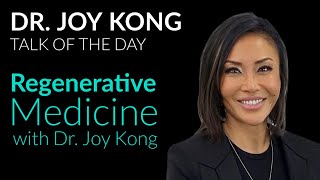
Dr. Joy Kong, a triple-board-certified physician, discusses stem cell types, FDA regulation, and clinical applications for autism, autoimmune disease, and neurodegenerative conditions. She trained in psychiatry and addiction medicine before moving into regenerative medicine at her clinic, Uplift Longevity Center.
Chapters
Hello, Dr. Joy Kong. It is an absolute joy to have some time with you today and learn a little bit more about who you are and what you do.
If you can rejuvenate your system by optimizing them before it has gone into a diseased state, then you really have a great chance of preventing disease and reduce the rate of aging, hopefully even reverse it, you know, to some extent. So that's how I got excited about anti aging medicine. If you can reverse people's biological age by seven years, then you're cutting down chronic diseases by 50%. So if we can keep people younger biologically, then they're less sick. Imagine 50% of chronic suffering are gone.
We all know that you're a triple board certified medical doctor, and we'd love for you to introduce yourself and tell us a bit about who you are, what your specialties are, and how you came to become a physician in these three different specialties that you offer the world today.
Thank you, Chandani. Yeah. So I'm excited to do this podcast and it's only appropriate that I talk a little bit about who I am. So I actually grew up in Beijing, spent my first 20 years there, and then came here. Really wanted to help people with their health and went into medicine at UCLA and realized that I love the brain and I loved dealing with people who have mental health issues. So I went into psychiatry and was a practicing psychiatrist. If you count the residency, that's 11 years. And then went into addiction medicine. I was a medical director at a few addiction rehab centers in Malibu. And then I encountered anti aging medicine. Well, this is, you know, just as a background. I've always been interested in integrative medicine growing up in China. Medicine is, you know, there's no prejudice. There's Chinese medicine, there's Western medicine, they coexist. One may be good for one thing, the other one is good for other things. The Western medicine is fantastic at helping with acute issues, but the Chinese medicine has a much more holistic view on the body, looking at the body as a very complex whole, that you can't dissect one section from the other section without affecting the other system. You're ayurvedic practitioner. It's a very similar philosophy. Already knowing that integrative approach is important. Anti aging medicine is like, of course we can slow down the aging process. If you look at all these different aspects, if you can rejuvenate your system by optimizing them before it has gone into a diseased state, then you really have a great chance of preventing disease and reduce the rate of aging, hopefully even reverse it to some extent. That's how I got excited about anti aging medicine. And I studied with the American academy of anti aging medicine, Went to their courses and took their board examination. Stem cell therapy actually is part of the whole anti aging education. But even before that, before I started the anti aging training, I met this doctor who was doing stem cell treatments using birth tissue derived stem cell products. Umbilical cord stem cell product. And he showed me the transformation this kid had. I forgot how old, but it's a kid in elementary school with autism and with one treatment of umbilical cord blood cells, the teacher was sending him texts showing There are 40 different types of behavioral improvements, Just different things that she noticed. Better ability to pay attention, not as hyperactive, Playing better with kids, you know, speaking better, gaining more language capabilities. It just, you know, like huge gains. And that was very exciting because as a, as a psychiatrist that have seen a lot of autistic kids, I have not seen that kind of response with any of the psychotropic medications. So anyhow, that's kind of like a quick cap on the different specialties and. And where I ended up.
That's fascinating, especially when it comes to chronic illness, that we're emerging into more sophisticated ways of looking at the science and the biology of how we operate and how we function and actually discovering things and redefining medicine as it sits today, which what puts you in such a pioneering and exciting and regenerative space, so to speak. Speak. Thank you so much for giving us the experience and the background that you've seen and what you're excited about moving into regenerative medicine and stem cell therapy. Could you tell us a little bit about the information or the misguided information we are presented with as far as stem cell therapy is concerned with regards to it being legal or illegal to practice in America. Do the stem cells come from fetuses? What kinds of stem cells do you use? Are these stem cells actually have efficacy? Are they dead? According to some people, the umbilical cord stem cells. Could you explain to us what actually is going on with stem cell therapy in America and how you practice it today?
Okay, yeah. If you look at stem cell therapy, really, we didn't know that we were doing stem cell therapy when we first performed the bone marrow transplant in the 1960s, but those were the first stem cell therapies. And later on we realized, oh, there were stem cells in there. And people thought that the stem cells in the adult body only exist in A bone marrow. So that was the conception for a long time. But of course, we discovered, you know, embryonic stem cells. You know, of course, you know, we all came from one single cell, right? This miraculous, you know, living, breathing body at one point was one cell. And what was in that one cell that has the capability to form a. Like you and me. So that was the science of stem cells. You know, it's very exciting to see how these cells start to develop, divide, differentiate, start to form different shapes. Because of the fact that we were looking at embryonic stem cells, there are embryos that were destroyed, and these are from ivf, right? In vitro fertilization treatments, and these are leftover fertilized eggs. Experiments were done on these. So everybody knows that in the US there's huge controversy about this. And some people think that you're destroying life. You are. It's the same as destroying a full human. So that study, not the study, but the destruction of more embryos was banned by Bush, but the research can still be continued because the embryonic stem cells are immortal. You can keep multiplying them so you can keep doing research on them. You're just not destroying any new embryos. That was the start of controversy. Are we destroying embryos then in the US Doing treatments using embryonic stem cells? That's not allowed because it's not legal in the U.S. another reason that I'm not a big proponent of it is that we don't have control, a good control over what cells they become, because sometimes they can form tumors. These are very specific tumors called teratomas. They're uncontrolled growth of human tissue. It could be hair, teeth, whatever, tendons. Everything is all a clump of cells together. It's completely disorganized. And people probably have heard about people going overseas getting stem cell treatments, embryonic stem cells injecting to the back. And all of a sudden you got a tumor, you got a teratoma, you got a strange growth happening at the site of injection. So that is not what's used in the US it has been used in some countries, but definitely not in the United States. So what happened in the United States is that initially people were using cells from the bone marrow. They realized, oh, they're he hematopoietic stem cells in the bone marrow. And they also. The bone marrow also help with bone healing. So a lot of orthopedic surgeons were using bone marrow, using. You know, they're just putting bone marrow at the site of surgery, you know, between the bones. And that helped promote bone healing. So that's, that's great. So that's how kind of how, how it started. The bone marrow sector was the first kid on the block. And some, I'll say 15, 20 years ago, the fat derived stem cells started to come on board. So these are from just our fat tissue. And it's really, when you look at the, how the cells are obtained is not so much that we are getting stem cells from the fat itself. We're actually getting the cells from the blood vessels that are supplying the fat. So they're delivering nutrients, they're keeping the fat alive. But all along these blood vessels, there are these cells called mesenchymal stem cells. You can call them, you know, parasites peri. That's before they become mesenchymal stem cells. They're all huddling over the blood vessels and sensing what's going on in the blood and sensing what's going on in local environment. So they have this coordinating effect. They're always keeping a tab on what's going on in the blood and the local tissue. So these cells can be obtained through liposuction and can be extracted and they can be used for all kinds of therapeutic purposes by injecting back into the body. So that's a little bit of the controversy. And there's a lot recent lawsuit. So a big lawsuit. The FDA was trying to shut down the clinic in Beverly Hills, Dr. Mark Berman and his colleague, but I think just last October, so that's October 2022, they won the lawsuit. The FDA says that you are using a drug, you know, you're using it for all these purposes. You know, you're changing the cells in some ways and you're injecting iv, you know, whatever. You know, different concerns that they have that they're saying you're using these cells as a drug. But the Supreme Court, I think it's a California Supreme Court, basically says no, these are human tissue, they're not a drug. So they can provide the treatment without going through drug studies. Basically they said that's totally fine, you can penalize them. That's an interesting turn of events. That's for the fat derived umbilical cord. Birth tissue is younger, a little bit later than the fat derived cells, but it's rapidly expanding. It's probably the fastest growing among different sectors of stem cells. There's a good reason for it because one, these cells are readily available from any birth. If it's a live, healthy birth, the mother can donate them. The cells are actually a lot more potent. They're more primitive compared to the cells of a person's own. Once a person is aging, Even if you're 25 year old, you have aged quite a bit compared to the newborn baby. But these umbilical cord cells are younger than the cells than the babies. In the babies, the baby stem cells are not as powerful as the stem cells in the umbilical cord. Why? Because when the baby was forming, that's when the umbilical cord, the placenta was forming. Right. So all this was forming along with the fetus. And a lot of the cells were trapped in the umbilical cord. The baby keep developing, but these cells retained a lot of the primitive features that only existed in the embryonic stem cells. They're in between the embryonic stem cells and the baby stem cells. They're more potent and they're also safer in the sense that they don't have the cancer promoting properties that adult stem cells have. There are tissue banks that produce these cells by extraction. So in the US these tissue banks can extract these cells and if they don't manipulate them and they grow, so that means they don't process them using either enzymes or chemicals, and they don't grow them to huge numbers, then they can provide the cells as a tissue transplant. And by the FDA's own guidelines, that is perfectly fine. You don't need to go through drug studies. You're providing a product that's a tissue transplant, no different than doing a blood transfusion. That's a tissue transplant or a liver transplant or kidney transplant. There's no drug studies. These are transplantations that doctors have the privilege to perform. That's, that's why what we're trained for. But if you start to use the cells in certain ways, then the FDA says that you may have to do drug studies. So that's, you know, that's another layer of, layer of intricacy of whether or not cells are used in a fashion as a drug. And exactly what would that look like? You know, what does that mean? If the cells, the cells were taken out of the body and it was processed mechanically, nothing was changed. They were carefully preserved by cryopreservation and they were woken up at the time of treatment. So it was no different than when it was really first obtained from the, from the birth tissue and you're giving it to a person, does that make a drug? So that's going to be a big debate, but by FDA standard, supposedly they said if you're using the cells, these minimally manipulated cells, if you're using these Cells the same way the cells was functioning in the tissue where you obtained it. So it's the same function when you put back in the body then is not. You're not using a drug, it's a tissue transplant. So you don't need a drug study. So that's where all everyone's so caught up. Are we using a drug? If we're using a drug then we have to apply for IND study and that's going to cost millions of dollars and it's going to take years. So that's going to slow down the whole progress. And all these people are sick, they need help. So a lot of doctors are believing that they're performing tissue transplants so they're giving these treatments. In Texas that's stem cells treatment is considered legal. Charlie's law, so there's a huge law that was passed so that's considered legal. In California it's legal as long as you post something, this notice on your door in the clinic telling people that this is stem cell treatment, it's not FDA approved treatment and is considered experimental in nature and that you are aware of this status and you have talked with your primary care doctor, then you can perform the treatment. Does that make it legal? Yes, that's what it means. You inform your patient and the patient agrees and then you can perform the treatment. That's long winded answer about the legality and the history and whether or not there are life cells in them, it's pretty self evident and it makes me laugh that this myth still exists that people were talking about how there's no life cells. I mean how do you argue with a lie? When I've seen third party testing of our products showing that there are life cells. Although as a company that provides stem cell treat stem cell products, you can't talk about life cells because somehow if you talk about life cells and, and the metabolic activity of the cells so you can do therapies with life cells, you just can't talk about the cells being alive because if you talk about them being alive then you're talking about the metabolic activity of the cells. So I don't really understand the logic honestly why if you talk about the cells being alive, that makes it make it a drug. So it's just like completely like it's become lunacy. Right. And, and I have people on social media, YouTube, you know, attacking me for not providing data, but I can't even provide it. I can't even say the cells are alive. I mean it just is absolute insane insanity. It's like, what's the rationale? Why can't the cells be alive? Okay, okay, so they can be alive. I just can't talk about them being alive. It's, you know, how do you argue about this? And then there are people who don't like the fact that, that there are people who are doing umbilical cord stem cells and they're attacking these companies, these clinics for doing these treatments, saying that there are no life cells when there are, when they have been gone through third party testing showing over 90% of viability, when these cells are produced in tissue banks in ISO 5 clean rooms and going through very strict standards. And you know, instead of just being processed in the doctor's office when, you know, when most doctors have no clean room and their process is very subjective, I'm not knocking these doctors, but there's less control in what these doctors produce in the clinic from your own body compared to what's been obtained in the tissue bank that has all the FDA inspections, regulations and have his Smith very specific protocols and third party testing. So it just has become a very crazy space. So that's kind of the short answer and the long answer that now there are lifestyles but we can't talk about it and who knows why.
It's a very revolutionary space. And so we're having to contend with all these adversities and challenges. But you know, they say that adversity is the, is a, is a great gateway to progress and to break the limitations of how we practiced medicine and how we look at ourselves as we age and as we heal. So all the power to you. Can you just end this beautiful introduction of your practice and stem cell therapy with sort of a synopsis of your practice today and what you offer people and what you would like to see more prevalent in your practice as the days and months and years go by.
In my practice, I would say 75% of patients come to me because of severe health issue. So it can be a huge range, right? Starting with kids that are very young, five years old with autism, to people who are in their 80s with maybe mental, with brain health issues, degenerative neurological diseases like als, stroke victims. And these people, they've all gone through the traditional medical therapies. They did everything the doctor told them to and there's not enough of relief of their symptoms. And they refuse to give up. They are looking for hope, they're looking for more recovery. They don't want to just be bandaged up with symptomatic management. They want to have reversal of some of the symptoms, they want to gain more function back. I've had people suffering from, you know, autoimmune diseases is a big category. You know, lots of them. Rheumatoid arthritis, lupus, psoriasis, ulcerative colitis, Crohn's diseases, Hashimoto's, So all kinds of autoimmune issues. And people with musculoskeletal problems, you know, sports injuries, osteoarthritis, osteoporosis, you know, just different, you know, tendon, you know, ligament tears. Then there are people who are dealing with various organ diseases, heart disease, lung issues, like copd, liver, cirrhosis, the kidney diseases, or even testicular issues. The brain is a huge section. I try to educate patients on what existing research has shown. I don't speak from conjecture, I speak from research statistics. So there are a lot of research that have been done and which is why I founded American Academy of integrated Cell therapy, because I wanted to educate mostly physicians on what kind of evidence there has been. Because, you know, we can't just, you know, talk about stem cells being wonderful. I think that's what some doctors do, but they are wonderful. But you got to speak evidence. So there are, you know, when doctors finish the course with me, it's an online course at this point, they will take home over 300 articles categorized by all these organ systems and disease categories. So there are a lot of research out there all around the world. But there are a lot of conditions that doesn't have research. They either are too obscure. Yeah, if there are smaller number of people who are suffering from it, usually it's not studied very much. There's not as much incentive or things that just they're not known enough about that will include mental health issues. There's just nothing, not enough studies on it. I think the bottom line is there are all these conditions that had evidence that stem cell therapy can be very helpful for. And then I have patients who come to me with no particular ailments. They may be fairly healthy. They're going through the normal aging process. The age range is, you know, about, you know, late 30s to all the way to. To their 80s. So these are people who are motivated to stay healthy, stay young, stay vibrant. And they come to me to do regular stem cell treatment just to be on top of their game. Right. Or people who are aging, they have some aches and pains, but they really. They don't have a diagnosis, but they want to have a better life. You know, a lot of our retirees, they've made their Contribution, you know, worked hard, make money, but now they're supposed to enjoy life and then they got all these aches and pains and you know, it's not as fun. So what's all that money for? So that's kind of the, the population, different two populations. I have my hope is that more and more people are just going to come to me for anti aging purposes so they never get sick. There is a statistic. If you can reverse people's biological age by seven years, then you're cutting down chronic diseases by 50%. If we can keep people younger biologically, then they're less sick. Imagine 50% of chronic suffering are gone. So if I can keep people healthier, that would be much better for everybody. But in the meantime, illness, diseases, that's a human condition, I'm always here to help. I've definitely offered a lot of hope to a lot of people and real solid results. Very privileged to be able to do all that.
Thank you so much, Dr. Joy Kong, for the information and the service you provide. It's enterprising, is pioneering. We hope that your work continues to expand in all kinds of demographics and all kinds of people. And thank you for educating us, which is the most important thing I think when it comes to lifestyle, integrated wellness medicine, human conditioning, the human way of development is all about educating and it's always growing and evolving and moving. We're so honored that you're part of this, this paradigm shift happening right now. Please let us know where else other than this podcast people can find you and what other resources we should be guided to to learn more about stem cells and to learn more about you. And of course please do mention your book that we have not covered in this segment, but that will be hopefully a segment all on its own.
Yeah. So people watching YouTube, you can see the Uplift Longevity Center. So that's the clinic I work at in Los Angeles. So you can always find me there. The website is uplift center.com so you can see is uplift with a Y and and. Or you can just find me on my website, Dr. Joycon.com so you can find me on YouTube and on this podcast. YouTube it just under Joycon, Maryland. So I love interacting with people and spread. Spread great information. And briefly my book, it talks about a three year journey of how I made it to America at age 20, how my visa was rejected on my first try by America and how I still ended up here less than a year later and how I survived the first two years, which was a little bit of a surprise to me of the. The difficulty I encountered. But the book is about the human spirit, you know, pursuing a dream and. And take care of your spirit. So the spirit is what's gonna make your life worthwhile. And take good care of it, nurture it, and never stifle it. So that's kind of the purpose of the book.
And the name of it.
Oh, the name of it. It's Tiger of Beijing. Tiger of Beijing. Yeah. So Tiger is probably my spirit animal. Yeah. You can find it on Amazon. And there's an audiobook version, too, where I narrated it, so. Yeah. So I hope people enjoy it. So everybody who has read it has loved it so far?
Yes. I, for one, I think it should be up there as a New York bestseller, and hopefully it will become part of the repertoire of a cultural icon. I see it so greatly in the hands of so many people because it's kind of an active agnostic message to the soul that resides in each one of us, male or female. And again, it's an honor to know you, to share time with you and to learn from you. Dr. Joy Kong, thank you so much for your time today.
Thank you. Chanani. Yeah. Thank you for allowing this lovely conversation.










