Scottsdale 3/8/18 Lecture on Current Stem Cell Therapy
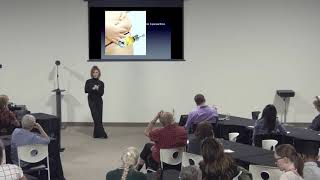
Joy Kong, MD (Scottsdale, 3/8/2018) gives a spoken overview of stem cell biology and clinical applications, emphasizing differences by potency (totipotent→unipotent), sources (embryonic, bone marrow, adipose, perinatal/umbilical cord, amniotic), and the clinical advantages of umbilical cord–derived mesenchymal stem cells (MSCs). She describes MSCs' primary mechanism as paracrine/immune-modulatory signaling rather than direct engraftment, summarizes delivery routes (IV, intranasal, intra‑articular, intrathecal, intramuscular) and practical dosing used in clinic (about 0.5–1.0 million cells/kg, with examples of product concentration ~8 million cells/cc), and reports that effects are typically transient (cells persist/act for ~3–6 months; clinical effect ~6 months). She contrasts autologous sources (bone marrow, adipose) with allogeneic perinatal sources (cord tissue/blood), listing advantages (youthful cells, higher paracrine output, lower invasive collection, immune-privileged behavior) and limitations (potential immune response on differentiation, variable products, regulatory restrictions). She cites clinical areas with reported benefit (autoimmune disease, neurodegenerative disorders, metabolic syndrome/diabetes, cardiac, osteoarthritis, dermatologic, wound healing, autism) and mentions safety/processing concerns (enzyme use, expansion vs native cells, sterility screening).
Questions this video answers
About 0.5 to 1.0 million cells per kilogram body weight.
She states cells probably last in the body about 3–6 months, with effects commonly lasting about 6 months.
MSCs: ~1 in 10,000 cells at birth; ~1 in 100,000 in teenage years; ~1 in 400,000 in 40s; ~1 in 2,000,000 in 80s.
First case in 1956 (bone marrow-derived therapy history cited).
Adipose-derived stem cells first discovered in 2001.
Chapters
Hi. Thank you so much. I'm really excited to share all this, you know, one of the most exciting field in medicine with you. So I just a quick, you know, kind of overview. I, you know, like I went to UCLA for medical school and got a traditional medical education. I was doing regular medicine. And then of course there's a lot of frustration if, you know, I'm sure you've all heard. And then I found out people were actually doing stem cells. And you know, that's a lot of doctors simply don't even know. So when I started doing it, I just found tremendous success with my patients. So I'm transforming people's lives. So that's how I became really passionate. So I just want to kind of share with you what I've learned with you. So I'm in Los Angeles at thea center for Regenerative Medicine, and I wanna talk about what stem cells are, first of all. So there are three qualities that qualify something as a cell, as a stem cell. So first one is that it has to be able to self renew. So the cells, they divide and there's an asymmetrical division. Every time they divide, one of the cells will be exactly the same as the original cell and the other one will be the differentiated cell. So that's the second capability, its ability to differentiate. So to wherever the tissue they're at, that they're able to differentiate into that particular cells making up that particular tissue. So then they renew the tissue. When the tissue is injured, there's any kind of cell death, then they can repopulate. And so, you know, this can, can be a little busy, but I just think it's important that people know the nomenclatures and kind of get a better idea of what people are talking about. There are different kinds of cells. Some are. So when people say stem cells, there's so many different kinds just because it's stem cell. But they all have different properties. So starting from the very, very primitive, then the precursor cells, they're are uncommitted with very long telomeres. So these are very vibrant. And the totipotent basically can form everything that's, you know, since the conception. So the embryo, placenta and sperm and egg and the pluripotent can form everything except for the placenta and sperm. So that you hear people talk about the induced pluripotent stem cells. So those are the cells that's able to form any cells of any tissue type. And then you have the multipotent, the germ layer cells. So they are from. So in development, we all know the embryo goes develop into three layers. Ectoderm, endoderm and mesoderm. So within each derm layer they have multiple potentials to become the tissue of that layer. And then when you come to more, a little bit more committed, so they're going down their evolutionary pathway, they become more committed. So they can't become everything that the previous generation can become. And they, you know, but they still have more potential. But then as they divide, as they differentiate, they become less and less so you know, from the tripotent to bipotent unipotent. So they just become narrowing, narrower in their ability to become certain types of cells. So this just to give people a general idea, when the embryo, when the fertilized egg, it's really our first stem cell. So we all came from stem cells. So that's our first stem cell. And then it divides into four cell stage and morula and then became blastocyst. So when you have the blastocyst, so this is the inner cell mass. And when people talk about embryonic stem cells, that's what they're getting. So they're taking one of these cells and expanding them. And that's the embryonic stem cells. And that's not allowed for clinical use in the US it's only for research. So the different layers it just a little bit more detail. And then this is very detailed. But I just want to give you a sense that how much science is involved. And all these markers, so initial so these are totally potent stem cells and they have certain markers that you can tell that makes them totally potent. And then when they differentiate more, their different surface markers start to show up. That's one way that they can tell what kind of cells they are. And again similar. So the blastocyst very early on the epiblast like stem cells and they differentiate into the three layers and then each one ecto stem cells will become, you know, these tissue specific type of stem cells. So multipotent, tripotent, bipotent, unipotent. And so again similar. Just want people to take a look. The ectoderms outer layer become cells of the skin of the nervous system neurons and mesoderm becomes the spinal cord, skeletal, kidney, blood and endoderm the pancreas, thyroid, lung example. So this is you know, very similar. Just give you kind of a little bit more detailed breakdown of what becomes what. And so this is a, you know, this is a blastomere and these tiny little cells are blasmur like stem cells. And these are epiblast like stem cells. So these are very, it has pluripotent potentials. So these actually there's some evidence that these may persist to adulthood. So that's another area I think is very exciting. And there's just, there hasn't been enough done about it yet. So I'm know, always looking for what's, you know, who, who is at the forefront and gets to the. If we can get the pluripotent stem cell that can become anything and transplant those in our body, you know, that will be, that would be ideal. So endogenous stem cells. So that just cells that are within our body. So we have different markers that actually shows that these are pluripotent stem cells. So I just find it very interesting that they have found all these different cells now in the human body that actually have pluripotent potentials. So now I want to talk a little bit about the classification. So this is a very common classification of cell therapy. So autograft is when you get your own, you know, derived from your own tissue and then you put it back in your own body. And allograft is from allogeneic source, that means from one human to another. And then the xenograft, which is always surprises me that how many countries are actually doing this especially I know a lot of Southeast Asia countries are doing that. To me it makes no sense because their genome is very different from ours. When we have perfect human stem cells, I don't see why we want to use an animal cell. So another type of division would be embryonic stem cells versus adult stem cells. So embryonic I talked about in adult stem cells can be bone marrow derived which has longest history, the first case in 1956. Or it can be adipose derived, it's a little later. So first discovered in 2001. And then the perinatal. So even though it's perinatal, it's right around the time the baby's born, it's still considered adult stem cells because these are way more adult like than embryonic stem cells. So their properties still are settled in some way. So they don't have the kind of potential like embryonic stem cells to go haywire and generate teratomas and start, you know, have tumor formation. Because these perinatal derived stem cells, even though they're very young, they're still adult. They've gone down the pathway, the evolutionary pathway long enough that they will not go haywire. They've lost that ability to become anything and just start to reproduce. So Embryonic stem cells. I want to talk a little bit more. So the sperm and egg fertilize egg, and then it becomes a blastocyst cyst. And then they get cells from the inner cell mass. That's about five to seven days after fertilization. So they culture that, and they can induce the cells to become different cells of the tissue. But one problem is that there still hasn't been enough control of their destiny, because they're still those cases of people having tumor formation at different strange locations. So that's why. Is it too loud? That's why the US has not given permission for it to be used clinically. And so bone marrow. So that's a bone marrow aspiration, usually at the hip, iliac crest. Pretty painful procedure. Some doctors say they can do it with less pain, but it's still a painful procedure. Also, I always wonder. There's a concern. You have certain supply of stem cells. When you keep taking it out, you are depleting. You are depleting your regenerative resources. And then this is the liposuction, where they get it from fat. So when they get it from fat, fat, really what they're getting is from the blood vessels in the fat. So the. The fat is very well vascularized, you know, type of tissue. So they're spinning it down. And the. The stem cells are mostly what they're getting is the mscs, mesenchymal stem cells. And when they're hovering around the blood vessel, they're called pericytes. So, you know, right around the blood vessels, pericytes. So when they're spilling, spinning it down, really, they're getting those parasites. They're getting those perivascular stem cells, and they're using that for regeneration. So for a person that's younger, that has some fat, it can work really well. There are a few concerns. One concern is if you get liposuction, actually different fat from different areas have different properties. Here is not so good. It's more toxic buildup here. You know, these areas are actually better, but so there's limited supply. But when you get cells, when you injure. So I don't know how many have done liposuctions in this room. Nobody. It's kind of brutal. You know, it's not pretty. They were doing, you know, they were, you know, expanding the tissue. They were, you know, washing it. And so there's, you know, when you look into the tissue after it's done, you put a little camera. It's a lot of damage. So it's significant injury that you're causing and then you're taking those and you're getting the stem cells out of them and then you're reinfusing it, you know, IV or, you know, or particular locations make more sense. But if you re infuse into IV the cells, these stem cells have intelligence, they're going to be attracted to areas of injury. So a lot of them are going to end up right where you tried to take cells out of. So that kind of behavior, the purpose. But they've got, you know, a lot of research have shown good results from these cells. There are Large percentage of MSCs, you know, the perivascular cells. They especially for people who are younger and healthier. But when, you know, I just, I want to give you the statistics. So MSCs in the body, when you're born, it's about 1 in 10,000 of your cells are MSC. So they're distributed throughout your body. And when you are in your teenage years it's already dropped down to 1 in 100,000. And when you're in your 40s it's dropped down to 1 in 400,000. And when you're in your 80s it dropped to 1 in 2 million. So there's a sharp decline in the number of these cells. But not only just the numbers, but also their ability to produce different factors and to be activated, to start regeneration. So they're becoming more and more sluggish. So they're not doing a whole lot. So not only the number but also the quality of cells declines. So that's one concern with fat derived stem cells. A lot of doctors are doing that. Majority of the doctors doing stem cell treatment are using fat derived or bone marrow. So that's using autologous sources. What I hear is that the results are variable. Sometimes it works, sometimes it doesn't. So it was a little frustrating. And that could be why. Also the processing. So you're processing it in your own clinic. You're not a laboratory, but you're learned, you know, from a course you take, you took and from manufacturing, you're learning how to do it. So that's, you know, that could introduce a lot of variabilities, you know, as far as the operator, what they are able to achieve. So that's the fat derived and oh, I got some, something cut off, that's okay. So that's what they do. They get the fat and they spin it down and the stromovascular fraction, that's what they use. That contains a lot of stem cells that they use for joint injections and various treatments. So we talk about what, what advantages are of using your own cells. Of course it's perfect match to yourself. So if you do put a stem cell in yourself, in a particular tissue, yes, it's possible that stem cell can differentiate and become part of your tissue and then they're not going to face any rejection. So that's the perfect match and probably stay in your body longer. And the disadvantage will be that it's invasive and inconvenient, that there's risk of infection, which I've heard from other doctors, no matter how careful they are. And then with age or disease conditions, the quality declines. And so like example, the red marrow start to change, the yellow marrow when the person ages and the cell quantity is inconsistent when they do the procedure. And the stem cells are less potent with shorter telomeres and less generation remaining. So I have quite a few review studies comparing the mscs from the burst tissue versus from bone marrow and fat. They've actually found that the MSCs from the umbilical cord or from the burst tissue produce more anti inflammatory factors. They are more robust, not, you know, they don't get old and die as easily and they have more neuroprotective functions metabolically, they're just more active. So there's, you know, there are many parameters that they show that these are, you know, superior in many ways. So that's the perinatal source. So we've got the fetal tissue, so the placenta and this is the cord. So the, the chorion is part of the baby. I mean the mother, the amnion is the baby's tissue. So the placenta, that's when, so when a baby is born you will hear about these companies that have umbilical corduroy stem cells. So what they do is that they can work with the hospital and supposedly they're only supposed to accept placentas that have been obtained through C section because that's a complete sterile environment. It hasn't gone through the birth canal. So they want a complete sterile organ and then it's sent, it's gone through all kinds of screening. It's the same level of screening as organ donation or blood transfusions. If they go through the same kind of infectious disease testing and the mother is monitored and there's entire history taken. So this is only after a mother has agreed to donate the tissue because some mother, they're always asked do you want to keep the cord, keep the blood or do you want to donate? So majority of them actually Says they don't want to keep it because it takes 2, $3,000 a year to store the cord, and they're just not sure of the value. So majority of students say no. And then they're asked if they want to donate the cord. And if they say yes, then they're asked to fill out this very long questionnaire, over 80 questions going over their, their own health history, their family history, their travel history, partner's history, you know, the prenatal history. So everything is screened. So depending on the different labs that's doing this, you know, some may accept lesser products, some may only take the most high quality. So not every baby is the same. This is pretty fascinating. A tiny mother with a normal weight baby can have the biggest cord with the most producer of stem cells, and some big person may just have a long, skinny cord. So you never know. It's very interesting. The cords, every cord is different. So talking about advantages and disadvantages, the disadvantage, of course, is that there's a potential immune response if you give somebody, someone else's, Someone else's tissue. So when it comes, when these cells are separated, because these are. When the transplant happens, is it stem cells? So within stem cells, there are very few surface markers. They're very, very small cells, only a few microns, and they haven't developed surface markers to really mark them as a different individual, you know, Mary or Joan. So when they're transplanted into another person, it looks like a blank cell to that person's immune system. So the immune system says, well, you know, that's a cell. It doesn't say anything. So I'm not going to try to destroy it. So the problem happens when the cell tries to differentiate. That's when they start to go down their pathway, and they may express different markers, and then there may be something that's different. And then the immune system says, oh, oh, boy, that's, you know, you're not me. But interesting is in the past, a lot of people, you know, you know, even scientists thought that the way stem cell works is by putting, put into somebody's body and magically, you know, become, you know, start to reproduce and become the tissue, become the part of tissue, the injured tissue, and that's how they repair. But the new science, there's lots and lots of evidence came out that shows really the way they repair is not by becoming your tissue. It's not by replacing what's damaged. It's really by signaling, calming, first of all, calming down the inflammation so that there's an environment of healing so the repair can actually occur. And then what it does is it sends out all kinds of signals, bioactive molecules to imuse to, you know, your immune system. So different cells can come in, help with repair, and also stimulate local stem cells. So what they've done is that even people who have got allogeneic transplant from another person, they had a tissue repair. And when they actually analyze the tissue, it's their own cells. So these cells are actually kind of like a master, kind of like a conductor in a symphony, basically saying, do this, do that and you can repair this. And they eventually die. So these stem cells, when I do stem cell transplant with four patients, when I give them these cells, usually the cells probably last in the body for about three to six months. So effect lasts for six months. Everyone is a little different, but on average about six months. That's how long the effect lasts. So stem cells die just like any other cells in your body. And these stem cells, when they're freed from another source, they have gone through a little bit of trauma, they've come out of something else. So it's a little harder for them to survive. But when they try to go into your inflamed sites and try to repair, they're also experiencing a toxic environment. So it's almost like a soldier, they're going to battle, they're trying to fight the battle, but they can get injured in the meantime and they could die. So the cells, they do have an attrition rate. So while they're combating inflammation, injury, they could also, you know, kind of be sacrificed. So that's one reason that they just, you know, they drop in number and then they eventually die off. So there's a lot of advantages. So. Right. So they don't, sorry, they don't, They don't engraft as easily. But now we know that's not the main way they function. And the advantages, a lot of vantages, so there's no matching necessary because I mentioned they don't have the surface markers to really make them for. And so there's really no reason to match. So they're considered immune privileged. Actually they have immune suppressive properties. So the MSC which I was talking about, they have done for organ transplants, they have given people organ transplant and they give them MSCs because these MSCs actually help prevent organ rejection. So they actually, you know, so there's opposite effect. You know, I have done a lot of these treatments for my patients and also my patients who are very curious and want to make sure that this is the right thing to do and they're safe. So they looked everywhere for any side effects and problems and they just finally just said, I can't find any on the Internet anywhere because it is exceedingly safe. And then the cells are very primitive. So like I mentioned, little surface markers and the cryopreservation in the treatment process actually make them lose more surface markers. So the cells are younger, they're more potent, they differentiate more efficiently and they have longer telomeres. So they're more robust, they contain. So there may be some pluripotent stem cell population. So when we're younger, they're going to be more pluripotent stem cells and they're very easy to obtain, you know, with no ethical considerations because we're not, you know, we're not hurting anybody because 90% of the birth tissue is tossed in the trash right now. This is the amniocentesis. This is when people get stem cell like product from the amniotic fluid. So then usually probably the best products is obtained between three to six months. So early on in pregnancy, that's when it's more therapeutic. So you've all heard of amniotic fluid based cell therapy. So there are advantages and disadvantages too. So again, there's a lot of growth factors. So that's one reason it has been very helpful when people do wound healing or local tissue injection. It does work because there are all these growth factors inside clients and the cells are very young. So usually within the first. So this is three to four months that will be ideal. There may be some pluripotent stem cells. So the disadvantages is that there are very limited number of cells. So amniotic fluid, very few cells actually flow around, float around in it. And there's so few cells that the FDA actually prohibits amniotic product to be called stem cell products. And another. Oops, pressing wrong button. Another thing is, you know, a lot of these amniotic fluid were obtained on people with that are doing amniocentesis and they're doing it because they're trying to figure out if there's anything wrong with the baby. So then, you know, people who are doing it actually have higher risk of, you know, having genetic defects. So that's another concern. And then of course, it's invasive, there's a risk of miscarriage, and then there's ethical consideration. The fact that, you know, are some women going to start selling their amniotic fluid, you know, to get pregnant so they can, you know, start especially in maybe other countries other than US I guess the laws, it's a little harder to control. So are women going to just become pregnant so that fluid can be taken out? So that's another concern. And then we come to the umbilical cord, which is my favorite. So the umbilical cord cross section. So this is the artery. So there are two arteries and one vein and the rest of it. So all this is pretty much gelatinous material. That's called Wharton's jelly. And the Wharton's jelly has been. So that's Wharton's jelly has been researched a lot. A lot of studies have been done on cells obtained from Wharton's jelly because it's very rich in MSCs. So I talk a little bit about MSCs. MSCs, it was discovered by Dr. Arnold Kaplan and it was called mesenchymal stem cells, which he regretted later. And now he said he's renaming it to medicinal signaling cells because he said there has been no evidence. I just saw him at a conference just a week ago. There's no evidence that these cells actually differentiate in vivo. So you can get them to differentiate in vitro on the petri dish, but in the body they still haven't shown evidence that these cells actually divide. What he believes these cells do do are actually a master of regeneration. So it's throughout your bodies, everywhere in your body, along the vasculature. And they have significant evidence of how these cells make contact with local stem cells and send signals and direct their direction as far as how they should act, their activities. So in a way they are the conductor and in that symphony. So they tell the local cells so they're not so much stem cells but as a signal, as a controller of regeneration. So that's where the field has moved into, is about mscs. We hear about MSCS all the time. So that tissue is extremely rich in MSCs. And of course, because it's newborn, it's nine months old, it also has all kinds of growth, growth factors and all kinds of kinds of other interesting properties. One thing about the blood from the cord, from these vessels, the cord blood is very interesting. I don't know if you guys heard about that study in Stanford where they have old mice and that they infuse them with old people's blood versus young person's blood. Have you guys heard of that study? And how the mice that got young person's blood started to, to regain some of their memory and their liveliness and they start to move around and doing their maze much better like a younger mice. So they were trying to figure out what's going on? What's in the younger person's blood that's not quite in the old person's blood. So they found this protein called TMP2 protein that's really rich when a person's first born. When a person's born and then the older they get, the less and less drastically decline is protein. So whatever that's in that blood, it's very powerful. So I don't know if you've heard of people wanting to get transfusions from young person's blood, you know, with young person's blood and they should just do umbilical cord blood that's much more powerful. So again, just a picture. So this is the cord tissue I was talking about, which is mostly Wharton's jelly. And this is the vein and the two arteries and that's the core cord blood where they obtain cord blood from. And in the cord blood is mostly hematopoietic stem cells and the core tissue is mostly mesenchymal stem cells. So these are very different types of stem cells. So this will give rise to all the cells in your circulatory system, your white and red blood cells and platelets and these, you know, they're, there's still different kinds of MSCs, they are not all the same. Supposedly this gives rise to all the other tissue but Dr. Kaplan thinks that they're more of a master. So why is mscs important? So I'm just breaking it down a little bit more. So the paracrine effect, it's about the stem cells being in the local environment and sending signals to the cells in the neighborhood and telling other cells what to do. So it's affecting right in the area. So that's what they're able to do. They induce changes in nearby cells and then immune regulatory. So the MSCs are able to modify or regulate immune function so causing a shift from a highly inflammatory to an anti inflammatory type of situation. So like I've treated a patient with lupus and I gave her two infusions two weeks apart. And then she went to get her test a month after that and then her lupus markers, everything came back to normal. And then she was so excited. She's only 34 years old at the time and she had six inches of new hair growing out. She was like, I got all this new hair, I'm so excited. So it just is remarkable so that because there's incredible evidence of how it helps autoimmune disease, diseases and then the anti inflammatory, I talked about all these factors. It can Secrete all the anti inflammatory molecules and anti apoptotic. So it's interesting. Let's say somebody got a stroke. And unfortunately the problem with stroke is not just a stroke happen is what happened to those cells afterwards that they start dying. They start to tell themselves to die because the calcium and you know, the influx so they can't stop it. But the stem cells have the ability to stop that terrible path and rescue them. So like for trauma, hypoxia, any kind of damage that they're able to rescue those cells. So the cells are not going to die away. And then interesting. They also have antimicrobial properties. They actually secrete antibodies. Very interesting. So they have yeah. These different peptides. So for chronic infections also has been shown to be quite effective. So a lot of Lyme disease patients are using this. More and more people know about that. I have a patient who's a very respected doctor. He's actually a leading expert in Lyme disease. And he has Lyme disease himself. So he's tried everything. He tried embryonic stem cells, he tried, you know, ozone and peptides. So when he tried stem cells, these umbilical core stem cells, he noticed a quantitative qualitative difference. So this is. He just told me, he said he hadn't worked out for how many years? Quite a few years. So now he's able to actually go work out because he was so drained from the Lyme disease. So it made a transformative difference. So now he's getting all his patients to use these stem cells. So safety. So mesenchymal stem cells, renamed medicinal signaling stem cells. So they orchestrate the activity of local stem cells and they produce huge quantities of biomolecules and can be immune suppressive. And they are able to put up this curtain of molecule around themselves that allow the donor mesenchymal stem cells to be transplanted into recipient without immune response. And so they. So these MSCs also help also release these factors to help reduce the immune response when the body to fight against the natural tendency to. To reject certain cells or cells from a foreign entity. So umbilical cord cells, these have, you know, there's the umbilical derived stem cells has a lot of MSCs. If you use cord tissue, the cord blood has, you know, 0.1 to 1% of mesenchymal stem cells. It's interesting. There are, you know, most companies you see in selling perinatal stem cell products are using umbilical cord blood derived because those are very easy to separate. Cells are already in a suspension they just spin it down. There's not very much trauma to the cells and so the product is easily made. Unfortunately, they just don't have that many mesenchymal stem cells. The core tissue, on the other hand, you saw it's a tissue, it's a gelatin, like it's wrapped around. So those cells are embedded in the tissue. So how do you free them without using enzymes? So there has to be some mechanical manipulation, there's some cutting involved. So they're trying to separate the cells without enzymes because FDA doesn't allow enzyme to be used. And enzyme does change some properties in cells, by the way, cell receptors and different properties. So these cells have gone through some trauma, but. And most companies don't know how to do it. So I've talked with a lot of stem cell science, some very respected scientists, they can do cord blood easily, but the core tissue, they don't know quite how to approach it. But the core tissue is really what I think where the most valuable components are at. And so MSCs provide immune modulating capacities, can stimulate regeneration. And so these are the vantages of mesenchymal stem cells. And these because they can be administered multiple times in uniform dosages and there's no need to collect the cells through invasive procedure like liposuction or bone marrow collection. And the cord MSCs, they're more efficient in their proliferation, differentiation than other type of cells, stem cells, adult stem cells, so are considered more potent. So the umbilical cord derived cells have been shown to be more potent. And so clinical benefits. So there has been a lot of conditions has been looked at and these are some of the conditions that the stem cells have been shown to be, to be helpful. So autoimmune disorders, that's you know, really big one, neurological conditions. I showed one of the doctors before the talk a, you know, a picture of a patient, 80 years old patient drawing a clock that's completely, is barely a clock. All the numbers are lined up like this. So there's a clock and the numbers are lined up like this. So there's not, they're not spread around, you know, the perimeter. And a month after the stem cell treatment, so the person got intranasal stem cells. When you put cells here, it can be uptaken to the brain, cross the blood brain barrier, because the olfactory nerves has the ability to uptake them and bring them into the brain. And they've tagged the cells and found the cells from intranasal deposit and they actually do migrate into the brain. So it's pretty Fascinating. So that woman, 80 something year old woman, got that treatment and a month after that injection, the clock was vastly improved. It's making a lot more sense. Numbers actually were spreading around the perimeter. It actually looked a lot more like a clock. It's still not perfect clock. But the remarkable thing is that we don't have anything in medicine these days to actually produce that kind of benefit. I've treated a lot of Alzheimer's patients and it's the most you can do is to keep them steady and it's very little hope that they will get better. And then we have type 2 diabetes, so metabolic syndrome. Yeah, it's pretty fascinating. So that doctor who had Lyme disease, he actually, as a result he had metabolic derangement. So his cholesterol was really high. And then after he did the stem cells, they all came back normal. So he was like, well, this is amazing. So heart disease. I've treated a couple people with heart conditions, arrhythmia, and they were doing great, you know, vast improvement. This is very common osteoarthritis, you know, one of the most common things people use stem cells for, erectile dysfunction that I have started treating, people do notice, you know, a significant benefit. A lot of people, you know, use PRP that's been around for a long time. The PRP's effect probably lasts for about six months, but the stem cells will last a year or two. So it just lasts a lot longer because these are more potent product and these cells do have intelligence that's able to respond to your local environment and secrete what the tissue needs. Instead of just prp, just these growth factors just thrown in there. So there's limitation on how much those growth factors can do comparing to life cells, dermatological conditions, lung conditions, injuries, autism. So that was the autism. A lot of kids go to Panama to get treatment. So actually this one of our doctors that used, because I also, you know, the product I use. So this doctor used the same product and this patient had autism and went to Panama and spent 20, $30,000 getting the treatment. And when the patient came back and got the treatment using these umbilical cord stem cells, so these in Panama, it's also umbilical cord stem cells. It's interesting, but they expanded, they expanded to a huge number, you know, 100, 200 million cells. And they give it back to patients. Whereas our cells is only 15, 20 million cells. But after the patient used it, so the family said the kid responded much better to these cells comparing to those. So that's Actually a very interesting thing I found out at this conference, new research showing that expanded cells are a lot less potent than native cells. So native means that you have never manipulated it, you have never grown it. The expanded cell has been grown in culture, incubated, and they can grow to a lot of numbers. But what they've shown was a graph where let's say 100,000 of native cells can reach this level of benefit and you can give 1 million of expanded cells and the benefit is about this much. So there's still, even at 10 times the number of cells, it's still slightly less potent. So you probably need to give even more. So that's a remarkable thing that could explain why these native cells that we're using, because we're not allowed to use expanded cells in the US why that's actually more powerful. I've gotten such great results, even as low as 10 million cells given to people. And then the autism, yeah, it shows tremendous improvement. So I have a lot of research articles on all these conditions. There's any condition that you guys, guys are really interested in, you know, just email me, let me know and I'll be happy to share with you. So spinal cord injuries, wound care, that's been around for a long time and then anti aging, it's interesting. So studies showing that actually they did three months, six months after infusion, IV infusion and people's, their skin, hair, energy level, libido have all shown improvement. So that's a general anti aging. Go ahead, no problem. Is this all intravenous administration? Not necessarily. You know, I'd be happy to talk about the application. What I think is the most powerful, a lot of the internal organs, the IV will be important. But if you have particular, let's say osteoarthritis, you have local injury or, or neuropathy, particular area or erectile dysfunction, it's probably better to inject some cells right in the area because you get a huge concentration of growth factors in cells. The IV is going to help improve your entire system. Even osteoarthritis. Inflammation is not just in your knee, it's still throughout your body. So it's always good to address your systemic health. But for a lot of the internal conditions, yeah, that would be IV use. And for small joints, you can't get into the joint space, but they're well perfused. So you can just give IV and that will be taken care of. I've treated a dermatologist with, he has plantar fasciitis. Actually, I think that he got it previously and they did steroid injections. It took him months to actually get better. And then, so he was limping and I saw him limping and then so he said, okay, yeah, let's try this. So he got the stem cells and within one week it's 95% gone. So you all know plantar fasciitis is pretty tough one to deal with. So the modes of delivery. So there's IV intra articular. So intraarticular is important when you have a large joint. So when you have the hip, the knee, shoulders, so these larger joints probably intra articular is important when you know the problem is within the capsule, you know, it's actually within the joint itself, you know, to be careful. A lot of people have joint problems, really the surrounding tissue. But if you do have, you know, within the knee, then the internal, especially the osteoarthritis within the big joint. So when you look at the cartilage damage the cartilage, the outer one third is nourished by the blood supply, but the inner 2/3 are nourished by the synovial fluid. So you know, if you're just doing iv, it may not address the internal environment as well. So you probably want to give a dose right into the joint space. And then intramuscular, you can do that intrathecal. Of course, it's more specialized, just not many doctors are willing to do it. That makes intranasal very attractive because that's a lot more comfortable. I mean as far as safety and just convenience. And then you can, There are people under ultrasound and they can inject directly into organ of interest. So dozing. If you do IV this, the 0.5 million cells per kilo body weight will be, will be on the sort of. Nowadays we believe 0.5 to 1 million is the range. So 0.5 is probably the least. I've seen good results with 0.5 million per kilo body weight. So when you look at that, when a person, let's say is 140 pounds, that's about 63 kilos. And so the person will need about 31, 32 million cells. So the product I use has 8 million cells per cc. That means it needs 4 cc. So they just, they come frozen, you know, organized, shipped to the doctor's office. So you can just order exactly what you need. So it's very convenient. And of course it's done in a FDA registered inspected labs. And you know, they've gone through everything, you know, the sterility and everything is up to par. So you know, there's this safety, quality control. So that's the dosing. So I have a lot of patients come in to do just for anti aging treatment. So you know, because these cells last in the body for about six months, if they have really aggressive disease process, maybe, maybe in three months they might notice some relapse in symptoms. But if they do, they do everything right, they do the right nutrition, they are addressing their hormone issues, or they detox, then their stem cells will, the effect can last so much longer. So I tell them, let's do comprehensive evaluation because you're protecting your investment. We can't, this is not know panacea for everything. You're still, you know, the, you're still a physical body. There's still all these parts and components that you need to address. So but for anti aging purposes, you know, just to dial back basically all the inflammation. I'm sure we all have inflammation in our body. So I, I've done about 10 infusions for myself, you know, every, you know, every few months or every three months or so. So I have patients who are coming in like regimented. They come in either every three months or every six months just so that they are helping their body regenerate, repair and prevent the decline. Because what people don't realize is that sometimes when a person is really healthy, they may not notice a lot of difference, but doesn't mean that the benefit is not there. Because just like when we're getting sick, a lot of times we don't even know we're getting sick. All of a sudden one day it was like, oh, I'm sick. But does that mean that you weren't sick before? A lot of times you were sick, you just haven't hit that threshold. So same thing with getting better. So you may not know you're getting better, but doesn't mean the repair is not happening. So that's the IV infusion and so that's how I usually do it. So you get. So this is how I was doing it, but this actually I made some modifications so I'm not going to. So that doesn't really quite correspond with what the dosing I was talking about. So that was an earlier rhetoric, earlier protocol, but I've updated it because of the new science. So now it's 0.5 million per cc. So you just, you know when you get the product, So I showed the picture, you get the product. So it comes in a vial and then you thaw it with your hand. You just kind of rolling your hand because the key is rapid thawing. If you do it too slowly, there can be a certain temperature. There's one particular temperature, I think it's somewhere around 60 degrees, minus 60 degrees, that there's potential for crystal formation. Then it can puncture the cell membrane, it can die. So you want to do very rapid thawing on your hand and then you draw into a solution and put an IV back. So these are the research trials on glucocore stem cells throughout the world. US still leading, and then China is next. So what does it mean as a doctor? So basically, I want to just impress upon you that stem cells are very powerful tools for regeneration as therapy. It has a lot of advantages over traditional medical approaches because there's very little side effect. And we're kind of going back to our origin using what made us. The intelligence that was in the embryo was in that fertilized egg is still in us. So these are the stem cells. So what can make us as a human from that one, one little cell? That kind of intelligence is unimaginable. So if we can use that, instead of trying to stir one chemical, another chemical, thinking that magically, one chemical, this chemical just going to do everything, I think that's rather arrogant to think that we can just find a molecule to just do everything. So I think to engage in nature's innate intelligence is really the future of where we should be going. And the power has been amazing. I was telling this doctor at the beginning that how years ago, when I was in residency, that was over 10 years ago, the doctor, the neuropsychiatrist, he was going to neuroscience conference, Alzheimer's conference, every year, and he said, we're on the brink of finding a cure because the government has allotted all this money, so we have a battle against Alzheimer's. So in 10 years, we're going to find a cure. So it's actually over 10 years, and I don't think we're any better than where we're at. No one has been able to show that kind of results from that patient o' clock drawing. I mean, that's really inspiring. So that's it. That's my presentation. So I very much welcome any questions.










