Stem Cell Therapy Experience: 9/11 Responder Ron Pastino on The Dr. Joy Kong Podcast
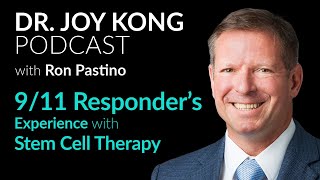
This YouTube podcast (Dr. Joy Kong, MD interviewing 9/11 responder Ron Pastino) covers Ron's exposure to World Trade Center dust during seven months at ground zero and the delayed development of lung disease, lung nodules, granulomas and focal lesions requiring surgeries and ultimately retirement. Ron pursued conventional monitoring through the WTC health program (breathing tests, X-rays) but later adopted a hybrid, preventative regimen combining supplements, NETI rinses, hyperbaric/oxygen therapy, meditation/HRV training, and stem cell treatments (initially in Mexico: 150 million umbilical mesenchymal stem cells IV with prolonged fatigue; subsequent treatments including a US clinic infusion of 40 million cells plus high‑dose exosomes). Reported benefits include improved breathing, increased energy, and marked cognitive improvements (word retrieval) beginning ~2 months after treatment; Ron is advocating to expand access for other first responders and seeks a federally funded study. The interview also discusses regulatory distinctions (minimally manipulated tissue vs. expanded cells), safety/efficacy trade-offs, and practical post-treatment advice (early return to mild exercise, sauna/cold exposure, adjunct therapies).
Chapters
During the search and rescue efforts, unfortunately, Ron was exposed to harmful dust and.
Debris on the periphery of the CAT scan. There was lung nodules in my, in my lungs and I was like shocked. I'm like oh my God. And I knew it was a World Trade center because I spent seven months there. Probably 10 to 15 year mark is when it really hit. There was a lot of people that had to retire due to disabilities.
We gave you 40 million of stem cells. How was that experience?
Amazing. I had no fatigue. I actually had the reverse. I had more energy. The two week mark after my verbal skills, my word retrieval was a heck of a lot better. Like I was spitting out words to where I don't remember saying that word in years. I made a pact to myself and I'm going to be the first disabled 911 responder to live to 100. And I'm going to do that with the big tool of stem cells.
Hello. Welcome to the Dr. Joy Kong podcast again. As you know, this podcast is all about bringing people healing, wellness, longevity. So I invite different experts to come and shed light on different aspects of health and wellness. And today I have a very special guest and a little different from my usual guest. So I have Ron Pastino here with us. And Ron was actually a 911 responder. So I'll talk about his history a little bit. But he has his own health journeys that I think will be really helpful to share with everybody. So I want to welcome Ron to the podcast.
Thanks. Dr. Jory, good to see you.
Yeah, it's great to see you. So let me introduce you a little bit to the audience. He is a veteran. He served in the US Military and then went on to serve his community in the New York State Police special operations. And that's a career that he excelled at at the highest level. And he dedicated himself to work faithfully, fulfilling his duties regardless of the risks. And that all culminated in a seven month assignment at ground zero following the 911 attack on the World Trade Center. And during the search and rescue efforts, unfortunately, Ron was exposed to harmful dust and debris and this resulted in a change of the course of his life. So in addition to the physical and emotional challenges, the financial burden that the loss has placed on Ron and his family has been immense. Ron has been participating in cutting edge holistic treatments and in search for new types of treatment options to keep the lung disease from progressing. The treatment included stem cell therapy. Ron is a leadership and resilience speaker who teaches people to shift their mindset 15 degrees left or right. So we'll talk about that. To find the positive solution to problems and success, additionally thinking outside the box with vision. That's what he believes in. And one quote that he talks about is perseverance is the synonym of victory. Beautiful quote. So thank you so much Ron for being here with me.
Absolutely. I'm excited to discuss my story and the holistic treatments that are being successful for me.
Yeah. And thank you so much for your service for this country and to New York State. So maybe you can share with the audience a little bit about just what happened. I think there was, you know, your experience with 911 and then what you think that did to your health.
Thanks Dr. Joy. And humbled by the compliment. Thank you. I was in New York State Police special operations. I was a station commander that supervised all the statewide tactical operations, hunting the worst of the worst terrorists, et cetera. We also did rescues in the Adirondack and Catskill Mountains, mountain rescues when they were needed and brid bridge rescues. After the second plane hit the, the World Trade center, we then knew it was a terrorist attack. Part of our team flew down and part of us drove down. I was on a drive team and ultimately got down there and it was, I'm speechless as actually what it emotionally did to me. But we acted, we did our job and you know, went in to start rescuing people but you know, ultimately didn't and ended up doing seven months of recovery work, evidence recovery and sensitive security assignments down there. The plume of dust and debris was so immense, it was hundreds of feet in the air as we drove down the west side highway into Manhattan. And you know, I was in my late 20s then and you're totally motivated and you're really not thinking about the, you know, physiological effects of, of dust and debris. You just don't think of that as somebody that age or whatever when you're going in to do your job. And we thought, you know, more like other terrorist cells going to be, you know, we're going to be dealing with them what. Yet it ultimately came out to be, it was a dust and debris that was the main culprit of a lot of our career endings in, in law enforcement, in the first responder world. We, you know, we wore masks after a few days down there. But you're, you're in the area, you're in that contaminated zone. You have to take your mask off to eat, to go to the bathroom. You just can't wear it 12 hours a day non stop and be so clinical about it. It's, it's just not realistic so no matter what you do or did, yeah, you could prevent most of it. But you know, the, the, the majority of toxins were within the first three days, the harshest portions of that. And you know, I, I know some colleagues that unfortunately passed of some diseases and cancers and that did not spend more than a week or two on that pile. But the evidence showed it was the first week. So that's, that's the potency of, you know, when you first go to these disaster areas. And let me, let me highlight that this, you know, I ended up with a lung disease as a result of it 15 years after. I never saw it coming. But this, this correlates to the military burn pit folks, folks from overseas where they burn their trash and the, the soldiers and military personnel were breathing the toxins. It's the same, same substances as well as, you know, earthquake victims, natural disasters, what have you, where it creates this dust and debris. It's the same thing. So you know, I just want to kind of get the message out to folks that the importance of preventative measures before you enter a scene or when you're in the scene to start those preventative measures. So you know, to get more into my story, I had some little lingering skin and sinus infections that I would get yearly. After my seven months time on the pile, I'd probably get six or seven sinus infections a year. Ultimately I, I got that minimized by utilizing the World Trade Center Health Health Fund to get me to an ear, nose and throat doctor and the NETI pot actually, you know, simple holistic thing that, that prevents me from getting these sinus infections anymore. So it's something pretty, pretty simple, easy that helped me. You basically almost had to be the professional athlete level to be on my team because it was the, a tier one asset for the state of New York. So you know, when, when first responders needs help, they would call us. So it'd be the top level of folks and very competitive. It's like being in selection for your whole career. So how I knew something was wrong is I went on a simple three mile run at year 15 in 2016 and I had a hard time breathing when it was nothing for me to run, you know, 15 miles one day and 10 the next and just not even think about it and just what you did.
So are you saying the first 15 years after 9, 11, you were feeling okay?
It took 15 years and then it was like a light switch, it hit me.
And you said there were frequent sinus infections.
There were.
So were those the only Sign that something was a little different.
Yeah, for me, you know, there were other folks, you know, three, four years after they ended up with cancer and passing away. I, I've lost a lot of friends and colleagues to, to these unfortunate cancers and diseases from 9, 11 recently. I lost four colleagues within the past few months, unfortunately. So I ended up going to my personal doctor because I, I was having shortness of breath, which was very odd for me, and I just felt ill and he, he thought it maybe was my heart, so prescribed me a CAT scan of my upper chest to check my, my heart and did, did a blood work and all that, what you would typically do. So I went and did the CAT scan and ultimately my heart was great. But on the periphery of the CAT scan, there was lung nodules in my, in my lungs. And I was like, shocked. I'm like, oh, my God, what the heck's going on? I've never smoked. I was the epitome of health. And I knew it was a World Trade center because I spent seven months there. And ultimately, and I'll bring this up as a point, Dr. Joy, because this is part of my recipe for success. To tell others is to be your own self advocate. And I know you preach this too, to trust your gut too. So the first pulmonologist I ended up going to did not think it was a lung disease and thought it was maybe a fungal issue within my lungs. And I just knew he was wrong. And, you know, because when we would chase bad guys, we'd go into these remote farms in upstate New York where there was fungal things going on. And he's like, that's probably what you got going on because you're, you're always in those environments. And I trusted my gut. I ended up going down to Weill Cornell in New York City, the top pulmonologist there. And ultimately they were like, oh my God, you probably have lymphoma. You definitely got a lung disease. And it's all from 9 11. We got to get you a surgery like yesterday. So ultimately I had two, two surgeries. I lost a quarter of my right lung. They found granulomas on my lymph nodes in my, in my chest, which they took most of them out and then around my lungs. So. And then I got two focal lymph ezema holes in the bottom of my lungs where the dust and debris settled. And your body, I thought this was pretty cool. Not cool that I have it, but anyway, your body does some cool things. Try to get rid these holes, open up to Try to eliminate the dust and debris out of your lung. At that point I, I had to make a decision because the shortness of breath was perfect, affecting my mental performance. I was in command of 55 people, Special Operations guys, and I did not want to make a bad decision and get somebody killed and you know, serve the public, public wrong basically. So I threw in the towel and I heard retirement was good. Although in my mid-40s I was literally, I would still be there right now. I, I, I miss it dearly. It was, it was who I am and, and I enjoyed it. But I, I ultimately retired and I had a rough couple year transition with identity.
Tired because you felt you couldn't perform your job adequately.
Correct.
Because of the, the lung conditions and, and also your mental capacity.
You're saying, yeah, you know, the shortness of breath, you know, affects your mental performance. You know, if, if you're, you know, I like, I, I could tell I was, you know, I, I wasn't thinking straight because I was dealing with something that was so foreign to me, like a kink in my armor. And I never thought that something would, would put me to a knee like this. So I had to figure out how to be a civilian and figure out who I was. And ultimately it ended up being me getting back up on my feet after believing in that quote. Perseverance is a sentiment of victory and.
It'S a common story among 911 responders basically having to get out of their career.
It is there, there's some people still working, they have minor symptoms which they, they can, but there's quite a few now. It, it, it was, it probably 10 to 15 year mark is when it really hit. There was a lot of people that had to retire due to disabilities or they died. Unfortunately. It's unfortunate all around and I, I tell people that the 911 terrorist attacks are the longest acting terrorist attacks in history. They're still killing. They still are 20, 22 years later.
Yeah, yeah. So, so you were in this health fund that helps veterans. Did you, what kind of care did you get from it? Did you Adequate for you?
It's a very good program that offers breathing tests to check your lung volume to, to, to, you know, keep an eye on if you end up getting a lung disease so they can stay ahead of it. Blood work and a full medical evaluation, ekg, an X ray every couple years. I think it's a, a good program to catch something. But after I started to understand.
You.
Know, more of the medical world and thinking outside the box and trust in my Gut, there's more that, that you can do. And look, it's, there's only so much each program can do because of the funding, because, because of the FDA rules and which are prohibitive to you know, certain stem cells and, and high end outside the box procedures. So I, I just knew that it wasn't, wasn't enough for what, what I needed because I'm a big prevention guy and I'm, I'm watching colleagues die around me and I'm like, I don't want that. You know, I, I want to, I'm not going to let these terrorists take me out. And not that they, you know, they didn't fight. It's just, you know, I, I, I'm a special operations guy. I'm like there's, there's more. You know, I got to shift my mindset 15 degrees left and think about other ways and methods to, that I don't even know about. And I got to research and find and take these new, new treatments and stuff and that's what I did. Hours and hours of, of Internet searches and then talking to certain doctors that lead me in a different direction. And, and, and ultimately, you know, I, I became my own shaman and started figuring out a recipe for success. And, and, and, and what I found was the pharmaceuticals played the part in this but I was getting better results for anti inflammation, you know, feelings from the, the holistic world, oddly enough, which I thought was excellent. Like, so I, I take an array of supplements that's as long as a kitchen counter. It's expensive. I spend probably $5,000 a year on, on these supplements but they're part of my recipe, they're part of me still being on this planet. I'll give you an example which even motivated me more. I ended up going, I had a, I reached out to a charity called Boot Campaign because I was at wit's end. I, I just kept Internet searching. I'm looking for help. I reached out to these wellness charities and finally I get through the one and Boot campaign is, and I'm still a participant actually and a brand ambassador for them. They're, they're excellent. They provide services with meditation counseling, heart rate variability training, which is another recipe for success. And I'm going to get really granola on you. But the granola is what saved lives in my opinion. It's why I'm still here. So I ended up going down to the Cooper Clinic down in Dallas, Texas. It's a one stop shop where a lot of, a lot of rich and famous go there because you can go. You're within 12 hours. You see pretty much every doc that you need to see, which would take up to a year of scheduling to get you through. It takes one day. So my doc, at the end of it, you get a CAT scan and all that too. At the end of it, he goes, ron, I gotta command you. He goes at looking at everything and all your. Your paperwork and notes and your CAT scan. You shouldn't be here by now. You. It was. It's. It's because of you and your fortitude, and you're thinking outside the box, and all this other stuff you're doing is why you're here. And that even motivated me more because I'm. That scared me because I'm like, holy cow. Like, I'm. I keep dodging this bullet because I'm. I'm being preventative and staying ahead of it. So again, and I'm shifting my mindset left and right 15 degrees, because if I hit. Hit a hit, a stumbling block, like, where's the answer? Where's the answer? So you got to keep chipping away your mindset ideas, spitball on it, and then eventually the. The. The good. You know, the proper solution will pop up. It always will. But you got to change the mindset. So I. I have done oxygen while working out, they call it HBOT, for probably six years now with a live O2 machine. A lot of the professional athletes do it. Oxygen is a recipe for success for anybody, for. For longevity and prevention of disease. I do it pretty much daily as part of. Part of what? You know what? That's one protocol. Oh, the other thing I want to get across to the audience is, is I'm a big believer in the hybrid approach. I'm not a staunch holistic. Hey, it's got to be holistic or nothing. No, I'm a realistic. We. We live in a world that's very challenging with all the pollutants that we have, and there are, you know, certain pharmaceuticals that are good and that you should take in combination so that, you know, I am not opposed to that approach. There. There's a w. That's a recipe for success for the. The hand that we are dealt on this planet right now. So you have to think asymmetrically. You have to embrace it all, but embrace each tool in that toolbox. What work works specifically for you individually. So I. I was at the. The end of the road where, like, I think I'd done every technique on the planet that I knew of to keep me alive and keep me ahead of this disease and to try to wean me off of some of the pharmaceuticals I was on. Because if you don't have to be on them, why would you want to put a chemical in you? Why not just be natural? So I, I started to, and I've heard about stem cells throughout the years, but I never really understood them. And, and then I started to do a deep dive on it and, and read the success stories and watch the success stories on YouTube and, and I'm like holy cow, that's exactly what I need. So I made a pack to myself that I'm going to be the first disabled 911 responder to live to 100. And I'm going to do that with, with multiple tools in the toolbox, with the, the big tool of stem cells. Because stem cells. And I'm pretty good at understanding, you know, I'm a self proclaimed shaman of stem cells now with your guidance, Dr. Joy obviously. But about them now. But they literally just go in and fight inflammation and regrow tissue. What better for a lung disease? So there's a lot of misinformation out there in the US in regards to whether you can get stem cells in the US or not. I, I knew I didn't know what I didn't know. So I just know that I knew there was several places in South America on some, some of the shows that I watch and, and people that I know and heard that went to these places. So I just, I heard the FDA doesn't allow in the US and this and that. So I'm like, all right, well I guess I got to go to South America. So I ended up caught up in.
Part of the misinformation.
I was totally. And you know, it's hard to even find on, on an Internet Internet search to, to really figure that out because.
There'S target targeting of these clinics and not allowing them to promote and advertise. So it's absolutely. That's probably why you can't find it. You know, there's definitely a systematic suppression going on.
Absolutely. Yep. So. And I'm going to help reverse that. So I ended up going to Mexico to a clinic down there and went down there to, to get 150 million stem cell IV infusion. You know the, if you got a bum knee or a shoulder, they will inject your shoulder and you can get iv. You can get both. However, I only needed IV infusion so I went down, did that.
What kind of cells were these?
They're the mesocoma stem cells. Yeah. From birth Tissue, the umbilical cord. Yep. 25. Yeah. 25 year, female or younger, C section birth. Medically tested, no COVID vaccine. Really, really safe, safe, successful option. So I did that. And about two months after is when I really started to notice my breathing got better and my, my energy and my, you know, I was, I was actually in between there is when I found you, Dr. Joy, because I, I don't give up. Like, I'm at. I'm like, all right, I did these stem cells. What's the next best option? Who, who, who else out there does this? I started looking in the US and, and ultimately I ran into you on YouTube.
Yeah. Just to clarify, you had mentioned that you actually experienced extreme fatigue after the stencil treatment, Correct?
I did.
For a couple months.
I did, yes.
And you were able to connect with, like, about 20 other patients when you were at that clinic at the same time?
Yes. Yeah. Everybody in my co cohort there experienced the fatigue, which, you know, I chalked off to. That's the tissue regrowing. I found myself wanting to almost be. Be like a baby. I just wanted to eat and sleep. That's all I wanted to do. And literally, if I tried to even try to work out, I couldn't. The fatigue was pretty, pretty substantial for several months, and then it finally, it finally went away.
Okay, so at the time, you thought that was necessary for healing?
Yes, I again, I, I'm pioneering this effort for, you know, the, the 911 veteran and first responder community. I'm like, all right, this is what you do. You know, you get tired after you get stem cells.
And then you went back for a second time, correct?
I did. It was a two for one deal. So it's part of, I think, an FDA study they're trying to put together down there. And you go back for 30 million more IV infusion. And I went back there three months later at the three month mark, and I had about two weeks of fatigue after not even close to what the first one was, and then it subsided. But I chalked that off because it was a lot less stem cells.
Right, right. And we can talk about that why you may have experienced fatigue and what that was. And did you experience further relief in your symptoms after the second treatment?
I was about the same as when I felt it at the two month mark after the first dose. So my, my breathing felt the same. I look, I was better. I was better than where I started in. In from the first treatment. I definitely was like, this is the way to go. Stem cells is the Way to go. I felt a lot better, a lot stronger. My breathing could be deeper, my, my workouts could be a lot stronger and I could perform more to where I almost felt like I wasn't disabled anymore. I was like, this is awesome.
And then, and then how long after that did you come to our clinic?
Two months.
Oh, right. And what's your experience after the treatment we gave you? We gave you 40 million of stem cells. Yeah. How was that experience?
Amazing. I had no fatigue. I actually had the reverse. I had more energy. Interesting enough, I noticed with about the two week mark after my verbal skills, my word retrieval was a heck of a lot better. Like I was spitting out words to where I, I don't remember saying that word in years. I was like, I sound educated all of a sudden again. So, I mean I, I dealt with ptsd, a little bit of TBI and you know, age. And I'm sure that the toxins that I breathe affected my brain as well. I'll tell you. Remarkable, remarkable on my, my, the mental status, like what it has done for me with my focus and my word retrieval and it seems to just get better. It's, we're at the two month after mark now and it just keeps, keeps holding strong. And my, my, my breathing has been at a different level. It now got even better to where I'm, you know, there are days where I just don't even feel that I have a disability. I'm good to go.
Wow, that's wonderful. That's so good to hear. Yeah. My suspicion of why you were getting the fatigue from those treatments in Mexico and pretty much in all overseas location, they use very similar methods, which is to get the stem cells. They can get it from your own body birth tissue. I, I definitely think the birth tissue will be superior for most, you know, in most cases. You know, most people when they get older, their cells are going to degrade in quality. So the birth tissue is vastly superior in potency. But the problem with all these overseas location, there's a reason that it went overseas is because they don't have to participate in the kind of clinical study that's required to use expanded cells in the U.S. so if they want to give you large number cells, then they have to do it overseas if they want to avoid all the money that needs to be spent and time and energy that that's required if they have to do in the US So they won't be able to make as much money if they do in the US and it's a lot of, hassle so people just move overseas. So in Mexico, Colombia, Panama, you know, in all these places, very similar. So they expand the cells and it sounds great, right? I'm giving you 150 million cells instead of the 40, you know, that I'm giving you sounds, you know, a lot less and you know, kind of paltry in comparison to these large numbers because I've heard numbers of 150, 200, 300. So you have to realize it's very easy to give people those kind of numbers because the 300 million cells is not going to cost very much more than 150 million cells because you're just growing them in cultures. So with large number of passages, the passages is each time when you change the cells from a culture medium to, to another culture medium, each time you do that, there's there going to be changes, especially after three or four, what we call those passages. So then you can, I mean, each passage you get a lot more cells. Not just doubling of cells is many generations before you need to change to a new medium between, you know, before you get to a new passage. So you're getting tremendous number of cells. Especially if you keep, you know, moving them to a new container, you know, div them moving them to new container, then you can really almost like growing cells on trees, you just keep expanding them. And the more you expand, the more they. They will have their own genetic expressions. So they will start to express the surface markers that's consistent with the donor, you know, not a recipient. When the cells are in the human body, if it's in the recip recipient body, then it has a tendency to learn to adapt to the new environment. But if you're just growing them in a petri dish or in a culture medium in an incubator, there signals to tell the cells what direction they, they should divide. And their tendency is to. They get a little stressed, so they start to express. Surface markers, start to differentiate a little bit. And that is what's going to cause your new, the new body, the recipient body, to not recognize what is this? Because this is no longer stem cells. Stem cells have very few surface markers that actually mark them as foreign. So they can go in almost like, you know, I'm a blank cell. I'm not going to affect how you function. But when you start to expand the cells, then all of a sudden they have all these markers that show them who they were before they were, you know, same as a donor. So your body start to mount an immune reaction. So that's what I've heard in A lot of these clinics overseas that people are having serious reactions. Sometimes when they give them treatment three times in a week, the first treatment, they may have no reaction because your body is like, okay, you know, I, you know, these are new cells but by the time they were given second treatment, a few days later they're having an immune reaction. By the third time is very strong reaction because your body just got primed and learned how to attack these cells. So I'm not surprised that you were getting significant fatigue, in your words, extreme fatigue. And yes, when you were given less cells, this space fairly far apart, three months, then the fatigue is not going to be as much as profound because you weren't given as much foreign material for your body to react to and your body probably has calmed, calmed down. A. So, so that's a potential issue. So just the, the high number doesn't equate to high efficacy. Actually I've seen studies showing higher numbers 10 times the number of cells compared to unexpanded cells giving less results, maybe 70% efficacy. So you're reducing your efficacy. So that's something I think you were obviously not aware of because that was not talked about, you know, in all the marketing material from these locations. They just say we're giving you so many cells and this is fantastic. So there's no fine prints for you to understand the nuances. Yeah. So I'm glad that you kept digging.
Yes, totally. You know what else that I wanted to get across is I was never taught or you know, told that you know, exosomes are a great add on and, and I don't even think those clinics are doing them down there. But I know that you know, you added, you know, a high dose of exosomes to my treatment. You know, it, it is again remarkable the difference in the anti inflammatory properties. Within days. Within days. And lack of fatigue, more energy. And the other thing too is yeah, I was told not to work out. Like let you know, don't, don't do anything for three months. Which for me I've never done that my whole life. I've been physically, you know, I've been martin martial artists for 30 years and you know, doing what I did, it's just not who I am. And I was worried about getting major depression from not working out too.
Yeah.
So I actually got two months in and that's when I ended up reaching out to you and you were like, no, you can start working out now. I'm like, thank God.
I know. I don't know if you saw my face When I heard that, I was like, what kind of advice are they giving people? You know, this is only one of the most important things to activate all your innate capabilities for healing. So to tell people not to exercise, it just, you know, unless you injured certain tendons and bones and you were trying to get those to heal, there's really no good reason to tell people, people not to do that for themselves.
Yeah. And, and I tell you, as soon as I did start working out, I started feeling a lot better. My circulation was going and, and my breathing was even getting better after that first treatment. So literally, heck, after, you know, the treatment you gave me, the, the following day when I got back to New York, I worked out and I, I felt great.
That's.
I went to the sauna too. You know, the other two they bring don't do any cold or hot treatments and I'm a big believer in those for longevity. And you had told me, you know, the opposite.
Right. Go ahead and you know, activate your body's healing potentials. You know, use these, you know, all these new technologies. Absolutely. Yeah. So I don't even know where people got these ideas of avoiding these, you know, these very important therapies. Yeah. So I mean the first few days you maybe you want to give your body some rest, you know, that's, that, that makes sense. You know, first two, three days. But, but I don't think it is an issue to work out the next day. You know, I really, I don't, I just, you know, mild. Right. You don't want to over exert yourself, but start, you know, walking, you know, mild exercise. I think it's fantastic.
Awesome. Yeah.
Huh. And you actually decide to come back for another treatment.
Yes, yes, I know that again, I'm going to be the first 911 responder to reverse my disease. I'm doing it, I feel it. I am confident that it's working just the way I feel. And then when I get a CAT scan here next spring will validate that.
Yeah. Wonderful. And I know you're also working to help other people, first responders to get some help.
Yes, I am, you know, working diligently here to figure out ways through charitable means to get a pipeline going for 911 responders and burn veteran burn pit folks with similar diseases from the toxins to get the same stem cell therapies that, you know, I get through you. So I'm working behind the scenes to get that done with Dr. Courtney too and you know, and yourself. And I think we're going to make it happen quicker. Than we thought.
Do you sense a lot of resistance when it comes to stem cell treatment and getting some kind of approval?
That's a great question. That is part of the initiative here is to get the World Trade center medical program, which is supervisor, ran by niosh, which is a federal government entity under the cdc. They report to the CDC to authorize at least a study on this because, because of the, the gray area of it not being FDA approved. But a physician can actually provide the services as a infusion. You can speak more about that, but the tissue infusion NEMD can do it, I guess. So for them to recognize it with a study that, you know, you're putting together for us to present to the federal government. So it'll then be funded by the federal government for, you know, these responders to get these treatments to help them live longer. It works. Yeah, cells work. It's, it's no joke. It's for real. The beyond what I have torn ligaments, you know, the PTSD stuff, it works amazing. I, I can't get. Get it across enough to, to everybody out there.
When you say PTSD stuff, what do you mean by that?
The cells going up and repairing the, the tissue up and up in your brain. And I, I saw some of the participants in your, your study on, on YouTube that amazing.
By the way, you mean traumatic brain injury. Yep.
I feel so much more mentally better and clearer headed as a result of these stem cells which minimizes any PTSD symptoms. And you know, the small little TBI that I have, it, it's helped just, just by, you know, the treatment.
Yeah. So. So basically, you know, to answer your question, I mean a point you raised about, you know, whether or not stem cell treatment is legal in the U.S. i've talked about this, you know, definitely as a medical provider, if you're using cells that are minimally manipul manipulated, which means that they have not been processed by chemicals or enzymes and they have not been expanded. Right. Grown to huge numbers in cultures. Original cells separated from the donor. As a doctor, we have the ability to give it to another person as a tissue transplant. And it's still considered experimental unless we're treating a blood disorder. So if somebody has lymphoma, has some kind of. Yeah. Some blood disease, and the treatment is to wipe out their own bone marrow and then transplant the stem cells to replenish. So in that case it is FDA approved. And that's the only place that you can make a claim saying yes, stem cells can treat these conditions, but for everything else, it's considered off label, which means that if there's, you know, current literature, because a lot of medicine, probably 60, 70% of medicines practiced based on what's called standard of care, not based on FDA approval. I can't tell you how many drugs that were used. You know, 80% of the time we're using the drug is not. Doesn't have an FDA indication. But that's what commonly, what's commonly accepted in the medical community, that this is established with efficacy and safety. So everybody's doing it, all the doctors doing. And that's accepted as a medical treatment, even though there's no FDA approval. So in this case for stem cells, that's one reason I founded American Academy of Integrated Cell Therapy is to gather these clinical evidence from around the world of what kind of standard has been created to help various conditions. I mean, from head to toe, if any, you know, anyone is interested in taking the course, they will see the breakdown, you know, of all these organ systems and disease categories. I have over 30 categories. Lung is one category, you know, the liver and eye, you know, the musculoskeletal, neurological. So within each category there's further division, right? Very, very nuanced division of different diseases. So there's a lot of research. Some are clinical, A lot are clinical on humans, and a lot of them are on animals. IV infusion is a mainstay of these treatments. Some are local injections, but the IV therapy has been shown in. In tremendous number of diseases, you know, even for musculoskeletal. But for brain diseases, you know, lung, heart, liver, other type of autoimmune diseases. So for various organs and various disease categories, there's a lot of research. So based on that, that's why doctors, you know, at least have some legs to stand on. Right. I'm giving you this because there are, there's some evidence, and also we have evidence of how the stem cells work. There may be some diseases that are really obscure and there's nobody that's putting the money and energy to study. But if you understand why the disease come into play, then we can figure out whether or not we can dovetail how the cells work to that disease and is still considered experimental because we don't have the FDA approval. So you need to, as doctors, we need to explain to patients adequately. Yes, you know, maybe there's some clinical studies or maybe there's none, but then this is how the cells work. And there's, of course, there's never guarantee in results in medical practice. I mean, I, I've yet to find a doctor who's going to guarantee results for, for any treatment because everybody reacts so differently. But the degree, the percentage of people that respond, it's, it's remarkable. You know, in, in my practice and in all the doctors I've trained. So it's about giving people treatment, giving people transplantation, which is allowed for any doctors to provide, and then having a leg to stand on as far as clinical evidence, as established evidence from medical community around the world. So the United States is one of the most active research centers, but China is extremely active when it comes to stem cells and, and also some locations, you know, in Europe, Italy, Spain, you know, very active. So, yeah, it's. New evidence keeps coming out, which is very exciting. You know, the, you know, people keep asking me questions, what about this disease? What about that disease? So I'm, I keep lear. Yeah, so I'm, I'm feeling very hopeful and I'm very glad that I could be on this journey with you and, and help more people who are in desperate need. Just like you said, you've lost so many colleagues. I mean, I can't imagine, I mean, you, you are still young, right? You're in your early 50s and, and you've lost so many colleagues. I mean, all these are young, you know, you, they probably lost their Life in their 40s and early 50s. This is, you know, not acceptable. So, and not just people who have, you know, been through the World Trade center or Burn pit, there are a lot of other natural disasters, right, that could cause the same similar issues and you know, extreme environmental toxins, exposures.
Yes, that's correct. And I'll tell you one thing I wanted to get across to the audience too is, and I tell a lot of the nine, 11 responders this, hey, have you had a CAT scan? Like, no, they just give us an X ray every couple, couple years. I'm like, you got to get a CAT scan. That's the only way you're going to find stuff immediately, especially lung nodules, because lung nodules do not pop up on X rays. So the limitations of the program are, are there and it's, it's proven. So I, I get the word out. Even beyond responders, I think, I don't think it's a bad idea just as a, you know, a human to, to get these CAT scans maybe once every couple years, at least an upper torso one to look for things that may, you know, that, that MDs aren't going to find even on blood work. So it's that outside the box approach and really not taking no for an answer and, and you know, kind of questioning the protocols that are, that are out there already and, and you know, looking at all these holistic techniques and, and look, they all work in culmination together. So the supplements that you have me on and the ones that I've personally been taking for years, it's all the recipe for success. And then you know, with the stem cells regrow, it's, you got to have that, that hybrid approach and be, be willing to be all in with it too. And, and on the psychological and meditation, I'm a big believer in it. If you have your, your, your body in, in tune with the universe basically. And, and you know, stress, stress kills. It really does. It's physiological and, and that's another tool in the toolbox is right the psychological end, right?
Stress and fear, those will drag you down a whole different path. Whereas if you invoke hope and, and visualizing healing, that's going to take you on a whole other direction. I think this is why medicine is an art, right? You're incorporating different things. And even in my stem cell treatment, I'm incorporating different aspects. I give people ozone therapy right before the stem cells. It's all part of the one package, right? The different supplements that target different things. We want to enhance blood flow, we want to detox the body, we want to deliver all the important trace minerals and we want to give essential amino acids to the body to rebuild. And we want to mobilize the stem cells of the bone marrow and keep them circulating. And we want to help the body with its own antioxidant capabilities. So there are different things that we can target to put in one. And you are doing hyperbaric oxygen on your own, which is fantastic. So there, there's so many things that can be put together. I think everything add a little bit. This is one reason I started adding different components because I figured if I could get, bump people's healing potential up even by 2, 3% by each modality I'm introducing. So if I'm introducing five, maybe I'm giving them 10% extra. But hey, that's, that's important to, you know, to their healing. And then they can get the, you know, do the stem cell treatment less, right. We can prolong the results that they, they're sustaining. So it's all about putting everything together to achieve the maximum, the best we can do at this point.
That right there is the recipe for success. Right there is, it's constantly hedging our bets with you know, those essential amino acids, you know, in the ozone. And, and yeah, it's, it's the recipe for success. I gotta say it again. It's. It's a badass. Formidable one too.
Wonderful. And of course that's going to keep evolving. You know, the more, you know, I keep going to conferences, I keep, you know, keep up talking with my colleagues, you know, if there's new things I can implement that, that implement, then I, I would, I'll do that. You know, so I. One last thing. You know, I'm sure there'll be people who have been dealing with their own health issues or have been exposed to some, you know, environmental toxins. Maybe some may want to get in touch with you to find out how you've been able to, you know, achieve such remarkable results in your healing or even be involved in some of these projects you are embarking on to help others. And, and maybe other nine, 11 responders and, and, and veterans may want to reach out to you. How do they get a hold of you?
My email is maligator, just like alligator, but maligator because I was a dog guy too with the Belgian mal. So it's M A L I G A T O r the number one@icloud.com you can find me on Instagram, Ron the tactical don and Facebook as well. My name Ron Pastino. Love the help from any of the audience with, you know, a charitable avenue to start putting this study together with Dr. Joy and Courtney to help others and to get this recognized by the federal government. It's a win, win.
Fantastic. I'll put your contact info in the show notes as well so people can easily access. Yeah. So this is a great conversation. Thank you so much for, you know, for your tenacity so you can inspire others and again for all the service that you have done for others.
Thanks, Doc. Thanks for having my back and being my doctor.
Yes, it's my pleasure and honor.










