The Keto Diet: Embrace It, But Not Forever – Coach Tara Garrison on The Dr. Joy Kong Podcast
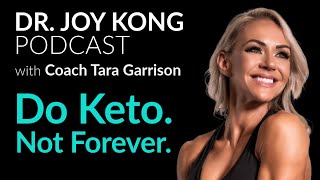
Coach Tara Garrison lost muscle on strict keto for a year, then regained it by reintroducing carbs. She argues keto works as a metabolic tool but shouldn't be permanent, and shares specific markers like fasting glucose and HbA1c to know when to add carbs back in.
Questions this video answers
11% (she reports being 11% body fat when she started keto).
Low 70s to low 80s; she says fasting glucose should be in the low 80s at the highest, often in the 70s (occasionally high 60s when ketones are high).
Ideally ≤5.2 (she recommends below 5.3, with 5.2 or 5.1 as more ideal).
About 0.7 to 1.2 mmol/L; she notes >0.5 mmol/L is a basic threshold for ketosis.
About 350 grams of glycogen total in muscle and liver (average person).
Chapters
If a person goes back on carb, should they just as long as they're working out, should they just keep doing the carbs or should they periodically go back to keto?
So I was starting keto from a very, very different metabolic place. I had just qualified for the Boston Marathon. I had put on a ton of muscle and I did keto strict for a year and I lost muscle. Like I was doing all the things right, but I was just not feeling right. My athletic performance was going down. It got me in this very open minded place in regards to bio, individuality and how people respond to things, you know. And so after about a year, I started bringing carbohydrates back in. I started gaining a bunch of muscle, leaning out again like I felt way more satisfied in my meals.
Keto actually helped you upgrade your metabolism.
Oh, for sure. And that's why I still recommend it to most people because of what you're doing is you're teaching your body how to operate really, really well without being dependent, dependent on carbohydrates.
Hello everybody. Welcome Back to the Dr. Joy Kong podcast. And you know, this is where I invite some of the top experts in various arenas of health and fitness and wellness to help us navigate this world to be healthier, live longer and live a very vibrant life. So today I'm super excited to have Tara Garrison to to come and share with us her wisdom and experiences and really give you some good tips on how you can optimize your health. So Tara, thank you so much for coming on to the podcast.
Yeah, thanks for having me. It's gonna be fun.
So Tara Garrison is a founder of Hire, a high performance health and life coaching company that includes training, nutrition, biohacking and mindset coaching. She has helped many celebrities, professional athletes and top executives to optimize their health. And Ter is author of short term Keto in which she teaches how to do keto but not forever, to optimize metabolism, brain power, athletic performance and physique. Boy, do we want to hear about all that. He's the host of Inside out health podcast in which she interviews world class health and mindset experts from around the world. She also hosts higher retreats, unique transformational experiences held in energy vortex locations of the planet because she believes mother nature is her greater co facilitator of transformation. And Tara is the mother of four. You wouldn't be able to tell that when you look at her Instagram posts. Amazing shape. She's an avid weightlifter and body Boston marathoner and lover of nature. You can Follow her on Instagram at coach Tara Garrison. So, Tara, thank you so much for being here. I can't wait to dive into, you know, what you can teach everybody.
Yeah, I'm excited, too. You know, you mentioned that you have been dabbling in the keto space. And I love, you know, obviously, like, I was specialized in keto for a long time. Like, that's pretty much all I was doing was ketogenic diet coaching and training, and then started to have some. Just some insights as I went through that journey and saw some holes in the messaging that we were giving people in the keto world and thought that I could, you know, start to open up those types of conversations and maybe be a little less dogmatic and still see the beauty of keto. Right. So I think, you know, we can get into that if you'd like. Yeah.
So maybe before we get into that, I would love to hear your personal story.
Sure. Yeah.
Where you were and then your transformation.
Okay. So, like, you're saying it's hard to tell I have four kids or whatever, and thank you. But it's just so funny because, like, before I had kids, I was much more overweight. Like, I went kind of the opposite direction that people usually do, you know, Like, I was more overweight. I was overweight pretty much. Weight was an issue for me my whole life, starting in third grade. Always an issue. And then, you know, I did run marathons. Still struggled all the time. Right. And then, so it wasn't until after I had all four of my kids that I started weightlifting. And that's when everything changed. And so first it was weightlifting. Okay. And I know people are hearing that. They're like, well, I lift weights and everything isn't changing. And that's where I was for a while. I thought I was like, I am, like, living the life of a freaking bodybuilder. And I still look exactly the same, but I know I have muscle under this. And so that's when I changed nutrition. I did not do keto in the to do, like, that first part. I was just your basic, eat whole foods, go higher protein. You know, that really hard transition of, no, I'm not going to eat fast food anymore or all these processed garbage. I'm going to eat real foods and vegetables and, you know, plants and animals that are healthy. And, like, I just did that full thing. Right. And then I found keto. So I was already.
How did that work for you? First of all, that.
It definitely worked. I went from, I don't know what my body fat was before, but based off of working with people so many years now, I say I was probably in like, the mid to upper 30s percent body fat, something like that. And then.
Overweight.
I was overweight. Yeah. And then. And by the way, like, most women are in that range. Most women, like, you wouldn't even think they're like 145 pounds and like, 38% body fat, which is like, if you think about that, it's like your life is going to be really exhausting because you have hardly any muscle helping you get through life, you know? So it's very common. If you're in that boat as a woman, like, you're not alone. It's super, super common. And we can get into that. But I was 11 body fat. I got my first DEXA scan right before I started keto, and I was 11 body fat when I started that journey. So I was starting keto from a very, very different metabolic place. I had just qualified for the Boston Marathon. I had put on a ton of muscle. So that's the starting point. I entered keto in, which is very rare. Most people are doing keto to lose body fat or for a therapeutic medical reason. Right. So for me, I was doing it for the brain benefits. I wanted to see what it's like. I knew it was kind of this metabolic upgrade and all that. And I did keto strict for a year. And I lost muscle. Even with. At the time, I was dating someone who was very experienced in keto and we were optimizing everything, eating high protein. I was eating really high quality food using leucine, which is an amino acid that can help with muscle preservation and building. Um, like, I was doing all the things right, but I was just not feeling right. My athletic performance was going down. I actually ran the Boston Marathon in ketosis. Um, that was pretty brutal. And I don't think it was keto's fault. It was that I didn't know you couldn't bring a camel pack with you. And I had it full of ketones and salt and all that. And I was deep in ketosis and it was really hot in Boston that year, and I got severely dehydrated because they wouldn't let me bring any of that stuff. Stuff. So anyway. But even still, like, even in my running training in the gym, like, I just didn't. I never felt as good on keto as I did just eating kind of the way I was before. Like, healthy carbohydrates, a little bit lower fat, higher protein. And so I did my whole keto year, you know, and it was an interesting experience for me because you know, my partner at the end, at the time and I were coaching people and that they're doing the same things I'm doing and they're like losing weight and feeling amazing and you know, and it. So it really opened up this like, it got me in this very open minded place in regards to bio individuality and how people respond to things, you know. And so after about a year I started bringing carbohydrates back in. And mind you, I'm really deep in the keto space by then. I'm at all the conferences, I know most of the people who are pushing out the keto movement. I'm like this keto person, right? And, and I'm now I'm like dabbling in bringing carbohydrates and. Cause I'm a little bit of a rebel. Like I don't really follow the crowd too much, you know. And I was like, okay. And all of a sudden I started. I, I mean I have it all Dexa. I have all of this pictures, Dexa scans, all of it in the intro to my book, it's called short term keto. But I started gaining a bunch of muscle, leaning out again. Like I felt way more satisfied in my meals. Like everything was going up, everything and that. But what was cool about it? It was like I could tell things went up even better than before. I had done keto because when you're keto adapted, like you become so non dependent on food for energy that now I was like had this superpower. I'm like, man, I feel like I can go as long as I want without eating and I just get more energy and I don't have as many like, yeah, I just felt I could tell that my metabolism had been upgraded. Right. So that's where I was at.
Keto actually helped you upgrade your metabolism.
Oh, for sure. And that's why I still recommend it to most because what you're doing is you're teaching your body how to operate really, really well without being dependent on carbohydrates for energy. That is invaluable. So if somebody's hangry or like they just, you know, when you get to the point where you're like so hungry, you're just like almost freaking out. It's like you're freaking out. Like I'm freaking hungry. You just don't get like that anymore after you do keto for sufficient time for you, which depends on the person. And so like that's the gift That I care. So now intermittent fasting is really easy. Where before, like, I couldn't go that long without eating before, I was like, okay, when's my next meal? When's my next meal? So I got that metabolic benefit. So anyway, to kind of sum this all up, I started to speak out on this, and it was a little scary, actually. Like, as I was so keto specialized. You know, I remember being terrified when I first put up sweet potato on my Instagram. Like, I was like, I'm gonna be like, out. I'm not in the keto club anymore. No one's gonna. You know, it was so funny back then, but. And then I just started talking more about metabolic flexibility and, like, why keto is awesome for the right person for the right amount of time. But why we don't need to be pigeonholed into this belief system of, like, one way is better than the other. Because that's what I was experiencing in 2018, when I really started speaking up on this, was that there were the people that were like, keto is superior. Keto is better. Like, you're basically an idiot if you don't run off ketones. Like, really? That's kind of how it was. And then there's the people that are like, keto's so stupid. You don't need to do keto. Like, there was this huge divide, and so I was simply trying to bridge this. Like, here's why keto is actually really amazing. And especially for a bunch of therapeutic things like neurological diseases. Epilepsy, Parkinson's, Mississippi. Type 2 diabetes, people with high blood sugar. I mean, like, sorry, but if you can't see how helpful keto is for those things, and you're just not looking that deep, right? And so the keto is amazing for so many reasons, and you feel that.
It benefited you for some time. And then things started to slip.
I feel like I did not need to do keto as long as I did. I think I would have probably been just fine to do keto for four to eight weeks, maybe 12 weeks, and I would have gotten that benefit and been good. So, you know, it was new. We were kind of pioneering this whole. This is. Back in 2017. Like, we were kind of in this whole exploratory phase with keto. I mean, the keto diet has been around since the early 1900s, but in terms of being popular for people like you and me, that was pretty early, um, for the general public. And so, yeah, I do feel like the benefits I got were this. I could go a Lot longer without eating and it didn't change my mood. Right. That is a huge gift to give yourself and to. I do feel like there was like a. Because I had been kind of low fat, it's probably too low fat. Before that I could feel this kind of mental, emotional benefit of getting more healthy fats, in which of course I could have done probably that without keto. But for me personally, it was like this huge aha of like, girl, you need more healthy fats and you've been eating for sure. You know, and so those are what I kind of too. So I like keto for even somebody who was lean like me, if they really want to like really deepen their metabolic flexibility. Meaning you can run without carbs really well or you can run with carbs really well. That's what I like it for. And then for people who want to lose body fat and tap into their fat stores more easily or maybe they have high blood sugar that they would like to correct, like they probably need to do keto longer than I needed to. I didn't need to lose weight, obviously, you know, so there's different reasons for different people to do it. But I think pretty much everybody, especially in our day and age of food abundance and we don't have to move really if we don't want to. It's a really, really helpful tool for being able to make sure that your body isn't becoming dependent on incoming carbohydrates for energy and can run just fine without it.
Okay, but let's backtrack. So what do you think adding carbs back is doing for the body?
Let's say that somebody is pretty overweight, they have a lot of body fat to lose and they do keto. Maybe they had high kind of high blood sugar, were pre diabetic or something like that, they do keto. All of a sudden the weight just starts falling off. Right. Maybe they lose £100 doing keto. They've had this life changing metabolic upgrade from doing keto. And I've worked with a lot of people coming from that place. Okay. Because I kind of became this like after keto person for a while. Right. And that one what happens is like the reason they lost so much weight is because keto was helping heal the things that were not right in the body. Their blood sugar was getting regulated. They, you know, were learning, their body was learning how to tap into their own fat stores better and use them for fuel. And then once those things got fixed, so to say they, you know, maybe they have 20, 30 more pounds to lose. And. And they're like, why isn't this working like that anymore? Maybe I just need to, like, keto harder. I just need to keto harder, you know? And what's happened is that keto wasn't fixing anything anymore. They restored their blood sugar. They have healthy metabolism now. And that's why it's hard for some people to, like, emotionally get to a place. Imagine you lost 100 pounds, not eating carbs. What do you think your relationship with carbs is going to be? I am never eating any of those ever again. They ruined my life. Like, carbs. Life sucks. Not carbs. Life is awesome, right? So there's this huge, like, belief system. And that's why I like to educate on this, too, because here's where what happens is, let's say you lost £100. Now you've built some muscle. You've been going to the gym, you got some muscle going on. What you have to understand is you are in a different body now, right? Like, your blood sugar is regulated, you have muscle. You're, like, starting to get more intense workouts. And so that's when if you reintroduce carbohydrates, you can. You can take those carbohydrates and use them towards athletic performance, towards muscle recovery, but they don't. A lot of people don't realize this. So let's say you did keto forever. Your blood sugar's, like, super great. You're just starting to not feel as, like, awesome on keto anymore. You're not getting the benefit as much anymore. You're not losing weight. Like, it's just. You're in this. That's the. That's it. Okay, I know that's a really weird way to describe it, but that's how it feels for most people when keto has kind of served its benefit. And of course, you can do blood labs to actually verify all this stuff, but not everyone's going to, Right? But in that place now you're going to the gym, right? And this is how I like to explain it to people with carbohydrates. When you reintroduce carbohydrates after you've been keto for a long time, the first thing to know is you may. Your. Your pancreas is not going to be as great. It's not going to realize it needs to send out that much insulin. So this is why they did a study on rats that showed, like, oh, keto makes you insulin resistan. That's not true. What happens is for two, about two weeks after you start reintroducing carbs, your body's just, like, not used to having to secrete that much insulin. And so you may have, your blood sugar may go way up. So I say if you're in that phase of like, okay, I did my whole keto journey, I'm ready to start trying out carbs. I'm lifting weights like crazy, I'm exercising, I have a reason to eat carbs. Because guess what? If you're not lifting weights really, and you're not very active, maybe just say keto. Really? Because, because what happens is you're going to come in, okay, let's say those two weeks have passed. Now you're, you know, you're lifting weights. What happens is this. Let me, I'll try to paint the picture. You, I like to call muscles, your muscles and your liver, your carb sponges. Okay? They, the average person can hold about 350 grams of glycogen or stored carbohydrate in their muscles and liver. The more muscle you have, the more you can store. Okay, so let's say you get your, your carb sponges are full, you've eaten some carbs there. Let's, you know, you don't really know, but let's say your muscles are full of glycogen in your liver. You go to the gym, you crush some weights, you walk, maybe you do a little cardio. Well, now you're going to just dump that stored glycogen out of your liver and muscles into your bloodstream to be used for fuel. And because you have healthy blood sugar management now, all of that works as it should. So now you have room, you have room in your muscles and liver for more carbs to come in. They come in, they get stored overnight. You go in and you work out. The next day, they dump out again, you go home, you eat an adequate amount of carbs, you come back in. And so you're just kind of emptying out carbohydrates and putting back carbohydrates into your muscles and liver to accelerate athletic performance, right? Because carbohydrates are very helpful in making ATP or energy, right? So this is the part, the aspect of, like, once keto has served its purpose for restoring healthy blood sugar, you know, your body knows how to use ketones. You've done keto for, you know, eight weeks to three years, four years, five years maybe. And it's, you're just not feeling as great anymore. That's what the book lays out. Like Systematically is like, here's how many carbs. I would start with. Here's a training plan, if you would like it, of how you gradually do this and then let. Now we're going to lower fats a little, increase carbs a little, lower fats a little, increase carbs a little. And then, like, how are you feeling? Like, you've got to check in with yourself. So there's checklists of, like, what happened with my digestion, what happened with my sleep, what happened with my energy, my mood, all of that. So, yeah, I mean, it's.
It.
I apologize that sometimes it's hard to generally deliver all of these messages in a quick blip on podcasts because there's so many caveats, there's so many different people in different scenarios. But generally speaking, what I'm trying to say is, like, when you, when you go into any dietary extreme, your body just starts to adapt to that. And I do think it is good to give it variation, flexibility so that now you can come back into a more balanced place. Your body can like, I'm good on keto, I'm good with carbs, I'm good on keto, I'm good with carbs. Right.
So once you're at a good. Well, not even good. Once you hit a plateau or when you're at a good body weight, you know, good metabolism, what's the optimum approach?
Yeah, there's a couple things that I'm like, I gotta say. One is, okay, you're hitting a plateau. Let's say you have. You're like hitting a plateau on keto and you're, you're still like 35, 40% body fat, and you want to lose more than that. That's not necessarily a sign that you should bring carbs back in by itself. A plateau is not like, yeah, a plateau would be a sign if these other things were in place. One, your blood sugar management is really good. And so in order to know that, I do recommend testing when you're on keto. Your blood sugar should definitely, at least at the very highest on your fasting glucose, be in the low 80s. On keto, probably it's going to be in the 70s or, you know, in some cases, if ketones are really high, even possibly high 60s. But we want, like to see like, 70s at the highest. Like 80s in your keto. Right, like low 80s, very low. And then your HBA1C, right, should be pretty low if you have been keto. So that's a measure of your blood sugar over a few months instead of just like that day. So if those are still. Let's say you get your in HBA 1C wanna see it like ideally below 5.3 would be like the max I would like to ever see. You know, 5.4 is kind of pushing at 5.5. Not good. You know, stay keto, I would say. So you wanna, you're plateauing, but also like your biomarkers, those two especially HBO and C probably being the most important one is like under 5.3 or lower. I would say ideally more like 5.2. 5.1 would be like ideal. And you're plateauing, right? That's like, okay, well, I have good blood sugar management now and this doesn't seem to be working. That combo I think would be good. But because here's the thing, a lot of times people are plateauing on keto because they're not really in ketosis. Most people this day and age are doing their. Their keto ish. That is the worst thing you could ever do. I am telling you, if you want to just not lose weight or build muscle or have energy or sleep well or have good workouts, be keto ish. I'm. For very few people that might work. But for most people, this is what you're doing. You're not actually in ketosis because if you're eating like that, you're probably not checking your blood ketones. And it is really hard to eat low carb enough to actually be in ketosis for most people. So there's caveats, obviously, but like, if you don't know if you're actually in ketosis and you're just kind of eating keto, you're not, you're most likely not in ketosis. Okay? And so now what you're doing is you're eating of your body is running in a glycogen system, a glucose, a carb system. You're not in ketosis, you're in a carb system, but you're barely eating any carbs. So now you're just. You have no energy because you're not making ketones, which are energy bodies, and you're not eating very many carbs and you're stacking on fat like crazy, which is super calorically dense, tons of calories, but, but your body isn't using that fat as its primary fuel source to make ketones. And so you're just asking for no results. So that, that's why I have to say that in terms of like, oh, I'm plateauing on keto. My question is, do you 1. Do you know if you're actually in ketosis or not? Are you testing your ketones? Because if you're not and they're not. 0, 0.5 or above, really, you want to kind of be in this, like, 0.7 to 1.2. I kind of see as, like, a sweet spot for a lot of people. If you're not above 0.5 on a blood glucose test thing and you're not testing regularly, you're probably not in ketosis. Okay. So that would be my first step, if you're plateauing on keto, is make sure you're actually in ketosis and doing the thing. Right. Right. And then another reason people can plateau on keto is like, they're just. They're just eating way too many calories on keto. That's what I was doing. Okay. That's part of the reason I gained some weight on keto is because I didn't know. I was 11. Body fat, I was like, I didn't know. I was. I had no idea. I'm like, that's really low. I'm so surprised. I still have a period, you know, like. And so I was, like, purposely just kind of indulging on keto. So that kind of happened at first. Right. Then I actually tried to lose some of the body fat, and I really struggled to do that on keto personally. But then when I brought cars back in and stuff, my body just responded a lot better.
So if you had trouble losing on keto, even though you reduce your calories, you know, what's the reason? You think by introducing carbs back, I.
Won'T give myself too much credit? Okay. I wasn't actually. I wasn't actually reducing in calories. Okay. For me, what was happening on keto after a while is I was having a very hard time feeling full at the end of my meals. So I was trying to. I was trying to do that, but I was not being successful at it. I was like, oh, I'm still freaking hungry. I'm just gonna have, like, more of this. Or I'm, like, snacking on nuts a ton. Or I was, you know, like, having a bunch of keto treats and cookies and bars, and I was just like, I'm so hungry. I'm so hungry. I'm so hungry. You know? So I was trying to do that, but I wasn't actually doing that. And so there's that. Right. It was just. I. And when I brought carbs back in for me. So insulin is also a satiety Hormone. So, like, there are some people like me that I notice that there's not everybody. Like, some people are like, oh, you're so satiated on keto. I'm like, I'm not. I mean, I am. Once the meal, once that time has kind of passed, I can go like freaking forever without food. I feel that. But during meal time, that pro stuff, postprandial, like, insulin thing for me, I need that. That works really well for me. If I was. I knew it the whole time, I was like, if I could just have like some blueberries or an apple or like some strawberries or something, I would be good. But instead of being able to have those, now I'm eating like 2,000 calories worth of macadamia nuts because I'm just still hungry, you know?
Yes.
Yeah. Just being real about all that. Like, I was trying, I. I was trying to do that. But on the more mental, emotional, like, hunger, you know, real human level, I was not being successful at that. Whereas when I brought cars back in, I was right. My intuition was correct. Like, I could just eat my meal and have some blueberries or some strawberries, grapes, watermelon, and I'm like, okay, I'm good, like, moving on with life, you know?
Yeah. So, yeah, I can totally relate. If a person goes back on carb, should they just. As long as they're working out, should they just keep doing the carbs or should they periodically go back to keto?
Okay. So I think that they should check again how their blood sugar is responding once they are on carbs. So if you did keto, you really should have a blood glucose meter because they usually come hand in hand in hand with the ketone meter. They do both. Right. So if you do, if you should have that. So once you've brought cars back in, it's been maybe like three weeks. You've gotten past that little lag. I said of like, sometimes your blood sugar isn't great, like after doing keto, because your body's getting used to excreting more insulin. So if you. It's been, let's say, three weeks. Test your blood sugar in the morning, make sure it's in the 80s. If it's like 100 and something. No. Yes. I would definitely recommend going back on keto for longer. You are knock on your way to type 2 diabetes. If you're waking up in the morning and your blood sugar is consistently a hundred something not good. So definitely do it longer. Another thing is testing your HBA1C, like I said. So if you Know, let's say you brought carbs back in. It's been, you're, you know, you're lifting weights, you're. Plus also you're just gonna kind of know how you, because of how you feel. But you know, after a month or 2, get your HBA1C tested and if it is again, like, I really like to see, like, I would say 5.3 is the max HBA1C I really like to see for healthy blood sugar. And if not, like, I would either consider going back into a phase of keto or you could try intermittent fasting and see if like eating cars but only during a certain window like of the day might be able to help that on a continuous basis. And then also eating sufficient protein and fiber can also help with blood sugar management as well. So like, if you're not, some people are like, I'm not doing keto again, I just don't want to do keto again. Then I like to say, okay, cool, let's not do it. Because if you're not up for it, you should. I wouldn't recommend it. So in those cases, I like intermittent fasting, weight training, walking, higher protein and fiber to help with blood sugar regulation and going that route. So that's what I would look for is like I would really test and see how your blood sugar is doing after you've brought carbs in for three to four weeks. And if you're still having those issues, either go back to keto or try the intermittent fasting, high protein, high fiber approach.
So what about on keto, if somebody eats a lot of protein, you think these people could have elevated blood sugar?
Yeah. This is always such an interesting topic. I've seen it go back and forth and back and forth and back and forth. The gluconeogenesis debates, you know, and obviously that is a real thing. You know, your body can turn protein into glucose. As a simple way to put that, the only time I really see this be an issue for people is when they are inactive. So let's look at the carnivore people as an example. They're interesting little like tribe of the keto world because they are eating a lot of protein. Kind of almost most carnivore people, so eating only meat and meat products, most of them are not. I don't see them in the camp of like really like tracking macros. That's kind of like the crowning thing is like, I just eat all the meat I want. I just all I eat, you know, and so they're eating higher Protein. But a lot of them are saying maybe not all of them, but a lot of them are staying in ketosis and they also tend to have a lot of muscle mass and I see this kind of go hand in hand. It's like the carnivore people. I see them lifting weights a lot and I actually do see them kind of like looking the most like having the healthier body compositions of the keto world, like being lean and strong and all of that. I'm not like a personally a carnivore fan except for like a short period of time as a intervention type diet for the gut micro. I don't like carnivore long term because of the gut microbiome and I won't get into all that. But I'm just saying I'm not trying to like push carnivore on people. What I am saying is they're an interesting group to look at in terms of eating higher protein keto because I see them getting pretty phenomenal results in terms of body composition, losing body fat, gaining muscle, all of that. So if you are on keto, let's say you're, you can't really be that active right now and you're doing keto and you're eating a higher protein and you're like. And high is a, I mean that's obviously not an objective word, right? So let's say you're eating like a hundred. Let's say we take somebody who's eating like 150 grams of protein a day and they're 150 pounds. Okay? So it's like 40% of their calories and they're not active and they're never getting into ketosis and they're eating like 10 grams of carbs a day. Then yeah, either you got two choices, either you need to get your butt moving and you need to get to the gym and start like, you know, using some of that or drop the protein down a little bit and see if that helps you get into ketosis. So I do think it, it matters how active you are in terms of how much protein you're eating in keto and still being able to stay in has been my personal experience working with people in IT over the years.
And of course there's this huge debate between veganism and, and of course the other side is the carnivore. But it seems like consensus from around the world looking at blue zones that that these longevity people do have a little bit of animal protein in them. Except for I guess Loma Linda They. They're a third of the population are vegan or vegetarian. So. Yeah. Do you have any particular thoughts?
I just. I really don't like dogma. And you see this happen in the nutrition world. So much of, like, right, wrong thinking, good, bad thinking. Like, it's like, religious, like, zealot. Like, you know, it gets really heated, and it's fascinating to me because I don't. I don't like to operate that way. And so I wrote about this in my book because one of my biggest things before I ever did keto, when I heard of keto, I was like, literally googling. I'm like, healthiest populations in the history of time. And I want. I'm like, what did they eat? What? You know, and I'm going on this deep dive. I'm like, they all eat carbs. All of them ate carbs. So what's the deal? And so as I went through more deep thinking about this, I was like, yeah, but there's other facets involved, too, because now, like I said, we have all these processed foods. We have astronomical levels of carbohydrates that aren't really present in nature. Right. We're eating tons of processed bready products, candy, sodas, desserts, all that. That's not the same thing as vegetables and fruit and potatoes, you know, and we're way less active. We're living in different cultures. Like, walking for a lot of Americans is when you're mad because you had to get a bad parking spot. Like, that's like, literally, you know, and you, like, what, barely walked around the grocery store and went home. Like, we are pretty sedentary. So as I sat with it more, I'm like, yeah, there's more factors involved, though, than. You can't just isolate nutrition when looking at health. But that being said, you know, as I got deeper into the keto circles, we were like, plants are trying to kill you, and they're bad for you. I'm like, oh, my goodness gracious. Like, we are getting way, way, way ridiculous. Sorry. That's my opinion here. So I wrote about this in my book. You know, you look at, like, Japan, for example, and how high carbohydrate high. 85% carbohydrate diet is, like, when they tested, like, did it. I think it was in the 60s or something, when Japan, Okinawa was just super high on the longevity thing. Like, the most centenarians in the world, they were eating 85% carbohydrates. 85%, which is very little protein. And then you look at Other, you know, Asian, a lot of Asian countries, like they eat very little animal proteins but they do eat animal proteins. And so to me, like saying that we shouldn't eat any animal proteins at all, I do personally disagree with that. I would never. To somebody who tells me that they don't want to or that they don't and they're feeling great, I would never disrespect them or think, well they're just wrong. You know, I really can't stand that. Who am I to say that they don't have some unique thing going on in their body, that that's not right for them right now? Sure, go for it, see how it goes. But also don't get so dogmatic in it through like belief systems and indoctrination that you're not being honest with yourself if things aren't going well. And the same thing goes for the animal people. It's like, it's a lot of really dogmatic thinking. It's like, I know I have put clients on Carnivore as an intervention, I'm not against it as a tool. But when we start saying things like plants are trying to kill you and like just because like I had something wrong in my gut, that I couldn't digest plant fibers because I lacked certain diversity in my microbiome, I'm going to tell you everybody that they also shouldn't because they might not have the same thing going on in their body that you did. You know, and a lot of this is social media. Like if you go to an actual naturopathic doctor, functional medicine doctor, integrative medicine doctor, like in real life they're not dogmatic like this, this is like a very social media. I'm trying to have a voice, I'm trying to be famous, I'm trying to have a message, I'm trying to have a niche, I'm trying to make money like it is that. Sorry, it is, it's a suit. I'm trying to be right like and I just honestly don't have any interest in being in those worlds. So I just kind of mind my own business and say aligned with people who are more open minded and respectful. And I think that you could, some people might have a life changing transformation going on a carnivore diet. They, for them in their thing, their body, what they need, they've got tons of gut inflammation, all this stuff, systemic inflammation. They don't have that bacteria to break down fibers from plants. They have all these food sensitivities. They go carnivore Life changing transformation. And then you could have somebody else that has great bacteria to break down fibers and plants and whatever they needed in their body. Going through a phase of a vegetarian or vegan diet was exactly what they needed at the time. So I think that we, our desire to be right as human beings and this disrespectful energy that like everyone needs to subscribe to my belief system is something that I hope we evolve out of.
If you look at genetics and everyone's genetics different and everyone's microbiome is different, so that's why, you know, we have to tailor each person. Yeah. So. So I'm curious because you're staying in such amazing shape, right? Taking care of four kids. So what is your regimen like? Like what, what do you, what do you eat these days and what's your workout regimen? I think, I think people hear about it.
Okay. So, like, I do feel like I've gotten to a place that I'm like, wow, like kind of amazed, honestly, that I'm staying like so lean and have muscle because I'm like, not. I don't feel like I'm trying that hard anymore, which is crazy. As somebody who was overweight most of her life and it was always hard. So I've really sat with this and I'm like, okay, what, what is really contributing to this? So I'll share. The first thing is building muscle. That is, that gives you so much leeway on what you eat because so much of your calories, your metabolism, your like your carbs and everything. Like I described proteins, like they're getting shuttled for into your muscles. So you have like kind of these big calorie sponges or carb sponges. Right. So I do think that is part of what it is and I am consistent. Like, I have noticed, I'm like most people, I don't think they're as consistent as I am in the gym. Like when I go on trips, my first thing I'm doing is like googling, like, what's the coolest gym in the area? Like, I can't wait to be in there. I am in the gym almost every single day. I'm not always going intense every day. Some days I just walk. I just do my hour of walking. If my body needs recovery, I can tell I'm very, very connected to my body and intuitive and loving and nurturing with it. So if I can tell, I'm just like not having a lifting day. I just intuitively flow with allowing my body to just walk that day and Cool. And we'll, you know, we'll get back to it when you're feeling better.
How many days do you lift?
Like I said, I flow with it. So if I have energy, I lift. And the way I do it is this. It's like, I kind of have a loose schedule, right. Monday is legs. Well, I'm kind of going through a little different phase, but typically this is what it has been. Monday's legs. Tuesday's back and biceps. Wednesday's. Wednesday is glute chest and abs. Thursday is shoulders and triceps. Friday is a my fun day hit circuit. Saturday is a strength day. Sunday is like, probably walk or, you know, maybe do a little something if I'm really feeling recovered that day. Okay. Like I said, like, if it's a Tuesday and I'm supposed to do back and biceps that day, and I just don't feel, like, able to perform well, I just walk that day instead and I just skip it. So I'm pretty flowy with it that way, you know, so that's. I'm not saying everyone can start that way. I've been doing this a long time, you know, so, like, I'm not really that worried about, like, if I. I'm not trying to be like some huge muscular woman. I just really love lifting weights, you know, so I don't have this fear of, like, crap, my biceps are gonna disappear. I. I don't care. That's okay. I'll get to that next week, you.
Know, Love lifting weight so much.
It is, like, the funnest part of my day. It's like, you. You get in there, you get your good music going. I' workout, so I'm a little bit high. I'm like, walking. I'm like. And then getting into the weightlifting part of it, like, it's not fun at first. So, ladies, if you don't love lifting weights, guess what? I used to hate lifting weights. I was like, such a little brat face about it. When my ex husband be like, come lift with me. I'm like, I hate lifting weights. It's so boring. It's not a good workout. Blah, blah, blah. That is because you don't have a good neurological connection to your muscles yet, okay? So you have to get past that hump of like. Yeah, it's not great when you, like, can't even feel your biceps doing anything. But if you keep doing it, you'll get to this place where you're like. It's like, exhilarating how hard you can push yourself and those workouts and it is really, really, really fun. So I just literally think it is like the funnest part of my day. It's recess, it's playtime, it's, you know, and I get a little high from.
From the pushing, right?
Exactly. Every neurochemical there is that it gives you like a high feeling. Dopamine, serotonin, gaba, anandamide, adrenaline, you know, like you get all of this neurochemical boost. So it's great, you know, so then I'll just kind of lay it out like I do. I am very consistent with exercise and I am also really consistent with sleep and bedtime. Now sometimes life happens. I make my choice. I'm like, this is worth it. But most of the time it's not worth it. Most of the time things at night are not worth it at all. And I go to bed at about the same time and get up about the same time every single day, right. And so, and then I have like a morning routine, I meditate, I'm grounded. I like, you know, have this little routine and then I go to the gym and do that whole thing and then I'm ready for the day. So that sleep thing was a game changer. If you're like already doing a lot in your health and things are feeling hard and you're not, you don't have your sleep right, that's. That would be the biggest thing I would take a look at for sure. That was like, that's when the sleep thing is when everything stopped being hard. When I had to stop like having so much effort to stay lean or healthy, like not gain body fat, sleep, that was it, that was a big game changer. And then I intermittent fast, that's how I kind of at this point maintain. I feel like the benefits of doing keto that same kind of like while still being able to eat carbs for athletic performance, serotonin, gut, health, like all of that, right. And so I'm not like crazy. I'm not like at 11 o', clock, oh my gosh, it's 10:49, I can't eat yet. I'm not like that. It's just I wake up, go do my morning routine, go to the gym and then like, you know, once I get hungry, I just start eating and I try to be conscious always of higher protein. Always like protein is always like the number one thing I think about every single time I eat. I have a pretty high demand for it because I have muscle, right? So it's going to keep you full, it's going to give you all the amino acids for your mental health, your and your body recovery and all of that. And then I kind of add healthy fats and carbs to that.
I don't do a 16,8 intermittent fasting.
I. I'm not that mechanical with things. I would say yes, pretty much. It's generally about, see, I ate today, I ate at 10:30 for the first time. And usually I'll be done for sure by six. You know, usually I'm usually done. So really the way I'm thinking about it is I just want to wait until I'm good and hungry to eat after my workout, because that works well for me. And then I'm thinking I want to stop eating a few hours before bed so my body can enter repair mode really well and my brain can be healthy and cleanse itself and all that. So I'm not doing that to be lean. I'm doing that for longevity and like, love for my body. Like, I know that you will repair better in sleep if I don't eat right before bed. And I know that I will feel amazing the next day, like mood, energy, all of that. So when I feel maybe hungry every once in a while at like 8 or something, I'm like, not even interested because my motivation is I want to feel awesome tomorrow and I want my body to be able to recover well during sleep. So that, that those are the biggest things. Consistently weightlifting, walking, like I do. I walk every day at the gym for most days an hour. Right. That's a lot of walking. Right. That's a long time. And I'm like, uphill and I'm kind of booking it. And I'm like, working on my phone. It's part of my, like, work routine, you know. And then I lift. Not that long. Like, my lifting workouts are pretty short, but they're intense. Right. And then I, you know, eat, eat healthy food throughout the day and make sure I cut that off, go to sleep and like, that's the flow that I'm in now. That has been working really, really well for me.
Yeah. And when you do eat, what are you eating?
Yeah, I'm definitely not as big of a purist as some of my friends and colleagues. You know, Like, I fully admit I'm like, I eat stuff that isn't perfect a lot, but very typical. Is going to be like Greek yogurt with granola, you know, that's like, not sugary. Obviously. Lately I've been liking that Triple zero one because it has, like, stevia. It's stevia sweetened I used to just do organic Greek yogurt that was plain and use like a stevia maple syrup in it and then a little bit of granola. So that's like my carbs and fat pro. That's a very typical post training carbs and protein. You know, there's a little bit of fat in there, but you don't really. Fat is not like it's the least important macronutrient after weightlifting. Right. Protein. Unless you're obviously keto, you're gonna eat it. But. And then usually some sort of like grilled meat. So like lately, you know, so grilled chicken thighs with like Redmond real salt has this awesome rub and it's super fast and I'll grill up a bunch of it and then some sort of like vegetable that I've. I, I love using the oven like anything. It's like you can, you can do cauliflower, broccoli, sweet potatoes, purple sweet potatoes. I'm obsessed with this Japanese squash called kabocha lately. And like you just toss that stuff with some avocado oil, put a bunch of salt on it, just roast it at like 400 till it looks good. And then I just keep tons of it in my fridge. So whether it's like chicken thighs or burgers or whatever, something high quality meat, I grilled in that and then maybe having some fruit on hand, like that's pretty standard for me. It's just stuff like that and I just keep it rolling and then, you know, in terms of like treats, I might have like a built bar, you know, like some sort of protein bar. Like that.
Sounds pretty good.
Yeah, pretty simple, you know, like people ask me to share what I eat and I'm like, it's not groundbreaking. It's not groundbreaking. I think it's more important when you eat and then what you eat. As long as you're eating high protein, high quality food in a variety of food, I, I'm bigger on when you eat than what you eat.
And lastly, I want to ask you a little bit about this retreat that you host. Sounds pretty amazing. I'm interested in going to Joe Dispenza's retreat. So what do you do in your retreats?
Thanks for asking. So retreats are literally what I have learned. I feel like I'm on this earth to do. I feel like all of my gifts and talents, all convergence there and so they are transformation retreats. My top two values in life are freedom and fun. And so it's really important for me for people to come to these events and feel fully accepted and free to just be themselves. Like, you don't have to be perfect. You don't have to have a perfect show. Nobody cares if, like, if you have stuff you're going through, we're not judging you, we're here accepting you, you know, So I really setting that tone of like, you're safe here to have stuff, right? Like, you don't have to be. You don't have to. You can take the mask off. We don't care anymore, you know, and then having fun. So doing a balance, because we do do some deeper transformation work, but I think it's really, really, really important to balance that with a lot of fun. So we do fun activities. We've got one coming up in Sedona in April. We just got like, confirmed. I was like, we need some adrenaline. We need some of my. With my retreat partners. I was talking about it. So we've got like this crazy ropes course thing coming. It is like supportive of anybody of any age or, you know, weight or anything, but we're going to be doing like multiple repels with like, you're hanging upside down, like traversing on this rope. And like, it's very supportive. And like, obviously people don't have to do it if they don't want to, but, you know, that's kind of more on the adventure side. And then, like, for example, in this one, we're doing breath work with Anahata Ananda at her Shine Sedota studio that I'm so excited about because she is just like one of the most powerful, incredible, divine, feminine, like queens that has been doing this a very long time. So it's like, yeah, we're gonna go have fun and then we're gonna dive in deep and then we're gonna talk about it and we're gonna eat good, amazing farm to table meals. And then we're gonna go have fun and we're gonna go deep and we're gonna play, you know, so it's this kind of intertwining, intertwining of deep work and fun, in love and acceptance. And I, like, I'm not trying to like toot my own horn on my retreats, but like the, the people who have come to my retreats, we'll just say like, every single person, except one who couldn't, who came to my last retreat, put on a deposit on the next one. Like, it is. They're good, they're really great. And I'm really having fun, so thanks for asking.
I have to come check it out. Yes, that's amazing. Are you guys involving any psychedelics in your retreat or.
It's definitely not. Well, I mean, not specifically, but breath work does release dmt and I. You definitely will have a psychedelic like experience from that. Right. And so that's where I'm starting for now. We'll see what happens when it comes, you know, as we get a little deeper into the legalization process of things. But for now, we're just doing DMT breath work.
Good. Amazing. So thank you for such an informative and, and super interesting interview. Where can people follow you and keep learning from you?
Thanks, Joy. So coach Tara Garrison T A R A is my social media handle. Facebook, TikTok and Instagram are my bigger platforms that I use more. And then my website, taragarrison.com that has my coaching information, programs, app, retreats, podcasts, all of it. So you can find me@taragarrison.com amazing.
And I'll keep following on Instagram and be inspired by your posts.
Thanks.
I'm going to implement some of the things that you, you talked about. You know, maybe I'll become as lean as you.
Thank you. And I'm so excited to have you on my Inside out health podcast. So yes, really be looking forward to that. Me too.
Thank you you so much, Tara. It's been so lovely and, and thank you for being here for everybody.
Thank. You.










