The Mind-Body Connection: Default Mode Network and Your Biology 🧬 Epigenetics with Dr. Kien Vuu
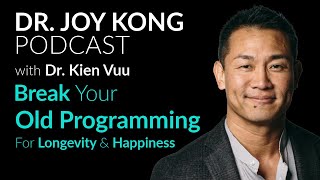
Dr. Kien Vuu discusses how your brain's default mode network drives stress and inflammation through epigenetic changes. He reversed his own diabetes using a seven-area life audit covering sleep, nutrition, and movement, plus breathwork to quiet the mind. Purpose and service improve biological markers like telomeres and inflammation.
Questions this video answers
Sleep; nutrition; movement; thoughts; emotions; community; sense of connection/purpose.
I am; Pause; Awareness; Choice; Take Action.
Having a sense of purpose adds at least seven to 10 years of life (as stated in the interview).
thrivestatesummit.com and thrivestatestarter.com.
Chapters
Deep ball mode network is very tied to our limbic system and, you know, our amygdala, our fear centers and our hippocampus, our memory centers. And so if we have traumatic childhoods, say divorce, drugs, abuse, we're gonna remember those things, and that's the trauma that lives with us. But there are even more subtler traumas that we're not aware of, like not being able to express who we are. So not being seen, not being heard, not being loved creates trauma.
What will be some practical strategies that you, you think they can use to shift their mindset?
Here's the thing. If you could start to audit your, your life into seven areas. I talked about sleep, nutrition, movement, our thoughts, our emotions, our community. And then whether or not we're living for ourselves or know that we're connected to something much, much bigger than ourselves, you feel and shift your energy. And when you shift your energy, oh my God, you're, you're basically providing the medicine you need to, to, to live a better life.
Hello everybody. Welcome Back to the Dr. Joy Kong podcast. I'm so excited to be back with you because as you know, I invite some of the top experts in the field of health, longevity, wellness to share their wisdom and to help you live longer and better and more effective. So today I have the distinct place pleasure of inviting Dr. Kean Vu to come onto the podcast. Dr. Vu or Dr. V, as are commonly called. Welcome to the podcast.
Hey, thanks for having me. Great to connect with fellow people in the space.
Yes, yes, we definitely have a common mission. Let's just start from the beginning. He survived as an infant refugee on a challenging journey to America, overcoming and he also overcame diabetes and high blood pressure. And now he's a champion of optimal health, happiness and human potential, making him a sought after speaker and consultant by Fortune 500 companies, professional sports teams and association meetings from all industries. He has a tenure at UCLA National Institute of Health, Howard Hughes Medical Institute, and Dr. V is also triple board certified including in interventional and diagnostic radiology and anti aging and regenerative medicine. He's the founder of VU MD Performance and Longevity. And he addresses athletes, executives, celebrities and organizations toward longevity and peak performance. He's also the number one selling author of Thrive State. He's a media expert, keynote speaker and workshop facilitator at prominent events including engagements with Whole Foods, bank of America and JP Morgan. He also appeared on platforms like ABC News, TEDx, the Doctors and Access Hollywood, empowering others to activate the biology of longevity and human potential within themselves so that Sounds like a great subject. Yeah. Maybe you can share just a little bit about your journey. I heard you speak at raest. There's a, a point of transformation for you, correct?
Yeah, absolutely, yeah.
What transformed you?
What transformed me? Well, I mean, life. And said, hey, you can't go on living this way anymore. And for me, well, it's hard to not talk about my boat refugee story and kind of growing up in America because I think people can maybe relate, you know, just some part of the story of maybe living life that is not authentic to who you are as a person, as a being, as a soul. And so, you know, boat refugee, eight months on a boat, three months in a refugee camp, come to America basically penniless. And I remember I was, you know, bused to a more affluent area for school. So I was constantly being teased for the holes in my hand me down clothes, the Chinese food my mom sent me to school with. I got a lot of the go home to your, you know, go back to your home country chinky. I got all these chinky eye comments directed at me. And so as a kid I remember just feeling like I didn't belong and that who I was was not accepted. And then at home I just, you know, I wanted to be an actor. I wanted to speak and do all these things in the, in the art world. And my parents were like, no, we didn't travel around the world for you to be an act. So you know, I, I went into biology and I studied medicine. And for me it was always like, okay, I can, couldn't please, couldn't really please my parents at home and I didn't really belong in the world outside. And so it led me to just sort of live life thinking like I needed to be someone else outside of myself and hopefully success or attaining something on the outside, looking a certain way on the outside, sounding a certain way on the outside would make me accepted and, and loved. And that's how I was living my life. And so I remember in high school just like, you know, you know, gunning to be valedictorian and you know, always like push myself to be the best at where I was. When I chose a field in medicine, I was like, okay, well what pays the most and what is the most high tech field that's out there? Okay, interventional radiology. So I went and I did that. And so I became a young attending that started to speak around the world on the advances of interventional radiology, eventually becoming chief of ir, my hospital. And at that point, you know, I had Bought a fancy car that I never thought I would drive. Bought my dream house. But inside I was burnt out, I was tired, I was overweight, I was diabetic, I had high blood pressure, and I was on several prescription medications. And I said, why is life the way it is? When I did everything I was supposed to do, why do I not feel love? Why do I not feel satisfied? Why is my body breaking down? And it was just a huge wake up call for me to, you know, reevaluate my life. And so I took a break from full time medicine and I, you know, got into the biohacking world. I studied with spiritual shamans. I had, you know, plant medicine journeys along the path. And I started to make some changes, but from a new state of being, started to make new choices in my life. And then as I started to make these new choices, I recognized that the disease patterns just went away in like six months. Reverse diabetes, you know, lost all the inflammatory visceral fat, you know, biologically age backwards. And I was able to do that. You know, then I, you know, had a concierge practice. And I was able to do that for a lot of my clients as well. But after a while, I was realizing that the work that I was doing with individual clients, the biggest and most deep work that I was, that I was doing with them was having them realize, were they living a unconscious life like I was. I was so programmed to seek success and chase after that that it basically led me to have disease in my body. And with the work that I'm doing, I started to understand, you know, that for many of us as kids, we, we've got the soul and essence that wants to express ourselves in a certain way. And when we're told not to be this and to be that and not to enjoy this and, and all of these things, we end up putting armor around ourselves, around our true essence. And we live life wearing this mask of not who we are. And, and that's the thing is if we live a life that's inauthentic, we're basically telling our body that we are in danger. So if you're running off the default programs that were given to you when you weren't aware, and you live life that way, you'll find yourself being stressed out all the time. And you send very powerful messages to your cells that I am not safe. And what it does is epigenetically, it turns on the stress and danger response in our body, which causes inflammation to go up, which lowers our immune system. And those two things Together is basically the environment that causes chronic symptoms and chronic disease. And if we could start to reverse that and start to remember who we are and then make conscious choices about, you know, how we live life, particularly in the seven areas I mentioned, my book, sleep, nutrition, movement, our thoughts, our emotions, our community, and living that sense of purpose, we start to shift the energetic states in our body. And that is actually very beautiful that now we know that every single choice that we have is, can be medicine or it can be our poison.
You were referring, referring to the default mode network, right, That's. Is that the, the cumulative baggage we have?
Yeah, so. So here's the thing. That's what makes us human. That's a beautiful thing. I mean, it's a primitive part of our brain and nervous system that neuroscientists are beginning to uncover now. And its primary role is to keep us safe and help us survive. So at a very young age, before we have any conscious thought, we're just download information from our parents, our teachers, social media, tv, all these things that downloaded. And the default mode network is very tied to our limbic system and, you know, our amygdala, our fear centers and our hippocampus, our memory centers. And so if we have traumatic childhoods, say divorce, drugs, abuse, we're going to remember those things. And that's the trauma that lives with us. But there are even more subtler traumas that we're not aware of, like not being able to express who we are. So not being seen, not being heard, not being loved creates trauma. And in order for us to survive as children, we end up becoming these people that, that, that seek to get love and connection and all these things. And unfortunately, it leads certain people to be perfectionists, certain people to be people pleasers, people like myself at the chase, success. But they are masks. And so this is the default mode that we are basically running. And what we do know is that the default mode is overactive. We know that it is associated with mental disorders such as depression and anxiety, and also lead to physical disorders such as atherosclerosis, heart disease, strokes, cancers, et cetera. And so this default mode is the thing that makes us human. It's beautiful, but it's not there to keep us happy and not there to keep us healthy. Healthy, unfortunately. And so we have to start to be aware that there are things that there's outdated programming that is, you know, living within our body and nervous system. But if we could start to see it and go, oh, I'm not actually in danger, am I, that I'm actually safe, that I'm actually love and that we're, we're actually connected. Then all of a sudden you're giving new signals to your body. You're creating a new biochemistry, a new state in your body. And that's the most powerful thing that we can start to start to recogn. So once we become aware of this default mode, we can go, oh, is the thing that I'm stressed out today really danger or is it just, you know, something I'm making up in my mind that's causing the stress response in my body? Symptoms are a great signal. I mean, I think we have to be grateful for our symptoms. Like if I was an overweight diabetic, had, you know, fatigue and brain fog and tired, I wouldn't have had the wake up call to take a break from, you know, how I was currently living life. And so one, be aware of your symptoms, but, you know, be, but almost sort of be grateful for your symptoms because you're, the symptoms are just telling your body, or is your body telling you that something's not right? Something's not right. And here's the, here's the thing. If you could start to audit your, your life in the seven areas I talked about, sleep, nutrition, movement, our thoughts, our emotions, our community. And then whether or not we're living for ourself or know that we're connected to something much, much bigger than ourselves. If you can audit your, those areas of life and ask yourself, what choices are you making those areas of life? You can start to see that you are either unconsciously making choices that are detrimental to you, or you can make conscious choices that can actually shift the way you feel and shift your energy and shift your energy. Oh my God. You're, you're basically providing the medicine you need to, to, to live a better life.
So now we come to the concept of, I guess, bioenergetic medicine, right? And how that, so maybe you can explain that a little bit and how that may even relate to epigenetics.
Everything in life is energy. You know, we take basically energy from the sun, for example. It hits our eyes, it turns on an action potential to our brain and, and gut, causing us to create serotonin. In all of a sudden, this energy transfer is changing. A molecular and biochemical change in our body, our thoughts. All of a sudden, if we start to focus on the things that we don't have, focus on the things that we can't control, those thoughts all of a sudden creates a stress response in our body that raises cortisol. So everything is energetically connected. Energy is neither created nor destroyed, they're just transferred. So can we be conscious about how we live our life? Because the choices we make in those seven areas of our life creates the energy and the chemistry that is in our body. So let's talk about epigenetics. Our DNA is not static. Our DNA is basically, you know, we have the same amount, we have the same DNA in every single cell in our body. And what causes the cell to be different is basically all the different energetic signals it gets as it's, you know, as it's maturing to be formed different cel. So our cells are constantly listening to its environment. And guess what? How we choose to live our life creates these biochemical changes around our cells that basically speak to our DNA in a moment to moment basis. So the choices that you make changes the biochemistry of your body, changes your bioenergetic state and that becomes the signal to your DNA. So how you live your life is actually medicine. So epigenetics basically tells you that the choices that we make actually changes our cellular environment. And because of that it will dictate which genes get turned on, which genes gets turned off and will dictate cellular behavior. So we want optimal cellular health, then we have to give it the optimal cellular environment to signal our DNA to give that to us.
Right. And I was just watching a documentary which talked about how positive thoughts actually relax the DNA and change ability to express itself. So it's, I mean we've got actually research data showing that it's actively altering our DNA.
Yeah, this is the most wonderful thing nowadays, particularly with, you know, different type of methylation clocks that we have, that we could actually see real life what's happening to our, to our DNA. So this isn't woo woo anymore. This is actually we could actually measure what's happening in our body.
So, so coming back to this, you know, old programming that all of us deal with, if you know, someone can be more aware of, of, of the tendencies and what may be causing hardships and you know, heartaches and, and difficulties symptoms in their lives, what will be some practical strategies that you, you think they can use to shift their mindset?
Yeah, well, that's a great question. One I think you know, know who you really are and can you get yourself to a state so calm that you know who you are. And I lead people through breathwork sessions that are basically almost kind of like psychedelic sessions because they actually quiet down the default mode network. And in that Space, you know who you are, and you get to define that. Are you love, are you connected, are you generous? All these things. You define your values. And I suggest you know when people define those values for themselves. Do it out in nature. Do it after a breath work session. Do it when your brain is not in your default mode. Because otherwise, if your brain's in default mode, you're gonna. You're gonna make. You're gonna make values that are from that default mode place. But when you're fully relaxed and that default mode is quieted down, that's who you get to define yourself, who to be. And then how do you make choices then? Well, I have an acronym called impact, and it's a framework that people can use when they want to make new choices. The default mode is going to be lurking in the background. But what you can do anytime you get triggered, like you want to react towards something or you're feeling lazy on the couch and you don't want to move, you know, each one of these triggers, the first thing you could do is pause. Okay, so IMPACT stands for I am, P is pause, A is awareness, C is Choice, and T's Take Action. So when you feel triggered, pause. Take 10 deep breaths in through your nose and out through your mouth. If, if you were blowing out through a straw, make sure you extend the exhale, because when you do, you activate the vagus nerve and you put yourself in st states of calm, then what you do is you have awareness. They brought up this wound of me not being enough or something like that. They brought this, this thing up living in me. Okay, I have awareness there.
Choose.
Okay, well, is that, Is that thought or belief real? No. What do you choose from? You choose from your I am. So once you've already defined who you are, if you're joyous, if you're connected, if you are generous, all these things you chew from that place. And it might not be easy because you're programmed to react a certain way, but once you make that new choice over old program and you take action there, you start to that rewiring process of. Towards the person that you want to be. You know, I. In my keynote, I mentioned a quote from Viktor Frankl, who've seen friends and family members tortured, but he had this to say that between stimulus and response, there's a space, and in that space, there's our power to choose our response. And in our response lies our growth and freedom. And so no matter what's happening on the outside, we can always choose how we feel on the Inside. And if we recognize that how we feel on the inside, that's our bioenergetic state and has nothing to do with the circumstances on the outside, Boom. That's when your true power steps into play. And the more and more you practice this, this, this, this way of being, you start to shift your energetic state.
I love that acronym impact. Very, very practical. So pause. Know your, you know, be aware awareness. Choose your actions from a place of who you really are. And then take action. Take the right action. Yeah, that's beautiful. Very, very.
And are you gonna mess up? Yes, you're gonna mess up. But you get to clean it up also, right? I mean, I'm with my fiance sometimes and we get into a place and I tell myself I'm gonna be calm. And then, you know, sometimes she'll just keep coming at me and I'm. Boom. I. I react. And so, and what I get to do is, you know what? I just reacted. That wasn't me. That's not how I am. And it certainly just brought up a wound in me when you were coming at me. And so I apologize. And that's okay because, you know, this, this is the part of being human. And, and here's the thing. I think it's helpful for people to understand how to start shifting or the process of shifting. Our energetic state has four basically, you know, levels. First is unconscious incompetence. So you're living in the default mode network and you just don't know. You're just living life like, oh my God, you know, I'm just like completely in. You know, it's like the fish in water not knowing it's in water. So you don't know what you don't know, but you're always reacting. But then you have awareness. So you get to the second phase where you are consciously incompetent, meaning you caught yourself reacting and you're like, ah, God dang it, I just did that again. Now, for most people when they're trying to change a habit or install something, that's when they start to quit because they just, you know, they just went back to, to the past thing. And I gotta say that when you get to that point where at least you are aware of it, you can always clean it up. And it's a part of the process of actually getting to the next levels. So what's the next level? The next level is conscious competence, meaning you have to use energy. You catch yourself like in, in that old way of being, you. You take that new action. But it requires effort Right. But then when you do that over and over and over again, you can finally get to that last state, which is unconscious competence. Like, you don't have to think about it anymore. It just rewired to the new state of being. And if you could understand, that's basically the state of mastery of almost any habit you want to adopt. You don't have to beat yourself up, you know, for like, not being perfect on the person that you want to be just yet.
That gives people a lot of hope. Going from incompetence to actually naturally competent. That's. Yeah, that would be a beautiful evolution and something to, to work toward. And, and, and it's always a work in progress unless you are, I guess, a fully realized human being, which not many of us are.
And I don't even know that in, in my lifetime, I, I get to shed off the entire, you know, one. The default mode never really leaves us. You know, they're part of our brain and nervous system. So I don't think it's always there. And I don't think I my lifetime I will ever fully be awake necessarily. It's a gradual process of peeling back the layers and showing up is how, how you are. And, you know, this is the beautiful human experience. But the quicker you wake up to the beauty of life, the more of life you get to truly just enjoy. And when you get to the point where you truly get to just enjoy life, no matter what's happening outside, no matter what's happening in your bank account or your business or whatever, you've really reached that state where you're giving yourselves the signal that you are safe, that you are loved, that you are connected. And guess what? We don't have to think about our heart beating. We don't have to think about our immune cells going, going around like hitting pathogens. No, there's already an innate intelligence that is giving that to us. We just have to provide it with the environment of thriving and not surviving.
Beautifully said. Yeah. So, you know, we all, you know, we have to make daily choices in life. And sometimes the choices may come from our e, sometimes it may come from the power within the soul or our heart. So how do you know the difference? Like, what kind of signs do you look for?
The ego wants to control. The ego judges. The ego has this, you know, very way of wanting to force things to happen. You know, where is our soul is very open. It's very relaxed. It comes from a place of love. It comes from a place of knowing. You know, it doesn't cause this agitation, you know, based on what's happening on the outside. And so that's when you start to kind of see, okay, is this really, truly ego versus a. You know, and here's the thing is it's practicing. There are. There are even times myself, where I'm like, okay, is. Is this my ego, is my soul? And it's constantly just having the awareness and asking myself, does this truly feel aligned to who I am? And I would probably say that your soul is. Is creates. And when you make choices from your soul, it creates a state of openness and calm and of love that doesn't stress you out.
You know, coming to the definition of purpose, you know, coming. Coming to that. It's purpose. A big part of wellness, you think, and longevity.
We already know, even before we started to get epigenetic clocks that, you know, having a sense of purpose adds at least seven to 10 years of life, extra effectancy. We know that it preserved telomeres. We know that people with a sense of purpose have lower inflammatory markers than their counterparts. So why is that the case? And what is purpose? You know, I used to, you know, have, you know, you listen to some, you know, personal development people that say, oh man, you gotta go and. And find your purpose and do this big thing. And sometimes it just seems like it's so big and out there that in my mind I'm like, oh my God, what the hell is my purpose then? But the more I studied with shamans and, you know, these spiritual teachers, you know, purpose is actually pretty simple. I mean, if we remember who we are authentically as people. Let's take the analogy of the human body and the individual cell. Cell, right. The heart cell basically contracts, pumps blood to every, you know, cell in the body. The re. The kidney cell filters out toxins. The liver cells detoxifies. They all have their role, but they have their role basically, because they're connected to this entire thing that makes up the human body. So they're doing their thing. They're just doing their thing as their own. And they are giving back to the rest of the ecosystem that is the human body. We ourselves just have to understand that we, as a soul, as an essence, is just. Just needs to be. And the things that bring us joy, the things that light us up, the things that make us feel alive, are as unique to us as our fingerprint. It's written in our DNA. And so when we remember those things, which children have, children know, children just know how to be. But we forget because we conditioned of putting all these different layers up, you know, from, from, from programming of our child, that we forget who we are. So when we could just draw back who we are as authentic people, the things that make us feel joy and alive, that's who we are. And all we need to do is just share who we are with other people. If you enjoy teaching, if you enjoy cooking, if you enjoy singing, whatever that is that makes you feel alive, who you are, and you just share that with other people, that's your purpose. Because we are individual cells in the entire body that is humanity. And we recognize that there is actually a body that's out there and that we get to serve that all of a sudden we quiet down. The default mode. See, when you're thinking about yourself, when you're judging from ego, that default mode network, particularly when it's active, it's really tied to that cell danger response one being the conserved transcriptional response to adversity, which basically causes the stress response in our body. But when you start to serve, you are giving your body a very important signal. You're telling your body you are safe, you're telling your body that you are loved and you quiet down the default mode. And all of a sudden, you know, you turn down the stress response that's in your body. If you are someone that, just living for yourself and just thinking of yourself, Imagine if a cell did that, that. Imagine if a cell just, just like, dude, I'm a heart cell. I don't want to pump for anyone. I, I just want to continue to grow and live and create my empire. Guess what that cell is in the human body? That is a cancer cell. And if you're going to live life not being who you are authentically, it's like a heart cell wanting to be a kidney cell. What is that called in the body? That's called metaplasia or dysplasia. Right? So that's why purpose is so important. Purpose is, is just one being exactly who you are. You don't have to do anything big or grandiose. Just be you and just share you with the world.
What about how you know the, the things you've learned, the principles? How does it apply to organizations? Because I know you help a lot of organizations to thrive. How do you, how do you utilize these, these concepts?
When I looked at myself when I was sick, when I was overweight, diabetic, all these things, I recognized that I myself was running off the default mode, which basically gives stress signals to every single cell in my body. And when my cells weren't performing Very well. This whole body wasn't performing very well. The ecosystem of my body wasn't performing well. What is an organization but an ecosystem made up of individual people? Right? The individual people are the cells that it's the body of organization. So is every single individual optimized there? Do they have the tools to be optimized? And you as an organization or a leader of organization, are you running off a default mode? Are you putting profits over your people? Do you have policies that are burning your people out? So if you start to look at your organization as an organism, we could apply the exact same thing to organizations. So one, I believe organizations need the tools, people need to have the tools for wellness and all these things, because ecosystems are human body and an organization and ecosystems. And they've got three traits that are basically that every ecosystem has. One, Independence. Just like our individual cells has a role in our body. Every, every individual has a role in the organization. But in this ecosystem, there's a profound interdependence. A heart cell can't function without a lung cell, vice versa department can't function without the sales team, etc. There's this in interdependence. And then finally is the state dependence, right? If I'm chronically stressed and sending stress signals to my body, every single cell feels it and, and it can cause havoc in my body. And so is the culture or the environment that you're creating in your organization the same way? So are you optimizing those three things? Like how do I optimize the human body is to one, make sure every single cell is optimized when they're optimized and they communicate well with each other. That's awesome. And you get to control that with your consciousness and your state organization is the same way. And if you're a leader of an organization, you've got to ask yourselves, are your individuals optimized? Do they feel safe? Are you giving them the tools? How are they communicating with each other? And what's the overall state of your organization?
I want to also ask you about your thoughts on, you know, this. The field of longevity is exploding, right? So tell me why you're passionate about it and what are some of the exciting developments you've seen in recent years?
The technology of longevity is super exciting. We've got, you know, pharmaceuticals and nutraceuticals, you know, promising to extend life like rapamycin, dasatinib, and things like that. We've got new tests that are out there that could measure our biological age. Epigenetic clocks Connecticut scans to be able to detect disease earlier, full body MRIs, we've got, you know, 3D organ printing and you know, the work that you do, really sexy stem cells that help us repair and rejuvenate. All this I call the science of longevity. And you know, as a concierge doctor before, that's what I, I used to provide for my clients. But if we start to look at where people live longest around the world, you know, we start to study the people in the blue zones. They don't have access to any of this technology. And so what, what are we forgetting? We're forgetting that, that actually how we live our life is medicine. That the choices that we make and how we connect with each other, how we connect with ourselves, how we sleep, move, feel, actually is medicine as well. And the beautiful thing about this is now even with all the science of technology, we're recognizing that how we live our life, that our energetic state, that our bioenergetic state actually creates the chemistry in our body that speaks to our DNA. As we start to, to see consciousness and how it plays, are we living this unconscious life of our default mode that causes stress in our body, that causes inflammation, that causes disease, or can we wake up to the beauty of life of who we really are, that we are profoundly connected and we are loved? So the spirituality and consciousness piece is what I find super exciting. And you know, I'm able to help people quiet down to default mode with breath work and some of these like, activations that I do that people could find on my website. But the field of psychedelics in medicine is truly, truly promising as well. Because what do these psychedelics do? We know that lsd, psilocybin, mushrooms, ketamine, among some of the more known psychedelics, do a very common thing, which is somehow dissociate or quiet down the default mode. And because once you can quiet down the default mode, you can almost slow down, like weaken some of the ways of thinking, of being of all these things and, and, and allows you to like, remember who you are prior to the programming. And if you start to remember that and live life as that, you are giving new messages to your DNA by, by making, and just recognizing that life is a gift, that because your heart is beating right now that you are loved, that you are safe, and that you're connected. And when you know that and you live your life with purpose, meaning, really giving, then you really activate that biology, the biochemistry that is peak performance and longevity. So that's the most beautiful thing that, that I find is happening in the longevity space is this, is this evolution of consciousness? Because here's the thing. I know many people that want to live a long time, and I, I don't think it's necessarily the how or the what. It's somewhat important. But if you're someone that's like, dude, I just want to live a long time because, man, I, I, I need to be alive, guess what? It's that default mode, survival mode that thinks that dying is not safe. And then you're basically driving the stress response by doing all these things, hoping to keep yourself alive. That's, that's an ego consciousness. But when you want to treat your body well so that you can perform at your best, so that you can give to people, all of a sudden you quiet down. The default mode and you're summoning up the purpose that's in the life force, purpose that's in you that are now changing the biology of your cells to really kind of give you that which you want. So it's not the how or what to get us to longevity, but the why is important. Important.
Yeah. That is really. I'm so glad you said that because I'm in the longevity space too, and that's rarely talked about. You know, people are always talking about how, how can we live longer and better. But a lot of it, yes, came from a place of fear of just not wanting to get sick and not wanting to die. But what about, what about why you're here? What, what's, what was this all about? You do you need to be afraid of death? So that's, that's a whole shift in, in per. So glad you talked about that. And yeah, and it's a really good way to put it about psychedelics and plant medicine, which I'm very interested in myself as well. We do ketamine treatments in our clinic and I've seen that in patients. How a very egocentric person, very ego driven, all of a sudden coming out of the session saying, oh my God, I am love. I feel this incredible love. I just want to give, I mean, the shift that cannot, I can't even imagine how long that's going to, to for therapy, you know, to allow that person to come to that conclusion. Because I, you know, I'm a trained as a psychiatrist. Therapy takes a very, very long time to break down that wall of the ego. It's almost like this dusty, you know, the screen that you, you're gonna, it takes a lot of cleaning to, you know, really allow a person to, to see clearly. So plant medicine is powerful and beautiful in a way. It just pokes through the veil. Right? It lifts the wet veil. All of a sudden, you can see. I want to thank you so much for you sharing your wisdom so generously and, you know, illuminating our audience. And I want to ask you where people can find more about your work and then follow your. Your trajectory.
Yeah, well, you can find me all over social media, rmd. I'm doing a huge free mental health summit where I interview the world's top experts in mental health, including Vishen Lochiani, Dave Asprey, Bruce Lipton. And we've got all these speakers lined up for free. You could sign up@thrivestatesummit.com and I've got lots of free resources like breathwork exercises people could try. And you can go to thrivestatestarter.com to get those as well.
So thank you so much, Dr. V. It's been such a great conversation and really, really appreciate you spending time with all of us.
It's a pleasure to be here. Thank you.










