The Power of Ozone Therapy: Dr. Frank Shallenberger Reveals All on The Dr. Joy Kong Podcast
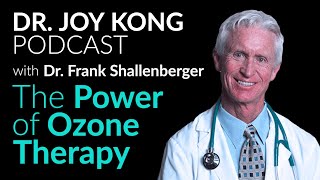
A podcast interview (Dr. Joy Kong with Dr. Frank Shallenberger) introducing medical ozone therapy and the clinician’s experience using it. Shallenberger summarizes ozone’s long history, proposed mechanisms (microbe-killing, oxidative signaling that stimulates stem cells and reduces oxidative stress), practical delivery methods (Prolozone joint injections, autohemotherapy, ozonated water, insufflations, sauna), and wide-ranging clinical applications (musculoskeletal regeneration, infections, cardiovascular disease, cancer adjunctive therapy). He also discusses safety, accessibility, and regulatory/insurance barriers in the U.S.
Chapters
I've been loving ozone therapy, and so do a lot of practitioners and a lot of patients. A lot of people are using it at home.
Inexpensive, 100% safe, with a wide variety of applications, including cardiovascular disease, cancer, immune related diseases, infections, injuries, pain.
Hello, everybody. Thank you so much for coming to this channel. Dr. Joy Kahn podcast, where I can share some of the latest and most profound changes in medicine to help you enhance your health, enhance your longevity. And today I have a luminary guest, Dr. Frank Shallenberger. I'm so honored to have him here. Dr. Shallenberger, first of all, thank you for coming onto this podcast.
Glad to be here, Joy. Thank you.
Yeah. So I've known you for quite a few years, and you are a pioneer in the field of ozone therapy, regenerative medicine. So I think there's a lot of wisdom you can share with everybody. And let me just introduce you a little bit to the audience. Dr. Shallenberger has been practicing medicine for 50 years. He's the developer of Prolozone, which has become very popular, very widespread. Thread therapy. It's an injection technique that has been shown to alleviate pain and regenerate degenerated joints, spines, tendons, and soft tissues. He has been teaching annual training seminars in ozone therapy to practitioners from all over the world for 23 years. He's also the editor of Second Opinion medical newsletter and author of the type 2 diabetes breakthrough and Busting with Energy, both of which are in their fourth printing. So very impressive. Dr. Shallenberger has been educating physicians for a very long time, and it's highly respected and loved. So I'm just so honored to have Dr. Shallenberger here with us.
Thank you for that nice introduction, Joy. Yeah.
So I've been loving ozone therapy, and so do a lot of practitioners and a lot of patients. A lot of people are using it at home, you know, with ozonated water. With ozonated or doing, you know, rectal, vaginal or other type of, you know, ear insufflation. So there's so much to talk about for ozone because there's tremendous interest. I want to ask you about your journey with ozone. How did you even know about it and get interested in it and not to mention bringing it to the US as you are considered the father of ozone therapy in the US So maybe you can share a little bit of your journey.
Well, I think maybe I'll just give credit to the whole rest of the world. Ozone therapy has been going on for a really long time. It's not a newcomer I know for a Lot of people, maybe especially doctors, they're not aware of ozone therapy, but it's been in practice for over 150 years. And it was first discovered back in the 1700s. And then later on in the 1800s, it started using it as a disinfectant. And just so, just so listeners understand this, ozone is a form of oxygen. It's got nothing to do with pollution. It's true that in pollution there is ozone, but ozone's got nothing to do with pollution per se. It's just pure oxygen. The difference between ozone and the regular oxygen that we breathe is that ozone has three oxygen atoms, whereas the normal oxygen that we breathe has two oxygen atoms. That third oxygen atom is what accounts for the ozone's unique properties. It makes it a highly more reactive substance than regular oxygen. So as we're going through this conversation this morning, when we talk about administering ozone into patients, it's a pure form of oxygen, but it's. You'll get things happening when you administer ozone to a patient that you would never get by administering just normal oxygen. So anyhow, back in the early 80s, I heard about this, and in Europe they were doing it, had been doing it ever since, you know, the early 1900s. Interestingly enough, a man that people will have heard of for sure, by the name of Tesla, was the, was the, the genius that in the early 1900s actually came up with the first ozone equipment designed specifically for medical purposes. So it goes way back, is my point. And, and so back in the early 80s, I went. Went to. Went to Germany to learn about it. And I was just absolutely astounded by what I heard and what we can talk about today. It's almost hard to believe.
What did you see in Germany that astounded you?
Well, first of all, was the history. The history is phenomenal. And it goes back to, you know, so many geniuses that we've, we've all heard about. And you start to wonder how. How did this thing get overlooked? And we could talk a little bit about how, what the answer to that might be. But, but anyhow, that's one thing that astounded me. The other thing that astounded me is the broad application base. You can put ozone into any body part. I mean, literally any body part. The only part of the body I have not injected ozone into would be the brain. Other than that, I have put it in every possible place in the human body. It's. And it's very. So it's very applicable. That way you can apply it in, to the bloodstream you can use it systemically. And, and that's what I learned. It was a four day, four day conference and I just, it was an eye opener. And I came back home here to the US and started using it. And what I started to realize, well, I'll tell you a story. So here's, here's how this worked out. So many things that happen to doctors, you know, we accidentally learn about for doctors and scientists. But anyhow, so one of the things they taught me in Germany was that rheumatoid arthritis is caused by a bacteria. No, I think, I think, you know, most rheumatologists are aware of this, this connection. But, but, but they said what you can do is if you've got a rheumatoid patient with a very swollen rheumatoid knee, you, there's, that's because there's a germ in there and you can inject ozone in because ozone kills germs 100%, kills everything, germs, viruses, whatever. And you can inject that in there, you kill the germ and the knee gets better. So I thought, okay, fine. Well, as fate would have it, when I got back to the U.S. sure enough, some woman walks into the office with rheumatoid arthritis, some very painful, swollen knees. And I told her, look, I just learned this new thing. Let's shoot some ozone into the knee. And we did that. And she comes back and a couple of weeks ago, yeah, my knees like way better. And then, so the, so, so the, but the real tip off was about four or five weeks later, her next door neighbor comes in and she says, I want you to inject my knee like you did. So. And so. And I said, yeah, but she had rheumatoid. You don't have rheumatoid. You have what's called degenerative knee. You have arthritic, it's all busted up type knee. You don't have rheumatoid. And so I don't know that ozone is going to do you any good at all. And I said, in fact, maybe it'll even hurt you. I really don't know. This is unchartered territory. And so then she says to me, look, just inject my knee. I don't care if it works. I don't care if it makes me worse. Because the point is they want me, they want me to replace my whole knee. They don't want me to go into surgery and replace the whole knee. So I got nothing to lose. So I said, okay. So we'll try it out. So he. Darn if it didn't work. So then my eyes were open. I said, what the heck is going on here? You've got a knee that's degenerated, and the cartilage is wasted, and the ligaments inside the knees are damaged. It's full of fluid. It's got blood in there. A woman can hardly walk, and all of a sudden she gets better. What the heck happened? And that, that. That was back in, like, the mid-80s. And that started me on this journey to kind of learn what was going on. And we maybe could talk a little bit about that. But that's. That's how I first started to realize, you know what? This ozone thing causes tissues to heal. Later on, I learned it also takes away pain. So even if you have a condition, for example, that's not correctable. For example, not long ago, I had a woman walk in the office with very bad neck pain. But she had had quite a few surgeries to her neck, and the neck was actually deformed from all the surgeries and the fusions and such. And I told her, look, it's impossible for me to correct this, but I can take away the pain at least, which is for her, as far as she's concerned. She doesn't care what the X ray looks like. She just says, you know, I'm in pain, so take the pain away. I'm okay. And sure enough, that's what happens. So ozone takes away pain, and it regenerates joints, and that's a huge thing.
So how do you think the ozone molecule is doing all this?
It's a stimulant, number one. What I subsequently learned is that most degenerate, degenerated areas in the body, whether it's the back, the neck, the knee, whatever it is, most of them are infected. They're usually infected with mycoplasma, and this is well established in the literature, but they're infected. And it's not the usual kind of infection doctors are used to that causes a fever and inflammation. It's sort of a subacute biofilm type of infection in the knee. So ozone gets rid of that. So it gets rid of that. Secondly, it stimulates. And this is all in the literature, by the way. It stimulates stem cells, and it attracts stem cells, and it stimulates what we call chondroblasts, which is cells that regenerate cartilage. So. So the problem. The problem is that if you look at chronic, degenerative sorts of pains that people have, they don't have any young people. They haven't in old people. And, and so what's the deal on that? You know, you don't have to be too much of a genius to figure out. Well, it's got. The older you get, the healing mechanisms in your body, your stem cells, your blast cells, your circulation, all the factors that come into to healing aren't there like they used to be. When you're 20 years old and you hurt your knee, it heals up, and you expect it to heal up. But when you're 60 years old and you injure your knee on the ski slope, you're not terribly surprised to find out six months later, it's still hurting, it's not healing. So what ozone does is it stimulates our natural regenerative healing mechanisms to behave more like they would have 20, 30 years ago.
So you started using ozone with joints. Right. That's where you started. And then how did it evolve over the years?
Say like over a 10, 15 year period of time? I started to learn some of these things that I just said. Number one, it takes away infections. And I've developed the opinion, Joy, that darn near everything that happens to us that's bad as we get older, there's a microbe involved. And, and so once I realized that, I said, well, that may mean that ozone is appropriate for darn or anything that walks in the door. So I started thinking about, say, bladder infections. Shoot ozone into the bladder, clears up a bladder infection. Suppose, by the way, it's also anti cancer. So you could take ozone and, and use it and inject it in areas where there's cancer and it'll kill the cancer cells. I got some great stories to tell people about bladder cancer, for example. And so it kills and kills, kills microbes, it stimulates stems and blast cells. It takes away inflammation, it takes away oxidant stress. And all of those things are what we need to get our bodies to heal better.
Yeah. So. So you started injecting into various organs and tissues.
Yeah.
When did you start to inject into the blood?
That was something I learned in Germany. They actually been treating blood in Germany. Oh, at least since the early 60s. And so, so for the listeners, we, we put a needle in the vein, we take blood out in a bag. Very similar to if you went to Red Cross and you were donating blood. Same idea. So your blood comes out into the bag. We then inject ozone, which is a gas, it's oxygen. So we inject the ozone into the bag, move the bag up and down Mix the two together, the ozone is instantaneously reactive. So basically, it's going to take that blood with all the various very interesting cells in that blood, and it's going to react with those cells in such a way that they're changed, and we infuse those cells back into the body. It's a closed system. Blood goes out, ozone goes in, blood goes back in. Very simple, pretty quick. You can do this in as short as like five, ten minutes. And. But when that blood goes back into the patient's body, of course it's blood. It's treated blood now, but it's blood. And it's going to go everywhere. It's going to go in their brain, it's going to go on their heart, it's going to go in their liver, left ankle, whatever. It's going everywhere. And that treated blood has some very interesting properties to it and stimulates all kinds of interesting things. But mostly the kinds of things I just talked about, it'll get rid of oxidant stress, revs up antioxidant enzymes, kills any microbes, can disable cancer cells, it stimulates detoxification in the liver, it reduces inflammation. And as, as, you know, as listeners are hearing me rattle off all these effects of ozone, if they're thinking to themselves, that can't possibly be true, one molecule can't possibly cause all of that stuff to happen, then they would be thinking. They would be thinking what would normally be true. Yeah, I mean, there's no molecule that I am aware of outside of ozone that has that many properties, but they're all well documented. And the stuff really does work as advertised.
Right. And ozone is naturally produced by the human body, correct?
That is true. And that's a good point. And that was shown in 2004 at Scripps University, where what happens with our immune systems is that we have an antibody. The antibody goes out and grabs on to, say, a virus. It'll grab onto that virus, and then it's going to haul that virus into a macrophage cell, which is an immune cell, that will kill the virus. But in order for that system to work, when the antibody grabs onto the virus, it has to neutralize the virus, because if it doesn't neutralize the virus and then hauls it into the macrophage, now the macrophage is infected, and there's a good likelihood it'll kill the macrophage. So the antibody has to neutralize the virus, and it neutralizes it with ozone. It actually produces and releases ozone once the virus is neutralized. Oz macrophage and then the rest is history.
Yeah. Amazing. Yeah. That must be pretty exciting when you saw that the antibody was able to produce ozone molecules.
Yeah. Because you know, most people think ozone toxic. And if in fact, if you go into the library of medicine and plug in ozone, probably 95% of everything that you read, at least it used to be this way, is about how toxic ozone is to the lungs and how bad it is to breathe ozone and this and that. And there's just no reality to that at all. But that's mostly what you see.
I see. And is it true that ozone molecules also can make red blood cells more pliable?
Yes. So it's exceedingly good for circulatory problems. So you have the substance here that number one is cheap. It's pennies to make ozone. It's nothing. It's almost nothing. So you got a substance that's extremely inexpensive. You got a substance that when used properly is entirely safe. There's like nothing ever significant that can go wrong with anybody. Ever inexpensive, 100% safe with a wide variety of applications, including cardiovascular disease, cancer, immune related diseases, infections, injuries, pain. I mean, how can you go wrong? It's really astounding when you add all this together and look at it.
And there are many countries in the world where it's a accepted part of medical treatment, right?
Yeah, that's right. So certainly in Germany, which is where a lot of this was originally developed. Certainly in Germany. Definitely in the Middle East. All throughout the Middle east. Also in a lot of areas in South America. It's all over the world big time. In China. China does a ton of research on ozone therapy.
Right. I think they've got so many people and they definitely will be smart enough to use something that's cheap and effective. And I think Russia, also in Russia, it's also part of the medical treatment. That's true too, in Spain and Italy. That's my impression.
That's absolutely true. Yeah. In those countries it's actually covered by their health insurance. In this country that's not true.
So why do you think there has been such a vehement opposition to ozone therapy, at least from the medical establishment?
Well, okay, so the medical establishment is controlled by pharma and phrma has worked with the government to ensure that anything that's cheap and inexpensive, that could actually work really well would be absolutely impossible to patent. You couldn't patent it. So they've arranged. So the, the legal system here in the United States is such that in order to get ozone approved by insurance companies, including Medicare. You would have to, you know, pony up like $20 million worth of, of research data to get that through because they won't accept the research data that's already published. This country will not farm has arranged it. So this country, the, the, the organizations, this country will not honor research outside the US and we have 4,000 papers that, that are published in peer reviewed, respectable scientific journals, but those are completely 100% overlooked because they're not published here in the United States. Very few of them. We actually have a few published here in the United States, but it's not adequate to meet all the criteria that PhRMA has set up with the government. And so there's no way it's ever going to get approved here in the United States Unless somebody comes around, changes the law. It's just not going to happen. That's okay, we can use it, but you're just not going to get insurance to pay for it. That's all.
I see, I see. So, I mean, the use has been, I think it has blossomed. I mean, you've been doing this for decades. What do you see in the changes of how much ozone has been accepted?
It's, it's really remarkable. When I, when we first actually I started teaching this, I learned, like I said, I learned about it in the 80s, and then towards the end of the 80s, I, you know, I thought, you know, people need to know about this. There's too darn many people suffering from conditions that I can clear up in a heartbeat with ozone. And, and people need to know about this. I'm not, I'm not going to be the only guy that knows about this. So starting in the early 90s, I started teaching doctors. The first class I had, we had a total of six doctors there. And that went too big. But, you know, nowadays we do three classes a year. We limit it to 80 doctors in each class. It gets sold out, typically within two to three days. And people call up and they're all upset. I say, you got to wait till the next class, blah, blah, blah. But we now have thousands and thousands of doctors all over the U.S. and in fact, we get doctors from all the rest of the world that have come in and learned all this kind of stuff.
Yeah.
And. Yeah, so now there's just like lots of doctors and, and joy. One of the things that was so interesting to me is that, you know, as a physician, you know, the listeners should know that us doctors, we need to do continuing education units every year or two in order to maintain our Licensure. And so about two years ago, I'm doing that, and I went to an orthopedic seminar just to hear what they were going to teach there. And darn if one of the lectures wasn't about using ozone on knees and in surgery. And so, yeah, so even two years ago, it's starting to get mainstreamed. The only thing that's holding it back, literally, is the fact that the system is so heavily invested in surgery, and it would get rid of 80, 90% of surgeries. All these surgeries that are done on knees and shoulders and necks and backs. Gone. Most of them are gone. And that's been published, by the way. Most of them are gone with ozone therapy. So that's one of the things that holds it back. And of course, the other one is that while the insurance company will pay for a $50,000 knee replacement, they won't pay for, like, a $2,000 ozone treatment that fixes the knee in the same way.
Right, Right. Yeah. So when. When you inject ozone into a joint, do you get some kind of inflammatory reaction initially? Do people get possibly exacerbation of pain or swelling? Like, what have you seen?
Well, when I learned in Germany, what you do is you just take a needle, put it in the knee, shoot ozone in. And when I say knee, that could be ankle, it could be finger, it could be shoulder, whatever, and you shoot the ozone. Just the ozone gas in, and the knee gets better. After I did that a couple few times, I realized it hurts like heck. Ozone is a little irritating. So you put that into a knee that's already irritated, it hurts like heck. So then I got to thinking, well, if it were my knee getting ejected, I think I'd want to shoot some Novocaine in there first. So at that point, I had already studied in Germany and learned about this treatment called neural therapy. Neural therapy is another form of treatment for pain, which involves injecting Novocaine into areas of pain. Turns out the novocaine, although everybody knows it as a local anesthetic that dentists would use to do what they're gonna do, it also has the property of healing. It has a very healing property to procaine. And it was what does what we call stabilized damaged membranes, which is part of the reason things won't heal because the membranes are damaged. So I thought to myself, well, look, why don't we put some procaine in or some Novocaine in there? It'll stabilize the membranes, and it'll numb everything up so that when I shoot the ozone in it won't hurt. And that was, and so I started doing that and that's, I, I, I started calling that prolozone.
I see.
Because of the, the procaine and the ozone. So we started putting those together and then after a while I started realizing, you know, if I'm going to be injecting procaine, which is a liquid now, so the needle goes in, we inject the liquid, I switch, the needle stays in, I switch the syringes, shoot the ozone in, then pull the needle out. I thought as long as I'm injecting a liquid, what other things could I put in there that might help? And that's been a transition over the last 20, 30 years where we've, you know, gradually learned that putting a little glucose in there works really well. Putting some B vitamins in there, particularly thiamine, works pretty well. Putting some trace minerals in there works well. There's some anti inflammatory homeopathics. And so basically I created this sort of recipe, if you will. It's like making soup. The, the, the, the key ingredient is ozone, but these other ingredients make the process better so it doesn't hurt at all. In fact, people will come in, they'll have pain. For the last 20 years. When they leave my office, the pain's gone. This is typical. This is very typical. It's not unusual. So they get immediate response and then it stimulates the healing. And it even works better than the ozone by itself.
I see. Amazing. So, so you would inject the ozone and then you inject the rest of your recipe.
Yeah. So now, now I've evolved to the point where this is what's common. I'll inject ozone in there and in using this technique with the procaine and the vitamins, shoot the ozone in there. Then I'll bring them back in a week and once I've prepped them with that, I'll do the same thing again and I'll put in what's called platelets, prp. These platelets which have growth factors in them. So I shoot the platelets in there, then I bring them back in four weeks. Now very often when they come back in four weeks, they're completely. Well, that's the end of that.
Wow.
Done deal. Walking normally, no limping out, doing whatever they want to do, dancing, skiing, whatever they want to do, everything's just fine. But if they're not at that point, I'm probably just going to shoot some stem cells in there because what's going to happen is prepping that knee is going to make those stem cells work a lot better. And, you know, the audience should understand the stem cells are expensive. That's just the way they are. And so you don't want to waste them. You want to make sure you get the most bang out of your buck on these stem cells. And I found that if I pre treat with the Zozone technique, I get really much better results with everything else. So now I've got cocaine mixed with all that stuff. I've got ozone, I've got platelets and then stem cells. I mean, there's like nobody ever gets sent to surgery. It just doesn't happen. The only action, the only time my patients ever want go get surgery is when they say, you know what, what you're doing is expensive. It's not covered by my insurance company. So I'd rather go get the $30,000 surgery since it's covered by my insurance company.
Right, yeah.
That's the only reason they go to the surgery because like pretty much 100 of the time we're going to take care of this.
Yeah. Amazing. And I know there's a. A bit of a different approach when it comes to injecting ozone and mixing with the blood. So there are two camps mainly, I think one is the to draw the blood out and mixing with the blood. You can do it in, in just regular one pass system or the popular 10 pass. But the other way that's promoted by certain doctors actually inject the ozone gas directly into the bloodstream. And I know that you are not a big fan of that, so maybe you can explain a little bit why you don't think that's the best approach. Although definitely some practitioners swear by it.
Yeah, there's no doubt that it works. Okay, it does work. It just doesn't work very well. But it's very clear that it works. I think a lot of practitioners are excited by the fact that it's a lot simpler procedure. I won't say it's a lot simpler, it's just simpler. And so you just put a needle into the vein, take a syringe of ozone gas, and very slowly injected into the vein. And you know it's going to create little embolisms. It's going to create some irritation to your lungs. You're going to start coughing, you get a rapid heart rate and such like that, because slowly, slowly, slowly, you don't get as many of those things. There is some. One complication is if you happen to have a patent, what they call a patent arterial ductus There's a little hole between the hearts, and it's quite common. Something like 15% of people have this. It's a hole between the two chambers in the heart. If you have that and one of these ozone bubbles gets through that hole into the other side of the heart, it can go to the brain and kill you. So the only time we have ever seen anybody die from ozone therapy is using that technique. That, that technique is, is. Has a certain amount of danger to it, and, and it's. It's uncomfortable and it's kind of time consuming, and it's very limited on how much ozone you can give. Normally, you couldn't give more than, say, 2 milligrams of ozone. But using that technique, it's just you. The body can't take it. On the other hand, if we use the proper technique, the one you mentioned, where you pull the blood out, treat the blood directly, and then put the treated blood back in, you can use 400 milligrams of ozone. You go from 2 milligrams to 400 milligrams. And in many cases, diseases are not fixed adequately until you get to the higher doses, and you can't do that with that technique. So the American Academy of Ozone Therapy really discourages. And in fact, we. We forbid our members to use that particular technique because it's way less efficient. There's a certain amount of danger, and it's uncomfortable, and it takes a lot of time because the doctor's got to sit there in order to get that two milligrams in. He's got to sit there for, like, maybe 20 minutes and very slowly inject the gas in, because you can't put it in too fast or you'll knock the person off.
I.
It's just not a good way to go. It's not. It's not efficient.
Okay. Yeah. I've heard some, you know, thoughts on this by some practitioners that they think that, you know, injecting directly into the bloodstream allows a more dynamic exchange that. That you are able to, you know, over the time, maybe of half an hour, you're touching the entire circulatory system instead of just the portion of blood that you were able to mix.
Well, that's just not true. You're still. You're still. When the ozone gas gets into the blood, it's going to instantaneously react. It doesn't circulate throughout the body. It instantaneously reacts with the blood just like it does in the bag. And so that's just not true. The bag you're putting the blood in, it's going everywhere. If you shoot it in the gas, it goes, it treats the blood. That blood goes everywhere. So it goes everywhere. No matter which technique you're using. The point is though, if you do it correctly, by treating the blood correctly, instead of getting this much ozone in the body and in the blood, you can get that much ozone in the blood. And the dose does make a difference. You get higher doses. You can do things that you can't do with these tiny little doses that some of these doctors use.
Yeah. Okay, so what about the other methods people are using? Ozonated water, ozonated oil, and then they are doing years insufflation or vaginal rectal methods. What are your thoughts on first of all like ozonated water.
Okay, so you can ozonate water. And when you do that means you bubble in the ozone gas, you're bubbling it through water. So imagine a glass of water with a little bubbler at the bottom and you're bubbling the gas through the water. And as that's happening, what's the gas itself is getting trapped in the water. So it's analogous to what happens to a soda pop. So in a soda pop you have CO2 gas trapped in the water. Now if you it's under pressure in there. So if you unscrew the top of the bottle, that CO2 gas is gradually going to come out of the liquid. It might take what, two hours or something. And then you go back and you taste and it's flat, meaning the CO2 is, you know, evaporated out of the liquid. Ozone's like that. When you ozonate water, the ozone is actually in the water. Now you have to drink it right away. Because if you don't drink it right away, the ozone and you let that glass sit there for half an hour, the ozone will come out of the water and quote, turn flat, if you will. But once you bubble the ozone through the water, you got actual ozone gas in that water. So then you drink that water and you just drank ozone gas. Now it's going to get into your body primarily right through your, your stomach, but it'll also get into the small bowel. And when it's in the stomach and in the small bowel, if there's any bacteria there and that or undesirable anything not quite right there, it'll kill it. And a story. The other thing is that gas will get absorbed into your bloodstream. And so it is a way to treat the blood and the entire body by drinking it not nearly as powerful as treating blood directly, but really easy to do. And this is something that lay people can do at home. The listener should know. You can go and buy your own ozone generator and treat yourself and your family and probably get rid of half the trips you need to go to. Ever see a doctor? So viruses, it's the death sentence to viral infections. So you have that at home. You learn how to use it. You start coming down with a cold or flu or one of your kids does or something like that, you can knock it out with the ozone and I'll just give you a little plug. I wrote a book called the Ozone Miracle. You can get it on Amazon.com and it's also available on Kindle. So that book is specifically written for laypeople for two things. One is how they can use ozone at home on themselves and their family. And two is explaining to them all these. The wonders of all these things. I've been talking about, about how well it works and what the mechanism of action is. But yeah, so you can take. You can. That's one way to get ozone in is bubble it through water and drink the water. You can also bubble it through water and give the water intravenously. Yeah. And you can get way higher doses.
Yeah, you can get way higher doses than.
Yeah, than drinking it.
I see.
And it's directly into the bloodstream.
Yeah, yeah. I've seen people, I mean, practitioners doing that.
Yes.
Donate the water. I mean, the IV fluid.
Yeah. So what's handy about that is sometimes we have patients come in and their veins are no good.
Yeah.
And you want to give them a blood treatment, but you can't really. But if you put in a port or a PICC line or one of these other ways to access the vein, you can very easily do ozonated water through those ports.
Amazing. Yeah. And, you know, people may ask if you. Let's say you drink ozonated water and it's going to kill a lot of the bad microbes. But what about the good microbes, the probiotics? And is it going to hurt them?
It's so fascinating. Healthy cells and what we would call friendly bacteria know how to deal with oxygen. Oxygen is actually a toxic substance. And so for listeners to understand. Yeah, every time you breathe, you're breathing in a toxic substance. It's called oxygen. And now, obviously it's a relatively low level of toxicity, but it's still a toxic substance. But that's okay because our cells in our body have the ability to deal properly with the oxygen. It's not toxic to healthy cells, but to unhealthy cells. Cells that are infected, cells that are toxic, cells that are turning cancerous, cells that are cancerous. They can't deal with the oxygen. It will kill them. It'll leave the healthy cells alone. In fact, it'll do better than that. The ozone will make the healthy cells stronger while at the same time differentiating and knocking off the unhealthy cells. It's fantastic that way. And the same thing is true for the bacteria. So if you want, one of the ways to treat livers like liver disease is to put ozone gas into the rectum like you would an enema, for example. And so you would think, oh, if I put the gas in there, it's going to kill all the bacteria in there. No, it doesn't. It only kills the bacteria that can't handle oxygen. And those are always the pathogenic or bad bacteria. The healthy bacteria can withstand it.
Amazing. That's fascinating. So maybe we can wrap up by talking about some of the, you know, the range of cases you've seen that, that people have really benefited from, you know, the ozone therapy. And probably some have really surprised you. Maybe you can share some of those examples.
But I'm constantly surprised. I've only been doing this for what, 40 some odd years, but I'm still amazed. It's hard for me to believe that somebody would have, say, in regenerative medicine, somebody would have a problem for so darn long and I come right along and fix it in a matter of weeks or months. It's astounding to me. So we talked a little bit about the regenerative aspects, but some of the other aspects that are amazing. Well, the first thing that comes to mind is viruses. It's a slam dunk. And yes, ladies and gentlemen, for the more recent virus that has shown up that is, quote, killed lots of people, 100% treatable, 100%. Never, never have a problem, Any virus, any viral infection that comes along, 100%. Why is that? It's because all viruses share the same same issue. And that is they cannot tolerate the oxidizing stress of ozone, Period. End of story. At the same time it's killing virus, it also activates the immune system in a special way. And for anybody that's a listener that knows about this, I can just say that it activates TH1 immunity and deactivates TH2 immunity, which is exactly what you want to do to knock out viruses. So it not only kills the virus directly, it also kills the virus indirectly. By modulating the immune system so that it works better. Because, as everybody knows, if you get infected with the virus, it's not a problem unless you have a problem with your immune system. So you got to fix that immune system, and that's ultimately what's going to cure you. And ozone can do that. It's just great for cardiovascular disease. Joy, I can. I can promise, if somebody walks in my office and says, you know, I've had four stents, and the doctor says, I need another stent. I've got cardiovascular disease, have this bad history. I've got angina. I can basically slam dunk from me. I love these cases. I just give them some intravenous ozone. We do other things, of course, but, you know, the ozone absolutely takes that. That out of the equation. We use it a lot. It won't clean up the arteries. So if your arteries gunked up, it won't de. Gunk your artery. But what it will do is it will make the heart cells and the. And the arterial cells, the cells that line the arteries, secrete more nitric oxide, which means they can utilize the oxygen. They are getting better. Most of the time that patients have cardiovascular disease, it's not just about the plaque blocking off the flow. It is about that to a degree, but it's also about the tissue itself not being able to utilize oxygen efficiently. And that combination of not being able to utilize oxygen efficiently, along with having fewer, less oxygen getting there is what gives you the disease. We can't take the plaque out, but we can fix the cell so that the amount of oxygen that's getting to the cell, the cell can use 100% and basically take away the problem.
Beautiful.
So you can use it along with a stent. You know, there's no. No. If. If you got somebody that's seriously ill and actually needs a stent or needs a bypass surgery, fine. You know, pre. Treat them with ozone before they go have their surgery or their stent. Do that for about three or four weeks so that the cells are great, they'll heal great. And, And. And then the surgery will work a lot better.
Okay, wonderful. So we talked about antiviral cardiovascular condition. We, you know, covered probably all kinds of musculoskeletal issues.
Yeah.
And then ligaments, even bone. Bone issue. Right. You've had.
Sure. Yeah. You know, we. You can eject it into fractured sites. A lot of the time, somebody will come in with a. Say, a cracked humeral head, shoulder, a bone, and they've had a fall, and it's been cracked and they're in pain. They can't hardly move their shoulder. I can shoot ozone into that joint and make it heal twice as fast. It reminds me of a guy that came up from Texas once. And he calls me up and he says, you know what? I had shoulder surgery for a rotator cuff injury a year and a half ago. And the problem was that the joint got infected as a result of the surgery. And ever since then, I've been on intravenous antibiotics to try and kill the infection. I've had two or three more surgeries to kind of clean everything out. And now I'm a year and a half down the line. Not only is the shoulder continually infected, it's now going down my arm. And they're telling me I'm going to have to amputate my entire shoulder and arm. So this is a dramatic case. And I said, well, look, you better get your butt over here and let us work on you. So he stayed up there for a good, I want to say, four or five weeks. And we put ozone every place put into his blood, put it into his arm, put it into his wrist, put into his skin, obviously injected into his shoulder over and over again. Long story. Guy's perfectly well. Yeah, after six weeks, he's perfectly well. He suffered for a year and a half. The doctors didn't know about ozone. They didn't know about this. Not, it's not their fault so much. They didn't know about it. I fixed him in six weeks. I'm not a genius. It's not that. It's just that I happen to know that this stuff works.
Right? And the sad part is, when he goes back to the doctor. The doctor may say, oh, okay, well, good for you. And that will be the end of it. And they are exactly.
The doctor never called me up and said, my goodness, what the heck did you do? That's not the way the system works, folks. If you think that system is out there for your benefit, understand, it's out there for pharma's benefit. It's out there for the insurance company's benefit, the politicians benefit, whatever you want to call. But it's not there for you, necessarily. You might be, you might be down the line a little bit, but it's not really there for you.
Yeah, the sooner people wake up to that fact. And stop, you know, worshiping the words of their doctors. That's, you know, that's in the traditional, you know, loop. You know, it's really. Yeah. A very self, self sustaining loop. Unfortunately, not for the Best outcome for patients.
That's well said. That's exactly right. Yeah.
Yeah. And what other systems have you seen benefits in?
You know, I really. You know, when you have cancer, especially if you have the later stages of cancer, it's almost impossible to fix. But ozone should be 100% of the time. It should always be used along with surgery, radiation, and chemo. Because when you do that, the following is going to happen. One, you're going to improve your chances of survival by about 30%. It doesn't sound like a lot. It's not 100%, but 30% is better than what we now have, which is 3%. So you're going to have 10 times better result, statistically speaking, when you combine those therapies with ozone. The second thing is that because they enhance your healthy cells and chemo and radiation kill your healthy cells, it preserves the healthy cells, so you have way fewer side effects. One of the more common side effects from radiation and chemo is. Is infections. It knocks out the immune system and you get an infection. Infection could actually kill you. A lot of people with late stage cancers don't die from the cancer so much. They die from some sort of infection that was induced from the treatments, the radiation and. Or the chemo. But ozone, since it's such a marvelous stimulant of the immune system, even in the presence of the chemo, you don't get the infections. You literally don't get any infections. You get way fewer side effects and you get a much better outcome. So it really ought to. It's a crying shame that every oncologist in the country doesn't incorporate this with their patients. And I would encourage all the listeners, if you have cancer, find a doctor in your area that does ozone therapy so that while you're getting your treatments from the oncologist, you're also getting the benefits of ozone to combine with that And. Good story. So a guy comes in to see me, he's a VA guy, and he's got a squamous cell of his throat. And he goes to the VA and he says, you know, they want to radiate me. And they tell me if they radiate me, I won't have any saliva left. The likelihood is pretty good my teeth are going to fall out and they might fry my esophagus so that I can't swallow. And. And he says, well, what should I do? And I said, well, you know what? The radiation is very effective for the cancer, so you're going to have to do the radiation. But let Me treat you with ozone at the same time, and you're going to have way less chance of those side effects happening. So that's what we did. And at the end of about six or nine months, his oncologist tells him. He says, fred, you have done so much better than most of my patients in here. You still have your saliva. None of your teeth fell out, and you never really had any problem with swallowing the whole time. We're just amazed at how well you did. So I want you to talk to my other patients and explain to them what a good job we do. Okay? So Fred tells him. He says, I will, doc, but you got to understand, the same time you were giving me this, I was seeing Shallenberger over there, and I was getting ozone therapy. And that's why I did so well.
Yeah.
So I'll be happy to talk to him, but I'm going to tell him what happened. And his response, of course, was, well, in that case, you can't talk to him.
Oh, my goodness.
No kidding. True story. True story. Fred never got to talk to him.
That's sad.
Yeah. So oncology is a huge aspect of what it's good for. And, you know, it can be good for, like colitis. You put ozone in the rectum for colitis? Interstitial cystitis is a terrible disease that's mostly limited to women that completely messes up their bladder, their sex life. Very often they can't sleep. It's just a disaster. There is no treatment for it at all, except for one pill, which doesn't work very well and only has the minor side effects of causing balding. You lose your hair and. And you get macular degeneration from it. So. So there's really no good way to treat this ozone. Almost 100% on it.
So you do inject directly into the bladder.
Yeah, direct ozone straight into the bladder.
Wow, that's.
Yeah. So there's. There's so many. So many ways that you can use this stuff. That's why. Why it's so cool. That's why if you came to my office, you'd see ozone all over the place. We got about 17 generators in the office, all over the place and all the exam rooms. We got ozone saunas. We got ozone colonics. We got ozone in the bloodstream. We got ozone saline. You're drinking ozone? It's all over the place. Because the more you pile it together, the better it works.
Okay, so you. I know. Ozone sauna has become fairly popular. You think there's some added benefits to Doing it through the sauna route.
I think the sauna can be really helpful. It's certainly good. Suppose you want to treat somebody that either one is a little kid and doesn't want to be stuck with needles or two, you want to treat somebody that has no veins. You can't get to their veins. The veins have been shot for whatever reason. So how are you going to get them in ozone treatment? Well, one way to do it is with a sauna because it gets absorbed through the skin.
Yeah.
Now, this is especially good if you have skin disorders like atopic dermatitis or psoriasis, one of those. It's especially good for those because it's going to hit the skin, but it'll also get in. It's a systemic treatment. It's very good at enhancing the immune system, for example. So a lot of the times when patients are getting treated with. From. From. By me, say, either with cancer or with some bad systemic autoimmune disease or something like that, they're going to get treated in their blood, they're going to get treated in their rectum, and they're going to get treated in the sauna. We're coming at them every which way.
Wow.
We get better results when we throw all that stuff at them.
Wonderful, amazing. So where can people find you to. To get some of your magic combinations of treatments?
Okay, I'll give you. Give you a couple of resources here for the audience. Number one, if you find a doctor in your area, go to the American Academy of Ozone Therapy website. And there, the doctors that are all listed on that website have all been through the whole training. They've passed certification examinations, they've done case studies. And these are people that really know what they're doing. And so that website is aaot American Academy Ozone Therapy aaot us. And hopefully you'll find a doctor pretty close to you to learn more about it. You can go on Amazon and plug in my name, Shallenberger, and you'll see there's a number of books that I've written. You can go to YouTube and plug in ozone therapy and you'll learn a ton. Not just from me, but there's a lot of people that have put YouTube stuff up. And if you want to learn a little bit about what we're doing in northern Nevada, you can go to my website, which is pretty easy to Remember. It's anti AgingMedicine.com anti AgingMedicine.com and you go to the website. There's a lot of information on the website. And we we tell you how we treat things and how the body heals itself and all that stuff.
Yeah. Amazing. Thank you so much. Thank you for bringing this to all the people that are in need in the US I can't imagine how many people's lives you've saved and improved. What a contribution. And thank you for your courage and your conviction. I love going to your, your conference, learning from you, and we'll continue to do so. So thank you so much for a great episode. I think we are clearing up a lot of, you know, aspects about ozone therapy. I think people are going to find this super helpful.
Good. Great. Great. Joy. Thanks for putting it on.
Yeah. Thank you. Thank you for being here.










