The REAL Reason Losing Weight Feels Impossible | Drew Manning
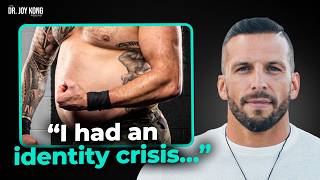
Podcast interview (YouTube) with Drew Manning on Dr. Joy Kong's show discussing his Fit to Fat to Fit experiments (2011, 2020), the physiological and psychological effects of intentionally gaining and then losing large amounts of weight, and practical strategies for sustainable weight loss. Key points: addictive nature of processed foods and impact on sleep/metabolism; identity, emotional eating, and the need for self-awareness/self-love; practical diet and training tactics (high protein, resistance training, interval and zone-2 cardio, protein targets, creatine); and resources (Conscious Fitness retreats, social media handles).
Questions this video answers
2011 at age 31; 2020 at age 40.
He gained 76 pounds, going from 193 lb (8.5% body fat) to 269 lb (32% body fat).
Around 5,000 to 7,000 calories per day.
Blood pressure peaked ~167/113; he developed non-alcoholic fatty liver; testosterone reportedly dropped into the low-200s (ng/dL).
Five days/week, ~40–45 minutes/day: Mon/Wed/Fri resistance training (supersets), Tue/Thu cardio (one sprint-interval day, one zone-2 ~120–130 bpm); weekends light activity/rest.
Chapters
It was harder in that I had to be more disciplined with my diet and exercise, which I used more of a keto intermittent fasting approach to lose the weight this time around, which I think made it more effective for me as a 40 year old. And then from there, it was easier in the sense that it didn't bother me being overweight anymore. I'd done a lot of inner work on myself, therapy, life coaching, and I'd let go of my body image as my self image and just realized my body's a part of me and there's a temporary phase of being, having more fat and I'll get back to being fit again. Like I know that I, I will. So I have more fun with it the second time around.
Hello. Welcome Back to the Dr. Joy Kong podcast. So I am super excited to share with you all the pioneering work from my guests and show you the ways to a greater health and better enjoyment of life. So today I brought a very esteemed guest, Drew Manning. And thank you, Drew, first of all, to come on the show.
My pleasure. It's going to be on your podcast after you just came online.
Exactly. We had such a good time. Yeah. So, Drew, I want to introduce you to my audience a little bit. So Drew is a New York Times best selling author of the book Fit to Fat to Fit and creator of the hit TV show Fit to Fat to Fit. He created the Fit to Fat to Fit idea back in 2011 when he intentionally gained 75 pounds to gain a better understanding of what his clients were going through and was truly humbled through the journey. You can share with us a little bit of why you did that experiment in the first place. A little crazy. £75. I. I said I would never subject myself to that. It sounds quite a sacrifice for science. So why did you do it?
Yeah, really good question. It's funny you say that, because I remember when I went on Dr. Oz show many years ago, he said his child, his producers challenged him to do a similar experiment of him gaining weight for like 30 days. And similar to you, he's like, there's no way I would ever do that. But so why did I do this? Yeah, I'll start with my backstory a little bit. So I grew up in a family of 11 brothers and sisters, and we all played sports. So I was always in shape my entire life, and I never knew any different. And then fast forward 2009, I became certified as a personal trainer. And here I was, someone who had never been overweight a day in my life, trying to help people who were overweight pretty much the majority of their life. And I could tell there's an obvious disconnect because my black and white mentality at the time was like, hey, just do it. Like, I was very judgmental, very harsh. That's the way I grew up was like, either you do it or you don't do it, right? So I was like, why don't you, my client to my clients, I'm like, why can't you guys just do what I tell you to do? Here's the meal plans. You put down the junk food, you eat these, this food instead, you go to the gym. It's not that hard. You just do it and then you'll get the results. And I was training my brother in law at the time and he would struggle with consistency, he would struggle with sticking to the meal plan. I would get frustrated at him at family events because he would be eating the pizza and the donuts and all that stuff. And I was like, dude, what are you doing? Like, come on, we're like on the journey, I'm training you and here you are not following the plan. And so it would lead me to get frustrated. And one time he told me, you know, you don't understand how hard it is for me or for people like me because for you it's always been easy. And I was like, you know what, you're right, I don't understand. It has been easy for me. Not easy in the sense that like, I didn't put a lot of work into it, but easier because I've always been in shape, right? And so I took that to heart and I, I was thinking of ideas one day I was actually working in the medical field at the time, full time. I was a part time personal trainer. I was driving to the OR one day at this hospital, I was thinking of ideas like, okay, how can I gain a better understanding? And for whatever reason, the idea of getting fat on purpose, as crazy as that sounds, the thought entered my mind and this light bulb went off and I felt like, I felt like I was called to do this experiment. And so make a long story short, I decided to pull the trigger on doing this. I talked to my wife at the time I was married back then and she was pregnant. So she was on board with the junk food because she was having all these cravings. And so for six months I was like, I'm going to stop exercising completely. I'm going to eat a standard American diet and I'll talk about the types of foods that I Ate. And we can talk about why that food is troublesome for so many of us. And then I'm going to document my journey and gain as much weight as I can in those six months. And then after that, walk the walk and put my money where my mouth is and show people, okay, this is. How do you. How you lose the weight. And that's how fit by fit was created.
Wow. Okay. Yeah. You want to see why it was so hard? You wanted to prove that it's really not that hard. Correct.
That's. That was my hope. It was a thinking. It was. It was easy. But like, like you mentioned in the beginning, I was very humbled. It was one of the most humbling experiences I've ever had in my life, to be honest with you.
Okay, so what happened after you. First of all, what did you eat?
Oof. So much good food. So here's the problem. It's like this. The types of food that I ate is designed to be as addictive as possible. And the food. Cinnamon toast crunch. Like, come on, that's so good. It tastes so good when it touches your lips. It's. I could eat it twice a day and not be sick of it. So, like sugary cereals, sugary sodas, juices, granola bars, chips, cookies, crackers, chopped ramen, Mac and cheese, spaghettios, like all the delicious frozen fast meals. So anything that was convenient, cheap and affordable. Because a lot of this food is subsidized by the government. You know, corn, wheat and soy are subsidized to make that food, you know, a lot less expensive than real whole food. And it's very convenient. Like, we live in a society of convenience. We don't have a lot of time to cook. So it's so much easier to pour a bowl of cereal or warm up a, you know, microwaveable, like pizza or something and just stuff it in your face because we're always on the go. And yeah, I'll be honest with you, the food did taste good. So for the first month, it was really fun. But very quickly, things started to change and I realized I was. I bargain for more than I thought. And it was. It got really intense After, I would say the first four weeks of, like, that fun phase goes away really quickly.
Yeah. What happened then?
So the first thing that I remember happening was on the physical side of things. My wife told me I started snoring through the night and that it disrupted my sleep patterns. So as you know, when your sleep is disrupted, that affects your hormone levels, it affects your energy levels, it affects Your mood, your cortisol tends to be more elevated throughout the day and creates, you know, some pretty crazy mood swings, I would say. And you are more insulin resistant when you're sleep deprived. And so that creates cravings of junk, more junk food. And you know, I ended up eating around 5,000 calories a day of all this delicious processed food that we have here in America, you know, and then from there I, you know, bending over and tying my shoes, I had to hold my breath because of all the visceral fat was building up around my organs. And you know, I've never experienced that before. Walking up the stairs, like your cardio goes away really quickly. So my walking up the stairs, I was out of breath, very, very low libido. I think my testosterone dropped to the low two hundreds pretty fast. Yeah. As a 31 year old male, that's not good, right?
You said drop from what to what?
I don't know. I didn't get, I wish I would have gotten baseline numbers. I'm assuming it was a lot higher than that. I tend to average in like the 500 to 600 range for testosterone. But during the experiment, obviously that, that dropped quite a bit. My blood pressure I think got up to 167 over 113 at its highest. And I also developed a non alcoholic fatty liver during the experiment. How does he know, the doctor that I was working with, he kind of, he tested that and then I remember Dr. Oz did. He tested my kidney function and my liver function as well on the Dr. Oz Show. And I can't remember the numbers off the top of my head because this is 13 years ago. But let's just say everything, you know, from blood work was in the red pretty much.
Right. I'm downhill pretty fast.
Yeah. With no exercise and eating this junk food. So from, from a physical perspective, I could tell that this was, you know, not good for my body. But I was willing to, to risk that for, in the short term to hopefully, you know, help people on their journeys. The other thing I'll say, Dr. Kong, is not just the physical stuff was the biggest issue, but it was the mental side of this. So you have to understand, for 31 years of my life, I had created an identity around my body image as my self image. So I was Drew the fit guy in my mind. And even with the first £15, I was so uncomfortable. You know, even though everyone's like, dude, you look normal, you look like, you know, an average American, you don't look like you're overweight for Me, I was freaking out on the inside to where I wanted to go up to strangers in public and explain to them, like, hey, I'm not really overweight. This is just an experiment. Like, go to my website. I like, I'm normally this healthy guy, Okay, I totally freaked out. I had an identity crisis because I've never been overweight before. I've never let myself go. And I realized how much of my struggles and being humbled was more so on the mental and emotional side of, like, who I was. And my identity was lost in this experiment. And when I created my TV show on A and E, where we put other trainers through this experiment, every single one of them went through the exact same thing of an identity crisis where at first it was fun. People were laughing and joking and eating the food and having a good time. But then after about a month, all of them got depressed. All of them started crying, all of them started complaining about how they didn't want to do it anymore. They wanted their body back. And it's funny how it did that to every single one of them. But it taught me a lot about body image and why we created about our body image as our self image, meaning our identity is our physical looks and, you know, how much body fat we have on our bodies, when in reality, I believe personally that there's more to us than just our, you know, body composition. There's more to us than just our physical looks. But we're obsessed about looks here in America, as you can tell.
So, so what happened at the end of the six months? Like, how did you feel?
Oh, man. Towards the end? So I only expected to gain 50 or 60 counts. I ended up gaining 76. So I went from 193 to 269, 8.5% body fat to 32% body fat. And at the end of the experiment, I. To be honest with you, I. I was scared because I didn't actually know if I was going to be able to lose the weight because I've never been in that situation. And so I had some doubts and some fears about, like, what if I'm stuck like this? What did it. Like, what's going to happen to me? Like, what if I can't lose this weight? Right. But I did and I lost the weight. But it was very.
How did you do it?
Yeah, that's a Good question. So six months of eating, you know, 5,000 to 7,000 calories of processed junk food, which did taste good, I'm not gonna lie. And I understand better why people get addicted to that food. And then cold turkey the next day was like, all right, back to 2000 calories of real whole food. Kind of following more of a paleo ish diet now. I did this experiment twice. Once in 2011 as a 31 year old, and then again in 2020 as a 40 year old. And my methods of losing the weight were similar, but different. And what I mean by that is I did the typical kind of, you know, five small, five to six small meals per day every two to three hours. That was kind of the norm back then because we thought that would keep your metabolism going. And obviously that's changed over the years. You know, you need to eat every two to three hours to keep your metabolism up. Right. That's kind of what a lot of people in the fitness industry believes back in the day. So. But it worked. It does work. And I, I remember the first couple weeks of transitioning back to real healthy, whole food sucked really bad, like to the point where I remember feeling grumpy and moody and having headaches and feeling starving all the time. And the food did not taste nearly as good as I remember it. So do believe your taste buds adapt to the foods that it eats?
Your body was going through a withdrawal.
Exactly. And I didn't realize that it was an issue. And so that's where I started to develop empathy for my clients. Because I remember giving people their meal plans and saying, look, just do this. Like it's not that hard. You just follow this meal plan. And then now that I had to do that, I didn't realize how powerful. One, the emotional connection to food is that your body develops over time. And then two, biologically being hardwired to seek the high that it gets from those junk foods and then not having that high anymore causes these withdrawal symptoms where you just don't feel good. Your body's kind of fighting back against you to push you to get the high that it's had for the past six months it's been accustomed to. And that's where I was really surprised and my eyes were opened and started to develop empathy for my clients of like, okay, this is probably why people get stuck here, because they've been eating this way for years or decades, and now they're trying to willpower their way out of this addiction, and they don't realize how powerful that addiction is. And two to three weeks in, you know, your body takes time to adjust. And for some people it's shorter. For some people it's longer. But for me, after about two to Three weeks, the cravings became more manageable. And your taste buds do adapt back, but for me, I didn't. It was a really powerful learning and humbling experience for me for those first two weeks. And then eventually your body does adapt, like I said. And it did get more manageable. I don't believe the cravings ever go away, but they become more manageable the more consistent you are. And you know, even to this day, if I have sentimentalist crunch in the house, I would probably eat it. I'll be totally honest with you, because I know, I know my weaknesses. I just don't buy it. Because if it's in the house, then I'll eat it. But so, and then from there, exercise. I worked out five days a week, about 40, 45 minutes per day. Monday, Wednesday and Friday were resistance training days, usually super sets where I would do, you know, minimal breaks in between sets. So I would do two muscle groups a day, like chest and back, legs and shoulders, buys and tries with minimal breaks to keep my heart rate up. And then from there, Tuesdays, Thursdays were cardio days. One day of like sprinting, sprint intervals. So hit cardio and then another day of like zone 2 type of training and then take off Saturday and Sunday, just stretch and walk. So zone two is like maybe 120 to 130 beats per minute. Something that's manageable for most people where you could have a conversation, it's still higher than zone one, right? So zone one would maybe be walking. Zone two would be like a light, easy jog to where you could still carry a conversation, if that makes sense. And I would do, like I said, 45 minutes per day. And that's it. A lot of people think, oh, you got to work out three hours a day and live in the gym. I don't believe that. I think you can work out smarter, not harder. And 45 minutes is plenty of time for your average person to get in a good, high quality workout. And I followed that formula to a T, got back to fit. But as a new man, new perspective, with a lot more empathy, a lot more respect for people who struggle with weight loss and transformation, because I understand the mental and emotional side way better now, having done this experiment twice. And that's what I'm trying to do, is be a voice in the fitness industry for people who, you know, are trying to tell people it is harder than we think it is. Yes, it's simple in theory, but it's really hard in application because as humans, we're not robots like When I give someone macros and calories to follow and workouts to do, that would be awesome if that's all they had to do in life. But they have kids and finances and jobs and responsibilities and relationship issues and so many stresses of life that we're as humans, we're emotional creatures and sometimes our emotions get the best of us. And so if we're overwhelmed with the stresses of life, the last thing we want to do is meal prep. The last thing we want to do is take the frozen chicken out of the freezer, defrost it, cut up some broccoli. When in our day and age you can just doordash some pizza or some Chinese food and or barbecue food and just like get it instantly versus like meal prepping and doing the smart thing. It's our society is built to make it an uphill battle for people and the food is more expensive. If you want grass fed, organic, free range. And I'm not making excuses, it's still possible. I'm just saying I understand why it's so hard for so many people out there.
I see. Okay, first of all, I'm very surprised you did it a second time. That part I'm not understanding. Why did you do it again?
Okay, I'll clarify why I did this second time. So first of all, it's funny you asked that because I swore I would never do it after the first time. Right. I swore, I was like, no, never. And then 2020 happened and we all know how chaotic that year was for us as a society. And I felt like this world from 2020 on has developed a lack of empathy. And empathy is the ability to listen, to understand someone. And that's why I love people like Brene Brown who talk about the power of empathy and why it's so important. And I like what she says. It's really hard to hate someone up close. Meaning if you truly try and understand someone and hear their story, you'll better understand why they are the way they are. Instead of saying what's wrong with this person or what's wrong with you, I like to ask the question what happened to you? And then from there getting coming from place of curiosity instead of judgment, we can truly see and understand why people are the way they are. Instead we're so quick to judge because you're part of this political party, you're this religion or you're part of this camp or this team over here. So I'm just going to put you in a box and label you and just judge you and we do that as a society. So I felt like in the fitness industry it's even worse. I feel like because we lack empathy, we try and shame people for being overweight and saying you're lazy or you're less than because you're overweight. And we try and think, look, it's just so easy. You put down the junk food, we call people names and it turns people off to even want to better their health because you have these people just so judgmental and shaming people for, you know, being overweight. It doesn't really work. It's for most people. Sure, there's a demographic where like the David Goggins of the world can that type of mentality works for some people. But I think most people out there want to be understood. So because of this I felt the need to do it again. Because in 2011 also social media wasn't what it is today. So the ability to live stream things and insta stories so people could follow the journey day in and day out and see what it was like for me to gain the weight and lose the weight, I wanted to do it a second time. And plus being 40 years old, as you know, it can be harder for people as your metabolism changes, your hormones change. And so I want to inspire people, you know, in their 40s and 50s to say, look, it doesn't. Just because you're older and it might be harder doesn't mean that's not possible. And so I wanted to show people that it's still possible. So I felt a weird calling to do it a second time. And then I instantly also regretted it because it was, it was way harder. It was way harder than I thought it was going to be, to be honest with you.
So was it even harder than the first time?
In different ways, yes. And in other ways it wasn't. It was harder in that, yes, I had to be more disciplined with my diet and exercise, which I use more of a keto intermittent fasting approach to lose the weight this time around, which I think made it more effective for me as a 40 year old. And then from there it was easier in the sense that it didn't bother me being overweight anymore. I'd done a lot of inner work on myself, therapy, life coaching, and I let go of my body image as my self image and just realized my body's a part of me and there's a temporary phase of being, having more fat and I'll get back to being fit again. Like I know that I, I will. So I have more fun with it the second time around, so it was harder or another. And then I went through a really bad breakup with my girlfriend at the time. So I got divorced after the first journey. Not because I was overweight, by the way. It's a different story. But to make a long story short, I got divorced and then I was in a relationship with a girlfriend. My daughters were older. They were like two and one on the first journey. The second journey, they were like eight and 10. And it is navigating those waters of like, hey, Daddy's eating the junk food. But you can't, you know, require more explanation. But anyways, I did end up doing a second time, and I learned even more the second time than I did the first time.
Yeah, what more did you learn?
The power of emotional eating and why people get stuck in that cycle. So I remember before the breakup happened, I was gaining the weight and I was eating the food to gain the weight. And it did taste good, right? But after a breakup or a significant life change like that that I went through, the food became my comfort. Meaning when I was sad and lonely and depressed, there was something about Ben and Jerry's ice cream and a glass of wine that temporarily made me feel better. And I got it. I understood why people get stuck there. Because if you go through hard life situations, whether it's a breakup or divorce, bankruptcy, whatever it is, throw in any hard life situation. We as humans don't like to sit in pain. We are not comfortable being in pain, whether it's physical pain or emotional pain. And being in emotional pain, it's so much easier to numb out and distract and escape the pain than it is to sit with the pain and learn from it. I love this quote by Rumi, who says the cure for pain is in the pain. And I love that because it's so profound. Because we try and look for ways to get out of the pain instantly, like give me some type of drug. And food can be a drug as well, where you get a dopamine hit right from the Ben and Jerry's ice cream or the glass of alcohol. And I get why people repeat that cycle, and then they get stuck in that cycle. And it's a vicious cycle to try and break free from, because anytime you're feeling any kind of pain, you know you have an outlet. So the coping mechanism becomes food or drugs or alcohol or social media or porn or whatever the substance is. That probably isn't the healthiest behavior. But what your body's trying to do is figure a way to self soothe and we Gravitate towards the easier solutions. Which is not the healthiest solutions then, versus therapy or journaling or breath work or getting out in nature or going for a run or just sitting with the pain and letting it teach you something. And so I realized the power of emotional eating and why people get stuck there if they've been doing that for years and decades. It's like a drug addict trying to break the drug addiction. Of course it would be easy to just be like, look, dude, just stop doing drugs. It's not that hard. Like, just don't do that and then you won't be addicted. Well, everyone out there is addicted to something. And so we developed these coping mechanisms that probably aren't the healthiest for us because maybe as a young kid we kind of started to gravitate towards food as an escape. Or maybe it was drugs, maybe it was alcohol, or maybe it was, you know, whatever, whatever you want to throw in there. And then now that you become older, wiser, more self aware, you start to realize those things don't really serve me anymore. And then you try and will power your way out of it, which is what so many people do. Like this year, gonna lose the weight, stop eating sugar, stop drinking alcohol. I got this. And then what happens? And two, three weeks or months in, those old patterns of behaviors are still embedded in the subconscious mind. So that anytime you have a trigger of, you know, some kind of stressful situation, the built in mechanism is already there and it's so much easier. Your brain, it only has so much like energy to, to put out there to overcome these things and try and develop new habits. So if it has to develop a new habit, it takes a lot of energy, physical and mental energy to create that. And when you're exhausted from life and overwhelmed at other areas, it's really exhausting to be like, okay, I, I know I should go to the gym and eat this chicken and broccoli, but I'm just so tired from work and the stresses of life. I just, you know, a lot of people gravitate towards the easier solution. And so I wish it was as simple as just doing it, but I.
Understand to your clients who are dealing with this gravitation toward easier solution, the.
Number one thing I help my clients with is the first step is self awareness. There's a quote by Anthony Demello, who wrote the book Aware Awareness, who says what you're aware of, you're in control of, and what you're not aware of is in control of you. And that quote for me is so Profound, because a lot of people are going out there on autopilot is what I call it the subconscious programming, the autopilot programming that we just get stuck in. We're just living a life of, unaware of why we do what we do, right? And then we step out of the conscious mind into the subconscious and let it just run its course and do what it does. Because it's, that's the path of efficiency, right? It's kind of like when you learn how to drive. You have to have so much presence and awareness and be in your conscious mind, thinking of the blinker and the gas pedal and the brake and the gear and the drivers around you and so many things you have to think about. But now you and I, at our age, we've been doing it for so long, we don't. We could drive somewhere and not even know how we got there, right. Because it's built into our subconscious programming. And that's kind of how our brain becomes more efficient. The problem with that, the downside to that is when it comes to wanting to create new habits and develop new patterns and behaviors and new neural pathways takes a lot of effort to do that. And so if I can help people become more self aware and present in the moment and get out of their subconscious mind and step into the conscious mind, then they can start to control how they want to respond and how they react. So the first step is self awareness. The next step, which is a harder one, is you have to start taking action. And in order to take action, I like to help people then with self respect and then self love. I'll put that in the same category because I feel like when you start to respect yourself and develop some self love, you realize that you're worthy of so much more. You realize that you're worthy of good physical health, good mental health and good spiritual health. And so you want to start showing up for yourself differently. When you develop that self respect and that self love where you start to realize these patterns of behaviors are more form of self sabotage than self destruction. And as you become aware of that and you start to develop that self respect and that self love, you realize you want to stop doing that to yourself. You don't want to keep damaging yourself and hurting yourself. You realize those patterns and behaviors that maybe once served you at a time to get you out of the stressful situation aren't serving you anymore. And so it's a, it's, it's a process that I call conscious fitness. And this new approach with, with the conscious fitness approach Doesn't. Yes, it helps people with meal plans and macros and calories and workouts, but helps people with self awareness first and then leading to self respect and self love which then can lead to more transformation, long term transformation in my opinion. And that's kind of why I approach, my approach is different than your typical gym bro that's just looking to, you know, hey, like here's how to lose weight, here's how to get fit.
Yeah, I think the concept of self respect and self love and it sounds wonderful and then everybody should do it, but the problem is that it sounds so simple. But how do you actually love yourself?
Right.
And I think a lot of people don't know how. I mean even, I mean, I struggle with that too. So what do you mean? How, how do I love myself? I can tell myself I love myself. Doesn't mean that I am loving myself.
So this is kind of gets into a deeper topic and this is what I've learned that helps people with self love. Because I feel like for me, the way I was raised, self love wasn't even in my vocabulary or nor was it a part of like, you know, any part of my upbringing. And I, I developed a lot of self hate. And because of that I feel like because I was, I used self hate as a mechanism which is powerful too. You can do hard things with self hate but it leads to, it doesn't help with long term fulfillment. So with my clients that struggle with self love, I do something called inner child work with them. And what that means is if we could go back in time to when we were about five years old, when we actually did truly love ourselves right before the world domesticated us and our parents told us who to become. And that's where we started to maybe develop some self hate and disconnect from the inc and you know, beautiful version of ourselves. All the negative things that you say about yourself and how mean you are to yourself, if you were to look at a picture of your five year old self and look at that little boy or that little girl, would you say those things to that version of you? And most people would obviously say no because they look back at that five year old innocent version of themselves and realize that they've been hurt and now that they're adult and adult, they're just a bigger version of that hurt little boy or little girl. And so if you can start to develop self love for the inner child, that five year old version of you, that kind of plants a seed of hopefully from there realizing that even though you're a 40, 50, 60 year old adult now, you still have the inner child within you and you can go back and start loving that version of you. And that'll start to help you develop more compassion for why you are the way you are as an adult. And letting go of that criticism, that negative self talk that we have as adults doesn't mean it's going to go away completely. It just gives you a new starting point of like, how can I love myself? It's hard to see the self love as an adult version of you because you made mistakes, you've done bad things, you've messed up, and instead of beating yourself up and shaming yourself, go back to that little innocent version of you and start there. And then it's a little bit easier to have that self compassion, self respect and self love.
Yeah, that's a great tip. And then you can start to rewire your brain right. Of how you respond to everything that you're criticizing yourself for, gradually kind of making new neural pathways so you actually can be in a positive state of appreciating and respecting yourself at all times.
And you start to see things like exercise and eating healthy food instead of seeing it as a chore or punishment of something you have to do, you start to see it as, I love myself enough to give myself good physical health. I deserve to have good physical health because you start to realize, I'm going to start taking care of this inner child. And they deserve to have, you know, you know, good quality of life. And that includes doing hard things in the moment like exercise and eating healthy food and sleeping and stress management. And then from there it's a little bit easier to show up for yourself. These things can now be seen as acts of self love. Instead of like, I have to go to the gym, I have to eat healthy food. Like, you know, a lot of people's mentality around a healthy lifestyle.
Yeah. But I think it's also a matter of gratitude. Like how I feel about me needing to take care of my body or my mind is that I'm given a gift. I'm given a tremendous gift to be in this world and a body that functions pretty darn well. And how do I respect this gift? How do I take care of it? How do I be a good steward for this vehicle? Yeah. So coming to the subject of weight loss, of course, America is one of the most obese countries in the world. So what's your idea of why people in this country struggle so much? Is it mostly a diet or is it mostly mental state.
Good question. I think when it comes to this country, it's a combination of so many things. There's the physical and there's the psychological side of it, the physical side of it. I mean, let's be honest, we are biologically, biologically wired to seek comfort. And in this society of comfort, we have too many comforts now that are killing us to where we now we have what I call a comfort crisis, which is a good book, by the way, by Michael Easter, and he talks about this in depth. But now all the comforts are. Is. Are what's killing us because we have too many comforts. And now that we are biologically wired to seek comfort, these foods that bring us comfort, right? The junk foods that bring us comfort, it's really hard to break that habit. We're in a hard place. So there is the physical side of it, and the other part is like these companies, these food companies spend millions of dollars every year on food scientists to come up with the perfect combinations. And they do, you know, case studies to figure out what. What the perfect combination of flavors and texture will do to the human brain. So we're looking for ways to hack the human brain and how can we get people addicted? I mean, let's be honest, this does happen. This is not like a conspiracy theory. And I. I'll be honest with you. This food does that to so many people. And if you are just, you know, going through life on autopilot, you're going to gravitate towards these types of foods, most likely. And it's really hard to break the habit, just like it is to break any other addiction. And then on the psychological side, like I said, we don't like to sit in our pain and we don't like to feel pain. And so it's easier to escape the pain with food or drugs or alcohol. And so I think psychologically as well, we're. It's. It's a. It's a uphill battle for people. And then also, you know, we live a sedentary lifestyle. We don't really use our bodies as much as we. We used to. And I don't know if this is just a part of evolution. You know, we're going to become like those people in the movie Wall E, where we just, like, sit all day and don't move our physical bodies, but we live up here. I don't know if that's what the world's going to become. But until then, let's. You know, I think most people would agree that physical Movement, taking care of your physical body is important. And until people realize that and get on board with that, they're just going to keep, you know, going down the path of least resistance. And so there are some things that people can do that they know how to do. It's like, hey, I know I need to eat vegetables and fruit and healthier food and exercise every day, but why don't the majority of people do it? Because we've created a lifestyle where you're kind of rewarded for not doing it, you know, and you have to go out of your way and get super uncomfortable to achieve that. Most people, you know, aren't of the nature of, you know, forcing themselves to do something that's hard and uncomfortable. When you have the comforts of life to just kind of like, well, why do that hard thing make you do this easy thing? And still, you can still survive, you can still live with diabetes medication and all the technology that we have nowadays to keep you alive. But yeah, the person has to want it. And I think a lot of people struggle with worthiness, A lot of people struggle with self hate and they don't believe they're worthy of good physical health, they don't believe they're worthy of good mental health and they think they're, it's just not for them. And I'm not speaking for everyone, but I think from my experience a lot of people struggle with that deep down. And so because of that, as a reflection, as a, as a form of self reflection, they tend to self sabotage even though they're not aware that, that they do that. So I'm not sure that answers your question.
Yeah, yeah, well, I, I just thinking, you know, the person thinks that they may not need to take care of their body and they can just live in their head. The problem is that if you let your body deteriorate, that's really going to affect your head, isn't you're not going to have a good time. So you've got to take care of this body. So when it comes to our body. So I want to ask you about your thoughts on diet. I just feel like right now there's this huge diverging rhetoric about what is good diet, what is appropriate diet for people. And I think two main camps I've seen, of course there is the whether or not you should eat meat versus no meat. But let's not even look at that. Let's just look at the ratio of different macros. So some people say you have to do keto. Keto is the best way to Go best performance and it's good for your metabolism, metabolic health. The other cam said I'm doing fantastic with high carb. I'm have great weight and I feel fantastic. So these are two drastically different approaches. And what, what are your thoughts on, on the two camps?
Yeah, that's a really good question. In my experience. This is why I, I love the industry that I'm in with of nutrition. Because you know, I, I think that the, the underlying, the, the most important underlying thing that I see is no matter high carb, low carb, you know, plant versus animal foods. The biggest thing I've seen with especially people that live the longest are those who tend to eat real whole foods. You know, you have the Maasai, the Inuits who eat a lot of meat, a lot of dairy, like high fat foods and they live some of the longest people, you know, they're some of the longest living people in the world. Then you have other, you know, areas in, in the world where people eat rice and potatoes and sweet potatoes and they live long too. And I think there's, there's something to say about that. So I'm of, I like to keep it simple for my clients and I, I tell them no matter what diet you do, just try and stick with as much whole foods as you possibly can, whether it's you know, high carb or low carb. And then from there obviously it's dependent on if you have, you know, pre existing conditions or if you're a type 1 diabetic or type 2 diabetics for.
Even you shouldn't be tendency for blood sugar basically metabolism issues. So some people, they just don't process carbs as well as others.
Yeah, that's why I really like Rob Wolf's book Wired to Eat. He talks about how his wife could eat a bowl of rice and then he eats the same amount of rice and their blood sugar response is completely different. And this is why it's so bio individual where there's not just one size fits. All right. So I wrote a book on keto called Complete Keto. A big fan of the ketogenic diet. But even within keto there's different ways to do keto. Like there's the high, like a large amount of meat that could be done on keto and then other there's a plant based version of keto. So but I do think that for some people keto works really, really well. I see all of those methods as tools in your tool belt. So the more tools you have in your tool belt, the More you can pull from and maybe experiment with a ketogenic diet or a paleo diet or a plant based diet or carnivore and figure out which one works best for you. So this is where people like you and me in this industry empowering people to become their own self, Experimentation, do blood work, you know, get some tests done to figure out and go off of how you feel. And look too, to see what works best for you. Because to tell you my own personal story, I kind of stumbled upon keto in 2015 and it felt awesome. It felt so amazing. The dealing I had with the improvement in mental clarity and cognitive function. Felt like I found the holy grail. And I definitely preached about it like, this is awesome, you should give it a try. And it became super popular in like 2016 to like 2019. And you know, everyone was loving it, but it is restrictive. You, you know, are cutting out carbohydrates. You know, it's a high fat, moderate protein, low carb diet. And it felt great for years and it, it worked really well. And then, and later on in my 40s, you know, I'm 43 now, I, I started to feel better with some carbs in my diet. So now I kind of gravitate, I would say 80% of the time, more, more of a meat and fruit diet. And berries is kind of like my main form of fruit that I eat. And for me right now with where I'm at with performance and you know, having two young daughters as well, and they're teenagers, like there's a whole, it's changed my perspective on nutrition because I used to be, I used to make my nutrition my religion. And there's a downside to that where even though I know there's chemicals in plastics, there's microplastics and there's, you know, you know, red dye 40 in this product or there's, you know, gluten in this product or things that, you know, I know are not the healthiest. I have to be very careful with how I show up with food because I have two girls watching me. And I have realized that some of those things unconsciously get passed on to them and it becomes, you know, not an eating disorder, but to the point where, like, it is scary because if I make it into religion, they start to view food as good or bad. And then if they eat the bad food, then they're bad. That's how they feel. And that's how we feel sometimes as humans. And so we shame ourselves, we guilt ourselves, and that's Not a healthy pattern either. So I try and lead by example where most of the time we eat whole food and I, like I said, I gravitate more towards meat and fruit. I feel really good on that performance wise, libido wise. You know, I feel like my cognitive function is, is fairly good. And I'm 43 and I'm still like thriving and like, you know, about to run a marathon this weekend. I ran a half marathon a month ago with a 45 pound rucksack on. I can still do these really hard things and I, I feel like the importance of nutrition is super important, but it can become a religion where I think there's a psychological aspect to, you know, going too deep into it and making it that, like, you know, dogmatic, you become dogmatic about it. You know, for example, let's just say alcohol, like, I know alcohol is bad for me, it is a toxin, right? But there's a psychological benefit to having a glass of wine with your friends and family, celebrate life or birthday or holiday. And every once in a while having that thing that we know is bad, like having my mom's, you know, pumpkin pie or whatever it is, you know, that's like, hey, I know this sugar and this white flower isn't the healthiest thing for me. But there is a psychological benefit, and Dr. Huberman talks about this as well. Weighing the physical risk to the psychological benefit of certain behaviors or foods or substances. I think it's an individual decision. And I think some people sometimes get stuck too far over here where they just eat all the junk food and they don't care what's in it, and they just, you know, don't pay any attention to it. And then there's other people that literally won't touch, you know, seed oils or, you know, anything with the gluten or, you know, anything that's processed. And I get that. I understand why people do that. I think it's important for people to find what path works best for them and just realize that what works for you today might not work for you a year from now or two years from now. So always be flexible. Like, I'm totally open to changing my diet. My approach if I have complications or problems. And I'm always trying to find what works best.
Yeah, I advise people go into extremes of extreme biohacking to the point, for example, Brian Johnson, right? He, I think he sleeps alone. He cannot sleep with anyone because he wanted to ensure biologically quality is the highest. So that that puts a whole other restriction on human interaction, right? So so what are you giving up in order to gain some metrics in your sleep parameters? So yeah, that's a whole other question.
Yeah.
And I want to add, I want to ask you about when you are losing weight. Of course you're a very muscular guy and maintaining that muscle is important. How do you lose weight while maintaining your muscle mass?
Super important question. I talked to a lot of my female clients about this and it's importance of getting enough protein. I think a lot women that I work with and my, in my experience are on average eating somewhere between 60 to 75 grams of protein per day. And that's it. That's, I would say very low on the end of, of how much protein people are should consume. And it leads to, you know, a lot of my female clients having cravings and tend to, you know, have these binge eating bouts where they, you know, just eat all the junk food and the carbohydrates that they know they're not supposed to eat. But when I get them up to 120, 140 grams of protein per day, they feel full, they feel satiated, their skin is better, their hair is thicker, they tend to sleep better, they tend to have better results with body composition. And so I'm not saying it's a magic pill, it's going to fix all your problems, but I think if you're not doing that, looking into, you know, where is my protein numbers and what is my threshold and maybe from there increasing it to where you feel satiated throughout the day. And I think also resistance training. So for me, when I lost the weight, yes, I was getting in probably anywhere from like 190 to 200 grams of protein per day. And I was resistance training at minimum three days a week. If you can do that, I think as you age, you'll be able to hold on to a lot more muscle mass. Also I do supplement with creatine. For me, 10 grams a day. For most females I have about 5 grams per day. And then also, you know, essential amino acids. Just in case as an athlete, like I'm, I'm, I would rather on the side of, of having too many amino acids than not enough. I'm not talking about bcaas branch chain amino acid, but essential amino acids. And I like a couple brands. There's a brand called Kion that I really like. I think, I don't know how it's been Greenfield's brand still. But anyways, like having that.
I like the perfect amino. I did a podcast with Dr. Yeah. Minkoff and we Talked about why it's so essential.
So that's kind of what I do to maintain lean muscle mass. And I think that's something that it's prescribed to everyone.
So it's not so much the calories is really the protein intake that's going to help you keep the muscle mass.
Yeah. And I think the calorie thing is if, if you want to lose weight. So this is what's hard. People want to build muscle and lose fat at the same time. Right. And so that's the hard part is for someone like me, that's not impossible, but it's near impossible. For someone that's just getting started though, for them it is possible where they could gain muscle and lose fat at the same time. For most people, I would say, that are already into fitness, that already have a background of fitness, for them, it's going to be harder to do both. But I do know that if you want to build muscle, you have to eat in a caloric surplus. It's really hard to build muscle when you're dieting and you're in a caloric deficit. But even if you are to maintain the amount of muscle mass, you do need quite a bit of protein. So when I lost my 75 pounds, I think on my, I lost about 5 to 10 pounds of lean muscle throughout that journey. Which is it bad in the sense that, yes, you don't want to lose muscle mass. But with losing £75 in six months, I can focus on gaining muscle again after that six month weight loss period, which is what I did to get my strength back up. But I'm okay with sacrificing a little bit of lean muscle to get to where I wanted to get. And then from there focus on building muscle again by increasing my calories, increasing my protein and lifting a lot heavier.
Yeah. So just so people understand how much protein they should eat, what is your recommendation?
So this is where it gets like, you know, there's a lot of different camps on this, but I like to have people err on the side of more protein. So I tell them like, hey, you know, take your body weight and if you want, you can start from there having 1 gram of protein per pound of, of of body weight, that's one way of doing it. But if you're 300 pounds, obviously that's not feasible for most people. Or 250 pounds, that's a lot of protein. So from there I would say if you're, you know, in excess of £200, maybe go off of what your ideal body Weight is. So let's say you're 200 pounds, you want to get down to 150. That's 50 pound weight loss. Start out with 150 grams of protein per day and see if you can hit that number. The problem is that and, and this is from my experience of training a lot of women is they don't even know how to get to 150 grams per day. They're like, I would have to eat meat all day. And this is where supplementing with liquid proteins like liquid egg whites or bone broth or having like, you know, protein snacks or protein, you know, drinks throughout the day can help supplement. You want most of your, you know, protein calories to come from whole foods. But when you're in a pinch or bind, having like a protein shake, you know, or protein bar, you know, nowadays there's like protein pop tarts, there's protein cinnamon rolls, there's protein chips, there's protein ice cream, there's protein everything.
People need to look at the ingredients, which makes. My next question is what kind of food to avoid. Just because they say it's a protein bar or this is protein high in protein, it could be sabotaging your health by eating a bar or some kind of snack that's made with bad ingredients.
There's a measuring standard of protein, and I'm gonna try and think. I just had a guy on my podcast talking about this. It's the PDCAA or something like that. I don't know if I'm saying that right. But it talks about the protein quality and it talks about the highest, the proteins that have the highest amount of amino acids that we were talking about. And I think like, beef is like a score of 1.00. WHEY is a 1.00. There's a few types of pro qualities of protein that are up there that are like the, I would say beef whey. And there's maybe one other one. And then from there kind of list the other ones like soy protein, you know, peanut butter or peanut. And it kind of breaks it down for you. You can see the quality of protein. So for me, I kind of err on the side of like chicken, beef whey, egg whites with the highest scores of the, I don't know, the pdca. It's something, I think that's.
Yeah, that's all good. But people put into these products like bad oils, you know, different and different additives and natural flavors.
Yeah.
So a lot of things end up. Yeah, you're. You're trying to Gain muscles, but you ended up poisoning your body.
That's, that's a good point. And this is what's hard. It's like we have, for example, I love legendary foods. They make protein pop tarts and protein center rules. But there's a long list of ingredients and the longer the list of ingredients, most likely it's not as healthy for you. If you're in a bind and you're traveling in an airport and you don't have grass fed beef sticks or something like that, then yes, I get it. Or if you're abroad overseas and there's just not access to the highest quality foods, for the most part, things with, you know, artificial flavoring and colors and, you know, vegetable oil or other seed oils that are in there are probably not the healthiest ingredients. And I would say, you know, proceed with caution with those products if you can find, you know, good quality products that have, you know, good quality ingredients. And I would say, you know, when it comes to good quality ingredients, like I said, the reason I mentioned the, those protein scores was what is the source of protein first of all. And then from there go down the ingredient list and see what other additives they're adding in there. And if you can find a product with less ingredients, most likely it's going to be healthier for you. But this is the hard part when it comes to nutrition is because, you know, we kind of, this is what's hard is like we have all these things to be afraid of. And so people are like, well, I can't eat that. And then they kind of get lost or confused about like, well, our sheet oil is good or bad. This camp says, yes, they're good, this camp says, yes, they're bad. And then there's a million other things like, like, you just name it. Like the, the food babe recently has been really popular with, you know, preaching about, you know, seed oils and, and other products in, in or other ingredients in some of these products. And it's a tough world to navigate, even for me because it's like, okay, well, for example, artificial sweeteners, like, yeah, I would probably err on the side that they probably aren't the best thing for you. But certain studies show that unless you're taking them in large amounts, they're probably not that unhealthy for you. But we live in a world where I think there's too much information and it gets confusing for your average person out there. So err on the side of caution and just, you know, stick with whole foods. And then from There you'll be good protocols do you have for your clients when it comes to protein products?
I think, first of all, I would make sure that they take some kind of essential amino acids so they get the real building block. But yeah, I think meat sticks, that, that will be. Or, you know, dried meat. I think that's great. There are some protein bars I personally like.
Okay.
And I, you know, you definitely have to investigate the ingredients and make sure they don't have bad seed oils. And then some protein shakes I think are. Are pretty fun.
Yeah.
Including one that includes creatine. Right. So that's, that's nice too. So, yeah, Whole Foods, I think it's. Is definitely the best way to go.
I agree.
We're able to, you know, get that steak, get some good salmon. Yeah. So any parting words you have for. For people who are looking at optimizing their health and, and get their weight into a good place?
Yeah, I would say just understand that if you're on a journey, you're trying to transform, there's the physical side of. It's this transformation which is, you know, you help a lot of people with, with the physical side. I help a lot of people, the physical side. But understand that there's also this mental and emotional side that can't be neglected. And if you neglect it, most likely what's going to happen is you're going to fall back into old patterns, thought patterns. And you mentioned, you know, creating new neural pathways. That right there is key for becoming a new version of yourself. If you want to transform, you have to create a new identity. And in that new identity, you have to kind of let go of that old identity and let that old identity of you die off, which is hard because their egos want to be in control. And you know, it. It's tough to let an older version of you die off and just say, I'm going to start over new. It takes a long time for that process to happen, I would say. So just realize that there's a physical component to transformation. And I wish that you were just a robot and you could just turn off your emotions and only focus on the physical. Because the more consistent you are with the physical, the more you're going to see results. But just realize that your ability to do the physical is determined by your mental and emotional states. So learning how to regulate your nervous system, learning how to self soothe so you're not so reactive and you can thoughtfully respond in moments of high stress, that right there is the key to making good choices in the moment. Of being triggered. High stress overwhelm is learning how to regulate your nervous system and be more thoughtfully responsive instead of just being reactive. That's what I would say to people and follow people like, like you, Dr. Joy Kong, who put out a lot of good information. So that's what I was.
We all have our journeys. You know, I, I realize what I realized, you know, after dealing with, of course, so many patients and treating everybody. You know, some are supreme athletes, but knowing that nobody has a perfect body, we all have something that's not going perfectly and we're all on our journey to optimize. Yeah. So thank you so much for the work you do. And you have a fantastic Instagram page that has all these pictures which are really fun to look at. So we'll post some pictures here of the, you know, of the fat part, gaining fat and then getting fit, which is phenomenal. So it's very inspiring. And, and what, what is your Instagram handle?
Yeah, it's fit number two. Fat number two Fit. So Fit to Fat to Fit is all my social media handles.
Yeah. And what, where else can people find you?
They can also go to conscious fitnessretreat.com if they're interested in learning more about conscious fitness and coming to Hawaii for a week at a amazing retreat that I host here twice a year.
Wow, that sounds so good about that. What would you guys do in this retreat? How long is it?
It's about a week long and we go deep into what we just kind of talked about is the mental, emotional side. Self awareness, self love, self respect. But then we have fun. We go on some fun hikes, we do some fun excursions, we swim with some manta rays, we go to some amazing beaches, we have a cool luau and we. You meet some amazing people and it's a life changing experience. So.
Wow. Definitely good food, right?
Really good food. Yes. We have a private chef that makes a lot of good local food.
So that sounds amazing. Yeah. Thank you so much. It's been such a wonderful conversation and your bravery in, you know, actually going taking the deep dive twice into this journey to really gain insights and wisdom and then share with the world is just as amazing to see. So I thank you for doing the work that I am not willing to do. So again, really appreciate what you brought to the world and yeah, hopefully we'll. We'll see you here again.
Yeah, take care. Thanks, Dr. Kong.
Thank you.










