What is Fotona 4D Laser Treatment? - Dr. Jorge Gaviria on The Dr. Joy Kong Podcast
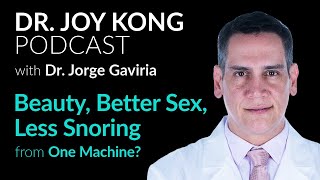
Podcast interview (Joy Kong, MD) with Dr. Jorge Gaviria about Fotona 4D laser technology. Dr. Gaviria (OB/GYN turned aesthetic laser specialist) explains basic laser biophysics, the two complementary wavelengths in Fotona (Nd:YAG for deep penetration; Er:YAG for superficial/ablative effects), and the Fotona 4D multi‑step protocol targeting multiple tissue depths (including intraoral delivery to tighten lower‑face fascia). He contrasts Fotona with microneedle RF (Morpheus), fractional CO2, IPL and HIFU, highlighting Fotona's versatility, lower pain/downtime, and operator dependence. Clinical claims reported in the interview include survey data from 553 clinics/113,000 cases (safety), ~70–80% continence improvement for some vaginal indications, and 96% reported sexual function improvement for vaginal tightening; Fotona applications discussed also include snoring reduction (NightLase), Endotite (Endolift), hair restoration, scar remodeling, body sculpting, hyperhidrosis, and other gynecologic/urologic procedures. Regulatory note: speakers say Fotona has CE and international approvals; some indications are not FDA‑cleared in the U.S.
Questions this video answers
Since 2009 (stated by the speaker).
Trained in laser therapy at Carabobo (2012) and University of Grand Mariscal de Ayacucho (2015); Master's degree in Barcelona (laser dermatological applications).
Survey of 553 clinics with data from 113,000 cases (reported in the interview).
Chapters
All these biohacking people, right? You're talking about taking all these supplements, you know, do exercise and do, you know, infrared. So all these things are great, you know, saunas. But I see people who are saying, oh yeah, you know, Even though I'm 65 by my biological age is only 45, but I'm thinking, well, you still look 65.
The age of the cells doesn't have anything to do with the looks of your full body. There are process of repair that can be induced. You can, you know, natural bring collagen. This can start with maintenance, single maintenance. Don't wait until 65 that you need to go to treatment, start doing maintenance and just get, you know, like this non ablative, no downtime or minimal downtime, collagen creation kind of procedures in your doctor's office.
Hi, welcome to the Dr. Joy Kong podcast. I'm really excited today because we're going to talk about a whole new subject which is aesthetics. You know, how to make ourselves look better, look younger with more rejuvenated and, you know, fresher looking skin and, and, and that helps us feel better as well. So it's all part of biohacking, part of, you know, living a better life. And I have invited a very special guest, Dr. Jorge Gaviria. So he's going to enlight about a very special technology, this laser technology that helps with so many aspects, not just in aesthetics actually, but in a broad range of, of applications. So we're going to talk about all that. But you know, I want to just mention a little bit about this fotona machine that I have incorporated into my clinic and I absolutely love it myself, actually just did it a few days ago. So my know, some of the surface is peeled off and, and there's, you know, amazing glow underneath and, and so I see the kind of rejuvenation it can bring to people and I get a lot of questions that I really want to dig deeper into how this works and, and, and, and why and the history of this. So I'm just excited I brought in such an expert, Dr. Jorge. So I want to welcome, um, Dr. Jorge onto my podcast.
Thank you so much for having me, Dr. Kong. I am honored and thankful for just having me here talking about my experience with electromagnetic devices and talking about them in the field of aesthetics, functional surgery. Well, we will have a really good time talking about them.
Yeah. So Dr. Gaviria actually started out as an OB GYN, but, but he has been familiar with laser therapy since 2009, so, so he graduated actually in Venezuela, but has been specializing in aesthetics and anti aging medicine. And he worked in both Venezuela, Spain and also since 2019 in the US so he was trained in laser therapy at the Carabobo in 2012 and University of Grand Mariscal de Ayacucho in in 2015. He has a Master's degree in Barcelona, Spain in laser dermatological applications. He's a board certified in laser procedures and surgery by the American Board of laser surgery. And Dr. Gabriella is also a key key opinion leader, researcher and trainer for Fultona since 2010. He was one of the first users in Latin America to utilize and develop intravaginal laser non ablative technologies. He has published his work and lectures internationally on a regular basis. So I am so excited to have Dr. Gavrila who is a super expert in this subject because, you know, I want to clear, you know, different questions once and for all. So Dr. Gavrila, thank you so much for being here and maybe tell us a little bit about what laser therapy is. Let's just start from the very beginning. What are people doing with laser? What does it have to do with resurfacing or making us looking better?
Let's start with light therapy. Basically we have been utilizing and researching for mechanisms of inducing healing. And basically what we try to achieve is a reaction on the tissue so it can heal itself. That's, that's basically, that's what this beautiful machine that we have and does. So basically we're trying to use the electromagnetic pulses, energy that surround us everywhere and every day of our life to induce processes of healing. So in that process of healing we'll be inducing some kind of damage. So we are going to induce a thermal damage into the skin. So the skin start reacting process of inflammation. And that inflammation just release a chain of reactions of building new collagen, tightening collagen, creating more vascularization into the tissue, more nutrition comes into the tissue. So this is a different way to see we are inducing damage to create a healing process that at the end going to create more collagen. That means tightening effect on the skin. If we induce damage on the surface, probably we're going to get rid of wrinkles. A small spot like photo damage in the skin or just a resurfacing like you were saying, that is basically a light peel or laser peel that we induce. So you can see your skin as shiny as is glowing right now. So the laser light is a creation of the human and he was trying to mimic what this energy is doing to our tissues. Let's put an Example, what kind of energy we're talking. We're talking about the electromagnetic pulse is electricity and magnetic pulse traveling together from point A to point B. One of the biggest energy electromagnetic pulses that we have is the outside, the sun, the big planet, the sun. If you are cold and you go out and you get sunshine, you will feel the interaction of that energy interacting with your tissue and warming up the tissue. Because we have that capability, that energy can be transmitted and absorbed by our tissue. So that is one kind of electromagnetic pulse that are the EUV lights we develop as medical field. We develop another electromagnetic pulse. That is the ones that we use to see. Actually if we got a broken bone and is the X rays and those electromagnetic Pulse Pulse from 1 to B. And we put the human here and pass all those rays. And we can kind of burn the X ray. And whatever is burned is just black. And the absorption of that energy is by the bones. So we see that is not burned, is white. And then we see the bones. Basically, we started with that, we did gamma rays. And those are all in those short uses of the electromagnetic poles. We also see electromagnetism in our daily life because we can see colors. We have a visible spectrum of light that can allow us to see the interaction of the energy within surfaces. And those will be reflecting some colors or absorbing some other colors. So we can see in a daily day, sorry, in a sunny day outside, we can see a green tree with a red apple. So it is that kind of interaction that is in everyday situation. And that take us from the visible light, that goes from the rainbow colors that goes from the violet. And we see that below that is the ultraviolet light and that is the sunlight. Then we have visible light that goes from the rainbow color, from violet to blue to yellows, to greens, to orange to red. And that's the rainbow. Then we have the infrared light. And those infrared lights are everyday situation in our household. Like the control remotes, like the night vision lights with LEDs for security reasons. And we have some medicine feel infrared light for repair, like muscle repair, like they do in physical therapy. So they can induce process of healing. Like photobiomodulation. They are modulating changes in the bio in our bodies with long exposure of infrared lights. And over there is the microwaves that is being used in every household has a microwave oven. Now is satellite microwaves for light TV passing the energy from one side to another to the different antennas. Then we have the radio waves, Then we have the TV waves. Then we have cosmic waves. So it is energy and Most of the time when we're using in the medical field, we're using light and we're using the radio waves that we change the scale first light we measure in nanomet. And when we talk radio frequency devices in aesthetic field we talk in hertz is a repetition of that energy is being delivered. So all of them, if we talk radio frequency devices or we talk about laser lights, we're going to be talking about electromagnetic energy. In the aesthetic field we have been using a lot of uses on the lights. We'd be using broad button light or intense pulse lights like the IPL that are like white light, very powerful bright light. And we have laser lights. What will be the difference between them? That laser light has only one wavelength is only one color. Why the other one? The broadband will have different hundreds of different wavelengths and will have different colors in it and it will travel in different directions. Like when you put a light bulb on your room, you put it in the middle so it will spread out in all the directions reflecting all different colors. So that's why we need white light in our rooms. And that white light is being used also in aesthetics. But when would you want to be target specific and you want just to create that, that damage into. Into a target that can be very specific. You want to have just one single arrow for that and then that case, most of the time we're using laser lights that are target direct. So not all the lasers work for everything. Not all the laser has the same affinity for everything. So we have some affinity for water, we have some affinity for blood, we have fun ability for pigments like melanin or tattoo. We have for bones, we have affinity for fat. So not all the lasers work for everything. That's why we have a different variety of laser lights. We have different varieties for IPLs. We have different varieties for radio frequency devices because they will be frequency with different Hertz 1 giga, 3 giga to monopolar bipolar. So there's a lot of things that we can be developing today in this podcast.
I see. Yeah, that's. I'm so glad you go gave a overview of the energy spectrums and, and what's involved because people are going to ask, you know, what's the difference between this and you know, let's say radio frequency type of therapy. I think all therapy is is it's in that range.
Correct Ultra use sounds, it will not use light.
Oh, okay.
Sound has as is a high intensity focalized ultrasound. So it's focal sound wave to heat up in a certain depth of penetration and that is going to create a damage. So in this case is another energy device, but not within the electromagnetic spectrum.
Okay, thank you for clarifying that. Yeah. So what is the advantage of using a laser technology rather than something like sound or radio frequency? Is there, you know, things that you think that make it more advantageous?
Okay, well, you know that when you're trying to to create a damage and you have a direct target, you would like to have a sharp shooter, you would like to have something that is just going for to damage that. If you have one single hair, you would like to kill that one single hair and do laser hair removal. Right. So because you're targeting, if you have that compared to, I don't know, let's say a bomb, you can just bump everyone else in a radius. So you're going to do a homogeneous damage that is not target specific. So it is not the same just to have something that can just achieve that change directly without what we call selective photothermolysis. That is heating with light in a selective way. It's not homogeneous thermolysis, it's a selective thermolysis and you are shooting directly or targeting directly to your chromophore. That is the name of those targets by the laser light. When you're using radio frequency, you will have different devices, you have different poles, positive pole and negative pole. So for example, if you are going to do radio frequency here, you will have the positive pole going here and all the energy will travel to your body to a patch that is your negative and that is monopolar. Probably you're using a bipolar. So it's positive and negative and they are going to be very close together and the energy is working within, but it is working within an area. It is not target specific. It's just bulkheading a target. That's why the radio frequencies devices are going into the what is called microneedling radio frequency device. So they are putting little tiny needles that are little bit more specific and the energy will travel within the needle. So they know what they lack of target specific. Now they are creating these more target specific. Of course, if you want to have a larger area heated up, probably a radio frequency device that has large manipules or handpieces will be something that is good like for the body. But when we're talking, let's say target specific for solar, lentic, sunspot or senile spot, you want to be target specific. You just want to damage that and don't damage healthy tissue. That's why we have so Many things into aesthetics and aesthetics doctors, we just like to have different selective devices for selective treatments because we want to approach our patient the best way. What is the best way? Low downtime. And that's why we want to be target specific. And the best way to do it is trying to get one single equipment that can give you a wide variety of protocols with safe presets for safe for all skin type. Because we haven't say that. But if we see how our skin reacts to the sunlight, that we can tan or we burn. Like myself, I don't tan. I burn. Even though I am Latino and I look like a Fitzpatrick number three, I act like a number, like a number one. I get Red Lobster when I get into five minutes into the sun. So that same relation on the, on the reflection of this kind of light or the. The reaction of my skin to energies can get me hyperpigmentation. So we need to be careful when we're talking in this huge community that is the United States, that we have so much variety of our Fitzpatrick and our cultural backgrounds, like Asians, Indians, Latinos, African Americans. We need to have the right technology. And there is nothing that one fits all. We need to personalize every single treatment and every single patient.
Yeah. And understand that Fotona machine, this particular laser machine that. That is fit for all skin types, which is unusual among these, you know, these energy devices for, for resurfacing. So why do you think that Fotona machine, so you mention it, because it's more targeted, so is creating less damage to the rest of the structure.
The thing about this particular laser brand that you mentioned is that the wavelength within this machine has some particularity in terms of the wavelength, the capability of that wavelength that is, is good for penetration. So the neodymium YAG that comes within the Fotona SIP Dynamics Pro, that is one version of this photona laser. This ND Jack is the deepest penetrating laser in the market. But it's not being target specific, is very wide in whatever you want to achieve, because it is attracted by water, it is attracted by melanin, it is attracted by blood, it is attracted by the fat. So you can target those by using the right amount of energy, but also the right amount of time of exposure or what we call pulse duration. So that can make that specific laser to do laser hair removal, leg pains, surgery, fat removal, or even just doing rejuvenation. So can be very good for all of those within having to compete with the melanin on the skin that at the end the density of melanin can give us a reference on our fish. Patrick that's what it makes it safe because has wide range of presets, good penetration with not some significant really target. That is the only target. Like for example, in that same laser we have another wavelength. So in one single machine we have two wavelengths. We have the ND Jack that we already talked and we have an Erbin Yag. An urban Jack laser is the most absorbent laser by water, the chromophore of water in the market. That makes the erbium very superficial and very shallow. Because we're water. We're 80% water in our cells and our bodies. And when we want to target and if we have target selective energy is going to stay on the surface. So if you can imagine this Fotona device has the most superficial shallow laser, the mouse absorbent 1, 14 times more absorbent than a regular CO2 and has on the other laser has the deepest penetration of all with say for all skin type. And with this wide variety of pulses that can give you this versatility to create different protocols. That's why I bought it in Spain, I bought it in Venezuela when I was there. That's why I think that this is how a way to go. If you're thinking about going into aesthetics. Because when you get this kind of laser, you get six different machines in one because you get six different pulses. It's a surgical machine and it's aesthetic machine, body machine and gynecology function treatments are all included. So is you thinking about starting a business? This is a really good deal. If you are a patient who's trying to seek for a face treatment and you're thinking, I want a comprehensive, very, very comprehensive treatment that give me different depths of penetrating light to create damage in different depths of my skin so I can start healing not only from the inside, but also from the outside and all the way between them. This is a protocol that the Fortuna machine has a very successful one that is called the 4D. And Fortuna 4D is four dimensions, four depths, four different modalities of these six capability modalities that the laser has. So in one single treatment, when you go to my office or yours in this case, you get four different lasers or modalities of these two lasers going into your skin, acting in four different ways, acting from the inside of your mouth. Nothing in the market is targeting the lower third of the face. That is the only place on the human body that muscles go from bone to tissue. So we want to tight all the tissue around the mouth. To improve our nasolabial fold, we want to improve the superficial dermis, where is the most collagen. Why? Because in the deep dermis is where we create the collagen, where the fibroblasts are. So we have two pulses for dermis and then we do a light cold peel that is going to give us that beautiful glowing look for the skin, like the icing of the cake to get the less visible pores, less visible small wrinkles, sun damage. And and this is what I think that is very complete way to approach it. And this kind of pulses has been treated, sorry, been tested and proved and scientifically seen that they are working on the sagginess of the eyelids has effect on fullness and plumping of the lips. We are using it for snoring because we're tightening the soft palate. So in this case we are giving more airway to that flow when the patients are sleeping, less vibration with the soft palate so they can sleep better. Patients and sleeping partners are very glad with this. And if we have this kind of laser that can be pulsated in different mucosas without vaporizing, without drilling holes, without burning the skin, we can use the same technology and put it in female genitalia and create tightening, improving lubrication for the menopause women. We can improve the continence for those who sneeze and lose a little bit of urine. And we can increment the tightening and pelvic support for those patients who have some kind of prolapse. We are the only laser who is working inside the urethra and also with some protocols for fecal incontinence. So I think that just looking into functional, just looking into aesthetics, going into treatments for body like body type, like types called tightening the skin, there is a lot of radio frequency devices that are freezing the fat and just taking away the fat. What happened after the fat is gone, where the skin goes is saggy skin. We need to tie that skin back. So this machine melts fat, but also melts it from outside or melted from inside. Because also it's a surgical machine that can do laser lipol. We can do also tightening of the skin inside and we call it endotite. We are one single surgical machine that can also be treating hyperhidrosis. You know, for those sweat glands that patients complain that they sweat a lot under the arms, we can do just one single treatment and 70 to 80% better. For those patients who use doxins.
I.
Will say that they can save a lot on these procedures. If we look into the other way to approach this laser is that there are scars that can be corrected by inducing a new healing on that surface. Acne scars, stretch mark, surgical scars, traumatic scars can be achieved because of the erbium being so superficial is going to help you to remodel that scar. So we are creating a micro scar in the scar. So in this time second chance can we scar better and be less evident? So I think that this is a well variety ranges of treatments that most of them are preset within the machine. So I am in charge since I got into the States to give the advanced training on these kind of devices. We have different scanners to make it easier on our physicians, on our laser technicians so they can scan big areas of the body and do a homogeneous, well reproducible treatment so they can have same and achieve same results as everybody else worldwide. This is very like you said, I think that is getting trending because of the 4D and the people who is using from Brazilian Neymar soccer player to King Karash and looking into her Instagram, looking at her getting the intraoral treatment. It was just a bull mind because nobody else has seen this kind of technology. A laser that is attracted by water that doesn't burn. It is something that this technology is just a standalone for so long that it's not been able to duplicate. So if you want this kind of treatment, there is only one brand that has it and you have it on your office. Dr. Khan?
Yeah, I'm just. Since I found out about it, I think it's, you know, actually only a year ago and everyone was so excited. The people who know about this machine are so excited about it. And I was like okay, let me try it. And I absolutely loved it. There's like you said, almost no downtime and it's very tolerable. So one thing about these kind of facial resurfacing and rejuvenative therapies from these devices. A lot of times people complain about pain and that was one of the deterrents. You know, some, some for example Morpheus, some people would do it once and they, they would say I'll never do it again. So that, that's no good, right? Because you, you want a regular upkeep because the aging process doing so if you can, you know, do a maintenance and always bring back the usefulness and that's important. So why do you think so many machines out there are so painful? And how is Fotona able to reduce the pain and make it very tolerable?
I think that is the way that you induce the damage. So that has to be how you induce damage. And of course there are two different, or probably three different kind of patients. I don't know if you have those. Those are the ones. Like my Latina says paracer Vellia. I give it estrellas. That means that to, to have beauty, you need to see the stars. You know, no pain, no gain. Also they say it here in the States, but there are patients that I do some kind of treatments and they go like, yeah, ready? What is, you know, like. And you're going to charge me, I don't know, 100, $200 for that? I didn't feel. Give me. I need to feel the pain, you know, to feel. That is working. But there are some, several users that will reflect like the hifu, like the microneedling that you mentioned. They are somehow painful because the induction of the damage is painful. So they need to be with some kind of topical creams. Sometimes they use a little laughing gas or they have to find ways to induce the damage. But to induce the damage they need to overact the energy. And that too much energy can be painful within the needle, within the energy delivered. And that's why I feel like in these particular cases that. Let's talk about the 4D. We induce by pushing the energy. So instead of fry, deep fry, instead of overacting in a pan and putting the steak on a pan and just burning the pan, we like to feel like this is a slow cook. This is something that just takes time, that is inducing the heat, that is bulk heating, that is just releasing the right mechanism of collagen creation by doing this. And it is visible that you can have changes within the pulses by prolonging the pulses, by repetition of pulses, by lowering down the energy. If we do that kind of repetition also is going to be delivering the heat and is going to be raising up the temperature in a way that, that is easy. We even have one pose that is called smooth mode. So it's moving the way in by repetition of pulses. So instead of one single big heart, just a repetition of a small shock wave, thermal shock wave, putting the energy within and the pulse duration of the anti jack being so fast and being so, so slow in two different modalities. One penetrates so fast that the skin just heals without getting hot. And the other one is getting hot by just a thermal, thermal bulk heating from one to even five minutes. Sometimes protocols goes like 20 minutes. If you go to physical therapy, they put you in a Light bulb of infrared light for 30, 45 minutes. That is induction of. Of changes. If you just want to and need to release energy very fast, you just put the needles inside and burn. That's why I feel like the number eight protocol that you just mentioned is very painful. And I have seen the reactions. And I think that my patients will like to pay for something that they can see results, but they don't have to suffer that much.
Much. Yeah, I can, you know, be, you know, be the testimony, testimonial for it, you know, for. I had one scar, and when Sydney did the scar reduction, I barely felt very much. I was like, well, okay, I hope you did something. But lo and behold, in a couple days, I could feel the changes in the scar area. You know, the skin was getting rougher and things are transforming. And it's apparently that very simple little, you know, input of energy that I barely felt was producing profound changes. And that's very surprising. And you know it. And the same thing with the 4D, the facelift procedure. You know, even though afterwards, you know, I felt some heat and felt tightening of the skin, but it was such a mellow procedure that I could go out that same night, you know, go out and have dinner, and it was no problem. But then to see day after day, you know, feeling the changes in the tissue, and then gradually, you know, a surface layer will come off and the new skin that's emerging underneath, you know, the. The transformation is happening with, you know, very mild procedure. You know, what feels like mild.
It is. I mean, if you. If you look into all the procedures that we do, and me coming from a gyne obgyn background, we can see that we are doing support, we're creating collagen. And probably it is very subjective on my patients say, yes, I feel more tightening. I feel better. Looks are difficult to measure because you see yourself every day. So you don't get to be that subject. Like, oh, yes, I see the changes because you see it every day. And then you get used to. But if you take a picture before and after, then you go like, wow, yeah, I can see the change. Or if you stop seeing some friend and then we'll see you within two or three months, they go like, what are you doing? Look at your face, how it's glowing. So when I relate to the obgyn and my patient says the pelvic support that you just did, that is basically the same support because it's almost the same skin that we have on the face and we're creating that collagen and my patients go like, I went out with my friends friends and got a cup of wine and I laugh and we have such a good time and we were laughing and joking and everything. And I didn't have to go to the bathroom and change my panties. When you hear that kind of feedback, you know that you are really into creating collagen. You are really into doing some changes. So if we can relate to that thing that is more objective because. Because I mean you are not sneezing and coughing every time and you're peeing yourself every time. But when you go through this process and then you see that oh, I didn't pee myself, then you understand that this is working. We are doing a special delivery of energy to create a controlled thermal damage that is going to create more collagen for support. If we can support your pelvis, if we can support your bladder, imagine what we can do. And this is just in 2009, when I started doing this, we just saw what the aesthetic doctors, we just saw what the dermatologists were doing and we say why we don't put it there? Why is that we don't put it there. And that's. And that's how the aesthetic gynecology that we were just into looks. That doesn't have anything to do with the function that is inside the vaginal walls. Is that where it came into thing? We were like, if they can achie this kind of collagen tension, this skin tightening, we can do it on the genital area and we can improve quality of life. Because at the end if we see numbers, Dr. Kong, and this is impressive because I was just looking into US numbers and there is a 2% mortality on menopause of women that weights up in the middle of the night to go to the bathroom and pee. They fell, they broke a rib, hip and then they died. So just because they needed to go to be what is the health system doing? Nothing about supporting the pelvic floor. They are just selling medicine and they are just selling diapers. That is what they're doing. That's it. But if we can get those patients into not waking up too much times at night and reducing the necturia, we can reduce 2% mortality on those patients just by doing lunch time procedure. 10 minutes, no pre, no post is just getting like a pap smear. Imagine that going out from the static point of view. If we can achieve and save people and reduce mortality, imagine how you're going to feel after you get a 4D on your face. And you get your investment on fresh collagen because this is what it has to to be is that maintenance. You take care of your food, you eat right, you drink water, you have a really good ritual in the morning for your skin care, actual at night. Why all of that is not going to create collagen, is just a slow collagen. But if you induce some damage that is going to create more collagen. So this is an investment. You are, you are paying for your skin to get through repairs, inflammation processes to create more collagen. So you need to go to the good technology and go to a good doctor.
That honor, yeah, it's reminding me of all these biohacking people, right? You're talking about taking all these supplements, you know, do I have exercise and doing, you know, infrared. So all these things are, are great, you know, saunas. But I see people who are saying, oh yeah, you know, Even though I'm 65 by my biological age is only 40, 45, but I'm thinking, well, you still look 65, so maybe inside of you you are younger. But you know, you've got to take care of your face. You know, what happened to all this collagen? Everything's sagging, so you're still looking 65. You need a little bit extra TLC for your skin.
The age of the cells doesn't have anything to do with the looks of your full body. So, so it is right that they can be in a really good age, like in the cells and the chromophores and the lomeros and they're eating right, but also the body, the outside, it needs to be refreshed. You know, it is something that somebody said to me once that you need to look how you feel and if you're feeling good but you don't like how it looks, there are process of rep that can be induced. So you can, you know, natural bring collagen, that is, that is your own natural collagen. And this, this can start with maintenance, single maintenance. When you are on your peak of, of of their hormones over the 35 years old. I don't know why they put that number, but if you start in that position, then you're just going to do maintenance. Don't wait until 65 that you need to go to treatment treatments, start doing maintenance and just get, you know, like this non ablative, no downtime or minimal downtime collagen creation kind of procedures in your doctor's office.
Yeah, I want to talk a little bit more about the specific procedures, but I want to go back to a little bit of the kind of the basic questions that you know, patients ask.1. Okay, so I've tried these devices. You know, I've done, you know, facial resurfacing. And so what's difference, you know, in your machine? Why is it any better? I've got so much pain, I got so much downtime from the other machines. So can you talk a little bit about the difference between Fotona technology and Morpheus and all therapy and ipl just to, to give people an understanding. What's the difference? And what, what about the fractional CO2 laser? What, what's the difference? Difference? Yeah, let's clear the field a little bit.
I have done those kind of treatments on the different offices that I have been working. And I think that when they were born and where they were invented, and there's a lot of users that follows and have good results with that is because there is a process of human healing. So you are going to use energy in all of them, right? You're going to use a laser light for the photona that as I told you, one is creating damage on the surface on for appealing. The other one is doing tightening from the inside of the mouth. And you're going to use two pulses for skin with the anti jack. So Fotona has four different pulses to get the energy within the tissue at different levels. Okay, so that is four different levels. How do we get energy with deliberate with microneedling rated frequency? It's the same electromagnetic pulse, only that the cycles are faster than the light. So it's measuring in hertz. And we need to deposit by inducing some needles inside the skin. So they penetrate and they put the energy deep. Okay. Some of them are insulated needles so they get the energy deep in the dermis. But what is the actual damage to the surface? There is no resurfacing, so there's no peeling. So the changes will come within inside the tissue. So any sun damage that you will have, there is no peeling. So there's no advantage if you are having a lot of wrinkles on the surface. Same thing happened with a radio frequency device that is not a microneedle is just passing through. This is just getting deep inside the tissue. Ulterapy or the hifu is also focalized in the energy within some millimeters of the skin. So it's trying to achieve some damage damage near this mass. This mass is the muscular skeletal portion of the facial anatomy. So it is around this area where all the muscles and the tendons will be Meeting here. So what we want is to get the tissue fixated by creating this damage really near to that area. And because the body heals this way, that is going to help to contract and tight the skin. So microneedling radio frequency and hifu will act deep. And we have that in one of our step of fotona. So we still have three more steps or depths of penetrating light energy and treatments that are being going to achieve. We have a super soothing heat going up while the others like a CO2 fractional, they have to drill holes to put the energy in the bottom of that hole. So you need a lot of energy to drill holes and a lot of energy to deposit heat. So what is the problem when you deposit too much heat or when you drill the holes with too much heat and you're doing into hafiza Patrick, that is like your skin or my skin. Hyperpigmentation can come. So once again high energies, pain high and heat hyperpigmentation. So I mean I have seen wonderful results with good users. The technology is good if is in the right hands. If it's in within the right person that understand and it just not following a protocol and understand what he's doing on understand your skin, understand your needs. This is very much important. It is not the same to go to an empty office then going to your beauty parlor and getting a laser hair removal with some kind of light because you saw it on Groupon. So please don't be cheap on your skin because complications can come. If you like to have beautiful nails, but you don't like to invest on a quality technology, then we'll have a problem because you are not investing in the right thing. Your skin is what you see forever and the nails you're going to last only one month. So I think that if you find the right practitioner, the right doctor to get these kind of technologies, he will choose what is best for your skin. If you need deep tightening, probably any of those technologies will do. But what or if you need a comprehensive deep and superficial treatments, those kind of devices will lack of that. And then you need to complement some kind of these painful and not so safe procedures with a chemical pill. So whenever they mix some of these with chemical pills is because they know that they are lacking the superficial port portion of it.
Interesting. Okay, so the CO2 laser would require.
Drilling holes is the only way that the CO2 deposits the energy. Okay, and this is from the 80s CO2 was used to do a full ablative treatment that just peel. I mean you're getting a Almost a second degree burn in full phase. And this is going to take 10 to 20 years of your age. Because you need to repair from that burn is taking all the skin out. And that's why CO2 became fractionated. So instead of burning the full hundred percent, he start burning 10, 20, 30%. So in that area is just doing micro holes to damage a percentage. And that's what we call fractional treatment. When we are treating a fraction of your air area. If we're treating the forehead and we're just treating a third, that will be a fraction of the treatment. But in somehow how is that the CO2 delivers the energy by drilling a hole and depositing the heat so that heat can contract tissue. And the process of that tunnel by healing is going to do a contraction. So it's going to do tightening. So there is no way that the CO2 can deposit heat without burning and doing micro holes that are called MTC micro thermal zones. And that's the way that they do. So you always going to have downtime with a CO2.
Hmm, I see. Besides being very painful and potentially causing hyperpigmentation.
Why is painful? Too much heat so they can penetrate energy. And if too much energy is deposit probably hyperpigmentation in the wrong fist Patrick or skin type.
And Morpheus is the one that uses radio frequency, right?
Needles? Yes, it does. With needles, depending on the head that they have, they will have different numbers of needles going in and activating. So that they can in the tip of the needle they will deposit the energy. So that energy will induce some damage and that repairs goes from the inside. There are other radio frequency needle devices that they come or not with a coating. So the needle is coat only the tip is what you see that is naked and there is where the damage will be. Some of them the needle is not protected. So they are doing the damage in the full trajectory of the needle. He will be a little bit more like the CO2, you know, just doing the full damage in the full tunnel. And well, they will have a little bit more downtime. So one of of them are more painful than the other. But I want the people to understand that. What, what is that? That the. The difference between them. Basically, you are depositing energy to repair how you deposit how much energy. And what is the. The. The depositing is what can be safe, soothing, safer smoothing for a protocol that is not painful, but can give you results that is important.
Yeah, yeah. So, you know, with all these machines, it's interesting. The Fotona technology is considered gold standard. In places like Asia and South America. Right. So it's very popular. And these are very advanced in aesthetics. You know, look at South Korea, Brazil.
Fotona just started in the static world of lasers four years after the laser was developed. Okay, so that's, that's almost 60 years ago. So Fotona has a really good trajectory. What is the problem? And I think that this problem affects in every situation our, our patients in the US territory. His fda. So there's a, there's a lack of interest from the, from, from this particular department. I hope that they don't have my address, but because I think that it's taking so long for people in the United States to get treatments that are CE approved, Europe approved, Singapore, Canada. There are some health departments in other countries that are using this to reduce incontinence. What is. Let's talk only that patients who pee and need surgery, they will have downtime of a month. So now we're talking about an employee that is going to be absent in your, in your work for a month for recovering for a surgery that probably will go to another surgery or it will be good or, or not that that can happen. And they rather go into these kind of procedures instead of doing, maintaining and treatment that can be in the office. Why can we not approve that? So why is that? There is a special way to recover and don't lose hair that is called the hair restart. Hair restart is with Fotona everywhere world. Why but they haven't let it here in the United States because it's not FDA clear for putting heat over the scalp. Imagine. And that's, that's what I'm saying. Why is that our public in the United States has to be the last to find out. I hear that from, from my colleagues. They go like, oh well that Photona is very new. And I go like no, they have 60 years. And, and, and just to put it in a small country like my country, Venezuela, we sell 300 Photonas in there. And I was one of the providers in there with other 299 patients, doctors who had this. It was everywhere. This was, this was something that is, is very well known in Asia. And if you have Asian population, they will go like, oh, you have Fotona 4D. I know it. If you, you go into Brazilian community, they know, know Fotona. They know the Fotona 4D. So it is Latino that we like, we like beauty, we enjoyed beauty. And Fotona has been with us for 20 years. So we understand that it's very popular. In in Asia because some of the of the shares of the company were bought by a really good big group in China. And in three years Fotona just tripled the market and is the technology technology of non ablative and a facelift that is getting results and is bringing out collagen no pain. This is something that is just. I think that is a lack of the previous market in the US but also these restrictions that. I think that with new protocols approaching and being in different markets, I think think that for this beauty kind of point clearance has to be I don't know, somehow a little bit faster for our patient's sake. I mean I am doing my. My hair because I don't want to lose hair.
So in other countries what which treatments are approved by their FDAs or equivalents?
Well, the thing is FDA is just a memory. It's just an American that that keep devices for health purposes. So it's drug agency but also any machine it has to pass through there. The other ones are like CE is the community is being approved for all these kind of protocols. So I think that speaking from the point of view of the FDA in my favor FDA approved these machines for skin remodeling.
Hmm. Okay.
And everything that we have talked today, Dr. Kong is remodeling is inducing a damage to remodel the skin. So I can say that I am remodeling the vaginal dermis. You know. And don't say incontinence because that is the lag that is the eye on the dot on the I. If I say for incontinence then I have a problem. But let's say I am remodeling the vaginal tissue so I can give more strength. So my patient will be more continent that I can say.
Yeah. So definitely I think the Fotona in probably all around the world. The 4D non invasive facelift is the most popular, right?
It is the most popular. Then we have a smooth eye. That is the only protocol with laser with no downtime for wrinkles and eye bag. We have the only one that does lip. It's lip fillers without needles. Because the edema and the collagen creation of natural hyaluronic acid around the lips. With this kind of modality pulse is going to create better lips. And we call it lip lace. Night Lace is another one that is a single one technology with the Fotona and the fotona 4D you don't like to peel. Then we do a photona 3D and we don't peel You.
I see. I don't know why anybody wouldn't want to peel.
It's a amazing.
It's like shedding you know the old and you know having baby skin.
That's it.
Yeah. So the night lays is the one that helps tighten the airway. Right. And help people with snoring problems with breathing issues.
Yeah. At the beginning was called snore lace and then come the marketing thing came to night lace and is for those patients who are SN snorers and they have. Well, I. I believe that the easy cases will be the ones that doesn't have a CPAC or the patients that doesn't have a sleep apnea as a diagnosis and they need to sleep with a cpap. But you know, if you're eventual snorer or your. Or your. Or your partner sleeping partner sleep snore when he's just facing up. Well, this can. Can help because this is going to shrink the collagen in the soft palate creating more airway for. For. For that air to. To pass and not to vibrate because it's not loose. So it's not that fasty skin is just going to be tight. So better sleep for you. Better sleep for your partner.
Right. I understand. Is as effective as CPAP machines.
The CPAP is helping you to sleep is not helping you with the cause of sleeping. That. That is basically big tongue obesity. Short neck malapati is like a tosses of the soft palate. So we're targeting the base of the tongue, the back of the tongue where we're targeting the both posterior and anterior pillar of the soft palate to create. Create a airway. So we are. We are in somehow we are going to the cause. We're just. You know, this is. I mean you need. You need to improve several things like your weight but. But for the airway to flow. We are trying to make it bigger. And what are theologists what they do. They do a surgery and they just open a bigger arc.
Right. Right.
So what we're doing is tightening instead of cutting.
I've heard amazing stories about just how fast people respond and how one treatment people can stop snoring. Which is. It's incredible.
Yeah. One, one quick story that I heard this couple. They sleep separate because this is a huge snorer. He gets a nightlace and the lady just wake up at night runs into the other other room to see he. If he was away. Sorry. If he was alive. He didn't even hear him. And she was like oh my gosh.
Something happened that's so funny. Yeah. I want to go Back to the 4D face a little bit because I love the, the four directions. Because you start with inside the mouth which like you said, tightens all these structures that you don't usually get to with all the other facial procedures. So you actually tighten, you know, the muscles and tenderness, I guess, everything and promoting collagen production from the inside. So you're, you're firming everything from the inside and tightening. Correct.
Well, the thing is that lasers are superficial. So we don't get to work on muscles. What we get to work from the inside will be on the fascias that are collagen. Collagen structures that holds the muscles are like the exterior sheet of the muscles. So if we can tie this, we're going to improve the muscle tone of the mimic muscles that goes into the lower third of the face. So basically that is the mechanism of action. That why, that's why we are targeting from the inside something that no one else has thought. No, something that no one else has in this kind of pulse because there is no, no one that are doing that kind of light depositing energy to type that thing. Fascias.
Right. And the lower third of the face is a, you know, big problem area in aesthetics because you can't do much with it. Right. You do Botox and on the upper and then the lower just, you know, as far as the, the loosening just keeps, keeps going.
The center of the air is pulling us down. So any tissue is going down and to the middle. So what we need is the mimic muscles that are going in this way. Just try to pull it up and to get, you know, a better drone looking guy in the mirror what you want to see.
And then there's also a lifting function. Right. So there's a vector lifting. How does the machine achieve that?
Okay, well, vector lifting is, is just a theory that we have aging vectors. And the aging vectors is just what I said in this case, that when we age and we see, see more pronounced nasal labial folds, sometimes we see the marionette lines is because the tissue that is supposed to be here is just going down. So the aging vectors are this way. So it's going to the middle and down. So to the middle and down. So what is the anti aging vectoring? That is the vector leaf will be trying to make pole lines going that way going up and to the out. So when we can do a vector lines and we try to get into this area that is, will be the mid eyebrow out and we can get this pull up we're going to get this kind of foxy eye look. So this is what we call the vector. So we try to create vectors that goes into the frontal lobes and temporal lobe of the skin to do some pulling on that tissue that is really nice fixated to bone. And that vector lift is going to create this foxy eye look that can be achieved with tissue without any toxins involved.
Okay. And you do the same thing for.
The cheek area if you're using it for non ablative erbium or anti jack. We're going to create some lines like for those users that or practitioners or patients that are listening right now will be like the PDO threads that they are using and they are very in the trending they put some lines and those lines are going to create fibrotic tissue and that fibrotic tissue is just going to pull and they're going to put it this way and it's going to pull and they're going to put it this way and it's going to pull. So what we are creating creating is fibrotic damage or inducing some damage in a line way that it will be the vectoring of that fibrotic tissue. So we're putting together damage in a line and a breadcrumb of follow the line so we can get this kind of vectoring, anti aging vectoring to induce some pulling areas of that tissue. So that is what actually the vectoring is. Another good way to put it that Fotona has is the Endotite. I think that in other brands here in the states it's called Endolift, we call it Endotype. We go with the laser fiber of the anti jack. We get into the tissue, we activate the laser from inside the tissue and then we put energy and it's putting magic glue, crazy glue inside the tissue tissue to pull right away. So this is a more minimal invasive procedure like putting a pdo. But in this case we're delivering energy with a fiber. So there's a lot of possibilities.
I think it's so much more elegant than the PDO threads. Way less painful and less potential for side effects.
And the thing is that when you are depositing the energy the induction of titanium will be immediate. But the PDOs you are just putting a tension free suture like, like the PDO that is going to be phagocyte hydrolyzide is going to create the fibrotic but within time it's not immediate unless you're using a barbed PDO and that is just going to Create some wrinkles because you need to tight and you need to flip fixated somehow. So I think that this endotype is just the thing that we needed. I trained in 2015 in Croatia to do this and we just have the first training for us doctors. Six providers came to Texas and we have. One of our specialists came from Morocco to train. So we have really good specialists in Spain, Morocco, Brazil and of course I am here and our first teacher is in Croatia, Dr. Maleti. And I think that this with within the scope of Dr. Hopkins and Dr. Vieira in Florida. I think that endotype is going to become the next thing for fotona after the 40. We have the ones that they can wait and see the results of the natural collagen and the ones that are like let me jump start and let's do this non invasive facelift or minimal invasive faithless with the endotite.
Yeah, that's. That's amazing. Yeah, I know there's so much. You know one thing beautiful about Fultona is that it can do so many things. But what makes it challenging is that it's very operator dependent. You want somebody that really is experienced, is well trained to be able to handle all these aspects. So, so I know you know our nurse Sydney has trained with you multiple times and she's, she's amazing. She's.
She's so good that she's a trainer right now. I mean, I mean she's, she, she will be in somehow teaching me.
She's developing her, her own protocols.
That's important. But one thing that is important to understand is that sometimes you go to, to I don't know, and a technology. A technology. And then you buy the computer. And what did you buy the computer for? Maybe an email. But do you know that that computer has Word, that Excel, that has PowerPoint, that can do so many different things, you know, surf the web. But you need to understand all those different apps or programs or whatever. This laser is really open for anything. So if you're ophthalmologist and you just want to do a smootheye, then you have it. You see, it's that easy. You are authoring a lot in. You want to do night laser. That's it. You with GYN and you just want to do this. Then you. Then you have protocols only for what you bought this. But that doesn't make sense when you are the investor and when you want to offer more to your patient, you go like for me, let's say for example, you come to my office, you want to do a Pap smear. I see your, and I see your, your nails on your toes. And I see, oh, my gosh, you have fungal nails. I can do onychomycosis. I keep looking up. And I can do laser hair removal. I can do leg base. I can do hyperpigmentation area of the genital area. So I can do your stretch marks. I can do revision of your C section. I can do treatments for your incontinence. And that's only half of your body in a single pap smear procedure. Five minutes. Everything that I can do as a guy knee that I don't, if, if I go with another machine with another radio frequency or with another CO2 is only going to do the protocol for incontinence, but nothing else. You see. So if I, if I look into how can I return my investment better, I would like to try to find something that can be customizable and can be more to it. You know, probably I'm not very much into body treatments, but probably I can delegate to my laser technician and she can do some fat treatments for my patient.
Great. For patients, I mean, they can come in, you know, within one hour. They've taken care of so many things. Yeah. Like, yeah. So, you know, they can take care of their face, their vagina and their scar and maybe melt some fat and tighten, you know, the, the, the mid, you know, abdominal area. So. Yeah. So I want to ask you about the, the vaginal treatment or the penile. We've already had great results in our clinic, but you as OB gyn, you know, you've, you know, you've seen plenty of results. So what do women say, you know, with this, this vaginal treatment?
There is something that is really important first, a safe procedure and complications or what we call adverse effect. We do that survey on 553 clinics worldwide and got results and data from 113,000 cases. So this is a really nice number. Safe and adverse effects, expected effects is that we get, we got edema and we got lubrication. That is expected effect when you put a laser into tissue. There is no complications over all, all those procedures. Now let's talk efficacy. Efficacy is very important because it will be good results within time. So no many, not much sessions, no long procedures or long time to achieve these results. We are talking about 70 to 80% cure rate of dry patients on continents. So they laugh, they cough, and they don't lose urine. So this is something that is very important. We have reduced reduction of prolapses. We have 96% of sexual enhancement when we do vaginal tightening and on gsm that it will be the genitorinary syndrome of the menopause. We have improvement on lubrication, purito pain, intercourse and we have urological changes also. So this is something that can be done for those patients who doesn't want to go into hormone replacement therapy or have some kind of background or family events of breast cancer that they cannot have estrogen. So they will come, they will become dry, they will not have that quality life with sex. And we can improve that with a single procedure in the office. So we have really good improvement and really good high cure rates. But the thing is that we have never encountered someone that say I am worse. 100% improvement, 70 to 80 or more curate on those kind of procedures that we do vaginately.
Wow, that's amazing. But you also do the outside of vagina, right? To make it prettier?
Yes. And I think that patients all become more self aware of that intimate area. You know, with the, with the Brazilian hair removal, everything comes, became more visible, you know. Yeah, it is like I don't grow a beer, but if I were having all the time a beer, I will not see that I have, have a thin lip. That is the same thing that is happening there. Now that they are without hair or most of the areas are no hair, they start looking into more hyperpigmentated area, more flacity on the labia majora that with the age just became deflated. These get loose. So it looks like, like, like a flat tire. So they, they want that skin to be tightened. They, they see that it's more dark. So there's genital whitening, genital tightening. And of course the surgical approaches, when they have excess of tissue like labia minoroplasty or hoodoplasty, that there are just a little bit more invasive, but also can make a patient more comfortable with how they feel and how they look when they are in an intimate position.
Yeah. And what do you say see with men with penile procedures?
Well, when the penile procedures we have really good future protocols that are being developed first. For example, we are working in process prostatitis. So we have a special device to go inside the urethra canal all the way to the prostate and irradiate some biomodulation changes for those chronic prostatitis. And since we are inside, we're putting and developing energy within the corpocavernosa to improve the vascularization and improve that eds that are based on the vascular part of it. So of course those are, those are major problems on our male community and developing on the coloproptologies also we are for the fecal incontinence also when the muscle and the finter is gone, then we're developing that kind of protocols. And patients are also. Males are looking into perennial bleaching and anal bleaching. So there's a lot of things that can also be done. It's like the scroll talks that they say that they are using toxins on both the corpo cavernosa for elongated elongation and also on the, on, on the scroll on the skin of the scrotum for, you know, less wrinkle age tissue.
Are you guys looking into the prostate enlargement at all? Is that something that's. This could be helpful the prostate enlargement?
No, is, is we. The laser will have a surgical approach for vaporization of prostate but it doesn't have anything to do like shrinkage for example. We are doing beaut treatments when we are in young patient that they suffer from the tonsils and they are in the bacterial stage and they are very big. We can induce heating and reducing and doing a bacteriostatic effect on that. But. But not for a large prostate. I mean and my dad will be happy. But we haven't stopped that.
Such a huge problem. Yeah. The other thing is, you know, the body sculpting. So I mean that's very popular as well. Tightening of different areas that the bat wing for the arms or the double chin.
Small areas are very, very well defined by this double procedure using a long pulse with the endi jack, we call it piano. And the smooth mode with the erbium. We'll have this double layered tightening for those small areas that need skin type tightening. So we do a deep tightening with the piano and then we'll do a superficial touching with the smooth. Beautiful work for small areas like the arms or like the, like the chin.
So the deep tightening, does it actually kill the fat cells?
The. I mean the, the piano. When, when let's say that we have only a skin sagging and we don't have any fat. Then we'll use the piano just to do a heating on the deep area because ND jack penetrates a lot. And then we'll do the smooth for the surface. But what happened when I overpass the exposure of the piano with the andy jack? That overexposure. If I get cooling on the surface, I'm going to trap that energy. As the energy cannot go up, the energy will Travel even further, further in. That means that will pass from the dermis to the hypodermis. Fat. And being in the fat, the fat when it's exposed to temperatures that goes over the 41 Celsius, they're going to start creating pores on the cell membrane and there is going to start leaking those fatty acids. So eventually they will die because the adipocyte cells, they don't have apoptosis. They don't have a time to die. They just, just, they just burn. They, they, they get burned, multiply and they are there to collect fat, give fat, collect fat. They give fat, collect fat. But they don't die. They don't die. They, they, they just get empty or full. Empty or full. Empty or full. So we need to kill them. So it, it takes longer to get fat again. If, if you're not eating right or doing a right exercise amount or eating, eating the, the way that you should. But, but it's basically that this protocol that is the type sculpting can do tightening or can do sculpting or both. So we do a prolonged timing on the piano to kill the fat.
Wow. Amazing. Beautiful. And, and also for hair restoration, I'm curious what's the mechanism of why it can protect, promote hair growth? And I've seen beautiful results. I mean amazing results. Actually.
Let's talk about the, the Sahara dessert. Dessert. There is no water on the Zahara, right. So there's no, there's no trees in the, in the dessert. So because there is nothing that, that can give nutrition. So we have a small thin layer of skin with a small, small thin vessels that are bringing flow and are bringing oxygen and are bringing nutrients to this, to the hair. Because the air hair needs hormones and needs nutrition. So how will we get more nutrition in there? By doing vasodilation. How can you induce vasodilation by heat? If you are in a heating area and you induce heat that goes inside the dermis and this doesn't mean that you are getting bold and then you go to the UV light and then you spot yourself. No, because it's going to be reflective energy. It's not going to go in like this kind of infrared light. So that's. Infrared lights are going to go in, is going to help with vasodilation. That vasodilation, muscle dilatation will bring more growth factors. Growth factors and also is nutrition for the hair that is going to give you thicker hair, more healthy hair. And it's going to activate those hairs that they were just Trying to like dying. So what we are using is a laser that doesn't burn the hair, but goes inside the skin without damaging the skin. So we have the erbium smooth pulse with a special kind of brush that has little, little tips that you just pass the energy brushing into the scalp, the. The heat, and then you can activate those follicles and growing back by doing that kind of energy deposit. For vasodilation.
Yeah. I mean, I wouldn't believe it. I didn't see it. I. You know, I thought the, the hair treatments, I mean, I've done injection of stem cells, exosomes into the scalp and extremely painful. And to have this procedure, not. Not causing much pain at all.
No, the thing is that you need to. You need to inject growth factors. So you need to inject, you know, predecessors for, For, For. For. For that you're. You're injecting the nutrition. So injecting his needle. Needle is painful and more on. On the scalp. So. Yeah. So what we're doing is vasodilation. We're inducing your natural flow of nutrients in there. As we are creating an inflammatory process, more growth factors will get there. Like what is happening. What is happening. Of course, if you measure, if you mix, you put. You ask for vasodilation and then you put a little bit of PRPX or some sort, or whatever you're using is going to be much better. You're giving the instruction for building a house and then you're delivering all the materials. That's beautiful.
And sometimes we do combine. Yeah. This is amazing. Thank you so much, Dr. Gaviria. I mean, this is just incredibly informative and so educational and. And I'm very grateful for your time and all your knowledge and expertise. Yeah. And where can people follow you and be more informative? Where? Okay. It's right on the screen, Dr. Gaviria.
Yeah, I am there in Facebook, Twitter and Instagram, rgaviria and email. If you need any consult. I will be@info Dr. Gaviria.com I will gladly answer in Spanish or English. No problem.
Amazing. Very generous of you. Thank you so much, Dr. Gabriella. And I'm very appreciative of your time here today.
I am thankful for your time also.










