What’s So Special About Stem Cells? - What’s Safe, What Works, and What to Avoid
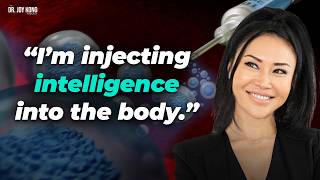
YouTube interview (Joy Kong, MD) explaining stem cell therapy as primarily a signaling/intelligence therapy. Covers definitions and heterogeneity of stem cells, major tissue sources (bone marrow, adipose, umbilical cord/placenta, dental pulp, menstrual blood), comparative advantages of younger birth-tissue cells (umbilical cord) vs autologous aged cells, risks (senescent/autologous cells can exacerbate existing cancer; reprogrammed cells risk teratomas), regulatory limits on programming cells, and adjunctive measures (hydrogen, ozone, hyperbaric oxygen, supplements) used to boost cell efficacy. Practical clinical points include dosing uncertainties, pitfalls of expanded cell cultures, immune-modulating role of mesenchymal stem cells, and patient preparation (toxicity reduction, purity).
Chapters
Stem cell therapy, you might as well call it signaling therapy, or I call it intelligence therapy. You know, when I inject people with stem cells, I'm injecting intelligence into it. And how is intelligence embodied by these signals?
All right, so I have a million questions about stem cells. Let's go ahead and first start with are all stem cells created equal?
Well, is all life created equal? I mean, that's. Stem cells is as complex as life because that's the origin of life. Stem cells. When people say stem cells as if there's a single thing called stem cells, and there's no such thing, because stem cells are a range of cells that evolve since you first were formed, right? The fertilized egg was the first you. And then from there it keeps evolving, becoming different kinds of cells, which are all stem cells. So they start to form these little structures and tubes and migra directions, forming a little organism with a beating heart. And the heart cells did have working cells, so that's no longer a stem cell. But anywhere before it becomes a heart muscle working cell is a stem cell. So there are literally thousands of variations of stem cells. What they are is that they have capabilities to further differentiate, which means further gain function and evolve. But while they gain function, they lose potential so that you can't have both. So the. The wider their potential was. So embryonic stem cells is full of potentials, but then they don't have any particular direction. The moment you start to go into a particular direction, then you start to lose the wide range of capabilities of potentials. So you get more and more specialized until you became the end organ cell, which is no longer stem cell, but the stem cell. The characteristic is that they can multiply and make more copies of itself and then also copies of something that's a little more functional. That's called asymmetrical division. So they will preserve a copy of itself while giving you another form of cell that has more function. So that's how this whole soup of cells evolve and eventually becoming us. Even within stem cells, even if you have the same categorization, which, let's say mesenchymal stem cell, mesochemical stem cells is all the rage right now. Most of stem cell therapy use mesenchymal stem cells, but even among mesenchymal stem cells, they're all different. You can get these mesenchymal stem cells, MSC for short, from the bone marrow, from the fat, from the amniotic membrane, or you birth tissues, you can get from dental pulp, from menstrual blood. So there are all these cells everywhere. So even if they are categorized as mesenchymal stem cells, you characterize by particular cell markers, they're all different, coming from these tissue, different tissue sources. So even if they sound exactly like the same kind of cells because of where they came from, how long they've been in the body, and even if they be in the body in the same location, but you're older, then your cells, the mesenchymal stem cells would be a lot more different than when you were younger. So, yeah, it's a very dynamic system.
So is this why they. When they try to take the stem cells specifically from your own body and they try to go into the bone marrow, is that because those are the best ones that they can find in the body, or why do they specifically like to go for those?
No, because they were the earliest that we knew of. So this. You have to look at the history of science, when the science of stem cel evolving. First of all, the first time that when they did stem cell transplantation, they had no idea. They just transplanted the stem cells, and that's called bone marrow transplant. So this shows you where the history was, right? So a person is. Had cancer, they wipe out their immune system, their bone marrow. It's, you know, it's completely gone. And then they transplant somebody else's bone marrow. They didn't know that there were stem cells in the bone marrow. Of course, they had no idea that there are stem cells everywhere in your body. Wherever you have cells, you have stem cells. So. But they had no idea. So early on, they only thought that there were stem cells in the bone marrow. That's where we humans still keep stem cells. And then they found out, oh, my God, it's in. The fat tissue is in, you know, all your organs is literally everywhere. Everywhere you have cells, you have blood vessels, there are going to be stem cells. So because it came early, this idea of using bone marrow to get stem cells, so it's more entrenched as a particular way of doing stem cell therapy. So it's not because it's just so much more special, it's just because we knew about it earlier.
The latest data that we know right now, is there a specific part of the body that would have the best stem cells if they were taking it out of your body, or is there any update on that?
I think the question will be more about when you take it out. So where. Yes, different locations. You may get different types of cells, but from the same person. Your. Your own bone marrow stem cells will be Similar in its quality. I'm talking about mesenchymal stem cells because you can't compare apples to oranges. So if you compare apples to apples, you just say mesenchymal stem cells from the bone marrow. It's going to be a little different from the mesenchymal stem cells from the fat. These are the two most common way of getting stem cells from your own body. There are a few other ways too, but they're just not as commonly used. The denominator is that these cells are your age, so they have taken on life's challenges. Just as you have every breath of polluted air you breathe, every piece of junk food that's not so good for you, you ate, every drink of alcohol, every cigarettes you smoked, can all affect these cells. So you carry them with you. One thing that I want to caution people about is that it's not just these cells are actually a little older, a little tired, not as active, not secreting as much growth factors and giving you as much bang for the buck when it comes to therapeutic benefits. They're also a little risky because the older you are, the less intelligence your cells still carry, because they start to senesce, they start to get older, they start to forget, their, their, their capabilities start to diminish, including the capability of recognizing cancer. So younger stem cells are really potent at not just recognizing cancer, but getting rid of them. But older cells have a tendency to be really tolerant because it seems to have forgotten that some cells don't belong in the body. So it tells everything to grow. This is why age is the biggest predictive factor of cancer. So the older you are, the less your immune system is able to recognize it and is able to fight it. So that manifests in the quality of your stem cells. So your stem cells, which generate all your cells, including your immune cells that help you fight everything, they have diminished in their capabilities. So when you give people cells from your own body, there's a much higher chance that it's going to promote cancer. There's actually no evidence that umbilical cord derived stem cells have cancer promoting properties. I mean, it can actually in a human body can exacerbate cancer in a petri dish. When you don't have a lot of the other factors of the human body, you don't have the immune system to interact with, then it can give growth factors. And they have shown that that cancer cells can grow, but never there's no evidence that it can promote cancer in a, in a real person. So that's the risk so when you, when you're talking about using your own body, what's the best source? Well, they're all kind of similar, just a little different. But if you want qualitative difference, you want something that really makes a big difference, you need to look at younger sources. And that's where I kind of came into, you know, I guess my role as an educator in the field was that very early on, this is nine years ago, that when I got into the field, I really wanted to understand what's the best source. Just like question you're asking, hey, which one is the best? If I have to do stem cell therapy, what kind of cells should I use? So I was faced with using a person's own cells that's mostly either from fat or from bone marrow. Or I'm facing this whole other, this newer way of doing stem cells which is using the earlier tissue from birth. At time of birth, baby's not harmed, baby's live and healthy, crying, happ with parents, but you have to cut the cord, right? And the placenta, what did people do with it? They tossed it. But now we know we can use that precious tissue which is full of stem cells and growth factors and powerful in regenerating. It helped to, to, to help you grow a whole human, right? That's how much power that's in that tissue so you can get cells from that. So to, to me, after comparing the different sources, for me to understand what will be the best for my patients, also for myself, then my conclusion, after reading lots and lots of articles and research studies, the conclusion is that using earlier birth tissue source is a superior source. If anyone's interested, just watch my whole lecture on YouTube. It's a 40 minute lecture where I go through detailed, I present clinical research and so people can, can look at research. It's really not my opinion. I formed an opinion based on all the research work that's been done in the world. So yeah, the video is called are all MSEs created equal? And of course they're not equal.
So let me clarify this. So you're saying, if I were to understand correctly that if you use the cells from your own body, we know that they're not as good because they're older and all that. I get all that. But you're saying that using our own cells could potentially have a greater risk for having cancer or developing cancer.
It can exacerbate existing cancer. So these cells do not form new cancer. But we all know in the human body things go wrong and they're always kind of Abnormal cells that are cancerous. But your immune system, if you're strong, it will get rid of them. But as we get older, it's harder to get rid of them because our immune system is not as powerful. And of course, these little cells floating around, trying to become more, to become bigger. Right. They always want to take over the organism. If you give the body certain elements, that only tells everything to grow. Without recognizing that some cells don't belong there and should not be growing, they should die, then you have a problem.
Okay, so we use our own cells. You're saying that this would. If cancer was present somewhere, it would potentially help it grow. But if we use stem cells from, let's say, an umbilical cord, which they're from something young, they seem to be better. From everything that you've researched, you know, in your opinion?
Absolutely.
Would that not exacerbate cancer then also because they grow or what's.
No, the evidence is that they have preserved a lot of the capabilities to about when it comes to recognizing cancer and telling the cancer to die, they literally sent what's called trail ligand. So this particular molecule that signals the cell to die to program the cells. So it's like one signal to turns on their program cell death mechanism. So literally sending these cancer cells to death. So the overwhelming evidence is that these younger cells will help you kill cancer. Not just not allowing them to. To grow, but actually actively killing them.
It's almost like cell signaling. Like it's signaling to.
Yeah, absolutely.
Awesome. Okay, so this is all about signals.
Stem cell therapy. You might as well call it signaling therapy or therapy. You know, when I inject people with stem cells, I'm injecting intelligence into it. And how is intelligence embodied by these signals?
That is, to me, it's interesting that your own cells could potentially be more dangerous. That just seems wild to me. Right?
Yeah. Your. Your own cells, just like senescent cells, they call it zombie cells. So these cells, not only they sit around not doing anything good, they can actually actively secrete elements, inflammatory molecules, to make you sicker. So it's not like just because it's in your body that's good for you? No, stem cells are not so great. And your own system sometimes can be your enemy.
And in this regard too, does stem cells have any effect on your immune system, like positive or negative, depending on stem cell.
So when it comes to the immune system, there are certain cells that will interact more with the immune system, Primitive immune cells. So when I give people stem cell therapy, I give them a blend of cells that's, you know, you talked about me as a product formulator. That is my contribution to the field, which is to bring these different cell types together in this unique product that combines cells from the umbilical cord blood, which is full of primitive immune cells, and also cells that can regenerate the whole blood system and also cells that can regenerate the blood vessels. So that's from the core blood. And then you can get in the same product, it's called charcoal core. You also have this. These cells from the umbilical cord tissue, which is full of mesenchymal stem cells. And these have this overall signaling, coordination, type of capability. So they're very much immune modulating. So they're literally revamping your immune system in a sense that if your immune system is too weak, it's going to make it stronger and more powerful. If immune system is too strong, but actually in a abnormal way, which is what caused all these autoimmune conditions, then it can calm that over activation overreaction, and make it more adaptable. So very much related to the immune system. So depending on what kind of cells we're talking about, but we're talking from the core blood, all those cells I was talking about, and the mesenchy stem cells, these, these cell groups are very much tailored toward helping the immune system.
And so, okay, so we have the stem cells that they can take from your body. Some people do it that way. Stem cells that you can get from the umbilical cord, because that seems to be a really great place to get it from. Are there any other types or is these the main two?
The main sources will be from the bone marrow versus the fat versus the birth tissue, which could be umbilical cord or placenta. I prefer the umbilical cord because the umbilical cord cel baby. But when you get cells from the placenta as a mixture, it can be from the baby and can be from the mother. I just prefer these new life forms, right? Cells from this new pristine life form through this reset process, the sperm and egg coming together, flash of light without this whole new reset. So that's a new life that sustained the human species. And that's the kind of cells I want to get from. That's why I really like the umbilical cord. But there are other cells sources too. There are people who are getting it from the menstrual blood. So there are. When women, you know, bleed, they do lose stem cells as well. So it's not just the other cell types. So There are. They do lose some stem cells. So you can, you can get it from the menstrual blood, you can get it from dental pulp. You can literally get it from. From any tissue. But, but these are the, the major sources.
So because there's a lot of clinics out there obviously doing this. Right. And it's always tricky. It's kind of like the world of hydrogen. Everybody's gonna tell you something different, and I just want to always get to the truth, which is why I love what you're doing, because you're just looking at the facts and the data and you're developing your opinions based on, you know, the data. Right. Rather than what people say. So that's why I love what you bring to the table, you know, because you do it that way. And so back to these other types of clinics. So again, they either take it from your body, they either get it from, like, the umbilical cord or whatnot. And then there's other places that they get them from too. Like the main sources for clinics, or are these basically the two main sources?
I would say 99% of the clinics when they do stem cell therapy in the US Will be either from the fat or from the bone marrow or from the most likely umbilical core stem cells. Yeah. The other 1%, I don't know what they're using, so maybe they're getting it from something. Something else. But yeah, almost everybody is using one of the three.
So that really answers the question. Okay, and I think we've. You've already answered why, in your opinion, the ones from the umbilical cord are better. Um, and I think it's extremely fascinating that the ones from your own body potentially could make cancer worse, which is crazy.
Your own body could be getting you sick. I mean, a lot of people who are sick that there's also autoimmune conditions some people think is stem cell disorder. So a lot of people with chronic illnesses, there's already a problem with their stem cells. So if you try to get stem cells from these bodies, sometimes it can be helpful, but sometimes it doesn't work very well, especially when they're pretty sick.
And when you mentioned. I was curious about this dental pulp, what exactly do you mean by dental pulp?
The root portion of, of of the. The tooth. You know, unfortunately, they didn't educate us very much in medical school. They sent all the knowledge related into the te. Dentists, but, you know, basically the portion that can grow teeth. So there are stem cells in there. But I, I don't personally, I Don't know anybody that's using that. So it's extremely rare.
The only reason I was asking too, and I was curious was because I was studying to be a dentist a long time ago when I was really young. And I was curious because Japan right now is doing some interesting research where they're able to activate a protein that has shut down in regards to teeth, where you can literally regrow your teeth again, you know?
Yeah, I've seen reports on that. This is very exciting. Yeah, I know. Science is absolutely amazing. We are entering an era of science fiction, so things are no longer crazy, you know, the previous unthinkable. So this is why I'm so excited about the field, is because we are encountering unprecedented possibilities and unprecedented ability to heal and repair and regenerate. So this is. This is. Yeah, where the passion came from. Not just me, but I've encountered a lot of doctors. I've trained a lot of doctors. I see that spark in their eyes. They feel like, oh, my God, finally I find something that can really make a difference. Because as well trained as we were, we were trained to use chemicals, drugs, and to look at the body in a very simplistic way. Now we can actually respect how complex the body is because it's so complex that we don't know how to make a cell. Right. It looks like it's very simple. It's a cell, you know, make it like, why don't you produce it in the lab? No one can do it because it's so complicated. We don't know how it's done. Maybe it's not from this dimension. We don't know. So to capture the complex capabilities of the cell is a. Is revolutionary. So this is something that's. That. That medicine has never encountered, but it came from western medicine. So I'm excited that. I love western medicine. I love western science. I love chemistry and physics and math, so I love science. And stem cell therapy came from this western form of Western science. Dissecting everything to the very, very foundation and realizing that you've found something that could be the key to a lot of things. So it's, you know, you have to give western science the credit. This is why stem cell therapy is embraced by everybody. If you are trained by a traditional medical school that you think, I'm, you know, I'm a medical doctor. I, you know, I know the human body. I'm, you know, I'm worshiped by my patients. But you, you can appreciate stem cells because it came from the cutting edge western science and so, so they think that this is. Of course, it's great. But of course, most of them, I would say over 90% of the medical doctors in the US have not read up on the literature on stem cells. So they're still stuck at the stage where they think it's under. There's not enough evidence. It's not enough evidence to them because they have not even looked. So, of course, if you don't know it exists, then it doesn't exist to you. But, but that's, that's the Western medicine still, just as a concept, they said, absolutely, stem cells, that, that, that could be amazing, but we just don't have the evidence. So. Because they didn't know. But other forms of healers, there are all kinds of other holistic practitioners. They love the concept of stem cells. Using life to heal life. What can be more holistic? Right. What can encompass everything and treat the body as a complex whole than using something as complex and whole as a cell? So everybody can love stem cells. So this is. Yeah, I realized there's no resistance as a concept.
You know, I have a real. I have an interesting question too, about this, because I thought I heard about this before. Are they. And I don't know if this is coming into the future or if we already have access to some of it. Is there a way to program the stem cells in regards to. For example, I heard about injecting into the gum certain stem cells to grow teeth also. I don't know if you ever heard about some of this stuff.
Yeah, of course, you. That's the beauty of stem cells, is that you can program them. However, the state of medicine, the way the politics is, is that the moment you start to program it, then the regulatory agencies are going to come in saying, wait a minute, what did you just do? You just changed the cells. You just made it do something else. So now they believe that you just created a drug because now you're manipulating life. Right. You're doing something to the original form. Then the FDA says, then you have to go studies unfortunately, when. So that, you know, maybe the intention is good, but the result is that it stifles innovation because there are a lot of people who have ideas. Oh, I just, you know, I heard about this particular nerve growth factor. Right. I can use this to give the cell some signal and I can give it to my patients. And then all of a sudden the nervous tissue can be regenerated. But now they can't do that because it's considered a, you know, you're making a drug now you have to go through the whole study before you can ever use it on humans. And how long does that take? Years. How much money does it take? How many millions? How many people actually have that kind of money? Big pharma have that kind of money. So if the government wants to push people who are trying to innovate and trying to heal people into this route of drug approval, the average approved drug, it takes $2.1 billion to go to market. I mean, this is statistic that was, that was like three, four years ago, but now it's probably even more so if it takes, let's just say it takes $2.1 billion. Who do you think had that kind of money? Right? I don't know anybody with that kind of money to throw into drug approval. Only the big pharma, the big, big. The big corporations.
So the point is though, we do have apparently the ability to be able to program stem cells. We just don't have the ability to do that and use them because of regulations at this time.
It's going to be very challenging. Well, this is one reason why people are going overseas, because some places like Mexico and, you know, certain countries, they have regulations, some have regulations and have a hard time enforcing. Some just don't have it. So that's why a lot of companies just go overseas and start doing whatever they think that they want to do. So it does help move things faster. But then it's true, it's also not very regulated. There are potential problems.
Have you seen anybody in the world at this time programming stem cells and using them in certain unique and interesting ways as far as, you know, at this moment or in time?
Oh, I've heard about people doing that in Mexico.
For what purpose though? Like what, what exactly are they programming them for? What are they using them for?
This would be interesting to regenerate brain, you know, brain tissues. You know, a lot of people with degenerative brain conditions, Parkinson's, Alzheimer's, traumatic brain injury, stroke, et cetera. So the nervous tissue is one of the hardest to regrow. So that's what they were targeting.
That's super interesting. And has there been any negative side effects from program stem cells that you know of?
Because we cannot use those. So I have not followed those research as closely. But can things go wrong with reprogramming cells? Absolutely. Just like the induced pluripotent stem cells. So this is, you know, developed by or discovered by Japanese scientists where they found certain molecules, Yamanaka factors, where you can give a cell or signal the cell and an adult cells from your skin can be reprogrammed back to the embryonic state. So that sounds like endobiol, right? Imagine if I can just take a little cell from your skin and make an embryonic stem cell out of it, and now I can grow anything out of it. Wouldn't that be amazing? The problem is that they can't control it. So there's a high chance of tumor formation. So these are actually cells that can form fresh tumors, just like embryonic stem cells that you can obtain from day five to seven after fertilization. There's a high chance of what's called teratoma, which is a new tumor formation of uncontrollable growth of different tissues. So it has that potential. Yes. Things can go wrong when you decide to tell the cell to go certain directions. Some of the ways that they're doing it also can be problematic. They were using viral vectors. They were inserting different genetic information into the cells, and that can cause different problems. So it's not without risks. When you start to manipulate nature, that's actually super interesting.
And I can see why. Using something like from the umbilical cord, you're basically just using nature the way nature does it. Right. Rather than trying to manipulate nature, which sometimes can get us in trouble. I think we've seen that a lot. And so is there a possibility for certain parents, like, if a woman was to have a baby? And before I even get to the question, I'm curious on your opinion about this, because I've read a lot about this. When a woman has a baby, you know how they like to basically cut the umbilical cord pretty fast. Do you have a belief about leaving the umbilical cord attached for a certain amount of time?
Yeah, sure. You drain the blood back into the baby. I'm sure that's really great. You know, you're returning a lot of the stem cells and a lot of the regenerative elements back into the baby. I think that's great.
How. How long, in your opinion? Because. Because we don't. Do you know, there's. This is all just.
I don't know. That is beyond my. Yeah, that. That's not something that I have looked into. Yeah.
How about parents who would want to use their own umbilical cord to try to get stem cells for that for them in the future, potentially? Is that something that.
Yeah, sure. A lot of parents do that. So if there's a catastrophe in your kid, cancer, you know, huge injury. Yes. You can use the child's own stem Cells. But I do believe that science is progressing rapidly. So it's great to do that as some form of like a, like insurance. But by the time the child has grown up in 10, 20 years, I'm sure we have probably some incredible technology where we can just, you know, get the cells from the child and then make new stem cells. You know, I. That's probably what's going to happen. But even without that happening, you don't have to use your child's own stem cell. Just like we've seen incredible things in our clinic, right? People with liver cirrhosis going to literally reversal, COPD and Parkinson's and you know, diverse. Really, really some of the hardest diseases to, to deal with. And we've seen incredible results. Using somebody else's, right? Using umbilical core stem cells. It's not yours, but it doesn't prevent you from the kind of healing that you can experience. Why this goes into how stem cells work. So when you give stem cells, it doesn't live forever in your body. There's a finite lifespan. So because once the cells activated, it comes into your body, you know, it comes alive, it works, and it fights your battles. And your battles can kill the cells, inflammation can kill the cells. There's no, you know, very few cells actually will just keep living and living. So there may be a very small fraction of the cells that I give to patients that actually live in the patient's body. So that's minuscule compared to the total number of cells that's in the body. But nonetheless, the benefit still is powerful because the cells, while they're alive, they can produce all these benefits. And the fact that most of them die makes the point of having to use your own kind of obsolete because you are using your own with the idea that your own cells is going to end up living in your body. And if they differentiate, they start to make new cells. Then these new cells, if it's from somebody else, the new cells could express surface markers that's recognized by your body, and then your body will kill it. This is why you want your own, right? Because you don't. You're not going to reject your own cells. But the fact that most of the cells that you give to the body, whether or not it's from your own, is going to die. And it's only a small fraction that actually lives. So it makes this just less important of a question. You know, I'm perfectly happy using other people's cells and has, you know, produce incredible results. So I just don't think it's as much of an issue also when you use your own, you are depending your, the fate of the cells on the tissue bank you're choosing. So you. Depending on how well they are processing the cells and, you know, the viability after it's, it's thought out. And also, what kind of cell types, Right. Stem cells is a complex issue. It's, it's not a single thing. So they get stem cells from you? Because I ask parents all the time, they say, oh, I have stem cells from my child. Can I use it? It's okay. What kind of stem cells. Do you know? What, what kind of cells are included? So, so I can compare to see if there's any, anything that's equivalent to what we're giving. Because what we're giving is a very comprehensive group of cells with 20% of them being the mesenchymal stem cells. So are you giving me 100% mesenchymal stem cells? Are you giving me 100% the core blood cells, or are you giving me both? The combination, because the synergy is really important. So most of them don't know. And almost no company, there's no company that actually would incorporate both. So it's possible that there's a company out there that's preserving both. I just haven't met any, but it's, it's possible. So you need to know exactly what kind of cells you're getting and so which kind.
So you're saying there's. You called it mesochymal stem cells.
Mesenchymal stem cells is rich in the umbilical cord tissue. So that's where, yeah, a lot of the companies are focusing on the core tissue to get the mesenchymal stem cells out. But when you are looking at cord blood, there are a lot of what's called mononuclear cells. These are primitive immune cells that can regenerate your immune system. There's hematopoietic progenitor cells that, that will generate your, your red blood cells, your blood system. And then there's the endothelial progenitor cells that will regenerate your blood, blood vessel lining. And there's fibroblast, that's, you know, the, of course, the, the earliest cells for your connective tissue. So there's a whole range of cell types within the cord blood and there's, you know, other cells, mostly mesenchymal stem cells in the core tissue. So I utilize both. I also bring in amna membrane cells, which has its own benefits, its own kind of Specialization because it will help the cells to develop into a different. Tailored toward different tissue development. So if you bring all those in, then you're going to get more, I think more healing for more types of systems. So there's basically more complete healing.
That kind of makes sense. And this is probably a really stupid question, but I'm just curious. What about stem cells from animals that have certain properties? Has there been any talk about any of this?
There are countries that are using it. I'm not a proponent of it because there's definitely going to be chance of rejection. If you think you're worried about rejecting between humans, if you bring in start to bring another species, there's going to be high likelihood of your body rejecting. And I just. It doesn't make sense. I do believe that animals among each other, you know, if you are a dolphin, you can get dolphin stem cells, you know, between each other, that's fine. But I wouldn't want to put the dolphin cell into my body. No matter how much I love the dolphins. We're just too different. So yeah, I think it's misguided. It almost feels like a, you know, very archaic, very. Yeah, it's medieval. That the animals are great. These are mythical, you know, creatures with capability. So we're going to do that. I think that that veers away from really what the essence of stem cell therapy is, which is that you are, when you are of a species, a particular species, it's already made in a way that's going to thrive. All the blueprints, all the information is in your system and you can use your own intelligence that's already perfectly formed to heal yourself, just to make your system be in a healthier state. Other animals, I do think it's great to study animals. There may be, for example, elephants. Right. Longevity. So what's in their body? What could be. Is there a molecule or like what. What's in the system? I do think it's great to study that. But to put their cells, that has the potential to manifest and you know, to grow all these proteins and causing immune rejection when you're not that animal just. And you're using their cells. Yeah, it doesn't really make good sense and I think it's an opportunity for some people to tout certain things and I think it lacks scientific rigor.
Like first of all, I completely agree with you and it's a taboo subject or a dangerous subject to talk about. I wish we could talk about it freely. So I'm going to speak a little bit in code here. Because there's little needles that they put in you. Maybe during the flu season. Right. Maybe for whatever reasons when you're born. But we know that a lot of those. What's in them, they make them using animal cells. Right. I don't know if you know what I'm talking about. And so I personally would agree with you. I think it's a bad idea to mix these different types of animals with humans. I believe somebody by the name of Judy Mikovits talks about potentially certain viruses that animals have that humans. You wouldn't want it in a human. Right. But I am curious. This is also probably going to be. I don't like to be controversial or anything, but this might be controversial. How about stem cells between different races? Because I've noticed, I looked at some interesting research about different races having different attributes biologically from even. Even bone density, for example, is different between African Americans, Hispanics, Caucasians, Asian people. And so is there anything that you're like, hey, I want to get stem cells from a pro athlete, or, you know, I want LeBron James baby's umbilical cord or something? Or are you like, hey, I'm Asian. I need only Asian stem cells?
Yeah, there are some people who care about that. They may want to do that. Some people don't care as much. You know, the world is a melting pot. United States is a full demonstration of just how similar we are. So literally, yeah, we have a few genes that's different, you know, between. Between the races. And, you know, yes, there's color difference, but we are so similar. We're probably more similar to each other than the wide differences within a race. You know, if you're an Asian, I mean, within Asians, there's wide, wide differences in different attributes, intelligence and et cetera. So I think the differences between the races is probably not as big as people think. I think just among humans within the same race, there's going to be a wider difference than between the two. The races.
So there's no data, basically, that would say, hey, you should only use certain stem cells from your own type of race or even blood type, for example. None of this plays a role.
It doesn't make any difference at this point. So, yes, for a marketing perspective, you can advertise, we only, you know, if you're a type A, we have type A for you. But in practicality, it doesn't make any difference because the cells we're giving are immune, evasive. It. Whether or not it can express the same kind of blood types, it doesn't Even come into the picture. So because these cells are like blank cells, they come into your body, they do their work and they die once in a while, they stay in the body a little bit. If they express surface markers that are too different from you, you know what, sometimes your immune system could get rid of them and that would be the end of the story. So no harm, no foul, you know, that's. That's about it. So the number is so tiny that it's not going to take over you. It's not, you're not going to be. So it's not going to attack all of you. It's like having a little drop in the ocean of, of cells. So how much is that going to affect you? It's not going to change your identity. It's not going to change your, your, your, your. Who you are as a person. So, yeah, I've taken stem cells. I don't know how, from how many individuals, probably at least, you know, two, dozens. Because I've done stem cells every three months for the last nine years. So I've had a lot of sessions and from a lot of donors. I'm still me. I haven't seen a noticeable difference except that I'm just getting a little younger.
And I didn't care so much about the marketing stuff. You know, I'm more interested in like actual data. Have they even done any research about that or.
I don't think so, no. That's not what. Where people are focusing their energy on.
Okay, so that's, that's interesting. And then, so the other thing that I was kind of curious about, is there anything that, in your opinion or where there is data that enhances how good these stem cells that you potentially use in order to enhance the effects, you know, the positive effects. Is there any way to enhance how good stem cells work? Like just the way that you treat yourself?
Of course, there are a lot of, a lot of things. I mean, the whole stem cell production, you know, they want, they're interested in knowing what's going to enhance the viability of the cells, what will make these cells healthier. So the ozonation ozone and you know, very low dose ozone can spur the cells to be more active and, and more healthy. So just, you know, it has to be the right dose. It can be a lot, you know, that could be toxic to cells. There has to be just the right amount. It could help the cells to be healthier. Oxygen, right. And, and hydrogen. I know you love hydrogen. So there are data that can help with cell proliferation and Cell growth or light. We use laser light in the clinic, right? Light green, purple light. Different wavelengths, different frequencies can talk to the cells in different ways. And we know that they can enhance cells ability to differentiate and make them healthier and make them more. Their mitochondria to be more vibrant. And there are hyperbaric oxygen. Right. That's the oxygen therapy. So that we know can trigger stem cell release. And we give people certain supplements at our clinic. That's as part of the treatment, including stem regen, so. Or nitric oxide. Nitric oxide can help with stem cell mobilization, activation, and stem regen can help release a lot of stem cells from the bone marrow. So when I give people stem cells, some of them may want to go back to the bone marrow. No, we want them to come out and keep working. The number of circulating cells correlates with how fast and how well a person can heal. So we want them circulating. So we utilize everything we can already in the clinic with different supplements, with energy therapy, with hydrogen, and with ozone therapy. So we're adding modalities to make these cells even more effective and work at a higher level.
That's what I really loved about your protocol, that you were looking to those other methods. In fact, doing research for this. I found also they did say the molecular hydrogen appears to be beneficial for stem cells by reducing the oxidative stress. So in which improves our survival.
Yeah. The first thing when people come to my clinic for stem cell therapy is that we give them a glass of hydrogen water, actually from the Lourdes. You know, the. The hydrogen machine that you introduced me to. Yeah, I heard you on a podcast and you were talking about. I was like, wow, it's very interesting. I need to know. I need to know the best form of hydrogen for my patients and for myself. So. And then I'm really grateful that. That I found out more about what's real and what's. What's good and stop using things that may be actually causing harm, you know.
And in the very near future, I'm probably going to introduce you to him. There's another doctor who's been testing. He was testing actually on himself, the hydrogen tablets. He was using the bottles, and he really wasn't seeing much benefit. And then because he's type 1 diabetic, so he uses it to also monitor blood glucose. And now he started using the hydrofix, and the benefits were like, off the charts. He's like, what's so different about this? And I was talking to him a little while ago, so I'm Gonna have him on the show at some point. But he's doing a lot of research. He wants to have all the data before we really sit down and talk. And he's even going to be doing some interesting studies as far as, like toxicology studies on certain modalities of hydrogen. Because that's been one of my concerns and I know that that would be important. I assume with stem cells, right, you don't want certain things that would impede or affect their ability to work as, as good as they can. Right. Does purity in your opinion? Because this has been a lot of my protocols. In your opinion, is purity really matter? Like the purity of your water, the purity of your food, the purity of.
Your hydrogen toxicity is a big problem. Actually, that's one of the things. I would say 90% of patients getting stem cell therapy at our clinic will receive benefits. But the more toxic your body is, the less the benefit will be. And some it will be a lot less to a point where they say, well, I don't notice the difference. So people like that. There are two main causes when people don't notice benefit. One is that they're too toxic. So it's almost like their cells were seized by the enemy and is stuck and frozen in the state of dysfunction. So it's very hard to bring them back. You know, it's like your machinery is clogged. It's literally stuck. So you need to unstuck your machine, otherwise nothing is going to be made. So toxicity or underlying infection are big issues. That's keeping the body at a state that would just not repair. So, yeah, toxicity, that's huge. So purity, absolutely. You know, that, that's why we were really big on purity. You know, peptides, and that's a big thing in the, in the regenerative or the holistic world is the peptides. You know, who can you trust and what, what do you. Yeah, there are a lot of people are touting it. So can you, can you get a source that's actually pure? That's extremely important.
I'm so, I'm so glad that that's important to you. That's been really important to me and I've definitely noticed a difference. And in your opinion, if somebody wanted to come and get stem cells with you, how long would you suggest for them to work on themselves as far as like, hey, drink the cleanest water, maybe even use the best hydrogen, try to have a really clean diet, you know, avoid all this garbage. Like, what do you think? I know that it's a hard question. To answer because it's going to be different with, for everybody. But would you have a kind of an average number? You're like, hey, it'd be really great if you tried to treat yourself better.
Yeah. Remove all the bad food, you know, all the junk that you're putting your body, and remove the product, you know, the daily, whatever household products that you're using that's fumigating you. Like this morning I was in Pilates class and I was finishing up and my instructor, through the cleansing, you know, the paper towelette, you know, in literally in my face, you know, I'm trying to breathe. I know I'm breathing toxins. So I, I kick that off the machine because I know I'm bombarded. I'm trying to minimize my exposure. And people who wear all these potent perfumes and, you know, just put these things on their bodies, like, oh, my God, you know, when I get a whiff of it, it's like, okay, great, I have to detox from this. So. But you want to avoid putting things in your body that's preventing your, your, your, your physical wellness from manifesting, basically. So that's, that's really important.
I'm really glad that you brought that, you brought that up too, as far as, like, perfumes, because it literally drives me insane when people wear this. They literally give me a headache.
Oh, you're sensitive, right? You're like. Like a canary in the coal mine where we'll put you somewhere as if you get a headache.
Well, and, you know, and in Japan, they have this whole thing. I don't know if it's this way in China. They have a big thing in Japan about don't be wearing, like, perfumes and certain things because it disrupts people around you.
Yeah, it's very invasive. It's like, I mean, we're very sensory. You know, our nose is so tied to our emotion and our nervous system. So to. To wear something that's like attacking, you know, 20 people all around you, like, that's very aggressive.
And I, like, I saw some brain scans in regards to this. I thought it was interesting. I personally, if I ever want to use anything for smells, I just use a hundred percent pure, like lavender oil.
Yeah, I like essential oil, you know, Rose. Yeah. At one point I think I had. What was it? Was it. Oh, there's some tropical fruits that are really just lovely. So, yeah, you can use something that comes from nature that we know are actually beneficial that doesn't have all these hormone destructors or things that's going to clog up your cells, you say hormone disruptor.
This is interesting. Has there been any evidence or anything that shows that certain synthetic perfumes are hormone disruptors?
Yeah, yeah, absolutely. Yeah. Synthetic products in cosmetics and in household. Definitely, yeah.
It's so nice to hear a doctor talk like this because it drives me nuts sometimes. There's so many people out there, doctors or whatnot, and they don't believe in any of that. They're just like, oh, you know, whatever. They just think it's so much garbage. And I'm like, no, you have to take a holistic approach in some ways. Right. But, yeah, I think the purity thing is really important. I kind of want to ask you, I know we talked about the different types of stem cells, but I always hear people touting the numbers, like, oh, you're going to get a hundred million stem cells. No, I'm going to give you 900 million stem cells. Does it matter?
Yeah, that's a great question, because that has confused so many people. So I'll tell you the origin of the number of cells where that came from. It came from research. So when you first study stem cells, then you are required to do experiments on animals, right? So you have to decide on arbitrary doses. So you may do. A common dose is 1 million per kilo of body weight.
Right.
You have to give certain numbers to these poor little mice and see how they do. So if you got good results, then that became the standard. So then the next person who's doing the research after you is certainly not going to change things around that much because the person used that dose just got success, Right? So then you keep using that dose. So what's interesting was eventually somebody's going to study the dose response. It's going to be looking at, okay, everyone's using this dose, but is that really the best dose? So why don't we study, you know, another dose that's a lot less, Another one that's a lot more. Actually, I started in the academy, American Academy of Integrative Cell Therapy. So I trained a lot of doctors. And one of the part of the lecture is about dozing, like, how much do you give? So I went over some research, stat. And what's funny was that there's no consensus. Some studies show that more is better. Some studies show the less is better. Some studies show the middle is better. So literally, I can't give people a educated conclusion because the study results are all over the place. So that's kind of the state of where. Where it's at. So it can be a complex issue, right? Why do all these studies show such different results? But what kind of cells also matter if you're getting cells from. So we don't know what different sources, right? You can get it from the fat, from bone marrow, from umbilical cord. So different cells, you can't. You should not compare apples to oranges. But even if you are comparing apples to apple, let's say you're getting cells from, from the fat. And one group of people, you're just giving the cells as is to the body. And the other one, you just grow the hell out of it. You put in the, in the culture medium, let's throw it into the incubator. You just let it grow and grow and grow. And this is what a lot of companies do overseas, because in the US you can't quite do it. There are people who do it under the radar. They won't advertise it, but they do. Some actually are, you know, dumb enough to advertise, but a lot of times that, because you know the FDA is going to come knock, knock on your door. So overseas, they will grow them. And I've known people who have looked at their facilities and look at how they operate, how they grow the cells. They're just letting them grow without much monitoring, not to mention actually characterizing the cells after you harvest them to see if there are still stem cells. Because there are research done. You know, when I went to different conferences on stem cell therapy, there are research showing that when you start to grow the cells, this is what's fascinating. These are, you know, done by PhDs, not, not medical doctors. Right. We're focused on treating patients. The PhDs really want to know the mechanisms and what's going on. I remember this PhD studied these cells because he knows that people grow cells. And he. When he actually started to look at the characters, characteristics of these cells, he said, majority of the cells that you grow into, this big vat of cells are no longer stem cells. Because when stem cells divide, remember I was telling you, the cells, stem cells are special in a way that they have this asymmetrical division, so they divide into a copy of self. This is usually how they do this, right? How they divide. A copy is self and a copy that's more differentiated. So this is the daughter cell that's a little bit different. So these two cell types, if each cell, original cell, is dividing into a copy identical to itself and another copy, that's the daughter cells that's differentiated. And that daughter cell, that's a little different, of course, it's not going to go back and divide back into the earlier cells. It doesn't go that way. So then, you know, without special manipulation, it just, that's not the natural way of doing things. Natural ways to further differentiate going down the pathway. And the fact that you're able to preserve a copy of yourself, that's already very special. But if you have one cell that becomes a copy of yourself and the daughter cell, the daughter cell would divide into another two daughter cells, and then this one cell will divide into another copy of self and a daughter cell. All of a sudden, out the four, you only have one stem cell. You got three that are not stem cells anymore. And you can imagine you just keep letting this soup grow, right? Then you're going to have a little fraction that are stem cells. The cells are differentiated and that. Remember that scientist speaking very, very clearly and passionately, he said this. When you div. When you grow the cells, this is what happens. So if you represent yourself saying, hey, I just did. Made all these cells without examining whether or not these cells are still stem cells, then you're, you're not being truthful. Then you don't know your signs. Either you don't know the signs or you're not being truthful. So that's the problem. And that's what I see in patients who go overseas, getting this huge number of cells, 200 million, 300 million, and they think that's better. Well, if you're getting 200, 300, most of them are not stem cells anymore. You're going to have more chance of rejection because these cells have divided, have basically manifested more of its own characteristics, its own proteins. When cells differentiate, that's the way they gain function is through proteins. So they make proteins, they make receptors. And so nowadays they start to be able to work in different ways. The proteins are an expression of your DNA. So whatever the stranded DNA is encoding, that's the protein that's going to make. And your DNA is to be different from someone else's DNA. And the protein is going to be varying just a slight bit. And that slight variation could trigger your immune system to, to attack it. So, so now you got this, this immune activation and this rejection. So there's way more issues of people feeling sick. People feel like feverish chest tightness. Yeah, yeah. And even when you are, if you have low percentage of mesenchymal stem cells, you also can, can do that. This is why I think mesenchymal stem cells is really important, because it really calm your immune system, allow your system to accept this new form of information, Most of them will die, but it doesn't mean the information is not super helpful when they're still alive. So mesenchymal stem cell can help you calm that. If you just use core blood cells, then you don't have enough mesenchymal stem cells. And when I first got into the field, I was only using cells from the core blood, so very, very little MSCs. And then there are more side effects. So, so this is why I'm making my concoction, because those cells are helpful. They can do amazing things for your immune system, for your brain, even for your musculoskeletal repair. But there's a more chance of this immune reaction. But if you bring in this high percentage of mesenchymal stem cells, all of a sudden your immune system is calmer, is more accepting. And not to mention, mesenchymal stem cells have this whole range of benefits. Breaking down scar tissue, helping you form more blood vessels, reduce your inflammation, telling your, your cells to your local stem cells to differentiate and grow new tissue and to help you fight microbes. And it can rescue cells that don't have to die. It can kill off cancer cells. So these are mesenchymal stem cells. You want them, right? But you also want the benefit from the other cells. So that's why I have that concoction. But the number of cells, when people say you have to look at, are you comparing apples to apples? So if I'm giving a person 20 million of pure stem cells that have never been touched, you know, never divided in the tissue culture in an incubator, and then somebody else has 200 million cells that's been grown and left in the incubator for a long time, and now you're taking a little portion of it. So these two, you can't really compare these two. I got 20 million of powerful cells, and out of your 200 million of cells, you'd be lucky to have even 2 million of the cells that are actually stem cells. So, and there's another research that was presented at a conference showing exactly that. If you give people 10 times the number of cells, but when they're expanded, grown in a culture, the effect is a lot less than the 1/10 of the cells, but have not been expanded. So that's the scientific evidence that when you're looking at the capabilities of what these cells can do, they lose their abilities.
You know, I'm so grateful that you explained that, because everybody just goes off the numbers. They're just like, oh, 100 million, right? 200 million. I' getting more and more. It's funny too, that in the world of hydrogen, sometimes it's like that too. Everybody's trying to overinflate the numbers. But would you agree that quality is better sometimes than quantity? Obviously you need a certain number.
Absolutely. And we have that. You know, in a real world case, a 911 responder he's interviewed with me actually is on YouTube and on my podcast. So if people just want to look up that a 911 responder, Dr. Joy Kong, that interview should pop right up. So he actually went to Mexico because he found a clinic through Joe Rogan's podcast and thought, well, that has to be the best, right? Is on Joe Rogan. So he went there, he got severe fatigue after the treatment. Not just him, but the 20 people that were there at the same time. They all kept in touch. Everybody got this severe fatigue for two months. So he has severe lung damage from being in the pit for eight months after 9 11. So he was really in really bad shape. So he was really trying to save his life because a lot of his colleagues had died. And. But two months of extreme fatigue and that two and a half months later, that's when he started to notice some benefit. So he received huge number of cells. So this is right, that they talk about giving you this large number. You can't do that in the U.S. so you have to come here and we can give you this large number. So that's his experience. And two and a half months later, he had a little bit of improvement. And then he found me and heard what I had to explain and then came into our clinic when he got stem cells from us, which he did three times. Absolutely no side effects, right? No, no fatigue at all, actually. Increase the energy. He had a sharp increase in energy and within three days he could feel the improvement in his lungs instead of waiting for two and a half months. So this is, this is a difference. So it's really a beautiful story because now after three sessions at our clinic, he. He follows up with a pulmonologist and his CT scan is pretty much clear. I mean, he can be. He's probably the first 911 victim. You know, whether you're a responder or you're actually, you know, just a civilian. But it's a 911 victim. First nine victim to be pretty much cured of the lung condition from that. From that tragedy. Yeah. So using the power of stem cells.
Now, Steve, this is. Thank you so much for sharing that piece of Information, because this is exactly the kind of stuff that I'm always looking for, whether it's with hydrogen, but with stem cells, with whatever else, you always want to find the right information in order to get hopefully the best benefit. Right. Because people are looking for benefits. Right. Looking for results. So thank you so much for sharing that. And so out of curiosity too, and I know we're probably coming to the end here pretty soon, does blood type matter in regards to all this or technically there is no blood type when you actually have the actual stem cells?
Yeah, at this point, from what we do, I don't think it really matters because like I mentioned, the cells don't really stay in the body forever. It really doesn't matter that much. And they're blank cells. So they come in, they produce all these benefits and then they go away. So the blood type really doesn't quite come into play. And frankly, even if the DNA is different, we all know that another person's cells, or even animal cells, we've transplanted human cells into animals and they actually stayed. So it's not like they can't. But among humans, between humans is a common occurrence that we actually have other people's cells in our body. A lot of mot. Their, their children's cells in their body. There's huge infusion going on. So they found Y chromosomes in females brain and, and, and breast tissue and all their organs. Part of it is because they've had some of the women is because they've had male children. But actually majority of them that's not the reason they have Y chromosomes in their body. It's because of sexual intercourse. So I just want to show you that the exchange of DNA and of different cellular material is a common occurrence in the human existence. So I want people to, to keep, keep that in mind. Do not freak out just because you have somebody else's DNA in your body. If you have sex, it's pretty, you know, very likely you're going to have someone else DNA. So don't think that you're so pristine and pure. Yeah, I'm sorry, that's a myth.
Does it matter when that umbilical cord doesn't matter if the babies like do male or females have different types of stem cells or are they very interchangeable between male and female or some strong.
Yeah. So so far I have not seen a difference and I haven't seen research showing a difference in that cells. You know, young cells, potent cells. That's what matters, I think. Yeah. The male, female that's has not come into play.
I'm very grateful for you and the work that you do because I really believe. I just believe in when you do good things for people, it really feeds your soul. So I appreciate someone like you who's trying to do stem cells on a higher level that's safer, potentially more effective in an ethical way. You know, I do the same thing with hydrogen and everything else that I try to do. So I'm grateful for people like you in the world. So I absolutely love it. Thanks again for coming on and. And I hope to see you again in part two.
Thank you so much. Thank you for your support, Greg. I appreciate the work you do as well. So we're all here trying to make people's life better and easier and. And that's the thing. So my passion is, is from me just can't stand to see people suffer. It just is. It's such a waste. What a waste of good life for people to be stuck in a place that they don't have to get stuck in because we actually have to tools to get them to enjoy their life more. So, yeah, that's why I'm here.










