Why the Salmon Queen LOVES Farmed Fish | Genevieve Ashworth
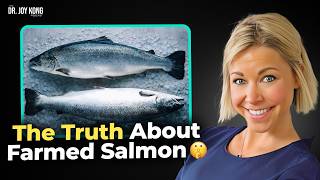
A Dr. Joy Kong podcast episode featuring Gigi Ashworth (the “Salmon Queen”). Ashworth recounts her personal dietary journey (teen food allergies, autoimmune disease, ketogenic/ketovore lifestyle), explains why she prefers certain farmed salmon over wild-caught (claims about regulation, feed composition, parasite control, fat/omega-3 profiles, and geographic differences), lists trusted brands and vendors (e.g., Blue Circle Seafood, Quarry Arctic, Mowi, Baka Frost, Sizzlefish, Yama Seafood), and shares recipes and practical shopping/eating tips. She emphasizes individualized dieting, trying protocols for 2–3 weeks, and researching farm sources rather than relying on blanket claims.
Chapters
My biggest piece of advice to anybody, if they're looking for it, is try it out. See what happens. If it doesn't work for you, move on. You tried, and now you can go and focus on something else. I have a girlfriend who did carnivore and keto for a long time, and it actually caused an eating disorder in her. Then she went back to doing a very balanced, macronutrient sort of lifestyle where she was, you know, eating the carbs and eating the fat and eating the protein and, like, she's lost 80 pounds and she's never felt better and all that.
Hello. Welcome back, Everybody, to the Dr. Joy Kong podcast today. I'm super excited because I have Gigi Ashworth with us. So she is a fantastic. Just, you know, a lady that has lots of interesting information to share, especially she has information about salmon because she's a lover of salmon. And I think a lot of people may have interesting questions about this particular, you know, very popular seafood. But we're going to talk about diet in general, and she can share her journey with us. So, Gigi, thank you so much for being here.
Yeah, thank you for having me. And thank you for thinking I'm an interesting lady.
I know as far as that time I described somebody as an interesting lady. So let's see if you can, you know, live up to it.
So I know.
Okay, let's. Let's talk about your obsession with salmon first. When did that start and how is that going for you?
I mean, it's going phenomenally. I just had salmon earlier and it was superb. Thank you very much.
But by the way, we're. Oh, the morning. So you. You're in the east coast, right?
I'm on the east coast, so it's 2:08 right now, so I had it a little earlier. I only eat twice a day, though, so, you know, breakfast, lunch, whatever you want to call it, at 11, 12, something like that, I think.
So you go for breakfast and lunch. No dinner for you?
No, I do like a lunch and a dinner. That's. That's.
Oh, you do? Okay.
Yeah, yeah. I get up really, really early in the morning at like, 3, and I work out, hence my workout equipment here. And I do. I do the things for myself before the rest of the family wakes up, and then I just continue with life. And then I'll have my first meal around 11 or 12, and the next one around six or seven with the family, and that's. That's it. Okay. I don't snack or anything like that.
So I see yeah, so. So when did you become obsessed with salmon?
So it's actually quite funny. I. I wrote this book called Seduced by Salmon. In the introduction, I sort of talk about my salmon obsession and where it blossomed from. And when I was younger, actually, I don't know, maybe I was like 13 or 14 years old, I actually ran away from home because my parents tried to feed me salmon for dinner. And I was like, not gonna happen. Lo and behold, I wound up coming back home eventually because I was this 13 year old going, what do I do now? I need to go to bed at some point. And I was really hungry, and it went to the refrigerator and I ate the salmon because I was just like, this is the only thing we have here. And it was really good. So that kind of slapped me in the face, but it also was like a reality slap of, hey, salmon's really good. And wholesome foods that my dad loves to cook. My dad loves cooking. It was his way of relaxing on the weekends from work. He loves creating just fre. Fresh, wholesome meals. French were French. So he loved creating all of that type of stuff. Like, he knows how to speak French, AKA French menu, because he just loves food so much. So it made me realize that my father's cooking is actually quite good, and I didn't have to rely on, like, Pop Tarts and honey nut Cheerios or whatever it was that I was obsessed with back in the day. And so that's when I sort of decided. I mean, I had always been cooking with my father in the kitchen, but that's when I sort of decided, like, you know, healthier foods are actually quite tasty. So I took more of a notice at that point. But then a year later, I actually was diagnosed with a whole bunch of food allergies and intolerances and autoimmune diseases, including ulcerative colitis and celiac or. Excuse me, I feel like Crohn's. I don't know why I said that, but, you know, they. They get intertwined and Crohn's. And so I also have ibs, but I feel like half of the population, if not more, have IBS as well. So it's like, okay, most likely, if I look at you, you probably have ibs. So salmon sort of was one. Was one food that I knew I could rely on that would always make me feel good. So, like, if I had an event one evening or I had to do X, Y, and Z, and I didn't want to be scared that I wasn't going to Feel good. I would go to salmon to help me. So through the rest of the day or through the event or whatever it was. And it works. Like right now, I don't feel bloated, my stomach feels great. And it's also just delicious. I have to admit, salmon is the best tasting food on the face of the planet, in my personal opinion. But not all salmon is the same. And a lot of people find this crazy when I say it, but farm raised salmon is the best salmon. The best salmon. It is the tastiest. It is just. Yes, it's amazing. And obviously not all farms are the same. So.
Yeah, I definitely want to get into the question of farmed versus wild caught salmon, but I just realized I forgot to introduce you because usually I introduce our guests.
So no worries.
Yeah, let me introduce you first, you know, so people have a broad overview of who you are and what you've accomplished. So Gigi Ashworth is also known as the salmon queen. So this is why we dive right into salmon, because I got so excited because I love salmon. So she eats roughly 12 pounds of salmon a week. So she is a popular, allergen friendly food personality in the ketogenic, carnivore and seafood space across all social media platforms. So she is very popular. And recently you were on Master Chef, serving up your obsession with food to Gordon Ramsay. And before being crowned the queen of salmon, Gigi earned her master's in nutrition and communications and undergrad graduate degree in broadcast journalism. And she worked for entertainment outlets such as E. Entertainment and Buzz Media. And she fully ventured into the food world 15 years ago when she realized that people who follow her were fascinated by with her lifestyle and has been modified due to, you know, which has been modified due to her autoimmune condition and food allergies. So she is a blunt but lighthearted foodie who is obsessed with salmon and had published two best selling cookbooks. And hopefully she will make you obsessed with salmon as well from this podcast. And now we come back to the fascinating question of farmed versus wild caught salmon. Because I have been diligently avoiding farm salmon in restaurants and, and no matter how great tasting they could be, I thought they were poisoned. So I was, you know, I guess 2/3, maybe 4/5 of the time, I, I wouldn't be able to order the salmon dish because they were farmed. So now you're saying that it's maybe better. So what, what do you mean by that?
Yeah. So. Well, first of all, let me just say that not all farm salmon is the Same. So I'm not going to be talking about every single farm out there but the farm salmon that I personally eat and that I can recommend to you, whomever else is listening is in my personal opinion and research far superior than wild caught salmon. That being said, wild caught salmon, there's a lot of things that people don't know about wild caught salmon, AKA it was caught in the wild and then placed somewhere else. No, no, excuse me, it was farmed and then placed in the wild and then people caught it in the wild so they can call it wild caught salmon. There's so little regulations when it comes to wild caught salm and that they can, they can call whatever they want and it's just, it's actually mind blowing if you truly knew what's going on in the wild caught salmon world. Obviously again there are some wild caught farmers or not farmers, wild caught fishermen who do it, they do it with, you know, gumption if you will. But a lot of times, you know, people are out there to make a buck so what they'll do is they'll take this farm salmon, they'll put it in the wild, they'll catch it and then they'll call it, they'll call it wild caught. Now with farm raised salmon there are so many regulations these days that they can't do X, Y, Z, Q, R, s. So all of these things that people are saying like oh gosh, it's, it's toxic, there's so many PCBs and there hormones being injected, blah blah, blah.
Well there are documentaries made about this, right? And really scared people.
That's the biggest problem right now that people watch these documentaries and they don't take them with a grain of salt first of all. And secondly they don't think about who's funding this documentary and it's most likely some vegan something rather, let's be real because they're also talking about how red meat causes heart disease and all that kind of stuff and then they really push the grains and the vegetables and all that kind of stuff and the seed oils. So if you watch those documentaries they're most likely pushing a vegetarian vegan lifestyle with seed oils and heavy on the grains and then you have to research who actually you know, is funding those documentaries. So a wild caught salmon while you know, again there are lots of sources for wild caught salmon that are a plus plus and I'm, I would never poo poo them. But people also have to realize like oh my gosh, what is that farm raised salmon eating okay, what's the wild caught salmon eating? You have no fricking clue because there's no regulation and it's wild, so it's eating literally anything and our oceans are polluted. I'm getting real angry over here because so many people on Instagram and all social media platforms, the second someone posts anything about farm raised salmon, they're chewed out by some person who thinks they know what they're talking about, but they don't. And then I have to like intervene and then they're like talking at me like I don't know anything and I'm like, oh my God. I just. And I went to Senna, which is the Seafood Expo North America. It's the second largest seafood expo in the world, first one being in Spain. And it's also held by the same organization as the Senna here in North America. And a majority, if not, I'm going to say 85% of the companies there, the seafood companies were all farm raised and they are so diligent in making sure that their product is the highest of quality. Feeding their animals or their fish rather, because animals are fish or animals feeding their fish the best they can source, making sure it's non gmo, making sure it's full of healthy, healthy fits fish like herring and sardines to improve the omega 3 fatty acid content. So like you're doing yourself a whole host of good by eating farm raised salmon because it, it has a fat content and it's got higher omega 3 fatty acids thanks to the fact that it's eating these fish. Now obviously there are some farms out there that feed their salmon stuff that are high in seed oils and all that kind of stuff because it's, it's cheaper feed. But that's, that's sort of like grass fed versus grain fed beef in a way where the grain fed beef is kind of eating whatever but the, the grass fed beef is eating nice and grasses and alfalfa hay and all that kind of stuff. So the Omega 3 properties are just better with the grass fed beef, just like it's better with this, with the salmon that is fed the better feed. Now in order to figure out what salmon you're getting, you have to do research. I'm sorry, they're not going to put it on the label. They're trying to sell you a product. Everyone at the end of the day, regardless of how passionate they are about doing X, Y and Z, are trying to make a buck. That's because that's how we survive on this planet. So you have to go to the website of the farm for this salmon. And you need to do the research of what they're eating, what they're being fed, the omega 3 fatty acid profile, the protein profile, the sustainability that these salmon farms are doing for the environment. So many people are like, oh my gosh, it's ruining the environment. No, no, no. Literally takes up no carbon footprint. If anything, you know, our ocean is humongous and we use such a tiny, tiny portion of it. But the thing is, is like it's, that is where the quote unquote farming should be done to feed the population of the world because there's just so much of it. And people don't realize this because the ocean is just sort of such like a foreign thing to so many people. Yeah. And then obviously you have to figure out where the fish is being farmed because there's some in Norway, there's some in Chile, there's some in Canada, there's some in Alaska. You know, it's just all over the place.
Is there a rule of thumb, if the fish comes from this location, then you know it's good?
Not necessarily because there are salmon farms throughout the world. But what I will say is salmon that comes from Norway or the fjords is fattier than the salmon that comes from the farmed salmon. I'll say that comes from Chile because the currents in the water, so the currents in the water in Chile are a lot stronger. So the fish have to work harder to, you know, survive. Thus they have a little less fat and a little more protein. And then in the fjords and in Norway and Finland and Sweden, like the, the, the water is a lot more stagnant. So they can, you know, chillax if you will, a little bit more, so their fat is a little bit higher. I personally like Norwegian salmon the best. I love fat. And then there's also. So king salmon. King salmon is typically wild caught salmon. However, these days, and I mean this, this particular salmon has been around for a while, but there is a king that is farmed in Norway. And usually if, if a menu says king salmon on it and they don't say wild caught king salmon, it will be this other king salmon that's farm raised. Yet the person who's buying it, who thinks, oh my gosh, I should only eat wild caught, oh, look, I see king salmon here on the menu, let me order it. You're actually eating farm raised salmon. And when you go to sushi, let's be real, all the salmon is farm raised. And the reason why is because farm raised salmon is, I want to say, 98% less likely to have any sort of parasites in it because it's so heavily regulated that people who work at the farms know if there's a parasitic fish to get rid of it. But typically they're testing their fish all the time so that there's not usually, not any parasites to be seen. Because they have a lot of different things to maintain their fish health, such as there's, there's this fish called lump suckers, and they'll come and they will suck off any sort of parasitic matter on the salmon. So I think that's really cool. And there's a lot of different other things that farmed salmon companies do. Like they have lasers that salmon will swim through and it'll kill all the parasites, which is.
Oh, wow. Wow, that's very cool.
I know, it's super cool. But again, in the wild there is no such thing. So whenever you see those videos, because I'm sure you have, and I'm sure a ton of other people have as well, of these salmon fillets with little white worms swimming through it, basically that's wild caught salmon.
Oh, wow.
Yeah.
When did the regulation become more strict? Why has the word gone out in.
The 80s and 90s still believe that.
Farm salmon is, you think, is the rhetoric from the people who don't like.
Animal products, like saying that heart disease is directly related to eating copious amounts of red meat. There was one rhetoric said back in the day that keeps on keeping on, and there must be somebody funding this voice because at the end of the day, and I hate to say this because a lot of people say this type of thing and then everyone's like, oh, my gosh, it's not true. But I feel like, and this is my, my personal opinion, the government wants us to be healthy, but not 100% healthy because they want to capitalize off of us in terms of buying drugs to make us healthier. So if you don't eat the healthy, you can get sick and you can buy this pill that'll make you feel all better. That's, that's, that's my summation to all of this. And a lot of people might say, okay, conspiracy theorists over here, but I truly believe it. I've been a Ketovore for the last 22 years and I have seen the progression in the growth of people turning into a ketogenic dieter, if you will. I hate the word diet, but it's what I'm going to use right now. And now into the carnivore lifestyle. And it just makes perfect sense. People's health are doing 180s. They're no longer pre diabetic or diabetic. They no longer suffer from a heart disease. They have so much energy because they totally change their lifestyle. I mean, I'm, I'm my own guinea pig. And I feel the same way obviously because I have, have a bunch of autoimmune diseases that are unfortunately irreversible. And I don't, excuse me, I don't have a large intestine either. I had a colectomy because I had something called secovolvulus back in 2009. So a long time ago. But my large intestine twisted into a knot. They had to take it out. So I suffer from intestinal complications because I still have a small intestine. So I suffer from intestinal complications on the regular. And they're kind of hard to figure out when they're gonna flare up. So sometimes I'll have two weeks where I just literally do not feel good every single day. Salmon helps, but it's not like my cure all. But I have to say my lifestyle is and makes me feel like 45,000 times better than how I used to feel. So I would never go back to my old way of living. Plus I can't because I have food allergies. That would be stupid. But I see so many people revers, so many issues that they had in the past and it's it. I think my, my biggest piece of advice to anybody if they're looking for it, is try it out, see what happens. If it doesn't work for you, move on. You tried and now you can go and focus on something else. Like I have a girlfriend who did carnivore and keto for a long time and it actually caused an eating disorder in her and she would binge eat because she felt like she couldn't have XYZ qrs. Then she went back to doing a very balanced macronutrient sort of lifestyle where she was, you know, eating where she is, excuse me, eating the carbs and eating the fat and eating the protein and like, you know, making sure it's a nice ratio for her, her body type and her physical activity. And she's lost 80 pounds and she's never felt better and all that. And then I have a girlfriend who was vegan for the longest time ever and she was diagnosed with an autoimmune disease. And I basically said like, hey, I know this is going to sound awful to you. Because you're vegan, but maybe you should try eating some protein from animals and see what happens. And she actually did and she feels so much better. And her flare ups for her autoimmune disease are, you know, maybe 20% of the time versus 85% of the time. So it's just, you know, try it out, see what happens. If it doesn't work, move on to something else, go back to your old lifestyle, do whatever. But you gotta try if you want to change, if you don't want to change, you do you, I don't care.
So when you were diagnosed, you were, you were quite, were you a teenager when you were first diagnosed?
Yeah, I was a teenager, yeah.
So you were eating a typical American diet at that time?
Yeah, I was in boarding school. I had a very weird sort of upbringing after the age of 13 because I went to boarding school when I was 14 for, for competitive snowboarding. And then one school, school closed down. The other one I, I went to, I got kicked out of. Not for anything bad. I actually, in my first school, when I was diagnosed with my food allergies and autoimmune diseases, I went to the extreme because I had no idea what I could and could not eat. This was in my like guinea pig elimination phase of my life. And also being an impressionable 14, 15 year old, like I had no idea what to do. My mom was educating me as she's a do and she's always been in the health and nutrition space. And she introduced me to the ketogenic lifestyle back then. But of course all my friends are eating cakes, cookies, donuts, cinnamon buns, whatever you want to call it. And I want to do the same, but I can't. So I'm left not having a clue how to handle my life. And so I just sort of like eliminated everything. So basically my second school kicked me out because I got too skinny and they didn't want me to like die, which makes perfect sense. But then I went home to my family and they really helped me. That's really when I got interested in cooking with my father and healthy food and how you can create recipes that don't have sugar and dairy and all that type of stuff in it, yet they still taste amazing and people wouldn't even know those ingredients were missing. So that's kind of my take on cooking is creating recipes that don't, that people don't realize essential ingredients are missing from. I have two cookbooks. I have one called she Does Keto where it's a very ketogenic centric book. And the. The publishers had me create 115 recipes across the board with, like, I don't eat pork, but they. They've had me make pork recipes and stuff like that. And they made me create some dessert recipes, which I'm not a sweet tooth type of person. And I'm also, if, if one's to live a ketogenic lifestyle, I don't love people relying heavily on, like, the keto bagels or the keto flour or the keto treats, because that in my mind is just processed garbage as well. But they made me make some of those types of recipes, so I tried my best to make them as clean as possible, but I don't personally rely on any of those. I rely on salmon. And then my second cookbook is called Seduced by Salmon. And there are 69 recipes in there for salmon only. And all of those recipes do not have any added sugar, do not have any flours, do not have any dairy or anything like that. Obviously in the notes sections on a lot of recipes, I say you can add them in if you want, but in this recipe that I created for you, I did not put that in there. So if you put dairy in it, I can't predict what it'll taste like.
So.
Yeah.
So didn't you make also dessert with salmon?
I have made salmon ice cream before. Not good. I have made cinnamon bun salmon, and I have to admit, they were delicious because salmon cinnamon is a match made in heaven that nobody talks about. It is the best combination, especially if you. You use salmon belly because it's the fattiest part. And when you pair fat with cinnamon, it's just like an explosion of amazing flavors. And I actually, I made salmon pancakes before, and I'm on the fence about those. I actually did make salmon cake balls before as well, which, again, I'm on the fence about those ones as well. But I mean, if you think about it, some people do like candied salmon where they put maple syrup on it or they put brown sugar on it or something like that. So it's really not that much different to something like that. But the sweetener that I use is. Is erythritol as opposed to actual sugar. But I. I tend to steer away from those sugars, too, or their sweeteners, rather, because they don't do anything nice to my stomach. And that's kind of true for a lot of people, so.
Mm. Yeah. Well, fascinating. So you got into the keto space partially from the encouragement of your mom.
Yeah. So she had been Living that lifestyle prior to me being diagnosed with all of my issues. I never paid attention to it, though, because I was over my pop Tarts, thinking, these are delicious and my mom's crazy. But then it all made sense when I was diagnosed with these issues as well. She and I share so many similarities. Thanks, Mom.
Yeah. Is she a more integrative medicine?
Yes. Yeah, very much so. I mean, she. She was an OBGYN for her career, but she was very heavily involved in the research and just living the lifestyle of integrative nutrition. And very much like Paleo, initially into the Atkins, into the keto space, but healthfully, none of this. This dirty keto stuff. Like, she eats the cleanest lifestyle I have ever seen. Lots of alfalfa, you know, all that kind of stuff. She loves them.
Oh, gosh.
What is that one called? I hate it. It. Whatever. It'll. Maybe it'll come to me later, but. Arugula. Oh, gosh, I hate that vegetable.
Okay.
Oh, my God.
I can't.
It just. It's very sour and bitter to me, and I don't like that. Like, that's the type of stuff that she loves. And she loves salmon, she loves black cod. She loves liver, you know, like beef liver and all that kind of stuff. So she's that type of person. I don't.
Eating keto, though, Before. Even before your diagnosis?
Yes. She's been living it for a very, very long time. So it's just. It's interesting for us to see how it's basically blown into what it is today. And, you know, we'll. We'll take notice of people doing carnivore and stuff like that. And, you know, we applied everybody's efforts, but there's some people out there that's like, okay, well, I feel like you're doing this more because you want attention versus actually doing it for any sort of health benefit. But you do you. That's. That's my motto for everybody. You do you and figure it out.
So you actually eat a carnivore diet. You don't eat plants?
No, I eat a ketovore diet. So the plants that I do eat, I eat spinach, and I eat butter lettuce. And once in a while, if I'm out at a restaurant and, like, there's a side dish for, like, asparagus or green beans, I'll be like, sure, bring it on. But when I eat those things, I always tell myself, you might pay for this, because I very well may pay for it, because vegetables and I do not get along. And honestly, I should cut them out. But I love butter lettuce so much that I'm like, this is a hill I'm willing to die on. And salmon and butter lettuce together are just so good. So I can't stop.
Yeah. What do you think about all this debate? Because, I mean, you have a condition that may place your body in more of a restrictive diet, Right? So. But for people who don't have an autoimmune issue, what do you think of the. The debate that's raging on between the carnivores and the vegetarians or vegans?
So what I'm gonna say is everybody is different. Everybody's body processes things differently. So what fits this person's lifestyle may not fit this person's lifestyle. Just like I said earlier, my. I have a friend who can eat carbs and can eat a very balanced lifestyle with rice and all that kind of stuff. If I ate that way, I would be in my coffin because that type of stuff murders my intestines. I can't process it. So for someone to say, plants kill, you're killing yourself. You're gonna die because you ate asparagus or whatever, it's like, no, that's not necessarily true because this person is not you and your body type. So I actually sort of not 100% believe it, but there is a lot of truth to it, in my personal opinion, about blood types being a way to determine what foods are better for you than others. Like, blood type O is really good at processing meat, and I'm a blood type O. But it also says, like, hey, don't eat octopus. And I'm like, I'm gonna eat octopus because I like it. But I have noticed that octopus makes me very bloated. So. So that's very interesting. This debate is annoying because people are trying to brainwash others when it's like, why can't you just be your independent and entity and do your thing and enjoy your life? Stop projecting on other people, expecting them to conform to your ways. You just do. You let them do themselves, and that's it. I'm very much my own self. I have no followers. Or maybe I followers. I mean, on social media, followers, whatever. But I'm. I have no leaders. I just kind of do my own thing. Like, I. I had surgery last week and my doctor was like, really? Take it easy. Blah, blah, blah. I'm like, lady, I' ma do what I want. I appreciate your advice. It'll sit here in the back of my brain, but I know my Body more than anybody else, else. So if I think that I can go work out on one of my machines the day after I have surgery, I'm gonna do it. And guess what I did. And like, I have this aura ring right here and it tells you X, Y and Z. And I don't always believe those numbers, that's for sure. But I'm also very in tune with my body and I know how I feel. So, like, right now I actually feel really good. Last week I felt. Felt awful. But I also knew that if I did a little exercise, I would feel better. Because exercise for me is basically like a pill people would pop thinking that they were going to feel better from it. Like a pain reliever, if you will, because it helps me focus, it has that endorphin boost and just does something beneficial for me. But there are other people who, if they have surgery the next day, they literally cannot move, move, even if it's like the smallest surgery ever. Because maybe they're hypochondriac, maybe their pain receptors are a lot stronger than other people. I have a very high pain tolerance, so I can kind of handle it. But I'm not going to say, oh my gosh, you're the laziest person ever. Get up off your bed and do something, because I don't know how they're feeling. So, like, who's to say that that person, that vegetarian can tell this, this pescatarian to stop eating fish, you know? So I, I hate when people are talking down on others, basically saying you have to do X, Y and Z. It just. Okay, chill out.
Yeah, yeah. So as far as fish, do you only eat salmon? I mean, are you.
No, I eat, I eat all fish. I love all fish, but salmon is the number one. I don't really. I say I love all fish. I don't love white fish that much just because it's kind of bland and boring. Because I'm a very simplistic person when it comes to cooking. Sure, I have two cookbooks, but when I cook fish or I usually just pan seared or air fry, it was, that's it. And then I put salt on it because I like to actually taste the food that I'm eating. If I go out to restaurants, it gets a little complicated sometimes because I never really know what seasonings they're putting on things. And sometimes they poison me and I'm just like, I don't know. But my husband loves to go out to eat. So, you know, I'll, I'll just, you know, say all right, let's do this. And we'll see what happens a lot of the times. But he also is a big creature of habit. Just kind of like myself when it comes to food. So we tend to go to the same places. So I kind of, like, know what I'm getting myself into. And a lot of places that we go to are gigi safe. So that's good.
But, yeah, there are types of fish that definitely you would not touch.
I mean, I don't eat tilapia. It's just kind of a garbage fish. If it was the only thing on a menu somewhere, I. I'd probably order it and probably order two of them, because I eat a lot, but it's not my favorite. I don't like conch. I'm not a huge fan of. But I also don't like uni. I think uni is disgusting. Yeah. So what else do I not like? I don't like snails. And I would classify that as a seafood for some reason, because I looked them up the other day because I wanted to do a taste test of snails with a friend of mine, and it was classified as seafood, so I'm going for that. Otherwise, I don't really shy away from any. I know that a lot of people have a thing about bottom feeders and all that kind of stuff, but I'm not gonna lie, girl loves herself some catfish. Yeah. I mean, I don't eat shrimp, really, because I get an allergic reaction from it. Not like hives or anything, but I do get puffy. I just feel puffy, like water retention. And then I get really big bags under my eyes. And I kind of always have bags under my eyes. I'm like, I don't need to accentuate those. And if I eat a lot of octopus, which, again, I love, that tends to make me feel puffy and gives me the bags under my eyes. But I love octopus, so it'll just be what it is.
It has gotten hard for me to eat octopus after I watch the. The documentary.
A lot of people say that they're like, watch that documentary, you're never gonna wanna eat it again.
And I'm like.
Like, I'm not that type of person. I can differentiate. Or, like, you know, put the octopus and its. Its emotional intelligence and all that kind of stuff over here and the delicious plate of octopus over here. And I'll still eat the delicious plate of octopus and not think about that. So I can compartmentalize. I guess that's what I'm trying to say.
Goodness. Yeah. And I Avoid tuna or shortfish because the mercury.
Oh, that's true.
Yeah.
Yeah. I mean, I, I, I typically avoid the bigger fish. I'll have tuna once in a while, but tuna is not really my favorite either. It's kind of just bland. Unless you get, like, tuna belly or something like that. I do once in a while. I'm like, oh, my God, I want swordfish really badly. But I never buy it because it's expensive. And I'm like, I get a lot of salmon for free and it's way better. So I'm just gonna stick to that.
Yeah. Are there salmon brands that you really trust that you can recommend?
So if you go to Whole Foods, the Atlantic salmon that they're selling there, I 100% trust. They're. They're two companies. So on the east coast, it's Blue Circle Seafood, and Blue Circle is a great, great company I highly recommend and trust and believe in. And they even sell some of their packaged products on the West Coast. But on the west coast, it's Quarry Arctic. And you've, you probably at this point have seen their stuff in Whole Foods as well, because they have salmon hot dogs just like Blue Circle. They have salmon hot dogs as well. What's it called? Quarry Arctic. So it's really. So you think quarry, like Q, U, but it's actually K, V, A, R, O, Y, A, V, A, R. Oh, Y. Exactly. For the longest time. So I worked with this brand for a very long time, and I used to say cav Roy or something like that. Now I can't even not say it wrong because I just know the right pronunciation at this point. Point. Interesting. But I remember the PR people being like, so you've been saying the name wrong in your videos for quite some time. I'm like, oh, my gosh. But, yeah, so it's very hard to pronounce, but I, oh, my. They are the best of the best. I absolutely adore them. Nice people on the Facebook planet, too. Another company that I truly believe in is Moe Mo W I. They are actually the largest supplier of SL salmon on the, in the world. So you'll find them at Kroger, you'll find them at Aldi, you'll find them at Costco. So all of that salmon, that farm salmon is Moe salmon. And I went to their facilities where they package everything up and stuff like that. And it was just such a great environment. It just made me feel better about recommending their salmon to people. And then I, you know, Baka Frost is another company that I truly love. Now they just, they sell online, so they're like an independent seller. And if you're ever purchasing salmon online, which a lot of people tend to do these days, Baka Frost is where I always tell people to go. Because a lot of times these other websites that are like a fish market, their up pricing of salmon is ridiculous. Like $27 a pound. And who can afford that? Let's be real.
Yeah, that's such a wonderful tip because, you know, I'm sure people are a little concerned. Okay, now they can open up to farm salmon. But, but, but which ones? So that's.
Yeah. And I mean, I'm always willing to. In my book, Seduce by Salmon, I actually have, have a list of brands and companies that I respect and believe in. There's this website called sizzlefish.com that sells probably one of my favorite Atlantic salmons that are frozen ever. And then there's this other company called Yama Seafood that I absolutely adore because I buy salmon skin from them and I love salmon skin. They're a little on the pricier side though because they actually supply to all of the Michelin star restaurant restaurants around New York City and I think around the country, to be honest, but mainly in New York and New Jersey. Yeah, I just have a whole host of websites, so. And companies that I can recommend, but those are my tops right there.
So sounds like if a person goes to a restaurant, if they see the word king salmon, they can pretty much trust that will be a good, a clean source.
Right. So king king salmon, it's, it's called aura king salmon and it is the creme de la creme of farm raised salmon. It is so buttery, so smooth, so perfect in every way, shape or form. It's like wagyu beef, the salmon world, it's supreme. And it's very expensive though. So if you think that like, oh my God, my salmon dish is $50, like what is that? That, that's because that baby is aura king salmon. Now if it's king salmon and it's like $30 a plate, you're like, maybe this is wild. Because the aura king is definitely far more expensive than the wild caught king. That being said, it's always a good idea to ask your server, but you can't guarantee they're going to know what they're talking about to be completely honest. So you know, it's, it all comes down to do you trust the restaurant? Doing your own research, calling, call the restaurant manager and see if they have any insight as to where things are Coming from if people are really that concerned. But at the end of the day, I feel like if you go out to eat, you are risking potentially eating things that you don't want to be eating. That's just how it is. If you want to make sure that you're eating as close to the cleanest you want to be eating, then you need to cook at home. But even then, you still have a slight percentage chance that you're eating something that you don't want to be eating because you know your vegetables are being sprayed with pesticides or God knows what. It's just ridiculous.
Need a good detox program, unfortunately. Exactly. Yeah. So a lot of restaurants would say Atlantic salmon. I assume there's huge variation between Atlantic.
Salmon is farmers salmon.
Okay. So that would really depend on which farm it came from.
Exactly. That's the variation that you're looking for. Atlantic salmon is Atlantic salmon. There is only one type of Atlantic salmon. There was wild Atlantic salmon for a while, but it was sort of extinct, if you will. I think there's like, still small populations of it around, but it's not. Not readily available even a little bit. So farm Atlantic salmon is really just farm raised salmon. And that's when you're like, okay, which farm did this come from? But when you go to a restaurant, you honestly will not know because they don't know where it's coming from, because that's coming from like Cisco or something like that, unless it's a really nice restaurant and they actually outsource their seafood in particular from a market or a farm.
So, okay, you're taking a risk.
Exactly.
Yeah. So what's one of your proudest recipes that of that you want to share about salmon? Yeah.
So when I was on MasterChef, I actually created this recipe for Gordon Ramsay. It is a salmon skin taco, where the salmon skin is the taco shell, and inside I stuffed it with a spicy salmon. You can call it a salad, but I guess spicy salmon poke that I created. And, you know, there was a little shallot, there was a little sesame seed, there was sesame oil, there's a little mustard. And then the salmon skin was just so crispy and perfect. The reason why I didn't get onto the actual show, I got to the top 40. So I got to present my food to Gordon. I was on tv, blah, blah, blah. The reason why I didn't make it is because they were like, well, you didn't really cook that much. You cooked salmon skin, which you did perfectly. Thank you very much. I'm Like, I better have, because I eat it every day. But they wanted to see a side dish and if I could grill something or, you know, what about an extra sauce and, you know, that sort of thing. So they wanted, like, a complete meal versus this appetizer. And when they, they said like, oh, it's this, like, fun appetizer that I could absolutely see at a restaurant, I was, why didn't you make a full dish? I was like, because I 100% stand behind that right there. And I would eat that, that as a full dish because I would eat six of them.
Yeah, that sounds amazing.
So I'm very proud of that recipe. It's in my cookbook. And I actually, I have the recipe on my Instagram page as well, because I have the video of me feeding Gordon and all that kind of stuff up there. That's probably my, my proudest recipe.
Oh, wonderful. Thank you for sharing. What is your Instagram page?
It's Gigi Eats G I G I E A T S. Okay, awesome.
And where can people get your cookbook books?
On Amazon. Honestly, if you just Google or not Google, but you could Google me. If you just put Gigi Ashworth in the search engine on Amazon, my books will pop up.
Yeah, that's wonderful. What is if I want to, you know, before we end, ask you to give, you know, one tip for, for the listeners for optimizing their health. What. What would be your advice? Advice?
My advice would be do your own research and try. That's. That's it. If you don't try, you're never gonna know. So you, you should try. If you're curious about a specific lifestyle, try it out. Try it out for longer than one day. Try it out for two to three weeks. And if after those two to three weeks, you feel terrible, stop it. But if you feel good, continue researching why this lifestyle makes you feel so good and continue if you want to.
Yeah. So it sounds like openness.
Yeah.
Trust your body.
Yeah. People need to be open minded. They it, they need to be their own leader. That's how I see it. Because a lot of times people are like, oh, well, the food pyramid tells me that I shouldn't eat butter. It's like, okay, great. It's time to take control of your own health and figure out for yourself if that food pyramid makes sense for you or not.
Yeah, I love that. Instead of being trapped by some ideas that that got put in your head somewhere, just give it a try. Yeah. Wonderful. Thank you so much for sharing a really fun, you know, interview with everybody and sharing your journey recipes and giving great tips about how to find better salmon.
Well, thank you for having me. I'm glad you wanted to learn a little bit more.
Wonderful. Thank you so much, Gigi.
Thank you.










