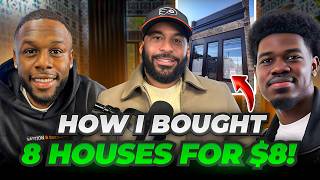
"HOW DID I BUY 8 HOUSES FOR $8 From The Government 😳" Ft. Jordan P. Ferrarani
In this episode of the Motion & Success podcast, host Cody Brown and co‑host IO interview Philadelphia‑born real‑estate developer and construction veteran Jordan Parisse‑Ferrarini (JP). JP recounts his rise from a hustling family background, through a handyman business, to becoming a licensed master electrician, construction manager, and board member of the National Association of Home Builders. He explains how, in 2018, a state representative partnered with his nonprofit to secure a $100,000 grant and acquire eight city‑owned houses in North Philadelphia’s Brewery Town for a nominal fee of $8 total (approximately $800,000 market value). JP details the government’s affordable‑housing tools – nominal‑fee sales, grants, tax credits, and the Home program – and how developers can access them via land banks, RFPs, and redevelopment authorities. He shares practical investing tactics: pro‑forma analysis, the 70% rule, contractor vetting, contracts, draw schedules, and leveraging equity for lines of credit. JP emphasizes community impact, teaching trades to local youth, mentoring ex‑offenders, and creating generational wealth. The conversation also covers partnership structures, NIMBY resistance, financing strategies (low‑interest loans, OPM, tax‑credit sales), and promotional interludes for Mailbox Millionaire Academy and GoHighLevel. Throughout, JP’s tone is conversational and enthusiastic, aiming to inspire listeners to pursue affordable‑housing development as both a profit‑driven and socially impactful path.
Chapters
I was able to get eight houses for $8 to build eight affordable homes and $100,000 in grant money to be able to make it happen. Those eight houses that I got for $8 was worth a hundred thousand dollars a piece. Early on I was doing more traditional real estate deals. But then I stumbled across affordable housing. 2018, a state representative came to me. They wanted to work with my organization and they wanted to provide us with a grant of $100,000 to fix up eight houses that we were able to get from the city for just $8 and turn them into affordable housing and teach people construction and trade in the process. So at that time, that's when all my mission and my work and my skills came together. I was able to get eight houses for $8 in the city Brewery Town section. Now if you're not from Philadelphia Brewery Town, this is North Philly, this the hood. But it's going through gentrification like everywhere else. I was able to get eight houses in this area to build eight affordable homes for $8 and $100,000 in grant money to do to be able to make it happen. The part about it though that was a big mind shift for me is those eight houses that I got for $8 was worth a hundred thousand dollars a piece.
Wow.
$800,000 worth of houses for $8. Plus $100,000 in grant money that I didn't have to pay back to build quality affordable housing real estate in my community for people that was in need. You able to serve people, help a lot of people level the playing field and create generational wealth for you and your family.
What's going on family? It's IO and Cody and today's episod To Buy Mailbox Millionaire Academy the number one credit and business buying mentorship in the country. Mailbox Millionaire Academy teaches high level entrepreneurs and first time business owners how to buy small profitable businesses that already work. Businesses with systems, cash flow and real customers already in place. And the best part about it is if you don't have the money, you can use creative financing strategies. You'll get inside the academy. Let's be real y'.
All.
Most people want to get into commercial real estate, but they don't want to deal with tenants, trash and toilets. That's exactly why you need to understand self storage facilities, the number one performing real estate based business model in the country. With self storage, you get appreciation, the value goes up, you get equity ownership and monthly cash flow. But the best part about it, without tenants living in your property, and here's
the wild part, 90% of businesses fail within the first 10 years. Self storage has a 92% success rate. Most people also think that, hey, listen, in order for me to get started, I need a lot of money. And I'm here to tell you guys that is absolutely false. Because my guy, Rommel New Worlds, the lead instructor at Mailbox Millionaire Academy, literally teaches people how to buy their first self storage business with little to no money out of pocket. And right now, right now, he's giving away a free intensive training. All you have to do is text the word motion. So that's m o t I o n to the number 347-429-6496 to get instant access. Again, text the word motion. So that's m o t I o n to the number 347-429-6496. And tell them, listen, you came from the Motion and Success family. So that way he can bless you guys. Let's get back to this episode because this one is going to be a banger.
All right, y'.
All.
So welcome back to another episode of Motion and Success. Listen, guys, my name is Cody Brown. I got my co host with me today.
It's IO and Yo bro. We back with another great episode. I'm excited for this one because it's been a minute since we had somebody from the real estate game on a pod, man.
That's a fact.
And this one's going to be a
real special one, bro.
It is. It definitely is. So listen, guys, for the people that right here that you guys are watching this podcast, if you are looking to invest in the real estate, you guys are looking to start learning the step by step direction and, and be able to get some kind of guidance, some kind of structure, also the kind of mindset, the kind of money that you need to go out there and make this thing happen, this is the podcast that you need to tune into, literally from the start all the way to the end. Because the gentleman, we're getting ready to introduce to you guys today, an interview. He's been crushing it for the past decade in the real estate industry. He's invested in multiple different states. You know, his own story of how he got into the industry has been amazing, you know, to hear. You know, he has a lot of different relationships in a lot of different states and a lot of different communities and a lot of different boards. So this is the podcast that you need to tune into because the information is going to be absolutely crazy. So listen, without further ado, we're going to Introduce our guest for today. His name is Jordan Ferrini from Philadelphia. Jordan, thank you for coming through, bro. Appreciate you for joining us on the podcast, man. Tell the people a little bit about yourself and we'll kick things off from there.
Absolutely. So first and foremost, I appreciate y' all having me. Yeah, you know, coming to be able to tap in with your people, tap in with your platform. My name is Jordan P. Ferini, y'.
All.
Everybody calls me jp. I was born and raised in the city of Philadelphia from the uptown section. You know, I've been blessed in the real estate industry, blessed in the construction industry. God has been good to me. I got over 21 years of experience. I got a bunch of accolades and licenses and receipts to show, you know, to and to speak from. And, you know, I've been blessed to be able to accomplish a lot, man. I've done over $50 million in real estate development in the recent years. I've ran multiple successful companies, from handyman companies to kitchen and bath companies, to electrical contracting companies. And I've had a lot of success along the way, man. I've been blessed to be able to make it into magazines, make it on TV screens, make it on stages, be able to get into the upper ranks of the real estate industry. I'm a high ranking board member of the national association of Home builders. We build 80% of all new construction residential real estate development throughout the country. It's $100 billion organization. You know, I've been able to, you know, have a lot of success in the construction space and in the design space. I've won all types of awards from the National Kitchen and Bath Association, 30 under 30 person of the year, projects of the year, you know, so not trying to flex a bow. So I've just, I've been able to do a lot and accomplish a lot in the space. And these days, a lot of my focus in my direction, though, is how do I take all of these blessings and all this information and all this education that I have and turn around and share with my community so that I can get as many people that come from similar walks and similar struggles and similar situations into the rooms that I'm in? Yeah, because I'm blessed. I'm in all these rooms and all these tables all around the country. I've been all around the world for real estate and construction, but when I get into these rooms, y', all, I'm gonna keep it real. There's not a lot of us in there. Look around the room. And a lot of times I'm. I'm. I'm alone, you know, as somebody coming from a struggle or coming from adversity. You know, I'm alone as somebody that's even in my age bracket or somebody that's from, you know, the cities that we come from. So not a lot of fun in that, man. Now, now what my mission is is, like, how do we get more of us into the room so that we can be at the tables together? So that's what brought me here today, to be able to share these resources, share this information, and make sure that we could change the lives of y' all listeners and get y' all involved in a lot of the amazing things that's going on in the real estate space today, specifically though, affordable housing, because y' all know I'm a champion of real estate, but I'm. I'm a champion of affordable housing. Making sure we got quality development in our communities and making sure that we are a part of that development and leading that development is why we here today.
That's good stuff, man. Good stuff, bro.
That's one hell of a resume, bro.
Yeah.
God is good, man. God is good.
I'm definitely excited to jump into it. I do want to jump a little bit, you know, into your backstory, because I know before the accolades, before all the achievements, before, you know, the millions in real estate, like, who was Jordan before that? Like. Like, what were you in. What were you into? What are some things that, you know, that brought you here?
Yeah, Jordan before that was, you know, I was. I was always a smart kid. You know, I was always even a little bit different, like, you know, a little bit on, like, the nerd side. I always like to read. I always like to learn. I always like to grow. Yeah. You know, in those spaces. But at the same time, I was always in the mix.
Yeah.
Like, my brother was in the mix. And my mother was always hustling. You know, my mother was always grinding. She was always out working. She didn't have much of an education, but she had a hard work ethic. She was always pulling her fruit stand up to the avenue or selling something door, too, or, you know, setting up some little promotion where she would sell things in the back of the supermarket. And so I always would see that hustler spirit. I always would see that, you know, that moving and shaking, you know, type of example from my mom. But she also wasn't there a lot. Yeah, she had to move around. She had to work. And so, you know, I was a smart kid. You know, I was A little bit different. But then I started to watch my brothers and them in the mix. And then next thing I know, I got into the mix, too. And, you know, I was moving around, doing the wrong things, making mistakes. You know, I didn't have a father figure in my life, so it wasn't like someone I had to, like, pull me back in. Yeah. And I went down some of the wrong paths, but I learned about some of the, you know, places that I didn't want to go. Juvenile justice facilities, you know, in and out of those type of places as a young person, as a young adult, in and out of the system again. Until about the age of 23, I had my son and I. And this was while I was inside, I had my son, my first son. I didn't get to see him be born. And. And it. And. And it did something to me, you know, not being able to see your seed coming to this world. It did something to me. And I made a commitment to myself at that moment, at the age of 23, 24, that I was never going to go back to those places again and that I was going turn my life around. So my mother and my brother at the time was hustling, you know, they started a handyman company out of the trunk of a car with a bucket full of tools from the pawn shop, Chrysler 200C, bucket full of tools from the pawn shop, and started doing handyman services, fixing and doing small repairs in the community. And at the time, I came home, but I came home focused. I went back to school for electric. Eventually I became a licensed master electrician. I went back to school for construction management, became a certified construction manager from Temple University, and I started contributing to the family business, started getting focused on the family business that we had, which was a handyman company at the time. And, man, it grew, we thrived. It went from a handyman company, from the back of a trunk of a car. It grew into a luxury kitchen and bath brand called Ferrini kitchens and baths and interiors. And life started to change. And I kept going back to school, became a licensed master electrician, started electrical contracting company, became a certified construction manager, went back to school for carpentry, went back to school, became an authorized OSHA trader, went back to school, became a licensed real estate salesperson. And I started to see, like, you know, those certificates that education helped me elevate, help my family elevate. And a lot of success came. We was getting on TV shows. My family did a project with chef Gordon Ramsay. You know, I was winning 30 under 30 award, and my brother was winning this award and we was getting magazines and getting flowing all around the country. And again, I, I get into those rooms, man, all these successful people, all these wealthy people, and none of us is there. And that's when I brought it back full circle. I was, I'm gonna go back to my community and teach people from the situations that I've overcome and from the success I've been able to attain for how they can do it too.
Sorry to break the interview, but really not sorry to break the interview because, listen, over the past few months, we've been testing out this one system that has been a complete game changer for us and our business. So now is the best time for
us to bring it to you guys.
And the name of the system is called Go High Level. Go High Level is an all in one marketing tool that you're gonna be able to use to grow your business. Listen, we're not only just podcasters, but we're also business owners as well. So if you're a business owner, you're looking to grow your business online, just like how we're doing the same thing. You need to have a way on how you're gonna be able to text your people. You need a way on how you're gonna be able to email your people. You need a way how to go out there and build your funnels, your websites, and everything that you have to use to grow your online business. GoHighLevel is literally that one tool that you would have to use. So all of the other subscriptions that you have, you can go ahead and cancel them right now. Because GoHighLevel does everything that you need as an online business owner all in one tool.
You literally don't need any other CRM system, any other automation. GoHighLevel is the one tool that you need. Enough said, man. Click the link down below to start your free, free trial. Listen, it's on us.
We begged our Go High Level people
for this one, by the way. Yup.
So click the link down below, start your free trial and start organizing your business so that way you can get more customers, increase revenue, and more deposits to your business account. Back to the episode.
Yeah, right. That's amazing. That's amazing, bro. And kind of like even from, you know, the start of it, when he was like, you know, you like to read, so you kind of already had those attributes in you, you know what I mean? But the environment, you know, I'm pretty sure, like growing up, growing up out There in Philly, definitely it ain't easy. You know what I mean? So the fact, you know, you had that ability to kind of reflect on. On your past mistakes and come out and had that hunger in you to go out and learn more, because at the end of the day, you needed to. To get that knowledge, you know, you needed to learn.
So.
So now I really commend you for that, bro. And definitely, like, as soon as you got out and you got all these skills, you got all these, you know, all this wisdom and his knowledge that you got from. From getting these. These skills and education. When did you, like, pivot into. To getting your first property? Like. Like, how was that? Like, how did you go about that? Did you have a mentor or, like, how'd you get into it?
Not really a mentor, man. My mentor was. Was survival. It was like, a lot of this stuff all started from survival. It was like, if you don't make this money, y' all gonna be back out on the street. You know, from the beginning, with the handyman company, my little brother was helping my mother to not lose her house. You know, when I came home to help my mother not lose her house, too. And, you know, then the next layers will become, like, provider for our families, keeping roofs over our head. And in the beginning, like, a lot of it was survival, but with the education, survival became easier. And, I mean, we started to learn the business side of things and started to apply that, and it became easier and easier. And, like, at the time, I was doing electrical contracting companies. I was, you know, growing in that space. I became a licensed master electrician. And this was like, 2012, 2013, I'm doing projects for other people. You know, I own my business, but I'm doing projects in the buildings that they own. And I'm looking like, while I work on their buildings, if I could work on my own buildings and buildings that I own myself, use my skills to be able to do, you know, some of my own projects and build generational wealth for my family and add that to the table, too. And so, you know, around that time, 2012, 2013, my little brother, you know, he was doing real estate, and I was watching what they were doing, and I was learning, you know, kind of from some of the mistakes they were making. And then eventually, I jumped in right behind them, right? And, you know, my first deals, you know, were a little bit rough, but I did go on to get some mentorship from a local program, and there's a program called Jumpstart Germantown, Jumpstart Philly check it out. I'm still a big advocate from this program and I learned the, the technical side of real estate. See, a lot of us, like we're doing real estate off of emotion. We're doing real estate because people make it seem sexy, you know, people sensationalizing it, but we don't really know the technical side. Analyzing the deal, underwriting the deal, putting it through a pro forma spreadsheet, a tour that's going to help you to make sure it's a good deal. Once I got that piece of was game over. My next project, I won project of the year. I made it into the newspapers, you know, and it, I was on, from, from then on out. So like 2015, 2016, I wasn't. My whole shift in the game was, was way different right after I got that technical knowledge and I learned that paperwork piece of it.
So. So how about on the side? Because, you know, like, when it comes to real estate investing, you know, a lot of people usually be like, yo, you know, you gotta, you gotta, you gotta watch out for certain contractors. You gotta watch out for this, you gotta watch out for that. I mean, you went to school, but, you know, you can't do everything when it comes to building up an apartment building or a house. You know what I mean? Like how you go out there, you actually hire the right team to make sure that the job actually gets done, you know?
So I kind of got thrown into the fire with hiring and understanding how to hire people. When I came home, it was like my family business was running and my brother and my mom was handling one side, the design side and a lot of the sales side. And like, they, you know, they was beast at that. And my thing by default, because I went to school for construction and went to school for electric and all these things was the construction side. And so, you know, in the beginning, like, I got thrown into the fire. We need three more people. We need four more contractors. Yeah. And, you know, the biggest thing I learned was one. It's usually just one person, one good hire, one good crew that could change the game from you change the game for you. So get out there and find them. Like, you got to be outside of Home Depot waiting at the pro desk. Yeah, you got to be outside of the supply houses where the contractors, the good contractor shop. You got to have your pitch game ready to be able to connect with them. And, you know, you just got to get out there and find them that one person, you know, it's going to change the game for you. So I Got out there and I started finding them, you know, and second to that, you want to make sure that you verify with your people. Like, you know, people tell you things, people show you pictures, but you want to verify these contractors, you know, you want to call their references, you want to go and see their work, you know, you want to be able to, you know, work off of referrals. Other people that have worked with them before so that you could verify, they do what they say they can do, you know, it's gonna help you have a much better outcome. And last but not least, you want to have a contract, right? Because a lot of people, man, they're getting burnt by contractors out here. It's because they're not operating with a contract. A contract is the staple piece. A lot of people, they working with their contractors. You working with your contractor right now and you think you have a contract. It's really not a contract. What they sent you was a QuickBooks invoice or a PayPal invoice, or even worse than that, they sent you a text message and had you send them a zell. Yeah, you're not operating off of a contract. Good contractors are going to operate off of contracts and that contract is going to break down who they are. You're gonna make sure they got the insurance, make sure they got their tax stuff in place. It's going to break down something called a scope of work. The scope of work's going to outline everything that they responsible for doing down to the T. The more information, the better. It's going to break down all of the payments. Because what's the number one thing people go through fallout with, have problems with their contractors with they pay them, they don't show up. They pay them, they don't show up, they don't break down the payments, they don't know when to pay them, when to not pay them. They, they getting all the money up front and then they ghost in your contract. You want to have the payment breakdown. It's called a draw schedule, right? And then next but not least in your contract, you want to have terms. Yo, everything's going to be up to code. Everything's going to be done within, you know, 30 days, 60 days, 90 days. And if it's not, I'mma bill you $100 a day. And if I got to sue you and take you to court, we're going to go to court in this state and you going to carry insurance. All of those things that protect you is going to be inside of your contract. So when you Hear a lot of these, these, these war stories or these horror stories from people, it's because they're not finding the right contractors in the right places. They not verifying and then they not driving the relationship off of a contract. Put that contract in place, it's gonna be a whole different ballgame.
Sorry to break this amazing episode.
I just have to let you guys
know, the best tool for marketing in 2025 is podcasting. Listen, it transformed our lives across all platform. He was able to hit 15 million plus people. Imagine what it did for our business. To mention, we also have some notable likes just through podcasting. People like Usain Bolt, Dwyane Wade, Kevin
Garnett, Stephen A. Smith, Cedric the Entertainer, Queen Latifah.
But more importantly, having engagement by your
clients is probably the most important thing that will move the needle for you and your business.
So what we want to teach you
is exactly how to go out and start creating amazing content that will find your dream audience to go ahead and start paying you for your products and your services.
If you want to be able to
learn exactly how to build up an
audience and build up a brand online
where people start knowing you, liking you, and buying from you for your products
and services, what I want to do
is invite you guys to our next free masterclass where we're showing you exactly how you can start taking your content
and being seen online by your dream clients and possibly some celebrities as well. Go ahead and click the link down below and I'm gonna see you guys
in that next masterclass.
That right there, bro, is a lot of game. Because even truth be told, like, a lot of people, when they jump into this real estate game, then it has so much losses, they done got burnt so many times. Like, you know, so the fact that, you know, you don't really have that. That crazy of a story, you know, I mean, it's kind of. It's kind of shocking, bro.
Yeah, I mean, it just came from just, you know, man, I went into it the right way. Like, I'm, I'm a. I'm. I told you, I was a reader. I was a. I was a, you know, a nerd. Nerd in a sense, when I was a young. When I was a young person, you
know what I mean?
And like, I brought that same application, though, into what I do now. Like, I'm a student of it. I don't read so much on how to hire contractors and contracts and process before I even, you know, attempted to do it. I didn't even have a mentor at the Time for that. But I took the things I learned from school, plus the things I learned on my own, and, yeah, you know, had a lot of success in doing it, but as a mentor to y' all and everybody on this call in the side of helping everybody on this call, though, you know, don't. Don't make them those mistakes that most people make. Make sure that you got that contract and that paperwork in place.
Yeah. It's kind of funny because you know what I mean? Like, you, you, you got started a while back, and now in 2026, chat GPT AI. You know what I mean? Like, it's like, yo, like, what? How can I make sure I don't mess up with this contract? Or how can I, you know, mess up? I make sure I don't mess up on this side. But now you have to go, you know, hit the books and literally learn.
All this stuff is a game changer.
Yeah.
Back in the day, like, we had Google, Yahoo, University, you know, like, you even had the encyclopedias at one point. I know y' all a little young. You might not even go back to the encyclopedia days, pull out the Britannica. But, like, this information is out there for y'. All.
Yeah.
You know, you got to be students of it. Sit yourself down and, and, and learn it. Yeah. You know, I mean, you could be more successful in what you're doing.
Right, Right. Right.
So, like, when it comes to real estate, it's a lot of different strategies that people, you know, people use to invest. Like, what was, like, the first strategy that you did with, like, were you doing fixing flips? Like, were you buying and holding? Like, like, what was the first strategy you jumped into?
My first strategy was like, a lot of other people's first strategy probably was like, this deal feels good. It looks good. I'm about to do real estate. I'm a bottle. Fix it and sell it and make some money. Like, it really wasn't a strategy. And, you know, that's why I took some, took some hits in some of those. It was earlier on deals, like, the, the sensationalism or like, the emotionalism we tie into real estate is hurting a lot of us. Like, we want to just be doing real estate just to do real estate. What I'm always challenging to try and educate people to do and show people how to do is, like, how to just be straight, numbers driven, analysis driven. I don't care how the deal feels, how the deal looks, how it's going to look while I'm doing it on the gram is like, if the numbers from the beginning don't make sense. Yeah, we say if the numbers don't pencil out, meaning right margins, you know, right cash out amount, you know, right construction numbers, right purchase price. If those numbers don't all check, I don't care how I feel, I don't care how it's going to look. I'm not doing it right. You know what I mean? And that's the, that's the progression in the growth. But a lot of us got to go through some mistakes and some, some bad deals, the bad deals to get there. But if you're listening and you on this call, like, I want y' all to take heed. Don't be doing real estate just to be doing real estate. You know, do deals that make sense from before. You buy them by analyzing them using spreadsheets and tools like pro formas, that'll tell you these numbers look good here, here, here, here. You factor for all these different things and the deal works, right?
So for me, like, like, like for what you do, actually kind of walk us through step by step. Especially like for a beginner, like what some of the numbers like that you usually take add up to make sure, you know, a deal actually checks off. Because a lot of times, like you said, people go based off of emotions. Oh, the house looks good. It's right next to a hospital. It should be able to be rented out. You know, I could probably charge this amount of money every month and make, you know, x amount of dollars. But like, that's not really like the real side to being an investor. It's like step by step, like, what would you do? Like, what, what kind of numbers are you looking at to be able to make a logical decision?
I mean, so to do it the right way, you need to learn how to do pro forma analysis. So, like, pro formas is a tool, okay? It's just a spreadsheet. You put the purchase price in, you put the construction number in effect is all of, like your cost on your project to hold the property. Most people not counting holding costs, insurance, you know, utility bills while you holding the property. You know, people not counting the interest that they're going to pay. Yeah. While they're actually doing a deal. You know, this pro forma spreadsheet will count all of those things, so you can factor your real profit. It'll break down different things, like your expenses. A lot of people, they're doing deals and they're looking to rent them out on the back end, and they're saying, I'm Gonna rent it for 2500 and my mortgage is going to be 1800. So I'm making $700 or I'm running for 3000 and my mortgage is going to be 1500 and I'm about to make 1500 dollars. They're not counting the expenses, you know, vacancy expenses when people don't live inside of the building, property management expenses so that you're not running over there, you know, managing and changing light bulbs at, you know, different hours of the day every time it's snowing. You're not running over there. Repair expenses. Because things are going to break down, right? You know, things are going to need to be fixed. Taxes, insurance, water bills, you know, like all of these things are expenses that are going to take away from all that profit that you think you making. That's all going to be inside of a pro forma, right? You know, and then most importantly, your cash flow, right? People think they making a certain amount of money because they're not factoring all these expenses. The performer is going to take how much you making, minus all the things that you spending on that you're not thinking about and tell you what you're really making, you know, is what's what your real profit is. And so like high level, you got to be doing a pro forma. You got to be running these deals all the way through. If you just a newer real estate investor and you just getting into the space, you know, there's some other quick tips and tricks that we do. Like you want to be able to buy and purchase a property, buy and rehab a property for 70 of what it's going to be worth when it's done. We call like the 70 rule. So if the property's gonna be worth a hundred thousand when it's done, I want to be able to buy it and fix it for 70,000. You want to be able to buy and repair a property for 70% of what it's going to be worth when it's done.
So you make $30,000 off that transaction.
In theory, that's the first step that you'd be able to make $30,000 off of that transaction. Now that's before you put it through a pro forma. Because after you put it through a pro forma, you're gonna really see it's not gonna really be a true 30, 000. Yeah, it's gonna be a little less because you got commissions and you got this and you got that. But like that's that first kind of guiding rule of thumb. Make sure. You could buy him and fix it for 70% of what it's gonna be worth when it's done. 65% of what is gonna be buying rehab for 65% of what it's going to be worth when it's done is even a better deal. Right. Because it's more spread. In theory, 35% makes sense, you know, so like that's a good guideline for my first time investors. And the next thing would be just looking at a bunch of deals though, because a lot of people that's just getting into the real estate investing game, they're looking at one deal, trying to make everything make or break off of one deal. They fixate in on one deal. Anybody that's watching this, like you want to get good at analyzing deals, look at five deals a week, look at 10 deals a week, right. You know, you really can't get your feet wet. So you're looking at 10 deals a week.
Right.
Because honestly, nine out of those 10 is going to be bad deals. One of the biggest mistakes people make in this game is they try and buy everything they see. Like, just because they saw it. Yeah, just because somebody sent it to them. The real logic would tell you that most deals are bad deals. So you need to be looking at 10, 20, 30 just to find that one. So if you're not looking at that many, you already doing yourself a disservice.
Right, right, right. That's what volume is, especially when it comes to business too, you know, I mean like, you gotta put up a lot of shots before you can actually get the good ones, you know what I mean? Like, and just keep going over and over and over again and just doing that cycle.
Yeah, you gotta get your reps in. Yeah, you gotta get those reps. So like early on I was doing more traditional real estate deals. I was doing like buying flips, just buying holds. I was doing my contracting business, but then I stumbled across affordable housing. At the time, I wasn't just doing construction, I wasn't just doing real estate, I was doing education. I was taking my knowledge and sharing it with my community. I was going into those rooms that I was telling y', all, all these high places in the space, and we wasn't there. So I came back to Philly and I started doing training programs for free in the community, teaching young people construction and trade, helping them get jobs, teaching brothers coming home from prison, helping them to get jobs, doing free repairs for low income seniors, single mothers who couldn't make repairs around their home and in those Acts of services. I was still doing the real estate, still doing construction, but the education became a big thing. And that's when I came across affordable housing. And my strategy in the real estate space just completely changed. Yeah. 2018, a state representative came to me and said that they wanted to work with my organization. We was training people in the community, helping people with construction, helping people with jobs, helping people with repairs to their homes. And they wanted to provide us with a grant of a hundred thousand dollars to fix up eight houses that we were able to get from the city for just $8 and turn them into affordable housing and teach people construction and trade in the process. So at that time, that's when all my mission and my work and my skills came together. I was able to get eight houses for $8 in the city brewery tail section. Now, if you're not from Philadelphia brewery town, this is North Philly. This the hood. Yeah. But it's going through gentrification like everywhere else. You know, I'm sure y' all dealing with a lot of the same things here in New York. People getting displaced, pushed out of the community. I was able to get eight houses in this area to build eight affordable homes for eight dollars and a hundred thousand dollars in grant money to be able to make it happen. The part about it though, that was a, a big mind shift for me is those eight houses that I got for $8 was worth $100,000 a piece.
Wow.
So $800,000.
$800,000 worth of houses for $8. Plus $100,000 in grant money that I didn't have to pay back to build quality affordable housing real estate in my community for people that was in need. So when y' all talking about the strategy. In the beginning, my strategy was a little here, there. But in 2018, my mission, my work, my exit service all came together and gave me a strategy in real estate that's affordable housing, which is a beautiful thing because you were able to serve people, help a lot of people level the playing field and create generational wealth for you and your family.
Right.
So like, that's when my whole strategy shift. And since then I just been affordable housing a hundred percent.
Wow. Way. So, so, so you kind of like, you definitely got to break down that, that, that whole. The, the eight houses for $8, like a little bit more in debt. Cuz a lot of people, they haven't heard that before. You know what I mean? So, so how, like, why is the government, you know, giving out these houses for that low and like, you know, like you be being that you're the person who's gonna be developing it or you know, help building these houses, do you have like some type of equity in it, ownership? Like, how does that work?
So the reason why the government are giving these houses out are selling you these houses because they're not giving them to you. It's not because they want to be your best friend. It's not because you know somebody. It's not because they try to hook you up. It's because there's a major problem in this country with housing. 75 of people right now can't afford to buy. The average home that's on the market is too expensive, right? 50 of people can't afford to rent. It's too expensive. The average person is spending more than 50% of their income on housing. Anytime you spend more than 30% of your income on housing, you got a problem. People are spending 50, 60% of their income on housing right now. There's an affordable housing crisis all across this country. We need 10 million plus homes built right now as we speak. And the government can't build 10 million homes. They're not in the business of building 10 million plus homes. They're big, they're slow, it's a lot of red tape. It's very expensive for them because the government contracts and just how much those costs are around it. So they see that there's an opportunity to partner up with private developers, local developers, community developers to help assist to build all these homes because they can't do it on their own. And one of the number one ways they do it is by incentivizing us to help them and selling us houses for A$10 right, land for a thousand dollars, even though it's worth way more than that. They sell it to us for these lower prices because this way we can still put in construction, still have those costs go in, and then still have enough room to sell it for affordable numbers or rent it for affordable numbers. That's the only reason they giving us these prices for these, these houses for these prices is to solve this problem.
So they're selling you the house for a dollar and then they're going to turn around and then grant you $100,000 each.
So it's all why you got to
get the grant somewhere else.
It's all types of tools, y'.
All.
And affordable housing space is such a crisis going on right now that the government is giving private developers tools to make this happen. Just one of the tools is selling you houses for a dollar right which is really called a nominal fee. Yeah, I don't want y' all saying, yo, they let me get a dollar house. JP said, yo, they get a dollar house. They don't talk like that. It's, it's. They're selling your property for a nominal fee. Nominal means you're paying something way left for something way less than what is worth. So they sell it to you for a dollar, and it's worth 50, 000. They sold it to you for a nominal fee. They sell it to you for 500, and it's worth 80, 000. They sold it to you for a nominal fee. The only reason they sold it to you for that nominal fee is because you're gonna do affordable housing. And it helps you to do affordable housing. That's one tool they give you.
Right.
They got grants. That's a completely different tool.
Right.
They got tax credits. That's a completely different tool. And you can apply for all three. You can apply for five or six different tools and put it all together to solve the problem with affordable housing.
It makes sense. It makes sense because I was just about to ask you that too, because I was like, wait, so if y', all, you know, if, if the government is giving these houses for a dollar, it only makes sense that, you know, the math will make sense because it's like y' all not using debt to buy it. So it's like, in that case, y' all could afford to do affordable housing. So it makes sense. I see what you're saying.
That's the whole thing. If they sell to you for the normal price.
Yeah.
After you do construction, it will be a normal deal. And you'd have to sell it for the normal amount. That's not affordable. Or you'd have to rent it for the normal amount, which is not affordable. That's why they. That's why they do it.
So how do they. How do they find people like. Like to. To go out and, you know, sell these houses to, like. Because I. I know it's pretty. I'm pretty sure it's not just anybody.
Like, I mean, you asking the right questions. Right. So that's what a lot of this work that I'm doing is. It's around making sure that we're aware that this is going on in our communities. Because the people that are buying these houses and that are leading these developments, they're usually not from the community. No knock against them, you know, the housing, they're building the housing. But a lot of times it's not us yeah. And you know, my whole thing is this. We've been consumers for a long time. We need affordable homes. Let's buy affordable homes. I'm happy that we have affordable homes. But the business side of it is a multi billion dollar industry. We need to be on that side too so that this money's coming into our community on that side too. Because if we touch those dollars, then our community touches those dollars. Our sisters, our brothers, our colleagues, you know, our employees. Touch those dollars and it comes back into our neighborhoods.
Yeah.
So, so what's the qualifications? Like to be able to go out there and buy these houses as a, at a huge discount? To be able to get, you know, get them at those inomal fees of A$500. Like what kind of qualifications that you got to have? Like, is there any websites that you got to go on to be able to find these houses to actually, you know, I don't know if it's a bid or you gotta write up a, some kind of draft, some, you know, a proposal. Like, I'm not sure, like what's the qualifications on that side? Like, you know, and then also websites and resources they may have to go to.
I got you. So first thing first is you gotta know, you gotta know about it. I always tell people all the time, you gotta see it to be it.
Yeah.
And so a lot of what we're doing is like, am I telling you I got 23 houses for $23 that was worth $2.3 million just to tell you that?
Right.
I'm telling. So you like this is really going on. We want people to see the receipts, we want people to hear about it so they know that it's going on, they know it's real and so that they could be a part of it. That's step one, raising this awareness. Step two is how qualified do you have to be? It just depends on what type of deal you're going after. We've had people that have purchased homes for $1 nominal fees. That is their first deal. We did a lottery program in Philadelphia where we had over 40 homes go to first time real estate developers. They bought them for $10, still a nominal fee. $10 for houses worth 660 000. It's a nominal fee. First time developers, we got deals right now where people have only done three to five deals and they're getting 10 lots for a thousand dollars a piece. But each lot is worth 60,000 again, $600,000 worth of land for $10,000.
Right.
They only did three to five deals before then. You got the people that we're working with that are way more experienced. They're working with the government and getting tax credits, they're getting free money by the millions for their projects and they got more experience. But the first thing is understanding that it's going on. The second thing is understanding that you can do this too. This is not just for somebody that has a whole lot of experience. Yeah, first deal, second deal. Third deal. There's opportunity. The next piece though that you asked is where, right? Yeah. Like J.P. you telling us about these dollar houses? Where, where are y' all getting them from?
Can I give you a quick tip on how to build wealth? I mean, take everything you think you know about investing and throw it out the window. The one skill that's holding you back isn't what you think it is. You've got the drive job, you have the vision, you may even have the capital. But for some strange reason, you are still not seeing the returns that you are looking for. Sounds familiar, right? I know. I understand exactly how you feel. Because for me it was the exact same thing. For years I spent time buying single family houses, doing Airbnb arbitrage, renting cars on Turo, doing seven different businesses, looking for seven different streams of income to become a millionaire. And it was the exact opposite of what I needed to do to build true wealth. The truth is it was my ability to find already existing cash flowing businesses that are generating money immediately. In fact, 90% of business owners fail within the first 10 years. So I would steady take a chance of being part of that 10% to build wealth when 10,000 baby boomers are retiring every single day, who ran businesses for 10, 20, 30 years and are looking to retire and sell those businesses directly to people like you to collect that cash flow immediately. So now you can buy those businesses for pennies on the dollar. Which is why I put together my completely free workshop where I'm going to show you my four step process to get access to a quarter million dollars in funding in 90 days. To invest to buy already cash flowing business. This is exactly what Cookie Robinson did by purchasing her very first cash on business. A pack and ship business that is bringing in money day one. And she did it creatively with little to no money out of her pocket. This is exactly what Naya the legacy builder has done. She purchased a dry cleaning business utilizing creative financing. I want to teach you these exact strategies that you can implement and start making money immediately. This is the fastest way to build wealth in 2025. So I'm having a completely free training. Click this link below. I want you to register. It's time for you to build a legacy for you and your family.
For sake of time, I'm gonna give y' all my top two places. Number one is going to be from a county land bank. So city land bank, township land Bank. There's these government agencies that are called land banks and their whole job is to take city owned land, township owned land that they got from, you know, condemning tax sales, you know, a lot of properties and, and land coming to the land bank's possession through different ways. Their whole role and responsibility is to push those properties back into the community for public service, good use, good purpose. Number one on that list is affordable housing, right? So they got these properties that they're sitting on. They'll sell them to you for a nominal fee, $10 to build affordable housing. So you want to find your land bank right now there might be a different name where you live. It might not be called a land bank, it might be called a redevelopment authority. So you want to find your redevelopment authority or maybe some places where y' all live is called a repository. Bottom line, it's a government agency, land bank, redevelopment authority repository. Find the one where you live, they sitting on land and properties and they will sell them to you for a nominal fee to build affordable housing. All you got to do is go to their website, sign up for their newsletter, sign up for the do business with us vendor tab opportunities. There's always some sort of tab that'll say sign up to get our email, sign up to get our business opportunities, sign up for that. They're gonna start sending you emails that let you know, we're selling this property, we're selling this piece of land and you can come and apply for it. So there's a few different ways to go about getting them. One, you got to go get on that list, right? Next they're going to be sending out notices that there's a request for proposal or a request for qualification. When you see either one of those RFP or rfq, I want you to say they're getting ready to sell something. All you got to do is go to the meeting and they're going to break down what they're selling, what you have to do to be able to apply for it and put together a proposal for it. Now the thing about this meeting, you think you're going to show up and it's going to be a hundred people. There is not, because most people don't even know about this stuff, you're going to show up. It's going to be not as many people as you think. Now, the application piece, don't get intimidated by it Chat GBT consultants. There's people that you could pay a few hundred bucks, a few thousand bucks that'll fill out the application for you. You apply, you get five pieces of land, 10 pieces of land, two houses for, for a nominal fee. Once you got that successful application, you might take three weeks to put it together, a month and a half to put it together. But guess what? Now that you got that successful application, you just copy and paste. Yeah. If we use that same app for every rfp, every RFQ that comes down the pipeline. Yeah. And you just keep on applying for everything that that land bank or redevelopment authority, a repository is releasing right through that application process. But all you gotta do is go to the website and, and jump on that do business with us tab and just start paying attention to go up and apply.
So now I, I want to add on to this now because I feel like, you know, like those opportunities ain't in places like New York City, bro. You know what I mean?
Like right now in New York City, when's the last time you look.
Oh my.
There you go.
This has gone anywhere. But right now, Newark, right across the, right across the river from y', all selling houses for a hundred dollars. That's worth 40, 50, $60,000. Right now as we speak, Newark is selling houses for a hundred dollars. Phenomenal fees.
So now as we speak, my thing is, I'm thinking the vacant properties, beat up properties, properties that people couldn't live in. You know what I mean? That's what I was thinking. That was, that's, that was, that's what went to mind. I'm like, yo, like, are the properties that you buying, are they already fully function or and they just need some work to it or usually like they're vacant. It's a hole in the ceiling. The back roof is probably, I mean the back walls are probably blown off by a storm or something like that. Like usually, what's the conditions when you buy it?
It's a mixture. So I get properties that are literally moving ready. Yeah. And I get properties that are distressed. The bottom line though is I'm always buying them in the right neighborhoods. Because here's the thing, affordable housing isn't needed in the worst of the neighborhoods in our cities. Yeah, affordable housing is needed where everybody then got gentrified out and homes are selling for 500 000. See in Philly 500, 000 is a lot in New York that might be 1.53 million or something, but way more than what they used to sell for. So it's the good neighborhoods that got a lot of these opportunities that the city owns land and they. They gotta make sure something stays affordable. So we go after properties in the areas that are actually nice.
Yeah.
Where the houses across the street are selling for 500, 700, $800,000. And we get those properties. So even though it's distressed, we can fix it for 100k, we can fix it for 150k, and it's worth really 400,000 when it's done. But we're gonna sell it for 200 because we want to keep it affordable, and it's a win win for everybody. Yeah.
Now that makes sense. It kind of remind me of this situation with Steph Curry and he, I guess, like, because he lives in a. Like a real rich neighborhood in Oakland, and they. I guess they wanted to start building affordable housing, so I guess it probably leaked out. But he. He was creating like some type of petition that he don't want affordable housing in his neighborhood because, you know, so. Yeah.
Yeah.
A lot of people was like, so it kind of showed that, you know, they are building these in. In these good neighborhoods. Is there like ever, like a. A hard time or like a, like kind of like some backlash from the community? Like, hey, I don't.
All the time we call. We call it nimby. Nimby's not in my backyard. You know, there's people, man, they got the Black Lives Matter sign in a window, but they don't want that lot to be affordable housing. They want it to be a neighborhood garden.
Yeah.
And it's like, I mean, come on, y' all part of. Y' all part of this movement. You know, y' all part of uplifting people or not. And so there's a lot of that going on where people, you know, they. They're all about helping people as long as you don't build it in. In their neighborhood. So that is a challenge. But the thing to understand, though, is the government has their own mission, their own agenda. You know, every last one of y', all, where y' all live, there's something called a comprehensive plan or a consolidated plan. You could see what the government is planning. If they're. If the government's planning affordable housing in that neighborhood, it don't matter how many people complain it's coming.
Yep.
You know what I mean? So, like, you can build this in good neighborhoods. Most of the stuff we're doing, we're doing it in good neighborhoods where houses are worth a lot of money, and that's some of the areas where it's the most needed.
Yeah.
So, like, don't sleep on thinking that there's not properties that are owned by the city in some of these great neighborhoods. In fact, when they own that, it's more pressure on your city to make sure it stays affordable housing. In Philadelphia, the biggest landowner and property owner is the city. In New York, it's the same thing. The city's sitting on stuff that y' all don't even realize. Yeah, they got tens of thousands of properties and tens of thousands of pieces of land, and y' all surrounding areas, y' all just. Y' all just haven't been checking for it and looking for it.
It kind of reminds me of a time, too, where, you know, when I was probably like, in middle school, like around 2013 or so, like, downtown Brooklyn, where the Barclays center is at, where it's at now. Like, I think it was. It was not much there, and it was like, literally, I think it's called animate domain or something. Eminent domain, Intimate domain. And they started teaching us this stuff in school. There was like, some people, they don't want new stuff in the. In the. In their backyard. They don't want new stuff in their area. So what they would do is they will either be like, all right, cool, we gonna build around it, or. Or they gonna pay you a good amount of money to, you know, get about that place and reposition you somewhere else. You know what I mean? So, yeah, that. I mean, that part they did teach school for sure. I remember that.
Listen, every city right now is under. Under a lot of pressure to produce affordable housing, y'. All. New mayor is an affordable housing advocate.
Oh, yeah.
So, like, this is the season for y' all to get into the space and become aware of what's going on in the space, because they're giving you tools. Yeah, being able to purchase a property for a nominal fee is just one of them. You know, there's a bunch of other tools like, that'll help you to be able to purchase properties for the low, too. There's a program called the Home program. Y' all got it right here in New York. Home funds the home. Some people call them home dollars. Look it up. Home program. They'll give you fifty thousand dollars, a hundred thousand dollars per unit of affordable housing that you build, and they'll give you that 50 to $100,000. And you can use it to buy a property and do the construction on the property. So real quick, say y' all want to buy a 10 unit building in New York. I know it's going to be mad expensive, but you want to turn around and rent it for affordable housing. The government, because you're going to rent it as affordable housing at affordable numbers, they'll give you home funds. Fifty thousand, a hundred thousand, it's probably even higher in New York to purchase that building and to renovate that building. So 10 units times that by a hundred thousand. How much is the government giving you?
10 units. A hundred thousand. That's 10 million.
It's a million dollars.
A million.
Sorry, it's a million. Yeah, it's a million dollars. So 10 units, they give you a hundred thousand dollars per unit. They're giving you a million dollars towards buying that building. That's your down payment. Quick game for y'. All. Check out the home program. You want to build affordable housing, they'll give you money to build affordable housing to buy the building and do construction on the building.
Wow.
The LIE Tech tax credit program. Y' all see Floyd Mayweather and y' all see all these NBA players and NFL players buying 200 units, 500 units of affordable housing. Y' all know what's going on, right? They're getting tax credits. They're using tax credits to buy those buildings. The government gives you tools. It's not just for properties. For a dollar, they'll give you tax credits that you can sell and get real life money. You apply for live tech tax Credits, you do 100 unit building, the government will give you tax credits that you could sell for 3 million, 5 million, 6 million. You take that, that money from those tax credits, you use it for your down payment on your property and you buy that 100 unit project with $5 million in tax credits that you got from the government, you ain't put no money out of your pocket, right? You're talking about OPM. Forget a 0 APR credit card. Get some, get some, get some tax credits. The government gives us tools. You know what I mean? It's ways to make this happen. Another one for y' all real quick. When you get these properties from the government and they sell them to you for these nominal fees, they come with value. That equity, you buying something for a dollar and it's worth $60,000. You got 59, 999 in equity. You could use that to fund your deal so that you ain't got to come out of your pocket. No money. Quick example, I purchased 23 properties for $23. And this was in a section in North Philly getting gentrified. Those 23 properties worth a hundred thousand a piece. So I got $2.3 million worth of property for $23. That was a tool the government gave me by giving it that cheap. What I was able to do was then turn around, take those 23 properties to the bank and tell them, yo, give me a line of credit against these properties. They worth 2.3. The bank will give you a line of credit against those properties because the value was still there even though you got them for the lower. They'll give you a line of credit for 20 to 30% of what those properties are worth. I got a line of credit for $950,000 from PNC using properties that I got for $23. I took that 93, 90 $950,000 and just did my construction, sold 5 of them. Did my construction, sold 5 of them. I came out of my pocket 23 and I turned it in 950k and built 23 houses like it's tools. They're giving you tools, they're giving you resources. Then you got grants. The government is giving you grants to make this happen. I'll give you all a quick one. Every, every last one of y' all in your state or the neighboring state, y' all gotta, y' all got something called a home loan bank. A home loan bank. Find your local home loan bank, they will give you 300, 400, $500,000 worth of free grant money that you don't have to pay back as long as you build affordable housing. Yeah, and you rent the units as project based affordable housing. Y' all heard of the projects, Everybody know about the projects, right? Did you know that you can apply for project vouchers on your own building? You could buy a 20 unit building right now and go to your housing authority and apply for project vouchers and they'll attach them to your building, not the government building, to your building. You could apply for these project based vouchers and I'll attach them to your building. Once those project based vouchers, you get awarded the attachment to your building. You could go to the bank and get home loan grants. You could go to the bank and put down lower down payments. You could go to the bank and pay way less in interest because you got a building that got project based vouchers attached to it. So yeah, find your home loan banks because they got these special grants, they give you These special loans for these, for these buildings. Affordable housing?
Yeah. That's, that's kind of exciting like to, to really know this type of stuff, you know, I mean because like you would think, all right, cool. The only kind of affordable housing is just the projects, you know, I mean
the, the section eight.
Section eight, Yeah. I mean, but you could actually be living in a good nice home. You know, that's not like the government building like the project style and you still be able to do what you got to do. But I didn't even know that. For example, like you could go to your housing authority and then use like one of the units as basically, you know, affordable.
That's crazy.
Wow.
So I, I really been this, this question kind of been burned. I really wanted to ask this one. So, you know, a lot of times is like, you know, we, we get in the houses for a dollar. You get into houses at you know, nominal fees.
Now
first question is, do you own
these houses out right now?
Like do they transfer over titles, deeds, everything to your name 100? So like you own it free?
Clear. You own it free and clear. The one caveat though, everybody, what's the catch? What's the catch? The one catch is you gotta sell it as affordable housing. You gotta rent it as affordable housing.
For how long? Is there a certain level, there's a
DE restriction that goes on the house. So they'll sell it to you for a dollar.
Yeah.
And they'll put a D restriction that says you have to keep it as affordable for five years, some places 10 years, other places 15 years. Everybody has a different limit. Like in Connecticut they was doing five years. In Philadelphia they was doing 10. Now it's 15. Where you live it might be 5, 10, 15. But as long as you keep it as affordable for that five to 15 year period, everything else is good. The sale is good, the profit is good, Everything is good.
So, so now let me ask you another question. So now you renting it out for affordable housing, but now, I mean you got it at such a huge discount, you don't have any kind of overhead.
Like you always gonna versus taxes. Like once you, once you put a project in into place, you're gonna spend some money on the building. Yeah. I mean usually at the end you're going to refinance and have a, a mortgage on it.
Right.
Because you want pull your money.
Why would you have a mortgage though?
Say I buy a property for a nominal fee. I get a property for a dollar. Yeah. And I do a hundred thousand dollars in construction to Fix it. I could either use my own hundred thousand or borrow. I can borrow. Me personally, even though I got a hundred thousand, I'm gonna borrow it. Why use my own money, right? I'm gonna go to the, to a lender and say, listen, I want a 100% construction loan. I want you to give me 100% of the construction money. I don't want to put down any down payment because the property is a down payment. It's equity in there. And I'm going to tell them, I want you to cash me out too, at the closing table and give me some of the value of that property. I got it for a dollar that's worth 60,000. Give me 20,000 at the table too. Give me the $100,000 loan plus give me 20,000 at the table and add it to the loan. I would rather do it that way and then spending my own. A hundred thousand dollars, right? I've had to do the loan plus they gonna give me some money. At the end of it, though, I still owe them that money back, right? The person who loaned me that a hundred thousand, I still owe it back to them. Yeah. So I'm going to refinance the building. I'm gonna go to a bank and I'm going to refinance the building to be able to pay that hundred thousand dollars back. Now I own the building is worth two hundred and fifty thousand, three hundred thousand, because remember, it's in a good neighborhood. I'm renting it as affordable. A lot of times we run it through programs like the Section 8 Housing Choice Voucher program. I'm getting good rent. I got a low mortgage and I'm just, I'm just cash flowing. I'm cash flowing it. You know, I got a nice spread. I'm renting to somebody in need that's at a low income. It's a win win. It's a win win for everybody.
So when it comes to like these type of affordable properties and these projects, do you team up with like a group of developers or is it just like, all right, one person? Because it's. Since you essentially getting it for like a dollar or even, you know, $8 as a group, like, is it like, yo, I'm teaming up with this person now we all got, we hold some type of equity into this, this project, or is it like, kind of like one person and then contractors or whoever the team is, like, how does, how
does that work both ways, really? Like, partnership is, is major in this game. But some deals, you know, you might get Three houses and do three of them yourself. You know, as long as you could get the loan for the construction. Yeah, you might just do all three yourself. Once you start getting into situations to where the loans start getting bigger, you might need somebody with some better credit. You know, you might need somebody with some more money in their bank account because you still need loans to do the construction. So then you might start bringing in partners. Yeah, it's really up to you. Me, personally, partnership is. Is major in this game. A lot of the deals I do are through partnership. I might take 20 of a deal, 20 of a watermelon, much more than 100 of a grape. I might take 20 of a deal, but that deal might be worth 20 million. Partnership. But the catch is, my role and responsibility is filling out the paperwork, because I know how to fill out the paperwork to get the property for a dollar. That's major. If you know how to fill out this paperwork, you worth. You walking. You a walking bank. People will partner with you, bring in the money, and so you'll be able to just fill out the paperwork, get the properties, and be able to get access to these deals through partnership. Because some of these deals get big. You talking about some of These deals are $30 million deals, $50 million deals. You start bringing the partners in. They got the big bank, they got the, you know, the big balance sheets. Yeah, but you could do it yourself or you could do it through collaboration. I'll tell you this, the people at the top, at the tables I sit at, they all collaborating. We got to make sure that we start collaborating more.
Right. And you mentioned, you mentioned generational wealth when it comes to, like, you know, securing one of these. These houses and these properties. So, like, how does it. Like, as an investor, do you solely focus on affordable housing, or do you like being that, you know, you could. You could get, like, a line of credit against those properties? And do you invest into other things, maybe some commercial real estate or jump into other things, or do you strictly, like, focus on affordable housing?
Right now, I'm 100% into affordable housing. There's no Mission Creek. I love affordable housing. It's. It's the space where you can create a lot of impact, help a lot of people, and make a great amount of money for you and your loved ones. I love affordable housing because it's one of the only places in real estate where you can leverage and set up your funding to where you only got to put 1% down on the deal, 3% down on a deal. It's a space in real estate, where instead of paying 14 interest, 10% interest, 8% interest, because you're doing affordable housing, you're paying 4% interest, 5% interest. So the deals are easier to do, you know, so it's so many tools and resources in the affordable housing space, and it's such a need to help people, and there's such a need in demand that, you know, for me, it doesn't make sense to even focus my energy anywhere else.
Could you break that down? The, like, getting the cheap money from the bank to kind of like, you know, listen to these properties, like.
And he also. The CDFIs, too.
I mean, you just, you just said it. The cdfr. So when you do affordable housing, remember, y', all, they're giving us tools. The reason they're giving us tools is because we can't make these deals work without these tools, without the, without these resources, without the cheaper money, without the lower down payments, we can't make these deals work. CDFRs are our best friends as banks. They're one of our number one tools as a bank when we're doing these affordable housing deals. So, you know the big banks, right? Wells Fargo, bank of America, Chase, you don't want to go there to get the loans for these type of deals. More often than not, you want to go to a cdfr. They're a bank that's a community development financial institution. And their whole reason, excuse me for being there, this is a. This is a cdfi, community development financial institution. And the whole reason for being there is to put money and loans into the community for small business and for things like affordable housing. That's the only reason they're there. They get their money most of the times from the bigger banks. The bigger banks give their money to the cdfrs to give loans in the community to help small businesses in the community, because those bigger banks got a requirement to do that. There's a law called cra, Community Reinvestment Act. And those bigger banks get scored on how much money they put into the community under that Community Reinvestment Act. So if those big banks don't give loans, in the hood alone's a small business. They get a low score.
Yeah.
They can't buy new banks. They can't move across state lines. So the big banks, they like, oh, we got to keep our score high. One of the ways they do that is they give money to CDFRs. These CDFRs are like the middlemen for these big banks. And their whole role and responsibility is to take big bank Money and put it into the community. Take big takes federal money, funds from the government and put it into the community. So when you go to talk to them, they talking all mission, you're talking all housing. And they're also talking about making it easy for you to get loans, making it cheaper for you to get loans. So when you go to them and you tell them you're building an affordable housing project, they got loans with money from the government where they can lend it to you for cheaper. They got loans from the big banks, they can lend it to you for cheaper. Because they goal is not to make money. Their goal is to hit CRA marks, take government money and put it back into the community. So now you get the loan for 4% instead of 8%. Now when you structure the loan with them, they letting you put 1% down, you know, 3% down. Because they're not there to make money, they there to create change in the community. There's also a loan product. Look man, I'm came with gifts today. Listen, there's also a loan product that these CDFRs got are they'll work. That's called a subordinate loan. A subordinate loans. Subordinate means behind something else. So these big banks, they give a loan and they put a lien on your property, right? They put a lien on your asset in first position. You know, anytime you get a loan from the big bank, they in the first position. They lean in you, the property, your assets. Those big banks usually want you to put down something though too. They want you to put down 20, right? Put down 30, put down 15. And most of us as community developers, black developers, brown developers, we ain't got 30, we ain't got 20%. CDFIs give you a loan that can help solve you not having that 20, 30, it's called a subordinate loan. This subordinate loan will come in and be in second position and they'll give you another loan for your down payment. That loan will be behind the banks and they'll lend you that 20 that you don't have to do the project. They'll lend you that 25, you don't have to do the project as long as it's going to be affordable housing. So real quick, you're doing, you're doing a million dollar project. The big bank is going to say, all right, we loaned you 700,000, you still got to put up 300,000 yourself. Yeah, most people ain't got 300K. You go to the CDFR, you get a subordinate loan, they give you 250,000 of that 300K, you give that to the big bank, you two hundred and fifty from the, from the CDFR and 50,000 from you, you're like, all right, I got 50,000. You know, I mean, that's how you would chop it up with that subordinate loan and get into the game when you ain't got that 20, 30%. And you could get those from a CDFR.
Wow, that's a lot of game. That's. That, that's things people don't know. Yeah, a lot of people, they definitely don't know that. And it's crazy to see, like, how much incentives is like, you know, just for investing in, in affordable housing, like, you got tax, tax incentives, and then you also got incentives from the bank too, as well. It's, it's, it's crazy.
Yeah, they got to make it happen. It's a major problem going on outside, and we're the ones that help solve that problem. Yeah. Like I tell people all the time, in affordable housing space, you're not just a developer, you're a problem solver.
True.
Like there's a major problem, homelessness problems, racial wealth gap problems, you know, gentrification going on. All types of issues in our community around housing, in affordability. People can't afford to live. People literally are sleeping in houses 15 deep.
Yeah.
Got people sleeping in their cars right now, man. People sleeping on the bridges. And they got to do something about it. So that's why they're giving us these tools. They're not doing it because they love us, they like us. They want to be our best friend. They doing it because they need to solve that problem and they can't do it without us.
Right.
Yeah. I was, I was gonna add too, because just was like curious on the numbers too when it comes to affordable housing. Like, being that it's not like your typical, you know, traditional real estate. How does it, how does it work month to month with expenses and, and like the cash flow? Like, how does that work? And like, where does the profit come in, you know, on a month to month basis?
So on the home sale side, you're gonna make money. You know, you're gonna get a house for a dollar, nominal fee, $10, 500. Way less than what it's worth. You're gonna put a hundred thousand dollars in the construction. You're gonna be what, a hundred thousand and one dollar in, plus some interest. You're gonna sell it for 180.
Yeah.
Even though the houses on that block are selling for 350.
Okay.
You make $80,000 gross. The buyer gets a house for 180, that's worth 350 or 320. They get a hundred and fifty thousand. One hundred and twenty thousand dollars in equity. It's a win win for everybody. So you always going to be in a situation when you do the right deal where you selling it for less than what it's worth and you making a solid profit for yourself. Yeah, you always gonna make something nice and the person buying it is always going to get some equity when you structure it and you're doing the right deals. On the cash flow side, when you renting these properties, you won't get the property for nominal fees, you gonna get construction money. Remember though, your construction money is going to be a lot easier. You got a lot of tools, lines of credit you could get because it's affordable housing. Grant money you could get because it's affordable housing. All these tax credits, all these weapons that you can do lower down payments and you still only going to be into the project for not much money in comparison if you wouldn't have bought it for a nominal fee. Right. So when you go to refinance and get that mortgage, your mortgage is going to be for way less than what it would have been if you were buying the property at a regular price. So that's something called debt service coverage ratio. Dscr.
Yeah.
And this is a major met. This is a major thing that you need to understand when you're doing rentals. Your debt service coverage ratio basically just tells you how much money you're making after your expenses. Rent comes in, expenses go out, you got your noi, that's how much money you're making after your expenses. And then you got your mortgage. It's telling you how much money you're making over your mortgage. 1.25 times your mortgage is the minimum. You always want to make at least 1.25 times more than what your mortgage is. So if your mortgage is a thousand dollars, after all your expenses, you want to be making 1250. At the all expenses, you're at 1.25 times your mortgage. But in affordable housing, your mortgage is a lot lower because you bought for a lot lower. So your exit is a lot smaller. Now your mortgage is less than half of what it would have been. So your mortgage is here and your money at the expenses is here. So you got a nice cash flow. You got a nice cash flow. Your debt service, your debt service coverage ratio was 2.0. You're making two times more. Your mortgage 2.5 2.5 times your mortgage, which is way higher than that minimum 1.25. You. You need.
So. So I was gonna ask too. So, like, like, you can also sell the property after. Like after you build it up, you renovate it, you fix it for a cheaper cost, or you. You have to fix it and rent it.
It's both. You got flips that you buy and sell for home ownership programs.
Yeah.
So, like, right now, my city's focusing big on home ownership. We trying to level the playing field, make sure that people own quality houses, houses with equity in them. So a lot of them, what we're doing is we're selling the houses at the end, but then we. Then we also do rental programs and we run them at the end. Down in Wilmington, Delaware, right now, they got a huge issue with rental affordability. So a lot of those projects are rentals. Right here in New York, I got a major problem with rental affordability. Yeah, a lot of y' all projects are being geared towards rental. It's not a one or the other thing. It really depends on, like, what your need is, where you live.
Right.
But also, even regardless, there's always both. That's needed. So you can. You could sell it or rent it.
Wow. Now that's a lot of games.
Yeah. You know what I mean?
A lot of game in this episode.
Exactly. And it makes. It makes it easier for a person to be able to get into the. The real estate investing game, you know, I mean, like, because a lot of times is. They may say, I don't got the money, but I. I know I want to do this. I want, you know, I want to do this, I want to do that. But I don't have the money. I don't have the knowledge. I don't have the experience, all the rebuttals. And I feel like, you know, this is probably more like, easiest way to get in, you know, I mean, versus everything else.
Question. Why don't you. Why do you think, like most real estate investors or even developers, why don't, like, why don't they involve themselves with affordable housing?
Because most people don't know it exists. When we put up these ads and we're telling people about this opportunity, first and foremost, why are we telling people about this opportunity? Because it's such a need that is no way to solve it without everybody getting involved. We try and build 30,000 homes in my city right now for affordable housing. Last year we cracked like a thousand. So it's another 29,000 that's needed. We try and build 10 million homes all across this country, plus of affordable housing. There's no way this gets done unless more people get involved. So most people don't know anything about it, so they're not getting involved with it. And a lot of people are skeptic, skeptical when they hear about it because it sounds too good to be true. Oh, you're buying houses for a dollar. This is really going on. We're showing people this, though, so that people can be a part of it. And you mentioned something that I wanted to touch on real quick though, too. This is an easier path for a lot of people to get into the housing game, the development game, because a lot of us don't have 30%, a lot of us don't have 20. A lot of us don't have 50k to put down on a project. And yeah, there's all these different strategies that people do, but this is like a pure strategy that's backed by the government. Right. There's a brother, his name is Don Peebles. I want y' all to check him out. He got a book called People's Principles. Y' all probably know the brother, one of the largest black real estate developers in the country. He has a book called called People's Principles. Check it out. He talks about how this strategy in doing public private partnership, partnering with the government to build affordable housing took him from being nothing going on in the real estate space to being a multi millionaire acquiring big, huge buildings in downtown Washington, D.C. is he a billionaire using the strategy? Yeah, the brother's a billionaire. Yeah. Okay. He uses this exact strategy. He uses. He does this exact framework and these exact tools and structures that I'm talking about on the projects that he's done. But he's been doing this since the 90s.
Yeah.
This is not new stuff. This has been going on. We're just now starting to hear about it and learn about it. People have been doing these strategies since decades ago. You know, this is new information to a lot of us. But just because it's new, you know, doesn't mean. Or something that you never heard of before doesn't mean it's not something that's going on. We want to make sure people know what's going on so that community developers can be a part of it. Because when you want to change a community for the better, you better make sure that people from the community got some say in it.
Yeah.
You know, that people from the community are leading it. That's why we try and get people from the community involved.
Right. That's that's definitely true because I, I've heard, you know, Don peebles on, you know, his biggest. What took him, I think if I'm not mistaken, what took him to billionaire status is because, you know, he partners a lot with the government, you know what I mean? And then I think around the time when we had transition from one president to our current president Donald Trump, I think there was some, I forgot what it was, what the conversation was, but there was problems where certain programs were going away and things like that. And basically the government programs is what really helped them to get to the next level. But I did have a question too, you know, like there's these big companies like BlackRock or you know, is, is it Vanguard too?
Is another black rock imitation homes.
Yeah. So like how Birch. Yeah, yeah, them, you know, I mean, how come like they're not eating up on this lane, you know what I mean? Like, because most of the times that's, that's, that's where they really crush it, you know, so. Because they have the money too.
It's not just the money. And that's a part that's going to make this very powerful for community members to get involved. When you're applying for these properties, these projects, the applications get scored. And one of the biggest parts of the application scoring is community and economic development. How is it helping people from the community? And how are people from the community a part of the project? And those bigger players, they ain't got time or concern to be involving community members and making sure the neighborhoods are participating. So they just stay away from it. It's not their lane. Yeah, they doing cash cow large scale development for luxury projects or projects that got nothing to do with community level activism. So that's not their lane. The ones who are in the know that are in this space, they're not black rocks, but they're big players. You got big players that are doing thousands of these at a time, you know, 500,000, 2,000 of these at a time. They're the ones who are dominating the space. But there's not those big like Wall street backed companies. The big competitive advantage that we have over all of these companies is that we're from the community. Right? When it comes to the scoring, the way these points are scored, minority participation, economic development, you know, all of those community pieces that make up up to 40, sometimes 50 of these applications. Yeah, we score there easy. We're from the community, in the community and got connections with the community. And so a lot of us got way more strengths than we Realize, and what happens is these bigger players, they come in, and then they partner with black faces. Yeah. Brown faces. I ain't saying this, you know, I'm not. I'm not knocking. Knocking them a child. Make it insidious. But they know they need us.
Yeah.
You know, and so in. In. That is a lot of power. All we got to do is learn how to do the paperwork, though. Yeah. Most of us don't know how to do this paperwork, but we're teaching through these programs, and these. In this work that we're doing is we're teaching our people how to do it, how to do the paperwork. Once we know the paperwork, we control the paperwork, it's game over.
Yeah, good stuff.
This is a lot of game. And just like, just to sum up everything, so somebody, you know, they probably gonna be watching this, and they're gonna be like, all right, I got all this information now. What's the first step? You know? So what would be your advice to them on somebody who's watching this? No properties in hand. You know, they might have a decent credit score, but not. Not a lot of cash in hand. Like, what would be their first step to jumping into this space?
Education. You know, a lot of times, it's not what we don't have. Don't worry about the cash, worry about the knowledge, worry about the information. It's not what we don't have. A lot of times it's what we don't know. You know, I got countless mentees that didn't have any money or had some hurdles and obstacles, been incarcerated, knew nothing about real estate state. They are doing this. Y' all can too. The biggest thing, though, is you got to commit to learning it and educating yourself and how this actually works and how this goes, how to fill out these applications, how to fill out this process so that you could do it too. Cuz once you got that down, getting the money is the easy part.
Yep.
Once you got that down, regardless of your background, you can get into the game. It's just sitting down, buckling down, spending the time to learn it so that you can do it and be a part of it too.
I'm excited. I'm excited for. For anybody watching this. You know, I got a lot of game from this. Like, this is. This is something that you. You like. I never. Throughout all the people we had that. That was in real estate, nobody's ever spoke on this. You know what I mean? So to hear you come in and really, like, openly give out the game, it's. It's crazy.
It's crazy to see and actually broken down because I, I've heard people say, yo, I bought properties for a dollar. Especially places like Baltimore.
Yep.
You know, places throughout New Jersey. But it's like you never really know, you know what I mean? Like what's the real, the back end, the logistics, how it's done, you know, what to do, where to go, how to do it, all that stuff.
So, and a lot of people too, when they talk about those properties in Baltimore. Because I get those as a reference a lot. Right. People always say, oh, you get them for a dollar because they messed up. You get them for a dollar because they're not worth nothing. You using the strategy the wrong way. If you're thinking that way. We're getting houses. Phenomenal fees, land phenomenal fees and good areas where this housing is needed. You know that brother Don Peebles, he got us a high rise office building in downtown D.C. you know, using, using this strategy, we're going at the areas where this is, is needed. Right. And it's not properties that's just bandos that should be knocked down to the ground. These are like quality properties with a lot of upside value in areas that need affordable housing.
Yeah, initially that's what I thought it was. That was, that, that was my first thought when I heard about him. Like it's probably, you know, a house where the roof is probably blown off, you know, the back walls is gone. You know, that's what I thought it was. But yeah, again, you know, you educated us on that side.
It kind of made me think too. Cause I'm like, like is this, is this possibly why Some, not to say, but like some, some races, like they, they dominate certain fields like in New York. Like, it's like, I'll be honest, like a lot of, like the, the, the, the Jewish people, they, they own a lot of the real estate out here and it's been that way for years. So they probably been on that, they probably been hip to the game for years. So now when you go to Brooklyn and things like that, you'll see some of these old house, these old properties and they all, they own all of them, you know, so it will be nice to, to definitely have, you know, some of our people in the game of our people owning some of these properties and, and really like being on
that ownership side 100, being on that business side, the trillion dollar side.
Yep.
Residential real estate, y', all, is a 43 and a half trillion dollar market with a T43 and a half trillion dollars every last one of our cities, this is the thing I just want to emphasize to y' all and close out every last one of our cities, townships, counties, got a problem with affordable housing. I don't care if you're in California, I don't care if you're in Maine. I don't care if you in Texas or Florida. From every corner of this country, there's a problem with affordable housing. And people have been at these tables, taking these contracts, these trillions of dollars in contracts, and it just hasn't been us because we haven't known about it. Every last one of y' all in y' all cities and y' all states, y' all got an affordable housing coalition. Y' all got a state housing agency. There's big conferences every single year that's all about affordable housing, and the biggest players in the state show up. Go into those rooms and see. See if we there. Yeah, if we there. Respectfully, a lot of times we're an employee that works for somebody. I need one hand to count how many brothers, how many sisters are doing these hundred million dollar deals. So all of that money is literally not coming into, into our community. And so we changing that. That's what we're doing here.
We.
That's what we. That's what we're doing with our buy back the block community. It's all about teaching developers from the community to lead the change that we want to see in our communities.
Yeah, two things before I wrap, you know, when, when throughout this podcast, you know what I thought about? I'm like, you know, like, group economics could really, really work in a situation like this, you know what I mean? Like, imagine three of us, you know, all friends, where we probably may grow up together next.
Do you know, we buying a whole
block together, you know what I mean? We buying acres and acres of land and we building up and we coming together and breaking bread like that, you know what I mean? Like, literally, that was the first thing that came to mind. The second thing that came to mind, too. I'm like, imagine a business owner, you know, at the end of the year, you have to spend money on taxes, you know what I mean? It's either you don't spend the money and pay back the irs, or you
could take your money and just invest
it in the real estate, you know what I mean? Buy affordable homes. And then now, boom, your business is cash flowing, you know, you making money every year, you know what I mean? So those are like two things that really, really, you know, played in my mind. Throughout this podcast because I'm like, you know, the, the barrier to entry is so not so easy, but, like, it's doable.
You know, it's doable. Every last, every last one of y' all can do this too. Yeah, everybody can do it if you equipped with understanding how to do it. Yeah. I mean, so in that, in, in, in my departure, I want to make sure that I leave y', all, y', all, y' all members, everybody that locked in with us throughout this Motions and Success podcast. I want to make sure that we leave y' all with something that's going to help you all to get into the game of affordable housing. Because honestly, we need y'. All. So I want to provide y' all with some free resources that's going to help y' all to understand the affordable housing space, how it works, so that you can speak the language so that you can get involved in this too. So I want to provide you with a few free ebook that's going to break down all the terms and definitions so that you can speak the language of affordable housing. I also want to provide y' all with a free CDFI funding guide. Y' all heard me talk about getting these loans and how we only have to put down 1% or we pay cheaper interest rates to be able to make these deals work, or how we get these loans that cover our down payments from CDFIs. I want to give you a free ebook that's going to break that all down so y' all can understand how to go into the doors of these CDF CDFIs and get this funding so that you could buy back your block and rebuild your neighborhood, too. All you got to do is text the word $D O L L A R$, to 215-602-4078. Again, text to 215-602-4078. And in the meantime, between time too, make sure you follow me J. P. Ferini on Instagram. There's a lot of game and knowledge and information that we share over there because there's still a lot more work to do, y'. All. This housing crisis is huge, and in order for us to be able to take chips at it and make sure that we're leading it and being a part of it, we got a lot of work to do and a lot of information to share. So I appreciate y' all having me here to share it.
Appreciate you as well, man. This was another episode of Motion and Success, man. Listen, guys, I enjoy this podcast definitely, you know, because it gives us the opportunity to say, listen, there's a chance to go out there and make things shake. So go ahead, like comment, share, subscribe. Also shoot JP a follow on Instagram as well. Listen guys, I definitely check you guys out on the next episode. Peace.