Investing in Neighborhoods: Buy Back the Block. Episode 197.
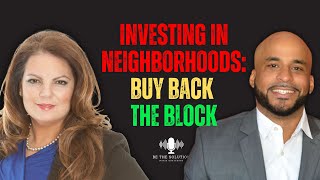
In this episode of the Be the Solution podcast, host Speaker A interviews Jordan Parisse‑Ferrarini, a three‑year board member of the Philadelphia Building Industry Association (BIA) and co‑founder of the Urban Developers Association (UDA). Jordan explains how the UDA was created to increase diversity and inclusion in Philadelphia’s building industry, and how he has sponsored ten emerging minority developers into the BIA. He emphasizes the transformative power of education, describing his own journey from a family‑run construction business to a licensed master electrician, construction manager, designer, and OSHA trainer, and how each credential elevated his opportunities. Jordan details several workforce‑development initiatives—Jumpstart Germantown, the Jumpstart program, and his own “Buy Back the Block” movement—designed to train young adults in skilled trades, entrepreneurship, and real‑estate investing, and to acquire and rehabilitate community properties. He provides a concrete example of converting a blighted corner building into mixed‑use housing with murals and community jobs. The conversation shifts to affordable housing, where Jordan clarifies the spectrum of income‑targeted units, explains the city’s Turn‑the‑Key program (including the low out‑of‑pocket costs and a non‑serviceable second mortgage that disappears after 20 years), and notes the UDA’s role in organizing minority developers for that program. He reflects on mentorship through Jumpstart, the importance of “leading with the work,” and the mental challenges entrepreneurs face—overcoming unrealistic expectations, dealing with failure, and maintaining focus. Jordan shares his personal guilty pleasure (long bike rides) and his excitement about scaling affordable‑housing development from dozens of units to 50‑80 units to generate generational wealth, jobs, and community stability. The interview ends with mutual appreciation and plans for future collaboration.
Chapters
Jordan, I am so excited to talk with you today. Welcome, my friend.
Thank you. Thank you. Thank you for having me.
Yes. Be the solution. So, Jordan, you are a member of the BIA and you also sit on the board for them. How long have you been on the board?
I've been on the board for the BIA for coming up on three years.
That's fantastic. And so uda, which is the Urban Developers Association Philadelphia, was born about three years ago. Two years ago.
About two years ago. It's been almost two years.
Okay, so let's dive into that a little bit. Let's tell our listeners a little bit about what the UDA is, what the purpose of it is, and what's your involvement?
Yeah, absolutely. So the UDA was founded by Rick Young, who's a great friend of mine. He's also a board member of the BIA as well. It was founded about two years ago, and the whole premise behind it, the whole mission behind it, is to bring more diversity and inclusion into the building industry space. Just to make sure that in a majority minority city like Philadelphia, with all this development that's going on in the communities, we just want to make sure that that development involves people from within the community. People that are black brown can also be a part of that development and those great opportunities that are going on around us.
Oh, absolutely. I think that is, well, one, you know, that I attend and I'm part of the uda, so I believe in the mission of what the UDA stands for and bringing in more people that naturally the. The fabric of the people in Philadelphia.
Absolutely, absolutely.
It's critical because our neighborhoods are changing, and a lot of it, I would say, is for the better. You know, we don't deserve to live in blight. We don't want to live in areas that are run down. So we love to see the development, but it's just important to make sure that we're a part of that process and we don't get pushed out through that process. So the UDA is just really intentional about bringing a lot of resources, a lot of education pieces, a lot of organizing to. To make sure that we could be a big part of this change, too.
Yeah, I love it. One of the things I was really impressed, Jordan, that you did is by sponsoring, I believe it was, 10 new members developers into the BIA. Is that correct?
Yep. So I sponsored 10 individuals that are up and coming real estate developers to get into the bia. The BIA offers a lot of value, a lot of resources, a lot of, like, those What I like to call, like, nuance pieces of education or know how to be able to succeed in the real estate game. So it's just really important to make sure that members of my community are at the table too. So sometimes you gotta put your money where your mouth is and, and bring your people into the room as well.
Yeah, that's. That's excellent. So that happened about, what would you say, six, nine months ago?
About four or five months ago.
Okay, so this year?
Yeah, yeah, this year.
And you're also bringing them through different programs. So talk a little bit about, you know, the programs and what kind of education they're receiving.
Yeah, so I mean, education and like, and knowledge changes things. And so my last 10 years of my life, I've spent being really intentional about sharing the knowledge and the things I've been able to learn within the industry. Just to take it back a little bit. You know, I was born and raised in Philly. My mother raised us. She's a single mom. And my family found success and was able to overcome poverty through the construction industry and through eventually real estate investment and being within the building industry. And so the biggest piece that helped me to be able to go from a family business out of a trunk of a car with a bucket full of tools from the pawn shop, into a lot of notoriety, a lot of awards in the luxury design build space, in the commercial construction space, in the real estate development space, has always been the education. Every credential. I went back to school to get. I went back to school to become a electrician, eventually becoming a licensed master electrician. I went back to school for construction management. I went back to school to learn design. I went back to school to become an OSHA trainer. And all these pieces, every time I went back and got a piece of education, I seen my life elevate, I see my opportunities elevate. So, you know, there's that direct correlation between like, education, certification, and all those pieces that really help my life to become so much better. And so the last 10 years, as I've been growing, I've just been. Been trying to be really intentional about bringing as many people with me. And so I've launched workforce development programs that have trained young adults to get into the construction industry with the emphasis on like the skill trades, electrical, plumbing, H Vac, and entrepreneurship. Because not just the working with our hands, but working with our minds. Within the real estate space, it's been the same thing. I was able to learn a lot and grow a lot through education. So we've Been intentional with different programs like Jumpstart, Germantown and now the UDA and my Buy Back the block program to just bring as much education and resources to the community as possible, but bring it in a way where it is high level information, like the nuanced information, but in a way that like the community can resonate with. So that's been the goal and the efforts that's been going on, on over the last 10 years and it's just been really fun to just gain as many allies along the way and people that are like minded. So now a lot of it these days for me is about combining forces. So the BIA is doing amazing things to help push forward diversity inclusion. So I want to be a part of it. The UDA is doing amazing things to push diversity inclusion. I want to be a part of it. Jumpstart Philly and all these other programs that are doing great things that bring that real education is really changing the game. So I don't really put it all under like under me or under my own accord. I'm just. There's a bunch of different pieces that we have in place and we're just trying to make sure that it all just gets to the community to change people's lives.
It definitely is something. Knowledge is power. The more knowledge you have, and it's not just knowledge, but using the knowledge that you have in connecting, connecting others together, being in contribution. That's what I see you do in Jordan, being contribution in the community and giving back not just only of knowledge and, and, but your time and your great energy. So tell me more about what is the Buy the Block program?
Buy back the block.
So buy back the block.
Buy back the block. So that's my, one of my personal brands, one of my personal movement. It just signifies that, you know, we're buying into our neighborhoods, we're investing into our neighborhoods, we're investing into our communities. And when we say buy back, buy back, meaning these have always been our communities. Right? And with gentrification, no matter how you feel about it, the communities are changing a lot for the better, but also through the displacement, a lot for the worse as well. And so buy back the block is making sure that we're buying land, we're buying assets, we're owning our homes within our communities so that, you know, we're a part of this generational wealth and this development of our communities. That's, that's, that's being built. And so the buyback, the block program, the buyback, the block movement that we had placed in here in Philadelphia is just all about organizing and just making sure that my people, my community, people of all communities, own some of the community too and are able to reap the benefits of all the change that's happening. And not even just reap the benefits, believe the change as well.
So what are some examples are of that?
This building I'm sitting in right now, this building I grew up in in the Monterey section of the city along the True Avenue corridor, this building I'm actually recording and streaming from right now, this used to be a bar that was like a ran down bar. Philadelphia police officer was killed right here in this room. Not to get all gloomy, there was a lot of drug activity, a lot of hopelessness going on. And I used to walk past this building thousands of times throughout my life to go to the playground across the street and buying back the block, buying back the community was like in literal, like I bought a, a corner property, a commercial property, mixed use building in my community, turned it all around, built a beautiful project, educated, trained, did workforce development in the process, house members of the community in the, in the residential spaces and just like restored hope on this corner. This corner used to be blighted, used to be dark, used to be a place where people didn't want to come. Now it's bright, it's vibrant. We threw a big mural on the side of the building that symbolizes hope and prosperity and power and yeah, I mean it's like literally as intentional as that. Buying pieces within our community and building them back up better than before. I mean, I bought the commercial properties down the street, building coffee shops and residential properties up the block. And building a affordable housing is literal like direct investment into the community. And so the big thing is just teaching people to be able to do the same. Because it's cool to be able to do it on my own. You know, it's good for me, good for my family. But to be able to teach people to do it collectively is just way more impactful. So we're literally buying back pieces of our neighborhood either that we owned or didn't own and making sure that we were here to stay.
Yeah, no doubt. Is there strength in numbers? That's for sure.
Absolutely.
So let's switch gears a little bit to affordable housing. I think a lot of people really don't understand what that means, affordable housing. I think they think it's something that it isn't. So why don't you share with us a little bit more in depthly about affordable housing?
Yeah, so I mean Affordable housing is definitely a broad term and so people kind of get it misconstrued or they have misperceptions of what it actually is. Affordable housing is a broad spectrum of housing that there to provide opportunity for people of a wide ish income level. So you have housing that's affordable for low, really low income levels. These are family, families that are living below $40,000 a year, like at lower ends of the median income. Then you have affordable housing that's also for what we call like workforce families, like families that are teachers, city workers, you know, different in different occupations. They're making 50 to $80,000 a year, sometimes a little more, give or take. But there's still cost burden by student loan debt, credit card debt and just all the pieces of inflation out here in this community. And so there's housing opportunities for people that fall into those categories as well. And so affordable housing is comprised of opportunities for people at the really low end of the spectrum, all the way up to people that are like workforce kind of working cost burden level. And I think it's all very necessary. But I feel like people sometimes just kind of convoluted all into one thing just thinking that just because the name affordable is there, that it's for people who just are at the lowest levels of income when in reality it's to be able to service people across like that whole lower end spectrum or even people that are working that are still dealing with cost burden on a day to day basis.
Yeah, so there's a turn the key program that's for probably people who make the higher end of the income, I think.
Yeah, so turn, turn the key is a great city program. It's, it's definitely geared more towards like the working, the workforce, affordability level. These are teachers, city workers, people that are making 50 to 80 some thousand dollars a year but just are still in the need of quality housing opportunities. I mean in this market with these interest rates and this inflation, a lot of times the middle kind of gets left out. And I think turn the key program is doing like a really great job at making sure that there's housing opportunities for people that fall into, into that area as well. And so the homes that are being built throughout the city, they're amazing houses. The UDA has been participating in that program. We've been organizing minority developers to participate in that program to provide housing stock. And it's also been a beautiful thing because on the back end of that there's community members from the city that are reaping the benefit of purchasing these beautiful homes that are coming with equity that they're able to get into with affordable mortgages. So it's just, just overall beautiful thing.
Yeah. Term. With the turn the key program, I know that new homeowners are able to get in homes for pretty much almost nothing out of pocket, like a couple
$2,000, a few grand, I mean a few thousand dollars on average out of pocket. To get to the closing table. There's a soft second mortgage that the city provides that buys down the price of the home. So people are getting brand new construction houses for around $200,000, sometimes even less because of that additional second mortgage that the city is offering. And that second mortgage is non serviceable, meaning that the buyer doesn't have to pay the mortgage as long as they stay in the house for a period of 50, 15 years to where that mortgage starts falling off. Once they reach the 20 year mark, that mortgage is completely gone. I think that's, that's a, it's a game changer.
That's a game changer because they stay in there 15 years, they have the soft second of between 70 and a hundred thousand dollars and then whatever equity was built in the property. So that could be another. Who knows, let's just call it, you know, 50,000, 100,000, $200,000 of. That's like, that's game changing for a generation.
Absolutely, it's game changing for a generation. And it's definitely very much needed. It's very much needed. So I'm, I'm super happy about the program and super excited to be a part of it.
So the, your involvement with Jumpstart Germantown, are you mentoring students there or.
So Jumpstart Germantown helped me back in 2015 is somewhere around then. I was already 12 years plus in the construction industry and I was doing a lot of construction and building and Jumpstart really helped me to bring together the pieces of real estate investing. And so at that time I had some real estate investing going on. But Jumpstart helped to bring a lot of clarity to like the financing structures of it for me to be able to put it on steroids and take my real estate investing game to the next level. So it played a big part in, in, in my shifts, in my opportunity. So I found myself always still working along with the program. Ken's always been a great mentor of mine and next thing I knew I found myself working within the program, doing mentorship, doing the inspections, analyzing deals with the program, and just overall just helping people to grow within the space and so still to this day, I still do work with the program. It's in a little bit of a lesser capacity, but I still participate on a quarterly basis doing mentorship, doing trainings to make sure that I contribute.
Yeah, Ken Weinstein really did something else with that program. I think it was pretty impressive how many investors came out of there and learned a tremendous amount to go on and be the solution and build a life of their dreams, basically.
Yeah, absolutely.
I mean, the thing I love the most about the program is, I mean, I see so many people from the community that have gone through it, got educated through the program, and then I see them three, four years later, and they're like, knee deep in real estate investment. I got so many friends and community members that went through the program. And you fast forward three, four years, there's. They're still in the game of real estate and. And thriving and doing well. So it's working.
Work, work. The work, the system. Right. Do the work work. As I always say, work works.
Absolutely.
Do the work. You put the time in, put your head down. Don't worry about what everybody else is doing. Do you?
Absolutely.
In my group, we say lead with the work. So our. Our motto is lead with the work. We're not waiting for the perfect opportunities. We're not waiting for someone to come and help us. We're just doing the work, do amazing things, and at some point, you know, pieces start falling in place. At some point, people want to be a part of it, and you just, you know, we just keep it moving.
Lead with the work. I like that.
Lead. Lead with the work. Yeah.
Lead with the work.
Yep.
Yep. What do you see that the biggest issue is that people let get in front of them from moving themselves forward.
The biggest thing that people let get in front of them, I think a lot. I think a lot of times people think things are going to be easier than they're supposed to be, and so they let that discourage them. When in reality, things take two times, three times, four times as long as you think they're going to, and they're usually 10 times harder. And I think, like, in this society, everybody in the social media world that we live in, everything looks so easy. So I feel like when people hit those points, when they. When they find out it's not, they feel discouraged or they feel like something's different for them, when in reality, it's all hard. Like, this stuff is all hard. And that level of commitment has to be big, even bigger than you, because you're gonna hit some walls. And you got to be able to hit those walls, get back up and keep going. And I feel like a lot of people lack that because they think things are going to be easier than they are. So when they hit that wall, you know, they didn't think it was supposed to happen. And for me, you know, those walls are a part of it.
You can't succeed without failing.
Absolutely.
Got failed, fail forward. You got to expect to fail. So I think a lot of people get discouraged when they get hit with those failures, but that's a part of the game.
So, yeah, it's not about how many times you go, but how quickly you can get back up from it and just keep moving.
Absolutely.
It could spend a week, like, pouting, Right. You could spend a week or two weeks or three weeks doing nothing. You know, you fail, you say, okay, what did I learn? Can I learn something from it?
Absolutely.
Okay, well, I got that. Let's not make that mistake again. And let's brush ourselves off and let's keep on going. Start again, start again, start again. And I see especially on this side of the industry and the brokerage side and real estate sales, most people have, like, very little capacity to do this.
It's tough. I mean, real estate sales, you're entrepreneur in all senses of the word, a lot. At least that's my perception of it. And I think people think it's. It's going to be a little bit more guaranteed. I'll say. But real estate sales, you eat what you kill. So, you know, you got to be ready to hunt.
Gotta be ready to hunt. And then you got to know what you're doing.
Absolutely.
That's a part of hunting, too.
But make sure they get the business. And then they don't know what to do. They don't know how to sell it. I just had a client come in. They just signed a deed package. And I never met them in person. I did the business on the phone. They came in and they were signing with Dara, our broker, and there's like, wait. They're like, where's Maria? And she's like, she's in the back. She'll be up in a minute. So I come out and I meet them, and I was the third person that they listed with. Yeah, they were expired twice prior to actually in Delaware County. And they're like, we're in Delaware. We live in Delaware County. The house is down in Delaware County. And we had to come downtown Philly because you were the only. You were the person who could sell the property.
Hey, I Mean, you definitely have a reputation that precedes itself. And like in this market, I mean, you need, you need sharks, so you need people that know what they're doing. So I, I could see it all day.
It's fun stuff, right. But there's always. I tell people, we get paid to solve problems. The bigger problems you have, the bigger paycheck you get. So look for opportunities to be the solution and to help people solve problems, whether that's regardless of whatever industry you're in. If you're an entrepreneur, you, that's. Otherwise there's somebody else coming alongside you that will pass you by.
Absolutely.
And there is enough business to go around to everybody, you know, you have to have like a mind of abundance and being. Contribution. I see you being in contribution. I do my best to be in contribution as much as possible. I think it's really important. Give it all away for free.
Yeah, absolutely.
I mean, a lot of people out here, that scarcity mindset that you speak of, as though, like your success is going to take away from my success, like, that's a, that's, that's a loser's mindset, for lack of a way to put it. Like, you know, winners, winners know there's enough out here for everybody. Especially if you focusing on delivering the best, you being. Delivering the best value, it's going to come regardless. So.
That's right.
I'm 100 on the same page with you.
That's a. Huh? That is 100, right? Give it all away.
Help.
You always can help somebody else. There's always people that need your help. They need. There's people that, you know where you are right now, 10 years ago. And of course there's more people that, you know, there's people that do more, there's people that do less. It's always going to be that way. That's the way of the world.
Yeah, absolutely.
Absolutely.
You think you're rich, there's somebody richer out there. You think you're poor, there's somebody poorer out there.
Yeah, I tell people that all the time. People are like, jordan, you're rich. And I'm like, I'm poor. And they're like, they don't get it. They're like, no, because you have this, you have that. And I'm like, there's levels to this stuff. Like the people that I look up to, the people I aspire to, to be like, you know, there's always somebody that has, has more going on and, you know, just being able to have a pj Do I have A pj?
Yeah.
Not yet. Well, but I will.
There you go. See?
Yeah, it's always. It's always. There's always new levels. And the thing I always tell people all the time is, you know, compare yourself to yourself. You know, like. Like competing against other people is. Is. Is a waste of time. You know, compare yourself to yourself and compare yourself to where you're trying to go. And no matter what level you want, there's always another level. And no matter what level you're on, when you're trying to make it to that next level, there's going to be a lot of sacrifice. There's going to be a lot of dedication. You know, you're going to have to lock yourself in, literally, like sometimes, you know, not be on the scene for periods of six, seven, eight months a year, and just go so hard on your craft to break through to. To get to that next level. And a lot of people, you know, they. They get discouraged or they. They don't think that's what's required, you know, and that's the only way you have that breakthrough. You got to be able to just. To just focus.
Yeah. Like we said, comparison is the thief of joy. Don't compare yourself to anybody but yourself, because when you compare yourself to other, it really does. It really rips your joy right out of you.
Absolutely.
Because you don't know what that ex. Where that person started, what their experiences are. You know, the. Everybody's different. We're all unique. We have our own path and our own journey to follow.
And you don't even know if that person is as all of these things that you're making them to be, because, like, people don't have their stuff together as much as it seems. I've always found, like, the more I've grown, anytime I found myself comparing myself to somebody or even feeling like somebody has, you know, something better or I'm inferior to something that somebody else has going on. The more I've grown, the more I've matured. I've realized that a lot of that was just like a misperception because everybody got some crap going on in their life. Nobody has it together as. As much as you think. And so even in learning that, I'm like, I don't even compare myself to other people because I really don't truly know what's even going on on their side of the fence.
So, no, unless you intimate, unless you knew them intimately and you don't know. And even then, you may not even know.
Even. Even then you may not really? You might, may not really know.
No. And I, I love that you said about locking yourself in your room, like not in your room, but like, so I, you know, I'm a, I'm at a level, a certain level and I want to go like a whole nother thing. And so I supposed to go to something last night and I didn't go because I'm like, I'm working late and then today I'm supposed to go to this entrepreneur's table thing at my club. And it's good, you know, entrepreneurs and blah, blah, blah. It's a roundtable. So it's good. But I'm like, you know, how am I going to get, I need, I need more hours. So in order to get more hours, I either need to start earlier, which is fine, but you can't call people at like 6am So I can call them at between 5:30 and 7:30, which is what time this event is. Right. So I need more, I need more touches, touches. And in order to do that you got to spend more time.
Yeah, I think every high achieving entrepreneur finds themselves in that scenario where it's like, I really want to go and hang out, you know, I really want to go and do this thing. Because those are the feel good things, the feel good conversations, the conversations of grandeur, people talking about good ideas. Like all of those things feel good. And I feel like a lot of times entrepreneurs can get trapped and thinking that those things are high priority or work. Right? When in reality the work is the thing that you sit your behind down at that desk and on that computer or read that thing. All those things that you really don't, you're not inclined to naturally just want to immediately do. That's where the real breakthroughs happen. So, you know, locking myself in is like focusing on all of those things that I just don't naturally want to do, but I got to do. And you know, doing them is, is consistently for that period, three months, six months, nine months, that's where you get the breakthrough. And then you come through and you know, you definitely got to celebrate your successes. You know, take a nice vacation, go out, celebrate, make sure you have some good, you know, human connection with your friends. Let them know you're still around, you still love them. And then guess what? When you try and go to that next level, you're gonna have to rinse and repeat and do it all again. And I feel like the hard part is as you start to grow, you start to realize that a lot of people don't understand It. And then you start to kind of like, naturally start separating a bit. Not that you don't love them, not that you don't want the best for them, but the people that don't understand is hard, and they may not ever understand, but you still have to go after it. Right? And so that's the space I've been finding myself in more and more these days. So I just try to get myself around people that are like, my tribe, that understand it. I need the entrepreneurs. It's like, oh, I know what you're doing. You locked in. I'll see you when you get back. Not the people that are like, man, where you been? You haven't been around. You different. You changed, you know, so it's just keeping that balance is. Is a big part of the journey these days.
It definitely. It definitely is. But, you know, we have only limited time, and the older we get, the shorter our time is. And so if you have these goals that you want to achieve, man, you gotta, like, buckle down.
Absolutely.
It's definitely not glamorous. It's not. I'm gonna, you know, I mean, I. You can have a little bit of fun with some of the stuff that you do. Like, I make a game of some of the things, like, people hang up on me, and sometimes I'm like, you know, a little bit, and I'll text, I'll be like, thank you very much for hanging up on me. I'll see stuff like that. And then I had somebody say, this woman text me back. She's like, you're welcome. Exclamation, exclamation, exclamation. I'm like, right, you just gotta keep on rolling. Doesn't. It doesn't. Doesn't really matter. And a lot of times we waste time about bitching, complaining about these things, that thing. And then we take our energy, like, that's our energy, where we gotta use that to be like, okay, I'm doing this thing, whatever that is for you. It could be writing a book. It could be doing podcasts. It could be, I don't know, doing content or creating content, whatever that is. Making calls, you know, I don't know, drawing, whatever.
No, I'm with you.
And, yeah, and I think about that lately, and it's, like, weighing on me a bit. You know, I. I'm not gonna let away. I mean, because I'm. I'm taking the action. But I was. I heard about something somebody did about another broker in Texas and where his business is, and I'm like, how the hell is he doing that a day now I gotta find out if it's real or not because somebody said they don't think it's real, but if it is real, I feel like, wow, man, I gotta really step it up. You know, people think I do a lot. I mean, and compared to everybody else. Yeah. But I know that there's more, way more I can do. And so we have to like funnel our energy and now let get the energy vampires get us. Jordan.
No, absolutely.
I mean for me that's a big part of the journey. Like a big part of this battle. Day to day as an entrepreneur is just like managing my mindset, watching what I put into my body, making sure that like I don't get around the energy vampires. And if I do, I'm in a mental space to just brush them off, I guess. A huge, a huge part of the battle.
Huge part of the battle. Such a big part of the battle. But you bring so many solutions to your community. It's a great thing. Your energy is contagious and you're doing, you're doing a ton for these new developers. In fact, I'm gonna come and speak. I think it's next month.
Yep, yep.
Yeah, I gotta, I'm coming to the Mount Airy place right there where you are now.
Yep, yep. Have you out to the, the center on Chew Avenue. It's our community education hub. So we definitely look forward to having you out, share some knowledge.
I'm gonna, I'm gonna bring it all good, better and different.
That's the, that's, that's the, that's the what people need. Because people just don't need the good. They need all of it. That helps them to be able to understand how, how it really is. A lot of times people just want to speak about all of the highlight real stuff, but it's really the, you know, the, the setbacks and the resilience and bounce backs that really help you to get to where you try and go.
Yeah, absolutely. Otherwise it's just a bunch of fluff, right? Oh, we'll, we'll deliver real value on that.
I know you will.
Absolutely. So before we wrap up, two questions for you. One, guilty pleasure. What's your guilty pleasure?
My guilty pleasure is, honestly, it's probably gonna sound corny, but I just like to just get on my bike and just ride. So I like to cycle. If I can put in like a nice 20 mile ride at least and just have a headphone in my ear and see some good scenery, that's, that's A good day. Like, I found some time to do something that really matters. Yeah.
That's awesome.
Yep.
I like. I like riding my bike. Just kind of, like, you know, at the beach, winds, going, watching the weaves.
Absolutely.
All right, and then next question. What are you personally most excited about for your future?
Most excited about for my future. So I feel like I've been working so hard for all these years to, like, get into the position that I'm in, and I'm just really excited about, like, the breakthroughs that I feel like are right in front of me. And so the biggest breakthroughs are just really just taking this affordable housing development and doing it at scale. So, like, I've been blessed and fortunate to do scattered sites and, you know, dozen affordable homes at a time. I'm looking forward to just having that big breakthrough to be able to do, you know, 50, 60, 80, and just be able to completely change a whole section of the neighborhood in the community and just build so much beneficial things with generational wealth and workforce and employment and just, like, all of it just all coming together and just being able to see it all manifest, because I've been. Everything I've been doing, I feel like, has been leading to this point, and I'm just excited that I feel like it's really. It's really about to happen.
That's awesome. Congratulations, Jordan, on all your success and much great positive vibes or an even better. But that with everything you got going on. Thank you so much for taking the time today to be on Be the Solution podcast. You definitely are a solution for you and your community, Jordan. And I look forward to seeing you next month with Dementes.
Absolutely.
Thank you so much for having me. It was a good time.
My pleasure.
More from Jordan
"HOW DID I BUY 8 HOUSES FOR $8 From The Government 😳" Ft. Jordan P. Ferrarani