1:26
Juntae Kai Delane examines ChatGPT's downsides, from academic cheating to misinformation. A college student built a tool to detect AI-written essays. Delane asks if regulation can stop the damage, or if ChatGPT will ultimately help or harm us.
Juntae Kai Delane examines ChatGPT's downsides, from academic cheating to misinformation. A college student built a tool to detect AI-written essays. Delane asks if regulation can stop the damage, or if ChatGPT will ultimately help or harm us.
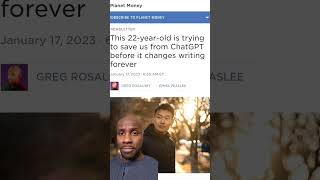
Hey, if you search what Chat GPT is all about, you're going to get a lot of content on how great this tool is. But I think there's not a lot of talk about the detriment of that tool for us as a society, and in particular in the higher education field, when students could potentially use this tool to write papers. So this is where this article is very interesting for me because it talks about this college student who actually is building a platform that contrast ChatGPT. It essentially focuses on checking to see if this content is created by an AI. So let's think about it here. Is this right or wrong? You know, I think with the proliferation of AI and how it's changing society, it's certainly going to have us wonder if certain pieces of content are real or fake. Is it created by AI or human? Is it real news or fake news? This is a time where information and trust is critical, including the papers and information that floats around these college campuses. So do you think there should be some regulation to all of this? Do you think GPT is going to help or hurt us as a society? Would love to know your opinion. Leave your comments in the section below.