The 2025 Playbook: Marketing Trends Every Business Should Leverage
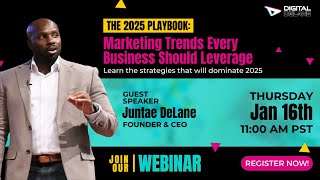
In this 2025 marketing workshop, founder and chief strategist Jun Tae Kai Delane of Digital Delaine walks participants through a comprehensive digital branding framework and channel‑by‑channel playbook for 2025. He introduces Digital Delaine’s "digital branding formula"—integrated planning, digital ads, social & influencer, creative, SEO, web/email, analytics & CRO—and explains how the formula maps onto four phases: strategy, launch, traction, and growth. For each major channel (SEO, social media, paid media, influencer marketing, email) he provides concrete contribution ranges (e.g., SEO 20‑60% of traffic, social 10‑30%, paid 30‑50%), tactical recommendations (content mix aligned to the buyer journey, repurposing old assets, E‑E‑A‑T, Knowledge Graph, AI‑prompt‑driven keywords, social playbooks, algorithm factors, brand‑voice pillars, user‑generated content, micro‑influencers, social commerce, syncing organic with paid, micro‑moments in paid, custom audiences, remarketing, quality‑score optimization), and measurement guidance (ROAS, conversion rate, benchmarks). Throughout the session he emphasizes a data‑driven, test‑and‑learn mindset, encourages audience interaction, and offers a free custom media business‑card as a closing incentive. The workshop is aimed at marketing managers, business owners, and digital strategists seeking actionable, budget‑aware tactics for 2025.
Chapters
Sam. Foreign. Welcome to this stream. Really excited to you today and we have some pretty insightful things that we're going to cover on the stream today. So I'm going to go ahead and open up this window here. Awesome. So in the chat section, let me see the stream now. Go ahead and put yes in the chat section. So. So I'm able to see that there. Go ahead and put yes in the chat. All right, let's go ahead and Waiting for a few more. All right. Okay, it looks like we are all set. Go ahead and type in hello everyone can see that there. Yes, yes, yes. Awesome, awesome. Well and go ahead and get started. Let me all this stuff out of here. All right. So first and foremost again, welcome, welcome, welcome, welcome. Everyone has signed up for this workshop. Again, really excited to be presenting to you all today. I'm going to be flipping through a lot of slides. Okay. And I'm going to be adding a great deal of value. So sit back, relax, enjoy it because it's definitely going to be something I believe is going to be fruitful for you all. I also make sure that I'm able to be seen if you guys can actually see me waving. Go ahead and click on or add yes to to the chat section as well. So go that. All right, cool. I think we are all set. So I'm going to go ahead and start the presentation now. So first and foremost I want that everyone engages with us on social. So if you are on social media, feel free to go to digitaldelane.com and join the the webinar Live with us here day you're able to answer ask questions, I'll be able to answer them, so on and so forth as we go throughout the presentation. Okay. All right, so just to let you know a little bit more about me so that who's. Who's speaking to you. My name is John. I'm the founder chief strategist of Digital Delaine. A lot of people may have followed either the agency or my personal brand on social media. Gone to one of my talks that I have throughout the country. But most people don't know that I started my marketing career as a dj. I helped local artists and bands to help build fan bases around the Internet. In particular, when MySpace was a popular social media network, I also had a chance to develop my own social network that competed against her guys network on the east coast who had a network only for college students. But obviously we see network is and so we couldn't beat him so we had to join. So right now that's where I really first glance in marketing was in developing a social media network and as a DJ to artists and bands Internet and as I mentioned earlier I am the chief strategist of Digital Delaine. I also founded the Digital Branding Institute. I am most of an awesome called the Brand Behavior Podcast and I'm a notable influencer in the space from a content marketing influencer. I also was touted as one of the top marketers that you should know by LinkedIn so free to check me out and the things that I have contributed space. So you know exactly what speaking here on on this specific topic and we have our lovely team joining us in the background that's able to to any immediate questions that you guys may have throughout this session. All right, let's go. So just as I'm the founder and chief strategist of Digital Delaying, we are a service marketing agency and we were founded in 2015, have 14 staff members, 35 clients, 100% private, minority owned. So we've been at this for a while and we certainly did a digital branding process and we absolutely love to bring new campaigns ideas to life. We had the opportunity to work with so many wonderful clients across many different industries from professional services to entertain, entertainment tech, cpg, tel, e Com, so forth. But we have really cut our teeth in digital marketing and understanding how to convert audiences with convert audiences through the various services that we provide. It's essentially what we call our digital branding formula. It consists of many, many different services, whether it's integrated planning and strategy, digital ads, social influencer, creative services, SEO, web email, and of course analytics and conversion rate optimization. Right. These are all the services that we believe make up our digital branding format and so usually work with clients. We focus on solving problems, whether that's client acquisition, whether that's selling and so on, and focus on the specific channels in concert that would help them reach that goal. So that's our sweet spot, Secret sauce if you will. And our approach simply is to focus on building brands by linking four different phases of the see those phases outlined here. Whether it's developing strategy, then attracting, then of course the growth phase and the strategy phase, we focus on developing that brand identity. Then we launch. Then in the launch section we focus on building out the digital strategy and the campaign section. We also focus on developing campaigns that are based upon current trends. Of course in the traction phase you can see there we focus on comprehensive SEO content marketing and then we amplify campaign across the board through paid media influencer so and so forth. And then lastly for the growth phase we focus on the conversions and right. Focusing on conversion rate optimization. So that essentially is our approach to digital branding and launching brands. And even if we have clients that come to us that have a certain component already established, we can pick up where they left off and then continue to skip their campaign from there. So that gives you a little bit more insight about myself and about our approach to solving some of our clients problems. But I know this is all about you and why you're here is to ultimately more insight on how you're able to grow your, grow your brand, scale your campaigns and so on in 2025. So listen, I'm going to provide you with a deal of information that would allow you exactly that. So here's, here's the agenda. We're going to focus on an introduction to digital branding. What exactly digital branding is and how it can be used to leverage your, your, your equity in the space your campaign on. We're going to talk about channel contributions for SEO, social, email, digital ads and of course influencer marketing focusing on exactly what percentage of of traffic should be coming from those channels, what you should possibly invest and actually what's working with those channels. So as you have an action packed we're up today and take notes. We're gonna, we're gonna be dropping of jewels for you. For those of you who stay to the end we actually have a free gift. This is not a bay switch situation is a absolutely valuable gift gift that you are certainly going to benefit from. And so again if you want to participate and you're watching this on social media, Feel free digital lane.com Click the banner to our conversation to receive entrance into the webinar and you'll get a free gift. All right, so I talked about digital brand branding earlier and I want to spend a quick minute or so on exactly what digital branding is. And so we've defined digital branding through the Digital Branding Institute as the identity, visibility, credibility amongst customers or consumers who discover to and interact with the brand on digital platforms. Now this is a whole new approach to branding and marketing. Not a traditional sense of branding in terms of having a nice website, but it's a sense of branding and focusing on building memorable touch points that work in concert to convert your target audience. And that means that focusing on marketing channels in a vacuum is no longer a viable option. You consider building a brand if you're truly looking to convert audience and increase conversion rates. Now as you see here is an example of the general sales and marketing funnel where you have the awareness Phase you have the consideration, decision and retention. But you might as well blow all of this up. Right? The linear funnel is no longer effective. This is really what the traditional funnel looks like. Right. You have many customers that may come in at various phases of their, whether they can first be introduced to their brand in the consider phase or decision phase. They have a short list of organizations or businesses or products they want to buy and they're just double checking some things. Right. They may see your ad and they may click through the ad and actually to your social media accounts to see the type of engagements, the type of support information that's there. They may even Google search reputation to see what your ratings are and then go back to your website. We've actually found many different clients in for the campaigns that we're working on where that's actually starting to be the case and we're starting to fill in that gap to understand, ah, they're not coming directly from the funnel as we have the client has established, but through, through other means. And so get attribution for those other channels. Focus on the new funnel. Okay. So that is really what digital branding is all about and that's what we have here at Digital Lane and we leverage some of these tactics for our clients and we're ultimately looking to provide guidance and advice for you all here. Now, who is this workshop meant for? It's meant for marketing managers, business owners or general digital strategists. Right. Who are looking ultimately to set budgets and understand the impacts of each channel. So we're going to break this down. We're going to have a little fun, but it's going to be action packed. It's going to have a lot of information. So be, feel free to take and also include your questions in the chat section as well. I'm going to be reviewing that as we go throughout this, this presentation. Okay. All right, so the goals we ultimately, you're going to leave ultimately defining cements for the perfect digital branding strategy for 2025. Okay. We're going to determine what the best practices are to advertise. We're looking at contributions and expected return as well as strategies. We're also going to give you a glimpse of what's actually working, what's working with social, email, influencer, paid media and so on. Now we're going to talk about some of the key tactics that you implemented for clients that you can also implement on your end. You can take information to your team, information to whomever is doing your marketing to make sure that you're leveraging the best practices for 2025. Now this particular is the strategy, this is the thesis right here. This is ultimately everything you need to know about your branding for 2025. You want to make sure you're running ads right across all platforms, search, social and display to discover new audiences. Make sure you're having the landing pages that are aligned with top trends in the space and for your target market. You want to make sure you're collaborating and building relationships with influencers, partners and so on. Refreshing old content, making sure you're focusing on CRO, which is conversion rate optimization. You want to make sure you're publishing constantly. It's articles, press releases and then when you're email marketing, you want to make sure that you have your right industry benchmark established so you know if you are actually performing well, right. And where you are versus your competitors in the industry. Of course, having a robust SEO strategy, focusing on many different keywords, whether it's high, medium or low value keywords, focusing on well and establishing a social media book so you can hop on a lot of social trends and get some earned exposure as well. Now this is again the sis. This is the snapshot right here. I'm giving it to you right here. But ultimately you may focus on a few of these items or but you have to define what success right while doing dual tactics and then basically begin to scale it, find out what's working down on it and move forward. We also have to understand when we think about leveraging, optimizing digital branding for the upcoming year is to ask yourself as you're working on each individual channel, what's the cost for these channels? Right? What is the conversion rate, what's the cost per conversion and how do you control the levers that grow each. That's what you should certainly think about when you're contact whoever's doing your marketing, you're engaging with your marketing team and so on, being very goal oriented to truly, to truly understand what attribution what is is moving the needle for your organization. So these are key questions that you should ask yourself. I would write this down, put it in your agenda and so on because it certainly has worked. This is that we do as well for, for our marketing meetings and discover a portfolio of clients, understand where the attribution is. Are we moving needle for each individual client? All right, so I want to talk about search engine optimization. This is a channel that we're going to focus on the first channel. Now some of you, your eyes are probably rolling in the back of your head. You Hear Search engine optimization. Some of you are getting a little giddy about it because you really are investing heavy resources into this channel. But you to do in the chat, type, if you heard about SEO or if you're doing SEO or if you are an expert, go ahead and type it right now. If you've heard about it, say I've heard about it. If you're doing I'm doing it. And if you're an expert, tout it, say that you are an expert. And if you're watching via social media, go to digitaldyl.com go ahead and on that banner at the top of the page and you'll be able to join in this conversation. You'll also be able to ask questions as well. Okay, so I'm gonna go ahead and look at that now. All right, so go ahead, include that in the chat section there for me. All right, dive in. So with regard to SEO, your channel contribution with regard to traffic should be about 20 to 60%. Right? SEO should bring about that amount, 20 to 60% of the traffic website. And the goal with SEO ultimately is to focus on new video growth. And the goals that you've set up, these could be conversion related goals, these events that actually are on your website as well. Now our approach to SE no is working is content marketing strategizing for Google's E targeting top terms, refreshing content and in keyword strategies into social media. So these are the key points with regard to our approach to SEO. Now I'm going to break this down a little bit more. When we think about content, we ultimately look to naturally create content lined with whatever phase of that user's journey, whether it be awareness, decision, whatever the case may be. But as I talked about earlier, we have people that coming in in different phases. So this means that as you audit your content, you want to make sure that content is can address a user where they are, meaning the content that's focused on awareness. Also address factors for consideration, factors for decision and so on because that would be aligned with more traditional funnel. Okay, so that's one approach to SEO and content marketing mix. The other is seeing old content. Now as marketers, as business owners, digital strategists, we have a campaign that, that and we first think to create content to amplify or promote that campaign. But all times we fall short and forget about content is existing that needs to be repurposed or refreshed. The amount of resources that you put towards content creation, if you put a percentage of that to content that's existing, you're probably going to double or triple your OI compared to the resources and the output and, and conversions of that specific piece of content. And this could look like content for article, excuse me, for videos or infographics, things of that nature. Because all are naturally going to show up and help to increase your SEO rankings by virtue of that being on other platforms. Okay, so that's one approach there. The other approach when it comes to SEO focusing on eat and this is a newer algorithm for Google. And originally the expertise and trustworthiness as a key factors on how they rank content, but now they've added and extra E experience, meaning you have to demonstrate that you are actually experienced in your industry. Now what is, what does that mean for us in the real world when we think about, let's say education, particular higher education, where now students are starting to second, second guess the value of education because they really, really want to learn from people that have not only established the expertise and wrote the books, but actual practitioners, people that have demonstrated their experience to many of the Gen Z and millennial consumers for higher education. This is the same playbook that Google has with new algorithm update. So as you begin to create content on demonstrating your experience and impact that you have in your industry, making sure that your organization and anyone that is a major stakeholder CMO CEO in the C suite has that demonstrated experience impact that they've made in their, in their industry, critically important there you want to make sure that you're doing things as your CEO or cmo, having speaking engagements or on podcast or giving studies, so on and so forth on all of the content that you, that you put out going forward. Okay, so that's, that's another approach with regard to SEO. Another would be to target top keywords. So you want to make sure that for your top keywords, you have pages on your site that focus on those specific keywords. And you also want to make sure you have frequently asked questions, links to other relevant blogs on those pages as well. You want to make sure that you so add video. And these could be my approach certainly be YouTube videos, because YouTube being the second largest search engine, that there's some synergy between blog posts that show up on search and also have a Google video. Right. There's many, many benefits for that standpoint as well as for a search ranking standpoint. Many of you guys are familiar with Knowledge Graph, Go ahead and put yes or no in the chat section for me. How many of you are experienced heard of Knowledge Graph? All right, well, Knowledge Graph is essentially created to address questions that have so people are asking questions about or how to buy that or any question regarding whatever you're offering. You want to make sure you show up in the knowledge graph and so that you'd be creating content that ultimately answers users questions. And we've seen a shift, I call it sort of the how to movement when you're creating a great deal of content with the title how to how to do X Y how to do Z. Okay. And this is certainly going to help you increase your vis through the knowledge as people continue to go to Google to get now let's fast this let's think about the fear of search. I believe that many people would go from googling it to prompting it. Now what does that mean? You all I'm sure have aged with AI, generative, generative AI and so on. And so as people go from asking questions to Google they're going to be prompting AI and getting output or responses from AI. You ultimately want to have your considered in the output. So we want to start thinking about what are people in your industry or target audience and making sure we're creating content around those prompts. I also believe that this extends to social media and when you're developing your keyword strategy you should certainly focus on leveraging extending your keyword strategy to social media. This is important because most many gen Z prefer using social media over and we expect that to grow and this survey, the majority of the respondents all mentioned they trust recommendations from their so why is this why are Gen Z focus on using social media over search? Well, it's because they simply prefer videos over text. It's easier to consume. They're used to creating, they're used to consuming video content as well. They also feel like the social media algorithm may know them better than Google because all of those engagements, the swipes, the likes, those engagements are cues ultimately that that showcase interest demonstrated. Right. And so this is the battle between social and search. Probably remember Google+ right. FAIL Google+ and it's Google's attempt to enter into the social market. Right. We have the elephant in the room on its way to being banned. Right. Or sunsetting. So when it comes to search we want to make sure that we're focused on leveraging our strategy to make sure that we're implementing that keyword strategy through media as well. And one of the ways we're able clients is to make sure that as we social media content we're including specific keywords in the description of the content for the images that we upload we have meta descriptions or Excuse me, alt tags for those images and so on hashtags as well. Right. These are all factors for search visibility through social media and as you continue to create content something that you should think about. So here's what you should focus on when leveraging SEO. Establish an effective content marketing mix to make sure that the content that you have created that focuses on individual phase of a buyer's journey incorporates other key factors of that journey as well. Purpose old content to make make sure that you're not on new content. So focus on leveraging and that's exist and also using content that is not that not simply has the most views but also has the most conversions. Right. We're optimizing those pieces of content as well and then making sure that you have established expertise in the space when the for the content that you're creating on behalf of your brand or organization your SEO keyword strategy to social media and AI prompts as well. All right, so I told you I was going to be giving a lot of information convey exactly what is working in the space and what we've seen for our clients Digital delame. So so let's focus social media. Now I'm sure you guys are all doing social media. Some of you probably watching this stream on social media as well. But if you can type in the chat, if you've done it, if you're doing it or if you're excelling at I want to see in the audience their level of savvy is with regard to leverage social media. Okay, All right, good. Okay. So let's, let's dive in deep into social media. So when it comes to the channel contribution we've noticed that about 10 to 30% of the traffic for your business can come from social media. Of course this is depending upon your industry and audience. But ultimately you want to acquiring new followers. Right. And engaging with exist excuse me, existing ones. Our approach to social media comes from establishing so we're not doing social just to do it but we have a overarching strategy and what we're doing right for our clients we focused on the algorithms who and who has our audience's attention with regard influencers, strategic partners or people of influence. We make sure that we have a relevant brand and that's going to attract and engage with with your target audience ultimately want to leverage trends. Working as well is a major factor social and even paid and then we also focus on sync organic social with social. That is essentially our approach and what we know is working for a lot of our clients here. So I Want to take a deep dive to each of these items. Ultimately, having a social media playbook is going to be key. The reason why this is because we've noticed clients me for individuals involved in their social media process, whether it's different agencies, individuals, so on and so forth. But think quickly and you can sort of notice when gets a new social media manager or starts working with a new social media company because things just change, you can see. So there's, there's not consistency consistency with regard to the type of content and engage have on social media. This is why it's critically important to establish a social playbook and it's something that we do for all of our social media clients. We find having playbook an outline of their target audience, the psychographic demographics, what influences them, what content they're currently influencing them, what are the events or content and influence. We have their attention and also we outline different scenario. If, if there is a hater or detractor, what are we going to do? How are we going to respond within a certain brand voice, right. What are the specific events whether it's Coachella or inbound or a golf tournament, whatever this may be, these are the things that the target audience is really engaging with and what piques their interest. So when we start creating content for social media we need to make sure that we factor those things in first and not be about our product or our service. So these are something that we make sure that clients and if we're executing on the behalf we have to factor that as well. Okay. So having a social media playbook is certainly will help guide the social media campaigns going forward. Now when we think about social media and really looking to excel, we have to focus on rhythms. We have to understand the algorithms. And if you notice and that is really crushing it, they understand the algorithms. Right. And so here are four different components to an algorithm reposting if it is liberty, if if it verified count all factored into the algorithm the type content, whether or link whether that video is natively uploaded to the platform versus through a third party platform factors with the algorithm the popularity of it. So this really focuses on how many likes comments and so but also velocity those likes comments and shares. The faster the velocity the more visibility you get. Algorithms decide that and also is it timely, right? You have trends as a part timeliness, the specific parts of the day, so on and so forth. Although algorithm will but depending upon when your target against is active and so forth, if it has enough velocity it'll it'll start to reach right people. So you have to focus on those four components. But ultimately at the center of it all is this meaningful, right? So the more meaningful interaction you have, the better. And then once you have something that has begin to take off, amplify that through paid means. Because ultimately social media is a business. If you want reach, you have to pay, right? And so you have having a strategy by understanding, seeing what works and then amplifying works on social media is certainly the key. All right, so understanding the algorithms is another key approach. Telling stories is also another approach. And understanding how you can incorporate your story with people that have influence over your audience or people that have your audience's attention. This could be thought leaders, journalists, influencers or people of influence and begin to incorporate them into your story or to your content mentioned earlier. Generated content is also key when creating aging content. Now our approach here is to help generate, generate user generated content. And when we're focusing on their audience first, so we're able to collect user generated from their audience. Individuals that have used product or their service or any offering to make sure that they're able to use this content, place it on their website, place it as of their ads, and of course through social media as well. We also know that brand voice, your brand voice in particular on social media will impact the level of engagements and reach that you're able to get. When I say brand voice, many people have different of what that is, but it's sleep. These are four components of a brand voice, right? It's your character, your purpose, language and your tone, right? We have to factor the four things in. And when you're one or two want to tweak your brand voice. Focusing on these three characteristics here, here is ultimately going to help you build a stronger brand voice. Take you on. And one case study that I absolutely love, it's a classic, classic case study is Wendy's Roast. If you guys have remember this, go ahead and put a one in the chat setting. And if you guys aren't familiar with the Wendy's roast, they pretty much roasted everyone. Whether you're a competitor, whether you age with their social platform, every one got roasted. And this created a lot of, of, of content engagement based upon this type and voice. But what I loved about it so much is that Wendy's went from servitude to attitude. They went from servitude to attitude. This is back in the day when, when people were thinking that using, you know, Twitter, for example, now X as a customer service avenue, but when they updated their brand, went from service attitude they received a lot of engagement, a lot of earned media attention and even Hamburger Helper could play from when playbook and knowing how to mix Hamburger Helper doesn't make you wife material. And then Hamburger Helper comes in and says and makes you husband material. Another user has drag him you sexy ass glove and another o accounts becoming some clapback amps and I love it. So do you see what's happening? People are chiming into the conversation. Some are customers, some are not not and could possibly be of becoming customer but they ultimately were became more aware of Wendy or Wendy start to become top of mind based upon these type of engagements. Wingstop play the pandemic as well. And so this created bunch of social media comments so on and so that really is a great execution study with regard to how you're able to take a very vanilla brand voice in particular on social media and begin to leverage it for extended organic reach. Now the next approach is trends on social media. We know that authenticity is key. The more authentic you are on social media more the the more organic reach you'll be to get. Short form video is also key has started to re set a precedence with regard form video. As you know now YouTube short of course Instagram, Facebook also are taking a play in that playbook as well in LinkedIn most recently. Micro influencers also are another trend. OB obviously you know when we think influencer marketing which I'll get to shortly we think about major mega influencers like Kim Kardashian and so on. But now when you most brands are focusing on conversions and those micro influencers are able to bring a great deal of congratulations. And so we know that that approach absolutely works for the we've worked with and it can work for you as well. Social commerce on the site social is huge. Now as we mentioned earlier when we talked about taking your keyword strategy and implementing that keyword strategy on social media, the same thing goes for your E Comm strategy as well. Because social commerce, selling through so on and so forth are are really something that's starting to be beneficial for a lot of brands. So there's, there's so many different trends that you can focus on with regard to social media. But these are the, the, the key trends that we know have worked for some of our social media clients. Syncing social media with paid media. Now this approach is something that we know works very well especially if you have multiple business locations across different platforms. So you can have for example we have a client that has one Facebook page and many different offices and so what we can do is focus on creating content that's tailored to specific geographic regions or specific service items or offerings. And then as people click on those links, they would be added to a custom audience or they would be added to a pixel. And these pixels could range from anywhere from Google Ads to Meta, Pinterest, so on and so forth. So that's one way we're able to serve, excuse me, to use organic social media engagements and have that enhance our paid media strategy as well. So those how, that's how those two work together and it has worked greatly in, in the last, upcoming, last few years. Now what do you need to focus on when you're trying to leverage social media? You want to focus on who has your audience's attention and begin to engage those individuals. You also need to factor in the algorithm as you're creating your social content. Make sure that you understand what, what algorithms are tight versus loose. What's tight would probably be Facebook, Instagram. What's loose is probably TikTok and if they're even around at this point right later on. But though that's how you're able to understand what platforms are looking to build more monthly active users and so on based upon how they're tweaking their algorithm and how much organic reach you're actually able to. So understand which networks algorithms are more beneficial for you and your target audience, increase user generated content, enhance that brand voice and again reach out to industry influencers at least once a month. Make that a practice with regard to your social media engagements. So those are some key things that we know works and you can implement these same tactics and approaches in your social media going forward. All right, so now I want to talk about paid media and in the chat go ahead and type in if you've done it, if you're doing it, or if you're excelling at paid media. And for some, for some of you who are seeing this through social media, you have the ability to chime into the conversation and join this webinar Right now. Go to digitaldelane.com and click on the banner to join and feel free to ask any questions that you may have. I'll give you guys an opportunity to do that. All right, so I know I told you it's going to be a lot of information here, but I'm hope, I hope this is bringing you some valuable insights and some nuggets for you to take to your team. All right? All right, so let's continue with paid media. So for the channel contribution, paid media, depending upon your business and your industry could be anywhere from 30 to 50% of the overall traffic. And ultimately you want to focus on the total profit that you're getting, right? So you want to make sure when you're calculating your roas, your return on ad spend, you're factoring in the costs that are involved, whether it be fees for producing those specific ads for an agency or a company that you're working with, as well as ultimately your, your ad spend. Now, our approach to paid media is to focus on intent. We really want to focus on people who intend into purchase or sign up for the offering. Focus on conversions as well, whether it's, you know, driving trials or demos in store visits, things like that, and then also to use micro moments. And so I really want to take a deep dive into how micro moments are able to be leveraged in order to enhance your paid media campaign. So when we think about the funnel approach, right, and so this is specific to paid media. With paid media, in particular with E Comm clients, we focus on leveraging ad campaigns at the various phases of the funnel. So top of the funnel to build brand awareness, middle of the funnel to increase engagements and consideration in the bottom of the funnel to increase conversions. Now this is critical because you ultimately don't want to have one ad that serves as all of those things. You want to focus on making sure that you have content that is bringing, creating, generating awareness. And then for those who have consumed your content, have gone to your website and so on, you have content with maybe more stronger calls to action. Right? It's just like if you were to meet someone in the street, met before, right. There's certain things that you would say when you first meet a stranger rather than you, you meet someone who you haven't seen in a while that is a little bit more familiar with you. And then a person that you're seeing quite frequently, you make sure that you have a stronger voice, a stronger call to action. So your ads should be aligned with that premise. Okay. And that's, that's one thing that we notice is working to convert several clients. Now, when we think about meta and looking at the intent phase, you ultimately want to build a custom audience that includes people who've clicked through your website. You want to build remarketing campaigns for this new custom audience and then turn the buying intent into conversions with offline coupons, what they may offer, assuming coupons that you may offer and could be redeemed on your website as an example. And then for here's what we know it Works for infinity and consumption and conversion sort of in that middle funnel is to build that ad campaign with the middle funnel content using engagement, using your engaged custom audience. So this is specifically for the custom audience, right? That, that's key there. And then you can begin to remarket to those who have visited the website. And then when you're focusing on conversions, ultimately you want to make sure that you have a pixel on your product or detail page, your checkout page, your payment page, so on and so forth, and then begin to remarket to those individuals for upsells or cross sells and potentially add coupons to bring them back if needed. Now, when we look at Google Ads as an example, you know, your quality score is key. Higher quality score is the lower your cost click is going to be and you're going to have a natural increase in your conversion rates. So you want to make sure that you have a good glimpse or an idea of your past performance to look at that, to audit that, to see if you have relevant keywords that are being used within the same ad group. And then of course, the ad copy, make sure that that has relevance, the landing page and so on, because ultimately that's going to help with user experience and your quality score overall. So that's an approach that you can have when focusing on making sure you have quality Google Ads that are within your company's campaigns. Now, I talked about micro moments earlier on and how you're able to leverage those micro moments to enhance your ad campaign. So here's actually what I mean by that. When you think about mixing your intent, your context and your immediacy, it's really where people are, they really want to give you their money, right? It's, it's, it's where you're able to leverage these micro moments where you have that, that context, that intent, that immediacy that is going to focus on providing ads that are highly relevant to them. And I'll show you, I'll provide an example for you on that. If you guys all recall, I don't know what that means maybe three or four years ago where the, the Boeing Max 8 airline, they pretty much had those issues with the air, with the planes and they end up grounding all of those planes abruptly so everyone who had planned flights were stranded. Well, when we have a national boutique hotel chain where you have advertisements going out and we're able to create advertisements that focus specifically on those individuals that were grounded based upon the new judgment to ground the Max 8 airline, now that is something that I call a micro Moment, leveraging that micro moment and creating ad campaigns around micro moment that speak directly to the immediate needs of your target audience. So as you build out your ad campaigns, you want to make sure that you have your finger on the pulse of what's going on with your target audience and that could be specific to a geographic area and so on, to make sure that you can update your ad campaigns to leverage those micro trends and you're going to see a sharp increase in conversions. And this is something that is our unique approach that we know works extremely well. Okay, now what you should focus on, obviously, is to optimize your ad campaigns using these micro moments, maintain a continuous experimentation process and then utilize new creative formats as well. So that is swipable carousel images, videos, different types of videos, different types of interactions and engagements that you're able to leverage. And any, any new feature that's an ad product, absolutely figure out a way to use it because more than likely the ad platform is going to want to have you continue to do, to do so. So you're probably going to get more engagement, more reach, more conversions by using any new ad format that an ad platform has. So that's just a piece of advice there. All right, next we're going to move on to influencer marketing. Type in the chat if you are doing it or if you are excelling at it or if you're not doing it at all, go ahead and type in the chat. Again, if you are looking at this online through social media, feel free to go to digitaldane.com click on the banner ad to join this conversation and you can ask any questions you want and I'll be able to answer them shortly. And for all of you who have stuck on those, all that stuff thinking on, I know this is a lot of information. Hopefully you guys are taking notes or learning something from this presentation. I'll move on. When we think about the channel consideration for influencer marketing, this could be between 10 to 30% of course, depending upon your business or industry. And the goal is to focus on building relationships. Ultimately, you may have a sponsored relationship, but you want that influencer or person of influence have an affinity with your brand and continue to create content on your behalf. All right, so our pro when it comes to influencer marketing is to match the influencer type with your campaign goal and focus on building a viral campaign. I'm going to talk specifically about how to do. Now, we know ultimately, both through academic research and anecdotal, that many consumers ultimately rely on social media when it comes to guiding their decisions. We know that peer to peer recommendations are key, but it's important when when setting up your influencer marketing campaign to determine what your objective, your overall objective for the campaign. Many clients want a great deal of awareness and so focus on macro influencers to generate that awareness. But then you have clients that really want to focus on engage versions and that we focus on nano or micro inverse to assist with those engagements and incursions. Depending upon the goals you have, you want to make sure that you are aligning the influencer type with goals. Now our approach also is to start with our client's customer. You could do the same. The customer base may also be an influencer or a person of influence. Meaning that you can take the data, the current customer data determine out of that data which ones have a large to reach out to those individuals create a relationship where they're helping to amplify. That's the low right is to start with your current customers and then you have identified those influencers whether they are part of your customer base or not. You want to work on creating virality in influencer campaign and we do this by focusing on an audience overlap app have influencer A and Influencer B. Influencer A has 100,000 followers. Influencer B has 100,000 followers and they have 20,000 followers. Part of well, we match up different influencers Influencer A, influencer B or influencer A and influencer C so on and so forth to see who has the largest audience overlap. We work with those influencers that have a large audience overlap. That way you can see your offering or your influencer campaign a user's timeline constantly from different individuals that create virality. Right. And if you ever wonder how all of these challenge and things like that that happen on social media, that's how you get the moment momentum started for those viral campaigns. As we execute upon influencer marketing strategies on behalf of our clients, we make sure we factor in audience overlap when choosing inserts that want to engage with. All right, so what are you focusing focusing on establishing your goal and ending your goal with the right influencer who in your customer customer base has influence and are not directly influencer and then focus on that to increase the efficacy of your influencer market campaign. This is our approach. It's working well and you ultimately apply this to getting the word out offering as well. All right, so we're, we're going up toward the end here and I want to make sure that I touched quickly on influence me email marketing. So with email marketing we ultimately is another channel that we should leverage. You also may notice that email marketing starting to look like the new social media. You're probably getting email. You're probably getting your emails with a lot more context personalization than you ever have. And the reason why, because we cannot rely simply on social media. You know, this is perfect time to mention this about TikTok, right? TikTok is in the process being banned. If you're re watching this, probably banned by now. But the goal here is to take that following and make sure that you have an email address. Email address isn't going anywhere. So we want to make sure that we double down on email especially during this time of uncertainty. Another thing you want to focus on is track your your email in benchmarks. Okay? Example you take a screenshot this of some specific benchmarks vers based upon surgeries. So to make sure that through your email marketing campaign you're essentially aligned with your industry benchmarks and ultimately you want to exceed industry benchmark. Okay. The spreadsheet feel free to give contact us through our website or give us a call and we can send you this email benchmark sheet. All right, so what's in what's critically important about email marketing now is day parts, meaning the time in which people are actually working. The time when people are actually opening emails and setting up a that leverages those those opportunities. Now when we think about who actually is home or remote and who's working in the office, we knew that many of your target audiences may actually be working remotely. Therefore have to make some necessary adjustments to when we're actually sending emails. Right. I want to give a. For those of you who are listening now who currently is working from home or working remotely now, who who's on the clock listening to this workshop by a show of hand, if you are, you say I am in chat. And based upon the survey, we know that we'll ultimately want to continue to work remotely and some would even for a new job if they were forced to go back to the office. Right now because of this sentiment, we have to understand the new day parts of our consumer right of our target audience. Because now their behaviors may change, right? They may do things, things that they're doing at a brick and mortar location obviously are different at home. And so we have to time our communications and factor the sending communication based upon these new day parts. All right. So lastly we're focusing when it comes to getting you want to focus on advanced opt in to make sure your list remains clean. I also recommend double opt in if needed. When you're automating emails, you make sure that you have a personalization in those emails and making sure that you have mobile optimization so that people read your make sure that you know the size and the weight of the fonts. The layout of the old template or newsletter is fit for mobile devices. Okay. All right. So I know I said a lot of things. I know I dropped a lot of Jules, thank you for all those who have stuck with me. Again, you still have an opportunity up and quickly during our Q and A section where you can questions about anything that I just mentioned and you'll be able to do something show by going to Digital Delaine Digital del.com and clicking on the banner and join us for this shop here to answer any questions. If you would like to get in contact with me, feel free to me specifically, feel free to scan the Q code there you have access to my E business card which is something that we're going to talk about a little bit later. If you're looking to stay connected with us anyway, you just know we have an awesome blog. You can check out digitaldelane.com and our blog. We also have an amazing I do say so myself podcast called Behavior. We have the opportunity to speak with many individuals in a group setting. So think about roundtable discussions and if you've ever gone to any marketing conferences or business conferences, you may know the most valuable information that you're getting is during the lunchtime roundtable session where you're essentially talking shop with people who have similar problems, similar challenges face and you're able to work together with one another, build rapport and talk about those challenges together that scenario in a POD form. Okay so that that's we definitely invite you to subscribe. You can also join our letter as well on our website, send us an email if you have any questions or give us a call as well. If looking for a custom proposal, you'll be speak to our our AI agent Gina. You can check her out as well. Okay but for those of you who have stayed to the very end, what I give to you is a free gift card and this is essentially going to be this business card you ever need. As you as conferences and starts to approach, you'll be able to receive an exclusive custom media card that will allow people to get your contact information and add your contact information in their contacts. You'll be able to have any anything that you essentially would want on this card. Whether it's a video, whether it's a your social media have a ton of things if you scan that QR code earlier on, you would see exactly what it looks like and you'll see my media card. But ultimately what you have to do is you have to type in the chat free gift. You got to do type free gift in the chat and we'll go ahead and get that for you. This is a lifetime deal for this E for this business card. So go ahead and type in free chat in the comment section. We'll go ahead and get that over to you. Right. So. Oh, I want to thank every that has stayed with me. I know I dropped a lot of valuable jewels. If you ever been to any one of my talks, you know I give a lot of information. Right. But you may have questions after this. If you're viewing this recording and so on, feel free free to reach out to me or my team at Digital Delaine. You can in fact give us a call if needed. 323-524-999-0323-5424. Give us a call. Visit our website. We'll be able to take any questions that you guys may have. I'll also go ahead and I know over time what I want to do is I want to take some of these questions offline and I'll go ahead and answer each of your questions. Some of you may have questions on social media as well. I invite you to leave some questions there and we can have our team reach out and answer some of those questions at a later date. But ultimately to take a look at us and and join our email letter, the Brand Behavior. We also have the Brand Behavior podcast as well. Or give us a shout out and we'll engage there. All right, so I hope you guys had a great, great deal value gleaned from this presentation and I hope to potentially work with you all time in the very near future. All right, so we'll leave the Q and A part to offline and we'll see you guys on the other side. All right, bye for now. It.