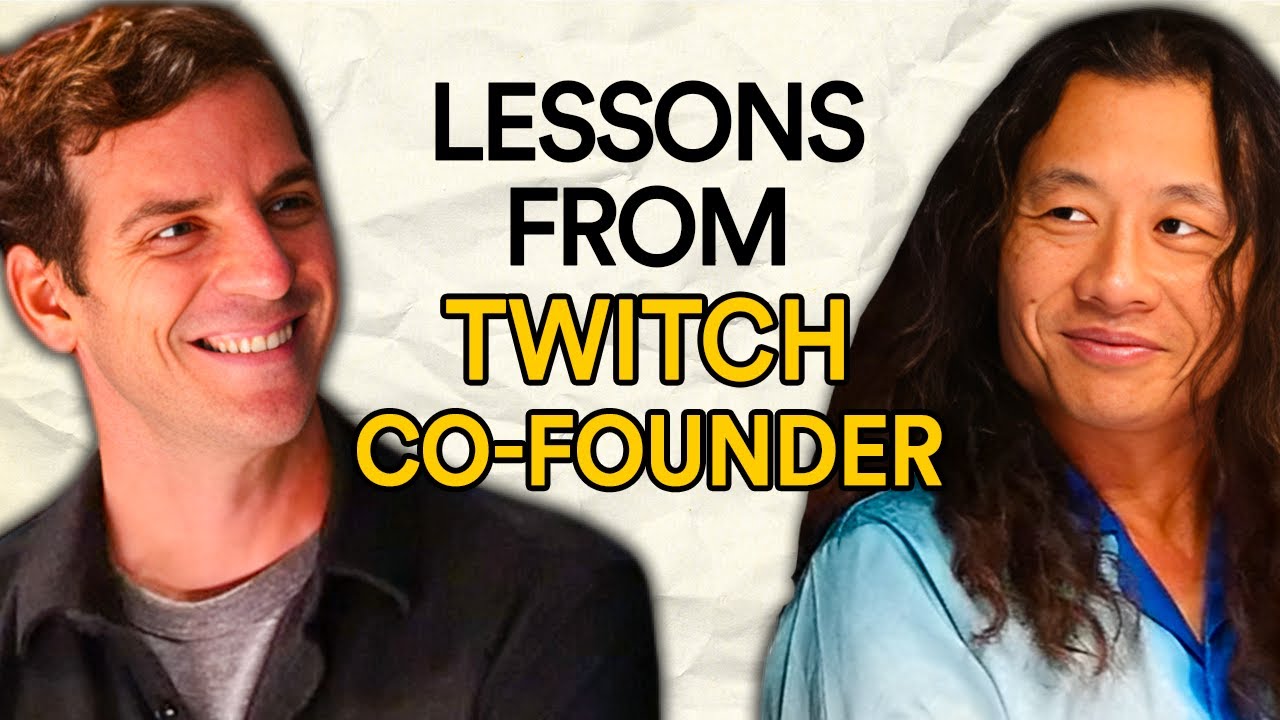
10+1 Lessons from Serial Entrepreneur Justin Kan

Justin Kan, who founded Kiko, Justin.tv, Twitch, Exec, and Atrium, talks about moving from consumer startups to legal tech, how repeat founders raise money and recruit talent, and the personal practices like meditation and ketogenic diet that helped him manage stress across 14 years of building companies.
Chapters
Hey, I'm Andrew Chen from Andreessen Horowitz, and today we have Justin Kan, who is one of our repeat entrepreneurs that we are very excited to be working with on Atrium. And so we're going to talk a bunch about what is it like to be a repeat entrepreneur. I think we were just going through the list. There's like 5 different companies on there. Yeah. And you've learned a ton from every single one. And so we're going to do a series of sort of compare and contrast across quite a number of topics. But as a very first step, I think it'd be awesome to have Justin talk about some of the companies that you've been involved in. And I know the company you were running when we first met, where you were running around with a camera on your head, was not actually even your first one. There's one before that called Kiko. So why don't you talk about Kiko first?
Sure. Yeah, so I've been an internet entrepreneur here for the last 14 years, since 2005. Our very first company was called Kiko. It was kind of like Google Calendar, but it came out one month before Google Calendar came out, and wasn't really that good, when I'm honest about it. And so that company didn't work out super good. We ended up fire-selling it on eBay after several failed acquisition attempts with Silicon Valley players. And then after we did that, we started another company. This one was even less well thought out than Kikko was, actually, which was, the idea was we would create our own live video reality TV show on the internet. I do think that tapped into several things that were in the zeitgeist that actually have become popular now, but unfortunately, we, as talent in our own show, were not very entertaining and not very popular, and so— We launched this live streaming show, we called it Justin.tv, Right. 'Cause I was the only one in our 4 founders who was stupid enough to put the camera on his head and be like, I'll make myself the subject of this show.
Right, and you literally wore, I remember you wore a backpack.
Yeah, so this was 2007, so it was pre-iPhone, pre-good cellular internet, so we had this computer in a backpack with multiple cell phone modem connections, hooked it up to a camera. So there was a camera, this computer virtualized the video as a webcam, basically sent it over to this server, and then we had this very hacky way of streaming it out to the millions of people watching. Actually, not millions, hundreds, but, you know, the people who were watching at home. They were following along. It was actually pretty fun. They could, you know, they could text. We put our number up there. They would text me, usually fairly offensive things, actually, but then eventually We launched this show, people started coming because they were like, what is this guy doing? This is crazy. They were like, you're very boring. I hate your show, but I wanna create my own live video stream, so how are you doing it? And then the light bulb kinda went off and we said, aha, let's create a live video platform. And that became Justin.tv, the platform. And then after that, you know, we ran that for a couple years, you know, condense it, 'cause it's a very long story, but we raised a bunch of money. Ran it for a couple years, hit the nuclear winter of video startups where all the other video startups in Silicon Valley died. We were pretty scrappy and survived on, like, a ramen budget. Eventually decided we needed to pivot to some new ideas, and from there we incubated a few ideas internally. One of them was a video app called SocialCam, which we spun off and eventually sold to Autodesk. And another one was a site that we, my co-founder really thought of, which was— What was it called? The idea was focus on, let's focus on the video game related video on our site. And that became Twitch, which, you know, kinda grew and grew and grew. We eventually pivoted the entire company to Twitch. My co-founder Emmett was the CEO of the company, and eventually sold it to Amazon for $970 million in 2014, about 5 years ago. Along the way, started some other companies. Started this company called Exec, which is in the errand running/home cleaning space. It was kind of like a Handy or Homejoy. We actually ended up selling it to Handy, which through an act of God sold to Angie's List this year. And then more recently, I'd been a partner at Y Combinator for a couple years, and then incubated a few companies. One of those was this video Q&A app called Whale. And then just fast-forwarding all the way up till the present day, decided I wanna really put all my eggs back in one basket. Precariously thrown around basket. And so I decided I'd start a new company. That idea was Atrium, which is a technology-enabled law firm for startups, really trying to solve all the problems that I had as an entrepreneur when dealing with legal, to make legal faster, more price predictable, more transparent for me, the business owner, you know, the business manager. And that's what we set out to do about 2 years ago. It's going pretty well. We're serving a bunch of startups here in Silicon Valley with with all of their needs, and it's been great, but I'm sure we'll get to that.
Awesome, yeah. Well, I think one place where I'm gonna start on this is a lot of the advantages of being a repeat entrepreneur are that you can raise more money, and there's more, maybe easier to recruit talent, and there's all these advantages that kind of come along with that. One of the disadvantages I find ends up being that, you know, there's, there's so many, like, distractions, right? Like, you could— there's a million different things you could do. There's a lot of things pulling at your attention. I'm really fascinated by, you know, your movement from going from YC and an incubator where you can maybe kind of dip into a lot of little things versus kind of putting all your eggs in one basket and trying to, like, start a company. Like, you know, talk to us about that, that kind of decision.
Yeah, that's a great— that's a great question. So once you become successful in some way in Silicon Valley, whether that's, you know, you've been an executive at a company that's, you know, rocket ship unicorn, or you've started a company, you know, the world opens up, right? People want you to be a VC, they want you to, you know, work on projects with them. You can start any company that you want, which is great, right? But then there's this paradox of choice, and focus can be a huge problem. I know for a lot of friends of mine it has been as well. As an investor, as a partner at Y Combinator, there were some parts I really liked. You know, I loved helping early-stage founders out and like really working with them on these problems that, like, I felt like for 5 to 10% of them, it was like life-changing, right? Like me helping them out in a way, I came up with some great idea or helped them at a critical moment that was life-changing. But then there was a large majority of them that probably could have been listening to a YouTube video of me or this podcast and like get the same information, right? Right, yeah. And so I didn't feel like the feedback cycle was fast enough also as an investor. And I didn't really feel ultimately, like, after the first couple years, that I was continuing to learn and grow. And, you know, I'm still in my 30s. I was like, I need to do something where I'm gonna be forced to grow. And really, the number one vehicle for personal growth that I've ever experienced in my life has been startups. Mm-hmm. You know, so I went back to what I knew, and I really decided that in order to grow as a founder, you know, we had a pretty big outcome with Twitch, and I'd seen a lot of different things. really grow to the next level, I would have to do something that potentially could be even bigger. And so I really felt like it deserved, that deserved my full attention. And so that's kind of how I decided. Right. I don't necessarily think it's the right answer for everyone, because what I didn't mention was that I had selective memory at the time, and I forgot just how painful starting a startup could be. And so for the first couple months of Atrium, I was like, oh man, this is a dream. I've like finally leveled up. I learned all these skills. I've like, I made it. As a founder. And then reality, boom, set in. And of course, there were— nothing ever goes according to plan. There were pains, there were struggles, and that was, you know, that's part of the journey. But then the good part is, of course, when you experience pain, that is a catalyst for learning. And so I really got what I wanted in the end, which was, you know, forced to learn.
Right, that's great. And I know one of the big differences among some of the companies that you started in the past versus Atrium, and something that you've talked a lot about, is you had this sort of succession of very consumer-oriented startups, sort of like watching other people play video games. Like, that's as consumer as you can get, basically, right? Yeah. And so, very interestingly, Atrium is a B2B thing. And why did you choose B2B? Was it just for novelty? Was it just to push yourself? Or did you— do you think that there's something different in mind that maybe takes advantage of some of your newfound skills?
Yeah, well, Twitch, I guess, is really the— it's like the ultimate consumption thing, 'cause you're consuming someone consuming video games.
Right, right.
For me, I felt like, maybe this was an analysis I've done retroactively, but I think I've had this discussion with a couple people who are multiple-time founders, and when you're an early-stage founder, you know, when we started Kikko, and then Twitch. When we started Twitch, we were like, or Justin.tv, it was like we were 23 years old, and we had no skills. You know, I'd never had a real full-time job in my life, and even though we were programmers, we were like new college grad programmers. We were not good. We were horrible managers. We basically had nothing going for us. When you have nothing going for you except for you're like willing to put in hard amount, you know, like long hours and a lot of blood, sweat, and tears, then you should focus on things that are like, where there's a lot of market risk, because ideas where there's market risk, you know, you can potentially win those, right? Yeah. Now, as someone who has, you know, abilities and skills, right, I've learned skills over the last 14 years, you wanna focus much more on like execution risk things. And so I felt like B2B startups, they're more about execution risk, I felt like this, you know, the legal market particularly was already a big market, and you just have to figure out how to do it 10 times better, right? And I felt like I had a roadmap for how to do that in my head, and so that's where, why I felt that this was a better use of time, 'cause, you know, some of the consumer startups that I'd incubated and played around with post-Twitch, actually, it was really hard to find product-market fit, right? Like, I don't have any advantage in finding product-market fit with a consumer app more than the 22-year-old Justin.
Right, you might have a disadvantage.
Yeah, I'd probably have a disadvantage, 'cause I'm, like, already more set in my ways, I'm, like, less in tune with the culture, I'm like, I don't know what the kids are doing. So, you know, would the Justin of today invent the Twitch of today? Like, I don't think so, right? Like, I'm an old guy now. It's game over for me.
I wanna unpack this market risk, execution risk thing, 'cause that's obviously, you know, it's such an important distinction, you know, but very colloquial, you know, kind of in our understanding of it. What do you mean by market risk, and sort of maybe new entrepreneurs can have an advantage in market, in tackling something with new market? How do you know, if an idea has a lot of market risk versus not?
Sure, that's great. So Twitch and Atrium are the perfect examples, right, almost. So Twitch, it's like, when we started, when we pivoted Justin.tv to Twitch, or even Justin.tv is a good example, but Twitch is the best one probably. When we pivoted Justin.tv to Twitch, nobody believed that there would, this was a market, right? No one believed, no investors, very few of our even internal employees, like, believed, and even the founders were skeptical. You know, Emmett deserves the credit here, 'cause he had belief, but like, a lot of the other co-founders were skeptical on like, does this exist as a business? And so, the good part is that the competition there was very low, right? There weren't experienced entrepreneurs being like, this is gonna be a huge business, we should compete. So really, it was, you know, the entire thing was market risk and figuring out, do we have product-market fit, and how do we build product-market fit?
'Cause in that case, you're trying to be the first in the category. There's no substitutes, really. You're like, it's like, you know, you're watching someone else play Street Fighter at the arcade. That's the substance.
Exactly. You have a lottery ticket, right? It's a lottery ticket, and if you pivot a bunch of times and, like, listen to your customers, you might be buying more and more lottery tickets. But your lottery tickets are just as valuable as the experienced entrepreneur's lottery tickets that he's buying. So he's a fool to play that game, and I don't think you see as many experienced entrepreneurs playing that same game. Whereas with execution risk businesses, my lottery ticket now is way bigger than the guy who's, like, the 22-year-old Justin, right? So for a B2B startup, I know, oh, I can attract talent, I can hire a sales team, I can, like, raise capital. And so it's a lot more— for something where it's, like, very established that that's gonna be a business, or some business is gonna be in there, it's like, he's stupid to play against me, you know?
Right, right, that makes sense. Well, you know, and I always find it funny that in the consumer startup world, that if you look at the last kind of decade of hits, if you were to tell people, oh yeah, the biggest hits are gonna be this app that lets you get in strangers' cars, this app that lets you stay at someone you don't know's house, an app where you swipe left and right in order to meet people on the internet, and an app that lets you watch other people play video games, you would be like, that's the craziest list of billion-dollar companies I've ever heard. Yeah. And yet, that is actually how consumer internet actually gets built. The ecosystem unfolds, which is insane.
Yeah, it takes a lot of people who have nothing to lose to discover those ideas, right?
Right, right, yeah. And so, you know, one of the things, one of the clear advantages in all of this is that, you know, let's talk about fundraising, and the decision on whether or not to raise a bunch of money out of the gate versus doing the kind of, you know, ramen profitable cockroach thing, right? That's sort of like one common contrast. And then obviously you had a very unique fundraising strategy as well. So maybe talk about that decision and then kind of how you ended up pursuing it.
Look, I'm not convinced that raising a ton of money out of the gate is the right strategy. You know, Silicon Valley is littered with dead bodies of these companies, you know, the Juiceros and the Kools, Like all these companies that have raised a ton of money, and then like they— when you have a ton of money, you spend a ton of money, right? Now there's other companies like the Jet.coms that, you know, they made it work. So, you know, I am not convinced it's the worst strategy ever, but I'm not convinced it's the best. But for me personally, you know, where it's an execution risk business, I'm too rich to like fuck around with the like, you know, okay, I'm just gonna do a seed round and like, and just, like, take a long time, right? Right, right. Like, for me, speed to market and execution was really important, and I felt also like this market really supported it and required it, because, you know, it is the legal space. There is, you know, a lot of value in making sure that the clients and the talent, the attorneys' talent, and other legal providers, like, think this company's gonna be around, right? So that's very important. And so, you know, this is a strategy. I don't necessarily recommend to anyone who can raise a ton of money that this is the right strategy, It's just the strategy that we picked. In terms of the tactics of like how we did our round, especially our Series A, you know, my idea was because VCs are kind of naturally adjacent to legal, right? Like, for example, when you fund a company, they need someone to help them on the legal side with all of the paperwork and the execution of that funding round. We felt like getting a lot of VCs on our side would be a good tactic, and so we ended up going out and raising money for our seed round of, over 90 different investors from all over Silicon Valley, because I felt like it would be really good to have those investors on our side and recommending Atrium as a channel partner. And so that was our tactic there.
Right. And I think it's something where, to your point, if something that you're working on is primarily execution, then that means that, you know, you can— there are times and places where you can use money to solve it versus— it seems like part of the market risk thing is it just, to your point, it sort of lets you buy more lottery tickets, but it may not accelerate the process of actually doing it, right? And so I think that sort of feels like one main difference. And then the other one is that, just to build on what you're saying, is that if you are in an industry where trustworthiness is really important, then being well-capitalized is key. Yeah. The same way you wouldn't, if you're gonna, for example, You know, build a fintech startup where, you know, you're gonna, you're gonna ask consumers to trust their money with you.
Yeah, exactly.
You know, like, you, you want to be legit, you want to be well-capitalized, you want to have, like, you know, super strong executives and board members and investors. And that's a strategy kind of that's a little bit kind of like self-perpetuating as well.
Yeah, that's a great example. If you're gonna build, like, a new bank, right, like an online or like a mobile-first bank, which is, I think, some people are doing, Would you want to raise, you know, $1 million, a $1 million seed round, or a $5 million seed round, or would you want to raise a $50 million, you know, Series A out the gate? Obviously, if it's available to you, you want more money, because you know people need banks, right? It's just a matter of, can you do it better, right? Right. That's a perfect example, and there's, you know, there's many others here in Silicon Valley. I think we've actually shifted more as the cycle has changed over the last 10 years, the tech cycle. We've shifted more to these execution risk startups. And so, You've consequently seen, I mean, it's a chicken and egg thing, really, what came first, but, like, you've seen these more and more, like, bigger rounds, I'd say, that are supporting these companies.
Well, you know, one of my— one of the partners here, Chris Dixon, has talked about the idea that, you know, if you have a set of problems that has not been able to get solved and improved in, you know, the 20 years of the modern internet, then maybe all the techniques that we pioneered in the last decade-plus, like being asset-light and just throwing software and just shipping really quickly and being really lean, like maybe those techniques don't work for a reason in healthcare and fintech and legal services and real estate and like some set of those things, right? Right. And so then very quickly you have to think, okay, well, if those techniques don't work, otherwise it would have, someone would have tried it already, it would have sort of, a little bit like efficient market hypothesis, what would've kind of like happened already, like, maybe you need a foundationally different approach. And so I think that is actually one of the reasons why there's more of these, like, quote unquote, full-stack startups that are going after these really, really difficult areas, 'cause, like, you know, otherwise you wouldn't be able to do it.
Yeah, well, we're running an experiment right now.
Yes, yeah, yeah, right, no, I think that's right, I think that's right. So, you know, one of the fun topics, one thing that I have a, tremendous amount of respect for you on is you're very, you know, you're always on the leading edge thinking about, you know, self-improvement, how to sort of, you know, your own, you know, personal performance at work, you know, at home, et cetera. And obviously one of the big things about, you know, running a company is that it is enormously stressful, right? Yeah. And so talk to us about, like, you know, when you were a first-time entrepreneur, kind of Kikko, Justin.tv, You know, how did you think about, you know, managing the stress of, you know, running a company, and what was your approach there? And then let's talk about kind of like the new and improved Justin now, you know, kind of 10 years later.
Yeah, so in the early days, you know, 10 years ago, I was not doing anything in terms of like improving myself. In fact, I think I used to think about people's attributes, maybe not your skills so much in terms of like, you know, your skills at programming or stuff like that, but more of like your your attributes, like, I don't know if you ever played Dungeons and Dragons, but right when you create a character in Dungeons and Dragons, you roll this, like, 20-sided die, and, you know, your strength, it's like 14, your intelligence, you roll it, and it's 6, or whatever, and that's what you have, you can't change it. Mm-hmm. And so I felt like people's attributes were kinda like that, and so I never worked on that very much, self-improvement stuff, outside of, you know, like, yeah, I became a better programmer, 'cause we were programming, you know? But I didn't work on things to, like, make myself, I don't know, smarter, right, or harder working, or like awake more hours of the day, or like alert more hours of the day, or anything like that. So it was very happen— you know, everything was kind of accidental. Like, we would, you know, I was not dealing with stress well at all. If there was a problem in the company, I would be very emotionally avoidant to it, or I would like drown my sorrows in like alcohol, right? Right. Which is not a very good coping mechanism at all. And then, like, you know, in terms of even just down to, like, what we were, like, eating at lunch, you know, we were talking about this earlier, but we would have, like, pizza every day at lunch at Justin.tv, and then I'd, like, fall asleep. Like, I'd go into, like, a carb coma in the afternoon. Yes, carb coma, yes. Like, every day. And so now, more recently, like, with Atrium, it's been a tremendous vehicle for my own personal discovery, because I experienced the stress again, you know? I was like, oh my God, it's stressful again. This is crazy. Why is it so stressful? So I started looking for ways to deal with that. And I really, I mean, I had a number of things that started working for me after I started really exploring it, a number of things that started working for me starting last year. You know, everything from, a friend of mine recommended a daily gratitude journal. Mm-hmm. So I've just been doing that every day, writing this gratitude journal, 5-minute journal. You write down the 3 things every morning that you're grateful for. And that seems like a very simple thing and kind of hokey, actually, when I first heard about it. But what I realized was it helps recontextualize all the ups and downs that you experience as an entrepreneur. Right. Especially, I mean, the downs really, like throughout the day, they're not as big of a deal because in the morning you're writing down like, oh wow, I have this opportunity. You know, I remember the day we came in and pitched you guys here. I wrote in my graduate journal, I get to pitch, you know, Andreessen Horowitz. That's amazing, right? Even whatever happens, that's an incredible opportunity. It puts me in the top 0.001% of people in the world with opportunity, you know? Right. So that was, like, pretty amazing, and then, you know, every day there's something, like, if you really think about it, there's so many amazing things that happen to you as a human being, you know, here in Silicon Valley. Even just, like, actually one thing I think in the morning oftentimes is, like, the supply chain, the global supply chain to deliver coffee from, like, around the world so that I can grind up fresh coffee in, like, a pour-over in my Chemex in the morning. That's amazing, like, if you think about it.
It's totally amazing.
Yeah.
Right.
So the gratitude journal really working for me, and then another thing—
Are you still eating pizza for lunch every day?
Yeah, so diet, another thing, I stopped eating pizza.
Entirely?
Well, I started eating a ketogenic diet, which is a high-fat diet, but really the reason for me is like, I just don't get as tired in the day anymore. And so that's been really helpful, and last year I did like some one meal a day, days, like 4 days a week. So I'm on this weird Jack Dorsey diet, Jack Dorsey light or whatever, but it's been good for me. You gotta do what your body feels like feels good. And so that's some diet and exercise, pretty religious about exercising, try to do something every day during the workdays.
Yeah.
And then the last thing that was really big is meditation for me. Started off just with Headspace. I'm not the type of person that people you know, assumed would be a heavy meditator or very introspective or anything like that, but for me, just like starting off with Headspace last year, and then now I've been doing Transcendental Meditation, which is kinda what Ray Dalio talks about in Principles. That's worked really well for me to just be more present during the day in my life. It's pretty amazing, amazingly profound effect.
I feel like your Twitter stream is part of your gratitude journal.
Yeah, I think, yeah.
'Cause I read your Twitter stream, and I'm like, oh, this is like very philosophical. You know, it's not like just pulling out like, oh, here's, here's a blurb from the latest S-1 or something. Like, you're like, you know, you're like sharing ways that, that the startup community can, you know, to think about themselves, right?
Yeah, the way I think about it is like, if you want something to be part of your identity, talk about it. If you want to learn something, teach it, you know? And I really believe that. So for me, putting out, you know, what I've been doing on the mindfulness side and for myself to be more emotionally kind of stable throughout the, throughout the days and weeks and months as a startup founder. That's been really valuable to me, so if I can spread that to other people, it's gonna help reinforce it as an identity for me, but it's also gonna hopefully help those people as well.
Right.
You know, one thing I've been working on a lot as well, last thing I'll say, is just working on realizing that your attachment now— in the very early days of Justin.tv and Kikko and all these companies, I had a huge ego attachment to the outcome of the company, right? Yeah. My identity and the company's were like very intertwined. And more recently I realized that was the same at Atrium actually. Like again, I was like creating that same pattern, but it was like, it's a very unhealthy pattern. So what I realized was I needed to start telling, reminding myself that no matter what happens with this company, I'm not gonna be any happier or any less happy in the long run. There might be a short burst of unhappiness if it fails or happiness if it succeeds, like, you know, Amazingly, but, you know, you're not gonna get any happier, really. If you're relying on outside things, external factors to drive your inner happiness, you will always be disappointed in the long run. Mm-hmm. And the funny thing is I've actually run the experiment, not an A/B test, but a linear experiment on that. Mm-hmm. Because we've had more and more success over time. Like, we started off, you know, really like paying ourselves, I think with Kiko, $1,700, $1,800 a month, but we only paid ourselves every other month. And so then we, you know, raised funding for Justin.tv, and we were able to make like a little salary. Then we became profitable, we made a lot more, and then we sold like one company, and then we sold a lot of companies. And so it like kind of ramped over time. And I, after, you know, the basics in, you know, the basics of Maslow's hierarchy of needs were taken care of, you know, I felt like I could go out to eat. I don't know if that's on one of those Maslow's hierarchy of needs, but after that basic thing, I could afford to go out to eat. Yeah. None of it, it never mattered. You know, it never made me sustainably more happy. And so just reminding yourself of that and trying to remove those attachments in your mind, it's easier said than done, but having that as like an active practice has been really important to me.
Let's talk about mentorship as part of that, right? So, you know, when you're building Kikko, Justin.tv, and you're a first-time entrepreneur, there's a lot of experience, kind of, you know, experienced people who are kind of like, quote unquote, ahead of you in the thing. And so that's fantastic, 'cause you can learn a ton. Yep. Would love to hear kind of, you know, who you thought of as your kind of lifelong mentors, people that, you know, have helped you for a long time. And then the other problem that's super interesting is, you know, then you start Atrium, and, you know, you've had some major successes behind you, and then in some ways, the number of people you can learn from is a much smaller pool, and sort of like, how do you kind of curate your, mentorship, maybe how has it changed over time? That's a broad topic, but would love to hear your opinion on it.
Sure, absolutely. So like the best part about Silicon Valley, in my opinion, is that there are people here who have done it before who are willing to help you. You know, that we would never have made it here even day one without people who helped us when it was like economically bad. You know, waste of time, we weren't like, didn't look like a hot prospect company or anything, right? So those people, Paul Graham, great example, founder of Y Combinator, Paul Buchheit, who's like a partner in Y Combinator, inventor of Gmail inside of Google. These are people who invested in us very early on, mentored us very early on, and helped us out. And that was, you know, pretty amazing. And really, that ethos perpetuates itself, you know, because then as a partner at Y Combinator, even to today as an entrepreneur where, you know, there's like lots of conflicting, competing interests for my time, I always make sure to spend a little bit of time mentoring other startups. Because, you know, it's kind of like a pay-it-forward thing, you know, you, and you, you do the thing that people did for you when you were younger.
One of the really obvious sources of mentorship is actually peer mentorship, right? And some of the folks that kind of came up with you at the same time, and, you know, ended up running, you know, really interesting companies on their own. And I know they all live in Duboce with you in San Francisco. You know, talk to us about some of your friends that you, that that you consider your mentors?
Yeah, so, you know, it's great to have friends who are kind of doing the same path in a lot of ways, but are one or two steps ahead of you, so it's still the case. You know, obviously Emmett, my co-founder, who's still running Twitch, it's over 1,000 people, you know, I think it's like 1,500 people or something like that. My brother, who's, you know, COO of Cruise, co-founder of Cruise, the self-driving car company, and they're like over 1,000 people, and like Steve, the founder of Reddit, you know, they're like 400-something people or whatever. And seeing what their problems are. Obviously, the problems are always the same, actually. The problems are always like, I don't have the right alignment among my team, and I don't have the right executive team. It's usually some variation of those things, but hearing it from the horse's mouth is super helpful in terms of making decisions for me. And then, even outside of Dubose, sometimes I venture into SOMA, and having some of those kind of early YC founders who have really made it, like Drew from Dropbox, for example, and just— Knowing, like, how do they think about all those things, executive hiring, et cetera, it's been really helpful to me. So luckily here in Silicon Valley, I have a lot of great resources. And the last thing I'll shout out is I have this new executive coach, Matt Mochary, who's, like, amazing. This guy is the guru. He mentors a lot of different fast-growing startups around here.
I just talked to him for, like, a 360 thing.
Yes, this guy.
That was great.
Incredible, highly recommend, can't speak, he's like changed my life. So I feel like he's an angel sent down from heaven to teach me finally after 14 years how to like manage a system, and I've learned a lot from him, so.
That's great.
Those are kind of 3 sets, you know, executive coach, the peer mentors, and then kind of those early-stage mentors that I had back in the day.
That's great. And I know one of the topics that you must end up talking about often is that when you're building something that has a little bit more just execution risk, you know, you have, you've raised, you know, some real money to kind of get started, a lot of it ends up being sort of like organizational complexity, company culture. I know this is a big, big, big area of focus for you. And that's something that is very different when you're trying to build something for the long run versus when you're kind of just trying to find product-market fit, and it's kind of like 10 people, and you're just like, is this even gonna make it? Like, let's not even work on this. Yeah. So talk to us about kind of how your approach has changed on building the company and your leadership style?
That is a great question, because it's something I think a lot about. So I had never thought before, a couple months ago, and this may sound stupid in a way, but I'd never thought, what is the kind of company that I wanna show up to work at? So 14 years later, finally thinking about it, but the real answer is, like, when you're a 22-year-old just starting your company, or you're in Silicon Valley and you're thinking funding rounds and exits, you're always thinking, what's the next milestone? Like, how do I just claw my way desperately, however it, whatever it takes, how do I get to that next milestone? It's do or die. And for some, you know, oftentimes it is do or die. You don't have the luxury oftentimes of thinking about like what kind of, or you feel like you don't have the luxury of thinking about what kind of company you wanna build culturally. And so I started Atrium actually very much in the same way of like, what are the metrics milestones we wanna hit? What's the next metrics milestone? What do we need to get to for a Series B or a next round of funding? And so, The problem with that was that a year in, I realized, oh shoot, I need to like, there are like a lot of things that I've neglected that are actually affecting our ability to execute. And the number one thing there was, what's the culture gonna be? People didn't know, like, what are we, what's the alignment aspect of like, what are we building? What kind of company are we? Who are we? What are we building? And then what's the culture? How are we being intentional about it? So, You know, we did a lot to work on that. Ran through a collaborative values process over a year ago where we brought the whole company together to figure out what we care about. And then more recently I've been thinking about, after, you know, a lot of this self-work in terms of making myself feel, you know, kind of consistently good every day and remove my attachments to outcome, I've realized, you know, there's a set of principles that I wanna implement at the company and that I think that execution will flow from those things, right? If we build a company that has high empathy for each other, where we have care for each other, where people are very collaborative, where we are, you know, people feel like the locus of control for what's happening is inside of them instead of outside of them, you know, things are happening through them, not to them, I think that all the execution will actually flow from that. You know, one of the things I never understood before, which I feel like I really understand now, that's saying that culture eats strategy, right? I felt like I had very good strategy with Atrium, but I forgot about culture in that first part of the company, and now I realized, I've, you know, kind of realized how important it is.
Right, right. So,
you know, one of the things I'll say that we're doing is recently I read this book called The 15 Commitments of Conscious Leadership, which is an amazing book, but it's really about building a certain type of company, what, you know, the authors call a conscious company. But I would center it around, you know, that locus of control question, like, do you have radical responsibility for what's going on in your life, in your company, you know, regardless of who you are? And read that book, and I realized this is the type of company that I wanna work at. You know, it's a company populated by team members who really believe in these sets of, you know, these principles. And so we're kind of going through a process of trying to implement that at our company. And really, culture is one of the highest, it went from something that I didn't prioritize to, you know, my top priority.
Yeah, well, and I think that's, it's really interesting because it's, because you'd started Keiko, like, out of school, right? Yeah. And so, unlike some folks who maybe, you know, they go and they work at Google or Facebook or something, and they maybe have a template for the company culture they wanna create, this is something that you kinda had to learn and adjust Right, yeah. Over many, many kind of iterations of various companies that you had built.
That's right, we had never worked at a place with good culture, or a culture, right? Because we had always worked at our own companies, so we were just making it up as we went along. When you're not intentional about your culture or type of company you wanna be, then you make your— the culture ends up being the accidental collection of good and bad choices and like personality quirks and good and bad behaviors. that your founding and executive teams propagate, right? And it's accidental, right? And oftentimes there's things that are not good behaviors that get propagated culturally. Right. And oftentimes there are people justify it because they're like, well, they conflate, there's the correlation with causation, right? They're like, because we, you know, have behaviors where maybe we're like a, low empathy company, let's say, but they don't call it that. They're just like, we make decisions based on like meritocracy, right? And they're like, but we're— but the best idea is gonna win. But then maybe that's like because that's, that's a behavior that they've propagated, but that might not be the real reason why they, they've actually been winning, right? Right. I think a lot of companies in Silicon Valley kind of just succeed despite their management, actually, not because of it. And what I mean by that is like the idea was so good That a bunch of 25-year-olds could run the company, right? That core product-market fit was so good, it was just a rocket ship, and then people were just trying to hang on. Now, eventually, I think they do figure it out, but oftentimes in those early days, I think it's actually quite, you know, not intentional and oftentimes not that good.
Yeah. You know, in our conversation today, we've talked about all the things that you've changed.
Yeah.
Right? You've changed, you know, from consumer to B2B. You've changed You know, how fast you fundraise, you know, there's been a lot of different changes. You know, is there anything that you feel like you, like there's a core that you're like, okay, there's this thread that I'm trying to do the same between all the companies, or is it just really like iterating very quickly and, you know, you're doing a lot that's different?
Well, I think that core ethos of, yeah, iterating quickly, you know, that's like kind of a YC ethos. That's something that we really did. carry on since the very beginning. Yeah. So speed was, you know, something that's pretty important. I think that really being helpful in the community, not just your startup, I mean, including your startup, but also the community of startups, that's something that we learned, behavior we learned from, you know, the early days of YC. And even like our community of friends who were founders who all became successful, you know, helped each other out. And then now today, you know, it's an ethos that we take to Atrium. to really build a company that's, you know, kind of for startups, by startups, that helps out these fast-growing startups. So that ethos is probably something that's pretty similar, you know, kind of similar to like what you guys have at Andreessen, right? Which is like, if we can be the most helpful in terms of providing these networks of services, that is something that is going to kind of pay dividends for us as a brand. Yeah. You know, that's something I've believed Personally, and then also at Atrium throughout my entire career. Right.
Yeah, I mean, as you know, one of the things that's great about the Bay Area is that it ends up being this very long-running, relationship-driven place where, you know, you meet people like— I mean, we met like 10-plus years ago, right? And that's the kind of interesting thing where there's many, many cases where you can work together. And so, you know, focusing on value creation as opposed to like, how am I gonna try to position myself to like capture the most value? Like, I think, I think that, you know, like that, that certainly runs, like, I think it's one of the very special things about the Bay Area.
Absolutely. If I think about where we're at, you know, where all these people who I, you know, saw in the early days, like 13 years ago, all these different founders, you know, these 2-person startups that weren't even anything, where they're at, their company might not have succeeded, but they have like created some value here in Silicon Valley by being in that ecosystem, being helpful, and then, you know, maybe becoming an executive at someone else's company, or becoming an investor, early-stage investor at another company that really worked. And so there really is like a feeling of, you kind of get out what you put into this community, and that's one of the things I really love about it.
How do you think about the idea that, you know, when you're first getting started, you're a first-time entrepreneur, there's low, there's kind of like low expectations, right? Mm-hmm. 'Cause you're like, maybe this'll work, maybe this won't work. People's expectations of you are like kind of low too, 'cause they're kind of like, I don't know, who knows? You know, Justin's off in San Francisco doing this thing. He's running around with a camera on his head, and it's just kind of a fun thing. And then now, several companies later, because, you know, also you've, you know, you've raised money, and because you've done a lot, et cetera, you know, the expectations must be higher. Like, how do you think about, you know, how do you think about those expectations, managing your own, you know, your own expectations around that, et cetera?
Yeah, well, I always think that every entrepreneur's expectations for themselves are very exceedingly high, right? If you're the type of person who was a PM or engineer at, you know, one of these FAANG companies, and then you're like, I'm gonna start a startup 'cause I see other people doing it, then you don't think, you don't go into it thinking, well, I'm just gonna create like a, whatever, something that's like a nice small business, right? You go in being like, I'm gonna raise Series A from Andreessen, and we're gonna be, you know, this product that just goes the next Snapchat or whatever. Mm-hmm. And, and so I think that like it's always a battle against your, your own, like, the kind of devil on your shoulder who's telling you you're not good enough, you know, you're not doing well enough, you could be doing better. And I think the way that you win that is battle is by really internalizing and realizing that whatever happens, you're gonna be fine.
Right.
And you're probably gonna be the same. You're not gonna be happier or less happy, actually. And now, most people do not actually successfully internalize that well enough, in my opinion. But it is true. I firmly believe it's true, and it's something that the sooner you start practicing that in your head, really, you know, feeling that and experiencing that in your, in your in yourself internally, then the happier you'll be. And that's not to say that a lot of people I come into contact with, like friends even, or people who work for me, are like, well, my drive, like that need to win at all costs, is my edge. But I really don't believe, I mean, maybe that's true for other people, but for me, I never found that to be the case. Mm-hmm. It's like, no, it was just like the kind of unhappiness that was created around it that would make it actually less sustainable for me to continue on, because I was always, you know, you can't, human beings don't wanna live in a high-stress, stay for too long. That's how you burn out.
Yep.
Right? So startups are not— I mean, contrary to popular belief, it's not a sprint, it's a marathon, right? There's these overnight successes. Twitch, right, came out of nowhere. 8 years from incorporating that company to selling it, almost exactly 8 years, right? So that is a long time. And in order to last a long time, you need to figure out a way that you are okay with what's going on. And what's going on is always gonna involve bad things. Like, things, you know, there's gonna be good and there's gonna be bad. So if you don't figure out a way that you psychologically are okay with that, you're gonna give up. And if you give up, you're never gonna see it to the ultimate potential that whatever your startup is can be.
Great. I'm gonna throw in kind of 2 last questions in here. One is, you know, What are you reading these days? Do you have any sort of recommendations, podcasts that you like? Kind of media consumption is kind of a way to learn yourself. Yeah. And anything sort of especially super impactful over the last couple years that you wanna reference?
Yeah, that's great. So, reading a lot, actually, 'cause I deleted all the entertainment apps off my phone, including the browser, and I locked it so that I can't install new apps, 'cause I was a total phone addict. That includes—
Wait, how do you lock your—
So you can lock installing new apps. You can delete the App Store put a passcode lock on it. And I gave my wife the passcode, or she put in a passcode. I don't know what it is. Right. So I can't—
this is like a parental lock.
It's a parental lock, yeah, exactly.
So I
don't have control over my own phone anymore, but the consequence of that is I read a lot more books, which is good. A couple ones that have been particularly impactful to me, number one is this book called The Untethered Soul. So this book changed my life. It's really about, the idea is that you are not the thing that you think you are. You know, most people go through life thinking they are the experiences that they've experienced, the thoughts that they have, or the emotions that they have. But really, you're just the observer of these things that are happening. And by creating, it's almost like you're watching a movie, right? Like a movie that has all the 5 senses plus emotions plus thoughts, so like a 7-dimensional movie of, you know, the Justin life, right? Mm-hmm. And I think that was a very important message to me to realize, like, and internalize that, like, actually these attachments, these things that I think will happen that will, like, drive happiness, like experiences or events or whatever, will never actually drive true internal happiness. Mm-hmm. So amazing book, The Untethered Soul, highly recommend it. Another book that I think made me a very, a much better leader was this book I read called Leadership and Self-Deception. Amazing book. The book, purpose of the book is really there's 2 ways to treat other people. Inside the box and outside the box, but really I mean like without empathy or with empathy, like treating them like an object or a person, right? And the idea, the fundamental idea behind the book is if you treat people like an object, number one, they don't like it, right? But the second thing is if you treat people like objects who are just there to fulfill something for you, right, like at work it would be like to hit some number or metric or whatever, do some job.
Right.
The problem is that you will lie to yourself about when there's negative situations about what your role is. You'll self-deceive. You'll say, oh, this person is 100% at fault and I'm 0% at fault.
Right.
And I found myself actually doing that a lot of times. I realized, you know, I felt like I was, you know, had a high degree of empathy for other people, but I realized that was for people who I felt like were performing really good, where my observation was like high performance. But I wasn't— where my observation, where my feeling was that there wasn't high performance, I felt like I would slip into this like low empathy mode. And the problem is that when you're in that mode, you don't admit what are the things that I have done. What, you know, Justin, what are the things I have done to contribute to that situation? So examples could be someone that put someone in the wrong job. Didn't give them clear enough criteria for success or failure, didn't support them with the right resources, right? There's many reasons why I could've contributed to some situation failing. And I found that, like, I would lie to myself in those situations. So, you know, that was a really important book for me. Those are probably 2 ones I really recommend.
That's great. Are you doing a lot of podcasts right
now? Listening to them?
Yeah.
Been listening—
Does that count as entertainment?
No, I'll listen to some podcasts. I've been listening to some of the Joe Rogan Experience. Nice. And that's probably it. I just listened to the one with Alex Honnold where he's talking about climbing, you know, so it was pretty interesting.
I'm gonna ask you the time travel question. So if you were today an enlightened repeat entrepreneur, to go back to yourself when, you know, you're 22, 23, just getting started, doing this thing, you know, what advice would you give yourself?
When I'm just getting started, you know, probably join Facebook. No, but the, maybe the real answer, I've actually, you know, I don't really regret any of the, like, economic choices or anything. I think I've had this tremendous opportunity to, like, build and discover these new things and build companies. I wouldn't trade it for anything. I think the thing I could have done better or, like, learned, you know, back then is, you know, self-improvement is a thing. You should probably, like, work on that. Maybe that's number one. The second thing would be—
Stop eating pizza at work.
Yeah, stop eating pizza at work. Number 3 would be, you should, you know, things take time. Like, don't be in such an, you know, it's not like a 1-year one-and-done, like, now you're a billionaire, you know? Like, if you look at the, let's say any sort of, like the Amazon share price or like market cap over time, right? It looks like even through like the last couple years, it looks like an exponential curve, right? Mm-hmm. And so, you know, if Bezos had been like year, you know, like 15, which is a long time to be starting a company, like, oh man, I made it, I'm done, like I'm gonna retire, like, well, that, you know, the company would look a lot different, right? So, you know, things take time, and I have to constantly remind myself that. I think humans, You know, here in Silicon Valley especially, but then human beings in general are wired to, like, always want the new, you know, look for the new thing. What's new? What are you— like, what's your new thing? Something that everybody's asking about in Silicon Valley. They're always, you know, that's a question here. Right. But the best entrepreneurs here, the ones who have created lasting companies and lasting value, they stick with their thing for decades, you know? And that's what impresses me most now, and I wish that I had kind of realized that, you know,
Before. Awesome.
Better late than never.
Awesome. Justin, thank you for coming by.
Yeah, thanks for having me.
Really good discussion.