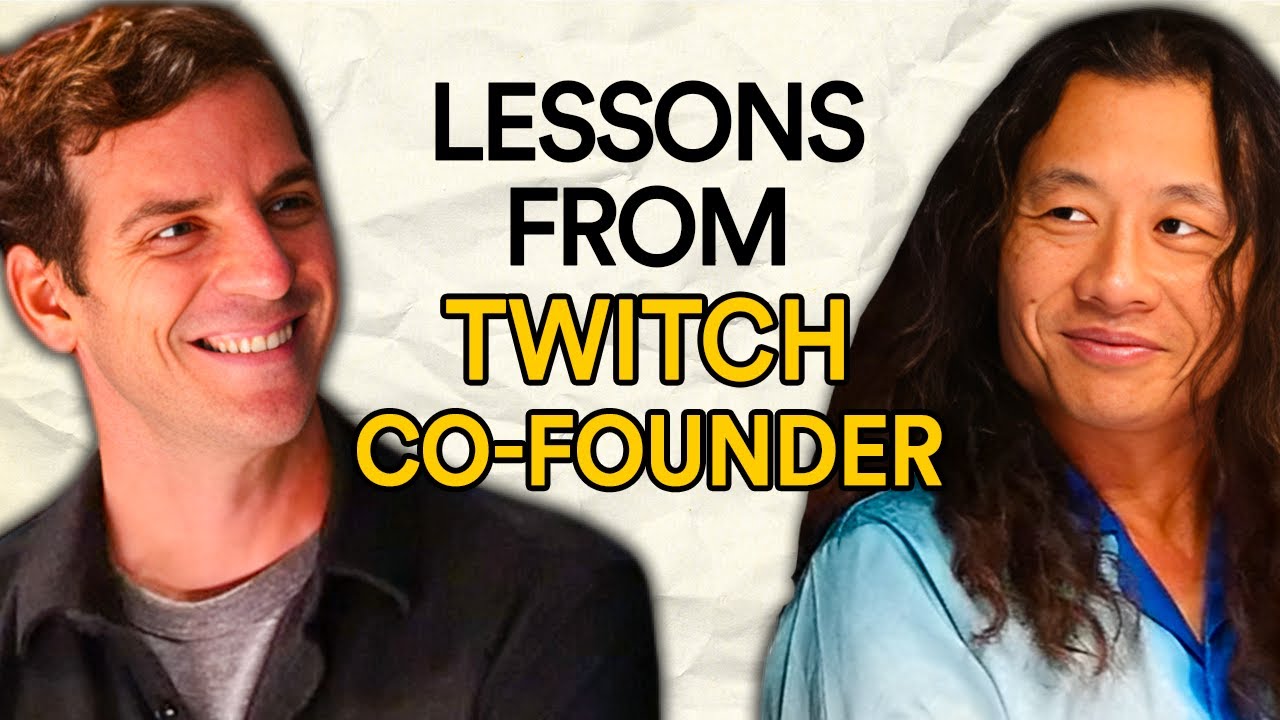
Failures & Lessons with Twitch Founder and former Atrium CEO, Justin Kan
In this podcast episode, James Bachara interviews longtime friend and serial entrepreneur Justin Kan, discussing his current projects, his formula for starting companies, and the evolution of his personal philosophy. Justin explains how he now approaches entrepreneurship as a creative learning exercise, focusing on his "zone of genius"—storytelling, fundraising, recruiting, and coaching—while partnering with co‑founders who handle product and operations. He recounts the creation of a high‑end non‑alcoholic sparkling wine (Woody's/Le Petit Victoire) born from his decision to quit drinking, illustrating his "manifestation" approach of talking about ideas to attract collaborators. The conversation delves into the importance of storytelling for attracting investors, employees, and customers, and how it serves as the glue that binds a community around a mission. Justin reflects on his past insecurity after the Twitch exit, the limits of external validation, and the shift to a secure, intrinsically motivated mindset. He shares coaching insights for founders: prioritize core metrics, challenge assumptions, avoid mismanaged expectations, and recognize burnout signals, recommending sleep, exercise, and purposeful work. The episode also includes audience Q&A covering founder‑market fit, manifestation techniques, burnout mitigation, and a pitch for a novel grounding material. The interview concludes with thanks and well‑wishes to the audience, reinforcing a tone of gratitude and camaraderie. Throughout, the tone is conversational, reflective, and occasionally humorous, with a sentiment of candid optimism and measured skepticism toward conventional startup wisdom.
Chapters
So we're here. I am James Bachera, co-founder of Magic Mind, and I know that many of you here are really here for Justin, but you all get free Magic Mind and I hope you enjoy. And really, the reason that I'm here too is the chance to chat with my good friend, Justin Kan, who is— we've been friends for 12 years or so and By way of introduction, Justin is a co-founder, creator of many things. And I say things because it goes so beyond just building companies. But the companies that we know him for, Justin.tv, that became Twitch. You got Exec, Atrium. You have what he's working on right now, Stash, and other cool things like a music label or one of the most— Ornate design cars and all of Burning Man. So a bunch of just really cool creative endeavors we get to chat with Justin about. Every time that I chat with him, it's always a new cool project that pushes my thinking, like the thing I just heard about 3 minutes ago, which we won't mention, but at least I'll try to get you to mention it, but it's okay if it's super under wraps. But seriously, probably the most creative mind I get to work with on a day-to-day basis because he's also an investor in so many great companies, greatest of which being Magic Mind. And we get to work and build Magic Mind together. So without any more delay, welcome Justin to the Magic Minds Podcast.
All right. Thank you. That was an amazing introduction. You just listed all the companies that I failed at building. So thank you.
Thanks for that. Well, that's actually one of the best things about our conversations is that you're so open about what building is really like. And so much of it is just trial and error, and so much more error than, than maybe anything else that people see in a highlight reel or they see in, you know, a headline. There's so much, so many mistakes made, so much failure involved in innovation. So we'll definitely chat about that tonight. But right off the bat, tonight on this beautiful Thursday, what are the things you're working on or taking that takes up mindshare and all of the different things that you're kind of creative mind touches on this literally like this week in October. What are you thinking about most these days?
I'm thinking about a lot. Like, so I have all these different companies, which I now have a formula of like how I like to start a company and like with what type of person. We can talk about that or people. So thinking about companies and thinking about music, a lot of music. I know you're making music. I've been making some music too, and So thinking about that and thinking about my Burning Man community, we got to get you out to Burning Man.
I would love to come.
Yeah. And building all—
Now that I'm done with all these little kids, then we got 3 and now they're essentially self-sufficient with the youngest being 2 years old, so I can come now.
You're ready? They're ready to leave, leave for college. Yeah, so thinking about all those things, I don't know, we could talk about anything you want.
On the first one, you meant— you said formula for building new companies and we'll kind of Tarantino style, start with the end, you know, the today side of things. But then we'll, throughout the conversation, go back to things that might have been from 10 years ago or when we first met. But starting from the here and now, what— when you say you have a formula of designing and building companies, what is that formula?
Well, I should say, like, I, you know, my goal now for me in my life is to just follow my interests and what I'm excited about, and that's— they're pretty wide-ranging. So generally when I start a company, like entrepreneurship for me is a creative pursuit. I really love learning about things and learning about the world and trying to figure out what could, you know, someone could make in the world to solve a problem or fill a need. And so usually it starts with like being really curious about something, some space or some product idea or something like that, and then trying to figure out how I— how do I learn about that? And the way I've historically in my past been able to learn about it is by starting a company or project or something like that. And so usually when I'm doing that, I'm not thinking like, oh, this is a really good business necessarily, but like just I'm really interested in learning about it. And so then I, in the process of learning about it, usually talk to people about it like, oh, I have this idea, I'm like trying to learn about it. And I meet a lot of people and try to learn from them. And eventually maybe there's some people who I really vibe with and I'm like, oh, maybe we can build something in this space. Usually that happens through like— I'm like a really good manifester. Like people, my friends say I'm the number one manifester, which I think is true.
I would agree.
Yeah. And so I'm like, you know, people just show up and then they're like really talented at things that I want to— I'm interested in. And then we like figure out how to build something. And so Then I really— I know in this point in my life, you know, I'm 41 years old now, um, it was as old as fuck. And so, I mean, when I was starting off, I thought— we hired someone, I remember he was like 35 years old, and that was like 10 years older than me when I, you know, we were running this company Justin.tv, that company that turned into Twitch. And I was like, how is that guy still alive? You know? And now I'm, you know, well, well, he's senior. So, um, Now in this point in my career, I'm like really I know what I'm good at and what I like to do, and I just want to do the things I'm good at and what I like to do and not do the things that I don't like to do and I'm not good at. And so when I start a company, I try to partner and focus on the things I'm good at and then partner with someone who fills that other part, you know? And so, yeah, we could talk, talk about that. But like, you know, an example of this is like I quit drinking 5 years ago. And so I, you know, that was— drinking was like really fun but not really good for me. I tried it every kind of way, you know, like I think we've talked about this before in a previous podcast. And, you know, it just wasn't good for me. So I eventually quit. And then, you know, I— after a couple of years, I was like, wow, there's nothing to drink. You know, if you're not— if you don't drink, there's like water. That's like fucked up. There's only water and soda water. And now, you know, in the last couple of years, there's been a few more drinks. But I really loved nightlife and like going out and fine dining and stuff. So I was like, I want to make something that I can drink when out. And so I just started kind of brainstorming. I was like, why doesn't there someone make a high-end— you know, there are these dealkylized wines and champagnes at the time. And I was like drinking one of them. I'm like, I actually ordered every single one that I could find and they were all terrible. I was like, why doesn't someone just make a high-end good non-alcoholic wine or champagne. Um, and so I had this idea and I had no idea how to make it, right? Because I'm like, my background's in building websites and apps and shit. And so it was like, I just had this idea and I was kind of talking to people about it, and it turned like this guy I met at a party 6 months prior texted me out of the blue. Like, we just had a connection at this party, we vibed, we talked about doing mushrooms or something like that. And then he was kind of going through a life transition for himself, and I guess he thought that I was the person he should text. Like, with no context, he just texted me. And I was like, hey, you're like— you've been a winemaker for like his whole career. He's like a wine product guy. And his family's like a multi-generational winemaker. They live on a vineyard in Healdsburg. And I was like, Woody, like, I have this idea for this product. And I'm describing like, you could make a high-end non-alcoholic champagne. This is a more growing market. People are drinking less. This is 3 years ago. So the market's kind of grown since then. And he's like, oh, I could make that product. And so then like the next week we started a company and now you can buy the product. It's called Woody's. We have a couple of products actually. One's called Le Petit Victoire, which is a French import, nonalcoholic sparkling wine. And then there's one that's California, a California brand called Woody's. And it's pretty good. I think it's the best non-alcoholic sparkling wine product.
Where can we buy it?
In LA, I'm not sure. In the Bay Area, you can buy it in Buy Right. We just started signing— just did a bunch of— they're our biggest month ever and partnered with a bunch of distributors. And so I should know this, but in LA, I'm not sure exactly where you can buy it right now.
Well, you mentioned that there are areas that you're good at, you know that you're good at, and there are areas that you know that you're not good at. What are, if you were to articulate, the areas that are your kind of zones of genius that you try to stick into? What are those zones today at 41?
Yeah, so I, I'm a really great storyteller and I love storytelling and I love people and I'm evangel— my personality is very evangelical. Like when I'm excited about something, I really try to tell the people around me. And so I like doing all the things that involve that, those skills and personality traits, right? So like for me, like I really love all the things that involve storytelling and that's like fundraising, recruiting, because you're convincing people to join the company, sales, like executive support on sales. So like coming in and telling people why they— this product is good for them or helps them in some way. And that's what I try to stick to. And then when I partner with someone else, I'm usually trying to find someone who's going to be in charge of the product and the product development and then also wants to be the manager of the company. They want to be the CEO of the company. And I'm also really good at coaching and I love coaching people. And so I'm like, I'll be your co-founder and your coach and kind of help you become the CEO that you want to be. And I'll be, you know, the other guy. I'm really good at being the other guy.
Well, I'll say you have a very unique— there's a handful of unique talents that you have, but in that zone of genius of helping craft, construct, work with founders, you have a really interesting— there are people that are great storytellers, but Talk all the time and aren't great listeners. They come in super headstrong with an idea. When we're chatting about anything, Magic Mind, dude, you're in listening mode more than maybe any other investor that we work with. I don't know if anyone's ever told you that before, but you're a phenomenal listener as well as someone that can impart great insights and advice, but it's rare to find someone that's a good listener as well. I It's obviously so needed.
Thank you. That's a, that's a good observation. I think I am a good listener, and I think I come— whenever I think about like a problem or learning about a new space, like most of the companies I start, I don't know anything, you know? Like, I really don't. Like, I didn't know anything about wine or wine product. Most of what I know about even creating a CPG beverage comes from being on the board of Magic Mind, right? So I don't really know anything. And I mean, this company's not far from being super successful yet, but we're selling it. People like it. So when I come in, I'm usually coming in with a beginner's mind because like I really haven't done it before. And actually, I very rarely do. I start another company in an area where I've been successful just because it's like I'm not that interested anymore. Like once I like learned about it, you know. So for me, I'm like always coming in with a beginner's mind and like listening is really important because you're learning about what, you know, what is going on. And I don't think I'm the expert. Like, I know about certain things with company building and how to coach people and hire people and do goal setting and stuff like that. You know, those are maybe common things that are shared across companies. But, you know, when it comes to the subject matter of most companies, like, I don't know anything. And so I— and I know I don't know. And so I like try to approach things with a, you know, in order to solve problems, you have to like learn about like what the thing is and then maybe, you know, spend most of the time listening and then some of the time like saying what you think.
Let's see. Yeah, it seems obvious, but so rare to see someone that's listening, taking in data, then providing insight versus like, all right, you're 7 words in. I've seen this before. Boom, boom, boom, boom. This is what you need to do. And, and then founders so often will run with it. They'll be like, well, you know, that founder's been there before, that investor, that advisor has been there before, and we ought to do that. But yeah, it's a huge testament to that curiosity as well as not coming in with some strong agenda. As well as the, I guess, insight to know, all right, just be in listening mode 75%, 80% of the time.
Yeah, I think when you, when you have authority, you know, you have experience, you're older, you're successful, then you do have an obligation to like be careful what you say, you know, because I have been in the case where I've said something like, oh, we should do this. And I really meant like, oh, maybe this is an idea that we should explore. But then people sometimes like take it and they're like, oh, we need to do this, you know? And I'm like, I don't know, I just said that as a There's just something— it's just something I said, you know? And I've noticed that happening more and more as, you know, I've kind of— do have more authority and experience, you know? And like, if you— if you have mismatched— like, if your conviction is here but you're— the way you say it is here, you know, then like it could lead to some weird, uh, negative decision-making, you know?
Yeah. Well, and— and a lot of the things that we might talk about, um, in this conversation before we open up for— for Q&A, there's a whole lot of nuance in it. Like even that nuanced understanding or the nuances that I want to jump into more around zone of genius and even that kind of way of operating and knowing what you're good at and finding partners to collaborate with that are in the other areas. There's a lot of nuance there. One of my favorite tweets you ever wrote was, first-time founders obsess on product, second-time founders obsess about— People. Distribution. So much nuance in that. For founders that are listening, for early-stage employees that are listening to this, I'll try to highlight the nuance of like, you could hear it and then think like, oh, that's kind of like a superfluous point. And it's so freaking critical that 15 years of building startups, I listen to the nuance things that you're saying. I'm like, damn, I need to do more of that. Or, God, that's the first time I've heard it articulated. Yeah. Like the second-time founders obsessing over distribution, which I'll touch on here in a bit. But just on that point, do you mind speaking a little bit more about Zone of Genius and how you even came across this framework of like, okay, I'm okay with just working on these little areas that I'm great at? And could you also talk about the importance of storytelling? Because that's one of those nuanced things where I feel like when I was a first-time founder, I'd be like, Yeah. Storytelling, that's like 2% of the equation. Um, that's not that important.
Yeah, well, let me first talk about that tweet because I actually recant that advice. So, you know, I think it sounds really good and there is a truth in there, which is like, you sh— when I started my first company, I didn't even think about distribution at all. It just happened that we were building on the internet where the distribution is really— there like were new and novel forms of distribution that really benefited Justin.tv and Twitch, you know. But, and so we accidentally like kind of won that. But the, I think the truth is you need to have a good product, otherwise you're fucked. And so like I had a company when I tweeted that, I was like working on this company, Adream, where we didn't fundamentally have a differentiated product that was good enough. And so like the distribution, even though I think I had like really great ways to do distribution, like the product was not good enough. So I mean, it's probably the true thing is more like second-time founders obsess about distribution and product, which doesn't sound good in a tweet, you know. But anyways, going back to what you were saying is like the, the, um, with, uh, the zone of genius, like I think I learned about that concept. I think we talked about this the last time we had a conversation.
We have, and I love talking about it then. I've chatted about it with people since, but you were the first person I chatted about it with.
Um, but I had a coach, his name is Matt Mochary. He's a very successful startup, um, CEO coach. I think he coached like Sam Altman and, you know, Brian Armstrong from Coinbase and Steve and Naval. Yeah, like tons of people. And he was— he introduced me to this concept. I don't think he invented it. I think he learned it somewhere of a zone of genius, which is like what's the intersection of the things that you're good at that give you energy? And most people end up in their zone of competence, the things that they are Good at, but take away energy from them. And I think it's really easy for people— I have like lots of friends who end up mostly doing things in their zone of competence because those are the things that they have— feel like they have to do that are left over in their company where like since they're probably one of the most more highly competent people and they're in charge, they're like, I have to do this. Nobody else is doing it. And then they end up doing it pretty well so that, you know, they continue doing it and they end up with a— bucket of tasks that they're good at, but they don't like to do, that take away their energy. And eventually they burn out and they're like, fuck, I got to sell this company, or I want to quit, or hire a new CEO, or whatever, because like I don't like it. And so the alternative that Matt kind of proposed is that you should only focus on your zone of genius and basically enumerate the things that give you energy and that you enjoy doing, that you're good at. And then just do those things. And then all the other tasks you should try to outsource— the wrong word— but assign them to somebody else who is that— for whom that is their zone of genius. Because like the zone of genius for every person is different, you know, like there are lots of people who do love doing the things that I like don't like to do. And I'm not—
Isn't that wild? I feel like it took until I was 30 years old that I realized people are different.
Yeah, it's very surprising.
I just thought everybody would want to do that or everybody would hate doing this, so I better do it. Jump on the grenade. And then you find out like, no, there are people that you open up an Excel spreadsheet and their eyes light up. Like, I'm so glad the world is built with people like that as well.
Yeah, it's crazy. It's crazy. We just hired a head of operations at one of our companies, Rye, who's really amazing. And she loves to do, you know, she told me during this kind of onboarding interview process, she was like, oh, I just want to like work with people who are visionary and provide the vision and like execute on the operations. I was like, you should join this company, please. Yeah.
Do you mind talking about the nuances of why you say storytelling is— maybe not exactly why you say it's a strength, because I think that that's self-evident if people have followed you for any amount of time, but what is the power of storytelling? Because like I said, 15 years ago, first company, I would have been like, yeah, storytelling, that's something you like slap on and maybe that's 2% of it, but that's not as important as the product, the code, the distribution channel. Do you mind talking about, from your vantage point now, how valuable, how critical storytelling is when building something?
Yeah. Well, you were always a good storyteller. I remember that's why I invested in your company at like a whatever uncapped note or something, because I was really believing in the story that CrowdTilt was going to be the— or what became Tilt was going to be the future of payments and like how people shared and sent money.
Which it didn't become, by the way.
Yeah.
Buried the lead there.
Maybe that was, you know, but it's subconscious. Maybe are you like a natural storyteller? They kind of developed those skills in like your youth, but they translated to your company, you know. I think storytelling is really important because people want to be part of something. Like, it's human nature. They want to be part of something. They want to, whether they're an investor or an employee or someone writing about your company or a customer, you are explaining and painting a picture of how the world looks, like the future world could look, and what their place is in it, you know? And that applies to all of these different things, you know, interactions that you have inside the context of company or outside the, you know, outside the context of company and music and art and many other fields. And so I just think it's like such a critical skill set. People don't really think about it, but everyone has to do it if they want, or somebody at every company has to do it in order to make that company successful.
Yeah, it is one of these things where, um, I'm sure you see it as a, as an investor as well. You, you can see something special, but you, if the story isn't there, one, you've got to do so much just inner math, like mental math, to figure out, okay, what is the story that's being told here? But, um, one of the ways that I think about it is Like whether it's customers, like you touched on, customers, co-founders, employees, re-recruiting employees. Like if it takes 11 minutes before you realize what this founder is building, 15 minutes before you figure out, oh, this is kind of what they're building, how many conversations will they have with people before they check out at minute 3, minute 4, minute 5? Or said another way, how many conversations could someone have after an event like this where they talk about it and within 2 minutes they're hooking someone And to be a part of what they're building, whether it's just a fan, whether it's a customer, a co-founder, an investor. I mean, it's— you are trying to gobble up as many people to be a part of your mission as possible when you're building something. And storytelling is the glue to gobble them up. It's not like— you could have a graph going up and to the right, and yet people want to feel like they're a part of a story, not just a part of just some machine. And man, it's— It's so— I feel like I'll invest in something if someone's a great storyteller, when I feel by minute 4, minute 5 of talking to them, like, fuck, this is a great idea, man. Am I doing the right— maybe I should join this founder. Like, and if I don't have that, then it's one of these things where I'm like, okay, I don't have that feeling 5, 10, 15 minutes in, and I have a feeling everybody that they try to recruit is not going to have this feeling. or re-recruit or fundraise from. So it really is the glue to bringing the hundreds, thousands, who knows how many people you need to bring together for your company, to bring them together is that storytelling. If you go back to you at 26, 15 years ago, how would you compare and contrast your approach to building today to that person back then that didn't know about Zones of Genius, that maybe fell in the Zone of Competence? What did that person look like? young Justin Kan look like? Um, and can you compare and contrast the styles that now with this experience, maybe some of the things you'd never do, or some of the things that you did back then that you'd never do today?
Well, I mean, the major difference between then and now is like I'm a secure person now.
Tell me more.
Back then I was not a secure— you know, I was a very insecure person, or not maybe very, but like not that secure. Like For me, you know, back then I was like, oh, I, I was motivated by extrinsic circumstances and goals. You know, I was like, oh, I need to be somebody in the world. I need to be successful. I want to have a big company. I want to be a famous founder because I wanted to achieve those things because I thought it would like heal the problems that I had when I was a kid, you know, and give me something that I didn't have that I needed in the world. And that led to a lot of like me tying my ego and identity and a sense of self-worth with what was happening in the extrinsic world, you know, in the out— in the outside world, uh, which is not that great because you don't control what happens in the outside world. So it could be good one day and then you feel great, and it could be really bad the next day and you feel like shit. And then you probably— that haven't like iterate that over, you know, a thousand times, and it's like very thrashy. Um, so, and then now, you know, today I'm a secure person who really doesn't need the outside world to deliver me anything. And I just do the things that I like to do. And I'm blessed by God that those things make money. And so then I, you know, I mostly enjoy myself.
What would you say to a listener that is like, well, of course you're secure. You sold a company for $1 billion. Like—
No, but I mean, the thing is like—
And I know because we're close friends, I know that the real answer to this, or at least I can guess, But yeah, what would you say to a listener being like, oh, okay, I need to become more secure. Oh shit, I gotta sell a company for—
Well, okay, you know, obviously that helps, but not in the way that you would think it helps, because you see that it doesn't make you secure. You know, there's so many people who are very successful that are clearly insecure about, you know, the outside world delivering them things or what people think of them, etc. And like, for myself, I became, you know, I became a successful founder on by anyone's view from the outside world. And then I was like, wait, I don't feel any different and I need to be more successful. And I was comparing myself with my friends who are, you know, created decacorn companies and much bigger companies. I was like, oh, I didn't do well enough. And so I started other companies where I was like—
Did you ever think you'd have that feeling? Like, that sounds so— Well,
it wasn't like— it was more— yeah, I wasn't really thinking about it when before I was like just thinking, oh, I need to make this company successful to survive. And then we made it successful, and then I was like, oh shit, I need to make it more successful or make another company. So like I would say that I, you know, it's kind of like I proved to myself that, oh, how just being successful doesn't make you secure. And I think you can see that all over the outside world. You know, you can look at like many thin-skinned public people and just observe that they seem very successful by any measure, and yet they seem very insecure.
Do you mind if I mention 2 things you told me in confidence and told me not to mention anyone ever? Is it okay if I mention those things?
Well, I don't know what they are. It sounds very subtle.
2 of the 10 times you told me that. So it won't be all 10, but 2 of the things.
All right, let's hear it.
One of which was that I reflect on that— now you shared this publicly, but that I reflect on often. One is a small thing. And then one is much more impactful, I think, of a reflection. But the first one is before you all sold Twitch, I think you said months prior you were trying to sell stock for like a quarter of the amount that you sold it for and you couldn't even find a buyer.
Yeah, that's just because investors are very fash— or like herd-driven. And, you know, what's— there was like— it wasn't a hot area. You know, people weren't like excited about Watching people play video games.
Well, that's just a soundbite for any creators out there that are like, man, no one values what I'm doing. People don't value it like I do. And then 3 months later, you were able to sell it for 4 times more and one of the— I think the biggest acquisition in the entire year. So in the face of people not believing in you, a few months later, all you need is— especially in entrepreneurship, all you need is one Mega believer, and it proves all of the doubters wrong. But the other and more impactful reflection is on— I think you mentioned that maybe a month or 2, 2 months after you sold Twitch, you couldn't get out of bed for like 3 days or so. I can't remember the exact details, but maybe if you wouldn't mind sharing just that Trough of insecurity in the face of external material success? Um, in a specific example of just the
mental health
side of things.
Yeah, I think, I think there was a moment where I was like, oh, what's the point now? Because I had kind of had my whole, you know, I'd started a company when I was, uh, my first company when I was in 2005. So it was like 22 years old or something like that.
Kiko?
Yeah. And then I was— after that, I was just starting these companies, trying to make it as a tech founder, you know, and be successful. And then I achieved that and I didn't feel any different. And I was like, well, now I don't— like, my life doesn't really have a point right now. And so I remember asking one of my friends who's like older than me, you know, has been in Silicon Valley a long time. I was like, what's the point? You know, what's the point of life? And he was like, oh, you have to make your own meaning. And I was like, what the fuck are you talking about? So then I just started another company to try to make it like a bigger company, you know, which is not the right answer. You know, I failed that test.
Well, yeah, keep going. What have you discovered on that front?
Yeah, well, I think you need to do things that are meaningful to you, like intrinsically, not extrinsically, right? Like getting more dollars in your bank account. I mean, if you are starving, then yes, you have like a real motivation. to like go get some money. But if you— most people are not starving. They're mostly, you know, mostly you are fine. And so, you know, then people focus on these extrinsic goals, you know, like that are built into society, like building a bigger and bigger company or how many dollars you have in your bank account or, you know, what level you are at a FAANG company or whatever, you know, and trying to get from L7 to L8 or something. I mean, that even sounds like a made-up arbitrary video game, you know? Yeah. And so those are all fake.
The Greeks used to talk about going from L7 to L8.
Yeah, I know. I think that was— yeah, Plato wrote about it. But that's—
It's the internal employee hierarchy at Facebook for people that didn't know.
Yeah. And so the point being, those are all not very meaningful to people and the success is very transient. When you get that, then that's just about what you are and then your expectation. And then there's like, oh, how do I get to L9 or whatever? And so, you know, for me, a lot of it was shifting to what do I love to do? Like, I love storytelling, right? Like, so how do I just have a job where I get to do storytelling? I think, how do I have a job where I get to do storytelling all day, right? And the way I think about it is if all the things I was working on, they failed tomorrow and none of them made any money and nobody ever knew about them, would I feel like today was wasted? That waste my time today? And if I— the answer is no, then like, okay, I'm on the right track. Yeah. And so, and I feel that like I do a lot of things, like I try to recruit employees for different companies, right? I'm talking to employees, potential employees, recruits, and I get excited and I can feel myself get excited telling them about the future of this company and the successful, you know, the potential of being a success. And a lot of them don't join, you know, because it's like that's the nature of recruiting. But I'm not like pissed off about it because I got to like share something in a way that I am enthusiastic about. And so To me, that doesn't feel like a waste of time, you know? So I just try to work on and do things that are exciting to me. Mostly that's the things we talked about: learning, storytelling, coaching people. And then I really focus on my relationships, you know, my close personal relationships. And what I found is like, as I focus more on my closer personal relationships, I gave a lot less of a shit what people thought about me on the internet. And it's a lot better for me.
Yeah. On the— well, I want to round out the younger Justin versus Justin today, 15, 20 years into building things. And then I want to touch on coaching and themes that you see as you're guiding other founders. And then we'll open up for questions. But what ways does that insecurity manifest itself? In a younger founder, maybe specifically to you, what were the ways that that insecurity manifested itself outside of the initial goal of like, I'm going to build a massive company, I'm going to become super successful and, you know, go back to high school reunion and show everybody? What are the ways that it actually manifests itself day to day? I
mean, I think it's like focusing on a lot of things that don't really have anything to do with whether your company is successful or not. You know, like how much money did you raise? Or like, did you raise it from the most brand name investors? Or do you have a lot of Twitter followers? Or do a lot of people like share the news article that you work really hard to get some PR agency to plant in someplace? You know, or like, are people retweeting your random tweets about startup stuff? You know, so all like pretty meaningless activities actually. that don't have anything to do with you being successful or making a product that people give a shit about. But people trick themselves into thinking it's fake work or it's like work, it's real work that like matters, you know, but none of that really matters. And I spend a lot of time thinking about those things. Yeah.
Is there a theme that you notice in coaching founders? Are there themes that you notice in, in any of the founders that you, that you coach?
Yeah. I mean, I think in like I have a lot of friends that kind of coach and a lot of You know, my co-founders of these different companies. And I mean, generally it's just like, look, you have to not do, you know, just really focus on the core metrics of the company and how do you like build a product and get that product to people and, and not focus on anything else and just worry about like what are the things that you love doing and how do you structure this company so you can have enough of those things that you love doing that you're not going to burn out. and you wanna do this for a long time. And that's basically it. Every, like, advice for everybody is, like, derivative of that.
Yeah. Yeah, in the philosophy we've chatted about before, Advaita Vedanta, that I study, and we actually have a philosophy club meeting here at Neuhaus in, like, next Friday. And the definition of right action in this philosophy, oldest philosophy on the planet, It comes from the Vedas in India. The definition of right action is that which generates energy. It's not like some code of conduct. It's not these laws that, you know, keep people in line. It's very contextual to every single individual to discover what generates energy and then what wrong action is defined as that which dissipates energy. And, man, the first 5, 6 years of building companies, it was— There are so many things that maybe in that zone of competence or just you think obligation-wise you've got to do and it just destroys your energy. But you're like, yeah, but everybody expects me to do it. And it's one hell of a rebellion to be like, no, I'm just going to do what generates energy with me and not live on, well, these 3 people to my left and right expect me to do these other things. Do you have any advice for the founder that— Yeah. That is like, okay, this 1, 2, 3 things, these 3 things generate energy with it. To your point, it's a great rubric of I would do them today because they generate so much energy in me that I don't care what happens tomorrow. If the company failed, I'll have net positive energy from it regardless. But that also feels the pressure to do these other 3 things that are not in that zone of genius or creates energy. Man, there's, you know, 3, 4 people that they trust, that they, that they know are relying on them. Do you have any advice for that founder that has to make that— maybe hears this conversation, it's like, okay, I've got to make a change because holy shit, is my day just destroying my energy right now?
Yeah, well, I mean, there's nuance, right, in that, you know, sometimes you're not in the position maybe resource-wise to just be like, I'm not going to do these things. They have, you know, maybe they have to be done. I don't, I don't know what your It depends on the state for that person. But I think what I would encourage people to do is just think outside the box on like, what do you— you know, you started this founder and you started this company and you started it because you, you wanted to build something different in the world and you change the world in some way. And it requires— entrepreneurship requires like doing something differently, right? And you should take that thinking to like you know, challenge the assumptions of like whether you actually have to do that. Usually people like start with a challenge of assumptions and then like kind of calcify into like some set of ways that we do things here, you know? And then they stop challenging assumptions. And so you should just continue to challenge the assumptions on like, do you even have to do that thing? Like one of my friends is a CEO of a multi-billion dollar company. They're super successful. They make a ton of money. And You know, I was coaching him for fun. Like, just I like coaching people, so I was like volunteered to be his coach. He's like telling me how he hates doing all hands. I'm like, why do you have to do it? Why do you have to fucking do all hands? You're the fucking founder of CEO of this company. It's worth billions of dollars. It's being successful. You should just not do them, just or have someone else do it, and then you just watch them or don't. You know, like you don't have to do it if you don't want to. You can figure out how to structure it. where you don't have to do, or, you know, or maybe someone else prepares them, prepares 90% of it, and then you, you do it. Whatever part you don't like, don't do it. And then, you know, that was kind of like mind-blowing to him because he thought like, oh, I'm the founder of this company, I'm the CEO, I need to do the all-hands, you know. Yeah. So just like, I don't know, you should just challenge your assumptions. I don't think you have to do anything. Like most of like, like this huge amount of human culture in every space field, but like also in like technology companies, how they're started, how they're operated, is, is made up by people. Like people, it's culture. It's not like, you know, if you think about it from first principles, like you don't have— maybe you don't have to do it. Like it's like what Elon had in his book about that, a biography about how they like, is there a requirement? Well, can you just delete that requirement? You know, and people just like make up requirements because One thing happened in the past, but then maybe it's no longer relevant, or maybe you can do something different. But people don't challenge assumptions enough, and you should just like always challenge all those assumptions.
Yeah, that it is. I mean, every anomalous company is anomalous in their own way. Every anomalous creator, founder is anomalous in their own way. It's, uh, in this philosophy, they'll say that you're— if you have the philosophy of your father, you're not a philosopher. So similarly, if you're just copying and pasting what other creators are doing, then it might have worked for them and it might be the thing that's destroying your energy. I know that from personal experience. And then when you do break free from that mold and you're just you, you generate so much fucking energy that you're like, I cannot believe this is possible. This doesn't— it feels like cheating almost because I'm so energized by this. Like I said, You know, it took me 30 years to even realize some people get energized by Excel spreadsheets. And then you work with collaborators, you're like, I can't believe that they are— they're jazzed up by that stuff that I hate. And it's not like cheat— it's not cheating. That's actually how it's supposed to be done. Finding the collaborators where you all want to do the same thing, it's how not to do it, but certainly how I've done it before. So we'll open it up for questions from the audience from here, and we'll try to pass a mic around so that on the recorded podcast will get the question. We got— first hand went up right back there. Actually, I'll just— I can repeat the question. Okay, great. Thank you, Merritt. Yeah, go ahead and pass it back. I think the first hand up was— yeah, gentleman in the back.
Hey, Justin. How's it going? Hello. Awesome. So I have a massive opportunity in my hands. I invented a new material. So, I first studied as a molecular biologist, then I went to Jungian psychology. Finally, I graduated architecture school, and now I'm in the world of fashion. I just came back from Paris Fashion Week, so my voice is kind of not there. This material is a— it comes from the waste of farming, farm industry. So, it combines plants and fruits to make a new material. And right now, we're focusing on fashion apparel because it's much easier to go into clothing than it is to you know, make building construction materials. Um, at the moment, we're going to be launching at the next season of fashion, and we're going to have runway and the whole thing, all the fun jazz. And I heard that you're a storyteller, and I have a great story to tell. I'm also very good at telling a story, and I think, in fact, I manifested you and this entire thing. As good as you are, I have my angel who always brings me to the right people. I mean, and I would love to speak with you. And honestly, this is a massive, massive, massive thing. So anyone who feels like they could contribute— what is it?
What is— just tell me what it is.
Well, the company itself is called Ratnof.
Tell me what the material is. Like, why does anybody give a shit about this material?
Yeah, the material itself, well, it first comes from— let me start here. So plastic, I don't know if anyone knows, but where plastic and silicon came from It was a result of World War. They were looking for a weaponized thing that would explode and anyone who breathed it would go into their body and stop their arteries. So inherent energy of plastic and the thing that we all walk on, it's not really good. And it actually gets in the way of our body's connection with Earth. So it gets in the way of the ground. The material that I'm creating, it's positive ground. So it actually, we have tested it. When you're wearing the shoes or you're wearing the clothes, and you connect with the ground, it just increases your vibration.
Charged up.
It charges you up.
All
right, it really charges you up. And there's much more to it. I mean, when you take a wasted material— so, um,
these are like the grounding shoes, or like people put grass on their shoes.
You're— it's funny that you say that.
I've seen that on TikTok.
It's super funny you say that because there are grounding shoes, but they're putting copper underneath it. So the copper in the shoe is going up, and it's like I mean, I don't want to say anything, but I don't think it's really there. I've tested it. Um,
so how does yours work? Like, can you— people tell— have you done a test where people can tell that they're like extra grounded wearing these shoes?
Yeah, I mean, it's completely natural, so it has no thing in the way of it— you connecting with the earth, and it actually increases your vibration. So I don't know if anyone knows, but the reason why marijuana is called 420 is because it vibrates at the inherent 420 Hz frequency.
I don't want to try it. I want to try it.
So my material vibrates at 970 Hz. My business partner is actually bringing back from France.
Okay, send me some. I'll try it. I'll report back.
What's the best way for someone to get in touch with you if they've got something to pitch you?
You can hit me on Telegram @JustinKhan. Just send me— I'll send you my PO box. You send me some shoes, I'll try them out.
I'll put it on TikTok. We'll connect afterwards.
Right. I'm going to jump in an Uber though. I'm like, Probably I've got a dinner in a pretty shortly. So after this, I can't promise anybody that I have like super a lot of time.
Okay.
Well, yeah, we'll get two more questions in. I want to go off the the chronology of hands I saw. This was the second one I saw.
Hey, hi.
Hello.
Well, first of all, like, thank you for showing up so expressively. Like, I feel bad for everybody who's listening and can't see how epic you look.
I'll make a video.
Okay, cool. Good. I hope you guys all see it.
But for anyone that is listening, go back and rewatch the video. Silk pajamas are in vogue at night.
These aren't pajamas.
I know. I was just razzing you earlier.
First of all, I was— it was where I came from today. It was 90 degrees.
Amen. Hey, and
I, I thought it would be hot in LA. It's supposed to be a heat wave.
No, it's— they're free. It's dank. Everybody that's listening, you should go onto YouTube to watch them.
Yeah, yeah, yeah. You're like giving permission to men to be like, you can be successful and not a suit or a gray t-shirt. So thanks for that. Shots fired. Yeah, yeah, yeah.
You should wear those things. You should wear those things if you like it, right?
Yes.
But I think if you shouldn't wear it if because you're supposed to— you just gotta— people, you guys gotta stop doing things they're supposed to do because all that shit was made up by other people.
Well, I don't know if we have time to debate this, but I think that if you're just wearing a gray t-shirt, you're a blank avatar.
That's just basic.
You're not saying anything about yourself. You're not telling me who you are.
I'm going to push back because I'm wearing a gray t-shirt. You're saying I don't want to work at Facebook.
You could be saying— it's like saying, like, oh, Beethoven wasn't saying anything based on what he wore. You might be expressing yourself in a million ways that have nothing to do with what you look like in that moment.
I think the next philosophy hour A Neuhaus should be about your defense of normcore.
Yeah. Dude, I—
The other side of the debate.
Yeah, we will debate it next Friday morning.
Anyway, my question is about how did you become the number one manifester? What are your manifestation techniques?
Well, okay, seriously, I think that it is because of a couple things. I have thought about this a lot. Number one is that like whenever I'm into something, I talk about it all the time, like incessantly. So like the things I'm into, I just talk about to a lot of people. So there's like a potential, like a huge collision space because I actually meet a lot of people and I talk to people and I'm just, you know, like backstage we're with another friend of ours. I'm working on this interactive art exhibit type of thing and with AI and AI component. And then one of our friends was kind of working on something that's, you know, parallel maybe. And I was just— because I was explaining this to James, he's like, there was a collision where maybe we collaborate on something, you know, together. And so that just— I just do that all the time. So you like— I have talked about things a lot, and that I think increases the collision space. And then second thing is I'm like very open to working with people. Like, I think about all the reasons why something will work and why working with someone will potentially work. And I don't I think a lot of people are more the opposite where they start thinking about the things, why reasons why something won't work. And so I'm like more like that mid-funnel is— so the top of funnel is greater and then the mid-funnel is greater. And then I think I'm also willing to like do just try a lot of things. And I have like a, you know, I have some friends who like everything they do is super successful, but they only do very few things. I'm more like Some of the things I do are successful, and some of the things, I don't know, they don't work, or I didn't— it wasn't the right team or the right people or whatever. But, you know, and I can't say that that's like necessarily the best way to do things, but I just more like, um, I think I'm more— I just have more shots on goal, you know. I— my business partner Robin Chan, who I work with on almost all the things, you know, he's, he's really good teammates because he's more of like the type of person who's more like, okay, maybe why won't this work, or what do we need to do to like get on the rails or whatever, and, uh, so we're good partners, you know. But yeah,
I guess the— what the first thing you were talking about, talking about a lot, I feel like people say, you know, like loose lips sink ships. Chinese people say like it's gonna lose energy if you talk too much about it, um, or like you will like—
No, I don't think so. I think that's— I think that's— I'm Chinese, so, you know, um, It's an N of 1. But like, I think that, uh, I think if you talk— if you don't talk about it, you, you lose energy. If you— you talking about it more gives you energy. Or I'm someone who feeds off of other people. So if I'm talking about it, people are like, oh, that is a good idea, then I'm like, yeah, it's a good idea. And then—
But then what if you decide, oh, I already got the dopamine hit, I don't need to do it anymore?
Uh, well, it depends on what you're doing it for.
If you're doing it just for the self-satisfaction of I'm gonna get this ego hit when I— if I build this thing, and then you do get that dopamine, then it, it is kind of replacing it. If it is Talking about a product of like, I think people need this. And then you talk about it, 2 people tell you in the course of the day that they need that. That's insanely energy generating.
I'm like, I think it depends on maybe how you manifest things in the world. For me, I'm like, I really only work through people. You know, I'm not that good at things myself. Pretty much anything. I'm like pretty good at storytelling, but I'm not like the world's best programmer. I'm not a great designer. I'm not even that great of a manager. I'm a good coach of managers. I'm not like a great, you know, I'm not an engineer. Well, I'm sorry, I was a programmer before, but I'm like not a, you know, not a— like there's, you know, there's— I'm not actually that good at doing anything. And so the only way that I— the only way that I—
Instagram.
The only way that I'm good at— I can do things in the world is by getting other people to do them. Someone once told me, they were like, you're like the Tom Sawyer of Silicon Valley. Which I think is true. I'm like really good at getting other people excited about doing things. And so, um, you know, for me it's like all about getting other people to do shit. And in order to do that, you gotta tell them about it and then get them really excited to paint that fence. Yeah.
All right, one more question.
I mean, I have time. I, I got time to answer more questions. When are they kicking us out of here?
Uh, oh, we got time till like 6:30.
Yeah, so don't— you don't have to end on my account.
Okay, great. Well then, uh, I think—
If you want to leave and see your kids, then we can— No, no, no.
Well, let's keep it going. Honestly, this is the easiest part of the night for me. Yeah, you.
Um, hi. Thanks for, thanks for coming out with this conversation. Um, my question is around, uh, founder market fit. Um, so you've said you've coached and you coach a lot of founders, and you talked about your personal philosophy for new companies where you'll find an interest area build a— start a project in that area to learn about it kind of out of curiosity and out of interest. That's really different than some of the more general advice you hear around founding a company around a space where you might have an advantage in terms of domain expertise or kind of skill expertise. I'm curious, what advice would you give for first-time founders in particular who are trying to determine which opportunity to pursue? Like more, should they pursue more curiosity-based? Should they go with where they have some kind of skills? What's your answer to that question?
Well, I think when people talk about founder market fit, a lot of times they talk about what markets people are passionate about. And I don't really believe in that. Like, I don't think people are, you know, people are like, oh, I'm passionate about healthcare. It's like, I don't think people are actually passionate about fields or industries. I think they're passionate about activities that they do. Right? Like you're passionate about sales and selling people, or you're passionate about programming and you like want to sit there and build things and program. And so you should find— and certain markets are more conducive. Like if you're passionate about programming, then you probably shouldn't start a CPG company, right? Because it's like you're not going to get the opportunity to program that much. So there is an element of like you should, you know, pick a field that enables you to have like a high density of time of doing the things that you actually like doing. But I think it really starts with what are the things you like doing every day? Like, I would think about like, what are you— what would you— what would you pay to do? You know, what activities would you pay to do? Because if you can figure out how to do those as your job, then you're already winning. You know, like, I love DJing. I pay to DJ. I have paid to DJ because I basically paid to set up parties that I can DJ. You know? Just being honest. And so like, I like— and I love music.
And so recently just started a music label. Is that right?
Yeah. So we're starting, you know, I'm starting a music label, Titanic Sound Records. And I'm like, basically, if like I would pay to do the things that I'm doing right now, you know? And so if I can do it and actually it is successful, then that's like even better, you know?
Yeah. Great. A great word of advice on this subject of, of what to do with your time if you have 2, 3, 4 different skills that could go in 2, 3, 4 different directions is what would you do if the only reward for doing that thing is that you got to do more of it? And whatever that answer is, you're probably gonna become world-class at it effortlessly, seemingly effortlessly. I mean, you'll— your friends will think there's effort. You'll feel like, yeah, there's some effort in here, but it will feel like it's just dripping out of you. And then people pay you a lot for it. This is one thing that when it comes to your passion, you wonder why will people pay me for this? Because you're like, I would do this for free. Great advice on that, and this is an artist said this recently and I loved it, was stay out of people's wallets. Throw out a big price. You know you'd do it for 1/10 or for free, but throw out the big price, stay out of their wallet, let them make the decision. The world-class Close rate. If you're in sales, a world-class close rate is 6%, 7%, which means 93% are going to say no and you're still 6%. Build enough of a list, you're getting a lot of nos. That's right. But you're also— if you get 6% or 7% saying yes, then you're a world-class salesperson and you can build one hell of a business around what you're doing. But I know in my 20s, I was like, I want 100% of people to say yes. Yeah. And that's a terrible way to price. Price what you can offer to the world. All right, next up. And I think right here, right front row. Yeah, wait for it for the podcast recording. Thank you.
Otherwise, this is not going to be good marketing material.
That's right. I appreciate both of your honesty around failure. So as an entrepreneur investor myself, and as someone who always thinks positive, when You know, sometimes, you know, when you have to face reality, whether as a coach or an investor, when you're trying to tell someone like, hey, it's time to like wind this thing down, right? Like, how do you make those decisions? Like, okay, we gave this enough time, put enough money and resources. When— how do you decide when to like move on from a project and not drag it out for a long time?
Great question. These all have been great questions, but that's, that's a good one.
Well, for me, I think the answer is, well, you move on from something when you're out of ideas. You know, you're like, I don't have any ideas on how to make this work and I'm not that excited, you know, or if I have ideas, I'm not excited about them. You know, I don't want to do them. I don't know. I think that's it. You know, like you just kind of try things until it works or you run out of ideas and then it's time to say goodbye.
Yeah. And I think a lot of it starts in the right from Jump Street. I know I've started companies where I'm like, I'm going to will this into existence. And I compare it to surfing where I'm like, And I look back and I basically was saying like, I'm going to paddle so fucking hard that I'm going to make a wave happen. And that is a terrible, terrible way to surf, terrible way to start something. And it's much better to approach it of like, okay, there might be a wave here. But with Magic Mind, for example, for the first 2 years I was like, I want the world to tell me this is not worth doing. I'm so used to building software companies. I have no idea why. feel this call to build this beverage company, but I'm so down to say no to this or just make it a small little side project. And I was looking for reasons to say no to it. I was looking— or said another way, I was looking for the world saying, yes, do this. Yes, do this. There is a wave there. So part of it could be in the beginning where you're healthily detached from like, I don't need this to be something, but instead you're like, I want to see if the world wants this thing that I'm Just kind of scratching at if the world wants it, if there's a wave there. Because yeah, if you got a wave, that's 2, 3 paddles. And I'll tell you, Magic Mind, and Justin was there in the front row with Tilt, my last company, 6 years, barely made it to a finish line, basically barely sold the company, 80% discount from the highs of our high-profile fundraisers, barely sell it. And afterwards, I was exhausted for a year and a half. Yeah. Like needed 2-hour naps in the afternoon for a year and a half. Took me like 10 months to realize I was just super depressed. I was like, I think I just work hard and I need naps for 2 hours every afternoon. No, that's severe burnout. So then with the next thing, I was like, whatever I'm going to do next, I'm going to let the world show me that this needs to exist versus I'm just going to fucking will it into existence. And I worked on 2 or 3 different things and I was like, nope, there's no wave there. So wind it down after— 3 months, another idea, maybe 7 months. And then Magic Mind, 2 years in, I was still like, eh, I might have to wind it down if there's not interest for it. Is that helpful?
Sometimes you want to, you know, if you have employees, you want to like stay positive for them, right? There's like this balance between not scaring off employees and investors and like being realistic. Okay, now it's time to move on. So thanks, that's very helpful.
Even with Magic Mind now, we still talk about it as like, We're tens of millions in revenue. It's like, this is all— Merit knows. I'm like, boy, this is all an experiment, um, which lightens people's grip a little bit.
Wait, can we— can we— can I say something about the shoe thing again? Yeah. So the— can I give you one piece of advice if in case we never see each other again? Um, if you said you were working with high fashion to like do like a next season, but if you're the value proposition of this material is that keeps people more grounded. Like, the reason people buy fashion is like not really the utility of it, right? It's for the drip because it's like fucking dope or whatever. And so maybe that would be better as a more mass market product, kind of like Allbirds or something, where, you know, more people immediately see the utility of like the new material in there. You know, they feel more grounded or whatever, and There's more of like a word-of-mouth component to it, you know? That's my best advice for you.
Yeah, initially we were gonna go like bottom-up, like we were gonna do 3 tiers. Yeah. But I was advised to go from the top.
No, I don't think so. High fashion is a bad business, you know, for a lot of reasons. Like the, um, you know, like they might use the material one— like it's like when, um, I actually started a clothing company at one point. It's a terrible business. But the, um, you know, like when with materials it's like very seasonal, right? Like some material becomes really popular, like neoprene. Remember when they were making neoprene sweatshirts? It's fucking stupid. But like everybody made neoprene for a while, but then that's never last forever, right? Because they have to do the next thing and the next thing. And the way that market works is they need to innovate every year, which is why it's bad, right? The best fashion companies have the same thing over time, right? Mm-hmm. Like Allbirds or whatever, because they don't have to reinvent the wheel every season or whatever. And so I think that like even if you do get penetration, which I'm kind of skeptical of, it's not going to last, right? You're better off building a brand yourself where people see the benefit, if there is a benefit, which I don't know yet because I haven't gotten my samples. But, um, you're better off making it, you know, uh, getting people to see that benefit. And then, you know, I envision something like Allbirds or something like that, you know, which people like you know, breathe better because it's wool shoe or whatever. They kind of invented something new. Consumers saw this benefit even though the shoe was like, looked like shit. Like people bought it for some reason. It was kind of like had a word-of-mouth marketing behind it, you know.
So, oh, go ahead.
It's just, it's much bigger than just, you know, shoes and everything. The, the entire intention is global warming and, you know, leather industry and plastics are the biggest cause of So, the intention of this is to completely replace leathers and plastics. And, I'll tell you, I sat down with the directors of LVMH, Saint Laurent, they're shaky. They want this right down their neck. They want to buy paper and sell to them, but I want to release my brand first.
Yeah, cool.
And, I think to his point, you might be able to do that outside of these arbitrary release schedules of fashions.
Yeah, you can eventually go sell them and be a supplier to them if you're trying to change this broader thing as a materials company. But like, if you're starting, you know, I think starting with your own brand is a better way to showcase it. I don't know.
And it ties into the nuance of second-time founders obsess over distribution, which I love that you recanted that, um, on the night that I, um, revered it, uh, publicly. But, um, but it is, it is true that there's as much thought that goes into the materials would be around the strategy of distribution of, of the product. And a lot of founders, and you might already be thinking with that amount of strategic thought in that area. But a lot of founders are like, the most important thing is just the product. That stuff will take care of itself. And, and there's value in that, in that tweet along with the addendum. All right. One more question. Yes, right here. And then I think we'll get one more on the way back, too. I see it. Yeah, I saw your hand, but microphone right over here.
Hello? Okay. I noticed both of you allude to burnout in different ways. Obviously napping in the afternoons or—
I still take naps.
No, and I took a nap today. Naps are great. 2-hour naps every day from 4 to 6 PM so that you could be alive at night with your wife. That's probably burnout.
Big advocate for sleep. But is there anything else that you guys recommend? For burnout, I feel like the main thing that everybody says is just rest and just let your body and your brain kind of decompress. I struggle with that, and I think a lot of people who have gone through burnout probably struggle with that. That's how they got into burnout in the first place. But are there like some tactical things that you guys could recommend that have worked for you when you've hit that wall in the past?
Great question.
Magic Mind.
I wasn't gonna say it. You know what?
I do think I looked at the blend and I do think it's got a magic blend.
It is pretty amazing just because, I mean, one of the ingredients, citicoline, improves your sleep 12 hours later. We already talk about so many benefits in the product that literally our marketing team was like, we can't add that too, that a drink you drink at 8:00 AM is going to improve your sleep at night. And yet the studies are crystal clear. It does.
It's not a plant, by the way. Yes.
No, no. But Magic Mind, as opposed to the alternatives. I was drinking 6 to 7 cups of coffee a day thinking like, I just need more caffeine to get through the day, because I was doing so many things that didn't give me energy. I needed this exogenous product to give me energy. The other thing is, on a very serious note, Magic Mind Sleep, which we just launched. No, I'm just kidding. We did launch that as well. All natural, no melatonin, no dependency. But outside of Magic Mind and Magic Mind Sleep, what comes to mind?
I think for me, working out. I try to work out every day. Or even just like, you don't have to make it that hardcore, just going for a walk. So I try to do something physical every day. And I'm a pretty embodied person. So yeah, for me, I think that makes a big difference.
Can I ask one more question?
Well, I want to add to that. Besides Magic Mind and Magic Mind Sleep. The root of all frustration is mismanaged expectations. So outside of daily practices, I'd say massively mismanaging my expectations in prior lives was the root of so much heartache and/or choosing to impress investors in a 45-minute coffee with, we're going to do this. They write a check and then the next 8 months we're 20 miles behind the 8-ball because I was like, I went for the fucking, like, just like instant gratification of impressing someone on the other side of a coffee and then 8 months of paying for it because we're 20 miles behind the 8-ball every morning. And it is one of these things where it's out of insecurity we come up with these massive expectations that we set for ourselves, that we set for our teams, that we set— that aren't even tied to reality of like what's realistic to accomplish and we don't give ourselves— Patience. We don't give ourselves a lot of grace of thinking like, it'll still be impressive if I do this thing, even if I didn't impress them in that coffee. They didn't join because I didn't say some crazy thing, we're gonna grow 10x in the next 6 months. But you find the right investors that are based in reality, lose some that you didn't get for instant gratification, and then you have that delayed gratification of you're— you feel like, okay, I'm actually on track to what I said. we're going to do. So yeah, mismanaged expectations. And what's that phrase? It's, uh, happiness is experience minus expectations.
I think that just answered my second question, so thank you.
All right. Okay, we got one more in the back.
Hello, my name is Max. Um, this one's for you, Justin. Um, Have you considered— you've talked a lot about reflection and mental health. Have you considered, uh, um, the 360 projection dome as a utility? Um, that, that's my startup company. I have a dome and a dome supply, and I've rented it out to events for mental health. Have you, um, considered—
Is it like a— how big is this dome?
Uh, I can go as big as, uh, 1,500 people, but the one I own is, uh, 212. Um, and I'm also— I'm looking for places for it too. So if, um—
So tell me about it. What is it? It's a dome and you projection mapped the sun?
So you know the Sphere in Vegas?
Yeah.
But I'm mobile, so I, I can, I can build it in a day and a half.
Is it like one of these polydesic domes? Geodesic. With the—
The 5-point star.
Yeah. Okay.
And then I project like people inside.
Like people build them at Burning Man.
Yep. Uh, but I, but I do it ever in cities and Uh, festivals.
There we go. Mine's not projection mapped though. Like, is that— is that part of it?
I map on the outside too, so, uh, uh, it's kinetic on the outside so people can kinetically, uh, artistically, you know, show their—
How does this relate to mental health?
Uh, so when you lay down in the dome, uh, surround sound, surround vibrations.
What kind of sound system do you have?
Uh, it's a— well, the one I had at the last festival was a 5.4 surround.
Yeah, like what speakers is that?
Like, oh
yeah,
I, I don't have any like specific, uh, sponsors or, uh, but I use QSC 5.1 and then, and some really banger subs.
All right, all right.
Um, but if, uh, you're— I tried your Telegram. If you have a way to contact us, you do it.
Wait, did you just text me right now?
No, I tried to find, uh, the, the Telegram.
Let's just add Justin Kan.
Okay,
that's my name. Yeah.
Copy that.
Yeah, uh, so like what kind of events would you, would you do?
So it, it's full range. It's for the brain. Um, so if it's for—
How much is this experience?
Uh, for festivals it was free. Um, my rentals, uh, X amount of rate. Um, like $70K per, per rental for festival for that size.
All right, so I need to be able to generate $70K To like afford this.
But I project on the outside you could put a brand on it real quick.
Magic Mind. Wait, have you done this?
Yeah, there we go. That's a value-add board member.
Have you done this?
No, I have never done one.
All right. I mean, are you going to sponsor this guy's thing?
I mean, I was already making a mental note to chat with you after because it sounds pretty awesome.
I want you to pay for it and then I'll try it.
Yeah, yeah, exactly. Hey, he really is the, uh, What did you— what did you say? You had Tom Sawyer.
Exactly. Like, look, I don't have a brand that needs mental health.
That's, that's very true. Max, come up and say hey afterwards. And for others that might have ideas that they didn't grab the mic for and want to come and tell Justin or myself,
James does tons of events in LA, right? You tell them about the Magic Mind series of events.
Yeah. I mean, we've got— I mean, this group, we got 5,000 subscribers just for the events outside of the product of just for events.
This could be one of them.
Yeah, it's, uh, Max, come say what up. Um, all right, y'all. Well,
maybe you should make some of these grounding shoes too. Magic Mind Shoes, bro.
I'm making mental notes left and right. I'm just not taxing the audience with the mental notes I'm gonna follow up with these folks on.
Yeah.
Justin, thank you so much.
Another product they're trying to sell.
Yeah, exactly. Come, come pitch it to me. Um, and, uh, Justin, huge round of applause. Thank you, buddy.
Thank you.
And thank you all for coming. Come over and say hey. And have a great rest of the evening, everybody. Thank you.