Delayed Promises & Wholehearted Hope (ft. Christa Hanshaw)
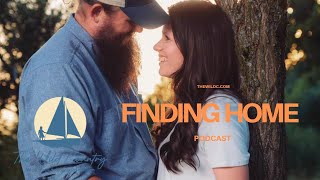
In this episode of the Finding Home Podcast, host Caleb Hanshaw sits with his wife, Christa (Krista) Hanshaw, to recount their transition from full‑time ministry to a simple homesteading life in West Virginia and the spiritual and physical trials that followed. They describe how an invitation to "simplicity" led them to gardening, homeschooling, and building a multigenerational legacy on their land. Soon after moving, Christa began experiencing severe health issues—post‑viral fatigue, POTS, shingles, chronic pain, and later a miscarriage— which they traced to suspected black‑mold exposure in their old house. A vivid, symbolic dream about black dogs, a tribal leader, and fruit‑throwing became a turning point, prompting them to leave the house and seek healing. The couple discusses their extensive detox efforts (functional‑medicine doctor Dr. Jess, sauna, cold‑plunge, mold‑detox programs), the non‑linear nature of recovery, and the emotional roller‑coaster of hope, doubt, and feeling abandoned. Throughout, they explore theological reflections on God’s promises, the difference between miraculous fixes and restorative relationships, the concept of "home" shifting from a physical structure to a presence of Yahweh, and the importance of trusting God in the wilderness. The episode ends with a call to listeners feeling stuck, encouraging them to see delays as divine timing, and promotes Christa’s book Wisdom from the Wilderness: Reading Between the Vines and her free Vine and Branch Journal.
Chapters
Hey everyone, this is Caleb Hanshaw with the Finding Home Podcast. We have a very cool episode, I guess, ahead of us. I am joined by my favorite guest of all. She is an author. She's a mother. She is a very gifted singer. She's a writer. She's all the above. And she's smoking hot. Is my wife. I don't usually say your first name a lot. It's kind of gross. Krista Hanshaw.
That was a very youth pastor thing to say, my smoking hot wife.
It was. It's like the cool thing to say.
Just take it out of the— take it out.
This episode is going to be pretty cool because we get to dive into a little bit of our story, which I've shared previously in other episodes, but from your perspective. I think the theme of this episode is what it feels like to wait for a promise that you feel like you've heard from Yahweh in the midst of pain, suffering, doubt, and really unpack that and how we've seen the goodness of God through that. So let's take some time and just do just a brief backstory of— we'll start from when we left ministry, that life, and Share, what was Yahweh inviting us to from your perspective about being home and all these really new things that we weren't used to at the time? But love to hear it from your perspective.
Well, I take the long route to tell a story, so I'm going to try to keep it—
That's the writer in you.
Condensed with—
I heard the feet pitter-patter. Up the hallway.
Yeah. Um, well, I think initially, like, leaving ministry and all that, the initial invitation was just to get to know him, like, who he really was outside of this paradigm that had been, you know, introduced to us and shown to us our whole life. But then beyond that, it was— for me, the key word is simplicity, like really planting our roots into things that are much more simple. And going beyond the gospel being simpler, it was seeing the land differently. So it introduced us into gardening, which then, you know, catapulted into homesteading. You know, the culture, like within our family and how we're raising our kids and how we want that to look simple too. And so that took us into the world of homeschooling, all of that, but that I would say the invitation to simplicity was kind of the the start to the whole thing.
Yeah. And what's interesting, and even backing up beyond that, was we lived in Florida. It's where we met.
Yes.
And we felt like we were being invited back to West Virginia. First time for you, second time for me.
Yeah.
And that we were to let our roots grow deep. And there was difficulty in that because every time we try to find a home, it would fall through. There was one where we had the loan lined up.
Oh yeah.
And it just fell through. Just a— I could think of 3 or 4 occasions where that fell apart. And then there was a moment where we had to move into the house that I grew up in.
Yeah.
With my parents at the time.
Yeah.
And they were moving out and they were going to go down and help with my grandmother in a different location. So we're in the house that I grew up in. It's a very humble house. It's a very beautiful piece of land. And we felt like this was a part of the story. Like, thank God that he stopped all those other deals from happening or we wouldn't have this opportunity to build something beautiful. And there were many times that, you know, it was in prayer or just being with him on that property where you could dream with him. That was the difference. I've always been a dreamer. My friends will tell you that.
You know that.
Yes. It's almost embarrassing sometimes. Like, oh, we should, we could do this. And it'd be just a wild adventure. Like, hey, let's open up a coffee shop on the moon.
It was how we met. You were like, let's put on the Scrooge play. Yeah, let's do the Scrooge play. And I was like, with what?
Let's just do it. So I'm 100 miles an hour. Yeah. But the difference between that time and this time is it felt like this was in relationship. It was Yahweh was peeling back the dreams he had of his heart for us that we could share in. So that was a really cool time to where we didn't know a lot about homesteading or even gardening, but we leaned into it and I felt Yahweh kind of steered the boat a little bit to where we can start building our property. And then we started building for generations beyond that of what does this look like for our kids and their children and their children and their children? So that was really fun. It was hard work, We didn't have a lot of money.
No.
It was during COVID time too. Yeah. I made some pretty dumb choices in terms of—
Brought home some pigs with no structures or food or anything.
That's the way to do it. That's the way to do it. You get something and you send your wife a message saying, hey, I did something. And you bring home chickens and then a couple of days later you bring home pigs. I didn't have a place to put them. We had them in our house.
We had to get a— go buy a dog crate for the night for them to sleep. Like, I think it was an extra bedroom or something like that. They slept in the house.
Yeah, don't do that, because we were like— we, we were like feeding them— I'm embarrassed to say this— we're feeding them like cat food.
Yeah, because we didn't— it was such a spur of the moment.
Here's the dreamer thing that can sometimes—
yeah.
Zeal without wisdom kind of gets you in trouble. Um, so yeah, but they ended up flourishing on that property and showing us, you know, how to do animal husbandry there. Yeah, but it led us to, I think, find passions that were already there, that it just fell into place. It's like doing one of those 5,000-piece puzzles and you're you're trying to make something fit, and all of a sudden, boom, just finds its resting place. So we found a lot of those things, and especially around our children and how to raise our kids. We love the homeschool lifestyle and then being outside, and that property allowed us to really let them go. Yeah, let them get lost in the woods, um, which was really cool to see. But things started to, um, go south. Started to go south, uh, pretty, pretty quickly. Um, and we started to notice things weren't okay. And I don't want to go into that because I want you to do that. Okay, so you kind of tell us how it all went to crap.
Okay then. You got to keep that in there.
Yeah.
Okay. Um, I mean, the timeline kind of looks like going back to 2019. I had Silas that year in March. And as the year went on, I just started to feel like off. And, you know, typically when you're postpartum, you feel everything's just kind of haywire. You know, getting your body getting back into rhythms and stuff. But it just— things never got better. Um, so I started to think it was like maybe hormone related, because at that point we'd had 4 kids back to back in a row. Um, you know, then we move into like 2020, and this was COVID time, which we ended up getting. Um, you know, I had the like really bad sore throat, headache, but nothing beyond that. And I started to feel even worse after, you know, going through that. And then I heard about like long-haul COVID. And I thought, maybe, you know, this is, you know, this on top of whatever is going on. And then, you know, I just kept getting more and more symptoms that were just— my body just totally went haywire. Got to the point where I was afraid to be in public because I had developed POTS, which is pretty much like you feel like you're gonna pass out at any moment. It just, it hits you and you feel your body start to shut down. Um, was, you know, intolerant to a lot of foods, nauseous all the time, lightheaded all the time, and then I wasn't sleeping well. I was like having very vivid nightmares. I'd wake up and like hallucinate things in the room. And so I was just never getting, you know, rest. And, um, it really peaked May of 2022. I ended up with shingles on the right side of my back, and those were just excruciating. Those were very painful. And up into that point, we, we had had some conversations, you and I, about, you know, possibilities. And we brought up the mold possibility, you know, a few times. Um, and there I honestly, I've started to put those dots, connect those dots through a social media post, like a random, um, social media doctor who like specializes in Lyme disease.
Who is that?
Her name is Dr. Jess.
Dr. Jess.
She goes by Dr. Jess. And it was like, I didn't even follow her. It was just one of those random algorithm showed me type things.
And she's pretty resourceful.
Yes.
So we'll even link her stuff.
Yeah. She's like a, I guess you would call maybe like a functional root cause. Doctor. We'll say that because I don't want to use words maybe she doesn't use. But, um, the post had to do with, um, symptoms of living in black mold. And I hit every single one of those down to like hallucinating spiders, which is what I would like wake up and see at night. And there was this like really like the connection was there. And I saw that post shortly before I ended up with shingles. So you and I had had the conversation like, this might be what is going on because this house is older. There were places like under the sink and a couple places on the ceiling like where you could see it. But you know, you had said like, oh, that's been there for years.
Yeah, there's insurance over it. Well, me too. It was there when I was small. It was there when I was little. And there was— I didn't really experience any side effects that I knew of, I guess.
And you know, you were told like, oh, it's been treated. It's just the stains left over, you know, kind of thing. But after I ended up with shingles is when we were both like, we have to figure something out. We have to get out of here. 'Cause when I tell you, I felt so bad day to day. Like some days where I would be in excruciating pain, like in my joints, like in my bones. My skin sometimes just felt like it was on fire, like I didn't want my shirt to be touching my skin kind of thing. Um, so we—
and the kids—
and the kids started showing signs, I would say end of 2021 into going into 2022. Like, 2022 was the peak year. From January to May is just when there was constantly something going on with somebody. With the kids, they were— a couple were getting, um, skin rashes, like breaking out in eczema. Like, we've never dealt with that. Um, terrible stomach pain, which I was also having too. Wetting the bed, nightmares. And like dark circles under their eyes. So we knew that we needed to get out. And what I started to say earlier was I was to the point where I thought I was actually going to die. And we didn't know for sure even then that mold was what was going on. But I was thinking like, I should probably start writing letters to my kids or something. Because I'm really sick. I'm really, really sick. Um, and then it was the same— I brought— I packed a ton of tissues, by the way. I felt like I'd probably need them. But, um, it was the week that I ended up with shingles. Um, praise God for lidocaine cream, because that was like the only thing that helped. But you had a very significant, um, very specific dream from Yahweh that addressed mold being in the house and that I needed to get out. And you got us out the next day. I remember waking up that morning and I was— I woke up and my heart was already— I was having palpitations, I was already lightheaded. The shingles were just excruciating. And I roll over and look at you, and you're typing away on your phone.
Yeah.
And I was like, what are you doing? You're like, I just had the most significant dream I've ever had, and this will be the last day that you're in this house.
Yeah, because it was, it was tough, you know. I didn't go through the symptoms, but, you know, as the man of the house, as the protector of the house, I felt pretty stuck. Because financially we couldn't just pick up, right, and go somewhere. We kind of gone all in, in terms of the homestead thing. I mean, I remember leaving my job right before COVID hit.
Yes.
And being without a job for a while and just making it work, making it happen. I remember it was a— we, we had, I think, 4 kids at time that I was working $9 an hour.
I was pregnant.
I went up the fifth one pretty quickly in that job. But it was— I say, I say it's like, Yahweh, you— we felt like you invited us into this place. Yeah, like this was coming to the wilderness. There's something that, that I shared before, but it was this very romantic invitation of simplicity. And you see that if you type in Simple Living. I mean, there's a magazine, I think, that's Simple Living. It's this majestic and calm and fall colors.
Cottagecore.
Yeah. So when things started to get kind of shaky, you really second guess like, what the heck did we do?
Yeah.
So while you're going through that and the kids are going through that, I'm like, you know, Yahweh, like, I'm the protector and I'm— this is not— it's not happening. Like, and there was really one avenue out, and that was to go back to my parents and be like, this is what's happening, can we stay in your house again?
Right.
And it was one of those really defeating moments, like The dream failed, fell right on our face. We need to come and be saved again. And as the protector of the house, that was really humiliating to think that we had to do that. So I have this dream and I don't dream that often.
No, you don't.
So when I do, it's a banger.
It always is, isn't it?
So I was having— and I'll share what the dream was.
It's always very important.
I won't share Um, and you're going to hear random chickens in the back. I think that's a guinea. We're on a farm. Yeah, and disclaimer, um, you will— you'll hear some random chickens, maybe a rooster. They're roosting right outside the window. Um, I won't share some of the details of the dream, but what Yahweh did was he took me back to different key areas in my life and kind of revealed what was happening you know, behind the scenes and gave purpose to a lot of those and even the really hard seasons. And it led me to being at the house. And it was one of those scary dreams, like everybody dreams where like you try to run away and you can't, right? Or someone's after you and you can't move or you're falling.
Yes.
And so it had that feel to it. Like we're in the house and feels like people are trying to get in. And I go and I look, and there's these black dogs coming out of the mountain trying to get into the house. And I can see these dogs turning into men. Um, so I'm thinking, okay, we got to get out, got to get out of the house. And I go to get the kids, and they've already left. They've already gotten out. I get you out. We get out just in time. And this dream's pretty Significance.
Yes.
We get out and there's this tribal leader. It's like an Ethiopian, Opean, Ethiopian.
Got it.
Tribal leader, tattoos, jewelry, dreadlocks, vivid bright eyes. And he's getting in the house.
He's in.
We get out into the bottom of of the house and we're looking up and these black dogs swarm down and they're lined up almost like an army and they turn into people that resemble this Ethiopian sheep. I know this is kind of random.
I know the ending and I know the meaning, so it's not so random to me.
They start— they start picking up fruit and throwing it at me. Yeah, like pieces of strawberries. And keep— they keep throwing it at me. And this is where the feeling in the dream shifts from being afraid to it being very playful. I start catching these fruit and like, like doing it in a trick way. Like I'd catch one behind my back and then they'd start cheering, and then they throw another one. I would catch it like not looking and they, "Bravo, bravo." And I noticed there were people standing.
It's intended to harm you.
Yes.
And it turns into a playful something.
Yes. And there were people behind us and I couldn't make who those people were, but I ended up walking in the midst of these people and they were embracing us and giving us hugs. And it felt like just for the first time, a real sense of true community. And I get up to this tribal chief and I won't share what I said, 'cause it's like this, it's kind of, that one's kind of embarrassing, but it spoke something to me. But he said, this should have happened a long time ago. And it was resembling like there was mold in this form of these dogs was pushing us out for a season to really find true community. And Oh man, we're, we're still starting to experience it. I know, years later, even from having the dream. And the hard part is, in the midst of what we would define as a promise— Yahweh, you've promised that we come into the wilderness, we find you, We find home, we find what we're passionate about, we build legacy with our children. When that is what we feel like is challenged because it's not going the way that we think it's supposed to go, that's when things get really real. And you would think it'd stop there. Like, we, we left and went to the house that we're in now.
Yes.
Um, really hurt.
Um, defeated.
Defeated. And I think a really good word to use is abandoned.
Yes.
Even though I had the dream. No, the dream felt really good and it lasted about a couple weeks living off the truth of that dream. And I'd even go back and read it. Yeah, man, it was still hard because you think you get a promise like that and like, all right I'm ready for that community that I was shown in the dream. I'm ready for this breakthrough where you start feeling better. And that didn't happen immediately.
No.
So I'll lead you into this.
Okay.
I want you to describe the times where you really second-guessed the promises of Yahweh, why you felt that way, and be as real and open.
Okay.
Go for it.
Got the tissues ready. Yeah. I think, can I pinpoint moments? Maybe a couple, but I feel like for a long time it was more of a cycle, which is even harder because you have those really high moments where you're like, all right, I got it through this. This thing has been exposed in me. And then it just comes circles right back to like doubt and stuff and having to go through it again. Um, I think first when we moved out and it was like within the first week that we were out of the old house and I kind of thought like a lot of things that I struggled with would just start to go away and they actually got worse. Um, which, you know, now in hindsight I learned a lot of that was my body starting to naturally try to purge a lot of that now that it was out of the environment. Um, I was just— I was in a lot of discomfort, like a lot of pain, especially after the shingles. It did some, some nerve damage. And so, you know, some of the nerve endings on that side of my body would just feel like electricity a lot. And I would joke that I was like, I could be Spider-Man and shoot webs to try to like get some positivity out of it. That was a hard moment because I remember you, maybe you remember because you came back in the room one morning and I was like, I was like sobbing in the bed because of how how bad I felt. And, um, because my— really, like, what's hard with that and any chronic illness, I think, is all your pain is internal. You look fine on the outside. And so you're walking around, you know, people, and they just have no idea how much pain you're in in that moment. And then you don't want to be like, oh, by the way, I'm in so much pain right now. You don't want to bring attention to it, so you kind of silently suffer. So there was this moment where I had to ask you like, "Hey, do you believe me?" You know, and of course you did, but it helped to hear it. But I remember really telling you like how I felt, you know, towards Yahweh in that moment. Like, I feel like he was going to leave me to die. He wasn't going to do anything. It takes me back to that moment. I don't feel that way now, but it was very raw because I think a lot of us will feel like that and not vocalize it, and it actually makes things worse because you don't address it. So I'm like thankful though that those things get exposed. Um, There was, um, shortly after we moved out— I don't know if I can do this. Um, okay, so we moved out May, then had that moment. Um, and then later that year, the end of September, early October Um, we, we went through loss, and that was really hard. Um, because even though, like, my body was in total, like, chaos, you know, I thought, you know, this will be a good thing, this will be a good thing. My you know, I can still heal and, um, continue to heal, you know. And then, um, you know, we, we, we went through that, um, a miscarriage. And that was a tough moment because, um, you know, we, we, we found out there was no heartbeat at the first appointment, and we had our options, and we opted to let things happen naturally. And when they did, I still ended up in the hospital having to have a DNC.
I think context though—
Context, go ahead.
Is we felt like Yahweh was revealing an issue with the high rate of miscarriages.
Yeah.
Like there was something that wasn't right and wasn't normal that we had really a passion for. Like if it's what we're eating or if it's something in the environment or something like that.
Yes.
The cause isn't the point, but we felt like, okay, you're always inviting us into this miscarriage-less life in a way.
Mm-hmm.
We probably were a little bit arrogant or felt like untouchable in that. So when it started to happen to us, there was even times where we felt like, man, Yahweh's going to do something really miraculous here. And we were listening to certain messages from people that we really respect and they would even use language like, your promise is just formless right now. I mean, it was just certain language. Like we would connect the dots and we were just really, really hopeful. About that?
Because when we found out there was no heartbeat, it was still another maybe 4 weeks until the miscarriage happened. So there was a lot of hope that we held on to, hope for a miracle and leaning into stories where similar things have happened.
It sounds foolish to people, like just deal with it. But in the moment, you're like, it felt so real to believe for this.
And I don't regret it, right?
I don't either.
I would— I don't want to ever have to live that again, but if I had to, I'd—
I'd—
it— I wouldn't want to lean into hopelessness, you know, because then what do you have to cling to, right? Um, But I remember the question you asked me was like those moments you felt like, hey God, where are you? Where are you at? I had that moment. You know, I'm laying there just kind of waiting for the procedure and stuff. And I asked that question like in my head. Because I'm, you know, around nurses and stuff, um, and I heard him say very clearly, "I will restore you." Um, so fast forward to even after all that, I took that and kind of put my own fingerprint on it, what I thought that should look like, that promise, because it was, it was promise. And I still was not physically healed from the mold and all that. And so I'm like, did I— am I just— do I not know his voice? Is he like toying with me? Like, am I not praying the right prayer or learning the right lesson? Or, you know, you start to really ask those kinds of questions. Did I even hear him right? Because I dealt with a lot of issues up until recently. I ended up having to have my gallbladder taken out this past May.
Yeah, we'll get to that. I think one of the aspects I really wanted to highlight was, especially with the the detoxing from mold.
Yeah.
Thankfully, you found resources like, you know, Dr. Jess and all these biohacking and these detox, and I'm pro that. Yes, I'm pro doing a detox, but we went like kind of overboard in terms of our perspective. So I think I think we really put it on our backs to try to make this better.
Well, we're on the same page because I was going to talk about that.
Yeah. So we tried to really like, how can we, what can we do?
Yes.
To heal. What can we do to make things better? What can we buy?
Yeah.
What program can we purchase? So I'd like to hear from your perspective because for me, I would be alone with my thoughts at work and I would have a lot of questions because again, it goes back to the original promise of this legacy that we felt like Yahweh was inviting us to is now challenged and it feels like everything is hard.
Yes.
And everything that we're taught growing up was you're outside of the favor of the Lord. So something is wrong. What we're coming to find out is he's in the midst of that. We think sometimes because our behavior is an indicator of how well we're doing in the favor of the Lord, of how— because things are exposed when you go through a lot of that mess. I mean, there's a couple cuss words I said.
More than a couple for me.
Just speaking lightly. Okay. That's like the rated G of the things that I did. There was anger, there was bitterness, and there were things— I see it like things hidden under rocks and Yahweh's just throwing them and exposing them, not to put shame, but that was killing us. Those things that were hidden were killing us. If we thought that time was really, really important, we had to get through it really, really fast, we would think like, "We're not heading in the right direction." Yeah. Because now my behavior's changed. I'm not acting like a Christian. I'm not as on fire as I've always been. So something must be wrong. It's like I've dug a hole, like you've dug yourself a hole and you can't get out. So we've dug ourselves a hole, we've made these decisions that have led us here. This is a result of turning our backs on the call of God in our lives. And now Yahweh is sitting outside of the hole.
Yes.
Waiting for us to get ourselves out of it and get back on the right track when in actuality he's got the shovel and he's in there with us. So we're going to camp out here. He actually inhabits those places. He's not afraid of the dark. And like you said, we try to hold that stuff in because it's almost like we're hiding it from him. Like Adam thought he was hiding from God.
Right. Like he couldn't see him.
Yeah. Like if I hide behind this bush right here, I'm going to win hide and seek. Yahweh already knows that those questions are there. And he's like, I'd seen pulling those secrets, pulling those thoughts that we have towards him, our beliefs that we have towards him. Those are the root causes of where we're at. It's not because we're cussing. It's not because we have rage moments. It's not because we've lost patience. There's some root things of who we believe he is, and do we really believe he's good? Do we really believe that he's with us? Because those were what was in question. Hey, Caleb Henshaw, Finding Home Podcast. Real quick, felt led to do this. As you're listening to this episode, if you feel like you've been going through some mold toxicity and exposure, listen, I want to invite you to reach out to us. We're not trying to sell you anything. We just know that that's a hard place to be, and sometimes you feel like you're crazy. Best thing you can do is talk to a friend. So you need to get a hold of us. Listen, send me an email, Caleb@thewildsea.com. Visit our website, thewildsea.com. Let's get in touch.
No, that's pretty much where I was going with it.
But the— if you look at the cross, the cross is proof that he inhabits darkness. He lives in it. He reconciles the world to himself. So he's in the midst of our pain, which now on the outside looking in, we can look at that time where this is a sweet spot. That's unreal. Think about how hard that season was. But I don't want to get ahead of myself because we'll get there. But you're not getting better. We're trying to force things to happen. We bought a sauna, which I'm happy about.
I actually really love that. I've been getting in it lately to help with allergies.
Cold plunging like a maniac in my underwear so everybody can see.
Okay.
Yeah. Speak on those times where especially the times where we saw progress and then it's like 4 steps back.
Yeah, um, well, healing is not linear, any type of healing. And I can say that that's true for physical healing. And it seemed like I could have a lot of really good days— I've maybe decent days, I should say. There in the beginning, because now I feel pretty good. But there in the beginning, it was okay, I can, you know, I can go outside in the heat and not feel like I'm going to pass out. Like that was a huge improvement because I was very heat intolerant too with everything. But then I'd have a day when I just was on the couch because I was in so much pain. You know, and a lot of it is just— some of it's just inflammatory things because it's not going to all get out and heal overnight. And some of it is like actual— the process of healing like hurts as things are, you know, in my case, like toxins coming out of my body.
You ate like a rabbit.
Well, I had to because it made me sad. It made me sad too. I was very intolerant to a lot of foods because my digestive system took a huge hit. Yeah. You know, and I've learned a lot about what mold can do and it can wreak major havoc like liver, gallbladder, stomach, intestines, like all of that. You know, in my case, it seems like the gallbladder is what took the hit. And if one organ in that system is inflamed, everything else has the potential to just become inflamed right along with it. So there were a lot of foods where if I ate that food, I would feel incredibly sick. And so, yeah, I just ate like a rabbit, not because I wanted to, but because I had at that point, 5 kids to take care of, and I couldn't be laying on the couch all day in pain.
Yeah.
Yeah. What did you ask me? I forgot where I was going with the answer.
You start to feel better.
Yes.
And then we think like, oh, we've made the right decision. We've got out of the house. We're moving in the right direction. Then boom.
Then you have this bad day. And then what's your knee-jerk reaction? For me, it was to get online and find the next product. Yeah, find the next supplement, find the next, you know, thing, find the next program, find the next detox, you know, and, and those things were not bad. Those things, like, I can look back and I'm like, yes, those things really— one particular program I used, I did, it's like a month-long mold detox. I did it 4 times in a row because I could tell it was doing something. So it's not about like, "Oh, don't do anything. God's going to do it all." It wasn't that mentality. It was like, when I say knee-jerk reaction, it's like, "Am I buying this product because I don't take him for his word that he is going to restore me?" Well, you had a dream.
Yes, pretty important, that dream. Yes, I think you should share it.
Is it the one I wrote about in my—
yes.
Okay. Um, okay, so it was more— I felt like I was transported because it was about as real as I am sitting here talking to you. Um, And that night was particularly hard. I actually slept on the couch that night because I had a lot of pain in my joints and stuff. And I went to pretty much space, like I was in space and I was just floating and like looking there, which is ironic because that's the last place I'd ever want to go. I've told you this before. Um, but it was very— it was very calm. It was very like serene. And I'm looking and like there's stars and galaxies and all this. But then I realized I, I'm looking at a scene of me being held like, like you would hold someone in both of your arms. Like I was being held in these giant arms, but they were like they were not like human. They, they were kind of the shape but kind of not. There's no way I'll be able to explain this, but they were like light. And I saw myself being held in these arms, and I saw like it was very kind of Matrix-like where I had this umbilical cord that was coming out of me and it was connected to this figure. Like, we, we were connected. Um, and while I'm there, and it's just like, it's just us, it's just me and it's just, just Yahweh, and he's just holding me. And, um, like, I started to hear music being played, and I realized, like, it's the cosmos. Like, they are playing a song, and I start hearing words but there's no one around. But then I know it's coming like out of his mouth, even though I can't see it. But it sounds like a chorus, like multiple voices coming out of one mouth. And I, I can't remember all the words, like word for word, but I know that it had to do with being on the right path and the promise of healing. Um, being in those words. And it was really cool too that there was this like chord progression that I heard that was like— when I was in high school, I was in the marching band, and there was this one song we'd play in the stands. And every time the band director would call it for us to play it, I'd always pretend to play, and I just closed my eyes and listened to this. Like, it was this like climb up this chord progression, because I don't know, like, I just love the sound of it. And I heard that same like chord progression, like while I was there. It was just very like specific and unique to like things that brought me joy. Um, in any way, so I then like, I woke up. I can say I woke up, but I know it was like— I'm gonna sound like a trippy person, but it sounded like, or it felt like my spirit was coming back in my physical body. Like, there was this realignment happening because I was still— like, the— my ears were still pulsating. Like, I could still hear the music as I was waking up and as I was laying there, and it just like started to fade out as I was like, um, coming to. So yeah, and what— that was shortly after we had you know, moved out of the house. And so I'm laying there like, God's going to heal me and it's going to happen overnight. The promise is there, like, as sure as, you know, this experience has happened. Something— I didn't ask for this dream. I didn't ask, you know, for anything. It just, it was given to me. And so I was like, it's going to happen, you know. And the journey It's 2025 now, 3 years later. It's been a 3-year journey.
That was before you had the gallbladder attack.
Yes.
And I feel like that dream's important because I feel like a lot of people relate to, I know I heard this from Yahweh.
Yes.
But something doesn't happen the way we think it's supposed to happen, and then we can easily label him as abusive.
Yeah.
When we have this false ideology that Jesus is a magician. Yeah, that there's a need, he comes in, he makes that need better. I want you to really relook at the stories that are in the Bible. Jesus would heal people, absolutely, but he He would restore people. He's not fixing issues. He's restoring identity.
That's right.
He's picking people up and putting them back on the path of finding him and finding who they are. The scary part of that is it involves a lot of trust. And I'm reminded of Paul Young of The Shack. And he's asking these things about his great sadness. And it's when he's in the waterfall and he's talking to Wisdom, and Wisdom says, "There is a better way, but it involves a lot of trust. It involves knowing that I'm in the midst and I'm actually crying with you." And we don't want to— we want to see God as the stoic, strong, he knows the beginning and the end. So why would he be upset when he knows it's going to end up being good? Because he's so involved in relationship. We have to see him in the pit with us. We have to see him in the gallbladder attacks. We have to see him in those moments because he is restoring us to where I'm glad he didn't fix it. I'm glad we didn't move out of that house and all of a sudden it's fixed. And I'm glad that the original dream didn't happen immediately because I would've never seen him in the pit. We have to see him in the pit. We have to see him crying with us and camping out in our pain, suffering with us. And we believe that he's going to lead us out of that, but he's gonna restore us in the process. These promises are awesome, but man, it doesn't really mean anything to receive a promise if I'm not full enough to to enjoy it.
Because then you're not whole.
I'm not whole enough to experience the fullness of that promise, to experience him. So I— you have that dream and then the gallbladder starts messing up.
Yeah.
And it's almost like we were faced with this Kind of same thing. We want to heal it. We want to heal the gallbladder. Yahweh, this is the 18th thing that's gone bad. We're going to believe that you're good here. We're going to speak life into that gallbladder. And we don't want to lose an organ. We don't think that's normal, just as we didn't think miscarrying was normal or Being sick is normal or being angry or depressed is normal. We want to live the way that you created our bodies to live. We would say that, we would pray that, we'd have the kids pray for it.
Yeah.
Like maybe we can rely on childlike faith and pray for this gallbladder to wake back up.
Yes, I want to add too, and I've really camped out in that holistic natural health space space throughout all this, and I'm glad that I found it, and I will still continue to camp out there. But earlier I was talking about like, what's your knee-jerk reaction? And when something would go wrong, it was to, what would this space do? How would this space heal this? Because you hear the message, which is true, your body is capable of anything. "Nothing. It is made to heal itself. All these organs God gave you for a reason." And I'm like, "Yes." And I still believe that even though I don't have a gallbladder anymore. I'm like, "Yeah, he gave me one for a reason." And then I'm also like, "Thank God he made it where I can function without it too." Like, that's how amazing the body is. But I can speak for myself saying that I began to idolize that space. That was the first thing I ran to, you know, and countering where he's saying, "Do you trust me?" "Well, yeah. So can I do this?" And the answer was always from him, "Yeah, go ahead and try that." 'Cause it's not like he's like, if I don't listen to him, I'm gonna be punished for it. Like, "Yeah, that's good. Like, it's good. Do that." But there I was missing the element of trust. Even if it ended in surgery and having it removed, at the end of it, would I be blaming him for not doing anything? Or would I be in this position of like, "You know what? I trust you.
This is my path for healing." And he will stay in that space. He'll stay in that uncomfortable place just so that you may see him.
Yeah, I did.
It's like we think that he enjoys being there because he knows what's going to happen. No, his heart breaks in those moments. But he will not be a magician because he knows that our eyes have to lock with him and we have to see him in the pit with us. And like you said, he'll speak our language. Like, hey, can I do this? Can I try this? Yeah, go and reach for it. I will stay in this uncomfortable place. It reminds me of Anna. When Anna was, she was sick and I had to take her to the ER.
She had strep and another, some kind of viral. And anyway, her white blood cell count was extremely high. She was very sick.
And we play the movie in her head.
Yeah. Yeah, we did.
Because this is— this is— this type of darkness exposes the fragility of our systems and what we're anchored into.
The timing of this was also right after we had moved out. Yes, this was in that same time frame.
It's, it's like, you know, our power grid is— or COVID, it really showed how fragile our food system is. This place of darkness, even Being with him reveals where our fragility is. And for us, it was one bad day will send you tumbling down, spiraling to where you start playing these— Paul Young says future tripping.
Yes.
Where you start thinking, you play the horror movie in your head. And Anna is showing some really weird signs.
Yeah.
Like, she's not acting— she's— her, her— I remember her jaw started She couldn't move her jaw at one point.
We took her into the ER because we were afraid she had meningitis, because her neck was hurting her really bad.
So I remember I took her in.
We both went to the ER with her. Yes.
And I remember sitting there in the bed and there was just this war, like, and as the father, I just want to fix it. I just want to protect her. Why is she going through this? I'm future tripping. I'm thinking the worst case scenario in this moment, even though it's just a Tuesday. It's just a Tuesday. But we— our, our system's so fragile at this point.
For us, it was like one thing after another, can't catch a break.
So I'm praying, I'm like, Yahweh. And I'm, I'm trying to pray in the spirit. I'm trying to figure out what that even means. Yeah, like, what does praying in the spirit mean? So I'm like, I'm like, Yahweh, will you heal her? Yeah, will you, will you fix this? And I remember what he said to me, and it's important the order that he said it to me.
Yes.
He says, "I will heal her.
And I want to." We're a hot mess on this one. Do you want a tissue? I've got a whole bag.
It seems like that would be like, the other way around. He would say like, you know, I want to and this is going to happen. It was like a Peter moment almost, like when they come and find him resurrected and he says, yeah, and go and tell Peter. It was like one of those for me. It was, you know, we're going to— she's going to be okay, but I need to let you know that I want to do this. And it was something as simple as us overreacting over her child. That was the turning point for me, was that. And I kept just repeating that, like, and there was times where it was still pretty hard. I'm like, you, you want to be in this with me? You want to share this with me? You don't just want to see me go through it? But as I would go through with my children, and I'm not a perfect father and he is a perfect father, that he would share in my sufferings and share in my pain, that for the chance that I would meet him in that place and I would see it unfolding. So I'm a fan of the dark. I'm a fan of these questions that don't intimidate him at all, that maybe I would have been afraid to ask if I just lived in the place of religion where you perform well and you fake it, fake it till you make it, and you, you know, hold on to the principles of our faith.
Yeah.
And you keep striving, you keep going, you keep swinging your sword.
Yeah.
I'm thankful for the dark. That's going to land well. I'm thankful for the times where it doesn't happen the way we think it's supposed to happen, because that was the turning point. It was the turning point to where, you know what, maybe you really have this. And then your gallbladder thing happens. And I remember I was almost annoying you over it. Because I was so calm about it.
You were so chill, and I was like, bro, I'm about to be put under.
So I remember, I remember saying this, and it was like, if I prayed this prayer 10 years ago, I would just say I was just— didn't have the faith.
Yeah.
I remember praying, Yahweh, thank you that you're in this with us and that you want us to be whole. Y'all, if it's your desire to heal this gallbladder, let's heal it. Let's do it. But if that's not it, that's okay too.
And I feel like I remember you saying, make it abundantly clear.
Make it clear. Make it to where there's no questions.
Yes. And they got to that point.
And it was clear.
It got to that point.
And I was like, it was almost like a— it's not a Shadrach, Meshach, and Abednego. That's not like— that's top level.
That's top tier.
Even if you don't come, We're good. Let us burn in the furnace because we know you're good. I was like, even if you just miraculously grow another gallbladder.
Hey, and that could happen. It could happen.
If that's your path, I want to lean into it because I've seen you in the pit with me.
Yeah.
And I see your eyes and I know that you want to get to the place where you spoke about many years ago in our hearts, there's this life out there for you. There's this place of wonder out there for you. This is Neverland for not just you, but for your children's children's children. And it makes— I almost felt like what Abraham felt when he had that promise. But we may not even see it in our lifetime, but it's for us all the same. It makes me feel good.
Full of hope.
Full of hope. Um, So yeah, I think the dark taught us about what the wilderness looks like and how there's just, if you're getting invited into the place called the wilderness, it's an exciting place to be.
Yeah.
Because you're going to be walking very close and things are going to be exposed and addressed, not because you're a bad person and he wants to pinpoint things that are not like him. He wants you to be whole. He knows what it feels like to be fully alive. And he loves you enough to walk through that with you. And like you said, do it your way for a little bit.
Yeah.
There's no rush. He just sits there and he's patient.
The, the wilderness, it's supposed to fix your vision, like the way you see him. And so, like, I would even say to people that feel like they're in the wilderness and they are just— and it feels like a lonely, dark, awful place that you're having to get out of— it goes back to what you were saying, like, if you feel like you're in a pit, are you seeing him up on top waiting for you to come out, or do you see him down there with you? If you're seeing him up there, you're going to have a really tough wilderness because you're really not in it yet. You're not in the wilderness yet if you're not seeing it that way.
Yeah.
But when you do start to see them, that he's right there with you, and that the point is to see him rightly and to see yourself rightly um, that's when the wilderness starts to be full of hope. And you can be in these dark places and even these suffering places and lonely places but not feel overwhelmed like your life is dark. Like, you actually start to feel like what Jesus promised, living that life abundantly.
Yeah. Hey everyone, Caleb with the Finding Home podcast. Listen, I may be biased, but But I want to tell you, my wife is a phenomenal person and she's a phenomenal writer, and she sends out a monthly email called the Vine and Branch Journal, completely free. She shares what she feels Yahweh speaking to her each month. Do you want to sign up for that? Completely free. Follow the link in the show notes. Vine and Branch Journal. Hop on there. I'll see you there. I, um, I'm— I want to talk about what it means to be whole enough to receive.
Okay.
To be whole enough to receive the gift of this promise. I go back to The Shack because there's a really cool scene there that's really depicting what I'm, what I'm talking about. She talks about a bird that has their wings clipped when they were created to fly. And that says that's how humans are supposed to be about being loved by God and not feeling the love of the Father for us. It's like a bird not being able to fly. So I say this, it's like you have a promise of, of flying. Like, this is the promise for you. We're going to fly, we're going to, we're going to visit the, the universe, the stars, and you have this magical romantic Invitation, but your wings are injured. So that promise is actually could be abusive if you don't look at it the right way. He wants— the promise isn't so much you're going to fly. The promise is we're going to dive deep into that pain and we're going to fix that. And then at the other side, you're going to feel loved. You're going to be secure. When you have a bad Tuesday like we had, you're not going to unravel. You're gonna see me there in the midst where there's no separation. Anything that we do, we do with him. That includes what we watch, what we listen to. There's this constant fellowship now that we're pursuing this revelation of union with him and that he is always working towards our good. What does that mean? What does it mean to be whole enough to receive the promise? Just gave you some pistols. Just gave you the pistols. You weren't ready for that.
No, it's a, um, really big question. I think first of all, when we look at wholeness we were created whole. So wholeness is already inside of us. And I think that it's not so much like through our behaviors or through our unbelief and all this, like we are broken, broken, broken, broken, and we are not whole. It's more like because we can't see this piece of it, like how we are created to be whole, we act as if we are unwhole. We can dwell in the things that make us feel unwhole, like doubt and anxiety. I mean, health issues, things that disappoint us, things that are unfair. Because in those situations, it's That's when all the deep, dark questions start to come up. But the good news is, is those things are rooted in our inability to see how he's created us to be.
Yeah.
And so he tackles those things with us, like you said, in the dark. And he brings us to this place. Where we find wholeness through the design of union with him. And even when we even just first start to glimpse it and maybe even barely understand it, you feel different. You feel your knee-jerk reaction, you may still have that, but then you come back. You remember, you come back. Eventually, you want to get to the point where your knee-jerk reaction is just to stay, stay right there.
Where you see it as an invitation.
Yeah. And I think that that is when we walk through the healing of those areas, then that's when the promise that was already planted in there actually just begins to take root.
Yeah, because the promise doesn't change. We do.
And the promise isn't even like a thing or a result. Like the promise is just like this thing, this relationship.
Yes.
Like that's the big promise. So even though I can hear like, "I will restore you," and I thought this was all about physical healing and pieces of it are, you know, but going through all that, you know, even if I took a longer route to get there through, like, he still took the long route with me. He wasn't waiting on like this one road, like, "Wait till she circles back around." You know, he took the long path with me, and it was fine. And there were good things that happened.
Yeah.
But in the end, the promise of, "I will restore you. I mean, that's an— that's an eternal promise that's there, and I can always lean into that.
It's like your healing becomes less about your symptoms.
Yes.
And more about your alignment. That's more about receiving him.
That's it.
Everything that we need pertaining to life and godliness is found in him. It's that in him dimension. That's the major promise. It doesn't matter what we do or what we experience. It's that he is, he even told Abraham, I'm your exceeding and abundant reward.
It's me.
That's the promise. So he picks paths and trials and rewards, I guess, to lead you to that place where you experience him. So when we look back, that's why I can say this is the sweet spot, because you actually see like his, the timing or the hesitance wasn't punishment like I normally thought that it was. It's actually protection. It's actually being very intentional with us. And walking slowly with us, which I think is encouraging because I know there's people out there that just feel stuck.
Yeah.
It's like what we were talking about, compounding issues over and over and over and over. And they feel their wilderness season is a time where they're there to prove themselves. It's not. Not for you to prove anything. It's actually a place where romance begins to really happen and you walk slowly together. Because you get a promise like that. And when I say promise, we saw a life where we lived it with him.
Mm-hmm. This was when we left ministry and all that.
And we wanted that so badly. We wanted that so badly where I think it became an idol.
Yes.
And he wanted us so badly.
Yeah. For us, it became, how can we achieve this picture of this life?
And what an abusive way to live, to have that as the standard.
Yeah.
And not— you're seeing this as a standard. It's not a standard, it's an invitation. It's an invitation. Oh, so now we're getting to the good part.
Oh wow. Okay.
I think we're— I feel hopeful. No more crying.
Okay, that's good.
So you put your tissues away.
I've probably lost my mascara.
Um, I think from my perspective, what's really changed, um, you know, not everything's perfect and I'm still learning, but this weight of being the protector, of trying to fix everything because I'm the man of the house. I've given that responsibility to him and I'm trusting him in that. And that I would steward, I would represent him well to my children and I would represent him well to you in our marriage. And I think our conversations are different. I think we're not afraid to talk about the hard stuff. Not like fighting or anything like that, but really like questions that we would bury, I guess, because we were too shameful to say them out loud. But I can see there's maturity even in that.
Yeah.
And we're leaning more into inviting him into these places. And trust. I think trust is starting to grow. I do have a question for you.
Okay.
I think it's a pretty good question.
All right.
How has your understanding of home shifted from when this first started to where it is now?
I think in the beginning home meant a physical location. We were so— what's the right word— we were so spent on home being, looking like where we were at, like living in the house that we were living in on that piece of property. You know, we could look out and envision what it— we could turn that into, like how we could build that and how it could become something for generations later, how it could become a place of refuge, like the orchards we could build, the cabins we could build and all that. And so when we left, when we had to leave and tear our house down, and we thought, oh, I thought, this is me, oh no, that was supposed to be home for the long haul. We had to move. And we're in our temporary home now, house, I should say. And now it has shifted to home being more like this posture that we're talking about. Home is, there's that song, Home Is Wherever I'm With You. Home is where he's at. And he's right here with me. And so wherever I go, that's where home is at. And then at the same time, where He leads, we follow too. So He's even showing us where to go. And so there's no place we can go where home is not there. And it feels more like home. There's that saying, you want to make a house feel like a home. You know, thinking of this like internal world that you have when you really start to like build home for him, like he's there, but it's like you acknowledge that and like you're building something with him together, like the house becomes a home. It's not just like an empty shell, you know, like, and then like you keep dreaming together And it goes back, like there's no separation. Like that's home. He's home.
Yeah. It's like—
I know that all sounded cheesy, but—
No, it reminds me of when we were on vacation this year in Florida and Eleanor, who's very young.
3.
Is asking for an ice cream that I know she's not going to like.
But she is convinced that she wants it because what color was it or something?
It was purple.
Purple ice cream.
Like, she's not gonna want this. So we let her get it.
Yeah.
But then I go get what I know she's gonna want.
Yeah.
And that, that's kind of what we're talking about. It's we, we thought we wanted this particular thing.
Yeah.
And Yahweh is excited to have the conversation. but Yahweh knows what you really want is communion. What you really want is fellowship and union. You really want this dance. And now that's what it is. Home is— there's this dynamic of, I think Yahweh does care about land, about physical land and what you do with it.
I do too.
You put your hand to it and you see it flourish, but it's not the foundation. The foundation is being in him, that posture, because you can only dream and work with him while you're in him. It's how the Trinity operates. In him, by him, through him. It's the same for us. Same invitation. So you wrote a book.
I did.
Wrote a book.
Lifelong Dream.
Wisdom from the Wilderness: Reading Between the Vines. And it's been on Amazon for a bit. You actually get really personal in the last chapter, and we've talked a little bit about that, but it's things that Yahweh has shown you just by nature and your journey and feelings. So I encourage people to get this, get this book.
Put the link in the What do you call it? Show notes.
Yeah, I'll put the link. Um, also, I want to land the plane. Um, thank you for sharing that because I know that's— it's not your comfort zone.
It's not. Shared things I didn't think I would share.
So, um, I, I do want to speak directly to people that will watch this that feel like you're behind, feel like you're— you should be further ahead in your relationship with Yahweh. You feel like you're abandoned, maybe. It's some of the feelings that we had talked about. Um, you're not. You're not behind. You're not being punished. You're not reaping what you sow. Have the courage to accept that you're right where you need to be. Right now and look for Him in your darkness. This is— years from now, you'll look back and say, "This is the sweet spot." So the delay that you're experiencing, it's not Him saying no. This is divine timing for you. This is divine attention being placed on your life. But it really is good. Really, really is good. So anything that you want to share before we end?
I felt like I was a pretty open book during that one, so I'm gonna shut the book.
Book is shut. So we're gonna go make out.
No, take that off.
Uh, I, I've really enjoyed connecting with a lot of you guys. Um, The message that you're sending, um, it's really, really cool. I hope we can keep doing this. This is really fun for us. It's not a chore for us. Probably is for some people, but not for me. Um, I really enjoy, you know, talking about these things. And, um, until next time, this is the Finding Home Podcast. I will speak your name in all the tongues of men to know you. In the darkness of my heart, I still cling to you, oh Lord.
More from Kaleb







Chicken Processing Mistakes...And How I Learned From Them (Plus FREE workshop!)



How To Cut Up A Whole Chicken — Jumbo Wings, Quarters, Breast & Tenderloin (Full Tutorial)
