Episode 8 – The Anointing: More Than Emotion (ft. Kaleb Hanshaw)
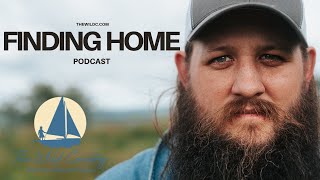
In this episode of the Finding Home / Wild Country podcast, host Caleb Hanchal (also referred to as Caleb Henshaw) reflects on his personal journey from a ministry driven by ambition and manufactured emotional experiences toward a deeper understanding of the true anointing of the Holy Spirit. He recounts how early in his career he copied worship styles, sermon structures, and emotional cues from YouTube heroes, seeking external validation and success. Over time he realized that these outward displays—tears, altar calls, high‑energy worship—did not produce lasting transformation or freedom for people. Drawing on Scripture (1 John 2:27, Hebrews, Isaiah, Philippians 2) he defines the anointing as a divine selection and internal teacher that points to Yeshua, breaking yokes and producing abundant life. He contrasts this with “religion” as a performance‑driven system that manipulates feelings, warning that such manufactured religion is dangerous. Caleb uses metaphors from regenerative farming and shepherd‑sheep dynamics to illustrate how the Spirit’s “wind” leads believers into new pastures of abundance, rather than relying on momentum or urgency. He calls listeners to a “Five for Five” movement—sharing the episode with five people in five minutes—and encourages them to listen for the Spirit’s whisper, to abandon false structures, and to pursue authentic, Spirit‑led transformation.
Chapters
Hey everyone, this is Caleb Hanchal, Finding Home Podcast. Welcome to episode number 7. Really appreciate all that have been listening, uh, that have been jumping in, leaving feedback, sending me messages. I want to say that it means the world just to have the support and know that you're listening and know that you're relating. I love the community that's forming. So tonight I wanted to talk about something that was really important to me in terms of my journey in finding home, because everything that we talk about has something to do with that journey. So tonight I wanted to talk about what the anointing is. That may seem pretty strange in terms of talking about the anointing, but it has a lot to do with my personal journey. And I go back a couple years when I first started ministry. Um, there was a lot, like I've said before, ambition in my heart. I wanted to manufacture some of my personal heroes that I watched on YouTube. So what I would do is I would watch a service, I would follow, you know, certain movements. And I don't say I, I did it on purpose, like I was trying to manipulate people around me. I just thought, this is what works, this is how you become important. So when services would come, as I would step into leadership positions, whether that was leading worship or whether that being a youth pastor, I would, you know, copy even to the sermons that they preached, to the music that they sang, uh, knowing which song created a different response in the congregation. And I just, I leaned into that because I thought that was the road to success. And the success that I thought was, I'm going to be a big deal, I'm going to be valuable in the earth, I want to be important. I want to do something great for God. And I'm not necessarily saying that that desire is bad, but that's what fueled my activity. What should have fueled my activity was the secret place, was knowing that I was loved and that I was cherished then and now. So this ambition that was in my heart was fueled from you know, just not knowing how Yahweh felt about me. I felt like I had to really step into something important, to start a movement, or to get so many people saved, or be the best youth pastor on the planet, before God said, okay, my anointing will fall on you, and you will raise the dead, you will change the world. Um, so yeah, that was my story, and it was really painful walking out of ambition because it lasted so long. And we'll, we'll hit more on that, on what that feels like, uh, later on in the episode. But it's so important for us to, to walk out of ambition because it really helps define what the anointing is. I think there's a major difference between anointing and manufactured emotions. Now, I don't want you to think that I'm just hating on the church expression. As you heard in episode 2, that's, that's not my heart. Um, I really want to have a real conversation and express things that, that I experienced in walking in this journey. I think that we have really misinterpreted what the real anointing is versus just having goosebumps and having these fuzzy feelings. But I'm telling you what, there were times that I fell out and I got up and I was meaner than when I was before I fell out. That doesn't tell me that that was the anointing of Yahweh. Some of y'all relate to that. Some of y'all know people like— and I'm putting myself in that boat, you know. I'm, I'm manufacturing a lot of these expressions even in, in my ministry People are responding well, altars are full, there's tears on young people's faces. And in my mind I'm like, oh yeah, we're doing something great. But nothing changed. Nobody was free at the end of that. So what I looked on the, the outside, it looked like ministry was going well. But if I really had the courage to think about it, nobody was changing. And that carried over to my whole ministry career. I still saw, you know, marriages fall apart. I still saw communities get worse because we were there. And the anointing is supposed to be what breaks the yoke, what sets people free. So I think we need to step back and not be fooled by things that stir our emotions. I knew as a worship leader, there were certain things that I could do in terms of even being a drummer. There were certain drum beats I could play that would stir an emotion. There was a buildup that I could do that people would have an outward expression. There were things that I could sing in a certain way that people would show an outward expression because it's what I learned. It's what I saw on YouTube. It's what I saw when I followed my heroes, uh, of the faith. Maybe we need to step back a little bit and think about what, what really needs to happen here. Do we need to just feel good during our services or feel good during our prayer meetings, fall out, have a good time, wake up and be just as mean and broken before as before? So this is what I want to talk about tonight. Um, what is, what is our anointing? If you look at original language, there's, there's two parts. There's the smearing— being anointed is being, is, is oil being smeared upon you. And then there's a second part, which means there's a divine selection that the anointing has come upon us to preach the good news, as Jesus would say. There's divine selection. I'm going to read 1 John 2:27. Says, but the anointing that you received from him above in you, and you have no need that anyone should teach you, but as his anointing teaches you about everything, and it true and is no lie, just as it has taught you, abide in him. It's just pretty powerful because this kind of dismantles the need, like our need for someone to teach us what God is saying, what Yahweh is saying. I'm not against people going to church and hearing someone teach, but that should stir our faith, that should build our faith, that should edify our faith. That shouldn't be your only source. You have to know that you have access because the anointing is in you to teach you all things. I love how 1 John 2:27 personifies the anointing as the Holy Spirit, the Spirit of God, how Holy Spirit is in us teaching us all things, pointing to Yeshua, pointing to Yahweh, and pointing to their relationship that we have been invited to share. That's amazing. Knowing that is, is transformational alone. Hearing that and feeling that has been way more powerful than me falling out in the spirit, if it was the spirit at all. I know some, some guys, man, got some Undertaker strength, grabbed me and threw me down. I know some people— I got spit on one time. They got real fancy. He was like And I was like 11 years old. I'm like, what's going on? I'm just gonna stand here and take it. There was one, one lady specifically, I'm not going to say her name because I absolutely love her and she absolutely loves me, man, rock bottom me. Like, I heard her screaming coming out of nowhere. She grabbed me under the shoulder and boom! And I just stayed down there because I was afraid if I got up she'd do it again. So You know, and those moments, you know, I don't write them off as nothing happened. I just think that there is this deeper invitation to understand the power of God and the gift through the cross. As Jesus would say, a helper's going to come and show you all things, to comfort you, to give you strength. So when I talk about, you know, finding home, what does that look like? Well, you can't really find home without the anointing. What is the anointing personified? It's the leading of the Spirit of God. Again, what is the Spirit of God teaching us? He, the Holy Spirit, is showing us, inviting us into the deep depths of the love that the Father has for the Son and the Son has for the Father. How you were entangled in that exchange at the very foundation of the world. And that you get invited into this dance every moment of every day, even when you're sleeping. So this is the alarm clock that you hear in your spirit, like, man, I feel like I'm supposed to be doing something, or I feel like I should be needing something, or I feel like I should be involved in something. I think it feels a lot like being homesick. You ever just gone on a trip and I don't know, you just like, I just want to be home. And it was a cool trip. I thought of many where I got invited to go with friends and I, and I, and I get going and I'm having a good time and I'm thinking, man, I just would really like to be home. I think there's some way we can correlate those feelings to how we feel about heaven, how we feel about this realm that the anointing is welcoming us into. And you get pieces of it. And I talk to so many people that just say like, I'm just, I'm not doing very well. I'm just, I've been praying, I've been asking for more. I've fasted, I've prayed. I said, I think you feel a little homesick. It's this feeling of not being content. It's, it's knowing that you're going in the right direction, but you have not yet arrived. It's, it's like seeing the promises that Yahweh has spoken over your life, and you know they're real. You know they're for you, and just seeing them from afar. It's now but not yet. That's like feeling homesick. I, I long for the day that we fulfill what Jesus talked about, that I am one in the Father and you are one in me. That that reality becomes real. It's real right now. But to be aware of that, to live in this place called home, because how would you define home? Is it just a place you lay your head at night, or is it a place that you feel the most yourself? I think that home is a place where you are the fullness of who you are and who you were created to be in full relationship with those that you love, including the Trinity. So what's special about the anointing is the anointing kind of guides you there. It's part of the transformation process. I think as we talk about the role of the Spirit, and I, I think about even, you know, Philippians 2, where there's this dynamic between the Trinity where one is preferring one another. Says Philippians 2 that Jesus did not hesitate to think of himself equal with God, yet humbled himself as, as a form of man and to be a servant So there's invitation for us to approach this relationship in the same way. That's hard to hear because by his blood we are called the righteousness of God, to approach boldly before the throne and make your petitions known, to, to see ourselves as, as equals. Wow, what a harsh thing to say. But to approach it the same way as Jesus, to, to think that we belong in this relationship, not to hide away in our shame. Because if we do that— listen, if you say you're sorry enough, you'll believe you're sorry. You'll think you're a sorry human being that can't bring anything of value But what Jesus did for us is he unlocked something. He allowed the anointing to come in us and teach us and grow us and transform us into the image of his Son so we can approach this relationship like Christ, humbly preferring one another. Wow, I would love to hear the voice of Yeshua above my own. I would rather, as he did, take the position as a servant, as he displayed to his disciples washing feet. It's why Peter, at, at the assembly of the church, can say in front of everyone, I'm a fellow elder amongst you. This is Peter. Let's think about that. If, if you walked very closely with Jesus while he was walking the earth, you would think you'd have some bragging rights. Like, you went to Harvard, I'm going to announce myself as doctor. But you have Peter, one of the most— a pillar of the faith in the, in the early church, says, I'm, I'm a fellow elder amongst you. The humility, the transformation that happened within him has to happen in us. The, the danger of a manufactured emotional response is that it is religion, and religion is the most dangerous thing in our communities. It's not drugs, it's not crime, it is religion. Religion is like the big bad wolf It will act, it will dress like, it will mimic, it will create a home that's familiar, it will use the same language. It even says you could speak with the tongue of men and the tongue of angels, but it'll be like a clanging symbol in my ear. Says you will actually speak with the tongue of angels, you'll have the language of heaven, but yet your heart is far from me. That's religion. It's the big, big bad wolf. And what's dangerous about it is it's like choreographing glory, like this needs to happen for us to say this service was a success. We can count how many people raised their hand and prayed their prayer that the prayer is not in the Bible for Jesus to come into your heart so that we could write it down and put it in the bulletin next week. Taking a census like David did, and we know how that turned out. What's dangerous about this religious display is when someone quote unquote gets saved, prays the prayer, and let's say they're in recovery and they're going to church and they're in— they're experiencing all these manufactured emotions. In their mind, they say, this is as good as it's going to get. I'm going to have to continue to struggle every day. I'm going to continue to have to go to AA meetings. I'm going to have to continue to stress about relapsing. And if I relapse, oh no, they'll think all all of that was, was a fake. And to not have a real representation of the anointing that breaks yokes, that transforms, that brings joy. Jesus says he came to give life and life abundantly, not the opportunity to struggle, not the opportunity to get by. And we have just compromised and settled for business as usual, just getting by, just surviving. I'll try not to sin today. I'll try not to relapse today. I'll try to have a better day today, as long as I don't go to hell. Is that what the anointing is for? Is that why the anointing lives on the inside of you? I'm telling you, there is life to be lived and life more abundantly. Hey everyone, Caleb Panchaw again. I wanted to pause this episode and invite you into our movement, the Five for Five. Now what is the Five for Five? Very simple, very easy, and it's absolutely free, and you can help us out a ton. For the next 5 minutes I want you to take 5 people and send this episode to them. If you have people on your heart that know will be affected and relate by this episode, please send it to them. Again, push pause, take 5 minutes, send it to 5 people. This is the 5 for 5. I'm Caleb Henshaw with the Wild Country, and we thank you so much for the support. So you get in this cycle of religion where You rely on legalism. You rely on try not to go to hell, try to do things better, try to make sure that you're holy and sanctified. And then we create momentum. We ride the waves of momentum because momentum says that we're doing things right, right? I don't think so. I've been a part of meetings where I did feel the presence of God show up, and there was an outward display of that. But the first thing to think is we did what was right for him to come, I think, is, is a huge mistake. I think it's accepting our brokenness and our bankruptcy without him. I think he's just attracted to that. I think he comes into those places where you can hear him whisper to you. I remember being in a sanctuary and the preacher was like, "You need to scream, Jesus!" And I just— something felt off about it. And I heard Holy Spirit say, "He hears you when you whisper. He is that close right now." And it forever changed me. It's really what started me asking certain questions and being brave enough to admit that I was involved in manufacturing moments that weren't real. Not saying that anybody else did. I'm saying what I did. I was trained in Bible school on how to give an altar call, on what setting the lights needed to be at, what music needed to be played in the background. What words to say and how to say it. And if less than 25% responded, it was a failed altar call. That's what they're teaching in Bible school. They also give you an assignment that says plan out a year's worth of sermons with text and bullet points How can you be led by the anointing? It's like you put Holy Spirit in a cage like he's a monkey and say, come out and perform for us when we need you, and then go back in. I'm repenting to whoever's watching this. Maybe there's some old youth students that are watching this. There are some times that we shared that were wonderful because of the grace of God, that he would still show up even in my imperfection and my need to orchestrate something powerful. He would still show up for you and for me. But know that there's a better way. Momentum means that I am moved by force. I'm moved by events. I'm moved by how many people responded. And there is a peace in knowing that we don't have to operate by momentum. Can I tell you something else? We don't have to operate in urgency. A lot of friends of mine are going to message me and cuss me out on that one. God doesn't operate in urgency. He's not moved by my inabilities or He's not moved by my speed. So if he's not moved by it, I think there's an invitation to not be moved by it myself. I think that there's a better movement in being submissive to the wind. Wherever the wind may blow, that you follow that, you follow the anointing. On your way of making it to home and finding home, you follow the wind. And I'll tell you, sometimes the wind doesn't blow for a while. Maybe it has you staying put in where you're at so that you can explore your surroundings and you can learn and you can sit down and you can ask questions. And then the wind will pick up and move you to another spot. I think about Jesus and the woman caught in adultery. I think about how the anointing breaks the yoke and how he submits himself to her and kneels down at eye level, and she's vulnerable. He's down there with her and he says, go and sin no more. What a provocative statement. You don't see it as unrealistic because it's Jesus. Think about you saying that to somebody else. Do you really believe that's possible? So Jesus is with the woman caught in adultery, and the anointing that he operates in completely breaks the yoke of bondage in her life, where she not only heard the permission to go and sin no more, but she achieves the promise that was given to her in that moment. What's really unique about this scenario is that it really makes war against the idea of separation is that you're by yourself in your darkness until you make the decision to come to your senses, to clean yourself up, and then come to the house of God. Jesus gets down into her darkness. It's a display of what Yahweh longs to do with creation, is he will find you in your darkness and he will camp out and he will stay there with the intention of walking you out of it. So wherever you're at right now, whatever pit that you're in, know that he is with you. Sitting in your darkness. You can talk to him as you are and feel the wind blow on your life, because there's a promise. He said, I'm going to walk out of this. We're going to walk out of this together. I like the Greek word for anointing. It's to press the oil into something else. It's a very powerful episode of The Chosen when Jesus sees the, the, the press, the oil press, the end of the episode. Gethsemane, um, the name for that is, is oil pressing, where the oil is pressed So I'm looking at this exchange between Jesus and the woman caught in adultery. She has a name. In that exchange, it's almost like the oil was pressed, because how could she go and sin no more? How could she possibly uphold that end of the bargain if not the Spirit of God was pressed into her and showing her how to do those things? Because it's not by our will, but it's by the Spirit of God. And I know that's such a controversial statement because Jesus didn't die on the cross yet. How the Spirit would come upon people like, like Saul. How the Spirit would come upon people like David. There's this, this pressing, this exchange of oil into one thing. And another. And, and I believe that's what causes the abundant life. I, I have a proof of that from being a farmer. A big part of what I do and what I'm passionate about is, is regenerative farming, is learning how to put systems into place that are orderly with nature, with how Yahweh designed it. And if you put the earth back together the way it's supposed to be, if you put the, the care of people where it's supposed to be, what equals that is abundance. You see abundance come back in the landscape, and that's proof that the order of, of Yeshua to send the anointing to show us how to live a life, a life that's real and not manufactured will create abundance in our life. I think for me, when I started to have these moments, these halting moments like we talk about often, I started to ask questions. I started to, you know, why, why do we do some of the things that we do? Why do we do worship like we do worship. It feels like a lot of our humanity has infiltrated that with caring about the stage and caring about the lights, which there's a love language in that. But what does it look like to really encounter Jesus? And I started to ask questions like, Why, why are people still dying young? Why do kids have cancer? And we just write it off as the sovereignty of God. I just think we're too, uh, fearful to ask the question. Why are— why is marriages falling apart? Why are some of our favorite people of the faith caught in controversy all the time? Am I trying to write off their ministry? No, I'm just trying to ask the question, why are we too afraid to ask these questions? Why, why isn't our expressions changing the area around us? Why are we not a city on the hill that cannot be hidden? Why are the places around our churches still stuck in poverty? And don't say it's the sovereignty of the Lord. I think it's because our manufactured religion isn't cutting it. And I'm not there. I'm speaking like I've experienced this, but He said, greater things will you do than I did. Go and heal the sick, raise the dead, cast out demons. And the demon of, of poverty is stricken in their area. Not just being poor, but thinking poorly, having a poverty mindset. That's why nobody can encourage other people when they're trying to do something great. That's why most of my friends that I were in— I was in ministry with. And it's not like I need this, but there's been no support from them. There's been support from every non-believer friend that I have, to the point where they send messages saying, I'm proud of you for doing this, for stepping out and speaking. And I'm not saying that to just to get applause. I'm saying, look at what the— this religious mindset has done to us and done to the church. We are ineffective. How can we be effective? Having the courage to start asking questions and listening to the anointing that's in us. Being led by the wind, throwing out agendas, throwing out structures, throwing out systems that we've put in place and we've just done 'em because that's how we've always done them. I know when I started asking questions, that's when I got, I got labeled as a heretic and a prodigal. You know, there was some truth behind that because I, I realized I had been a prodigal for way longer. I've been a prodigal while I was in ministry because I didn't realize that I was home in him. I didn't realize that I meant that much to my father as I was. So there's this root of, of ambition that comes into a lot of believers that, that says you have to do more. You have to be a big deal, you have to have your name on posters, you have to be the man of power for the hour. That ambition is a symptom of something much deeper, and that's misidentification. The misidentification that you're separate from God. It's a lie. It's a lie. This lie of separation says that you have to pull yourself out of the pigpen. You have to pull yourself and come to yourself and that he's not involved and that he's not drawing you to his son. It says in Scripture that Jesus literally drags all men into himself. Unless he's got a special force power, he just pops his hand out and says, you know, telepathically drawing. He is with us in our darkness. He stoops down and writes in the sand and looks us in the eye and says, "We're gonna get out of here. I'm gonna press something in you that's gonna change you forever." And you don't have to worry about momentum. You don't have to worry about what song is playing or what drumbeat's happening or how the preacher is preaching. You don't need a man to teach you all things. I'm going to put the anointing, the Holy Spirit, the wind of God in you that will teach you and show you all things and point to me. What a good deal. And I, I have a huge red flag to those who preach differently than they communicate and call it the anointing. Listen, I have lost— I used to lose my voice every time I preached. Ask any of my friends that heard me speak. I would shout, I would scream, especially if it was a prayer service. Then vocal cords— and I try to get the Lou Engle sound going, you know, I had a little rasp going on, voice was going out. I was passionate for God. My voice would leave. Do you know I never talked to people like that in real life? I said the anointing came upon me. Did it really? There may be a time to be emotional, there may be a time to be louder than normal, but there has to be this true, real fruit that comes from us, even from those that, that teach and preach, that you're releasing yourself and what you know, that what you found in the secret place not manufacturing some one-liner to get people riled up. That's not working anymore. It's not. I think of, you know, of John 10, and this is, this is going with our whole paradigm of the wild country and what we're all about. As a community, um, our theology. It's, it's John 10. It's this analogy with the sheep. It's with Jesus being the shepherd, the Good Shepherd that leads his sheep out of the sheepfold into new pastures. And there's this revelation there that I didn't find until I was a farmer, until I raised sheep myself. There's a time when those sheep have to learn the voice of the shepherd. There's a time for me where I had to leave the sheepfold and learn the voice of the shepherd. If you're raising sheep and you keep them in a paddock too long, they'll eat all the grass, and that's when they're susceptible to disease. One, they will be parasite-loaded, their insides attacking one another, shutting down, and then they will starve to death. They will not fight to get out. They will sit there and they will starve. And it's up to the shepherd— if it's a false shepherd, he will bring in hay, low-grade hay, just to keep them alive enough to come next week and do the same thing. What does that sound like? But it's the Good Shepherd that opens the gate, because through him and by him is the only way. He is the door, and he opens the gate, and sheep is introduced to new pastures full of life. And as a farmer, I get to move sheep every day to a new spot. Keeps them healthy. They get to find what they need for their body to make them whole. Listen to me now. That sounds like abundant life to me, to be led and to learn the voice of the Shepherd. It says you won't be fooled by other voices. You won't be fooled by false shepherds if you know the true voice of the Good Shepherd. And I'm afraid that we don't know the true voice. And I'm afraid we're, we're so afraid to ask the question that leads us to that place where we can hear him. I want to read one of my favorite passages in Hebrews, and I'll, I'll bring this down to, to a close. I'd almost read the whole chapter of, of Hebrews 11. It's one of my favorite, but it, it kind of talks about being led into promises that are not yet here and learning how to, to listen to a voice. And this is, this is the passage that defines the wild country, finds this ancient world that's both old and new. It feels like home, yet it's things that we have never seen and never heard. So Isaiah 11 Let's start at verse number 8. It says, by faith Abraham obeyed when he was called to go out to a place that he was to receive as an inheritance, and he went out not knowing where he was going. Man, this sounds so familiar. By faith he went to live in the land of promise as in a foreign land, living in tents with Isaac and Jacob, heirs with him of the same promise. For he was looking forward to the city that has foundations, whose designer and builder is God. By faith Sarah herself received power to conceive even when she was past the age. She since considered him faithful who had promised. Therefore, from one man, and him as good as dead, were born descendants as many as the stars of heaven and as many as the innumerable grains of sand by the seashore. And listen to this: These all died in faith, not having received the things promised, but have seen them and greeted them from afar, and having acknowledged that they were strangers and exiles on the earth. For people who speak thus make it clear that they are seeking a homeland. Some transition says they're seeking a, a country, an old country. If they had been thinking of that land from which they had gone out, they would have had opportunity to return, but they weren't thinking of that land. But as it is, they desire a better country, that is, a heavenly one. Therefore, God is not ashamed to be called their God, for he has prepared for them a city. And I get really messed up when I read that because that's the promise. That's the homesick feeling that I have that will refuse to allow me to be stagnant, that will refuse to allow me to settle for anything less than what Yahweh has put in front of my face to say, there's this new country that you can come and you can walk in. And I have dreams, these dreams full of wonder and adventure. I dreamed of things growing out of the ground that God planted in my backyard. How crazy is that? But man, I believe it. I have no desire to go back to the old wineskins and the old country and the homelands that we left to follow this word and this promise, just like Abraham, and consider it a blessing to hear this whisper from Yahweh. There's a new home for you. There's a new country for you, and you can hear its melody and it can arrest you. I want to encourage you that this, this whisper that you may hear when things are quiet When things seem a little off, have the courage to listen. You may be called a heretic. You're not a heretic, or you join really good company in the ranks of Paul the heretic. You may be called a prodigal, and you may be one in your own mind. But the prodigal son was always son no matter where he was. And that might be a journey for you to understand and realize. And you may be called lost. Not all who wander are lost. Maybe it's time to follow the wind and to have the courage We have this misconception that following Yahweh is safe and confined into the sheepfold. Don't go out of bounds. And we completely eliminate the feeling of fear because perfect love casts all fear. Can I suggest that unless fear is present, perfect love can't overtake it? There are so many times in this journey where I was afraid, and it was from Yahweh. And in those moments of fear, I would trust that he would show up, and he would, and his perfect love would overtake. What's it feel like to jump over the fence that was meant to hold you in and meant to domesticate you? And take out the wild that's in you. You have a wild heart that communicates with a wild God. So have the courage to say yes to those whispers. This is what the wild country is about. That we're on, on this path, the same path that Abraham, Isaac, and Jacob and Sarah and all the fathers of old They saw the promise ahead of them, and it may not be us that achieve it. It may be our great-great-great-great-grandchildren that get there. We have to start somewhere. We have to have the courage to say what we're doing is just not it. There's no way. There's no way that the axe is right in front of us or that the person of Jesus is expressed in scripture and in our personal lives, that we can't see this radical change that he promised. Trade your religion for wonder. I want to thank you for listening. Thank you for joining in. Thank you for reaching out. And asking questions and wanting to be a part of this community. Continue to do that. Until next time.
More from Kaleb







Chicken Processing Mistakes...And How I Learned From Them (Plus FREE workshop!)



How To Cut Up A Whole Chicken — Jumbo Wings, Quarters, Breast & Tenderloin (Full Tutorial)
