Finding Home: From Separation to Belonging with Dr. C. Baxter Kruger
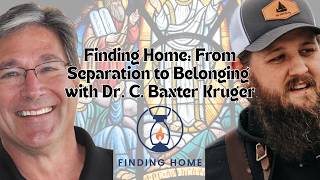
Dr. C. Baxter Kruger argues the Western gospel has distorted faith into separation and self-effort, when the real gospel is union with Christ: "Jesus is in us, the Father is in the Son, the Spirit is in us." He offers practical homework: ask Jesus to show you five ways you already share in divine life.
Chapters
Hey everyone, welcome to the Finding Home podcast. I'm your host Caleb Panchal, and I am excited about this episode. This is a special Easter edition episode. I had the honor and privilege to sit down with probably the most influential voice in my life. I have consumed his books, his classes, his workshops. I've attended many events, many men's retreats. And to say that this conversation that you're about to hear is nothing short of amazing would be an understatement. I had the honor and privilege to sit down with Dr. C. Baxter Kruger. Baxter is a theologian, a teacher, and an author. He's written several books including Jesus and the Undoing of Adam, The Great Dance, and one book in particular that we're going to be discussing today, Home. Baxter has a doctorate in theology. He studied in Scotland under two of the most influential Trinitarian theologians of this century, that's J.B. and T.F. Torrance. He now runs a ministry called Perichoresis where he helps people find where they belong, preaching the gospel of Jesus and the inclusion that we have in him. Baxter is one of the most genuine people I've ever met. If you're ever in discussion with him, it just oozes out of him. The good news of the gospel will come. It's interesting that the first 20 minutes of this episode, Baxter is just preaching the gospel, and we didn't realize that I hadn't even asked the first question. That's the type of episode that you're going to get. I hope that this one marks you, challenges you, and inspires you. Without further ado, let's jump in.
Yeah, I was, uh, John Crowder and I did an event, a week-long event in Sydney, and then he went on to India and I went to Adelaide, Australia, which is our sister ministry's home base in Australia. I've been in and out of there 26 times over the years, and it was It was priceless. Both places were just priceless, uh, to see where we are now compared to where certainly, but where we were 35 years ago and even, even 15 years ago, even 10 years ago. It's just remarkable. People are like, I'm not, I'm not here to do a bunch of stuff for God. I'm here to share in God's glory. What would you have me to do right now?
Yeah, wow.
So right now it's a podcast. As soon as I get off this podcast, I got two grandchildren that just come over and hang out with them, and then my wife wants me to do some gardening. And it's like, this is the way it works. You stay present because when you are— when what the scriptures call sudden fear grips you, and this is where we all, all live in anxiety, then we are focused only on ourselves, and we begin to use people around us to try to deal with our anxiety that we're unaware is going on. But when Jesus calms the seas, the stormy seas of our soul, we are suddenly free from preoccupation with ourselves, and we can begin to notice what's going on around us. And it may be a grandbaby, it may be somebody's got a flat tire or car trouble, or somebody has some very serious problems going on in their lives. But we're then free from ourselves and free to notice and therefore free to respond. And that's the way the kingdom really moves. It's not grandiose. It's not— we got to go across the sea to do something, although the Lord has us doing that, and that's beautiful and wonderful. But it is freedom to respond to what's right in front of you. And, you know, in my journey, um, meeting Jesus on the inside of me and on the inside of all that's broken, that's peace, that, that's assurance. And then you can notice what's going on in your wife's heart or what's going on in your neighbor's heart, and you're free to respond. And you don't just make up your response You just ask Jesus, how would you have me respond, Jesus? And he's pretty infinitely creative, um, in the sense that it's probably not going to be what you would, you would think to do with our religious baggage. I need to go fix this, I need to go do this, this, this, and this, and this. It may be real simple. Here's a good one, Baxter, listen. Listen, you've been so preoccupied with yourself and your own damage, you hadn't noticed what's going on around you. Now listen and ask me how— what to do, how to go forward. And that's the way the kingdom moves. It's not, you know, we— the whole Western world operates on the assumption of separation. I saw it Sunday, this Sunday, one of my friends my, uh, was having their child baptized, and I went along. It was kind of an Anglo-Catholic situation, and I sat there. This was 3 feet from me, and the priest was a very likable person. And he got there and he put some something in the water and stirred it up. He's making a little recipe, and he said in the, in the liturgy again and again and again this child is, is essentially born outside, and by the holy waters of baptism placed on that kid's forehead, it moves him from outside to inside. And he said, this child is now born again. And I, I just sat there and thinking— and then he got up, preached a sermon that completely contradicted that because it was focused on Jesus and I sat there and said, that's the whole Western problem right there. In the Anglo-Catholic tradition, everybody's outside. You get inside by baptism, water baptism, holy water baptism. Well, in the Protestant tradition, you're outside, you get inside by faith. In both of those, I just sat there and said, no wonder we're so bored and cynical. Crap, we're being told to believe in water and in some kind of transaction that happens there, and we're being told to believe in our faith. We're trusting in the faith, the fact that we've got faith right and gotten across the divide. And I'm like, that's Jesus, that's what he did. Why don't we trust him? Why don't we focus not on something that's going to distract us from Jesus by either our faith and getting it right and making sure we get it right all the time? And we all know none of us are perfect believers. We hadn't even made it to the mustard seed level of faith yet. And yet faith is what gets us in, we're told. And this is, this is really serious. This is— and my critique is not towards any person. I don't, I don't have any— we're all in the same darkness. But the light shines in the darkness, and the darkness is— don't— if you're telling people that their faith gets them in, you are raising an idol in front of them that is distracting them from Jesus Christ. It's not our faith that gets us in, it's Jesus. He says, in that day you will know that I am in the Father, you, y'all, us are in me, and I'm in you. I did that. Now that's what you trust. So the whole focus of the gospel for me, um, ever increasing clarity and poignancy is that Jesus is in us. He did that. Our contribution was to damn him, and we hoisted him on the cross. The cross is not about the wrath of an angry God being poured out on his son instead of us. The cross is the wrath of the human race being poured out on Jesus. It's the divine descent into the abyss of delusion by way of Jesus' self-surrender. I mean, this is what John is saying in John 18. I mean, Jesus says they come after him, Romans and Jews in bed together coming down the Valley of the Kidron. And Jesus says, whom do you seek? Jesus the Nazarene. And Jesus says, ego eimi, I am. And the second time he repeats ego eimi— there's three in that sequence— the second time it says they all drew back and fell to the ground. A thousand Roman soldiers armed with weapons and torches and lanterns, the temple police, the Levites, led by a betrayer And Jesus said, I am the name of God in Greek, in the Septuagint, throughout Isaiah, stretching all the way back to Deuteronomy into Exodus. He says, I am, and they fall to the ground. I'm thinking, okay, it's over. But in less than 4 verses, it says that the chiliarch commander of 1,000 troops. And the commentators can't cope with that, so they kind of have John's Jewish hyperbole. And I'm like, okay, let's cut it back to 500. The commander binds Jesus and carts him away to the— eventually to the high priest Caiaphas. And then Jesus is scourged, he's beaten, he's spit upon. And eventually lifted up on the cross and hoisted. And that's not about the wrath of the Father, because the Apostle Paul says God was in Christ reconciling the cosmos. And Jesus himself says, the hour is coming— John 16— the hour is coming and now is, where you, my disciples, will abandon me and leave me alone. But I am not alone, the Father is with me. Meta. He's got me. So you have a divine descent by way of submission. We, uh, acted— we committed— the human race committed murder of God, daisidion. We hoisted him on the cross, we tortured him, we cursed him, we damned him, we lifted him up in complete and utter rejection. And the Father, Son, and Spirit meet us in our rejection of Jesus and embrace us in everlasting mercy. They transfigure our covenant-breaking apostate murder of, of the Son of God into the mercy seat where we are embraced in everlasting mercy as we are in our brokenness. That's the divine embrace. And now, and now, so I tell people, look, I— your faith— don't trust your faith. Ask Jesus, are you in me? And ask Jesus, did you bring your Father and the Holy Spirit with you? And when you hear Jesus says, I am, on the inside, not of the church pose, but on the inside of you as a broken human being, that's a place that gives great freedom to live from, and it calms the seas of our soul. And this is kind of like manna to me. It's like every day, you know, you wake up, sometimes you've had bad dreams, sometimes you have enormous pressures financial, marital, and all kinds of work and stuff. So, Jesus, are you in me? It's like all day long, Jesus, are you in me? Why can't I hear you, Jesus? Ask him if you can't hear him. Ask him, what would you teach me why I can't hear you? And I guarantee you that everybody hears Jesus all the time. They just don't know it's him yet. But then the next question you ask is, did you bring your Father with you in me? Of course, the Father, Son, Spirit never do anything in isolation from one another. It's an indivisible relationship of absolute oneness of love and at-oneness. Are you in me, Jesus? Did you bring your Father with you? How about the Holy Spirit? Did you bring the Holy Spirit with you? Oh yeah, oh yeah. We don't do things separate. We're all in one another, and we have descended into the abyss of your delusion, which is ultimately satanic. In origin, and we have found you, and we have you forever, just like we promised the whole time. A covenant is a covenant, not a contract, as J.B. Torrance used to say, my professor. This is not about us getting it right to fulfill it. Jesus has fulfilled our side, and he's in us saying, now walk with me, and I'm gonna, I'm gonna bring you to see the Father with my eyes. Baxter. This is my, my self-commentary on, um, John 8:12. I am the light of the world. The one that follows me shall never ever walk in the darkness. There's only one. That's the lie of separation. Um, in the darkness, and, and but shall have the light of life. I think what Jesus, for me, what he's saying there is Baxter I am the light of the entire cosmos, every human being, because I created them. I am the source of their existence and the meaning of their existence. Now take sides with me, Baxter, against the way you see my Father, because you don't know him. And it's okay, I've got you. I know him, and I'm in you, and this is the way this is going to play out. I'm sharing everything I know with you, not just here theologically, but here. So take sides with me. Sometimes babies say, jeez, Jesus, your view of God is pretty good. I don't know that I, you know, so all kinds of questions. What about the Old Testament? What about— he's discipling us. Jesus says, Baxter, take sides with me against the way you see me, because in your mind I'm little bitty. I'm not the Lord. I can be the Lord if you make me Lord, if you get your faith right, you know, and obedience. And I remember looking at, um, the Good Shepherd passage, um, and I, I've read that like you have, you know, I don't know, a bunch of times. And I thought one day it hit me, when Jesus says, I am the Good Shepherd, he's saying back to you, your faith does not make me I Am. Your repentance does not make me good, and your obedience does not make me your shepherd. You need to get over yourself and understand who I am. And I'm the one that created you and sustains you. And I created all things in my— inside of me, inside of my relationship with my Father, inside of my anointing in the Spirit. And not one thing, John says, was created outside of Jesus. So you've got a little bit of Jesus. We got some Christological work to do. And just walk with me. And I know it's going to be scary at points because it may go against everything you've ever been taught about me, but walk with me. And then, then, uh, in community, mind you, not just on your own. That's a bunch of islands. We do this with the whole history of the saints. That's why the early church is so important. Um, and then take sides with me against the way you see yourself, Baxter. That is a big one because Jesus has said to me, you do not see yourself the way we see you. We see you as a beloved son who's lost his way, and we don't do abandonment. So when you begin to understand the goodness of my Father, you begin to understand you're not separated from me. You begin to understand that we've got you, all of you. And you can begin to say, all right, I don't want to see myself or anybody else the way that I do Jesus. I don't. I'm tired. I'm done with that. I'm done with trying to create a person either in myself or in marriage or in relationships. Most of us, I suspect, get married because we do really are drawn to the other person, but I think also because we secretly hope that they're going to be our completion. And what happens in I won't say all marriages, but bunches of them, is that like with me and Beth, is that I realized at some point, you know, years ago, that what I was actually doing was trying to manipulate Beth to be the Beth that I think I need. And she's doing the same thing to me. She's trying to make me her Baxter. And it wasn't a relationship between her as she is and me as I am. We're trying to be perfect and manipulate the whole thing. Just falls apart, man. It doesn't work. So take sides with me against the way you see yourself, Baxter. Walk with me. Take sides with me against the way you see your neighbors, because you don't see your neighbors the way we do. It's okay. That's not condemnation, that's liberation. I'm going to liberate you. And take sides with me against the way you see your enemies, because they're not our enemies. That's in your head, and that's in their head. I'm working that out. And take sides with me against the way you see my creation. You don't even think it is our creation. You think it just popped into being. This is my world, Jesus says. I created it. I sustain everybody in it every moment. All life on this planet is my life that I'm sharing, from trees to water to human beings to animals and everything in between. And that's, that's it. That's, that's like you have to sort through all this mess with the way we have in the West. Good Lord have mercy, have we just— it, it's, it's laughable what we have done to the Father. If it wasn't so serious that we actually have been taught And we have tried to believe that the Father poured out his wrath toward us on Jesus on Calvary's Hill. We split the Trinity, and we don't even throw up. The Father is so thoroughly unlike his Son that Jesus can become sin and the Father can't look at it. And what's the Holy Spirit doing in that? Siding with Jesus, siding with the Father, trying to hold the two together? You know, it's like, whoa, just completely backwards, upside down backwards. Is that the cross is not about sinners in the hands of an angry God, it's about God the Son in the hands of angry sinners. It's the self-surrender of the Son of God in his oneness and at-oneness with his Father in the Holy Spirit to us in our insanity, in our delusion, which is dastardly conceived and exploited in us. And he gets to the bottom of the delusion by submitting and surrendering himself to us. And that's where he meets us, at the bottom of the abyss of our delusion. That's where the light shines in your darkness. I'm telling you, this is getting loose all over the world. And buddy, you— you're— I'm staring freedom in the face. It's just absolutely— it's like everybody's levitating in peace, enjoy. And it's just— just no, um, I mean, in the old days for me, I mean, I'm talking 40 and 30 years ago and 25 years ago, I mean, there are people sitting on the front row with 3 or 4 books in their Bible, and they're doing like this, you know, and I get 2 words out. What about this word? What about that verse? And I'm like, that's not the way it is these days. The room is full of people who have seen, who know, who want more. One pastor introduced me, and he said, Baxter, come up here. This was in church. He said, come up here, Baxter, and take as long as you want to speak. That is utterly amazing to me. That was in the Bible Belt. I'm just like, whoa, what is going on now? So I just was with the Russians. Just, it's just crisscrossing. It's the same conversation. People see, they feel it, they sense it, they want clarity. And then they want to say, well, how did we get so far off? Well, here's how. And that's what I've been working on for the last several years. I mean, my whole life is trying to figure out how we got there so far off base. But it's in all of my books and all 500 hours of teaching and all of mine and Jason Clark's TV show, you know, that's the— that's underneath it all. But of late, I've really been trying to to work that out so that people can go, oh, I get this now, I get this now. And it's not that great fear of I can't raise my hand and ask a question because, you know, what am I going to do if, if I'm, if I, you know, if the church or the leadership or whatever, you know, doesn't like what I'm saying, you know what? Well, it's to the point now to where, listen, I've, I've been in 3, 4, 5 denominations. I did what the preachers told me to do. I worked harder, I tried hard, I prayed more, I studied the word more, uh, and that didn't give me the life that Jesus promised— the freedom, the joy, unspeakable, full of glory. I mean, that's people's experiences. We are— it's not like we're— we, we're not here and we hadn't been faithful to what you've told us to do. It's just that it didn't work, and we know it didn't work, and you know it doesn't work, but you don't know what to do. And that's okay because Now comes a time when we're realizing that the issue is that we don't really know the gospel. And there's millions and millions and millions and probably billions of people that are right there and they're afraid to say a word. And it's like breath of fresh air, just— and people go, wait a minute, that's some new revelation. No, no, this is not new revelation. This is the old revelation. Coming back around to us in our present current form of delusion and alienation. It's a beautiful time in history, and at the same time the whole world's falling apart. Great. It's the only reason it will— it has ever been, uh, it's, it's being held together by Jesus, not by political empire, not by brute force, not by the insanity of you know, the secular worldview. It's been held together by Jesus. Everybody, all the empires. And he's revealing himself now and breaking through because of our— because of our despair. Anyway, I just kind of jumped in.
I didn't— no, no, this is good. I, um, no, I, I have a couple questions just about what you share, because the freedom of this gospel And I want to just thank you. I can't thank you enough for just almost the infrastructure and the pathways that you've given, even for me personally, through books, through teaching, but just being in the room and being able to discover this gospel really for the first time. And from, from my history, I don't want to go into my, my past, but there's a lot of people that are going to listen to this, I think, that are going to relate because that's such a hard concept. What you just shared is so beautiful, but think of myself 10 years ago. I would struggle with it, and I, I really relied on a lot of self-righteousness. You know, I was in the church, I was doing ministry, was in, you know, the Church of God denomination where we really, you know, caught the wind and rode momentum and screamed our guts out. And that led into this ambition in my heart to want to be a big deal, to want to be famous, to want to be on the posters at the church, to want to be invited to speak at all these places, but to be so bankrupt in the background. And I remember just a very halting moment is Yahweh began to, to whisper some things to me, like not in a roaring voice, and things just didn't make a lot of sense. Uh, I noticed that people weren't becoming whole people were just attending, you know. And I'm not here to hate on the church or anything like that. The passion grew in me was, I think there's a way that, you know, there's wholeness available, there's union available, there's— I can actually have good quality time with my family. I was putting in 80 hours a week, didn't see my kids and my wife, um, and I felt like I was a good husband because I was doing the work of the ministry. And then to leave that and to really just find my way into this new world. I, my question is, I say all that to say, why do you think it's so hard for especially people in the West to accept this gospel that you're talking about? I just saw somebody and we're in Easter season right now, just give this big status about my kid was sick and because my kid was sick, God used it to pull me back. Almost in the, in the realm of God made my kid sick so that he would bring us back into his delight. So I just want to peel back because this passion from me to, to go through the journey that I'm in, it led me to, to really want to discover what home really was. And then to get that booklet that you had where you really go into detail, not just about, you know, the four corners of a structure, but you, you really challenge this idea of separation and self-effort and self-righteousness. So I guess my first question is, why do you think that's so hard to accept?
Well, it is— it's— the Apostle Paul calls it the veil. Um, that's number one. Jesus says— this is number two— he says several times in John's Gospel How can you believe when you seek the glory of man and not the glory of the one true God, or the approval, put it that way? So this is a major blinding spot, is that what we're really doing is look around the room making sure everybody thinks we are a certain way and we fit in, as opposed to saying, Jesus, I want to know how you see things. Um, and then of course you got, um, what I call wretched Antichrist mythology that's been handed to us in the name of Jesus. And most of us have— lots of us have bought into that, and we, we're invested. I mean, you were invested. You wanted to be the man. You're working the program. You got no time for somebody to come along and say, well, what you're peddling here is, um it's really against Jesus, and you wouldn't listen anyway. But how it works is the structures begin to fall apart. Uh, your grandiosity, my grandiosity, our great dream of it begins to go south and, and falls apart, and we despair. And that's a great thing because we're coming to the end of ourselves. This, this is beautiful in John's Gospel, the way Peter, you know, he, he— Peter's the leader of that, of the group of disciples, and he's, he's like, he's, he's trying to man up. And, you know, John, the end of chapter 13, Jesus says, I'm, I'm going to go away, and where I'm going you cannot come now. And Peter's like, what do you mean, Jesus? I'd follow you anywhere. I can do this. I can— I'd even lay down my life for you. So, and then Jesus says— and this is— there are 25 truly, truly I say unto you statements in John's Gospel. This is the last one. And Jesus says, Peter, truly, truly I say unto you, before the rooster crows, you, in your self-effort and in your pulling yourself up and just tell me what to do, Jesus, I can man up and do it. You will have denied me 3 times. And so the next thing Jesus said, and people don't see this connection because there's an end of chapter 13, beginning of chapter 14, the next thing Jesus says, he would say, truly, truly I say unto you, before the rooster crows, you will have denied me 3 times. 'Let not your heart be troubled. You trust in God, not trust in me.' And so that, that conversation moves down to where, um, I think it was Philip or Thomas who says, 'Jesus, where are you going? We don't know the way. How can we get there? We don't even know where you're going.' And Jesus says, 'I am the way, the truth, and the life. No one comes to the Father but through me.' So Peter is the, you know, the quintessential human being. I can do this, I just need some direction. And what you're going to do under your own strength, Peter, is deny me. And then, so the question then is— and John does this again and again in his gospel— Jesus will make a comment, and then a little later on he'll make a comment that interprets his comment. So what does he mean when he says, I am the way, the truth, and life? Well, if you, if you, if you folded up John's Gospel, uh, folded up John 14, then you're going to have a kissing happening here between John 14:6 and John 14:20. I am the way. What does that mean? I am in the Father. What does it mean that I am the truth? You, Peter, are in me. You're not outside trying to get in on your own strength. You're in me. And then, what is the life? I am the way, the truth, and life. In that day you will know that I'm in the Father, you're in me, and I'm in you. Peter, this works from what I have done in you, for you, with you. This is never about you. You've never— it was never up to Adam, it's never up to the priest in Israel, never up to Israel, never up to Abraham. It's never up to us. It's always placed in the hands of Jesus before the creation of the world. I mean, it's so— the reason that we have such a hard time with it is because we still believe in ourselves and we're still preoccupied with those around us. And that's why church has the form that it has. It's most— many, many times it's like, we're gonna, we're gonna pose here, we're gonna at least look the part as a family, as whatever. And you know, when the preacher gets on a roll about how terrible you are, amen brother, You know, it's— there's so little focus on— but here's, here's the verdict. You, Peter, you can't get there from where you are. Nicodemus, you got to be born again. You can't do that. Microphone drop again and again by Jesus, just trying to help us realize that this has never been about us figuring out how to get there or us following directions how to get there. Jesus is the one that gets us there. So now And so that's why I say that the gospel that's being preached today, it begins with the assumption of separation. Now I'm going to tell you how you can get back. And if you're in the Anglo-Catholic tradition, first step is get back to have your baby baptized. That gets them from outside to inside, and then you do what we say do. And same in Protestantism, except some not baptism typically, except in the Anglican Catholic tradition, parts of it. But in most Protestantism, we get across the divide by our faith. Well, even the New Testament is saying it's not your faith, it's the faith of Jesus, faithfulness of him. Now he says— he's saying, I'm in you, now walk with me. So to walk with him means we have to give up, um, our vision. And so I'm always saying, you know, that Jesus is saying, abide in me. And what that means is take sides with me against— against your vision of my Father. You have no clue, Baxter. I'm not saying that to condemn you. I'm going to liberate you. I'm pledged this for the long haul. I'm not going away. I've made my way inside the abyss of your delusion. Now walk with me and walk with me and let me tell you who I am. Hey, is this thing on?
Really quickly, we have an online community focused on helping you find land and start your homestead.
And it's free.
So if you are overwhelmed with where to start, maybe you don't know how to homestead, maybe you would like to start living a more healthier life, maybe you want to build an income— this community is for you. We have weekly calls, monthly workshops, direct access to not just me, but to everyone else in the community. Try it, you will not regret it. You'll find the link to the community in the show notes. Click it, I'll see you in there. From my viewpoint, I think like as, as our human nature, we have this false sense of control when we can do something, when there's an action behind it. So even when I'm in conversation with people, there's— they always say, what do I do now? What can I do, what can I achieve? And there's never emphasis on, well, what can I think, what can I believe? It's, it's— I, and I, I caught myself in that, in that swirl of, you know, trying to achieve something. Because if I feel like, if I can do, if I can bring enough to the table, I can receive, you know, love, I can receive acceptance. Even, even like this podcast, there's, there's a piece of me like, hey, I need to say something fancy here so that Baxter Kruger will think I'm cool and awesome. And that just spills over to, I believe, how we approach the gospel. It's this: if I can do something, then something good is going to happen to me.
Who cares what Baxter Kruger thinks? I'm just another guy in the dark with you. This is what Jesus is saying. When you care more about your fellows and they're all going to die, and they're all delusional, and I've got all of them, and we're working this out. But you seek Jesus. What, what thrills you? So the way— the simple reality of Christianity is Jesus is in us. We ask him, Jesus, are you in me? Jesus, did you bring your Father with you? Jesus, did you bring the Holy Spirit with you in me? And so as he calms the seas of our delusion and the chaos, we're free to begin to notice. And it's not about me achieving, it's about me essentially playing in your kingdom. So I get that question all the time. Sometimes people are really angry at me. Tell me what we're supposed to do now. I said, well, you're supposed to play. And here's what that looks like. As long as you're afraid in your inner world, you're self-centered. And you're self-promoting. That's the— we're playing checkers, we're trying to get ourselves crowned, and we're not noticing what's going on around us at all. So the Holy Spirit plays three-dimensional— man, when I saw this, I just went, oh man. The Holy Spirit plays three-dimensional Trinitarian Kingdom chess with our self-centered, self-promoting self-protective checker moves. Now when you see that, it's not that the Holy Spirit's out over here saying, get it right, and we'll— we can— no, the Holy Spirit said, I'm in this, Baxter. Watch what I do with your attempt at grandiosity. And you may not see it until it all falls apart, but you'll see I was doing a lot of stuff. And it's even better when you're calmed down and you're— you can notice And I love that freedom of Jesus in us is freedom from religious performance, is freedom from religious striving, is freedom from trying to get in. It's astonishment. And then we're free to notice and notice what's going on around us. I mean, notice— here's just a simple, simple example. Today, this morning, garbage people came by Me and my friend Morgan went fishing on Saturday and we had a career day. We caught 126 bass in 5 hours, brought 50 home. We cleaned them and put the guts and stuff in the— on Saturday. Garbage people came today, which is Tuesday, and it was a foul smell. I mean, it was terrible. And so I'm waiting for the garbage can— garbage men to come back around because I want to go back out there and give them a tip and just say thank you for your service, because I don't see you as mere garbage men. Do you have any idea what would happen if people— if the garbage collectors decided they weren't going to do this for a month? I mean, what kind of disease would break out in the first 2 weeks? I mean, what kind of smells? What kind of work? How the world will change. And we don't see them as included because they're just picking up garbage. Well, they're participating. And now we can notice they're— oh, they're participating in what Jesus is doing. That's the Good Shepherd making sure that the sheep are not in the foul mess. And they're in the middle of it, participating in it. We can begin to relate to them accordingly. Thank you for your service, your participation. I see you. I don't see you as just a garbage man. You are a brother in a large family, and you're making a major contribution. And I'm sorry that we treat you like crap. So that's what I mean by when we calm down and we can begin to see that Jesus is in everybody, everywhere, doing what they do. And the Spirit's playing the Trinitarian 3-dimensional kingdom chest. You can— that's— so you say, what do I do now? Well, you be still till you notice Jesus everywhere, and then you're free to respond. You'll see sadness, you'll see grief, you'll see sorrow, you'll see trauma, and you'll see glory, glory, glory everywhere, all together at the same time. And so you're free to respond. Paul— plus Paul didn't have a marketing team. He had no plan. He didn't know where he was going to be next. And you go back and look at his life and look at the world that he influenced and still influences. And we think we got to go do that. He was just following the lead of the Spirit. Hey, there's a lady over here in, you know, Philippi or wherever she was named Lydia. She's a trader in purple. I'm sending a letter introduction. She's very strategic. Go talk to her. Boom. You know, next thing you know, you're moving back. And then you get halfway around the world, for your world at that point, you think, I need to go back. So you go back through the same places and you take money to Jerusalem, and then you set out on another one. And when you look back at your life in terms of walking in the moment not following your dream or your outcome proposal or your— what I call my grandiosity. I got more choice words to put to that. When I'm not following that, but I'm free to be and to relate to, to notice and respond to what's in front of me right now, today. Like today, I've got two grandkids here. Beth and I want to do gardening work. I've done two podcasts, free to be here. I don't know where it's going. It may well be that I get to meet the garbage man today, and who knows where that will go. I mean, who knows what happens when you start treating the people, people around you with dignity because you see Jesus in them. You don't know where that's going. You can't predict that. You can't pray for that outcome. That's the freedom to be a child and to walk in Jesus's world. So it's hard for us because it goes against our American mindset, our Western mindset. We got to do something. We're separated. We got to do something. Here's the plan. It's what you do in business. You get together a group of people, you come up with a plan, dream, a grandiose vision, and you raise the money and you go make it happen without ever asking the question, Jesus, what would you have us do? You follow Jesus and he's, he's going to, he's going to do things. You're going to look back. I look back at my life. How in the world do you pull this off inside the buckle on the Bible belt? And now today I'm traveling right across, backwards and forwards, the Bible belt. People see, and that's not the fruit of anything other than the genius of the Holy Spirit and, you know, me being finally, or at least to a large degree, come to the end of myself as you have. Yeah, as Peter did. And Peter's restored. And this is, this is astounding. Let me touch on this. So twice when Peter denied Jesus, he was warming his hands by a charcoal fire. And charcoal is a very distinctive smell, as you know. And so at the end of the story, the boys decide to go fishing. They're in the boat fishing. Jesus is on the shore. He's already caught fish and he's already— he's cooking the fish and bread. He asks them if they caught anything. They don't know it's Jesus, and they're professional fishermen. And I can just imagine, who's that guy think he is? And then he shouts out instructions and they go, what does he know about fishing? And they cast and they catch that massive haul of big fish. 153, to be exact. And then gradually John realizes it's Jesus. Then Peter jumps out. John didn't tell us why he jumped out. Is he hiding because he smells the charcoal? And that's taking him back to his denial of Jesus. That's, that's what we do as human beings. We deny him and murder him. That charcoal smell is now wedded in Peter's mind and heart with his own betrayal of Jesus 3 times. And so part of it, part of me thinks it's the only place he can go to get away from the smell. Some people say he's trying to get to Jesus as quickly as possible. I think he's both. And you know, that's the human response. I— anyway, they ended up walking on the beach together, and Jesus says to him, Peter, do you love me? Do you agape me? And Peter says, yes, Lord, you know I phileo you, I love you like a brother. And Jesus says, tend my lambs. It says Peter again, he said, Peter, do you agape me? And Peter looks down, I imagine, yes, Lord, you know I love you as a brother. Feed my sheep. Third time, Peter, do you phileo me? And you can imagine Peter coming up face to face, and Jesus says, tend my sheep. So if you want to be a pastor of souls, it's not about going to seminary and getting degrees. It's about falling on your face, and Jesus meets you in your brokenness. He says, that's the kind of person that knows what I mean for human life and brokenness. The person who's fallen, which is all of us, some in a variety of ways. The person who's dreamed their dreams and done all that, at the end of that, meeting Jesus in the middle of it, and he's telling you, tend my sheep. You know, because we require a perfected ministry, or at least the appearance of a perfected ministry. Um, and, and I, I've got a PhD in theology. I love education, but that's not how this works. This works when you meet Jesus in your shit. And most of us don't even want knowledge that we have. In fact, we've already— we've managed to create a religious atmosphere where everybody gets to deny their crap when they come in. They're dressed up, they look the part, they sing the hymns, and they leave. But the people that meet Jesus in their brokenness, that's the one that know how to pastor. Because there's no vibe of condemnation, self-righteousness. I'm in, you're not. All that's gone. And that person, when they notice and they see another person, they don't feel condemned or excluded. They're beginning to feel noticed and cared for and maybe even loved a little bit. So You're walking with Jesus, he's moving you from phileo to agape. In the meantime, there's all kind of ministry happening because you're noticing others. And there's no way Peter wasn't going back. There's— I mean, he— none of them were. They had met the risen Lord. Who is Rome then? They killed him. Here he is. What is the Jewish power structure then? They killed him. Here he is. And he's here with me. In my guilt and shame, because they all abandoned him. So it's the unholy trinity of shame, fear, and guilt that the appearance of Jesus in their midst dealt with immediately. And then the finishing work in Peter, you know, when he began to realize that Jesus is saying, Peter, I specialize in training ministers in pastors, parents, friends, in their— by meeting them in their brokenness, not by teaching them how they can man up and pull this off on their own. So that's why I say the gospel is being revealed again, and the first fruit of the gospel is utter astonishment, silence. You can't beat this good Jesus. The Father can't be like you say he is. The Holy Spirit can't be hanging with me. I am completely unworthy. And yep, yep, that's the way we do things in this family. Now you know you're a beloved son, you as you are, and you're broken. You're not pretending. I'm going to deliver you from this. In the meantime, you walk with me, and you'll notice all kind of people. In fact, your own failures Peter, Baxter, uh, Caleb, John, Jim, Betty, whoever your own failures is. I walk with you in them. That's your training. You are going to be an expert at spotting that particular form of brokenness a mile away, and you're going to be an expert at speaking directly into it in my grace and beauty, because that's what you know. That's what you know. You don't have to go create some grandiose religion No, you just be you. That's just fantastic news, man. And I see, I see it work all the time.
It goes, um, with one of the major themes in, in your book Home is just this belonging. And it's not just you personally, it involves belonging with other people, with the Trinity, with, you know, community. And you, you hit something on community, and I, I, we have a hard stop um, in 15 minutes. Not because of me, but because of them grandbabies probably want to play. Um, so I'm being mindful of that. So maybe, maybe there's one or two questions left. Um, oh, it's almost lunchtime too.
Well, it sure is.
So I just going— I remember my first trip to Australia. I know we were talking about that beginning, and this is— I'm, I'm fresh, you know, out of the system of, you know, this self-righteous religion. And most of the people that I'm around at this particular place are Muslim. And it was so offensive of how much I loved them and how wonderful that they were. And it was really challenging, all of the years of growing up in this system, to hate them. Not— they wouldn't say it out loud, but it was It was embedded in a, in a secret truth that we were to hate, to hate the sin and love the sinner, right? Um, and I'm, I'm encountering these people, one family in particular, and I'm praying. I'm like, I'm like, Yeshua, I, I really love these people. And I hear him respond, I really love these people too. And to even go beyond that is, I just like meeting with them. He goes, I meet with them very, very often. And it really just imploded my brain. Like, I didn't know how to put language to it, but there was this sense of belonging. And going with what you're saying about the Apostle Peter, um, how Jesus is going through this, this relationship with him, like, tend my sheep, I'm going to love you in this process, and you're going to grow in this process. And it completely makes war on the ideology of I have to have all of my stuff together before I love people. Or before I enter into this place of, of loving sheep, as Jesus was asking Peter. So going, going to this, like, there's this sense of belonging that I believe the Trinity uses on how we approach each other in community. And I don't know if you have a particular story, because I, I can't leave the podcast without a story that you have, because you have so many good ones.
Um, I'm working on a book, a collection of those stories right now.
Very good. Yeah. Is there a particular moment in your life where maybe it was this sense of belonging, where this theme come from, that, that kind of overflowed from your book Home? Because you hit on the importance of that. Or if there was a particular moment in your life where that was highlighted.
Yeah, that, um, the Home book comes out of, uh, well, my whole work in Scotland and trying to distill it and studying John and Um, it's, uh, it's John 14:20 is what that is. That book is about exposition of that. But for me personally, um, and this is— this story is one of the most requested that I get anywhere I go. In fact, I've had a pastor tell, tell me, get back up there and tell the story you didn't tell it. But it, it's old and it's therefore more precious to me now than it was then, but it involved my son 30 years ago, maybe 35 years ago, and he was little, and I was sitting in the den on Saturday afternoon getting ready to watch an Ole Miss football game, and I was sorting through junk mail on the couch, and to my right there was a door that went back to the rest of the house, and I'm sitting there, you know, looking And all of a sudden I see movement out of the corner of my eye over here, and I turn around looking down at the floor. It's two faces, camouflaged faces, camouflaged hat, camouflage shirt, uh, staring at me. And the minute they know that I see them, they just come flying through there and they engage me in a fight, you know, mock fight. Grenades are going off and machine guns, and just— we were having battle in my den. And after about 10 minutes, I was exhausted, but we ended up in a pile of laughter on the floor. And I had this ticker tape that's— and with it audible inside of my head, Baxter, pay attention, this is important. And I'm like, okay. A dad, his son, his buddy's son, his son's buddy playing army or whatever on the floor laughing. And I didn't get it. And I'm thinking about it, and the first thought that came to mind was I didn't know this other little boy at all. I'd never seen— I didn't even know he was in my house. And I thought, what would he have done if he would have walked into my den, all his camo gear on, by himself, seen me on the couch? He probably would have assumed that I was Mr. Krueger, but he wouldn't have known that. Um, but the last thing in the world that's going to happen in that scenario is for him to come flying through the air on his own and engage me in that kind of familiarity because he doesn't know me. He doesn't know what my response is going to be. And then I just almost broke down in tears as I realized, but my son was there, and he knows that I not only love him, he knows that I like him and that I want to be with him. The door is always open for us to be together. And so in the freedom of his knowledge in my heart, in our, you know, fellowship together, he did the most natural thing in the world, which is to come engage his daddy in play. And his buddy was right there with him. And on that Saturday, 30-something years ago, I watched my son's knowledge of my heart go inside that other little boy, and he got to play in our fellowship. In that moment, it became as much his as it was ours. And I just stood there, I was trembling. I thought, oh my goodness, that's the gospel. I saw my son's knowledge, my son's communion with me, my son's fellowship with me go inside that other little boy, and he got to share in it, to taste it and feel it and play in it. And that's the gospel. Jesus is the one who's in the Father, and he's included us in his relationship. We keep trying to create one like him, and it creates one disaster after another. Relationship get so busy we can't even notice what's going on in our own families, etc. But I sat there, and I've never gotten over that. I don't want to get over it. But it moves me every time I tell it. It's just so beautiful and obvious, and it's going on all over the world all the time. And it's not up to us to figure this out or pull it together. Jesus is the one that's making his Father known. He— he's— and it's like, once you know that you're in and you're sharing, you're saying that now here— and I do this very often in conferences, um, at, you know, the end of a particular day or whatever. I saw— now here's your homework. Your homework is to go home and say, Jesus, would you show me 5 ways that I have been sharing in your life with your Father in my life? And I'm not talking about Jesus, show me what I need to go do next. I'm saying, Jesus, would you show me what already is? Because I'm not getting this. So he starts Saying things like, you know why you love to make bread and share it with your friend? That's me. I'm the Bread of Life. I share, I share that with you, and you get to go make the bread and hand it on. You know how you, how you, um, love to have coffee with your friends and you're there for them? That's me. You're sharing in my presence. I'm the Good Shepherd. You know how you care deeply about your family and you want to make sure they're clothed write in ways that are in style, you know, whatever that may mean. That's me. You start— he starts showing you how what you thought was just you is actually him in you. The origin is the Father, Son, and Spirit of all music, of all harmony. They share it with us. All ideas shared with us. They'd love to see us go and express them, and they're not in judgment. That's not quite perfect yet. Just like with grandkids, they come over, they paint. Now, by any definition of a rationalistic Western world, what they produce is not art, but it is to us, and it goes on the refrigerator wall. It's, it's not 'we agape you, Jesus,' it's 'we phileo you.' and this is what we're doing. And he's like, yeah, I know, that's cool. I remember when you weren't here. Now you're doing this. I'm not judging you that you hadn't quite gotten that perfected yet. And it goes on our refrigerators, and every time we see it, it's profoundly personal. And which raises a question: what— it's another question to ask— what father Do you have a mind on your refrigerator wall? I say this is touching on asking Jesus to show you how the Father feels about you and sees you, or how Jesus, Holy Spirit, sees you. Um, and then when you get the 5 questions answered and you get the question about the refrigerator answered, then you ask 5 more. Show me 5 more ways I'm participating. And simple things like Baxter, you know how you want to bless those garbage collectors today? Well, I'm the one that blesses my creation. I share that with you, and it's beautiful to see it come out of you in your way. You're not imitating me, you're not imitating somebody else, you're not trying to create a kingdom, you're just responding with my heart. You're seeing them as I see him. So, and we ask Jesus for those 5, we get 10. We got an answer to the refrigerator question, so we asked for 5 more. And when you do that, he is reinterpreting your life for you. We hadn't gotten to what do I do now. I don't, I don't want to know those answers in advance because it's just going to be religion. It's what we do in church. We come up with a plan and we get together people, usually shame the crap out of people to get the money to do something they don't really care about. And we go do it. No. So we're now up to 15 ways in which we're beginning to see. So I've got— I make fishing lures. It's now turned into a grand project with the grandkids. But I honestly see those lures is every bit as much a participation as me being on this podcast. Yeah, there's no sacred-secular divide. This is Jesus's world and there is only the twisting of what he is and is doing. And now he's at work untwisting it. And it's just amazing when you see that because we all respond to it. We respond to great music. We, we'll pay good money, um, even though probably most of the musicians would not be invited after the concert on Saturday to come join us in our worship services on Sunday. Oh, it's kind of embarrassing. But anyway, this is not about condemnation, it's about liberation. Youth beginning to see yourself the way Jesus sees you. Me beginning to see that other little boy the way Jesus sees him. And see that this is— we're all in this already. Jesus did that. Help me. I need light.
Yeah.
Running in my darkness of my self-loathing.
I can testify to that because I remember— and I know we have to stop soon— I would fall into the trap of just trying to will myself out of things, try to do things. And I remember going to a men's event in Tennessee, where you were there and you had us do this exercise. And it was the first time that I asked those questions. That was the first time that I began to think a little bit differently because Jesus responded, and hearing his voice and thinking differently. So I, I want to thank you so much. I couldn't thank you enough for all the things that you've done for me from afar, just through classes, through books, through conferences. I, I, um, would play Rediscovering the Shack to my kids as they would fall asleep. So they know, they know about you. But I, I was told by all 6 of them this morning, because I've been excited about this, like, hey, I'm, I'm interviewing Baxter Kruger. He's like, okay, tell him hi. Tell the guy who's friends with the guy who wrote The Shack hi. That's what they said. I just thought that was so, so funny. I'm like, you have no idea. But I want to kind of end on that and just thank you so much for what you've done for me.
The, the, the great joy and reward, if you want to put it that way, is, is to see you where you are. I mean, I don't want anything else. I mean, that's like, oh, I just don't— I want to be in the room. I don't want to miss out. Paul, the Shack Guy, and I were talking about 3 or 4 years ago about we're both getting older now. We probably need to kind of wind down on some of this crazy traveling. No, it's like, you got to be kidding me. I'm not missing out on this. Yeah, it is a great joy to me to hang out and be a part of what's going on. Yeah, seeing you a couple months.
Yeah, I'll see you then. Um, just, just one more question really for me. I'm not going to include this in the podcast. I'm going to be selfish and then, and then I'll let you go. You said something about the beginning, um, just to not do this in isolation, to do this in community. Um, I think we've— I think I've personally failed in that. I think I've done it in isolation. Um, I just have this, I guess, fear, and please correct me and whatever you need to do. I have tried to protect my children from just the theology of separation. And it's— we live in a lot of holler churches.
Well, that, that, that is community right there. I mean, you, you said you had 6 kids. Yeah. Your wife. I mean, that's, that's way more than where two or three are gathered. So what I mean by community is that, and this is what I'm seeing, is that the real gospel astonishes people, and sometimes it pisses them off first, but it's an astonishment underneath that which begins— like, I watched this happen in the room. I can see people sitting there, and I can read their lips, and they'll punch the person next to him and say, did he just say what I think he said? Well, yeah, he said that we're all in Jesus and Jesus is all. And you can see a conversation begin to happen which is going to end up in them saying, hey, can we do a coffee tomorrow? I need to talk about this. Or let's go get a beer or have a meal or something. So it's create— the astonishment creates koinonia. And koinonia fellowship, like, this is so beautiful, it's focused completely on Jesus in relation to the Father and our inclusion in it. And it begins to grow, and somebody else wants to join, and you end up with, you know, 4, 5, 6 people getting together to, to ask questions, talk about some of this. Well, that's the beginning of the communion of the Holy Spirit expressing itself. And then that leads into community, because no longer is it just me and 6 guys having a theological conversation. They're married, they've got kids, some of them have grandkids. And so before Before long, you're all kind of getting to know each other, and you care deeply about each other and what happens there. That's the community that I'm talking about, not the coerced one like, let's— we're all members of this, um, and we're going to go to the fellowship hall. You know, I'm— this, this is— ecclesia is not an institution. It's people who are astonished and people who have to understand more and get more clarity. So they make a priority. I said, when can we get together? Well, let's get together on Friday evening, Friday afternoon. I can't do that, playing golf on Friday. No, I'm moving my golf game because this is really important. So when can we get together? And you prioritize it. That leads eventually into community and shared life and real family. And then eventually that changes subtly without our knowing and our expectations, uh, in the sense that we don't, um, we're beginning to believe that Jesus is in us. Well, if he's in us and he brought the Father and the Holy Spirit in us, well, maybe we ought to see some more things going on. So instead of trying to go create those things, we Jesus, how does this work? And he says, abide in me and you will bear much fruit. And things like, you know, I love the story of Peter walking by the guy in the shadow, healed him. Peter, that wasn't marketing. Peter didn't pray about that. He was just being who he was as a man, being reconstructed from the inside out with joy and hope and a fearless peace. And it just— those things are going to begin to happen without our knowing it per se. And, uh, we're going to move beyond, well, I have the gift of healing. Everybody has the Holy Spirit, who is the Lord and giver of life. And the Spirit has all the gifts of the Spirit. And as we learn to walk with him gently in, in, in this conversation, uh, things are going to happen. And that's what we're seeing now. Uh, people are beginning to— when they say, I'll pray for you, they don't mean, well, bless him, Lord, It's like, no, Jesus, what would you have me pray for? Well, pray that, um, you know, his inner eyes would be opened. Okay. Or pray that, um— well, here's an example. A friend of mine, his wife was diagnosed with pancreatic cancer. It had already gotten into her blood, and it was devastating. And he called me and said, hey, would you come out and pray with us. I did. He was thinking I was going to call God down, and I said, um, we're going to do something different. We're going to ask Jesus what his prognosis is, and we're asking to give us a picture or a word or something. So we did 2 minutes quiet, and I looked up and the guy you know, he's in tears. And he said, I didn't get any word, I didn't even get a song, but I got a dose of something here, peace. And I said, well, your response is, thank you, Holy Spirit, I'll have more please. Look to his wife and she's crying. And she said, Baxter, when I prayed, I saw, I was taken back to the, in my memory, to the hospital room, in the doctor's office. He pulls out a pad and pencil and draws the pancreas and draws a circle in the middle and said, that's your tumor. I saw it again, and then I saw somebody take the pencil from his hand, turn it around, and erased the tumor. I said, okay, that's asking Jesus for his prognosis. And he just gave it to us. So we didn't make that up. We stand on that together, and every time we get stuck, we go back to that and ask for another one. So that— I just think that's— who would have thought to pray that way except somebody that's been kind of been, you know, schooled in this for 50 years, you know? And that's where we're going. And, and so instead of us standing up in our Like, we think the gift of healing is that God has given us a Harry Potter magic Christian wand that we can wield at our leisure at whatever we want. Or we think that if we pray right and we quote enough scripture, we manipulate God to do what we don't think he wants to do. Or the gift of preaching means that my words, my insights are going to be powerful. It's participation. Would you have me say today, Jesus, What would you tell them? And so as we walk, those things are beginning to be spillover. That's the early church before it got institutionalized.
Well, I probably lied to you. I, I will probably use that for now because you just said a lot of good stuff there that I think people need to hear. I know I needed to hear it. Um, Baxter, thank you so much for, for for taking the time and hanging out. And I'll, uh, I'll see you in a couple months for sure.
Yeah, that's gonna be great fun. Yes, Jason and I are going to be doing it together. In fact, we're going to do a couple of shows and with a live audience and Q&A. That's just been really fun.
Very cool. I'm looking forward to it. Baxter, have a good day. Have a good day in the garden.
All right, man.
See ya. I'm just going to keep recording. Oh my gosh, guys, I've heard Baxter say a lot of those things before. And it's like hearing him for the first time every time. And it's not to highlight Baxter, it's to highlight his union and his relationship. It's funny because the beginning of this, I had— it was 15, 20 minutes into the episode, I haven't even asked a question yet. We just, we just went with went through it. It's just oozing out of him. Every time I've seen him preach, it's— there's not bullet points and notes. He is speaking from true experience. And I've— when I've met him and I've met Paul Young and I've hugged them and I've shook their hands, it's, it's just— it's oozing out of them, this real gospel. I'm just piecing this together, uh, in real time, and I didn't want to manufacture this. I encourage all that are listening or watching, go to, uh, his website, Parakaresis. I want to say it's.org. I'm going to make sure. It'll be in the show notes. Okay, it's paracharesis.org. Um, he— there's a men's event coming up in May. I highly recommend going to that. Um, there's events all over the world that, that he's a part of. Get his books, take his classes. I'm just— I'm so encouraged that I had to had to talk about it unedited in the moment. So I'll put everything in, in the show notes. Um, I'm gonna try to release this one close to Easter because I think this is an important episode. For those that follow us, uh, we just hit a huge milestone with followers of this channel last week, and I, I just— I'm so thankful for the support that we keep getting. Um, it's really this good. It feels really scary at first. I know where you're at, but take, take heart, take courage. It's really this good. Thanks for listening to this episode of the Finding Home podcast. We'll see you next time.
More from Kaleb







Chicken Processing Mistakes...And How I Learned From Them (Plus FREE workshop!)



How To Cut Up A Whole Chicken — Jumbo Wings, Quarters, Breast & Tenderloin (Full Tutorial)
