From Loneliness to Wholeness: A Conversation with Christian Jones
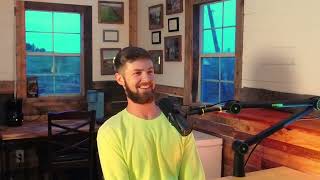
In this episode of the Finding Home Podcast, host Caleb Hanshaw sits down with longtime friend and ministry partner Christian Jones to trace a decade‑long journey from their teenage youth‑group days in Florida to Christian’s relocation to West Virginia. The dialogue weaves personal anecdotes about early worship‑team leadership, the call to move across states, and the subsequent transition out of formal ministry into homesteading and community‑building. Both speakers reflect on how their early relationships were filtered through ministry expectations, leading to superficial connections and loneliness. Through a series of vulnerable moments—prayer in isolation, a vision of a barn with thrones labeled “woundedness” and “vulnerability,” and the realization that rejecting help rejects community—they discover that authentic intimacy and wholeness arise only within intentional, interdependent community. The conversation explores the tension between self‑sufficiency (especially in homesteading) and the biblical call to depend on one another, referencing Philippians 2 and the concept of the body of Christ. They conclude with practical advice for listeners on cultivating vulnerability, trusting God, and stepping into real community, emphasizing that true intimacy requires both personal surrender to God and willingness to be wounded for others.
Chapters
Hey everyone, this is Caleb Hanshaw with the Finding Home Podcast. I'm here with my friend Christian Jones, who I've known for how long now?
It's been over a decade.
Over a decade. Tried and true friendship. We've been walking together very closely in those years, all the way back to when you were a teenager in youth group.
Yeah, middle school. Yeah.
Oh, with, with the shaggy hair.
Yeah.
Yeah. Can you just briefly talk about, you know, how we met, what was going on, and kind of how— what led you to come to West Virginia? And just give us a backstory of who you are and, uh, why you're here, because you are a Floridian. Okay, well, not now. You're West Virginian now, but you were a Floridian.
Well, I think I remember the first time we met was whenever Frankie Flo was youth pastor.
Shout out Frankie Flo.
Yep. And was wanting to start a youth worship band. And I don't know if— did you come in as an intern or you were just wanting to wanting to serve the church, or—
it was Matt Mueller, shout out Matt Mueller, that said, hey, the youth group needs some volunteers. So he connected me with, uh, Frankie Floyd, Frankie Flo, and I came to that first meeting that you were in with your shaggy hair.
Yeah, yeah. And, um, I think I remember you were wearing a baby blue shirt was kind of big on you. The shirt was kind of big on you.
Yeah, I was hiding a lot of fat rolls. Yeah. Did I have a chain?
Maybe a dog chain, like, you know what I'm saying? Dog tags, dog chain. Really? So I think this was a while back, and that's a rabbit hole, but her— you took over as, you know, You became the youth worship leader and we learned under you, played, and then somehow along the way you become youth pastor and I stepped in as youth worship leader and we flowed pretty well together. We did.
Yeah. Yeah, it was. That was a cool time. I even think about some of this, some of the times often just— I think the best way to put it is like we didn't really know what we were doing, but it was real. I would say like maybe even theologies weren't correct. I mean, you can think about all the things that you believed in that just, oh my gosh, so much different now. But the presence of Yahweh was there, you know, in a lot of things that we did. So it's really cool to think about.
Yeah, there was definitely some grace extended there. Yeah. I just remembered sort of being nervous at first, awkward kid like I was. And then I don't know, just over time that relationship for me and you really grew and I really looked up to you. And felt like you kind of took me under your wing in that way during that time. And God, I feel myself like getting a little emotional about it. Sorry. Yeah, that was a period of time that was very pivotal for me. Not having connected really well with people, like wasn't good at making friends or anything like that. And then all of a sudden, I'm brought into a worship team, as we called it, that was, we kind of became like family with each other. And that was sort of something, in the way that it was, it was new to me. Like that, that kind of— the kind of dynamic that we had. And then I remember, you know, eventually you felt the call to come back here to West Virginia, and then I would come up and, you know, you invited me to come and play at different conferences. Lead—
you were in college then, right? Like, I think I left when you were a senior in high school because I remember going to your graduation because you were the valedictorian.
A class of two.
A class of two people, but you were the smartest of the two. So you come to West Virginia. What made you come? You came to visit when you were in college.
Yeah, yeah. I remember you had invited me to lead worship for some different events you had going on, different conferences, churches and whatnot. And you know, the opportunity. I just remember what I remember specifically is a conference at Mallory Church of God.
Oh yeah.
Yeah.
Jacob Robinette.
Yeah.
At the time. Shout out Jacob. J-Rob.
And we were— I don't know if we were on our way there or we were on our way back from it. I want to say we were on our way there. And I think it was Clay who had actually mentioned, like, bro, why don't you just come live here? You could just stay with Caleb. You should just move here. Why don't you just do it? And I think he was right. I don't know if he was riding passenger. He was like, he was close to you. You were driving. And I was like, really? And you were like, well, yeah, yeah, we could do that. Then I went back to— I don't know if it was final for me there or if it was final back in Florida when that kind of decision happened, but I remember praying about it and not getting some kind of open heaven, yes or no type thing, anything like that. It was just more like, Well, I'm not here to know, and I know that you see what my heart is in this and in making this decision to go to West Virginia. And I know that, you know, that Lord, you honor that. So if I'm going there and it's not what you have for me, then you'll safely get me back to wherever I'm supposed to be. So I had to, yeah, sort of letting go of like, it was for me just letting go of fear and like sort of taking a risk in that way. Which talking about it now is different to think of it that way.
I mean, it was a bigger risk than me. I mean, you think about, I mean, I had family here, I had a wife. The wife wanted to come, like she started the conversation. We had kids. I mean, we were kind of established. You just came, right? Hey, Caleb Hanshaw from the Wild Country. Want to take a quick break and just thank you to those that are listening and watching from whatever platform that you use. We are so grateful for the support. I did want to mention, do you know that we specifically teach people how to homestead? We provide homestead education, we provide design consultation, we provide many other forms of content that are enjoyable and teach you and bring accountability. Do me a favor, check out our website. It's thewildc.com. Get in touch with us. We'd love to hear from you. The late nights at Double Quick. So we do the school of ministry. We're going to fast forward just a little bit because it's a little bit of a really cool intro. I think there's context to understand the, the depth of what we're going to talk about. But school of ministry lasts 2 years, and then that's no more. I transitioned out of ministry. We left, and then you, you stayed, which was good because you didn't hear that for you. That's what I so valued about you even then in that stage, you would just— wouldn't move unless you felt, you know, Yahweh said it. So like, there's this person that you at the time looked up to and respected. It was a leader in your life. You came and lived in his state, lived with him in his house. Then he says, we feel like Yahweh's calling us to the wild. Like, we're gonna just drop everything. I'm gonna become a farmer. I'm gonna grow things. I don't know why. Yeah, but I want this. There's something real out there for us. And then what was so impressive was most people would be like, all right, I'm jumping ship too, like, let's go. There was this calmness and peace for you just to continue and to stay, because I think there was more for you to learn there. Now, can you hit on some of that, like what you went through during that transition? Because you ultimately ended up leaving as well. You only felt like it was time to go.
I remember going to different churches as well and loved— I loved everybody I met. Adam, there was one I went to for a while that just really felt like home. And then there just was a time when I felt like the Lord was inviting me to something else. It was tough, really, not feeling so connected with you as much, just being in different places like we were. It's hard to speak specifically to what that was, really what he did in me during that time, because I know there was something deep and personal about it, and I don't have, uh, the answer yet for like exactly what that was.
Yeah, I think— and I want to get too far ahead because we're going to get into some of that, but we found out kind of what that invitation meant on down the road.
Yeah.
And you know, you come to find out— I had such a hard time being just really relational, like truly relational with people. It was always through the filter of ministry. It was always through the filter of almost the self-righteousness thing where, you know, I need to build you up as I talk to you. I need to teach you things. I need to, because I'm your leader. So not to say that we didn't have a real relationship, but it was based on ministry. It was based through the filter of ministry. And when Yahweh began to kind of uncover that and move that around to what I, you know, now believe, um, we kind of had to rebuild that in a way, which was— and we'll get into, get into all that. I think the reason why we call this podcast Finding Home was, was just that. It was, you know, I have this feeling, I'm in church, I'm in ministry, and I just feel like there's more. I feel like there's something real that I'm missing out on. There's these red flags that I feel in my spirit that Yahweh's pointing out, not about people, just about systems, about things that just don't work anymore, about things that you're missing out on. So at the end of that, there's this come to the wilderness, come sit and come learn, lay down the sword, put the sword up. That you're swinging. You were talking about those conferences that we went. I remember losing my voice in those. I would preach and I would lose my voice because I was screaming and I was theatrical. I remember in the prayer times, if you could scream and dance, I remember copying certain worship songs from other people and how they would respond and how it would generate a reaction in the room. And at the end of the day, you just feel bankrupt and you hear this invitation like, okay, It's about to get real. This is something that I deeply desired. I think everyone desires that. Everyone desires to have a real relationship.
Yeah.
A real tangible relationship where it's not just going through the motions. It's not just the roller coaster of emotions where things are good, you're riding momentum, and then all of a sudden, boom, you're in a drought and then you have to do a 40-day fast or something else too. I'm not against fasting. You know what I'm trying to say? There's this invitation where I'm reading things, I'm experiencing things that I see even in scripture, even in, in real life, where I feel like I haven't tapped into something real.
Yeah.
So, and that's what, when I say called out of the church, called out of that system that kept me from that. Um, and you, you felt the same thing.
Yeah, that, that was my experience too. And I think that, that really nails on kind of really what that was for me in those weird transitional times of— I'm not even sure how to word it. I wouldn't even call it like the Lord separating us. It wasn't nearly even that. It was more about things I needed to learn and that realness coming, getting that real relationship for me. It needed to become real for me. And it was in those moments that that happened. It was during those awkward, hard times that it happened. I remember the times, the just absolute silence, times of prayer in my room back in Florida whenever you were in West Virginia, and I was here, and there would be times of loneliness with that, but it was all, I know it was making things a lot more real for me. Because it pushed me into a place of just me and him. It wasn't meant to stay that way because we all need community. But those were two times I can think of that he needed me to be in that place of just me and him, if that makes any sense.
I think it does because that's the foundation. That's what everything is built on. You know, he is the cornerstone, he is the foundation. And when that's not in place, it's almost like it's, it's not sustainable. Ministry relationships are not sustainable in terms of them being real. And that's what I learned, because it was to the point where wherever I went, Christian Jones was there. And people through, like, that's your right-hand man. Like, he's the one I relied on.
You—
I relied on your ministry gift. Um, I don't think there was ever this, like, you have to perform for us to be friends. I don't think it was like that. But even still, like, when I look back at those years, the most memorable moments are services. And there's some conversations that's in the realm of mentorship and spirituality. So there was this inability to really connect on a real level until this transformation happens. I remember the first year I was, I was out of church. It was like the loneliest time of my life. It was so hard, like and I've talked about this before— just emotionally draining. And the easiest part was just like to just hide. I just wanted to hide away. If anybody wanted to, to say hi or come over, it was like someone stopping in at your house and your house is dirty. It's like, oh no, no, no, no, like, wait just a second, let me pick— it was like that, but it was with like my person. Yeah, I was like, I'm just not in a good place, I don't want to show you this side, because there was things just being unraveled. Out. But, and this is why I wanted to talk to you, it was the importance of community that really pulled me out. But I had to do that one-on-one thing with him. I had to. That had to come first because he is the foundation. He's the filter. He's the ability to have real relationship. And we'll dive into as much as you want to dive into, as much vulnerable that you want to be. I'm cool. I'm cool with it. I'm cool with— because I think this is important because you have that whole 15 minutes of introduction for a reason, to paint the picture like we have this typical church relationship. We have this typical, what is it, Elisha and Elijah relationship. You know what I mean? It's the Put a bow on it. Okay, that's Discipleship 101. And what we went through to where we are now is so important.
I think, man, I think I was so ignorant of that sort of thing. For me, I was so ignorant of that sort of thing. I didn't even— I don't know. For me, it just always felt like, for lack of better words, there was a special connection there. I didn't have words for it and I didn't have— let me try to think— like, I didn't have some sort of context for it that come from a sermon that I've heard before, if that makes sense. So all I knew was that that was a special connection.
Yeah. Yeah. And then the middle happens and it's like the year of just really hard. You were still there. I mean, but it's like you said, it was hard to have a relationship. I wanted to be a hermit crab. And then there was a, probably on your side, there's this ability to just to want to do things on your own and find some things out. And I think Yahweh had you there, as you said, just to figure some things out between you and him. Then we started to meet again at our house, we started to build some community because we knew how important that was. And then we went through some stuff.
Yeah.
Do you want to talk about that? We don't have to go. I mean, we can go as far as you want to go. And I didn't intend to do this tonight. It's just your intro kind of provoked it because you kind of see when the fluff is ripped away.
Mhm.
And you've relied on a ministerial relationship. Is that a word? It sounded right.
I'm taking it.
Ministerial relationship. And there's this— you're— we asked for realness. We asked for it.
Yeah. And it's what we got.
It's what we got.
It's what we got. Even in community.
Mhm. Um, there was some— and I'll, I'll start it off this way. There was something you said to me one night, because it was getting a little— there were some things that were happening that were strange. I mean, it turned out to be really good at first. We had some time of worship and prayer and community and people were coming up. But then it started to shift in a weird way. And I think it was more exposure in a way. I think it was more Yahweh just shining the light. I felt like David, like search my heart. 'Cause we would pray those things and we continually wanted something very, very real. And there was this disconnect between you and I. And you came up to me and said, you know, I think I just valued your opinion too much. I remember the conversation we had in my kitchen, and it hurt really bad, but it was so true at the same time. And Yahweh kind of unpacked that for me as our relationship transitioned. And it was— you, you could not have a real relationship with Christian inside that system because it was always based upon something that wasn't true. It was based on you. I didn't even know who I was.
Yeah. And I didn't— I felt like I wasn't looking— I was unknowingly not looking at our relationship right because it was so influenced by those things I was sort of unaware of. I was pretty ignorant of how, I don't know, I guess we can call it religion, I guess, was sort of influencing that. Just, I don't know. Yeah, I don't know.
Yeah. I'm gonna get real weird now because I remember it was a hard season. There was a lot of just conflict. Yeah, there's conflict resolution. There was a lot of hard conversations. There was a lot of tension, a lot of tension, stress. And there was a lot of, I would rather just not be in the same room. There was that invitation to hermit. Like I normally would. Um, then I remember having this moment, like it was kind of like a vision, and I saw this old barn. You remember this? And I saw— I felt like Yahweh was showing me something about the kingdom. And in this old barn there were 12 thrones, but it wasn't like really pretty golden ruby throne, it was like wood there was like cobwebs, like they were rustic. And on one of the thrones was written family, and in the middle of it was written family. And then there were these like back runs for support, and there were 12 of them, and they had words written on them, but 10 of them were blurred out. I was only allowed to see 2 of them, and one of them was woundedness and the other was vulnerability. Were key components of family. And I remember, and usually this happens, you'll receive something like that and it's not, you don't really immediately walk through it. Like I remember it was almost a year, maybe even 2 years, maybe 3 of not seeing the benefit of that, of having to walk through some hard conversations. Yeah. We had the pleasure of working for the same company, of being close, but even still, like, where you're so used to Florida relationship and it's so vastly different. Now you're married at the time, you have a kid on the way, and then Levi's born. Shout out Levi.
Yeah. That was also hard.
Yeah.
That was also hard. Being apart from you all in that. That was all weird and hard in that way. Yeah.
But then something happened.
Yeah.
And I'm going to get emotional about this. All right. The dynamic changed from something that was— it was unhealthy. If it's not true, it's unhealthy. Even though there was good times, and there were times that I'm forever grateful for, and then I had the pleasure to be a part of your life, um, to drag you to West Virginia, you know, whatever. But for that to be based on— there, there were certain things in you that I saw that were negative because I did the same thing. And it was whatever you submit to, like, you become pregnant with even the traits, even the ways that you operate as a person. Like, my ability to hermit away, or I've been taught that, you know, I've been under something like that for a long time. So I was starting to see things in you that I was like, oh my gosh, That's— I've put that, I have projected that. And I know you're your own person. I'm not saying that I mesmerized you and tricked you, but when that was stripped away through a very hard season of vulnerability, because all we desired was real community, to now come back to the table wounded but vulnerable and overcoming such a hard season I feel more connected to you now because I feel like it's real.
I feel the same way. I feel the same way. If I even look at conversations before, let's say we were going to lunch before whenever it was ministry days, the quality of conversation that we have now, the depth of it and realness of it, You know, like going to breakfast. We've been to breakfast together a couple of times, you know, that we've been able to. And, uh, the realness of conversation. Yeah, the realness.
Been let down a couple times.
Yeah, yeah.
Shut up, Food City.
We, uh I don't know the quality of conversation there. I feel like I know how it would have been otherwise back in Florida. It would have just been me, I don't know, in some way maybe trying to get advice from you or something like that. And not really getting into, I guess, more of what's really going on because I'm thinking, I don't know how to explain it, but I know that the conversations, I know our conversations have a lot more depth now and we can go to places together now where it felt like before it was just sort of I was just trying to follow. And not that there was necessarily anything wrong with that, but wasn't as, I guess, as communal at that point. I don't know. Does that sound right?
Yeah. It points out one of the key points that I wanted to talk about was what it did for me was it changed my mindset to where I could be a Lone Ranger to there is something in you that I need. There's something not just I need or want to use, but there is something in you that makes me whole.
Yeah.
I cannot achieve wholeness by myself. And that's something that we have to shift from because when we think about being a whole person, it's always singular.
Yeah.
It's always, what do I need to do What relationship needs to be right? What job needs to be right? What health needs to be right? You don't think about the body of Christ. And it's the only way to be a whole body is to be connected in community. And there was something that you said to me that sparked this whole thing. You don't have to say names, but it was powerful. You want to share what you said?
If I'm thinking of the right thing. I remember it was Levi's birthday party and I'm walking back to my father-in-law's house and my sister-in-law was offering to help me with something and I was like, I was joking about how much I deny help. I was sort of joking about it. But I was coming back to the house sort of after that and I remember I felt like the Lord had just said, like, you know, when you reject help, you're rejecting community.
If that's—
was that—
it was it.
Yeah. Just because of the— there's an opportunity there that like, whether or not I necessarily need it, the Lord was showing me that there's an opportunity there that when I'm accepting help, I'm building relationship with somebody that I would not have built that otherwise. And it's that I need to allow myself to need others, that I have to allow myself to be that way.
That's such a controversial statement. It doesn't sound like it, but if we really broke that down, yeah, I need to be in the position to need others.
Yeah, yeah.
Oh yeah, that's cute. But no, no, let's like— you put yourself in such a vulnerable position to where you need others.
Yeah.
And I'm thinking even like the, the homesteading crew and the— that whole community.
Yeah.
A lot of people get in it for self-sufficiency.
Yeah.
And it's, I want to be able to provide my own food, I want to be able to provide my own security.
Yeah.
And a lot of it came from COVID from the empty grocery stores. Well, we need to be self-sufficient.
Yeah.
And I did that. I mean, I was, I was doing a lot. I mean, I tried to do all the things and everybody tries to do all the things and you either burn out or you hate it. You don't want to say that you hate it because you have to admit like, oh, homesteading's not for me, right? Homesteading is for a lot of people. But community dependency is a better way. You can be self-sufficient and lack a beautiful relationship. For me, I can't be self-sufficient. That's what I've learned.
I've learned that self-sufficiency is a lie because Jesus did not create us to be that way.
Mm-hmm.
And he has chosen to not be that way either. He chose to be the head and we're the body.
He chose that in the Trinity.
Yeah.
In the preferring of the other members in the Trinity. And Philippians 2 is a powerful representation of that, of preferring one over the other. I can't remember. I think it was Philippians 8, or it might still be— it's still Philippians 2 where it says you ought to think others better than yourself. I remember teaching that ministry school and I thought it was one of those like pow statements. And I'd say it and then I'd just look, give the look, you know, think if it really hits you hard, like you should really think about. And I remember saying, think about your worst enemy, the one that's really driving you crazy.
And like you called one out to me.
Yeah, I called one out to you and I was like, think of them as better than you. And I was screaming and all that and sweating and causing emotional stir. But seriously, like self-sufficiency, if you want to achieve that, if you want to have those goals, you're going to be very disappointed because there is a better way.
Yeah.
And that is through community. And what we went through was more so we're getting to reap the benefits from having to walk through a season of conflict, vulnerability, woundedness, of us wounding each other, not just being hurt by the situation, but wounding each other to now being able to walk together so closely. And you had mentioned before we started, intimacy is there. There's some deep conversations that we can go in and it just seems so real. It seems so authentic. And I was praying for real community.
Yeah.
Not something that you just show up every once in a while and, you know, you may know each other from work, or I'm talking about something deep and real. And to have the opportunity to do that, that makes that middle part just worth it. Yeah, makes it necessary in a way.
It does. And that's, uh, you know, that's sort of the same thing. Like, I'm able to look back at that time and that weird time in Florida you being here, me being here. And it's— it kind of sort of reminds me of that, but there was a lot more depth and dynamic to it, you know.
Yeah, I think the challenge of that is being intentional. Like, it's not easy with the world that we live in. I think we're kind of programmed to be Introverts, like it's self-sufficient and self-sufficient. I would take self-sufficient and put self-righteous in the same sentence because that's the root of it. It's your ability and even your relationship with Yahweh. There has to be this dependency. I mean, that's just like an elementary aspect that we don't operate in. Just this complete dependency upon Yahweh. But we're so programmed to go the other way. Like, it's just so much easier. Even now, I can— to be completely honest, it's so much easier to do things on my own.
Yeah.
To go through pain on my own, to go through— play the movies in my head by myself and not share what I'm going through, or lock yourself up in a room and watch YouTube all day. You know, there's this that's given permission. I mean, it's almost celebrated to go cool off, go do your thing. So there's this challenge of being intentional in community, reaching out, being in the same room, doing things together, sharing things that are hard to share. There's conversations that we had to have that were very, very hard. But we're reaping the benefits of that now, and I'm thankful for that. Like, I love seeing Levi come into the house. Yeah, he's such a cool kid. I mean, I love that we get to do that together. That was always the dream. Yeah, but thankfully I'm not seeing Levi like, oh, there's a future worship leader, right? There's your right-hand man, Christian. Train him up in the ways of the Lord. I'm thankful for that. I'm thankful that it's based upon something real in that to go back, and I'm going to let you go into, you want to go into some things about intimacy, but wholeness is impossible without community.
Yeah.
It's impossible.
And I think I think it goes both ways. I know that you've mentioned the homesteading, but I think it can go a totally other direction too. The flip side of that is like, I'm self-sufficient with the amount of money that I have, the financial stability. We'll say that because you don't want to say how much money I have. I'd much rather say financial stability. Sounds a lot nicer, right? And I'm strong and healthy and I'm working out, taking care of myself and these things that to build yourself up in a way where you don't, and there's a pride in it. There's a pride in that self-sufficiency. Like you were saying, that self-righteousness, even if it's unconscious. It's there. And it's— I think the two, like you said, go hand in hand. It's unavoidable to have one without the other because we were created to need each other.
Hey, Caleb Henshaw here from The Wild Country. Again, I wanted to thank you for all that are listening and subscribing to this podcast. We really appreciate all the support. One of the biggest things that We value is community, cuz community is important. Did you know that we are launching a brand new community called the Wild Country Uncensored as an online platform? On this platform, we can talk about a lot of things that normally YouTube and other platforms would censor. We'll have weekly lives, we'll have master classes, we'll have how-tos, we'll have a library library of books and content that you can join. But most of all, we have accountability. People in this group hold each other accountable on our homesteading dreams, our homeschooling dreams, and our content creating dreams. So we'll be in your face making sure that you're living up to the dreams that you want. If you're interested in joining this community, sign up in the link in the show notes. We are launching this community in summer of 2025, which is this year. It's getting close. Pre-register now and find out more. And, uh, I'm thinking of a movie scene, and it's— there's Neverlands in the, in the back. I'm thinking of the movie Hook when Robin Williams hasn't figured out who he is yet. And I don't know why this hit me so hard. I remember like Rufio, remember the movie? He draws the line and all the Lost Boys come over because they don't believe that he's Peter Pan. And then that one boy comes over there and pulls him down and like starts, you know, messing with his face. And as a kid, like, man, this is weird. Yeah. And then he goes, oh, there you are, Peter. And that reminds me, like, we, we can't even find out who we are. I can't find out who I am without people in my life. Like, there's things hidden in you for you to speak to me and to build me up. And I think about that scene, like, that's what the kingdom is supposed to be. That's what edifying looks like.
Yeah, yeah.
And I feel sorry for, for people. I, I wish I learned that a lot sooner when I tried to figure out who I was by myself, because it's— you can only go so far. You can become a, like the movie, a good businessman and forget how to fly. Like, you're made to fly and you've settled for a cell phone and busyness. You need to watch the movie to get the context, but You get what I'm saying?
So I got into the word and I'm looking at what intimacy means and starts, of course, the state of being intimate. And then, well, what does being intimate mean? And I tell you what, I'll just pull it up through Webster's and we'll go through that way because that's where I was headed, just to go to the origins of the word and whatnot. And to be intimate, it's like— so here's one definition: of a very personal, private nature marked by very close association, contact, or familiarity, belonging to or characterizing one's deepest nature. And then, you know, taking that further, trying to find, you know, I look, you can go down towards the bottom there and it's like, with the Latin to try and understand, you know, well, where do they get that word from? I just kind of nerd out on stuff like that a little bit. And the Latin is like interus, interus, maybe inward. And then it says more at interior. So I start looking to go even further towards interior and interior being like belonging to the inner constitution of something, like the makeup of something, or the concealed nature of something. Like the example gives us, like the interior meaning of a poem. Like, you've read this poem surface level. What does it really mean? And I don't know. I really felt like the Lord was just— and help me unpack this and take this further, because I know there's stuff churning in you just talking about this, that vulnerability and trust are what moves us into knowing that interior of another person and what really makes that person up. And it takes a lot of vulnerability and trust over time for that intimacy to become a thing.
I think this so ties in. To me it does.
Yeah.
Because when you look at intimacy, it has— it cannot involve one person. Yeah, it has to involve two people. And in the context of even our previous conversation, and I keep going back to the same example, I can't— I go back to our relationship. The beginning is great, awesome. I had some really memorable moments, but I was full of self-righteousness. So I knew that you like to play the guitar. I knew that you wanted to get close to Jesus. I knew about your sin nature. I knew about the hard things you were going through. I knew about your desires to achieve certain things. That was reading the surface level of the poem because there was one person involved in that. It was taking turns. It was, it was all about me, then it was all about you. All about me, all about you. And then through vulnerability and through woundedness, now I know how you want to be a father. I know how you want to be a husband, how you want to love your wife. I know how you want to treat people. I know how you want to steward Yahweh's presence. That involves two people. That is intimacy. That is That is Jonathan David type stuff. That is being connected to one another where you're so entangled that you become entangled. That's why I think it fits in because you can't have real community without it.
Yeah.
So step by step, how do we get there? When people are listening to this and we are actually over time, which is cool. But when people are listening to this and they're relating, maybe they feel like, oh, I don't have that relationship with someone, or I'm sensing that there's opportunity to do that. What's some advice to tell them? What do you do? Is it step number one that you just Realize that— what do you realize? I mean, it's a hard thing. It's a hard thing.
Yeah, I'm trying to— it's tough because it's not always easy to find people that— I don't want to say that you just feel safe with, I mean, though that does matter, for sure, I feel like the Lord also will just put people in your life. And maybe he's just telling you to trust this person.
Yeah.
But I mean, I, you know, I will also say that I did feel, you know, I did feel like I could, like I was safe with you. It was also something that I felt out. Sort of over time, you know. I know the word interior really stuck out to me because obviously, you know, the opposite of that is exterior. And, you know, you can interpret that as like surface-level relationship, like how surface-level does this relationship feel or how interior does this relationship feel? Because you can tell when with some people, like, how surface level things are. Sometimes you can tell with people when things are ready. When— that sounds kind of funny. Whenever it's time— I don't want to say time— whenever that relationship has maybe come to a point or something. Uh, you can help me with this. Please help me with this. Where, where you feel like things can move more, more interior.
Mm-hmm.
Because we're all layered and it's, uh, letting yourself be peeled back over time. Maybe. I'm not sure.
That's the key, I think. And if I were to say, like, what is step number one, even though you shouldn't think this way, It's just a process. Something— it is something that you can't obtain. Yeah. It's going to deal with self-righteousness. It's going to deal with self-effort. You cannot create intimacy with someone. There is this level of forfeit. When you talk about vulnerability, you're talking about, here's all the ways that you could really hurt me. And I'm open to that. You have the sword in your hand and I give you the opportunity to get close to where you can really hurt me. That has nothing to do with my ability. It has everything to do with this trust that you're talking about. I say step number one for someone like, I really want intentional community. Number one, you can't do anything about it. You have to be willing to be vulnerable. You have to be willing to let the layers be peeled back. And I can go a step further and say that Yahweh will make it happen.
Yeah. Because if you try to make it happen, it's going to be rough.
It's going to be really rough.
Possibly disastrous.
Possibly disastrous.
You could get hurt for sure.
And that's where trust comes in. I mean, the foundational component is between you and Yahweh. It's between you and Elohim. It's that dance that you dance is the foundation of everything else. And then community is intentional. Just show up. Just put yourself in places where there is community and allow time. Allow Yahweh to really peel you back. A lot of people get really discouraged because they want to make it happen. That's the danger of that. When you want to make it happen and it doesn't happen, there's this definition of discouragement and failure. And, well, let's try something else, let's do something else. And that's our human nature trying to make things better, and it doesn't work that way. Yeah, so I would say, like, those that are listening, if there's one or two people out there listening, I know my wife will listen, so Thank you. But it's the courage. I'd land on this, and I'd love to hear your final thoughts. It's the courage to say yes to vulnerability, to not trying to make it happen.
Yeah. No, I agree with that. Yeah. I think it's being— I mean, that's not only you being vulnerable with somebody, somebody right in front of you. But that's starting, like you said, with vulnerability with the Lord. If it does not start there, if vulnerability does not start there, it won't be right in other places, and you won't be able to have that community.
And it spills over. I mean, the relationship that I've got to walk with you And even my wife, I mean, we were married now 11 years and I didn't get to have a really real intimate relationship like what I shared with you until this happened, until I was able to let go of my self-effort in that. And, um, it spills over to how you feel about people in general. Yeah, like you'll, you'll start having a compassionate heart and it's not you. You didn't do this. This was formed in you because of the culture that you're now in. You're now in a culture of real relationships. So you can be in Walmart and just feel the love of God for people. Just feel like— and then you start, for me, it's like I take possession of where I live. It's like, these are my people. Like, this is— I'm connected to these people. And they may not reciprocate that yet, but there is an open door. I'm ready for that. And that's what's so powerful about just— if you put your toe in the waters, you fall in and you'll get baptized in this need for real community where you begin to love people better. And that's always been a prayer. And there's still things of trying relationships and things you got to walk through and But I think hope is tattooed on you where you kind of look for a good result, even if it's foolish. And I'm not saying put yourself in really foolish situations, please. Somebody could read into that and be like, yeah, no, you get what I'm trying to say. But even when there's relationships that are hard and maybe that you sever them for a time, there's this hope that you know, Yahweh will fix it. Yahweh will bring him back. Um, because I think about, you know, how Yeshua loved the world that killed him, you know, and still there was this love, there was this hope and need, this prayer that they would return, you know. So I have to have that hope too. So without going through too many rabbit holes, I think that stepping into this former relationship with vulnerability and intimacy that prepares you to really love your city well. That's what I'm learning now, is just being able to be ready, I guess. And what's funny about that is that was their prayer. We thought when we prayed for community that people would just show up at our house like all the '90s movies and house parties and It wasn't like that. It was unfolded very, very differently. To have that answer, I think you got to be ready for community before you actually walk in community. I might be wrong on that, but anyways, you got anything else you want to share? You ready to land the plane?
I think so.
Cool. Well, Christian Jones, thank you for hopping on. We'll do this again. We're going to get the wives in and just have a really cool conversation with the four of us.
Sounds great.
Maybe Levi will make a guest appearance. I don't know. It's hard for us all to jump in because we have so many children running around trying to survive. But yeah, I just encourage anybody listening, if you have, you know, comments, questions, or just want to reach out, please do. I had a really good time. Um, me too. So we'll see you on the next one. Bye!
More from Kaleb







Chicken Processing Mistakes...And How I Learned From Them (Plus FREE workshop!)



How To Cut Up A Whole Chicken — Jumbo Wings, Quarters, Breast & Tenderloin (Full Tutorial)
