Peace Over Noise: The Abundant Life vs. The Information Age
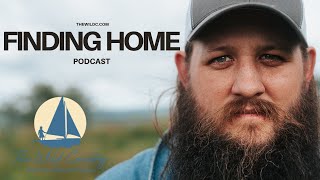
In this episode of the Finding Home podcast, host Caleb Hanshaw shares a personal update on his family life, the recent pause in podcast production, and the growing traction of his business, The Wild Country, an online community focused on homesteading, permaculture design, and land acquisition. He reflects on the emotional impact of consuming violent news—specifically the viral video of Charlie Kirk’s shooting—and how constant exposure to such content triggers a chronic fight‑or‑flight state that undermines spiritual peace. Caleb critiques the news industry’s profit‑driven model of fear, arguing that it distracts believers from a God‑centered, abundant life. He calls listeners to slow down, disengage from the relentless information stream, and re‑engage with God, family, and local community through intentional relationships, face‑to‑face conversation, and stewardship of the land. Throughout, he weaves biblical references (e.g., John 10:10, Philippians 2, Psalms 91) to frame a theological vision of a “violently abundant” life rooted in the Triune God rather than in data consumption. The episode ends with a heartfelt invitation to join The Wild Country community, support its core team, and pray for the journey ahead.
Chapters
Hello everyone, welcome to the Finding Home podcast. I'm your host, Caleb Hanshaw. I want to say it's been a while since we've released any podcast. We've taken some time just to rest, had a lot of family things, sports season. We have 6 kids, so somebody's in a different sport, which is cool. We're trying to think of ways to make it easier next year because this is pretty tough. But we get a chance to, to be a part of community, and I get a chance to coach the basketball team that both my daughters are on. That's pretty fun. I love meeting their friends and working with this, this really great group of people that put on this league. It's really fun. So yeah, we've, we've taken some time just to kind of reflect and see where we're going as a family and as a business. Good news for us is that our business is starting to get a little traction, which is really fun, uh, to think about. It's been years and years and years of wanting to build something, and now we're starting to see the fruit of that building. It's starting to come to fruition. And I, just as I have the, the board in the background We started a business called The Wild Country, and our next big step is we're doing an online community. Um, what this is, is you can, you can join this community if you have, you know, interest in learning how to homestead, learning, wanting to learn permaculture design, which is what I'm certified in. That's my profession. If you're wanting to, you know, make it like a business, because that's one of the niches that I have compared to any other online community in terms of homesteading, is, you know, how do you, you know, make money off of it? How do you help it to supplement some income? And helping find land, that's my biggest passion. It's turning out to be one of my biggest opportunities in terms of the business is a lot of people are having problems finding land to homestead on. So with my design background and my, um, communication skills and being able to connect with people, I, I'm acquiring land for people, finding it and, uh, designing and helping them set up. So yeah, I got a couple projects that we're working on, and that's on top of, you know, my wife's writing. She does the Vine and Branch Journal monthly emails, and she's now on Substack. She's an amazing writer. I've tried to write things before, and they're just like plain straight to the point, and she just has this romantic language. I think that that was a gift from Yahweh in what she does. So got a lot of things going that way. It sounds like I'm, you know, going down rabbit trails. I probably am. I'm 5 minutes into this thing. But yeah, we, we needed to take some time. We need to take some time to, to reflect and, you know, really listen to what Yahweh wants us to do. Um, I'm a dreamer, and I believe a lot of people relate to that. You have dreams of what what you want to do with your life, what you want to provide for your family. And sometimes that can be tough when you're in the process of refinement, when you're in the process of learning how to hear the voice of the Good Shepherd, learning how to, um, relearn some things that you thought about him and, and set some things down to be able to handle what he wants to give you. Not just a promise, but the fullness of that promise. And you've heard us talk about that in previous episodes. And I want to say this too, just because we say it in an episode doesn't mean that we're there, we've graduated from that. I believe years from now we'll still be talking about the same thing about leaning into this process. This is a learning experience. And I think it's very unique that we get to go through that and share it. With people that want to listen and just hearing, you know, some of the feedback about where certain people are in their lives. You know, I don't want to say this thing in a place of authority in terms that I am better than you or that I've come further along than you. That's completely false. Um, I just want to be open to where it may inspire somebody that maybe doesn't have the language for what's going on, or the framework, or something to build on. You know, if this— if one of these episodes just launches you into just a life-giving conversation with Yahweh, then this is worth it to us. I'm doing this so that, you know, my kids, when they're a little bit older, can go back and listen. Do you know what we were thinking when, you know, they were 11 and 10 and 2? Because our journey with Yahweh is— just think about it 10 years ago where you were and how different it was. It's amazing of what can happen in just short spans of time. So one of the main reasons that I had to take some time, we were getting ready to release a podcast. No, I was getting ready to film one and I come home It was a long day at work, and my wife asked me, hey, did you see what happened to Charlie Kirk? And I said no. Um, and this isn't a political stance or a spiritual one. This, this is a different angle. And I— this is why we took a break, because I knew that everybody would would come on and do a Charlie Kirk episode of their podcast. And I just didn't want to do one like that or try to, you know, get clicks, because that's not what we're about. So I wanted to really sit in it and why I was feeling the way that I feel. Be honest, I didn't know a lot about Charlie Kirk. I, um, seen like clips every now and then of him debating at colleges or, you know, on a platform. I didn't know a lot about him, um, but I knew who he was. I knew when my wife said, you know, Charlie Kirk got shot, and he— I don't— and I asked, is he dead? He's like, they don't know. They, you know, took him to the hospital. I don't know, it felt like a gut punch out of nowhere, um, because you never want someone to be harmed. You never want a human being to go through that. So I'm going, I'm getting ready in the house. I'm actually getting ready to, uh, I think take my son to soccer practice, and I'm just in this funk all of a sudden. Just like this anxiety, um, stressed out. And I get on my phone, and I've been in a really bad habit of just flipping through my phone, of just scrolling. So I'm getting on there, and all of a sudden this Charlie Kirk video is everywhere. You can't— I didn't search it. I didn't have— I guess the algorithm didn't care that day, just shows it to everyone, because I don't have Charlie Kirk videos on my, on my phone, you know. I haven't been showing the algorithm that I want to see that content. It was just everywhere. And I saw the video of him actually getting shot without any warning. And it was very, it was very violent. And guys, I, I've seen, you know, I've seen violence. I've, you know, I'm a farmer. I process animals and I do it as humane as possible. I try to do it in a way where we honor the animal. The point of it is, is this was so accessible and it really, it stuck to me. It put me in fight or flight. It put me in this place of anxiety. It put me in this place of what's the world coming to, right? All those normal conversations that you would have after you see something like this. And there's so many things going on in the country and you see all the news and no matter what news network you follow, it's bad. So I view this and I'm getting ready to, you know, take Silas to soccer practice and we're going under the underpass and there's this man there that looks like to me he's up to no good. Is that, is that a red light? He's, he's staring at me, doesn't have any signs or anything like that. It almost looks like he's, you know, peeking his, his head, like looking to see if anybody else is looking. So I'm on edge, and I'm like that even beyond, you know, this day of seeing this, this Charlie Kirk assassination. I've, I've thought about this. I'm really like on edge a lot in terms of safety over my children. Like, if we're in a restaurant, I have to not put my back towards the door or the exits. Um, I'm always, you know, watching people in, you know, Walmart that are like looking near us. I remember there was a time in Florida We were in a Target and I felt like this person was following us. So I put them all in a buggy like a crazy person. And you may think like, hey, you're probably being cautious and there may have been a legitimate issue. There might have been. And we're easy to think that because we see it so often, right? We see it on the news. We see it happening in our local towns. But I'm going under this underpass and I'm seeing this guy, and because of the fight or flight that I'm in from the Charlie Kirk video, I am just on edge. I'm almost on edge where I want to puke, and I'm getting violent, actually. I'm getting rageful. I'm thinking of the things that I need to do to this person if he kind of walks up on us. My son, however, who doesn't know who Charlie Kirk is, doesn't know what just happened, hasn't seen the video, is acting so goofy in the back of the car. He acts so goofy that I'm noticing that the guy's watching him, and Silas is laughing. If you've ever heard his laugh, it's contagious. And he just begins to wave at this guy, and this guy It felt like 10 years broke off of him. He begins to wave back and then he waves at me and then he walks on. And it was almost like my son restored something in him. I wanna say that maybe he watched the video too. Maybe he thinks something was wrong with me. The point is, is I believe that this fight or flight that you can easily access when you're consuming all of this, it can just put you in this prison and put you in this, this ball of stress that my, you know, 6-year-old son had to break me out of. So I'm— I took some time off from doing podcasts and, and really, um, diving into this information age. You know, how many people had access to that video? Not only the people, but how many kids could just pull up their phones and see this happen and be so desensitized to it? I never want to be desensitized to something like that, regardless of your political views or where you stand with Charlie Kirk. You know, for a person to have a family And I'm sure all the conspiracies are swirling now about what is— what has happened. I'm not talking about that. I'm talking about how easy it is for us to think that's normal. It's normal for us to have a video on social media that shows an assassination. And I'm thankful that, you know, they've worked hard to pull that off. But you remember stuff like that. I remember, you know, seeing some videos about, you know, martyrs in the Middle East, you know, about beheadings. And this video might be a little bit, you know, violent. I don't want to— in case you're listening around kids, I won't go into too much detail. But just seeing things happen of how people die And I, I never forgot. I never will forget those images. I think the Lord needs to heal me from them, because what it did was it actually pinned me against the Muslim community, which I'm learning that Jesus loves extremely, and from my trip to Australia, as I said in one of the first episodes, speaks to them and meets with them. And I'm hearing all these great, wonderful testimonies of, you know, the Muslim community coming to Christ because he meets with them in their dreams or shows up in their living rooms. It's full of wonder. Um, but the point is, is I was against them because I thought I had to be. I thought I had to be. And that's what's dangerous about, you know, some, some of the eschatology that's floating around concerning where the world's at today, is that you consciously or subconsciously think like you're cheering the bad news because it means something's going to happen. And I don't think we've discipled nations yet. I don't think that we've achieved the Great Commission that Jesus gave about discipling nations, about the promises of Isaiah, of this desert land becoming an oasis. And that Jesus is coming back for a spotless bride. I'm more convinced that Jesus is not coming back for a rescue mission, but he's coming back for a wedding. And that has to change things. It's this information age. It's, it's our access to all forms of content and being able to consume things from the internet. And when you consume things and consume news, that's what puts you into this place like I was, into this fight or flight, or believing that the world is getting worse. Even when I said that, you probably thought, well, it is getting worse. I turn on the news. Can I suggest to you that your, your news network, whether you're a Fox News person or CNN person, they get paid to make you afraid. They get paid to cater to what you believe. That's why they're completely— you, you'll see an article about something that has two completely opposite stories because they're catering to their audience. They're making money. And I want to tell you, being afraid pays a lot more. It does, because it makes you focus on what's going on in the world that you miss what's happening in your home. You miss what's happening in your backyard, all the good things that the Lord has provided. It, it really robs your thanksgiving. And we're, we're to enter into this, this fellowship with Yahweh, with Holy Spirit, with Yeshua. In a place of thanksgiving. So no wonder there is such a plan to steal your thanksgiving. And fear will do that. Fear will absolutely do that. And you see, you know, if it's through content, through news networks, you know, I can't watch the news anymore. I just can't. And you may say that's irresponsible, and that's okay. You can think that. I've seen the quote, and I'm not sure the original source, but it's, 'Turn off the news and plant a garden.' And I've heard some of my, you know, agricultural heroes say that, and I think it's awesome. I would love to have a poster of it and, uh, hang it up somewhere where I see it every day. Because what that means is, you know, quit consuming the news of the world and start consuming the here and now. Start planting, start investing. That way you won't be able to be blinded by all the good things that are happening. Can I suggest that Even this is what spun this whole thought, was this, this Charlie Kirk video actually being on the internet where you could view it. I, I don't think that we were ever created to be able to handle social media the way that we do. What do I mean by that? I, I don't think that we, we're physically able to hear such bad news all the time without being affected in such a negative way. Being in fight or flight is not healthy. It should happen very rarely. It should happen when your life is in fact on the line, and it's supposed to give you adrenaline to make it through and to survive. Being in that constantly, which I feel like most Americans are How could you not be? News comes with a frequency. It's a rattling. If you could see it, you would understand. I don't feel like we were created to consume all of it at one time. I hear the argument on the other side is, you know, don't you want to be informed about the world? Sure, but through the lens of Yahweh. I think about, you know, Paul. I think about even Jonah, that there's the word of the Lord that comes and there's this invitation, hey, this is what's going on and your sphere of influence matters. You can handle this part because I know you're going to be effective. And when I look at the age of information, of knowing all these things that are happening, what it's doing to us is it's, it's making us not approach things through the realm of this circle dance that we're in with the Triune God. That's where we're effective, is in that place. And it makes me think of the scripture, you know, you'll be a city on a hill that cannot be hidden. And those that would, you know, come to Bethlehem because they smelled the bread, or the kings of all these nations would come and sit at the feet of Solomon. That where we're planted now really matters. And if you look around, I think there's things for you to do. I think there's opportunities that we're missing because we're so consumed with the world. You know, it's like you watch ESPN just to see highlights and The news is just highlighting the work of the enemy. John 10:10, you know, it says, "The enemy comes to seek, kill, and destroy." And then Jesus says, "But I have come to bring you life." And not just surviving. I'm ad-libbing, as you know. Not just to survive, not just to be in fight or flight, but to live life abundantly. And that abundantly word is just as violent. And actually, there's a concept of violently abundant, what he's meaning. It's violently above and beyond what you could think or imagine. And that's why Yeshua was so addictive with his followers. That's why Peter would say, where else can we go? Where else can we go to get our fix? You know, because he didn't fully know who Christ was even in that moment. You know, the Spirit had not revealed to him yet. So where, where, where can we go? For you hold the words to eternal life. This life, this zoe, it's not just existing. It's not just making it through the day or struggling to survive or, you know, suffering. My goodness, we wear suffering like a badge of honor. The cross is a finished work. And there's grace that's been poured out that we may be called the righteousness of God in Christ Jesus. So it's not just existing, it's this participation in this divine communion with the Triune God. And it's, it's, it's— if, if he is life, then this gift of life is he's giving himself to us. We get to share in this Trinitarian life that Father, Son, and Spirit have. I don't think that when operating in that relationship, that one of us has to be in fight or flight. That's a, that's a really profound thought. Not that it's coming from my mouth, but I want you to have a profound thought with Yahweh now. Like, am I really participating in what I should be? Am I missing out on some good stuff? And just, you know, take a breath. Breathe him in. I, I personally don't think that we were created for speed. And I know that's rough because we like to tap our fingers, and if we're not doing something, if we're not active, if things aren't happening rapidly, um, we lose— number one, we lose focus. Just like, you know, scrolling through your phone, it says that you, you know, have 3 seconds to hook somebody. I'm, I mean, I'm doing a business here. I just gave you the spill. It's an online business. That means I, I need to make videos, even the podcast. I need to make short videos. I need to, to start with a line that really hooks your attention and expands on that. And that's what every, you know, financial business guru mentor from afar on YouTube tells you to do. But I feel like there— that's just wisdom from the world. Will I still do some of that? Sure. But I want to approach it in the way where I'm investing in community, where I believe, you know, someone watches our content, we, we are encouraging them to do the same, to invest, to point them to Yahweh's voice, to not come up with the conclusion just by, you know, listening to us, but I want to encourage conversation. So I have to be mindful of that and really be led by the Spirit of God and even what we post. But I don't think we were created for speed. I don't think we were created for what we've believed in terms of urgency. I just don't think that he operates in urgency. I don't think he does. I, I think that he's not moved or he's undecided or he's nervous. And I tell you, his yoke is easy and his burden is light. And there's an invitation to walk as he walked and, and be like him, to be transformed into the image of Christ. What a wonderful opportunity. What a wonderful invitation to be like him. And I don't— I just don't think either he— either Christ is lying or he's telling the truth. Either he's lying and saying, you know, I came so that your life could be amazing, could be violently amazing and better than what you thought, in communion, in union with me. Or he's telling a lie, and I, I don't think so. So you have this filter of what we believe even scripture says through this information age, through consuming everything that's going on in the world at one time. And I believe that Yahweh is inviting us to a walk in the cool of the day. I think he, he missed that a lot. I think he really looks forward to those that take him, take him up on his favorite activity, and that is walking with us and slowly revealing things to us. I Here's my personal belief, and you can reject it. I'm talking about, you know, Adam and Eve and walking with Adam in the cool of the day and the tree of knowledge of good and evil. And this is— I feel like we are biting the apple of the tree of knowledge of good and evil all over again every time that we submit ourselves to this lifestyle with a phone in our hands. Constantly scrolling, being— consuming whatever's playing, whether good or bad. And the problem with the garden is I believe that it wasn't that he, he bit the apple for the knowledge. I think it was that he didn't wait for the knowledge on the walk. I feel like Yahweh had years upon years, because there's no, there's no hurry, there's no timeline to be able to share things with Adam through that filter, through the filter of union and relationship. But when you're overly consumed, when you take the bite of the apple, what do you do? You hide in the bushes. You're, you're aware of your current condition, right? And you hide from, from the voice of Yahweh. Convenient to bite the fruit. It's very convenient just to, to get online or to turn on the news to find out, you know, what's going on, or Google. I mean, get on a Google search or just open up the homepage and the top 10 things are all bad. Could you write 10 things that are happening that are good in your home? I could. I mean, I really, really could. I could think of 10 things that are happening that's in, you know, my county, my state, in the world, and think upon those things and invite Yahweh into those spaces and invite Yahweh to speak truth into your heart and reveal things that you need to reveal I think we just need to get excited about the walk again. And I don't think we can walk with a phone in our hand. I don't think that we're our full selves with a phone in our hand. And my goodness, there's no way we're allowing our kids to be who they are with a phone in their hand. Talking to a lot of teachers where they have to keep students' attention and it's harder than it's ever been. And it's almost you have to outperform every, you know, 7 seconds, almost like an algorithm, almost like a, you know, we're scrolling. So you have to, you know, keep them engaged or you lose them. And I see that too in, you know, some of the kids that we coach in sports. I'll watch them in practice. I watch them on the soccer field. And there's this constant needing to be entertained so that they can consume. And it's not that they're doing something bad. I just— we're missing— the walk doesn't sound fun, but the crazy part is the walk is what's full of mystery. We traded mystery for data. We traded mystery for metrics. We traded mystery for knowledge. We've traded peace for knowledge. And I love that verse. I've heard a lot of people teach on this. It's peace that surpasses all understanding. I think it was Bill Johnson says, you, you can either have peace or you can have understanding, but you can't really have both of them. You think back, relate that to, you know, the garden, relate that to the tree, relate that to where we are now of wanting information, wanting to know where we're at, because it's our human nature to want to know, to want to fix things, to want to be in control. Because if we find that we're in control, maybe we are relieved from our fight or flight condition. I don't think that that's the way. I just been stirred since I've been off. How many times I've scrolled on my phone when there's downtime or when someone's speaking to me or when I'm sitting at home. On a chair because I just have access to the world. Every guru will say, you know, now's the time to do business because you don't just sell to your neighbor, you sell to China and you sell to Australia because of access of the internet. And I believe there's some good things about that. I really do. But what I don't think is good is if it replaces our intentionality with those that live around us, with our connection to our communities. We honestly believe, and I'm guilty as well, that we will change the world with the Facebook status. We will change the world with an Instagram post. We will change the world with a TikTok short video. Talking about our belief or our eschatology or our theology. And I'm not saying that content isn't important, but we are not inclined or encouraged to go talk to our neighbors, to have conversations, because we're afraid to go through the process of it being awkward. Guys, we're socially awkward. It's not just a few people, it's all of us now, to the point where, you know, you're in public and you have a conversation and it's good and you're surprised by it and you feel good about it. You go, you go in your car like, I was— and you rate it, that was a good conversation, I rate that 9.3, because we're not used to having them. We're not used to you know, investing in one another. And I learned that in Australia. When you talk to an Australian, the ones that I talk to, they're into, you know, permaculture and gardening, so they're living just a different life and it's amazing. They ask you how you're doing and I give them, you know, this Western answer, you know, I'm doing good, how are you? Well, small talk doesn't exist to them. Surface-level conversation doesn't exist. They actually tell you how they're doing. They give details. They're looking you in the eye. And it was really, really refreshing and challenging at the same time, convicting that I'm not having these conversations. I'm having conversations behind a mask that I'm wearing because I want to portray someone that I'm not really. It's not really who I am. So we have this, we dance around this small talk. And I think that because of social media, it's eliminated this need to be in that awkward place that we really just need to sit in. We need to be able to sit in a room with people and just not know what to say and just tough it out and get better at it and provide space. Just think of it as I'm sitting with people for the opportunity to grow in community. Not that we have to have it instantly, Because social media, that teaches you how to have something instantly. You have a thought, you put it out there, you skip the awkward stuff because that doesn't exist. Awkward silence doesn't exist. Roughing through a relationship doesn't exist. You post what you feel and then it's over. And you think you've changed the world by your status. Maybe you really did encourage people and that content's good and I encourage you to keep doing it. Yahweh gives you something, but it's almost like when Yahweh wants to speak to us or we're hearing something from God, like step one is, oh, let me put this in a post or let me put it in a podcast even. There's so many things that I have to wrestle with God on. And step number 30 is releasing it to somebody else. And there's been other times where I've really, really failed at that, where it was step number 1 and I didn't need to share it. That was something that I believe that other people needed to hear. It really was just for me. It was me walking in the cool of the day and I ran, I ran to the computer and put it online because there was this, need to be needed and all that. Social media has completely taken away even our critical thinking. We put too much stuff on there. I remember when we used to, and I'm not that old, but I remember when I was boycotting even having a phone in high school. I didn't want one. And you had these thoughts that popped up in your head that you wanted to say to someone, but then you thought it through and like, um, that's probably not wise to say that. The issue with social media is we often don't have those brake moments, like we need to pump the brakes a little bit on this thought. And I saw how people just turn on each other. I remember, you know, when it's election season. I have friends from every side of the aisle, and I love them all, and I think they all are so valuable, and they have great ideas on both sides, and they have bad ideas on both sides. And I don't even like sides. I don't even like sides. But I could see this happening on social media where, you know, you have one post condemning the right side and you have the other post condemning the left side. And they would say things as if, you know, not only did they disagree with one another, but they thought each— that each other were stupid, were ignorant, were bad people. And it's hard to find that common ground because sometimes to find common ground, you have to really sit in there and grind it out. Go through that awkward stage. Go through that place of putting yourself out there. Go through that place of inviting someone to lunch and not knowing what to say or do. I think that we've traded this wonder and this journey of life just so we could have information and sound smart and want to be right. Our need to be right, it's infiltrated everything. It's infiltrated even the prophetic movement in the church. There's so many prophetic words coming out that just don't sit right with me. And even if— and I need to say this right, I need to say this with compassion and grace. If the word of the Lord really mattered, like, I really want this to be true, I want Yahweh to be represented with integrity, I wanted it to be honest, that means when I feel like Yahweh's saying this, I can release it to whoever, and if it's wrong, someone says, hey, that's wrong, that's not the real word of the Lord right now, and for me to take that and be completely okay because my desire for it to be right overrides my desire for me to be right. I think this goes on with what we've been talking about for the past, you know, 45 minutes is, you know, our need to be right is correlating with, you know, our need to consume information, our need to not go on the walk with Yahweh. It's convenient. It's this, you know, addiction to convenience, because we're addicted to what comes easy, what's fast, what's cheap. But I, I'm, I fully believe that the kingdom is, is slow. You know, it costs something. It's not cheap. It costs being intentional. And it's in the hidden places. It says that we hid the mysteries of the kingdom from the wise and reserved it for the babes, reserved it for even the foolish people. I just don't think you can speedrun this. I don't think that we can get in a hurry. Convenience says, you know, don't lock yourself in a room and wait until Yahweh speaks, or wait years for Yahweh to speak on something. Convenience says just Google it, just get on Google, just get on social media. Somebody's gone through what you've gone through. And this abundant life that Jesus is promising. It's saying, you don't need more answers, you need me. We are so answer-driven. We need something. We need something to get us out of our funks. We need something to make us laugh. We need something that, you know, some, some video or some piece of content on YouTube that will, will give us some motivation or energy. We just need presence. And I'll go on to say this: we need presence with each other. That's what we need. I, I don't know if you've noticed this or not. Next time you go to Walmart or go to a store, pay attention to the people in the cars in the parking lot. I'm amazed at how many people are just on their phones, just looking down, just trying to get ready for the task of going into Walmart. And then you go into Walmart and there's not a lot of people talking, you know. You— there's some people that, that are, and that I think are, have been given a gift to pull us back to simpler times, pull us back to the way it used to be when, you know, people didn't have TVs and you had a front porch. Man, I want my kids to experience that. And it may— I think of The Grinch, Jim Carrey's, when Cindy Lou Who's saying, I may do something drastic. That's what I feel like. I may do something drastic. I may make a rule for myself. Let's put the phone down when you get home. I know you need it for work. I'm talking to myself, you know, not talking to you. I know you need it for work. I know that you need to answer emails, that there— that every industry is now operating in this fast-paced information age, that the matrix that you're in that, you know, tells you you can achieve things super fast and you can get information whenever you search something Maybe I exit out of that. Maybe I run a business that operates a little bit differently. Maybe don't completely, you know, hop off of the platforms, because there's people I think that we could really help. Um, I want to be led by the Spirit. I want to get back on the walk. I want to walk in the cool of day again. And I don't want to miss that. I think about, you know, even as I've done this before, you know, coming home from a long day of work and just sitting in your driveway for like 5 minutes, car's running, and you're like trying to get yourself to switch off these modes, to enter into dad mode or husband mode, away from work mode. Which one's the real you? Or are we in this fight or flight state where we have to give ourselves a pep talk, you know, to get out of it? The peace of God surpasses all understanding. Peace doesn't come from understanding, it comes in spite of it. It comes when it doesn't make sense. It comes when the rules aren't really clear, but I can feel the wind. The Spirit will lead you, and this wind will lead you through tension. Do you need to trust him when things are really clear? Do you need to trust them when they're not so clear? Is that how you learn how to be a friend of the bridegroom. Peace doesn't come in a second. It's born from this place of waiting upon the Lord, of valuing the voice of the Lord. I'm reminded of— see if I can show this tattoo and it makes sense. Not really. It's upside down. Those that are listening, I have a tattoo that I got from when we had our ministry school. It says, "Stop and stay." It was such a huge prophetic utterance from Psalms 91 of learning to stop and stay and value the voice of the Lord to a degree where you would not move unless you heard it. And it's taken me, taken me 7 or 8 years to figure out what that meant. Doesn't happen overnight. It's, it's born in waiting. It's born in process. And when you feel like you're running out of time, you can't get out of— you can't be in fight or flight and wait on the Lord. Just can't. When you turn on the news and it says, hey, all this stuff's happening, and You know, there's some things that really bother me, you know, and we'll, we'll save that for another time. And you've— I've posted about it, you know, I've posted about my beliefs on Gaza, and I, I will reserve to speak about that on another podcast. But what you fail to see when you're consumed by all these things happening in the world is, is I miss that You know, Anna's learned how to play the guitar. She's playing chords. Have I missed that? You know, one of my friends at work is renting a new house. He's moving his family into this new house. Am I missing that? You know, so-and-so got a promotion, or, you know, this wonderful basketball league is flourishing and Am I missing all of those things that are happening right in front of me because I don't have a connection? I don't have a connection there. I've severed it because I don't want to be awkward, or I'd rather be the internet version of myself. I'd rather, you know, send somebody a message on Messenger than be on their front porch drinking a coffee. You know, this video of, um, Charlie Kirk, it bothered me for a while. Bothered me because you thought, you know, you think about the obvious— family, his family. But for me, it was the fact it was just so viral. And then there was this movement of us versus them, them versus us. And I didn't feel right about it, and I didn't feel like, you know, stamping Yeshua's name on it was, was good. Not saying everyone did that, but I want to tell you something. That news, that war us versus them, them versus us. That sells, that's good for business, that lives in the matrix of this age of information. It's easy to pin each other against each other. And if we had the time to sit down and to talk and to listen, and not just to listen to respond, but to really listen. I love the example that Yeshua gives in Philippians 2, and it's that Jesus did not hesitate to think of himself as equal with God, yet subjected himself. And he reveals the culture of this union, this perichoresis dance, as Baxter Kruger would say. They prefer one another. They prefer one another. And as they're preferring one another, they're drawn to each other. And if you're constantly drawn, this becomes this circle, this dance. And the beauty of the gospel is that Yeshua says, you can have this, you can share in my life. I'm not coming into your heart, I'm not coming into your life. You're coming into mine. I think a lot of us that watched this man die, that this matrix of this algorithm, it really tried to engage that. And we say, you know, we're grieving for our world, we're grieving, we're grieving for this man, but really we're consuming We're eating this. This is becoming a part of our, of our paradigm, to the point where I think someone's trying to hurt my son, and my son has to teach me a lesson of finding the good in people again. He reminds me that we were given this ministry of reconciliation. Every time we watch tragedy, we without bringing it into the realm of this relationship with the Triune God, without interceding, without even being silent, without even crying, we add another layer to the numbness of our heart and being desensitized to the world and just painting it as the world is getting worse. And the stories I'm hearing, you know, of what's happening in certain places. The world is getting better. You may not believe that. It makes me think of Lord of the Rings and Frodo's, you know, asking Sam, you know, why are we doing this? And he says, Frodo, there's— I believe that there's good in this world. It's worth fighting for. How can we place ourselves— number one, we, we have to approach life and approach the way we view the world through the life of Jesus, through our relationship with him, through our relationship with the Father, Son, and Spirit. That has to be number one. It's not approaching social media or the news to consume that. Maybe we need to practically turn that off. Maybe you have to turn it off in the lives of your children, and that might be really, really hard. They may not understand that. They may think that that's— you're being crazy. I think they'll get over it. I really do. I think it— and it— I think there'll be grace for it to happen quicker than what you think, to live outside the standard of what the world says is a normal life. Of the world saying, you know, everybody's got a phone, everybody's got access. If you're starting a business, you should post, you know, multiple times a day, every day. What does that look like for me? Well, I think you can be strategic in the way that you approach social media or connectivity. I don't think you throw it all away. I think if Yahweh asks you to, then yes, because you're approaching that in, in the realm of the triune God and how they feel about things. And like, hey, I think you should just get rid of it and let's walk together for a season. And I've had a lot of people do that. I know when the Charlie Kirk thing happened, I deleted all of my apps off my phone. And I pass a lot of school kids that are coming out of the high school. A lot of them are on their phones now because we're so addicted to knowledge and information or just just consumption that simply driving doesn't keep our attention anymore. Having our own thoughts simply doesn't keep our attention anymore. I have to have a podcast going. I have to have music going. I can't sit in silence as I'm driving. It's become second nature to, you know, get my phone and pop something on. What would it look like just to sit in awkward silence? If you're riding in the car with someone, what does it look like just to fight through a conversation? I feel like we'll get better at it. I feel like we'll really learn how to connect with human beings again. We'll connect with, you know, the land again. You know how many people on social media think I'm crazy? They don't call me crazy specifically, but they call my people crazy. Hippies, tree huggers, because we want to grow food, we want to live simpler lives, we want a homestead, we want to build community, we want to be that city on the hill that scripture talks about that just couldn't hide if it wanted to. And then people from all over will come at the smell of bread, and other communities will pop up all over the world. There are already some there. Australia was cool because I entered into another world and something that they had been stewarding for a long time. They didn't go to the grocery store, they ate from their farm. I was there for 7 week— or not 7 weeks, gosh, I was there for 2 weeks. On the 7th day, I realized that I had not thrown away a piece of trash. It's not like, oh, saving the planet, all this stuff. I'm not even coming from that angle. I'm coming from— that's such a different concept, because I finally had a piece of trash and I'm like, I don't even know where the trash can's at. I've never used it yet. Where's it at? Do we have to get— do you have to do that? No. That's whatever your expression, whatever you feel like. And this will come from the place that you set apart where you hear Yahweh's voice for the world, you hear Yahweh's voice for your life. You start having these passions come out of nowhere. I never had this passion growing up as a kid. I was consumed by other things. I was consumed by, you know, movies and video games. I wanted to be an actor for a long time because I'd watched a lot of movies. I, you know, my weekends consisted of— a really good weekend to me was going to the video rental store and getting movies and just binging or playing video games. Or every once in a while, play some basketball and I didn't really have a good relationship with Yahweh growing up. I just, you know, did what I thought was right, what I was, you know, taught. I'm not saying those that taught were wrong. I'm just saying that I didn't hear his voice. I wasn't led by the Spirit. And when you're not led by the Spirit, you can easily be led by the age of information. By the headlines, by the war that's happening, or all this bad stuff. And it can put you in this place of fight or flight where then now you're operating from that place. And I want to tell you, we're not supposed to fight for peace. We're supposed to live in it. We're supposed to guard our peace. Trying to create a culture in our home where our kids aren't consumers. And that's been the hardest thing to do because I've associated, you know, a good life with, you know, consumption. It's not just, you know, I need a boat or I need all these things. It's I want them to have a good experience here. I'm not saying those things are bad, but what my kids really need foundationally is they need to sit in my lap. They need to hear me pray over them. They need to see me walking with Yahweh. That's the foundation. That's when this encouragement comes in their hearts to participate and not just be a consumer, because our identity is not in consuming, it's actually in creating. We are like our Papa. We're just like our Papa. He is the creator of all things, and his, his very essence and being is flowing through your, your veins right now. And I, I'm excited about what this community's going to look like. I'm excited about finding people that we can encourage and you can encourage me and we can start investing in each other through all the awkwardness and through all the struggle. We may have to grind it out sometimes, right? But I'm excited. I'm hopeful. I'm hopeful that our community's gonna get better. That good things are happening. And it's a, it's a slow walk. I don't want to not enjoy the journey. I want to be fully present in that. So Practically, and I'm going to land, land the plane here. I went 30 minutes over what I wanted to, but let's take— let's— if you feel like you're being consumed by the world and you're consuming the world in return, I'd say let's take a break from it. I feel like we've subconsciously said we just got to put up with it. I don't think we do. I think we can just exit out of that system, maybe put our phones down for a little bit, maybe make it a point to be intentional with relationships. So I'm gonna try to land the plane again. Shameless plug at the end of all that is we're trying to approach content in a different way. I don't want to just put content on the internet just to do it, just to participate in the machine. I want to be intentional with who I'm speaking to. That means I'm not doing it for likes or comments or for a large group of people. I don't think I was made to do that. I think it's for a small group. It's for that one person on a Friday. That's had a bad day at work and wonders why I feel this way. I'm approaching this age of information as a preacher of the gospel. There's a better way. And I'll go on your platform and I will bring something to that table. I'll allow Yahweh to breathe life into something that I'm putting on, and I'm not just going to fill space. So pray for me, pray for us. If you want to be a part of the Wild Country community, send me a message. We could use support. It's always better to, you know, have a core group, a core team, and I'm going to reach out to some of my friends to invest in that and to have our backs. I've been waiting for years. Um, says, you know, sometimes you get one favor, right? Try to be nice to people all your life and go, but hey, Need my— I'm gonna cash in on my favor. I think this is it. I think this is the favor that I need. But, and this is a special call to people that I live around, let's make this place awesome. We always have stories about how good it was, you know, when our parents or grandparents were living here and There was front porch conversations. What's to stop us from doing it again? Because the news tells us that it doesn't exist anymore? Because Facebook tells us of how bad the area is? We can make it our own. Let's do it. I'm Caleb Henshaw. This is the Finding Home podcast.
More from Kaleb







Chicken Processing Mistakes...And How I Learned From Them (Plus FREE workshop!)



How To Cut Up A Whole Chicken — Jumbo Wings, Quarters, Breast & Tenderloin (Full Tutorial)
