The Wilderness: Finding Yahweh's Voice Outside of the Church Walls
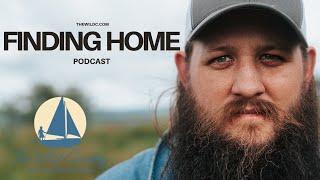
In this opening episode of the Finding Home Podcast, Caleb Henshaw shares a candid personal testimony about stepping away from a traditional local church after years of ministry driven by ambition and burnout. He recounts how a divine whisper led him to plant a garden, introducing him to permaculture and regenerative agriculture, which became a tangible conduit for experiencing Yahweh’s presence. Caleb describes the wilderness not as a place of punishment but as a restorative, vulnerable space where he learned to trust God’s voice over institutional expectations. He emphasizes reconstruction of faith—valuing direct communion with God, Scripture, and community over church structures—while affirming his love for the church and the Bible. The narrative includes reflections on loneliness, the challenge of redefining his identity beyond ministry titles, and a cross‑cultural encounter with a Muslim family in Australia that expanded his understanding of God’s love for all people. Throughout, he urges listeners to trust the journey, embrace discomfort, and seek Yahweh’s voice in unconventional settings.
Chapters
Hey everyone, Caleb Henshaw with the Finding Home Podcast. And I want to take a few moments just to share, you know, while we're doing this, That's been the question I think we've asked ourselves several times is why are we doing a podcast? Why are we sharing our stories of how we've walked through some of our hardest moments of our faith with Yahweh and open that up to whoever would take the time to listen? One of the main reasons why we think it's important to have some of these discussions is We believe that our stories matter, not just ours, but those that would listen, those that would relate to what we're having to say. And it boils down to, you know, we have been in church most of our lives. I've grown up in church. I've been in ministry the past, I want to say, 7 years. Maybe longer. I think we're going on between 7 and 9 years I have not been a part of a local church. And to some, that sounds kind of like heresy to be talking about things of God, be talking about theology, be talking about relationship, and not be plugged into a local church. And I want to say as hard as it is to hear, that was our path in following Yahweh. You know, I was spending so much time in ministry that I was neglecting, you know, even being a husband, being a present father. I had, you know, two young kids at the time when, um, I was putting in, you know, 70 hours a week focused on ministry. And there it was, like they got the leftovers after, um, I came home or I came out of my office or came out of my study time. And I wouldn't admit it then, but that was a result of my ambition of wanting to be important. There was something in me that didn't believe that, that didn't believe that I had value, so I wanted to earn it. I wanted to be on the posters. So, hey, we're having revival and this person's speaking, or this person is sharing a word. I wanted to be the man of power for the hour, you know, have your entourage follow you around while you pray for people. As gross as that is to hear out loud, it was the truth. And it came from this inability to understand how loved and how valued I was. Um, in the eyes of, of Yahweh. We have the courage to say, you know, I'm, I'm bankrupt. I don't think that I even know Jesus, even though I'm spending most of my life serving him and, and talking about him and, and being a part of revival meetings and, and all of that stuff. There wasn't something real or tangible And there were different moments, these halting moments where I had the courage to think that that was possible, that it was possible to really know Jesus, Yeshua, to really know him, to really feel him, to really operate in this joy that you read about and not so much even read about, but that you know exists. I believe that the gospel is good. I believe living for Jesus is good. But there's something in the westernized model I feel like we've really settled. We've settled for kind of this business model of— I could say, you know, what's going to happen every Sunday morning at 90% of these fellowships. You know, we're going to sing songs, we're going We're going to take up an offering. Um, we might have a welcome, we might have announcements, we'll have a sermon, then we'll have an altar call. But there wasn't any dining together. There wasn't this, this house-to-house fellowship or being entangled in community that was so real and tangible that you couldn't really exit out of it if you wanted to.
Hey everyone, quick commercial break. I wanted to personally say thank you for supporting this podcast. Do me a favor, like, subscribe on all platforms, especially YouTube, as we release new content daily. Also, please check out our website, thewildseed.com. It's our permaculture regenerative agricultural space, but there is a new community coming this summer that you can be a part of. If you have any questions, shoot us a message. I look forward to hearing from you.
The time there was a halt in our lives, we were getting ready to have our third child, and we heard the whisper of Yahweh to say, come plant a garden and pursue my heart. And hearing that was really confusing because I wasn't a farmer, had no grid for any of that, um, outside of, you know, some of my family would grow tomatoes and cucumbers, which is very common around these parts, around these parts. So hearing that I was going to be a farmer, plant a garden, I really leaned into that. And long story short, I was exposed to the wonderful world of permaculture, regenerative agriculture, learning how to restore the land. And it was through that process that I really found a real tangible relationship with Yeshua. I felt like I was a part of something swirling around me, um, that just infected my, my, my being. It influenced the way that I spoke. It influenced the way that I loved my wife. It influenced the way that I fathered my kids. I mean, it was a welcoming invitation. It was almost infectious. And it was just little bits at a time. And I'm saying this like I have it all together and I'm far, far, far from that. But I wanted to share that because there's a lot of things that we talk— that we will talk about in this podcast about, you know, what those moments look like for, for a lot of us, because I think it's important for us to talk about it. The most important thing the last 7 to 9 years have taught me is the value of following his voice, of really following his voice. I remember, you know, the last year I was in ministry, I really heard Yahweh say, stop and stay. And it came from, you know, Psalms 91. So as I was teaching that, as we were proclaiming it to one another, we thought that that's what we were doing at the time. And it was just this prophetic utterance of what the next 7 to 9 years would look like. It was really stopping what you were doing and placing such a high value on the voice of Yahweh that you were willing to not move and not be budged until you heard him say go, or you heard him say speak. And that was the hardest part for me because I'm always a doer. And the reality was I still didn't believe that I was valuable. So it's almost this really vulnerable place, like, I have nothing to offer in this. I can't perform my way into this. I just have to lay here bare, vulnerable, until I hear the voice of the Lord speak to me and affirm me. So saying all that to say, the most important thing that we're going to talk about in the next couple weeks is hearing and following the voice of Yahweh. That sounds very simple, but you may hear things that will make you so uncomfortable. For us, it was to leave the church, the local expression, and to follow the voice and be in the wilderness. We're still there. Does that mean that we are against the local church. Absolutely not. 100%, we are for the local church. And I know that the day will come where Yahweh will lead us back into a fellowship, because I believe the fellowship is so important. And there's been promises that he has spoken that we will have that community, that invested community where we're entangled into one— into each other's lives. So number one, we're not against the local church, and I think that can easily be misinterpreted in some of the things that we talk about. Following the voice of the Lord can be very, very difficult, very, very hard, because it's going to go against a lot of our westernized ideas of what we think church is supposed to be, what we think following Yahweh is supposed to be, what we think about you know, what serving Yahweh supposed to look like. His voice may disrupt a lot of those misconceptions or preconceived ideas. So a lot of things that we talk about, again, what does it look like to really follow that whisper, that gentle whisper, or that loud thunder roar during those moments where, you know, you're, you're in a vulnerable place? I think the only other thing I wanted to share tonight, and again, this is just a simple introduction before we get started, is trusting the journey. And that sounds so cliché. It sounds like a bumper sticker, you know, honk if you love Jesus almost, you know, trust the journey. But that's important to understand because this journey is very unique and it's very hard. It's very difficult. I remember the first year leaving church, we pretty much lost our entire community and we were very lonely. And I'm glad we were because that's— that was the time where we were the most bitter and the most, um, destructive. Um, you— we're, we're easily inclined to blame people for our pain. And there's— it's really hard to look inward. It's easier to look outward and grab something and put blame on, on someone else. And that's what we did for a whole year. And I'm glad that nobody was around to hear that because 99.9% of those feelings that we had towards other people or programs or systems were wrong. It was just a part of being, being Bear. Being in that place of being, of being bare. I, I remember one night where I was, I was just so lonely. And I remember sitting, I put my kids to bed and I just wept. I used to sit in my girls' room before they went to sleep and prayed. And I remember trying to not cry so loudly that they would hear me. Um, and you know what I'm talking about. It's those cries that come on, you start like, you know what I mean? And you don't want to be that guy in the room with your kids and you're crying because they're so sweet and they would have been really affected by it. But I remember just being so bankrupt and thinking, what have I done to my children? Thinking I'm following the voice of the Lord, I'm following the voice of Yahweh that said, come out to the wilderness, come plant a garden, Come find me. Come find home. And in the middle of that journey, I'm thinking like, okay, I made the big step, I gave up everything, and now Jesus is going to come every evening and sit at our dinner table and we're going to have conversations and we're just going to change the world. Didn't really happen that way. Um, And I'm so glad that it didn't. Of course, I'd love to have dinner with Jesus every day, but there was still this thing in me, this ambitious thing that I wanted to possess something that would put me on this pedestal of value. And Yahweh had to shake me and grab my face and look at me and me look at him and say, you are valuable right now. But to get to that point was, was very, very difficult. So when I tell you, you know, trust the journey, it's not going to be, um, what you think it is. You might hear some really unique requests. You might hear some things that, that challenges a lot of your paradigms. But if you have the courage to lean into those, those moments where things feel a little different, because this journey should feel unfamiliar yet familiar at the same time. It's like someone that's lost in the woods and they're just trying to find their way home, and they, and they go. It feels very scary, very unsafe, and then all of a sudden you see something that reminds you of where you're going, and you, you start sensing things that are familiar. It's kind of what this process looks like. Yahweh called us to the wilderness, and I know that that phrase has been used several times, um, but I believe that we've misunderstood that, what that really looks like. I know hearing the phrase, you know, 10 years ago, if you're going to go into the wilderness, I, I would automatically think you're going to go into this place of testing, of trials, of pruning, to get you ready to, to go somewhere else. And I believe it's something more than that. I believe that there's actually joy in the wilderness. And I'm reminded about, you know, Adam and Eve. They sin, they fall, and they're sent out into the wilderness. And this whole time I'm thinking, this is punishment, this is a result of them really blowing it. Everybody's had that idea, like, when I get to heaven, I'm going to go up to Adam and be like, what the heck, man, why'd you do that? Because we, we see as they did this punishment happens. Now they're in the wilderness and they're trying to figure some things out. And I have completely relooked at that meaning. I believe that Yahweh was taking Adam and Eve into a place where he can restore to original design, that in the wilderness is actually a place where we know him and he knows us, and we walk with him and he walks with us, and we begin to see things that are that are important. During this journey of finding home, you'll find that the things that you thought were really, really, really important may not be so important. And the things that you held of simple value may be extraordinary. Remember Isaiah 32:15 talking about God pouring out his Spirit on the wilderness until it turns into a bountiful paradise, a fruit orchard. And that word pour, it's the same word used in Acts. I will pour out my Spirit. And that original language is very interesting. There's a piece of it that means to make bare. It's a really interesting concept that when his spirit is poured out, there's this concept of something being made bare, being vulnerable, being naked, being brought down to foundational principles. And that's exactly what happens when you enter into the wilderness. When you, when you begin to find something that's real and tangible, you're brought to this place of being bare. I remember, um, there was a time I was talking to my wife. I had, I had not preached in years. I had not, you know, done a lot of things that I did in ministry for a long time. I didn't play music, I didn't sing, didn't do all this stuff. And that was okay. But what was really scary is I felt like I was losing my personality. It was hard for me to, to be in a room with people. It was hard for me to have hold conversations without stuttering and making a fool of myself and feeling like this, this shame out of nowhere. I don't think that was from, from, from Yahweh. Shame is not from Yahweh. It's just how I interpreted where I was at, and it was really scary. That was the scariest part for me, was I was completely losing who I was. Because I believe everything that I had built myself up to be from, from being in ministry before I had left and gone to the wilderness, there was this misconception of who he was attached to it. If you were to ask me to define myself, I'd say, you know, I'm a teacher, I'm I'm a preacher, I'm a youth pastor, I'm a worship leader. And the way that my mind worked, there was this, I'm earning my value attached to every attribute that I had used to build who I was. And to be completely unraveled to where I don't even know how to act anymore, I don't know how to have a friend, it's very, very scary. But If you know how to really trust the process and that you know that, that Yahweh is leading you to home, you will then be able to allow him to build up the pieces of who you are, and those pieces will have truth attached to them. I don't know if I'll ever preach again. I think that my future looks like a lot of dinner table conversations or podcasts or things of that nature. I don't know if I'll ever be in a westernized church setting again. I see myself in barns, in long dinner tables, in prayer rooms, and in fellowshipping, in homeschool, in having celebrations. And I'm allowing Yahweh to define those things because it may get really radical. And here's the thing, and this may offend you, and this is what I'm talking about. I was in Australia recently and I was, you know, Australia's not a big fan of the USA, especially if they're in aid work. Because they, they, they exposed me to a lot of things that, um, I didn't know. But what was very— the most impactful part of this whole trip was I, I got to hang out with this Muslim family the whole trip. Their kids, um, I won't say his name, but he just— their kids were just so beautiful, um, funny. We worked in the garden together, um, The mom, she would bring me chai tea every morning, which was great. I felt really fancy while I was drinking it. But knowing that, you know, they're Muslim, I just— there was just this connection, this connection of love in that. And I remember praying in my tent, just praying for this family. And let's call this man Steve. Just in case he may pick this up in Australia. But I said, Yahweh, I really like Steve and his family. Um, and I hear, I hear, you know, Yahweh say, I really like Steve and his family too, really like Steve and his family. And then he really challenged me, says, you know, sometimes I meet with Steve very, very often, and I didn't know how to comprehend that. Um, that was very outside of my paradigm to know that, you know, Yahweh whom I serve loves Steve whom he created, whom he breathed life into, whom Steve is on a completely different path than I am. But there was this romance between the two that I didn't have the paradigm to understand. And when I tried to understand it, I exited out of the great dance that I was invited into, this great expression of, of, of Yahweh's love for humanity. When you step outside of that, I think you can really embrace and feel the love that Yahweh has for his creation. You'll begin to start crying in Walmart out of nowhere. I remember going into Walmart, which is our place of, of shopping in, in these parts, and getting so overwhelmed just looking at people, just knowing like how he feels about every person in the room, even if they don't know it. If I was 10 years younger, I would go try to evangelize or try to change them to believe what I believed. I think that there's a better way here. I think there is a power so strong, there's a union so strong that they're just being present in the room is this great invitation. And we'll talk about things like that. We'll talk about, you know, the hard parts of this struggle. We're not talking about deconstruction. We're talking about reconstruction, of learning the right things, going back to the truth. We love scripture. We love the Bible. But the Bible is not an idol to us. We believe that we— that hearing the voice of the Lord is the most important thing that we can do. So again, we love the church. We're not against the church. We love people. As I said, we're not against anybody. We have found— I found that to be, to be true. And we're not against the Bible. We love the Bible. But what we place as number one is him, is looking at him. As, as encountering him, as hearing his voice and learning how to commune, learning how to look in, in his face. So that, that's the, the type of things we'll share. So I hope that, uh, you'll join, um, leave feedback, leave questions, leave comments. And you never know, we may even get together one day. So until then, I'm Caleb Hanshaw, and thank you for listening and watching.
[MUSIC] You, in the darkness of my heart, I still cling to you. You are
More from Kaleb







Chicken Processing Mistakes...And How I Learned From Them (Plus FREE workshop!)



How To Cut Up A Whole Chicken — Jumbo Wings, Quarters, Breast & Tenderloin (Full Tutorial)
