The Neo Show: Founder Fridays #21 - Karan Goel, Founder and CEO, Cartesia
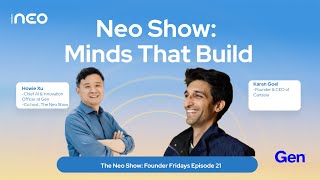
In this episode of The Neo Show, host Howie interviews Karan Goel, the CEO and co‑founder of Cartesia, a San‑Francisco‑based startup building real‑time voice AI models. Karan explains Cartesia’s mission to enable developers and businesses to create conversational voice applications, and predicts that within 18 months half of all customer‑support calls will be AI‑driven. He contrasts the company’s use of state‑space models—architectures that deliver ultra‑low latency and high quality—with the dominant transformer‑based approaches, arguing that transformers are approaching a performance ceiling for long‑running, low‑latency voice tasks. Karan describes Cartesia’s product achievements, including the world’s fastest speech‑synthesis model, and emphasizes that latency, cost, and naturalness are the primary customer concerns. The conversation shifts to how AI tools accelerate the startup’s operations: coding agents (Cursor, Claude), AI‑enhanced legal, meeting‑summarization (Granola), recruiting (Juicebox), and sales/marketing workflows (Notion AI, Clay, Klaviyo). Karan discusses the role of forward‑deployed engineers (FDEs), noting that AI can handle much of the templated work, allowing smaller FDE teams to focus on deep customer problems. He shares that Cartesia now has about 60 employees, which would have required roughly 80‑90 without AI‑driven productivity gains. Finally, Karan offers advice to the next generation, urging a strong foundation in math, science, and programming while also valuing humanities, and predicts a coming era of hyper‑progress where AI agents and autonomous systems will create abundant productivity, making technical expertise increasingly valuable.
Chapters
This is The Neo Show, where the minds shaping tomorrow speak today. Brought to you by Neo, the browser redefining what AI can do for you. Hey, Karan, welcome to Neo Show. And the Neo Show is really about Neo browser, but today we're not going to talk about Neo browser. We are going to just talk about AI because you know so much about AI in terms of the AI product. Enabling other people's AI product, as well as one thing I wanted to hear from you is how you as an organization, a startup obviously, you know, use AI. So first step, you know, just to tell us a little bit about yourself and then what your company is doing, and then we can go from there.
Thanks so much for having me, Javi, and yeah, great to be here. So I'm the CEO and co-founder of Cartesia. We are a a startup based in San Francisco. We build models for real-time voice applications. So we help developers and businesses build voice applications for things like conversation automation. I've been doing research for close to 10 years in academia. So I went to grad school, finished my PhD from Stanford in 2023, where I worked on architecture research for AI, so changing the way models are built, and decided to start the company with a few of my labmates and friends, which is how Cartesia was born. And so early 2024, we raised our seed round, and then we've been working on building fast, real-time models and enabling, as I said, developers and businesses to build conversational applications. So that's been like our focus. And yeah, Happy to chat more about all things AI today.
Yes. Look, let's just cut to the chase of it. Enabling voice applications, that's a huge thing because the customer support, many, many applications. Actually was with Matty, one of your competitors, ElevenLabs founder CEO this week. You know, when he was asked, not by me, by a person, you know, sort of asking this question, like, when do you think, you know, when people call customer support, when do you think we will reach a moment that half of the voice will be AI enabled? Well, without getting to his answer, what would be your answer? And then I will let you, you know, give or take from here.
Yeah, yeah. I actually think the You know, the voice space is pretty interesting because it's clear that there's a lot of opportunity to improve the experience that people have when they pick up the phone and call a business or call their, you know, government or call their local health system. And I think that there's a lot of friction right now, because sometimes you can't get to anybody else on the phone, or sometimes, you know, you have a very inhuman experience, or you're sitting on the phone line for 20 minutes and and you're not able to do what you want, you set out to do. Obviously, voice is a really good medium to communicate your pleasure and displeasure and be able to sort of be heard, right? So I think for all those reasons, like, it's clear that there's really a need for voice AI and voice tech for these use cases. Now, when it comes to like, you know, I think your question is like, when do we get to 50% call automation? On all calls made for support. Yeah, I think 50% automation, I would put it at 18 months.
Interesting. Very interesting. You have exactly the same answer. A year and a half from now. Wow. Great people think alike. It's very aggressive, right? Think about it, right? You know, when people call, you know, Thanksgiving is coming, Christmas is coming, lots of people are buying stuff. Returning stuff. You know, think about it, right? You know, a year, a year and a half from now, half of the voice you heard on the, you know, when you call support, it's going to be AI. You know, that's actually a very, very interesting moment. I think, you know, I saw some stats recently that we just reached the point that the internet, the content, we reached the point that half of the content is actually AI enabled. So very interesting. Now, on the surface, what is the— so why 1.5 years, right? You know, is the technology ready? You know, because, you know, your company was born after ChatGPT moment. I'm pretty sure that, you know, there is a— you get a little bit of the tailwind because of the ChatGPT. But my understanding is, you know, you are not even using the, you know, transformer model powering the ChatGPT. Can you give us a little bit, you know, understanding what's the AI behind the scene and why now using transformer model?
Yeah. So I think, you know, it's, you know, my understanding you have a two-part question here. One is, you know, what's really making it possible to project a timeline like 18 months? And then of course, like, what are we doing on the underlying technology that's that's enabling that and that's different. I think to answer that question properly, I'll go a little bit into our history. Me and my co-founders, me and Albert Gu, Chris Re runs a machine learning systems lab out of Stanford, who was actually our PhD advisor, and then Arjun and Brandon, we worked together for many years and Albert He's a pioneer in the field. He invented a whole area of research called state-space models, which is a new set of architectures that make it possible to build more efficient AI systems. Now, the application of that technology is very broad, but what we— interactive applications where you are talking and listening to a system, these state-space models really buy you low-latency, high-quality models, which is the key thing that you need to enable the adoption of voice applications. So you really need the interactions to feel natural, to feel quick, to feel accurate, to be empathetic. And these models are helping us, and these architectures are helping us build systems that are really good. So that is one of the key technology unlocks, I would say.
Maybe let me just ask a follow-up question. So OpenAI has a voice model as well. Is that based on transformer or based on—
It is.
It is. What's the point of, you know, can you give us some, like, OpenAI is taking a, you know, transformer model path and then you are taking a different path. Is that because fundamentally for voice, that's the better way, you know, just to, yeah.
So we actually think that, you know, and this is a broader point, but like we think architectures can be improved significantly to get to more intelligent models, period. We think that actually the models that people use today are very suboptimal, both in terms of energy efficiency.
You are on the camp, right? This is a huge debate, a transformer model, you know, how long, you know, are we sort of the— get to the ceiling of it, or are we going to still have tremendous mileage out of it? So you are on the camp that, you know, transformer model already, we already see the age of it. You know, there's a, reason to go to the next stage, right? Okay, great. Can you dive a little bit deeper?
Yeah, so it's not that you can't get more value out of transformers, but it's that we feel like the value, you can map it out today where it will end, right? So now the question for us as researchers, technologists is what comes next? Once you hit the ceiling of what transformers are capable of. And I think one of the key bottlenecks with transformers is enabling low-latency intelligence for long timescales.
Hmm.
You build AI systems that operate like humans in the sense that you can interact with them for a long period of time. They understand your information and context. They can take action and they can personalize and improve possible with the way that the current technology is being built. And so for us, it's about, you know, let's ignore, you know, all of the things that will become possible because of— I will have to go turn on these lights here. Sorry, give me one second.
There we go. Okay, so I made sure you are not AI. You are real.
I'm not AI. But these transformer models, you just imagine that whatever is deterministically going to have a problem that we're interested in solving. So as I said, actually building this human-like intelligence is very difficult to do with transformers and requires fundamentally new approaches that are more energy efficient and more capable. That's where state-space models come in. And there's a lot of other architectural work that needs to be done, that we are trying to do. I would say from a voice AI angle, what we're able to do in Cartesia is, for example, we have the world's fastest speech synthesis model. And that's only possible because we've done a lot of deep work on both the technology, like on the models to differentiate and are able to deliver a really good experience. And it's a full-stack problem. All the way from hardware to platform.
Do you see that it's going to be like, oh, for certain use case, like a voice, right? Low latency, long horizon use cases, a different model. But for certain use case, transformer, or it's going to be transformer model will reach its ceiling. It will be the next generation model is going to become the more dominant architecture? How do you think about it?
We think transformers will be fully replaced with more efficient alternatives for all problems. But I think that there will be a need to have just much more efficient models to power long-running intelligence. That's, I think, a category of intelligence which To me, um, sits more on the— that we use. So as an example, um, when you, um, need to ask a hard question, right, you may expect that you will get a model that is very, very large and powerful to run in the data center and spend maybe 2 days thinking, right, and coming up with an answer, right? That's one extreme. The other extreme is a model that lives on your phone and you talk to every day, and that may not be able to, you know, run on 1,000 GPUs to get you a— and is very good at interacting with you, right? So there'll be sort of these extremes of two types of systems. And so we kind of have to think about like, what is the technology to enable one or the other? Nobody can predict, I think, whether they will run on the same architectures. But at least in my opinion, the architectures that we use today are currently quite inefficient, right? By at least our estimates, they're anywhere from 10 to, 6 orders of magnitude less efficient than humans. And it's really hard to estimate how much that gap is, to be honest, because nobody really studied it very systematically or rigorously. It's still quite wide. Just pound for pound from an intelligence per watt perspective, it's quite wide.
So I think, you know, I'm like you, right? You know, system person looking at architecture. I certainly see tremendous opportunity to optimize the model. There's no question about it. But however, the potential resistance or potential argument against, you know, graduating from Transformer, going to, you know, totally different model architecture is, you know, a lot of the hardware, a lot of the, you know, the researchers, they're already familiar with this, you know, architecture, right? There is an ecosystem around it. So as a result, it's very hard to change things. I mean, You know, you, you know, you probably know the history of IPv4 versus IPv6. IPv6 is, you know, from academic point of view, far better than IPv4. But guess what? Right. 20, 30 years later, we are still, you know, stuck with IPv4. So the question is, you know, how big a value of the ecosystem around the transformer? I'm curious. Any thoughts? My whole argument is, you know, there's a— the reason a transformer— some people believe that transformer will have you know, many, many years to come because we already built up this ecosystem around the transformer, right? There's so many researchers, hardware, software, whatever, right? So as a result, a transformer model may be here for a long time to come. That's an argument against it. I don't think anyone says transformer is perfect. As a result, it should stay, right? So I was curious, you know, what's your, you know, thought about that argument.
Yeah, no, I think it's a very valid argument. I think that the, I mean, it's sort of like, you know, if you think about the old Nokia phones versus the iPhone, right? Like, I think there's always a sort of turning point where the old technology then no longer makes sense to use because the disruption is so large. And I think it takes a few years for that to happen. Because there's a lot to prove out, right? To make the case that one should switch away. I think for us, the goal is less to convince everybody to switch away and more for us to build and show that in fact our models are superior and the applications we can support run better.
Yeah, and ultimately people shouldn't care about whether that's transformer or not, right? It's like your latency, your cost, your accuracy. That's far more important.
Absolutely. Even for our customers, You know, I think a lot of developers that we work with are inspired by the fact that we use new technology because they find it exciting. They find it interesting. They think that it's nice that there's a company that they get to work with that's actually pioneering new work. And it's fun, right, to use something that's built on something completely new. But at the same time, like nobody would be using us if they didn't have the quality, the performance, the cost, that they expect, right? So I think that at the end of the day, the customers care about whether the product is good. And that's where we, you know, our claim, I think, is that we can deliver that and better with the change in architecture that we're doing. And so as I was saying, like the fact that we can have the lowest latency model in the world across all companies is a feat of this type of work. I think that's a pretty big, big thing for us to be able to do, even especially as a small company that's not, you know, the size of Google.
Yeah, it's great. So look, you know, the headline for next week for me is like, you know, ElevenLabs and the Catecia founders both believe that, you know, it would only take 18 months before you get majority of the customer support. It will be done by AI. I do believe if we reach that, you know, that moment, that's a pretty big moment, you know, in the human mankind's digitization journey, right? So, okay, enough about voice AI. So let's talk about another thing. Like, you know, you mentioned you started this company in 2023. How much of the you are starting the company have to do with this ChatGPT moment?
I think some amount, for sure. You know, I was a grad student. I started my master's actually in 2016, and I was at CMU. I worked on reinforcement learning, which was quite popular back then. And then, you know—
Popular in academics, not in the industry.
That's true. Very popular in the academic circles. And, you know, DeepMind was doing a lot of work in in game playing and we were working on off-policy RL and there was some really cool stuff we were doing. And I, at the time, was pretty excited about just this idea of agents that are acting, taking action, perceiving, interacting with users. Even since then, I was pretty excited about that. When I went to my PhD, a lot of the work we ended up doing was in this architecture realm. Which again, at the time, we saw the transformer take off and we said, oh, what happens after? That's why we started doing a lot of this work because it was really like, in academia, you want to work on things that feel impossible. That's the role of academia. But I think as we were doing that work, we realized that to have an impact in deep learning, you really need to be able to show models that are capable of new things. So it's well and good to say, here's a new architecture, but the reality is that everybody wants to see what is a model that can do something new or interesting that was not possible before. And academia, unfortunately, is not a great place to do that work. It's a great place to invent and to ponder new ideas and to show that they are possible, but it's not a great place to scale them. So, and it was also quite clear with the ChatGPT moment that that was something that was really important in AI, right? And possible. So obviously they led the way in showing that to the rest of the world. So for me graduating as a PhD student in 2023, you know, there are only 3 options, right? Go join a large research lab and work as part of a research team, become an academic, or start a company. And try to build something of our own. And I think we had very high conviction in the work that we were doing. So we decided to take the third path. And so that's why it made sense. I mean, obviously for us, a lot of us, it was like our first job out of college. I had spent a lot of years doing research, but have not worked in a company before, let alone like led a company. So it's an interesting experience, I would say.
But co-founders of Databricks, right? You make still with Databricks. I'm talking about these guys. It's their first job or almost their first job, right? They are doing pretty well, right? It's a—
Totally. I take a lot of inspiration from that.
It's a $100 billion company. You know, basically, you know, new, new, new college, new grad, the PhD new grads, right?
Yes.
So I think you are on a pretty good path. Now, that being said, I'm pretty sure that entrepreneurship, you know, give you— got you to learn something you didn't anticipate when you were still in the grad school, right? What is the biggest thing you want to, you know, you want to tell your friends, hey, you know, I decided to do this, being entrepreneur, I did not realize it's like that. What is that?
Yeah, I think, you know, I would say one of the learning lessons I've had, I mean, there's many, but like one of them has been like the value of product. And how to build for users, right? I think in academia and also in research, too often you're very focused on the models and the capabilities of the models, but I think that has to be done keeping the user in mind. And I think especially because we build a product for developers and for businesses, I think we see and learn a lot from working with users and customers. And obviously, that's not a muscle you get to exercise in academia.
Would you say that you're learning the hard way? Like, can you share with some ugly lesson got you to say what you just said?
Yeah, I mean, I think there's several. I would say one set of lessons we learned pretty early on is you can have a really great voice model, but to really make it shine, you need to be able to showcase voices that users really like. So, you know, think about a really capable model, right? Like a foundation model. It can do so many things, right? It's great at everything. But for it to really shine for a user, you have to show them that one happy path. And it's sort of almost like contradictory to the point of like the model training, right? Because there you're trying to just say, I'm going to build the best model for everything. but when it comes to the user, they just want to see one thing and they want to see it really good. So, uh, for voice models, I think one lesson we learned pretty early on was users really love and want to see great voices. So even if the model between two models that are, uh, have different capabilities, the less capable model with the right voice will appeal more to users than the more capable model with the wrong voice. So I think that's a hard lesson. In the role of product and how customers think that may not come intuitively to someone who is obsessed with research and models, right?
Yeah, check your research ego, right?
Exactly. Check your research ego at the door because the customer doesn't care about that.
Right, and the customer care more about the better voice. What does the better voice mean? Like, for instance, is that like I don't know, movie star's voice? Like, what does a better voice mean?
You know, it depends on the use case, but I would say in a lot of cases, it's about empathy, conversationality. You know, it's about having a voice that feels authentic. And I think a lot of folks are looking to build voice AI systems where it feels like you're talking to a real person and the voice is able to be, you know, do ums and uhs and like disfluent and like, you know, all of that, right? So actually there's a big desire to not have great, you know, movie star voices, but to have ordinary, you know, voices of people that, you know, everyday people. So I think that's something, again, we've learned a lot through working with customers and there's a lot of tips and tricks on how to make these systems really good.
Interesting, because, you know, I, you know, I heard that there was a startup in Palo Alto. All they did was adding accent into the voice. This is many years ago. This is not recent past. I thought that that's interesting. But, you know, what you said is so true, right? Because, you know, people want to feel like it's real, right? Because, you know, otherwise it's not very interesting.
And there's also— I will add one more thing, which is there's a notion of fatigue in voice interaction in the sense that some voice interactions are relaxing and some are strenuous, right? And what differentiates the two? It's the voice and the tone and the prosody and the way that, you know, the information is delivered. And you want to build an experience that feels comfortable. It doesn't feel like you're tired after talking to the voice AI system, right? That requires actually thinking about the experience very carefully. And I think it will make a huge difference to adoption. So the 18-month thing that we talked about, I think that's going to be a key part of that.
Interesting. You are solving that last-mile problem, right?
Yes.
Very interesting. Okay. We talked a lot about voice AI, the interesting lesson you learned as an entrepreneur. Let's actually talk about just building the company, right? When you and I met the first time, I clearly remember I was asking you this question. I don't know if you still remember. I said, hey, how many people in the company? And imagine for a second there's no coding AI agent, how many people you would have had to do the same amount of work? Why don't you tell our audience about what you told me?
Yeah, I think, you know, obviously as a, as a, you know, new age AI company, we use a lot of AI tools. It's A, because we really believe like AI can be an accelerant to work, right? And so we want to be leading the way in in doing that and adopting those tools. But B, because like, you know, there's places where we've seen a lot of value out of using these tools. So, you know, on coding, I think like, it's pretty clear that developers and engineers will be very productive if they can master coding tools, right? So for us, we use Cursor, we use Claude, we use a variety of tools to basically make our engineers more productive. And part of it is like we're learning as we do this. But part of it is also we're trying to understand what functions or areas do you get a lot more mileage out of using these coding tools. So, you know, I think I remember from our conversation, like, you know, for us, we have a pretty heavy research team, but we also have platform and engineering teams that are building. All of our products and so on. So I think what we found is that these models that we use or these coding tools that we use aren't necessarily at the point where they're helping our researchers very much, but for our platform team and product teams, they're a big accelerant, right?
Like the front end, right?
Exactly. I think there we're seeing folks be much more productive and I think you know, with like, uh, probably like, um, 30-40% less headcount, you can get the same productivity. Um, and so I think that's a, that's a big accelerant. And that doesn't mean, by the way, that you hire less people. I think it means that as a company, your overall throughput is way higher and like you can move much more quickly.
Um, how many people you have right now?
So we are about 60 people in the company right now. And yeah, 6-0.
And, uh, and without AI, you would have had that, what, something like 90 people to do this?
Right, 30. I would add 30% in our engineering team. So I would say about 80, you know, 75 to 80 people to be able to be equally productive. So I do think it's a material differentiator to be able to use AI. And I think for platform teams, for example, like, you know, think about using like Kubernetes or using all these like systems where you're trying to set up infrastructure, trying to set up systems. I apologize for the lights, but All of that is just made much faster, right, by using—
Just pause here for a second. So without AI, do you think you would still have like 60 people because of the runway, because of this, meaning that you are not, you know, it's not like you already hire to the level you wanted. It's just that you have more productivity or, you know, you felt like you otherwise at this point you would have had 80 people, period?
I think what we would have had is probably a team of equal size, but we would have been much less further along in terms of our development journey, right? Like I think the fact that we, you know, we did our seed round early last year and we really built out this whole platform very, very fast and all these models and all the infrastructure to serve them. You know, we were working with enterprises like ServiceNow, which is obviously a very large, large company. So to be able to serve that type of customer, you really need to be able to build and ship platform and product very quickly. And I think that is a big accelerant. For example, I think I'm also, I also sometimes question the role of the FDE in the sense that I think that a lot of the FDE work can be very highly accelerated with coding agents. And in fact, I think you can build much leaner FDE teams that can allow you to deliver the product at the same quality to customers, but much faster with coding agents. So I think there's a huge opportunity to sort of reinvent the organizations that people are building.
So basically you are in the camp of the company that we're not really reducing people because of a coding agent. We are just benefiting from that additional productivity, right?
So absolutely, I think, I think it's all about like how can you do more, uh, with, with, with, right? Yeah, exactly. And I think, and I think that will be the journey for, I suspect, for also most companies that I don't think it's about, you know, reducing headcount. I think it's about like now there's an opportunity to do even more than we ever could.
Yeah, yeah, yeah. So, uh, Factory.ai, you might have heard about. The founder is a friend. I also interviewed him And then when I talked to him, he said exactly the same thing in that, you know, I'm not going to reduce people because, you know, I'm competing with— I have competitors, right? You know, it's not just a save money thing. It's I need productivity. So now you mentioned a very interesting point. I want you to sort of elaborate a little bit. You think FDE is wrong. First, you know, what is your understanding of FDE for our audience? And yeah, let's start from here.
Yeah, you know, the way I think about FDEs is that—
Forward deployed engineers, right?
Forward deployed engineers.
Why there is a discussion of FDE? It's a popular buzzword in the last 12 months in San Francisco.
Yeah, so, you know, Palantir pioneered this model, right, of embedding engineers into customers. To really internalize and solve customer problems on the ground. And as part of that, you embed engineers, right, which is the forward deployed engineering role. And it's really a way to have a deeper relationship with customers and to really go deep and solve their problems, right? Now, I think traditionally, FDE teams sort of tend to be teams that are taking what is a more generic product and adapting it to that customer's use cases and specific environments, right? So there is a lot of solutions work required. There's also a lot of templatized work required to do on the solution side. And so that's where I think there's an opportunity to sort of have coding agents be able to take a lot of the heavy load off of engineers because as you work with more customers, there are a lot of patterns. There's a lot of templates that get built. and you can really reuse those templates and flesh them out quickly for customers with coding agents.
I'll give you a different point of view, see how you think about, you know, how you reconcile this, right? You just mentioned the FDE, you know, a lot of that should be done instead of engineers should be done by AI. So you are not sure if the popularity is justified. That's sort of the, your way of thinking, right? I have a friend, also a startup CEO, right? You know, when, you know, also on Neo Show, we talk about this topic. His view is before, he couldn't even afford to have engineer talking to customers or dealing with this long tail features, right? Because, you know, as enterprise company, oftentimes you just do the, you know, just the popular features. That's the only thing you can afford to— long tail, there's no way. Now, for the first time, he's able to deal with, you know, fulfill the long-tail features because of AI, because of the coding agent, right? So from his point of view, like, FDE was not even possible for him. Now FDE is possible for him. So how reconcile, you know, what do you think? And how do you reconcile these two?
No, I totally agree with that point of view. So I think, you know, I wouldn't— I think it doesn't really contradict, you know, my perspective. I think it's like, It's at the end of the day, you want to embed engineers and folks from your team into the customer because you really want to go deep and understand the problems that they have. And to your point, there's the head of the problem and then there's the long tail. And I think in both cases, you're getting a lot of value out of these coding agents because you can get to a solution faster for them. And then to your point, or to this founder's point, when there's custom demands or needs, you have more of an appetite and an ability to fulfill those because of this accelerant. So I think in both cases, it's really important. I think it doesn't mean you don't need FTEs anymore. I think once again, the same concept, I think you still want FTEs because you still want people on the ground understanding the customer's needs. Needs and problems. But I think being able to translate that quickly, just the leverage you have is different now.
Yeah, yeah, yeah. I think you guys are, you know, articulating a similar thing, even though on the surface it's two different points of view. It's the same thing, right? You absolutely see the needs to entertain customers with the long tail needs these days. But thanks to AI now, you know, you should— most of that should be done by AI. So yeah, that's also a startup, you know, founder, CEO of Camel, my friend, the Boo, you know, if you're listening, you know, you guys are talking about something very interesting to get. Now we talked a lot about for the engineer side, but as a founder CEO, you do more than engineers, you do marketing, sales. How is AI helping you to do, to run the company? Like, do you see that? Because you already, you mentioned that, oh, I probably need 20 more headcounts on the engineer if I would have to do the same volume of the work. What about go-to-market side? Can you give me your take?
Yeah, I mean, I think on the go-to-market side, like, I think, A, like, as a first-time CEO, you know, it's amazing the kind of questions and answers you can get even out of ChatGPT, right? And I think I asked very dumb questions.
I saw your $1,000 an hour for even simple question anymore, right?
Right. And, you know, we use, you know, we obviously have a law firm, but we also use tools like Crosby, which is, you know, legal AI, and they do an amazing job as well. But even beyond that, you know, obviously for legal issues, we go to the right people. But, you know, I think in even issues of judgment, right, ChatGPT can be useful because it's the sum total of all human experience in some sense. So if you can ask the right questions, you can get really good examples and instances of other founders in similar situations. You can get a really good sense of strategic inputs, right? What are some of the potential, let's say, options in front of you, let's say if you're trying to make a strategic decision, or even very tactical advice, right? So, hey, I'm going to meeting. This is the, you know, the decision maker, this is how they're thinking about things. How do I, you know, communicate X and Y to them? Or how do I understand X and Y? I think I try to view it as a powerful tool that you should be using with a lot of humility, right? As in, like, as a founder, you should assume that this tool can actually be a big accelerant rather than viewing it as a thing about your own ego, right? One way to view it is like, I should know best. Another way to view it is like, I cannot possibly know everything about how to make all the great decisions. And so I should rely on whatever tool I can to make myself better at that. Another thing I've used recently actually as a really cool feature is, you know, I use Granola for a lot of meetings and, you know, tell me about it.
I started using it.
It's amazing. It's amazing. And so, you know, you have all these meetings. And so one of the things I do is like at the end of the week, I try to ask Granola, you know, hey, like I was in all these meetings. What did you notice about, you know, where I was wasting my time? What did you notice about, you know, where I was not communicating properly or I wasn't able to be effective? And like, how do you think about, you know, what your perspective is on where I'm spending my time? And how do you compare that to other CEOs at this stage? You know, where they should be spending time? I think that's really helpful, right?
And you got an insightful answer from—
Incredible responses, right? Because it's able to look at all of your context, all your meetings, and then give you really a good summary of what it thinks you're doing well versus not. And I think the critical feedback is really helpful because it's private and you feel like, hey, I can ask all the dumb questions I have and nobody's going to judge. It's really great to be able to ground it in what's actually happening, right? Because I would say no founder, I'm sure, would agree at Series A stage is thinks that they're spending their time optimally, right? I think most people are really keen to understand where can they be doing better and how. And I think previously nobody had any tools to like, you know, really use that. You would really be looking at your co-founders and teammates. Here it's so actionable because it knows exactly what I said in every call, who I talked to, and it can give me very precise feedback. I think that's a game changer. And I think used effectively, it can really kind of make you a better better CEO, better founder.
Cool. So because of AI, you have, you know, equivalent of the 20 virtual engineers on your staff. You have your, you know, maybe not your chief legal officer, but, you know, legal counselor on your staff, right? You have your CEO coach on your staff, right? What about sales and marketing? What interesting tool are you using?
Yeah, I mean, I think, you know, things like Clay, you know, for enrichment, right? That's obviously like a really cool tool. I think in general, like most tools that we use for go-to-market have started to integrate AI features. And that's been an accelerant, right? So, you know, we use a lot of Notion to actually organize a lot of our collateral for go-to-market, especially sales collateral. And that, you know, Notion has a lot of AI features now and that helps us, you know, call recordings, obviously Granola, being able to turn around decks super quickly now for customers. Because of that. So I think there's a lot of like, especially for customers, you can do a lot more customization in your collateral very quickly with AI because you can generate and synthesize things from meeting notes and also from things you know about the customer. I think those are areas. So things like Klaviyo for like more go-to-market outreach, et cetera. But like, I think there's other tools like that. Even recruiting, for example, there's more tools now that are available to like, help you find the right candidates.
What tool are you using for recruiting?
For example, you know, we started using this tool called Juicebox, which is, you know, again, a startup that's trying to make it easier to find, you know, top of funnel for candidates for roles that you're trying to seek out. So I think all these tools are just making it easier to target and be more precise when it comes to go-to-market and so, or recruiting. And so we really want to use whatever's out there. Like we try a lot of stuff, as you can probably tell.
I'll try it out too. Juicebox, right? You know, you know, I think it's a cool tool.
It's early, but I think it, you know, it has a lot of potential. And, you know, I, as a CEO, I've been able to use it, right? You know, my recruiting team, obviously they use a lot of LinkedIn and all of that. You know, that's obviously the workhorse. But I think tools like this can make other people on the team even more productive and able to help in places, right? In very targeted ways.
You know, just like you, right? You know, we always need, you know, great talents in engineer, designer, growth, right? Product. So I'm going to give a try. Last time you give me a few tips, you know, thanks a lot for giving me this additional tip.
And then one last thing I'll say is even for like our own sales process, like we're building now internally, we're building voice agents to be able to then take calls on the team's behalf and put somebody in front of you know, a prospect, uh, to, for them to be able to talk to and ask questions so that, you know, we can start to have, again, give customers a better experience when onboarding into our platform so that they can ask questions, answer questions about, you know, the product pricing, billing, et cetera. So I think that's going to be, again, another way that we can accelerate go-to-market.
And then it's all Cartesia voice.
It's all Cartesia voice.
Okay. Yeah. So That's like a last question I have for you. So we talked a lot about technology, entrepreneurship, productivity, transforming, AI transforming your company. What is your advice to the young generation? Let me qualify my question a little bit, right? Every, I mean, the way I think about it, everyone has to be young generation. You know, it's not, it's not just age because you have to stay young, stay hunger, because otherwise, you know, this world is changing too fast. So it's not necessarily young, young, but there is a, truth that a lot of the people in the college or high school, right, you know, they wonder, hey, you know, what am I going to study? Right. You know, what am I going to choose to study? Right. You know, like 10 years ago or 5 years ago, computer science is so red hot. But, you know, these days, do I still need to learn programming, computer science? Right. You know, the other thing is, sounds like, you know, we need, you know, for at least for some big companies, maybe less people needed. If that's the case, Am I entering a workforce that's just shrinking? How to think about it? You know, if that's true, how am I going to deal with it? Or maybe that's not true. So, you know, yes, it's young generation from that point of view. But on the other hand, it's just the general advice in terms of the— in the AI world, what— how do you think about career development based on your observed?
Yeah, I think that, you know, personally, I think it's actually even more important to study math, science, and technology. Because I think in, I would almost argue that the opposite will happen, which is that there'll be much more demand for technical folks. Because I think the era we're in right now is the beginning of, you know, 70 years of hyper progress. For humanity. And what I mean is that, you know, we sort of entered with the ChatGPT era, right? And that's leading into this era of agents where now we're starting to accelerate what, you know, people can do inside organizations. And then it's going to lead into the era of autonomy, right? Where you're going to have both from a digital autonomy perspective, but also physical autonomy. Robots, digital brains that are able to take actions and carry out work at much bigger scale and at much longer timescales. I think those systems are not— we're not there yet in the technology side to build those systems yet, but that's one of the most important problems for humanity because I think that creates basically more of an era of abundance. Where you have the ability to essentially do infinite work for cheap. And that means people can start to focus on the problems that matter for humanity. So I think understanding technology is very important in this era, but studying history and literature and everything else is equally important because we have to be able to progress as a species. And I think it's good to have a social sciences background too. I don't think people should fundamentally change yet what they do. I think, you know, I don't believe that it's bad to study programming. I think it's more important to study programming. You should have a background in understanding how computers work because there will be more computers, right? And, you know, more than ever. So knowing how those systems and things work is actually going to be important and an advantage. But, you know, don't ignore history.
Yeah, totally. This is wonderful, right? You know, infinite— well, what's the word? Infinite capability or infinite work for cheap, right? So finally we are able to solve some of the maybe long tail, but, you know, important problems for human mankind. So as a result, you know, if you are, you know, if you are passionate about STEM, you know, coding, you know, this might be the best time ever to do that. So certainly, Karan, you are not regretting getting into computer science whatsoever, given that you are doing a company. But even for people 10 years younger, you know, you totally see, you know, they still do computer science, even though by the time they graduate, right, you know, the cloud, the cursor should be 10 times more powerful than today. But even despite that, you would still encourage people to do—
Yes, because I think that, you know, humans decide what problems are important. And choose to solve them. And I think understanding technology and then having the judgment to do that will always be— they'll always matter.
Okay, cool. My co-host Axel, he couldn't make it today, but he's a high school student applying to, you know, some of the schools you attended, and I wish him luck. And then I, you know, I will pass on your wisdom to him. Thank you very much. You have a nice weekend.
Thanks so much, Howie.
Okay, keep in touch. Okay, I think we are done with the recording. Hey, thank you so much for your time.
Yeah, thanks so much. Sorry about all the internet and the lighting issues, but hopefully we can edit around that.
I hope we can edit this out, but even if not, it just shows that this is the authentic—
There's no AI avatar.
Yes. Okey-dokey. Hey, have a nice weekend. We'll keep in touch. By the way, and I remember the VC, it's a small VC, AGI House. They sort of are putting some small money in.
Yeah, they did. Yeah.
Yeah. Yeah. Cool. Okay. Your office is in San Francisco, right? Correct. Okay, cool. Sometimes I'll stop by.
Yeah, please do.
Have a nice one. Bye-bye.
Bye.
More from Karan
IIT to Silicon Valley: He Built the World's Fastest Voice AI | Karan Goel, Cartesia

Building Voice AI For The World: The Cartesia Story With Karan Goel | Elevation Capital Podcast
Make with Notion 2025: The startup stack: AI-first founder playbooks (Karan Goel, Marty Kausas)

How Cartesia Edges Out The Big Labs With Audio AI Models, with Founder and CEO, Karan Goel
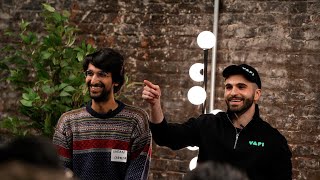
Voice AI Founders chat: Vapi X Cartesia | Agentic AI trends, Founder journey, Biggest bets in 2025