The Actress turned SVP of Marketing & Growth at Pavilion ft. Kathleen Booth
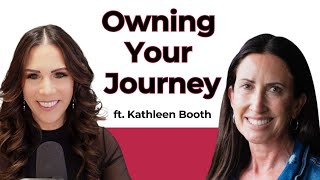
In this episode of the She’s So Sweet podcast, host Christy Faltorusso interviews Kathleen Booth, Senior Vice President of Marketing and Growth at Pavilion. Booth shares her unconventional career journey—from studying political science and working as an international development consultant focused on clean‑water projects, to pursuing theater, founding and running a marketing agency for 11 years, and eventually moving into B2B tech leadership. She discusses pivotal moments such as studying abroad in Barcelona, earning a dual master’s in international politics and an MBA, and the decision to sell her agency. Booth offers candid insights on the myth that quitting a 9‑to‑5 automatically creates work‑life balance, emphasizing that true balance only comes when you love the work, have financial safety nets, or a supportive partner. She explains how theater helped her develop confidence and navigate gender‑biased environments in international development, and clarifies the difference between introversion and shyness. Booth details her personal‑branding strategy on LinkedIn, how she built a sizable following to amplify women’s voices, and her role in creating the Women of Pavilion community, now over 1,000 members, to support women in go‑to‑market roles. The conversation also covers balancing family life, communicating with her spouse, and modeling a strong work ethic for her children. Finally, Booth shares her present‑focused career philosophy: doing the best work now, trusting that future opportunities will arise, rather than adhering to rigid long‑term plans. The episode ends with Booth’s advice to listeners: find work you love, do it with people you love, and let that drive fulfillment and success.
Chapters
quit your 9 to 5 to create work-life balance. I feel like that is the top line message. Can you please, from your experience, explain to our listeners that when you own your own thing, it's not 9 to 5?
Oh no, it's definitely not. Um, and I, you know, and I know people who've quit and done their own thing and they have great work-life balance, but I'll be very candid, I think what it points to is not don't do it, it's that only do it if you really love your work. Because like, right, I do love my work and I I don't mind working late at night or on the weekends because I enjoy what I do. But if you don't enjoy what you do, you're going to be resentful of it if that's the situation you put yourself in.
Welcome to the She's So Sweet podcast, where we interview accomplished women who have worked their way to the C-suite. I'm your host, Christy Faltorusso, Chief Customer Officer and award-winning customer success executive. I am so excited to introduce our guest today. I've got Kathleen Booth, who is the Senior Vice President of Marketing and Growth at Pavilion. Kathleen, welcome to the show.
Thanks for having me, Christy. I'm excited to be here and talk to you today.
Absolutely. And I've already gotten a sneak peek into your story, and I got to tell you, it is interesting. So we are going to, we're going to dig right through this. But before we get to all the good stuff, I want to start by just telling our listeners a little bit about you. Tell us about Pavilion for those that are not familiar. An organization that's near and dear to my heart, but I want to make sure that everybody is very well aware.
Sure. So, yeah, my— right now, I'm SVP of Marketing and Growth at Pavilion, which is the world's premier community for go-to-market executives and those who aspire to rise into a go-to-market executive role. We have about 10,000 members around the world across 450 cities with 50 local chapters. And we primarily serve that go-to-market leadership team, which is the heads of marketing, sales, customer success, revenue operations, partnerships, and then the CEO founder. And our mission is to help them be successful in their careers, whatever that means to them. So, that's what I do professionally. My background is that I was actually a Pavilion member for a few years before I joined the company. I started my career in a completely different field. I was an international development consultant. And I worked on helping governments around the world improve the delivery of clean water. In places that were not known for having very good water. And partway through my career, I sort of had a midlife career crisis because I was traveling all over the developing world, but I wanted to have babies and I was getting married and it just wasn't a conducive career. So, I had studied marketing, went and started a marketing agency, owned that for 11 years, sold it back in 2017 to pursue at that time what my goal was, which was moving into B2B tech and have been kind kind of an early-stage marketing leader in different B2B tech companies ever since.
That's only like a sneak peek into all the things we're going to dive into today, but super fascinating. Um, okay, now listen, I like to kick off this episode always with the same question because I think it tells us a lot about kind of how we ended up where we are. So when you were little, so young Kathleen, as you look back, what did you think you were going to do when you grew up, or what did you aspire to be?
Oh my gosh. I mean, I think there was like the really little Kathleen who was like, I'm going to be a famous actress. And I did wind up—
which is not uncommon.
Yeah, I did wind up like doing a lot of theater through the years, and which was great because I was very shy, very shy little girl, and theater really helped me come out of my shell. But I think, you know, high school Kathleen was very passionate about helping people people who were less fortunate and very moved by— at the time when I was in high school, and now I'm going to kind of date myself, um, apartheid was still a thing in South Africa. And I remember watching the movie Cry Freedom, which was about Steven Biko in South Africa, and it was just devastating. I mean, the movie ended and I was like sobbing in my living room that this injustice could happen in this world. And that was when I realized I wanted to go into political science. Which was what I majored in in college. And I really wanted to like change the world, um, and, and help people who couldn't help themselves or who didn't have the same resources that I had. And so that's what led to me spending the first decade of my career in international development consulting and working on clean water. It's like I had this calling to try to make the world a better place.
I mean, I can't think of anything more inspiring, right? Like that, I mean, like that is the ultimate mission. Now I gotta ask you, so growing up, did you have anybody in family who like had roles like that?
No. So, um, my— it's very interesting because I don't think I recognized this at the time. It took years and years afterwards for me to realize this, but I come from a family of entrepreneurs. And so my father, uh, is a commercial real estate agent, or was. He's retired now, but he owned his own brokerage. My mother was a graphic designer who worked freelance from home my whole life. Uh, so she was— maybe she was ahead of her time. She was a remote worker when That wasn't even a thing. And so, I grew up in a house where, like, both of my parents owned their own businesses and they were small businesses. But I had this, like, entrepreneurial background. And, you know, I started out wanting to change the world and I worked in these international development consulting roles. And it's very funny looking back because I chafed against a lot of the bureaucracy in those companies for many years. And it led me to actually go freelance for several years around the time that— it was shortly before I met my husband. So, this is kind of interesting. It was the year 2000. I moved from Washington, D.C. to where I live now in Annapolis, Maryland. And I started working sort of remotely. Like, I was driving, I was commuting back in, but I didn't want to do it 5 days a week. So, I would work from home. And quickly realized that working from home was way better than commuting. And so I went freelance and, you know, worked with organizations like USAID, the World Bank, all these multilateral development banks as an independent contractor. And it was great and I loved it. And it was the start of me kind of developing that entrepreneurial DNA of my own. And then I went on to start all kinds of little businesses. Like, I, you know, when I was before, between college and grad school, I had a little business teaching English. To, um, people in Barcelona because I was working over there. I, um, when I was transitioning to doing independent consulting work as an international development consultant, I had a side business which was high-end women's clothing consignment, and I would do these pop-up shops. So I got my real estate license. I was always like in search of these opportunities where I could have something of my own, and I think that's what eventually led me to working with my husband to start our agency.
Oh, okay. So that's an interesting pivot that I didn't realize. I didn't know that you guys started the agency together.
We did. We worked together for 11 years. And I, to this day, always say that the greatest accomplishment of my life is that we're still married after working together for 11 years. It was great in the sense that anytime you have a business partner, you have to trust them. You might as well be married. It's like a marriage without the benefits if it's not someone you're married to. But it's also challenging because You know, we had no barriers between work and home life. Like, we worked all the time, talked about work all the time. It was all-consuming. And, and I learned more in those 11 years than I did at any other point in my career. And I think he and I grew together and learned how to communicate and work through challenges. But I'm happy that that time in our lives is over also. And now we have different jobs and we can come home and talk about those different jobs.
I was just going to ask you, what is marriage like post being partners?
Oh, so much better for a variety of reasons. I mean, it's like, there was— I will say, when we worked together, it was the deepest level of trust and connection that you could ever have. I mean, we also fought about a lot, but like, I don't, I don't think it was— it wasn't like marriage problems. It was like business partners fight with each other because they have differing opinions. But it taught us how to work through that for sure. But afterwards, it was just nice, A, to have somebody else paying our paychecks and B, to have more to talk about and to be there more as support systems for each other as opposed to business partners.
That makes a ton of sense. My parents worked together. They owned a business for 48 years.
Wow.
So, and they're still married. So very— I share the sentiment optically watching that journey with them as their child. That always surprised me that they made that through there. So, yeah. Okay. So, you kind of hit on a bunch of things and we kind of talked through some of the pivotal decisions you've made, but let's go a little bit deeper into that because obviously, as you reflect on your career journey, you've made some interesting decisions that have obviously helped you to ascend to this role. So, as you think back, what were some of those real pivotal moments for you?
I think, I think for me, number one, it was after college. I wasn't sure what I was going to do. I graduated at a time when the economy was terrible. And so most political science majors were just going to law school because it was like killing time waiting for the job market to get better. And I didn't really want to do that. And so I, through some connections I had, I had an opportunity to move to Barcelona and take a job. It was in a manufacturing company in their sales office and live for a year in Spain and I had double majored in Spanish, so it was a great opportunity for me to like really solidify my Spanish speaking skills, but also just have that experience of living abroad. Because I, I did think at the time I might want to go into the Foreign Service, and I'm really glad I lived abroad for a year because it taught me that I love traveling, I love, I love being abroad, but I didn't love living abroad as a single person because I was so far from my family. And so that convinced me that the Foreign Service was not for me. And what happened as a result is I decided to come back to Washington, DC and go to graduate school. And I got a dual master's in international politics and an MBA in marketing. And I think that that kind of set the stage for a lot of my future career because I then spent the first— sorry, the next 10 years of my career more on the international politics side. But when I needed to pivot, and for a variety of reasons wanted to pivot out of that, I had that marketing MBA to ground me. And so like having, having made that change from, oh, I think I'll do the Foreign Service to no, I really want to go back and do grad school, shaped so much that came after it. And then of course, I think starting a business changed everything. I mean, I— it taught me so much. It was better than any MBA I could have ever done. More than a decade of like, you know, running a company. I had a second startup during that time that failed, which, you know, I think having a startup failure is always an interesting lesson. But, you know, having had the title CEO and founder, when I then went to leave that company and look for other jobs, it allowed me to compete for positions that were at a different level than I otherwise might have qualified for. Like, if I had just tried to rise through the ranks in marketing, who knows what would have happened? But being able to come in and say, I ran a business for a decade, you know, I've been a CEO, I think like an owner, it's a different approach.
So let's spend a few minutes on this because I don't know what your LinkedIn feed looks like right now, but my LinkedIn feed is like, quit your 9 to 5, start your own company, go become a solopreneur. And while I think that that can be a path for some, it's a hard path. And I feel like unfortunately very good marketers are painting a very different picture than the reality. Now, as somebody who's gone out and made that pivot and started your own business, if you had to give me like 3 of the hardest lessons you had to learn, what would those be?
Oh, and you're so right. It's really hard. And it's especially hard right now. If we were talking about this 3 years ago, my answer might be slightly different because I think 3 years ago, for example, being fractional was a novelty and there was a demand for it and there wasn't as much of a supply. But right now, there— it's a buyer's market in the sense that like there's a lot of fractionals. So to rewind and answer your question, I had a business that was effectively a professional services business. And it was so, so hard. I mean, growth is entirely premised on your ability to hire and scaling salaries. And if your income or your revenue isn't steady, you know, it's, it's, you don't have the, the margins that you have, for example, in software where you're like, if you have a little bit of churn, you can still sustain yourself. Like there's such a direct relationship between bookings and the people and the salaries that you're spending on. And you kind of have to hire in advance of demand to do it right, because you can't put somebody you've just hired on a new account and expect them to be able to service it, right? So you're always like spending more than you should, hoping that the pipeline is going to come to support it. And the margins, at least on agency work, are really low. So that's why after about a decade, I was like, why am I killing myself for this job? I decided I wanted to sell, and I— and if I had to do it again, I either would've stayed much smaller, like when we only had 2 or 3 people in our agency, it was less stressful. The money was there, it was good. I think you either have to stay small or you gotta be committed to getting really big. But I also think that, you know, we're living in an interesting time, as I said, when a lot more people are going freelance and starting things. And I think there's opportunity But unfortunately right now, due to the number of people who've done it, you almost need to have like a really strong personal brand to sustain the pipeline that you need as an independent or fractional or advisor. Because there's so much demand, or sorry, so much supply out there. So I'm not saying don't do it. I think if you can do it and if you can, if you can get the business, it actually pays better than full-time roles. But you have to be willing to generate your own pipeline, and that's a constant pressure that's on you, and there's no guarantees you're going to have it. And so, there's just other considerations that come into play when you go that route.
All right. So, I want to dig into this one more time because there's one other piece of this that I feel like keeps coming up. Quit your 9 to 5 to create work-life balance. I feel like that is the top-line message, and I'm like, As somebody who, like yourself, doesn't just do one thing, I've got a bunch of things that I do. When I'm done with my day job, all night, all weekend, I'm working. And so, can you please, from your experience, explain to our listeners that when you own your own thing, it's not 9 to 5?
Oh no, it's definitely not. Um, and I, you know, and I know people who've quit and done their own thing and they have great work-life balance, but I'll be very candid. Almost everyone who's in that situation either is married to somebody who has a really good salary, and so they— the pressure is off on them to be that breadwinner, and they have the flexibility to like have some good months and some bad months payment-wise. Or they had a very successful career, maybe they had a big exit, they had a big payout, and so similarly, they have the cash reserves that they can deal with that volatility without getting overly stressed. Nobody that I know who is not in one of those two situations or like has inherited a ton of money, you know, just, I don't know anyone who I think has that really great work-life balance as an independent person. I mean, I work on the side and my boss, I'm very lucky, is supportive of it, but I do advisory and fractional roles and I work all the time. Like you asked me before we started recording what my hobbies are and I was like, well, work is my hobby because that's what I do all the time. Um, and, and so, yeah, I mean, you— I think what it points to is not don't do it, it's that only do it if you really love your work. Because like, right, I do love my work and I don't mind working, you know, late at night or on the weekends because I enjoy what I do. But if you don't enjoy what you do, you're gonna be resentful of it if that's the situation you put yourself in.
I think it's such an important point. Okay, I don't want to derail the entire conversation going down that rabbit hole, but I think it's important because I think That's what people are seeing and hearing right now. And yeah, as somebody who's done it and you've kind of made all these pivots, I think it's, it's good for us to learn from your experience.
The She's So Sweet podcast is brought to you by Client Success. Client Success is an all-in-one customer success platform to help post-sale implementation and success teams manage customers from new to renew. Through an industry-leading platform approach, Client Success gives businesses an in-depth view into customer health, product usage trends, along with churn and risk data so that your team can not only retain customers but help them grow as well. Whether it's managing customer onboarding workflows in shared portals, building custom health scores, tracking sentiment with NPS surveys, or doing more with less through AI and automations, Client Success gives customer success professionals a true one-stop platform to manage all aspects of the customer journey. To learn more about the industry's fastest-to-implement customer success platform, visit www.clientsuccess.com. That's Client Success, simple, powerful customer success.
So, let's talk a little bit about some of the challenges you've had to navigate. Now, obviously, the pivots are one thing, but as we know, we've all navigated careers where we've had to face situations that may have been challenging, obstacles we've had to overcome. As you reflect back, what were some of the big challenges that you had to overcome?
I think dialing, you know, we're rewinding back to when I was doing international development consulting. It really started there because I was a 20-something-year-old single young white American girl being sent to countries in Africa, the Middle East, Southeast Asia, South America, places where like culturally, certainly at that time and still in many cases, they don't necessarily respect either women or younger people. Like, there's this notion that there's a phrase in French called eminence grise, which is like basically your eminence gray hair. Like, I had all the things working against me being who I was. And I was often going by myself to these places to run projects. And the people that I'd have to work with were senior-level government officials, almost uniformly men, older, and used to dealing with only men. And I had to learn very quickly how to operate in that environment and how to be successful. And, and so for me, it— some— in some respects, it was like fake it until you make it. Like, I was young and I had plenty of doubts, but I, I don't know if this is a good analogy or not, but I'm just gonna say it. I've explained it to people as like, do you know how they say that like dogs can sense fear. Yes, it's— I think it's the same thing, or at least my experience was that it was the same thing in the business context, where I quickly came to realize that if I walked into that kind of a setting with any— and, and projected anything less than full confidence, with humility, like it doesn't mean you can't be humble, right, that they would eat me alive. And so I needed to learn, and maybe this is where my theater background came in handy, I needed to learn to walk in and at least project that I knew what I was doing and to not allow anyone to have the opportunity to see that I might be questioning myself because I think that that gives others an opening to also question you. So I think that was my earliest lesson was like confidence for the ability to project confidence and yeah, yeah. And to be in control of yourself I think is very important.
So they say confidence is a skill that can be learned and taught. What's your take on that? And how do you think you developed the confidence to do that? And I know it's this whole like fake it till you make it. Maybe you say it enough to yourself, you believe and convince yourself, but given that confidence is so important for executive presence and as people are navigating their careers, how did you kind of develop the confidence to go and do the things that you've done?
Yeah, it's a great question. And as I said, I was really, really shy, and I didn't have a lot of confidence when I was younger. And I think in my case, theater helped me a lot. And I'll never forget, there was like a moment in college when I had to get up on a stage in front of hundreds of people. And it was terrifying to me. And I drew on my theater background. And I was like, all right, you're just gonna play a part, you're gonna play the part of confident Kathleen. And she's this other person. And maybe it's like, you know, I think there's like Beyoncé has Sasha Fierce, and Jennifer Lopez has Jenny from the block. And so I had Confident Kathleen, and it was like my other persona, and it worked for me. Like, I got up and I was able to be that person in the moment. And, and like, theater taught me how to like live that role and be that person in the moment. And, and I think for me at least, and this is really specific, it was like, it was doing that and building that muscle where I could get up and be Confident Kathleen. And like, you do it enough, and I think you start to like that starts to become who you are. You start to live the role. And so, yeah, I mean, I still have plenty of times when I question myself and I'm still very much an introvert. And people always laugh when I say that because they're like, oh, you're on stage all the time and I'm seeing pavilion events and you're on podcasts like this. But, you know, that was a muscle that I had to build for a very long time.
Let's spend a minute on this because there's something else that comes up, this whole like perception of extrovert versus introvert. And what it takes. And right, so people are limiting in their beliefs when they think that they are an introvert. And so therefore they can't go and do the things that you've just described, right? I can't go beyond podcasts. I can't go take a stage. I can't go speak in front of my entire company because I'm an introvert. And they've self-identified as something that isn't necessarily their reality. So talk to me about your, like, kind of like this dichotomy of introvert versus extrovert and how you can be both?
Oh yeah, well, I think first of all, there's a lot of confusion about what it means to be an introvert because there's introversion and then there's shyness. And I was both. Um, but shyness is like when you are hesitant to put yourself out there and be in front of people. Introversion is what gives you and feeds your energy. And for me, I like being on— I can be on stage, no problem, and I can do that, but at the end of the day, I'm like drained and exhausted and I have to go hide in my hotel room and like and be around no one, right? Versus extroverts love that and it feeds their energy and they're like, oh, I'm in my element. Um, and so I do think that's an important distinction. Um, I have been able to overcome my shyness, uh, effectively through what I talked about, like that, that whole sort of almost like role play, um, mechanism that I use, but I still am an introvert. And, you know, at the end of the day, like I love being in a room alone with a good book, not talking to anyone, um, just because I need to recharge.
I think it's important for people to recognize the two differences. I'm very much like yourself. I don't get energy from being with people. I get energy being alone, recharging. Do— usually it's scrolling TikTok or watching garbage on TV, um, but that's where I recharge. But doesn't mean I can't do these things like you described, and obviously you've demonstrated with your career. So I love to hear that, and I hope people that are listening can stop pigeonholing themselves into one thing and start to break out out of that. Um, okay, let's talk about your successes because this is something I love to spend time on. I feel like women don't stop, reflect, and celebrate enough. I don't say that we never do it, but obviously you've had so many wins to get to where you are today, right? I would say looking at your career, and only you can define your success, but I will say optically you look like you've been a success. So when you think back, what are some of your proudest moments?
Oh, it's a great question. I think, I do think having my own business and being the CEO of that company and being the figurehead of it, we had some awards that we won during that time. And I'm really, really proud of that. And I'm really proud of the relationships we built with some of the people who worked for us because I have employees that worked for me back at that time that to this day are some of my closest friends. They're wonderful people. And, and I'm proud that I was— and they're all women, by the way. So like, it makes me really proud that, that we made such an impact on their careers that they've chosen to stay close to us. And like, I've worked with them in subsequent roles and brought them into companies. And, you know, it's just— that's been a beautiful legacy for me coming out of being a business owner. So I'm really proud of that. I'm proud of the personal brand that I've built because I am still like in my inner core, shy person. But what happened for me was, I think it was back in like 2017, or no, 2019 was when this like personal branding on LinkedIn trend started to happen. And it was almost all guys. And back then there was this term people used to call it broetry. And it was like guys who would post these like little one-line, like stanza, or these stanzas, almost like poetry, but it was corporate bro speak. And at the time, I remember looking at it and thinking, like, I am not gonna let this be a world where all the dudes are the only ones that do this. And so I, I, like, gave myself this challenge where I was like, I'm gonna post every single day for a year to LinkedIn, and we're just gonna see what happens. I had no idea what I was doing. I didn't even know why I was doing it or what I wanted to get out of it. I was just like, I just know that I I want there to be more women in the mix. And I did it, and my LinkedIn followership grew quite a bit. I'm not as consistent these days, and so I'm kind of like plateauing. Um, but I went from like nobody who anyone knew and was connected with to like, you know, I think today I have— it's in the upper 20,000s, like almost 30,000 followers. Um, and it's kind of funny because most people who've built their brands on LinkedIn, they're eventually like selling a course or they go out on their own and they're freelance. And I've always just been like, I don't really have a reason for doing it. I just know that, like, I, I, I just know that I kind of like wanted to be part of that mix. And I'm proud of what I did because I put myself out there. And, and what it's done is it's meant like a lot of the jobs I've gotten, I haven't had to apply for. They've come because I have, I have a brand on LinkedIn and people, you know, know how I think about things and, and, and understand, like, what my perspective is on marketing. It's brought me opportunities like this. And so it's just interesting. Like, I still sometimes ask myself, I'm like, why do you do this? Because I'm not selling a course. I'm not selling services. Like, I'm not selling anything. I just sort of do it. And a lot of good has come out of it. And I've built great relationships from it, which is, I think, like, the biggest thing for me is the network I've built with particularly other women. That I've met, you know, online through LinkedIn who then transferred into like real-life relationships because I've met them at conferences.
So it's so crazy that you say that. I very similarly, I had no idea what I was doing when I was doing this. In fact, I just got an alert from LinkedIn. I'll be on LinkedIn 20 years this May. Wow. And I was like, damn, okay, what did I do in 20 years? And I look back and— but to your point, the most rewarding part about it are the real relationships I've built, right? Like you and I probably wouldn't be sitting here having this amazing conversation had it not been for LinkedIn.
Totally.
And the different networks that we run in and the recognition that we get, right? So all of these things, and I think that that is the real purpose for folks. Yes, go sell a course, go, go do whatever you want to do, but don't forget that the primary reason of a social media platform is to build relationships and to connect with other people. And if that's not your primary focus, it really should be because everything else is ancillary. Everything else will happen because you do that.
Exactly.
Okay. Now, it goes without saying because you've already talked about some of your proudest moments is recognizing the women who have also worked with you, who you've maintained relationships with and have seen successful. But my favorite saying will always be empowered women empower women. So, what are some of the ways that you feel like you're kind of tackling that mission today in your career?
Well, I think there are, there's the women that I used to have at my company who I stay in touch with and have great relationships with. That would certainly be one. But I think today, this is one of the reasons I absolutely love working at Pavilion because it is both a wonderful opportunity for me as a marketer, but also it absolutely lets me do all the things that I've always wanted to do in a job, which is make the world a better place. And I truly believe that I get to do that through Pavilion by helping people succeed in their careers because every person who's successful in their career has either a family or like there's people depending upon them and their success. And so, there's this like follow-on effect. And within Pavilion, you know, there's every day I see posts of people who are like, I got a job because of this community. But there's also a sub-community that I'm really passionate about, which is the Women of Pavilion. And it's something that I kind of have taken on as a passion project. And over the last few years, it's grown to over 1,000 women. And this month, or actually last month, we just announced for the first time ever, we have like formal leaders of the community. So, I worked with a few of the members in our broader community and identified two women, Ann Pau and Lindsay Chakama, who have taken on this leadership role. And so, it's like growing into something bigger now. And it's just so great to see that happen and to know that like we're creating a space where women in go-to-market can come and like, have these kinds of conversations and be really vulnerable and help each other. And that feels really, really good.
That's amazing to see. And obviously go-to-market, you've seen this, was very heavily male-focused for a very long time. I mean, I remember speaking at a CRO conference and I looked around the room and I was like, there was like 2 women in the room. I was the token female panelist on a panel of men. And I looked out in the audience and I was like, wow, there's so few women here. And then when I spoke with those women, they weren't even CROs. They were like, VP of revenue and like a director of commercial something. And I'm like, you don't even have the title. Like, you're sitting here in this room, there's only two of you. And so I just, I love the mission of what you all are doing. And I love the fact that you've created that subcommunity because women really do need to support one another because I do believe that rising tides lifts all boats, right? And so we've got to help each other on this journey.
Yeah. And I mean, I would say, you know, I, under, underneath me within Pavilion and my team is the events team. And so, we plan a lot of events and I'm very, very aware of that dynamic that you described. And I don't think we've always gotten it right, but it's something that is like very top of mind for us and like a real priority for me, not just to have more women represented, but also people of color. Like, there's this term, manels. There's like a lot of white men panels that when you go to industry events and it's a shame because there's like really smart people doing interesting work. And, and, you know, if I have an opportunity to try to elevate those voices like that, to me is a wonderful feeling to be able to be a part of it.
It's why I love with what Melissa and Leslie are doing over at Wednesday Women, because they've done a really great job of finding all of those folks to then elevate their profile. So they do get opportunities like that. So yeah, I want to commend them on the work they're doing. I think that they listen. So I just want to continue to celebrate and acknowledge that. Okay, we're going to pivot a little bit here. You and I had an opportunity to chat before we started recording and we were talking about family and children and your son and his college journey, which means you have a life outside of work. Now, I know you said work is your hobby.
Sort of.
I know you said work is your hobby. I get that. But there's this idea of balance that a lot of people have some preconceived notions around. And so, I believe balance looks different to everybody and there's a reason and a season for how we shift our priorities. How do you create balance that works for you?
Yeah, um, it's interesting. Like, left to my own devices, I would probably work, you know, an unreasonable amount because I do— for better or for worse, a lot of my self-worth is tied up in, in like how I'm doing at work. It's just something that, that's unique to me, I guess, or maybe not unique. But, um, so I don't particularly mind working outside of traditional working hours. I like it. I enjoy the work. I love the challenge. And if it's not work, then I'm usually like reading articles or listening to blogs or taking a Pavilion University course. Like I'm trying to learn more. Last night I was looking at slides from our medic course to refresh myself. Like I'm kind of nerdy like that. But I guess for me, balance is, is all about, like I said earlier, it's being, doing work that you love because then no matter, it sounds so trite, but no matter how much you work, you're, it's going to be okay. And doing it with people that you like to do it with. That's the the other part. You have to like work in a place where you really like the, the fellow members of your team. But I do want to acknowledge that like, that's if I were in isolation. I have a family, I'm married to a wonderful man, and I also have to balance like their needs and his needs. And so, um, I know my husband probably doesn't like want me working all night every night. And so it is like, I think it's just about knowing what's going to make you happy number one. And then number two, if you have a family, or people in your life who are important to you, you do have to understand clearly what they need from you for them to feel like the balance is right. And it's just an open dialogue and really clear communication. And so, you know, my husband and I are constantly talking about this. And, and I have to be careful to be like, alright, we're gonna pick a night this weekend, we're really— I'm gonna not look at my laptop, and we're gonna go and do something and And again, we don't always get it right, but I think it's like being aware that it's not just you that you affect. It's— there's other people in the mix. And so that's, that's how I think about it. I don't, I don't know if that's right or wrong, but that's just what works for me.
There is no right or wrong, right? And I think that's the beauty of it. You're designing a life that works for you, works for your family. And so that's why I like this question. I think it's interesting to hear, right, what everyone is doing, but what it looks like, because there is no perfect balance, right? I'm sure when your son was younger, your balance looked a little different, right? Because their needs are different than—
yeah, needs as he's getting ready to go off to college.
So it's— I think it's important for people to understand that there's— it's not one way to balance. It looks different for everybody, and it's going to look different at different stages in your life.
Yeah. And I will say, like, I did work a lot when my kids were little, although I, you know, a lot of it was like waking up really early before they were awake, or working after they went to bed. But there's no denying, if you ask my kids, they would say, oh, she worked a lot. But the, the result of that is that today, and a lot of them are older, they're professionals, many of them call me first when they want career advice. And so I think there's pluses and minuses to all of this. Like, I'm sure that there were times in their lives when they resented how much we worked, but I think they also saw how hard I worked. And I think they also now appreciate what that means, and they see me as a resource. And so, you know, it's about— it is a balancing act. Balance is the right word. Like, I, I just choose to look at it and think, well, I've shown my children what it means to, like, really put the work in for something that you love doing. And now they understand that there's, there's some wisdom there that they can benefit from.
All right, now listen, your career has taken a lot of different paths. Um, nothing about your career, to me at least, I would say is linear, right? Like, we've done all of these different things. There's an evolution here, right? So, and you seem like a very goal-oriented person. So when you think about your future, what do you think is next for you?
You know, it's so funny because you say I'm goal-oriented, and I actually kind of feel like I've sort of drifted along in life without a plan. Um, and for better or the no plan plan— well, I mean, it sounds terrible, but for better or for worse, like I have always really prioritized like doing what I love in the moment. And so that's what caused me to leave international development consulting work and go into business on my own. It's what caused me to exit from my agency and go back into B2B tech. I just knew at those times that I wasn't happy and I was like, all right, what would make me happy now? And I go do that. And then I tend to be a person who, who optimizes like for the present. And so like right now, I am singularly focused on like doing the best job I possibly can do at Pavilion. And maybe it's naive and maybe I shouldn't approach it this way, but I guess I just inherently believe that if you do the absolute best work you can do on the thing that you're working on now, other things will take care of themselves. Like you will have prepared yourself for what's going to come next. And believe me, there are times when I'm like, man, I talk to people and they're like, this is my 5-year plan and this is my 10-year plan. And I'm like, Gosh, maybe I should have one of those. But right now, I just— that's my personality. I'm like, this is the thing that's in front of me, and I just need to crush it and do it as best I can possibly do it. And then doors will open for me.
I love that. I don't think there's anything wrong with that.
Well, no, I mean, think about it.
I think there are some folks that have such rigid plans for themselves, right, that they kind of box themselves into certain decisions to achieve those goals, whereas someone like you had focused on impact in the moment, and that's also led to a very successful career for you. So, you know, I don't think there's a right or wrong way.
I mean, you can't be disappointed if you don't have a long-term plan and it doesn't happen.
So I like that. I like that attitude. All right, Kathleen, well, listen, obviously amazing journey. Thank you so much. Before we wrap up today, what's the one thing you want to leave our listeners with?
Oh my goodness. I really do think it comes back to something I mentioned earlier, which is around like, what— and it's what I tell my kids, truly, whatever you do, you just— it's not about like working for the blue chip company, or having the title, or any of that. It's like, figure out what it is that you really love to do. Like, that makes you excited, your zone of genius, like whatever makes you happy and makes you feel like you're crushing it. Do that and then find a place where you can do it with people that you love working with because that takes care of everything else, right? Like, you're going to be successful if you're working in your zone of genius and you're surrounded by great people. You're going to be happy. You're not going to be counting the minutes on the clock every day. You're not going to have the Sunday scaries. And probably, you're going to earn more money because you're going to be in something that really speaks to your strengths. And so, So to me, that's what it's all about. And I wish I understood that earlier in my career. And I used to be a lot more focused on like title and logo and like what's that right career path that we should all have. And that doesn't really, it doesn't really mean anything. Just do what you love with the people that you love to work alongside.
I love that. And I can't think of a better way to wrap up our conversation today. So Kathleen, thank you so much for sharing this. Your journey has been a true inspiration. I'm excited to see what happens. Next for you organically. Um, and I just really appreciate you sharing all your wisdom and your story with us today.
Thanks for having me on, Christie. This was a ton of fun.
Oh, great. Well, listen, for those of you listening, if you enjoyed this episode, please rate and follow us on Spotify, Apple Podcasts, subscribe on YouTube, connect with me on LinkedIn. And until next time, we'll see you soon. Hi guys. I wanna share a bit about an organization that I support called Wednesday Women.
They're on a mission to increase the visibility of executive women leaders that you should know, learn from, and be inspired by. On LinkedIn, they share the profile of two amazing women each week on Wednesdays, of course. And now just imagine if we all followed, amplified, and nominated the women that we want to see more of. Their initiative provides examples of women CEOs, founders, sales executives, technical leaders, and so many more. By supporting Wednesday Women, you'll see more of professionals in your social feeds, of course, but also on stages, podcasts, and panels. If you're interested in learning more and supporting their initiative, head over to www.wednesdaywomen.org or follow them on LinkedIn.