Finding Brave Epis #335: When Deals Go Quiet: What Sales Silence Means, with Mark Phinick

In this episode of Finding Brave, host Kathy Caprino interviews veteran B2B sales coach Mark Phinick about the common phenomenon of "deals going quiet" and why many sales pitches fail to win business. Mark explains that modern selling is less about convincing a buyer and more about guiding internal champions to build a compelling business case that senior executives will approve without the seller present. He distinguishes between the people who discover a solution and the people who fund it, emphasizing the need to translate technical benefits into language of revenue, cost reduction, and risk mitigation. Through concrete examples—from large enterprises like Bank of America and General Motors to small commercial roofers—he illustrates how to equip champions with concise decision memos (1‑3 pages) that outline current friction, proposed solution, investment, and a go‑live plan. The conversation also covers the role of competition as market validation, the importance of decision readiness (cost of inaction vs. cost of change), and practical outreach tactics such as targeted coffee‑meeting emails and event networking. Kathy probes the psychological side of selling, discussing pressure, attachment to outcomes, and the personality traits that help or hinder salespeople. Mark shares anecdotes about his daughter’s lemonade‑stand pricing, a senior‑leader voicemail that unlocked a $12 million deal, and how empathy and credibility build trust. The episode ends with actionable resources (LinkedIn, letsmakeitrain.net) and a call for listeners to seek coaching if they struggle with sales.
Chapters
Hello everyone. This is Kathy Caprino and welcome to my podcast, Finding Brave. I've created this show for everyone who longs to create something bold and brave in their life, to rise up, speak up, and stand up for who they are and to reach their highest and biggest visions. Each week I'll be speaking with inspiring guests from all walks of business, leadership, entertainment, the creative arts, and the entrepreneurial world. And they'll be sharing their intimate stories of finding brave. And offer their best strategies for building your most rewarding, joyful, and meaningful life, business, and career. Hello everybody. Welcome to another episode of Finding Brave. I feel like it's been a while. There's been summer. Well, this is coming out in the fall. I hope your fall has just been wonderful so far, and I'm so excited. And I say this Every time, but I mean it every time from my heart. I am so excited to have our guest today, Mark Finnick, who has been so incredibly generous and instrumental for me. And whenever that happens, I can't wait to share this person's wonderful strategies and soul and helpful tips with you all. And we are talking about about five different ways to dissect this topic: why you're sick. Sales Approaches and Pitches Are Not Winning Business. And I truly think what Marc knows down to his toes and every cell of his being, he understands what these conversations have to be and how so often so many of us miss the boat about what we're not doing, not saying, not demonstrating that would help people understand what our services and products would do. So welcome to the show, Marc. Thank you so much. much for being here.
Thank you, Kathy. Thanks for having me.
Can't wait to dive in. All right, with my glare, I'm going to read a little bit of Marc's bio. Marc is expert B2B sales coach. His career has included senior sales leadership roles at IBM and HCL, along with work across startups, public companies, acquisitions, cybersecurity, AI, IT operations, and software and a host of other services. Mark's seen strong solutions lose because buyer interest never became a business case that executives could approve or act on. And we're gonna dig right into that immediately. He's also helped teams overcome those barriers, which shape how he and they approach enterprise deals today. Coaching founders and sales leaders and a, a, Big figure on Hubbl, a platform we both love, and sellers inside of live opportunities. They work together to identify what's blocking the decision, the sales decision, strengthen the business case, and equip the people carrying it internally, which is so key to your strategy, and determine what the buyer must do next. All right. Mark, can we dive in here? You've done this for years and years and years successfully, and now you're helping so many startups. What would you say the biggest problem, challenge, pitfall that you're coaching constantly, and you've even written a book about it, When Deals Go Quiet. Yeah. What's the biggest thing we all know, we all ought to know that we are not understanding?
Yeah. Well, first of all, Kathy, I don't think I've ever heard anybody present me as eloquently as you just did. So,
oh,
that's nice. That's awesome. Thank you very much.
Oh, you're welcome. It's all you.
I was, I was, I was humbled. So why don't we just kind of start with the fact that, you know, selling, people perceive selling as as persuading and convincing and influencing. And it's 2026 now. Things are a little bit different. Organizations can use AI, they can use the internet to go find everything that they want about a vendor or a product. And by the time a salesperson is involved, It's really not about convincing somebody to buy their product, but rather helping them navigate their internal organization on how to buy this. So the first thing that I would encourage people to think through is the fact that the people who find you are not the ones who fund you.
Oh, tell us more about that.
Yeah, and it's our job to equip them to carry forward a business case that executives will act on without us in the room. So my world starts and ends with an organization's pipeline, individual deals, and just asking where is it that Whereas the organization in terms of making a decision to change.
All right, let me break that down. Let's dumb it down for us. Uh, who is finding— let's, let's give it a real example. Let's dimensionalize it. And you don't want to tell tales out of school, but if you could give a, you know, anonymous case study, but first of all, who is finding— you said the people who fund are not the people who have found the service. So who typically finds it? And you're talking about getting someone who's a stakeholder in the organization to be your spokesperson, to be, to sell you, to sell you through. So who's finding us first? And I'm really thinking about my own business, which is not IBM, tiny, small, but I think that processes are still very similar. Someone's referring me in.
It is.
And that person's not There. Yes. Tell us more about that so we understand.
I'll give you, I'll give you 2 examples. So one at the, what we'll call enterprise. And by the way, the word enterprise is even a misnomer. Enterprise is always thought to be a very, very large organization. But really, enterprises are just a business. It could be a commercial roofer where there's a handful of people in the business, but there's multiple people involved in the decision. It's the same thing with a large multinational conglomerate. There's just more people. So I'll give you 2 examples. I spent my entire career in enterprise software sales. I was very fortunate to work with some very, very large enterprises— Bank of America, General Motors, many, many other large organizations. And I can promise you, Kathy, I've never met with the senior leadership of these organizations. Yeah. They don't meet with vendors. They have people to do this. So even though those might be the people who are going to ultimately decide to reallocate capital from a funded project to what you now are representing and the people who are, who are interested in buying your solution, there's— it's different groups. The people who are funding you, they talk a certain way about increasing revenue, reducing costs, lowering risk. And then you have somebody who wants to buy your technology. So I, again, I've, I've had success with small organizations, large ones. In the case of a General Motors or a Bank of America, over the course of my career, I've probably helped both organizations buy well over $100 million worth of software from me. But that's, that's just, that's just a number. But I've never met the senior executive. So it's my role to equip the practitioners, whether it was a cybersecurity analyst or it was an IT infrastructure person. They have a certain job that's— that they need to do. They don't want to work over the weekend. They don't want to spend any more time than they have to. They're looking to automate things. I have to demonstrate how my solution is going to help them do that. more effectively, faster, cheaper, do more with less. But ultimately, I have to equip them on how does that translate into what the people who are going to fund the project care about— increase revenue, reduce cost, lower risk. It's the same thing at the other end of the spectrum, a smaller organization. I've worked with commercial roofers where the You know, there's— we all get— they all get the calls. If there's hail damage, there's a hailstorm or a storm coming, or that just completed, you're going to get a text. We're a local roofer. And there's hail damage in homes by your neighborhood. Would you like a meeting? Well, that's going to go to an office manager or somebody on premise at the facility. So the roofer is going to meet with the office manager. Maybe that's not the decision owner, but they have to equip that person to go sell this internally. Call that person our champion, if you will. They have to champion this to sell it to the business owner. You may not be talking about the quality of the roof to those people. Instead, you might be talking about what is the What is the impact if we don't do it? What is the cost of inaction? Well, maybe we have water on the roof that's going to exacerbate mold. What's the cost of mold remediation? Maybe we have water coming through the roof that's going to impact assets. Maybe there's technology, maybe there's systems that will be short-circuited and ruined. What's the cost of repair? Maybe we have tenants in that building might slip and fall. What's the cost of litigation? So we have to translate the features and functions of our offering, a service, a program, a product into the language and the outcomes that matter to the leadership team.
Well, I've got a million questions here. Um, if in that case where they're talking to the office manager, how do I want to put this? They're not the stakeholder of those issues. The office manager in this case is, doesn't understand possibly, maybe they do, but if it's a large company, let's say they're, they're not in touch with all of those negative potential factors that make this service, this product important. Right. So. How do you suggest that they make that case? Is it a whole document that you're saying, you know, this would be really helpful for blah, blah, blah to look at? How do you make sure that that person you're speaking to gets it into the right hands?
So let's first of all agree, none of this happens in a short amount of time. The more people, the more committees, the bigger the decision, The longer the sales cycle. So let's, let's just think about a medium-sized organization. It's same thing with a small one, but a medium, a large organization. Let's assume that organizations have their budget cycles maybe on an annual basis, a quarterly basis. But let's just assume walking into this discussion, budget has already been allocated. Finance has determined these are the projects, these are the areas where we're going to allocate capital because is of a particular payback period, a particular return on investment, a particular business outcome, increasing revenue, reducing, say, reducing costs, or reducing risk. That's the vernacular of finance and those people.
Right.
It might be, you know, how we get there might be patching a roof. It might be ensuring compliance of a particular regulatory mandate so that we don't have to pay millions of dollars in fines. You're spot on that the practitioners, maybe it's an office manager, maybe it's an IT person, maybe it's an AI analyst or a cybersecurity analyst. They have their function, they have their role, but they don't buy your solution as much as you sell it.
Hmm.
So In many cases, they're the patient, we're the doctor. You don't go into a hospital and say, fix me and expect somebody to start operating. There's diagnostic questions that the seller or the founder have to ask. There's discovery questions. And through that dialogue, we can identify How is an organization currently addressing this issue? What is the cost to the business of doing it this way? And how do we collaborate on a business case that shows that the cost of inaction is more than the cost of change? That's justification to invest money. And as long as the I in ROI is smaller than the R, that's a business case. You give me $100,000, I give you a million dollars in savings or increased revenue. That's good business. When we help an individual who's not a decision owner, when we equip them with the language, the tools, to go show the executives this is a good business decision. They're doing their job, increasing their contribution to the bottom line. Now, you asked a really, really insightful question. How do we equip them? What do we give them? Well, it's not a bunch of brochures. It's not a 40-page presentation. It's not a bunch of ROI analyses and a bunch of data sheets and all the things that they're supposed to be doing in their job to narrow down the offerings that are available. It's what I would call either a decision memo or an executive investment recommendation. Maybe it's 2 pages, 1 or 2, maybe 3 pages worst case, that summarize this is how we're currently doing things. This is the— this is where there's friction: cost, time, labor. This is the solution that we're recommending. This is the investment. This is how we plan to get there with a go-live plan with actions, owners, dates. So this is treated as an accountable project, and this is the decision we would recommend that we make. The reason this is so effective is executives, senior leadership in a large organization, they're making decisions all morning long. If you talk to any senior leader, they're— that's typically what they'll dedicate their mornings. I'll make my smartest, most important decisions in the morning. The rest of the day is putting out fires and talking about other things. But in that morning time, they're making the most important decisions that are going to impact the sustainability and growth of this company. We always joke that executives need big animal pictures. It's not because they're not intelligent. Of course they're intelligent, but they only have so much brain trust that they can devote to every single decision. The easier that we can make it for the operator to show the executives why they need to make this decision now, the more that they will engage it.
I, I have so many thoughts, and I have not— a memory came to mind of a long time ago, Mark, where I did absolutely everything wrong, and I just want to share that, people, so that we can dimensionalize it, because it's not just for large organizations. But, um, I had left my corporate life after 9/11 and became a therapist and then a coach. And as I was building my coaching practice, uh, I was connected with a recruiting firm, a local recruiting firm, and I could be a recruiter easily. Or what the owner said was, I need a partnership, uh, business development person. Mm-hmm. So I said, sure, I'll give that a try. Because I had been in marketing, I thought I could do it. I had dealt with big clients, big bank clients. So a friend of mine, her friend had a tiny business and they needed an employee. And so she said, why don't you come and pitch, you know, pitch your recruiting firm? I did none of what you just said. And I wasn't prepared. There wasn't a handout of any You know, I was— it was brand new to be selling recruitment services. But ironically, in my mind, I didn't have the right answers to the right questions, which we didn't quite touch on. And I want to hear, but also how you stack up against the competition is important. Why? So you might have this incredible ROI, you know, guarantee. But the guy down the— or woman down the street might have a similar product and they're going to generate even more savings for you. So you also have to know the competition, I'm guessing. But in my case, I didn't. I didn't know any of it. I was kind of talking about my role. Oh, wow. And I could see as it was unfolding, oh, this is going terribly. And so I just want to Tell everyone it can be from the smallest service to the largest. These are steps that we have to really take and understand. But tell me about— needless to say, we did not get the job. But tell me about how you feel about the competitive piece in, in the— Not argument you make, but the persuasive discussion about why they should be hiring you. Where does competition fit in? In your mind, where do you put it?
Yeah, sure. So first of all, competition is great because it validates that there's a market. I would be very, very leery, reticent to engage somebody professing something and nobody else thinks it's important enough to invest in building a competitive solution. Maybe you're the first to market and you can get attention and you can convince somebody that they should give you money as a design partner and they have so much trust in you. But the reality is organizations, one of the first things I always heard CXOs ask me is, what are you doing with my competitors? Because if none of my competitors are even thinking of you, why would I?
Wow.
Why would I? Now, it's one thing, especially in today's world of AI where there's better mousetraps, there's more efficient workflows, and people are accepting we will be more receptive of experimentation. But nobody's making big enterprise decisions rolling the dice. So everything is for the last 10+ years, you know, let's crawl, walk, run, let's land and expand, let's pilot some things, see how it goes. Right. And maybe we'll go broadly with it as that relates to competitors. If there's an incumbent vendor in place, a lot of big organizations have enterprise agreements with all the very, very large vendors. The first place that they're going to go to solve a problem is with organizations that they already have onboarded. Sometimes it takes 6, 9 months, 12 months just to onboard a new vendor. So customers don't want to onboard New vendors every single day. It's just not part of the game. You've got agreements with these places. What does IBM have for this? What does Oracle have for this? What does Microsoft have for this? Then if they don't have something, then I'm going to look at competitors of or then I'm going to look at new vendors. If you if you if you think about what we're talking. About— I haven't really talked a lot about selling. Yeah. What we're talking about is decision readiness. And is the group ready? Is there an individual that's ready to own the decision to change? I made a comment earlier that people will invest money if the cost of the current solution or inaction Is more expensive than change. Change is— nobody, nobody likes change. It's disruptive. It's so much safer to say, let's just stay with what we're doing. So I've always helped champions look for the conditions of a decision. And I always weigh all of my discussions with future clients. I never— I don't use the term prospects. It's, to me, that's very derogatory. So optimistically, I think of everybody as a future client. It's not if, it's when. But I have to ultimately look at where are they in terms of their decision readiness. And there it may be the case where they've got lots of competitors, but where are they in terms of deciding to change? First of all, is there— do they agree that the cost of inaction is more expensive than change? That's a good reason to change.
Love it.
Secondly, is there an executive, a senior leader who's willing to own that change, defend it, argue for it, tell people who are against it, this is where we're going? Thirdly, have they been presented this forwardable Irresistible decision memo that we talked about earlier. Is it easy to own the decision? Is it easy to support it? And is there a project plan with a go-live date, actions, owners, dates that I can hold my team accountable for? If that's the case and I'm ready to make a decision, Um, I, I do so, but competition typically falls out of the equation at this stage in a sales cycle. Competition is, you know, how people decide who to bring to senior leaders. This is another thing that a champion is not going to do. If you start with a field of 20 potential vendors, You're then going to do the research. You're going to go to, you know, Gartner Peer Community. You're going to do your AI analysis. You're going to, you're going to look for the shortlist of those you want to evaluate and pilot. You're going to test them. And it's not only the product, it has to be the vendor. Is the vendor somebody that we do want to onboard? And do they have the potential of seeing us through this over the next year or 3 of adoption? Will they be here even, or will they be a part of a vendor we don't want to do business with?
So I'm hearing a big storm. Excuse me, people, if you're hearing thunder and lightning. Can I pull the viewfinder back? I didn't mean to cut you off, Mark, but I would love to get at some of the psychological underpinnings of what you're talking about. And I'm— as you're talking, I'm thinking about My own coaching work, coaching business. I have a million colleagues, friends selling services in the career leadership field, and the whole landscape has changed. But everything you're talking about— and people, I encourage you to think about how this relates to you in any form, even if you are pitching a project to the PTA that you're involved with. All of these are really important strategies and steps you have to take. But I'm even thinking of— can I just bring it back so we can relate? And then I have psychological questions. I'm part of the LinkedIn Marketplace, the Profinder services. So I get maybe 5 to 10 queries in categories that I serve. And I'm sure this is a typical process at your scale, you know, times a billion. But I'm looking at, is that query, what that person wants, a match to what I want? And if it's not, I'm not gonna respond. If it's close, I might. If it's right on, I'm responding very quickly. And, and time matters when you're talking about 20 proposals coming at someone. Right. But when you're talking about readiness, All sorts of things I'm seeing in that exact same process. There are some people that don't ever respond back. There are some people who say, what happened? I got 20 proposals. I thought I was just writing to one person. I'm overwhelmed. They're overwhelmed. It's too much. Um, but the whole point is, if I do get to connect with him, with them, in one message, I have to explain why it's worthwhile to work with me and how I'm different. If I don't explain that well, it's done. That's it. But, but the other point is their readiness. Sometimes it's like a person selling a business. They think they're ready, but often they're not. And when it gets close, I have a colleague who helps people sell their business because they're sabotaging every deal. Because they're really thinking, what am I going to do when I'm done with this business? Who am I? So if, if the person you're dealing with is not in a state of readiness, and that this is true for everybody you are pitching an idea to, you can come up with the best proposal possible. If they're not ready, it ain't gonna happen. But I bring all that up because I think we can tie everything you're saying to really everyday life when we're trying to move something forward that, that matters to us. And I love your comments on that, but I, I wanna ask you kind of a psychological question. I think it's psychological anyway. I, for one, do not enjoy sales of my own product. I can do it better when it's someone else's. And I know that's nuts and that's crazy, and I'm admitting it, but I'm dying to know, did you love doing this kind of work when you were 7? Like you had a lemonade stand and it rocked the neighborhood out of—
5.
Tell us more. Tell us more about the— yes, because what you're describing, it's a lot about your personality as well. And, and if you're successful at this, but have a personality that I just, I don't even want to guess. Tell me what your personality was at a young age and what you think makes you so good at this.
Well, I'm not going to spend a lot of time on that. I'll share. I want to go back to a lot of the questions that you asked. You asked like 7 questions in one. So I, as my short-term memory dissipates, I want to get to all those, but I will share with you. It's just in my blood. And it's transcended to my, to my daughter. So my daughter, when she was a Girl Scout, they would ask her how much for the cookies. And she'd say 3 for $9. Just nailed it. Just nailed it.
As opposed to what? What were the other people?
As opposed to $3 apiece? Why would you sell individuals?
She just knew that she, or she watched Dad and kind of figured it out.
I don't know. But I'm so proud of her. So let me, let me, let me go back to something that you said, which I think is so, so, so important. You started talking about how you've got all this stuff that you want to say, but you've got so limited time to say it. So I learned from a friend of mine, he's unfortunately, you know, he's passed, but he posted a video on LinkedIn years ago where he was standing in front of a a food table at a networking event and he was saying, look, let's pretend that you want to speak with me. I'm gonna grab an hors d'oeuvre. When I put that in my mouth, that's your opportunity to talk. When I'm done chewing, you're done. You're done. Unless I say, tell me more. So I would play that and I would speak and I would pretend that he was a future customer or, or an investor or somebody that I wanted to speak with. And he got done chewing. I wasn't halfway done. I practiced, I rewrote, I practiced, I rewrote, I put it through ChatGPT, reword for brevity. Finally got it down to a point where if I'm on a networking call that's 30 minutes and we're all on networking calls, 3 minutes, 4 minutes is spent. Where are you calling from? Where are you calling from? Different things. I can go 27 minutes before somebody asks me. Mark, I've taken all the time. I start every call by saying, please tell me, tell me about yourself so that on my journey, I know who to introduce you to. I want to bring a gift to those calls. So I will go 26 minutes, whatever it is to me. And finally, they'll wake up. Oh my God, I'm being a narcissist. I'm talking, talking, talking. Mark, tell me about yourself. Well, thanks to my friend Tom. I can now say, oh, I typically work with founders whose runways are shrinking or sales leaders who are slipping. They're seeing deals slip, or I work with reps who are struggling to close the deals that are in their forecast. I help them equip their champions to sell the business case internally when they're not in the room.
That's very clear.
They're still chewing. Okay, so that was the first thing that you asked. I think the second thing that you asked was, um, now I forget it, but you had a bunch of great questions.
Oh, darn it. Um, well, one thing that I pointed out, I think the heart of what I was getting at in sharing kind of my personal thing is Many, many, many people have told me sales is the hardest thing for them.
Oh, okay. Yeah, yeah, yeah. So we'll cut that pause there. So, so one of the things that you mentioned, Kathy, was, you know, you said your personality, you got to be born a seller. I don't, I don't subscribe to that. As a matter of fact, I have proof to just the opposite. I have worked with technical founders who are self-aware of their own superpower and where their shortcomings are. And now granted, I'm a sales geek. I'm a geek for the profession of selling, but I'm also a geek for technology. I got a bachelor's in computer science. I actually started AI in the '80s. following Marvin Minsky and Alan Turing and now I'm watching Ray Kurzweil all the time and I'm a big fan of moonshots and I just, I'm passionate about this stuff. So I can relate to my clients, but where they are strong, the best clients of mine, the most successful founders are those who are self-aware of where they need help. And it's typically in this area.
Yeah.
So What we do is we pace the education in small consumable chunks so that they can take messaging to clients. I was literally on a call this morning with a, a new client, relatively new. I actually helped this individual develop some discovery questions that they could go back to a particular client with. They had been meeting and meeting and meeting, and it wasn't going anywhere. And they kept talking about the processes that they were going to Enhance in the workflows. And I finally said, guys, you got to, you got to ask the question about decision readiness. Why are we having these discussions? What business outcomes do you want to see as a result of these discussions? And they came back to them and said, we think that there's about a $2.5 million cost to us in this particular area. Well, he was selling a solution for $75,000. Great. Go focus on that and help the organization solve that business challenge. That's why people will spend money. You give me $75,000, I give you $2.5 million in savings. That's good business. It wasn't hard for him to have that discussion. It wasn't uncomfortable. It was an easy conversation about business, not selling. Now he's going to an event. He'll be in an event Thursday. He doesn't know how to work events. He's never done this before. I've done this my whole life. I said, let's do this. Just let's target. You're going to walk away with 10 meetings. 10 meetings. He said, that's no way. It's never going to happen. I said, yeah, you are. Here's how you're going to do it. Let's identify this. Did he do it? What's that?
Did he do it?
It hasn't happened yet. Well, his meeting is this— his event is this Thursday, but I think he will.
Good vibes.
Good vibes going up. The first thing that we did was send an email. Ask, would you like to have coffee? I'm going to be there. You're going to have coffee. Here's the 3 ways that I'm helping clients like you. In terms of how we help them increase revenue, reduce costs, lower risk, business outcomes. If you'd like these, if you'd like to talk about this, if it's relevant, let's talk. He's got 4 coffee meetings set up. Now he's going to go to the event and he's going to speak. And the first thing he's going to do is have his phone in his hand so that when somebody expresses interest, he's not going to say, oh, I'll follow up with you next week. Yeah. He's gonna say, bring out your phone, let's schedule a meeting for next week. And that's how he's gonna get his 10 meetings. This is not rocket science. This is just getting along with people and breaking it down and having empathy for others and establishing relationships that are mutually rewarding. If the person says, you know what, I will be interested in that in 6 months, maybe they're buying another company. Maybe they're selling this one. Maybe they're doing something, acquiring somebody. I will be interested. Well, that's fine. Would you like me to call you in 6 months? It's okay if you know it's not relevant today. That's called latent pain. Urgent pain, immediate pain is, yeah, I need that today. But interestingly enough, would you like me to call you in 6 months? No, I want you to call me today.
Don't ever— oh, don't ever call me again. I'm gonna—
oh, that's okay too.
Right.
Good to know. At least you have clarity, which is all we ever want to get out of these discussions is clarity on, is the organization, how close are they to being decision ready to adopt change? If they're not, we should probably talk about other things, baseball games, whatever it is.
I want to wrap with one final question. You might say, no, you got it all wrong. But what, what I'm hearing from you and what works for me is there's, there's a kind of spiritual concept. Do not overly attach to the outcome. Do not overly attach, because when you do that, you've got blinders on. You're, you're potentially going for a smaller opportunity than it could be, could become, or there's pressure on it. If the best conversations I have that are telling someone who has an interest in coaching or leadership is it's a conversation where I'm very clear about what I've gotten clear about, what they need. I'm very clear about what I deliver and perhaps how it's different. But there's no You know, combustible pressure about it. It's, it's a discussion where they know they can learn about you, you can learn about them, and you've made it clear that you are communicating information that will matter to them in the situation they're in. And if for everyone, if you could back off on the pressure of, I've got to make this sale, it's got to go well, it's, it's another human being that you're speaking with. And yes, you want the $10 million sale or whatever. But I think if you can stop looking at it as I've got to get this outcome, because you're going to blow it, you're going to miss cues. What do you think?
I think it depends on— I think it depends on where you are in your discussions. I think it depends on what that outcome is. And I'll give you a great example. So I'm going to choose my words carefully not to be too obvious of who the client was. But I was working with an organization and I'll just genericize it. There was— they were dealing with something that was costing them about $50 million a year to deal with. And this was not the time To sit idle. But the people who I was working with were afraid to go the 2 levels and 3 levels up with this $50 million a year exposure because it would have meant that somebody was not doing their job.
It exposed it.
And they were exposed. So I said, well, I'm a shareholder in your organization. I kind of feel obligated Not to rat anybody out, but you guys want to solve this problem? Yes. Yes. We just don't know how to approach this person. I said, give me a phone number. I'll call on your behalf.
Oh, wow.
I called the senior vice president on a Friday afternoon, left him a voicemail. His name was Mark. I said, this is Mark Finnick. Um, you don't know me. I'm working with these individuals. We've identified this challenge. We identified that it's costing your organization about $50 million a year, $150 million over 3 years. I'd appreciate a call if you'd like some assistance in resolving this. Saturday morning, he was at a kids' baseball game. Mark, I got your voicemail. Can we schedule time Monday? We helped them buy about a $12 million investment about 3 months later. But sometimes it requires provocative, honest discussion, not persuasion, not intrusion, not being an obnoxious salesperson. But the smartest, self-aware senior leaders They need to be told that they're running into a brick wall, and they will appreciate if you grab them by the scruff of their neck and pull them back. You just save that individual from being fired or losing their shares or some chance.
One final thing, then I have to let you go. Do you mean to say that you spoke to a certain group of people at the organization? It was in their bailiwick that this Gap, this problem occurred. They didn't want to bring it up to the senior leader and make themselves look bad. And they trusted you, the outside person, to talk to the senior leader.
Generally speaking, but it was actually— they knew about it, but it was another group's responsibility to fix it. And nobody was getting it done.
So I'm going to say one other thing that I think is really important. There's clearly trust There, that, that they felt safe that you were going to do this in a way that the whole thing wasn't going to blow up.
And I wasn't going to embarrass anybody, right? I wasn't going to throw anybody under the bus. There's a lot of— exactly, I just dealt with this this morning where I had to go over somebody's head, uh, with a marketing agency because she was overwhelmed and couldn't get a particular project for me. I called this, or I sent the CEO I said, I respect that your team is overwhelmed. I'm wondering if you could do this for me personally. It would mean a lot. And it was done. And people understand. You
didn't know that person?
I'm sorry?
You didn't know that person that you wrote to?
Knew them casually. They knew me, but they knew the value that I was bringing to their organization. Uh, and yeah. I, so I would never, I would never suggest that anybody invite visibility without credibility at all. You have to have a leg to stand on because the first thing that they're going to do is go back to their team and say, who is this person? Why are they doing this? You have to have an internal champion there to defend you. I also told the person whose head I went over. I hate to say that term head, but I went over to this woman and I sent her a note. I said, I want to let you know, I hope I— my goal was to take this off your plate. I called your boss and just asked him a personal favor. I would never go around somebody without them knowing it, but always copacetic.
Wow, Mark. I could— I'm always listening for the kind of the underlying, the motivation, the approach. How are you doing this in a way that many of us would never think to do? And there's so much to say.
Oh, Kathy, I say things that people just— you should see my wife when she hears my calls. She's like, why did— I can't believe you just said that.
All right.
Well, you're bold. I can't explain that.
Finding Brave. You're brave. You say things. Oh my gosh.
I can't explain that.
I could keep you on for hours, but we are having the worst storm I've literally ever seen. And we got an emerg— have you been hearing it? We've got an emergency phone call. I don't know what it is.
Get in the basement. Go take care of yourself.
I have to take it anyway. Mark, where do people find out about you? Where do they book a call with you? Tell us where and we'll put that in the show notes for sure.
Yeah, I think what we'll do is, uh, my time, my time is available for as little as 15 minutes, 30 minutes monthly. Just go to, uh, We'll
give you the exact link for Mark. I have to tell you, I've had a number of calls with you, Mark, and I get so much out of them. Pearls of wisdom. So everybody, take advantage of that. Thank you, Mark. Thank you so much. All right, people, you know I say this every time. If you don't have questions, we're not doing our job because there's nuance here. There's layers of this. But if you are struggling with selling in any way or moving forward, communicating what you offer in a way that closes the business, gets them, gets you to be able to deliver the services you're longing to, really check out Mark and book a call with him. I hope, and wherever you see this, ask a question. We'll be there. Especially Mark, you're on LinkedIn all the time, almost as much as me, maybe even more sometimes.
That's, that's actually another area I would encourage, whether you engage me or not, go get some free advice. Go to LinkedIn, go to my webpage itself, letsmakeitrain.net. One of the benefits of, of, of, of learning from great teachers is the ability to pay it forward. I hope everybody learns a little bit more just by listening, by reading, and I wish you continued success.
Thank you. Thank you so much. All right, everybody, wishing you a wonderful 2 Finding Brave weeks, and we will see you next time. Thanks, Kathy. Bye-bye. Thank you, Mark. Thanks so much for joining us today, and please don't forget to check out Finding Brave. Find us at findingbrave.org for more programs, resources, and tips. And tune in next time for your weekly dose of Finding Brave.
More from Kathy
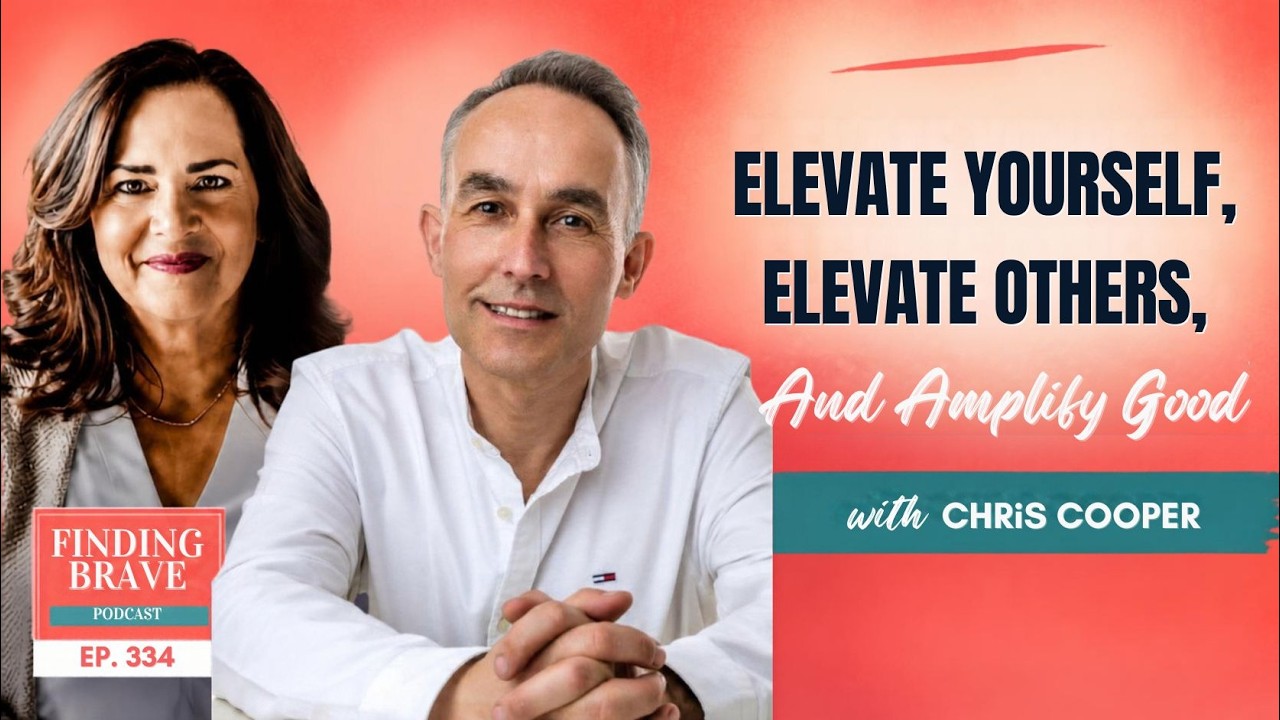
Elevate Yourself, Elevate Others, and Amplify Good | Chris Cooper | Finding Brave Ep. 334

Finding Brave Epis #333: How Leaders Can Harness AI Without Losing Their Humanity, w/Bennett Borden
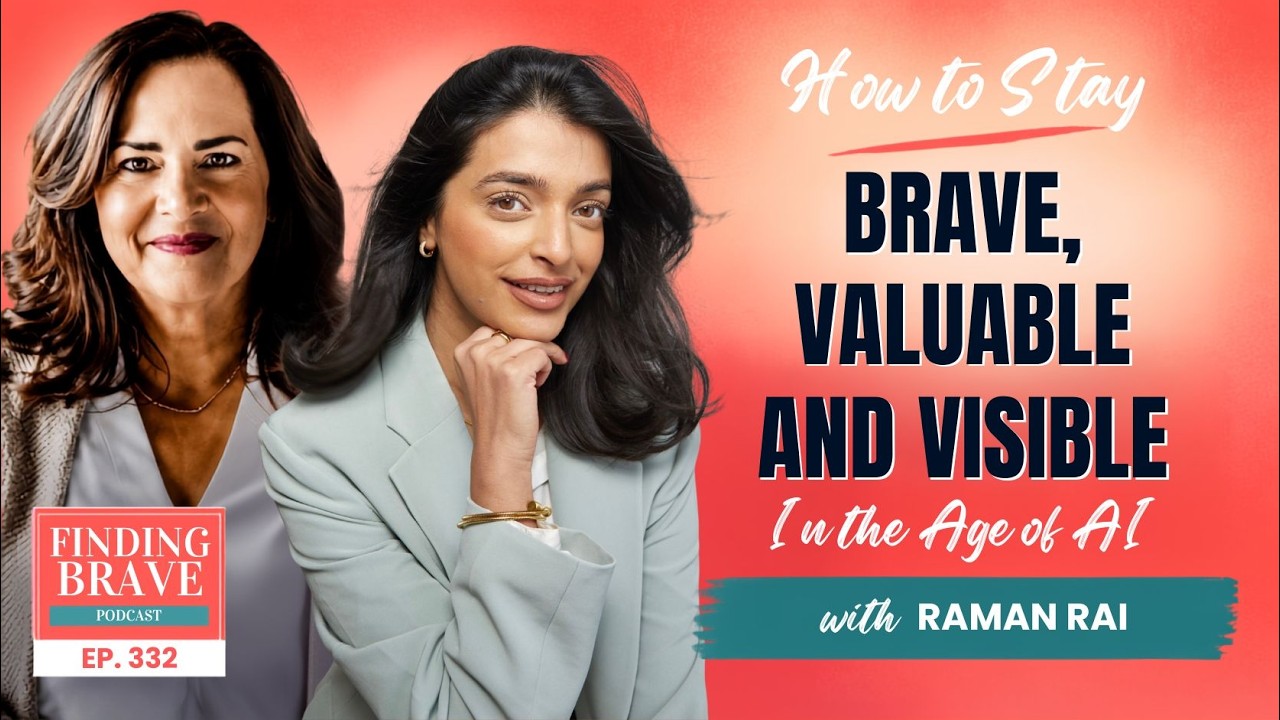
Finding Brave Epis 332- How to Stay Brave, Valuable and Visible in the Age of AI, with Raman Rai

Finding Brave Epis 331 - The Power of Positive Disruption, with Dr. Patrick Leddin


Finding Brave Epis 330 - Being 40: Letting Go and Embracing Who You Are, with Stacey Lindsay
Disrupt Career Reinvention with Kathy Caprino - via The Disruption Lab Podcast w/Patrick Leddin
Creating Neurodiversity-Friendly Work Cultures: Simple Workplace Adjustments Matter
Finding Brave Epis 329 - How To Create a Neurodiversity-Friendly Workplace, with Kristen Pressner