In this solo episode of the How to Live in Denmark podcast, host Kay Xander Mellish walks listeners through a series of distinctive design features and oddities that define Copenhagen. She begins by introducing a city‑wide signature colour, “Copenhagen Green” (Pantone 3435C), explaining its early‑20th‑century adoption and its presence on benches, doors, lampposts and bridges. She then highlights a historic fire‑safety measure – chamfered building corners that make it easier for horse‑drawn fire wagons to turn. Mellish moves on to discuss the Danish love of curves, citing examples from classic furniture (Arne Jacobsen’s Egg Chair), silversmith Jørg Jensen, modern cylindrical skyscrapers such as Axel Towers and the Nordhavn grain‑store conversions, as well as curved bike bridges and the ring‑shaped metro system. Practical advice follows about swimming in the harbour’s designated zones and the danger of boat propellers. The episode’s only negative note is Nørreport station, described as a dark, filthy, poorly maintained transit hub that contradicts Copenhagen’s reputation for design excellence, especially when compared with sleek Swedish stations. Throughout, Mellish promotes her VoiceMap “Danish Design” audio tour, provides URLs, and invites listeners to follow the podcast on social media.
Chapters
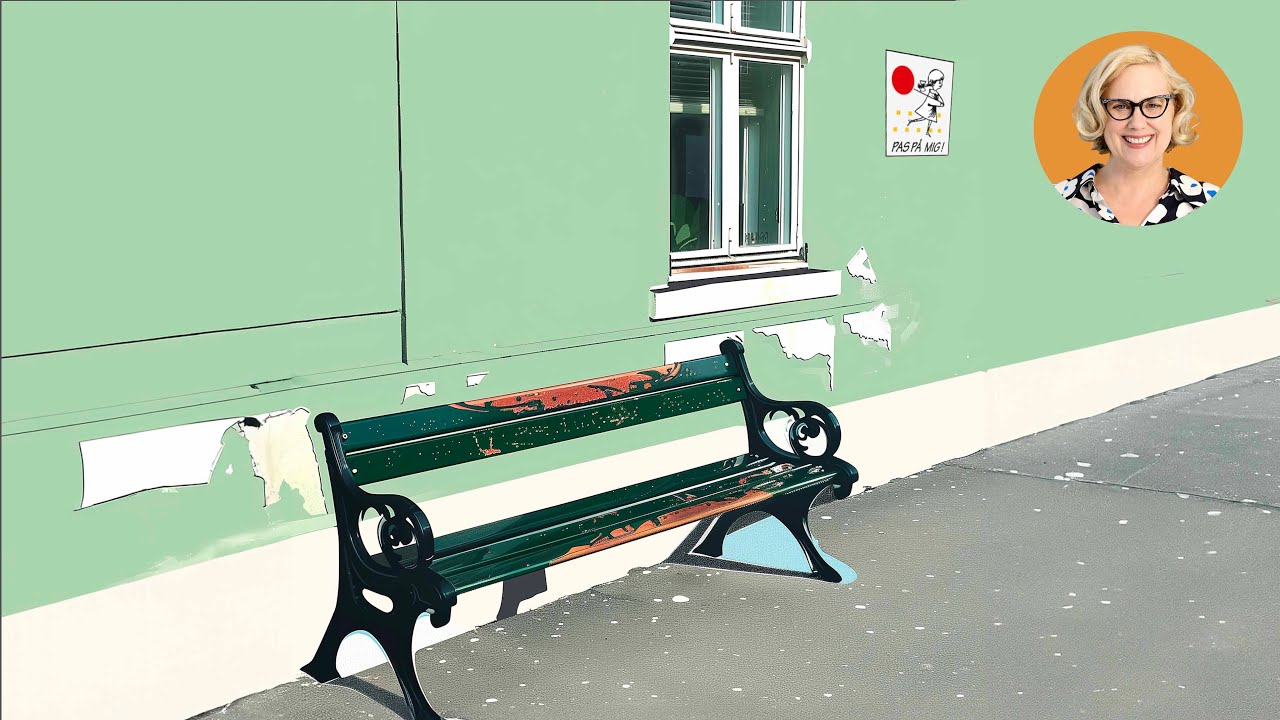
Hello and welcome to the How to Live in Denmark podcast. I'm Kay Xander Mellish. It's summertime, the top tourist season in Copenhagen, and the streets and the bike lanes and the harbor boats are full of people from around the world. And one of the things they come to look at is Danish design. I've created a new audio tour of Danish design in Copenhagen via VoiceMap. Just go to voicemap.me and type in Danish design. I'll be there. But today I thought I'd share a few quirks of design in Copenhagen that are not on the tour. First of all, did you know that Copenhagen has its own color? It's called Copenhagen Green, and it's a dark emerald green mixed with a fair amount of black, a little like the dark green we see on the leaves of trees here late in August. Pantone 3435C, for you designer types. You'll notice that all of the Copenhagen benches are this color, and there are thousands of these wood and cast iron benches around town. They were designed more than a century ago by Thorvald Bindesbøl, an Art Nouveau master also known for the Carlsberg beer label. But you'll also see the Copenhagen Green color on many wooden doors and window frames in the Old City. As well as lampposts, railings, even small bridges in the beautiful Ørestedsparken, all painted Copenhagen Green. This was a conscious decision by city leaders in the early 1900s. They felt the combination of green and black blended well with both natural and urban settings, and that using it widely would create a sense of harmony. Plus, almost everybody likes green. These days, of course, Copenhagen is very proud of its environmentally friendly profile— a different type of green. And one aspect of that is that the water in the city harbor is very clean. It's safe to swim in. At least it's safe to swim in the 8 harbor zones set aside for swimming. Some people believe that the clean water means they can swim anywhere in Copenhagen Harbor, but— They don't always stop to think about boats. There are a lot of boats in the harbor with big metal propellers, and they are often driven by amateurs who have just rented a boat for the day. If a swimmer meets a propeller, the propeller wins. So enjoy swimming in the harbor, but do it within the specified swim zones. Back on land, one unusual safety measure you will notice in the Old City is that many of the buildings have their corners cut off at intersections. These square corners have a triangle cut off, just as you might fold down the corner of a book to mark your place. This is actually a fire safety measure. Like many European cities, Copenhagen suffered from massive fires in the 1700s. One fire burned down about 30% of the city. The firefighting teams of the time were made up of horses with wagons, and they had a hard time turning around these standard square corners. So after the big fires, new buildings were required to have cut-off corners that were easier to maneuver around. These buildings are no longer new, of course— they're centuries old by this point— but you'll see plenty of them in the Old City. Including on the shopping street. They're about 4 or 5 stories tall. Many contemporary buildings in Copenhagen, at least the skyscrapers, have no corners at all. They're cylinders, round, or are mostly made up of curves. You can see one of these across from Tivoli. It's called Axel Towers, and the towers look like 3 golden beer cans held together with a kind of curvy web. There are also a couple cylinder buildings in Nordhavn, the renovated harbor district. Some are cylindrical office buildings, others are apartment buildings. They're made out of old grain storehouses. They built up the cylinder around them. And there are several huge cylinders going up behind the main train station on the old post office grounds, which include the headquarters of Danske Bank, Denmark's largest bank. Danish design loves curves. You will see that in the benches with their curvy cast iron armrests. And you can see it in classic Danish design furniture like Arne Jacobsen's Egg Chair. You can see it in master silversmith Jørg Jensen's silver pitchers and fruit bowls. They are simple and elegant, but with a curved, organic feel. And you'll see this curved feeling a lot in the architecture in Copenhagen. You will see it on the bicycle bridges over the harbor, for example, which have a very curved, streamlined feel. So do many of the bike highways through the city. They're not straight, they're curved. And much of the Copenhagen city metro runs in a ring formation. Now, the metro is gorgeous. New, clean, unified in tones of silver and grey with just a touch of red, and they're constantly opening new stations. They just opened 3 new ones a couple of months ago. Generally, Copenhagen is a beautiful, clean, and well-organized city. There's a real sense of urban harmony. But— The exception proves the rule. There is one place in this beautiful, clean, well-organized city that is ugly, dirty, and very badly organized. And I'm telling you about it because you'll probably have to go there. You'll have a difficult time avoiding it. It's called Nørreport, or North Door. It used to be a door in the old Copenhagen city wall. Now it's a transit point where 6 different types of transport meet up. The metro, the S-train, the train over the bridge to Sweden, the regional trains to other parts of Denmark, city buses, and taxis. They all meet up here, so you are very likely to go through Nørreport during your time in Copenhagen. And it's hideous. It's dark, filthy, smelly, and usually packed full of people you'd rather not meet, including pickpockets. There's ugly graffiti and water dripping down the walls. It's like the worst of the New York City subway. The amazing thing is that Nørreport was totally renovated 10 years ago and looked nice for about 15 minutes, and then went right back to looking ugly again. One of the ironies of this is that Danes are very competitive with the Swedes, and they would probably say that Danish design Including Danish urban design is much better than the Swedish version. Yet on this train line to and from Sweden, the Swedish stations are gorgeous works of civil engineering. Get on at Triangle on the Swedish side, and it's lovely. Malmö station on the Swedish side even has art videos on the platform for you to watch as you wait. Then your train arrives at Nørreport. And it's like descending into the seventh circle of hell. Anyway, Copenhagen is a fabulous city with just a few charming oddities and quirks. And that's the How to Live in Denmark podcast for this week. You can get my Danish design audio tour of Copenhagen by going to voicemap.me. That's voicemap. as one word, .me, and typing in, quote, Danish Design, unquote. It's a GPS self-guided tour on your phone, so you can just start it up and then put your phone away while I tell you amusing stories as you walk around. It takes about 2 hours, so it's a nice thing to do on a summer afternoon. And if you're not coming to Copenhagen soon, you can also take it virtually from wherever you are. Otherwise, you can catch up with us. Visit us on howtoliveindenmark.com or follow us on Instagram, Twitter, or YouTube at How to Live in DK. The 2 is a number. See you next time.