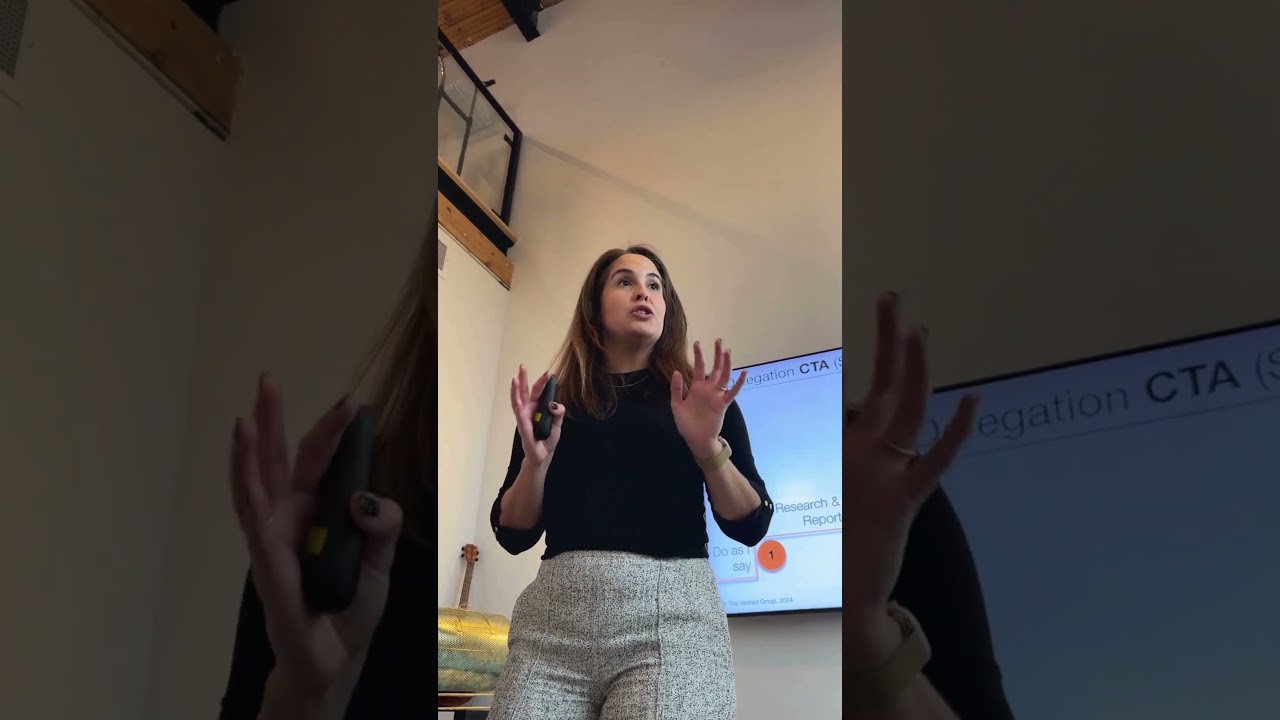
Kendra Johnson presents the SPARK model, five conditions for sustainable high-performing teams: Security, Praise, Constructive Feedback, Acknowledgement, Respect, and Knowledge. She explains how to measure and cultivate each condition, a framework she has applied for eight years across North America.
Chapters
These are the 5 conditions that every high-performing team needs to have to be sustainable and successful. It's based off of our SPARK module, which I've used for the past 8 years with teams across North America. Whether you're a middle manager, so director or VP, or whether you're a senior leader, all of this rings true, and these are the 5 conditions that you need to make sure you're cultivating within your team. So let's see how many of these your team has. The first letter in our SPARK method is S and stands for security. So we're not just talking about psychological safety, but we're looking at all the different levers that fall under what security means for your team members. If your team doesn't feel secure, they're not going to be speaking up in meetings, and they're certainly not going to adapt to your change. So making sure that you have security, and there are different ways that you can measure, gauge, and cultivate that, is the foundation for everything else that follows. The P in our SPARK method stands for praise, one that most people don't fully get right away. But praise is essentially saved for when somebody exceeds our expectations. It tells them that they might be ready for new responsibilities, and they're going above and beyond what's required in their role. Between the P and the A in our SPARK method, is a sneaky little C for constructive feedback. The 3 of these together really hone in on how we set, manage, and communicate expectations with our team. So they know exactly what good or great looks like, and they know exactly where they stand with you as their leader. So let's move on to A in our SPARK method, which stands for acknowledgement. This is making sure that people know their contributions matter, understanding how individual motivators show up and what really drives your team to contribute their best or more every single day. As we move down the line, we're looking at R in our SPARK method, which stands for respect. When you think about this, respect can be shown in many different ways, from how you navigate conflict to how you hear out diverse perspectives and hold space for everyone in the meeting to be able to share their information. Respect is a really juicy module for a reason, and it shows up in the way we communicate and collaborate within our teams. And finally, last but not least, most importantly, is K and knowledge in our SCART method. So knowledge is how we obtain it, how we transfer that, and what we do with that information and that knowledge once we've passed it on to someone else. That can look like how we delegate responsibilities to a new team member, to how we make sure all of our processes are properly documented, to a communication escalation pathway. All of these sit in both our Spark assessment, which can be taken so you understand your own working and communication styles, or as our Spark leadership program so that your leaders understand how to create these conditions, both for themselves to show up as strong, capable, and confident leaders, and the leaders that their teams want to follow.