In this YouTube interview, host Kenston Henderson (referred to as Speaker A) talks with certified coach and youth‑empowerment trainer Mark Martens about how parents can adopt a compassionate approach to failure. The conversation explores several inter‑related ideas: redefining failure as an event rather than a personal identity; how societal and familial expectations shape our reactions to failure; the distinction between shame (attacking self‑worth) and guilt (addressing a specific choice) and their impact on children; the "law of the mirror" that emphasizes non‑verbal modeling (tone, body language) as the primary way children learn; the role of parents as leaders whose influence shapes children’s future responses to setbacks; the importance of self‑forgiveness and embracing imperfect parenting, drawing on Brené Brown and Carol Dweck’s research; practical strategies for having uncomfortable but necessary conversations about race, sex, and other sensitive topics, including resource recommendations like "A Kid's Book About Racism"; and actionable steps such as apologizing to children after emotional outbursts, encouraging vulnerability, and viewing failure as a learning event. Throughout, the dialogue stresses that parents must model compassion, resilience, and humility to foster the same qualities in their children.
Chapters
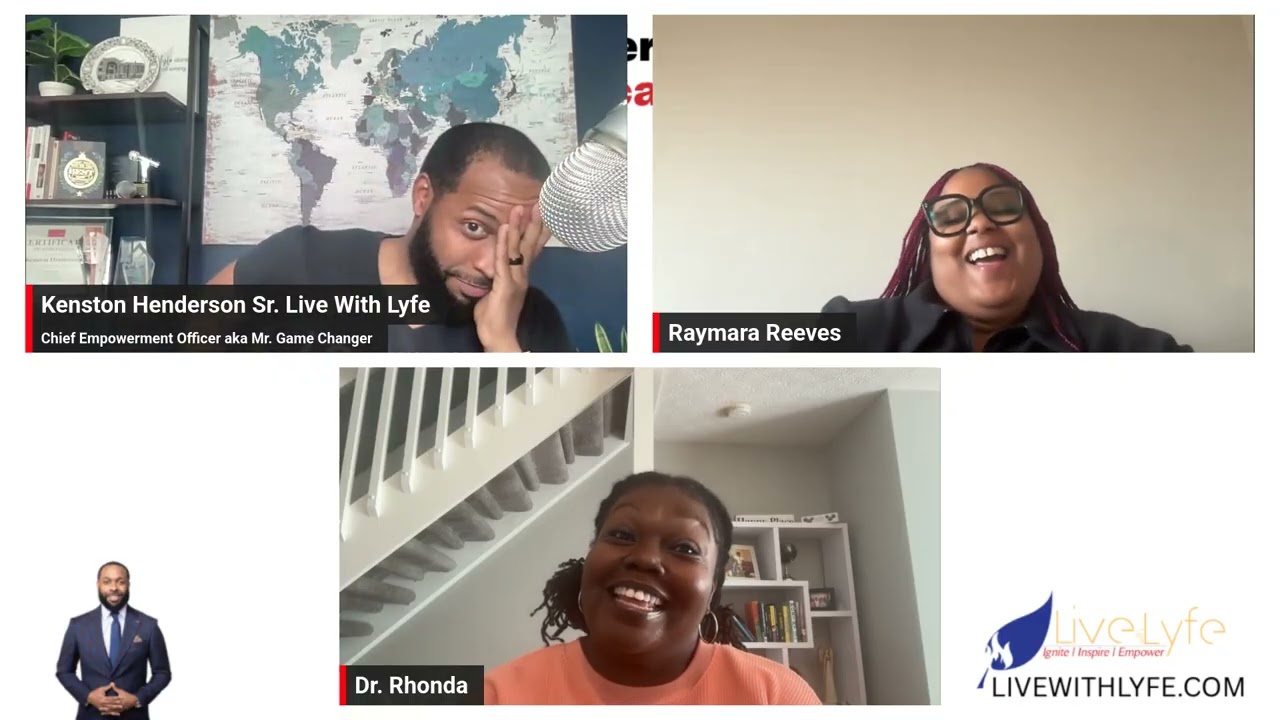
There's a lot going on. All right, so folks, um, I'm here with my guy, my friend, my brother, uh, Mark Martens, and we are here to talk about, you know, parenting, a compassionate look at failure. Like, that's— what does that mean, a compassionate look at failure? But before we, before we go into that, um, just want to tell my audience and a few things about you, Mark, and just to really introduce you, because we're going to go— we're going to dive in deep. And, um, you know, get with us. If you have questions, put it in the chat section as we will be taking those. But, you know, the question I want to initially ask you while I talk about Mark is, what does it— what, what does it mean to you to be in a compassion— be a compassionate parent but how to look at failure, because we are going to be looking at how that— it doesn't make sense when we say it out loud, but then it does, because we as parents really encounter times of failure. But, you know, at the end of the day, how we respond to failure, what do we do with it, is what matters. So about Mark, Mark is an independent Certified Coach, Speaker, Speaker and trainer specializing in leadership communication as well as youth empowerment and development. Mr. Martins is also an experienced hospitality management consultant guru. And so I want you to welcome him, you know, give me the hearts, give me the likes, the thumbs up. This is, again, a great brother, and we've been having many discussions about parenting, about life, um, and about, you know, next steps and how we play a part in it. And so welcome, Mark. Uh, welcome.
Thank you.
I won't even say this is the Live With Life show. It, it just— it's just two brothers getting together.
Yes, my brother. Thank you. Thank you for having me on. It really means a lot to me.
So cool. So, so we was talking about this compassion look at failure, like, what does that mean to you?
Right, so at the heart of it for me is we have to retrain ourselves if we don't already think this way, to see failure as an event but not as the actual person. And I think that's where it all starts with because, you know, I think that most of us are like wired, and I know I was for a long time, to see failure as who I am. So when I failed at something, I attached it to my own identity as being me, as being who I am, as opposed to looking at it and saying, you know, that's a mistake I made, that's poor judgment that I, you know, executed, but it's not who I am at my core. It's not what, you know, I'm capable of. So it's very different, you know, it's a very different dialogue and it's a very different intention for us to set to see failure as the event and not as the actual person.
Yeah, so do you think that we were, you know, trained by our parents or people around us to react differently as it relates to failure? Or what influences us to say, you know, "Oh man, I flunked that test. I'm not gonna be able to do it again." I don't even want to try it again. What does that look like?
Well, I mean, we're all wired to want to achieve. So we're wired for achievement, for accomplishment. We're told by society, you know, be the best you can be, strive to be better than everyone else. All these messages that are supposedly positive, but they can also have very negative undertones to them as well. And we learn this, like our parents learned it and our grandparents learned it as well too. And as we become a more evolved society, a more evolved world, we're learning to like think differently and to question our beliefs and to question beliefs that, you know, our parents, you know, did the best, you know, that they could with the information that they had. You know, the parenting space, Kenston Henderson CSP EPIC Experiences, as you know, is like full of judgment, and often it's like mostly full filled with like judgment from the parents themselves who are judging each other when it should be the opposite. So we're talking about compassion. So compassion goes to first, you know, how the parents see themselves and the kindness and the grace with which they allow themselves to parent their children. But these are learned behaviors that we can— and learn beliefs that, you know, failure is the most, you know, it's like just— it's like so negative, it's the end of the world. It's like, you know, um, instead of seeing, okay, what can I learn from this failure? What, you know, how can I, um, approach this failure with compassion? And with, um, self-love for myself and not allow it to define who I am. So it's learned behaviors that we can unlearn as long as we do the work.
Yeah, and it's so important to me, like, you, you already given the nuggets, the, the keys to handling this thing and, and us speaking against, uh, failure and, and learning from it instead of, you know, allowing it to, to really take us down. Because as parents, you know, we're almost the gatekeepers, uh, to how our children, our young people respond to it, right? And so they see us responding to failure in such a crazy way, and even when we, or when children feel, experience failure, they react in a crazy way. What are we doing? We're just reteaching how not to deal with failure in a positive way. Because that's what we have to do as parents. I got you, I got you.
Yeah, and that's so powerful what you just said, and I just want to I want to tag on to that. So Joseph Chilton Pear said in his famous quote, "What we are teaches the child more than what we say, so we must be what we want our children to become." And that's so true. So when you're thinking about, you know, you may be giving your child all the right advice and all the right, you know, guidance and instruction, but if your child sees you not having a healthy relationship with failure, with the way that you talk to yourself as a parent, or with the way that you navigate failure you know, regardless of what, you know, good intentions you set and what positive information and positive affirmations you give them, what they're going to take from you is what they see you doing. You know, they're going to model you. So that's where it's so, it's so critical. Like our children cannot be more failure resilient than we are. So if we don't have that failure resilient mindset, then we can't expect our kids to have it. They're not going to have it either. Wow.
Wow, wow, that's a lot, that's a lot to chew on. That's, that's a lot. So, so you said something that led me to ask the question, um, you know, to those who are out there watching is, you know, what is leadership to you? Because when we, when we talk about leadership, I mean, Mark, we understand that it's, it's real simple. It's influence, nothing more, nothing less. And we as parents, without us having to say anything, we still have to have the understanding that we are influencing, influencing our young people, either good or bad. And again, what we see or what our children see, we have to be very aware of that because that's what's going to play out once they leave the home. You know, once they go to school and they may experience some type of failure, they're going to remember how mom and dad reacted off of that failure, and then it's going to come out at school or at a friend's house or during a football game or basketball, wherever it's going to come out. And so us having an understanding as leaders, we have to make sure that we are doing failure well, I guess.
Right, exactly. Yeah, we have to make sure that we're modeling it for our children, modeling what we want them to do, because they are gonna, you know, I mean, they're gonna do what they see us doing as opposed to what they hear us saying, you know what I mean? So we can give them all the best instructions in the world, but, you know, parents— when I do parent workshops, you know, um, I mean, and I get feedback at the end, I have the participants fill out a survey. What was your biggest takeaway? And usually 75 to 80% of them say that the, you know, the biggest takeaway they got was that it's okay for them to fail. And these are not, not for their kids to fail, but for them as adults to fail. So if they're getting that from our workshops, then I mean, what is that saying? You know, how are you parenting at home? What, what, you know, what behavior are you showing your kids? How are you shaming yourself? Which is something else that we should probably get into a little bit, is the whole process of, you know, shame versus guilt, because it's very, very different.
Yeah, I was about to ask you, what is the difference between shame and guilt?
Right, so shame is when you're attaching worthiness, you know, of yourself. So like you do something, let me give you an example. So if you made a mistake and you did something, shame for me would be like, um, Mark, you're a complete idiot. That's shame. Whereas guilt would be, Mark, you're a smart guy, but you made a really bad choice. So you see how one is basically identifying with our worthiness as a human being, which is shame, and it's attacking that worthiness, whereas guilt is not attacking the worthiness, it's just looking at the choice that was made. So it's super important too. And again, just as we spoke about how, you know, we can't expect our kids to be more, you know, failure resilient than we are as our parents, we also can't expect our kids to be more shame resilient than we are as a parent. So a lot of us as adults are shame-prone, and we're shaming ourselves, and our child might, you know, okay, so like our kid may get a bad, you know, grade in an exam and come home, and we may say to our kid, you know what, it's okay, I know you're, you know, you tried your best, and I'm sure you'll do better. Let's work on it so you can get a better grade next time. But then we do something in the kitchen while we're fixing dinner and we say, Mark, you're a complete fool. What an idiot you are. And our kids hear us saying this and then our kid then says, but Dad, you know, you're telling me that I'm good. It's just the action I did was wrong. But then you're beating yourself up. So they're doing what they're seeing us doing. So there's a conflict in what we're teaching them and what we're modeling for them, if that makes sense.
Yeah, yeah.
So shame versus guilt. And in studies, just to really bring this home for the parents, and, you know, by the age of 8, 9, 10, our kids have already formed whether they're shame-prone or whether they're guilt-prone by the age of 8, 9, and 10. And, you know, studies have shown from, you know, from like people like Carol Dweck and Brené Brown, you know, like renowned, you know, researchers in the field, have actually shown that kids who are shame-prone, who are told, you know, "Bad Mark," you know, "Bad boy," they go on to, you know, they have a much greater chance of them getting involved in violence, in bullying, of them becoming suicidal, depressed, of them engaging in promiscuity and getting addicted, as opposed to children who are guilt-prone and are told by their parents You know, Mark, you're a smart kid, but you made a bad choice. Let's talk about the choice you made. Those kids are much more likely to thrive in our society because they're not attaching their worth to the action.
Got you, got you. Man, that's good, that's good. That's good. Listen, I ain't gonna touch that. You did well, man. So tell us about this law of the mirror.
Yeah, so it's like people model what they do, you know. Kenston Henderson CSP EPIC Experiences Pacific Northwest, you and I know this, right? I mean, and the thing is that as we talk about communication, how we communicate with our kids, you know, the— I mean, the words we say only accounts for what, I think it's like 7% of the way that we communicate, you know. Tone is 55%— no, sorry, tone is 38%, and I think body language is like 55%. So the majority of the way that we communicate with people is through our, you know, I mean, nonverbal cues, body language. So as parents, that's why, you know, going back to that Joseph, you know, Chilton Pierce quote, what— who we are is a much greater teacher to our kids than, you know, what we actually say to them, because they're modeling us. And if you're saying something to your child but your body language is is saying the opposite, your kid takes the body language cue any day over the words actually coming out of your mouth. So the law of the mirror is, you know, people mirror what they see. And if your kid sees you shaming yourself, beating yourself up, if your kid hears you on the phone talking to your friend or your colleague and saying, you know, I have to be better than so-and-so at work, I can't fail at work because then everybody will call me a failure, or your kid hears you having a fight with your spouse And, you know, the dialogue that they hear and how they see you behaving, how they see you responding to those, you know, to those challenges in life, that is what they take from you. That's what they learn. They, you know, they're, I mean, constantly mirroring what we do as adults and what we do as parents. And a lot of times people don't realize that, how like valuable that is.
Yeah, yeah. Parents, we gotta, we gotta do better in, in this thing of failure, because we, we all fail at times, but it's truly how we, how we, how well we do it, right? It's how well we, we come back from it, um, and move from it, and how we react. And again, keeping in mind what our children are, are seeing and hearing from us during that experience. And, and so because failure does happen, Mark, like, it does happen, and so You— can you talk a little bit about what does forgiveness of self look like? Is it necessary? Is it meaningful for parents to forgive themselves?
Yeah, I think it's absolutely meaningful. As we mentioned earlier, you know, the parenting space is full of judgment, and, and the biggest judgment comes from ourselves, you know. So I mean, we have to forgive ourselves, and we have to realize that Nothing is perfect. And as Brené Brown says, you know, imperfect parenting to most parents means inadequate parenting. But imperfect is not, you know, just because you weren't perfect, it doesn't mean that you're an inadequate parent. But I think most parents feel they have to be perfect. They can't fail their kids or fail themselves because their kids are watching. But in those moments of imperfection is when you can teach your kids to give themselves that grace and that opportunity to not want to fail, but to give yourself permission to fail. There's a big difference between wanting to fail and giving yourself permission to fail. And as parents, when we do fail, you know, or when they fail, they have to give themselves that grace and that forgiveness. And they have to also talk through that mental dialogue of that failure is not indicative of who I am as a human being, who I am as a parent. It is an event. It is a bad choice. I made or a poor judgment, but it doesn't define who I am as an individual, as a parent, as anything. So we constantly have to be, as I call it, being kind to ourselves.
Yeah, yeah, that's crucial. That is crucial that we be kind to ourselves. You know, I could think of, you know, some different incidents that's, you know, happened in my parenting career where, you know, I may have gotten upset at my son and may have yelled, well, I yelled at him and raised my voice. But I was like, oh crap. I don't want to break his spirit. And so after I'm calmed down, I go back and talk to him like, hey, I apologize. It was my fault. I let my emotions get the best of me. And explain it. And we talk. We have a whole series about anger and emotions. Just so he knows that it's okay to have those emotions, but we got to have them under control, right? We got to be aware of them and to make sure that they don't overtake us all the time, and how to, you know, do conflict resolution well. But I want to go— I want to go in not a different direction, but on this line of forgiveness. Some parents probably right now I know are probably faced with a specific situation, and I'll go say what's happening right now around the world, a crisis, a racial crisis. And so they're probably thinking they have failed as it relates to helping their young people learn about race and being taught to be, you know, respectful every race, every person as a human being, and they're like, dang, why didn't I do that? Why didn't I take, you know, my children to a diverse neighborhood, or why didn't I have them engaged in diverse activities, or, you know, such things. And so what do we say to that to help parents get through that? Because at the end of the day, we don't want them to think that they failed at it, but we want them to see it as, okay, you know, there's an opportunity, right?
Right.
Through any crisis, there's an opportunity for us to do better. Now that we know better, it's time to do better, right? So everything you didn't said was, you know, Don't be so, you know, so, um, you know, strong on yourself, um, to give yourself grace. But then, you know, I'm sorry, I'm answering all the questions, but give yourself grace to say, okay, I know better, I must do better, how can I do better? And if, you know, and if your children are grown adults, you know, you can still have the conversations. Yeah, exactly.
Kenston.
Yeah.
Yeah. And if I could just say this, I mean, I completely agree with, like, what you're saying. And instead of focusing on what they didn't do and the conversations that they didn't have, start right now. Start having those conversations. I mean, it's never too late to start having the conversation. It's never too late to sit in a space with your children where you can be vulnerable with them. Because to me, vulnerability is— you know, takes massive courage and it shows massive strength. And sit with your children, be vulnerable and say, you know, I did what I knew how, or I did what I was taught, you know, but now I know that there's a better way and there are things that I haven't taught you that I want to teach you, that I want you to learn. So just as, you know, I want you to always be striving to be more and do more, I also, as your mom or as your dad, I need to also be more and do more for myself and then for you. So let's have that conversation now.
That's good. That's good. So parents, y'all heard it. It doesn't matter if you didn't talk about it for the first 5, 6, 10 years, 12 years, 15 years of the child's life. Have the conversation now. And I said it in my— you know, I alluded to my TEDx. Towards the end was that parents start as early as possible doing these things, having these conversations. It's almost like the conversation about sex. Parents don't like talking to the kids about sex, but the earlier they start talking about it, the easier it will be. It's uncomfortable, you know, when a kid gets a certain age to talk about sex, or it's uncomfortable, period, to talk about it. But it's easier if you start having the conversation the younger and on the way up. And so the same thing as we're talking about with race, talk about race, talk about, you know, the effects of injustice at a young age because kids start to know, they start to know race as early as 3 years old. They start figuring this thing out real quick, like, uh, they don't look like me.
Exactly, yep.
And so it's for parents to get to be okay with being uncomfortable, right?
Yeah, exactly. Yeah, Kenston, you're right. It's about taking the uncomfortable and making it comfortable. And, you know, the other point that you raised that I really, you know, that I really like is that you said, you know, when you start younger, it's easier. And that's true, but the other side to that too is that if you're not having those conversations, then you're also sending a message to your kids that they can't approach you with with those conversations either. See, and that's something really important. If you're not willing to have the conversation and your child may have the idea or the thought in their mind, because like you say, from 8, 9, 10, you know, those kids already have judgments of their own. They're already seeing kids and wondering, well, you know, he or she looks different than me and they're treated differently. So they're forming their own basis, you know, of opinions, their own beliefs. And if mom and dad are not having the conversation and actively making what's, you know, uncomfortable comfortable, then, you know, the child says, hey, this is not something that we talk about. So they don't talk about it either. So nobody talks about it.
See, it's so— so that's good. So I know we hit it— we hit it on the head, the parallel, because again, the uncomfortable conversation about sex is just like the uncomfortable conversation about race. If we as parents don't talk about it with our young people in a safe space, which the safest space that they talk about sex and race is in the home, they're gonna learn it from somebody else that may not have their best interest. Because we're seeing it on the news where kids elementary school age, they, one elementary school had the word, the N-word written on the wall, the bathroom wall in the elementary school. So if they don't have the conversations at home about respect, empathy, and, and, you know, respecting each other's race, then they can get taught by somebody at school whose parents have taught them how to hate and think that is okay.
Exactly, yeah. And where, you know, and by doing that, by not having those conversations and by not allowing ourselves to make the uncomfortable comfortable and making it the normal as it should be in the home to have those uncomfortable conversations, but do it in a very, you know, vulnerable, compassionate way. There's that word compassion again. By us not doing that, we're also almost creating this, um, division between us and our children where our children then feel, well, hey, I can't approach, you know, mom or dad with this information, so I have to learn it elsewhere.
Yeah.
And then there's, you know, there becomes, you know, over time, that, you know, that turns into our children becoming more and more, like, detached from us and becoming more and more independent and maybe too independent, more than they need to be at that stage in their life.
Yeah, and so what we're really talking about is we need to, as parents, continue to build relationships with our young people, and these necessary conversations I call them necessary. They're uncomfortable, but they're necessary conversations should happen, and it should build your relationships with your young people. You know, yesterday I watched— last night I watched a video somebody posted of the young lady, seemed like she was probably a teen or a young adult, and she was telling her mom about you know, racism. And the mom, the dad wasn't even trying to listen to her. She was trying to educate them on what injustices has happened in the Black community, and they weren't having it. They should— the parents were saying, "They should do better. They should be respecting their neighborhood, and they should be doing this and that." But she says, "Mom and Dad, but they're getting killed. Do you care about their lives?" "No, I mean, it's not about that. It's about them." And I said, "So there's people out there having these conversations, but the parents ain't listening." Mm-hmm.
And the parents also don't realize that they can learn from their kids because You know, we can talk about this, you know, that leads me into this other topic. The parents are living from the headspace more than from the heart space. They're trying to do everything right, and they're trying to be perfect, and they're trying to not fail at anything. But by doing so, they're forgetting some of the most critical elements, you know, allowing yourself to be vulnerable for your children and with your children, showing compassion, showing empathy, allowing your child to come to you and allowing yourself to be humbled enough to say, I can learn from my child as well.
Yeah.
And if my child has something to say, let me listen openly with an open heart. Let me come out of my head for a while, come out of the ego. I'm the parent, you're the child, I know everything, and you have to learn from me. Let me go into the heart space and say, okay, what do you have to share with me? You know, what can I learn from you?
Yeah, listen, that's good. And I only say, you know, parents, those who are watching, listen to your young people because they are some of the greatest teachers. I mean, I've learned so many lessons from my son. You know, he's only 12, but I've been learning them since he was born, right, on how to do things better, how to parent better. And so, yeah, have the conversation. There's a couple books that I'll say for parents who want to teach their kids about racism. One of them is called A Kid's Book About Racism. Just that. Just look it up, A Kid's Book About Racism. And so they break it down to its simplest forms and talk about it. And so you can start there, but start looking up videos. Start looking at— there's TEDx's out there, there's other videos, there's so many books about race that you can begin to have these conversations, you know, of course, you know, depending on the brain level or the age of the child, learn about it, educate yourself, and then have a conversation. And choose to be curious all the way through. Choose to be curious, choose to empathize, be compassionate, like my good brother said, and have those heavy talks, right? Those talks that they may not— they're not all fun and games, but they're necessary. They're necessary to us impacting the world. And, and so, uh, Mark, I'd like to, to thank you for, for joining me, um, because this is, this is necessary that our parents be compassionate towards themselves, um, and their failures, so that way their young people are influenced in the right way. And right, we don't want to continue the cycles of, yeah, if you had a bad parent, we don't want to continue that cycle on to our young people. Because when we look deep within ourselves and see what we've been through, why would we want our children to experience the same thing?
Exactly.
Yeah, it just doesn't make sense. So Mark, what would you like to leave with the, the good people today, the parents in the world?
Well, first of all, I want to honor, you know, the parents that are watching this and, and they will watch us later on, because there, there is not no manual, you know, for being a parent, as you know, Kenston Henderson CSP EPIC Experiences. And, you know, so you are going to be a, you know, imperfect parent, but that does not mean that you're an inadequate parent. Really important to remember that. And the second thing is that, you know, failure and acceptance of failure and understanding the value of failure towards success starts with the parent owning that and the parent accepting that in their own life. So just remember to the parents out there, you know, what you do and how you act is the greatest influence on your child's life. And, you know, be kind to yourself as parents. Give yourself grace. Give yourself those moments of forgiveness when you do fall short of the mark that you set for yourself. But also remember that failure is the event and it's not the person. I really want to bring that home again because that's so critical. Because if we keep failure as an event, not as a person. We don't allow it to become part of our worth or the way that we see ourselves.
That's good, that's good, man. Yeah, we could be talking about this for a long time.
Yeah, we could be. Yeah, we can go on for hours on this, my brother.
Oh man, I appreciate