The Empower U Interview with Author | Speaker | Trainer Lawrence Henderson Episode 1
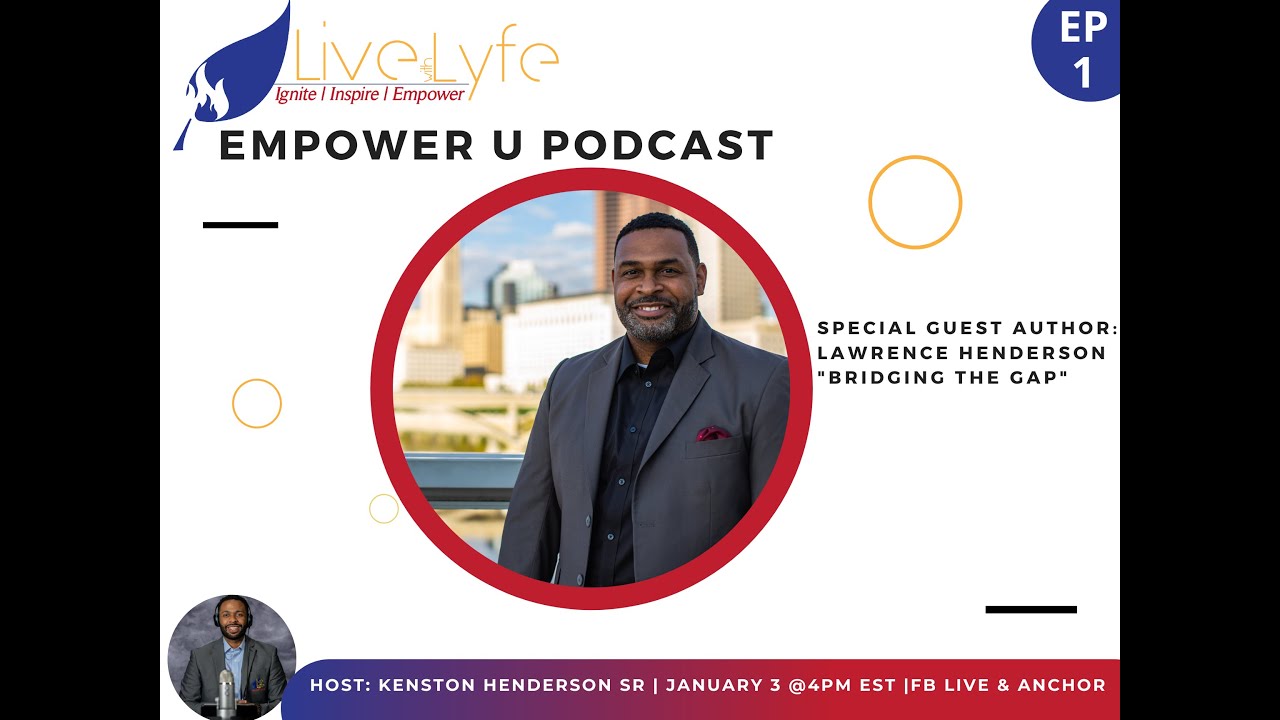
Lawrence Henderson, a former Army officer turned leadership coach, discusses his book Bridging the Gap, which uses the LOVE acronym as a daily values check-in. He outlines five coaching pillars including self-awareness and accountability, and offers practical advice for self-publishing: use speech-to-text, write daily, and stop overthinking.
Chapters
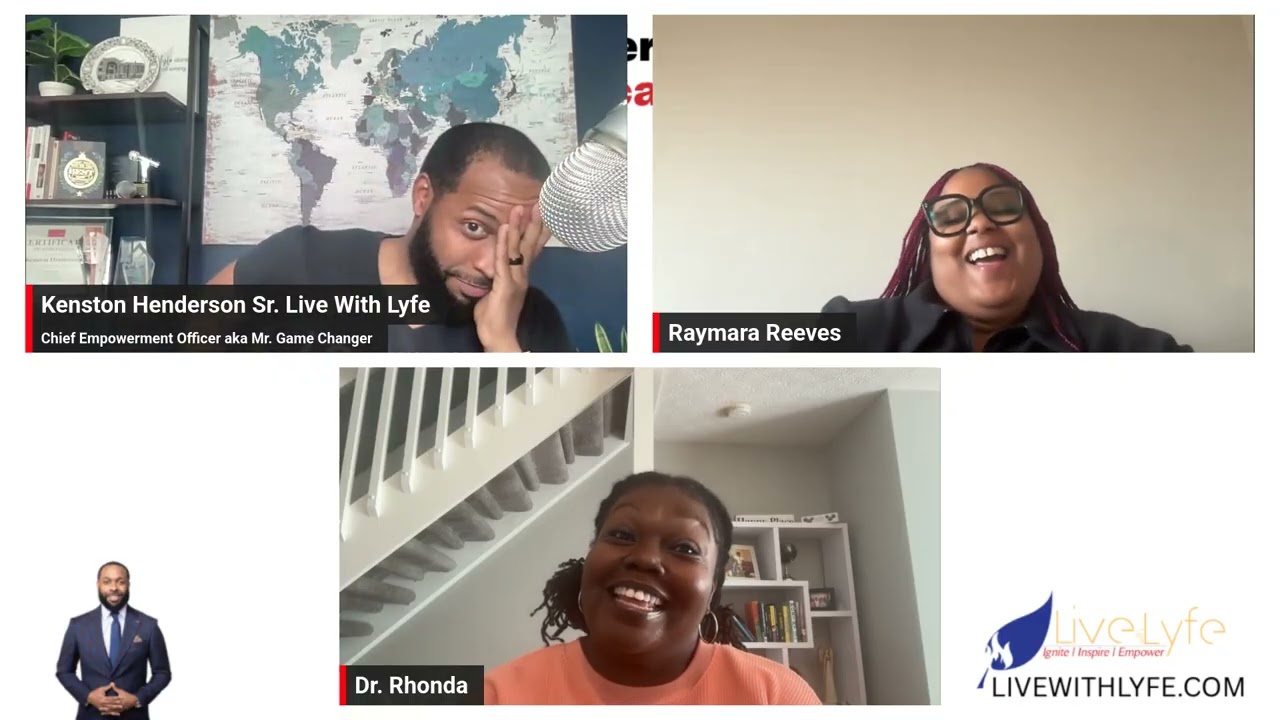
Hello and welcome to the Empower You Podcast. I'm your host, Kenston Henderson, founder and CEO of Live With Life, where we help groups and organizations get unstuck and equip them to achieve their professional development goals through keynote speaking and corporate professional and youth development training services. This podcast was created and designed to ignite, inspire, and equip you to find and operate in your purpose, whether you are an adult or a youth. This podcast will help you declutter your life and to include healthy self-leadership practices. This first series that we are kicking off here in 2021 will showcase the journey to becoming a self-published author. If you are a self-published author and you would like to be featured on this podcast, please contact me as soon as possible through Kenston at livewithlife.com. Again, that's Kenston, K-E-N-S-T-O-N, @livewithlife with a Y dot com. Now today I have to tee it off, this first episode, uh, of authorship series with Lawrence Henderson. He is a great man, friend, a brother from the same mother. Yes, that's right, we came from the same household and we spent much of a better 17 years of our life in the same room. And so I'm excited to have Lawrence on this first podcast. Just to give you a brief bio, Lawrence Henderson— Lawrence Henderson is a comfort-disrupting leadership and organizational development speaker, coach, trainer with over 20 years of experience working to deliver social, culturally aware programs that shift the fabric of an organization. Lawrence started his leadership journey through the services as a U.S. Army officer Now the Chief Learning Officer for Business Operational Support Services, BOSS, LLC, he has an unquenchable desire to help bridge the gap for others in their understanding of identity and purpose. His approach to sharing his message results in connecting the dots from the TED stage, facilitating workshops, seminars, and small groups that provide people the tools to lead today and tomorrow. And so I'm excited to have Lawrence here today. His book is titled Bridging the Gap: Life, Love, and Leadership. So welcome, Lawrence. Welcome, welcome.
What's up? What's up, Kenston?
How you doing? Listen, I'm doing well.
How you doing, man? I love allowing my younger brother to read my bio. It just is something about it. When other folks read it, I feel like I'm self-absorbed, but it's something about you letting your younger sibling read your bio. Like, yeah, that's what I did.
That's, that's it. That's it. Like, I mean, you've been paving the way for a long time for me. So, you know, big brothers, that's what they supposed to do anyway. I'm appreciative. Like, I'm so thankful that you've been on this journey with me for all these years. We gonna say our ages, but it's been a while. It's been a while. So, you know, I'm thankful. But today, today, this series is all about authorship and self-publishing. And so I want to, I seen Bridging the Gap and I seen this LOVE, it was an acronym. Can you tell me more about that?
Yeah, so a lot of people who know me know one of the things I always end up talking about is values. And that LOVE acronym was something that I found probably a couple years back, living our values every day. And really what that speaks to, to me, is a check-in, right? And, and when we are thinking about what we desire to, uh, be for our families, be for ourselves, um, it all starts with love, right? And you hear that a lot, oh, you gotta love, you gotta love. Well, to me, I gotta live my values every day. And that check-in in the way that I live my life, everything goes through the filter of my values. And so that needed to be something that was a focal point and a kind of a bedrock for for me as I wrote this book, because there were several chapters and several pages that I tried to not write some stuff, and my values checked me. It was like, ah, you supposed to put that in the book. The God in me, and as a faith believer, was like, ah, nah, you need to be real. If you gonna write it, put it down on paper so that you actually can help create some breadcrumbs, um, and again, talk about connecting the dots for others when they read it, um, and so that it's authentic, um, it's you, uh, and you're leaving no stone unturned. So, so that's where I came from.
That's good, that's good. And so I just want to ask you, like, you know, what's the story behind the book? Like, what's the— what's the why?
Yeah, um, the biggest why for me was, um, I heard, I heard somebody say once upon a time, if, if, uh, if you don't tell your own story, somebody else will. Um, but this came out of me wanting to tell my story, not as, you know, a self-fulfilling prophecy or anything like that, but it actually was birthed out of coming, coming through and transitioning through some of the darkest periods in my life. Um, when I first transitioned out of military, where I felt that I had failed to achieve goals, right? We always say, you know, we're our worst critic, but I was actually really living this thing out, being my worst critic, and was actually really, really good at it to where I sent myself into this spiral. And I was like, once I, you know, locked into Ja'Pree, my wife, and you, my brother, and other people that were close to me, finding my way back to self-worth and really finding my way back to acknowledging the life that I had lived up to that point and really checking in on my resume. And again, it's like, you know, what we did the other day talking about, you know, our years in review. And I had forgotten about all the things, all the, all the things that I had actually traveled through, walked through, the deployments. And I was really down on myself. And so I knew that as a service member, um, at first it started like that. I knew I had a lot of brothers and sisters who transitioned, but then as I began my coaching journey, um, I was coming in contact with a lot of other people who weren't veterans, but they were having similar experiences as they transition through life in various stages. And so, um, that's what really prompted me to, to really write the book. And actually, that beginning part, Bridging the Gap, I wanted my story to be that bridge and really tell it so that others can see that you're not alone.
That's good, that's good, that's good. I mean, so who, you know, if you had to say who was this book for, who did you make this book? Who and what hopes did you have that would really touch them where they are?
Yeah, this book is for anybody who's in a state of transition or not necessarily stuck, but stalled. And one of the things that I was thoughtful about in this book, I don't know about anybody else, but I have this thing where I need to write notes and different things like that. I wanted to make it a personal coaching book. I wanted to make it personal for the reader that each chapter had lines inside the book where you could take your notes, where you could go back to it. And it's supposed to be a working guide. For you as you're in whatever state of transition you're in. So this is early career folks, mid-career folks, anybody again who just feels like you're stuck, stalled, or you're slow moving, just to get real intentional about some things. That's who this book's for.
That's good, that's good, that's good. I mean, you got any— you want to share any other points you want your audience to get?
Yeah, um, as you read this book, um, one of the biggest things— and I like, uh, I like to believe there's, there's 5 things that, uh, I wanted and desired for others to get out when they read this book. Um, and it's a quick read. Now, the reason why I did that on purpose, because I, I wrote this with me in mind. So I wrote— I was selfish, y'all.
I was selfish.
Um, I wrote it with me in mind, that in the fact that I don't like to read much, but when I do read I like to have it be actionable, but I wanted to actually add questions. Again, the coach in me, um, asking open-ended questions. So one, one of the reasons is to build us a level of self-awareness that really pushed, uh, me, and I want to push you as a reader, to levels of accountability and ownership of your process, right? Just because you're stuck, stalled, moving slow, doesn't mean you should not be accountable and own where you are, but do something about it. And so some levels of awareness have to be gathered, um, and garnered for you to move forward, um, but you have to take ownership and accountability. Um, kind of second thing is being clear about who and what, uh, you are, um, is the start to any, uh, meaningful significance in your life.
Yeah.
Um, and when I said I, I was lost and I said I was sending myself into a state of depression. I had, outside of the military, I didn't really know or have an identity. Um, I know people, oh, you grew up, you're a child of Christ, and yeah, it briefs well, um, but, but when life is punching you in the face or when, you know, you're failing, um, seemingly every single day with, uh, every notification that you didn't get this job or you're applying for this or you're reaching out to this person, they don't want to connect further past the networking event. That you spent hard-earned cash to go to, um, and it just seems like rejection is around every corner, um, you begin to lose sight of that person in the mirror or what that person is supposed to look like. And so the biggest thing for me, other than self-awareness, was really being clear about what I wanted to be, um, and whose I was. Um, and so I had to go back to the basics, and again, that's where the love came in for me. Um, and at some point I had to establish some intentionality in my life. And around this time that I was finishing the book and other things like that, I got certified as a John Maxwell team member and really started flushing out this intentionality and this law for myself, which that law is an acronym for, you know, establishing a life agreement. And in that, the life agreement will was really identifying where I was, but then asking myself coaching questions to really be real with myself about how I was going to navigate through these stages of understanding, um, that I, that I put into the book. Um, and then one thing that, that we have in common, um, and shout out to, uh, Tierra and Kenston because they're gonna do that, they goal setting session this coming Wednesday.
Yeah, yeah.
But I had to get some SMART goals down. And again, most people, when we talk about these SMART goals, they just go SMART. They go, you know, specific, measurable, achievable, relevant, time-based. Okay, got it. But a lot of times I needed to actually peel that onion back even more and I needed to aim SMART. And so I needed to give myself, because I had no context and I had no understanding of what wins on this side of life outside of uniform looked like, I had to peel that onion back even more and create these minimal, these, you know, little Ws, um, so I could stack them up to big Ws, um, until I could begin to feel confident, um, build up my self-esteem, build up my momentum. Um, and then kind of the fifth thing, uh, which, uh, was, was culminated, uh, after I got my TED Talk, and the idea of that actions over ideas always win. And 5 goes back to number, number 2, accountability and ownership. Actions over ideas always win. We are all amazingly brilliant when it comes to throwing spitballs at a wall, but how many of us actually take the time to take action on the things that we just threw at the wall? Do we have the resources? Do we have the capacity to even do what we're saying out of our mouth. And so that kind of fifth element, actions over ideas always win, has kind of been, uh, the way that I've led Boss, um, the way that I lead life up to this point, um, and it really is how I stick my stake in the ground around intentionality.
That's good, that's good. That's some, that's some good, good nuggets there. Hopefully the audience is listening. And you know, one of our words for 2021 is, is action. And so You know, with leaving this, this segment of it, the last question I want to ask you— I know there's some aspiring authors out there, and, and I want you to, to, uh, to drop one nugget that can help push them in the direction of taking action and not standing, you know, in, uh, staying still. But they know they got a story in them that needs to be birthed out. What's, what's one thing you could share with them?
Yeah, without trying to be too spooky, don't overthink it. There are a ton of things to support you being a writer in today's environment. Some of the things that I love that are like the bugs and kinks are really out of things are now are the speak-to-text apps, the voice. So you could actually talk your entire book, um, which that's actually one of my buddies using a primitive recording. Um, I recorded myself and it was actually talking to my friend. Um, he was like, yo, he said— and at the time I was working, I was working at a place where it was taking me 45 minutes to an hour to get home. And so that's 45 minutes to 50 minutes to record. And while I'm sitting in the car And I literally recorded my entire book in a week, riding up and down the road in Atlanta. And all I had to do was transcribe. Now you got something that could transcribe for you. And so don't overthink it. Carve out time was the other part, because if I didn't carve out an hour a day— stop thinking like you're seeing all these people, these entrepreneurs and people posting that they're taking 3 to 4 hours a day to write their book. They're finding these coffee houses with pillows in the back, and they're having these writing sessions. And chill out. Like, like, again, if you believe you have something inside of you that you need to get out of you, um, then make the time. We make time for anything else that we want to accomplish, so stop being deep about it. Don't overthink it and just carve out the time. That's the one nugget I would give. Just carve it out.
That's good.
And just do it.
That's good. That's good. I appreciate being on this, this interview and you. And again, who better to have this first episode with my brother from the same mother. And I really appreciate you, Lawrence. And I know you're going to be doing amazing things in 2021. And yeah, so anybody who would like a copy of Lawrence Henderson's book, I'm going to post the link after this is over with, but you can definitely find it on Amazon, Bridging the Gap, and look for Lawrence Henderson and it will pull up. Please support him. Again, these are self-published authors that I'll be interviewing. And so again, if you want to be a featured author on this series, please please reach out to me, kinston@livewithlife.com, or put a comment in the chat section, and I'll be in touch with you. But I appreciate you, Lawrence. Anything, any last words you want to leave?
Yeah, last words is, folks, connect with Kenston Henderson CSP EPIC Experiences, because as you see, I Will Interrupt Racism. He is an amazing speaker, amazing presenter, amazing author. In his own right. And so just continue to support him, continue to support all that he's doing and the light that he is inspiring to ignite the world with. So, hey, appreciate you, brother. Always a pleasure anytime we get to, we get to connect. And I can't wait to see what 2020 flushes out for you and your family, man.
Appreciate it. Happy New Year.
Yeah, Happy New Year.
All right, take care, man.
All right, buddy.
Peace.