The Empower U Podcast Interview with CaTyra Polland
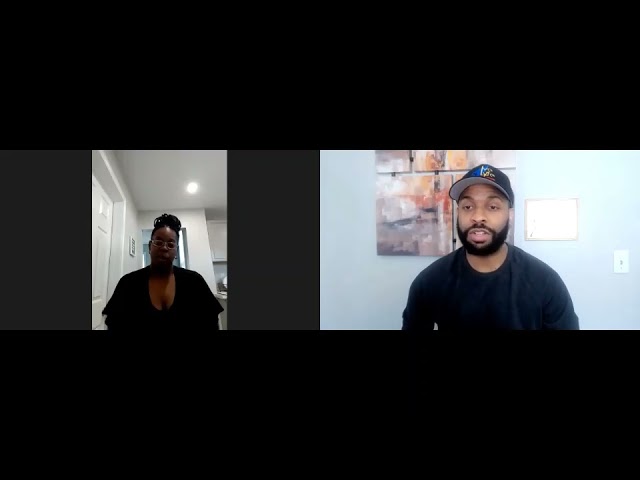
In this episode of the Empower You Podcast Authorship Series, host Kenston Henderson interviews Katyra Polland, CEO and founder of Love for Words, author, editor, and podcast host. Katyra discusses her 101‑level guidebook Professionalism, What’s That?, which covers workplace conduct such as conflict management, written communication, dress code, and a deep dive into code‑switching (hair, name, language, and environment). She explains why the book fills a gap in formal education, targeting students, new employees, and budding entrepreneurs. Katyra shares her writing process: creating a detailed outline, researching via YouTube and libraries, and the importance of working with an editor. She emphasizes building a support team—beta readers, author groups, freelancers on platforms like Fiverr—and establishing upfront consultations to ensure a good fit with editors or clients. Practical advice on handling rejection, maintaining professionalism, and not taking feedback personally is offered. The conversation concludes with purchasing information for her books (website polanllc.com/shop and Amazon) and a brief mention of her poetry collection Dear August, Love August. Throughout, the host encourages listeners to take notes and apply the nuggets of wisdom.
Chapters
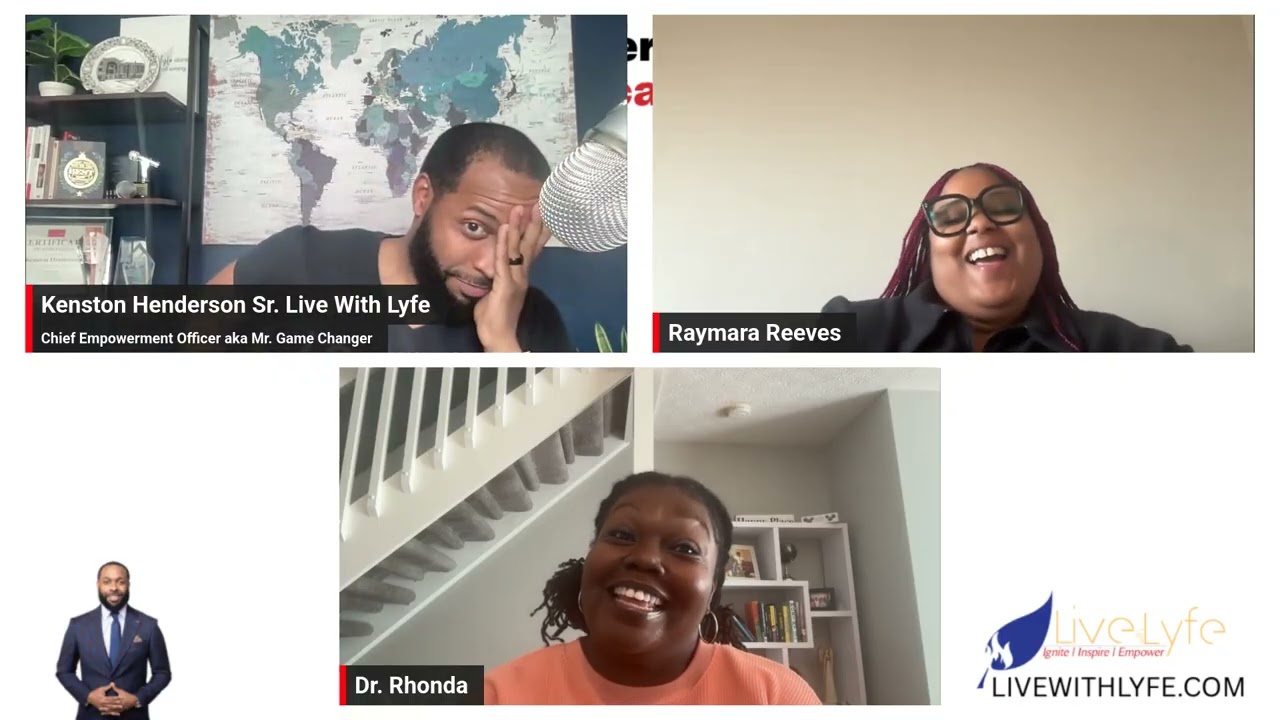
Hello and welcome to the Empower You Podcast Authorship Series brought to you by Live With Life. In each episode, we interview a self-published author to talk about their journey to becoming an author and to reveal tips to help future authors release their story to the world. I'm your host Kenston Henderson, founder and Chief Empowerment Officer of Live With Life. In today's episode, we have as our featured author Katyra Pollan. Uh, Katyra is the CEO founder of Love for Words, an editing boutique for writers and authors, a published author and editor. She is the creator/hostess of Editor Knows Best, an international writing and editing podcast for literary professionals. She is a Rochester Business Journal 40 Under 40 honoree and the executive secretary of the Rochester Black Authors Association. Uh, Katayra enjoys traveling, going to concerts, slam poetry, and going to the beach. That's what I like, going to the beach. Uh, Katayra is the author of the book Professionalism What's That? Well, welcome to Katyra. Welcome, welcome. Thank you.
Thank you for having me. I'm glad to be here.
No problem. I'm excited to interview today. So listen, tell our listeners, what is your book about? Professionalism, What's That?
Yes. So Professionalism, What's That? covers important components of how to conduct yourself either in the business field as an employee or as an employer. So it talks about conflict management, How to communicate, written communication, text communication, email, also how to dress for success, what's appropriate for the office, what's not appropriate for the office. My favorite chapter is actually code switching, which is basically adapting who you are, what you do, how you sound, how you look according to your environment, according to who you're with, who you're around, you know, what type of event it is, et cetera. So I cover different types of code switching that people might not think of automatically. So one thing that I touch on is hair code switching. So for people who have kinky hair textures, afro, not so wavy, not so straight, but more kinky styles, or excuse me, textures, are expected to code switch. Afros are not acceptable. Afros are not professional. Afros are not they're not deemed appropriate to be a professional. So with that being said, people who have, you know, kinky textures are expected to either straighten their hair, cut their hair, wear a wig, wear weave, etc. So that is a form of code switching. But one of the things I like to talk about is that there's actually cons to code switching because so often we're taught that if you don't code switch, you're not going to make it. It's code switched or nothing at all. So I just wanted to talk about how detrimental it is to be told that the way that your hair grows from your head is not good enough. That's good. Or even like, I even talk about like name code switching. Somebody with a name like Katyra, a lot of the time people ask me, you know, if they can call me a nickname. What else do you go by? No, my name's Katyra. And there's this expectation I'm supposed to change my name to assimilate, to be more, you know, palatable and to fit in with the dominant society or dominant culture. And then I also, you know, just talk about language as well. So if you use Ebonics, there's a certain stigma that's tied to that, which is not necessarily tied to how intelligent you are or how articulate you are, but unfortunately that's a label that's put on there. So again, that's another form of code switching. And then we have, of course, the dress code switching based on what you're wearing. Environment code switching. So that's my favorite chapter. That's just one of the chapters in the book. So there's other chapters that talk about informational interviews, also just talk about resumes, cover letters, things like that. So it's really a 101-level book for either students entering the work field, or if you're looking to become a business owner, or maybe you retired and you're going back into the workforce and you just want to brush up on what's expected of you while you're in a professional setting, then And that book is really for you students and people, you know, entering the field as an employee or even as like a new business owner. It's just a, it's a one-on-one resource guide. I just noticed a lot of people either never learned it because it's not taught, like I've never taken a professionalism class. I don't know if they, you know, I'm sure they offer them somewhere, but it's not a part of our curriculum. So I wanted to create a quick resource that people could breeze through. It's under 100 pages and just get a refresher and feel more comfortable about presenting themselves in the best light possible. So that's And that's why I decided to write the book. I just felt like we have a gap there, you know, and that's not something we teach to our students in school. So I wanted to present this resource for them to fill that gap somewhat.
Yeah, that's good. That's good. No, immediately you start talking about that code-switching thing, that jumps out to me. Bias, bias, bias, and how that plays a part in the workplace. And I know I teach and train and speak on that stuff. And, you know, you're not letting people come to work authentically. Authentically themselves, and they got to switch it up to fit the mode of the organization. So yeah, I know too much about that. So what inspired you to write this book? Was it just that because you didn't have the experience of going to the— taking a class such like this, or what?
Yeah, just because I know that this information is usually gleaned informally. So you learn it maybe from your parents or your grandparents, but it's not— Again, it's not like walking into a math class or an English class, right? No professionalism 101 class, but we know how important it is. And as, as there are cons to code switching, of course there are also pros. And I'm just knowing, you know, knowing what the options are. And if you don't choose to be a professional, knowing that there's consequences to that. So I just think it's important for us to at least know what's expected of us so that at least if we choose not to conform, it's not like, oh, we didn't conform because we didn't know. It's because we made a conscious decision. So I don't think there's anything wrong with us knowing, you know, what an informational interview is or knowing that if I wear a spaghetti strap dress to an interview, I'm probably not going to get the job. Granted, you know, of course, freedom of expression and all of that, but I just feel like we needed to have a book where we could sit down and just say, okay, this is what I should have on my resume. This is what I shouldn't— this is how I should address a conflict in the workplace. It'll probably be different than how you might address it at home. So I just wanted to create that resource for people who, you know, forgot or never learned, just a resource, a quick resource that they can refer to and be able to get that one-on-one information and be prepared at a most basic level, at least.
That's good. That's good. Now tell me, you know, during your book writing process, I know it's different for each person, but what were some of the barriers that you faced while you were trying to write the book and how did you get past them?
Yeah, so for me, the biggest barrier was how to get the content. So what I did is I actually selected my chapters and then I filled that information in. It was so much easier for me than trying to go online and research XYZ and look up all these titles. I decided what topics I wanted to cover and I just made those my chapters. So then after I outlined the table of contents, I was able to just zone in on that information. So I knew I wanted to talk about code switching, that's chapter 7. Okay, now it's time for me to do the research. I need to go to the library, I need to— I didn't interview anybody for my book, but that's an example. If you want to do interviews, that's another way you can get information. I went on YouTube and I watched different professionalism videos, resumes, and cover letters, and code-switching videos. So that's what I would recommend, and work your way backwards. So instead of trying to figure out, oh, I want to talk about all these things, just create that outline for yourself, and those are your chapters. And then, you know, all you have to do is fill in that information. So that made it very smooth for me. Yeah, I will, um, also the other thing I would recommend is definitely working with an editor. Um, I know that sounds biased because I am an editor, but even when I write my my books, I work with an editor, so I understand that I'm very close to the material. So even though I might think the page, you know, is reading what it should, I might not see that because it's my book. Of course it sounds good to me, so it is important to have an editor, or at least the second person who has mastered whatever language you're writing in look at it for you. An English teacher or professor, someone who has a knack for, you know, writing, reading, things like that. So I just want to encourage everyone that if it's not an official editor, somebody to look it over, that's very important. What else? I was going to say something else tied to that. The other piece I would say is having a team to help you out. So beta readers who will read your content and give you feedback on it, they're typically a part of your target market. So for me, I did have a few beta readers and I reached out to some college-age students and just said, hey, this is my manuscript, let me know what you think. Think. So I got their feedback, so that was helpful. Um, and then connecting with other authors, authors who've written in your genre, you know, just you can reach out virtually. It doesn't have to be in person. LinkedIn, um, Fiverr has a lot of— well, this is kind of separate, but yeah, as far as like the mentoring and stuff, there's a lot of author groups, Facebook author groups. Yeah, there's like the Nonfiction Association for Authors. So there's lots of association groups, organizations, local, national, international, where you can get those mentors and you can have a to help you, you know, with your book. So I definitely recommend that. And then I was going to say Fiverr is a place where you can find freelancers to help you with your work. So you can find a graphic designer, you can find an editor, you can find, you know, whatever you may need. They have samples on there so you can take a look at their work before you hire them. Oh, that's another piece too.
All right, I just want to encourage you, listen, listen, the audience, if you are listening, y'all better get your pens and paper and write all of these nuggets these jewels that Katya is putting down. So get it now. Go ahead, Katya.
I was just going to say, that's the other piece of your book as well. Not just with your editor, your publisher, your graphic designer, anybody you work with, make sure that you have built that trust. That's the most important part. So for me, like what I do with my clients is we have a consultation, a phone consultation. Okay, let me make sure that I can deliver what you want. Let me make sure I have the, you know, I'm able to meet your deadline. Um, and that's your time to get to know me as well, because maybe we find out we're not a good fit. That saves time and money. So I would much rather us have that 10-minute call up front, you decide, you know what, I can't afford that, I'm going to go to another editor, than, um, for us to— because to back up, when I first started my business, I didn't have the consultation in place. So there were times I would start a job, didn't know what they wanted, and then they end up dissatisfied because we never established that in the beginning. So for those of you looking for professionals, just make sure you have that contact up front to make sure you're both a good fit. I mean, you don't waste time, you don't waste money. So that goes for any, you know, anybody you're working with regarding your book. Don't skip over that because that's, that's the most important part. You don't want to waste your money, you don't want to waste your time. And also with that, not taking it personally. So if the editor says, you know what, this isn't my genre, or, you know, whatever reason they give you, they choose not to pick up your project. That's not the time for you to be offended. It's just, it's best for the both of you. And then the same thing for professionals. You might want to work with a client and they say no. That's okay. Not everybody is a part of your target market. So don't, don't take offense to it. It's a learning experience. And just, um, but that's the most important part. So please make sure you, uh, do your due diligence and make sure that it's a good fit for the both of you, both parties, not just one-sided. So that's what I recommend to authors as well. That's good.
That's good. That's good. Thank you so much for these golden nuggets. Audience, you better be picking up because I'm picking them up and I'm putting them into action ASAP. So get it done. Get it done. She said so many things. A couple of things that stood out to me was, you know, find your team, right? Who's your team of people who's going to support you during this whole entire process? And again, if that's not your strong suit, you have no business doing it, right?
Editing is not your strong suit.
Tag somebody, call somebody so they can help you out during the process because we want to get it done. Want to get it done. So, you know, Katya, where can people purchase your book?
Yes. So my book is on my website. If you go to Poland, that's 2L's LLC.com, Poland LLC.com/shop. My books are there. So I have multiple books. My most recent is my book of poetry, Dear August, Love August, which I released last year. I had a book signing actually the week— it was like 2 days before the pandemic came, so I was really blessed and lucky with that. I sold out all my books. So that was my— that's my latest book there. But of course my other books are also on the website, um, and they are available on Amazon. So either my website, polanllc.com, or Amazon.
Awesome, awesome. Well, Katya, it's been a pleasure and a privilege having you on this episode, and I look forward to hearing more great things from you. And as we stay connected, and so look, good luck in your future endeavors and keep impacting through your writing and, and whatever else you do, uh, because you're doing a great thing.
So thank you so much.
No problem. I appreciate it. You take care.
You too. Bye-bye.