In this recorded conversation, host Aaron DeLong sits down with Kenston Henderson and Ron King to explore why uncomfortable, cross‑racial dialogue is essential for confronting racism in America, especially within the church. Kenston shares personal stories of growing up with friends of many ethnicities, recounts a racial reconciliation group, and emphasizes that meaningful conversations require three core ingredients: respect, empathy, and maturity. Ron adds his perspective as someone in an interracial marriage, describing everyday fears of being judged or threatened because of his Blackness, and explains how he uses biblical narratives to educate others while confronting social media backlash and unfriending. Both guests critique how many churches have responded to Black Lives Matter—often prioritizing politics or personal pain over the gospel of love—yet they also note moments of repentance and growth. Kenston describes his work training city employees on implicit bias, using visual exercises that reveal hidden prejudices and encourage self‑reflection. Throughout, the participants stress the need to listen with the heart, move beyond agenda‑driven conversations, and actively practice the three pillars to create safe spaces for honest, transformative dialogue.
Chapters
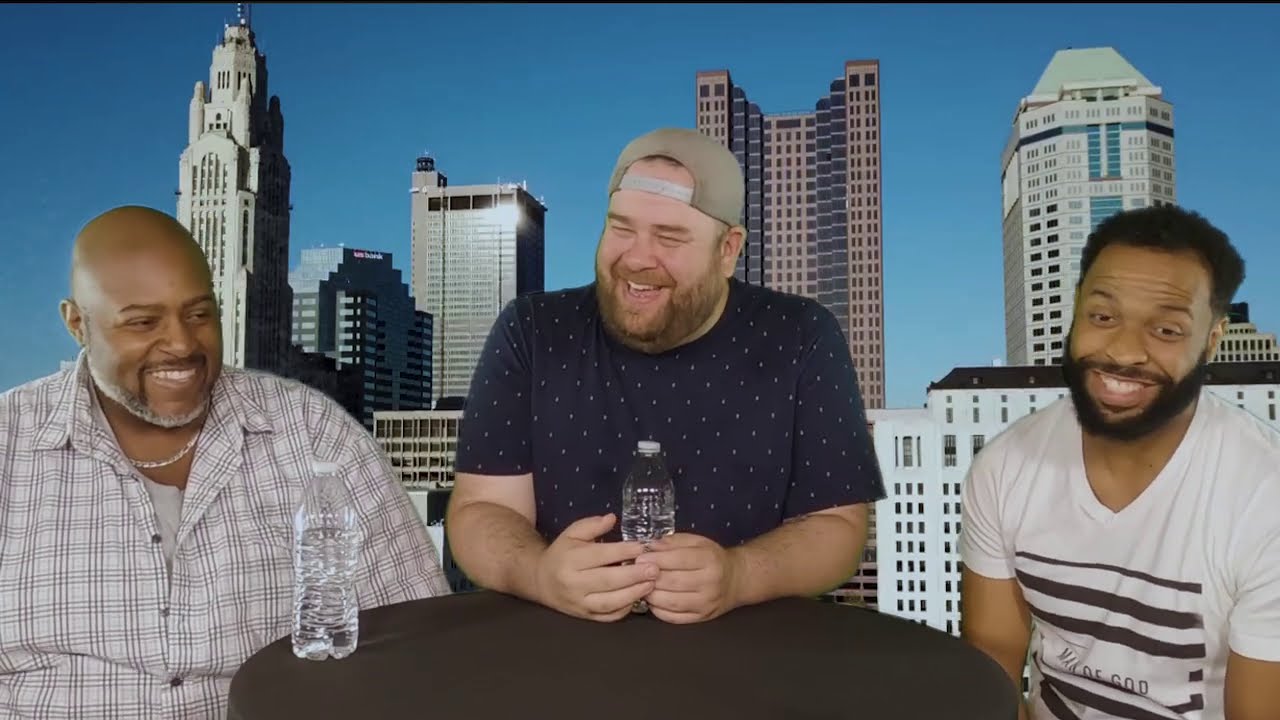
Hey guys, welcome to another uncomfortable conversation. My name is Aaron DeLong. I'm here with Kenston Henderson CSP EPIC Experiences and Ron King CSP EPIC Experiences, and we are having an uncomfortable conversation. I'm thankful for these, these conversations, as I've mentioned before, have helped me become confident to step into these kind of conversations. They've educated me. They've helped shape a worldview that I did not have before. And that's our hope for you too, is that as we have these conversations, you're empowered to do the same. Because the only way that this continues to move forward, the only way that we see things get better, the only way we see racism die in this country, is we start having conversations with people who look like us and don't look like us. In fact, I think that's kind of going to be the topic of this little conversation here, right? Why don't you take it away, man?
So I mean, just have to ask the question is, how often are we engaging, intentionally engaging in conversations with people who don't look like us? That could be uncomfortable for many people. You know, I can remember just growing up at a young age, my best friend, probably around 7, he was white. And I didn't notice anything about color at that point. I mean, it really wasn't until I got into middle school, where I had a couple experiences, bad experiences being called the N-word. But I still had a nucleus of friends who were, you know, white, black, Hispanic, Asian. But that's when I seen that it really truly just takes us sitting down together. People don't look like each other. And in my TEDx, I explained that, you know, if you're doing life alone, you're doing it all wrong. And so what that looks like is us breaking bread together and being able to share our heart. No, we're not going to agree on everything, but it's okay. We don't have to become enemies, right? You just simply— if you feel that it's okay to hate, then I'm not that friend for you. Um, it's as simple as that. But if you are truly wanting to, to be a part of unifying— I say unifying the body Christ. But unifying the world as well is that let's sit down and talk uncomfortable. You know, I sat in a group, it was a racial reconciliation group with friends, again, people who did not look like me. And it was a beautiful thing. You know, people said some stuff, but they didn't know. They didn't know that it was not okay to say things. And so, which made it a healthy place. And it It takes 3 things, I say: respect, empathy, and maturity to be in the room. These conversations like this can happen when respect, empathy, and maturity is in the room. If it's not, then it's just gonna be a bunch of chaos. And we are seeing that on a daily basis on social media, where people don't respect one another, they're not even trying to understand anyone else's point of view.
You were on the broadcast and you didn't turn your phone off? Might be my mom. It wasn't, it wasn't.
Keep it going, it's all good. It wasn't her.
But like I said, people who are willing to listen, to understand, have to be in the room. If they're just listening to just wait for you to hear everything finish and tell their point of view. For sure. And that's what's happening, you know, and I I seen your post, Ron, the other day, and people are unfriending me, and I'm unfriending some of those because I don't know how much, how many times we have to explain actually what Black Lives Matter means, how many different illustrations we have to give for people to understand. And we're talking about from people who are not in church, but the people who are in church. And those are the ones that I really, that God is dealing with me with, because I don't understand how the people of God do not see that it's, it's wrong.
Yeah, well, so I can tell you from my perspective, once you start talking about this, what really is people's passions starts flaring up, and you'll find out that the thing that there is their passion is the thing that they're tuning into more, more of their time than anything else. And it's the news media, it's their political agendas, it's their causes. And it ain't Jesus. And I'm saying within the church. And it's just like some of the responses have just been shocking. Like, wait a minute, we're supposed to be leading with love. Like, this is who we are. And your politics— you're leading with your politics. You're leading with your agendas. You're leading with your pain from the past because a white person did this to you or a black person did this to you. And I'm like, that is the epitome of racism there. I'm just— I am just surprised. I'm also thankful that some of these conversations have led to repentance.
Yes.
People realizing that, you know, that pain that is within them and going, wow, I guess I got something I need to forgive.
Yeah.
I mean, that's powerful. But that's not the majority of the conversations. The way— the way church people have responded has been very surprising in some regards and not all, you know, and not all.
I think— I think the opportunity to help educate during this time is one of my main factors. Um, so I'm not a stranger to confrontation, okay? I don't back down. I'm gonna say what I say, but usually I research it and make sure that it lines up with the Bible. If I know it lines up with the Bible, then I'm for steam ahead, I'm dog with a bone. So I've been having these conversations even with family members. I'm in an interracial marriage and it's hard to have these conversations because they just view me as Ron, okay? I have a black family, I have black friends, well, But you don't understand that this is my life. I'm actually living through these times. But no, no, not you. Yes, me. Person afraid to drive in certain neighborhoods because I might have a semi-nice car and look out of place. I'm afraid to go to stores because of how people might react to me being Black, me being bigger, and they think I'm intimidating. That my blackness immediately weaponizes me as a threat. And so when I have these conversations, I try to help educate people and give examples. Like, you know, like you said, all the memes or all the examples that have been put out— Good Samaritan, Jesus leaving 99 for the one, um, Prodigal Son, Prodigal Son, like all these biblical truths that show Jesus and how he would react to these situations. But yet they don't seem to grasp it. And it hurts because if we're friends, we're friends and we can have a conversation. But why unfriend me? Like, if you don't wanna have a conversation, that points out right there where you stand. In my life, and was this whole friendship just a charade? Like, it puts me at odds with what I believe now because either you be hot or cold. Like, be hot or cold. If you want to support All Lives Matter, that's fine. That just means that you don't understand or want to respect my feelings.
And that's crucial. I mean, what you're just saying, that is— that my thing is, is it's dealing with the heart. And so do you have a heart for people? Like, do you truly have a heart for people? Because if you do, then you, you can empathize. But if you're, you're putting up the blockers, the, the wall of— no, all lives matter, we understand that, right? We don't have to say it again. And I don't know how many ways to do it, but when I'm teaching a class, because I teach with the City of Columbus, train on implicit bias. And many people, they put up blinders before the class even starts, but by the end of the class, those blinders come down because they're able to reflect and look at themselves to say, okay, I do have biases. And the way we find that out during class is if we put up pictures. And so we would put up pictures of black people, white people, people who have tattoos, and then we say, "Is this person a friend or are they a foe?" And then they have to make a quick decision. Would you stay? Would you go to that person as a friend, or would you just walk away? Would you clutch your purse? And people, you find, were people's lives. And so I'm just telling people to really look at yourself, really reflect on yourself, And ask yourself, are you truly empathizing with someone else? Are you truly listening to understand and not just to get your point across? And can you be mature enough to have these uncomfortable conversations, these necessary conversations? Yes.
Yep. And it's— I feel like we just sit here in this space for a little bit because there's so much to even just understanding how to be empathetic. I want you to just break it down. Go get your books. Let's teach this.
Let's go.
Yeah, let's do it. But Kenston, thank you so much. Ron, thanks so much, man, for sharing from your heart. You heard it first. Say the keys to me again. How do we step into these conversations?
Just doing it.
What needs to be done?
No, no, those 3 things.
Respect. Yep. Empathy. Yep. And maturity.
Yeah, I love it.
Gotta have them.
Respect, empathy, and maturity. Man, we need to just tweet that out there later. Somebody— REM. Yep, you got to have some REM. Hey guys, thanks again for tuning into this conversation. Keep it going. Share it. Like, comment. Man, we love the discussion, you know, and are thankful for your participation. Thank you for continuing to show up for these. And our prayer for you is that you go out and have the conversation yourself. God bless you guys. We'll catch you on the next episode.