Squawk Pod: Kevin Mayer, Fmr. TikTok CEO & Disney Executive - 09/23/25 | Audio Only
Kevin Mayer, former TikTok CEO and Disney executive, joins Becky Quick, Joe Kernen, Andrew Ross Sorkin and Katie Kramer alongside Jensen Huang, Sam Altman and others. They discuss the Oracle-led TikTok joint venture, Nvidia's $100 billion investment in OpenAI, the Trump administration's new $100,000 H-1B visa fee, and Mayer's Moonbug Media streaming model built around Cocomelon and Blippi.
Chapters
Bring in show music, please.
Hi, I'm CNBC producer Katie Kramer. Today on Squawk Pod, Jimmy Kimmel returns.
There's no way Disney was going to have the spine to stand up to the woke mob.
CEO Bob Iger's decision to suspend and then reinstate the late-night host and manage political and public pressure. Once an insider at the company, former TikTok CEO Kevin Mayer weighs in.
Half is going to be angry no matter what you do. So I think Bob just has to do what he thinks is right for the company.
And the future of Silicon Valley with one of the investors who helped build it. Hemant Taneja is CEO of General Catalyst. He's backed the likes of Airbnb, Stripe, Snap, Mistral AI, and he says it's time for change.
You can't rush and focus on the traditional Silicon Valley mantra of, hey, let's just grow these businesses fast and deal with the consequences later. It really has to be a lot more intentional.
Plus, CEOs respond to new rules for visas for international workers and Nvidia giving $100 billion to OpenAI for data centers and to supply chips.
When you get into sort of the vendor financing of your own industry, it sort of becomes this cyclical, cyclical thing which could be virtuous or vicious.
It's Tuesday, September 23rd. Squawk Pod begins right now.
Stand Becky by in three, two, one.
Cue it, please.
Good morning, everybody. Welcome to Squawk Box right here on CNBC. We're live from the Nasdaq Market Site in Times Square. I'm Becky Quick along with Joe Kernan and Andrew Ross Sorkin.
Meantime, let's talk about Nvidia and those shares coming off another record high. The company is going to be investing up to $100 billion in OpenAI as the AI lab attempts to build hundreds of billions. Of dollars worth of data centers based on Nvidia processors. The company said that OpenAI planning to deploy Nvidia systems that require 10 gigawatts of power, roughly the power from 4 Hoover Dams. In an interview with CNBC, Nvidia CEO Jensen Huang calling this the biggest AI infrastructure project in history.
This is additive. This project, 10 gigawatts of AI infrastructure, is additive. To everything that has been announced and contracted. Remember, they've contracted huge amounts of capacity through Azure, through OCI, through CoreWeave, and all of that is powered by NVIDIA. And we're really delighted working with all of these partners, and that's going to continue to grow.
In the same interview, OpenAI CEO Sam Altman talked about the off-the-charts demand for AI.
The compute constraints that the whole industry has been in, our company in particular, have been terrible. We're so limited right now in the services we can offer the There's so much more demand than what we can do. And as we look forward another year or 2 years, if you have, you know, let's say it takes 10 gigawatts of compute or 5 gigawatts of compute, you could choose one of 2 things. You could choose to cure cancer by doing a bunch of, having AI do a bunch of research, or you could choose to offer free education to everybody on Earth. No one wants to make that choice. And so increasingly as we see this, the answer is just much more capacity so that we can serve the massive needs and opportunity with this.
The news from Nvidia and OpenAI moving stocks throughout the chip sector. AMD rising yesterday, but Broadcom moved lower. Taiwan Semiconductor, Dell, and Supermicro all closing higher. And the only thing that I thought— my only skepticism about this is whether you like the idea that a chipmaker is ultimately funding an AI company to basically fund themselves. Remember when Cisco back in the day There were these kind of periods of time where this is like vendor financing, if you think sort of through what that actually means. And is that—
You're questioning whether there's demand beyond this and outside of this, or if the ecosystem is—
Right. When you get into the vendor financing of your own industry, it sort of becomes this unique cyclical thing. Which could be virtuous or vicious, depending on how you look at it.
Competition-wise, I guess. But I'm pulling for him.
Oh, no, I'm pulling— I would like all of this to work. I just— I'm curious, sort of—
I think I would before it kills me because I'm superfluous. AI, I'm talking about. We said the power of 4 Hoover Dams. That doesn't— I kind of understand. I guess a lot of power comes from the Hoover Dam. But, but it doesn't quantify exactly what it means. The biggest electric generating plant in the country is a nuclear plant that generates 4.66 GW, gigawatts. And they're talking about deploying 10. And it doesn't— it doesn't— it hadn't even been possible to do this. Right.
There have been questions raised about this. It takes 7 years to get permitting for a nuclear facility to, to do some of these electrical things. Look, my guess is the government is probably on board with trying to streamline some of the permitting process and get some of these things done more quickly if they possibly can. And Sam Altman, I understand what he laid out here, this idea that you can either cure cancer or provide free education for everyone. But that's not everything that we're using AI for at this point.
AI might do both. So if we get it really going, it's— Nvidia is going to— for each Gigawatt, they're going to invest $100 billion. So if they're going for 10, I used AI in my own brain. That's a trillion dollars.
No, it's $1,000 billion.
$1,000 billion.
Right.
Or you can use—
how do you think this changes the competition?
10 to the 9th.
With all the other AI and large language models. So that's the other thing that's going to be so interesting, right? Because now In the same way that the government has a stake in Intel and you have to pull for Intel, right?
And so does Nvidia, by the way, right?
Nvidia. Nvidia not only has to pull it now, Nvidia has to pull for Intel. Nvidia has to pull for Nvidia. Always had to pull for OpenAI, right? Because clearly they were buying a lot of their chips. Right now you have to pull for them even more. And the question is, do you end up pulling for them more than Google or Anthropic or Microsoft or somebody else? Well, Microsoft is part of OpenAI now, or at least has that partnership. What does that ultimately look like and how does that work?
That's a good question. Another question I initially had was, does this just mean they're going to be providing chips to them for this? And it's not. It's a cash— it's cash infusion that they're putting into this. But yeah, a lot of questions.
What's your favorite now? I've gotten mad a couple of times at complexity. Yeah, I have.
I use that and ChatGPT.
At least—
They're next to each other.
On 3 or 4 occasions, they've given me a definitive answer with the first question. And then I say, you better check your facts. And the idiot does. And he comes back with a completely 180-degree answer. It says, oh, yeah, you're right, it does. And then I ask, why did you tell me so definitively? Well, you asked it in general terms, and it didn't really cause me to look into it.
You found someone new to fight with.
I did. I've called them useless.
We're all happy.
AI is even more useful than we realized. Why would you say it if you didn't know? And it answers the scary thing. So we got to pull for OpenAI because then Perplexity has something better to steal, right? Then they can— is that how it works? What's it called? Scraping or something?
No, they're not stealing it. They have a partnership. I mean, they pay.
And that'll mean stealing, but they don't do They just kind of collect everybody else's data. So maybe everybody else is—
Isn't that kind of what we do?
I guess we do. I guess we do. Disney is bringing back Jimmy Kimmel Live to ABC tonight. In a statement, Disney said, we have spent the last days having thoughtful conversations with Jimmy. And after those conversations, we reached the decision to return the show on Tuesday. To absolutely no one's surprise, this was our conversation on Squawk Box last Friday.
You think that Disney was going to take out Kimmel anyway?
Someday.
Oh, someday.
And I still think Kimmel's coming back next week.
I think Kimmel might come back.
I think he's coming back next week. And like I said, the applause will make Colbert's reception at the Emmy look— the Emmys look tame. People will be hanging from the rafters cheering on the hero Jimmy Kimmel, who is not Lenny Bruce. Uh, as you know, uh, ABC pulled Kimmel's show last week, a few days after the host made comments linking the alleged killer of conservative activist Charlie Kirk to President Trump's MAGA movement. A person familiar with the matter says Kimmel's going to address it tonight, but there was no, no doubt in my mind that there's no way Disney was going to have the spine to stand up to the woke mob. Disney is a charter member. Of the woke mob, so there's no way that that was was going to happen. I think it's going to get interesting now because we'll see what Next Star does. Unclear what Next Star is going to do, whether it will return the show to its affiliates across the U.S. At this point, smaller station owner Sinclair says it's not planning to air Kimmel's show, but discussions with ABC are ongoing. You know, I still go to Drudge. I always feel like I need to take a shower after after I look at it, but. They've been running Disney World empty as Americans fear tourism is finished in Florida. They already got problems. If they have zero MAGA parents going, bringing their kids to Disney after this, that's going to be a problem. For me, it doesn't hurt, doesn't affect me. I go to bed at 8:30. You know what affects me? I watch Frank. I take the hour that I would have been—
Frank Holland in the morning.
I take the hour I would have been watching late night and I Good for you. I put Worldwide Exchange on to see what the word of the day is going to be.
Little homer you are.
Yeah, to see what the word of the day is. So it doesn't affect me, but I do think it's pretty effed up that we have talked 10 times more about Jimmy Kimmel, and the media world has, than Charlie Kirk for the past 3 or 4 days. And I think something's really messed up there. But that's just me.
There's talk Already speculation about how long-term of a move this is. Jimmy Kimmel's contract is up in May.
See how the ratings do now when they have no affiliates. And but you know what? It was years ago. I remember Kimmel saying, "I don't care if I don't get half of the U.S., half the audience. I'm not. I don't care if any conservative ever watches." Remember he said he said that verbally.
I don't remember that, but I trust him verbally said it.
Yeah, don't don't. Don't mess with my memory. What day is it? You're Becky, right? All right, Aaron. What's coming up, Aaron? JPMorgan Chase CEO Jamie Dimon becoming the latest high-profile business leader to sound off on the Trump administration's changes to the H-1B visas. The president announcing they'll soon cost $100,000 for new workers. Speaking with our colleagues at CNBC TV 18 in India. During the bank summit there, Dimon said the changes caught everyone off guard. I believe in merit-based immigration. You know, I would beg the president, if you— he has accomplished border control, that's great. I mean, I think all nations want real border control. That helps make a nation. But after that, we should have good immigration. We also heard from Nvidia CEO Jensen Huang and OpenAI CEO Sam Altman on H-1Bs yesterday in their interview.
With CNBC's John Fort, we want all the brightest minds to come to the United States. And and remember, immigration is the foundation of the American dream, and we represent the American dream. And so I I think immigration is really important to our company and is really important to our nation's future. And I'm I'm glad to see President Trump making the moves he's making.
Wong saying immigration is critical to his company and America's future, and Altman saying it's important to bring the smartest people. into the US. I saw a lot of stuff on social media from— that do illustrate the other side, that it's for years not necessarily really high-tech people have been hired at, you know, in India and other places.
The average is $167,000, maybe $165,000.
People in the United States at the expense of people that are totally qualified in the United States. And it also might allow companies to do that without doing the training which you could be doing for people in the United— I mean, I can see the rationale.
I can see both sides of it.
I can see both sides.
We had Robert Frank here yesterday, and he talked to us a little bit off camera. I've asked for him to come back tomorrow and say a little bit, because he's been doing research on this, talking to immigration lawyers who tell him that, you know, this has been abused.
It's a system that's been abused. We want the best and brightest, but we want—
We want to pay market salaries for people to be coming in. 71% of these visas go to people from India. Another 11% are going to people from China. There is a 6% unemployment rate right now. Robert mentioned that is for recent graduates, so it's much higher than the average unemployment rate. And there are questions about a lot of things that could be causing this, whether it's AI, whether it's a slowdown in the economy, or employers thinking they want to make— they just want to hold on to the people they have and not bring new people in. But there are some valid questions to be asked about whether this system has been abused, particularly by foreign entities. I mean, you can't do it remotely.
From India, right?
There was something weird because it did say that there are people who are still overseas who have these H-1B visas. Maybe they can come and go back and forth.
Maybe that's what it is. But they're all the call centers. We know that, you know, when you're really doing anything on the phone—
Yeah, I don't think these visas are necessary.
The question to me, though, is how much— how— I mean, I'd say, how terrible is the abuse? Because there is a trade-off.
Yeah.
And that's the fundamental question. If you told me that, you know, you could get back 10,000 or 20,000 jobs, how do I think about that in the grander context of innovation and trying to have the best people come here?
And that's where the breakdown was. 10,000 of these visas are held by Amazon employees, another 5,000 each, I think, by Meta and Microsoft. And then there's another one of the MAG the Mag 7 that takes up almost 28,000. Almost half of these visas are taken up by the Mag 7. And that's an area where they could probably just pay— if they weren't to pay— be paying more, it's not an issue.
The whole onshoring phenomenon, you have to do the same trade-offs. And people would say for 40 years we didn't care about those trade-offs.
It's just—
Right.
Torpedoes be damned. We're gonna get the cheapest labor and we're gonna get, you know, the highest profit margins. But if we bring back stuff that shouldn't be made here, Yeah. To get American jobs, it's probably gonna cost more than it normally would, which could long-term hurt innovation. And so every one of these decisions—
It's the innovation question.
It is.
This one is the innovation trade-off. And that's a lot of innovation.
But the other question is, some of it are used by doctors, and there was an issue that was brought up to the administration saying, look, this could hurt rural areas where you can't find a doctor who will come in. The administration responded by saying, we could do exemptions for things that we think are important for the country. So maybe there's a way to cut it back.
That's why I said, is there a— is there a way where—
Yeah, is there a way you—
For the Mag 7, they can pay if those are the ones that are being abused. Let's try to focus on those. I'm just curious and don't want to obviously cut off our notice of findings.
I mean, there's a whole movement where people say, I'll pay more for something made in America. And it's obviously going to— there are people who want to do that.
Who are those people?
There's a lot of people that say, I'll pay more. I want it made here. People that want American jobs here. I'll pay more.
They say that. They say it. And then they don't do that.
They say it.
No, they say it and they don't do it. And that's the most important part.
We have a governor's race in New Jersey, and one of the candidates says, you know, renewables are going to cost you an arm and a leg, but you'll do it if you're a good person. And that's, that's the same thing. Do people really want to pay that much more?
But Joe, it's the same argument that you would make to me. And this is why to me it doesn't make sense. I was going to say, here we are in New York. and you'd say Mondame wants to raise taxes.
Yeah.
And you would say, well, if the taxes go up, people are going to say they're going to leave.
Yeah.
Well, are they not just going to say, I'm going to live here because— and I'm happy to pay more? Yeah, that's the point. If you're—
it's a matter of degrees. I mean, well, no, but if you're willing to—
if you're willing to say, look, by raising the price—
I'm not saying that the people that want to say I'll pay more for American-made goods, I'm not saying that, that they're really going to do it one way or another. I'm just saying there is a movement where You know, with what we've seen, J.D. Vance is the reason, right? The reason that he's, you know, he's gotten away with it.
No, that is a political movement. But I don't believe it's an economic movement, meaning I don't think that—
Well, you haven't lost your job to one of the 80,000 factories that were shut down.
No, no, no. I'm just saying that I don't believe that we're seeing people go out and because it says, unfortunately, say Made in America, that they're willing to pay more for that product.
Well, they might not, but they elected this guy. Because of that was one of the major themes, was that with the hollowing out of the middle class.
Oh, I understand. I understand what the promise was.
Okay. I'm just saying it that it is an argument that people make. I'm willing to pay more if we can do it here.
They've been playing music over us.
Made in America. Made in America. Just like Squawk Box.
Cheese will be next.
Still to come: former Disney executive, briefly the CEO of TikTok, Kevin Mayer. An insider's look at Disney's Jimmy Kimmel dilemma, and a. TikTok's path forward in the U.S.
There's the code that exists in China. They're going to take that same code, move it over to Oracle-supported servers, and then I think the code will be managed separately.
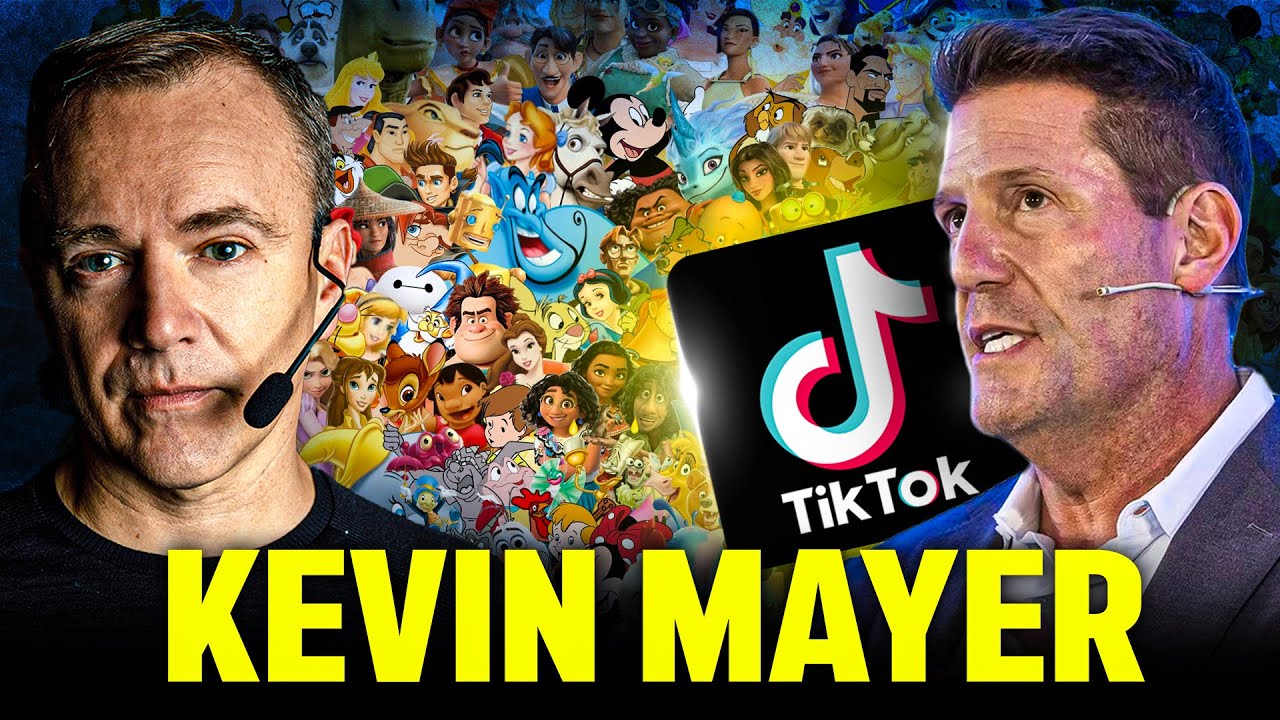
Squawk Pod will be right back. Welcome back to Squawk Pod. Our next interview is a rare one with Kevin Mayer, the former CEO of TikTok and COO of its parent company ByteDance. That was a job he held for 3 terms. Turbulent months back in the summer of 2020. This was in President Trump's first term when the push to ban TikTok due to its Chinese ownership first began. Prior to his stint at TikTok, Mayer spent about 2 decades at Disney, where he ultimately led the entire direct-to-consumer business, which included the streamers Disney+, ESPN+, and Hulu. Nowadays, Mayer is at Candle Media, a creator-focused digital media brand that he co-founded in 2022 with another Disney alum. It maintains brands like Reese Witherspoon's Hello Sunshine and the of kid-centric YouTube sensation Cocomelon. Candle Media has significant investment from Blackstone. Let's get back to Joe, Becky, and Andrew.
President Trump planning to sign an executive order this week supporting a deal that keeps TikTok operating in the U.S. under a new American-led joint venture overseen by Oracle. Joining us right now is Kevin Mayer. He's Candle Media's co-CEO. He was also the former CEO of TikTok, was a senior executive, of course, at Disney. And so there is so much to talk to you about. I can't even get over all the headlines. But let's start with TikTok. You lived inside TikTok for a hot minute or so, maybe a little more than that.
A little more than a minute. But yeah.
And so I'm curious now, when you look at this deal, do you say to yourself, this is going to be a great success? Do you think that people are going to— I mean, it sounds like people are going to have to redownload this app. I don't know how you think this is all going to work.
I'm not sure people need to redownload the app. But here's what I understand about the deal. And it's what I've read in the press mostly. And I don't have that much insider information, but I'll say this: ByteDance will own less than 20%. So that's, that's good. And that comports with the law. I believe new investors are coming in. I think they're very high-quality investors. You have Silver Lake Partners, big investor, big private equity firm, Andreessen Horowitz, from what I understand. And most importantly, Oracle. And Oracle seems to be the company that's going to oversee data safety and oversee the algorithm.
Do you believe the Murdochs are going to be part of this or just on the—
I don't know. That came in really late. And I don't know if they're actually in it or not.
When you joined the company, did you ever think to yourself that the Chinese, the government, was, was using this app for nefarious purposes or would use it for nefarious purposes?
It's, it's very hard for me to say. I was there in 2020. My entire, my entire tenure was on Zoom. So it was a very, very awkward moment. But I will say The 2 things, the 2 concerns that were, that were expressed by the American government were one, data flowing to the Chinese Communist Party. That's solved now with Oracle taking charge of that perimeter. And I don't think there's any data coming in and out of China against that perimeter. I think that's pretty safe. The other was the algorithm itself being used to feed videos to Americans and other Westerners and use it for propaganda. And I think with Oracle's oversight of the algorithm and the separate instances of the algorithm that are going to be part of this deal. I believe that solves— I do think that's okay.
What are the separate instances? I still don't understand it.
Well, I understand it and I could be wrong. I think the details are a little bit murky actually, but I think there's the code that exists in China. They're going to take that same code, move it over to Oracle-supported servers, right? And then I think the code will be managed separately. And so as improvements happen, some of that code might come from China to the US, but if so, it'll be, it'll be very thoroughly vetted.
No black box in that.
No, but yeah, exactly. Do you believe Do you believe that the algorithm can be updated and effectively be as good and as effective living in a separate environment run by Oracle as it has by ByteDance? That's sort of—
that was a big question 5 years ago, and I was grappling with that when I was CEO of TikTok. I think AI generally, and that algorithm is an AI, you know, curation recommendation algorithm, is a little better understood. And people and engineers in the West have been working on AI, and AI is on everyone's lips these days. So do I believe that American engineers have the capability to understand, get underneath the code of that algorithm and update it and operate it on their own and maybe have 2 divergent code bases over time, China versus the US? I do believe that can happen.
Let me switch gears on you for a moment. Put your, your old Disney hat on for a moment. What did you think when this whole Kimmel situation went down? And what do you think now?
It's a tricky situation, obviously. I know if you're, if you're Bob Iger, who's a very good friend of mine, my mentor for years and a very courageous CEO as far as I'm concerned, and a great CEO, you're faced with a bit of a tricky time. On the one hand, Sinclair, Nexstar, 70% of your base of local stations who clear your programming, threaten to to, to not show The Jimmy Kimmel Show. On the other hand, Jimmy Kimmel is an old friend and a great talent. And I'm sure Bob did not want to take that show off the air. So, look, it was a tough call. That's what Bob gets paid to do. I respect him and I respect Jimmy. Now that it's resolved, I hope it just moves forward. Okay.
Let me ask you the harder question. How much of the pressure that was brought to bear on Iger Do you believe was political? Which is to say that, do you believe that Nexstar, which is— which pulled Kimmel, was doing that because of a view that advertisers and an audience were going to walk away from them, or they were doing that because they were worried that Brendan Carr was not going to approve the transaction to allow them to merge?
The The answer is I don't know. I really don't know. I wasn't involved in the discussions. I don't know what NextStar CEO is thinking. You're right. Both, both, both things matter. Was he going to lose an audience?
And both things can be true, by the way.
Both things can be true. I just don't know which, which they are. But I know Brendan Carr was interested in this situation and he has to approve that merger that they're undertaking.
What do you think about Sinclair? I mean, the other piece of this is, at least thus far, I don't know what'll happen tonight, but it doesn't It doesn't sound like these affiliates are necessarily going to carry Jimmy Kimmel.
That's up to— that's really going to be up to Sinclair to decide what to do with that.
But you understand better than anybody the dynamic between Disney and its affiliates and how that works, right? Some of these affiliates, by the way, they need the Super Bowl a year from now. They're going to want certain aspects of what Disney and ABC are providing. But this idea that you can sort of pick and choose off of a Chinese menu, I don't know if that is allowed either.
I think— and I think we're back to the 7, um, what were they, magical creatures? And the, the, what, the Disney— like, look at that bomb of— what was that? Snow White? We're talking about— there's a lot of people that aren't going to go to the theme parks because they're MAGA now. They're, they're furious about that. I mean, this is going to be brand damage for Disney if they left them off or if they brought them back. Half the country's going to be mad if they left them off. The other half is going to be mad that they're bringing back. I think it's a real brand problem.
But Joe, as you're saying, you know, half is going to be angry no matter what you do. So I think Bob just has to do what he thinks is right for the company. Oh, he's a steward of shareholders' value. Well, that's— he is.
OK. And he hasn't always done what's good for shareholder value. He's done—
I think he's done almost always what's good for shareholder value. I really respect that.
I think that was Greenblatt when he wasn't there.
Which one? The 7 magical creatures?
But I think the broader question, as somebody who's living in the media, who's a CEO now, is just how much you think this is being driven by the politics of this country, meaning what Joe is referring to, the idea of a certain sector of the population based on politics deciding, I like this company, I don't like this company, I'm going to boycott this company, I'm not, I'm going to love this company, over politics. I mean, if you could get Kimmel to apologize, it might help. Hold on. Versus—
But he's not going to.
No, but versus a sense that the administration has a particular view and that they're going to use that view in the context of how they regulate and otherwise allow certain things to happen with business, right? Like, that is the, I think, the fundamental crux of it. How much of it is coming from the actual genuine business interests of serving an audience and advertisers and all of that versus worrying about the regulator trying to impose their politics on the situation?
I think it's a legitimate concern and it's a tough thing to navigate for sure, which is why my business, right now, Moonbug— well, let's talk about—
can we move on to that, please?
That's where we're going to go. So we're going to go to Happy New Year. Right. Tell you the truth.
And by the way, how much of that— I mean, that's, that's killing it on YouTube, for example.
Killing it.
Killing it.
We have 1 billion subscribers to our, our set of IP on YouTube, including Cocomelon, Little Angel, Cocomelon, and Blippi. And Cocomelon. I love— I love that business. It's based on YouTube. It's massive. We get 12 billion views of our content every single month. We've developed this thing called Moonbug Partner Solutions where we are selling our own ads and providing value to advertisers and brands. On YouTube, YouTube sells our ads. We we also were the first ones to take a YouTube to streaming perspective. Cocomelon. We took those episodes of Cocomelon. Take they're three to seven minutes long. Made one hour episodes out of them. Each season was three one hour episodes. Put ten of those seasons on Netflix, and it was the number one show on Netflix from 2021 to 2025. The number one show period, not just kid show. So we've taken that content. It's really YouTube-based and multiplatformed. A movie coming out with Universal in 2027. We have licensing and merchandising. It's just a great business.
The shows that travel around, those are licensed by you guys too. Blippi and Cocomelon.
Yes, those traveling local entertainment shows are ours.
Quick AI question for you, because I know you're investing in AI. People are thinking about text versions of AI. Google's investing heavily, by the way, in video. Yeah, I'm curious sort of how you think about where all of this AI— what becomes more valuable long term, AI that's great at text, or do you think it's really a bet on video?
Well, I think both are very important. Obviously, there's text, there's voice, right? Smash Capital, my investment fund, has a big investment in something called ElevenLabs, which does really well. This is a great voice AI, and voice is important as a UI and interface for people to interact with AI systems. And video is going to be important, too. It's going to affect Hollywood in many ways. On the text side, you could say it's going to impact how writers write and how, you know, help that creative— that creatively. On the video side, it should bring down costs from computer-generated images.
Your margins should go up eventually.
Margins should go up. Now, the flip side of margins going up and costs coming down is that barriers to entry are falling. Right. And it's easier than ever to make high-quality video. If you're an incumbent, you don't like that. Very much. So if I go back to my Disney days, how do you overcome this huge amount of content flowing into the ecosystem? Brands, characters, and IP that's not replicable. That's how you win.
Kevin Mayer, we're up against a hard break. We love seeing you. Can you come on back?
Of course.
Thank you for this.
Maybe next year.
Very, very much.
Next on Squawk Pod, how a venture capitalist is thinking about the proposed H-1B visa fees and their impact on Silicon Valley. General Catalyst CEO Hemant Tanesha has led early investments in Snap, Stripe, and Andro.
What's the solution? Is there sort of a middle ground?
A lot of the founders are saying, you know what, we're going to start moving these folks to Canada and then the very best ones, we're going to absorb the cost and do it here.
This is Squawk Pod.
Up and Andrew, cue. You're watching Squawk Box on CNBC. I'm Andrew Ross Sorkin along with Joe Kernan and Becky Quick. This morning, General Catalyst CEO Ramon Taneja is here with a new book. It's called The Transformation Principles: How to Create Enduring Change, and it outlines a new era for capitalism beyond Silicon Valley's old move fast and break things adage. Joining us right now with more on this, AI, all things in the tech realm, we're going to get into what's going on with HB-1 visas and so many other things. The man, who wrote that book, Hemant Taneja. He's the CEO and managing director— or managing partner, I should say— of VC firm General Catalyst. And by the way, I should say, you, you say that the book— or I should— I don't know if you dedicate it this way, but that Ken Chenault is responsible largely for a lot of the things you're talking about in this book.
Yeah. Ken joined us. First of all, thanks for having me. Ken joined us about 7 years ago at GC, and we've been on this journey together on how to think about in the role of technology in society, the kinds of enduring companies you build. And he's been an amazing mentor. So I decided to do that.
So what's the distinction? This idea of move fast and break things has been the sort of adage of Silicon Valley for a long time. And you say that's not the way.
Well, let's take a step back. So if you think about the last 5 to 7 years, what has happened in the world?
We've had—
we're having lots of wars. So peace is not really there, not available to us. If you think about the pandemic, we've got sort of broken healthcare systems. We've got an energy crisis, especially in the world of AI. And so— and then you've got AI, which is a technology leverage that can actually impact these industries. And so it's an opportunity to take a step back and think about what these services are going to look like for the next 100, 200 years in society. And you can't rush and focus on the traditional Silicon Valley mantra of, hey, let's just grow these businesses fast and deal with the consequences later. It really has to be a lot more intentional. So a lot of what the book is about is what are the key principles, what are the key mindset and mechanisms with which you should be thinking about building these companies.
So here we are in the AI moment. We saw Nvidia is announcing, you know, $100 billion into OpenAI. Does this make sense to you?
Yeah, look, I think so. If you think about the AI opportunity, first of all, The AI opportunity is the energy opportunity because there's so much energy generation that needs to be accomplished over the next 20 to 30 years. How do you really go about doing that? Then the question is, how do you actually create these compute clusters that are going to drive productivity? Because it's essentially taking services and melting them into productivity. That's what AI is going to do. That is a massive opportunity. That's trillions of dollars. And so the amount of investment going in, if you think about the value it creates on the other side, the The numbers are staggering, but the math is actually compelling.
So what do you— but in 10 years from now, are we going to look back and say this was the golden age? We're going to say this was a sugar rush. Are we going to see, you know, lots and lots of winners? Are we going to see a bunch of winners and a lot of losers?
There's—
first of all, there's some patterns from the past. We're going to look back and say there was a period where we felt like we overbuilt capacity. This happened with the Celex, for example, in the internet days. So that's going to happen. But then we're going to grow into it. So first thing is there's going to be some bumpy stuff in a couple of years when And you feel like there's overbuilt, but then you grow into it. But this is, this is going to be some huge winners. And it's very unclear how many of the companies built today are durable or not, because as the models get stronger, so much of that, their capabilities start sort of second-guessing what a lot of these new companies are building. So the question is, where is the value going to reside? Certainly in the models.
Yeah. Put that in perspective for us. Use an example of a company.
Well, so there's Take coding today. Right. I mean, you have— if you look at Anthropic, which is— we're investors in it. A huge part of their growth is in bringing cloud capabilities and automating technology development. Well, so as coding gets more sophisticated, it gets easier to build software. So there's these companies that are getting built on top of these models that are actually negative gross margin. They don't really make any profit. But they grow really fast because they're compelling, easy ways to use it. Well, are those companies going to be around or are those features going to get subsumed by these models?
But you're not questioning the models themselves?
Models, I think there's going to be enough of them that are going to be durable.
We've been discussing this morning the idea of vendor financing in that here you have Nvidia is investing in OpenAI. It cares about its success. And yet a lot of these businesses, including OpenAI, don't yet make money. And so you need to, you know, yeah, all of the chipmakers to some degree need to prop up or keep all of these companies going long enough that they can get to profitability so they can turn around and keep investing. I think that is a potentially great game and also a dangerous one.
Well, first, yeah, there is round tripping there for sure, because today a lot of the margin does accrete at the chip layer. So they're sort of taking that margin and saying, hey, let's, let's sort of accelerate the investment in the industry because it's beyond what venture capital could do, for example. Right. The main thing is, though, if you look at these models, they all do have applications that are at scale and with good margins. They're just investing a lot in this AGI pursuit on top of that.
You're saying if you just stop— if you stop—
they actually have businesses. They do have businesses that I think are going to be durable. But, you know, this pursuit of AGI is the thing that keeps attracting more and more dollars.
Because durable to the point that the valuations make sense, the private valuations on some of these things.
Look, I mean, if you, if you think about the growth of these businesses, I mean, Anthropic, for example, went from less than $1 billion run rate last year to something that's going to be $8 to $10 this year. When was the last time that happened?
I don't, I don't see any way we go from move fast and break things to planning for 100 to 200 years. That sounds crazy to me. And I think advances— and we know this now— advances They're not taking longer between quantum leaps. They're— the time between major advances is shrinking, and we've seen it. And people even talk about a singularity occurring when machines know so much that we can't even predict what it means.
So let me say, I think there are 2 separate things.
I just don't see how— I mean, we're talking about changing from quarterly to 6 months, and people won't even do that. We may go to weeks.
Because the first thing is, I think technology is moving really fast, which is your point. point. And so the question is, how do you build this next generation of companies that avoid technology obsolescence as a risk for those who adopt them?
Because half of them are gone already. Novell Digital, they're not even around. That's right.
So I think, I think if you look at companies like Palantir with this forward-deployed engineering model, a lot of that is it sort of insulates you from technology changing. My point in the book is actually about how do you create these systems? What is the healthcare system going to look like? What is the energy system going to look like? What are these supply chains going to look like that are actually resilient? That to me is about the innovation partnerships, the ecosystems of companies that need to be created and how they interoperate. Your point is actually about each of these companies. What is the durability given technology is moving so fast? I think they're like sort of two separate dynamics in how you set these ecosystems up.
Separate question. We've also been debating all, all week the new Visa Yes. Rules and how that's going to change Silicon Valley. Do you believe that these— this is a good idea? Do you believe that Silicon Valley companies are effectively taking advantage of the system and employing people at rates that, that are too low?
First of all, let's talk about what's actually important. There's only 85,000 H-1Bs a year. So we're talking about 85,000 jobs. What we're not talking about is think about AI and what it's doing to our workforce and how do we train them to be AI. I mean, cloud code is going to produce more than 85,000 engineers equivalent in how it gets deployed in the industry. So like just to level set, it's actually— we make it a big deal, but it's actually not a big deal in the context of what technology is going to be doing.
But politically, it's much less palatable when you're talking about jobs.
The issue itself is nuanced, I think, because on one side you don't want it to be that cheap labor comes and replaces American opportunity. I think there's some truth in that. On the other side, you don't want to have labor not be there and actually meet the needs of these startups because, because a lot of those jobs do end up being that and then slow down progress for our businesses. Nobody wants that. So I do think it's sort of—
so what's the, what's the solution? Is there a middle ground?
A lot of the founders are saying, you know what, we're going to start moving these folks to Canada and then the very best ones, we're going to absorb the cost and do it here. So I think companies are going to adjust. But I also think this will evolve from where— I don't think this is set. It's already changed a couple of times. So, you know, let's see where it actually ends up settling down.
But if we could make you in charge for a day, what would you do? Would you keep it like it was before? Would you— is there a hybrid version of this?
I strongly believe we should bring all the smartest talent to the United States because I think that's what makes our companies great. I would accelerate and sort of keep leaning into making sure we can bring the talent here.
Finally, there is a move afoot, including, I believe, yourself, but other firms as well, to bring venture capital and private equity and a lot of things that lived in the private markets into the public markets. And I'm curious how you think about that today, because historically private companies were considered private because they didn't have the disclosure rules and everything else that a public company did. And now we're in this moment where Robinhood—
Like the 40 Act and Yeah, solutions.
Accredited investors. Robinhood's doing this. Other people are kind of tokenizing different vehicles, special purpose vehicles that are then buying stakes in OpenAI and SpaceX and other things that are sort of a way around the law potentially.
So I like the idea because to me it's a way to democratize opportunity. I think if you think about how much value gets concentrated in these companies, who captures it, it's like a few of us, right? Institutional investors in Silicon Valley. It should be made available to everybody. So I do think in that sense the idea is pretty good. The problem is it should not be abused. I think you want to make sure you're bringing the companies in at the right part of the risk curve versus you tap into that capital in a way that, you know, you put risk on Main Street that can't afford to take the losses on these. So where on the risk curve do we bring this and make it available? You know, if you got— if you made it available to Main Street on, hey, invest in the best companies in technology, that's a great way to create inclusive prosperity. If you start saying let's do the highest risk part of the venture capital with these funds, I think that's, that's too risky because so many of those funds actually don't make money. So how you bring in, you know, sort of retail into this is an important question.
Mom, thank you for coming in. Congratulations on the book.
Appreciate it.
Great to see you.
That is Squawk Pod for today. Thanks for listening. Squawk Box is hosted by Joe Kernan, Becky Quick, and Andrew Ross Sorkin. Tune in weekday mornings on CNBC at 6 Eastern for the latest news you can use, like how to talk to your AI bot.
Well, you ask it in general terms and it didn't really cause me to look into it.
You found someone new to fight with.
I did. AI is even more useful than we realized.
Follow Squawk Pod wherever you get your podcasts to get the best of our show every day. We'll meet you right back here tomorrow.
We are clear.
Thanks, guys.