Capital Raising and Co-Investing with Fund Managers Mark Purtell and Joseph Harriman
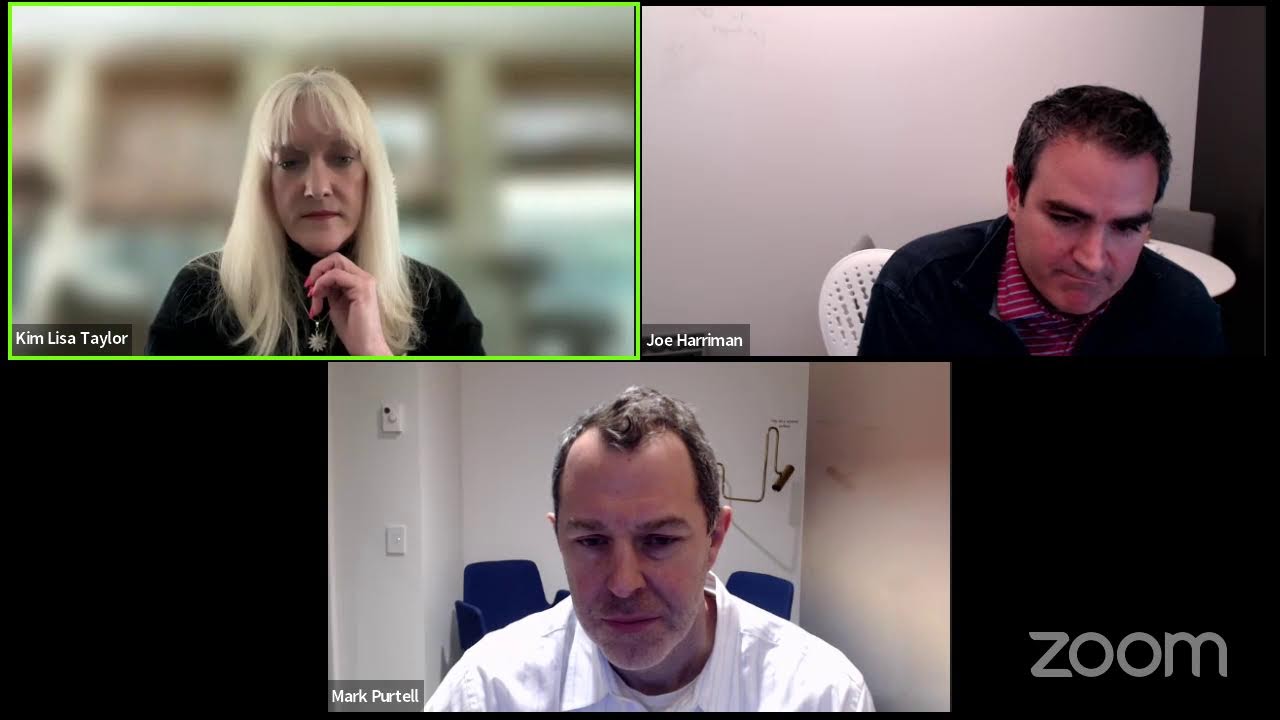
In this Syndication Attorneys monthly podcast, attorney Kim Lisa Taylor interviews Mark Purtell and Joseph Harriman, the co‑heads of Chicago Trading Company’s real‑estate arm (CTC Wealth Management). The discussion covers the structure and mechanics of their fourth closed‑end fund – Real Estate Opportunities Fund IV – including its 3‑year investment period, 10‑year life, 506 offering status, target raise of $40‑50 million, and typical capital stack (≈90 % GP equity from the fund, 10‑15 % from the operator, and the remainder as debt). They explain their co‑GP model, operator selection criteria (experience, ability to source and manage properties, typical deal size $5‑30 million, focus on value‑add multifamily in secondary markets, with limited exposure to student housing, self‑storage, and mixed‑use), and target project‑level IRR of ~15 %. The hosts detail how they evaluate deals, the role of the fund in providing balance‑sheet support and loan guarantees, and the governance structure (joint‑venture layers, no preferred equity, fee and promote negotiated per deal). Fundraising tactics are described: leveraging a track record of three prior funds, roadshows, webinars, one‑on‑one investor education, a 4‑5 month raise, and a investor base of just over 100 LPs. They stress the importance of KYC/AML checks on both operators and investors, transparency about risks and illiquidity, and the need for clear communication with LPs. The Q&A segment addresses operator definition, minimum unit counts, loan guarantee limits, fee structures, rent‑control concerns, and geographic limits (avoidance of California, cautious about climate‑risk areas, openness to Puerto Rico). Contact information for the fund managers is provided.
Chapters
Okay.
Welcome everybody to Syndication Attorneys Free Monthly Podcast, where we talk about topics of interest to real estate syndicators with opportunity to live for Live questions and answers at the end of the call. I am Attorney Kim Lisa Taylor. Before we get started, please note that all of our podcasts will be recorded and may be used for future promotion, posted on our website, or broadcast in a podcast available to the public. If you don't wish to have your voice recorded, please schedule a one-on-one consultation instead of asking questions during the live call. We will— you can either ask questions by raising your hand if you want to ask a live question. Or you can put questions into the Q&A section. Usually we're going to have a discussion for 30, 40 minutes with our guest speakers, and then we're going to go to the live Q&A, and we will end right at 1 PM Eastern time. Information discussed during this free podcast is of a general educational nature and should not be construed as legal advice. Additionally, the views expressed are today are not The views personally of our guest speakers, Joseph Harriman or Mark Pertell, nor of their company, Chicago Trading Company, or any of its affiliates. So just, you know, we're all here just to give you some education, give you some introductions. If you want to do follow-ups, you can do one-on-one calls with us or one-on-one calls with them. We'll make sure that you have their contact information at the time. So today our topic again is capital raising and co-investing with fund managers Mark Pertell and Joseph Harriman. Joe and Mark, thank you. Welcome to our call, to our podcast.
Thank you.
Thanks.
Have you— all right, so I'm going to ask you just a series of questions. I'm going to try to flesh them out a little bit for our audience, but tell us about yourselves and a little bit about your fund and its objectives. Sure.
Yeah, I'll start. So my name is Joe Harriman. I've been in finance for over 25 years. I've been with CTC for just over 16 years in trading operations. We started a real estate company about 6 years ago, which I am COO of. We just finished raising our 4th fund, which we closed last November. We've raised about $100 million in equity to invest in multifamily, primarily focused on the GP side of the capital stack. And primarily in value-add deals. We do have discretion in our funds to go outside that box, so we have invested in some development, some student housing, some self-storage, but we're primarily focused on value-add multifamily. Yeah, Mark, do you want to give your background?
Sure. I've been with the company for 22 years, bulk of it on the trading side, but as the real estate side developed, I made the transition over there. I'm currently head of acquisitions and development, and Joe and I are the day-to-day guys on the team here. We definitely look forward to working with different operators on all aspects of multifamily. So that's in a nutshell what we're doing here.
So usually— so would you consider yourselves a private equity company then?
Yeah, pretty much.
We're—
yeah, we run a series of closed-end funds, capital commitment schedule. So, you know, typically a 3-year investment period we have to invest our funds, approximately a 10-year life on the total fund. So, you know, again, looking at value-add, typically we like to— the hold periods for the underlying investments like to be in that 3 to 7-year timeframe. Yeah. Mark, do you have anything to add to that?
No, that's the general strategy. All these funds very much are mirrors of each other, just different vintages. But it's very much a rinse and repeat cycle because we have something that works and we like to grow with it.
So the investment period, just for people who aren't familiar with funds, is— and you can correct me if I'm wrong about the way that yours is set up— but when we set up a fund, we'll set up an investment period during which time the the fund managers can raise money and then can also make investments. Is that kind of how yours works?
Correct. Yeah, we, we had— we, I guess, had the luxury of having just one close. So you can't have multiple closes within your investment period to raise more capital. We had a target raise in this fund of $40 to $50 million, and we achieved it in our first close. So we basically closed November 1st, and now we have this 3-year investment period. to invest those funds.
Wow, that's amazing. All right. And so then just to clarify again for the audience, so you've got this 3-year investment period during which you can meet operators, you can make investments and co-invest with other people, other syndicators, and then you like to see projects that have a 3 to 7-year hold and so that your fund has a 10-year lifespan basically, right? So everything's liquidated and everybody's paid back and they've all gotten all their returns within that 10-year life. Okay, great. Typical fund. That's very typical of the ones that we also write. We didn't write this particular fund. We did do some marketing materials for their fund. But, you know, we're always happy to participate any way we can. And that's how we met these guys. So they're great guys. All right. So tell me what you specifically look for in operator experience.
Sure. So the way we structure these deals is as a co-GP. So we come in, we provide the bulk of the GP capital in a deal that allows the operator to go out and source a larger institutional-type LP, you know, providing 85 to 90% of the total equity in the deal. A lot of our operators that we work with are either doing smaller deals with their own capital, they're a commercial broker who perhaps wants to get into running and operating their own deals, maybe a property manager, anybody who's had experience with syndications and underwriting or raising equity or working with a shop of that nature. And then of course, operators who are in the market right now who are doing deals, raising money, or just looking to scale up to do more of a larger institutional type product. And that's where we step in. And so really we're open to talking with operators. And just to be clear, a lot of our deals, well, pretty much all of our deals are working with operators. We need that operator who's going to go out source the property, who's going to run the property. We understand our role and know our role is to be equity and balance sheet, and that's where we— what service we provide to operators.
And so when you're providing the balance sheet, then you're also helping qualify for the loan?
That's correct. We will sign on non-recourse debt, and we use our fund as the signer due to its liquidity and net worth.
Nice, nice. So, uh, yeah, for any of you out there, you know, they're, they're calling operators. You know, typically these would be our syndication clients. You're expecting them to bring in 10 to 15% or more of the equity, right? Is that correct?
Well, we'll, we'll provide up to 95% of the GP equity.
Okay.
Operator will bring in that balance up to, say, 10%, and then the equity The bulk of it comes from the institutional LP. So, you know, Graham Skinner thinks an operator can contribute 0.5% to 1% of the total equity and still be very much involved in a large deal.
And then, so you said that some of the asset classes you're looking at, multifamily, you've done some student housing, some development projects. Any other types of projects that you do, like self-storage or other things?
Yeah, the benefit of kind of the way we're structured is we have the flexibility to really look at anything. We have a 20% kind of carve-out for non-multifamily investing in our fund, but our target and our kind of primary objective is workforce multifamily. So You know, we kind of look at any region in the country. We don't have— we're just trying to build a diversified portfolio for our investors. We do avoid some states like California. We tend to avoid just because of some of the complications there with investing, but we're pretty much open to looking at any region. We do focus on the secondary tertiary markets more than the primary markets. So we, you know, look at, like, in the Midwest, we'll look at Iowa, Kansas City, you know, for example, of our historic investments. We've invested in Phoenix and kind of the entire Sunbelt. So, but really open to any region.
And what kind of returns does your fund typically look for?
We'll look at any project with, let's say, a 5-year hold of a project level of 15% IRR. That's kind of a base case. Hey, let's, let's, let's take a look at it. Let's dive into it. Let's see if we like it. We really encourage any operator to bring us a deal. Let us say no, as opposed to assuming that we're not interested, especially in the multifamily sector. We can get kind of creative. We do have a hotel conversion project undergoing in our previous fund right now, so it doesn't have to be the standard kitchen bath remodel and change management company. We can get creative with our deals.
And so when you're saying you're looking for a 15% IRR, is that what's going to come back to your fund, or are you looking for that for the overall project?
That's kind of the floor for the project level, because when we try to avoid talking about terms of the deal before we see the deal, because it just tends to complicate things. So project level, 15% IRR. Yeah, we're happy to dive into it.
Okay. Some of those deals may be out there. And then what size deals, like what's going to be the minimum investment that you would even want to consider?
Yeah, in this fund, we're looking to invest usually $2 to $6 million per investment. Again, it's not— we don't want to overconcentrate the fund, so we do kind of try to be below that $6 million-ish mark, but we can go lower than $2 million. We're pretty flexible on that. We're just trying to, you know, have our total fund be diversified with a reasonable amount of investments, not, you know—
So you don't want to go out and do $20 million investments?
Don't want to do that, and we don't want to do, you know, 40 $1 million investments. We want to kind of—
And then is there a specific— is it more about the price of the project, or are you looking for certain I don't like sizes. Like, does it have to be 15 units or 30 units or something like that?
Or— The smallest project we'll look at is roughly around $5 million project cost. At that case, it's big enough where we can get down to that check size in there that makes sense for the economics. But more importantly, you start to get economies of scale in the project. Even $5 million deals are a little on the smaller side, but that would be kind of the lowest we go. Probably most of our deals are north of $10 million, $10 to $30 million, but we have done bigger.
And then is it a criteria that you're going to put in 95% of what the GP is putting in, or would you consider putting in less if it wasn't needed?
Oh, we'd absolutely do less. In our experience, many operators, though, they want to put as little money into projects as possible because they want to do as many projects as they can. We'd be very happy to take a look at a project to require a smaller GP capital slice. And we can also be flexible too on that 10%, because some LPs require the GP to put in 15% or 20%. So we can fluctuate on there, but typically they're 90/10 structures.
And then, so you're saying that the rest of the equity is going to be coming from the lender, right?
And then other institutional investors or Currently, in today's environment, it's going to be the total project cost. We funded roughly 60% debt and 40% or so equity, with about 90% of that, so 36%, coming from the LP and then 4% from the GP/JP.
And then the LP equity, are you guys participating in that or helping to find that, or?
We usually don't. The operators source that either through their own network or through some type of assistance with a broker.
Okay.
So for everybody on the call, you're still going to have to raise money. Bottom line, we can help you with the GP, we can help you with the balance sheet. That's— those are important jobs, but you've got to bring in your own investors. They're not going to raise the money for you. And, you know, they'll help you get the debt because that balance sheet is going to be hugely important. Okay. And then, so how are you structuring your deals with operators? You know, there's a variety of ways that people can do this. They can do it as pref equity, they can do it as a joint venture, they can do it with side letters. You know, what's your preferred structure?
Yeah, we typically structure a joint venture with the operator, which forms a company, and then that joint venture forms another joint venture with the limited partner. So at the end of the day, you have this new company comprising of the 3 parties, 2 joint ventures in total, and they buy the property. And we're not blind. We understand the LP is contributing 85-90% of the total equity. They're going to drive the ship in terms of major decisions. They're going to say when to sell. They're going to say when to refinance. And so we definitely respect them, given that they are a large equity in the deal. So we work with them on that. And then at the same point too, we look at operators to be a key component of this deal too. We look at them to be experts in their markets. We look at them to know what the pace of renovation is and how to manage the property. So everybody plays a role in our deals, and, and we definitely try not to step on anyone's toes in that regard. To your question on pref equity, we are not pref equity. All of our dollars sit in the same risk bucket as the operator and LP. Our capital structure, very simple. In all of our deals, it's debt and equity. That's it. So like I said, we're not pref equity, nor do we want to see it in our deals.
Got it. Okay. Something that everybody needs to be aware of is that this is a tremendous tool to be part of your GP capital stack, But again, they're not going to take the place of the LP or the— but you would have no problem with— or I guess let me ask, would you have a problem with an operator? So you do this JV at the management level, right? And then they go out. What if they're— do they have to raise money from one LP or can they raise money from 60 LPs?
Yeah, it can vary. Pretty much indifferent on the LP. I mean, we want to work with the LP that makes sense for the deal. If the business plan dictates that it's better to exit in 3 years and you have an LP who wants to come in and hold it for 20 years, then that might not work. So you have to kind of look at the business objectives of the underlying property and sort of align your LP or LP capital stack with what makes sense for the deal. So We're pretty flexible on that, but it also has to align with, you know, the overall goal.
So just thinking of how this would fit into the structure with most of our clients is that you would be a member of the management entity of a syndicate, and then they would be creating a syndicate that would either have one or, you know, however many members, investors, Class A members. We usually split it into Class A, Class B. So they're— the operator is going to be looking for those Class A members, whether they be one investor or be 20 or 30 investors, in order to make up that limited partnership or the actual passive investment portion of the deal. And then the other portion of the capital stack, of course, is the institutional debt that you're getting on that property. And as you guys mentioned before, that has to be non-recourse. So they're not going to participate with anybody who has Recourse debt in their capital stack. And that makes sense. Okay, so you are co-guaranteeing loans with operators on non-recourse debt. You guys have a $40 million fund. Is it already partially deployed, or you just still have kind of a wide open slate?
It's wide open right now. We're looking at deals. Yeah, it's been a more difficult environment over the last several months to transact. So we're being patient. We're looking at the market and just trying to wait for the right deal to come along. But we continue to look at many deals a day.
Okay. And how long does it take you guys to make a decision?
We move pretty quick relative to some other groups out there. So we've heard that Joe and I being the main points of contact, we have an investment committee above us that has final say over all our deals that we do. But, you know, if we see a deal we like, we move quick and, you know, we can have funding and deal kind of locked up within 3 or 4 weeks.
Great. All right. So you got to get these guys in early. You can't, you know, show them a deal that's a week away from closing. That's not going to work for them. That doesn't really work for anybody, including us.
We feel like we move fast relative to some larger institutions. Um, but yeah, we had— we need a little bit longer than a week.
So, so the way that I can see this working for our, our clients would be that they would talk to you, develop a relationship with you, make sure that they meet— either they already meet your criteria or they bring people onto their team that meets your operational experience criteria. And, you know, you guys strike up your relationship, then they go out and the operator goes out, finds the deal, comes to us. We can either help draft that management operating agreement with you guys as the partners, or you may have your own counsel that does that. And then we could create that syndicate so that you would be able to, as an operator, go out and raise the additional money that's needed to fill the gap between the loan And what Mark and Joe's fund is providing. Can you give us the name of your fund? I don't think we ever actually established that upfront.
Sure. It's Real Estate Opportunities Fund IV is the name of the fund. CTC Wealth Management is the investment manager. All right.
And so how do you participate as a member of the GP who's putting up a balance sheet, putting up some GP funds? How active are you two in overseeing the operations of the project and conversing with the GP? How does that look?
Yeah, usually once the deal's closed, we take a role of somewhat of a— depending on where they are with the LP spectrum, we're taking a role of, hey, we want to see quarterly reports. We might have a phone call periodically, once a month, maybe once a quarter, depending on how the project's going. And from there, we just You know, let the project grow. You know, we want to see the operators hitting their pro forma numbers. And if they're doing that and staying on top of the property, we're relatively hands-off in that regard. Obviously, if things start to go a little sideways, we're going to get a little more involved. But generally, we trust the operator to run the project.
And do you retain in your management operating agreement some kind of a takeover right in the event that something were to happen to the operator or they just weren't able to perform?
Yeah, we typically have that clause in all of our agreements just as a deal.
And would the operator also co-guarantee that loan in most of your deals?
Sometimes they do, sometimes they don't. It just depends on the operator and the property and the project.
Okay. What other— any other things that you want to talk about in relation to your fund or anything like that? And then I want to change tactics and talk about your money-raising strategies.
One other note too, with when an operator has a property, the whole thing doesn't have to be buttoned up through due diligence and ready to be wrapped up. We're happy to talk to an operator even before they've walked the property. Just, you know, hey, this property looks interesting, your group might like it. They send it over to us, we can size up the area, we can size up the property type and give some, you know, near immediate feedback on that project. That way the operator kind of knows where they stand with us. And if it works, great, we'll go to the next step with them. If not, At least they know that we're not a viable option. So, you know, we're welcome to talk with anybody pre-PSA, post-PSA, and if needed, we'll, you know, if the operator feels the need, we'll sign a confidential agreement if needed.
And so, pre-PSA, would you want them to at least have a signed letter of intent, or are you interested in looking at deals before they even have gotten that far?
As long as the offeror is transparent with us where they're at in the process, it lets us know how much time to put on the project. Obviously, if they're through due diligence or in due diligence, okay, this thing has a lot greater chance of actually closing. Where if it's, hey, this one just hit the market, we're going to walk through it, you know, does CTC care about this one? Okay, well, we can judge accordingly and respond.
Yeah, but just for the benefit of the attendees on the call, you know, I don't think you should be sending them stuff off LoopNet.
Right.
You really need to be pretty serious about the project, and you've got more than just, you know, seeing it on the internet and a better connection. You know, we usually say the time to hire us, and I'm sure you're going to get involved even earlier than that, but the time to hire us is when you have a signed purchase agreement, someone from your team has physically visited the site, And you've reviewed the financials. And if you can get the financials early before you've spent any money on the PSA or gone to the site, that's ideal. But sometimes the brokers won't release that information until there is a purchase agreement. So you've got to get those 3 things done. And then our statistics actually show that when our clients do that, then they're 85% likely to close on their deals. So yeah, we want to make sure that you guys don't burn bridges here. Make sure if you're talking to Joe and Mark, you've got a viable deal. And it's something that, you know, more than just something you saw on the internet. And, you know, I suppose that happens, right? Where somebody sends you a deal that you've already looked at with somebody else. Has that ever happened?
It absolutely happened. It's happened. And, you know, at the same time too, we get it's a competitive landscape, and it's gonna happen.
So we get it.
We're happy to talk them through with it.
Yeah. Okay. All right. So I know that there's a lot of our listeners on this call that are interested in setting up their own funds, and of course all of them are interested in raising money. So I'd just like to ask you guys some maybe logistics about your fund and some of your fundraising techniques that have worked for you, and maybe some tips that you'd like to share with our audience. I think that could be really helpful. Do you guys mind?
Sure. First of all, state the obvious, raising equity is very hard. You know, we're— from our perspective, we're investing out of our 4th investment vehicle here, which means we've had 3 previous funds. These have exits, they have a track record, and our business model is very similar from fund to fund. So we have a network of investors who, some of which have been with us from our first offering. And so we have a level of trust that's been built up there and And they understand the model, and it's, it's very comforting for them and for us knowing that they can count on us to deliver, and likewise. So this is contrasting with a single property offering where operator can go out and give the offering out, and then there's pictures of the property. The investor can drive the area, they can touch the building, they can, they can even rent a unit if they want in that property. So it's a much more engaging process with the property and the investor and the operator. What we're doing here is it's known as a blind pool offering, and it's much more difficult because the investor basically gets a stack of papers that says the manager is going to do their best to find good deals in the future and hopefully generate positive returns, and sign these papers and that's all you get. So there is a much higher level of trust which needs to be established between the investor and the manager when raising a blind pool offering. So that's one of the big differences between the single property and a fund. And it's not very easy just to jump from, you know, going from not owning property into a blind pool offering without some type of intermediary step to build up your investor base and trust with your investors.
Yeah. And you're mirroring the things that I tell my clients all the time. A blind pool fund, you know, there's people that will tell you, well, why don't you just just raise all the money for your deals in advance. It's a lot easier than raising after you get deals under contract, but it's actually not. It's much, much harder. A lot of investors will sit on the sidelines until you get deals under contract anyway. As you said, you're raising money based on a business plan that says, here's what we're looking for, here's the criteria, here's the geographic areas, here's the kind of operators. You're just spelling out, if we can find things that meet this criteria, then we might buy them. But there's no guarantee that you're going to buy anything. So yeah, a fund is hard and you don't want to attempt it until you have a track record of doing specified offerings first. And that's like 4 or 5 completed deals usually is going to be enough to attract the investor interest. But we've also had some clients that have tried to do funds and after they've done many, many, many tens of deals and their investors just didn't like it, they preferred the specified offering. model. So it's always interesting to see how that evolves. But yeah, funds are hard. What about— I'd like to ask you a little bit about the history of your past funds. So did you start out— was your first fund a $40 million fund?
No, it was smaller. It was around $20 million. Really? Yeah. Funded by some individual high net worth investors associated with CTC. And is really a method. You know, our biggest selling point is we can build a diversified portfolio in an asset class that's uncorrelated to other markets. So, you know, that's kind of how we started. We had a couple operators that we had an established relationship with. So we had sort of a business plan in place with operators that were trusted. And that— and the trust part is very important to us. So having that established relationship really kicked off the first fund.
Really well.
So that's how we got started.
Did you increase the second fund? Was it a bigger fund or just kind of repeat the same thing over?
That was about the same size. The first 3 funds, we really ramped up in this last offering and we have big plans to continue the growth of the real estate arm here. And our next fund, we hope to be a lot larger and we're going to continue kind of with the same philosophy as we build out our relationships, our operator relationships, trustworthy relationships that are important.
And how are you building those relationships? Where are you meeting people and how are you developing the relationship and staying in touch?
A lot of it is a lot of repeat investors and then it's referrals and it's And so our net— our investor base is growing from the first fund to the current fund. And it takes time. And just want to go on record here that we are not raising money right now for an offering. And at this time, we don't have any plans for another offering. So we're not taking on new investors right now.
Right. But you are looking for operators?
Operators, reach out to us.
Yeah. Okay, great. And is this particular fund— just again talking about the fund mechanics for someone who might want to try a similar fund on their own— is this particular fund a 506 or a 506?
This one's a 506. So step on your toes a little bit here, Kim, and say, hey, cannot solicit with a 506 offering. And then there's a carve-out there that you can have non-accredited investors in a 506. How'd I do? Did I do okay there?
You did okay. Yeah, that's right. And you took the time to develop the relationship, have suitability conversations with all of your investors prior to showing them your fund docs and telling them about this particular fund. So, and all right, so out of curiosity, this is your 4th fund. How long did it take you to raise the money for this fund?
We— it was relatively quick with our kind of like we talked about our current stable of investors. We had about a 4 or 5 month process of doing some roadshows, some webinars, you know, updating everybody on where we're at with our previous funds and kind of going over the strategy on the 4th. And yeah, just having a lot of one-on-one conversations. So So I'd say it was relatively quick, but I don't know, that's— it worked out well for us.
And did it take less time to raise a commensurate amount of money for this fund than it did for your first 3 funds?
No, it took more time. We really expanded our investor base on this fund, so we did take some more time to do more education.
Okay. And if you don't mind sharing with us, just, you know, approximately how many investors are in this $40 million fund?
We're just over 100.
100 investors. Okay. And do you find that people that have invested with you before invest more? Or, you know, like people that are coming in first time that never invested with you before, do they tend to invest At least the amount they can, or how does that work?
I think it depends. It's very investor dependent on how much exposure they have to real estate. You know, typically we get kind of an increased allocation, but it really depends on their kind of personal investment situation.
About how many investors do you think you have in your database?
It would be— it's a multiple of the 100 or so.
Several hundred.
Yeah. And, you know, one thing to add too is when talking with investors, you're talking with people who have ranges of experience. So us as the manager of the fund, we need to be in a position to be able to answer very basic questions as well as very advanced questions. So It's imperative to understand your business model, your fund docs, and as well as be able to respond to questions. Because if you can't provide an answer to an investor in the first meeting, well, there probably won't be a second meeting.
Right, right. And you said you went on a roadshow. So was this the roadshow really to just introduce the fund to people that you'd already vetted, or was it to just talk about your company in general?
It was people we already prequalified. So it was really more of, you know, knowing that they were eligible to invest and then educating them on what we were doing. So that was kind of our process.
Okay, great. And any other tips that you would offer to people who are thinking about doing a fund or, you know, just fundraising in general, even for a specified offering?
I would kind of go on with— add on what Mark said about it just being— it taking a long time, especially with investors. The due diligence process, especially if you get to the institutional level, takes a very long time. So you really need to start a lot earlier than you even think you need to start. That's my main tip.
And do you guys have other institutional investors that you've worked with as LPs that are kind of like, hey, if you get into any more funds, Letting on, you know, offerings, let us know. You know, can you help facilitate those introductions?
We, we have— we've started to look into that process, but we haven't expanded enough to, to really say that we're at that point yet. Okay. Um, one, one other thing too, to add on to Joe's tip there is, you know, meeting with investors. Obviously you want to grow the fund, you want people to invest, but we also spend a lot of time telling people why they don't want to be in this More of it, more of just an education, because the last thing we want is somebody to come sign papers and then a month, 2 months, 6 months later go, well, I don't want to be in this. So we're very transparent in talking through the risks as well as the benefits of this type of offering structure, because, you know, put bluntly, these offerings are highly illiquid. It's not like a share of stock on a stock exchange where you click a button on Tuesday and And you're out of it. So you need to be very— you gotta let your investors know where these offerings work and how they work, because many people just don't have experience with them.
All right, well, let's go to questions. So Hugo asks, can you please define an operator?
Sure.
We look at any person as an operator as someone who is out there looking for property, who's looking to buy property, someone who is going to get a contract on property and run the day-to-day operations of the property or oversee them. They don't have to actually be the property manager, but they need to be able to contract a property manager. They need to be able to develop a business plan, and they need to be able to run a property from purchase to sale. Okay.
Daniel asks, not sure if it was already mentioned, but is there a minimum unit count for multifamily?
We did mention the check size or project size of at least, say, $5 million, preferably $10 or more. We do pay very close attention to price per unit. Generally, we like to see within a market, we like to see price per unit to be on the, say, lower half of the product type. We generally avoid Class A product, which tends to have a higher price per unit.
Oh, you guys prefer Class A?
We do. No, we prefer B and C. We, we stand— we stay away from Class A.
Got it. Right, right. Yeah. And that's where most of our clients are, is in the Class B and C space, or, uh, you know, trying to— they're not out trying to buy the Class A properties because the cap rates are usually so low. Yeah. Um, all right. And Daniel asks, is it only co-GP, correct? And I think we answered that. The answer is yes. Right? You're not bringing in any of the LP money from your fund.
That's right. There are, there are some situations where we'll come in as an LP depending on terms, but our primary focus is co-GP.
Okay. And an anonymous attendee asks, how high of a loan can you guarantee?
Well, our fund is $40 million, so that's the net worth component. The lender sometimes has some discretion on that and can go higher, but that's the ballpark range of where we sit.
And then Rick asks, how do you typically stack/structure fees and promote?
It's deal by deal, but we would say that We respect the acquisition to be an asset management fee from an operator. And because these fees that operators need to stay in business, they keep the lights on, frankly. Operators really, they make money when the property sells. They're not making money from cash flow, just general nature of a pref that's in there, preferred rate of return, that it's very backend loaded. So we do respect type of fee structure. As far as promote, it's very deal by deal. It's hard to throw out a blanket statement just to an open-ended question like that, but happy to talk through it with anybody who has specific questions.
All right. And let's see, anonymous asks again, just curious, what are the typical returns to your LPs in your What are you offering your investors?
So, yeah, so as Mark mentioned, we kind of look at these properties at the IRR on the project level, but when we are negotiating on the co-GV side, the fund itself is getting part of the promote income or getting all the promote income from the deal, the underlying deal. So, if you look at the project level of investment, at a 15% IRR, our investors are going to make more than that project level because we're getting— we're passing through the promote income to them. So, you know, it obviously varies if, you know, how well the deal does, but it can— that promote income can add substantial amount to the investor IRR.
So would it be fair to say if you bring in 90% of the GP equity to a deal that you're going to take 90% of promote. Is that kind of how it works?
No, it's actually less. It's more in favor of the operator than 90%. And we do this because the operator is running this deal, and so they need to be compensated for it. It doesn't do anybody any good if we attempt to try to keep all the profits. It just doesn't work well. So it is not a 90/10. But like I said, each deal, it's deal by deal. So that's how we negotiate it.
So, you know, I've worked with a lot of private equity companies, and one of the things that we do as a firm is we can represent, you know, our clients in a transaction with a private equity company, you know, where they're setting up those JV structures, whether it be at the management level or at the LP level. Most of the times we see the the private equity coming in at the LP level. And usually there's a whole slew of reports that they want and parameters that you have to meet. And you have to pay close attention to that because if you fail on any of those things, then they can exercise takeover rights and kind of force you out of the deal and maybe strip even your investors of the equity. But from what I'm hearing from you guys, it sounds like you have a much more reasonable approach and you also understand that if the operator isn't making money, then the deal and the investors are going to suffer. And, you know, all of you listeners on the call should be aware of that, and you should be explaining that to your investors. So if you have investors that, you know, you feel that they're trying to pressure you into giving them everything and you get nothing, those aren't good investors for you. Because if you aren't making enough money to stay invested in the deal, then you're going to have to go out and get a job or do something else to feed your family, and then this investment is going to suffer. And that's how you explain it to investors that pressure you that way, is say, look, if I'm not making money on this deal, I'm not paying attention to your investment. You need me to be making money on this deal. So that's a good way to kind of counteract that argument. Hugo asks, as part of your vetting process, do you do anti-money laundering checks and KYC checks or bad actor checks on the operators?
We do run a background check on every operator that we, that we do a deal with. So it's fairly comprehensive, but, you know, case by case in terms of the analysis of that background check.
And then about kind of flipping it the other way, what about when you're doing your own funds and you're raising money for your fund? Are you doing money laundering checks and KYC on your investors?
Yeah, we do have KYC responsibilities at the management level. So we are required to do, you know, kind of basic AML KYC on our underlying investors as they're coming into the fund.
Okay. And all of you listeners should be doing that as well. Hugo says thank you. See, Luis asks, do you only invest in the lower 48? How about in Puerto Rico?
We could invest there. We've talked with our accountants. They said it's fine. We just haven't. One thing that we are concerned about, especially in the Southeast part of the country, though, of course, is insurance rates due to climate change and hurricane risk. So those markets are somewhat highly scrutinized on our end. But technically, yes, we could invest in Puerto Rico.
So one of our guests asks, are you interested in storage facilities?
We have done some self-storage. Again, it's not a primary focus of the fund, but depending on the opportunity, we would look at it.
Would you please go ahead and give us your contact information so anybody wants to get in touch with you, and maybe if you could also type it in the chat, that would be wonderful.
Sure. The phone number is, uh, 312-863-8079, and that's a direct line. And you can email us at wealthmanagement@chicagotrading.com. Our website is ctcwealthmanagement.com. Any one of those methods, uh, we're happy to talk with any operator. deal or no deal in hand, we also encourage you to just reach out just to have a conversation. Just let's, let's start the— let's start the process, and we promise we don't bite, so feel free.
And then go ahead and give me your phone number. I'll go ahead and type it in the chat right now.
312-863-8079.
And we've got ctcwealthmanagement.com, and you mentioned another?
Uh, the email wealthmanagement@chicagotrading.com.
And tell us about Chicago Trading. What is that company's business?
Sure, yeah. Chicago Trading Company is a, it's a global options market-making firm, uh, proprietary in nature, um, really trades liquidity around the globe, uh, in the options markets primarily. Uh, it's been around since 1995. Uh, you know, over 600 employees, actually 700 now. Uh, offices in London, New York, Chicago, and Colorado.
Uh, yeah.
Very cool. All right. Um, okay, great. And let's see, uh, Daniel asked, uh, to get in touch. Uh, let's see. Um, no, we've already answered that one. You've got that information now. Hugo, you want to re-ask that question? You said, I was referring to the fund also. If you could re-ask that question, that would be great. And let's see, do you all consider mixed use as well as, you know, like multifamily mixed with retail? Would you consider that?
Well, there are some agent requirements for to get agency debt with multifamily that it can't be certain percentages of retail, but— and we will accept some store-level ground floor retail in projects. But for the most part, we want to see, you know, the bulk of the revenue from that project coming from multifamily, you know, north of 85%, 90% coming from the multifamily side of the mixed-use project.
Well, and I know you said you would co-guarantee non-recourse debt. So, are you only referring to agency debt, or if Will you also co-guarantee CMBS loans if they're non-recourse?
We take a look at those as well as local and regional banks if that's the case.
So here's a question Keith asks. I have a deal I'm looking at that the seller would finance, but they want 20% down. I'm sure that once we have it under contract, we can find investors to fund the down payment. The seller's asking for proof of funds. Have you seen any way to address this?
As far as proof of funds for the 20%, is that what they're—
Yeah.
You know, once again, something like that, we're going to be looking at it from the perspective of how much are we investing in the project and where we line up with that deal. So we're not going to just offer proof of funds Without having some type of arrangement lined up first.
So, so you would look at the deal and if it was something you were interested in and said, yeah, this is one we'd go forward on, then you could help with that?
Absolutely.
Yeah.
Okay.
All right. Good question. That was a great question, Keith. Okay. And then Hugo said his question was answered. Thanks, Hugo. Michael says, any thoughts regarding yesterday's White House statement as to possible rent control or rental cap increases and how it impacts your investments?
Yeah, so that rent control is definitely something we, we follow closely in, in all of the states. You know, there's a— that's on the agenda of a lot of states. Um, it's, you know, it's an important part of the analysis, uh, and if, if there's some stringent rent control that, that potentially go through, you know, we have We have to look at that from an analysis perspective. So, um, it's— it is something that we follow closely.
And one another thing to add on there too is depending on your source, there's a shortage of housing units in the United States, somewhere around 4 million housing units needed in the next 10 years. So we do see a long-term continued demand for multifamily, and we definitely see our role as a group that provides safe, value proposition for the tenant when they go and rent a property there. We definitely are very top of property maintenance and we don't, we don't want to run a property that's in disarray and getting worse. So we stay very much in close contact with our operators to do the right thing.
Excellent. Well, we're going to go ahead and wrap up. If you want to reach us, go to syndicationattorneys.com. If you click the button on schedule a call, then you're going to get some options on scheduling with one of our team. Or even scheduling a call with me, you have the contact in the chat. Make sure you save the chat. If you don't know how to do that, there's, uh, to the right of where you would type in your chat, there's 3 little dots. If you click on those dots, you'll get a pop-up that says save chat, and you should be able to do that. So if you want to save that contact information, or if you want to just save the actual individual chat entries There's 3 little dots next to each one of those that you can click on and save that information. We thank all of you that came today and took time out of your day to come with us and, and come see us. If you haven't subscribed to our podcast on your favorite podcast platform, please do so. We actually just got some statistics that said we're in the top 25% of all Buzzsprout podcasts, and they're one of the— that's the software system that we use to put our podcast out on 20 different podcast platforms. So we are growing our audience, and we appreciate all of you that take your time to listen. This is live streaming on YouTube, so if anybody wants to go and listen to it right after the call again, if you felt like you missed something, it is there. And then we will be putting it on the podcast platform it's been edited. So again, thank you all for your time. Mark and Joe, thank you so much. This was really interesting. You know, love your concept for your fund. I love that you guys were willing to share with our audience some of your fundraising tips and some of your experience. That's always hugely valuable for our clients and our attendees to listen to. So hope everybody has a really great day, and we will be talking soon.
Thank you.










