How the Right Technology Can Help You Manage Your Investors With Special Guest Perry Zheng
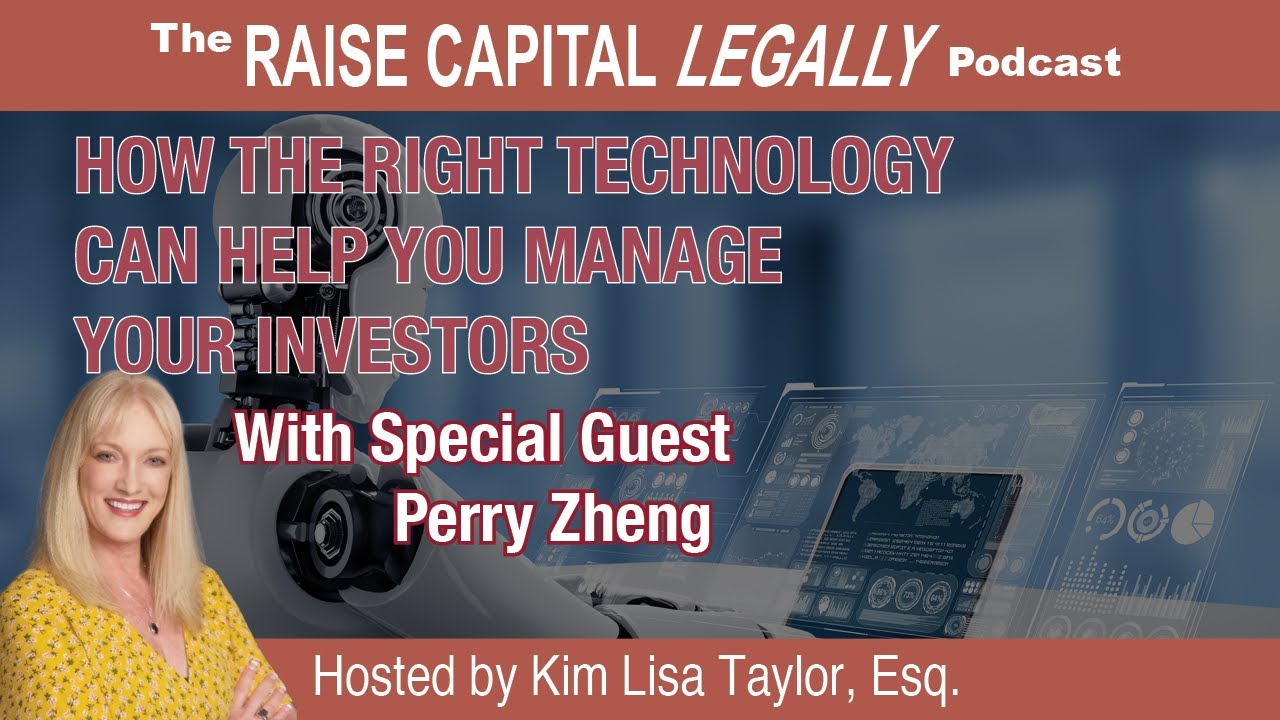
Perry Zhang, former engineer at Lyft and Amazon, built Cashflow Portal to automate real estate syndication. The platform handles investor management, document signing, distributions, and K-1s in one place, starting at $149 per million under management. It uses hidden AI for emails and expense categorization but doesn't replace CPAs or legal counsel.
Chapters
I'm just gonna give you a chance to join. Let's go ahead and kick off.
There we go.
There's our attendees. Hey, everybody that's joined the call. Sorry, we're getting started a minute or two late. We've had a lot going on here this My personal life, I've got a lost dog that's running around in the marsh in front of my house and won't come home. And then I was just interviewed by CBS News for a trail project that's going on in our community. So I wanted to, to go ahead and get my voice out there. So we, we made y'all wait. I'm sorry about that. But, you know, sometimes life happens, right? So. Alright. Well, we will go ahead and start here. We've got a good crowd coming in. And are you able to do the recording? Oh, it's already being recorded.
It's already recorded. Is it live streaming too?
No, we're not live streaming because we want to be able to get some stuff on the front and back end. So would you like to read the intro?
Absolutely, I can. Let me just go to where that is. All right. Hello everyone. Welcome to Syndication Attorneys' free monthly podcast and YouTube channel where we talk about topics of interest to real estate syndicators and fund managers. with an opportunity for live questions and answers before we sign off. I'm Krisha Young, and this is attorney Kim Lisa Taylor. I am the co-host and business development associate at syndicationattorneys.com, and Kim is the founder and all-around amazing person behind all of this amazingness that you are getting here from us today. Before we get started, please note that this event is both recorded and streamed video and will be used for future promotion, posted on our website, or in a broadcast available to the public. You can ask questions at the end of the broadcast by raising your hand or typing in the Q&A. The information discussed during this free podcast is of a general educational nature and should not be construed as legal advice.
Great.
How's that?
Why don't you go ahead and continue?
Okay. All right, so today we have, um, Perry Zhang. Did I say that right?
Yeah.
Okay, wonderful. Um, and, uh, so we're joining us today with, um, attorney Kim Lisa Taylor and her esteemed guest, uh, Perry Zhang, founder of Cash Flow Before founding Cashflow Portal, Perry was an engineering manager at Lyft and worked as a software engineer at both Twitter and Amazon. He will share his experience and insights on how software, artificial intelligence, and technology are reshaping the real estate investing world. Hi, Perry, how are you?
I'm doing well. Thank you so much for having me.
Great. Welcome. Hi, Kim. Would you like to take over now?
I am having a hard time getting OneNote to work for me right now.
Okay, no problem. Um, all right, well, um, why don't we just get started? So Perry, welcome. Um, why don't you tell us about your background and how you came to start Cashflow Portal?
Absolutely. Hi everyone. Um, that's a lot of people on the attendees My name is Perry Zhang. I'm the founder and CEO of Cashflow Portal. My background is in software engineering, so I was in a bunch of tech companies which Christian just mentioned. Specifically, when I was at Lyft, it was 300 people, and when I left, it was about 3,000 people. Went through the whole IPO phase with Lyft. Did my very first syndication in 2019 where it was a 172-unit apartment complex. And raised about $3.5 out of the $4.3 million on that deal. I was the lead sponsor. I'm always the lead sponsor on every deal. And on the very first deal, we were using DocuSign and Google Spreadsheet. So for every investor, there were 70 investors. I sent them a DocuSign, they signed it, they sent it back. I sent them an email, say, hey, here's my bank account information. And then they wire the money and then send them another email, say, I got your money. All their information is on that Google spreadsheet. And I thought to myself, with my engineering background, that this is very inefficient and there must be a better way. And so the company is the combination of my syndication background and my technology background. We started about 4 years ago. So since then, we start developing it on the side while I was still full-time at Lyft. The following year, we did a 408-unit and we used a large syndication software. The year after that, I used my own software, and I couldn't disclose to my investors that I owned the company because I was still full-time. And they say whatever using this year is more intuitive and better to use than last year's. And I said, that cannot be true. So that's when we quit our company, quit my job. When I quit my job and applied to Y Combinator, which is a Silicon Valley incubator program, and we That's— they are the incubator for like Stripe, Airbnb, Gusto, DoorDash, and so on. So it's a very nice program. We got in and then now we have about 30 people in the company. So that's a little bit of history.
Fantastic. Wow, that's, that's really impressive.
Thank you.
Background. And I think it's great that you're marrying your background in technology and real estate. You saw a niche that needed to be filled. And you're figuring out to fill it. It's so fantastic.
That's right.
So, Tricia, go ahead.
So yeah, and I find it also fascinating that all of this happened like all throughout COVID and stuff too. So like maybe a little later on we can talk about like that journey as well because I'm very fascinated about how that happened. So why don't you tell us exactly what Cashflow Portal does?
Yeah, so Cashflow Portal is a software for syndicators and fund managers to manage their cap table and their investors. So in a typical syndication journey, you have to have investors sign the documents, and even before that, you need to have a CRM with some kind of lead capture form that's on your website. That's for marketing CRM. And then once they sign up with the CRM, then you can send them these kind of like LP nurturing emails to build that reputation. So we have a built-in CRM that's really, really good, and it has a lead capture form, drip campaign, and all that. Then you move into once you have a deal, whether that's a fund or a syndication, you need to have the investors go to a portal to sign documents, and then there needs to be a way to wire or ACH the money directly, and then they need to know where the money has arrived, and then any addendums can be signed through the portal, and then every month you need to send monthly updates about how the deal is doing, any financial financial documents, and every year there should be K-1s being distributed, and every few months there might be distributions which you want to be able to send them in an easy-to-use manner. It's a click, and then all the distributions go out. So we handle all the back office for the GPs so that GPs can focus on building their relationship with the LPs. We are a tool, a white label tool that helps the GPs kind of streamline their backend office.
No, I actually had a chance to use your portal.
No way. It's awesome.
Because I invested in a deal where somebody had— the people I invested with had put their deal up on your Cashflow Portal. And so I got to experience it firsthand and it was really cool. I really enjoyed that. It was so easy to be able to just go and look at the documents. And of course they were our documents, so I was We'll talk a little later about a couple of complications, but it wasn't you did it. It was just information that our clients should have known. But it was a really cool experience. Now I'm like a gung-ho supporter and I'm telling everybody they need it, you know, scheduled demos. You all need this, you know, as soon as you get a deal or even, you know, maybe you can handle your first deal with 5 or 6 investors on an Excel spreadsheet. But, you know, beyond that, you're gonna want to start having something more robust that you can keep track of everything.
Yeah. So Kim, when you invest passively on the deal that has your own documents, which is awesome, you'll notice all the questionnaires were all HTML format. And then once you answer them, they just get almost some of the answers get pre-populated onto the document. So you don't have to type those out in the document itself.
I noticed that there were a little bit of a disconnect on a couple of issues, but we can talk about that off Okay, that's awesome. So anyway, that, that, uh, but largely, you know, it works really well. I think, uh, you know, I guess my advice is if you're working with a securities attorney and then you're going to post their documents on any one of these portals, uh, you know, Cashflow Portal is, is one of several, but I think it's definitely one of the best. Um, they, uh, then you're going to want to have your attorney look at that, and, and you need to go through the subscription process yourself to make sure that every single field is functioning. Uh, Before you start sending it to investors. So, you know, and have your attorney look at it, see if there's anything they would suggest you do differently, just for your own protection.
Let your attorney be the first one to invest.
This is everybody, so, you know, don't all start bombarding me about investment opportunities. You know, and we've got a lot of clients to do that with. Yeah, so, okay, great.
I have a little question here. Does it matter if it's a 506 or a 506, like, in terms of the types of— because is this considered general solicitation in a way?
Yeah, absolutely. So we support both 506 and 506. In fact, I will say 90% of all the offerings are 506, only 10% are 506. And it is not general solicitation because a normal person will not be able to find the offering link unless the GP sends that offering link out, and they can send it, which is a single URL. They can send it through text, email, whatever they want. But by definition, they need to know the LP's email address in order to do that. So it works for 506, and a majority of them are 506. Now, the difference between B and C on the portal side is when it's B, then self-accreditation. And so we digitalize those questions. And then if it's a 506, then we have integration with Parallel Markets, which is one of our accreditation third-party providers. So we support both, and there's a toggle that you can switch between the two. And there are also sometimes where people move a B to a C, and so we can keep track of the last funding date and also the subscription date so they can prepare the, the cutoff date. And in fact, and one of the things we really offer is encode the documents for you. It takes us about 10 minutes to encode the documents, takes the GPs like 2 hours to figure out where everything goes. And so we encode it for you and you would double-check, please double-check like 2 or 3 times. But we can prep it in such a way that it's ready when you go switch from 506 to 506, if that's what you choose.
Wow, that's really awesome. Okay, so how does using an investor management platform benefit syndicators and their investors? I mean, you just explained a big part of it there, but how else does it benefit people?
Yeah, the best way I'll think about it is there are 2 points. The one is when you talk about the investment funnel, it is a sales funnel. And being a GP means you own a business, whether that's a syndication. If it has a P&L, you own a business, and syndication definitely has a business. A fund has a P&L. You own it. You're owning a business. And being a business and the LPs are kind of clients coming into the funnel. The easier that funnel is, the better you can— the more you can raise money, the more money you can raise, and the more frictionless it is, the more amount of money we have seen people raise. So LPs are busy almost by definition. If they're investing $50K, $100K, they are busy professionals. They have success in their own career. They could easily go out and buy a single-family. They're choosing you, the GP, because they believe that you can make better use of that money and they don't have to spend time landlording, right? And so they're busy folks. They are people of excellence. And when they click on things and it doesn't work, They get frustrated, go do something else, go on a, uh, uh, Caribbean cruise, and then they come back a month later. Well, guess what? That's delay on your fundraising. And so we think of the investment funnel as a sales pipeline, and everything we do makes sure that that sales pipeline is as smooth as possible. So it's all the little things like when you click on something, it should just work. Uh, we pre-populate most of the information. It should be as less clicks as possible. And so, for example, when you invest in something, you can reuse the answers from the previous deal onto the next deal, which then the next time when you invest is almost like instant checkout on Amazon. So that's the spirit. And so that's one point, which is, is a sales funnel. The second point is your LPs don't really care about Cash App Portal. Your LPs care about you. And so when your portal doesn't work, that reflects back on the GP, and the GP then reflects back on Cash App Portal. But Lps are not going to blame quote unquote casual portal. They're going to blame on the GP's choice of the portal, and so we take that very seriously. So the portal is almost an extension of your of your own reputation, and so and the way like I know that is like I can feel visibly viscerally that I am a GP, and so I know what it means when K ones are delayed when legal documents need typos and da da da, and so we treat those. So one is the funnel and second is your reputation.
Yeah, I love that. And you said something about people of excellence, and I think that, you know, it's true. You just want things to be seamless and you don't want to, like, you know, invest in something, whether it's like on the GPLP side, whatever side of it, and it be like complicated or cumbersome or not work properly or whatever. So I love how much devotion and dedication that your team puts into making it work and making the GPs look good so that they, like you said, it's a sales funnel, you know, and so that they can like just not even have to think about it on their end and just give their LPs something really easy to just come in and nobody has to think about it because we are thinking about so many other things all the time.
We do have some Q&As. Kim, do you want to wait until the end, or do you want to address them so that—
We should wait until the end. We want to get through kind of the topics that we thought were important for people to know, and then we reserve about the last 15 minutes for the Q&A.
Yeah, absolutely. Thank you.
Kim, do you have anything that you want to add to that one, or should I just go on?
Yeah, I think you're doing great, Patricia.
Okay.
All right. So, Perry, what are your typical clients? Are they first-time users or seasoned syndicators?
Yeah, great question. So maybe to give a quick summary of the company. So we are a team of 30 people. We are headquartered in Seattle. We raised about $8 million from Y Combinator and a bunch of VCs and angel investors. Um, and we are a, um, 7-figure business and so on. Um, and we, uh, so our clients range all the way from someone that's raising their $1 million, first million, all the way to folks that are raising, uh, $400 to $500 million equity under management. So that's equity under management. In terms of asset management, it's like a couple of billion dollars. Our largest customers. Some of our notable customers include like Neobawa, Good Egg Investments, and so on and so forth. Okay, so now what is our angle though? Our angle is that we reach the folks that are raising money for the first time, and we are, we are also supporting the enterprise customers. So it's very similar to Zoom. Zoom is very easy to use. You can create an account. There's Technically, you should schedule a demo, but no demo is needed. You can just create an account. We're the only website that you can just create an account and you can play with it. You can check out all the functionalities out there and it's free until you start raising money. Okay, so we pride ourselves in our engineering capabilities so that you can start using right away. It's very easy to use. And then it turned out that to serve kind of the newer customers, you have to make the program so easy such that it works well with the enterprise customers as well. So, for example, with enterprise customers, we have very complicated distribution waterfalls. We have different open-ended and closed-ended fund tranches. We have redemptions, and we can— you can have partial payments or multiple funding. So we can keep track of those. And then you can see a pipeline of all the investors on your funnel. And so the way it works is that because I'm a GP, a GP will come to us and say, we need this feature, that feature. If it makes sense, we are a blank canvas and we will implement it. Our engineers are actually some of the best. Like, we have folks that went to MIT, went to Stanford. Someone turned down Facebook to work with us because we are YC-backed, right? And some folks actually represent their country in International Math Olympiad. So I'm really proud of kind of the team and kind of the technical excellence that we built. And right now we're managing about $6 billion of equity under management. So that's kind of the size, but we actually touch on the bottom spectrum as well as the enterprise spectrum.
I love that. Yeah, just really being able to capture both sides of that audience, it takes quite a bit of skill and really listening to your customers too, and being responsive to what their needs are and being able to have that talented team behind you to come up with solutions on how to capture both sides of the market. And what I like about this too is that there's a lot of people who are brand new to syndicating and they don't have billions under assets or even millions under assets or whatever. But like even just yesterday, I had a conversation with somebody who was asking about what can we use that's that simple? And this would be their very first syndication. And so this is fantastic. And you said that it's free until the raise happens, and then do you take a percentage at that point, or how does that work, or is that too complicated for this?
Yeah, no, it's not complicated at all. We are like really simple. So to give an example, and it's not like we want to optimize for revenue by saying we would love to give this for free to the newer GPs. It's that I've been a new GP. I've been there. And the reason we started a company Was that on my first deal, um, it was a $4.3 million raise. If I were to use another software, it was like $12,000 for the year, uh, and up to say $20 million of equity. But if you have first deal, it's still $12,000. Good luck. Right? So the way it works for Cashflow Portal is that it scales with you. Your first million is $149. Your second million is like $50 more. Your third million is like $30 more, and then your fourth million is like $20 more. So it starts at $149 for your very first million, and then by the time you get to like $20 million, it's like $700 a month. Okay. So, and then, so that's how we charge, which is based on equity under management, how much money you plan to raise. If you have a $50 million fund, we did this intentionally, and you're only raising $2 million for your very first tranche because you don't— the fund has a max of $50 million. But you're only raising $2 million, you get charged for that $2 million because that's your— we have a difference between the ownership total amount and as, as well as how much you plan to raise, which is the $2 million or even $1 million if you, if you're not sure if you can raise more than $1 million, right? And so you're only getting charged for that. And so that's much better, quote unquote, than maybe a, um, a different type of pricing model where it's like you come in and the lowest it starts is $700 a month regardless how much you raise and then up to $20 million. Then you have $20 million to go. But it, it, it ends up being that you can work towards $20 million, whereas maybe the other pricing model will start at $20 million. So, so there's that. And it's not like we do it for revenue. We do it because there is a lot of kind of empathy for the emerging GPs, because the future of syndication is built by you folks and not by, you know, the, the funds that are already doing it.
Right. Yeah. And that's why we have our pricing model too, the way we have it, is to make it so that it's not a massive barrier of entry to people because there's already so many things that you need to pay for and think about, you know, when you are raising capital in this way. And we're very cognizant of it. And so our fee structure is like responsive and respective of that as well. So I think that's really great that you guys are being really conscious of where that— the level of commitment that, you know, syndicators need to put out at the beginning, especially until the fund actually starts making some money. So that's a great ethos. All right. What technology trends do you see that are having an impact on commercial real estate investing?
Yeah. So it's funny because the people who are really good with AI don't talk about AI. And so I'm not going to mention AI. Maybe I will. I think the trends that are happening in technology are things we are taking for granted now, There are shifts in terms of the money, in, in the way that money is transferred, the way that documents are signed, the ways the records are being kept, as well as all the marketing cycles. So to give an example, before, so we have this tool where a fund manager or a syndicator can create their monthly updates by putting their KPIs, and the KPIs stands for key performance indicators, which are the metrics of each syndication or fund. And they can copy and paste those, or they can just upload a spreadsheet that has those, and, and it will be in our database. And then that's for deal-specific. And then you can create charts automatically out of those KPIs. And then because we have your KPIs for last month, you can create financial reports, you can create your entire monthly update using AI, right? But we don't call it really AI. We don't— on our homepage, we don't really say AI, which is like you click a button and your email gets generated. But what do we use underneath the hood? Yes, we use ChatGPT underneath the hood. And being part of YC, so Y Combinator, Sam Altman was actually the president of Y Combinator before he went on to, to start OpenAI. And so we got a lot of free credits from ChatGPT. And so we were able to do that. Now, that's one example of using AI. The other example is So Cashflow Portal is a multi-product company. We started with the investor portal and we have a CRM, but we also have an underwriting software as well as a banking software. Uh, the underwriting software, the way it works is that you can upload rent roll and T12, and then it will automatically parse the rent roll and the T12 to fill out your income and expenses. And so you can do it. That's a very, very complex problem. One of the interesting problems is how do you categorize the expenses, right? Different property management softwares have different types of expenses. And so, but your underwriting has a set of predefined categories. How do you map the property management software's expenses to your predefined expenses? So what we do is that we read it, and if we, if we could figure out, because we already have a mapping, we map it. If we don't have a mapping, That, yeah, we are using ChatGPT to form that complete cycle. And so we can just— you can just ask ChatGPT, what does, what does like a turnover cost? Does that fall under repairs and maintenance, or does that fall under administrative? And 99.99% of the time ChatGPT is right. And so you are using it in these invisible ways. That's at the end. The client just needs to know that it works. But there's a lot of magic underneath the hood.
Wow, that's so fascinating. I'm definitely one of those that just like, just make it work. Just make it work. I don't need to know all the details. But I love how you guys are leveraging ChatGPT and all of this AI technology because, I mean, it's there. So let's use it. Let's leverage it. Let's learn from it. And it's quite intuitive, right? And it learns like, so, so is it— I'm assuming then that ChatGPT is learning from your And then it's just like the symbiotic relationship that just keeps growing and developing over time.
That's exactly right.
Yeah. Wow. That's amazing. Well, the next question is, is there a way for real estate syndicators to use AI in conjunction with your platform? And if so, how? So it sounds like you've already incorporated that, but is there a way to add on like an end user's ChatGPT onto it? And if so, how? Or not, not just ChatGPT, but any kind of AI software.
Yeah. So the things that we are working on, and some of them already shipped, they are in the pipeline, are the following. So our CRM, we want to make a very real estate-centric CRM. And so, you know, it's a marketing machine, right? It's a marketing tool. And so when you— the way you, the GPs, nurture their LPs, is that they usually don't know what topics to talk about. And so we have a lot of these kind of 10 topics templates that you can just directly send to your LPs. But then if you are creative, you can also just use the tool to create new topics and then you can make it into a template, share it with the community if you want to, right? And so that's on the marketing side. There's a lot of creativity you can use. For marketing and copy changes, like how do you phrase this paragraph and so on. The next one is going back to the underwriting. So with the underwriting, you have your expenses, your income, your rent growth, your income growth, other income growth, economic vacancy, da da da. And you have all this data. There should be a button that can export all of that and will pre-populate your all the emails that you're gonna send out. Like our business plan. Your business plan is in your underwriting. Why couldn't the technology create an email for you based on that underwriting? You can. Your underwriting contains the source of truth. Why couldn't your webinar deck basically be pre-generated out of that underwriting? And so that's where my mind is going. Now, how to get there? It's a combination of ChatGPT, which is an enabler. Plus our own creativity and our knowledge of, of, of the space, right? You can't just automate everything, but it's automating the things that, you know, as a GP are important. So that's where we're going.
That's fascinating. Kim, do you have anything to add on that one?
No. And I think I'm gonna have to leave again. I apologize that I have to keep leaving. The dog is, I think, in my backyard now.
And I'm gonna— All good.
I'll join you again.
We'll leave it going here.
Thank you.
Wow. Okay. This is really fascinating. I mean, the AI conversation itself could be like a whole entire episode. And, you know, just like it's a relatively new concept and you guys seem to be like really leveraging it. And I like the, you know, using it to communicate with investors too. You know, using it in the, like, notifying them of your, you know, like the newsletters and things that's going on behind the scenes and things like that too, you know, and just keeping that communication open with your investors and leveraging the software for that as well. Because like we are busy. And so if we don't have to think about what to write or how often to write, that takes a load off as well. Sounds like you guys really thought about everything.
Mm-hmm.
So the next question is, will having an investor management platform replace the need for bookkeepers and CPAs and maybe even operators?
Good question. So the short answer is no, we don't. The way you think of a technology platform such as ours or any other investor portal is it's the hub. It's the hub in which the other vendors exchange information. So for example, the CPAs will— can get a report if you invite your CPA to the portal, or you can just download the spreadsheet and give it to your CPA. At the end of each year, you give your CPA a summary of your cap table, any changelogs, as well as all the distributions from last year. And so your CPA takes this information and they will generate the K-1s on your behalf. And so we are not in the business of generating K-1s. We are in the business of providing information such that the CPA can generate K-1s. Once the K-1s are generated by the CPAs, which is one file for each investor, then they will send to you or they will put it on their own CPA portal. You will download those and then you can upload them to Cash App portal. And we have the matching functionality such that we automatically match each K-1 to the appropriate investors, and then you just hit confirm, and then those K-1s are shared. So as you can see, it's a, it's a dotted line between the CPA and Cash App portal.
Mm-hmm.
We are not in the business of generating K-1s, nor should we be. Similarly, legal counsel prepared the documents. We're not in the business of preparing documents, but we are in the business of helping digitize and encode such documents so that you can make it readily available for your investors. And so, and same thing with fund admin. People often ask, do you have a fund admin? Fund admin is bookkeeper. Fund admin is an executive assistant for your funds, which is keeping track of all the, your accounts payable and your bank account information and be able to reconcile them. That is a human labor job. And so what most people do is they use us as the hub, and then they use a third-party fund admin such as NAV Consulting and whatnot. And then in conjunction with the portal. So NAV Consulting is for the actual fund admin, just like CPA and legal counsel, and then we are the technology. The line gets a little bit blurry when the fund admin itself also has a portal. But what the customers do is that they just decisively choose that, hey, my investors only interact with Cash App portal, and then fund admin only does the fund admin stuff. Okay, now is there a way? Is there a future that like the technology company also has a fund admin division? Yes, and that is a that is a very reasonable approach. But in our world, we believe that we are good with technology. We like to leverage technology to solve more scalable problems, and fund admin is very much a human problem. It's it's it's a bunch of labor. That can do the bookkeeping reconciliation. So we are not going there yet, at least for the next few months. And our customers are more than okay with that.
Yeah, and it's true. Like, we've had a lot of conversations in our— we've got a private clients-only mastermind presyndication program that we have for people, and we've had the conversation around AI a few times. And it is sort of like proceed with caution when it comes to doing like your legal documentation, for example.
Yeah, absolutely.
Because you really do need that lawyer to produce those documents. And because there's so many nuances and the same thing that what you're saying here with regards to, you know, the CPA and the fund manager, like there's just things that technology has its limits around. And so this is a good thing. It means that humans are not yet obsolete. So I'm happy with that. I'm just gonna switch gears a little bit here, Perry, for a quick second.
Yeah.
Just for everybody who's on the line here, in case you guys were not aware, we have 2 books on raising capital legally that Kim Lisa Taylor has written. One is for beginners and one is for more advanced capital raisers. If you want us to mail you one for free, you can text the word syndicate, S-Y-N-D-I-C-A-T-E, to our phone number at 844-796-3428. Again, that's the word syndicate, S-Y-N-D-I-C-A-T-E, to 844-796-3428. You can also go on our website We've got tons of articles, and there is a link there that you can click to get the book as well. And if you're interested in speaking to us with regards to helping with your syndication legal matters, then please don't hesitate to contact us through there. And our website is syndicationattorneys.com. All right, thank you. And Perry, well, we'll have a chance for you to Excuse me, and tell us about how people can get in touch with you as well. Um, before we go there, I have a question about your team. Um, I was looking on your website and I think you said you have 30-some-odd people on there.
Yeah, that's right.
Yeah, I'm really curious. So I, I like the human side of, of things. Um, and I'm so curious how you managed to develop such an awesome team. Um, and you know what your secret to success is there.
Good question there. I think we, it's, there's a combination of luck and there is also, and also just meticulous obsession with excellence and just not being okay with, oh, this is good enough, stop the status quo. I have always been a high achiever, I guess. And before I got into syndication, I actually bought 7 single families in the Bay Area and Seattle. And the reason we got into syndication was that I maxed out my debt-to-income ratio. And I was a good employee at Lyft. And so, for example, if you're on our website, you will see a person called Jason, Jason Rosenfeld. He's actually the first engineer at Lyft. So he's a principal engineer at Lyft and he's an advisor for the company. And so when he quit Lyft, he wanted to be an advisor. And why did he want to be advisor for the company? You know, like, he doesn't actually— so he just wanted to help. And I worked with Jason for many years at Lyft. And because I was a good employee, he knew We have a mutual admiration for each other's capability and competency. And so I've been very grateful for people like that in my life. I did not expect him to be an advisor by any stretch of imagination. We did not really actively like wow him because the wow part was done like 5 years ago when I was the employee, right? So, so I was out. That's lesson number 1 is A lot of, almost every person came in is through a referral. And it's, it's a little bit crazy. Someone came in through, through some, through a recruit, through a handshake, which is our college recruiting tool. And then that person referred one more person, and then that person referred 2 more people. And so that's like 4 people right there. And then another person also came in through a referral, and that person referred 2 more people. So almost everyone came in is through a referral. Now, that's number one, which is who you are attracts your like-minded people. And there's almost like no magic bullet. And you can also say, I am someone that does not actively, like, hard sell. One of the best things we have done when I was at Liv and also in Cashflow Portal is that so-and-so had an offer from Google and they're waiting for the offer from Google. And, and then I said, you should wait until you hear back from the Google offer and then decide on the 2 offers. We do not have a timing bound on our offer. You should have complete information before you make a choice. And they really appreciate that because every other company has a time bound on their offer letter. And I said, I don't care. And I did the same thing at Lyft, and they really appreciated And that person from Lyft actually came in and became an engineering manager. So I was very glad I did that, you know, because I wish that could be done for me when I have these offers. And so they end up choosing us over Google. And so because of these little things. So that's one, which is that we are a kind and competent people. And so it's just the human side. And then the second one is I do care a lot about talent density. Competency is not possible without talent density. And so here's an example. I, a couple of years ago, I was actually in New York City. And I, I traveled to New York, and then there was one person that represented Canada in International Math Olympiad and won like 2 silver medals and 1 gold medal. He goes to MIT. And I really want to recruit them. And I say, hey, I'm, I happen to be in Boston. Do you want to meet up? And they're like, okay, cool. I'm free like 9:30 AM at this coffee shop. So, okay, 9:30. And so what happens that, that day is I woke up at 4:00 AM, took the plane, go there, meet up with this kid. And then I said, and he's like, what are you doing afternoon? So I'm gonna just walk around. And then afterwards I did walk around a little bit and took the flight. and back. We did not close them. They went to NVIDIA, which also turned out to be a fascinating company. Um, but that is an example of like how much I go out of my way to hire one person. We did not close them, just to be clear. It was almost like an exercise for me to know, okay, that's the degree I'm willing to go out of my way to get someone good. Yeah.
What you have described here is what I So I do business development sales and I've been doing this for many, many years and I do not believe in the hard close.
Mm-hmm.
I do believe in closing, obviously, because you want the company to make money, but to do it in a way that puts the human over the transaction. And that is what I'm hearing you say here is that there's a transaction involved in any kind of sale, whether you're doing it selling your software or you're selling the job to someone, or you're trying to convince your partner to go out to a new place for dinner or whatever. Like, we're always selling in one way, shape, or form, right? Um, trying to get your kids to do something, go to bed on time, selling, right? Like, it's all selling. And so, um, how we go about doing that and developing that relationship and having that, like, non-attachment, that, like, okay, look, here's what we, we are. Who's— this is who we are. We are a company of excellence, and you've used that word quite a few times. And, um, you know, we don't— we're not going to time-bound you, we're not going to pressure you. Um, and I really like the fact that you gave that person that option and said, wait until you've had all of your, all of your information before making the final decision, you know. And I think what that does, and for anybody listening, when you are doing sales in any kind of way, shape, or form, It's like you're giving that person an opportunity to really make a sound decision that feels good for them, that they're not going to then regret. They're not going to then want to back out of and ask for refunds or change their mind. There's no buyer's remorse or anything. You're not dealing with the backend issues and drama that happens when you are pressuring somebody into coming into your organization or investing in your deal or whatever it is. So this is the future right here, the way that you're Bringing in employees or team members into your company and, you know, selling your own services. Like, this is definitely the future. So I applaud you for that very much. Thank you.
Yeah.
Okay. So I did want to ask about your being a startup in tech, but in the interest of time, I want to get through some of these questions here. Sorry, the startup during COVID I was very curious about how all that happened. But let me get through some of these questions here, if that's okay. Yeah.
Is that okay?
Okay, wonderful. So Adam has said, hi, can you compare a specific benefit or superior aspect of your platform compared to Agora and InvestNext? It seems the high-level functionality is similar.
Yeah, great question. So first of all, we highly respect our competitors. So there's that. And we're all trying to make a value to the world. There are 2 types of differentiators I can think of. Number one is that we really care. We have excellent support. So for every one of our customers, we create a WhatsApp group and you can ask any questions in that WhatsApp group. And the speed in which we respond to those questions is about 20 minutes-ish. And our, our SLA is supposed to be 24 hours, but we respond in 2 to 3, like 20, less than an hour. And, and then that goes not just into the speed of communication, but also the quality of communication. It's not like we're looking into it. We're like giving you a, a comprehensive answer that answers your second or third question, because all our staff is in, in North America. So in Seattle and Toronto and Canada. And so, and that shows that we really care about— so to give us an example, we have 700 GPs managing $6 billion of equity. We have 0% churn to any competitor, 100% retention. And that's the stat I thought it's going to be broken this year. No, it has not, still has not been. And so, And we do have a lot of raving fans, and precisely because they, they know that post-sale, that's when they see the dramatic benefits. Okay. And so, so if you're raising money and you're like, oh, I need this to be done, we will listen and we'll give you a workaround if we don't have it. And within a month or even a few weeks, you'll be sure that we have it because we take being able to fulfill these requirements very seriously. And so that's the aspect, which is kind of the ethos aspect, is we, we care a lot about support. and customer success than necessarily sales. I don't think I'm a good salesperson per se. Okay. And then similarly, like for engineers, it's the same way. And then the other aspect is we, it's more maybe a business aspect, is we, we try to be an all-in-one solution for alternative investing. And so that's a mouthful. That means Cashflow Portal, Cashflow is the brand, Portal is just a feature. We have now cash flow underwriting. We have cash flow, cash flow CRM, cash flow banking, and cash flow banking. The way it works is that once you raise money and that money hasn't been deployed, you can earn about 4% interest on that money. And so it is creating this ecosystem that can grow with your business. We will try to solve more problems for it. Now you may say, well, that sounds really ambitious. Yeah, that's precisely why we need to have a good team, because, you know, a couple of people, 3 or 4 people work on underwriting is not easy. So, so it's this whole kind of virtuous cycle of having excellent team members, having a very big vision, not just an investor portal, but CRM, underwriting, marketplace, and so on and so forth, and then be able to execute towards that vision. So I do believe the way you buy a software, just to be clear, is it's almost like you're giving money to a baker shop. And our pastry is pretty good now, but maybe 3 years ago our pastry doesn't taste that good. Or it's just, just, just know that this baker is working really hard, but then they pay one amount, say $149 a month, right? And then it's $149 for the same, for the same, for the same equity under management, like $1 million. And then as time goes on, without paying more, the pastry gets tastier and tastier because we're using your money to have better ingredients, more features, more products, more staff, and so on and so forth. And so I will say in technology, you want to choose the, the vendor that kind of invests for the future, because in a few— we are actually the latest entrant into the space. And we are doing really, really well. And that's, that's kudos to kind of like how fast and how, how willing we are able to iterate. And I can say we are able to iterate and we want to iterate because I am a GP. I know how it feels for the tool to not work. So that's what I will say. Wow.
That's amazing. Okay. Thank you, Perry. All right. We've got anonymous attendee here. Respectfully, Given the staff you have, did I hear you say 3 people? No, I think it was 30-some-odd. How will you handle a hack or worse?
Yeah, absolutely. So great question. So we are very proud to say we are SOC 2 compliant. We actually comply more than about a year at this point. Yeah. So we are very proud to say that all our servers, which gets into the next question about where are your host servers, how do you handle redundancy? We host our stuff on AWS, and so someone has to kind of hack AWS on that in order to hack us. Now, even if they are able to get access to the database and so on, all our data is encrypted. All the sensitive information is encrypted. So it's encrypted at rest and intrinsic. And so there's that. But I think more importantly, there is kind of the application risk. So one of the things, by the way, if you're a GP and you have co-GPs, sometimes you want your co-GPs not to know the investors of your LPs, right? And so we have this application layer kind of security and privacy, and we built that from as a first citizen. So what that means is that if you have a team and you want the investor CRMs to be separate, you are more than able to do that. So you can have multiple co-sponsors. Each co-sponsor can have their own logo. and their own CRM that is separate from your CRM. So that— so if you're a co-sponsor working for a— working with a lead sponsor that's using Cash App Portal, you can be sure that your contacts are secure and hidden from the lead sponsor. The lead sponsor can still countersign because that's a legal document, but an email, a contact does not get created in their CRM such that they can freely send the co-sponsors, investors, marketing emails. We, we, we do not allow that. And so all the little things we do there. And so there is kind of the, the, the data security, which we, by being excellent engineers, we just follow the best practices. And then there is kind of the application security that gives value and kind of privacy to the GPs. We do both. Wow.
Fascinating. Adam said impressive team. I agree. Elisa's asking if you would show us a demo today. We don't— we won't have time for that, but I think people could just go on your website. So why don't you tell us before we get to the rest of the questions here? I don't know if we'll be able to get through absolutely everything, but how people can find out more about you and how people can book a demo.
Yeah. So to book a demo, go to cashflowportal.com, and then on the upper right-hand corner, there's book a demo. And then I think either Adrian or someone is in here. You can put the demo link in the chat here as well. Adrian is our business development manager. And so, yeah, so cashflowportal.com, and then upper right-hand corner, book a demo, and we'll be able to walk you through it. And you, I think you'll be pleasantly surprised by our, what we have. Yeah.
Fun. Okay. So Tarek asked how much your investor gets in return for the investment. I think that's dependent on deal by deal, and that's not something that I don't know that could be answered here. I think that's deal-specific. What do you say?
Yeah, I agree with that. That's a GP-specific question. And so the goal is to find good GPs, And, and so, so there's that.
Yeah. And we already talked through pricing. How much do you charge? So we start at— you said you start at $149, was it, for the first million? And then it just goes incrementally from there. Todd is asking, does this CRM compare to GoHighLevel?
Yeah, great question. So this, this top— great question there. If you already have GoHighLevel, we have Zapier integration that integrates with GoHighLevel. So we have all kinds of integrations with them. So can continue to use GoHighLevel. If you don't have a CRM already, then I think it's actually really helpful to start with Cashflow Portal CRM. Now GoHighLevel, there are actually like thousands of CRMs in the world. And so, you know, HubSpot, GoHighLevel, ActiveCampaign, Mailchimp, they're all really good CRMs. The thing that they may lack is the following. Once you have an investor portal, there will be some investors that go— they are in your Cashflow portal, and then there will be some investors' contacts in your GoHighLevel, and it's going to create cognitive dissonance that you have 2 databases living in 2 places. And so it would be really nice to consolidate them. Okay, so that's number one. But if you already have it and you're used to it, keep using it, and you can integrate with Cashflow portal. And so the second one is investor portals are only catching up nowadays on CRMs, and CRMs have existed for the last 20 years or so, and investor portal only really exists for the last 5 to 7 years. And so we're really at a place where investor portals are developing good CRMs. So we cannot compete with GoHighLevel in all its functionality. No way. And I 100% admit that. And that's, this is like kind of our nature when, when we're not as good as GoHighLevel, we'll say it. So, so we're not as good as HubSpot, you know, HubSpot, GoHighLevel, they are multi-billion-dollar companies. But what we do offer is the following. We have very real estate-specific content. We have these templates that you can nurture your LPs. They are built just for GPs, right, for fund managers. And second is once you use the Cash App portal's investor portal, then all your investors are living in the same place. So it's very real estate specific with like native attributes like net worth. They're like whether they're accredited or not. You can build out those in GoHighLevel. But so if you already built that out, then yes, keep using it. But if you haven't built it out, it's actually pretty arduous onboarding task to add these custom fields to whatever CRM you use. So that, that would be my answer. So not as good, but I do think that if you don't have a CRM, it 100% serves all your basic needs, including the drip campaign, just to be clear. So it's not like we're that bad. We're actually pretty good. It's just like, yeah, HubSpot, you know, can do all kinds of things. It can do— what can you do? It can do kind of like payments through there. It can do book accounting linking through HubSpot. It can do things like a whole funnel. You can do like put a pixel on your Facebook ads. Like, yeah, that we cannot do. Yeah. So, but if you don't need that and most GPs don't need that, then Cashflow Portal is a perfectly viable CRM.
Yeah, that's great. Hi, Kim. Welcome back. Oh, you're muted. Let's see.
Just an update. I just posted it for everyone. My very dirty dog has his—
Yay.
That must be—
yeah, the lost dog episode, right?
Um, well, we're, we're at time here. We do have a couple more questions. Um, should we continue, Kim, or should we just close it off now?
Um, I think, uh, you know, if you guys want to do the demo with Perry, uh, you should do that. If your questions are for us, we would love to talk to you. You can schedule the demo at Perry's site at cashflowportal.com. You can schedule an appointment at our site at syndicationattorneys.com. You know, likely you'll end up talking to Krisha. If you want to do a paid consult, you can do one with me. We do have some low-cost opportunities for you to participate with us, and we do have a weekly mastermind that's getting very, very popular. So we're actually going to be going over to a technology platform to host our masterminds because Because we've gotten so popular. And we are going to be opening up a second one so that we can have a little bit smaller groups that we can interact with a little better. But we do them weekly. They're for clients only. We would love to talk to you more about that. Schedule a call at syndicationattorneys.com, free discovery call, and either Krisha or Charlene can tell you all about that program.
Yeah. Perry, thank you. This has been fantastic. I really have enjoyed chatting with you today. You know, your devotion and dedication to excellence of service is, you know, kind of rare these days. So, you know, and we like to do that as much as possible here. And Kim has a really high level of excellence and service in her company as well. And so thank you for bringing that to this industry and business in general.
Thank you.
I met Kim as well last year, and I can feel the same way.
Thank you, Jerry. I want to say one more thing. At Cashflow Portal, we are listed as one of the attorneys there. If you use us, vote for us. We want to be—
Yeah, Kim, no. All right.
Thank you. Thanks, everybody. Bye. Thanks, Kim.










