What Should Real Estate Investors Be Doing Right Now w/ Special Guests Gino Barbaro & Jake Stenziano
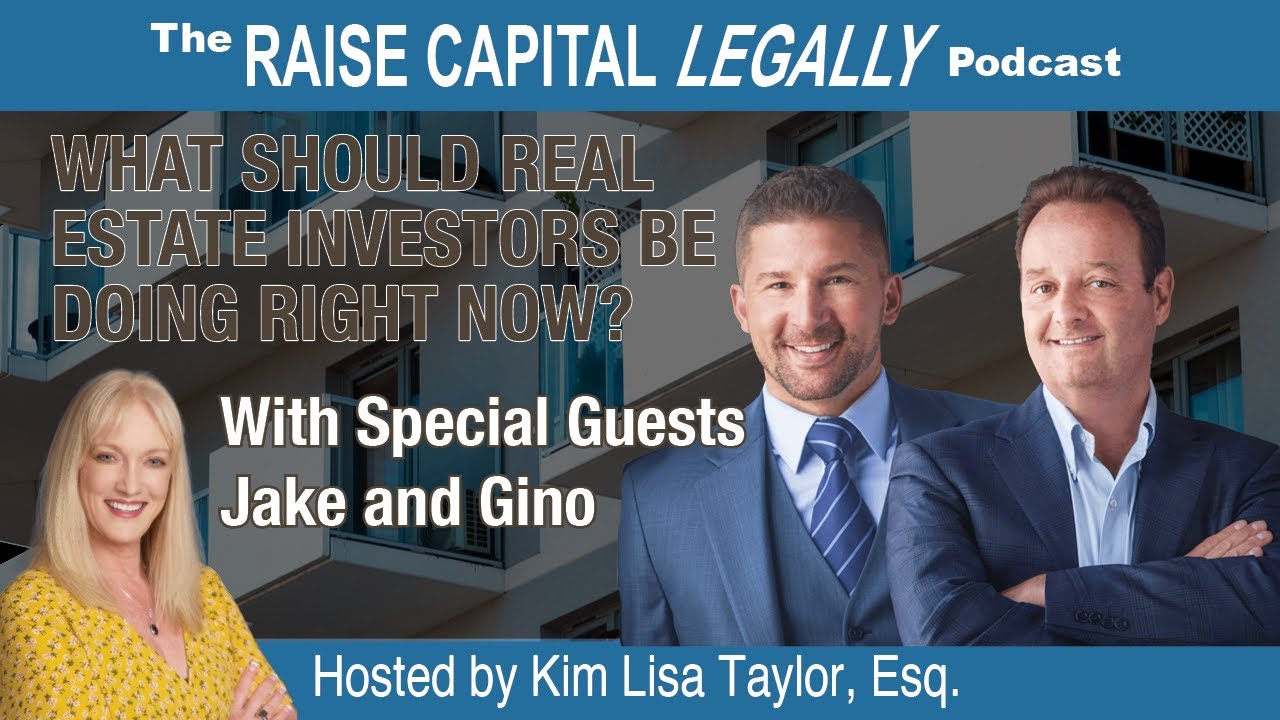
In this Syndication Attorneys monthly podcast, host attorney Kim Lisa Taylor (joined by co‑host Krisha Young) interviews seasoned multifamily syndicators Jake Stenziano and Gino Barbaro. The conversation weaves personal origin stories, market‑cycle analysis, financing trends, deal‑sourcing tactics, and operational best practices. The guests stress the importance of a clear buying framework, long‑term fixed‑rate financing, and disciplined capital‑call management. They discuss the current market environment—moderate price adjustments, looser loan terms, and opportunities arising from distressed owners—while warning against herd mentality and over‑leveraging. The panel also touches on rescue‑fund concepts, the role of AI in legal documents, the value of education and coaching programs, mindset and money‑psychology, and building a cohesive team. Practical advice includes how to structure LOIs, maintain investor relationships, and leverage events and branding. A significant portion addresses capital‑call challenges: the difficulty of raising new capital when existing deals face shortfalls, the importance of not abandoning multifamily during tougher periods, and the need for flexible legal provisions—such as voluntary capital calls, superior‑class equity, joint‑venture options, and self‑funding mechanisms—that allow syndicators to salvage deals without seeking unanimous investor consent. The episode ends with promotion of upcoming Multifamily Mastery events and a brief Q&A on capital‑call hurdles.
Chapters
Welcome to Syndication Attorneys free monthly podcast where we talk about topics of interest to real estate syndicators with the opportunity for live questions and answers at the end of the call. I am attorney Kim Lisa Taylor. I would also like to introduce Krisha Young, our co-host and our business development associate at syndicationattorneys.com. Before we get started, please note that all of our podcasts will be recorded and may be used for future promotion, posted on our website, or broadcast in a podcast available to the public. If you don't wish to have your voice recorded, don't raise your hand. Instead, either put your question in the Q&A box or schedule a one-on-one consultation. You can do that at our website at syndicationattorneys.com. The information discussed during this podcast is of a general educational nature and should not be construed as legal advice. And today our topic is what should real estate investors be doing right now with our esteemed guest, Jake Stenziano. Jake Stenziano.
Excuse me. In the pink.
During that. Yeah, in the pink. And Gino Barbero.
In the blue. In the blue shorts.
Yeah. Jake and Gino are great friends. You know, we've known them now for a long time. Gino actually lives in my hometown, St. Augustine. Today I'm actually in Coeur d'Alene, Idaho. So here for an event, kind of scoping out the place, seeing if we want to have an event up here. It's pretty cool. You guys should think about it. But anyway, let's get started.
What's the main reason we should visit Coeur d'Alene, Idaho?
It's just fantastic here. It's beautiful. There's huge lakes in northern Idaho. A lot of people don't realize that. So Lake Coeur d'Alene is about 30 miles long. I live about halfway down the lake. The town of Coeur d'Alene is right on the lake. So it's, it's just a really beautiful spot.
There's mountains all around, and So that's your country spot when you're not in St. Augustine?
Yeah, that's— this is our summer home.
Got it. Fancy, fancy, Kim Taylor.
I know. So, okay, well, great. So you guys got started in real estate a while back, you were doing other things before. What prompted you to get into real estate? How'd you— how'd you get here?
What say you, Gino?
Well, Kim called us esteemed. I'm still trying to figure out what the word esteemed means.
It's what you do with the broccoli. It's what you do with the broccoli, Gino.
I hope it's a compliment. So, um, no, but seriously, when we started, I had gotten into a deal in 2005 with a guy named Maserati Mike. And I wish I had read Kim's book, or Kim had a book out there on how to raise capital, because Maserati Mike, he created a syndication and he took Gino's money. And Gino didn't know what a syndication was. Gino didn't have a framework. Gino was like, I've got money here, Mike. You've got a cool car. Take my money. And a year later, Mike's got 2 Maseratis. I don't know if he's got 2. Maybe it's 3. And remember, we were talking about like the self-storage. If back then I had known self-storage with the climate control, maybe I'd— maybe I rented one out and put Mike's body in there. But we digress. I made a huge, huge mistake. I mean, it was a really big problem. I didn't know. I wasn't educated. And like I said, I'm gonna put the book up again. If you're thinking about syndicating, I know Jake doesn't like to read. Get it on Audible. It's an amazing book. I mean, like, your first book was great, but this thing dives into syndications, and I wish I had had it. And from that point on, I'm like, I don't want mobile home parks. That was a mobile home park deal. I had done a strip center. I want multifamily because I'm in the restaurant business. I'm working 50 hours a week. I don't want to have 17 single-family homes. I want to buy one deal, squat, then buy the next deal. I can do it part-time. I met Jake in 2009. He is the drug rep. I'm the pizza guy. He was selling pharmaceuticals. Ironically enough, he was selling vaccines and fish oil back then. And we meet in 2009. He moves to Knoxville in 2011. And I'm like, Jake, these deals look pretty good. Back then, the economy sucked. GDP was 1%. Rents were $300 for a 1-bedroom in Knoxville. It was completely different than now. We were in the buyer's market. There was no capital out there to raise deals. So I'm like, Jake, let's just look at deals down here. And it took us 18 months to find the first deal. And we bought our first deal in 2013. It was a 25-unit deal. We had some seller financing. And 3 months later, we got our second deal, which is a 36-unit. And then 6 months later, we bought our third deal, which is 136 units. And Jake and I, when we started, all we wanted to do is get 100 units. That's all we wanted. If we get 100 units, we are done. And that wasn't— that wasn't—
That was the pinnacle. If that ever happened, that was the pinnacle. And Kim, these are back in the days where pharmaceutical companies and the government were separate entities. So, you know, at the time, at the time, it was, it was weird because, you know, I was like, man, everybody, everybody hates me because I'm a drug rep, the pharmaceutical companies are looked down upon so bad as, as like these evil corporations. And then all of a sudden they merged with the government and now it's like one entity combined. So, I just wanna say this for the folks out there. It was a good thing like that back in the day. It's important to keep these companies in check. So, I digress on that. I just wanna get that out there.
Okay. All right. Well, so multifamily, you know, I, I think a lot of our clients choose multifamily because everybody can relate to it, right? We've all either lived in an apartment or we know somebody who lived in an apartment. Our kids are living in an apartment, you know. So I just think it's just, it's a no-brainer for investors.
That's why people start restaurants, right? We know food, we can start a restaurant, right? Is that that mentality we're thinking here?
Yes.
That's why Gino's here.
But what about now? I mean, you know, so there's a lot of people, you guys are training people how to buy multifamily. There's other people out there training people how to buy multifamily. Have you, we just like created this monster where there's so many people out there buying it that there's too much competition, there's no good deals left?
I think it's part of the market cycle. One of our educators, one of our coaches says he's seen it the last 20 years. When there's a lot of euphoria, people come in and they start teaching. There's a lot of cheap money. When the Fed holds rates at near zero, asset prices increase and there's euphoria. As interest rates rise, we're slowing the economy down, we're slowing the market down. They're just going to get weeded out. I mean, we've been doing this for 6 or 7 years. We created Wheelbarrow Profits, the framework. I mean, if you want to syndicate, you got to put both of these together. This is a marriage made in heaven here. Don't go and raise money unless you know the business. It's that simple. Whether you like our framework or somebody else's framework, I think that's what people need to understand. And I know, Kim, that the opportunity is now. I think in the next 18 to 24 months, there's going to be a huge surge of deals, huge surge of opportunity. Don't worry about interest rates. Interest rates are going to be where they are. You're buying this stuff on actuals right now. And if a seller has to sell, he will sell. But it's imperative that you start and you need to create those relationships. You need to create the team. You need to learn who who the brokers are. You need to focus on one market, understand that market, and from there, start applying the framework. What say you, Stenzi?
No, it's, it's a great point because Kim's identifying the herd mentality. It's the same thing with realtors. All of a sudden, the real estate market is super hot. All of a sudden, there's a, there's a record number of realtors out there. The minute something changes in the economy, they all fall back and try to find different jobs. So, you got to watch out from just moving with the crowd. You need to look at why you're doing a specific investment. And we've committed to multifamily for the long term. We believe in buying deals for the long term. That's our main slogan on our podcast. And we're squatting in a specific niche of multifamily investing. So I don't recommend people just going with the crowd and getting in. And that's what you saw from 2020, 2021, 2022. All of these people pushed in, not because Jake and Gino are good marketers, far from that, right? That's not the case. People saw cheap interest rates. They see all these other people, my neighbors going in buying apartments. I just got all the stimulus money back from the government. What do I do with it? I just bought enough plasma TVs or flat screens or LCDs or whatever the hell they're called now for my house. So I'm going to go buy some apartment crypto. Yeah. So it's, it's, you gotta, you gotta really take a step back and say, why would I be getting in this investment? What are my ultimate goals? And not just doing it because someone else is. And I think that's what you've seen. And it's funny because we're more active this year than we've been in the past 3 years because we're actually finding value in the deals. We're on our 3rd 100+ unit deal this year. We're actively going through it right now. Kim, I'm, I'm, you're on my shortlist to call. Okay. We just did the inspection. I'm, I'm going to be reaching out. to you here in a second. Well, I just did. Okay. So, I can check that off my list.
You're working on the documents already. I don't want somebody getting—
Kim does our syndication docs. But ultimately, it's the time now because we're finding distress where opportunities are now. And it may be physical distress in terms of the buildings we're not taking care of, but a lot of it's economic where you're getting these Mom-and-pop owners that didn't stay up with market rates, their expenses went up by 30%, but their rents stayed the same. So it's created opportunities where they're going, I don't know what to do right now. There's also a lot of folks that their debt is resetting. So all of these things are creating opportunities for long-term operators. So we're much more active in this type of environment than we were in the prior 3 years. Sure, we were doing 3, 4 deals a year, but they were smaller, they were scattered site. It was really hard to find really good opportunities. Now, I don't want to say the floodgates are opening, but we're way more active. It's way easier. I much prefer this market than what we've seen in the past 3 years. And everyone's going, what the hell are you talking about? Rates were so low, this, that, and the other thing. Yeah, but I was competing with people that had no idea what they were doing. They were underwriting deals for 20% rent growth in perpetuity. They were throwing stupid numbers out there just to get the deal. There was 20 people in line. It was nuts. So I much prefer this type of market than what we saw 2020 to 2022. I'm a happier man. My relationship at home is better with my wife. You know, and I look— he's smiling. He's got a little— the complexion has come back and it's beautiful. So, yes, we like this a lot more.
Yeah. Not that we want to get too personal on this.
Yeah. Yeah.
Obviously, I'm kidding, right? Yeah. Am I?
Am I? I don't know. You know, the slogan for the billboard for self-storage, which was a little bit off-color. So what kind of loan-to-value ratios and interest rates are you seeing right now for multifamily?
Depends. It depends on sort of what avenue you're going. So we refinanced actually 3 deals earlier this year, and I think we had a 5.30% rate. These are agency, these are Fannie deals, but we're 55% LTV. And people are saying, what the hell are you doing 55% LTV? Well, the refis, you know, we— and these were cash-out refis on top of it, probably the second or third time we've done it. And so did we like the rate? No. Would I have preferred something in the 4s? Yes. But the deal works really well still. Well, the 3 of them actually cash flow really well. So that's sort of what we're seeing. You're probably going to add 50 basis points onto that now, just due to where the 10-year has gone. So 50, 70, those might be around 6% now. And the deal we're going through right now, we were quoted at 6.7% rate, and it's a 25-year AM. This is through a credit union. And that is an 80% loan-to-cost.
So—
Oh, so that's, that's really good. And is that a fixed rate or is that going to adjust on you?
5.25%. So fixed for 5. And that's the other thing too. We've, we've never done bridge and we've always stayed away from it. And we believe in long-term fixed-rate financing, minimum of 5 years.
Okay.
And then ultimately that deal is going to go out to pasture. We're going to send it to Fannie or Freddie and we'll sit on it for 10 years. We don't have anything coming due, I think, till 2027. And what we try to do is stagger when these things are going to come due. So you're going to have a 10-year loan out to Fannie. It's going to come due a couple years on the next one. So we try our best to stagger them. It doesn't always work, but you don't want all your portfolio coming due at a certain time because you have to do it right now. Well, it's going to hurt a little bit. And that's the important loan-to-value. And I'm glad you brought that up because if you're able to renovate and you don't try to take all the cash out of these things and you're preparing for the long term, we're very happy with a 55% LTV on a refi right now. So, you know, I just— again, if someone's in there and they're not planning on holding their deals like we are and they want to sell, different conversations are had. But this is, this is how we're building for the future and ultimately trying to create a large portfolio to carry for the long term.
Kim, it's the, the framework is buy right, manage right, and finance right. And the reason why we didn't do those deals in 2021 and 2022, we knew rates were going to rise. It's not a matter of it's if, it's a matter of when. And when you're, you're quoting bridge at 3.5% and you've seen some really big syndicators out there, they're losing their deals because they thought, hey, rates are going to stay low and there's risk. So long-term—
What was the slogan, Gino? They can't raise rates. How many times do we hear it? They can't, they can't, they can't raise rates. Like, I want to sleep at night. I want long-term fixed-rate debt and not, you know, it's too much gambling there.
And then unfortunately, they did the opposite. They shocked the system by raising them so quickly in such a short amount of time that if they'd been doing it sooner before the November '22 election, maybe in April and May of that year, had done it to slow things down, a lot of these operators would have said, okay, rates, I'm not are underwriting for a 4% exit, maybe I'll underwrite for a 6%. Now, they're looking at 8% or 9%. That's why we didn't do a lot of those deals in 2021.
With 20% rent growth year over year.
And 2022. And I think the last thing I'd like to say about it is you can always buy real estate in any part of the market cycle. You can't always sell real estate. And right now, when we were buying in 2008 and 2009, it was a tough time to sell. You can always buy, but it was hard to sell. And I think that's where we're going to get to right now. If you're buying right now, in the next 12 to 24 months, there's an opportunity. But if you're underwater, you're going to say to yourself, wow, If I can hold on, let me weather the storm to get over to the other side. But I maybe have, you know, difficulty selling that. So always think about that.
There's some kind of slogan out there with like the more institutional guys. It's like, I feel like it's ride or die till 25, but it's not. It's basically some— there's something out there like everyone's saying hold on till 25. I forget what it is, but yeah. Mm-hmm. Yeah.
All right.
So, uh, stay alive till 25. Is that it?
Yeah, I think so.
Yeah. So you just gotta ride it out. So, so These people that are getting in trouble that got these bridge loans, is there a fix for that? Is there a way that they can be helped? You know, can— should we start a rescue fund?
He raised his hand.
Fine.
Go ahead.
I mean, the big thing is capital calls. Every time I've been to 2 events in the last year, everyone has these— are having capital calls and they're going to go back to their investors and the really good operators are going to say they're going to put out their story, which is accurate. We didn't foresee this. We didn't see insurance going up 100%. We've operated the property. We've come through with our rent growth, with our projections. But who thought property taxes were going to go up 30%? And who saw insurance go up 100%? You know, you're going to put your hand out and go, can I have another $30,000 or $40,000 on $100,000? That's one of the ways to do it. And if you're a limited partner in this deal and you have faith in this operator and they've gone through the cycle and you like the asset, well, it's— I think you're incumbent upon giving that operator more money. I think the other thing is there's going to be foreclosures. We've seen some big foreclosures. We're just going to get back the keys. And I think a lot of operators out there who were in the market are going to come in and buy it. still have in certain parts of these markets where the insurance is still going up, labor's still going up, property taxes are going up. So when you underwrite these deals, be conservative with that underwriting going forward. I think there's going to be a lot of capital calls in the next couple months.
Yeah. And the government's not going to care about a couple syndicators going under, right? This is not a big bank that they're going to look to bail out. So these guys are in trouble, and I don't think there's going to be some fund raised to bail them out. I think they're Their deals are going to go back, keys are going to go back to the bank. They're going to then sell them at a discount and someone's going to scoop them up. I think the key is to not— look, be okay not doing a deal. Don't force it. If you're so tight that taxes go up and insurance goes up and that's enough to knock and rates go up, which is a trifecta, look, it's a big deal. I'm not saying it's insignificant, but if you can't weather something like that, then should you be buying that deal? And I'm sure people are going to underwrite more conservatively, and it's going to take another 10 years before people get this frothy again and things run up, and we'll go through it again. 2040, we'll be sitting here. Kim will be saying, you guys foreseen this kind of thing? We're going to be here again. This is not the first or the last time. It's happened before.
So, yeah. Yeah. I hope I'm not sitting here in 2040.
I'm just saying.
I hope you are. You know, you're going to have 3 vacation homes by then. You'll be doing just fine.
I already have 3.
I don't know them.
I need to go to other countries or something. All right. So, are you seeing sellers adjusting pricing to accommodate any of this or not really?
It's an interesting question. So, it's definitely loosening up. Like the deal that we're doing right now, we're using a bank for the first time. It's actually a credit union that we haven't used in the past because they had really good terms. So, I asked for a 30/45. And that's a 30-day due diligence with a 45-day to close for the financing. And there was zero pushback. If you'd have gone back 6 to 8 months, I would've got 2 middle fingers and been told—
Laughed at you.
Yeah. So on the pricing, our market's still pretty hot. We're investing in Tennessee. We haven't seen a huge adjustment. I know it's happening in other places, but terms are definitely loosening up. People are being more reasonable. It's not take it or leave it. You know, fuck you. And that was the sentiment from the buy side, you know, for the last 2 years. It was like, dude, you're gonna do exactly what I tell you. Here's the deal, take it or leave it. There's no adjustment anywhere and anything. That, that was the feeling, you know, going back, uh, I would say last year.
But Jake, even to this deal we're doing, you talk about concessions, we wouldn't even have thought about asking the seller for concessions a year ago. You've been like, we'll take it.
Oh yeah, for sure.
So there's concessions, number one. And number two, I see deals that are coming out that actually have pretty good numbers, Jake, right?
I think the pricing out the gates makes more sense.
Yes.
That's what I saw. Like, okay, this is not my deal. It doesn't fit our buy rate criteria. It's a little bit older, but it actually works. Whereas a year ago, it would've been $20,000 or $30,000 per unit more. The rates would've been— the interest rates would've been a lot lower. So, it would've worked based on an interest rate perspective, but they're seeing that the DSCR doesn't work. So, they're like, we got to drop the price on this. So, we're seeing deals out the gate that do make sense, that you can actually make them work. Whereas 2 years ago, you're like, there is no way this deal is working. There's just no way in hell this thing is working. So I've seen that in the last few months also.
So what about rescue funds? I've been hearing a lot of people talking about rescue funds. And, you know, we've actually even had a lender suggest to, to someone we know that they bring in some preferred equity to put in whatever capital they need instead of doing the capital call, because usually capital calls are usually marginally successful, right? It's a sales job, right? You have to sell the investors on why to do it.
Yes.
Then some of them won't. We typically write voluntary capital call provisions into our documents because of that reason. We don't want to penalize the investors that can't. Then there's usually always 2 or 3 people that'll raise their hand and say, I'll do it, right? Because they're going to get a better return, they're going to get a preferred position, they're going to get something different than what everybody else gets. And so they're willing to take that on. So are you seeing Are you seeing any of that in the market where, you know, people are infusing some preferred equity into their deals?
Have you seen any of that, Jake? I, when I, when I go to these events, no one has mentioned that to me yet. I just think—
I'm sure it's happening. It wouldn't surprise me. It hasn't come up in any of the conversations I've had with folks recently.
Yeah, I haven't either.
Yeah. And it's kind of a short-term solution. So it is, it is an option. So if, if, you know, that is something that we can help with, especially on documents that we've written, but even documents that we haven't written, there may be a way to, you know, go to the investors and say, hey, you can either put up the money We can get it from these people. What do you, you know, what's your vote? Right? And then if it's, if it's that or lose the property, they might vote, go ahead, take it.
I think they need to work on the marketing though. It's got— it can't be called a rescue fund because it just sounds like the marketing there doesn't sound great. We got to call it something different. I don't know what that would be right now.
It's the next leg of growth opportunity.
I like that.
The leg fund. Leg up fund.
There we go.
Leg up fund. So Kim's got the Parachute save me fund. I like that. All right. So I talk to people all the time and they're like, hey, we've been looking at this deal for like 2 weeks and we're getting ready to put in an LOI. And I say to them, okay, you should have put that LOI in and like another 50 of them between now and when you're talking to me. What's your thoughts on that? Like how many LOIs should people be putting in every month? What's your thoughts on whether they should should put in LOIs that make sense versus what the seller wants.
I think the problem with the person you're talking to is they don't have a framework. They're not focused. They don't have clarity. When you do buy right, manage right, finance right, you know what your buy right criteria is. You know the market. You know the median income. You know the unit mix. You know the number of, uh, the number of units you're looking at. You know the submarket. So when a deal comes on your table, you're like, that's a deal. Mom-and-pop, 80 units, $85,000 a door, median income $50,000. I got the 2s and the 3s. Jake, let's rip it. You don't even waste your time. Whereas that person that you talk to is like, I'm not really sure. They don't know what a deal is to them. You have to understand what the deal is to you so you don't have to be ripping off 30 or 40 LOIs. When you see a deal, you know that deal fits it. You know it feels right. You— most people don't know what it feels right because they haven't really cleared that out. Jake and I were at a syndicator event over a year ago, and we're on stage and we're like, does anybody have a buy right criteria? Me and Jake, not one person. And these are all high-level people who are investing millions of dollars. If you don't know what your criteria is to buy an asset, you're buying anything. And when you buy anything, you're buying nothing. That's the real problem with things. So, don't go on quantity of LOIs. Put on the quality of the deals that you're looking at. So, when a deal comes across your desk and it doesn't fit your criteria, you're not spending 6 hours underwriting the deal. It's in part, it's got $23,000 median income. It's all one bedrooms or studios. Don't even waste your time underwriting it. I think becoming Becoming clear on what you want to buy and what fits your business plan will allow you to strike. And don't waste— if you're taking 2 weeks to write an LOI, someone's already written the LOI and that deal is going to go under contract before you even have an opportunity to become that asset. You're not even competing.
Yeah.
We've always said clarity will set you free as a multifamily entrepreneur. I see a deal probably within 5 minutes of looking at it, having some financials, I'll know if we're moving to an LOI. Maybe I like to get on site. And then between that period of time when we've locked it up, we're doing our inspection, we've done some further due diligence, that's when it'll get close and we'll say, okay, we found this wrong with it physically. It's a no-go. Or, hey, this didn't add up to what we believed. It really isn't that much on the front end. I think it's because you need to have that clear buying criteria. And that's a big component of what we do in our community is we ask people to set this up and we go through with certain You know, financial parameters. Okay. What market are you going to be in? What are you looking for out of that market? What are your end goals? And if you can document all this stuff, and as a deal comes through over time with experience, it's almost going to become intuitive because you know it so well. For folks that are just getting in though, this is one of the biggest things that they need to do is get clarity. Put those, put those numbers on paper, understand what it is exactly you're looking for, know your business plan. Because that's going to make the job a lot easier and a lot more fun, and you're going to be able to sift for gold quicker.
Okay?
You're going to take more in and you're going to be able to sift and get a lot of stuff off your plate.
Well, and so you guys, Gino's mentioned a couple of books. One's ours, one's yours. How can people get your book?
Man, you got to be rich. This is the one time where they're not cheap. You know, these books— no, I'm just kidding. Very easy. You know, Gino will probably give it to you, but they're all out there. You can go to jakeandgino.com. I'm sure we have links for them all there. Wheelbarrow Profits, The Honeybee. This is, this is something that is very attainable. I'm telling you, Gino, if you email him, gino@jakeandgino.com, you might get a free PDF copy.
He might get the PDF copy. Yes, maybe I will do that.
Maybe, maybe I will do that.
Well, and we've got 2 books. All right. So this is kind of our beginner's guide. This was the first book, How to Legally Raise Private Money. And then we got— okay, so if you look at the 2, you'll see the difference.
Real heavy, real heavy.
Academia in the house.
Yeah. I was actually kind of depressed when I finished writing this book. Like, it's like, what? It's only 168 pages? That's like my entire brain on paper. That's all I got, right? So, apparently, I got smarter with the second book because it's twice as thick.
That's the ego play, Kim.
Yeah.
No, it's great. I'm telling you honestly, I truly love the book. And like I said, I'm not joking. I think if you're going to go out and syndicate a deal, I think learn the business. I mean, you're taking somebody's money, understand what your business plan is. And as you're doing that, get on a call, even if you're not going to syndicate today, get on a call with Kim and spend the hour, hour and a half on structures. Spend the hour and a half on what your exit plan is, your exit strategies are, and the whole structuring of what your entities look like, because it's really, really important. You don't want to go through your first syndication and the timelines are so quick and not understanding timelines. In the book, it talks about timelines. Kim will help you with the timelines as well. And that's something in our very first syndication that we were really surprised at how quickly things move, how you need to get that webinar, how you need to have your operating agreement together, how you need to have those structures together. When it's go time and you send out that webinar, you have 48 hours. You want those people to start, you know, getting in money. You have soft commits and hard commits and closing the deal. It's all in the book on how to raise, how to raise capital. So guys, learn the business.
Going back to the LOIs too, You want to make offers that people can say yes to. Don't make these things contracts. Don't make them overly complicated. Really clean. You know, okay, this is the price. This is what we're talking about.
How long is an LOI?
Maybe a page and a half. Maybe get it down to a page if you can. What are the terms for the earnest money deposit? Okay. What's your timeline? Those are the— that's what I'm looking at. I want— when I see these things, give someone something they can say yes to. Get to the second level, which is going to be your attorney, their attorney going back and forth in the contract. Most groups have an established contract that they're going to use. So it's not going to be, you know, much variation from that unless you're dealing with some of these crazy yahoos out there. But it's all kind of, you know, there's certain parameters in the space that people generally agree upon. So give someone an offer on the front end that they can say yes to and then work to massaging the relationship to get to the finish line.
Well, and make sure you use a real estate attorney when you don't need it for your LOI, but you do need it for the purchase agreement because we got stung on property that we bought by, you know, me thinking, oh, you know, I'm smart, I'm an attorney, we can do this ourselves. And yeah, wrong, wrong answer, because we ended up in a situation where the seller actually enticed 16 of our tenants in a 27-unit apartment complex to move somewhere else and gave them an incentive to do so.
That's gangster.
Yeah, that was the government.
Oh yeah, you're dealing with some real thugs there, huh?
So, but the point being that had we had a real estate attorney helping us with this, we could have had a clause in there that said that, hey, if you do something to cause our tenants to move, then you're going to be responsible for 6 months' rent, you know, which would've allowed us the time to—
Yeah.
Project turned and recovered. And instead of it, you know, we had a lot of turns we weren't anticipating and it just took a long time to get it back in shape. So, you know, the broker's agreement is, you know, it protects one person and it's not the seller and it's not you as the buyer, it is the broker. And it's their right to—
Have your attorney look at the broker agreement too, if you're selling something, because they'll try to throw a couple zingers in there for themselves as well.
So yeah, so just make sure that you're using a real estate attorney. And by the way, we have brought a real estate attorney in on staff who does commercial real estate. So we're excited about that.
One-stop shopping.
Hey, you know, we do— we've got marketing materials, we've got education, we've got the documents, and, you know, we've got connections, right? We've got connections with the guys from New York. So anyway, um, all right, so I like the discussion about LOIs. I think that it's important that people understand, you know, what they're offering. And so how do they get that information? You guys have some educational programs. Let's talk a little bit about that.
Like, yeah, we have a huge documents library. I mean, ultimately, these are— we have a huge documents library of everything that we use. It's, you know, again, it's for informational purposes only, but it gives you an idea of what a lease looks like, what an LOI looks like, what a contract looks like. And then you can go and say, okay, I like this. And then get with a team member like yourself and have that produced for your team. And it's like going back to that clarity thing. You don't know what you don't know. I remember our 3rd deal, we were getting all these requests. It was a 136-unit. Up to that point, we did a 25 and we did a 36. And now it's starting to get a little bit real. Professionals are involved and they're asking for these different things and lease audits and You know, I don't know, SREOs and all this stuff. And I'm going, Gino, what the hell is all this stuff? And he had it from his prior mentorship that he was involved in. So Gino's ripping it out like this.
I got you, bro.
I got you. I'm like, oh my goodness, he's a genius. But you have this stuff in your back pocket when you're getting started.
It's huge.
So it makes a real big difference because look, there's certain terms, speaking the lingo that you're going to get into this. And it's like law, Kim. You get into it. There's a different lingo that people speak. There's a certain club that you get into once you learn it and then you're expected to know it. Otherwise, you're a weirdo. Same thing with commercial real estate. So we help folks out with that.
Well, and we can't have a discussion anymore without talking about AI. And, uh, so—
You're talking to the wrong guys.
Yeah, I know. You're really listening to this like, oh hey, why don't I just have, uh, ChatGPT write my purchase agreement? They know what they're doing. And so the, the, uh, kind of history is they get things about 75% right, but it's the 25% that's going And it's gonna go very wrong. And I saw a physical example of that. I was looking at somebody's ads, and I'm like, oh my God, these are so cool! Look, we should do something like that on our website. And my marketing director Cassia says, oh, that's all AI. And and I'm like, well, how do you know? And she goes, look at their hands. Okay, so this is an assignment for everybody. Look at the fingers on any AI person. They are wrong, and they are very very wrong. wrong, right?
I don't even know what you're saying right now.
So if you look at an AI-generated picture, okay, and it has a person in it, then their fingers are just like— sometimes there's 6 fingers, they're cut off at the— at the—
really?
Or I saw one the other day where these 2 fingers were like really long, and one was like going off in the other direction. So this has led me to—
Yeah, I'm telling you right now, this is not going to age well. In 10 years, you're gonna get canceled because you're discriminating against the AI bots. Okay, so I'm I'm forewarning you, I'm going to be your counsel here. Be careful because this stuff's probably recorded and they're going to come back to cancel you. So just be careful on what you're saying. 6-finger robot. Hey, we got to be accepting of that. Okay.
I actually have a theory. See, it's not artificial intelligence, it's alien intelligence. And they're all like, yeah, hey, why, why don't these people have 6 fingers, right? Like us.
But Kim, seriously, imagine what you can do with 6 fingers. Let me, let me ask you real quick though, seriously. Are people actually using AI to write contracts and to do PPMs and to do— are they doing that?
I believe that people are trying to do it. And so you have to be careful because it's partially right, but the part that's wrong could be very, very wrong. And that could be the part that ends up killing your deal or stinging you later on if the deal goes bad.
So Jake is a frugal guy and—
If $10,000 is going to make or break your deal, don't do it.
I mean, like, you know, if that's what you're worried about. Yeah. Don't even go down that route with legal. And with accounting, those are 2 places you really don't want to be cheap. I'm just saying. Well, how do we know that? We've made those mistakes. Not with the contractors.
I was an attorney back in the day, and I'll tell a little story. So, when we first started, I was doing our evictions on our first 25-unit. And then Judge Brewer, you know, I don't know, I was like 3-0, and I was going for my 4th one. I was feeling really good about myself, and I wore a suit every time. So, I was looking the part. And then he said, son, are you an attorney? Like, I've seen you here a couple times. And I was I was like, no, sir. And, uh, so then that got a little weird. He let it through, okay? He let that last eviction go through, but I corrected at that point. So, you know, came through unscathed, 4-0, feeling good about it. But you got to be careful out there because not everyone's a Judge Brewer, okay?
So, yeah, well, you do have to be careful. I think that AI has a place. Like, you know, if you want to write an article on something, go ahead and, you know, get an AI article done, but don't use that. First of all, you don't know where that came from. You don't want to be of plagiarism, but you can use it for ideas on what you want to write and then write for yourself, you know.
So, Kim, if I'm understanding you correctly, like screenwriters, writers, we're okay to take them out of business, but don't touch our attorneys yet with the AI, okay? They are the ones that we got to look out for. I'm with you. I'm with you. I got it.
He actually is the Hollywood— get rid of Hollywood, right?
Yes.
No, no, no, no, I'm not saying that. I'm gonna be canceled if I say that. No, no, no, don't want to. And I'm sure there's, uh, you know, there's a fair amount of, uh, Hollywood people that are, that are doing deals like The ones that are—
well, I heard a quick clip on it, and that was their big thing. They're trying to block AI from taking their jobs. That was like a huge thing that they're negotiating for.
So they can write a better script than what they're writing right now. They're writing crap right now. So I'm sure—
come up with something new. All right, we don't, you know, we don't need Lion King 14. All right, do something new, and then we'll come back and talk to you.
All right. All right. So what do you, what do you recommend? I know I have a recommendation on what kind of things things that our clients should be doing every week to be able to further their syndication business. My recommendation is at least one thing every week to find deals, at least one everything, one thing every week to find investors. And what's your rule of thumb on that?
I don't know that we have a rule of thumb. I think going back to Gino's point earlier is make damn sure you have your buying criteria done because you're going to know what you're looking And if you're out there just looking at it, I'm looking at deals. Well, what's the deal? That right there is your problem, probably. So once you understand what you're looking for, what your criteria is, what an actual deal is to you, look, we like 2-bedroom townhomes with washer dryer hookups that are built after 1980. This type of stuff in a certain area with a certain median income, with a certain level of crime, hopefully none, right? But that's the type of stuff. If you're clear on that, you're going to be much more successful. And to your point, from that stage on, you're going to be hunting. You're going to be out there working with brokers. Maybe you have a direct-to-seller program going on where you have folks on your team reaching out to sellers, seeing if they want to sell directly to you. But it's those types of activities that you attempt to systematize. And if it's doing one broker meeting a week, or I'm going to be on site for at least one evaluation, those types of things are going to move the needle. Those actions will result at some point into your career growing. But it's— look, it took us 2 years to get our first deal. This is not like immediate gratification, and this is not retail shopping. You're not going into Walmart, picking up a pair of socks, and going to the register and buying them. There is a lot of work on the front end that has to be done before you can close one of these transactions.
And what I would say is something a little different. I would work more on the personal development side, and I'd recommend 2 books to everybody. The first one would be The Psychology of Money. And I don't think people understand their relationship with money. I mean, we had Alex Hormozi on the podcast about a year ago, and he was talking about how he needs to be busy and how he needs to be active and how multifamily's boring. That was his psychology of money. So to him, multifamily may not even be the right avenue for him to go. Understanding your relationship with money, is it holding you back? Are you having blocks with money? I see a lot of people who are so smart and so successful, yet their relationship with money is pretty toxic. And if you're repelling money, you're not going to be a really good investor. You need to understand what that relationship is. Go back into whatever happened in your childhood. Do some work on yourself personally because it took me a long time. I mean, figure in 2008—
Tell the story about Phil's soccer player that he had.
Oh, well, yeah. So, going back into your side on psychology, we're working with a gentleman named Phil McKernan. I think he's one of the best coaches in the world. He's a clarity coach. And on our podcast, I went out to Ireland back in May for 4 days with the Jake and Gino community.
We went with 10 couples.
We had a couples coaching.
retreat.
And in one of the stories, he basically was talking to a high-level soccer player, and this soccer player was stuck.
Professional, like really professional.
Like the European leagues. And this gentleman couldn't progress, and Philip started diving into it. And at one point, he asked the guy the question, when you go home, where do you park your car? And to give some backstory, his brother was older than him, was a much better soccer player, but He quit and he went to go work as a mechanic and he helped the younger brother, this guy, to really propel his career. So subconsciously, he felt really bad about that. So every time he tried to do something, he would self-sabotage himself. So Phil's like, where do you park your car? He says, I park my car around the corner. I don't want everyone to see how successful I've become. Although his brother was probably really proud of him. And once he became clear about that block, it's like, it's okay. You know, your brother did this for you. And he understood that he was holding himself back. That release is like, wow. Now I have the clarity.
Yeah.
His brother's like a factory worker who was a better soccer player. So like, that's a lot of guilt that he was carrying for a long time.
Yes. And for me, Kim, early on, I was a really big saver, great at saving money, but I didn't know what— didn't want to leave that money. I didn't want that money to leave my bank account. Once I met Jake, I understood, wow, saving money is great, but saving it to buy an asset to pay for an event is even better. So I had to rewire my psychology because my mom was always telling me, You've got a restaurant, stay small, don't take risk. And when you hear that over and over and over again, it becomes part of your DNA. And you're like, I can't buy a 25-unit. My mom didn't know I was in partnership with Jake until I had 200 units. And I sat down with her at my restaurant. I said, Mom, I'm leaving the restaurant in 6 months. And she's like, how? I'm like, I— she goes, I didn't want to tell her because it was always a negativity and a negativity. And she didn't mean to be negative. She was just trying to protect me. So, for those of you out there, start understanding your relationship with your money and those blocks that are holding you you from taking that next step further. And the next book that I'd recommend is Small Giants. Jake and I don't— next— don't need to be the next private equity. We don't need to own 5,000 or 6,000 or 10,000 units. We're comfortable with our strategy. Understand what makes you comfortable with your strategy. We want to be a vertically integrated real estate company that can buy 300 to 500 units a year, that can manage that, and we work on profit per unit. That's what we're trying to strive. That's what we're trying to achieve. And we don't need to be the the next Facebook of real estate. Understand what you're trying to accomplish.
Right, right. That's, that's really great advice. And yeah, kind of hit home for me in a couple of places, so I'll definitely check out those books. So the 2 of them again were Psychology of Money. What was the other one?
And Small Giants by Bo Burlingham. We interviewed him on the Jake and Gino Show. I would, I would listen to that podcast because him and Paul Spiegelman started that Small Giants, and they're small little companies that have core values, that live by, you know, taking care of their employees, have really built great, great company culture. They don't need to expand and grow at 50% of the year. They're really worried about serving their employees and serving their customers. And that's what Jake and I have tried to adopt.
Well, let's talk about that, Gino. So, we do syndications with Kim, but they're not your traditional type syndication. We do syndications that are only for our team members, our employees, as many people refer to them as. And ultimately, what that is, is we'll open up a deal and Gino and I, look, we plan to just go and buy the deal, but then we open up spots for our team members to invest dollar for dollar with no fees, no acquisition fee, no asset management, because we want to see their wealth grow. We don't believe in 401. We don't have a 401. So that's actually how our syndications, you know, syndications are structured, not your typical. And Kim set that up for us and we kind of have this, you know, rinse and repeat program that we do. And we're going to be doing another one here in a couple of weeks.
So. That's amazing. All right. So anybody who's on the call right now, this is an amazing opportunity to ask Jake and Gino or me or Krisha any questions that you want. Krisha, by the way—
I have the answer.
Yes.
Okay. October 14th and 15th, Multifamily Mastery 6. It's the financial vacation for smart people. It's a multifamily event of the year. Me and the G-Dad, Phil McKernan's going to be there, actually, the gentleman he just mentioned. We got some great folks. We got Brad Lee's going to be there, Chris Voss, the big daddy. And then, hey, don't forget Kim. 15 Vacation Homes Taylor is going to be there as well, showing you how to get to those 15 vacation homes.
So, Yeah, that's the problem is like everywhere I go, it's like, oh, I want to buy something here. You know?
Well, I get it. Like, you know, Airbnb is great, but who slept in that bed before me? Yeah, I get a little weird with it too, Kim.
I get it.
I get it.
Oh, well, you know, I just look at it as other people are paying off my houses when I'm not there.
Oh, so you're Airbnb-ing them when you're not there?
Yeah. So that's what I do. So I just walk when I want to be there.
I got it. I got a condo downtown here. I'm the only one that sleeps there.
Every time we go up to the new front door, he thinks it's his new house, right? Is this our house too? All right, so we got this event coming up. How can people get tickets for that? You guys have a website for it?
Or just go to jakeandgino.com/mm6 and the concert. So we were a little stingy last year. And we didn't feel good about it. So we had Vanilla Ice there. And we had a concert Saturday night, but it was only for the community. And then Gino opened up, he should have closed, but Gino opened, we were trying to be nice to the Iceman. He was our guest. But this year we have DJ Panda getting the unts unts in the main stage. Okay, it's gonna be electro EDM fantasy world. Okay, Gino's gonna be doing a little riff with him with the, with the opera. What do we, what are we calling this? Gino?
Tenors and Turntables.
That's what we're calling it. Tenors and Turntables. So if, you know, look, you want some entertainment and you want the best multifamily, you know, coaching that's out there, Buy Right, Manage Right, Finance Right. That's all we gotta say about that.
Well, and those are separate events that you guys also have throughout the year, right? Your Buy Right, Finance Right?
So yes, for our student community, for our members, we actually have a Buy Right— we have multiple Buy Right, Manage Right, Finance Right events throughout the year. They're just fulfillment events. That's, that's all that's going on.
Yeah. Yeah. But that's where you can kind of take that deep dive and really get deep into these.
Yeah, we're on site at our properties, you know, we're in the classroom teaching, So, yeah.
Yeah. You know what? Education is key. All of our clients that have gone on and done big things have gone on and done a ton of syndicates or gone bigger. And the things that they buy have all started in a coaching program for their first, you know, 2, 3, 4 deals, and then they don't need it anymore.
Well, it doesn't stop there, though. We've done, we've done systems scale coaching. We've, you know, done stuff with Chris Voss, who's going to be their FBI negotiator. So you're always, you know, attempting to, you know, get better and find out where you're lacking and improve your team and your organization. So, it doesn't stop, gang. Once you get your multifamily systems done, it's going to just continue to grow from there.
So—
Excellent.
All right. Well, that all sounds really great. Let's see. I think we have a shy audience today. Can—
It's the pink shirt. I'm going Barbie on them. They don't know what to think. I haven't seen it. I'm just saying. So, I can't answer any questions about that.
Anything you'd like to add that we haven't covered yet?
I just think there's a lot of opportunities out there right now. I think that it's important to get the foundation, understand your criteria, and just look, that first deal might take you a little while. It might take you a year, it might take you 2 years if you're starting out, but feeling really good about it. Don't force something that doesn't feel right. Listen to your gut and wait for your pitch. How's that? Is that a good— do I sound like a football coach or something?
And the thing I would say is that The clients of ours that have done really, really well have really taken the time to set up a database of pre-vetted investors, people that developed relationships with. That database has grown over time. I've seen clients that started out buying $3 to $5 million deals, 6 years later buying $30 to $50 million deals and raising $10 million in a week. And they've done it by creating a database of ready, willing, and able investors that are just excited for their next Yeah. So, that really needs to be your goal is to really create that solid database, create that network of prospective investors, have conversations with them, develop relationships, and go from there.
And don't force it because we look at every deal as if we're raising a child. And if you bring a bad child into your family, it's going to make your life hell. And you're going to always be stuck, you know, trying to fix that bad child. There's going to be a bandwidth suck, and it's going to really take a lot away from your business. You don't want 90% of your asset management time being spent on one property. So don't force it. Make sure it fits into what you're trying to do. And ultimately, because look, we've been there. We've had deals that we haven't liked that were a little lower on the median income. Thank God we were able to get out of them while the market was rising and it kind of saved our butts. But they were a suck. They were a drag. It was not So, you know, make sure you feel good about the asset, make sure you have the parameters so you're not buying something that may be below the median income that, you know, you can perform at a high level with, you know, things like that.
Kim, the last thing I'd say is multifamily's a team sport, and I want everyone to look at investing in multifamily as a business. It's really creating systems. We say we create multifamily entrepreneurs, but that's really important. You're not just buying an asset, right? You're buying a little cash machine, and if you treat it as a business, it's going to pay you For forever, for as long as you own the asset. Understanding that concept that it's a team sport and that syndication, I think myself personally, is a business within a business because you have the asset itself and then you have your syndication business where you have your investors here and you need to take care of your investors, but you also need to take care of the deal. So you have an asset management company and then you have the third-party property manager. So delineate between the two. And you're saying to yourself, well, how do I do this all by myself? You may be able to in the first or second or third But then as that— as you start growing, you may have to actually get more team members. So, think of it as a team sport. And as you are building an amazing scalable business with huge tax benefits, a great way to build wealth, understand that you're buying a business when you're buying multifamily. You're not just buying a few buildings.
Well, and when you're interviewing your prospective partners or staff or whoever you're going to have help you do this business, think of it as you are hiring people to fulfill roles within your business, right? Loan guarantors, you need people that love talking to people. Those are going to be your investor relations. You need people who are the detail-oriented people that are going to oversee property managers. You need somebody who's got kind of the numbers that's going to be analyzing deals, maybe looking at your— working with the CPA and the bookkeeper. So you've got to fulfill all these roles. And sure, in the beginning, one person may be wearing multiple hats, but as your business grows, you're going to actually hire people to fill those roles. So think about that. You don't only need passive investors when you're meeting people. You need to look for other people that can help you in other ways. And you were talking about euphoria earlier. I'm actually at an event right now, and I have this thing, I always call it guru euphoria, right? Where you go to an event, you learn something, and you get like, all this, you know, good feeling about being with all these people. And then I get people that come away from these going, oh my God, I met the most amazing people. I sat with them for 3 days and, you know, all 12 of us are gonna create this syndicate. And, uh, you know, they're delegating roles and they're coming up with their brand and they're, you know, and then they come and talk to me and I'm like, okay, first of all, like 8 of you have to go, right?
She's cutting heads, Jake.
This is actually 3 teams. This is gonna be 3 teams, not Not one.
Exactly. And it's like, and you can't know what people are going to produce, right? You get too many people in your management team, you know, some people do all the work, some people do none of the work, you know, some people just aren't compatible because they, you know, they can't get along. You know, my opinion, 5 is the magic number that you don't want to exceed for management. 3 is even better, 2 or 3, you know, so So just be aware of that. Don't, don't get too much guru euphoria and try to create these big groups and set up all your systems before you start doing deals. It just becomes a way to procrastinate. So you've got to just go out and start making the offers, doing the deals. You're not comfortable making offers, you need to get some education on what offers you should be making. I think that's the point that was made here today, and I think it's a great one. Krisha has a really great coaching background. Kristin, is there anything you want to add based on the things you heard here today?
Well, we do have a question too, so we'll get to that in a second. I just, I love any kind of topic around mindset. And I love that you brought up our relationship with money because it's a sneaky saboteur that can really hold us back when it comes to doing bigger deals or even going out there and having conversations with investors. Like all that procrastination, like there's all these little sneaky little things in our subconscious that come from our past or whatever, that if we're not investigating them, you know, it can really hamper us. And so I love that you brought that up. Because it's like, okay, if you're, if you're not progressing, then, and you're doing all the tactical, practical, strategic things, then there's some sort of mindset, there's some sort of subconscious thing holding you back and engaging in a really good coaching who can move you through that material fast is like— because once it's done, you're a rocket ship until you hit your next level. And then you got to go through it again. Yeah, so I love those suggestions.
So I'm glad that you were able to input on that. And Jake and Gina are already looking at Krisha like, hey, why don't we have Krisha speak at our next event? We don't need you anymore. No.
No.
So Jake also mentioned—
It looks like in the chat here it's only going to the panelists, so it's only going to us. So we're just talking to each other here. But Jake mentioned, make sure your partners have values alignment, and I think that's really important too. Values— know your own values. It's huge. You've got to know what your own values are, and most people don't, or they think they know what their values are, but then it's like living your values, and that becomes such a beautiful guidepost for you as an individual. But then knowing your company's values and then having that alignment in there is so important because when things start to go sideways, it's like, wait, wait, wait, wait, what do we believe in here? What are we doing? What's our mission? What's our why? What are our values? Um, so I love that.
I love responsiveness is one for me. Like if we're, if we're enter, you know, going to be doing a new partnership or something like that and there's someone new that's involved and there's any lack of responsiveness early on, that's a kind of a red flag for me. Like get the hell out of this, we ain't doing this, you know, because it's just like there's too much going on. We can't be waiting on folks. So that's one for me that I'll turn away from pretty quickly.
Yeah. Right.
To our question.
And yeah, so Taryn Ramundal, sorry if I said that wrong. With all the capital calls, will it be harder to raise money from investors going forward? And how do we get over this hurdle?
That's a great question. It depends upon the individual syndicators. If they're brand new and it's their first or second deal, I don't think they're going to be raising capital until they get that ship righted. I think syndicators who've been in the space for 20, 30 years, or even 10 years and have done full-cycle deals and have that track record, I know a couple of them that are having capital calls that are closing the next deal. So it really depends upon where you are. I mean, do you have the experience? Me personally, if I'm going through a capital call, I am not looking at another deal. I need to fix on what's on my plate. I want to make sure that this deal that I'm messing up on, I don't want to take anyone else's money. There's obviously people out there that are doing that. I don't know how they can do that with, with what's going on with their original deals, but I think that's what Jake was talking about. There's not as many people at the table right now because for them to raise that capital, they're having problems with their original deals. They can't go back to their investors and ask for money on another deal if those deals aren't performing. And we're going to see more of that go on. And all that happens is there's gonna be less demand for the assets that are going out there because there's gonna be less capital that's going to be Oh, go ahead.
Sorry, I was just gonna say, not to get too aggressive, but it sounds like you're trying to talk yourself out of multifamily. And not to be— again, not to be overly aggressive, it sounds like one of these questions where it's like, is it going to be harder? Yeah, yeah, yeah, guys, it's gonna be harder. Like, if people are failing around and you want to raise money from those same people, they're going to look at you harder. Do you have an amazing deal? Can you provide real value? What is your structure like? Are you systematized? Are you bringing professionalism to Yes. Don't look to talk yourself out of this. Look for an asset that you want to be a part of for a long period of time. That's how I do this stuff. And then I figure out how to systematize it and grow it. If you're looking to, oh my God, is this going to be harder? Well, yeah, guess what? When things are harder and then you figure it out, less people are going to be at the table trying to do what you're doing, and you're going to have more value. You're going to create more value. It's the people in this business that can solve problems that do really well. Just, just saying. So, it depends how hard you want to work at it. Do you want to be in multifamily? Do you believe it's a vehicle that's going to, you know, take care of you and your family for the long term? It may be yes, it may be no. Either answer is okay, but don't sit there and, and, and look for ways to talk yourself out of it. Yes, it will be harder. Are you okay with the challenge? That should be the question. Are you okay working harder?
And I would say use the right attorney because we have provisions in our docs that allow our clients to do what they need to do to salvage a deal. And so, Funds voluntary capital call. If that doesn't work, then, you know, you can bring in a superior class if you need to. You can joint venture with somebody. You can do whatever you need to do. You can loan your own money. You can do what you need to do. And, you know, I don't know what other people have in their docs that they draft, but we've crafted these provisions based on the real experiences of our clients because we want to have the major flexibility that they need to be able to do what they have to do without going out and getting permission from every single investor. Or have their hands tied because, you know, they now have to start penalizing people. And, you know, the people that can't, can't put more money in or just don't want to. So with that, we do have to wrap up today. So love to have you— having you guys here. Krisha, thanks so much for joining us. Glad you were able to be part of the call. You guys all need to think about going to the Multifamily Mastery event. It's, it's epic. It's great. It's at a fantastic hotel. Jake and Gino, of course, are the real thing. They're genuine.
And throw us a high five in the lazy river at the top of the water slide.
So, and I'll look—
Gaylord Palms.
It's great there. All right. Thanks so much.
Thanks.
Thanks, everybody.
Bye.
Bye.










