Controlling your narrative: Content marketing for startups, angels and VC's
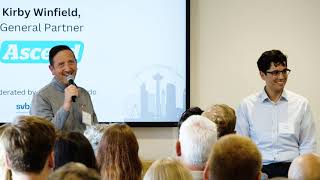
Kirby Winfield from Ascend Venture Capital and John Sechrest discuss how startups and investors use narrative and social media to attract founders, LPs, and customers. Pick two channels that match your audience, post frequently in small doses rather than waiting for perfection, and watch SEC rules around general solicitation when fundraising.
Chapters
Well, so part of our goal with doing this is to help startups make progress and to help investors help startups make progress. And I'm a big believer in the lean startup methodology, which the fundamental principle of lean startup methodology is customer development happens before product development, which means to me that the narrative about the problem when you're doing customer problem fit happens before the product. And yet 99% of the companies that we talk to say that they did customer development. And what they mean is they talk to their uncle. And so what we would like to do as investors and what we ought to be doing as startups is to have conversations and narratives in the public sphere that are useful to engaging people and attracting the people that care and telling the people that don't care what you're doing enough so that they go away. And one of the people that I have seen do that very well is Kirby Winfield, who runs Ascend Venture Capital. And so Ascend Ventures is a Seattle company, and we'll give him a chance to do introductions in the Seattle market. We have nine angel groups, and I think there's something like six micro VC groups, one of which is Ascend Venture. And so we have a lot of activity. We do not have a dozen folks doing a good job of telling their story on social media about their angel investing or micro VC investing in town. Only a few are succeeding. And I would say Kirby is one of those that succeeded, succeeding in a big way with that. And so, Kirby, if you could introduce yourself a little bit and then just go right into what you want to talk about.
Yeah, sure. Thanks for having me. It's always good to see you and pleased to meet everyone here. Yeah. I'll do a quick snapshot of sort of my background and talk a little bit about the, the, the VC firm that I've built, and maybe we can segue into a little back and forth after that. John. But yeah, I, born and raised in Seattle, went back east for college, and then in 1996, after I graduated, a friend of mine said, hey, do you want to help me? We're doing an Internet startup. Do you want to come back and help? And I said, sure, because it was cheaper to sleep on my mom's couch than it was to stay in Manhattan, and ended up running marketing for this, for this startup that we took public called Gotonet. And it's actually kind of on topic. I was an English major, creative writing minor, and basically I think I got the job because I had written copy for the founder over the summer, a couple summers Pretty prior. And he remembered that and he thought, he thought I was a journalism major. And I didn't tell him I wasn't because he needed, initially he needed someone to come out and be an editor. And there were like eight of us at the startup, but it was very early user generated content, so we had people submitting a lot of content and it had to be pulled together. And then the marketing guy took off like a month later and they said, hey, why don't you run marketing? And it was just because I could write, I think. And so that kind of launched my career in startups. The same team got together in 2003 and founded Marchex, which we took public in 2004. At that company. I ran marketing initially, but moved over to a GM role and built a $50 million business on the domain platform that we had. And then I left that company in 08, took over a venture backed startup that raised $18 million for an ad network that turned out to really stink. And so we pivoted into a SaaS analytics platform. I had to recapitalize the company, lay a bunch of people off. That was where I got my first taste of venture capital. So surprisingly, I'm doing it now on the other side of the table. But maybe I thought I could do it differently than the experience that I had. Although I got to say it, my experience with my investors was great. But I had to shop the deal on Sandhill Road for this is before Zoom for four or five months before getting a couple of firms to the finish line and ended up not getting it done and recapping it with existing investors. And we sold that company to comScore, which was a large digital measurement company, publicly traded. And I ran corporate development for comScore for a year and a half, then did one more startup. We raised $2 million from Maveron and version one for a travel app that we sold to HomeAway a year later. And we sold it because we couldn't get our Series A. And fortunately we developed relationships with buyers prior to that. And one of those came through. So sort of for 20 years of startups, you know, four, four outcomes out of four tries. But the last two, the ones I actually ran, were much less good than the ones that I kind of just picked the right team to bet my career on. And so I figured maybe picking teams to bet my career on was what I was good at. And at the same time I had, you know, like a ton of experience doing sales, marketing, bd, you know, good things, bad things, lots of Mistakes. And I didn't see a lot of investors in the market here that had done those things. And so I thought maybe I could be a different kind of investor in this market and did some angel investing full time for three years off my own balance sheet and then had some LP interest and so raised the first fund in 2019. That was a $15 million fund. And now, I guess this is a public forum, so I won't talk about Fund 2, except for Fund 2 is being deployed. And, you know, I guess if there's a. If there's a segue here to narrative or, you know, what I've learned or, I don't know. I don't know. I think what I think. Well, it's interesting. So I just kind of told my story, right? And, yeah, I hope I didn't blow through it or sound like it was wrote or memorized or anything. I've just told it so many times. And at the same time, I think I try to make little tweaks or adjustments to the situation for the audience. And so I think one thing that I was not great at as an entrepreneur was, was simply spending the time telling my story to enough people and seeing how they reacted to the story and understanding how to sculpt and pace the story in such a way that I could really communicate, I could really land an impression. And I think that something I've learned over time is when you're selling or you're trying to, you know, get raise money or whatever you're doing, you go at it. You know, if you're. If you're not natural at it, which I'm not, then you kind of go at it from a standpoint of, well, this is what I want to get out of this. And you're transactional. So you say, well, I want to get something out of this, so I'm going to tell them. And I think that if I just tell them enough stuff, you know, they'll. They'll get it and, you know, it's like. It's like the. It's like the menu at the Cheesecake Factory. Like, you know, they'll like something and they'll order. They'll order it and I'll get the money. I don't know. Bad analogy.
But more. More and more details on the thing that you're caring about, not anything about what they're caring about. Is that what I'm hearing you say?
That's right. And to what end and to what point? And I think the thing that. That I've kind of Learned is you just. You're lucky if someone remembers who you are after a pitch meeting, let alone what you do, what your company does. And if they remember something, it will be. It'll be a sentence, you know, and so I. You kind of. You can't if that.
Little tiny bits. Yeah, little word sound bites. Now I want to dive into the volume thing you said because Craig triggered my volume thing. We're going to talk to 100 customers over the next few months. And I was just talking. We have a workshop coming up next week on sales, and I think it might be worthwhile. But one of the problems I've always had with the startups, not only the ones that I've done, but the ones that I have negotiated with as we invest, is that they don't have enough volume at the front end of the system to get anything out the back end of the system. And so 100 in a couple months is not nearly enough volume to get the drop of water to come out of the pipe in some way. Right. And so when you say do enough volume on your social media, what is it that you mean?
Yeah, so I guess so let's. So we'll kind of. That will shift to social media, I guess, specifically, or, you know. Well, first, let me. Let me, Let me kind of redirect. So volume. Okay, first. First, let's figure out, like, what it. What is it that you people would typically call an elevator pitch? Right. And for me, my elevator pitch is like my personal career story because that lends itself to why I'm differentiated and unique as an investor. Right. Which is the. Which is the point that I want to land to anyone I'm talking to. Why am I special? Why is what I do as an investor totally unique? Right. And so for me, that's kind of telling me, Telling the career story. Right, but whatever your. Whatever. The point is that you're trying to land. You just need to. You need to feel. You need to feel it out, I guess, initially. Sorry, I'm. For someone supposed to talk about narrative, I'm losing the train of thought. Let me double back. So how do you get reps? Because if you're telling your story, it will get better over time if you get reps. And typically what people do if they're raising money is they'll go talk to a bunch of friendlies and pitch them the deck. But I think ahead of that, you're telling your. I mean, you're getting reps all the time, you're just maybe not aware of it. So you're telling your family and your friends and your employees and your colleagues and you know, whomever else you're talking to. You're, if someone asks you how are things going? Like that's an opportunity to tell your story, right? To tell your story. And so, yeah, I think discovering sort of the natural opportunities to communicate is helpful. But yeah, I guess that's, I'm not sure that's a.
Sorry, sorry that I derailed you. But so you were basically talking about, you need to talk about the reason that the other person is going to get benefit and to create value for the other people and to do those things of value, but to keep it framed around the thing that is the point you want them to remember about you.
That's. Yeah, that's right. In the circumstances of a pitch or in the circumstance of, you know, that particular frame framework where you want to land one point, you want to leave them with a takeaway. Like they need to know why you know, why you matter. Why does it matter? Why does it matter? Why do you matter like to them? Right. And that's a sort of particular type of narrative goal. But then I think, John, you said, you said something to me recently around just the, just the broader sort of opportunity that social media provides at the top of that narrative funnel. So I would say before, before someone gets to meet you, you know, how are you perceived and how is your opportunity perceived? And you know, social media is an incredible tool for that. And I think it's a tool, It's a tool, it's a two way tool. So one is you certainly put your, yourself out there in the world in a way that people can hopefully relate to or at least understand something more about why you do what you do and how it's, how it's unique and who you are authentically. But on the flip side, the more that you do, the more you engage on social media, if you do it honestly and authentically, you'll kind of discover that's how you learn to tell your story. Like you'll discover more about who you are by participating and engaging and whether it's LinkedIn and we can talk about the difference between LinkedIn and Twitter and other. But for me it's heavy. Twitter and LinkedIn you actually can sort of float outside of yourself a little bit and watch how you develop and see what, what, what things about you. Forget the narrative for a minute, but just what things about you, what characteristics and interests and sort of what do people respond to?
Because it is in fact social.
That's right. And so it's not to say that then you cynically try to double down on those things. But most of us are wired in such a way that we kind of go, okay, well, if I'm getting good feedback, I'm getting some pull from particular direction. I'll probably lean more into that.
And.
And I guess the best to me, but okay, so let's, let's. Can we. Can I go back to where you are? So Twitter versus LinkedIn? So I'm all over the place. So just, you know, bear with me. It's. The narrative structure is.
Well, let me stick some things in this crack and then we'll reset. I'll give you a moment to think. So there are two things that people are selling, right? You're selling your business when you're raising money, and so we keep falling into the pitch conversation, but you're also selling your product, which is building a community, Right? And so you're doing two completely separate sales funnels, but the words in them overlap a lot, and the process by which you do that matters. So if I'm doing something that is. Let me get this so that it's on top. If, if you're doing a pitch, then there might be something useful in that pitch. I can get this to work. Why is it not doing what I want? Did you see a great big wad of text come through?
Yes.
So that's essentially the, the stuff that we think is sort of basics in terms of the pitch. You know, you have to have these words, you have to have short answers to these words, right? So that's where you're trying to take all of this random crap that's in your head that you're telling and turn into short, meaningful things to communicate what's going on for people. Right? And that's a very different thing. Now, what you might be saying when you are trying to engage a customer, but nonetheless, for both of those, there are some social media rules that you might want to sort of pay attention to. Right. One of the problems with startups is that they're not consistent, right? They're not consistent in spending the time to tell the story to their customers, nor are they consistent in spending the time to tell their story to the customers yet to be investors. And so they come in cold, they come in fast, and they throw things at you, and then it bounces off, and then they wonder why nobody paid attention. Right? And so the piece that I think you were trying to say earlier is you're trying to create value for the reader as the reader is engaging with your social media. And if you, if you're not creating value in that social media exchange, maybe, maybe you're not succeeding. And, and the way you find that is to see where people are responding. And so then let's, let's go back to the channels, right? I got, I have a hundred channels that I could be using, some of which will work really well because your customers are on that channel and some of which will work really badly because you can't take your, your process and put it into that channel effectively. Like Instagram is totally useless to me. I cannot take five people getting a check and put that in over and over and over on an Instagram channel and have anybody care. But Twitter is entirely useful to me. And so you're saying Twitter and Facebook, Sorry, Twitter and LinkedIn are really good channels for you right now, right?
Yeah, I think Twitter, I think so. I think about it this way. I think Twitter is. Twitter is a place where you discover or, you know, create, sorry, you want to discover or, or join the community that is relevant to what you're doing. So for me, it's always been startups and vc, but it's also hip hop and it's also, you know, Special Olympics and special needs. And so you have different and by the way, being authentically connected to things you're interested in that aren't just your company, I think is critical to having that sort of having a balanced and valid kind of experience and getting the most out of it. It's just what I think. But you can always identify there will be a corner of Twitter, whether you're in ad tech or edtech or health tech, or specifically, you know, even within those things, programmatic advertising or brand safety for advertising or, you know, vertical SaaS and within vertical SaaS, vertical SaaS for sales enablement. I mean, there are incredible smart people doing things that are similar to what you're doing. And they could be customers, they could be, you know, investors, they could be advocates or allies, or they could just be people who, as you curate, you feed, you realize you trust and you, and you think have interesting things to say. And, and over time, you know, and it is a long game, over time, you naturally start to engage with them and you do that in a way that's again, just the first. I think the biggest rule is be authentic. And you know, you know, unless you're a jerk, in which case don't be authentic. But like for most of us, right, be being authentic and just connecting respectfully with people and like sharing thoughts and not being too worried. Like, I find that whenever, when I get too worried about what people think about what I'm tweeting, like my, my, it. I lose an incredible amount of value and it's, it's, you know, it's, it's, it derails the, the sort of value.
So one of the other people that I think are doing a good job on Twitter is Elizabeth Yen at HustleFund.
Yeah, she's awesome.
A great guy.
You're a great example of someone I met because we're both like active on startup Twitter and want to help founders and we've now done like three deals together. Just I've never met her in person.
Right, right. And so the amazing thing is that in early stage startups, Twitter is a big pathway of helping find connectors in the ecosystem. The people who are the connector people are on Twitter. Now let's run an experiment. Please go in and click your little reaction button if you have posted to Twitter in the last week. So you notice that there's sort of a lack of hands up that is that fair. Most people don't have a Twitter address and if they have one, they haven't used it in the last week. So they're not being consistent. But that's very strange because you guys are all startupy. You're either an investor in startup land or you're a CEO CXO type in startup land. And you want to be connected to people like Kirby who are saying, the way that I think about the world is this, this is the kind of thing that I'm trying to do with my investments and to get introduced to everyone. And you can't get there if you don't buy the ticket to get on the plane. And so one of the things I want people to get out of this is you should pick your channels, whatever ones that are important. But if you're raising money, one of the ones that is important is Twitter. And for sure, LinkedIn are two important channels for people raising money. And it may be interesting for your customer base. On the other hand, if you're a B2C company, I would argue Reddit is a, is a pathway of choice. Because Reddit, if, if there isn't somebody on Reddit bitching about your B2C problem, then there's no problem. Right. Somebody on Reddit is bitching about it if there's a problem. And that's where your customers are, it's where they're. So you go find that and then you can use that as early Customer discovery and talk to people. People. So Jeff Zinc Zika has this problem. He just said, I'm going to do crowdfunding. Crowdfunding is a fundamentally difficult path if you have no social momentum, no social media momentum. You bring 60 to 70 people, 60 to 70% of the people to your crowdfunding campaign from your communications, not from the crowdfunding platform communications. So if you don't have the 10,000 people that are paying attention, then posting your thing on crowdfunding usually gets you nowhere. You get your three investors, not, not your 500 investors. So in that context, then why let, let's, let's shift into the. You picked LinkedIn and you picked Twitter and you explicitly didn't pick other ones. Why did you do where you did and what are you doing? And I would argue that your website is also one of your social media tools and you should probably put that on the list. So why did you pick those.
Twitter? I've been, I've been on Twitter since 2008 and just haven't really, you know, curated a feed and established. Establish it as a habit, frankly. So we talked a little bit about consistency. It's really easy to be consistent if you are already consistent for a greater or different purpose than just. Than just tweeting about your company, which never is. Not a way to start on Twitter and probably not a way to. Unless you're a giant brand. Not a way to use Twitter. So I guess some of it was just momentum. And I, and I saw that for me and for, you know, the business that I was in, that there was, there was an open lane there and, and yeah, but I've also been on Facebook for a long time. I'm not that active anymore. So why didn't I choose Facebook?
Because it didn't work.
Right. Right. I mean, and it's not. There is not an active. That seems to be a place where people are just sharing things about their families and with their, with their IRL friends or what have you. And it seemed inappropriate to, you know, it seemed like if I invested more time and energy in that, I would never get it back in value because I wouldn't be able to share the things that were relevant. But so LinkedIn also been on there forever. But LinkedIn's interesting. I wasn't actually very active on LinkedIn from a content perspective until a couple years ago. And what I found. It's funny, some things do numbers on Twitter and I don't know why, but most of the things that I tweet do not do Numbers. And however I think, I think they're interesting, I might come up with, you know, hey, here's the, here's the great example I did something about. Here, here, here's. Oh, by the way, this is like a hack. You're already creating a bunch of content every single day. When you give someone advice, when you respond to a question from an investor, when you solve a problem, that's content. Twitter's amazing for spurring you. If you build a habit of taking a thought or a discovery and just quickly sharing it on Twitter, it's incredible because it pulls the content out of you. Now, it may not always get a great response on Twitter. So I did something about the ideal structure of an investor update and I put a little emoji next to each of the things. Hey, how much burn do you have left? Remind me what you do. How much burn do you have left? What's good news, bad news? Asks whatever the things are. I got like 20 likes or something. I put it on LinkedIn and it had like 20,000 views. It had like 50 comments. And so LinkedIn seems to be much more straight ahead, tips and tricks, you know, business to business. Whereas Twitter is much more personality driven and clever and rewards, you know, snark and memes and, you know, rewards good content too. But I, So now I've built this habit where I'll tweet something and if it looks and if it, and if it's, if it's at all in that alley of startup advice or, you know, investor sort of revealing something about being an investor, I'll immediately put it on LinkedIn. And nine times out of 10, it does way better numbers on LinkedIn because I think, as we've seen, like, more founders are actually active on LinkedIn. They're constantly. Why are they active on LinkedIn? Well, you use it for prospecting. You use it to try to find people to hire, use it to discover investors. You use it to go and connect with the person that you just met with. I would argue it's probably 20 times more of a habit for a vast majority of founders than Twitter. For those reasons, Twitter, you have to kind of have just gone on and figured it out at some point. Like, I've been trying to get my wife to get on Twitter forever. She's an mba, she's in business. She just never, but she never could make it work because she never got past that first hurdle of curating a feed and engaging and trying to figure out how to make it a habit. And if, and if you can't like, if it's not, you're not getting value and you don't create the habit with Twitter. It's really hard with LinkedIn. I mean, if you're not in the habit of using LinkedIn, I don't know what business you're in, you know, or you're, or you're very successful. But. Yeah.
So you, you posted a toolkit on your website. Yeah. And nobody comes to your website if you don't tell them that something's there. But you have told people that it's there and it got people there. How did you get people to that place? The startup tools?
Yeah, it's, it's all of the place.
That you said something about that toolkit.
So don't even remember. I think, I think the toolkit is sort of the hook for the website. But. So I'll start by talking about the website. So I, I just built it myself on Squarespace and the. My, my approach was kind of like, well, there, okay, there. There's some meta takeaways with content and with website, with almost everything I do these days. Like, I, after. My goal is never to do the best thing or to do it or to take a lot of time thinking about what I'm doing. It's to just consistently do things, release content, put up a blog post, like, put more stuff on the, on the toolkit. So when I built the website, I just was like, well, what would I want to see if I were a founder? I was a founder, so I kind of know what would I want to see from a VC website? And I looked at other VC websites and I'm like, well, the only thing that's useful on these sites is the portfolio information. Like, what is the VC already invested in? Because everything else is just blah. It's just the same crap. Which is, by the way, it's fine. That's how it's got to be. If you're institutional investors, they don't want to see anything that's not the same crap. Like the whole system is built so that you really. You can't do anything too crazy. Right? So maybe, maybe the VC communicates something about their brand that's unique or whatever. It helps, it helps you prepare to pitch them. Fine. But like, I wasn't, you know, I thought, well, it's just me. I don't have any institutional investors. So, you know, all my LPs are like, founders and, you know, whatever, friends and cool people, so I'll do what I want. And so I was like, well, it always drove Me crazy. That drove me crazy that there was no one place. I mean, I know John has pulled some stuff together.
You're going to tell me the XKCD for this, right? The. The. There's no good one place for it, so I'm going to build the N plus one place for it so that it can be better. Right.
That was.
Feedback.
But, yeah, that was, that was kind of, you know, my. And I was probably being lazy. I'm sure there were resources out there, but I.
There are over five calendars in Seattle about tech startup events. Yeah. None of which are kept up to date enough.
Yeah. And I've noticed I haven't tackled events, but. But just a list of. I mean, literally, who are the funds? Who are the humans who run them? How much money do they have in their funds? When was their last fund raised? That's like, that should be public information.
When was the last time you updated that list?
I think we updated it when Voyager did the last. I can't remember. Someone raised another fund and we put it up there. They. They complained to me because they weren't high enough on the list. Which is hilarious.
Congratulations.
Yeah, which is hilarious because, you know, this, we just did this on a Lark in 2019 because I thought it'd be interesting and sure, I thought it would maybe get some, you know, traction and be. But. But really it was more like, well, what if I'm saying that I want to help 0to1 founders in this market, like, then I should be helping them, you know, and it's also part of. It's kind of the progressive name your price tool where, you know, I show all the other investors because I don't care. I mean, don't find, take someone else's money. Like I, I want you to win like I want you to. You know, and that's, that's what, that's where we're trying to communicate. And then, you know, and then we started a blog and I was like, what's interesting? What's interesting? Probably not me bloviating about, like, our great investments or, you know, some like, random thing I did 10 years ago. Probably what's interesting and is again, like, as a founder, all you really want from a vc. I mean, look, great advice, great, whatever. It's all fine. You want their money, so you're trying to raise money.
So like you as an angel, I would argue with you about that.
Well, okay, I'm. Yes. We could have a whole discussion about like, the value add of an investor and how it changes over stages and how you build the right. Certainly I always say this. A good investor, a great investor cannot save your company. A bad investor can kill your company. So I just don't put too much weight on what I or anyone else can really do for you. But what I thought was interesting was as I was starting my career in venture Capital, I was 46, 45 years old, and the people who are at my stage of their careers were like 28. And so what, what I realized is nobody's talking about all these cool people. And everyone would say, oh, have you met so and so who runs this fund? I'm like, yeah, I don't know. I hang out with the associate. And I thought, nobody's given any of these people shine. Like GeekWire's not writing about them. And they're probably the coolest, most connected, most energetic people that are in the ecosystem. And so I just said, well, I'm going to do a blog post on each of them. And that would sound daunting if you were going to over bake it and try to make it custom. And I just came up with a template and I sent it to people. And you know what people love? They love being on a blog. They love being featured. And you know what they love more? Being featured on LinkedIn. And so what happened was every time I would cover someone, I would post it on LinkedIn, they would share it, all their friends would comment, and it's all going back to my website. And I was like, gosh, I seem to have. And I used to do SEO and it was my job, my first job, right? So I kind of had it in the back of my mind, probably that. And I built the website in a very keyword friendly way for Seattle vc. And I called each profile, I called it the Seattle Venture Capital profile, which is clunky, but those are the words I wanted to rank for. So. And you kind of get this thing where, you know, everyone wins, right? Founders win because they get cool information. The person I'm featuring wins because they get like third party validation and something to point to. And I win because it's all hosted on my website. And so we've gone from, you know, for a hyper targeted website that really is only useful to founders and mostly only useful to founders in the, in this region we've gone from, you know, zero to a couple hundred to I think now we have, you know, four or five thousand visitors a month. I'm not, I mean, I, I need to get back on doing more of these blog posts because it's, I'VE gotten busy with other things, but it's just remarkable. And that only happened because I did. Did this thing consistently. I didn't. I didn't set the bar. Like, my goal was to be consistent and to just get stuff out there. Just have an idea, throw it out there, and it's been pretty useful. But I've closed millions of dollars in LP commitments off Twitter. I've closed millions of dollars. I've made millions of dollars of investments off Twitter. Like, I've had some of our coolest founders have reached out to me cold because of my Twitter presence. That was never the. I didn't go out and say, I'm gonna raise this much money on Twitter. I'm gonna meet this many founders on Twitter. I just said, I like Twitter. I like hip hop, I like sports. I like lots of things. There are lots of reasons for me to be on Twitter, and I. One of the other reasons is. Happens to be professionally interesting.
But you have a habit from your training of trying to create value in your writing.
Yeah.
So when. When our technical people who are good at writing code try to create value in their writing, they struggle a little bit. Do you have any suggestions about how they can be creating value in their writing? What is it about those interviews that you think makes them interesting, that draws people to them?
I mean, so I think it's. I think whether you write code or, you know, words, I mean, it's not hard to pull together questions that, you know, will elicit interesting responses from other humans. That particular hack, I'm just shocked that more people don't do it, because whatever your space is, the worst thing that happens is that you make more friends and, you know, you know, you.
You.
Excuse me, you increase your reach to those people and become referenceable and whatnot. But. But yeah, I mean, I. I've seen highly technical founders be very successful on Twitter, and I've seen it in a couple different ways. One, they focus on, like, the fact that they love Norwegian death metal, and they're, like, super deep into that, and they don't care. If you're focused on something that you're passionate about that's a hobby or an interest, you don't overthink your writing. You just engage. And that gives you. I think in social media, you need. LinkedIn's different, but certainly for Twitter, you need. You need to have an identity to hang your. Hang your content off of. And so however that gets generated, you know, it's usually about what's your core passion and the reason that you're on the platform in the first place. And that can be like. I think for me it was probably. It's, it's. I think it's why I've been able to keep my follower count under 10,000 is because I tweet about hip hop as much as I tweet about startups. And half the people who love hip hops hate startups and the other half of people who love startups hate hip hop. And so it's a great way to keep from being too popular. But. But no, I think you have to start with, you know, just start with something you're passionate about. It takes you out of your own head because you just can't be in your own head with this stuff. And once when you get used to the form factor and the, and the character count and the what, what types of engagement work and don't with other humans on Twitter, you do that in whatever way do it. We're talking about dogs. Who cares? But like, you'll get comfortable and then you'll get out of your own head and then you'll be able to engage in the spaces that are relevant for your business. And then the second thing is I also just see there's some great local founders actually who are highly technical who I see don't tweet about anything but hardcore like code stuff, which again, I'm non technical. I can't even tell you what it is. But like, it'll be like, hey, doing foo in JS react and seeing fizzy wozzle go bloop. And I'm just like, what? But that's their, that's their. That's their stuff. Like, and there's an audience for that. Right? And it's. So it's, it's also like, it's not about numbers. You, you. If it's about the quality. And so if you're doing something super niche, you know, and even if you're doing something broad, find the niche and engage with those like five other people who care about it. You just need to. Again, it's about like building. It's. It's like getting a climb, I don't know, climbing an ice wall or something. You need to put a. You need to get something in there so that you can pull yourself up.
Yeah. So I see a question in, in the chat by Larry around. There's things we can't talk about. You know, if I'm seeking investors and there's this set of SEC rules and you ease your way around it in saying, oh, this is a public Forum. And yes, this is a public forum. Worse, it's going to be recorded and posted, so it's going to be even more public. And you said fund is in the way and you didn't say anything else for a reason. So can we sort of draw the sharp line about what I can say as a startup founder about investing to and the investors I'm seeking?
Yeah, I mean, the SEC rules are really, you know, you can't solicit. Now, what is solicit? And I'm not a lawyer. I went to law school and dropped out. So, you know, what I'll say is general solicitation is the thing that's prohibited. Okay. So communicating broadly about the fact that you're offering, you know, investors the chance to invest in your company, if you, if you tweet, hey, we're raising $2 million, hit me up in the DMS for details. That's illegal. If you send an email to 100 people that says, hey, here's my deck, we're raising $2 million, that's illegal. So, you know, the kind of, the way, the way that think about it is it's either going to be one to one communication, which is in which case it's fine, or it's got to be non solicitation, in which case you could say, I'm building this thing. You know, we're getting ready to raise you. It's, it's not a black and white, it's gray. And also enforcement is, you know, how, how realistic is it that some startup somewhere that's raising a million five and like tweets about it on Twitter is going to get enforced upon?
Like, well, you get, you end up getting enforcement when one of your investors that gets in is the wrong person and they get pissed off and then they pull on the chain and all of a sudden the whole world dumps crap on you. Right.
It's much safer to, to just be mindful of those, of those, of those rules. And so I think, you know, but, but you do see people play it all different ways, you know, so, so I don't know. I, I err on the side of caution.
Yeah, I would do. The consequences are expensive. I see that we have a hand up by ipa. Don't know who IPA is, but you have a question? No, you're muted. All right. Jeff Zika, it's me, it's me, it's me.
Yeah, it's not a question really. I just had this conversation with my lawyers a couple days or a couple weeks ago regarding the SEC Rules and so forth. They actually flagged our Invest Ergo AI website as being controversial or potentially solicitation because of the wording on the website. We're asking people to support our efforts in teen driving and so forth. And that wording raised flags with our lawyers regarding the SEC solicitation rules. And that was. I thought that was kind of weird. Have you ever run into this in the past or have you ever run into situations like this?
I mean, if you, you know, what do they say if you ask a, you know, you ask a person with a hammer. If you get a hammer, you look for a nail or something like, lawyers are going to lawyer. Like, there's some.
So we had the experience that some company lawyers when we were starting Seattle Angel Conference, did not want the company to say that they were in Seattle Angel Conference because that implied that they were raising money and therefore they were generally soliciting because they were standing up on a demo day and saying things. So some lawyers are way past six sigma out on the conservative side of the world. So you have to decide what the business risk is that you're willing to take. Along the way. We have had companies that have had solicitations on their website. We've watched some people explicitly solicit in Twitter and get away with it. Nobody followed up with it. But the problem with it is that the fact that it's publicly out in the Internet forever means that somebody five years from now can pull on it and unwind the deal and kill your company in the process and cost you a bunch of money and maybe jail time. So, I mean, there's. There's real issues there. Right. Martha Stewart went to jail because there was a rule that she stepped across. Right. It didn't happen right away. Took a while. So, you know, don't leave footprints in the sand that you don't want people following you with when they want to do things with you. So, yeah, that's a problem. Anyway, you have made a bunch of relationships through your Twitter process, and you've chosen a couple of channels. There were a bunch of other channels that people mentioned. TikTok, blah, blah, blah. You don't have a YouTube channel. We're using a YouTube channel. You, you, you could be doing podcasts, but you. You don't really do that. So talk a little bit about this. Spend time on these channels, but don't spend too much time on these channels because you don't. You've been very selective, right?
Yeah. And I think it's. I think it's. Now I Thought about doing the. Jeff Lewis is at Bedrock Capital is great on. At doing these little. He calls them vibe checks. And he just self records himself talking about the topic of the day and venture or whatever with a tank top on because he's very well built. I can't do that for many reasons, but. But I think you got to stay in your lane. Like, it's got to be organic. And for me that's not. So it's less of a. Like a concerted. Like I didn't run a process and say, well, there's this much reach in this many contacts and this is a stack rank the platforms and TikToks at the bottom. And what I just was like, well, I do Twitter already, so I'll do that. And LinkedIn, I'm always on, so that seems easy. And the key is I talk to founders about this a lot. Founders ask about pr, probably more than any other marketing thing. And I'm like, sadly, the answer is you kind of have to love being engaged. You can't go, you're not going to hire a PR firm that's going to do it for you and you're not going to at the early first two years, you're not going to do a press release that anyone cares about. Like, you have to, you have to engage authentically with. Not even with reporters, with people in the industry or the ecosystem that you're playing in. Over time, you build credibility and there are reporters that are in or around that perhaps you engage them, but it's not even at that point. You don't even really need the reporters because you've engaged the stakeholders in the industry and you've built a reputation and maybe you've said, you know me, DM them because you're coming to wherever they're located. Like, hey, Mutual's on Twitter. Like, I've done that a million times and people do it. I mean, I met with someone yesterday in my office who, she just reached out off Twitter. She. We had a mutual friend on Twitter. I don't think I knew who she was, but I was like, sure. I mean, so you just got to pick, you know, pick the place that is that. So the point, my point was that you'll never succeed if you're doing something you hate. So and some people hate Twitter or they hate social media. Then don't, don't do it. Like you're gonna find another. Like, you know what, write the research paper.
So we have Paul Graham and he's got a pattern of writing essays that take him somewhere Between a month and six weeks to write that, he gets reviewed by four or five people. And they're like tomes of value, you know, really deep value. And I refer to them all the time. And then we have on the other side, Seth Godin, who does this, you know, five to seven posts a week, little short, maybe at most three paragraphs. And a lot of them, but very, very focused. And I refer to them a lot. So that sort of sets the bound in my mind for blogging. Right. And then if you do your blogging right, then the content, the points in your blog are the content for your tweets, at least for some of it. Right. And unfortunately for me, I'm more about events than I am about blogging, so I'm not doing that as well as I should. But the building that narrative in your mind about what the bones of the conversation about, and then telling those stories in coherent ways, and then taking that and slicing it into the right bite size for each of the channels. Right. And so you won't post once a day on Twitter, nor will you post 15 times a day on LinkedIn. Right. There's a heartbeat each channel, you have to engage in that and do that well in the sight, in the pattern, that's useful to the audience, right?
Yeah, that's right. And I guess I would just say the minute that, you know, it's funny, my son, a couple years ago, was really excited. He had started lifting weights. You know, I don't know, he's like 11 or 12 or something. He's like, I'm gonna lift weights. And so he started lifting some of the weights downstairs. And I go, hey, that's great that you're into that. He was so excited to tell me. And I go, that's great that you're into that. You know, we should really put you on a program. Let's see what's good for soccer. I'll talk to the coaches here. And you can see his face just go like this. And. And what I. What I realized is, like, that we all have that feeling when. When we. When you're starting something new and you're just. You're just feeling like maybe you're into it, you know, but it's intimidating, and you're kind of excited. And then someone says, well, you need to have these blog posts. You need to segment them this way. You need to put them on this thing, on this schedule. Like, I would just go back to the authentically engaging in whatever sort of channel that. That you think could be useful for you. Is just that, that's the, that's the, that's the key. And then over time, if you're, if you're the type of person who works on. Well, on like more of a schedule. I mean, look, I do, I do schedule out tweets mostly because I feel like I'm tweeting too much. And so I have a thought. But I know it's like I need to not do another tweet that day or sometimes it's like something that, you know, I want to have hit, you know, in the evening or, you know, on the weekend for some reason or another. But, you know, I do that somewhat organically. But there are people who would say, like, I want to schedule this out, but great, then do it that way. There's no wrong way to do it. Right? I mean, you just, you will know if you spend the time authentically engaging with the platform, like, you'll discover the patterns, you'll see the different ways that people use it. You'll figure out which way works for you, and that's what's going to keep you doing it consistently. And that's how you get the value out of it.
So the number one thing you're saying is be consistent and do it. Take whatever it is and be consistent and do it. But on the other hand, I want to sort of poke at Craig again. Craig said he was going to do 100. And I'm calling up my folks that I'm advising and saying, are you doing your 25 to 50 sales calls to a day? And if you're doing 25 to 50 sales calls a day, you're going to see 150 responses in some way. Right. Maybe the answer is no, but you're at least getting some volume in the front end. And so you have to do enough volume on the channel so that it works with the channel. Right. And so if we think about the sales funnel from the Dave McClure, our pirate metrics point of view, the first three, active acquisition, activation and retention are all content. We can start that day one talking about the problem, engaging with people and getting that go. And then we have to have enough volume at the first two sides so that when we get down to that, these are the ones I want. I have enough people that I get a yes out of that group of people. Now I see Isaac has his hand up.
Yeah.
Hey, Kirby, great to see you again, man. It's been a while.
Yeah.
Good to see you. Yeah.
So question. You know, there's a lot of really good stuff Here that you're talking about LinkedIn versus Twitter. I see that same dynamic as well.
Right.
I'll post something but get more, more traction on LinkedIn. And I think it's because of the context that your first degree network knows you and then your second degree network and so on and so forth. The challenge on Twitter that, that I have is a lot of my stuff is, or a lot of my followers are from my kind of my previous career path in hardcore it. Right. So when I start tweeting something or talking about founders and stuff like that, it doesn't get a lot of engagement because that's not my core audience. So with that preface, how did you get started to start not only curating your feed and understanding, but were you just jumping in on conversations to try to get that far following for those specific focus areas and you know, kind of, kind of get that core audience built so then you could start, you know, kind of message?
Yeah, I mean, I think for me, it started with my third startup, which is the first one I was running, which was in the ad tech space. And so, you know, it was 2009, whatever, super early Twitter. But I was in a space where a lot of people in our industry were very, very early adopters of Twitter. So, you know, media people were early on Twitter. And it was also a space that had a lot of, a lot of IRL meetups. And I mean, ad tech, like that industry, you could go to a conference every other day and so you met people and then like, Twitter was a way to stay in touch or to get to know them better. And you know, so I sort of, that was the. There was a. There was a nice easy. And then I did a bunch of, like, we, you know, for that startup, we published a bunch of research. We had a bunch of interesting data. So we would publish research every three months. And like, part of, part of what I was, you know, decent at as a, as a founder or CEO was that sort of thought leadership. And so it also dovetailed well with that we would do an article and post it and all that stuff. So I kind of built an initial following there and then the segue wasn't that hard because, you know, ad tech and media is very tied to, you know, tech and venture and startups. I did a travel startup and like, that expanded things. But, but I guess in terms of, you know, how do you, how do you transition from something that's pretty niche to something that's in a different niche or is more broad? I think I. You almost have to start over, or you just, like, you start fresh and don't worry, just don't worry about leaving people behind. You know, you just. You kind of just look at it from a beginner mindset. And if it's, you know, I know you're in that, that. I mean, the conversation around Nil in the space that you're playing in is very robust on Twitter. And, you know, so, so, so, I mean, you can sort of start by saying, saying like, I mean, you have to. You have to. Basically, you have to play to an empty room for a long time. Like, you have to be. It's like you're in the band and nobody knows you, and you play the empty room and then there are three people in the room. You play that concert, you play it really well, and you continue to play it. Eventually people show up and like, again, knowing you a little bit, you have lots of content in your head. You've probably got a lot of content. Like in email, you can just go through and just like, you know what? Say, I'm gonna. I'm gonna tweet something interesting once or twice, you know, a day. If I see something interesting in the news about Nil, I'm going to tweet it. If there's like, you know, a player that I just signed a deal, I'm going to tweet it and I'm going to, like, I'm just going to do that. I'm going to do it for the next six months. And in that process, you're going to also start to curate a feed of people who are tweeting about Nil. And by the way, that's the name, image and likeness is Nil. It's a rule that's just opened up in the NCAA that allows players to benefit from selling sponsorships and whatnot on those, on their name, image and likeness. So anyway, you'll build the, you know, you'll start to follow the right people. You'll be tweeting stuff. You'll retweet them with commentary. You'll just, you'll find yourself in it. That's kind of. You'll be in the mix. And even if you're not, you know, and you pick your spots, but, like, reply if you have some. If you have something actual to add to the conversation, you know, you respectfully reply to someone who's up the chain from you. And I did that. Like, I didn't know Hunter Walk from Homebrew. I knew Sacha, but I know Hunter. But I've gotten to know him, because I just kind of engage with his tweets once in a great while thoughtfully. You know, I mean, I didn't know Dave McClure actually, and I got to know him on Twitter and I got to pitch him my fund. And, like, not by. Not by trying to be like, hey, like, pay attention to me, but. But, like, just actually disagreeing respectfully on something or, you know, bringing something else to the table or saying something funny. Like, and. And so that's. You have to sort of trick yourself into being in a space where you're. You're. It's fun. You got to find it. You got to make it fun, or else you want again, or else you won't do it. And. And the answer might be it's not fun for me, and I don't do it.
And then.
Then that's great, but then you got to do something else.
Oh, that. That's really helpful. The takeaway there about playing in the empty room, I think, is.
Is.
Is really, really insightful because I think you look at LinkedIn, you get instant gratification in a way, because you're like, wow, this is taking off. This is great. And then you look at Twitter and it's like, there's been, you know, five impressions and, you know, one engagement. You're like, oh, yeah, this is a waste of time. But I think that that's a good point.
Right.
Just continuing to. To play to that empty room, get involved those conversations, and just be patient.
That.
That's awesome. Thanks. Appreciate it.
So I think one of the things that Kirby sort of touched on but didn't say loudly enough is that Kirby is a p. Opinionated in his writing. He is not a quiet person in how he thinks about it. So as he's engaging with people and politely disagreeing, he's expressing an opinion that differentiates him from others. And so when you're doing your social media, having that opinion and a strong opinion enough that it filters the audience matters. Right? Right. Just having 10,000 followers is not so interesting as having 10,000 followers that share some key opinion with you. And so our writing is. Our content creation expresses an opinion. We're going to make the world better. In a way, those people over there doing this thing that is the old thing are making the world bad in this way, and we're going to fix it this. This way. There's a distinct tension that's automatically created with that opinion. So I want to make sure that we open it up for broader questions. If people have specific questions that they want to Dive into. I think the, the takeaway I would like you to get is you should pick a channel and you should be engaging. If you're planning to do fundraising, you. One of those channels should be Twitter. Even if all you're doing is listening and engaging with people who are tweeting about investing. Because that's where the early stage investors are at right now that are being most active.
Yeah, I'm sorry, I just want to add one thing to that. So I will say there's somewhat of a fallacy when it comes to like founders being on Twitter. And there aren't. It's not even in the Valley. I would say it's more investors that are on Twitter and there are people who work at startups are on Twitter. Some founders are on Twitter, but founders are really busy. So it's not necessarily. I don't see a ton of founders active on Twitter like founders in our portfolio. Like.
Didn't say active on Twitter.
Yeah, yeah, no, I wanted to say that part out loud because I know, like, that can seem daunting or what have you, but it is, you know, who's active on Twitter, to John's point, is investors. And you can get a really, really, really useful, interesting picture of, of the early stage venture landscape by following the right people on Twitter. And you can get really, really good advice by following the right people on Twitter. And you don't have to say anything.
Exactly. The investors need to be paying attention and writing good advice so they get found. The founders who do the cold call outreach to the investor, like Kirby said, he's done deals because, because the investment came from a founder that did a cold outreach. You have to be, as an investor findable. Right. And that's an important part of your deal flow. On the other hand, let's turn that around just a second. When you are searching for deal flow, Kirby, especially when it's far away from you, where do you look for companies? Do you go LinkedIn? Do you go to AngelList? Do you go to F6S? Do you go to Gust?
No, I don't go anywhere. I, I have a very much of an inbound strategy. So everything that we just talked about is largely because I'm lazy and I don't want to go find startups. Now. I'm, I, I joke, but. But no, I'm not staffed up, you know, to, to go, come through LinkedIn and find everyone who's, you know, got a description that says, you know, stealth or, you know, building something new or whatever. So I, it's not My mo. That's why I need to be present. Right. It's, it's absolutely why I need to have a content strategy, such as it is, or a social media strategy, such as it is. You know, it's why I've been, I love, I love talking with founders. I love talking to groups of founders. So. And I'm, you know, John, I'm always eternally grateful for you inviting me to do things like this because A, I enjoy doing them and B, it begets momentum. It's, it's, you know, to use the band analogy again, it's, it's another show. It's like another, it's another chance to, to get, to get out there. And I need to do that because I'm particularly not, you know, searching. Now that said, by, you know, there's sort of a symbiotic relationship between being involved with, with startup communities and, you know, seeing deal flow. So I, you know, I do tech stars, I mentor ready, set, raise. I, you know, I'd love to engage with Seattle Angel Conference, do things with AMA occasionally. You know, I do. So, so, so, yeah, but, but I think that the answer is, you know, and I, I will say I get. I do have good relationships with a lot of investors locally and in the Valley, and so I will occasionally hear about something interesting from them that I didn't already know of. And, you know, that's, that's always useful. Investors do talk, but yeah, it's, it's primarily, primarily inbound.
So the person that is. Got a micro fund in Seattle who has exactly the opposite strategy is, Is Yohei. Yeah. So Yohei Nakajima has a completely out. I guess you're inbound and he's outbound. So he goes and finds people because people have left footprints on the sand. You create footprints on the sand and then people find you. Right. Two fundamentally different marketing strategies. Most of us are not good at either. And in some sense we have to do both in order for us to get enough traction that we make some progress. So I would urge you to have good profiles on at least Gust, and if Not Gust, then AngelList, and you might look at Signal and NFX and you might look at some of the other ones. There are a bundle of them. So, you know, you have to be selective. Crunchbase used to be a core place. If you don't have a Crunchbase profile, people will go and look there and see if the Crunchbase shows up for you. And so leaving footprints is probably worthwhile. And at some point you need to figure out how you can pay someone to do footprints for you since you don't have the time to do everything right. So that delegation thing is important. Any other questions that people want to ask? I think Kirby is posting into the chat a huge number of good people to pay attention to on Twitter. I would also urge you to do some selective work on finding your tribe on LinkedIn as well, because they will be really quite helpful to you. Your peer group of companies and your peer group of investors can be really helpful for your conversations on LinkedIn as well. I heard a ding. I'm not sure if that was on. On. It was my. Yet another messaging channel, so. All right, so I'm not. I'm not seeing any questions. Kirby, any last words?
I think the thing that. The thing that has worked really well for me is I was just kind of reiterate. It's. I've just found ways to do things that don't feel like work, which, I mean, that's. I don't know if that's useful advice, but. But lean into. I've learned to lean into the types. I've learned to be okay with not being a, you know, thought leadership blog post guy. Like, I've learned to be okay with not hosting a podcast, like, which I could do. And I. The. The problem is, like, I've got great, great, great network. Like, I could have an amazing podcast of really interesting people who do it. Trust me, I've had, like, the dreams of doing it. I'm just not the guy. So I'm not gonna do that work, and that's okay. Like, I've just. I live. Leaned into the best thing I've done since, like, I switched careers and started investing. Was just leaning into the things that I like doing. And I think that, you know, and that I think I have an aptitude for. It's like that. That's a very small intersection of circles. But, you know, staying in that zone is really. Is really the key. So you got to discover that and be honest with yourself. And, you know, and. And the other thing I'd say is just, it's. It's a. It doesn't have to be perfect. You just have to do it. Doing. Doing something easy and small, and doing it a bunch is better than spending four months writing one blog post and hoping that it gets in the Wall Street Journal. Just do things where you don't even care. Tweet like no one is watching.
Right. That's good. That's good. Well, thank you all for coming.
Oh, Larry. Larry had a Question.
Oh, Larry. Yeah, Larry, where's your question?
My question is here. So I tend to think in the other person's seat, often that empathetic position. And as a friend is doing some work in the finding funding, I am helping him to consider what an investor might be looking for. And there's a process of the investor asking, well, I'd like to see your pitch deck. And then it comes back and then, then it's, I'd like to see your finances. And then it comes back and back and forth. So I put a, I, I created what I call is a what makes us a fundable company list and stated a bunch of things on that. Hey, we're a C corp, we got a clean cap table. Here's our progress, here's our op structure, here's our. So you know, we've got a three year pro forma or our tax return, all the things that we have ready, ready to go. So is, would that be helpful?
Yes.
Yeah, that's, I mean that's, that's a LinkedIn post too.
That's a blog post that you then summarize on a LinkedIn post which you can dissect into 13 tweets that you can have a chat on video with somebody about and put on your YouTube channel. And it takes you about an hour and a half to do all of that because you have a template and a habit.
Gotcha.
Good.
Thanks.
And you know, being investable is important and I, you know, sorry, doing the details of what makes you investable are important if you're going to raise money, like more than half of some of our rounds of Seattle angel conference, the companies coming in don't know what reg D506B is. They need to know that what it is and they need to follow it. And that's the, don't do general solicitation stuff. Right. And so you, if you don't know under what circumstances you're raising money. So the dirty secret of angel investing is the thing that is making the offer in the investment is the company. So the company is actually the thing that gets to set the terms and that company is actually the thing that gets to choose whether I'm going to do crowdfunding or whether I'm going to do private funding, whether I'm going to go to a bank. The choice of your source of funds is up to you. Each of those different pathways has a different set of rules and a different audience and a different set of consequences. So being investable in one channel doesn't necessarily mean you're investible in another channel, right? So what you just said, Larry, was to be investible. For angels that are in the pre seed stage, you have to do this. Here's another one for the seed stage. There's another one for the series a stage. There's another one for crowdfunding. There's another one for doing ICOs and using cryptocurrencies to find fund your business. All of those are possible for founders and so founders have to figure out how they're going to get that education. If you help them with that, then all of a sudden you have a long tail like Kirby does on your website and people keep coming to your website.
Gotcha. Thank you. Thank you.
Next week we're going to have a talk about Web3. We also have a talk about about Sales Fundamentals by Gage Clark. I think both of those will be quite useful. Again, all of these are going on our YouTube channel. Please go to the three dots at the bottom and click the save. I think there's a bunch of interesting comments and I've tried to post useful links in there. I think specifically the list of tweets, tweeters that Kirby put in is a particularly useful list. You will want to take a look at that. Thank you so much for coming, Kirby. That really was quite useful, I think, and I'm glad to have you come and engage with us. We will do Meet the Funders event sometime in the summer, so we'll be reaching out to you for that, where we do a discussion about, you know, your investment and why people are focusing that way. Greg, I see your hand up. What's up? No? All right, thanks for coming. See you next time.
Thanks, everybody. Bye.
Bye.