How to Make 6 Figures From Info Communities (Behind the Scenes)
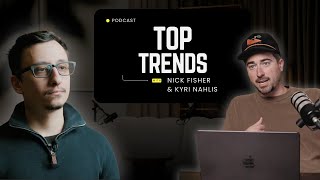
In this interview, host Gustavo (SPEAKER A) talks with Kyri Nahlis, a veteran of B2B education turned info‑product specialist, about how to build high‑retention, high‑revenue info communities. Kyri explains his "Good Product Is King" philosophy: design cohort‑based, results‑oriented courses that deliver a clear 30‑day win, which naturally drives upsells, reduces refunds and chargebacks, and fuels word‑of‑mouth growth. He shares case studies (e.g., the Evolve community on Skool generating £450K‑£1.2K/month) and contrasts MRR models with high‑ticket upfront pricing, arguing that a well‑crafted product can justify large upfront fees. The conversation then shifts to the structure of his customer‑success agency, detailing how he staffs CSMs (mostly hired from SaaS), the division of labor between CSMs and coaches, compensation models, and the surprising non‑linear scaling of CSM capacity. Kyri describes his tech stack (Airtable for CS, Close for sales) and the visual dashboards he uses to monitor activation milestones, churn, and upsell opportunities. He emphasizes activation metrics—getting a concrete first win within 30 days (e.g., first lead, first meeting, first academy trial)—as the key predictor of long‑term retention. Finally, he outlines his mindset framework, arguing that industry‑specific beliefs must be taught alongside knowledge and action to ensure student success. Throughout, the tone is tactical, enthusiastic, and grounded in real‑world data.
Chapters
Hey guys, welcome back to Top Trends. We got Kyri Nahlis. He is an absolute legend and I just didn't know it until now. He's behind roughly 25% of any school games group that you see on the leaderboard. Master of client retention is probably a secret, has some secret knowledge of how you actually get courses to retain revenue. A lot of people in our space just don't have enterprise value or any sort of moat. On retention. And once you consume the knowledge, all of a sudden they're like, cool, on to the next one. So dude, I want to explore some, some game of what you've been doing in order to make that happen. Cause it's one of the hardest problems to solve in the info space is to get people to retain, refer people, like anything backend other than just immediately ascend revenue. So dude, welcome.
Thank you, man. Nice to meet you as well, dude. But yeah, um, I'll get straight into it. For me, it's like When I came into info industry, I always used to— I say this to a lot of people— I always used to see everyone focuses on marketing and sales. Like, the front end obviously is the most important thing, just logically, right? However, you can attest this. How many brands in the info space have you seen that hit 50K a month, 100K a month, 300K a month, and then the next few, like, even months or even weeks later, they just recede back down dramatically? And they, they make it 50%.
Yeah, like at least 80%. Like, why?
Almost every—
a matter of time.
Yeah, yeah. So then I was like, what if I enter the info industry? Because I've got a background in B2B education, right? So I'm very much know how to build good products. But when I saw the info industry, I was like, this industry is definitely ripe for someone to come in. And this was my whole— my head, my whole opposition thing— ripe to come in and actually build good product that actually gets people results. Like, my brand is Good Product Is King, right? Like, that's not a brand, that's my tagline, my own hat, right? And that is my entire, like, thesis in the info industry. How can we make products that get people results, and then if it gets them the result, selfishly, the founders retain more revenue because people don't leave. And it's so much easier to upsell people when you're actually helping them, because most upsells traditionally in this game, in my experience, are marketing-based upsells. There's these fancy tactics to upsell someone, tactics, fancy urgency scarcity tactics to sell to someone. If you actually deliver a result, you don't need to use all that shit. They will just say— they will just give you money. Like You might see in this case study of mine, like we have a client who has a $1,000 offer, right? And we managed to upsell 17 people in one month to $50,000 backend package via DM.
Dude, so that's crazy, right? And that's not the preferred upsell means of most people in this space. So just, just to back up a little bit too, cause you had started in B2B sales. Now I'm super intrigued.
B2B, B2B education.
Like, uh, B2B education.
Okay, so now it's more like sales, not sales or not. So it was more like, how do you— okay, it's a bit, you know, I'm doing it too much, but you know, like consulting, like proper big consulting stuff, that'd be the big consulting brands. It was that, but for like, like big training programs for corporate stuff like that.
Oh, corporate training programs, that makes sense.
So I— yeah, so I knew a lot about how to structure, and these people were selling to— we were like, not selling to, we're working with like normal people in corporate jobs, right? Not a very normal human being. So how do you make a course where someone's in the 9-to-5 job and they like, they don't want to take— I don't know if you've had a 9-to-5 job before, no one wants to do e-learning and training and stuff. So how do you package something to actually make them want to take it? So that's where I learned that. I kind of— that's where my first intro to like product design.
Okay, what were some of those early insights too? Because I don't have anyone that would slot in the corporate training program, but I agree, I've been there. And you're like, you guys got to do your continuous education, but there's really no incentive to do that other than they'll get fired.
Back then— so back then, I can't go too much deeper into it, but like back then it was, um, traditional e-learning, you know, I'm about 5 years removed from this now, but the traditional e-learning path was they do an online e-learning course, they take some shitty-made platform, something like that, right? I came in, I had to build a— what you— I had to build a program for, um, innovation training within, you know, big organizations with like 10,000, 20,000, 100,000, um, staff members or whatever. So I was like, what if instead of e-learning we have an, uh— what I'd done was an in-person training thing. So he created a really, um, extravagant in-person training event, and it was cohort-based. And then it took me about— me and the team, like, ages to design it. But that's how I learned how to do that. And then I was like, I know how to do this. I, I know— I— when I started talking to people in the info space, I kind of realized no one kind of knew how to build a good info product. I just realized that really quickly. There's maybe a handful. Sam Oven's really enough, in my opinion, who you've worked with. He brought a great product, and there's a reason that he is known now, like How long ago since his, his original consulting accelerator, whatever it was?
10 years.
People talk about it because it was an amazing product. How many other products can you name that people still talk about? Maybe zero. So it's like, exactly. And everyone always says, yeah, Sam's mindset course changed my life and stuff. But so in my head, it's like, if you build a good product that, that genuinely changes people's lives, bro, you would get word of mouth growth. And I have clients now who just— I have a client, the biggest school in the world right now, Volvo, right? The, their biggest— I'm not gonna talk to anything about this, but their biggest lead gen is word of mouth. That people— it's word of mouth because the product is fucking insane. It's just dialed in. And that product's $1.2K a month.
Whoa, can you talk about what it is? Because I'll buy into it, but if you can't, then let me know.
I can't. I can say the product is essentially— it serves e-commerce owners who make— that is— so I've got a few principles on how to do very good MRR products, but they serve a rich ICP like relatively rich RCP, £1.2K a month. Um, and it's just, they just get access to a big group where they— it's a kind of a masterminding thing basically.
Okay.
Of ecom people. But it's all about copywriting, not copywriting, all about creatives and researching ads and how did you do the best creative in the industry. That's kind of what we teach. Okay.
So, and when you say like word of mouth, there's two places people's head goes. It's like people who, who are good at referral in our industry usually started in MLM. And they took the referral, like, gamification that they learned there and applied it to Info. And they have really good word of mouth, quote unquote.
But, no, this one is, we have a form product line. The form is like, how did you hear about us? Why did you join? Referred by my friend. Referred by my friend.
So you're just, which speaks, which speaks to product and yes. Which speaks to product, right? Cause you're just getting qualitative attribution then without, without paid.
Yeah. We got a lot.
Yep.
No, no, there's no, there's no like, obviously we have a referral program, but I don't even think these guys are touching that. They're literally just saying, I'll speak to my friend, he should join Evolve. And like, that's one of our clients. So Evolve, we get a lot— few clients. Like, Evolve is a dramatic example. Like, we're doing £450K a month on Skool, only Skool natively doing that right now. I think we're the only school even doing over £300K a month, weirdly enough, on Skool platform. But bro, I would say at least any month— I can't say percentages, but high— maybe I think the majority every month is word of mouth. It's genuinely insane. Um, and that's happened in the last because we've been dialing in maybe in the last 5 months.
Dang, dude. Okay. So for people that are seeing this that have either MRR info or maybe not even MRR info, but they are just looking to obviously keep and retain revenue that they've sold. A lot of times what's funny is people, they're like, how do I retain revenue? I'm like, oh, you have MRR. And they're like, no, it's just like, how do you protect it against chargebacks and refunds? Which scenario or problem point do you find most people are reaching out to you that you solve more commonly?
So I'll, I want to touch on— so we'll talk about chargebacks and stuff in a sec. I'll just quickly clarify one thing as well for me, just anyone listening. This would be weird that my— the biggest school in the world, let's say, does £450K front end. The back end, by the way, is fucking massive. But like, I am actually not a massive fan of MRR, just to put that out there. I like high-ticket paid-in-falls. That is, I've got clients who make double of what I make, and they are charging £5,000, £6,000, £7,000 upfront, just to put that out there, because the LTV say Evolve retains someone for 7 months, the LTV of that is actually going to be less than just charging 10K upfront, right? You know, you know what I'm trying to say, right?
So anyway, yeah, the unit economics suggests that it's just better model, especially if you're running ads and stuff.
But, um, so for Evolve, by the way, one of a big tactic in the MOA is just charge an annual billing, you know, and but, but switch the word annual to something sexier. So we say mentorship, you know. But anyways, um, so for the whole chargeback thing, the reason people chargeback is basically all the data I've seen is it's when they get confused. That's what it is. When they get confused and they don't know what to do next, and they just get pissed off. Whenever you put— I always say to myself, as a consumer in your own life, when is the one time you want to like be like, fuck, I want a refund, bro? Or like, it's when you're angry, annoyed, frustrated, you know, that's those feelings. It's the same in the e-commerce— it's not e-commerce space, it's the same in the info space. When you've bought something and you're like, how do I use this thing? You get frustrated and angry and you're like, you either do two of— you either do three things when you're angry at a product. You either roast it online and go, Reddit, this product's a scam, I hate it. Some people do that. Some people just completely, they just don't pay the next fee. They just ghost you, never see them again. Or they ask for a chargeback or refund. Those are the 3 things. The most damaging is they post about you on Reddit. The next one, they ask for refund. And the last one is they just go away. That's generally what happens.
It's because some people avoid it. They are angry and then they avoid the problem. They detach. Some people just go direct and they're like, cool, tick for tack. This wasn't what I promised. And then yeah, some people are what I would consider vindictive, that go to the forums and they're like, can I gain consensus?
Exactly.
Yes, agree.
And the way you prevent the chargeback— and like, just for context, listen, I manage about— by managers, I've got lots of team members who help me, and we have like CSMs and account managers and all that stuff. This, I think right now projected, we're managing about $40 million a year in accounts, like in terms of how many students we're managing. So it's a— I've got a lot of data Dude, you're so, so interesting.
So like me having had a marketing agency before, but primarily around media buying. So I had just media buyers, copywriters, conversion rate optimization people. What structure, like what, how do you even build an agency that is geared like yours where it's like, it solves the problem that you have, which is perceived retention, but really it's just higher LTV for, and then making the product good. Right.
So is it more about how I built my agency? Is that kind of the question?
Yeah. I'm curious. Just like the org structure, like how many people do you have?
Who reports into you?
So each, what client.
I've got— I won't— I don't want to go into too much detail about it just because it's kind of interesting. It's a little kind of a lot of alpha in there for my own personal agency. But essentially, it's each client needs— let's say, depends on— there's— I've got a rubric where like one client, let's say they're a good account— a good account manager. Just the context, I want— what we do in our agency is we've got— we place systems and talent into people's businesses, okay? And then as part of that let's say you have 300 students, you're probably going to need 2 CSMs because one CSM generally— I'm talking great A-player CSM— can generally manage between 100 and 120 people. Generally, okay, that's a general— 100, 120, or up to $300,000 in accounts. It's one— it's not usually— it's in either or. Sometimes it really ebbs and flows, but that's generally the rules. So I'll put them into the customer's business, um, and then I'll also put a lot of systems in. So I've got lots and lots of clients right now. So we manage all the CSMs. We have then like head of CSMs and ops people who manage some of those CSMs. And then it all comes to me at the end of the like week. So look at Indeed reports, I can approve certain things, toggle certain things. It's kind of how it works. We're just one big staffing agency, bro. Essentially my agency is a staffing agency, but I've done 4 staffing agencies. So we're not— if that makes sense.
Do you— and they're dedicated staffing? So they're like 100%— one of them has 150 clients on one business. You're not assigning them out over 3 or 5 clients and they have like—
no, I don't know. Exactly. No, it's different. A lot of people compare me to like a sale— done for you sales agency. However, salespeople are kind of fractional, you know. No, this one is like you hire us, you get a dedicated CSM full-time in your business, uh, then you get all of our SOPs and stuff. But it's just like what I've learned is that right now we're managing over 15 businesses, right? Um, and the cool thing is our system— this is a marketing, right? I'm just talking transparently. The cool thing is it's like the systems now work for any niche. I've done a tweet, I've done a tweet about this actually. I'm trying to put it up just to talk about it. But I was like, I'm working in so many different niches, and I found the systems now across info to actually build a good product and service those customers, work in any niche. So like, I've got, I've got customers in e-commerce, how to be a better parent, enterprise B2B, Amazon book publishing, mindset, faceless YouTube channels, wholesaling, trading, how to be an influencer, and even cooler, how to be better at soccer. Like, we've got so many different clients, it's so many different— yeah, it's crazy. But no matter the niche, the systems work in these areas. And that's why consistently it's not that hard now for me to reduce people's churn, increase their upsells, reduce their chargebacks, because the system just works. Um, but there's also like— there's also, for me, it's caveat. I'm more careful these days who I take on because I'm— my, my whole brand is like, I'm putting good products, right? And I hate to take people on who don't care about their clients. So I've been in the— especially in the last 6 months, I've been very— I'm way more selective about saying yes to you. That makes any sense?
It makes sense. So let's lock in what's ideal because I would love to figure out a way to work together too, as you know, or maybe you don't know, but we have brands and we are— I know you said you guys sometimes get mistaken for growth operators. So do we. We're just like wholly owned, published, like in-house, and we partner with experts. So it has the growth operating dynamic, like scope-wise. But in general, in generally speaking, we're signing them and it's more like we're paying out a profit share to each of our brands. Right. So to us, there's— yeah, the nuances in like the actual financial model we can all agree on. I think philosophically we all agree with what you're saying, though, is that we are obsessive and student obsession is definitely part of our DNA, no matter what brand that we have. And we gauge that by different metrics. But I'm curious, like, what actually determines— is it a qualitative thing and you have to get into the business and see and test do they actually mean this? Are there certain like KPIs like NPS or anything else that you use to determine does this person actually care about their community?
It's going to be a really bad answer, but it's like I've done so many sales calls and it's just I've got that intuition thing at this point, you know. But second of all, it's like if I go and say you're using Wapp School, Kajabi, whatever, if I go into your community tab and I see like, yo, your business is 2 years old, there's like 2 wins, I'm like, holy shit. I'm like, yes, you're coming over to me to increase your student success. But I'm just like, there is something fundamentally cooked in this, in this product. Like, there's some— like, I'm saying, like, I can put the best systems in the— you know, they say you can't fucking— what do you call it? Something— what is it? You can't— uh, for what you call it, you know, you can't make something shit into gold, you know. But like, that's very rare for me to do that. The thing is, there's some info products where the success rate is inherently going to be lower than others, you know.
Yeah.
Um, but generally it's like has this person ever invested in their student success before? Why are they doing it now? Are they doing it now to save their business? I don't like to save people's businesses from a CS perspective. Let's say they have like— I've seen it before when like I joined someone's business, let's say, um, and they've got like a very 20% chargeback or 10% chargeback. Somehow they've been shut down. I don't know how, but like that's what I hate, you know, when you have to save a business. Because that's just gonna drag my business down and I'm probably gonna end up failing to save theirs, and then it's bad for everyone. So, um, there's other things, but it's really hard to give a concrete answer just because— also another thing, I dislike working with people who are— this is something bad, but truly low ticket, right? I can build the Ascension, but a low ticket is so hard because their time frames are very short scale. They're like, Kyri Nahlis, my retainer is not small, so I pay retainer in Rivershire. So they're like, I'm paying you this much, let's— you have to save me in a month. I'm like, bro, a month to like— I would not gonna take them on because I like long-term thinkers, you know, someone that like— I like to build on all systems. We've got to get data or feedback loops, train to put the staff, you know, it's not a small thing, you know, to build your entire— no, a business unit in your business. Yeah, we're essentially building a business unit in business. You can't do it in a month, it's impossible. So that's why I don't take on people who are doing too smaller numbers.
Got it. What are the— what are the most— I'm just curious, what are the most common scenarios that like someone who is doing pure low ticket, let's just call it less than $100, is looking to be saved from? Is it because they're paying, they're below ROAS 1 and they're like, please save me and build an ascension so I have LTV to CAC that's above 1?
Or like, yeah, that's a good question. So let me get to think about that. So it's like, are you asking, wait, clarify a little bit.
Just like someone, you said you don't touch low ticket and they're like looking to save, save.
I do some, I do some low ticket. It's just, I wouldn't say you're doing. You charge $99 a month and you're only doing $15K a month.
Got it.
You don't even need us yet. You don't even need my service.
You don't need it.
You know, however, if you're charging $99 a month and you're doing $60K a month, yeah, I'd love to work with you. I've got clients like that. Yes. But it's just like my, basically if you're doing under $30K a month these days, I probably won't touch your, touch your business because you can't really afford our service. And at that point you should probably focus on acquisition anyways. That's kind of what I meant.
Yep. Perfect. Sweet. Well dude, I do, I do a similar type thing too, is just I wanted to hear your answer before I go in. When I'm normally looking for even JV partners, they don't have to have the same product and quality standards that we maintain internally or like student obsession. But there's two things that I'm usually looking for. And the first is, could you please add me into the community so I can just spot check that this thing is like legit or attempting to be legit? My heuristic is like, you either, you either better be the best in your niche at what you do in solving the problem, or at least you're at least you're aspiring to be, and I can see the effort and the level of work that you're putting into the community. So when I go into a school group, like even one of my own and Prime Mover, we've been lucky to work with Russell. And I see that like he was last active an hour ago and that like all of the quote unquote CSMs and community manager people are like within the last 24. That tells me right away, okay, there's a level of caring, even if the product doesn't NPS or score as high as I would want. That, hey, we at least have someone who really, really is going to get there long term. And that's what matters to me in addition to obviously the revenue and the financials.
So yeah, that's for me though as well. It's also like I do give my all of our customers some laxance in the sense that most people come to our business, even big guys doing 500K a month, whatever. They don't have good systems. So I can't— I'm looking at them from the standard that I know because that wouldn't be fair because they're paying me to put that standard into their business. That's why a lot of it is just like when I'm talking to them on the, on the first Zoom call or whatever, I kind of get it quite fast where if this is a savior play or this is a I need CS now so I can, you know, I'm just saying, because my business essentially is I'll take care of the backend so you can do marketing sales. That's basically it. And I'm not going to let you turn extra volume if we're just gonna blow your business up faster because everyone's refunding you and your Stripe's gonna get banned and your Ops gonna get banned and school's gonna kick you off the platform, you know. So it's just like that really happens very rarely though, by the way. Because weirdly enough, if you come to a customer success agency, you usually care about customer success. Usually. So the amount of, yeah, so like the, it's kind of a self-fulfilling prophecy. So the people who do come to me, 9 times out of 10, I like work with them because who's gonna come to my agency and they don't care about product? It doesn't make any sense. Just doesn't make any sense.
It would be crazy. I imagine it's happened, but it would be crazy.
Yeah.
Wait, so dude, I'll show you, um, Wanted to show you two things real fast of just like what I built for our brands that I thought was interesting too. This whole deck is about community and product success. I usually build like an internal social listening wall of just like stuff we post and then also what our customers are saying about us. And ideally we have usually this up in the office. So that's cool. It just gives transparency to what people are saying about us externally, outside the community. Needless to say, I look at, and that's like my North Star, North Star, North Star metric is time to evangelize of just like how fast can I get someone in in the community, um, to not only say good things about it in front of other people who have talked about the course, but externally with no incentives. Can I like make sure that people are going to say stuff? And then I add incentives in the MLM kind of components that I've learned from just observing those industries. But in general, like, I don't want to, I want the product to stand by itself before I play any games, growth hacking games.
Yeah, I agree with you. Same for OfferMind's bonus video.
But that being said, we don't have, and I've always struggled to think about any sort of semblance of CSM strategy. Normally, like we call it our quote unquote community managers and now our MSAs on our internal team, which are member success advisories. They, they do this handoff and they're really dedicated within the first 30 days. We do weekly touchpoints at the very minimum with all of our students. And that like 100 to 150 band that you kind of talked about, that's very similar to us. Let's call it maybe 50 to 150, depending on the complexity. Of the, um, community and product motion that we have that can handle that many clients at one time. What, where do you find like these people? Historically, we've never had a hiring pool or an avatar or really thought about, like, when I look at all of the people in our community team, all of them vastly different backgrounds, maybe some like personality similar, but like we have no coherent hiring strategy like you do.
I can give you just the industry I'll be pulled from. 90% of our CSMs are SaaS. Because, because, um, that's not mad. If anyone's listening to this, need to hire CSM. I'll give you a mistake that I would say, bro, 70% of my clients make before working with us. They hire CSMs from their current community. Dumbest decision you can ever make. And I don't know that anyone else— I don't know anyone else managing more communities than I do from a CS perspective. It is a— if someone joins your community, they join because they want to own a business or be an entrepreneur or get out of their 9 to 5. Hiring them to then go back into a 9 to 5 For one, it's incongruent with generally their goals. Two, they're gonna— then they want to make more money than just a small amount you're paying them as a 9-to-5 worker anyways. Third of all, CS is a whole job thing. It's like a whole— what's the word— competency, or a whole like, uh, what's the word, like it's a whole skill set, you know what I'm saying?
You'll say that requires mastery and dedicated—
yes. And it's like, I'm not going to put a CSM into someone's business who joined to learn cold email, they didn't succeed at cold email, so now they should make you CSM. No, I'm gonna hire a CSM who's been a CSM for 10, 15 years. You know what I'm saying? You can't compare those two people. So that is essentially where we get our CSMs from, SaaS. We steal them from those companies. Well, I had a CSM, they were a former Tony Robbins CSM, that wasn't SaaS. But like, we have good CSMs. I only hire real CSMs. I'm not in the business of training you to be a CSM. If anyone ever like says, I'll hire you CSM and then I'll train them, you know it's cooked because you don't train. There's the CS industry in the info world is very small. In the rest of the world, B2B, SaaS, software, that stuff, CS is a huge, um, business unit. Like Salesforce would be truly in CSMs, I think. But like, that's where we get CSMs, and it's because it's a real institution. That's where you— that's where most people learn CSMs. That's where they— so that's where most people learn customer success, from the SaaS world. Now, education, weirdly enough— and this is— I might be talking about my ass, but I've done a lot of research and seen my data. Education has higher churn rates than in SaaS and software generally, because SaaS is— you're buying a product generally for one use case, and then you bang out that use case, you lower churn, you know. Yeah, like I have a client with— I'm not gonna say their name, but their SaaS has like a— it's really great. He's doing a SaaS to info play, you know. Software here, the SaaS first, now he's doing info. But his SaaS is like 3% churn, very low, very low, because they're buying for history. Yeah, but they're buying for one reason, you know. However, the same person, their info has 16% churn. Same. So it's like— but, and it's like, I've seen that trend across all my clients where if they have info on SaaS, the SaaS has less churn. Because info is like, people aren't buying for one— there's not one singular deliverable info. There's a lot of different things you have to get right, so it's harder to get all of those things right. Also, it's generally more expensive than SaaS, you know. I mean, for B2C thing. Yeah, um, so anyways, the answer is I get our guys from SaaS. If they're not from SaaS, they usually got some kind of account management experience somewhere. And if they're not from SaaS or account management, this has been an interesting one— hospitality. Any— and most of them are women, but like anywhere where they just got some mad people skills, they've dealt with customers. If you've got 150 students you're managing, you better be good with humans. You know, because all of my CSMs can get calls with people. They do be mandated to. So it's like, if they can't open a call and talk to the client and check in with them, they're not going to— they're not good enough. And I know that I do the final interview for every single CSM because it's such an integral part of my business. So like, I know, I know pretty fast if they're good or not.
It makes sense. Then moving on from there, thank you, that helps tremendously. Now knowing from there, how— what kind of training do you do with them? And what type of training do you have to do with, say, the client in order for it to make it not like an instant objection experience of inserting someone, usually with their most valuable, highest paying customers, right, that they're going to be touching?
So the first thing is, is that the CSMs don't need to be trained to be CSMs 99 out of 100 times. However, what they do need to be trained on is the contextual stuff of that business. This is the limiting belief a lot of having a lot of sales calls. Kyri, how can you hire a CSM for my business where the CSM isn't a training expert? They aren't an e-com expert. They aren't an X, Y, and Z expert, right? They don't need to be. They just need to be an expert at CSM. However, um, I do ask the client to spend like maybe a little bit of time helping the CSM learn a bit more about the business model. Obviously, that is the only real thing the client has to do. Okay, I would say don't need to go through their full course.
Let's just—
no, they do, they have to do that. And of course, you know, they have to go through the full course, but they don't have to be an expert in it from the cuff because a CSM is different from a coach. A coach is a contextual expert. Like, if I come back to you, Nick, hey Nick, how do I run a webinar and increase my show rate, right? That's a— and you're going to give a lot of detail, okay? The CSM doesn't need to know that detail in the way you need to know it, because you're— there's a coach. What the CSM needs to do is that they need to be checking on that student 3 times a week, they need to be having a one-time call with them every week, they need to be looking at their— are they completing the milestones in the course and then flagging if they're not completing it, they need to be tracking their attendance on the Zooms, on the weekly calls. Like, all of this stuff that is like— that's all actually low leverage. The high leverage stuff is asking those really technical, competent questions. So the CSM takes away the low leverage stuff from the coaches So the coaches just do the high leverage stuff, what people are paying for. You know?
Beautiful. Dude, I love this. So I'm starting to understand exactly what your CSMs are doing, which is different than what other people in our industry called CSMs, where they're actually the ones closing, like Ascension sales too. So do your CSMs that you're training often flag for Ascension and do they set back to some other closer if there is a higher—
Both, both. It's both, both. Some of our CSMs, it's, I always give the client a choice. Do you want our CSMs to close or not? CSMs can close. But one of our clients have a $50,000 upsell, they kind of want to do it themselves, you know. The CSMs flag it and they set all the upsells obviously, but it's like the client's choice to be honest with you. Um, so there's not a black and white answer there. It's always the— it's always dependent on my client's businesses. So, okay.
And typically how, how are, um, I get like how you're like compensated and how you like to work with clients, but how are CSMs typically compensated within an info business if there is If they're setting, they get—
we just copy the standard. If they're setting, they get a set fee. If they close and they get the closer fee, is that okay?
So they make a base plus incentive, essentially.
Exactly. That's exactly the same.
Yeah, exactly the same. Yeah.
So I just copied it from the sales stuff because essentially upsells are sales, you know, it's just, oh, they're pure profit as well. Yeah.
To me, they're either going to be the setter or the closer again, right? When it happens. Um, perfect. And then, um, as far as As far as the, let's call it hiring strategy typically, like let's just say again, going back to they can handle 100 at a time. Do you recommend when someone comes in, it's like, cool, hire 2 and see if 1 works out. Do you just hire 1 at a time and how's the scale? No, no, no.
It's always, um, we do like a, how many students do you have? How active are your students? How many 1-to-1 video calls do they need with your CSM, and then we work out the maths basically. Okay. Although there is a weird thing of unit scales though, where like one CSM can manage 100 people, you add a second CSM, then it goes up to 110, you're a third CSM, it goes up to like 140. I don't really know why yet. I've just seen that the more CSMs you add, they increase the capacity of the whole team. Um, so it's like, honestly, I've got clients where we manage 700 students with 3 CSMs.
Well, yeah, so there is some sort of like economy of scale compounding multiplier.
Oh yeah, but A business needs like, say a business does 10 million a year. You can probably get away with like 5, 6, 7 CSMs. Okay. Maybe less. Depends on, it really depends how you productize the call store.
But dude, I'd be so, I'm so interested to show you some of our brands some other time and see how you come in and fit it in.
We'll do off the call. Yeah.
Which is the more likely scenario because we have some of our brands that don't have any dedicated CSM right now. and then we have some that have a lot. Do you prefer to integrate with the current, like, let's call it CX, CSM strategy?
I've got clients with, yeah, so I've got one client, I'm not gonna say his name. He came to me, he was doing $800K a month. So we, we took him 2 months now and now he's doing a million a month. Not 'cause of me, just 'cause the business grew. He, he came to me 'cause he knew the business was gonna grow, right? He already had 2 CSMs and I was like, that's why he came to me. He only had 2 CSMs doing $800K a month and he's like, okay, you come in and just put your stuff in. So we came in, put my CSMs in. Rebuilt his entire CRM to manage. Okay, now if you're talking about the CRM, most people don't even have a CRM to track their students. I'm not going to show on this call because it's all— don't want to dox anyone, but we have an entire database to like manage the entire student journey. I built that for him. We came in, we run— we done the entire onboarding processes and stuff. And then yeah, we just integrated into his team, and then I put an ops manager into his business, and then ops person oversees the current and new CSMS.
Interesting. Cool. What, so you do it outside of, and what we do is we run out of Close.com for majority of us, and we have both sales and CSM and CX, like all within the same CRM. So that way we can see from the time, what was the sales conversation? What were all the individual checkpoints? And both sales and CX have transparency to the actual journey of the student.
We use Airtable, but like I use Close for my own to sell stuff to you though, but I use Airtable for the CS side of stuff.
That makes sense. And Airtable could be used to basically mirror what's in Close too. I think the export capabilities would. Oh, I'll throw that.
The reason I use Airtable and anyone listening, like if they want to know why, is because Airtable's got a lot of, it's very modular and customizable and great for automations. And also data visualization is really amazing on it. You can visualize data in so many different ways. That's more though of an aspect of me. Some of my clients like to see things differently. So Airtable lets me present reports and stuff to them in some ways. Does that make sense? Some guys like spreadsheets.
Yeah, sure.
Some guys like Trello board, Kanban style things. Some guys like— I don't know what kind of guy you are, but I do.
I'm all three. Like, I like, I like Kanban, I like Matrix spreadsheets for something, and I like visual journeys in like Miro, or depend— it depends on like what the function is and how it should be visualized, in my opinion.
And I agree, Airtable lets you do all of those. So it's just like, it gives me more flexibility to like state correlations, you know.
What's, what's, you don't have to say your preference in data visualization, but what is the one thing that you need visualized for you to track whether or not the client is getting better, quote unquote, better at, at making a good product or the CSMs are working?
What a competition.
What's the go-to metric? What's the go-to data visualization?
Yeah, I don't know about visualization, but I know that, I know what we go for is in the first 30 days, what is the the most realistic win a student can get, and how well can you teach someone to do that in a perfect world? That's the first— that's what I do with my clients. If I said to you, Nick, like, what is the thing people pay you for? All right, cool, walk me through it. If they do this every single day for those 30 days, how are they going to hit that goal? If they can walk me through that perfectly and then the CSM just makes the person do that, they're going to hit the 30-day goal, and then they're going to pay— they pay the next month because they hit their goal. That's what I do with all my clients. It's just activation, but it's basically activation. This is the thing In what I love in product development is product usage is the number one thing to reduce churn. You have to make— how do you make someone use the product? You will handhold them the whole time.
Yes.
So yeah, and that is the metric. It's like, cool, how many people are actually doing the milestones we ascribe? We have weekly milestones basically for the first 30 days. How many people are doing those weekly milestones? And then the CSM has to chase that down. So we have like a database, it's like, um, uh, green, yellow, red. And then they have like with different rubrics what makes someone red. And essentially that's the day, that's the dashboard. So if it goes red, the CSM has to like hunt them down, basically. Okay.
So let's talk activation then, which is one of my favorite things that we skew heavy on, um, in our businesses too. We think of ourselves as like very much activate students as quickly as humanly possible. And we track, um, outcome in the 30-day, like, cohorted time horizon from mine. So is there are like, though, generally speaking, very few general activation points that are applicable across all info products, but I do have a few. I'm curious, is there something that always matters to you in activation across anything you touch?
I mean, there's basics like did they attend the onboarding call, stuff like that. But I don't think you're talking about that's kind of too basic, but like, yeah, like I said, yeah, welcome call completed. Yeah. That's very cool and stuff like that. Are they watching videos? But to be honest with you, I don't have a generalized thing because it's so bespoke for each client. Each client has like, they, they niche like How to Be Better at Soccer and How to Be a Day Trader are so different. So it's just like the first week is going to be completely different for those two offers, you know. So I have quite a lot of, um, brainstorming sessions with the founders in the first week to really deeply understand what can a student do in the first week to then make week 2 successful, and then what can they do in week 2 to make week 3 successful, and then what can they do in the first 30 days to make, make them get an eternal 'this was a great purchase' feeling. You know, for example, say you help someone generate leads. We want to get their first lead in the first week and the first sale about in 30 days. Yeah, well, the best thing is can they get an ROI in the first 30 days? Then in your marketing you can say, hey, 60% of people get ROI in the first 30 days. I've got a client like that, by the way, more than 60%. But like, um, whoa, 60.
Yeah, anything north of 60 for anyone listening, this is absolutely absurd. Generally speaking, anything over 30% on any info they get an outcome within 30 days.
The activation point— I've looked, I've noticed this too, and this goes back to the whole feelings over real hard data. Feeling is really important. If someone can get a win in the first 30 days, that makes them feel like the purchase has been successful. That pays dividends. So it's like, in the first 30 days, what is the one major milestone we can help the person achieve that will retain them for the rest of the— whatever the time is? So like If it's cold email, it could be as simple as booking your first meeting. Doesn't have to be closing, could be booking your first meeting. If it's about Meta ads or whatever, it could be getting your first winning ad, not making a trillion dollars or like, it's like, it's very contextual. If it's the soccer one, it's getting your first academy trial.
Yeah.
If it, you know what I'm trying to say, right? If it's trading, you're getting your first funded account.
100%. For real estate, I can think of ours too. It's like doing your first cold call as activation point, like the action-based activation point. Motivation, point one. Doing your first deal or just getting it under contract, even if it falls out, matters a ton.
That's right. I've got wholesaling one, and it's like getting the first wholesale deal on the table, not closing it, getting on the table, just getting under contract, which is what we aim for in the first 30.
So I'm curious what it is for soccer. Like, that's the only one where I can't guess. I'm just like, what, what matters in the first 30 days for a soccer program?
The high-level offer is, um, getting— there's academy trials, like get a trial to join the academy, if you know what I'm saying. So it's getting invites and stuff, getting invites, because you always got to think what is the lagging and leading thing. Like the lagging indicator of getting the invites or whatever is like you're getting invites to then get the trial. So it's like, are they happier? Are they happier getting to the trial? Yes. But the invite is when they're like, oh my God, I've got an opportunity in front of me. Yeah, you know that feeling? They're like, oh my God.
Yeah, it's like the, the feeling of acceptance, right?
Yeah. So that is the first thing. And it's like, I'm kind of like, um, jaded now, probably so are you. It's like, have you had— when you were younger, did you ever have those— get those emails that it's like, oh my God, this is going to change my life? Those kind of opportunities. Yeah, those things.
100%.
That happens to me rarely now, to be honest with you, bro. But like, how can we— but in the, in the, um, education world, giving people those moments is still a thing because they aren't entrepreneurs who are like getting all these cool things all the time. You know, they're normal human beings. And that makes sense. But like, so you can— in the first stage, if you can perceivably help them change their life, they're never going to leave. Most people— it takes people months to change someone's life, for months to even perceive the change in someone's life. And by that time they're already Googling what other programs are there in the world. So it's like you just want to get someone that first fucking thing. So it's like the Kolima one, um, it's like we know it takes 2 weeks to warm up an inbox, so in the first 24 hours we're starting the inbox warming up process because that means that we then have an extra 3 weeks to actually get the first lead or whatever. So it's like, what can you do in those first 30 days to just bang it out, you know, as fast as possible to get that first perceived big win?
Yes.
Yeah.
Sweet. Dude, what do you need on the client side? Like pretend we're working with you for the first time. What do you need from our CX and CSM team or me in order for it to go well?
I need someone to lead point, be my contact to work on the first 30 days, to work on restructuring what the program potentially, to work on the backend, like end of the reporting and stuff we do. I just, Usually my clients either do it themselves or they give me their head of CS or some CSM steps up temporarily to do it for me. Someone to do it with me, sorry. Something like that, generally.
Wait, well that's easy enough. So like, for an example then, for you guys flag, hey, this course video needs replaced, refined, whatever it is, it's a problem. What kind of turnaround time does someone need to have if you guys flag something that's urgent and needs to change?
There isn't, it's just when it's up to the client, it's their choice, it's their business at the end of the day. But it's like, um, I do a whole audit of the people's school— but I have completely torn apart people's school courses before. I have a friend called Jeremy and he sent me his course and, um, it was like 400 hours long and I was like, bro, you just need to go cut it with how it's like. For example, Sam Alvin's course was too long in the last year. Yeah, okay, it could have been a quarter of the time, a quarter of the length, and it would have probably been even more famous because it probably would have.
People don't know that there was over 120 hours in the 2.0 version of their like critical path analysis there. I'm sure you could have found something if you would have spent the time.
And it's like, I did take control on Accelerator. I didn't watch the whole fucking thing though, it was too fucking long.
Right.
Just like—
that was when I looked at the student journeys for Accelerator, I saw a lot of that though. But people that make it through at least, there's 2 videos in week 2 that if they hit them, they're usually a fan forever.
Which ones were they? If I can just ask, do you know which ones they were?
I do.
Was it the— oh shit, one sec. The one about doing the workbook, was it the workbook ones? I don't know.
There is, um, one of them was, uh, Face Off with the Devil.
Yeah, that one's good, bro. That's a good— that's a good one. That one changed everyone's lives.
Thank you. Uh, I mean, it was mainly Sam. He showed me the outline before he did week 2, and I was like, bro, I don't, I don't know what you're on, but I love whatever this is. This is gonna be great. It's gonna go crazy. We were doing some crazy analysis on even just We got—
I'm surprised you're even allowed to shop that, even keep this stuff personally. Supposed to have something in the air or anything. I guess it's all expired now.
Yeah, yeah. I mean, I have no idea. Maybe I'm not like whoever owns the, the IP. I'm not sure if it's Godz or someone else.
They're weird fucking things that happen.
Yeah, it is a weird thing. They can tell me to take it down and maybe I will. Um, I don't know if you can see this.
That ain't too bad, you know, based on what I've seen in the industry. That isn't too bad.
Yeah. Um, can you see—
resonate in your message? Yeah, I remember watching that one.
Sheesh.
Um, crafting. Yeah, of course they get bored after setting your foundations because they got to start doing some work. Yeah, it's interesting. Very interesting.
Yeah, it is, right? So like, that's— and we hadn't had it all figured out yet. Like, if we would have given that product another 2 years to mature and like carved it, let's just say, even better, um, and gotten the, the David out of, um, the, the marble, I think it would have been even better.
So I'll tell you what though, the reason even though the product's a long product and a bloated product, it's, it's still great because I'm trying to make sure this makes sense. It's hard to what I'm trying to say, but it's like you said, take, make the sculpture and sculpt it nice and stuff. However, it was still marble, it was still, it was valuable. Like the things he was saying, yes, it was an hour too long, but it was all valuable. And that's essentially like, in copyright, you got to make it concise. So like, yes, you could have made it more concise, but the actual things that were being said were still valuable if too long, you know. Most people's products, like an hour long, 2 hours long, they're just not valuable though. There's rambling and stupid analogies and stupid stories that go from random tangents.
So it's just like, yeah, it's like they, they hit Loom, they hit record and just went.
Yes. So it's like The course can be long, but it also then has to be good and it has to be transformational. But you don't need to give 10,000 transformations per video, or you don't have to labor the point so hard. If you labored it once and you've smashed it, move on. Sam used to labor the same point like 15 times. Yes, but each time he done it, it was still good though. So it was like, you know what, I'm still gonna watch. But okay, I get that I got the video 10 minutes in, but because I'm getting, I'm getting value still, I'm going to keep watching. And that's also same as his YouTube, you know, like some of those videos are fucking long, but I keep watching all those old long YouTube videos because they were still good. But anyways, for product design, that is a big thing. It's just like how short and concise can you make it to keep it as digestible and life-changing as possible? Um, and everyone— this is what I hate about the info world— everyone roasts. I bought a course and there's a mindset section, bro. Mindset. What is the one thing Sam's stuff was remembered for?
Yeah, mindset.
The mindset section, right? People forget what it's like to be a beginner. That shit is life-changing.
People forget that people complain the most about our Mindset Week too. It was the most cited as the reason why people were successful. It was also the most complained about by the people that weren't. So like, keep that in mind too, is like, who are you listening to?
That's why it was 10 hours long. That's what I'm saying. If it was 5 hours short, it would have been better. But the reason my— I do keep mindset courses in my client stuff. I've got actual— I'm not sure on this call, but I've got because it's like, because the podcast stuff, I'm showing it off the call. I've got a whole mindset, um, framework most of my clients use that I tinker for like their products. But it's like, mindset is valuable because if people don't have the right mindset, they won't take action on the knowledge you give them.
Yes.
You know, so my philosophy is mindset, knowledge, and then action. They need the right mindsets to use the act, so they need the right, um, knowledge to like take the actions you want to give them. But if the mindset isn't right, they're not going to use the knowledge. And if the knowledge isn't given properly, they can't take the action. So you have to do all three.
Yes.
Yeah.
So, and you'll know this, this is perfect. Our mindset section for Accelerator was chiefly around building a few different things. I think of building social intelligence or awareness about how you work the way you do and then building discipline and focus, right? Are the big takeaways or like actual intangible skill sets that you're building with that mindset. What are kind of the components or the outcomes or the outputs that you're thinking about? Okay, after they go through my standard mindset, they're going to be— they're not going to quit, they're going to look at the world like that.
It's similar to what you just— it's like, do they understand why they're doing what they're doing now? Do they understand the opportunity that's in front of them? Do they understand why not taking the opportunity is going to harm them in the future? That kind of stuff, you know. And it's just like, what are the beliefs that they're holding on to that are going to hurt them? What are the beliefs that they need to install? Stuff like that. And it's very contextual though. Say you're doing Google dropshipping, random one, it's a client, but that's actually a client, that's why I chose it. What are the beliefs that you hold there that are going to hurt you? Spending money to do things in business is hurt— is going to be a bad thing? No, you need to get over that belief. What's another thing? Sending 100 cold looms to pitch clients, the mindset is hard, it's going to be really hard. No, the mindset is one of those can change my entire life. Yeah, you know, so it's like, what are the mindsets that you have to install because every business owner in their specific vertical has mindsets that has helped them in that business that's specific to that industry. Yeah, so how can you dump that specific industry belief onto your student? So it's not like generic mindset is you gotta read me, make your identity to be a fucking whatever. It's what is the specific mindsets in the specific industry that you have taken for granted that help you now, you know?
Yes.
And that is what I am—
identifying the resilience and the things that you built in this industry and applying them to—
yes, that's very—
almost no one has articulated that like you just did. That's very, very smart. Smart. Yes, thank you.
And that is— yeah, and that is what I've taken out though, because I've worked with so many different niches now. And I used to think, as everyone does, mindset is a universal thing. Yes, it is. However, there's specific mindsets that are specific to these industries. So then I help pluck those out with my clients and put them back into their course.
Dude, brilliant. Honestly, let's, let's wrap this up. I would love to do a part 2 with you, but this is a great little like insight to, to end on. I'm convinced I want to figure out a way to work. And I love that there's people like yourself now that are emerging that are just like specialized in actually making great products. That was not the case 10 years ago at all. No one cared.
Gustavo, nice to meet you. Talk soon.
Bye.
Peace.
More from Kyri
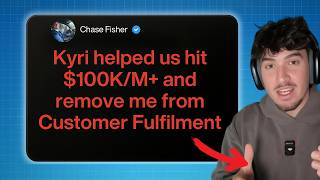
How Chase Fired Himself From Fulfillment in His $150K/M+ Program (Case Study)