How We Automate 200+ People Coaching Programs (Case Study)
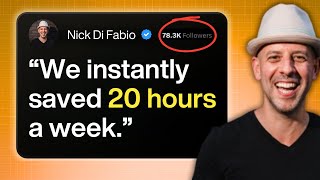
In this interview, Kyri Nahlis of an agency and Nick, founder of Publishing Profits Academy, discuss how Nick’s coaching program—helping 200 members publish books and earn royalties—was transformed by hiring a dedicated Customer Success Manager (CSM) through Kyri’s agency. Before the hire, Nick spent 2‑4 hours daily handling DMs, community questions, and onboarding, which caused stress, limited his ability to focus on product, marketing, and sales, and threatened burnout. Recognizing a cumulative capacity problem, Nick engaged the agency, impressed by a tweet, and went through a structured vetting and training process that gave him confidence in the CSM (named Ricardo). The CSM took over support, reducing Nick’s workload dramatically, allowing longer focus blocks on strategic work, improving onboarding speed from weeks to 24‑72 hours, and eliminating fulfillment bottlenecks. Nick highlights the ROI of time bought back, the importance of early hiring, and the agency’s broader support beyond theory, including honest feedback and scalable processes. He advises other coaches to value their time, hire support early, and consider agencies for reliable, scalable CSM solutions rather than DIY hiring, emphasizing that the right support prevents burnout, improves member outcomes, and enables business growth.
Chapters
What you should be asking is what is the return on the time you're spending on things, right? So if you want to sit there for the rest of your entrepreneurial career and answer the support DMs, that's a choice, go for it. But if you— you know what I'm saying? The biggest change I've noticed since working with you is my ability to have longer stretches of time where I'm kind of focused on one thing only, either a big project I'm moving forward or something I want to pursue to improve the program versus going, oh, this mental clock, I better hop into the chats or the DMs or the community because there's something waiting there for me. And also too, I think the other big piece that I've enjoyed working with you a lot is that it's not just theory, okay? Like, this is what's working now. This is what's driving success. And this is, you know, and we've had those conversations where like, You're brutally honest. Hey Nick, this is what's going great. Hey, this is what needs to, this is what needs to improve. You know, this is, this is an area, this is an area of weakness.
Cool. Hey Nick, great to have you here. I'm really excited to do this case study. I think we really enjoyed working together. So before we begin, I'll let you quickly introduce yourself.
Yeah, my name is Nick. I'm from Publishing Profits Academy. Really, we help people publish books on Amazon and beyond and take advantage of the opportunity. I'm a publisher first and foremost and kind of gone into the education space here a couple years ago. So yeah, it's really the perfect blend of sort of my interest, my ability to help people, and the ability to sort of, uh, develop a program around that.
That's really awesome.
Cool.
So let's quickly paint a picture for people then. So how many students do you currently have, and what does your product do?
Yeah, we, um, currently 200 people to our members. And really, the, the, the program is really centered around helping people that have no publishing experience, um, publish books and make royalties off these books on an ongoing basis. I would say it's about 80% of my— of the members. And there's a certain percentage that publish books as a one-time thing. And what their goal is, is to just, you know, have an authority book out there or have a book to sort of drive leads for them. So those, those two angles we cover off.
That's great. Cool. And then so before we start, what we've been working on for what, 5 or 6 months, somewhere around that? I'm not sure.
Yeah, I think officially it was like Yeah, late December. Yeah. So I would say about 5, 6 months. Yep.
Yeah, that's crazy, man. So how much time would you say you were spending like per week talking to students before we started working together? Like what did it look like, your diary and your calendar and stuff?
It was, it was stacked. It was stacked. So what I would, I mean, time-wise during the week, I mean, I guess on a daily basis, basically how my days look like is I would hop into the, you know, the DMs, the community first thing in the morning, um, in between calls I would check in on new requests, new questions, and then also towards the end of the day. So it was, it was definitely taking up a lot of my time, a lot of mental context as well. So I would say at least 2 to 4 hours a day on average.
What was it like trying to track all of your students and their journeys and being the only one responsible for like progressing every single student basically?
I mean, it was stressful. It was stressful. And, you know, this is coming from like a good place. Like, I, you know, people join, I take that as a big responsibility. So it was really important to me that they got the support that they needed. So in that way, it was stressful. I think if you didn't care, I think it would be much easier. But I really, I really, yeah. So for sure, you know, there was a lot of pain, if you will, with bringing people on because I wanted to make sure they were supported and It definitely was a lot of effort there.
What would you say though, was like the big moment that you knew that you couldn't be everywhere at once in this business? Because like, when was that? You're like, damn, I have to hire someone. I have to hire— I have to work with Kyri Nahlis Agency to really get me out of these weeds. Was there any specific moments?
You know, it wasn't a specific moment. It was— it was more like a cumulative effect of me, like thinking to myself, you know, like I'm doing the same routine day in, day out. I'm not able to focus on those big things, you know, program improvement, um, really, you know, other things I think could really help people on a greater level. And I think after, you know, certainly a few months of just being frustrated with not having the capacity, time, space, mental bandwidth to focus on those things, I was like, okay, I gotta make a change here. And, um, I think I saw one of your tweets in particular that kind of caught my attention, and I was like, okay, well, this is, this is the perfect solution for me at this time.
So then, like, when you are your— when you're marketing, when you're sales, when you're head of product, when you're head of customer success, like you were for quite a long time, how does that affect your, like, ability to scale a business?
Oh my gosh, it completely handicaps you. It completely stops you from being able to scale it because, you know, it's not that You know, like, I love publishing. I love talking about publishing. Like, one of my favorite times during the week is the week, our weekly Q&A call with the members. But it's the context shifting. It's like, you know, like, you're sitting there answering questions from people and you're like, okay, that's great. But then it's okay, getting back to something else. It's— that was the biggest, the biggest change I've noticed since working with you is my ability to have longer stretches of time where I'm kind of focused on one thing only, either a big project I'm moving forward or something I want to pursue to improve the program versus going, oh, this mental clock, I better hop into the chats or the DMs or the community because there's something waiting there for me.
Yeah. And like we both know, especially in the last like 2 or 3 months or so, you've been heavily involved in sales and like, do you think you could have done that 5 months ago when you were doing everything at once? Like how would that have impacted you, do you think?
Zero chance. Zero chance. I mean, you know, for me, I would have found a way to do it. Like, I probably, you know, was in a pattern of, you know, working late and all that stuff because it was important to get things done. But honestly, no, I would have burnt out for sure. For sure.
Yeah. Because I know, because I know, like, just knowing you now for a while, one of your big philosophies too is buying back your time. And I know that's one of your principles. So that's, that's basically the whole point of, of your business, you know, royalties, kind of semi-passive income and stuff and like You are, let's be real, like you're really diligent, hard worker. And I think a lot of, a lot, you're kind of, a lot of my clients, like they come to me because they sustain their business on brute force, like being everywhere all at once, doing everything because they can. But I think it was cool to see you just like not have to focus so much on the CS, customer success stuff, and be able to actually focus on marketing and sales without getting a billion refunds, you know?
Absolutely. And I appreciate your compliment. I think for me, um, it's, it's like You know, I come from the publishing space, as you mentioned, right? Like, I'm used to publishing books. You're making royalties 24/7, you know, for months and years. And for me, like, this whole— this kind of education piece was new. And, um, yeah, like, even the sales piece was brand new. So for me, it was certainly a huge asset having a member, you know, success manager in place that I just didn't have to worry about that piece. I can't tell you how much of a difference. I remember there's one time where I think we messaged people, you know, making the official announcement. And, and like, just this relief. I felt this relief, like, okay, like, that part is handled and confident about— I was confident. And that's been— yeah, it's been— I can never go back to the old way.
So then actually, I want to talk about that. So like, having a dedicated customer success manager, not just a CSM who is like— a lot of people have CSMs. You have a CSM that is very capable and is using the systems that I put into any info product. How do you think that has changed the game for you versus you doing it all on your own?
I think every entrepreneur, you know, certainly, you know, I think about the E-Myth Revisited book, but basically every entrepreneur has a hard time letting go, right? You have a hard time letting go. It's just natural. And I think it's a skill you have to pick up to be able to let go. But one of the things people don't talk about is you have to have confidence in someone taking over, right? For me, I was— I got an inside view as to how your process works. And I was like, this, okay, this is good. Like, the, the interview process, the vetting process that you've implemented, like, I was very confident that I would end up with a really highly skilled person that will be able to, you know, take over this piece of the business. And, um, and yeah, it was, it was definitely a game changer having, having him in place.
And I'll see you soon. It's called Ricardo, if you're not listening. And like, if you were A lot of people, again, they're like, they're tentative to bring on a CSM because they don't believe some random person, random person quote unquote, can come into the business and help your students with such a, you know, very particular sub. You've got a very specific subject, but like, has that— how would you talk to someone and say, you know what, no, you do need a CSM for our business because we can place for any offer? Like, how would you talk about that experience?
Oh my gosh, that's a great question because I also, I had that concern. I was like, there's no way someone's going to come in and be able to understand what I'm what I'm trying to do and what I'm doing. Um, but once again, I think you have this training process in place where if it's publishing or something else, someone can come in place and become really, really good in a short period of time where they can, they can really, um, help people, you know, like, and, and I think, you know, one of the things that, if I go off on a tangent here a little bit, one of the things that is helpful is that everyone, I say everyone, but people lead need different levels of support. You know, some people like the DMs, some people like to hop on the community calls, some people like to, um, have email support, call support. So I think that is really another piece where your service shines, is that it meets people where they're at. Um, and I think that is very helpful for people to make progress, because this is really what's all about, is, you know, like, people are, they're investing with me, so I want to make sure that they achieve that goal. So whatever flexible support system gets them there, I'm all for it.
Yeah, it makes a lot of sense, man. That makes a lot of sense. And I know a funny question is a lot of people say to me, hey, Kyri, I can't bring on a CSM because I'm already busy. I can't get busy managing a CSM and trying to make it work for them. Do you feel like having CSM has actually added to your workload or is that just a silly concern?
Absolute, absolute silly concern. Absolutely concerned. I mean, I think anytime you make any additions or changes to your business, there's going to be a period of transition. Um, but at the end of the day, I think that, you know, the way you've structured it, it's, it's pretty straightforward. Like I, like I said, um, I mean, you know, the, the amount of time I spent with Rick was very minimal, and the amount of time I bought back from him was like incredible. Like, the, the, you know, the ROI on the time was insane. Like, it's a no-brainer.
Yeah, I like that a lot. So like Yeah, I mean, I, I always find it, it's quite cool how smooth the CSM handover process is, especially with such a— because like you've got, you're one of our very specific niches, you know, like you're very granular. It's not like I'm gonna help you make 10K a month via any business, mate. Yours is specifics, you know, so it's really interesting. So then, um, how confident now are you scaling because you don't have the fulfillment bottleneck? Like, boost to the walls, sales, sales, marketing.
Yeah, there is like, there's no pain now. Like, like what I mean by that is like when I bring someone on, I've got 100% confident confidence that they're going to get on board in a timely way. They're going to get a great start to the program. They're going to be supported throughout the system. So right now for me on a scaling perspective, there is like no friction on that piece. Like, like, like that is like a piece that I'm not even thinking about when it comes, when it comes to when it comes to this, this program.
So like, how were you before Welcome Boston? How were you onboarding clients? Because I don't even know, I wasn't with you. So how were you onboarding clients before versus now?
Yeah, initially, um, initially I was doing like, they would, they would, um, join the program and then they'd be onboarding on a one-on-one call with me. Um, and that one-on-one call was actually, is interesting, it was like kind of almost like a little strategy session, which was not the best approach because Then it became like a coaching session where it kind of, it kind of, it wasn't, there was no system around it. And then eventually when I, you know, fortunately, you know, the business was growing, I start, I started to be, be in a position where I started to do group onboarding calls. And then, and that was fine too, but that also wasn't great because people, you know, some people are quiet on these calls and, you know, it was, it was hard. It was easy. It was easy to miss people's questions on that call. So, so, you know, now it's a 9-day difference. Now someone comes in, They get onboarded typically within 24 to 72 hours, and they gain that one-on-one call with, with the member success manager, which is just like, just like fantastic.
Yeah, I like that. I like that a lot. And if you could speak to your former self and you're like, I'm gonna try to do it with myself, what would you say to someone who was in your position that they're doing— they're like, they're, they're doing everything themselves? What would you say to them? This is—
I would say this is one of the key hires. This is like one of your first or second hires you should be making. When you're trying to grow a community is you do need to have someone in place that can be there for the support piece. It's a must. It's— or you'll simply stay stuck. Like for me, if I could do it again, yeah, I would bring someone on even before I needed them. Because what happens is when you wait too long, it's like— it's like, I don't know, man. It's just— that frustration builds up. And like I said, I love what I do, but you don't want to have that negativity. Like, you don't want to start to hate your business. Like, that's, that's terrible, right? Um, so for me, I think, you know, bringing someone on as soon as you can is, it's just, is a no-brainer.
And what, what do you think makes— because I've worked with coaches before where they, you know, you don't hate your business. What part of it specifically makes you think this is getting really tough now? Like Like, what part of it do you think could make someone feel like that? Even myself, like, let's be honest, we've all done a thing, we work till midnight, we miss things, and like, do you feel that? Is that— did you ever have those breaking points?
Yeah, those, those. Yeah. I mean, I'm married with, with two kids, and for me, you know, I, I can't— I mean, unless I want to jeopardize that part of my life, like, you know, health is important to me as well. You know, like, I want to stay in shape, and I feel like it's very closely related. I think that, you know, the healthier you are mentally, physically, the more you can provide to the people in your community. So for me, there was certainly those moments where it was those, those late nights. And once again, it was like just dealing with people and helping them out. I think the other piece that really kind of struck, struck me in the, in this space is there was people with lots of potential, lots of potential that I feel like weren't being serviced properly. And so what I mean by that is, you know, they could, you know, with the proper support system that was more timely, more robust, they could achieve their goals faster and move forward in the program faster. So I feel like that was— it was becoming a missed opportunity. It felt almost like there's a bit of guilt around that on my end, to be honest.
I think it is kind of selfish sometimes. So coaches, they try to like sacrifice— I'm not sacrifice— like contain as much margin as possible, but then the students ultimately suffer because you're only one person. Like any business owner is only one person. So like trying to do everything at once, That is actually a good, interesting point. I guess that is a foundation of, hey, it's called customer success for a reason, right?
Absolutely. Absolutely. And I think that, like I said, I think, you know, and some, and some people that will join programs and they'll be kind of quiet in the background, but some people will need that certain question answered at a certain period of time. And it's like, it's like an inflection point for them because it can make all the difference. And I feel like ethically, as you know, if you run a community, I think you have to have that sort of space available for people to ask those questions.
Yeah, I like that a lot. So beyond just the CSM stuff then, like, how would you characterize our agency? Because a lot of people hate agencies. Like, yeah, what would you say? But what, how would you— what's our agency? Give me your honest thoughts.
Yeah, nothing but positive. I mean, one of the, um, things that I was kind of surprised with is how much support you've provided on other elements of the business. I mean, you're working with people that are, you know, have all various levels of income per month. So I think when you say things, it's been great because you have firsthand experience, which is critical. And also too, I think the other big piece that I've enjoyed working with you a lot is that it's not just theory, okay? Like, this is what's working now, this is what's driving success, and this is, you know, and we've had those conversations where like you're brutally honest. Hey Nick, this is what's going great. Hey, this is what needs to, this is what needs to improve. You know, this is, this is an area, this is an area of weakness. And when you run a business, oftentimes it, it, it can be very lonely in the sense that, you know, there's not a lot of people that understand. They don't understand what you're trying to do. And, but with you it's been awesome because like I said, I've, you know, there was so many different things that we talked about and touched on that it's just, it's, it's been very, very helpful as a business owner to have someone like yourself on my side, basically.
Yeah, because I think a lot of people, um, that I do a lot of sales calls, obviously a lot of times on sales calls people are like, okay, why don't I just hire— so there's one thing a lot of people, a lot of time, not a lot, I get this one, why can't I just hire a CSM on my own and not work with you guys? What would you say to someone saying that, which is a fair question?
Yeah, I mean, for me, so, so once again, like, my publishing experience is I've had experience, lots of experience hiring, hiring people. Like, I've hired, you know, cover designers and writers. I know that most successful hires, I've had to vet them properly and over a period of time. Um, so that— so there's that, there's that barrier for, I think, for, for a lot of people. For myself, certainly there's that barrier. But the other big question is, number one, is, okay, if that person leaves, which inevitably they will, how do you replace them? So now you're back to square one. If they go now as a business owner, now you've scaled and expanded, now guess what? Now you're back to square one, but you're even in a worse spot right, which is, which is, which sucks. And number 2 is, you know, think, thinking positively here is working with like an agency, you now have the ability to turn that knob up quickly. You know, like for instance, you and I are in a position hopefully in a few months here where I'll be coming back to you saying, hey, I need a second person, hey, I need a third person. That is, it's, it's okay, the foundation is set, no problem, the relationships are there. But doing that on my own is something that I don't want to do, to be honest.
That's really interesting. Yeah, that's pretty cool. So then I think I don't have many other questions, major questions. And is there anything you want to say, just generally, like to anyone watching who's like, you know, because only people who watch these videos are like people who are coaches, consultants, education companies, training companies who are like probably doing between $50K, $100K a month, maybe a bit less. And they're thinking about working with our agency. Is there any, like, last words you'd like to give your thoughts on it?
Yeah, I think, I mean, I guess some advice would be, you know, to, you know, look at what you're trying to do, you know, look at what you're trying to do. And if you are, you know, being held back from moving forward with these projects, these big rocks, these things that, you know, are going to add more value to your community, add more value to your program, help people get results. And even forget that, even just being in a position where you can have more time to yourself, whether it's family, whether it's health, you know, whatever it might be. Like, to me, like, you really have to really value your time, you know. Um, you know, people in the program, you know, the Drum Make program, they'll say, Nick, how much time does it take? And I always tell people, that's the wrong question to ask. What you should be asking is what is the return on the time you're spending on things, right? So if you want to sit there for the rest of your entrepreneurial career and answer the support DMs, that's a choice, go for it. But if you, you know what I'm saying, but like if you want to actually grow your business and you actually really want to impact people, you know, you have to push yourself, you know, and, and, and bring someone on. And like I said, for me, It's been 10 out of 10. Like I said, there was life before working with you and life after, to the point now where like, I'm actually like, if you were to like shut things down, I'd be concerned because I feel like, what do I do? Like, what do I do? Like, I'd be, I'd be, it would be a big problem for me.
I appreciate it, man. It's really great working with you and I hope we do have that long relationship. Nick, great to speak to you. Great to see you grow and appreciate your time.
My absolute pleasure.
More from Kyri
How Chase Fired Himself From Fulfillment in His $150K/M+ Program (Case Study)