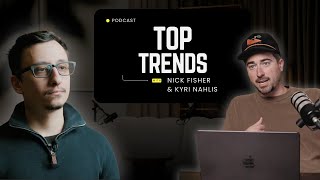
How We Built the World's Lowest Churn on Skool (Our Exact System)

In this video, Kyri Nahlis, founder of a customer‑success agency, explains how his team achieves the lowest churn and highest price point on the Skool platform. Drawing on experience managing thousands of students across dozens of communities, he outlines a comprehensive, step‑by‑step churn‑mitigation framework. The framework starts with a rigorous onboarding process led by dedicated Customer Success Managers (CSMs) who set expectations, overcome buyer’s remorse, and demonstrate product usage. He then details post‑sale tactics such as cohort‑based community structuring, drip‑fed content schedules, psychological barriers that make leaving painful, and systematic exit interviews. Ongoing engagement is maintained through regular 2‑3‑week reach‑outs, attendance and engagement tracking, personalized appreciation messages, and recurring live events. He discusses optional gamification (milestones, badges) and its limited impact for high‑ticket programs, monthly data‑driven check‑in reports to flag at‑risk members, and the importance of fostering a strong community identity, spotlighting top contributors, and delivering early wins. Finally, he stresses the need for fresh content, time‑based unlocks with reward carrots, and offers free consulting, a call‑booking link, and a promise to create more customer‑success videos. The video serves both as a practical guide for course creators, coaches, and community owners and a showcase of Kyri’s expertise, reinforced by a brief endorsement from Sam Ovens.
Chapters
This video, I'm going to explain how we have the highest price on school and the lowest churn on school. And I actually received a message from Sam Ovens last week. I asked him for some advice on something and he responded and he actually gave me a little, like, little insight. He was like, hey Kyri, very impressive what you do, $1,000 a month, um, one of the communities that we manage. I think you have the lowest churn to highest price ratio on school, which is pretty cool. At this time filming the video, we're also the number one school in the world. Obviously it fluctuates. But if you don't know who I am, my name is Kyri Nahlis. Um, I have a customer success agency where we work with course creators, community owners, um, online coaches, online consultants, anyone who has an info product online. And we essentially manage the backend of their business. So we take all their student calls, we do the upsells for them, we deal with refund and dispute requests. We essentially manage their community and let them focus on marketing and sales. And The cool thing about this company we work with is they literally, we've basically become number one in school by having the best churn in the world. And this video is about how we can, I can distill the lessons in my agency of working with literally thousands and thousands of students and understanding what the best churn mitigation tactics are for info and just giving them to you for free, um, in the hopes that you eventually come to me and say, hey, let me work with you, Kyri Nahlis, and can you do this for my business? Because you're basically the best in the world at this. So, um, first things first, I didn't invent all of these. I've just taken— but essentially I've, I've taken stock of everyone in the world who talks about churn. I've then implemented it across dozens of the communities and culture programs that I personally manage with my team of over 15 people. Um, and then I've seen what works the best and I've just brought that across all of my clients. So first things first, let's go to number 1. So the first thing is this, and by the way, I'm hiding it so you guys can't just like, you know, read it on the screen and leave. You need to understand the context of every single part here, otherwise you just— what's the point of you watching the video? So number 1, implement a proper onboarding. You need to have an actual onboarding. Like, some people— I'd say most people, even my clients who make over 150K a month, 200K a month, 300K a month— they don't actually have a good onboarding process until I come in and we fix the onboarding process. So you need to implement a proper onboarding process and have a dedicated asset to take these calls. So for all of my clients, we have, we have a dedicated customer success manager who takes these one-to-one calls with all of the students. And this essentially is someone who, um, sets the expectations on the calls. They set the client's goal. They reaffirm why it's so good for the client to have just purchased what they've purchased. It's a way to like, you know, immediately overcome that buyer's remorse and overcome potential objections. I had a client recently who did, I think it was a $160K day, and they onboarded, I don't know, was it 40, 50 students in one night? Insane amount of students to onboard. And because we had an instant, um, team to take all of those onboardings, essentially, I think we didn't get a single dispute within the first week for that, um, launch. Wasn't a launch, it was a webinar. and we do those webinars every 2 weeks for this client, and then we make up 100K every single time. But what I'm trying to say is, unless you can't scale to the numbers you want to scale, where you can onboard 30, 50 people every single day, unless you have a smooth onboarding that stops refunds and actually gets people to activate and use their product straight away. So first things first, you absolutely need a proper onboarding. Otherwise you're just going to churn people and you're going to get refunds and people are going to be confused and they're not going to understand how to use a product. And This, this most, the reason you're doing onboarding is yes, it's to overcome objections, but to show them how to use the thing they've just purchased. Most people aren't, they don't use Skool every day. They don't use Wapp every day. They don't use Kajabi every day. They don't use Slack every day. They don't use whatever vehicle you, you are selling to, um, help them get a transformation. They don't use this stuff. So you need a customer success manager to actually show them how to use it. So that's the first thing done. Exchange card. Uh, next thing is this. Create cohort-based communities. Now this one isn't applicable to everyone, but this is something that I have seen work across quite a big bunch of my client base. And this one usually— what does, what does this mean? So this means, imagine you have, let's say, a monthly— this really occur— is applicable to monthly recurring revenue businesses. Okay, so say you have— and it only is only applicable if you have a very, um, two, two things. Even a very cohesive community where people are very similar, or where there's a lot of people and there's actually a lot of potential differences in that customer base, but there's around 20, 30 people, 50 people in that customer base who are similar. So you need some commonality, but you bunch them together and group them by commonalities to foster strong connections. And it isn't cohorts like you're selling cohorts of 50 at a time and then you're trying to, you know, make money. It's not a sales thing, this is a post-sales thing. So this is like after the sale, you're going to say to them, cool, um, I'm going to put you into cohort— let's say you name them like Team Blue, Team Red, Team Yellow, or whatever. I'm going to put you into Team Yellow because, um, you guys are all trying to hit X goal, or you guys are all trying to hit Y goal, or you guys all come from Texas, or you guys will come from Florida, or you guys are all this personality type, or you guys are all that personality type. If you have these commonalities, it really helps foster a strong connection, but it has to be done well and intentionally. If you have a cohort-based community and you do it wrong, the, the energy gets sucked out of the room because they don't mesh together well. People don't respond, people don't communicate, and then it just looks dead. And you can actually end up having a worse community because you've built the cohort wrong. So this one is like a I'll— it's not green for everyone. This one is like definitely, uh, it can be dangerous if you do it wrong. But I would say, um, I'd say you should try it and at least think about it. Like, message me on Twitter or something if you want me to talk you through this one. But it's like, this cohort one can really save your community, especially if you're a bigger community. Say you have like over 1,000 people, this one really will crush for you. Because with 1,000 people you're realistically not going to have enough coaches to like personally handhold everyone unless you've got a substantial amount invested in your fulfillment. So big one there. The next thing we want to talk about is— this one is like, I call this the lost, the lost art form of info personally, because no one does this anymore. A few years ago, especially when Sam Ovens used to— like back in the summer preschool days, I'd say, um, people used to drip feed content. So like in the first week do this one, in the second week do that one, in the third week do this course. This is a thing that no one does anymore, but I found very amusing they don't do it because Skool has a drip feed thing inbuilt for a reason. And it's because when— because, and back in the day, a lot of info gurus used to do this because it really forces people to use your product. And I'll give you this tip: the number one reason people aren't going to use your product is because they just don't— they just, they just skip through it and they just go all over the place and they just do whatever they want, and then they don't get a result because they haven't done it the way you've told them to do it. However, if you say, all right, this is the thing you do in week 1, this is what you do in week 2, this is what you do in week 3, it forces them to stay and it forces them to do it. And you might think, Kyri, they're just paying me for the product, how am I going to lock it away from them? Well, they're actually paying you for a result. And if you explain to them, hey, I have structured this in a way that makes complete logical sense, and I've locked it because all of my best clients follow my guidance to the letter, they should trust you. And especially if you do step 1 and you do this on the onboarding and you set the proper expectation, it will be okay. Don't just lock it away and never talk to them again. That's just stupid. Give them a reason why you're locking it. But this is huge, and I think this will make a resurgence in the info world in the next year or so. But once people start to see how impactful it is on courses, um, another client of ours I'm not going to say a name. We lock off the recordings for 2 months. They can't even access the call recordings for 2 months. So they get access to the course but not the call recordings, the group recordings, because we don't want them to rush in and watch all of those. So it's like, lock things, um, and understand really how to do it properly, and you'll make a lot more money because you won't lose people. The next thing is— oh, this is such a strong one. This one's hard to talk about in one video. I might do an entire video from this one. But create psychological barriers that prevent people from leaving and design your product so leaving causes some actual legitimate form of pain or loss. Um, I actually say to people, human beings are loss averse and they don't like losing things. Gaining things is hard to understand, but losing things is very easy to understand. So you need to build your product in a way where if they leave your course, your community, your coaching program, if they leave somehow they are absolutely materially losing something. And that is hard to grasp your head around. And I can't give you what to do because, um, I need to be in your community to see that. But this alone will legitimately like decrease churn by about, I'd say on its own, 25%. I'd say between 10 to 25% at best. Like it's amazing. This is one of those, like there's a lot of small silver bullets that work in these kind of info products. This is like an amazing diamond bullet. I just probably makes no sense, but like an amazing bullet that if you hit this well, people will never leave. And I've seen this in the form of done-for-you elements where like you have a VA to do the, a virtual assistant to do the boring things that no one really ever wants to do. Um, that's a very easy one. Or like, say like you're helping people, um, do like some kind of, it's basically take away, either take away something from them, the really boring administrative tasks, or do something for them that they don't know how to do themselves, or they don't want to do themselves because it takes so long. Or it could just simply be updates that, like, they— so for example, say you have a community where they have to stay up to date on the common trends or they're going to be left behind somehow, um, just make sure that you're actually giving— staying up to date, giving them weekly updates and stuff. Say you own a sports betting community or something, it's very obvious there. So if they leave your betting community, they're going to not know what plays to make and they're going to lose money. And I've managed sports betting communities. We had Wide rung client I was with 20,000 students and like that was a big appeal to stay because like if they leave, they lose out on the plays and they can't make money. So, but that's obvious one. There, there needs to be, you need to really craft this in a way where you need to think to yourself, all right, so Tom wants to cancel next week. What is the reason where if he cancels, his life is now worse? That is what you have to think about. Okay. And if you do that, you'll make a shit ton. Next, exit interviews. You need to have a conversation to address people who want to cancel. Most people let their students cancel and they never actually talk to them why, and I've never really understood why that happens. I think one, they don't have a customer success manager, they don't know how to— they don't have a CSM, so they don't have the capacity to do exit interviews. And listen, I have spoken to people that— you know, a lot on YouTube, there's like massive gurus on YouTube. I've spoken to those people about their info products. They probably do 1% of this. Like, the info game is very new to customer success. You can get a massive moat for yourself by doing all of this stuff. None of them done exit interviews. Not one. Not one of the big gurus I've spoken to. Just talk to the people. So people don't have a CSM. They don't know how to do an exit interview. Or they don't understand why an exit interview works. An exit interview allows you to collect feedback. It allows you to stop them leaving. And it allows you to stop people leaving in the future because you've collected the feedback. So conduct interviews. This one does reduce churn because you can say, hey, by the way, like, why do you wanna leave, Tom? And they tell you the reason. Oh cool. Actually we're doing content next week. Is it, let's address on that. Oh, all right, cool. Hop on a free call with a founder next week and let's fix the issue you just addressed. There's so many reasons why you have to do an exit interview. So next. Regular reachouts. Check in with members on a every 2 to 3 week cadence to foster relationships. My CSMs take one-to-one calls with almost every single student of ours that we manage every 2 to 3 weeks. One-to-one calls like this. We're not talking just like DMing them on Discord or DMing them on school or DMing them on Slack. Yes, we do that. And like that is appropriate for some clients of ours, but the big, big, big majority of our clients where the, the founders are on board with like the whole reaching out to students, talking to them, is this is a churn killer. Because one, you have to like— and let me start again. This is a churn killer because it builds relationships at scale, and it's very hard to request a refund from someone once you're friends with them. And you have to ask the CSM to request a refund, right? Um, if you've been speaking to that CSM for 2 to 3 weeks, you've fostered an amazing relationship, so you're not going to ask for a refund. Second of all, You essentially can solve all of their problems every 2 weeks so they don't have to leave because you've, you've preemptively, proactively solved the problem. Customer success is a proactive endeavor. It isn't a reactive endeavor. You have to proactively be reaching out and solving problems before they are become an actual massive problem. You can only do that with regular reachouts. Start doing those. If you're not doing those, you're just silly. So tracking attendance and engagement. Monitor participants and escalate outreach when it drops. Easy one, this takes 10 seconds. Have someone monitoring group calls. Say you have 100 members, how many members are attending the group calls? Why, um, if you see the same person not attending the same group, um, the group call 3 times in a row, message them, ask them, hey, why aren't you attending? Is the timing wrong? Some people might just say the time is wrong, like they're from Australia, everyone else is from Los Angeles, it's not working out for me. 'All right, cool, can we do a second time maybe?' Like, just figure it out. Um, also this goes for one-to-ones too, the CSMs. If they're not like doing their one-to-ones with the coaches, you obviously, you need to escalate that. Track attendance— no one tracks attendance. Literally no one tracks attendance. Um, that will make you— will save you a lot of money. Show appreciation. So this is like really dumb, but like You just need to make members feel valued. And you can say, hey, um, I've seen that you've been in our community for 2 months now. I just wanted to say thanks for like trusting us with your money and like trusting us with your attention and your time. And we actually want to reach out and give you a free 15-minute call with the founder to quickly help you figure out any problems you're having. As a complete for free, we usually charge, you know, $500 an hour or whatever it is. We're going to give you free half an hour session or something, you know. Just appreciate them, you know. This goes a long way, goes a very long way, especially when you think that most communities and founders, the relationships are kind of one of those parasocial relationships, if you know what I mean, where it's like the founder sits on a high like pedestal and the members are like down here a little bit. If the founder reaches out and like values that member, or the CSM, or someone on the team like says, hey Tom, I was just speaking to the founder and the founder appreciates you being here for the last 3 months, he he wants to give you a free 15-minute meeting, something like that. That is absolute kill as well. I love that kind of stuff. Um, no one does this though. They just take people's money and leave, and like, a bit sad. So there's a lot of these guys, like, just do one of these and you'll make money. Like, it's crazy that people just don't do this stuff. Like, this is how this happens, you know? Like, if you do this right, you have the lowest chance of price ratio on Skoolz. Like, I know what I'm talking about. So host regular events, have member events every 6 weeks and announce the next event. This is cool. I love this one. 6 weeks, that might be a bit too soon for you guys, but like do events or quarterly events or something. And like, um, I have a, I have a friend, Brian Moncada, right? Um, he actually used to work with Square, I believe, and he does his, um, admin masterminds. And I was in Dublin, done that one there in Dublin, right? And then straight after Dublin, I think he announced his next one is going to— no, yeah, in Dublin he was like, my next one's going to be in New York. And then in New York. He said the next one is going to be in Miami, and then it continues forever and forever. And by hosting these regular events and announcing the next one straight away, it fosters that community, increases like the usage take of people engaging with your community. Because if people don't engage, you're not going to stay. And it makes the premiumness of it look amazing. And like, and it increases the amount you can charge. I'm not going to say how much like Brian charges, for example, but like if you have these events, they can be in person, they can be online. If you just have these regular events and talk about the current state of the industry and why it's worth talking to you guys and why it's worth sharing, having these masterminds or whatever, you're going to decrease churn and you're going to increase the price that you're willing— you're able to charge because your product looks so much more valuable. So the next one is a bit, um, I would love hate relationship for the next one because everyone tells me it works And it doesn't not work, but I feel it's a lazy thing to do and I haven't seen it work tremendously well. So I've added it here, but the data I have seen, I don't think there's anyone in the world other than probably Sam Ovens who has got more data than me on customer success. Just saying that honestly, cuz I don't think anyone manages as many coaching programs as I do. You're gonna look, when you see this, you're gonna be very surprised. But I'm adding it here because I've got some communities where it does crush. Somewhere we don't even bother with it. Um, milestones and rewards. Like, I create badges, physical awards, recognition, reach milestones, like, you know, gamification. I didn't even bother to type it without really— that is just boring stuff. But it's just like, this kind of works, but sometimes it doesn't work because some, some communities are so like— they're sent to such a sophisticated market or like, um, audience or ICP or like customer, they don't care about the milestones, they don't care about the awards. Like the only big rewards you can give them is a new course, you know what I'm trying to say? It's just like hit and miss if you're sending to a lower tier customer in the nicest way possible, like in a normal human being. And even though someone at 9 to 5 job isn't really going to care about it, even to be honest with you, I would say this one is very make money online, to be honest with you, or very like community-led. Like if you, if you have a low ticket community, yes, it works. High ticket, it's going to start to work less. If someone pays you 10K $7K, they're probably not going to care as much about the rewards, to be honest with you. But because it's very much a low-ticket asset— like, let me check my notes and see communities that we have rewards in. Give me a sec. Yeah, so the communities that we use this in, they're all very low-ticket. Yeah, like, there isn't, there isn't many high-ticket communities that make this work at scale. By low ticket, I mean anything that is under $500 a month, this could work in. And it's like, oh cool, you've been a member now for, I don't know, you've been participating in school and you're getting Level Up rewards, you're going to get access to this and access to that and access to this. And yeah, it's cool, but, but if someone's paying you a lot of money, it doesn't really do anything. Okay, that is what I have seen. And the reason I've added this one actually is to tell you to not focus your energy and time on it too much. Because it isn't— I genuinely haven't seen too much of a difference. And maybe other people disagree with me, but most of my ticket clients are very high ticket, like they make a lot of money in terms of like they don't charge little, little figures. So maybe that's why my data is skewed, because I stopped working with ultra low ticket people a long time ago, unless you have a massive audience. Um, but yeah, just wanted to mention that one. It's like, uh, maybe But I, I don't know anyone with data like me and I, I don't think it's the best thing in the world. That's just me though, man. But just like, whatever. Next thing's interesting. Monthly check-in reports. Implement a simple monthly report to identify members at risk of churning. This one is you, you essentially do a 3 to 5, um, 3 to 5 question, like Typeform or Airtable form or Google Form every month at the end of the month with the top 3 things that they have to fill out. So for Evolve, right, Evolve is an e-com brand, e-com business, um, help e-com. So the 3 questions: how many ads did you do? What was the hit rate of the ads? And no, that's it, there's only 2. Other clients of mine is like, uh, say it's a lead gen service, how many, um, messages, how many reach-outs did you send out? How many positive replies did you get? How many sales calls did you book? Lit. You need like indicators to tell you someone's about to churn. So if they're many booking calls with your service and they're just not booking any calls, it's obvious they're going to churn, or obviously they're going to ask for a refund. And you can get that early warning data by just simply doing monthly check-ins. I don't do this for the— I don't ask the users necessarily. I do sometimes, but I don't usually ask them how you feeling about the product. This isn't about how they're feeling, this is numbers. And it means that me and the founders can dive into that data and say, Tom, Sarah, Andrew have all— they're all in the red, they're all probably going to say next month, hey, I'm having a problem because this is happening. We're like, cool, we saw you had a problem, or we even reach out proactively because we done the data and we saw proactively that they're not winning because we've done that, we have the data. So do this, that will save you money. The next thing, focus on community. It's easy to leave a product, it's hard to leave a community. Okay. I can't tell you how much money our clients have made because they don't want to— because their clients don't want to leave the coaching program or the business just because of the friends they've made. And I know it's cringe, I know everyone talks about community nowadays, but it is true. You need to believe it's true. Um, you all need someone. This is why if you pair it with— which one was it? This one. If you do it correctly, the cohort stuff, if you do it correctly, you can create a lifelong group of people in your community that's like a sub-community within the community that really nurtures, that really like solidifies itself forever. It's so powerful. What does community mean though? Means regular posting. The founder has to be there talking to people. You need to encourage people to actually talk on the founder's— like, on the founder's behalf, but talk and solve each other's problems. You have to like, you have to make sure, again, another thing, you have to make sure that you're not in the DMs too much of the students. You have to encourage the students to post their problems publicly. I said to founders all the time, they're like, Kyri, I'm in so many DMs with my students. I'm like, you have to police that. If the student wants to DM you, say, hey, um, Tom, hey, can you actually just post this back in the forum so everyone, like, so I can reply to everyone and help everyone? And it isn't just helping you, you You know, be honest with them. Foster community. I'll do an entire video on this, but foster community and you'll make a lot of money. Promise, man, I'll do that. But this will make you money, so don't skip it. Reward top contributors. That one is paired with this one. So you need to find the people who are contributing the most and really reward them. But also, I should have added, you need to also— not reward, you need to spotlight the people who are succeeding the most. There's nothing worse in a community where, say your community is about how to close big deals. There's nothing worse where you're seeing other people create big, close big deals, making all this money, getting all this success, all these riches and all this winning and stuff. And you have no idea how they're doing it. So what I tell my clients to do is, hey, reach out to Sarah. She's winning, crushing it right now. Say to her, hey Sarah, I want to spotlight you in the community next month. I want to do a call with you for an hour and let's do like a live call and show everyone. Show everyone what you're doing to win. Um, this isn't going to be used for marketing, it's not going to be used for sales, it's just for our communities. And give them special recognition, uh, recognition. It will absolutely crush for you, I promise you. This one is such a game changer for communities. I'll do an entire video just on that and show you guys how to do it. And also, actually goes without saying, reward the people who activate, like, doing the community stuff. If you see, if you've got like your top 5 members out of 100 who are always posting, always crushing it, they're like the life and blood of community, give them a massive substantial discount or lifetime access. Those 5, especially for like medium ticket communities, those, or low ticket, those 5 people can sustain you forever. Like if you actually give, make them a lifer. So potentially give lifetime access. I know it's just crazy how much that can help people. So this one goes without saying, but no one really knows, understands it. Help members get wins early, like early, early design first experiences to give tangible results quick. This is also a lot of these pair with each other. This one is paired with the onboarding. So you need to understand what their goals are, and then the CSM needs to say, great, this is your goal. This is how the course helps you get that goal. Quickly go and do that. That's the first thing you need to go and do. The quicker you can get someone result, the quicker you can get them to stay forever. Okay. That one like is massive. There's nothing worse than joining a community, joining a cultural program, joining any type of high, high-touch consulting product or whatever. and it just, you just don't know how to get results. You don't even get any results because you don't know what you're doing, or no one's told you, you can actually get a result by just by doing this, using this checklist or using this cheat sheet. Get results as quickly as possible. You, it doesn't have to be a tangible result. I'm actually, I lied. It doesn't have to be tangible. It can be an intangible result, a mental breakthrough. It like, so you think, um, this is the only way of doing something and you learn there's a new way of doing something that unlocks an entire new paradigm for you. It can be tangible or intangible. I'll do a video on this, but get them a result early. It can even be you've ironed down their niche for them, we've ironed down their ICP or ironed down their offer. Those things count. If it's not a make money thing, it can be they've made a new trading account now and they know how to suddenly access any time new way of making money. Or say it's a sports running community, which I've managed, it could be, oh cool, I've just, um, learned a new way to track my something in running. It like, it doesn't have to be money, really. So I love my kind of make money people, but are they not just make money people? But like, get them a win as early as possible, okay? And that is why the onboardings are vital. The onboardings will tell you how to get them a win so you don't have to do guesswork. And then over time, you're gonna do all these onboardings and all of these interviews and exit interviews and stuff, and you're gonna see the data, and you can say, 50% of our clients who join, they want this quick win. Let's just make that mandatory. You see, pretty sure that's what Gym Launch did with Alex Formosi, by the way. They found the tracks that people wanted to win the most, and I think they standardized it and just made everyone do one thing or something like that. So next one. Oh, this is a very hard one. So create clear identity. Foster an identity that members want to associate with. I had a client called George Ten, and he has something called the Copy Thinking Community, and it was a copywriting community. But was it? If you joined, you became what they call a copy thinker, and that meant you now transcend being a copywriter and you like, you think how to write copy. And it's hard to explain, but that community that had like, I think they saw 1,000 people and a year later they retained like 75%, which is massive. Um, and that is because of the, I believe there was a community aspect and the identity aspect. People liked to be known as a copy thinker. On Twitter, people even had their names. Say my name was Kyri Nahlis on Twitter, right? They'd say Kyri Nahlis Copy Thinker. Like it was an identity piece. And that, oh my God, that was so powerful. And the word of mouth sales they made just from having this identity was huge. If you can foster some kind of identity in your community, it'll basically become like a cult. And that is what you're striving for. And actually on my case study with George, funnily enough, I said how I turned George's community into a cult. Funnily enough, and it's because it basically became a cult. If you're on Twitter in like 2— if you're on Twitter in like 2023, you'll see what I was talking about, like, and you know what the copywriting community is. That shit was a straight up cult. Absolutely loved that. Next one: provide fresh content regularly. Consistently release new content to maintain excitement. There's nothing worse than joining a product and you realize it was like 3 years out of date. 2 years out of date, 1 year out of date, 6 months out of date, a month out of date. Like, it needs to be fresh. People paying you for information— information is perishable. It goes out, it loses efficiency, and it loses relevancy fast. One of the reasons, um, Spencer is such a GOAT, and he's one of the best people I've ever worked with, like, in terms of, like, just being able to, like, manage churn on his own and just being able to, like, crush it is because he's always pumping fresh stuff into Evolve. And Evolve is an e-com community, um, and because of that, people don't want to leave because he's just hammering the value. And it's like, this is what you need to do. If you're hammering value and you're making sure— and again, I'm gonna— these are, these are— where is it? I forgot it is— are the sommies. It's the principles of, um, yeah, psychological barrier to leaving, right? If you have this content regularly being smashed out, that is like, it maintains excitement, relevancy, and like up-to-date info. There's a psychological barrier to leaving. And this is like one of the big principles of info customer success. Um, you just have to do this one and it's like massive. Okay. The video's getting a bit long, so I'm gonna speed through this last one. Um, so this is interesting. I'm gonna, this is one, something we've been doing recently, which really works. Time-based unlocks with a carrot at the end. For onboarding calls, offer a special reward at the end to reinforce positive behavior. So we're like, by the way, just let you know, um, anyone who stays in the community for 2 to 3 months, we actually give them this free course that normally costs $2,000. That is a very cool way of saying it, but the video is getting long. But that is what we're doing now, and it actually works. Um, anyways, guys, I hope you enjoyed this video. As I said, I think I know what I'm doing. Sam thinks I know what I'm doing, hopefully. Um, if you want any help or if you want me to like make videos and customer success about a specific subject, post down below. I'll make any subtopic on customer success, backend, upsells. Basically just use me as your personal ChatGPT and I'll make a video on it. If you want personalized help, DM me on Twitter and I'll respond back to you. I'll talk to everyone like for completely for free. If you wanna work with me, um, book a call. You can see my website down below. Um, I hope you enjoy this video and thanks for watching.
More from Kyri
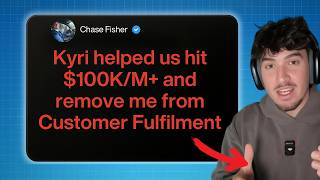
How Chase Fired Himself From Fulfillment in His $150K/M+ Program (Case Study)