Coffee With Krav - Larry Siedlick
Larry Siedlick built Sunrise Medical Labs from two people to 450 employees and sold it in 2007, then bought a rundown Montauk motel and turned it into a destination hotel. He credits hiring salespeople, listening to customers, and emotional intelligence as keys to growth. During COVID, the hotel hit full occupancy despite fears.
Chapters
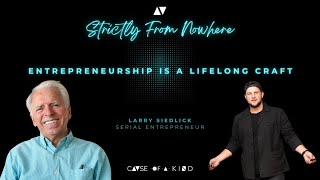
Well, welcome back to Coffee with Crav. I hope everybody had a great week. I hope you're all doing well out there, staying safe again. We started this back about 14 weeks ago when we wanted to create some connection with everybody. And we're going to continue to do this for a period of time. And we have a very special guest here today and we'll get into it in a very short period of time. Today we're going to be looking at someone who still is a businessman. He is a entrepreneur, special entrepreneur as he has gone into many different businesses and still is involved with with businesses and still looking at opportunities that are out there, believe it or not, in this pandemic. So Larry Siedlich is. His first company was Sunrise Medical Labs, which He sold in 2007 for one of the highest multiples ever paid for a laboratory company. He was also the founder and CEO of ARX Group. Larry will share how the entrepreneurial spirit you cultivate in youth develops and shifts as you get older. He'll talk about the four competencies of high performance leadership and the major mistakes CEOs and founders make as they build their companies and prepare to exit. Larry now owns and runs Montauk Beach House, a beautiful boutique hotel that is located at almost the most eastern part of the United States in Montauk. We will talk about being the owner of a Hotel during COVID 19 months, especially in the summer months when that's when the business is. This is where all the business is going to happen. So let me start off, Larry, by asking you. A lot of people today that are watching were originally from Long island or are still on Long Island. You're a Long Islander. Where did you grow up?
I originally grew up on the south shore of Long island in Valley Stream and then in Rockville Center.
Okay, and how was your childhood and what was your first job?
Oh, that's interesting. I think my first job was actually with a landscaper, cutting lawns in the heat of the summer as a 16 year old. In those days, landscaping was less formal than it is now. And so it was pretty random on who they hired. So I guess I was fortunate that we were able to find work as teenagers on that summer break.
And I just want a question because I talk to a lot of entrepreneurs and some people are born with the entrepreneurial spirit. Some people have a friend, a colleague next to a neighbor, a parent that were entrepreneurs and they get exposed that way. Other people pick up entrepreneurialism later on life. When did you realize that you enjoyed being an entrepreneur and Was there any influence as a young person with that?
I think, you know, I think I saw other, other business owners as I would work in these summer jobs. I mean, I started my first company, Sunrise Medical Labs, when I was 22 years old. So, you know, in a space that was, you know, probably 10 by 20 office in Valley Stream and you know, and essentially myself and one other person. And then eventually we grew that business into 450 employees, which we sold again in 2007.
Let's go, let's take that back. Let's. Because we just went from basically a small room to 450 employees. Let's go back in time and let's go to the beginning. You had a two person operation. Let's go through the early days. What were you thinking and where did you think that this laboratory would be something that can be built on and can do so well?
Well, I mean, early on it was quite, it was quite a struggle because we were, you know, the two of us were technical people that we really weren't sales and marketing type personalities. We were what I would call a technical personality where we had this model of, you know, build this great technically proficient, you know, operation and you'll, you know, and build it and they will come. And after a number of years of realizing that build it and they will come wasn't a great business model because we were pretty stagnant in those first couple of years. We realized that we needed somebody in sales to do that. So we hired our first salesperson about three years in and realized that that was what was going to drive our business. And we, you know, we had to learn to be more sales and marketing oriented than we were. And that's the mindset of a technical person versus a marketing person is two different mindsets. And you have to build a model of things that customers want, not what you think they want as a technical person. And the only way you find out what they want is, is when you have salespeople in the field out there learning, listening to customers, potential customers saying, this is what my needs are. And I think we, like I said, we had this technical mindset and didn't want, didn't realize that we needed to be paying more attention to what the actual customers needs were and not what we thought they needed.
So you could have very easily gone out of business very quickly with that. You might have had a great idea. But if you didn't have the salespeople to help get it out there and talk to the end customers, you could have gone out of Business pretty quickly. Was the salesperson the first person that you hired?
No, they were about the fourth or fifth person we hired. You know, we grew a little bit in those couple of years, but not enough to be sustainable in the long term. And then once we realized that it was salespeople that were going to drive the business and tell people about what our products and services were, we realized that that's the model. And so as soon as we had enough cash flow to support it, we hired additional salespeople along the way, and that became the priority was, let's get salespeople in the field telling people what it is we're offering.
And what were you offering? And what made you different than other medical labs?
I think one of the early things that we made was we recognized that the technology was changing, you know, and when we first started the business, it was a fairly manual process of running laboratory tests. A lot of glass tubes, a lot of.
You know, actually, why don't we tell the. Tell everybody what exactly your company did so that everybody can understand what that. Sure.
Well, Sunrise Medical Lab was a blood testing laboratory. You go to the doctor, you get a blood test, you get a biopsy, you get it wound up in a laboratory company like Sunrise Medical. And so it was, you know, our client base was initially just physicians offices, and then gradually, over the years, it expanded into where we were servicing other laboratories and we were servicing other hospitals.
I see. So correct me if I'm wrong here. From a salesperson standpoint. Yeah, the salesperson, go to the doctor and convince the doctor, or tell the doctor, hey, listen, you want to send your people for the blood test or pap smear or something to our labs? Is that kind of what the salesperson was doing?
Yes. And initially, because we were competing with much larger publicly traded companies, the model was one of close service where it was easy to get us on the phone. If you had a problem, we could come make a special pickup. And we did all those things that the larger companies did not want to do.
Okay, and then. So then you expanded. How many locations did you. Did you have?
Well, we had one central. Central laboratory that was originally located in Nassau County. And then we had multiple, what they call patient service centers out there, which were sort of like branch, small branch offices where patients could go and have their blood taken and that we ultimately had about 15 of those around the New York metro area.
Okay, and eventually, over what period of time did it take you to build it before you sold it?
Well, we started in 1972, and we sold it in 2007. So that's 30 something, 30 something years. I would say. The business really, really took off in the early 90s as technology was evolving that made the whole process more automated, more efficient. We realized that that was the way to go. And a lot of the smaller companies during that time frame did not, like us, did not recognize that this technology was evolving and that they needed to invest in that technology into computers, into, you know, into connectivity between physicians offices and the laboratory. And so we were early adopters of technology and I think that's what let us survive and thrive because we recognized that this was the future. And folks that didn't make that transition didn't survive it.
And selling in 2007 from a timing standpoint was pretty, pretty, pretty, pretty, pretty good. It did it right before obviously, the 2008 disaster. So congratulations on the timing, on that. Leadership is very important to success of companies. There are many different styles of leadership. What was your style of leadership?
Well, I think that again, technical people have a tendency to think in formulas and stuff. And I think we recognize my partner at the time, and I recognize at the time that we needed to have a model that better understood the human behavior of folks. It's, you can't, you can't just be technically smart. You have to be emotionally smart on how you manage people. And I would always tell my managers that, you know, if we didn't have to manage multiple personalities, we'd have no need for managers. And it's, that's, that's the main part of any growing, any business where you're adding employees is that the number one priority needs to be how you manage that staff. Because if you expect your staff to be customer service oriented and helpful to the customers, they're not going to be it if you're not setting that tone with them. And that's. So we always took the position that our number one customer was our staff. And by doing that, that translated into them being good ambassadors to all of our customers.
Yeah, so I've seen you, you've been a keynote at conferences and you talk about four competencies of high performance, leadership, self awareness, social awareness, relationship management, and self management. So you've kind of hit on some of that. Can you, can you elaborate a little bit more on those?
Well, you know, you have, you have to. Probably one of the most important ones is you have to have some emotional intelligence when it comes to managing people as you're growing your business and even, even as you're dealing with customers, it's, you have to be aware. There used to be an expression, and I'm sure it's still used, is people used to say, you know, leave your personal problems at home, and when you. When you get here, you know, check them at the door. And an expression, cliches like that. And if anyone believes that your employees and even yourself can leave your personal life and problems the door when you get to work, you're absolutely delusional, because that's not how human beings work. You know, we can't, you know, we can't completely divest ourselves from what's going on in our personal lives. So I think you have to have a certain amount of empathy towards people's personal lives. And it's. You gotta be. You have to be aware that that affects their performance. I'm sure we've all had employees that were, over the years, they were model employees, probably some of your best employees, and all of a sudden their performance just goes, you know, completely off the rails or a mistake is made that you just. That this person has never made in all the time they've worked for you. And you, you think this, is this why? What's happening here? And, you know, our first question would always be when that kind of situation arose, is we would, you know, politely speak with that staff member and say, you know, very sincerely, is there something going on in your life that, you know, that's affecting the way you're doing your job and something that potentially we could help you with. And inevitably, I would say, probably three quarters of the time, you would find something in that person's personal life that was impacting whether they were going through a bad divorce, a bad relationship, a financial struggle, something that was affecting you. And by having that empathetic leadership approach to it, you built that level of trust between management and all of the staff so that you got the most productive use of their time. By being that, you know, that empathetic employee, it makes.
It makes a tremendous amount of sense. There's a lot of people that treat employees just like that. They treat them like employees. In your case, what you're saying is, hey, this is a person behind the employee. I'm going to treat this person like a person, like a real person, and we're going to find out what their goals are, what their needs are. And. And we're going to, you know, treat them nicely and well. And like you said, if there's issues that are out there, you can see if you can try to try to help them with those issues. I mean, that's. That's that's the way that everybody should do it. But unfortunately in the, in the business world, it's not, it's not done that way.
Well, you can't, you know, you can't, you can't demand people be productive. You know, you can. If you're going to stand over their shoulder 24 hours a day, you can, you know, you can, maybe you can demand it continuously if you're standing there screaming, but that's not how most businesses work. You dependent upon people to do the right thing when you're not there. So we always found that we had the, in our, you know, medical lab industry company, we had the highest productivity level of any company in the business because we took an approach where we weren't, we were growing, but we weren't this mega corporation that, you know, answered answers to shareholders in a quarterly call. I mean, that's the other advantage of Entrepreneurs that are not public traded have the advantage of being able to think for the long term. If you run a public company, you have to think for what goes on for the next quarter because that's what you're getting judged on. Whereas private entrepreneurs and privately held companies can think a little bit longer term, which is a tremendous advantage when competing with much larger publicly funded companies in your industry, regardless of your industry.
That makes, that makes a lot of sense. I want to bring you over to today. I want to talk about your latest venture. You own the Montauk Beach House. It's a boutique hotel located a block from the ocean, has very cool vibe. I've been there. I have a lot of questions pertaining to this investment. You turned it around to a trendy boutique resort. It was voted one of the 10 sexiest resorts in the country. So I got a bunch of questions about the hotel. First, what's a guy who owned a medical lab that's never been in the hospitality industry doing buying a hotel?
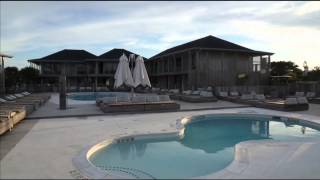
My stock answer to that is I think it was after a night of heavy drinking, but that's not exactly the case. I mean, after I had sold the medical lab company, I had another company in between there and. Which required a lot of travel. And as you get older, you think, I don't want to be on airplanes for two weeks of the month traveling around to customers all over the country. And I'm not probably one of the few people that grew up in healthcare that doesn't actually golf. And I'm not a sit on the beach guy. I'm always going to be working somewhere trying to figure out something. And this opportunity came along where there was this old rundown place. And it was, you know, Montauk was a sleepy fishing village. But having spent a lot of time out there in that area, I started to see a change coming. And the change I started, I started to see a change in the demographics of the audience that was there in the summertime. And it was originally, it was originally families. And Suddenly back in 2010 or so, I started to see folks that were much younger, seemed to me much more affluent than previous visitors to the area. And I thought, there's something going on here. And so we bought this old rundown 1960s motel and decided to convert it to a Boutique Hotel in 2012. And at the time, people were saying, who's going to go to Montauk? Which is this family oriented, you know, kind of like, you know, downscale Hamptons feel to it. Who's going to go there and stay in a boutique hotel? And I think I sensed that that was changing. And sure enough, the very first year was a struggle. But after 2012, it just took off with all of these younger audience, younger single audience between 25 and 35, mostly from New York City and who were disposable income, who were looking for a place that was, you know, away from the city where you could get, you know, a little bit more space and stuff. And it's just been amazing ever since.
And I guess you've done things to try to attract that crowd. Right? So you've had musicians, you've had DJs, you've had events there.
Yeah, I mean, up until the COVID crisis, the business model was essentially was to take the hotel space and say, well, we just want to be more than a hotel. We don't want to be a place with a room to stay for the night. We want it to be a destination where there are other things going on. So early on, we made the decision that we were going to make it a center for upcoming artists, upcoming musicians, and even fashion brands came in because of the audience that we had in the hotel. A lot of the fashion brands, that's their target audience, that 25 to 35 year old group of folks that, you know, have disposable income. And in today's world with social media and all this other stuff, it's amazing how much if you spend the time that you can learn about the customers, I mean, it's the depth of knowledge that we have about our customer base is. Some people would describe it as scary because you, with social media, you can see what their likes are. And you see you literally the analytics behind anything on the Internet gives you the power to look at who's my audience, what's their income, where are they from, what do they like? And once you know that information, you can tailor the product or service to meet that customer base.
And that's how do you gather, how do you gather that kind of information? Where do you get that from?
That information comes from all kinds of, from whether it's Facebook, whether it's Instagram, whether it's Google. I mean, every time you go online and you register for something, and again, this makes a lot of people nervous, I guess including me a little bit is you would be amazed at how much you can tell. Every time you give up your email address, you know, buy something online line that's all tracked by Google and all of these search engines and they know who's buying what from where. That's why when you Google air conditioners on Google and suddenly every time you go onto a site, you're seeing these little pop up ads for air conditioners. And with that information, you know what the customers are. And once you know who your customers are, you can then in our case, reach out to various fashion brands, luxury brands, and say, here's the demographics of our customer base, here's what we know and who they are and how much disposable income they have. All right? Those brands suddenly want to show up on your door and they want to premiere their product or service at your property on a given, you know, summer weekend where you have a large amount of these folks concentrated.
That makes a lot of sense. So let me take you to back to March of this year. March, April of this year, pandemic hits the United States. It's rising every day. You own a beach house, you own a hotel. You must have been freaking out. You must have been like, oh my God, this whole year is gonna be a bust. So let's go back to that time. What were you thinking at that time?
I think that generally speaking, I think that exactly as you described it, we were thinking that this is going to be an absolute disaster. No one's going to want to come. Certainly the business model that we had prior to this in all the previous years of having a very busy, very crowded hotel, outdoor space was clearly not going to happen. You know, so we were very concerned about that and stuff. And one of the members of my management team pointed out to me and said, you know, he said, we can plan on a disastrous year, but what happens if it's not? He goes I think that possibly there's going to be this demand to get out of the crowded urban spaces and into the open spaces. And it might be that it might be the exact opposite of what we're thinking, you know, that there might be more people than, than we expected.
And so let me have you, let me have you hold that thought just for a second. I just want to say to everybody watching, if you have any questions for Larry, please email me. It's McRavitz Krav I E T Z@ alignwealth.com Align is spelled A L I N E wealth.com McRavitzlinewealth.com so if you have any questions for Larry, anything on entrepreneurialism, on leadership, on the hotel, on lab, whatever comes to mind, please, I have my email up and I'll ask the question to Larry. So, okay, so bad times March, April. One of your people said, oh my God, maybe this could be a turnaround. Maybe people want to come out there. So go ahead please.
So you know, we sort of, we delayed the open. We normally would open in the beginning of May because we're a seasonal property. We're open from May until October and we thought normally we'd open in May, beginning of May, but it just didn't feel right. So we delayed the opening to Memorial Day weekend in May and about five days before Memorial Day weekend we were at only at 30% occupancy, which is for a hotel property is absolutely disastrous.
And where is break even? I know different hotels have different break even points. What kind of capacity would be break even?
Break even is probably for most properties out in our area is probably about 3, about 55 or 60%.
Okay. Okay.
And the, so that five days before we were just, you know, not feeling real good about things. And then sure enough, by Friday of that week we were completely sold out.
Wow.
And so what we've learned in the, in the interim is the dynamic now is folks will wait about two, two and a half weeks out before they begin to book at the properties out there. And so it's been a challenge. Normally we would have, we would have over half of our room, room nights sold by the time we hit June for the entire summer. And then it was just filling the fill in the rest as you went along. Now what we're discovering is that about two, two and a half weeks beforehand, they, that's when people start to book. And once we hit July and August, I mean we've been sold out every single night for the last two months.
Oh My God.
It's just, it's. And now what?
People nervous? Are people nervous?
Well, I mean, yeah, absolutely. One of the things that we elected to do very, very early on was implement a whole series of changes in how we would sanitize the rooms, on the things we would do to keep people safe. And what we did was we published it. And we published it on our website. If you go to our website, you can see the OLA pandemic. You know, criteria that we do, we use ozone generators in the rooms to sanitize the rooms. There is hand sanitizer everywhere. You know, we don't have housekeepers intruding every day into your room so that you're intermingling with them. And we have barriers at all of the, you know, the checkout. We have, you know, plexigas screens at the bar area. We've socially distanced all of the seating on the property stuff. And it's by publishing it early on, way back in March, what we were going to do, it gave us a lead up into customers who were nervous. And then we took our entire pandemic program and we partnered with a company called Cintas to deliver a certain amount of sanitizing equipment and stuff like that. We published it and then we sent out to all of our email lists exactly what we were going to do. And we literally had people calling us up saying, I'm going to book. Because I saw that you guys have this comprehensive program and I didn't see it anywhere else. And now you. Of course, now people in the industry have learned that they need to make it available to the public.
I have a request from Erwin. He would like to know what your website is. Can you give us your website?
Sure. The website is www.thembh t h e m b h dot com.
Okay, thank you, Erwin, for the, for the question. So you, you weren't hiding it. You weren't hiding it like some of the hotels have. You're coming out and you're putting it up front and you're saying, hey, we understand what's going on here. This is what we're doing to, to help and that, you know, by getting in front of it. Sounds like that was a great, a very smart move on your part.
Yeah, you know, it's, you know, it's your, you know, you heard a lot of. Early on in this thing, you heard a lot of businesses say, well, you know, it's not my, you know, it's not my job to control people's, my customers behavior and how they interact and stuff like that. But I would argue that, you know, the socially responsible thing to do is to recognize that if you're a place that has customers coming to your site, whether it's your shop, whether it's your restaurant, whether it's a hotel, any business, whereas customers. It's your job to protect those folks if you want them to come while they're on your business property. And so we took it very seriously. We do, you know, we have signage everywhere on the property. We do require masks, which I know for some folks is a little bit controversial. I don't know how masks suddenly became a political statement. It's not. It's a public health statement, and we require that. And if you're. As long as you're willing to abide by the rules, you can come onto the property. Now, the only folks that we let onto the property now are hotel guests and people who have dinner or lunch reservations. We don't allow random people to walk onto the property anymore, you know, as we did in past summers and stuff, because we need to control the amount of people on the property to keep everybody safe and distanced.
So with the wearing of the mask, you have a pool area. Do they have to wear a mask while they. While they're on the lounge or once they hit the lounge, they can take that.
It's like in a restaurant. Once you're seated, you don't need the mask. But when you're up and about, if you need to walk to the restroom or you need to walk back to your room, room, you need. You need to put the mask on. So. And we limit the amount of groups. I mean, the public health folks are telling us that you need to limit the amount of groups to no more than 10 people. So we don't allow any. Any gatherings more than, you know, someone calls up and says, I want to bring 20 of my friends in, you know. You know, for, for dinner. We're like, no. Well, you can bring. You could bring 10 and 10, but they're not going to be sitting together. They're going to be spaced out, you know, and we just. You just don't allow that kind of stuff. And, you know, overwhelming. I would say 98 or 99% of customers completely understand it and appreciate the fact that you're taking this stand that's designed to protect them. You need to do a lot of communicating about what, why you're doing it. You can't just say, oh, here's the rules, with no explanation. And you have to say, you need to wear the Mask because we're trying to protect you from, from getting anything from other, other people.
Makes, makes a lot of sense. Now you said that you normally would close in October with a lot of people leaving Manhattan and coming out east. Would you consider keeping it open longer?
Well, we're going. Normally we would close the beginning of October and now it looks like, you know, that we're going to stay open until the middle of October because there is such high demand for the hotel space out there. It's like, I think we were all shocked at how much demand there was. And so with that demand, we're responding to it and saying, you know what, we can stretch this out another couple of weeks before the weather turns really chilly.
Interesting. So before we got on, you and I were just talking about another company that you're involved in. You have a, another company that you own called Left Hand Coffee. So talk to us about Left Hand Coffee and, and tell us how you pivoted in that and how you've helped a lot of people in the, in the Montauk area. And before you do that, I just want to mention I see someone raising the hand. Maria, if you can send me an email if you have a question, Maria, send me an email. I'll ask that question. But go ahead, Larry.
Well, Left Hand Coffee is a. Montreal is also a Montauk based business that what we call a third wave coffee company that was highly dependent until this year on the amount of tourists that came into the area. And so early on we realized that we likely didn't have if there were no tourists, we were like our visitors, we were likely to not have a good business year. So what we decided to do was we decided to push more of our online ordering business which we had always had a moderate amount of online ordering for the coffee brand. But we had relationships because of Left Hands in the hospitality business and the fact that we have relationship with food purveyors from the hotel business. We went to the food purveyors and basically said we want to sell your products online as almost as a boutique grocery store business for local deliveries in the Montauk and Hamptons area. And so we the food purveyors because of the closure of all of the restaurants and hospitality businesses were, you know, they're in the same boat. They're in that part of that, that food chain businesses that depend on restaurants being open, when there's no restaurants open, there's no market for their product or there's a market, but it's very limited. So we partnered with a bunch of the food purveyors to allow us to sell their products on our website. And people ordered groceries and stuff on our website during the peak crisis time. And it would come two or three days later, it would be delivered to our, our location in Montauk. And then we would distribute it out from there. And much to our surprise, when it went online, people were ordering thousands of dollars worth of worth of food products through our website. So we were quite, quite pleasantly surprised by that.
How did people find out that you, you were doing this? Did you have emails or had you again to get it out?
It's all, it's all out there on social media. It's all out there on emails. We have tremendous email lists that we have of all of our customers. And we said, okay, here's what we're going to do. This is what's available. And you know, a lot of businesses that are, you know, B2C businesses, businesses to consumers don't recognize the power of social media presence and stuff. And we've always had a lot of presence on social media. And because we've had that, we have thousands of followers to our Instagram. We have, you know, thousands of followers through our Facebook. And we've built that up over time. And every time you post something, you're communicating to those folks. And you could also buy, for those who are not using social media, you can buy relatively cheaply, very targeted kind of social media advertisements about your product or service where you can literally bring it down to a zip code. Say, everybody that's on social media in that zip code is going to see my message. And it's, it's really not a high ticket price.
Oh, I got. Okay, got a question here. Okay, hang on. Okay. Okay. All right. Well, this is. Someone had asked. Being sensitive to the times and economic issues that companies are having, how would you suggest for someone to go after new businesses to help companies build during the pandemic?
Repeat that question.
Okay, so one of, one of the people is asking, they have a, they have a boutique agency. So they have a boutique advertising agency. And being sensitive to the economic issues that companies are having. Okay, how would you suggest, you know, going after new business to help companies during this pandemic?
Well, I think one of the things that we've seen is we've seen there needs to be because most businesses are experiencing some form of cash flow difficulties. And that's a fairly common occurrence. And I think what you have to do is you have to be sensitive to the fact that people may not Be able to pay you in 30 days as an example. So a lot of the purveyors and stuff that we deal with have extended their terms. So if you're selling a product or a service, you might need to do one. I guess one of at least two things that I can think of, and one is, is that you might want to extend your terms maybe, and maybe offer. Maybe offer a discount for new customers because it's, you know, everyone is under a lot of financial stress, so you extend the terms. And the other side is maybe you offer a results kind of advertising where you say, okay, you go with me and we find a way to track this. The sales that you have now versus the sales after you start using me. And maybe there's a little bit of a profit share there. There's a number of ways I think you can do that.
Okay, excellent. Thank you. And if you can give one piece of advice to an aspiring business owner, someone that maybe just has never owned a business before, maybe it's someone that's just out of college or someone who's been working in a larger company but now is ready to, you know, spread their wings and start flying, what would you say?
I would say you, passion and persistence you have to have. Don't go into a business that just simply because you think there's money to be made. Going to a business where you are passionate about it, where you love what it is, the product or service that you're selling, and you can be passionate about it. And then no matter what anybody tells you, stick with it and be persistent. It's, you know, being an entrepreneur is sometimes it's the way you respond to the failures and the setbacks that set you apart from everybody else. It's, you know, for every, for every successful business, that person that I know, they've all had business failures in their past. You can't be afraid to stick with it and fail and get setbacks and just move at. But again, be that passion. Be a business that you're passionate about.
Good. And speaking of failures, maybe there's something, a great lesson that we can all learn from a mistake or a failure that maybe turned around. Maybe something that was lemon that became lemonade in your past.
Well, I would say, you know, I mean, go back to my early career is where I, Where I would go for the. Probably the biggest failure to recognize the fact of what it took to, you know, sell your product or service. I mean, I think because of the technical background that I originally came from, as I said earlier, I didn't recognize that this was a major flaw in my plan, was not understanding how customers found out about your product or service. And fortunately, I survived it. But it's one of those things that you look at and you go, what was I thinking? I don't know how I could miss something so obvious.
Interesting. Any book that you gift often or any book that you can think of that, you know, maybe for aspiring business owner or entrepreneur or just in general, a book that, that you enjoy, that you can recommend?
Well, I mean, I can, I can, I can think of. I can think of two things, two books. One is a book by Dov Seidman called how and why how you do business matters more than what you do for business. It's very insightful into human behavior. The other book is by a friend. It's called Metatrends. It's by an author called Mark Perrott who's in fact based here on Long Island. And it's an interesting book about demographics and where trends are trending over, over a long period of time. Looking out there. And I found it and it kind of provides a guidebook to, you know, where, where opportunities might be based on demographic trends.
When did he write that book?
That book came out last year.
Oh, okay. Excellent. Is there any one question that you wish I asked or is there any last words that you want to impart on us?
Well, I think because I've been in business for so long, I think that the challenge here is this seems like a pretty disastrous kind of a situation. This is certainly the first really serious pandemic in my lifetime. And I think that people need to recognize that we will come out the other side of this because of the American capitalist system. We will come out on the other side of this much stronger than we were. And this is not, that's not a political statement. It's more just the reality of doing business. We've seen setbacks like this before and stay positive and recognize that this is not the end of your life. As you know, it's. And we're all going to come out fine on the other side of this.
Bravo. I love that message. That's fantastic. This is a great way to end Coffee with crav. Larry, you said it all. Thank you so much. Really appreciate the time that you've taken for the audience, for everybody, once again. We will be back next week, 10 o', clock, same bat time, same bat channel. We'll have a great week. We'll see you next week. Thanks so much, Larry. Take care.
Thank you. Take care.